Fact Power Lesson Plans
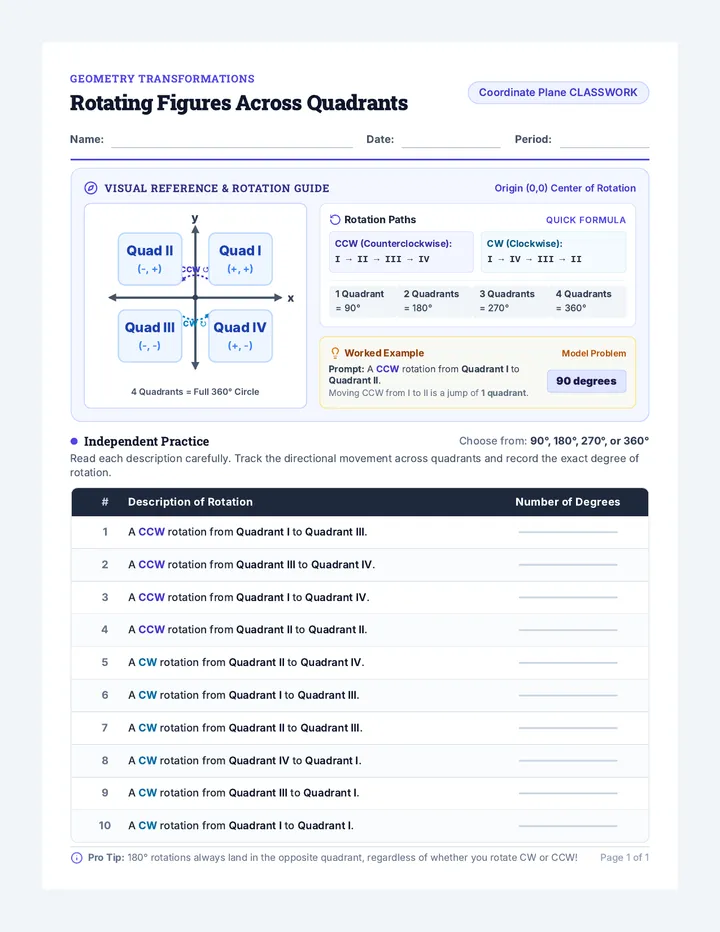
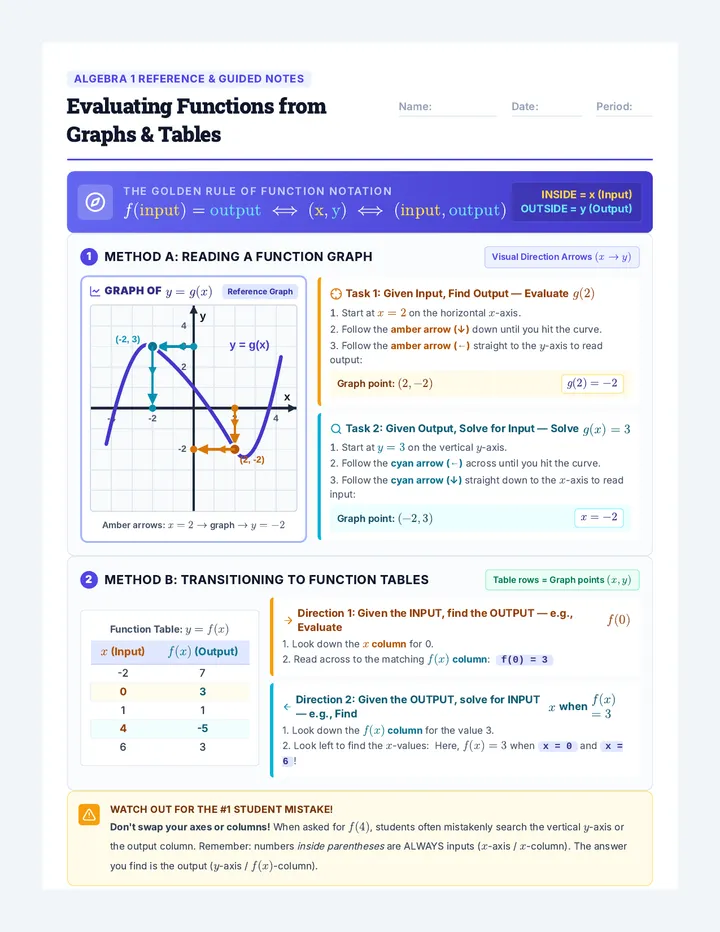
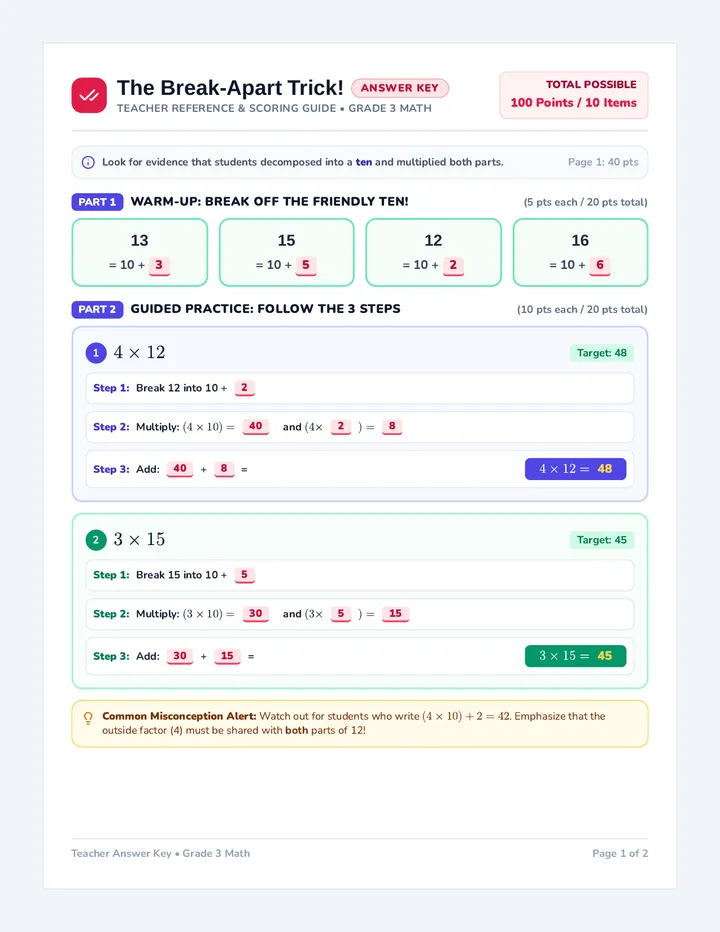
Mini-Lesson 1 of 3 Grade 2 • Addition Strategies • 25–30 Mins
Mental Math Core
High Doubles: Building Past 5 + 5
Anchoring 6+6, 7+7, 8+8, and 9+9 using 5-structures and landmark tens.
Strategy Anchor: "Double the Fives, Double the Extras"
Students use known benchmark 5 + 5 = 10 to quickly resolve higher doubles without counting up by ones.
6 + 6 10 + 2 = 12
7 + 7 10 + 4 = 14
8 + 8 10 + 6 = 16
9 + 9 10 + 8 = 18
Target Outcome
Automatically recall 6+6, 7+7, 8+8, 9+9 in under 3 seconds using mental decomposition rather than fingers.
Double 10-frames, dry erase boards, doubles flashcards
1
Direct Teach & Model (10 Mins)
Warm-Up Spark (2 mins): Quick Subitize Flash Double Ten-Frame
Flash two ten-frames showing 7 and 7 (5 on top + 2 on bottom on each). "What do your eyes see first? Five and five make ten, and two plus two make four! Ten plus four is fourteen."
Teacher Think-Aloud Script: Modeling 8 + 8
Say: "When I see 8 + 8, I don't count on my fingers: 8... 9, 10, 11... that takes too long. Instead, I break both eights apart into a friendly 5 and 3 extra."
Show on Board: (5 + 3) + (5 + 3) → Combine the fives: 5 + 5 = 10. Combine the extras: 3 + 3 = 6.
Conclude: "Ten plus six equals sixteen! 8 + 8 is 16. Let's say that rhythm together: Eight plus eight is sixteen!"
2
Guided & Partner Practice (12 Mins)
Turn & Talk Prompt (3 mins)
Display 7 + 7. Ask: "Partner A, explain how five and two helps you solve seven plus seven. Partner B, verify the sum."
Expected Talk: "7 is 5+2. Two 5s make 10, two 2s make 4. 10+4=14!"
Partner Game: High Doubles Duel (9 mins)
Pairs have digit cards (6, 7, 8, 9). Player 1 flips a card (e.g. 8). Both race to say the double and tap their board: "Double 8 is 16!" First correct caller earns the card.
Rule: Must state the sum within 3 seconds to keep card.
Common Misconception
Students confuse 7+7=14 and 8+8=16, mixing up the 4 and 6 extras. Re-anchor to fingers: 2 extra fingers on each hand make 4!
Quick Exit Check (3 mins)
Whiteboard flash: Teacher calls "9 + 9!" Students write: 10 + 8 = 18. Look for immediate recall without counting finger taps.
Math Fact Power • Grade 2 Fact Fluency Routine Page 1 of 3
Mini-Lesson 2 of 3 Grade 2 • Addition Strategies • 25–30 Mins
Relational Thinking
Near Doubles: Doubles Plus/Minus One
Recognizing consecutive addends and leveraging known high doubles as launchpads.
Strategy Anchor: "Spot the Neighbor, Add/Subtract One"
When addends are consecutive (neighbors on the number line), use the smaller double plus one or larger double minus one.
5 + 6 5+5+1 = 11
6 + 7 6+6+1 = 13
7 + 8 7+7+1 = 15
8 + 9 8+8+1 = 17
Target Outcome
Identify neighbor pairs (e.g. 7+8) instantly and explain: "I know 7+7 is 14, so 7+8 is just one more: 15!"
Snap cubes (two colors), dry erase boards, number lines
1
Direct Teach & Model (10 Mins)
Visual Hook (2 mins): The Uneven Twin Towers Snap Cubes Demonstration
Hold up two snap cube towers: blue tower of 6 and yellow tower of 6. "Twins! 6 plus 6 is 12." Snap one red cube on top of the yellow tower. "Now it's 6 and 7. What changed? Just one extra block! 12 plus 1 is 13."
Teacher Think-Aloud Script: Modeling 7 + 8
Say: "Look at 7 + 8. Notice anything special about 7 and 8? They are neighbor numbers—right next to each other on the number line! That signals a Near Double."
Think Aloud (Double + 1): "I ask myself: what is the double inside? 7 + 7 is 14. But I have 8, which is 1 more than 7. So I add 1 to my double: 14 + 1 = 15."
Alternative View (Double - 1): "Or, if you love double 8: 8 + 8 is 16. Seven is 1 less, so 16 - 1 = 15. Both roads lead to 15!"
2
Guided & Partner Practice (12 Mins)
Sentence Frame Talk (3 mins)
Display 8 + 9. Students choral read and fill in:
"I know the double 8 + 8 = 16."
"8 + 9 is one more, so the sum is 17!"
Partner Game: "Double & Nudge" (9 mins)
Partner 1 calls out a high double (e.g. "6 + 6 is 12!"). Partner 2 immediately "nudges" it into a near double: "So 6 + 7 is 13!" Partners swap roles after 4 turns.
Bonus Challenge: Try the minus one nudge (7 + 6 from 7+7)!
Common Misconception
Adding 2 instead of 1: Students see 6 + 7 and accidentally add both extra ones, answering 14. Keep emphasizing: only one addend grew by 1.
Quick Exit Check (3 mins)
Write on board: "How does knowing 8 + 8 = 16 help you solve 8 + 9?" Students complete in 1 sentence on mini-slates. Look for explicit mention of "+1".
Math Fact Power • Grade 2 Fact Fluency Routine Page 2 of 3
Mini-Lesson 3 of 3 Grade 2 • Addition Strategies • 25–30 Mins
Bridging & Compensation
Pretend a Ten & Make a Ten
Transforming difficult 9+ and 8+ facts into easy teen facts through bridging and compensation.
Two Powerful Pathways for 9+ and 8+ Facts
Pathway A: Make a Ten
Decompose 2nd addend to donate 1 or 2:
9 + 5 → 9 + 1 + 4 = 14
Pathway B: Pretend a 10
Pretend 9 is 10, then adjust back 1:
10 + 5 = 15 → 15 - 1 = 14
Target Outcome
Solve any 9+ (e.g., 9+4, 9+7) or 8+ (e.g., 8+5, 8+6) fact flexibly by treating 10 as an anchor friend.
Magnetic ten-frames, counter chips, pretend glasses prop
1
Direct Teach & Model (10 Mins)
Warm-Up Hook (2 mins): "Nine is Hungry for One!" Ten-Frame Animation
Display a ten-frame with 9 red counters (one empty spot). Next to it, show 6 yellow counters. "Nine looks at six: 'Give me just one counter so I can become a TEN!' Slurp! Now we have 10 and 5: 15!"
Teacher Think-Aloud Script: Modeling "Pretend a 10" on 9 + 6
Say: "Adding 10 to any number is a second-grade superpower. 10 + 6 is easy: 16! So when I see 9 + 6, I put on my Pretend Glasses."
Step 1 (Pretend): "I pretend that 9 is actually a 10. 10 + 6 = 16."
Step 2 (Adjust): "Wait! I added 1 too many because 9 is one less than 10. Pay that 1 back: 16 - 1 = 15! So, 9 + 6 = 15."
Check with 8+: "For 8 + 5: Pretend it's 10 + 5 = 15. Since 8 is 2 away from 10, pay back 2: 15 - 2 = 13!"
2
Guided & Partner Practice (12 Mins)
Strategy Showdown (4 mins)
Display 9 + 7. Have students show their preferred method with finger signal:
1 Finger (Make 10): "Give 1 to 9 → 10 + 6 = 16"
2 Fingers (Pretend 10): "10 + 7 = 17, take 1 away → 16"
Partner Game: "Ten Frame Steal" (8 mins)
Partner 1 draws a card (e.g. 9 + 4). Partner 2 describes the donation: "Four gives one to nine, turning into three. Ten plus three is thirteen!" If correct, they keep the card.
Encourage students to test both strategies with 8+ facts too!
Common Misconception
In "Pretend a 10", students often forget to subtract the extra 1 (or 2 for 8+ facts), answering 16 instead of 15. Use the physical cue: "Push in the extra, pull it back out!"
Quick Exit Check (3 mins)
Call out: "8 + 6". Students write the decomposed sentence on their board: 8 + 2 + 4 = 14 (or 10 + 6 - 2 = 14). Check for rapid fluency without counting by ones.
Math Fact Power • Grade 2 Fact Fluency Routine Page 3 of 3