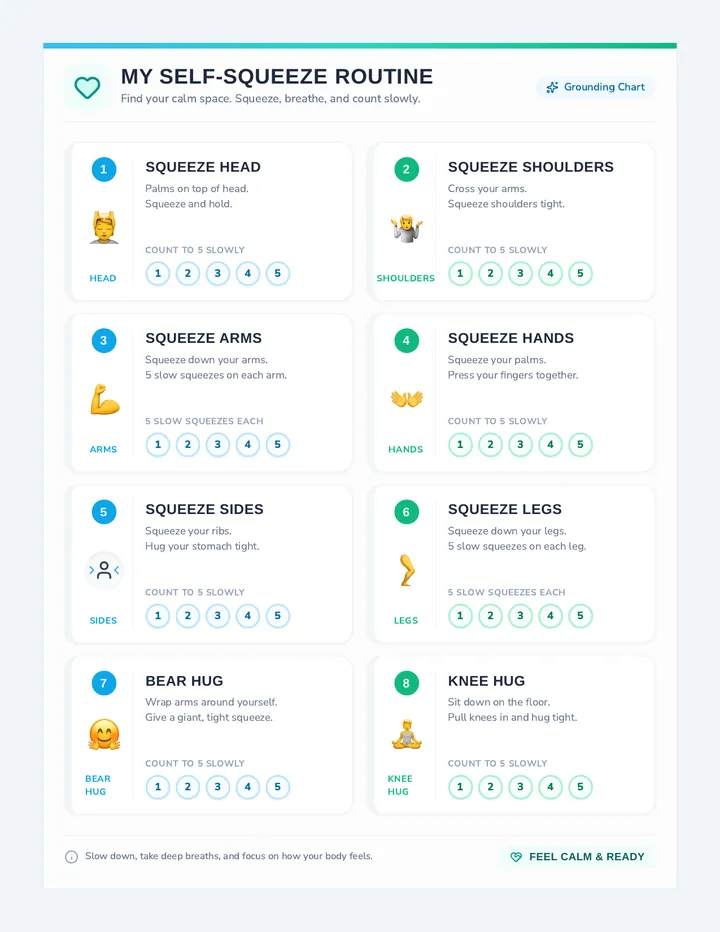
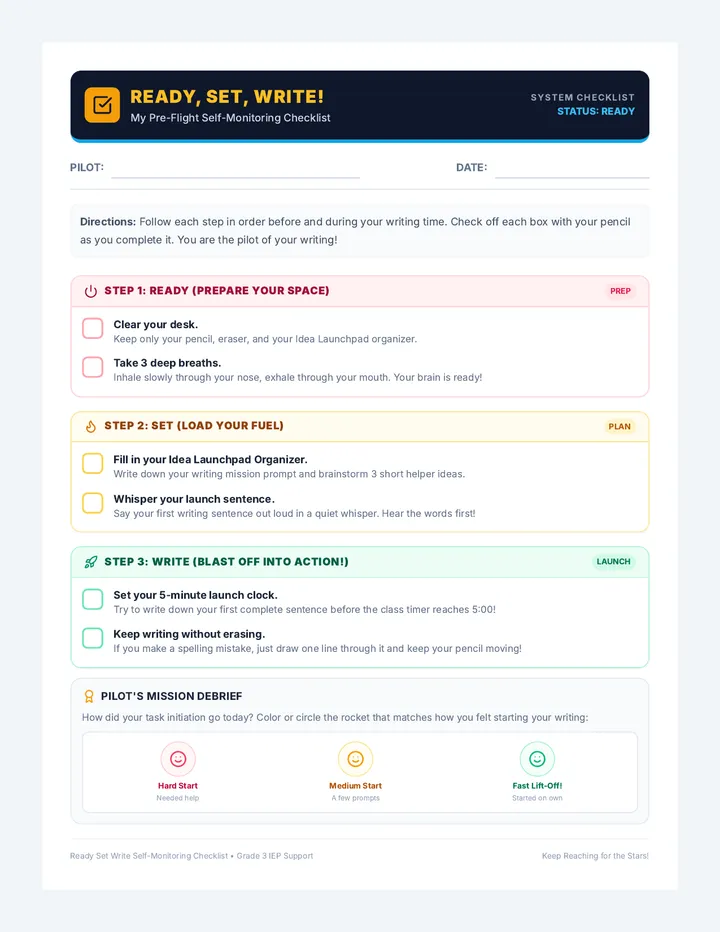
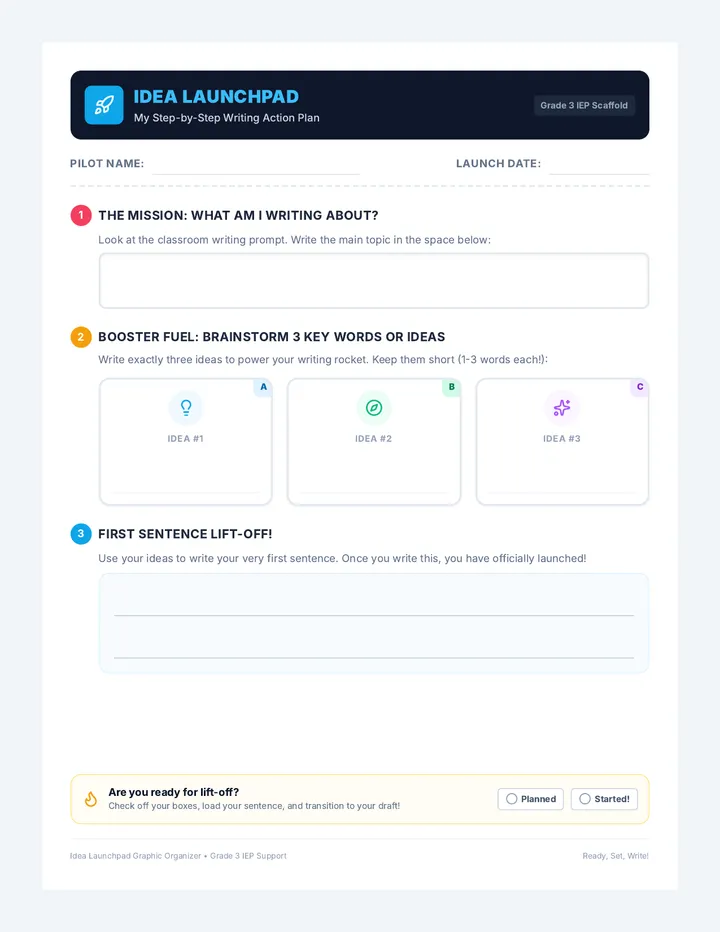
A set of four visual prompt cards for toddlers to help them choose calming sensory actions, such as deep breathing, squishing dough, or visual focus exercises. Includes quick-start DIY instructions on the same page.
A teacher-facing resource providing instructional strategies (like backward chaining) and an observation checklist for monitoring student progress in zipping and buttoning.
A student worksheet featuring visual step-by-step instructions and a cut-and-paste sequencing activity to reinforce the stages of buttoning.
A student worksheet featuring visual step-by-step instructions and a cut-and-paste sequencing activity to reinforce the stages of zipping.
A visual, high-contrast slide deck to introduce students to the step-by-step process of zipping and buttoning, with troubleshooting tips for fine motor struggles.
A teacher-led assessment tool for measuring nonsense word fluency with an expanded 15-word list covering CVC and blend patterns. Fits entirely on a single page for teacher convenience.
An advanced student activity sheet focusing on initial and final blends in nonsense words. Includes blend identification and a 'Blend Lab' word completion task with optimized space for handwriting.
Presentation slides for teaching initial and final blends using nonsense words. Features 'Blend Builder' activities and visual aids to explain the concept of sounds 'gluing' together.
A student worksheet for identifying and decoding CVC and blend nonsense words versus real words, featuring a sorting activity and a creative 'Code Maker' lab section.
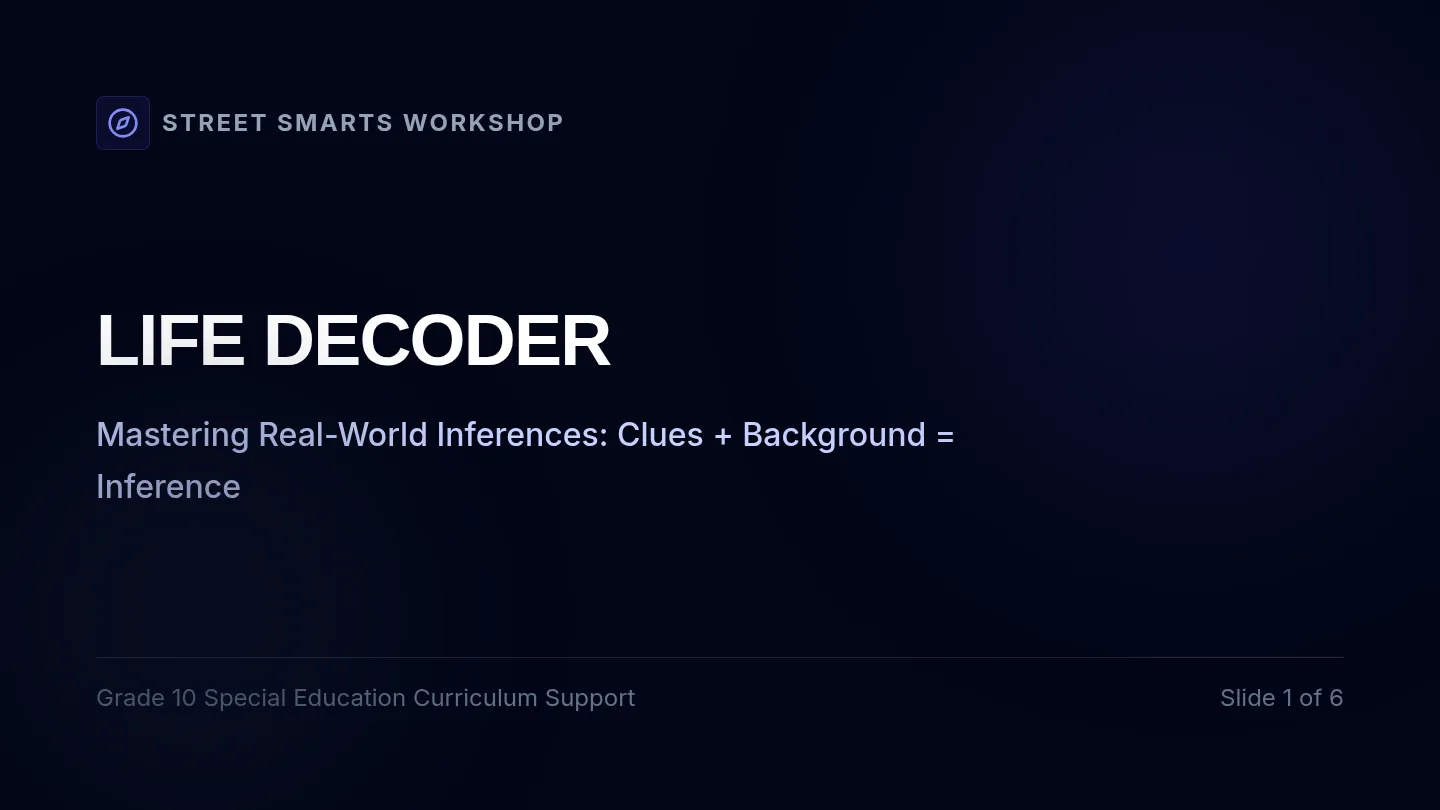
Instructional slides for CVC nonsense word decoding. Includes an introduction to pseudo-words, vowel warm-ups, and interactive 'Real or Alien' challenges, plus a preview of blend words.
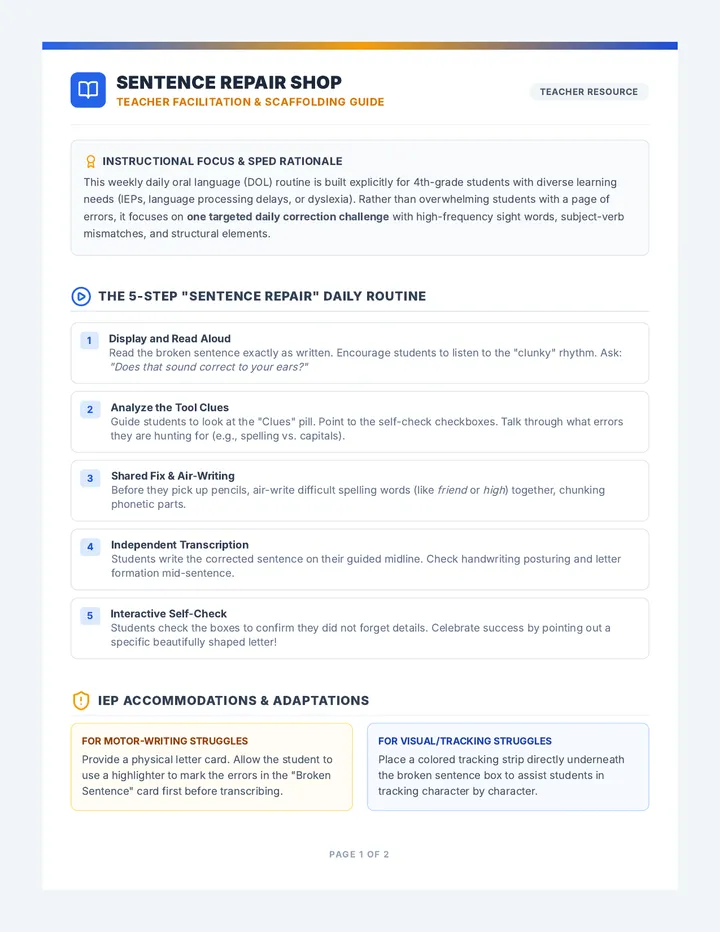
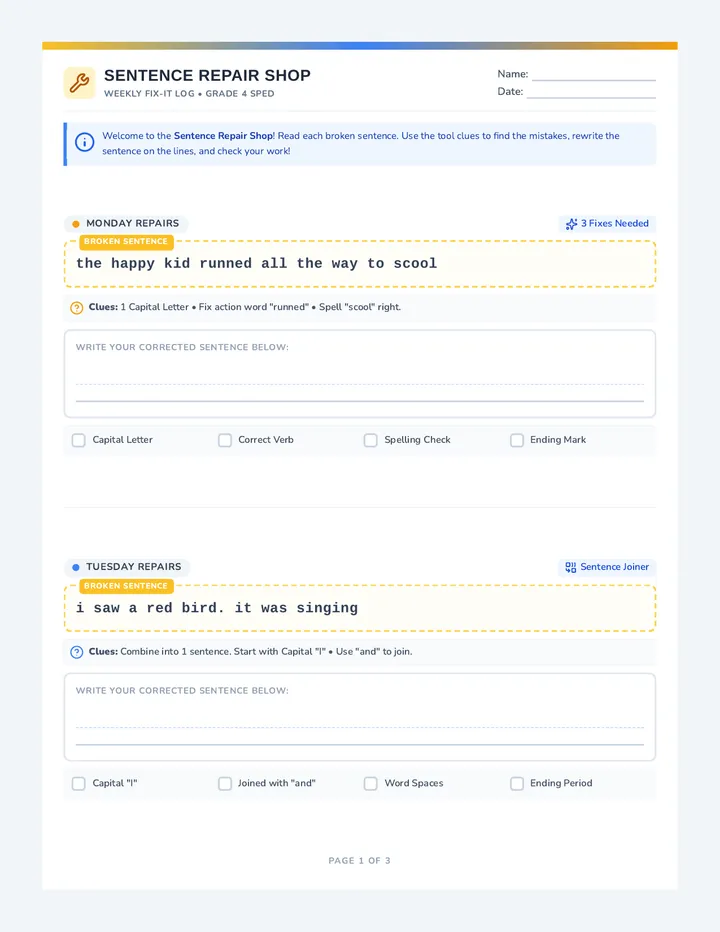
A teacher's instructional guide providing strategies for teaching nonsense word decoding, including blending routines, scaffolding tips, and target word lists.
A detailed, parent-friendly guide featuring three homemade sensory activities: Ocean Discovery Bags, Lavender Cloud Dough, and Sticky Nature Walls, specifically designed for fine motor development and emotional regulation.
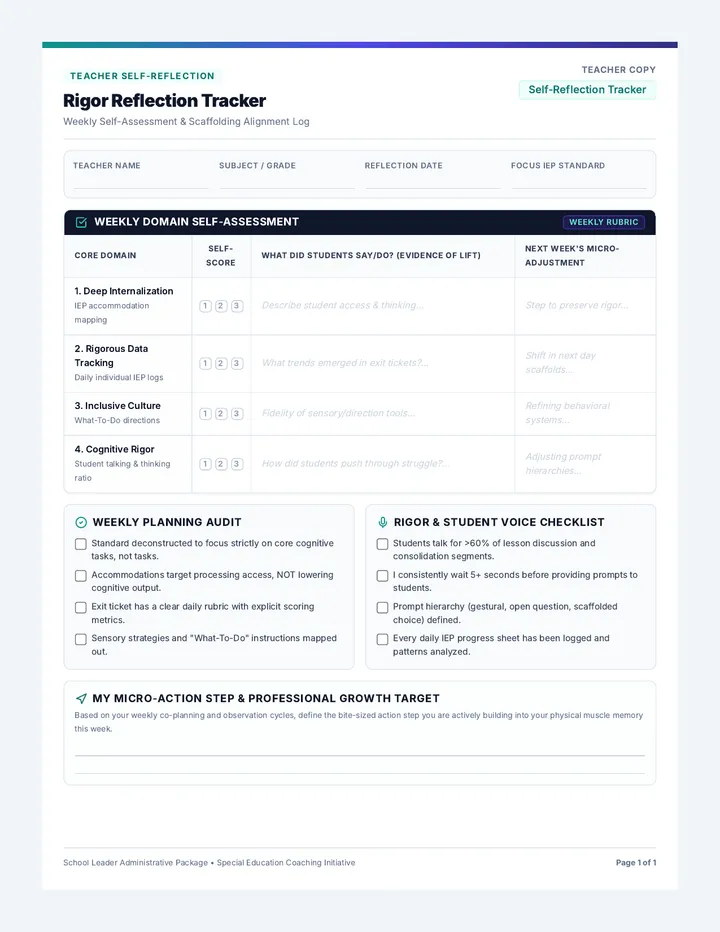
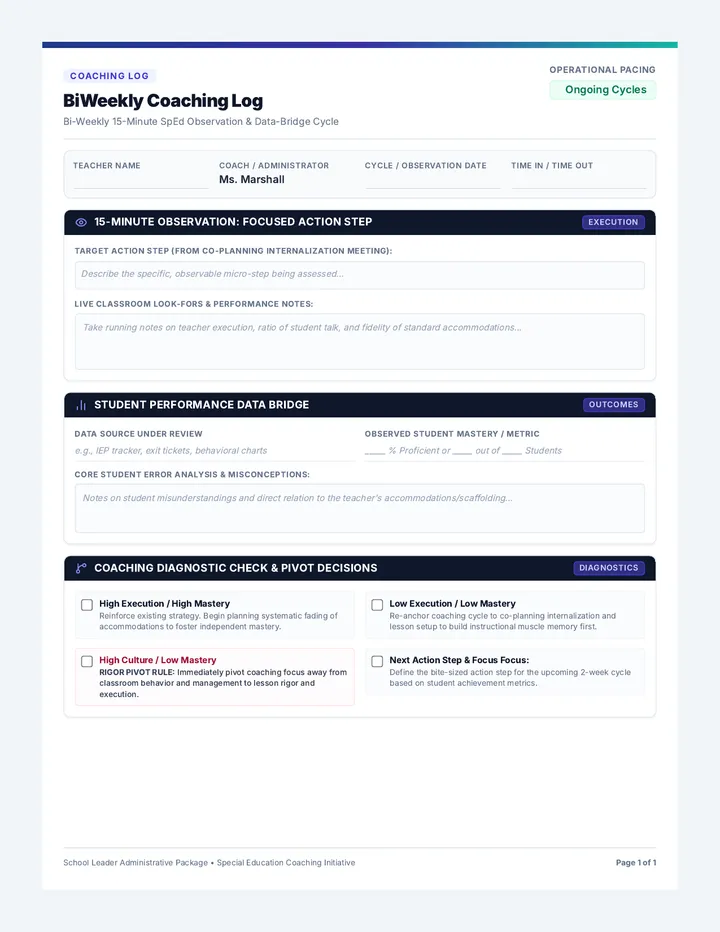
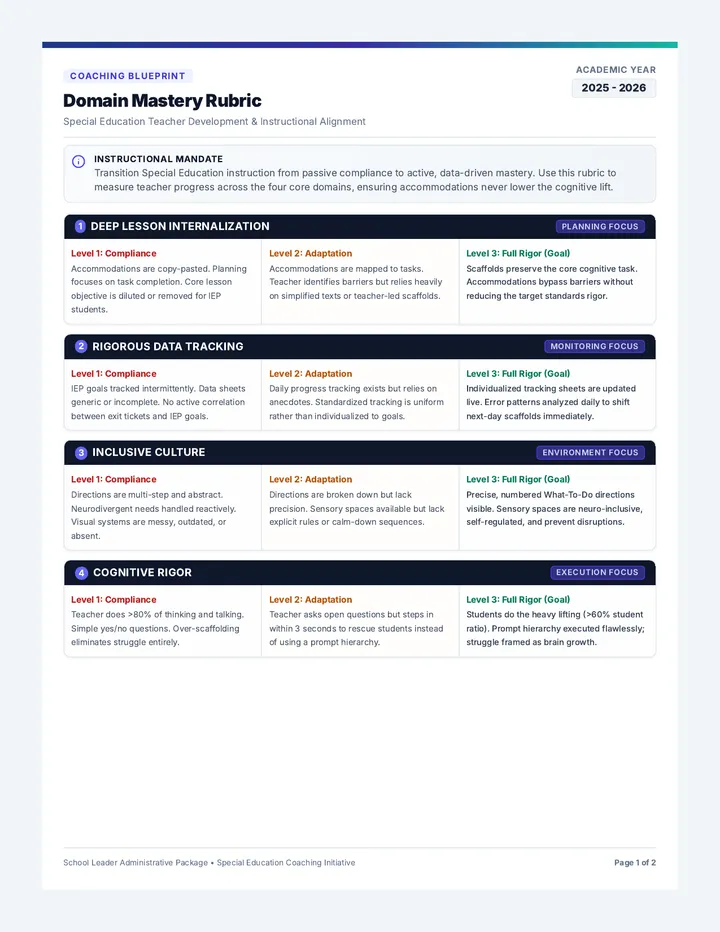
A quarterly student progress monitoring sheet featuring sections for Academic Performance, Behavioral Targets, Professional Standards, and Attendance & Participation, with specialized data collection fields for each.
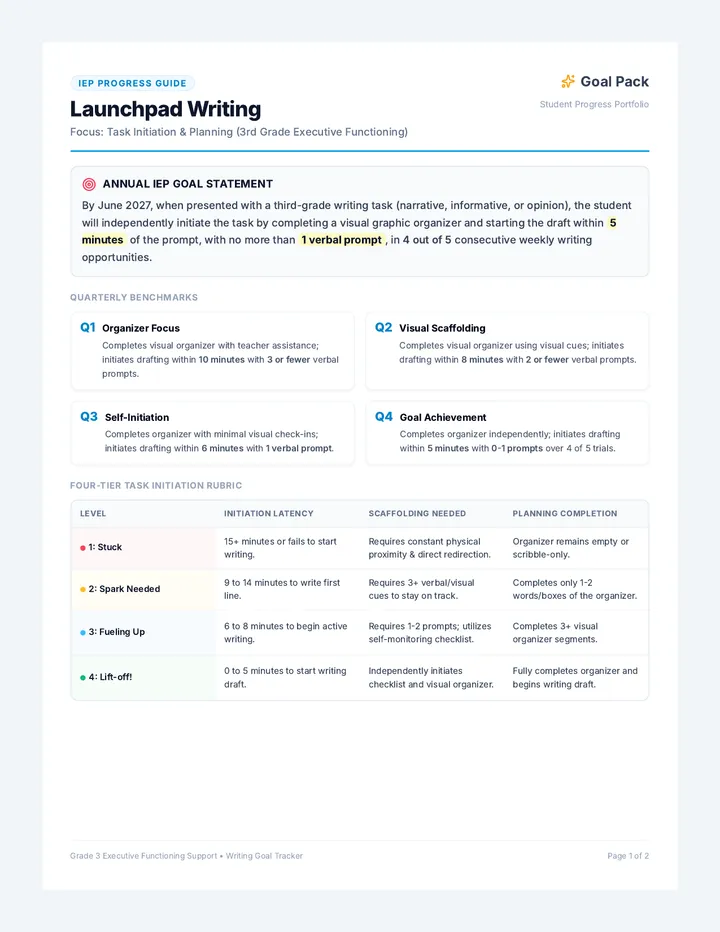
A professional, high-utility IEP quarterly progress monitoring document. It features sections for four goals, with tracking for percentages, trial counts, and a 1-4 rubric scale across four data points per quarter, including space for narrative observations.
A teacher-facing instructional guide for delivering phoneme-grapheme mapping SDI. Includes instructional scripts, a hierarchy of prompts, grade-level vocabulary word lists for practice, and a structured data collection table for tracking IEP goal progress.
A student practice worksheet with Elkonin boxes (sound boxes) designed for phoneme-grapheme mapping. Includes four mapping areas with space for chips, grapheme writing, and whole-word transcription, plus a quick reference guide for digraphs and vowel teams.
A 11-slide direct instruction presentation for phoneme-grapheme mapping. It includes visual guides for the say-it-tap-it-map-it-graph-it protocol, practice examples for single and multi-syllabic words, and special rules for digraphs and silent letters.
A data collection log for Functional Life Skills IEP goals, focusing on independence percentages, task analysis, and generalization across community, vocational, and daily routine settings.
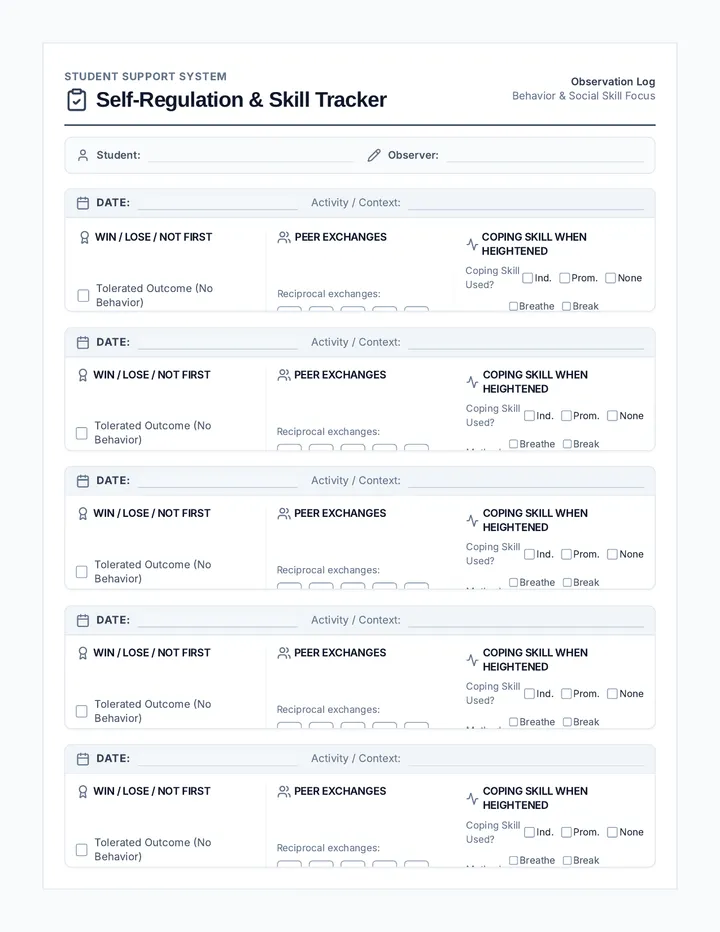
A detailed data log for monitoring Social-Emotional IEP goals, including qualitative tracking of antecedents and responses, intensity ratings (1-5), and quarterly synthesis of social interaction patterns.
A progress monitoring log specifically designed for Executive Functioning IEP goals, featuring prompt level tracking (Independent to Physical) and setting analysis for lagging skills like planning and organization.
A specialized data collection log for Academic (Reading/Math) IEP goals, allowing for detailed tracking of four trials per quarter including accommodations, observations, and visual trend graphing.
A high-level summary tracker for a single student to monitor progress across four main skill areas (Academic, Executive Functioning, Social-Emotional, and Functional Life Skills) with four data points per quarter.
A teacher resource guide providing instructions on how to facilitate the 'Student Behavior Contract' meeting, managing consequences, and coordinating with Specials teachers.
A daily behavior tracking sheet for students to monitor their adherence to the Student Behavior Contract across all learning environments. Fits on a single page.
A formal student behavior contract for a student to agree on physical boundaries, arm's-length personal space, and consequences for verbal or physical aggression. Includes student initialing for each special environment. Fits on a single page.
A teacher/SLP facilitation guide for working on articulation with high school seniors. It details a cueing hierarchy (fading support), professional generalization scenarios, and data-tracking benchmarks to reach the 90% accuracy goal.
A sophisticated data-tracking log for high school seniors to monitor their articulation goals. Includes a session log for accuracy and cueing levels, as well as a self-monitoring section to track error correction.
A career-readiness articulation worksheet for high school seniors. Focuses on 'r' and 'dark l' through professional vocabulary, sentence drills, and mock interview questions with spaces for self-reflection and SLP data tracking.
A professional 16:9 slide presentation for high school seniors focusing on articulating 'r' and 'dark l' in career-oriented contexts like interviews and workplace communication. Includes visual cues, word lists, and complex sentence challenges.
A comprehensive practice sheet with 10 scenarios (5 for early unit and 5 for late unit) plus creation spots, designed to reinforce Sparky vs. Professor PFC choices.
A data collection form for tracking up to ten students' progress across all eight lessons of the Brain Squad Mastery unit.