Slide deck for Lesson 4 on information design and the key components of an effective instructor one-pager for assistive technology advocacy.
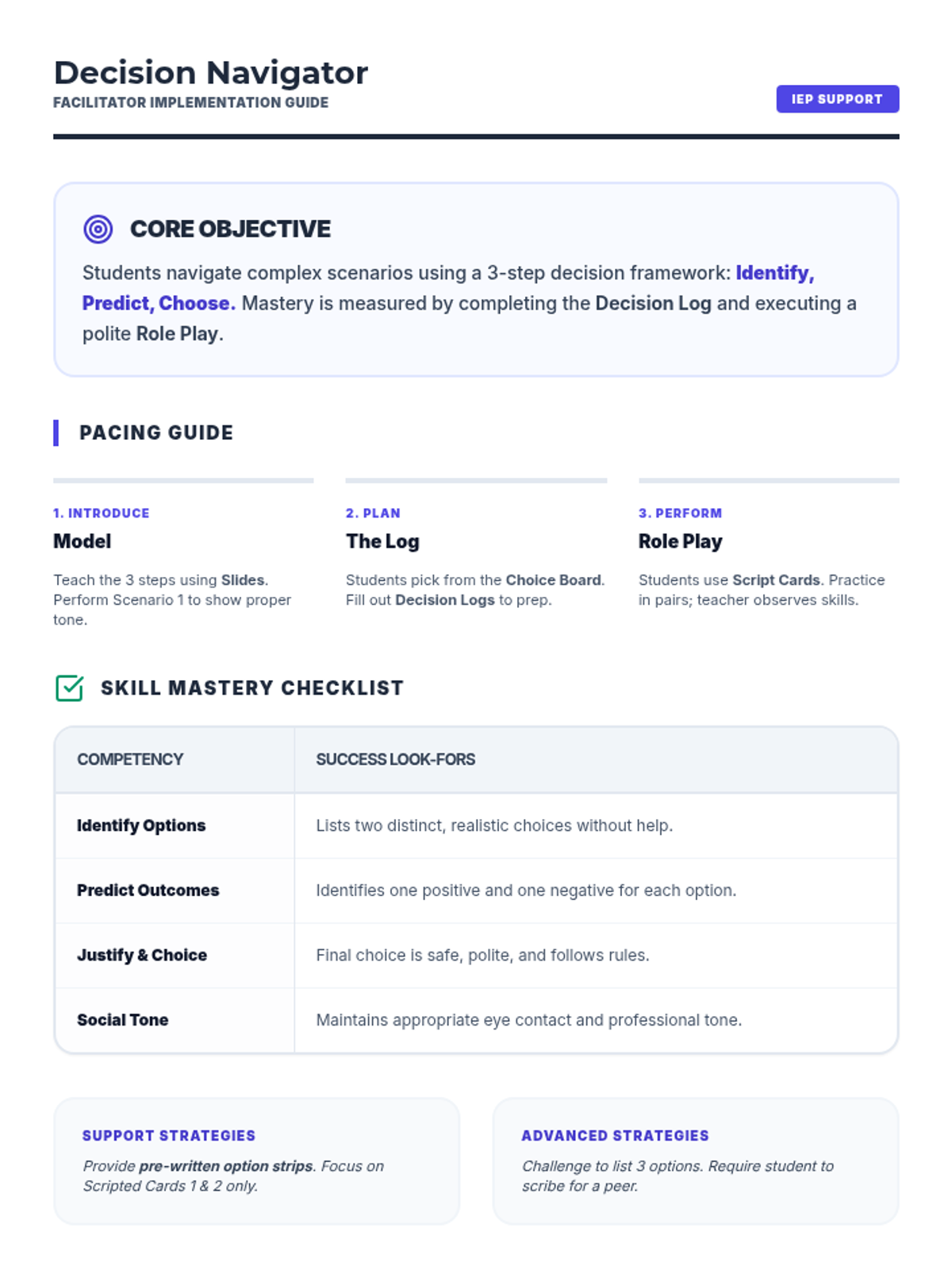
A teacher resource providing instructional pacing, a feedback checklist for evaluating IEP goals, and differentiation strategies for students with varying support needs.
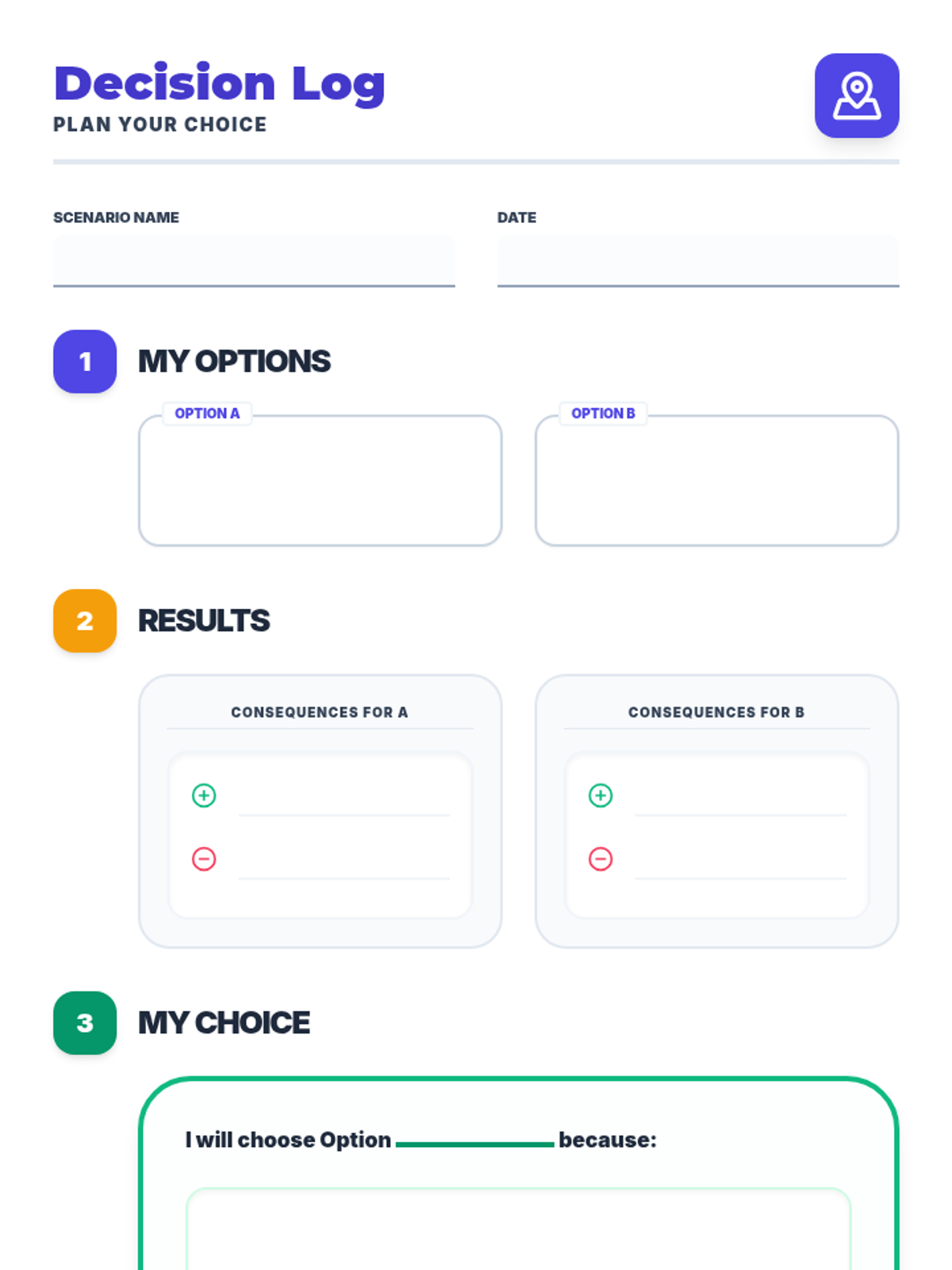
A structured student worksheet for recording the decision-making process. Includes space to identify options, weigh positive/negative consequences, and justify the final choice before role-playing.
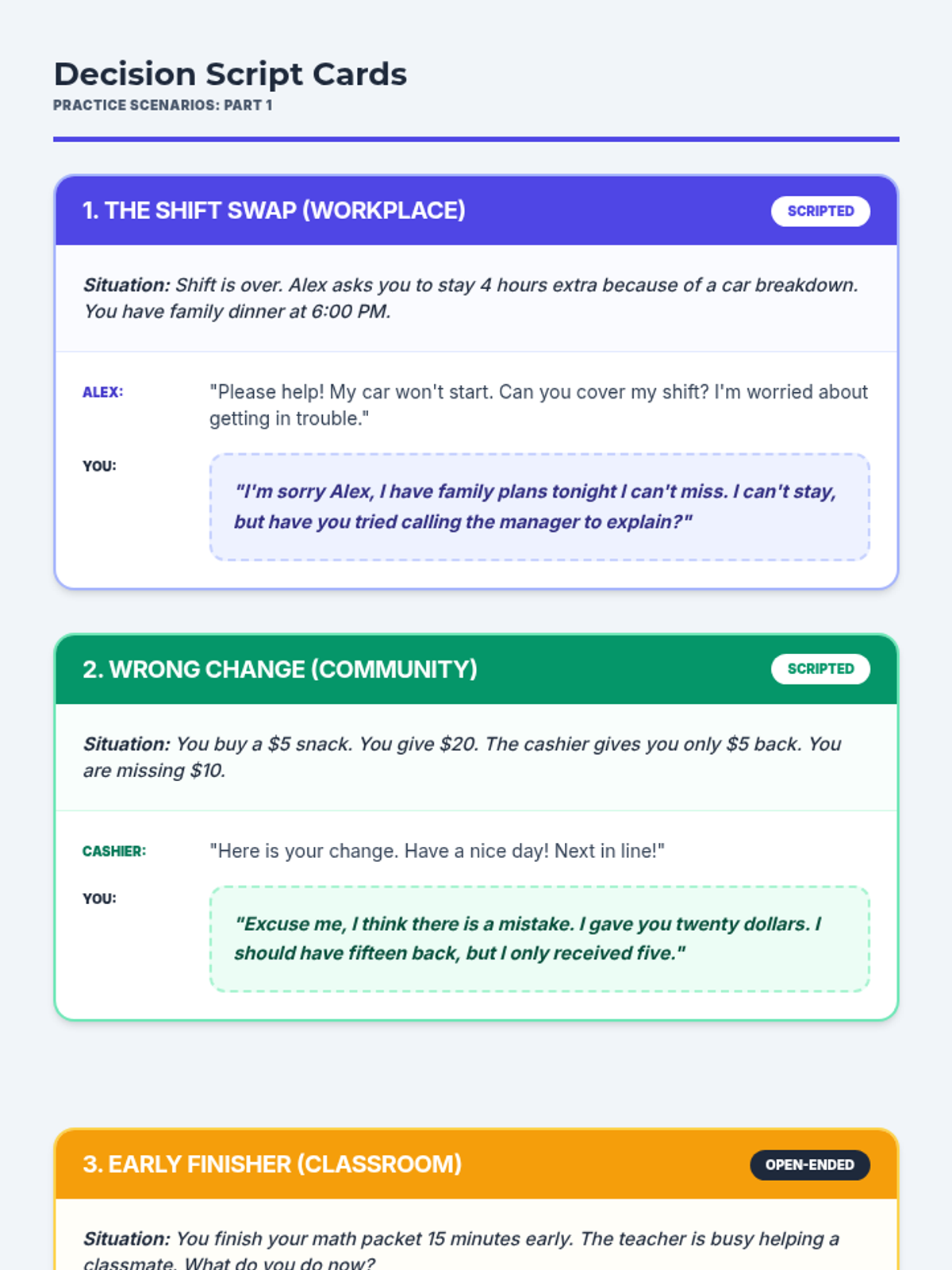
A set of five detailed role-playing cards. Two cards are fully scripted to model appropriate behavior, while three are open-ended to challenge students to apply the decision-making framework independently.
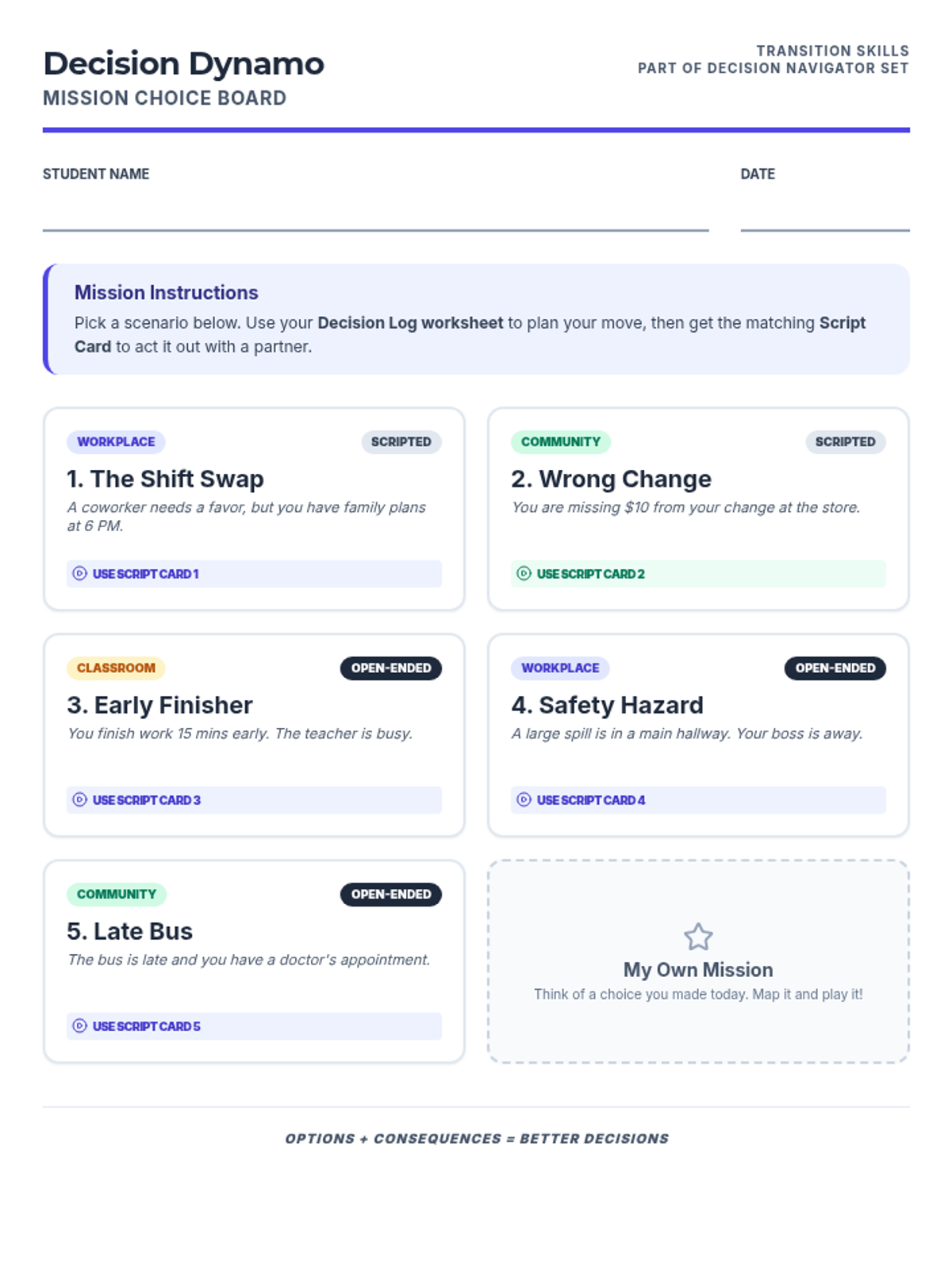
A visual choice board featuring five distinct role-playing scenarios across workplace, community, and classroom settings, labeled by type (scripted vs. open-ended).
An instructional slide deck that introduces the 3-step decision-making framework (Identify, Consider, Choose) and sets the stage for the role-playing activities.
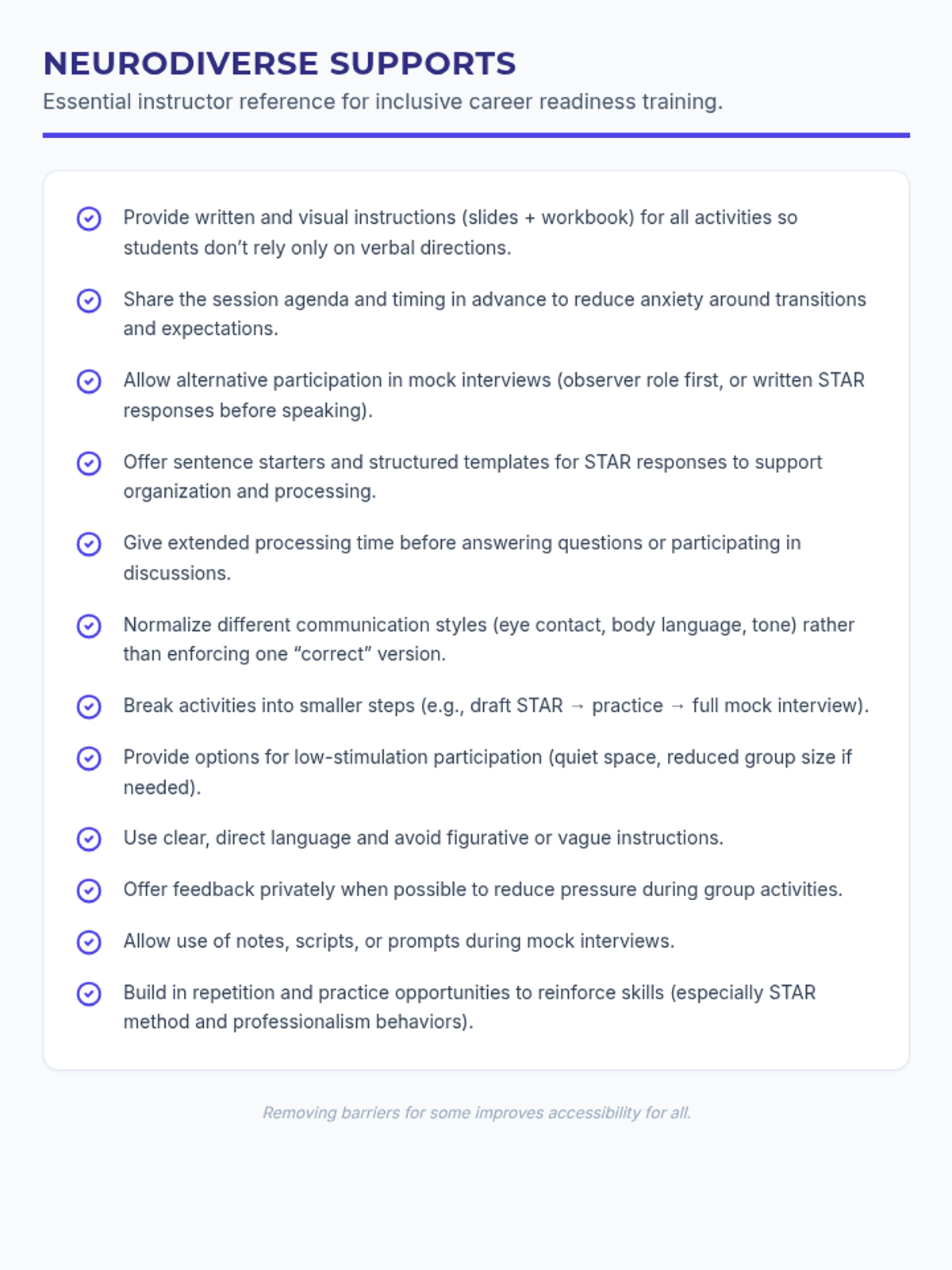
A clean, simple reference sheet for instructors listing key neurodiverse supports for the classroom.
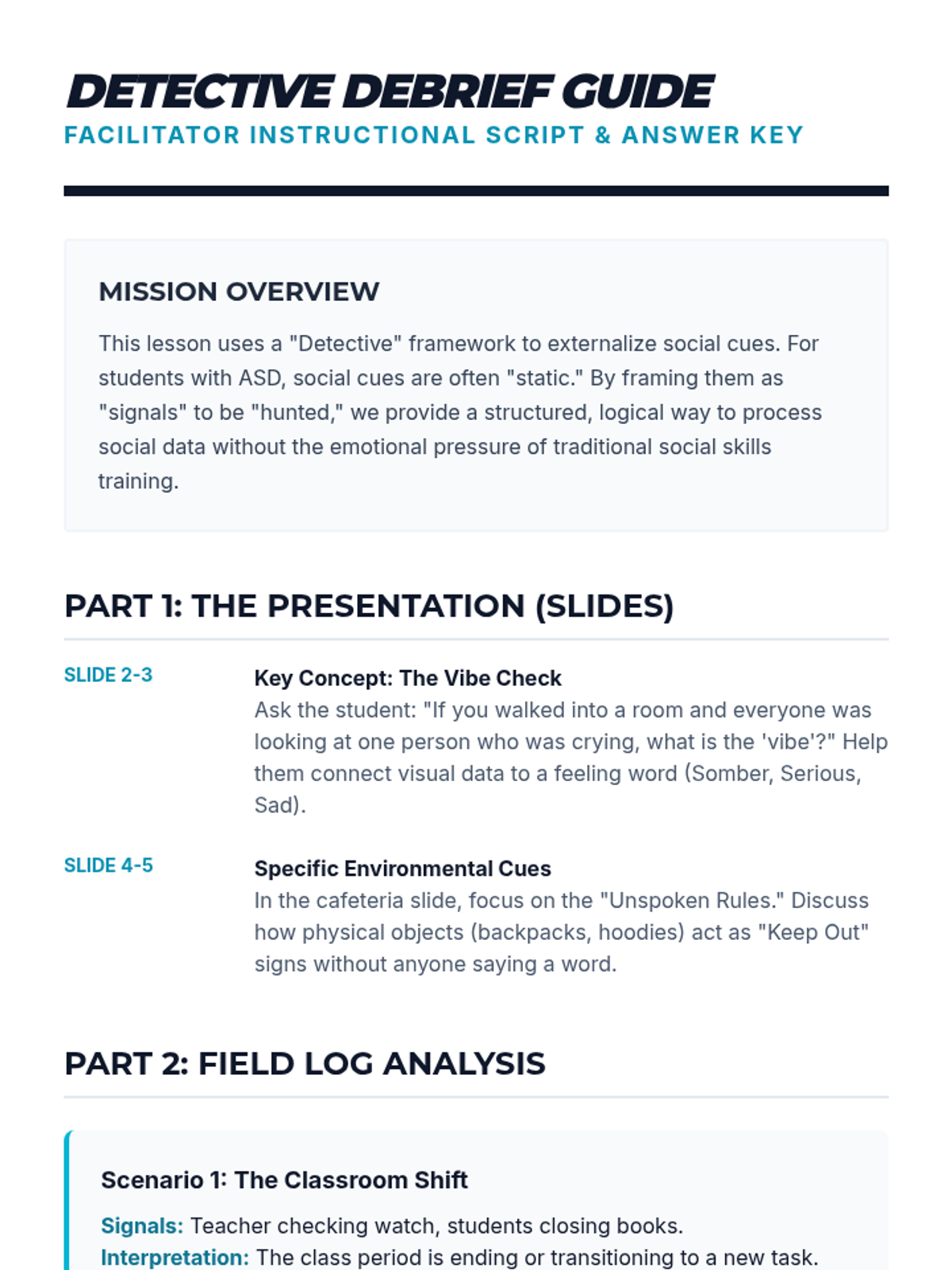
A teacher-facing guide providing instructional strategies, an answer key for the field log, and role-play scripts to practice situational awareness in real-time.
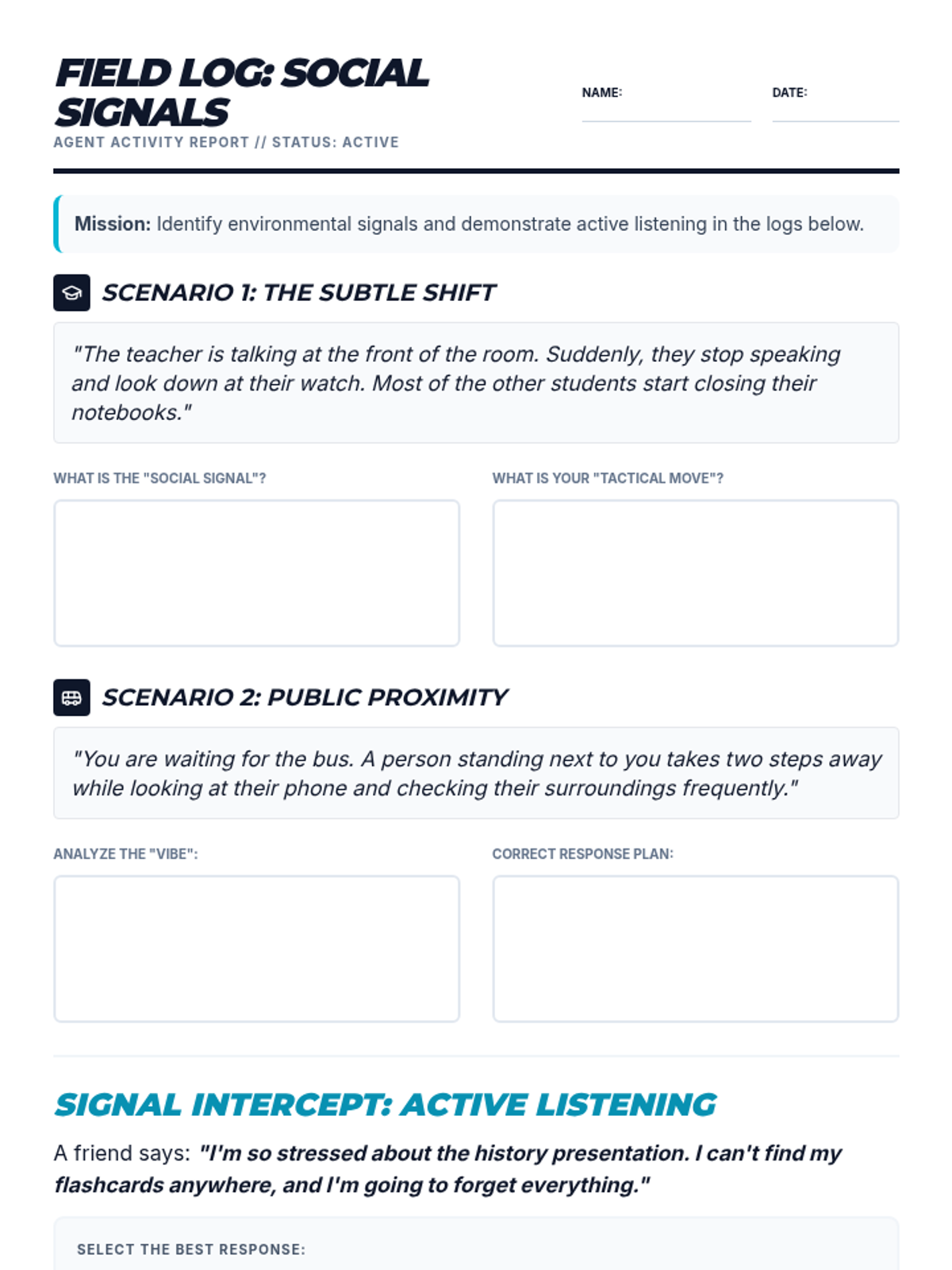
A field log style worksheet where students analyze social scenarios in classroom and public settings, choosing appropriate responses and justifying their choices.
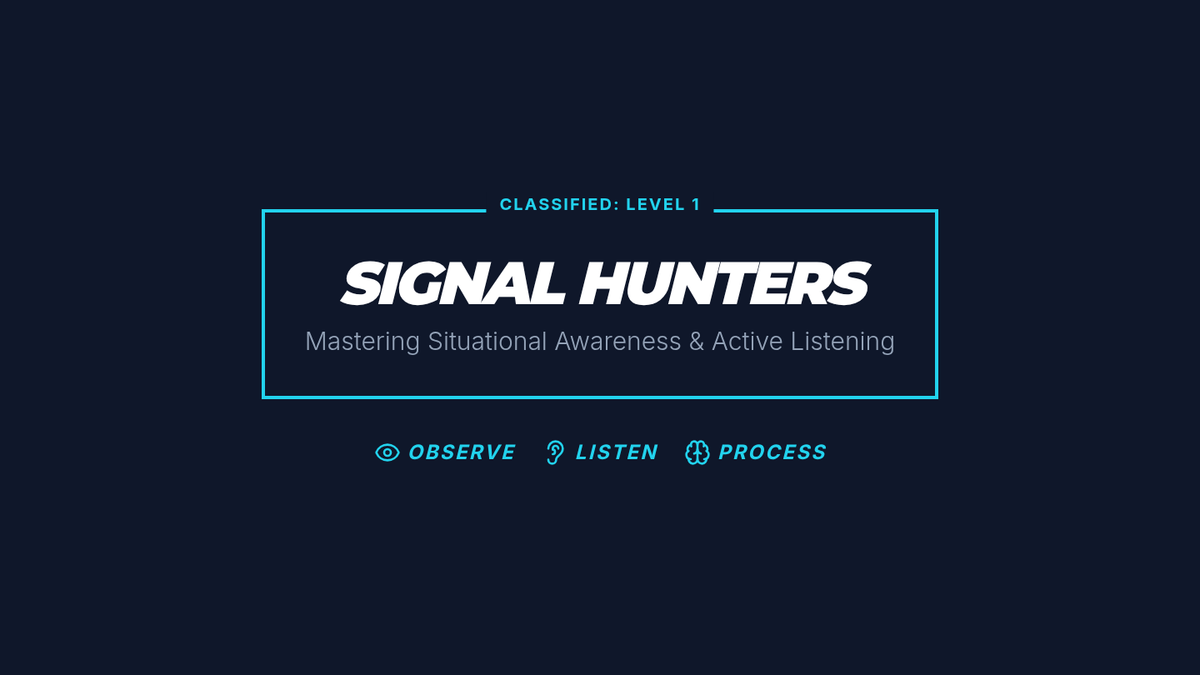
A visually engaging slide deck for teens that uses a 'Social Signal Hunter' theme to teach situational awareness and active listening across classroom, cafeteria, and public settings.
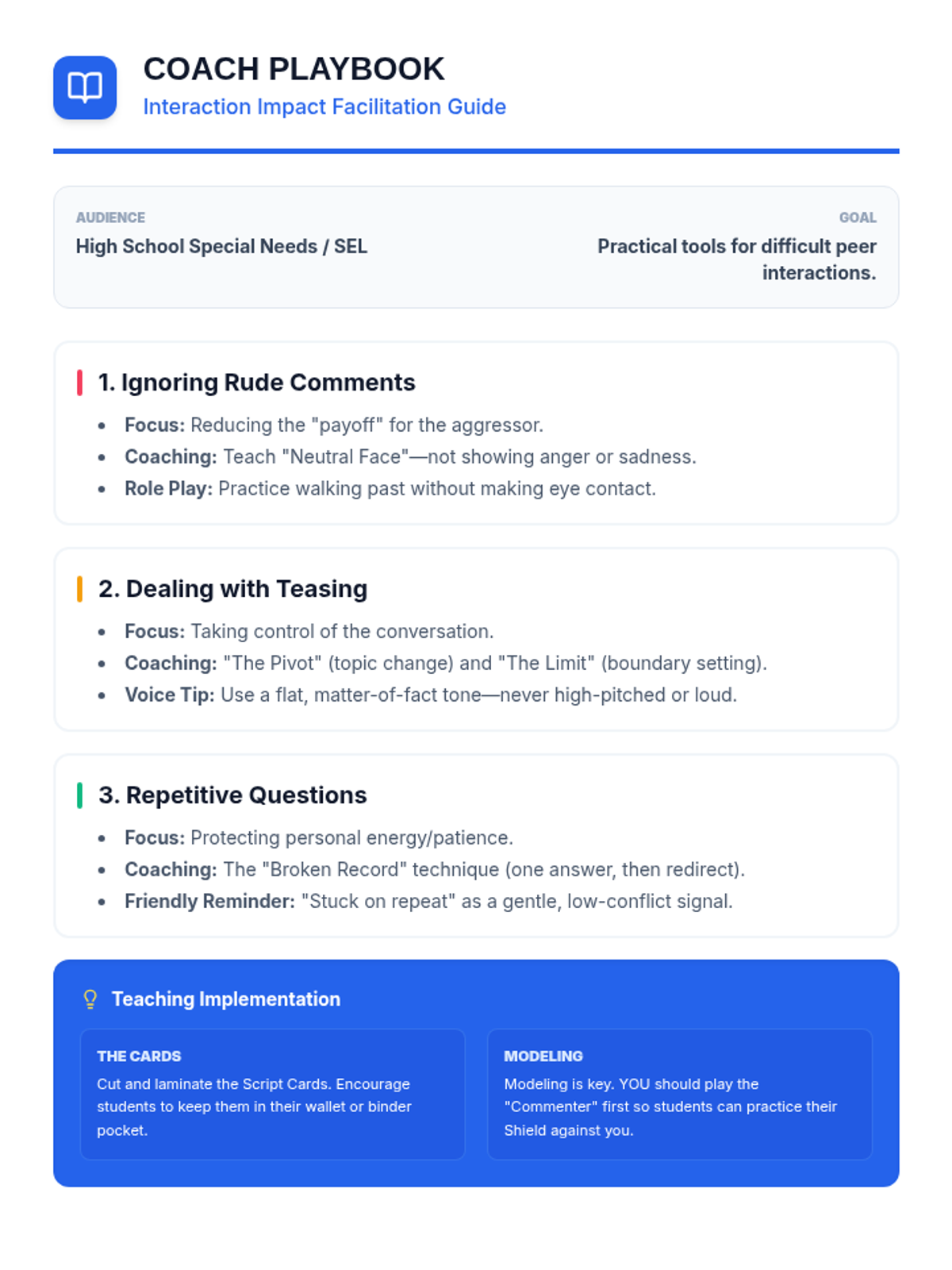
A facilitator's guide for teachers to deliver the Interaction Impact lesson, including coaching tips for each social strategy and implementation advice.
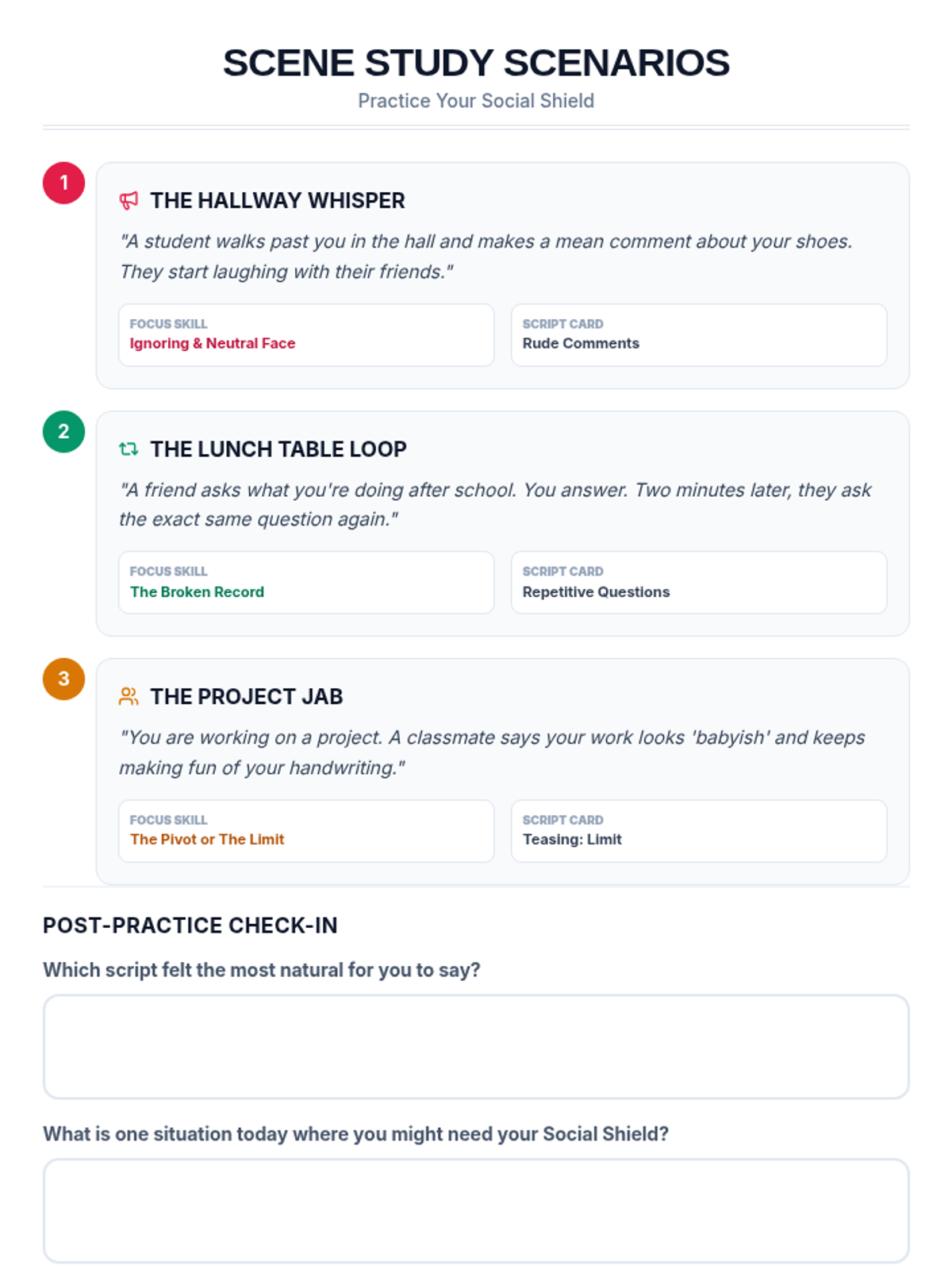
Relatable role-play scenarios for high school students to practice social strategies in common school settings like hallways, lunchrooms, and classrooms.