A set of role-play scenario cards and a debriefing log designed to help students practice requesting specific accommodations in common classroom situations.
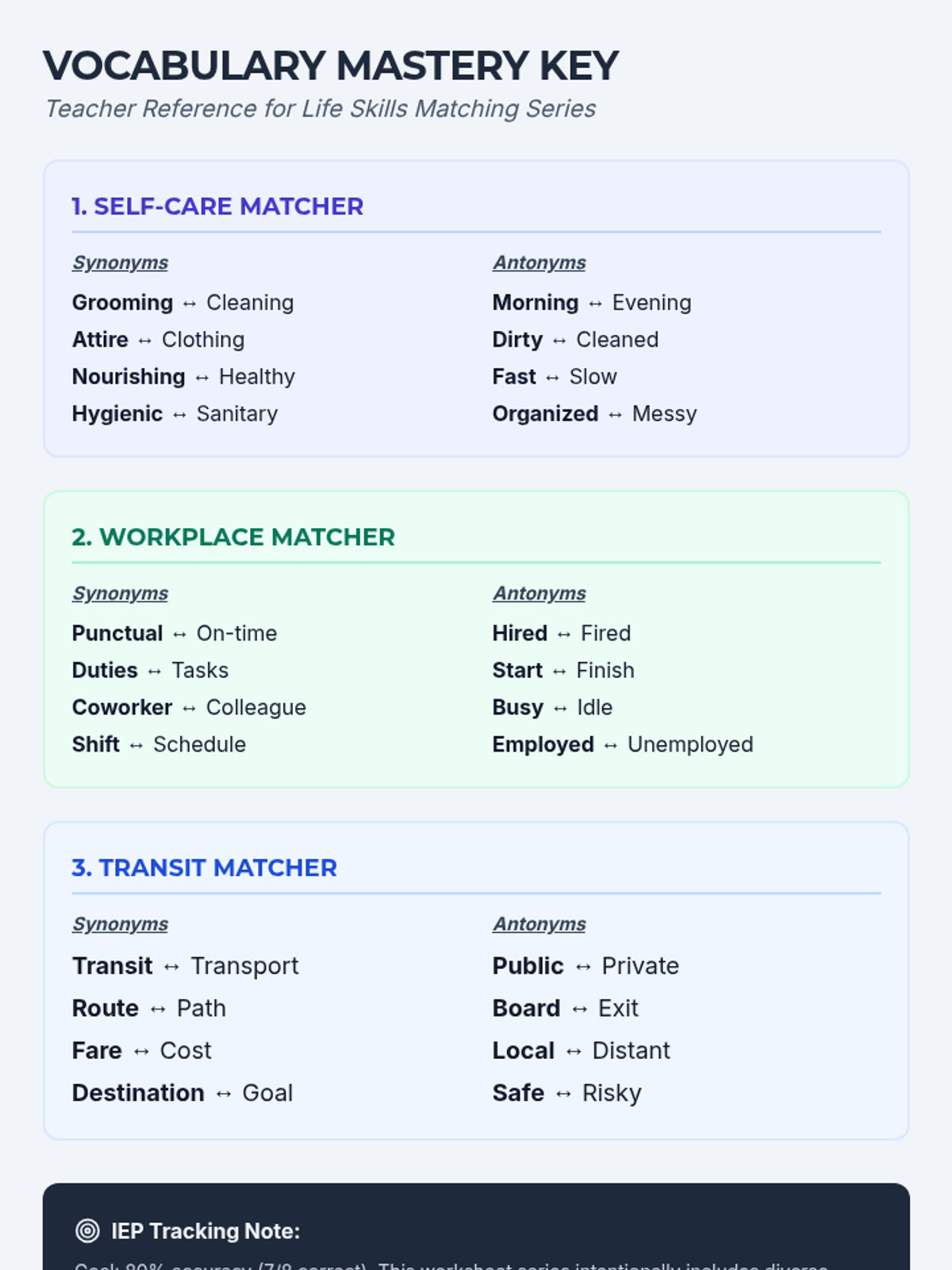
A comprehensive answer key for the life skills vocabulary matching series, covering self-care, workplace, and community transit worksheets.
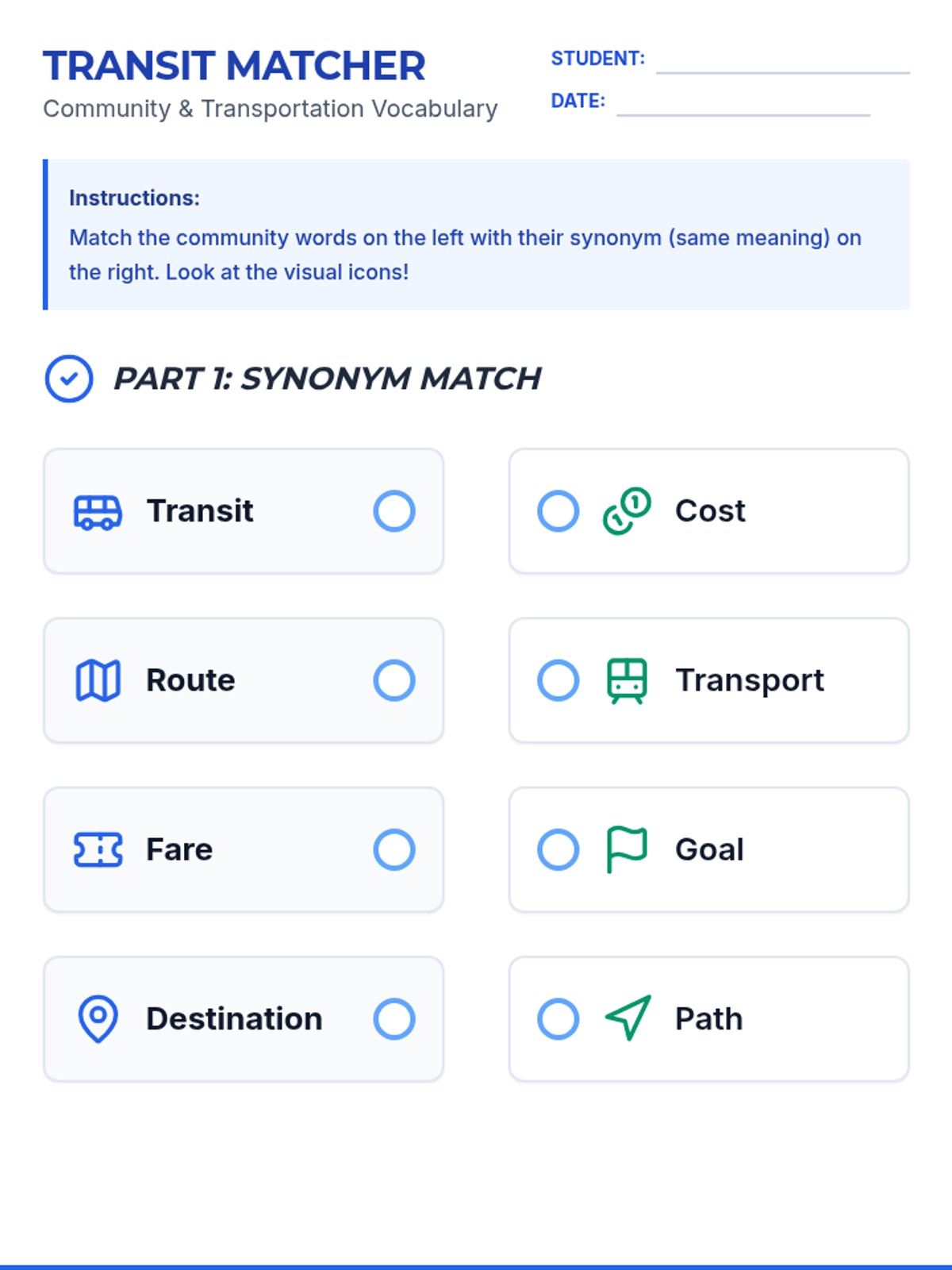
A community and transportation-themed matching worksheet for life skills students, using visual icons to help identify synonyms and antonyms of functional vocabulary.
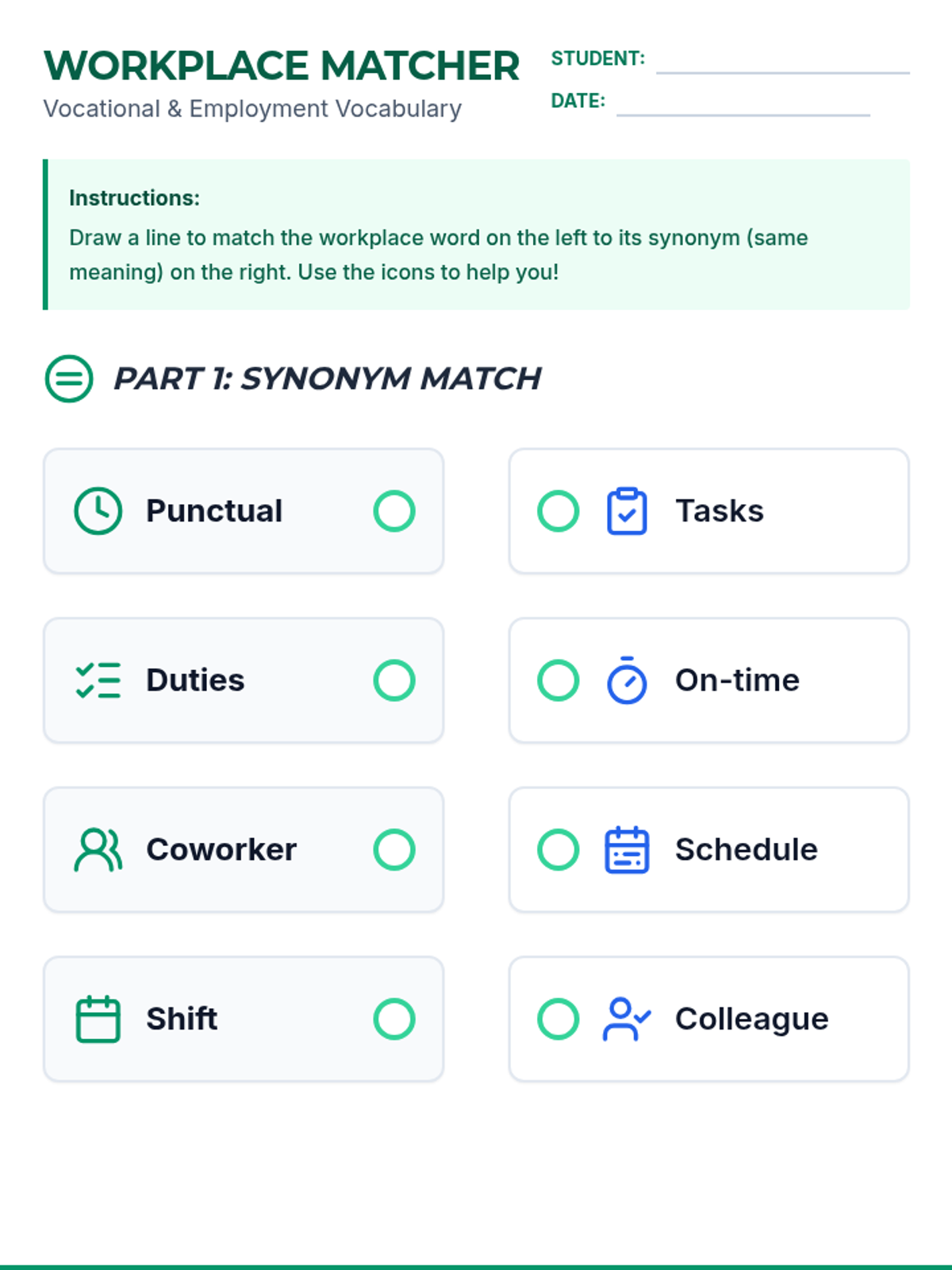
A workplace-themed matching worksheet that focuses on employment vocabulary, using icons to support the identification of synonyms and antonyms.
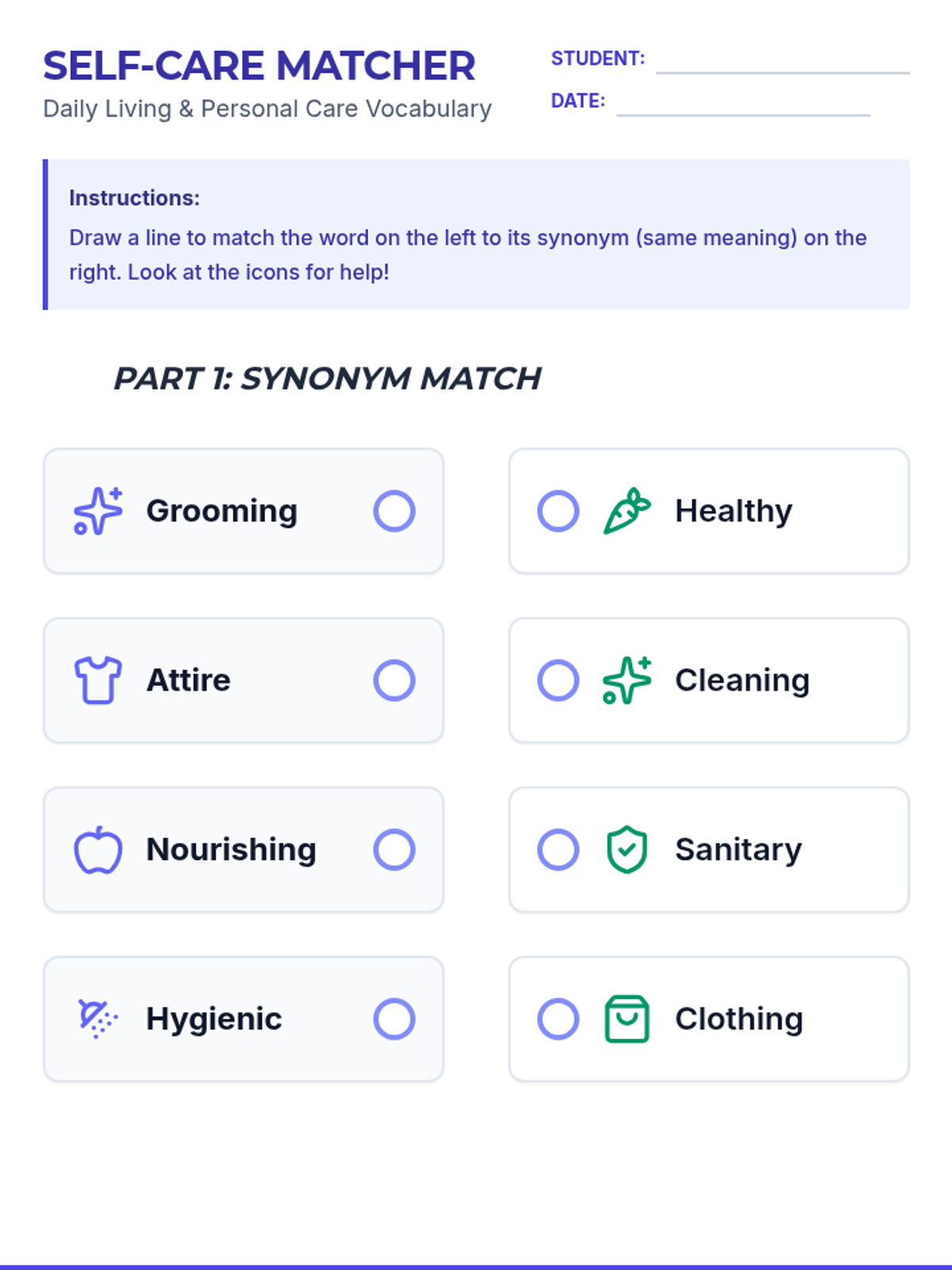
A matching worksheet for daily living and self-care vocabulary, featuring synonym and antonym sections with visual icon support for students.
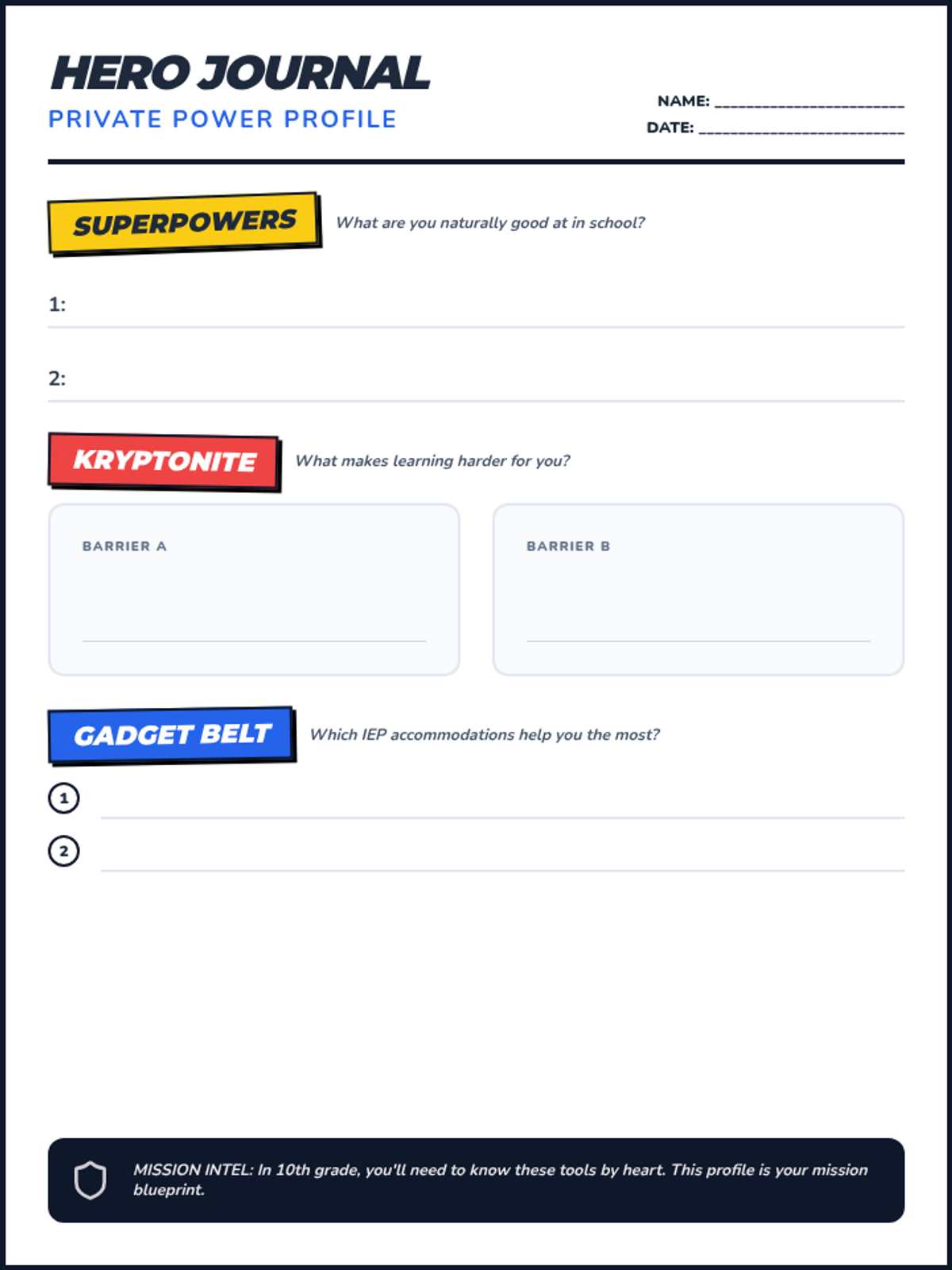
A student journal for reflecting on strengths, challenges, and accommodations, including a step-by-step drafting area for creating a personalized advocacy script.
An engaging slide deck using a superhero metaphor to explain learning profiles, challenges (kryptonite), and accommodations (gadgets) to 9th grade students.
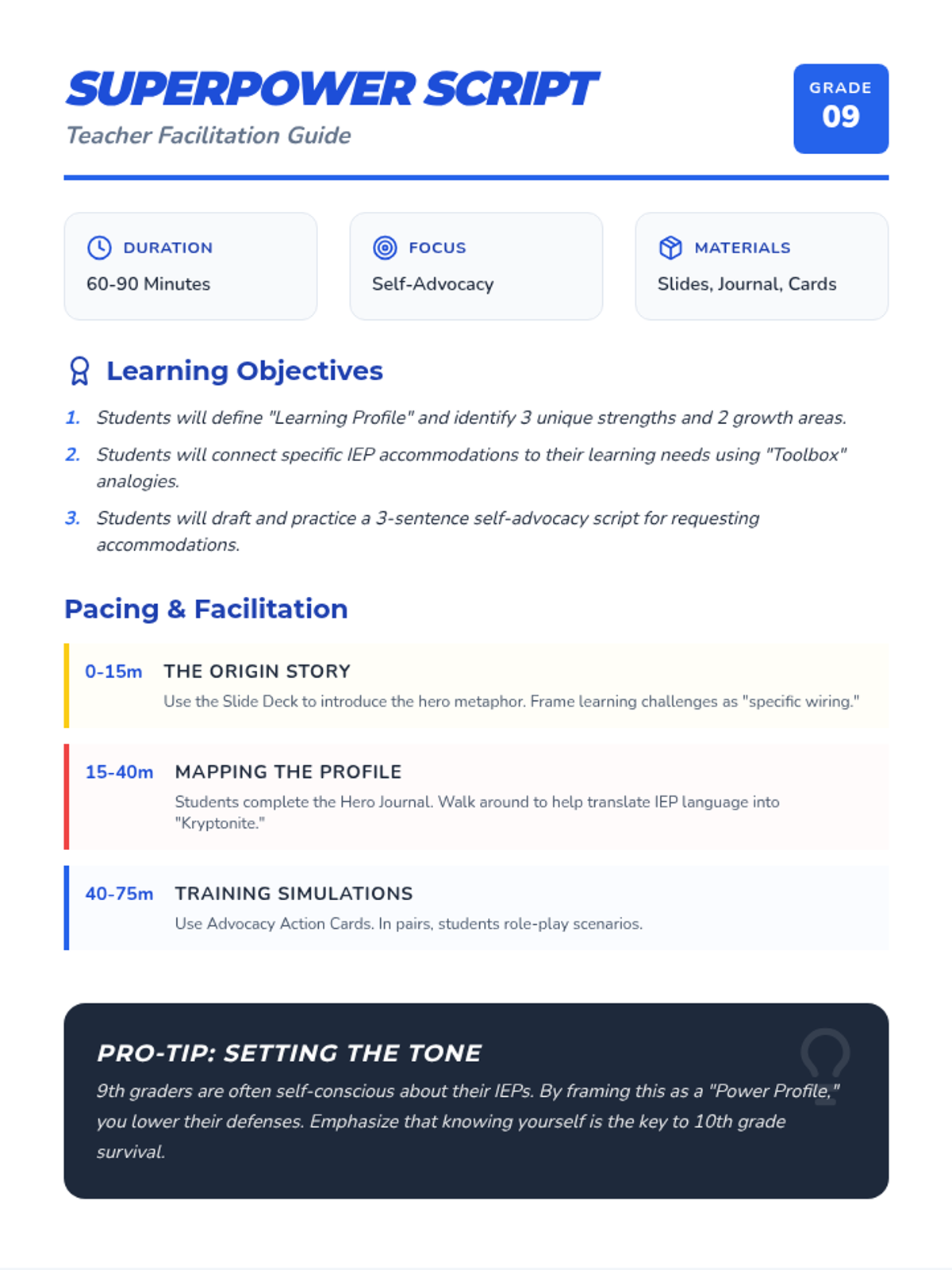
A detailed teacher facilitation guide for the 'Learning Superpowers' workshop, featuring pacing, key vocabulary, and an advocacy script template.
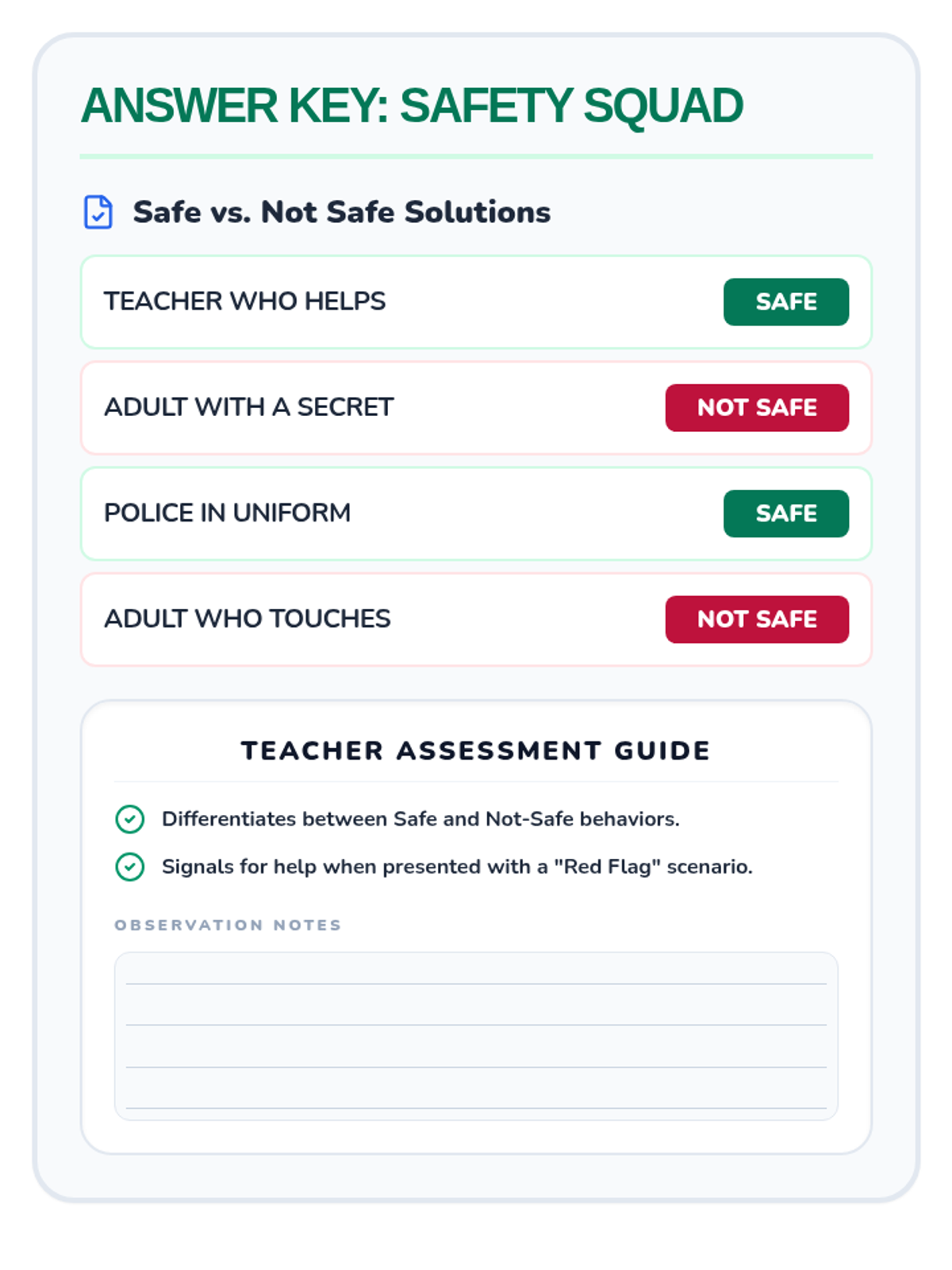
Assessment guide and answer key for the Safety Squad lesson. Updated to include criteria for identifying safety red flags like secrets and boundary violations. Consolidated to a single page.
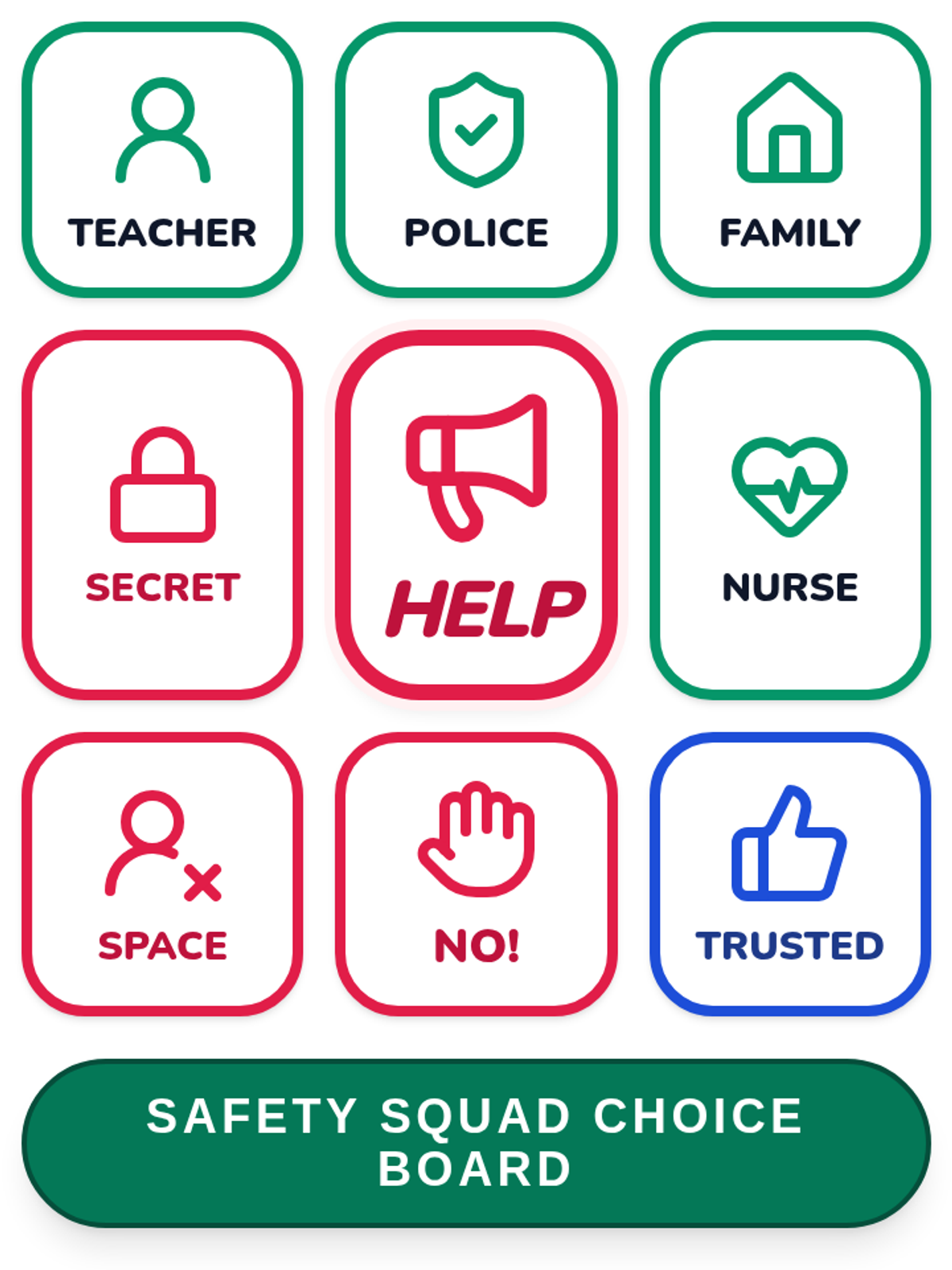
High-contrast communication board for safety identification. Includes specific icons for reporting secrets and boundary violations (Space/NO). Optimized for students with severe disabilities.
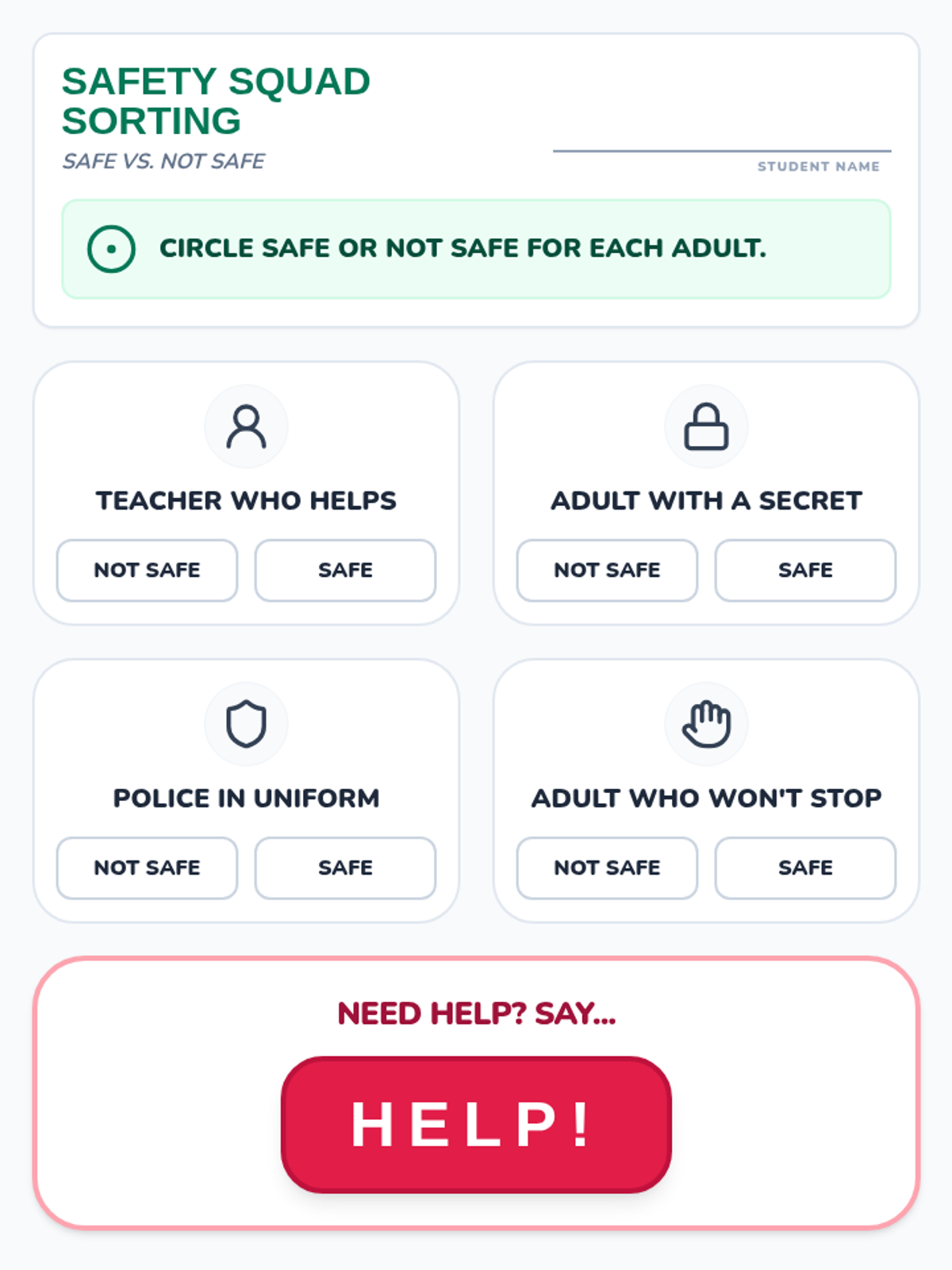
A visual-choice sorting worksheet for identifying safe vs. not-safe behaviors in adults. Neutral styling for icons and buttons to ensure conceptual identification. Consolidated to a single page. High contrast labels for easy reading.
High-contrast presentation slides for identifying trusted adults. Includes new content on safety 'red flags' such as secrets, lack of personal space, and not respecting boundaries. Revised for uniform answer choices and high visibility. Space added in header of Slide 3.
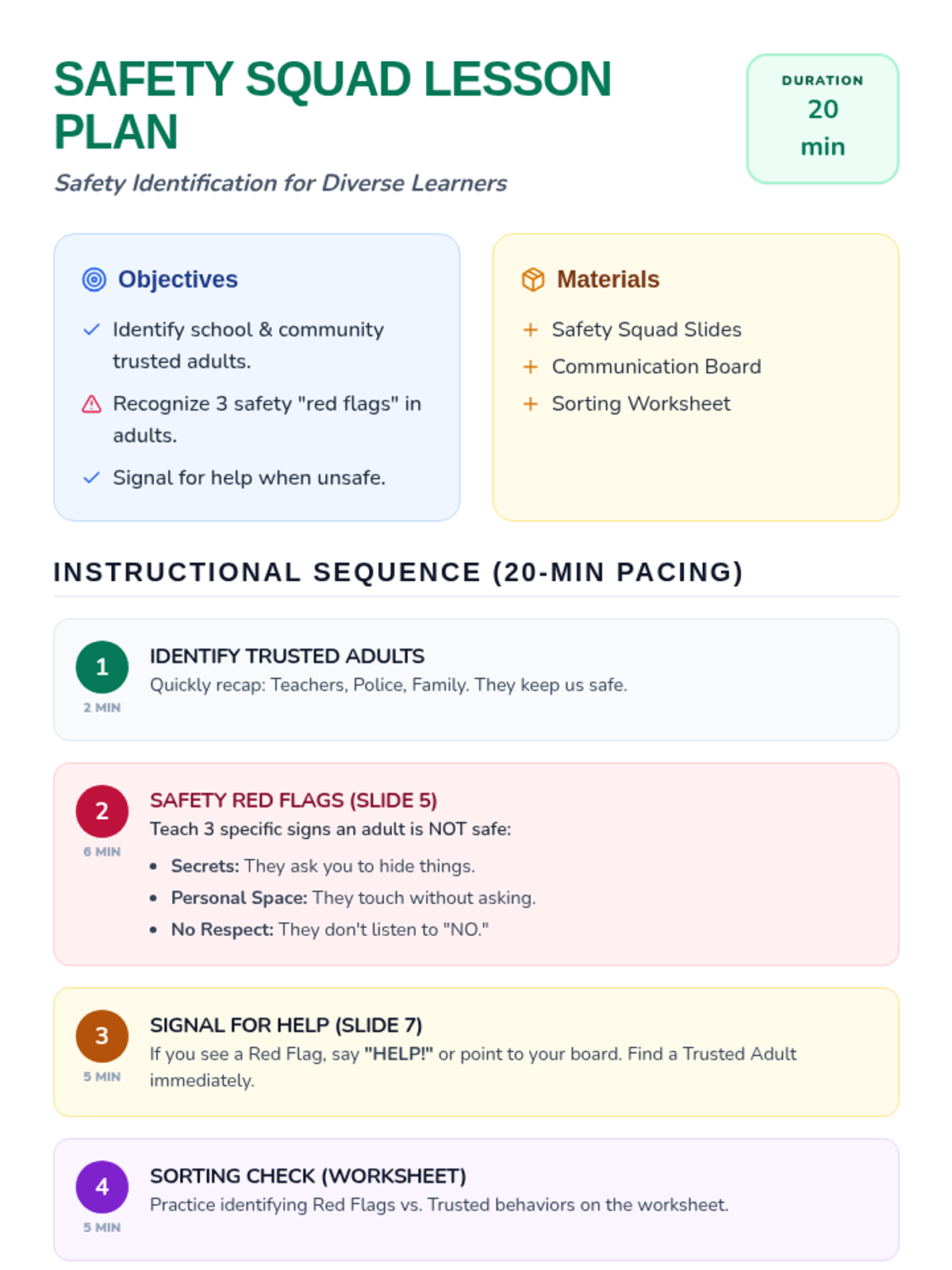
A streamlined 20-minute lesson plan for teaching safety skills to students with disabilities, featuring clear timestamps and a specific segment on recognizing safety red flags such as secrets and boundary violations.
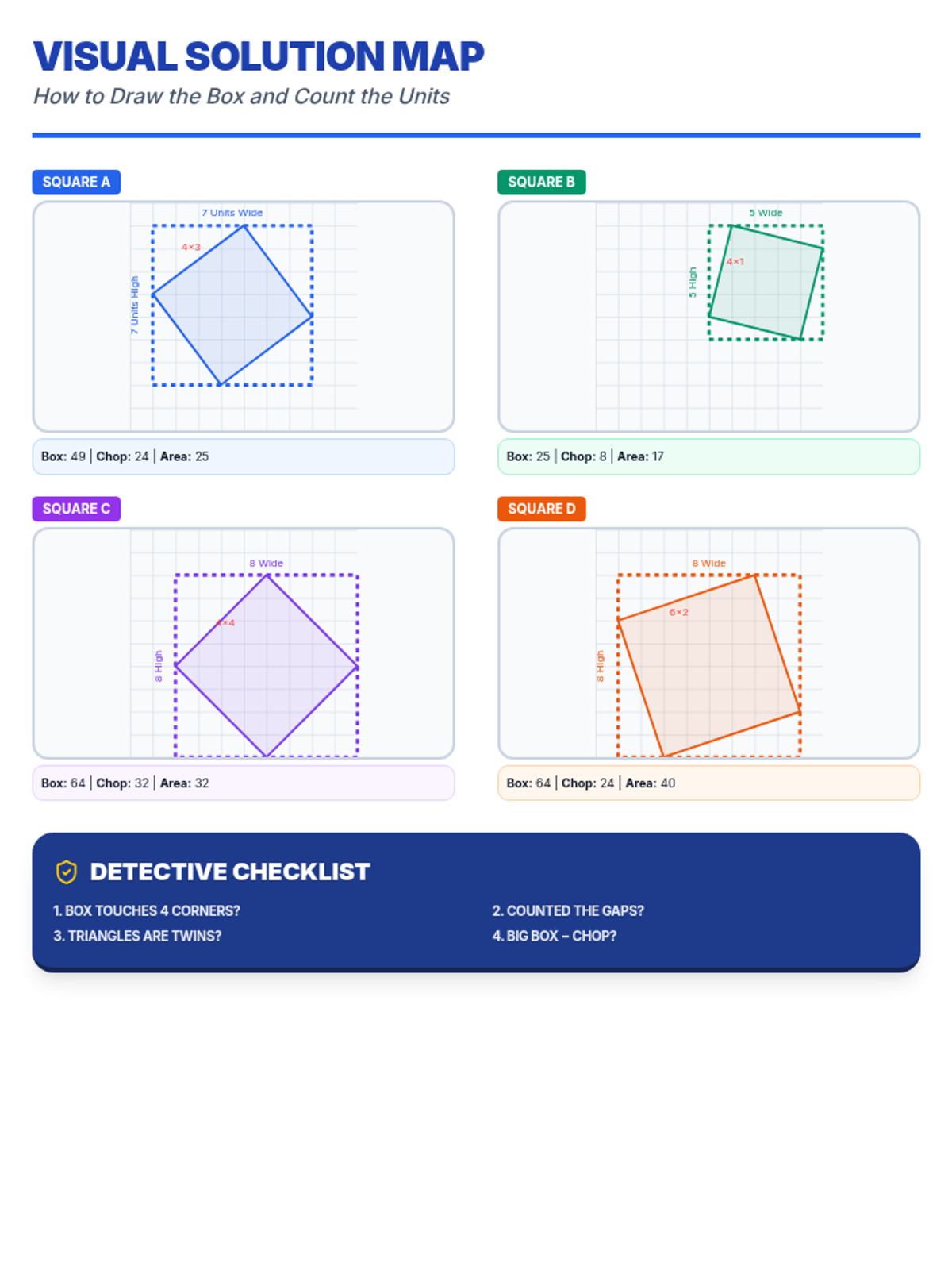
A visual solution map for the "Box and Chop" method, showing exactly where to draw the bounding boxes and how to count the grid units for squares A, B, C, and D. Ideal for teachers to project or share with students needing visual support.
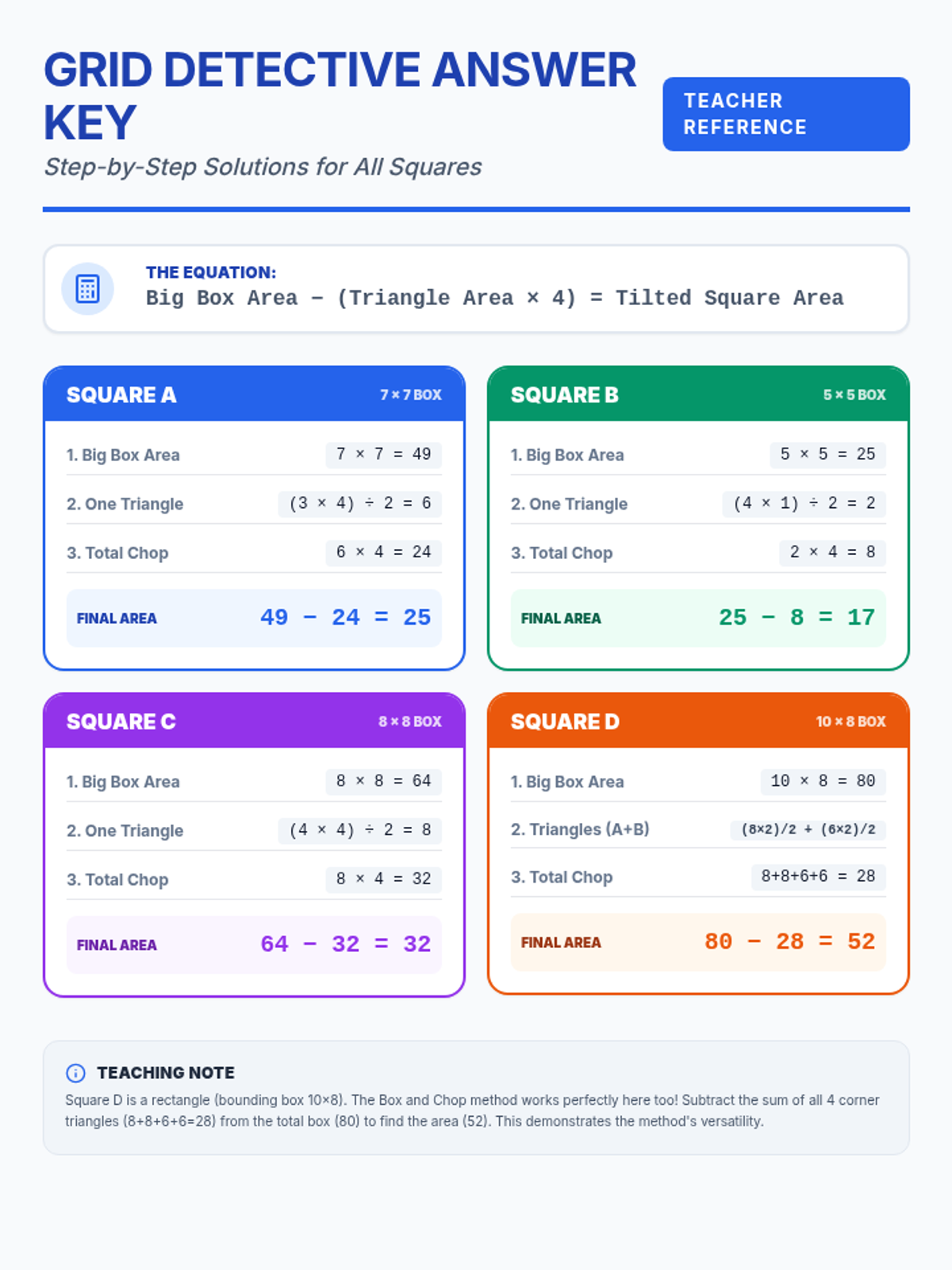
A corrected answer key for the "Box and Chop" method, showing step-by-step solutions for squares A, B, C, and D. Includes accurate grid measurements for the Illustrative Mathematics practice set.
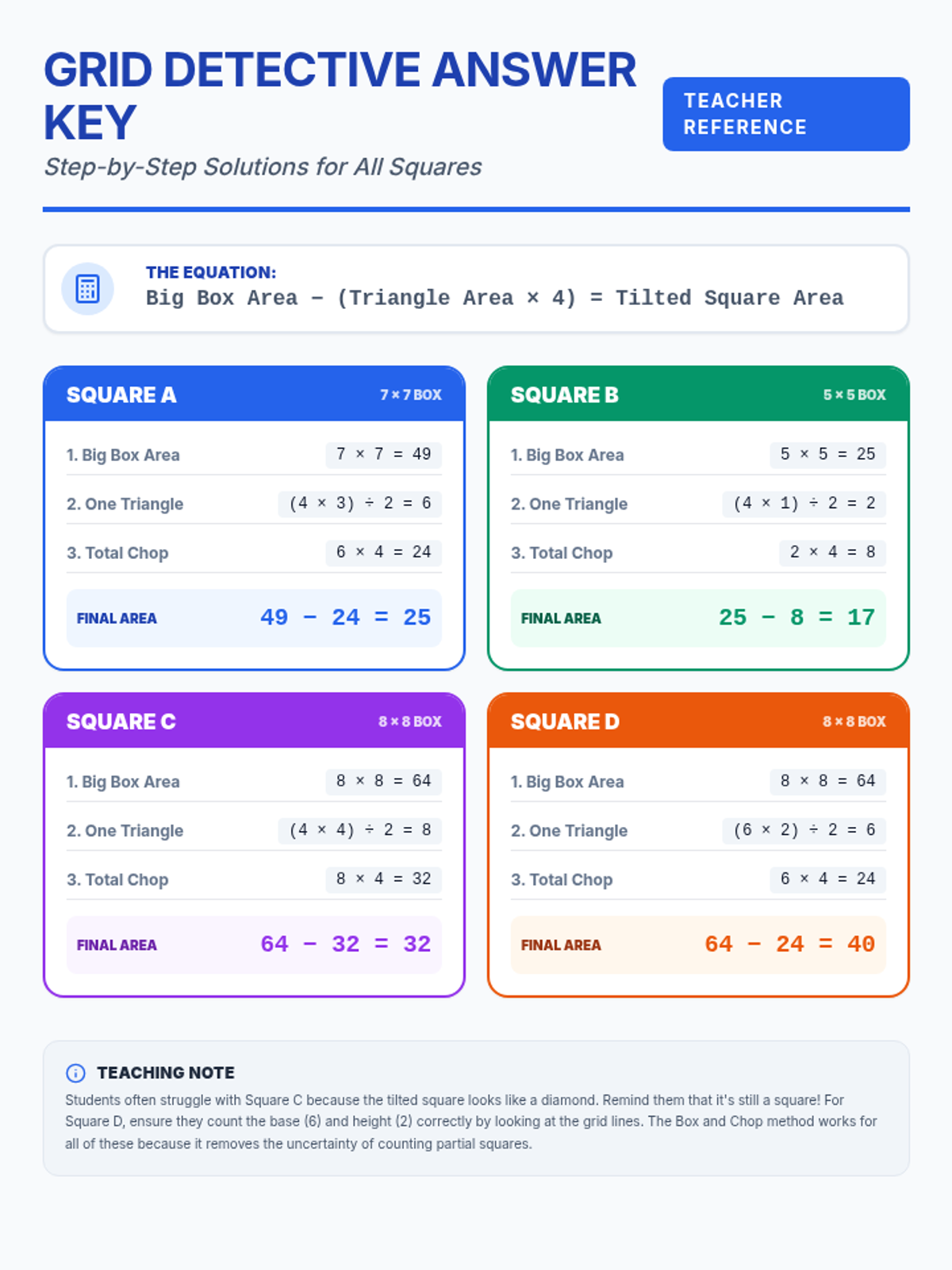
A detailed answer key for the "Box and Chop" method, showing step-by-step solutions for squares A, B, C, and D from the illustrative mathematics grid. Includes calculations for big box area, triangle area, and final subtraction.
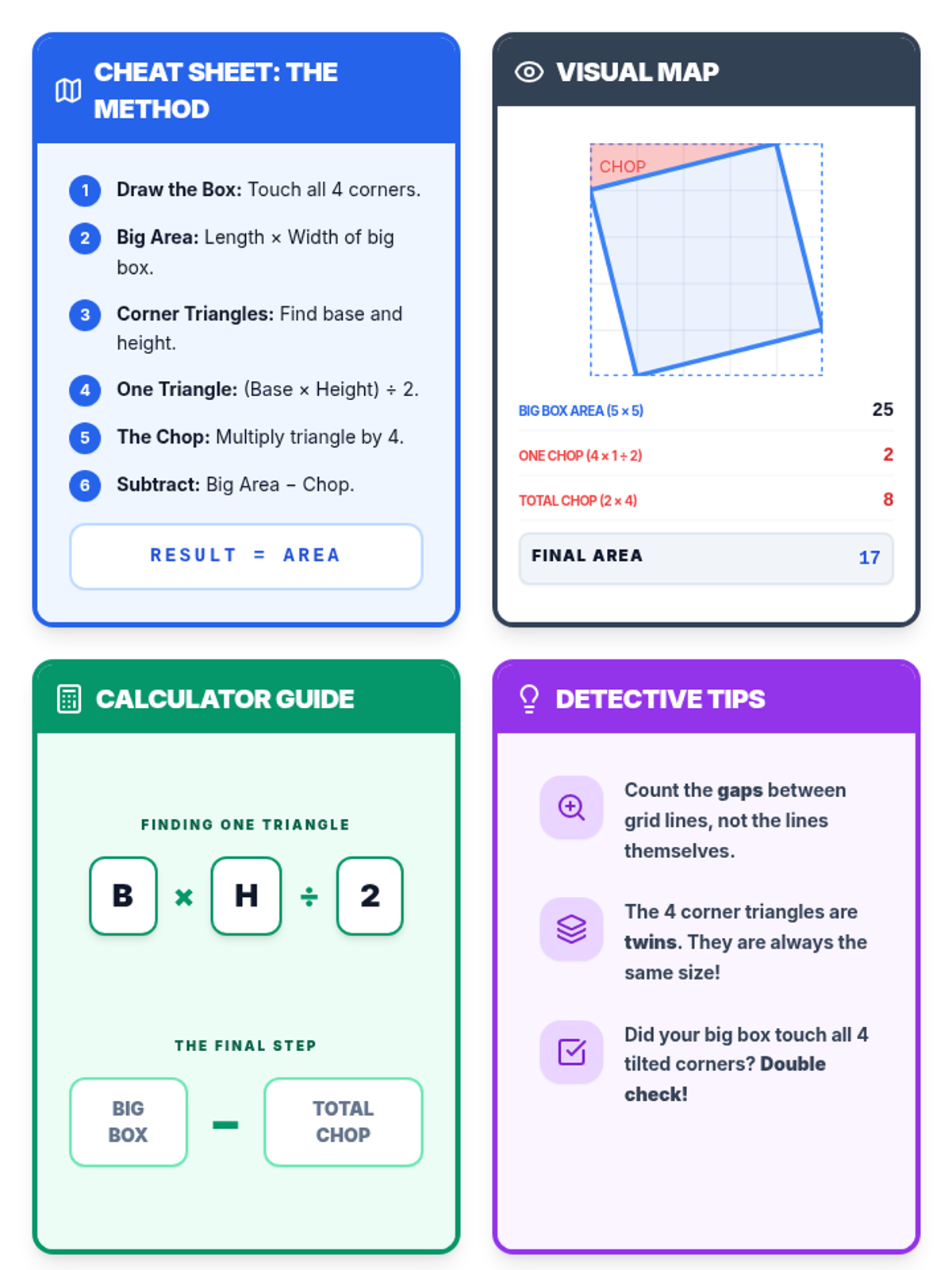
Portable task cards for the "Box and Chop" method. Includes a cheat sheet, visual map, calculator guide, and detective tips to support student independence.
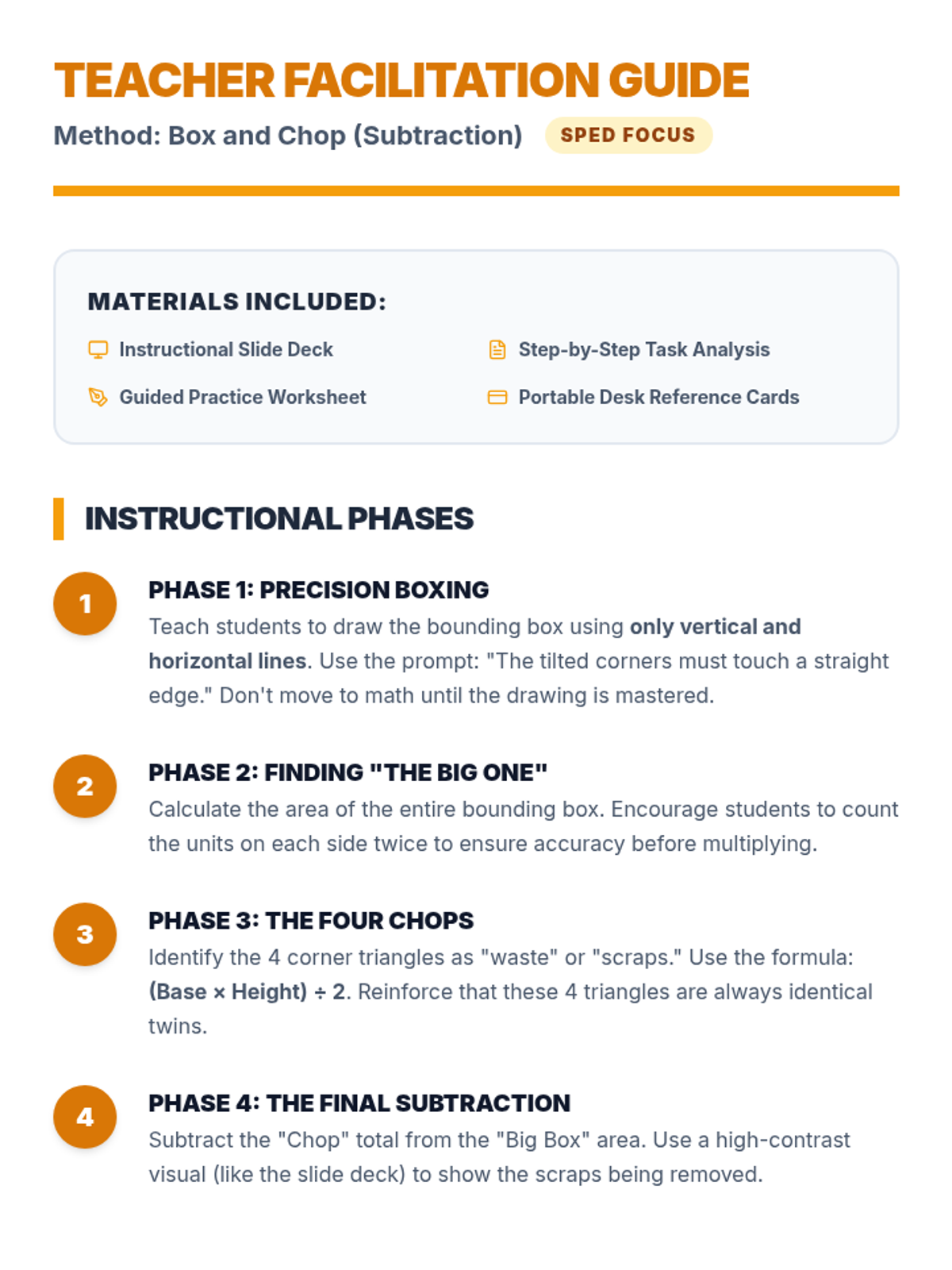
A comprehensive teacher's guide for facilitating the "Box and Chop" method. Includes instructional phases, specialized support strategies for SpEd, and common misconceptions to monitor.
An instructional slide deck using the "Box and Chop" method to teach finding the area of tilted squares. Features high-contrast visuals, step-by-step animations, and simplified language for special education students.
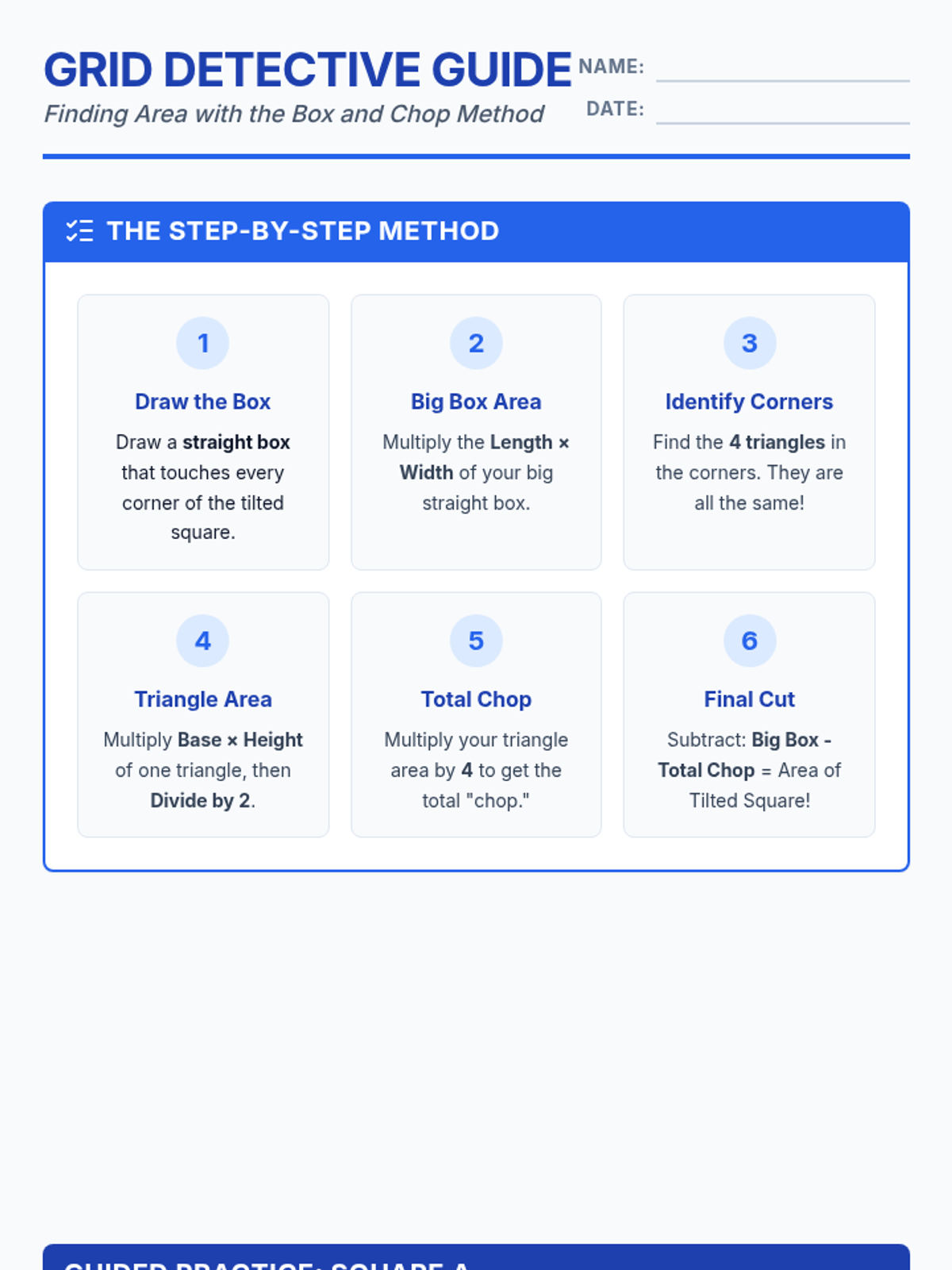
A guided practice worksheet for the "Box and Chop" (subtraction) method, featuring a visual task analysis and step-by-step scaffolding for special education students.
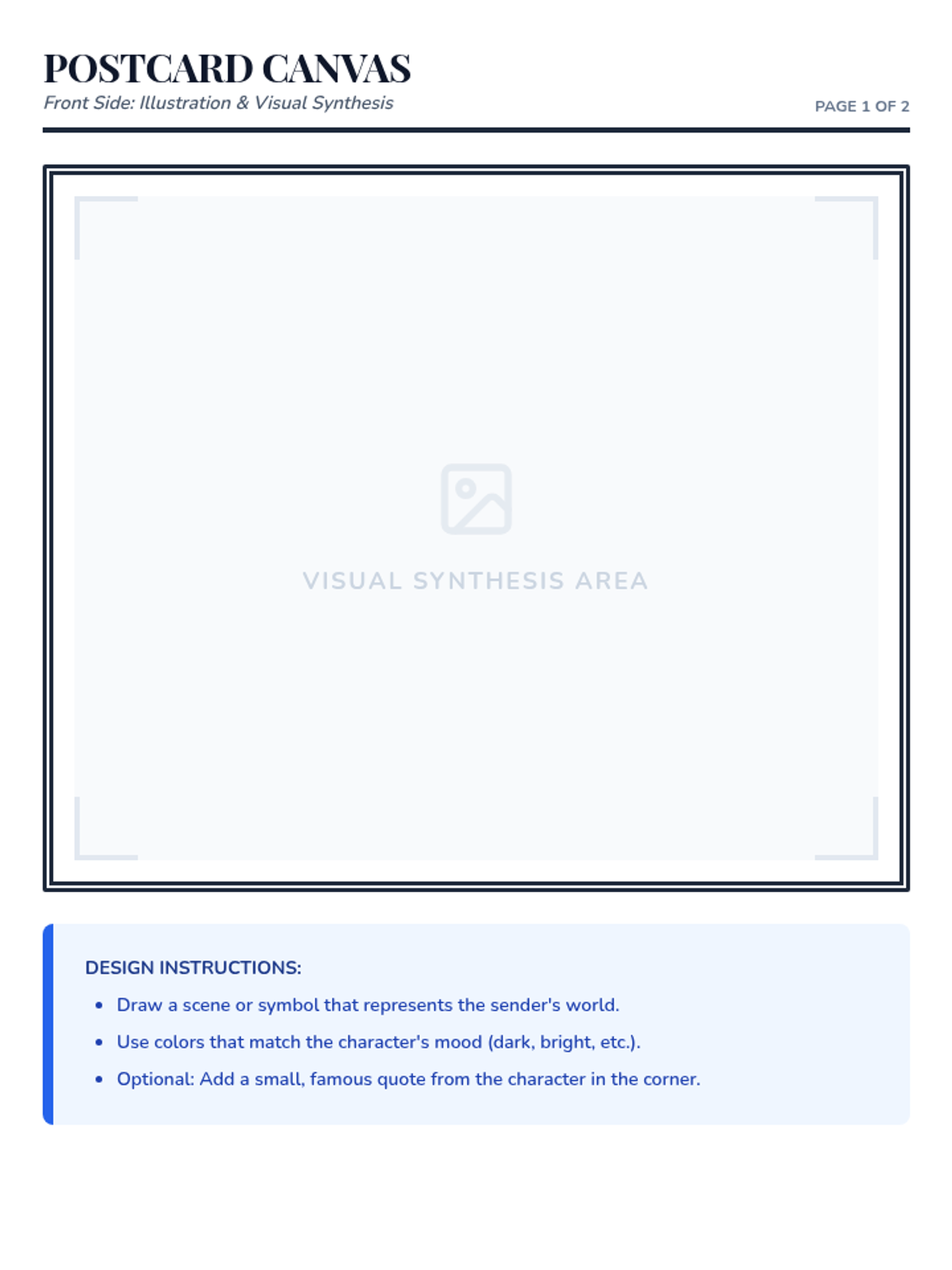
Final project templates for students to create their literary postcards, featuring a blank canvas for illustrations and a structured writing side with an address area and custom stamp design space.
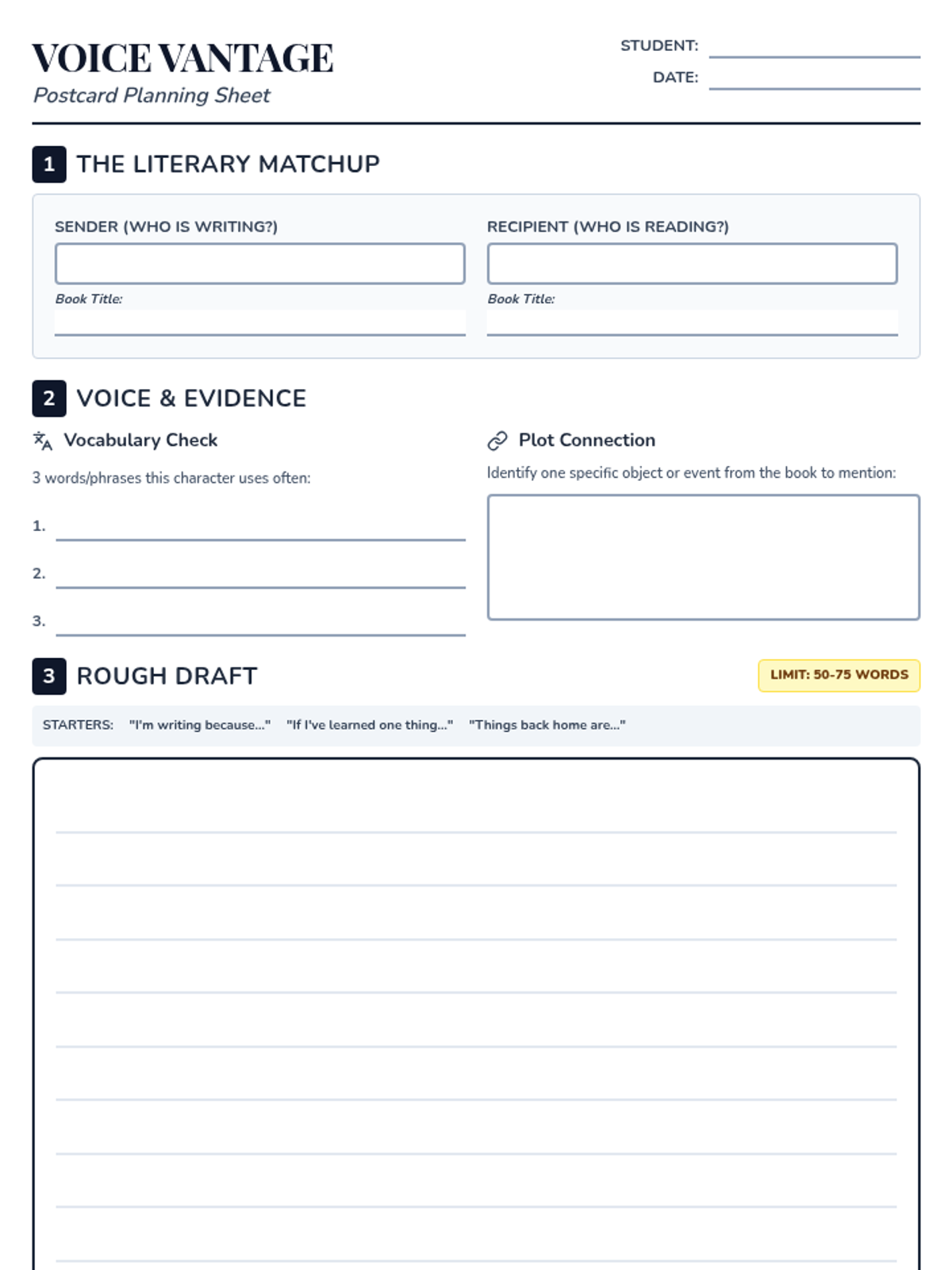
A planning worksheet to help students brainstorm character voice, plot connections, and draft their literary postcard messages with sentence starters for scaffolding.
An instructional slide deck for the Postcards to the Past project, providing a visual model, key criteria for success, and clear step-by-step instructions.