A student-facing adventure log to accompany the CYOA story. It includes 'after' sentence completion prompts and a target word checklist for vocalic /r/ ('or' and 'air') sounds. Revised for better layout and single-page fit.
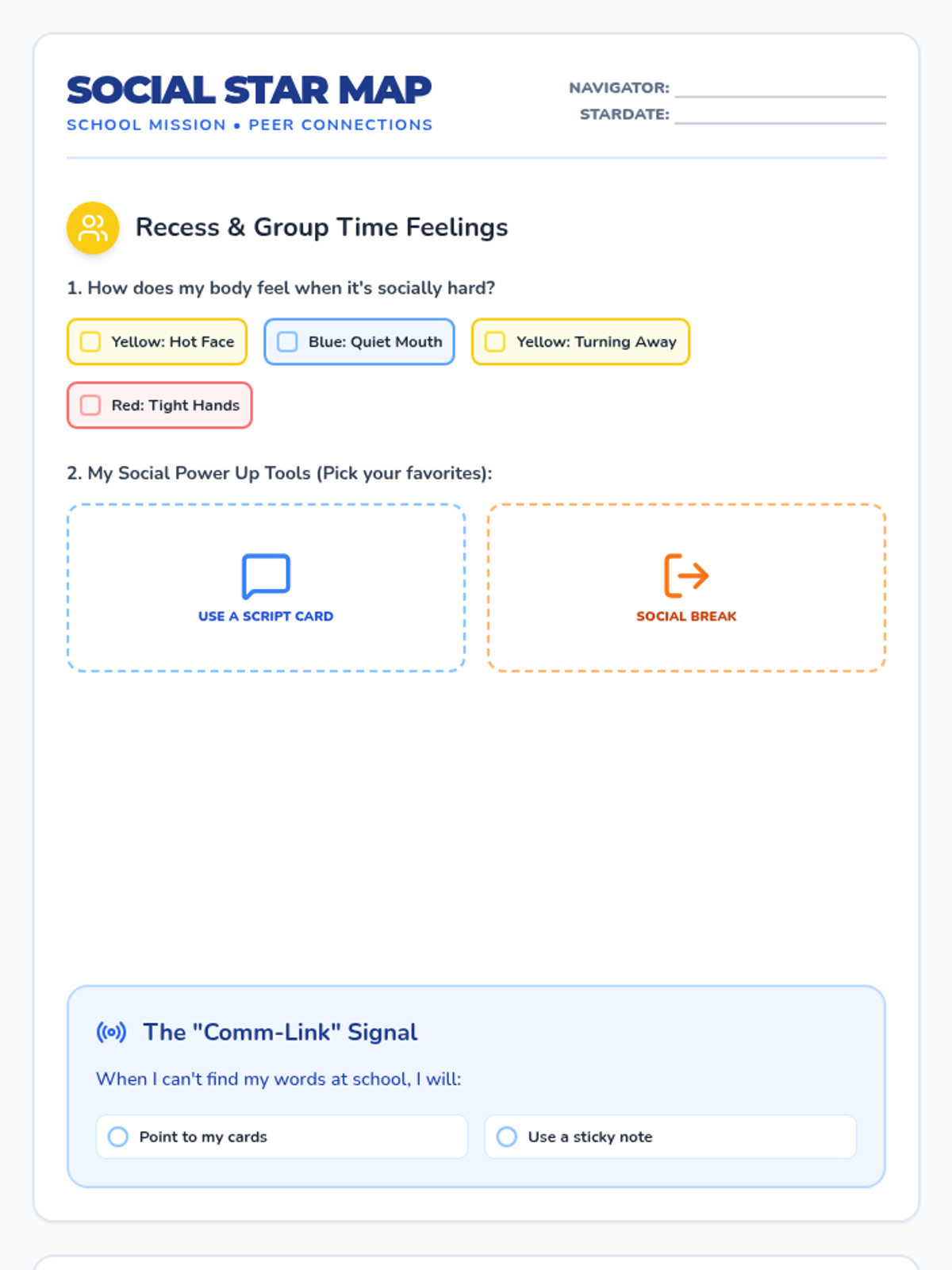
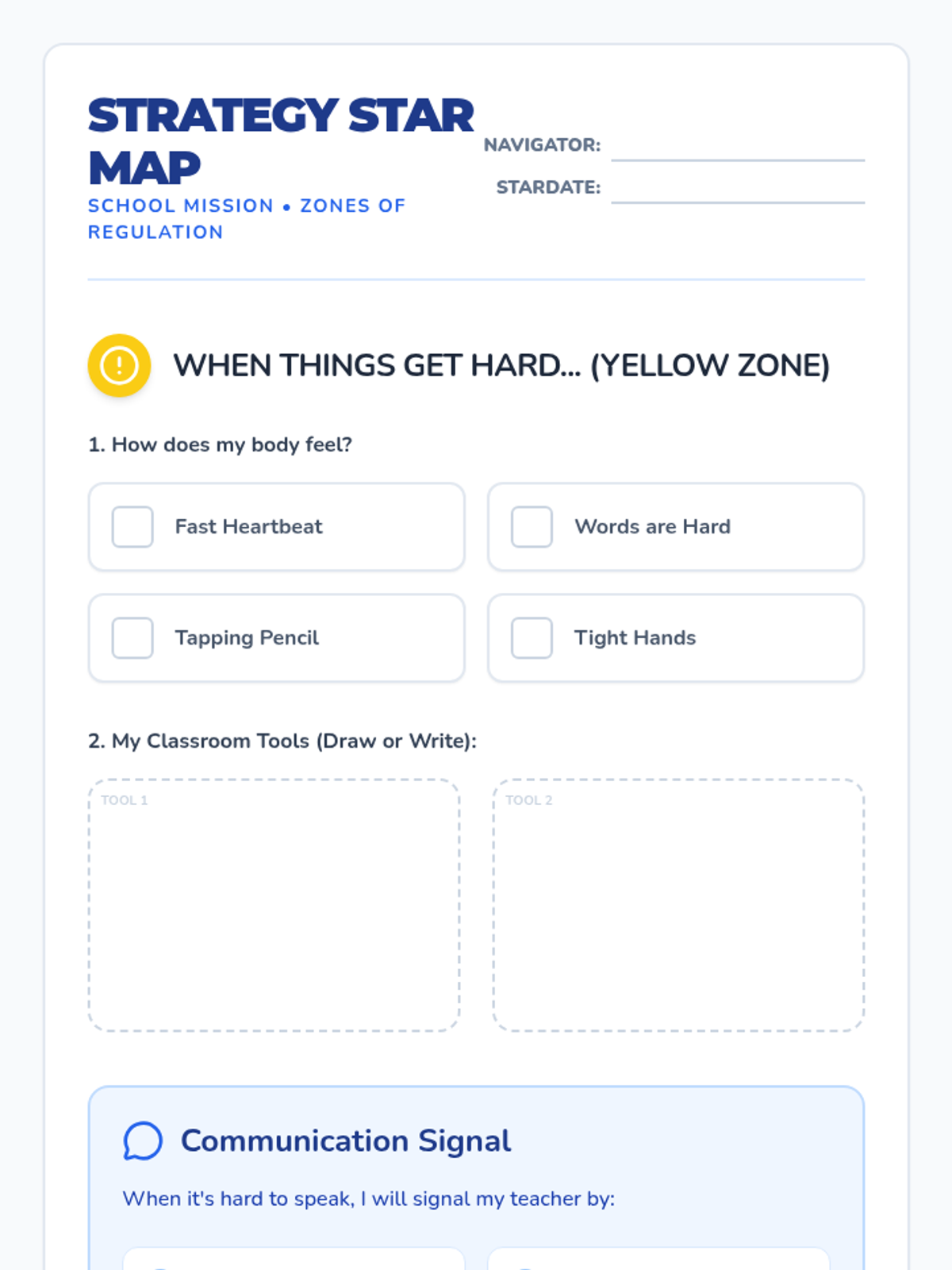
Two versions of the student-facing Social Star Map—School and Home editions—tailored for identifying social-physical cues and planning for social-battery management. Fixed page breaks and integrated Zones language.
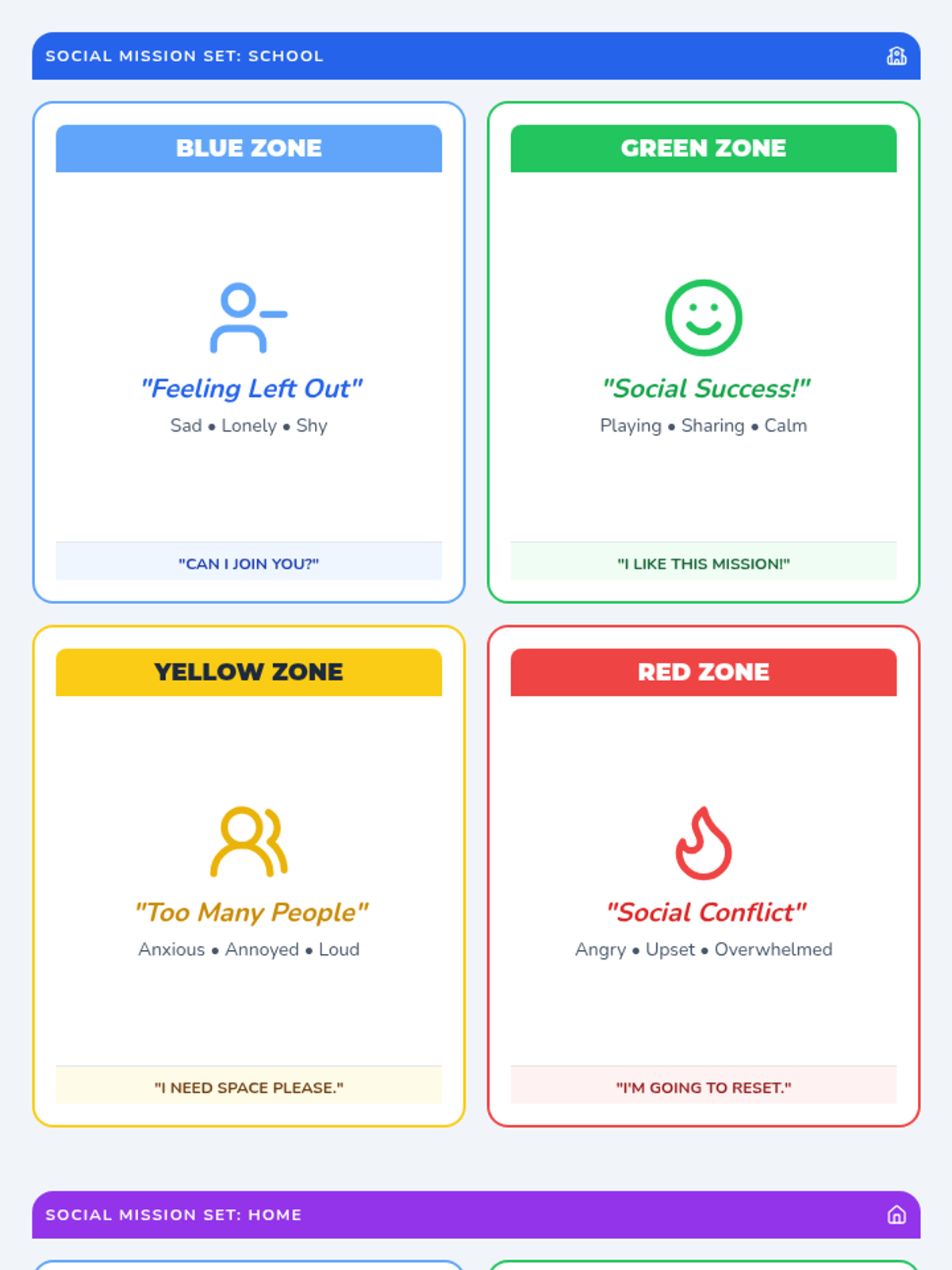
Visual support cards for identifying social emotional Zones and providing "Comm-Link" social scripts to help with peer initiation and social-battery management. Includes separate sets for school and home.
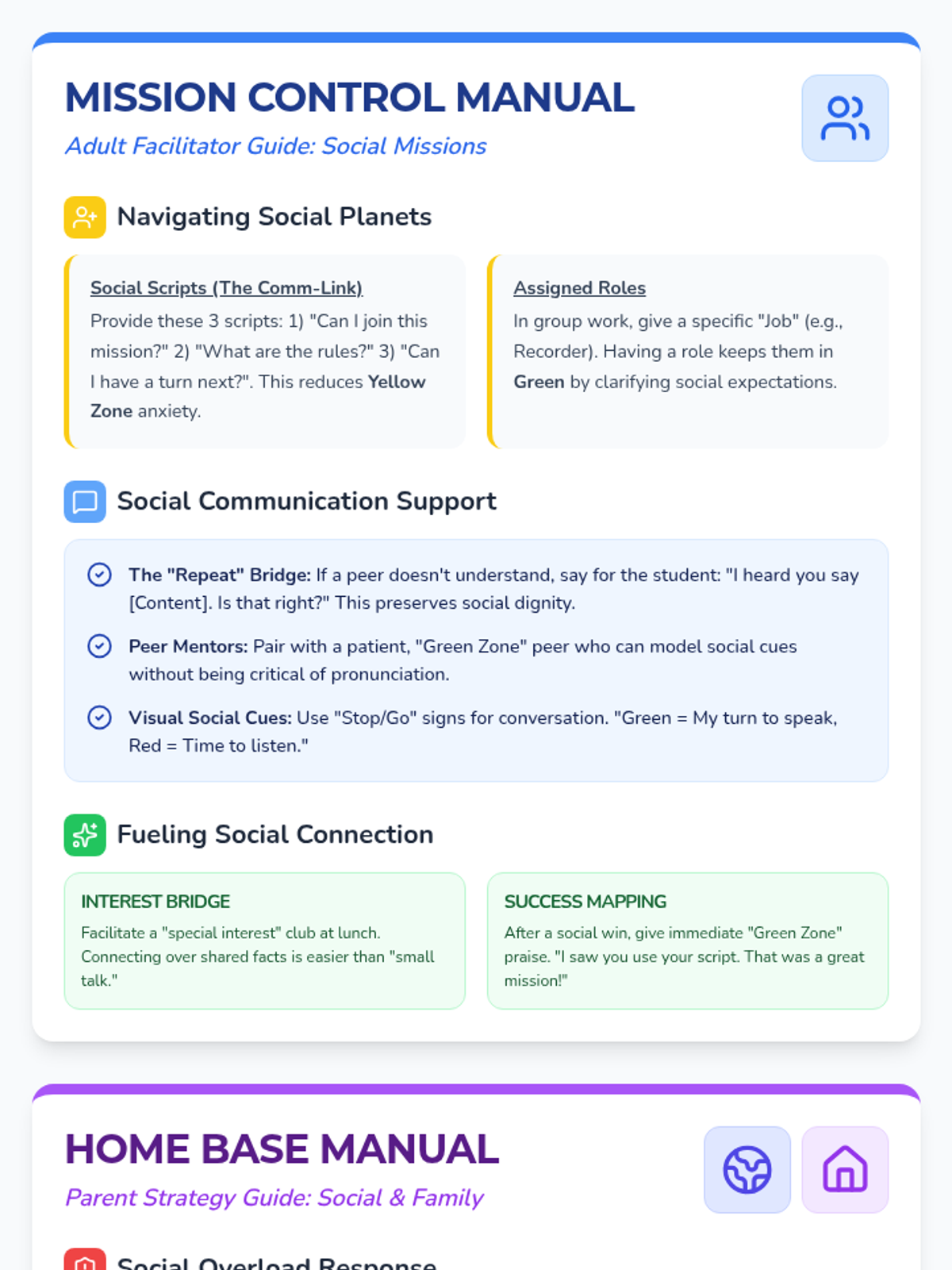
A guide for teachers and parents focused on social challenges, providing strategies for group work, recess, family gatherings, and social-battery management using the Zones of Regulation framework. Updated with increased font size and expanded scripts.
Two versions of the student-facing worksheet—School and Home editions—tailored with specific physical cues, communication strategies, and tools for each environment. Fixes page breaks and readability.
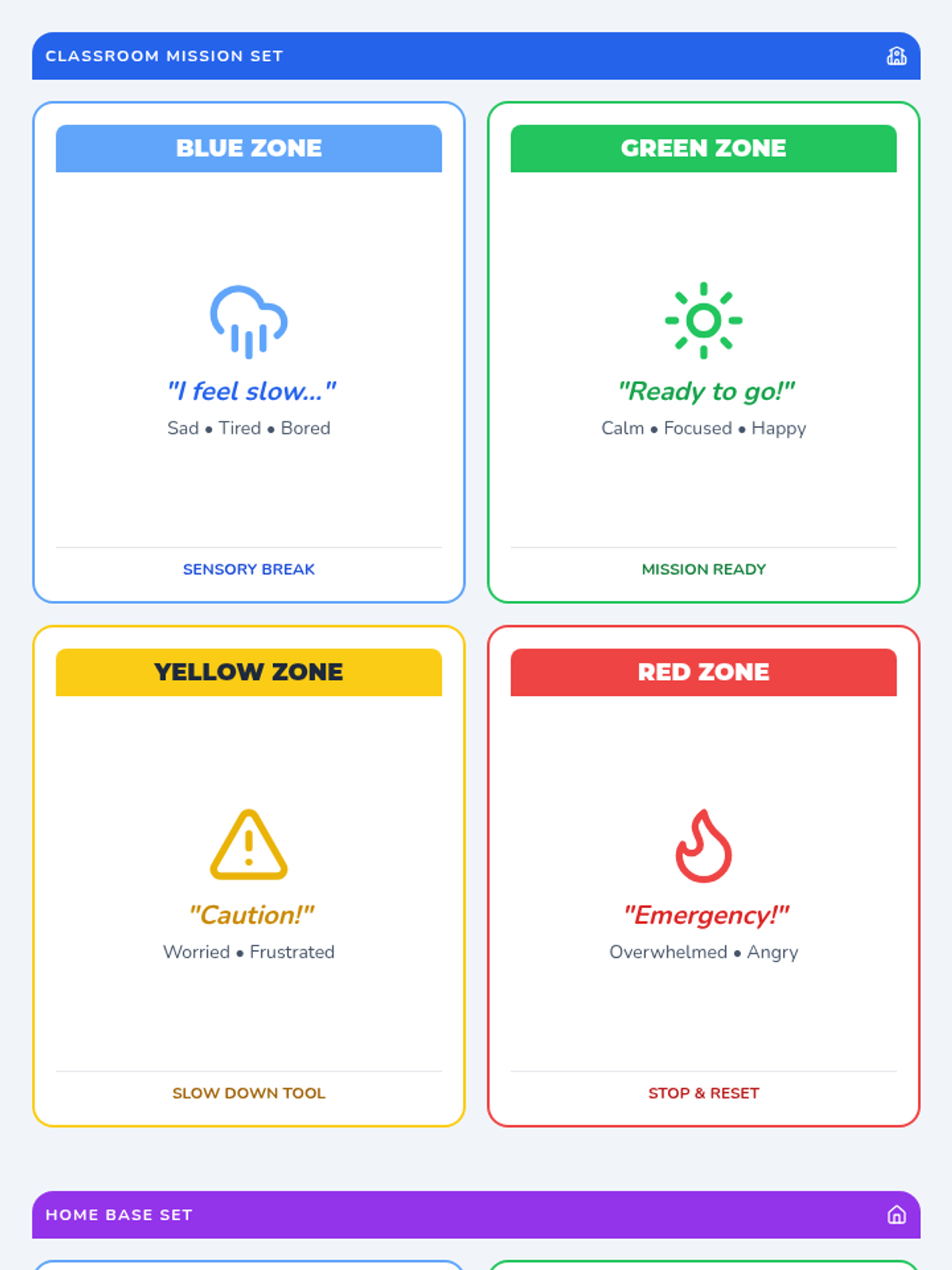
Two sets of visual support cards—one for the classroom and one for home—to identify emotional Zones and communicate needs. Terminology updated for sensitivity and visual layout optimized for cutting.
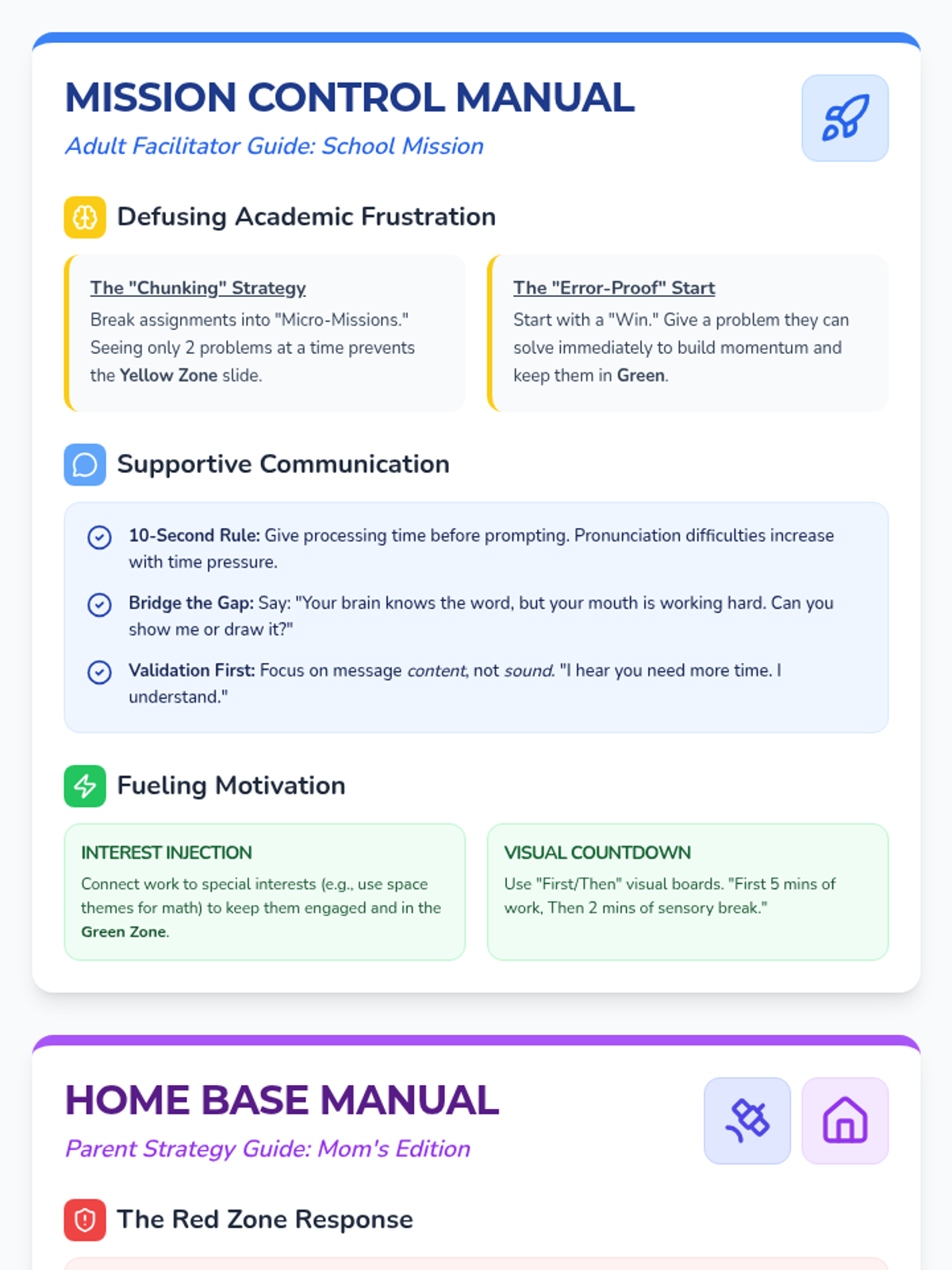
A dual-purpose guide for teachers and parents, providing specific strategies for academic frustration, communication support, and meltdown management using the Zones of Regulation framework. Fixes page breaks and layout flow.
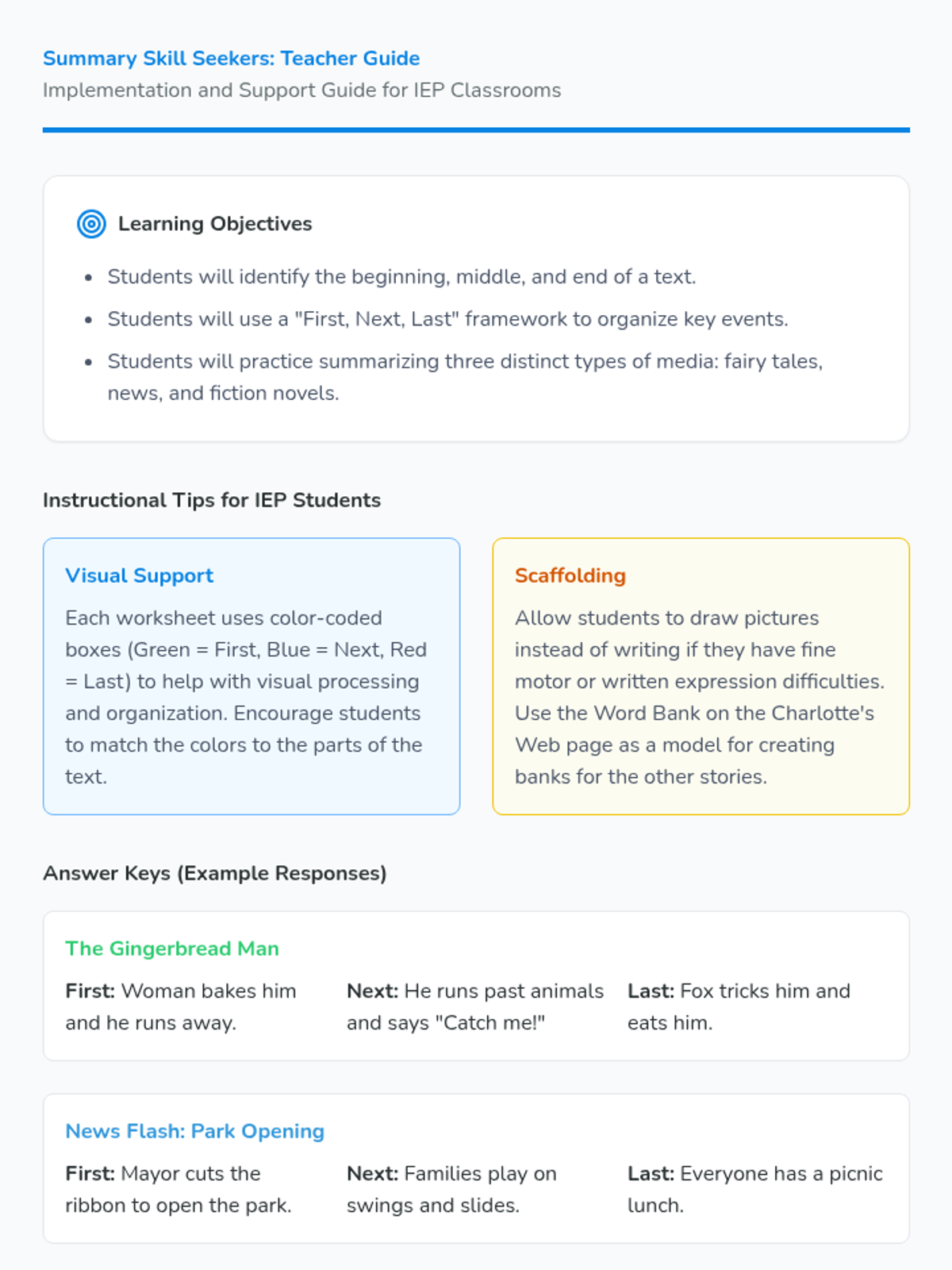
A comprehensive teacher's guide and answer key for the 'Summary Skill Seekers' lesson. Includes instructional tips for IEP support, learning objectives, and example responses for all three worksheets.
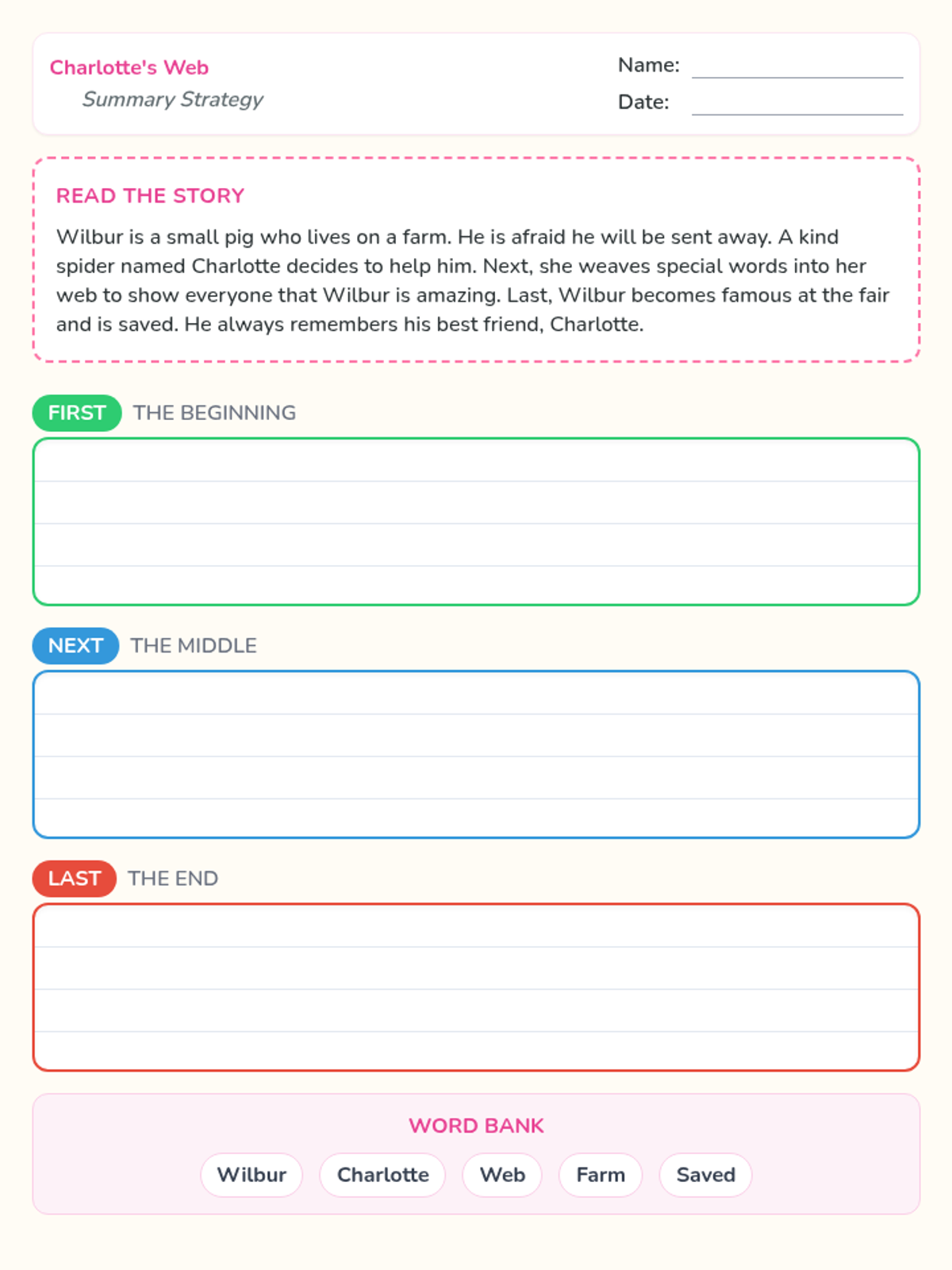
A visually engaging summary storyboard for 'Charlotte's Web' tailored for IEP students. Includes writing lines, a word bank, and improved layout for single-page printing.
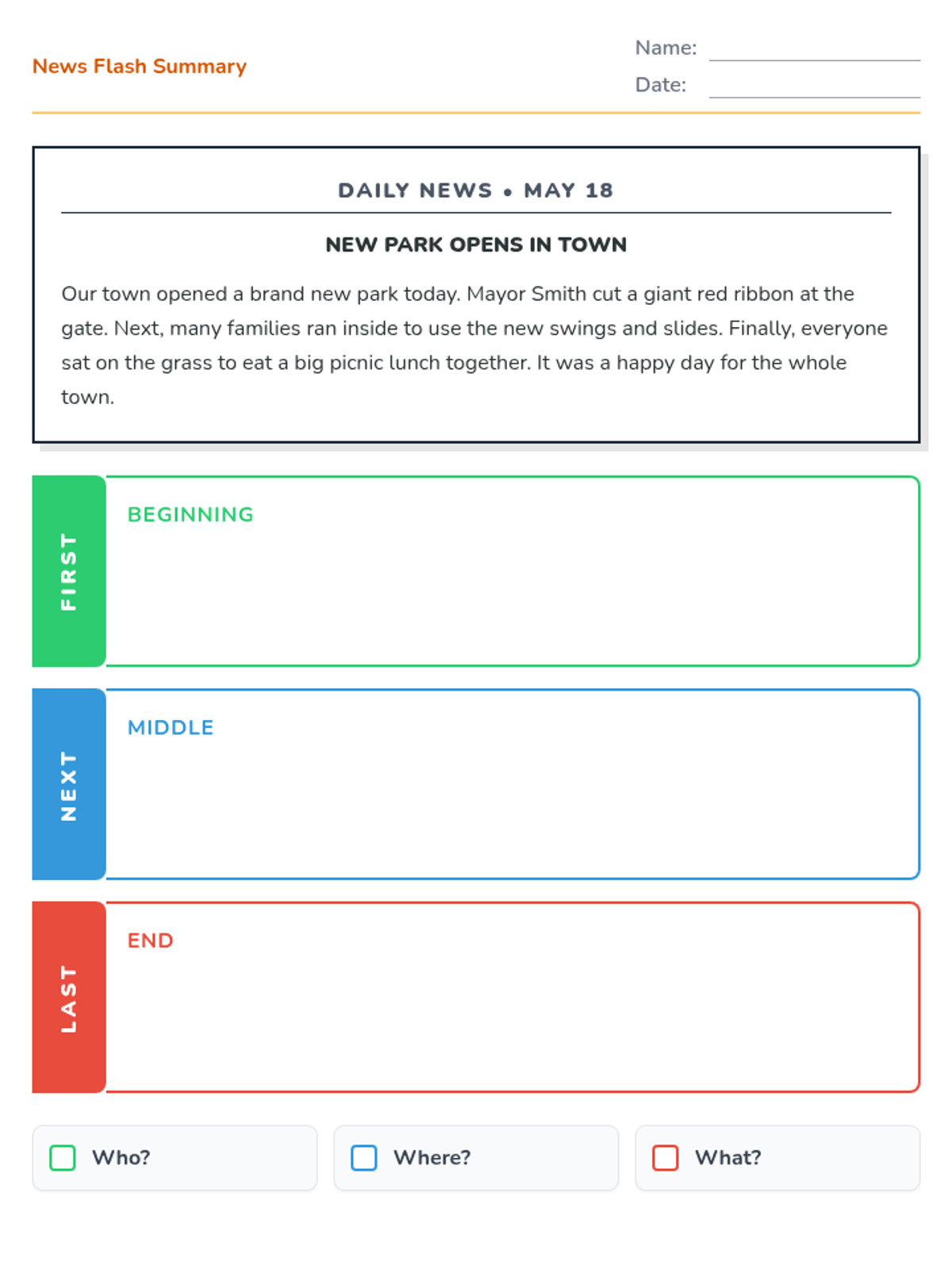
A newspaper-themed summary worksheet for IEP students featuring a short, high-interest article about a park opening and a structured First, Next, Last reporting frame. Revised to fit on one page and improve label rendering and spacing.
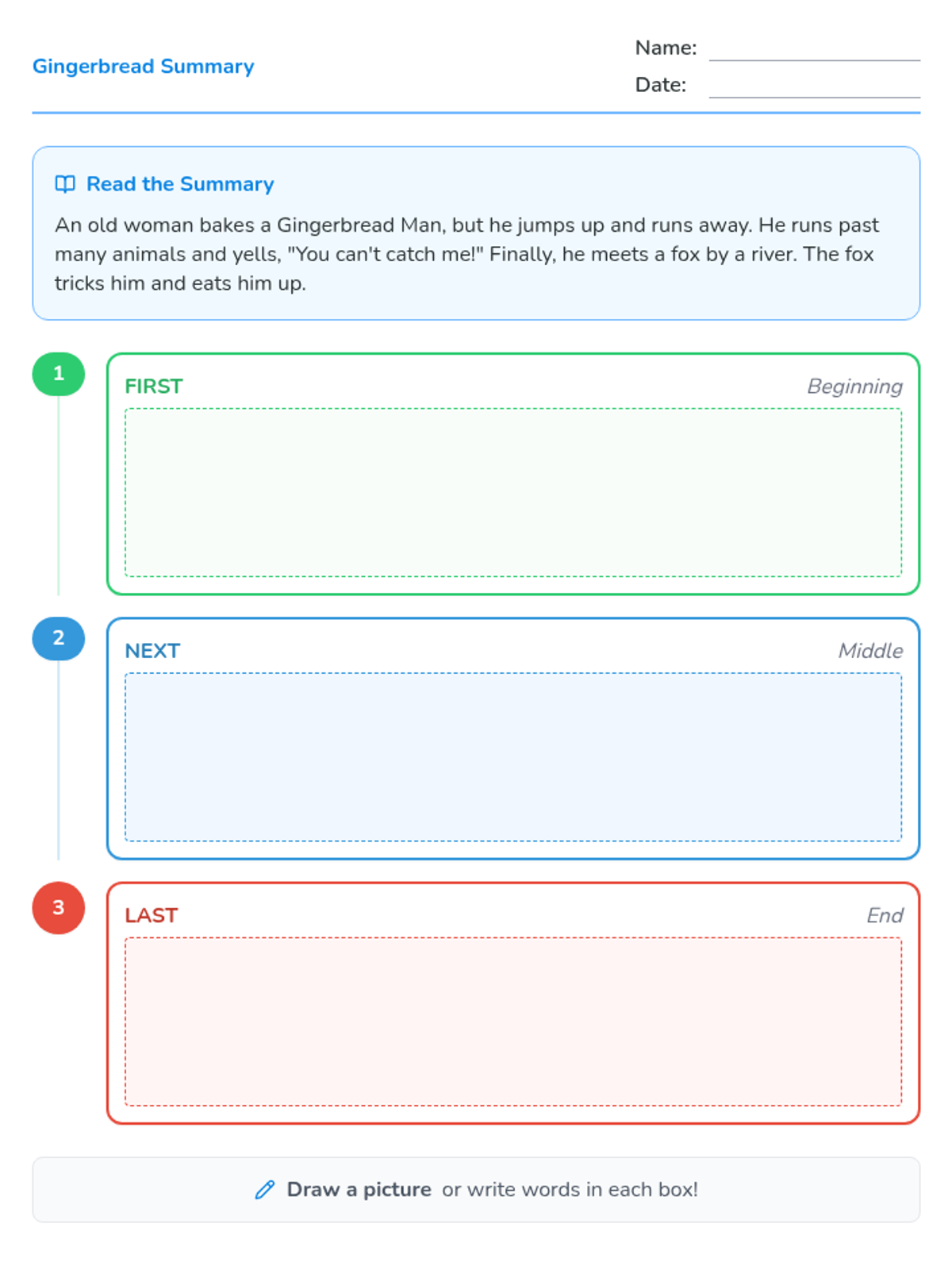
An IEP-friendly worksheet for summarizing 'The Gingerbread Man' featuring a simplified text passage and a visual 'First, Next, Last' framework with space for drawing or writing. Revised to fit on one page.
An introductory slide deck for IEP students that simplifies the concept of summarizing using a visual 'First, Next, Last' framework with clear icons and high-contrast text. Now includes specific story examples with enlarged text for better visibility.
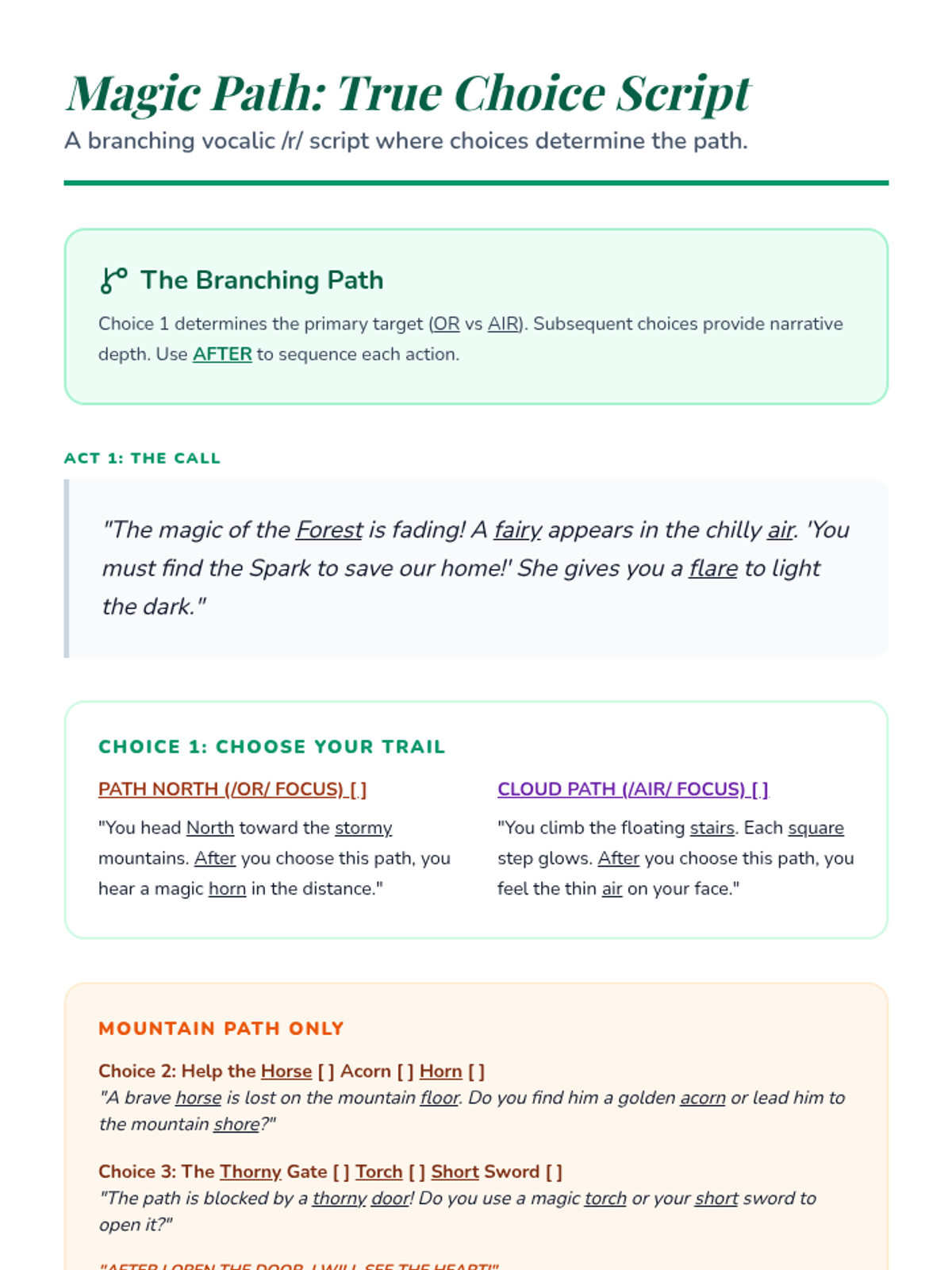
A text-based script containing the complete narrative and branching choices from the CYOA adventure. It provides a convenient reference for the therapist and can be used for student reading practice. Revised for better consistency and concept integration.
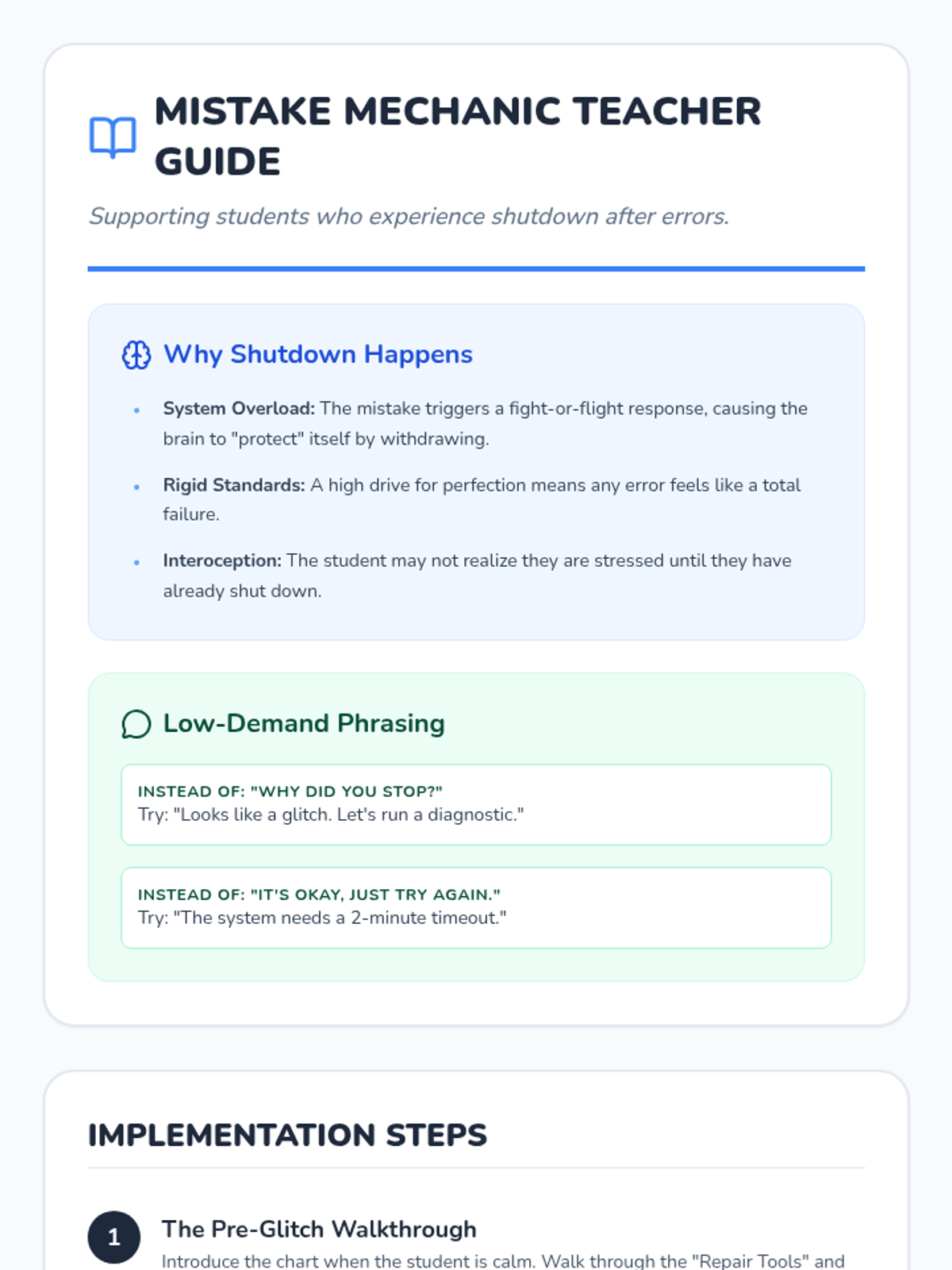
Instructional guidance for teachers on how to use the 'Repair Lab' materials, including psychological context for shutdown behaviors and low-demand communication strategies.
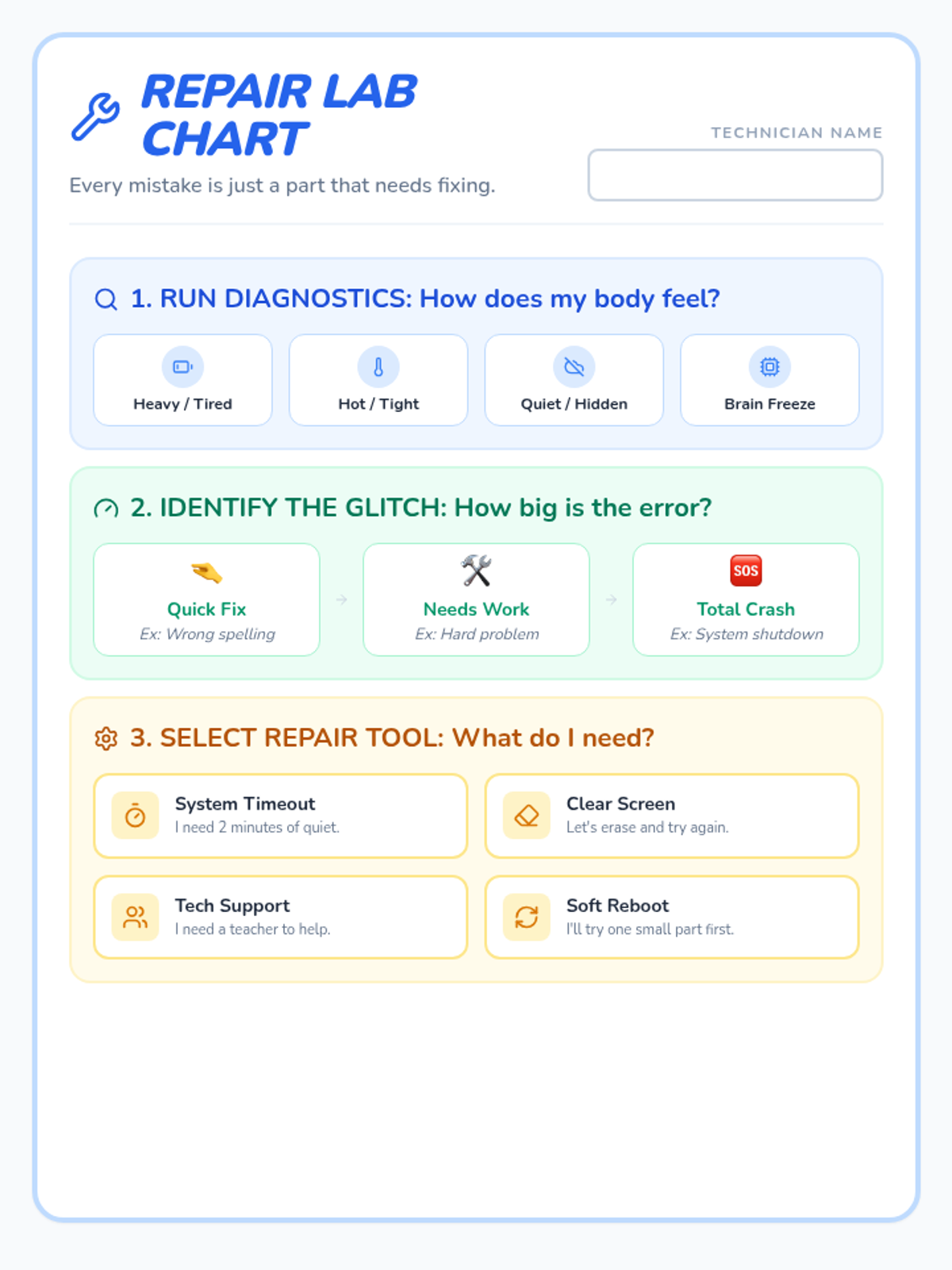
A visual chart and reflection log using a 'Repair Lab' theme to help students navigate mistakes, identify physical sensations of shutdown, and choose appropriate coping strategies.
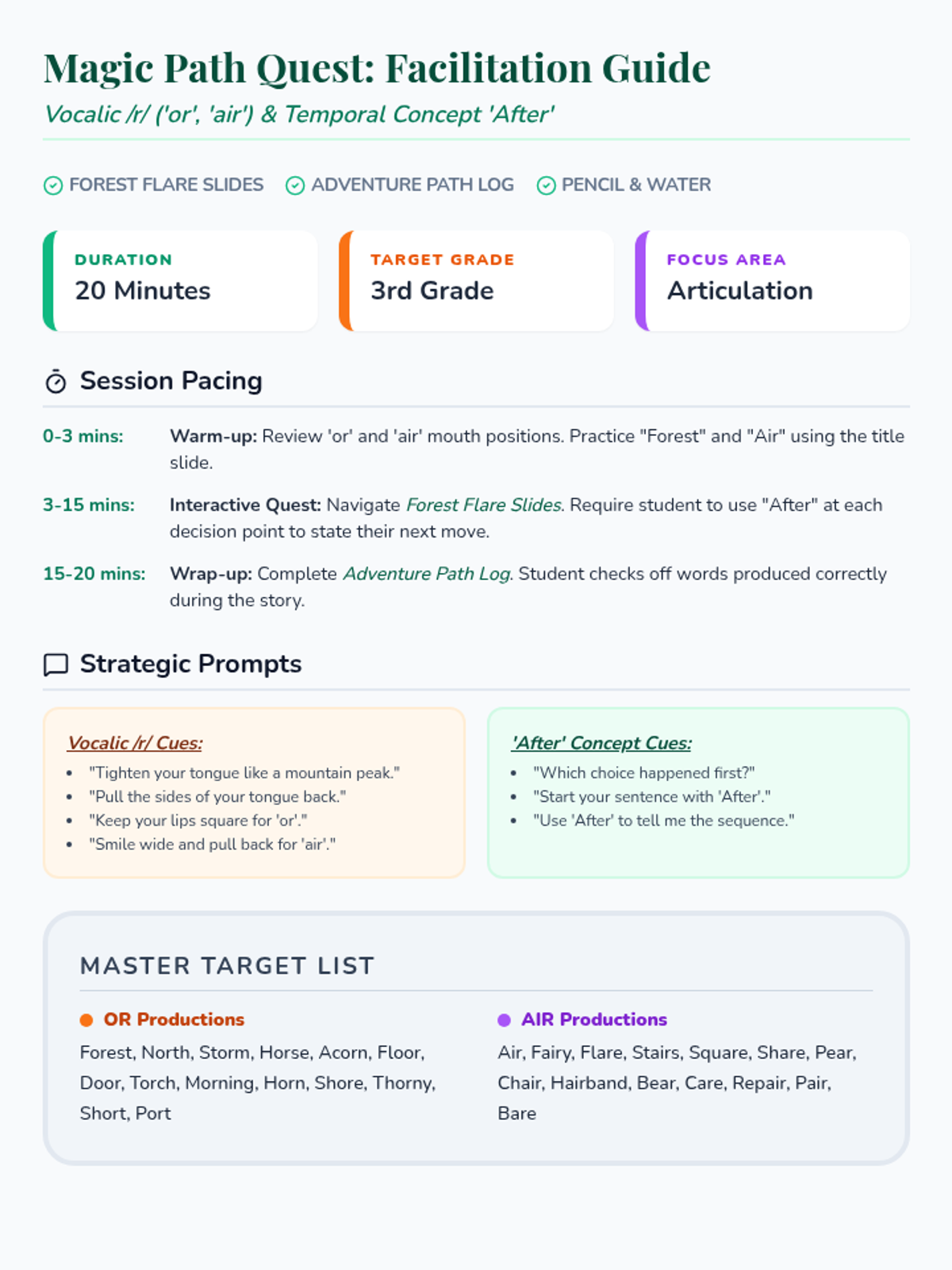
A teacher-facing guide for facilitating the Magic Path session. Revised for better contrast, single-page flow, and clearer terminology. Optimized for a single-page layout with improved narrative continuity. Includes a full story summary.
A high-energy, interactive slide deck for a speech therapy session. It follows a magical forest adventure with 4 decision points, designed to elicit vocalic /r/ ('or' and 'air') productions and the use of the temporal term 'after'. Revised for better narrative continuity and layout.
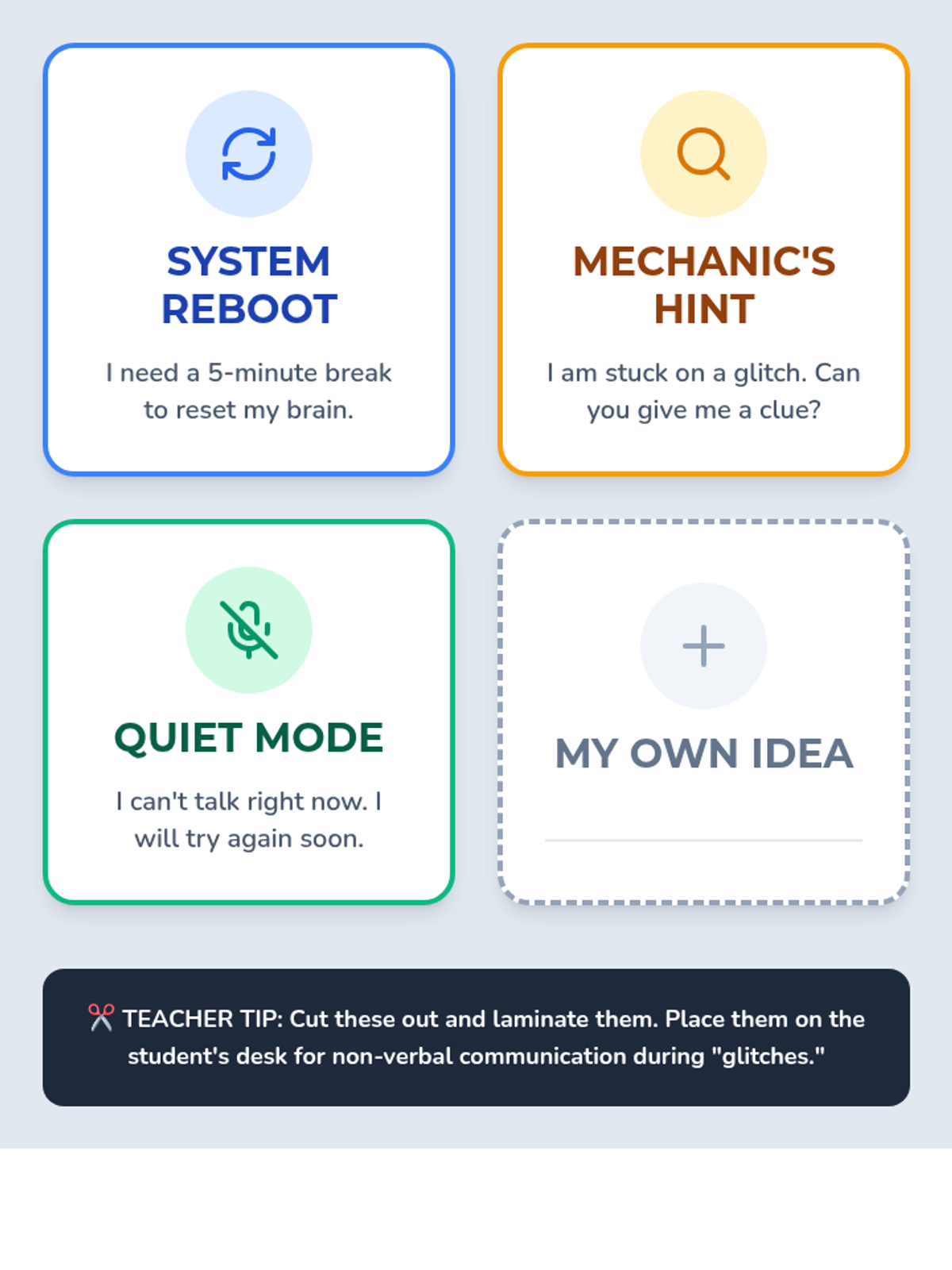
A set of four printable visual support cards to help students communicate non-verbally during a shutdown.
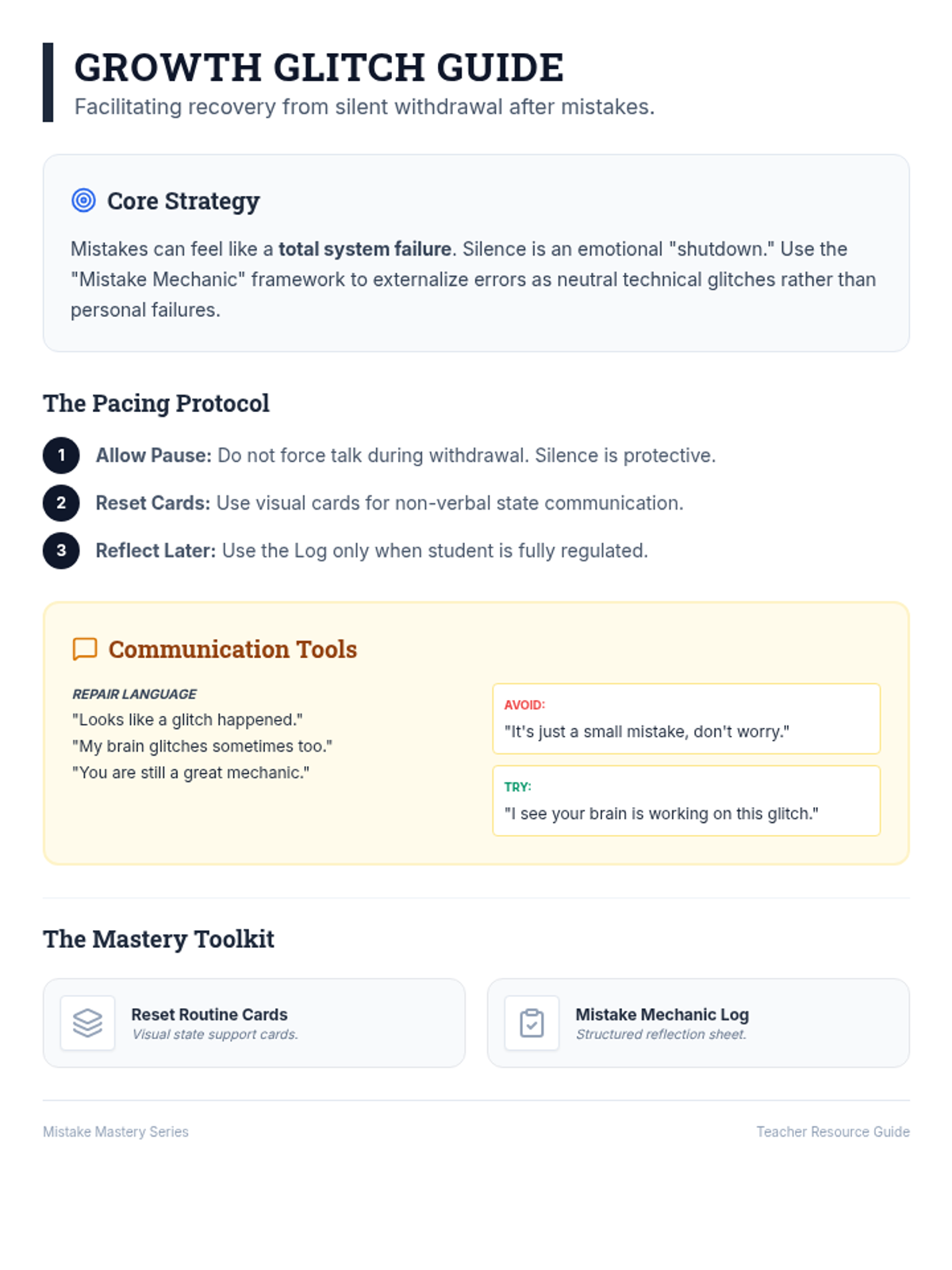
A professional facilitation guide for teachers/parents, providing psychological context for shutdowns and actionable scripts for co-regulation.
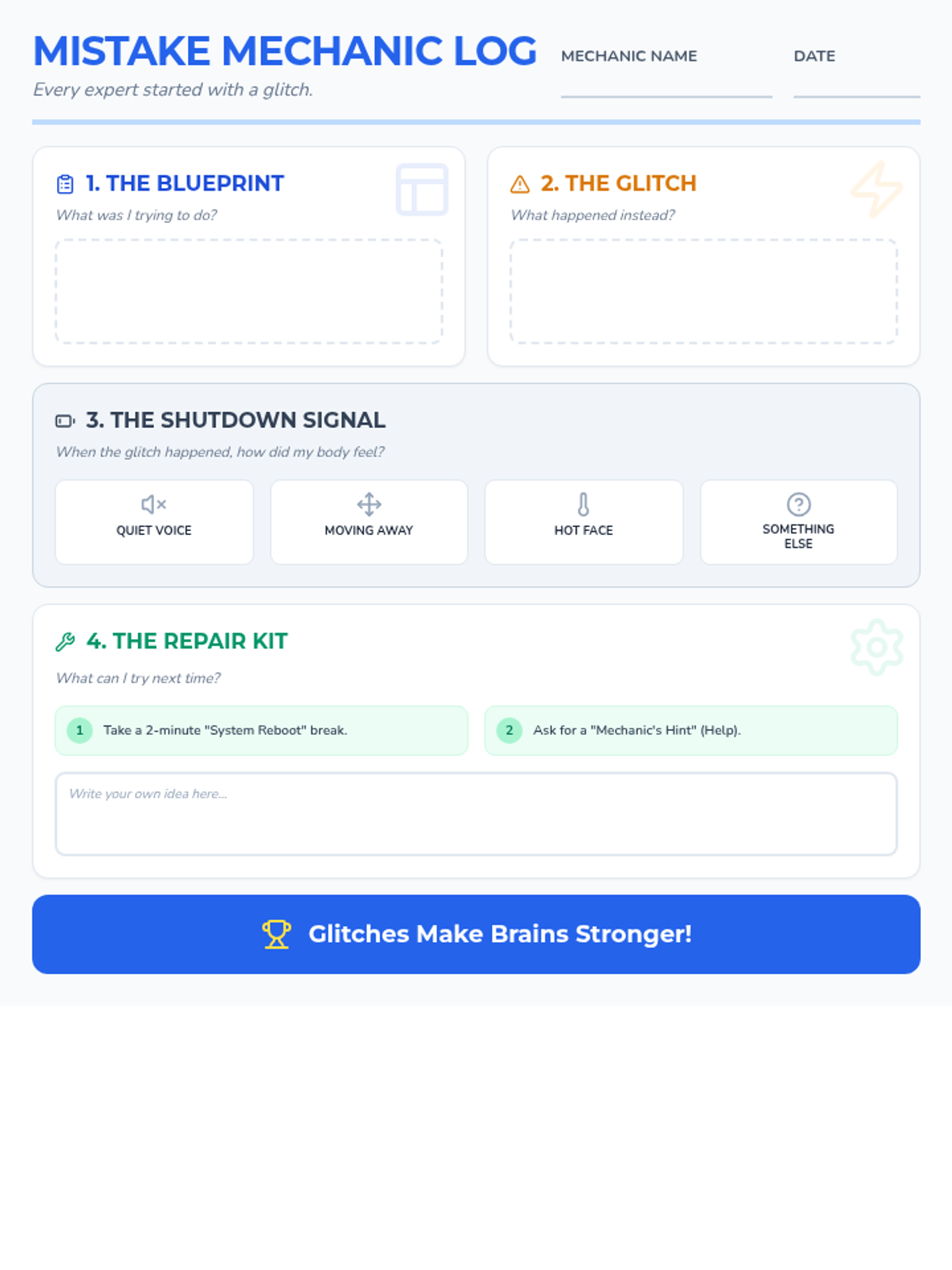
A visually calming, blueprint-themed reflection worksheet for students to process mistakes as 'glitches' rather than failures, specifically addressing physical withdrawal signs.