Extension practice and monitoring pages for Session 9 (Digraphs) and Session 10 (Magic E), featuring improved contrast, wider student work lines, and targeted teacher tips for EL support.
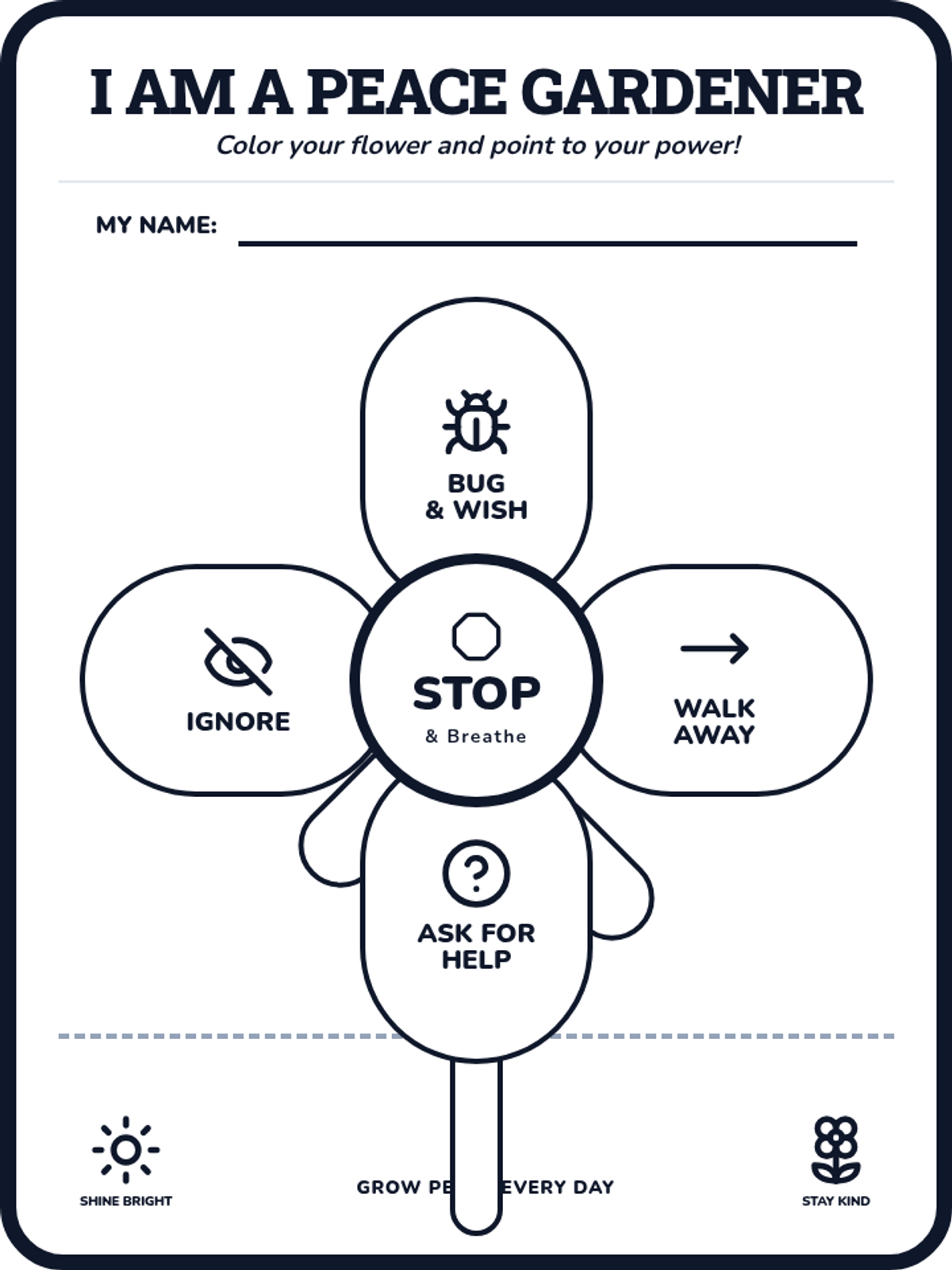
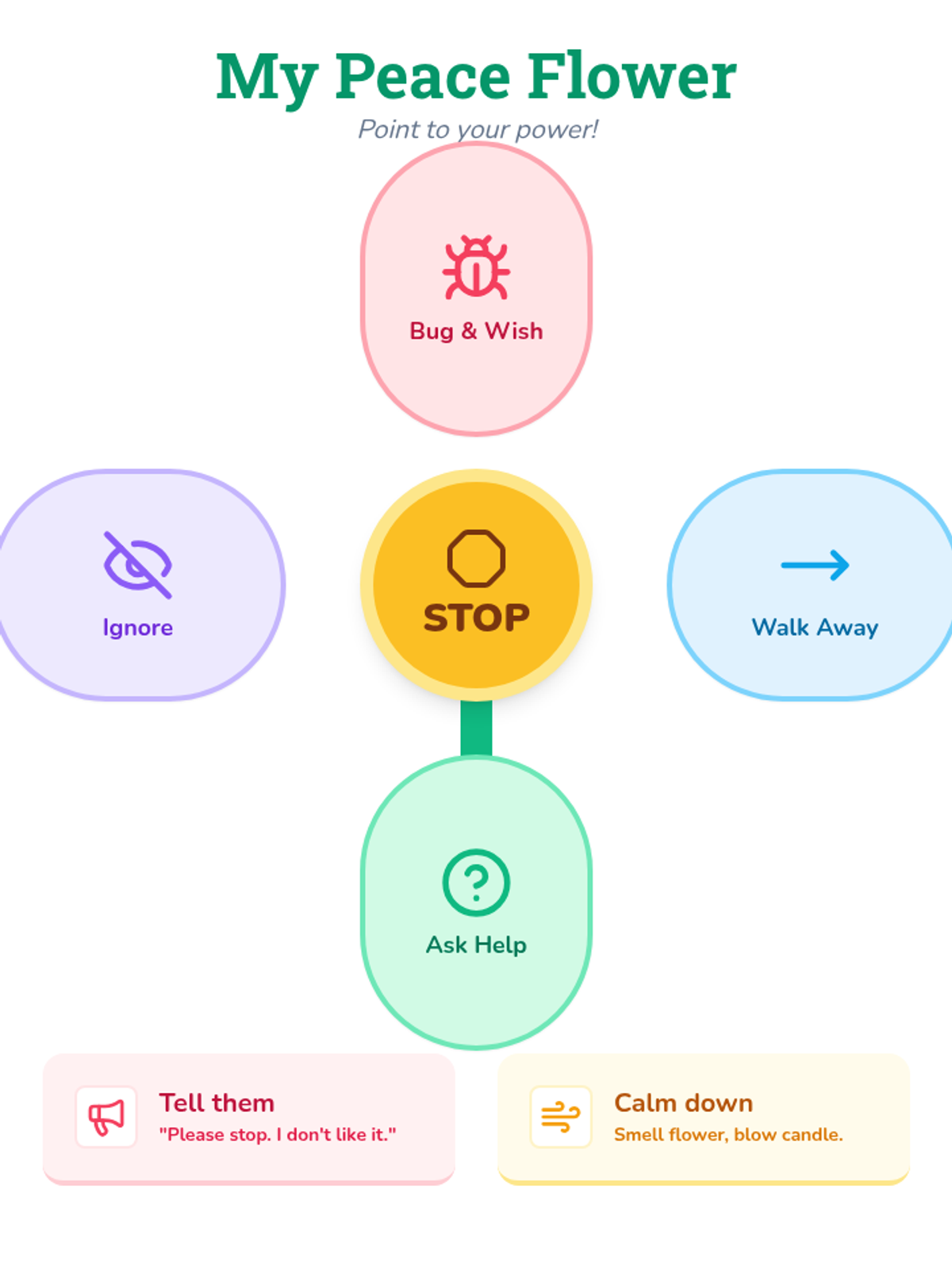
A high-contrast, black-and-white Peace Flower coloring page designed for students to practice conflict resolution strategies while being creative. Features a second page with cut-out communication cards for AAC support.
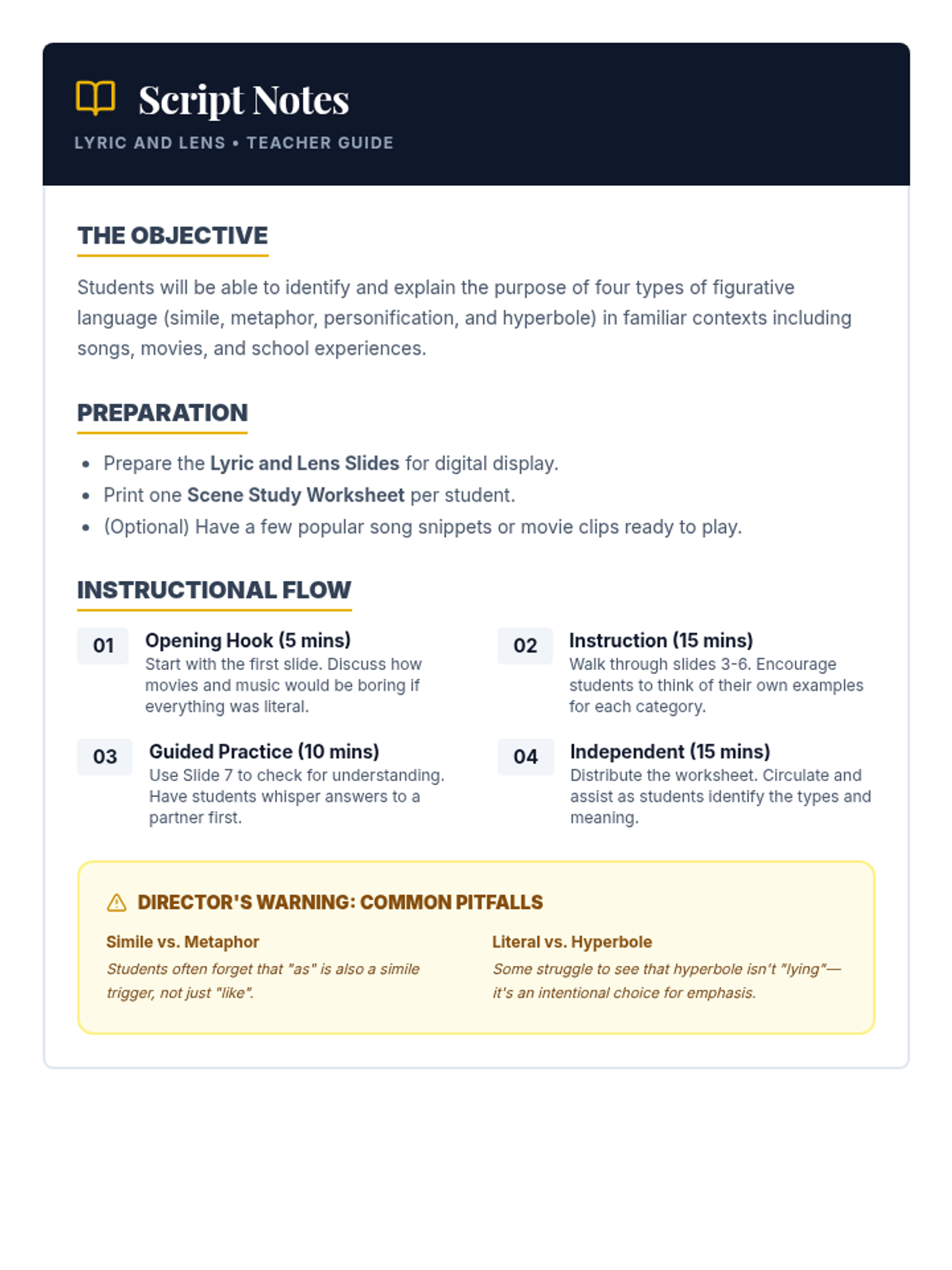
A facilitation guide for teachers, providing a suggested lesson flow, discussion prompts, and strategies for addressing common student misconceptions about figurative language.
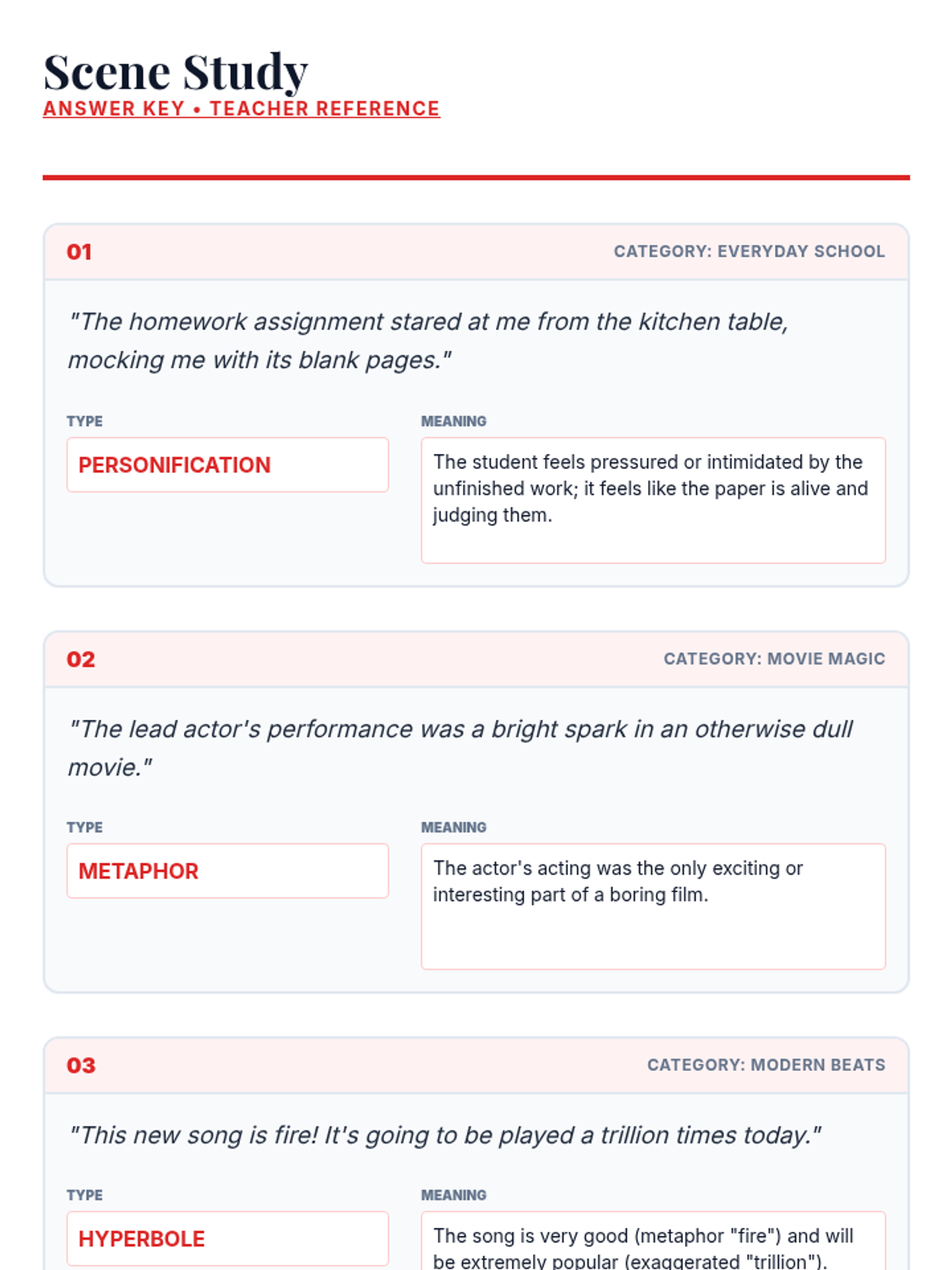
Teacher answer key for the Scene Study Worksheet, providing clear identifications and sample explanations for each figurative language example.
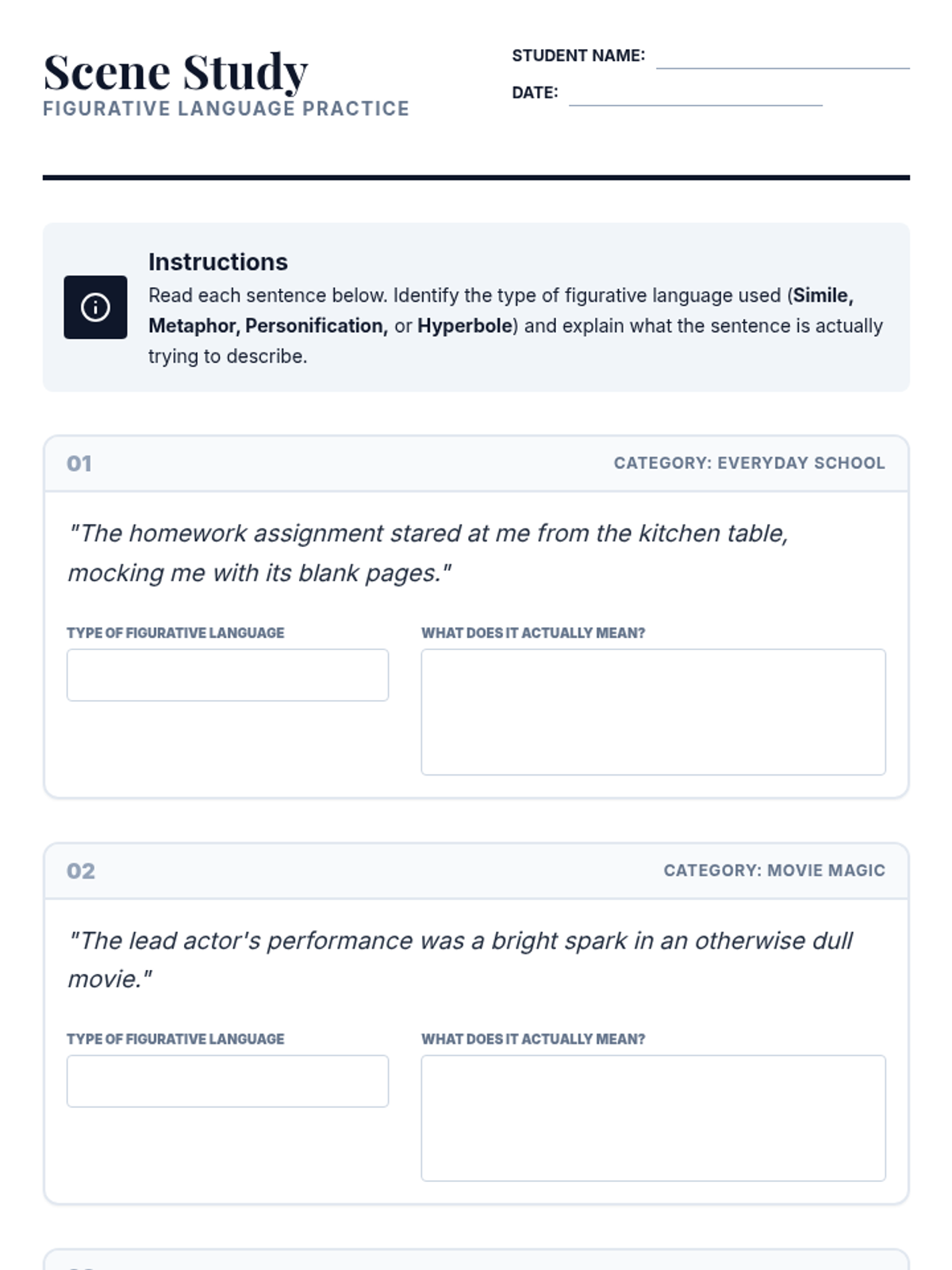
A practice worksheet where students identify simile, metaphor, personification, and hyperbole in sentences inspired by movies, music, and school life. Includes space for explanation of meaning.
An engaging slide deck introducing simile, metaphor, personification, and hyperbole using movie, music, and school-life examples. Features a cinematic theme with "Spot the FigLang" practice slides.
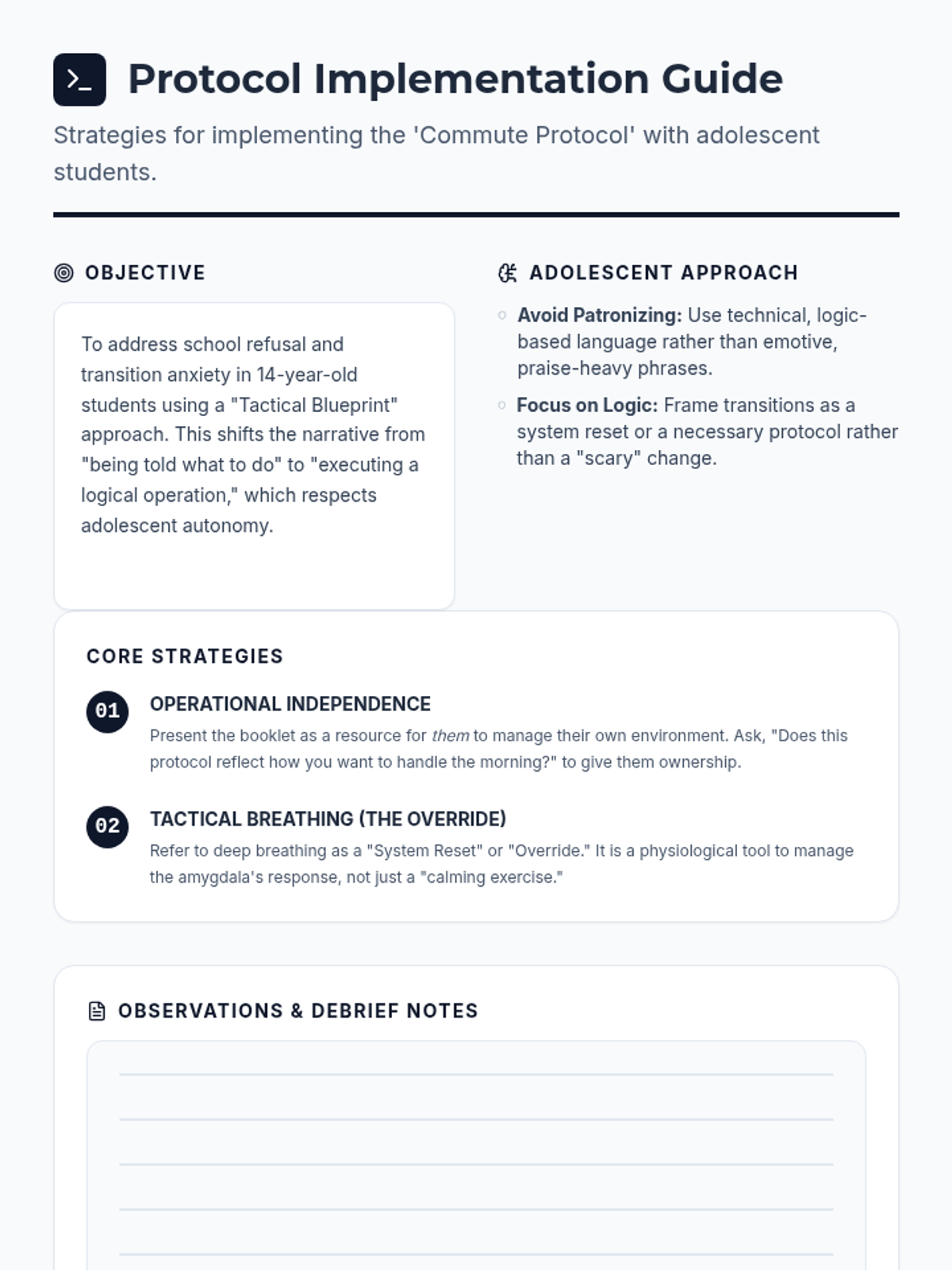
A teacher/parent implementation guide designed for older students, focusing on collaborative debriefing and a tactical approach to implementing the 'Commute Protocol' social story.
A mature, tactical 'Commute Protocol' social story booklet designed for a 14-year-old boy, using respect-based language and a high-tech blueprint aesthetic to address school transitions and refusal.
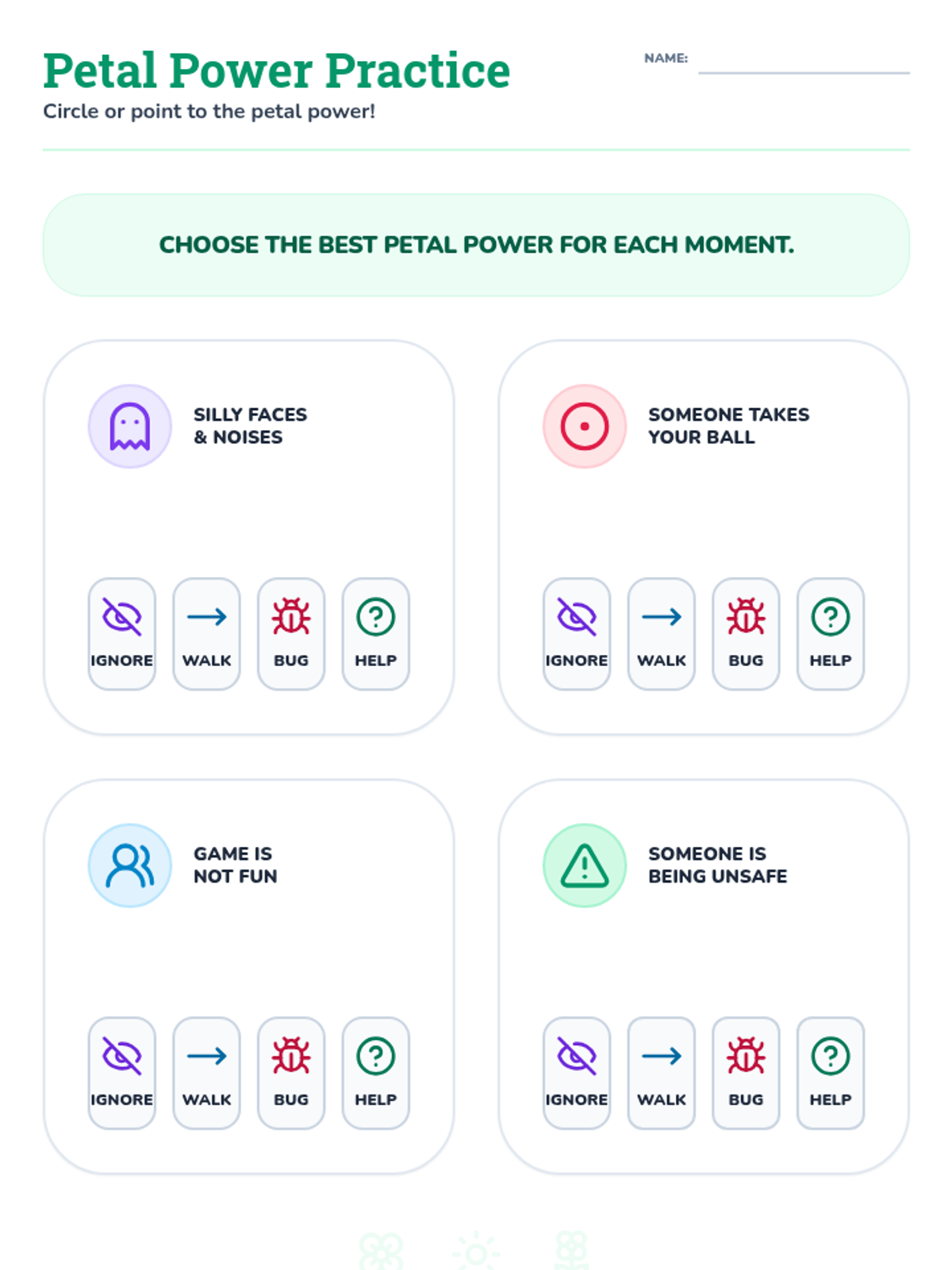
A simplified scenario-based practice worksheet for students using AAC or who are minimally verbal. Features clear icons and single-choice answers to reinforce the best Peace Petal for common conflicts.
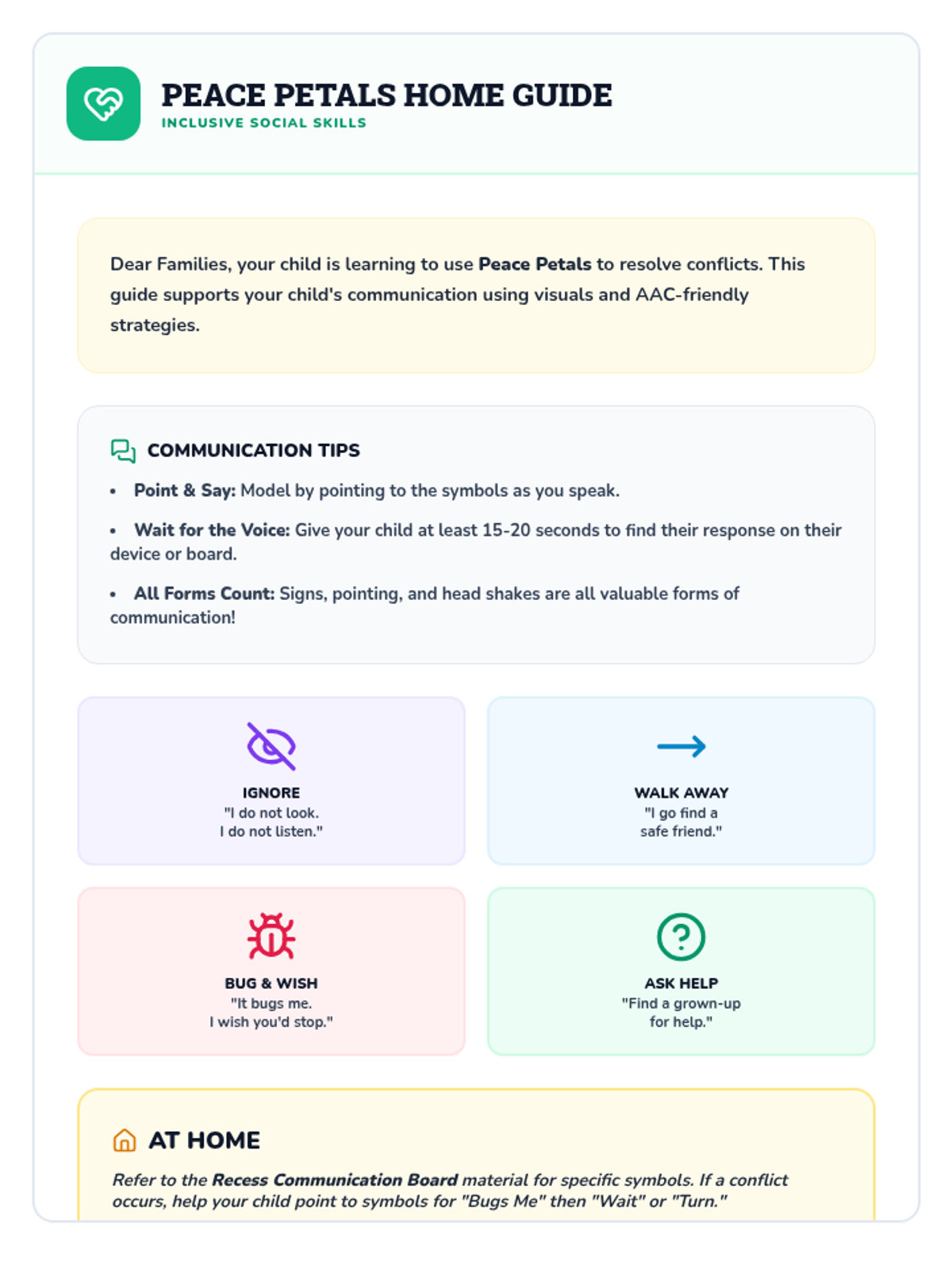
A parent handout designed to support inclusive conflict resolution at home, providing tips for families of students who use AAC or are minimally verbal to practice the 'Peace Petals' framework.
An inclusive, highly visual slide deck for the 'Peace Petals' lesson, featuring simplified text, large icons, and symbol support to engage students who are minimally verbal or use AAC.
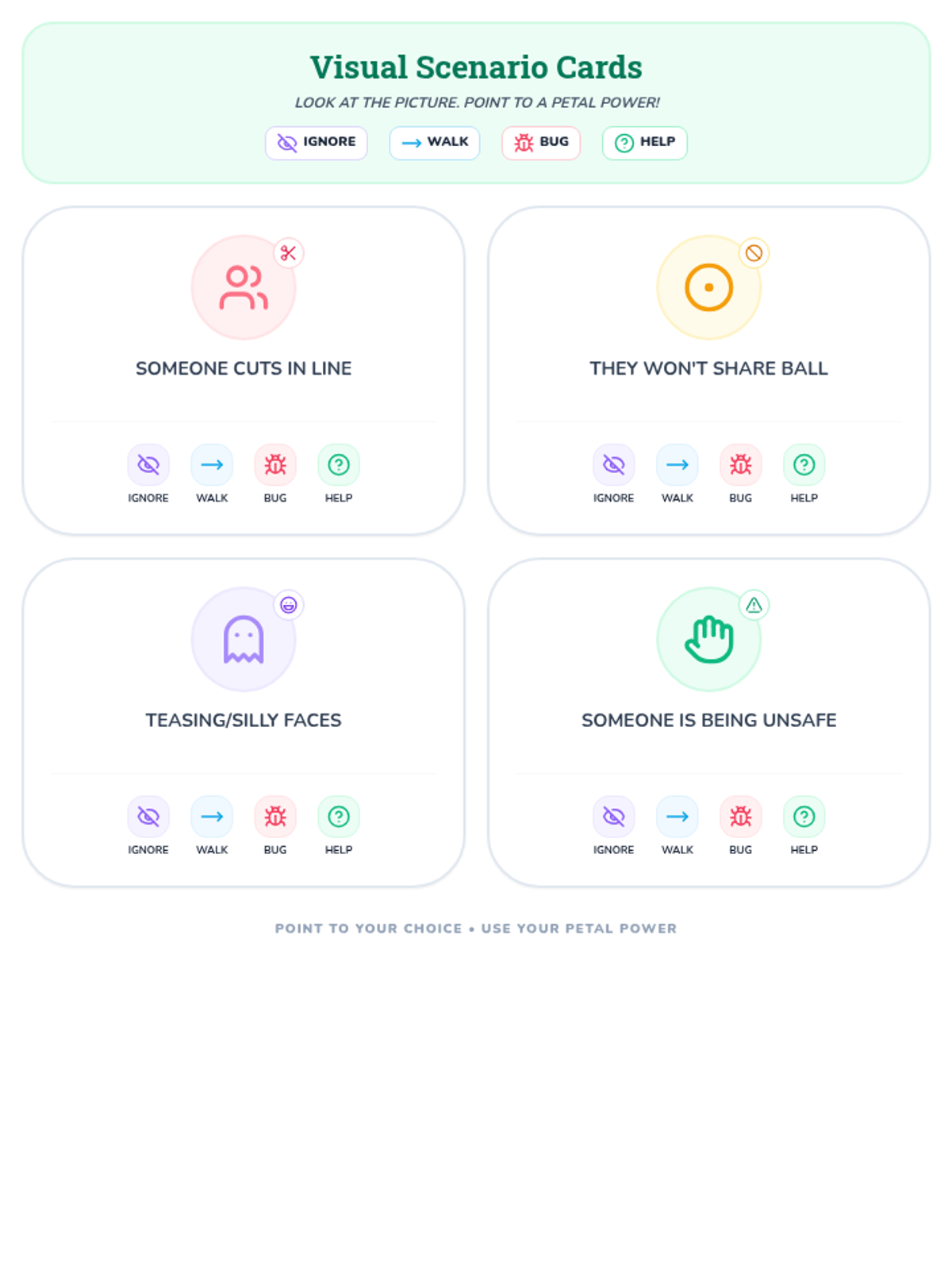
Visual scenario cards designed for students who are minimally verbal or use AAC. Each card features a clear, icon-based conflict and a selection of the four Peace Petals for easy communication and choice-making.
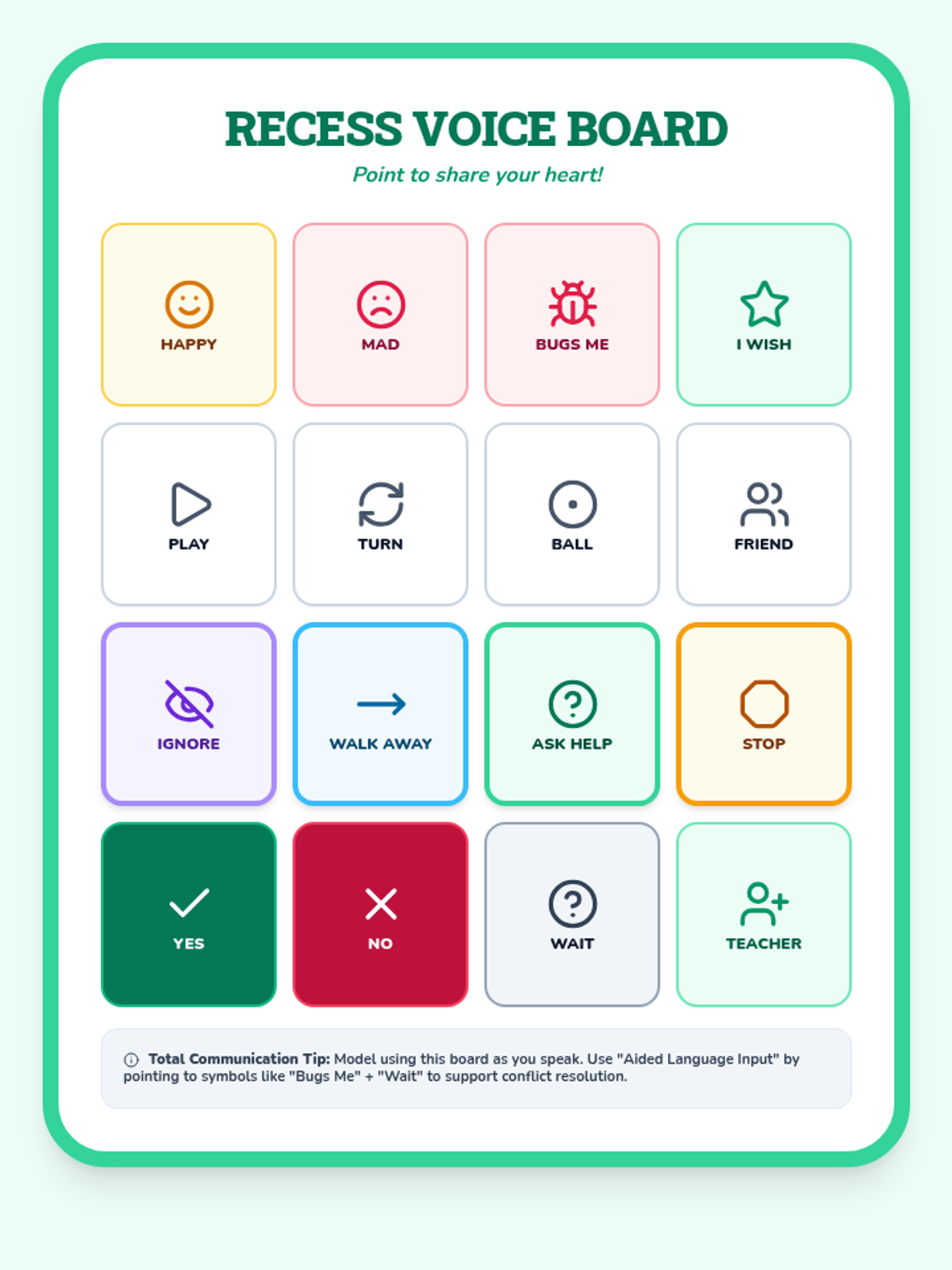
A specialized communication board for recess, featuring key vocabulary for conflict resolution, the four Peace Petals, and basic playground needs. Ideal for students using AAC or who are minimally verbal.
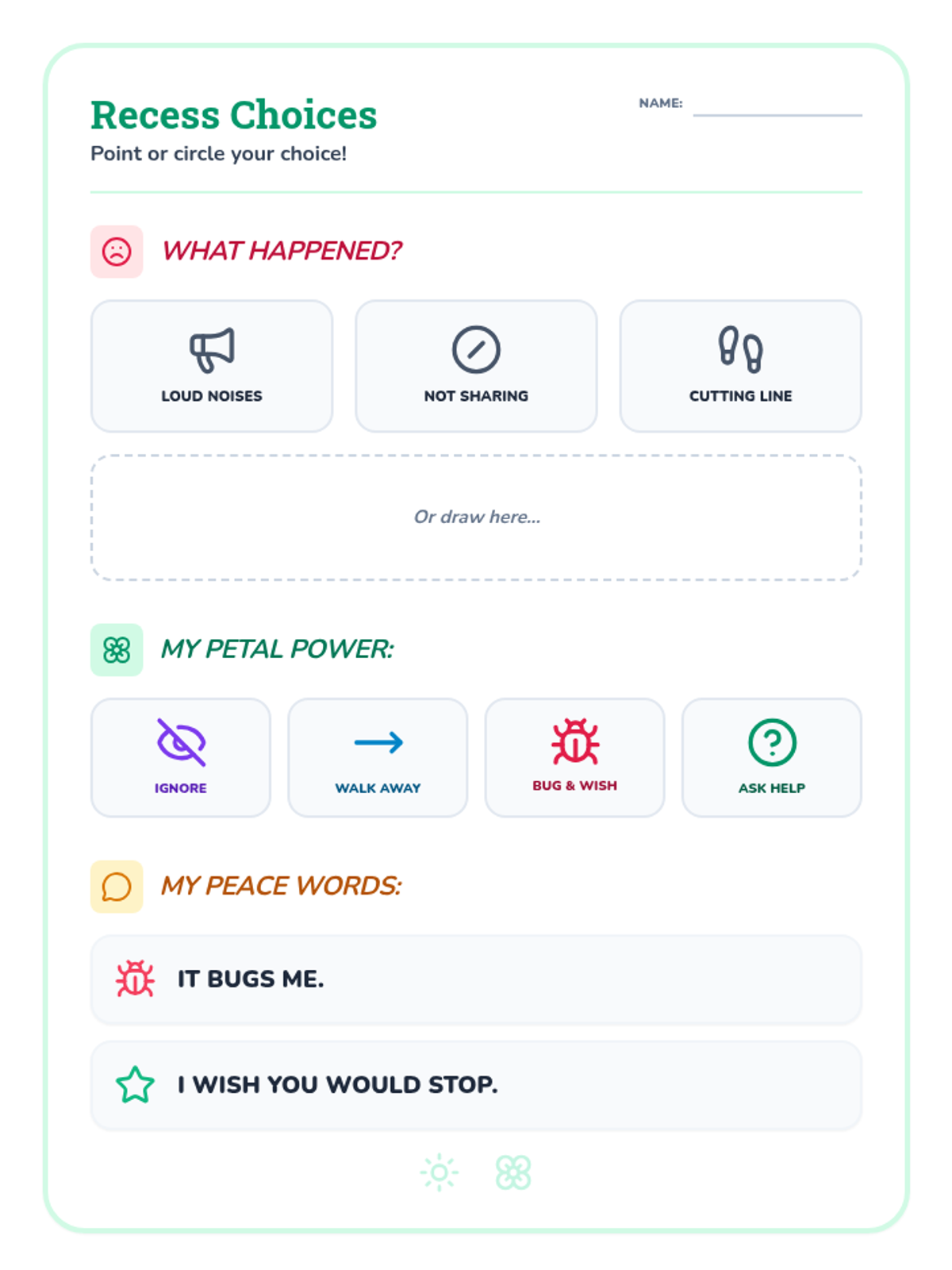
A visual-choice worksheet for students who are minimally verbal or use AAC, featuring large icons and simplified options for communicating recess problems and solutions.
A visual poster and a set of mini-reminders featuring high-contrast symbols and simplified text to support students who are minimally verbal or use AAC.
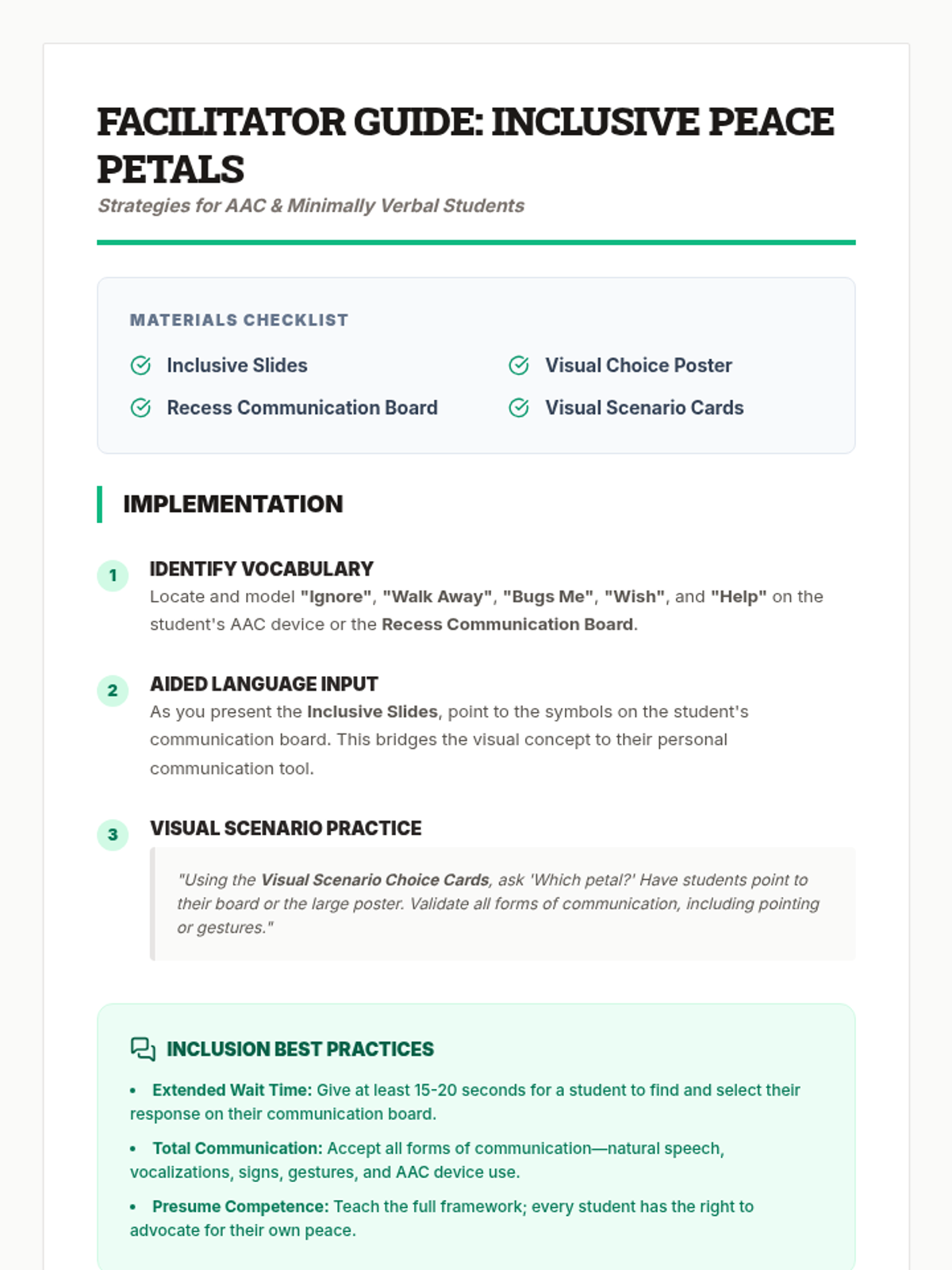
A teacher-facing facilitator guide for the inclusive 'Peace Petals' lesson, providing specific strategies for supporting students who are minimally verbal or use AAC.
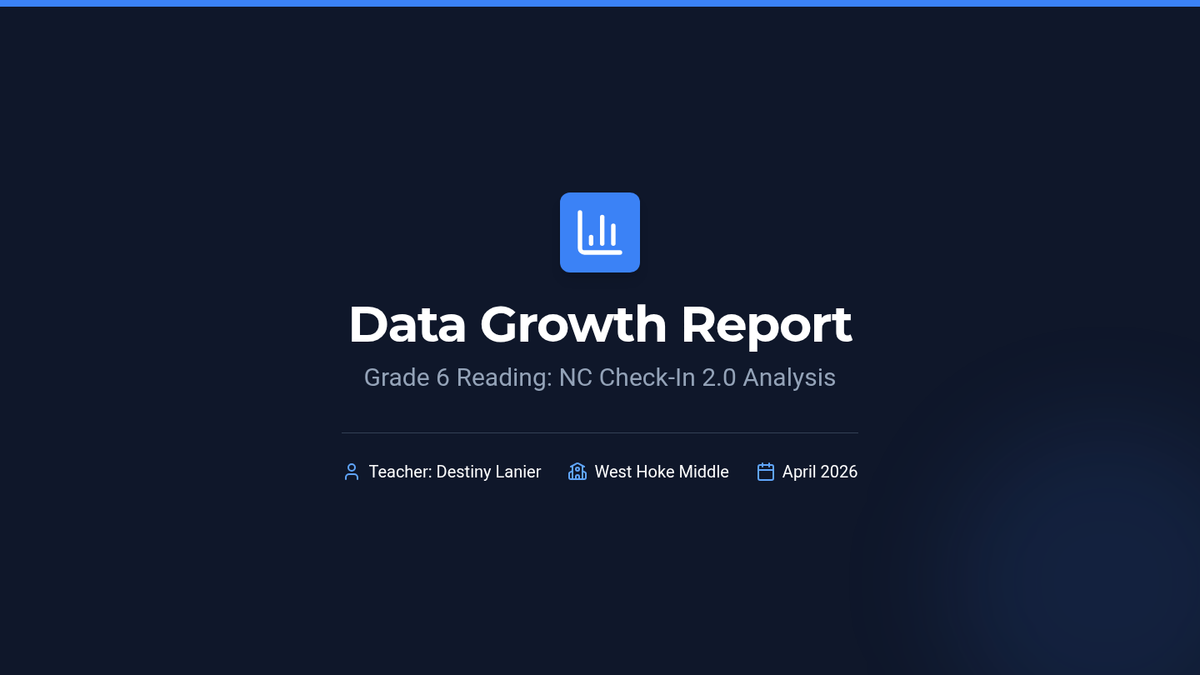
A 7-slide data-driven presentation designed for administrative meetings, visualizing Grade 6 reading growth across NC Check-In cycles A, B, and C with specific metrics on vocabulary, informational text mastery, and fluency.
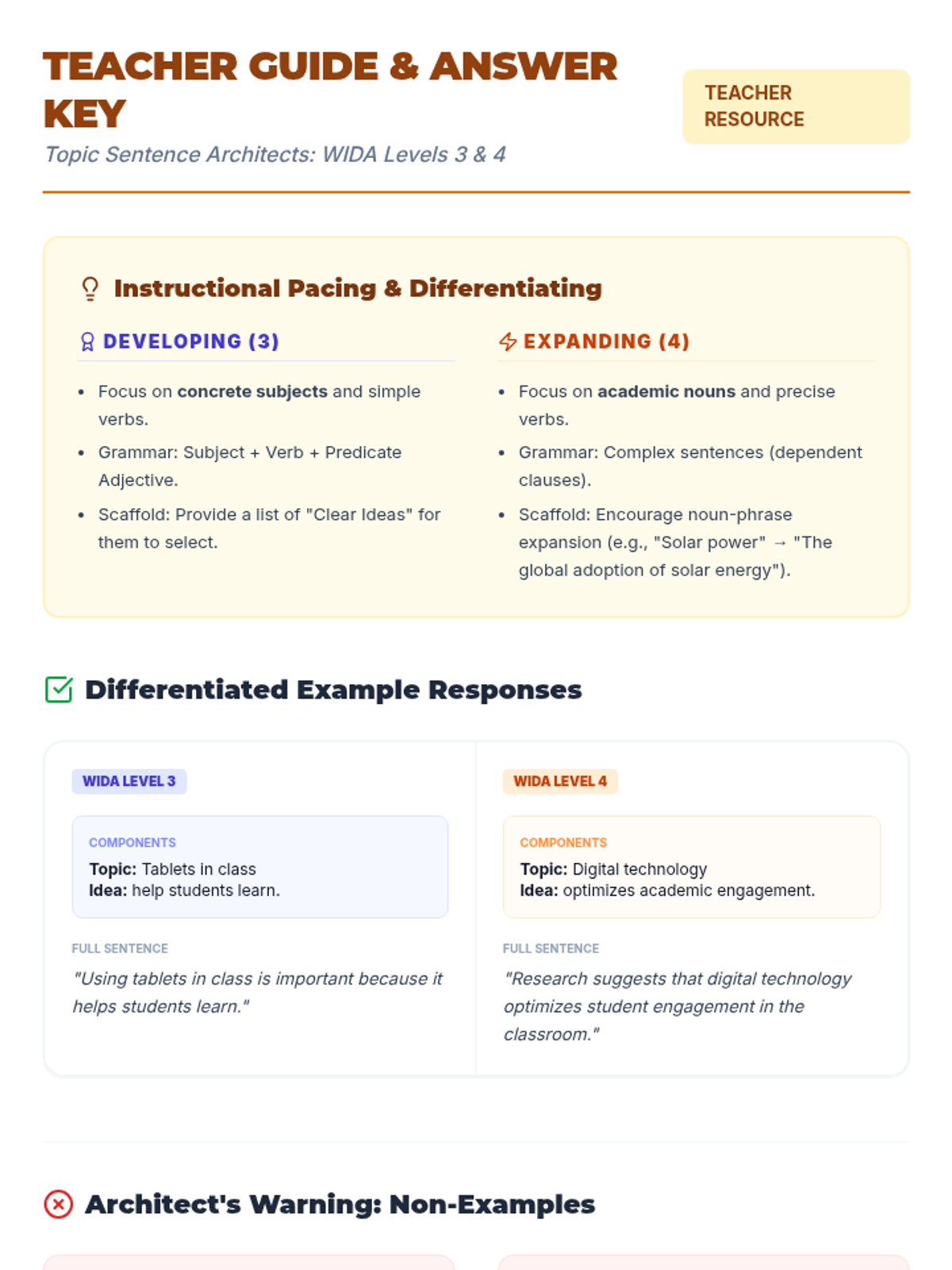
A facilitation guide and answer key for the Topic Sentence Architects lesson. It provides differentiated instructional focuses for WIDA level 3 and 4 students, sophisticated example responses, non-examples for teacher reference, and specific strategies for academic language growth.
A slide deck for introducing the concept of a two-part topic sentence (Topic + Clear Idea). It includes visual analogies, differentiated examples for WIDA levels 3 and 4, and sentence starters for Developing and Expanding learners.
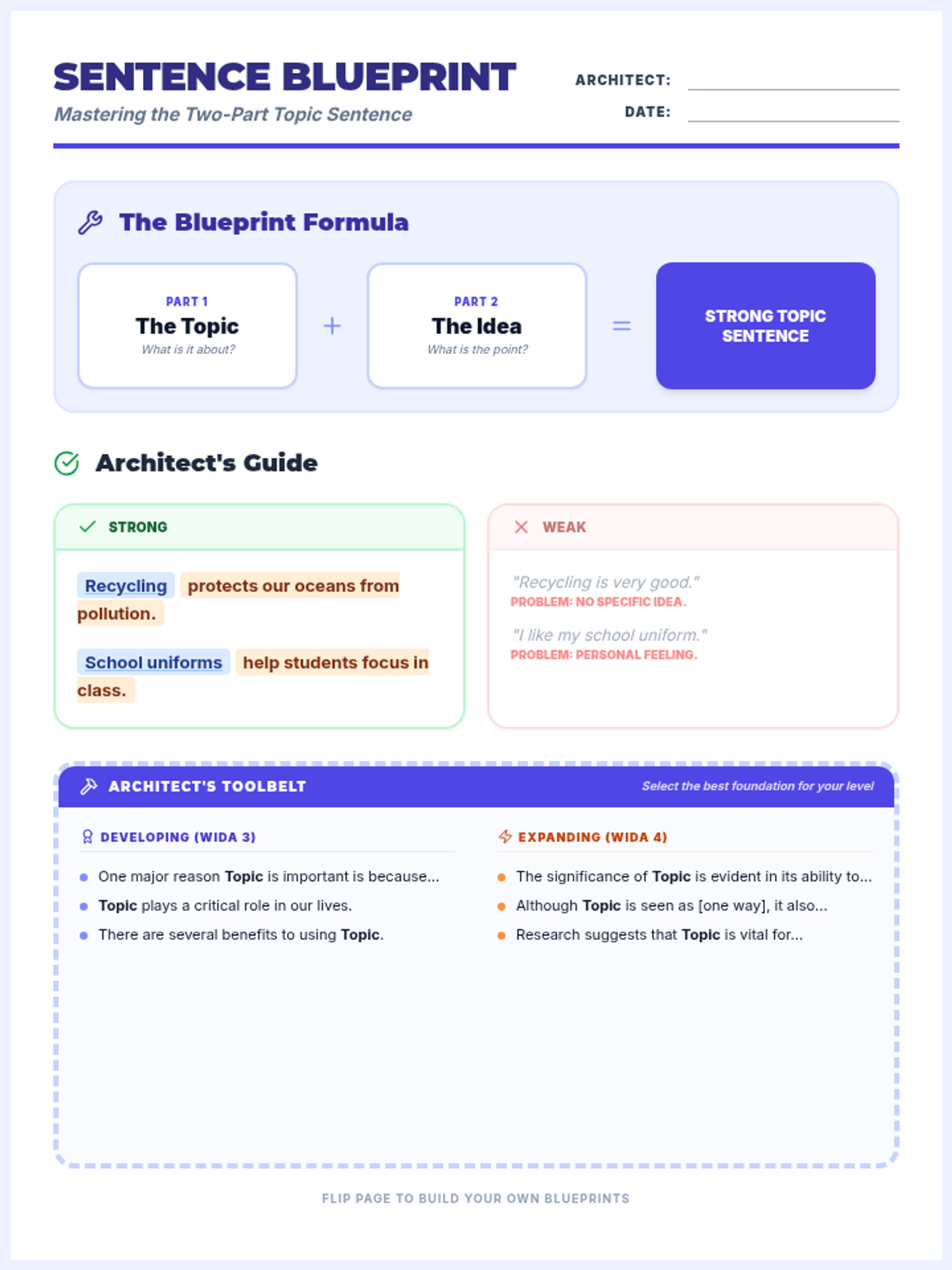
A worksheet for WIDA level 3-4 students to practice writing topic sentences. It includes a visual formula, differentiated sentence starters for Developing and Expanding levels, and a graphic organizer for guided practice.
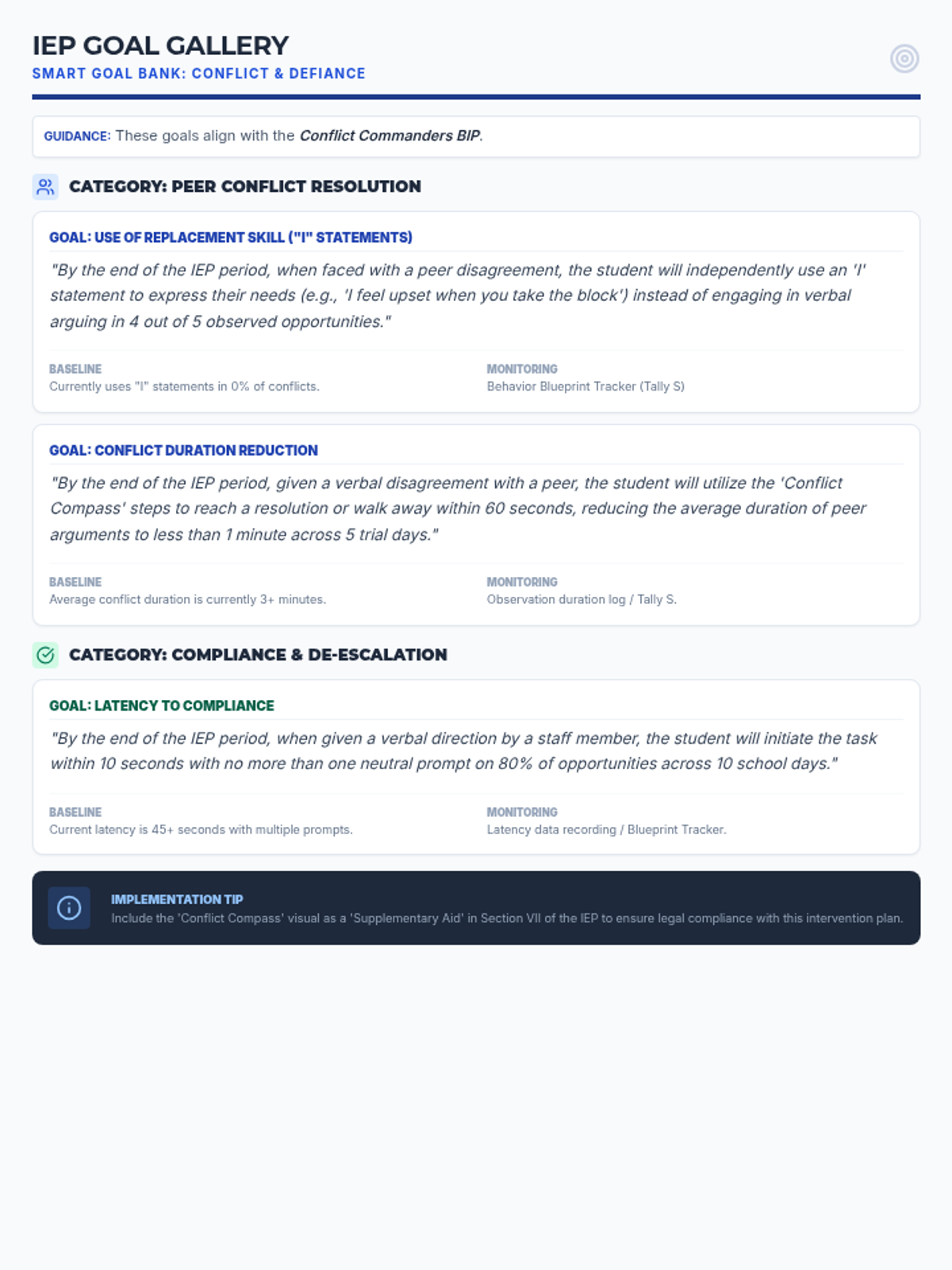
A bank of SMART IEP goals focused on reducing peer conflict and defiance, aligned with the Conflict Commanders BIP strategies.
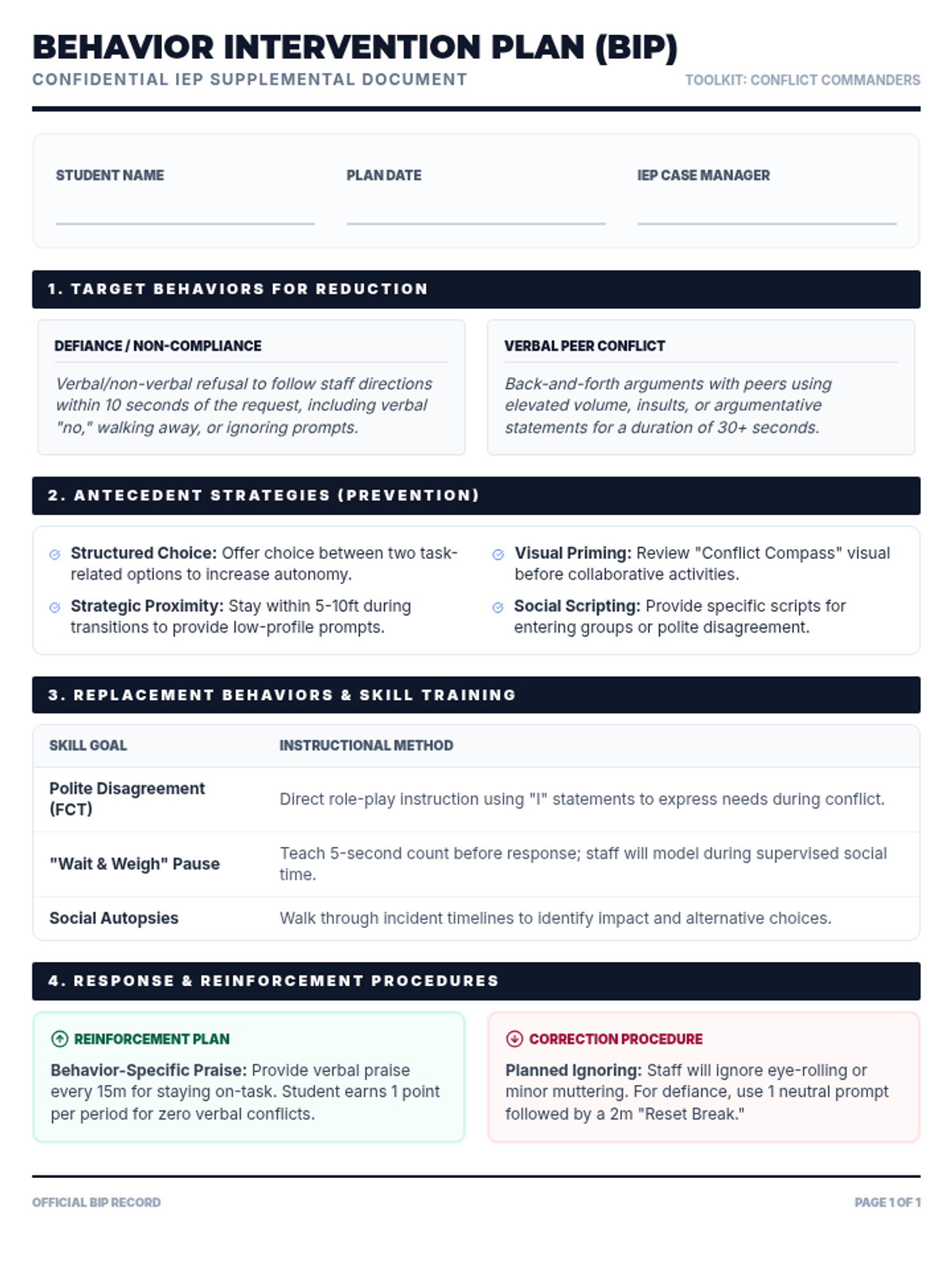
A formal Behavior Intervention Plan (BIP) document formatted for IEP inclusion, organizing strategies into target behaviors, antecedents, and replacement skills.
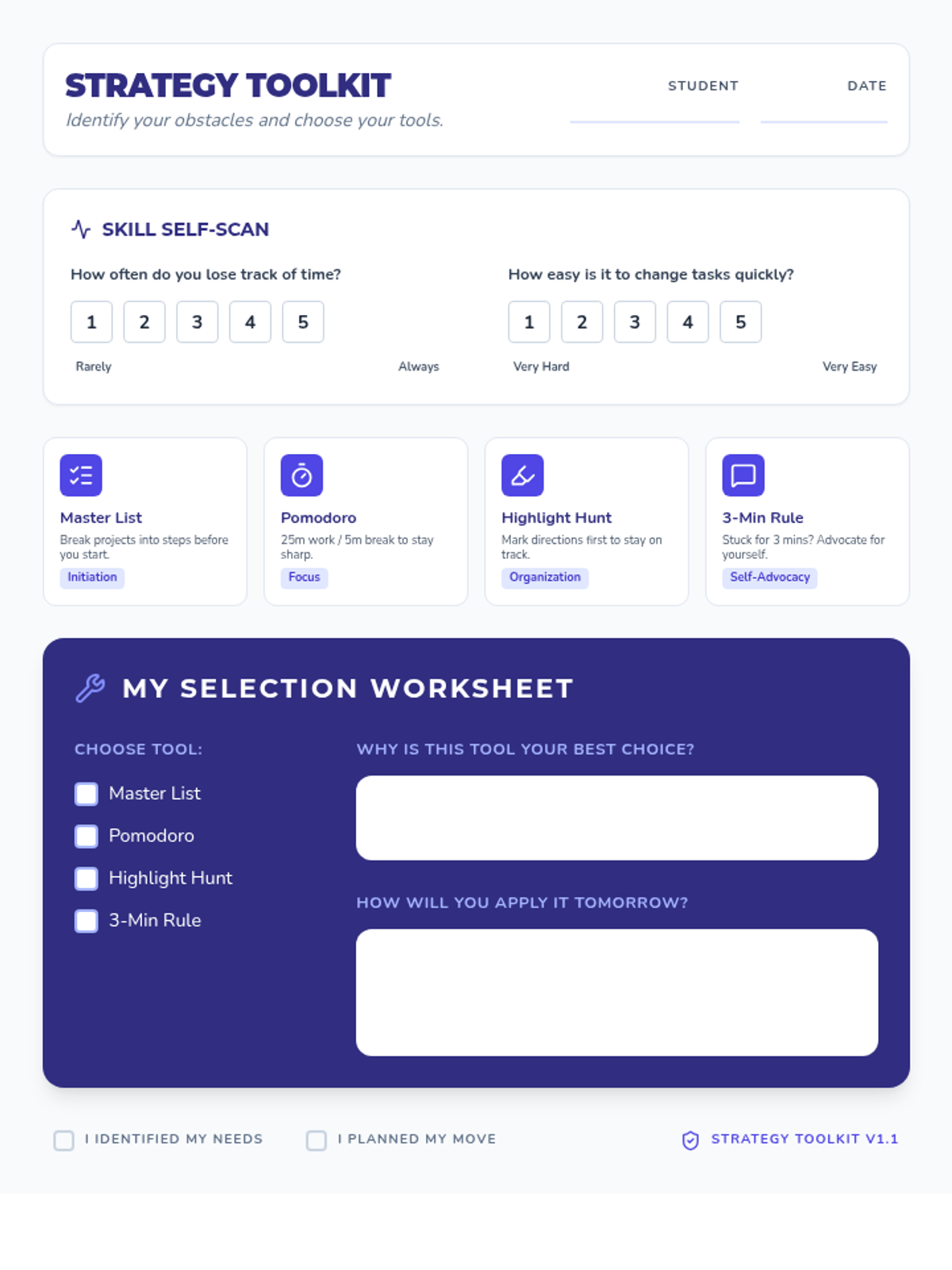
A visual strategy toolkit and selection worksheet that helps students identify and plan the use of specific executive functioning tools.
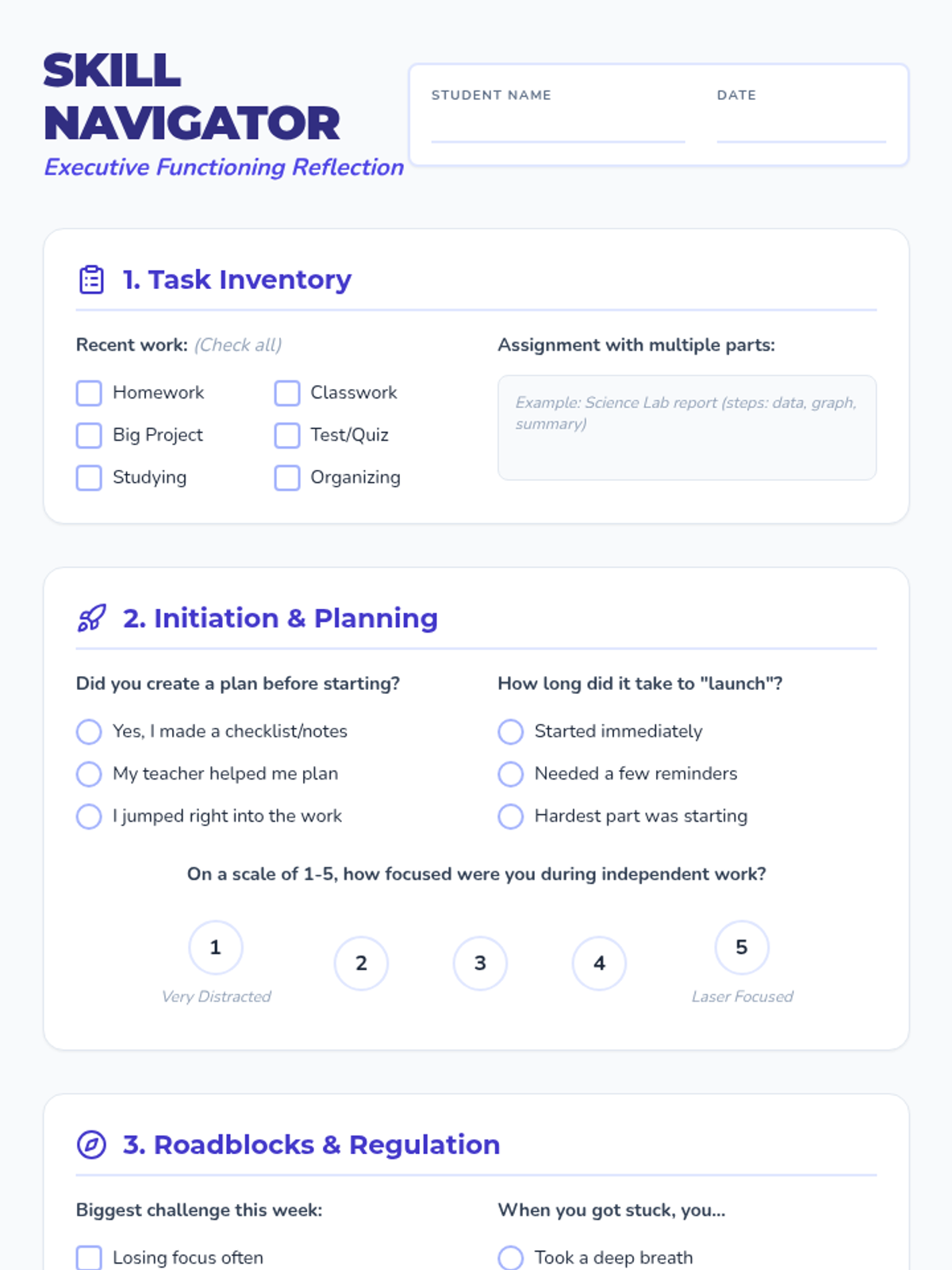
A comprehensive executive functioning self-reflection worksheet for students, covering task planning, initiation, focus strategies, organization, and goal setting.
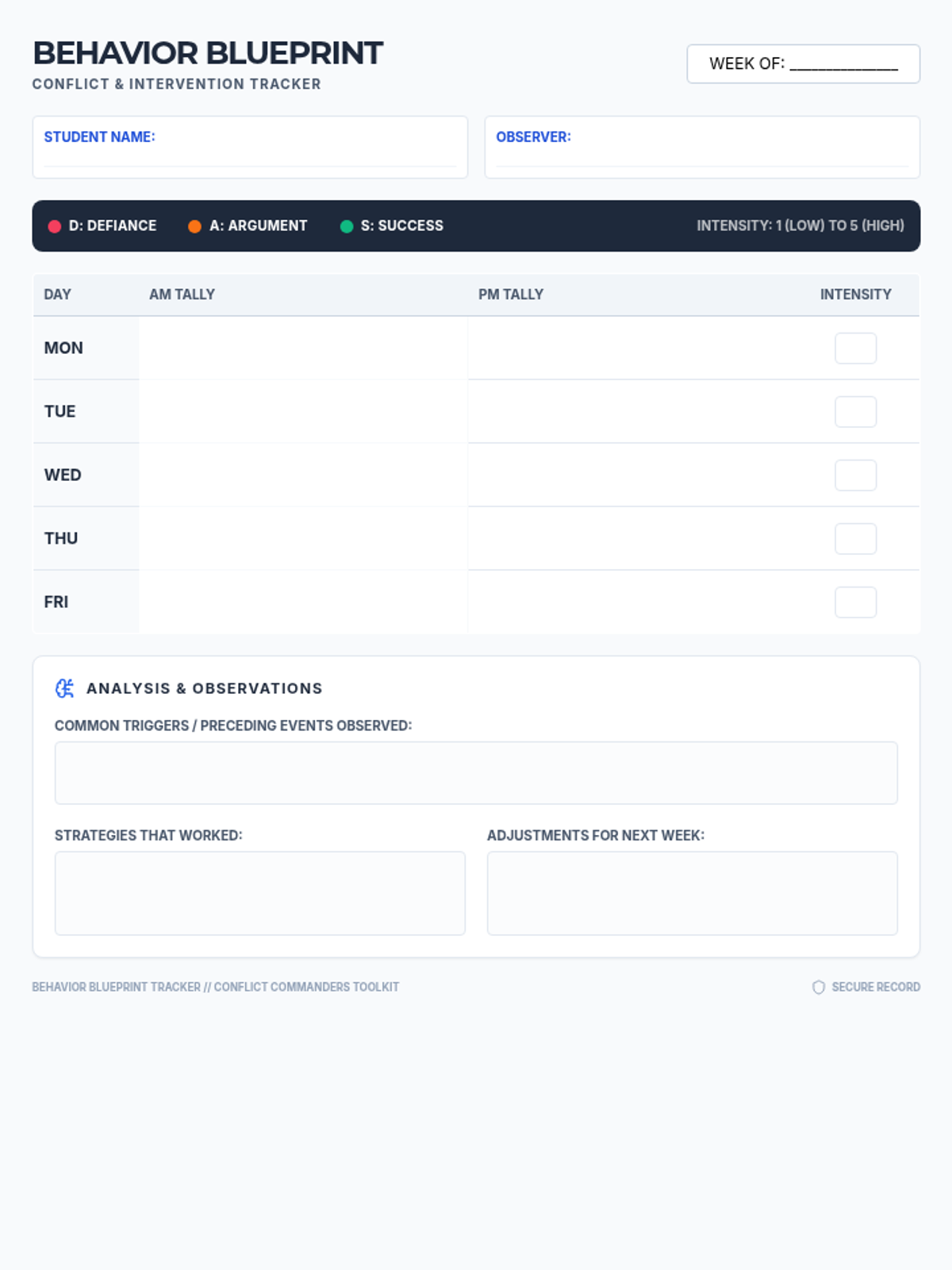
A tracking sheet designed for educators to record the frequency and intensity of defiant behaviors and peer arguments, with space for qualitative analysis.
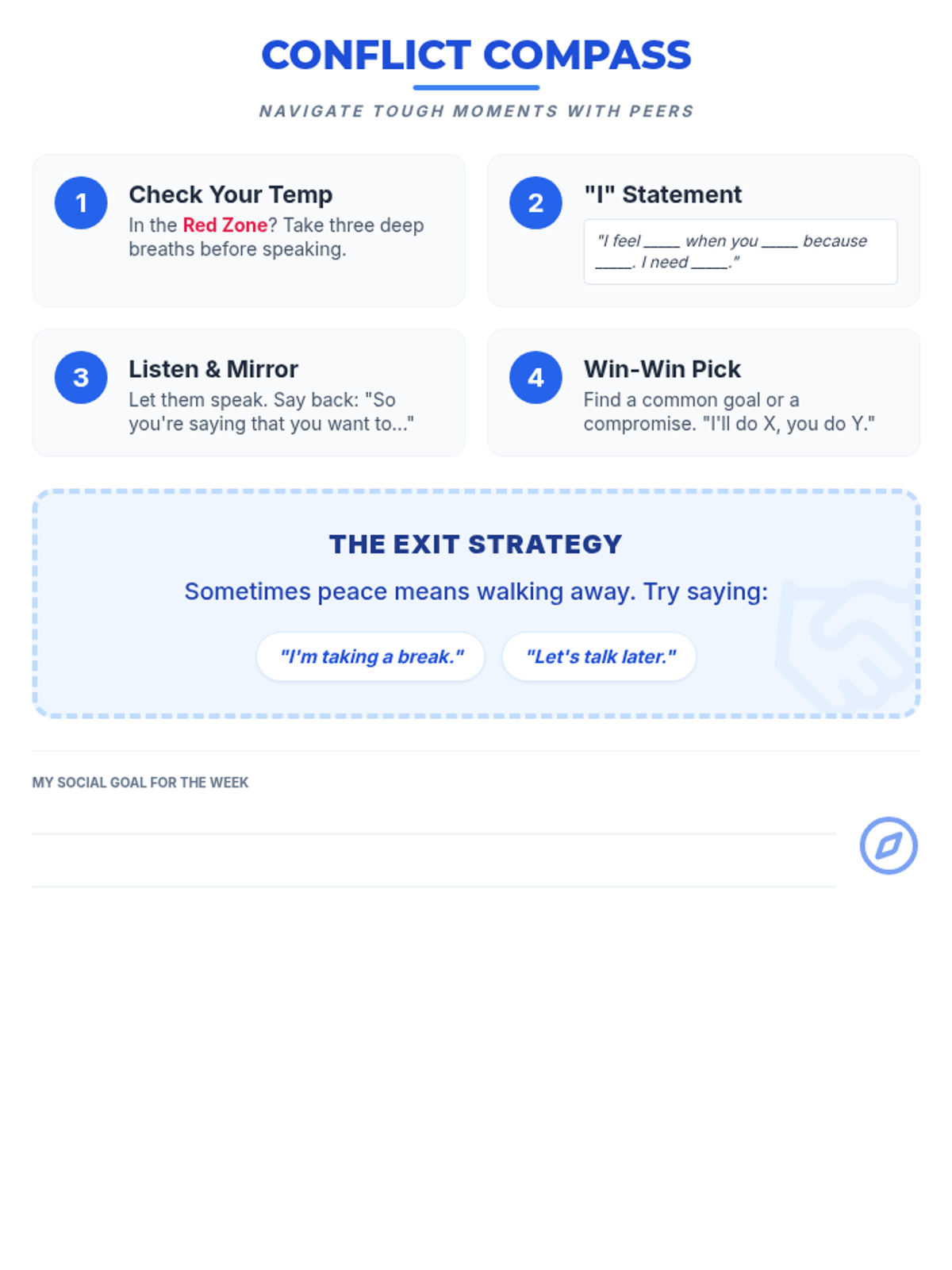
A student-facing visual aid and reference sheet providing a 4-step framework for navigating peer disagreements and practicing self-regulation.
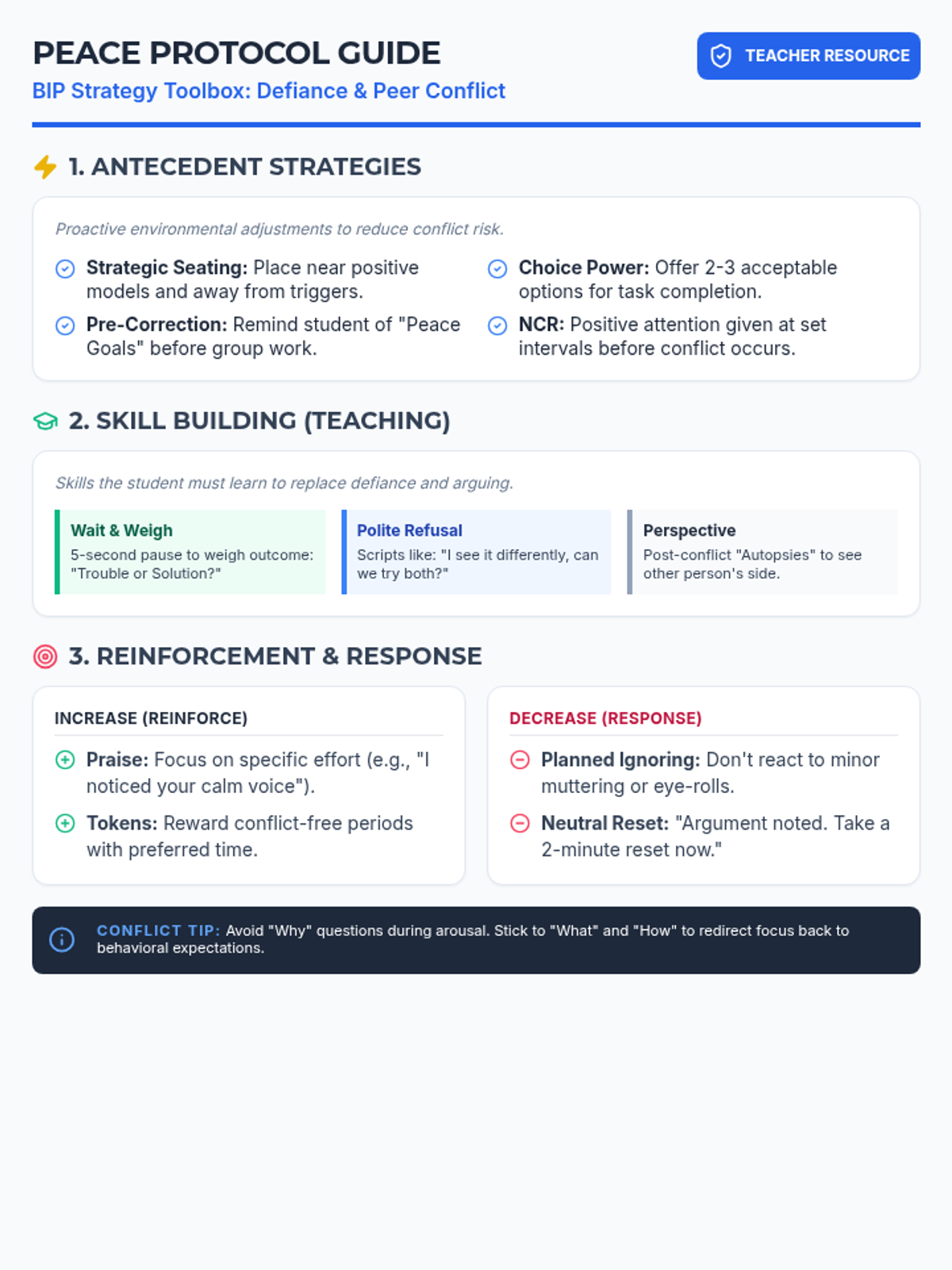
A comprehensive teacher-facing guide outlining antecedent, teaching, and consequence strategies for students struggling with defiance and peer conflict.
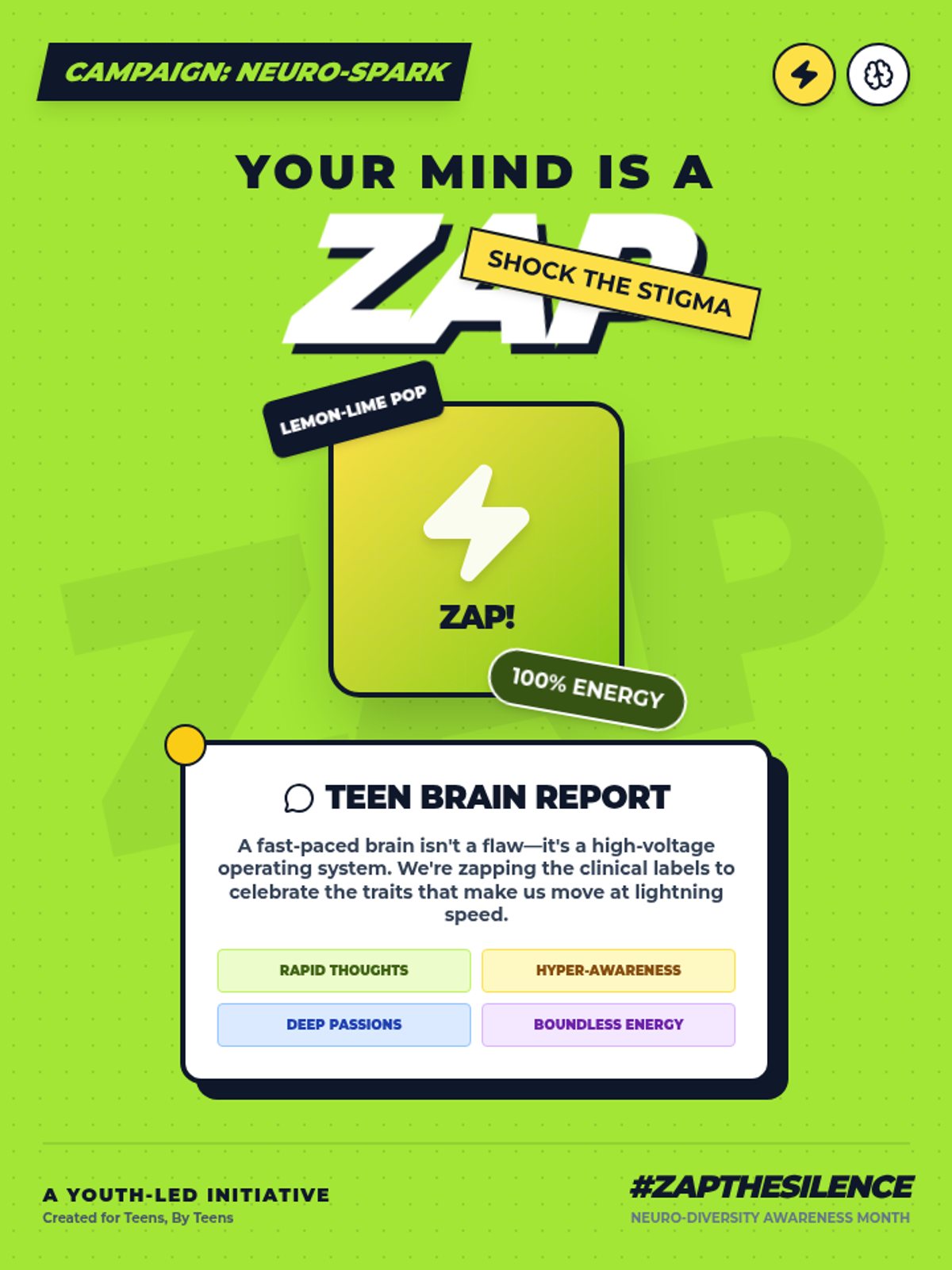
A high-impact, teen-focused social advocacy poster for 'Zap' candy, redesigned to remove explicit diagnosis naming and ensure a polished, printable layout.
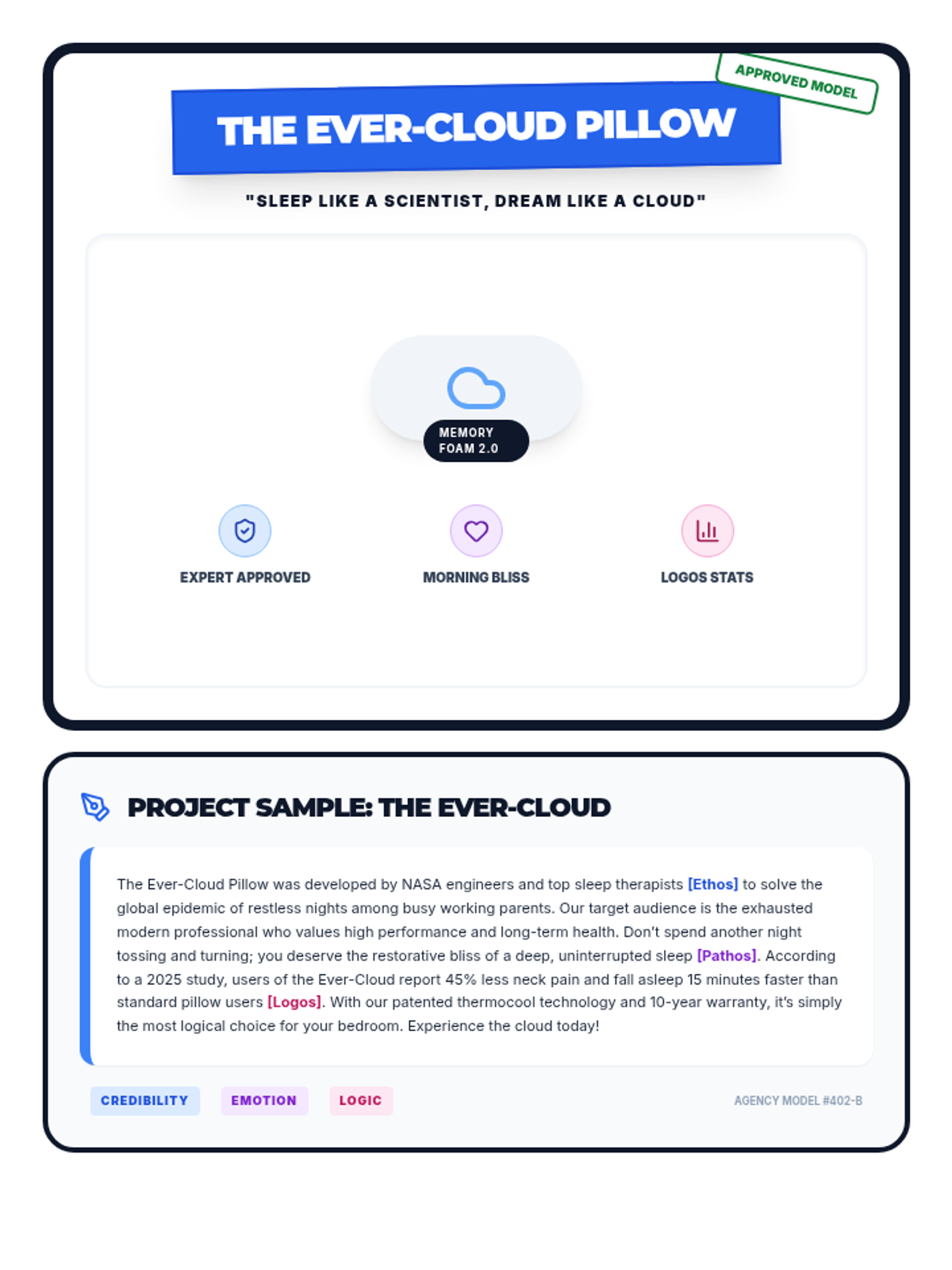
A completed model of the Pitch Perfect project to show students what a successful poster and paragraph look like, using a fictional "Ever-Cloud Pillow" as the example.
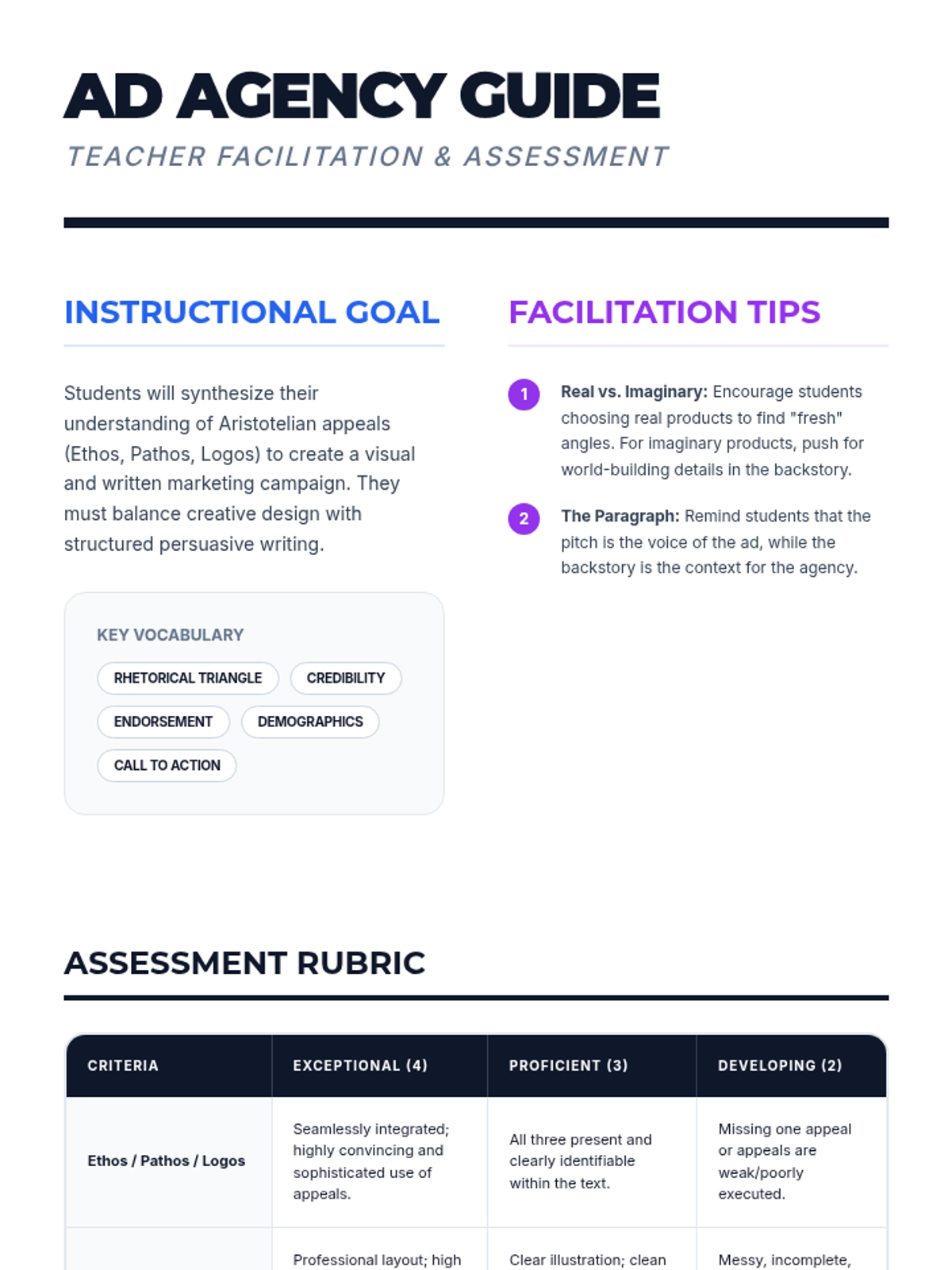
A comprehensive teacher's guide for the Pitch Perfect project, including lesson goals, facilitation tips, a detailed grading rubric, and differentiation strategies.
A clean, high-impact poster template designed for students to illustrate their product and write their persuasive pitch. Includes visual markers for rhetorical appeals and a structured layout.
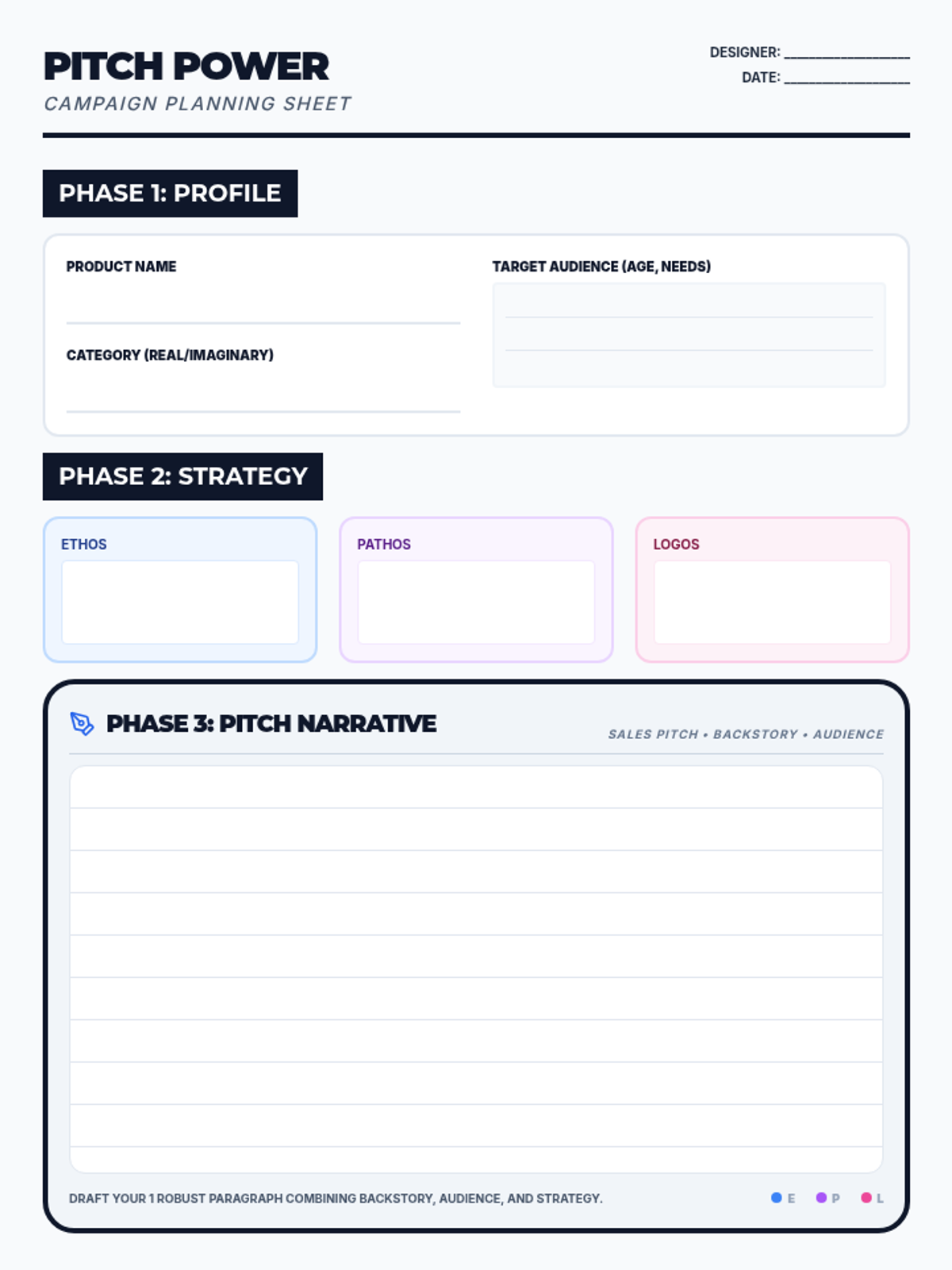
A detailed planning worksheet to help students brainstorm their product, identify their target audience, and map out their rhetorical strategies before creating their final poster. Includes the pitch narrative draft section.
A comprehensive slide deck introducing the rhetorical triangle (ethos, pathos, logos) with modern examples, project requirements, and a model example of the "Ever-Cloud Pillow" project.