A visually engaging student-facing infographic explaining ADA rights, the four steps of self-advocacy, and the principles of Universal Design for Learning in higher education.
A professional and visually engaging cover page for the Flexibility Framework instructional resource packet, featuring a prominent name field for student personalization.
A teacher-facing guide with strategies, scripts, and implementation tips for supporting hyperliterate ASD students through any unexpected schedule change.
A single-page visual reference poster for a student's desk, combining logic-based reminders, regulation steps, and a dry-erase area for schedule updates. Optimized for 8.5x11 printing.
A social story for a 2nd grade student with ASD, explaining the logic behind schedule changes generally, with an assembly as a specific example.
A facilitator's script for the Communication Power slide deck, providing specific verbal prompts and physical actions to help teachers deliver the lesson to students with autism.
Answer key for the Help Match Worksheet showing correct pairings between feelings and signals.
Teacher resource with instructional strategies, IEP goal alignment, teaching steps, and data collection tips for implementing communication signals.
An activity worksheet for students to identify specific tasks they find difficult and select a signal (help or break) to use during those times. Includes a drawing space for self-modeling. Removed potentially confusing banners.
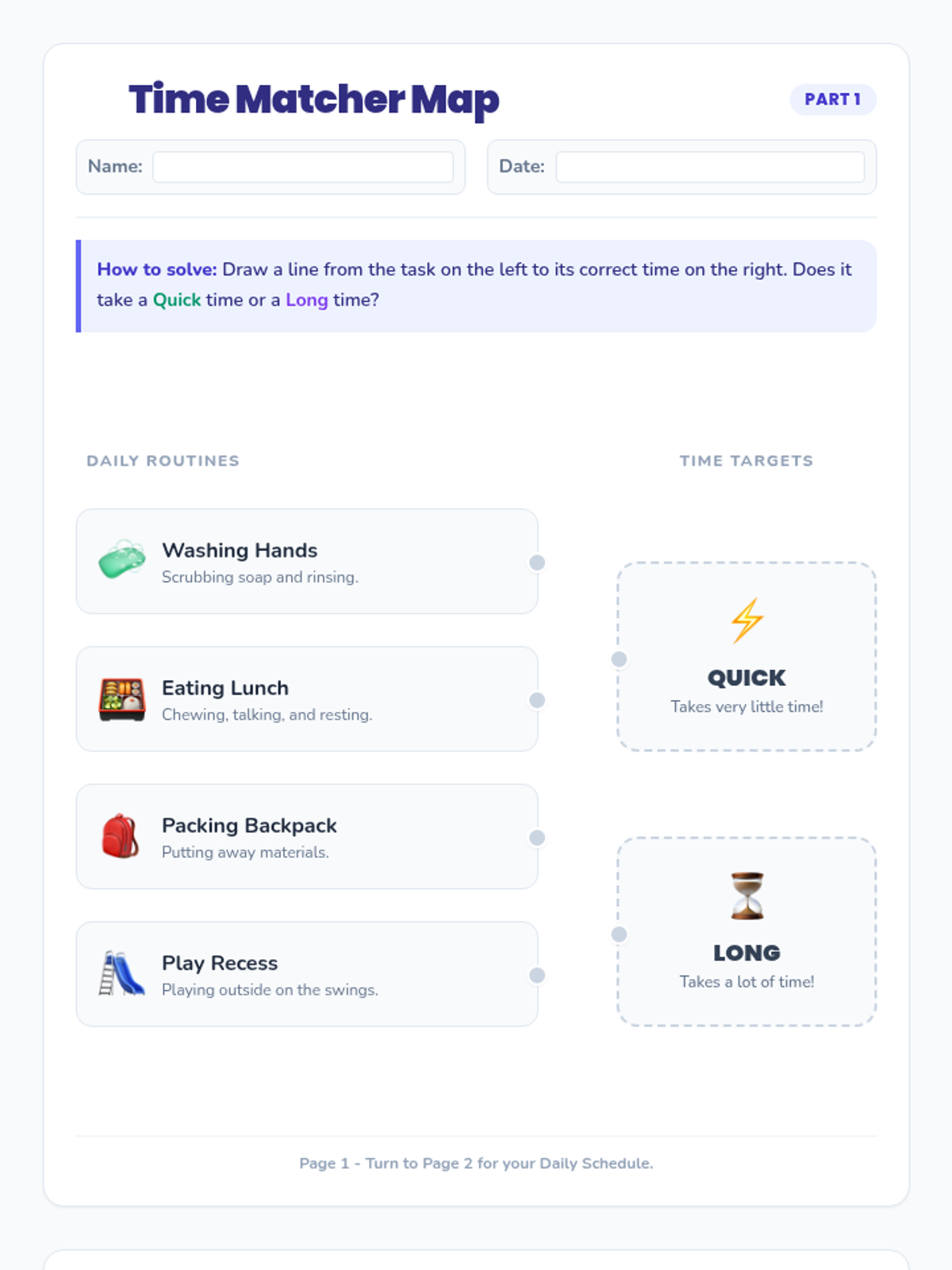
A visual matching worksheet for students to pair feelings (stuck, tired, hard work) with the appropriate signal (help, break). Designed for minimal text load.
Printable visual communication cards for students to request help or a break. Features high-contrast borders and large icons for clear signaling.
A visual slide deck introducing students to identifying their needs and using signals to request help or a break. Features large text, high-contrast icons, and minimal verbal load.
A refined, compact one-page flyer for neurodiverse students featuring 8 free productivity and regulation apps. Includes specific search/URL instructions for each app and essential tips for managing low data/storage.
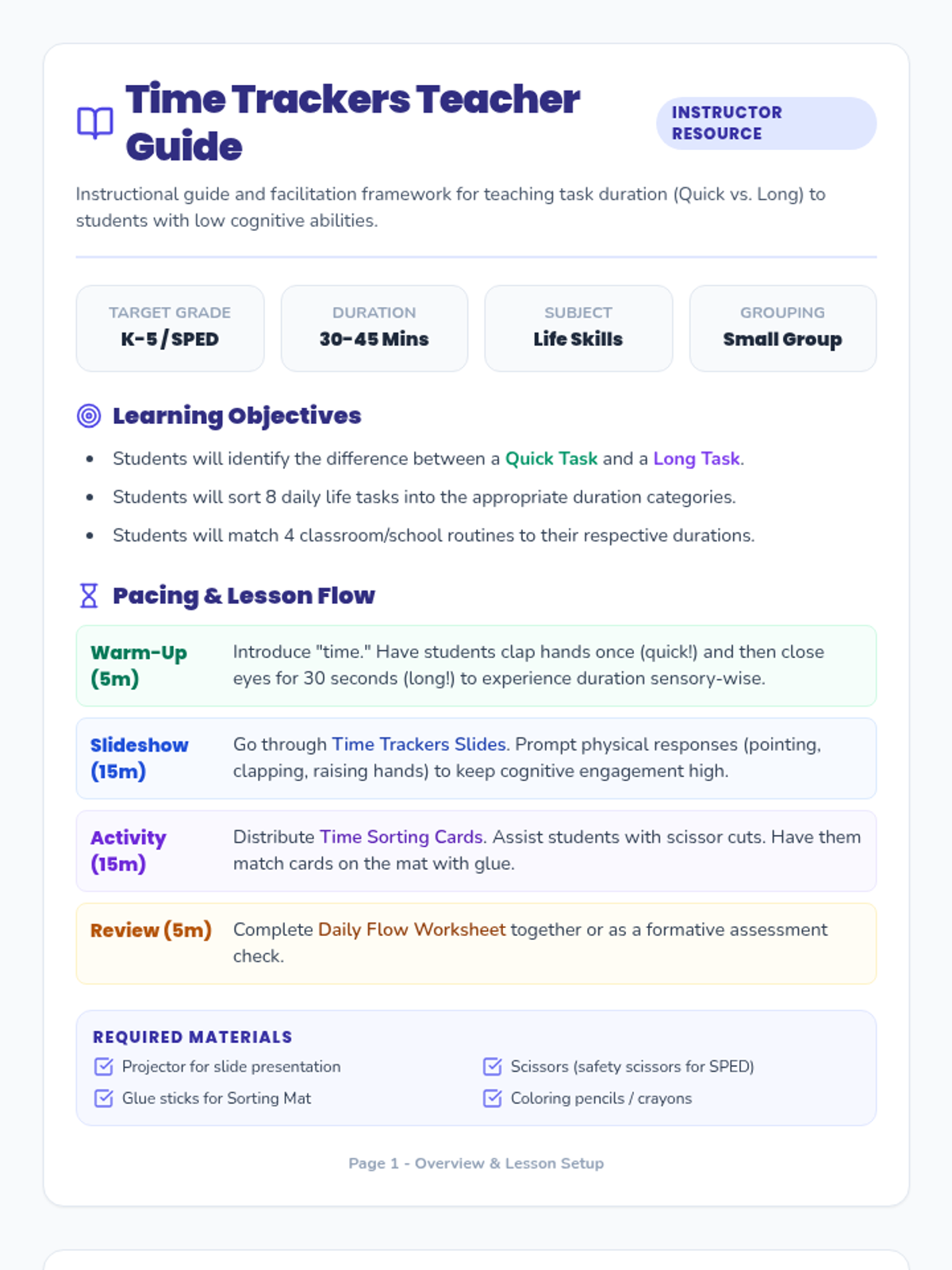
A facilitation guide for the Chaos Controller lesson, including learning objectives, facilitation tips, and an answer key for all missions and scenarios.
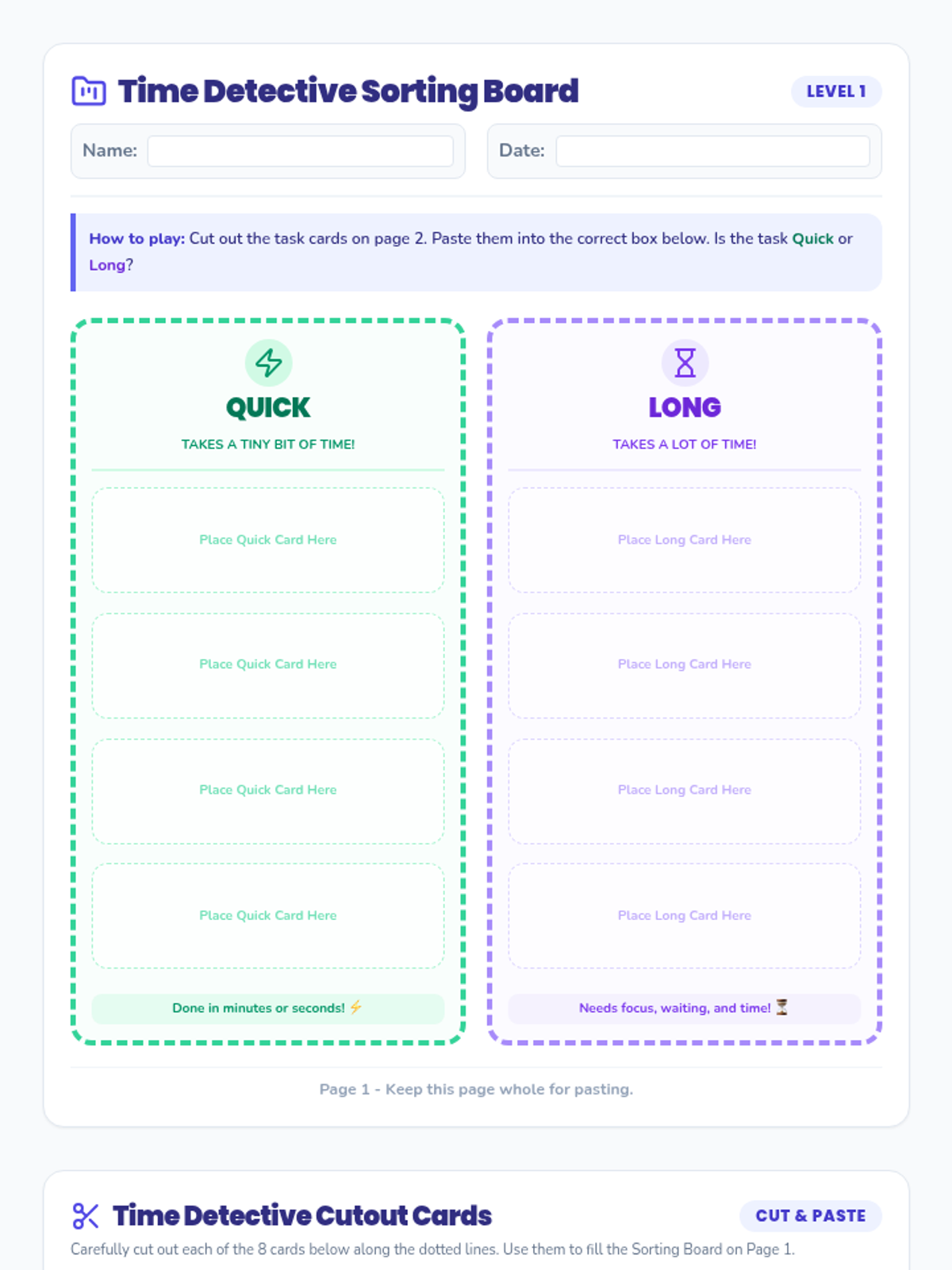
A sheet of cut-and-paste cards for Mission 1 (Planner Events) and Mission 3 (Priority Matrix) of the Chaos Controller lesson.
A worksheet featuring a weekly planner grid, five time-management scenarios, and an Eisenhower priority matrix for students to practice scheduling and conflict resolution.
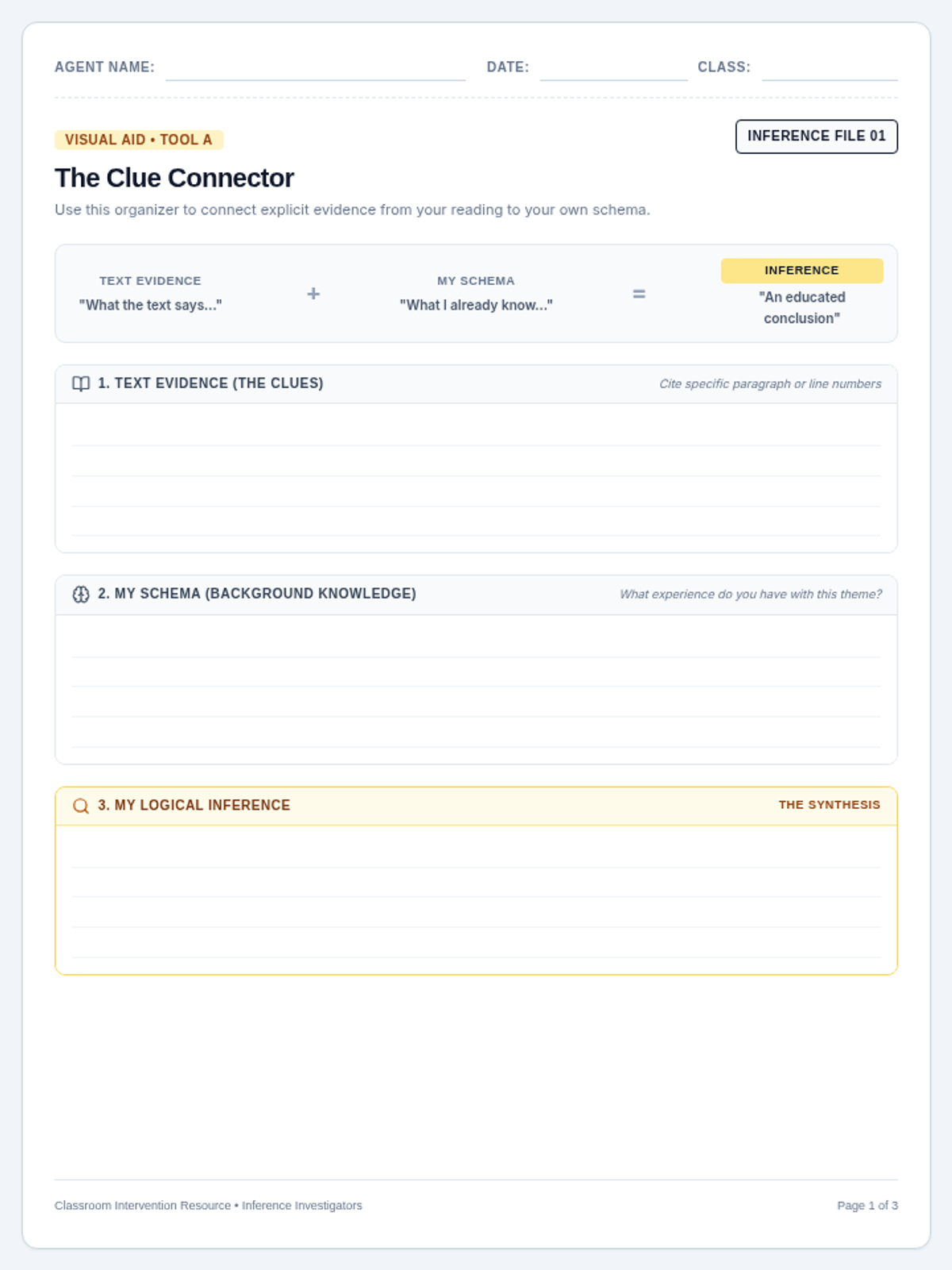
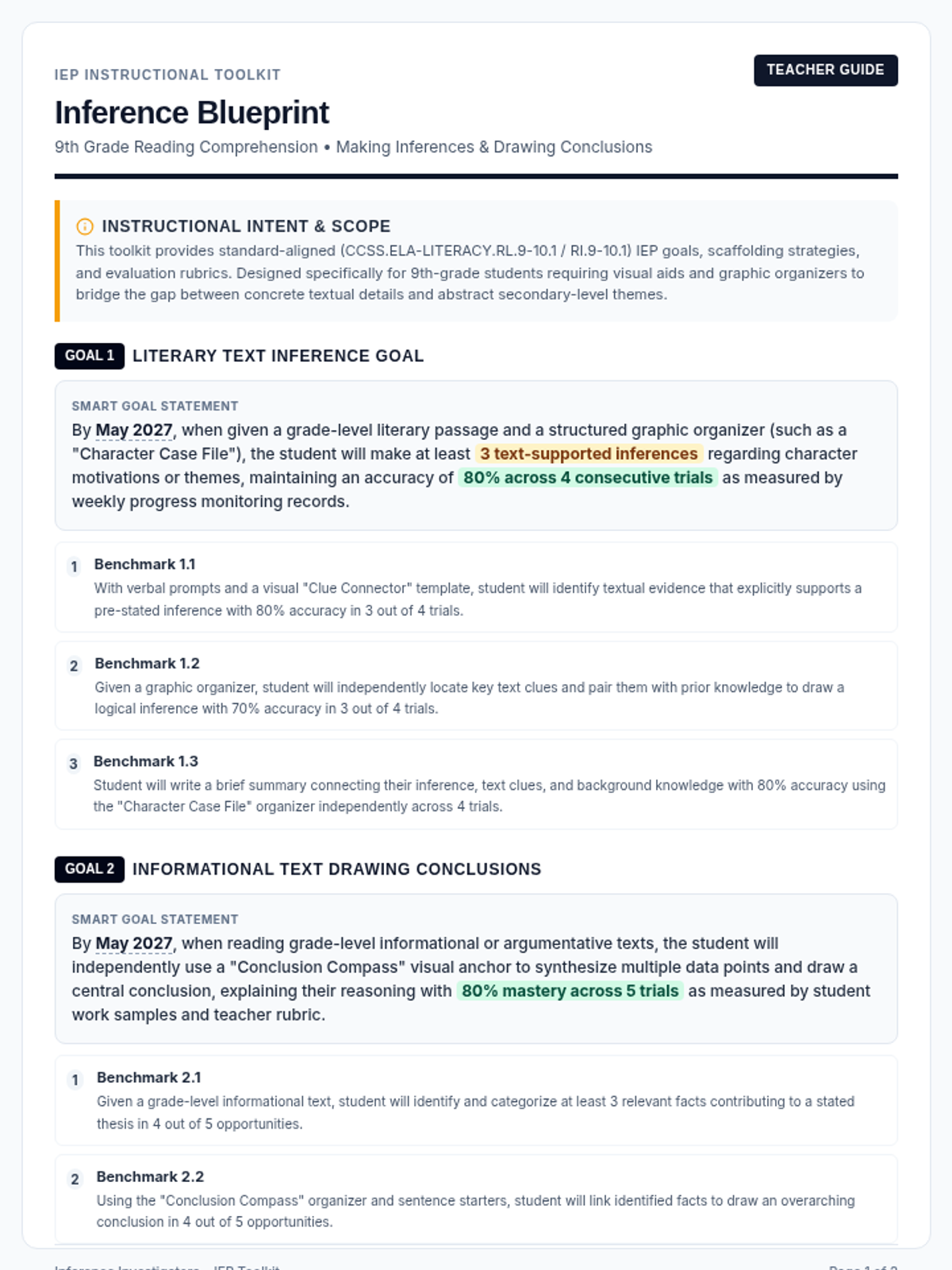
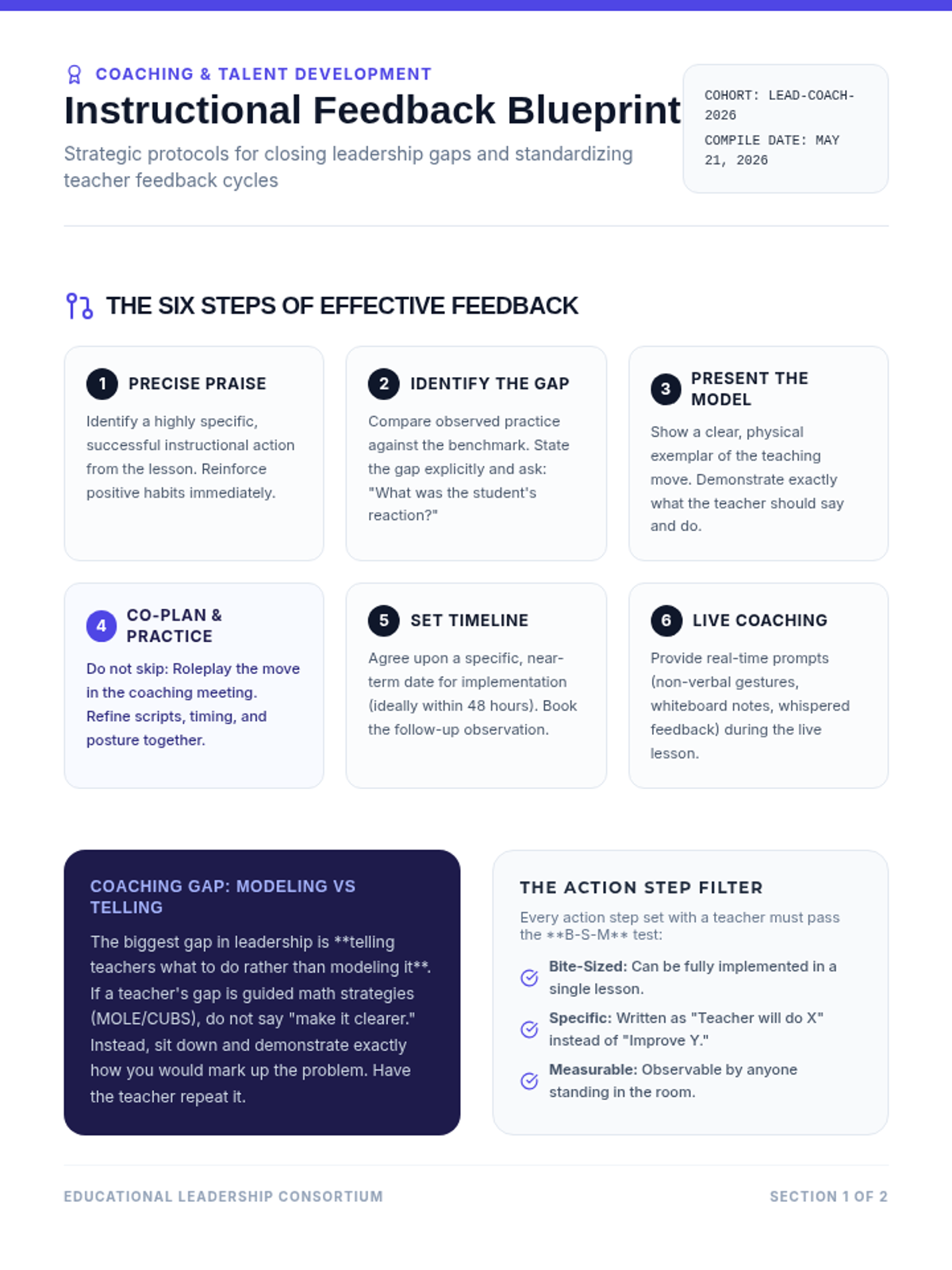
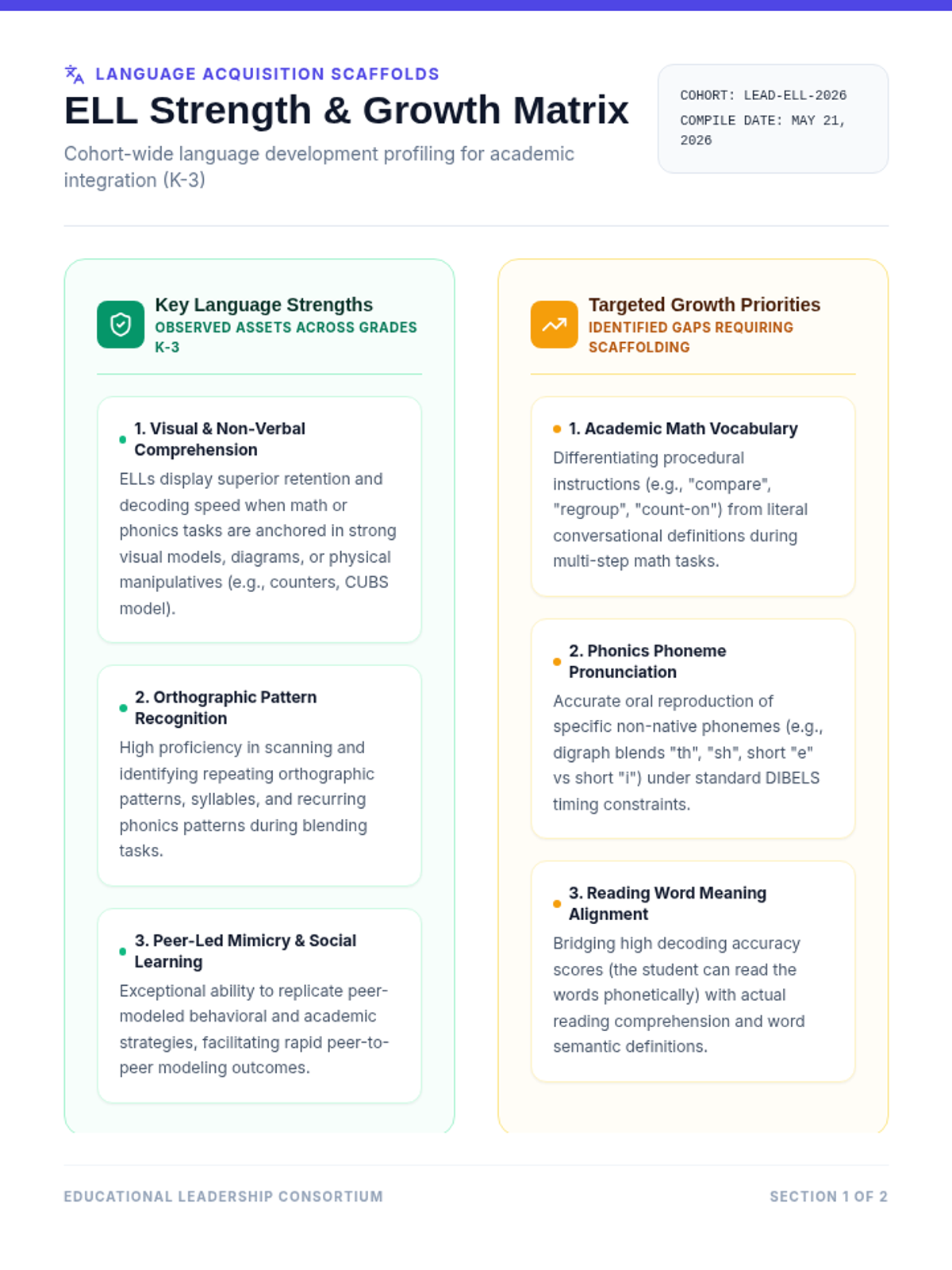
A high-impact, exciting promotional card for the 'Executive Function Freebie'. It features oversized Montserrat typography, a vibrant neon-saturated color palette (blue and rose), and a bold 'FREEBIE' stamp effect. Designed to grab attention and convert educators to the Neuro Command Academy entry protocol.
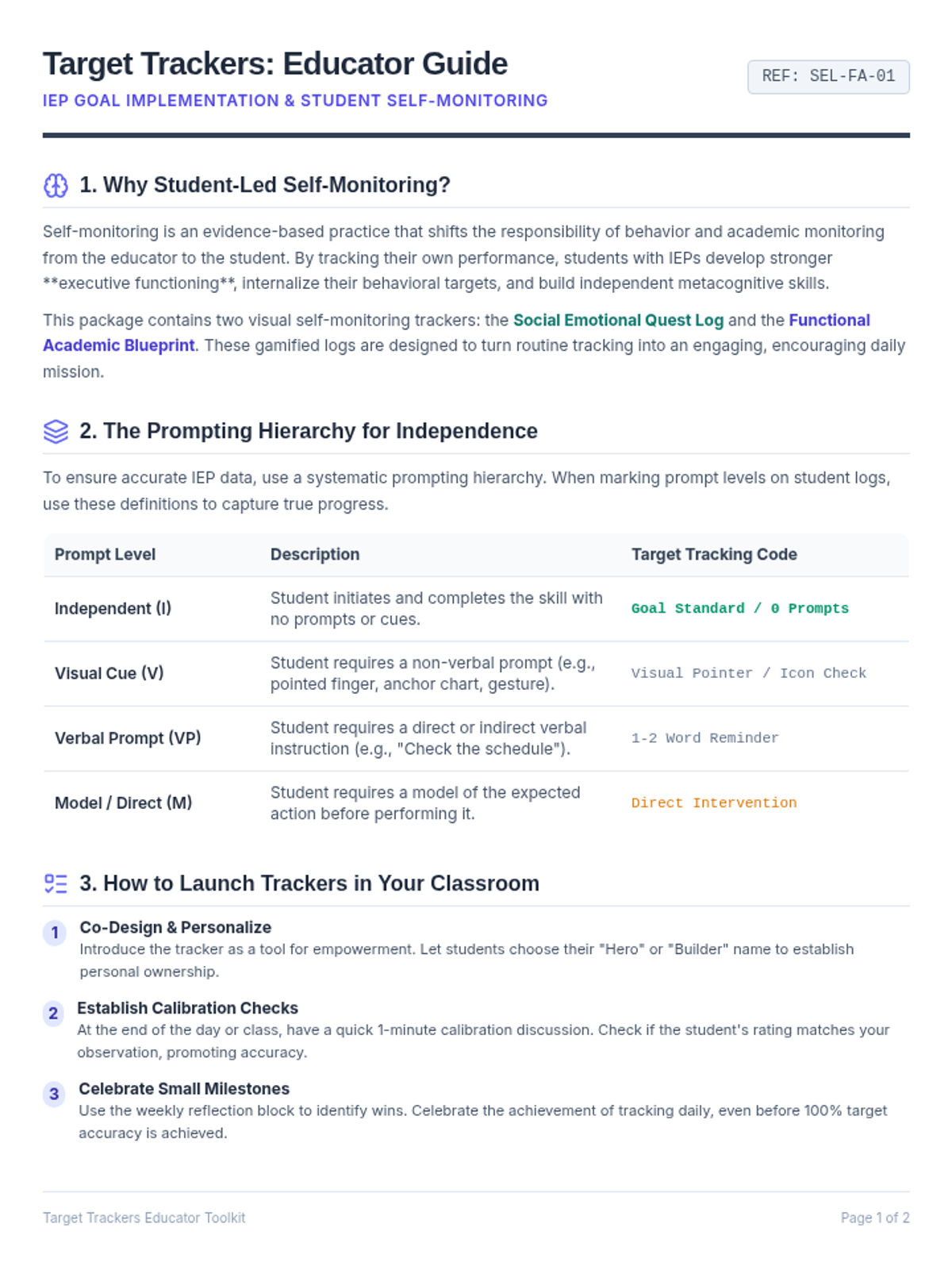
A teacher implementation guide for the Mission Control Tracker, providing strategies for managing target behaviors and effectively using the incentive system.
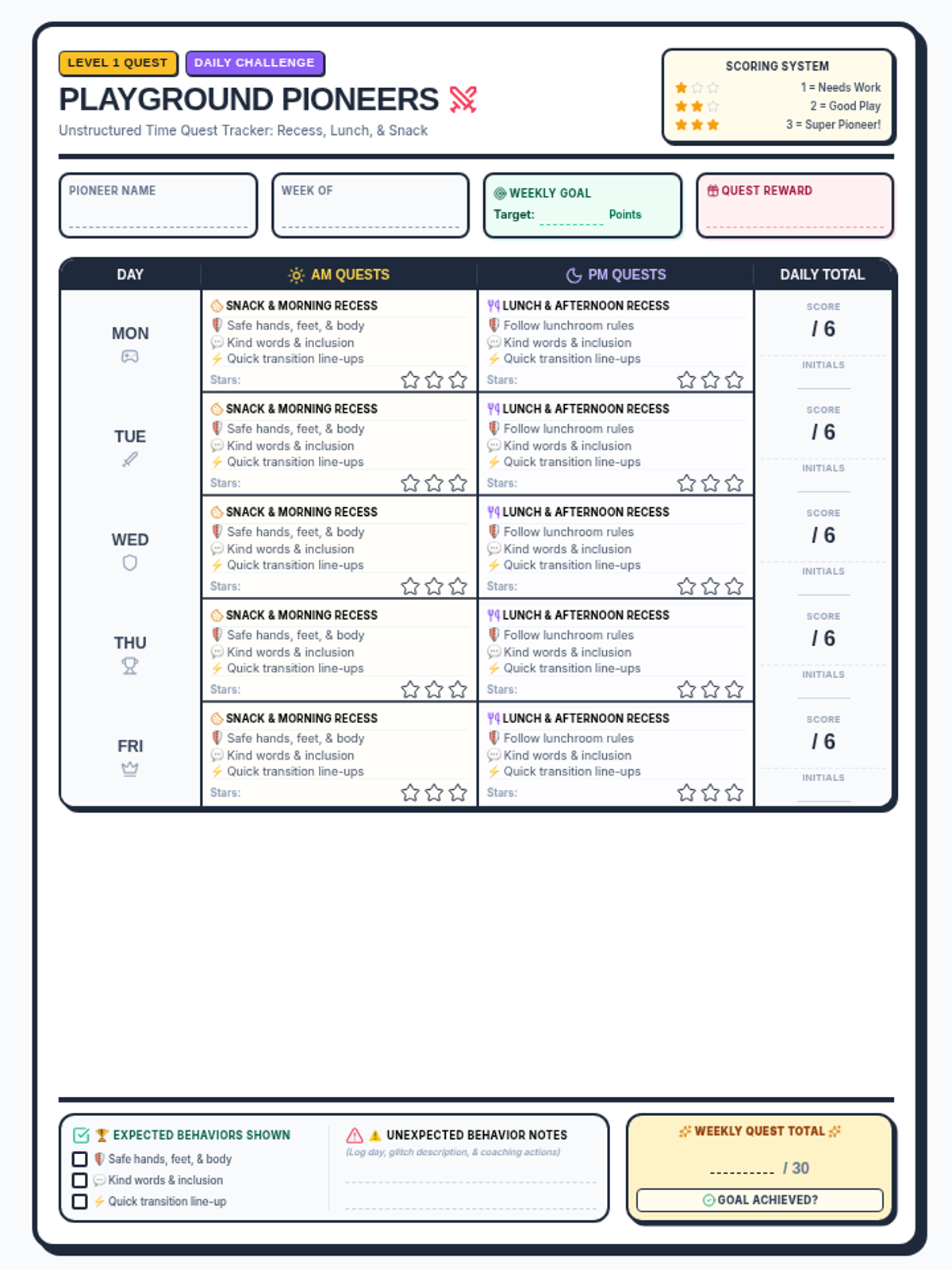
A subject-by-subject behavior tracking chart with a space-themed 'Mission Control' layout, featuring smiley face ratings, blank spaces for custom subjects/times, and a 'Mission Gear' section for support tools.
A teacher facilitation guide for implementing the Goal Getter Weekly Check-in, providing instructional routines, goal examples, and strategy-focused discussion prompts.
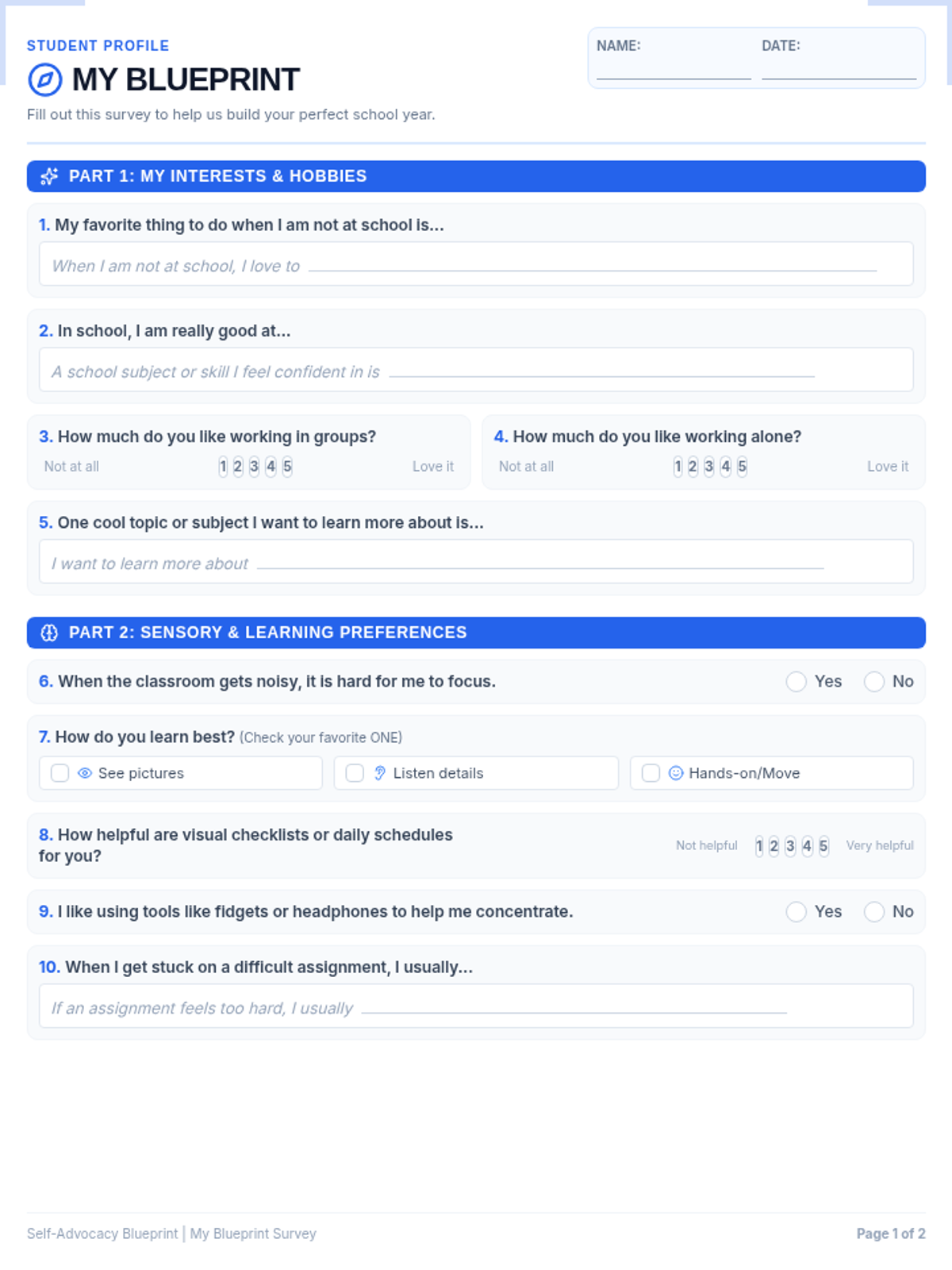
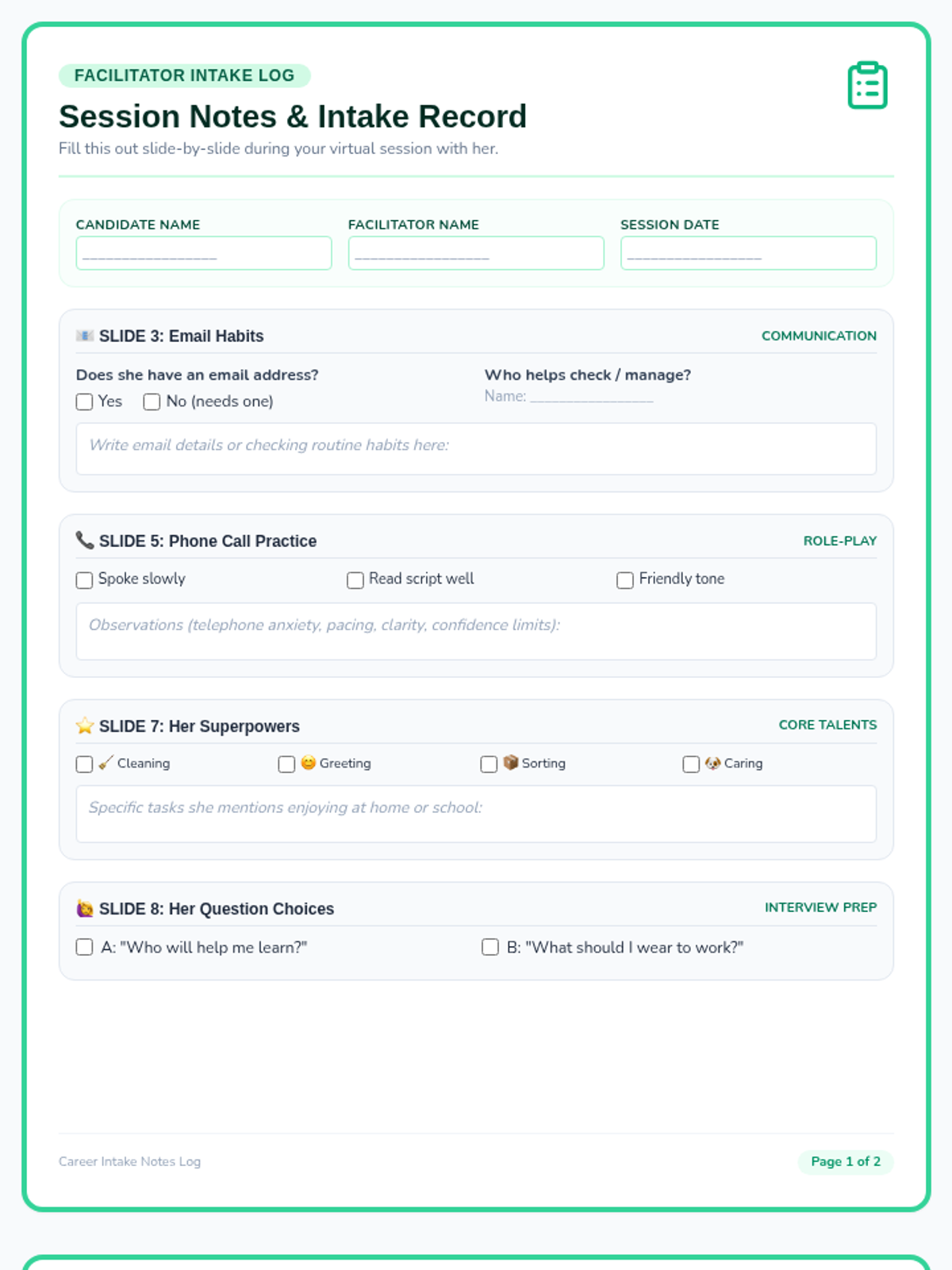
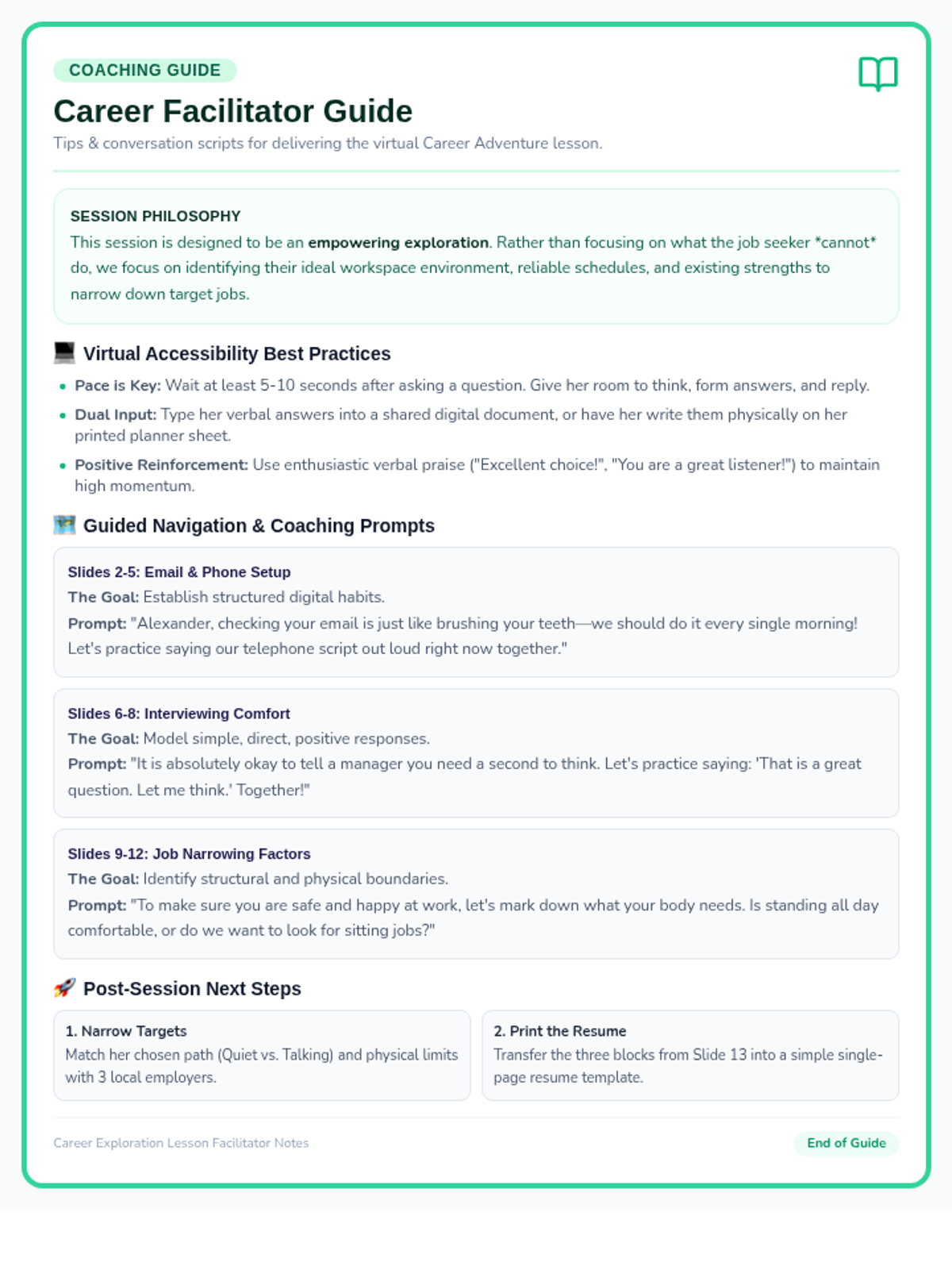
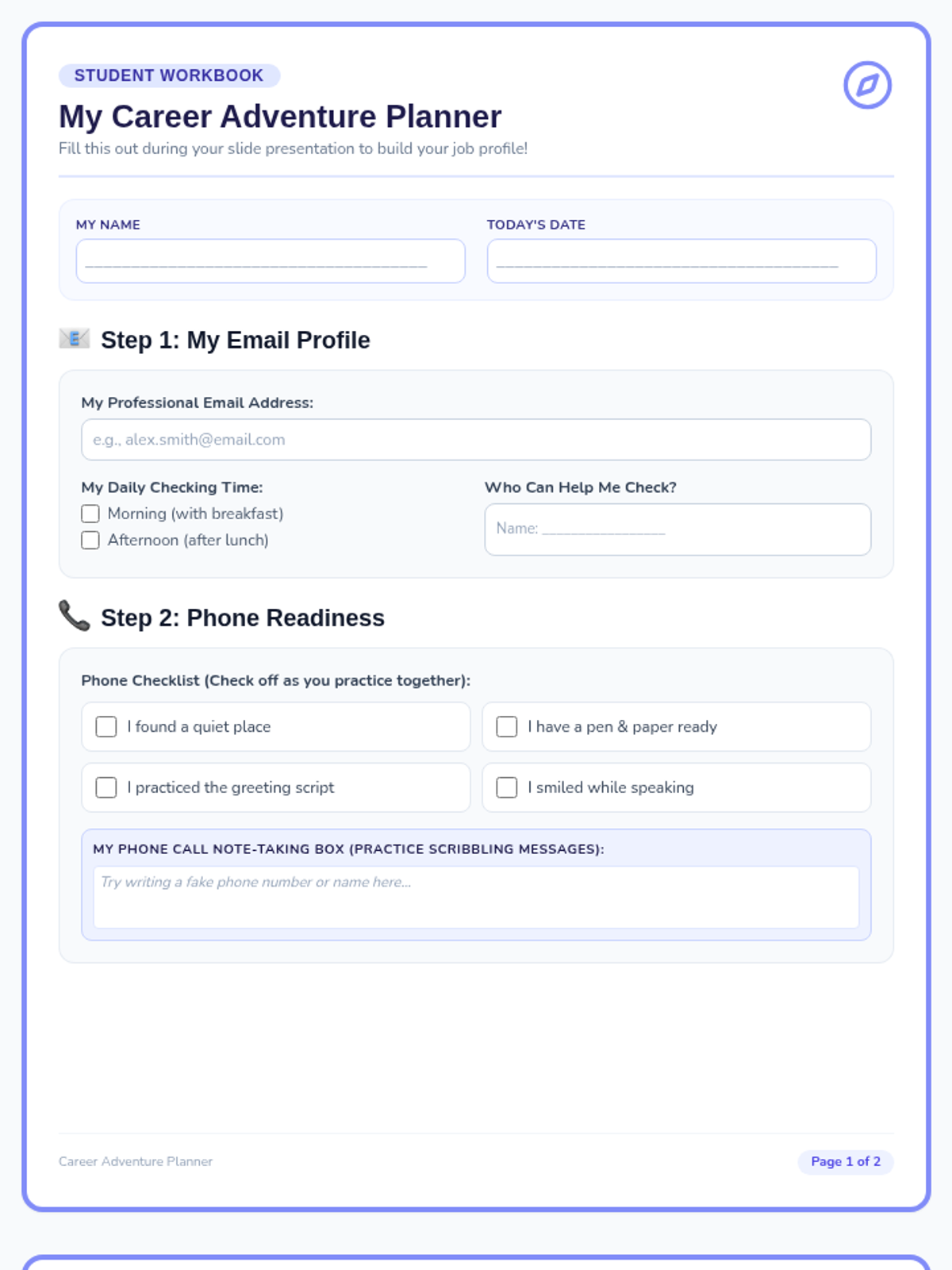
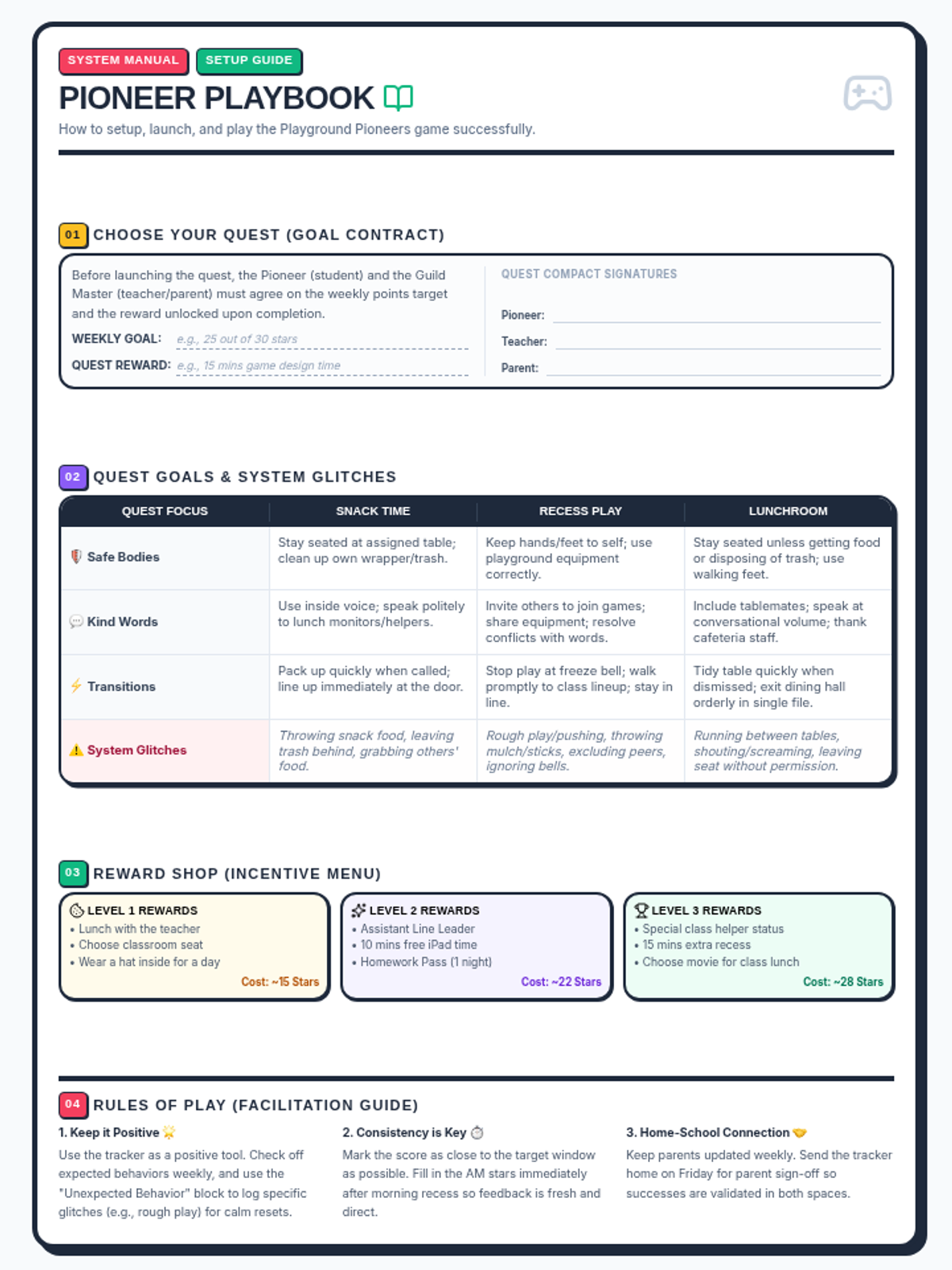
A weekly goal check-in sheet for students to track self-created executive functioning goals, featuring a rating scale and four structured reflection prompts focused on strategy use.
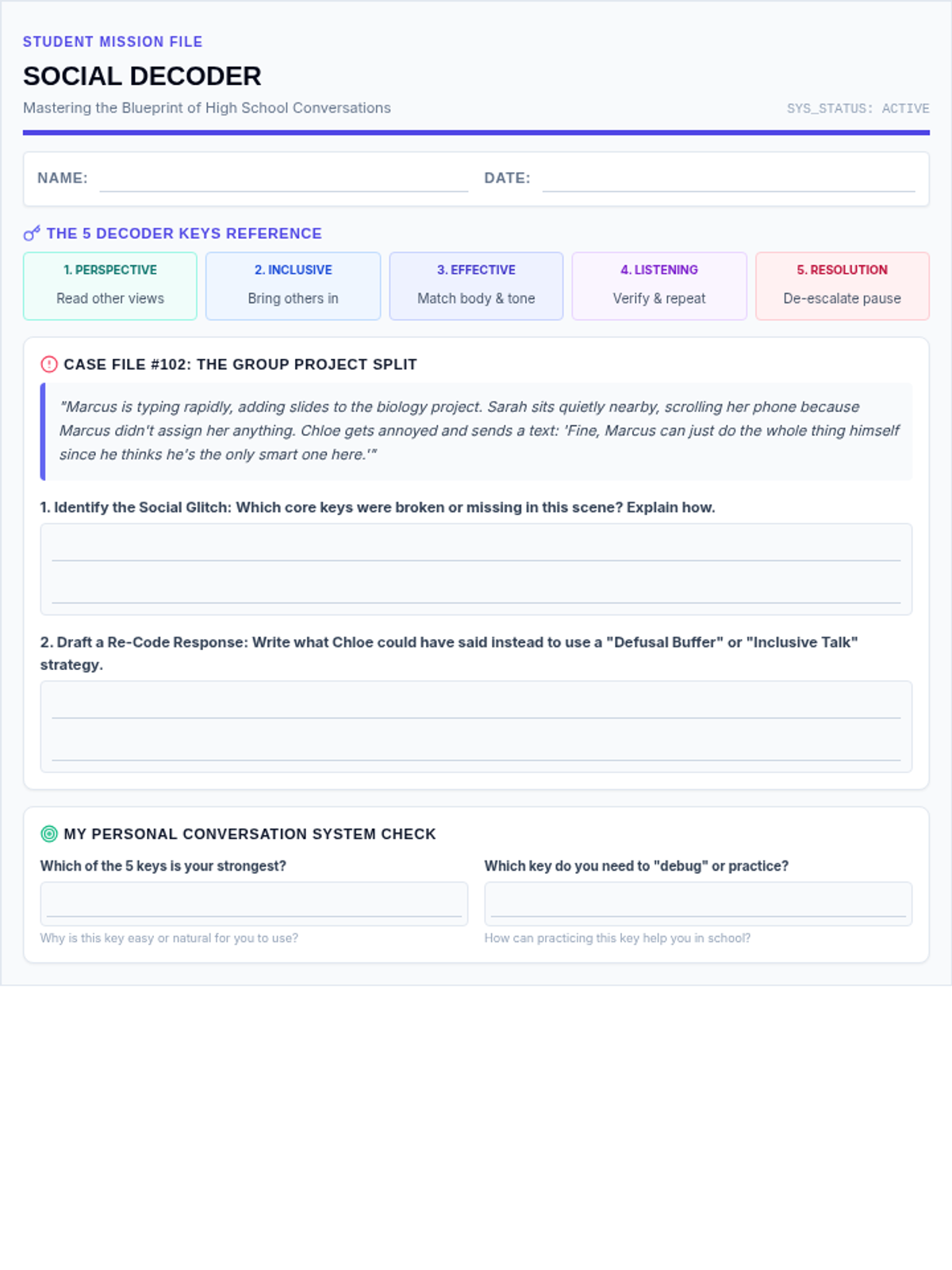
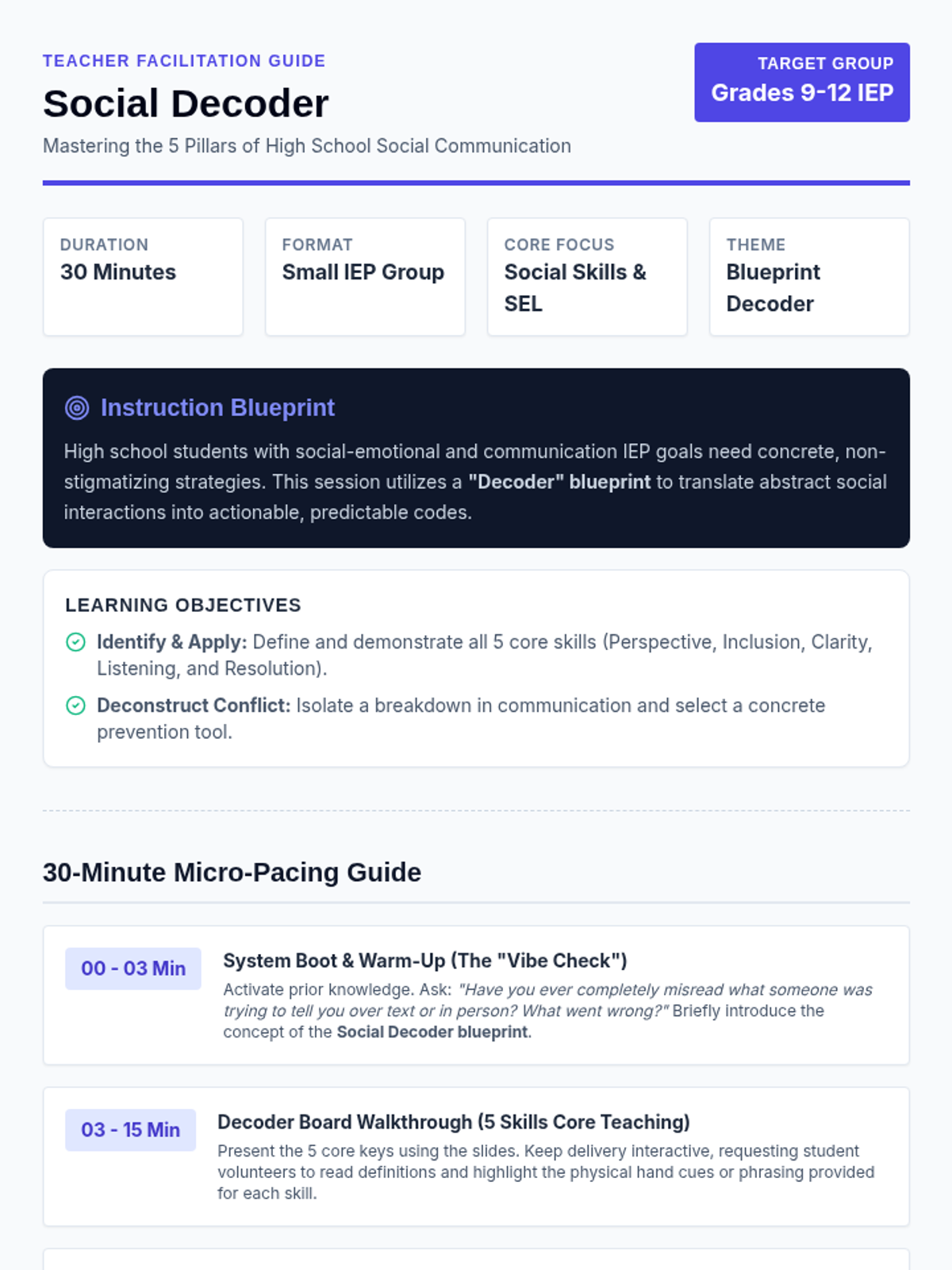
A facilitation guide for educators working with adults with mild intellectual disabilities. It provides specific instructions for implementing social skills training, habit tracking for diabetes prevention, and frustration management techniques.
A highly visual, step-by-step 'Stop and Think' guide for adults with mild intellectual disabilities. It breaks down frustration tolerance into four actionable steps: Stop, Breathe, Think, and Choose, with ample space for personalization.
A 7-day visual habit tracker for adults with mild intellectual disabilities. It includes sections for healthy physical habits (water, vegetables, exercise) to support diabetes prevention, as well as social communication habits (calm voice, frustration management).
A set of 8 visual scenario cards designed for adults with mild intellectual disabilities. Each card presents a common social or health-related challenge and provides a clear, respectful script or action step to practice frustration tolerance and social communication.
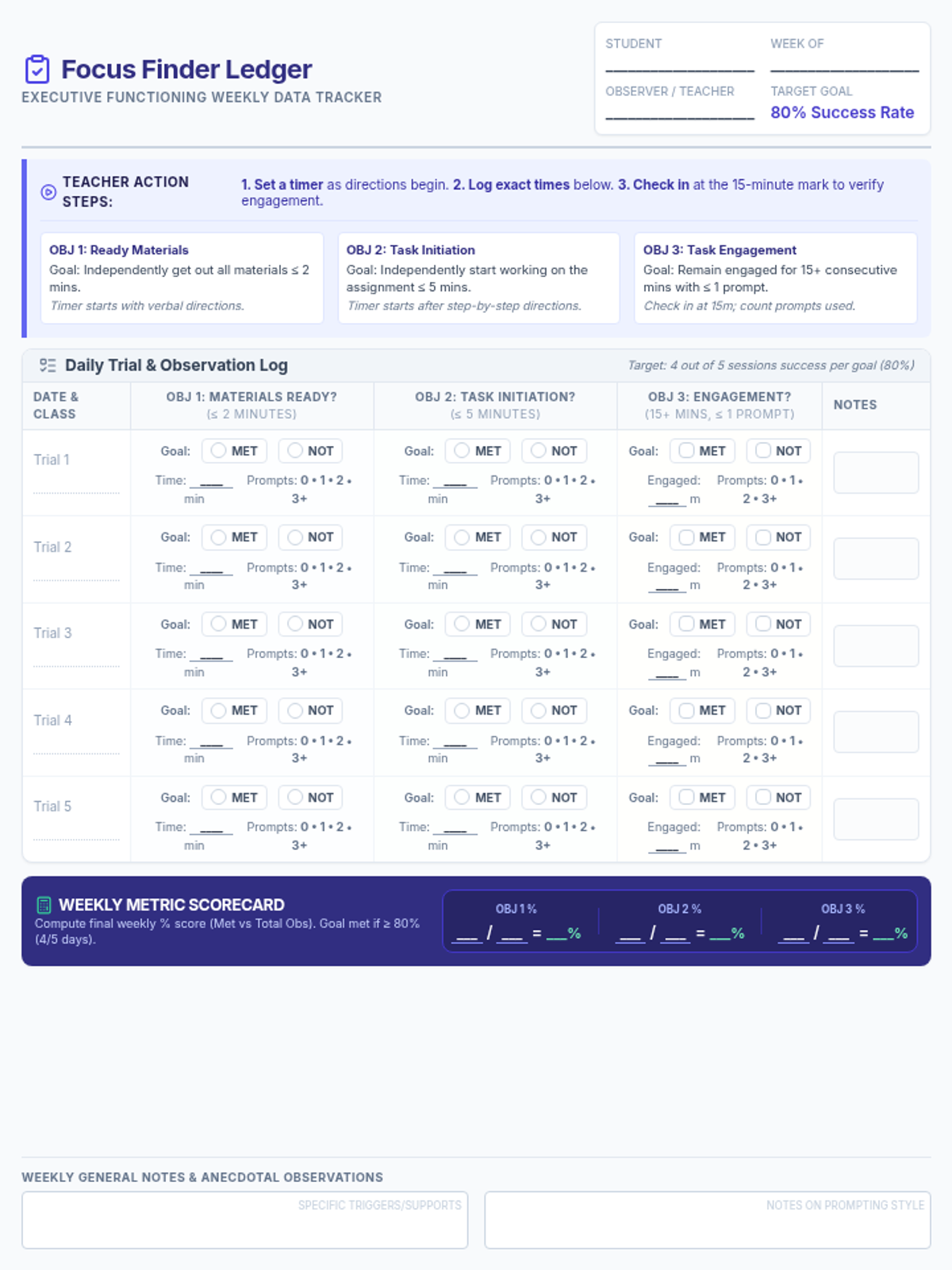
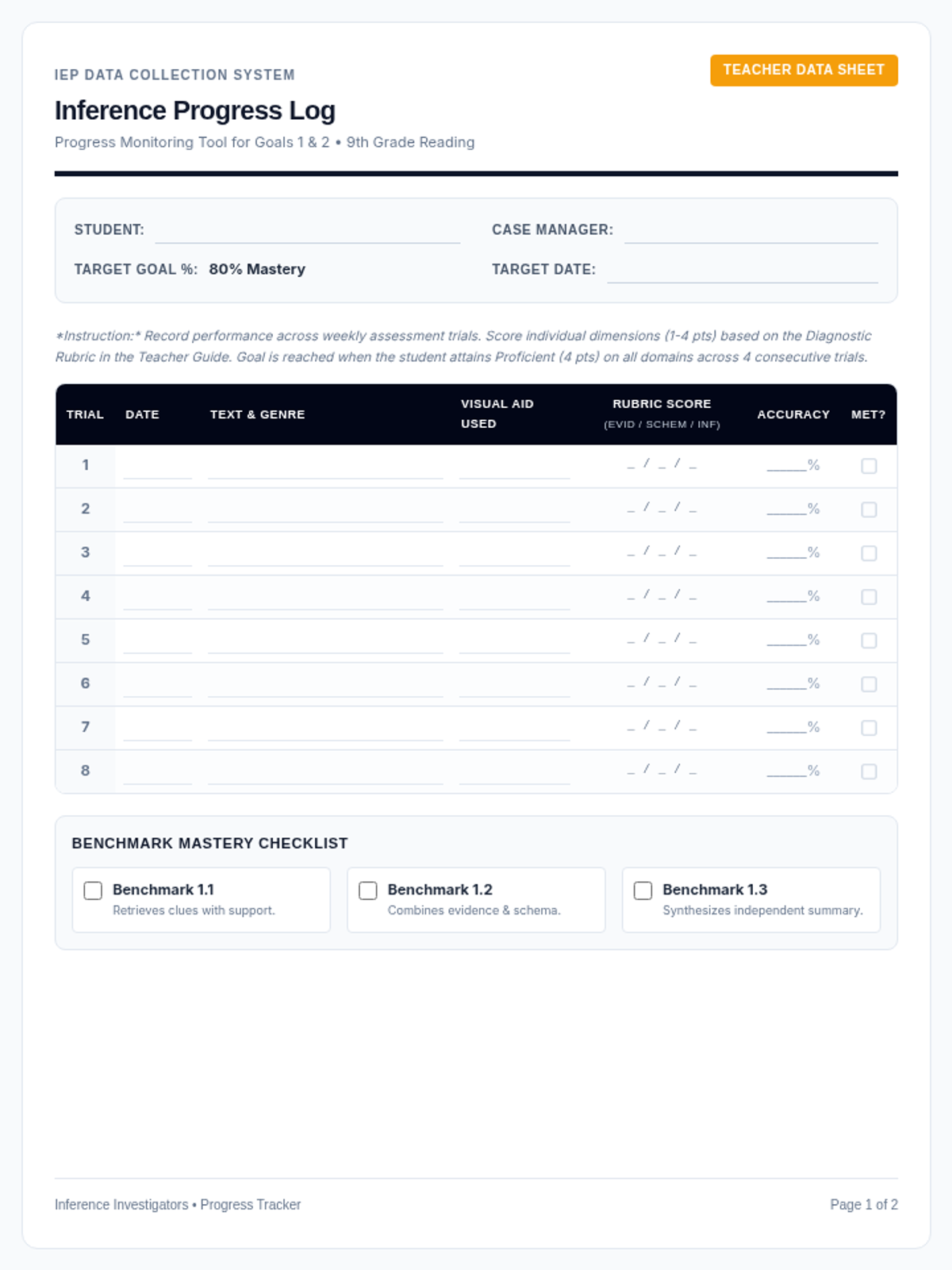
A daily data tracking sheet for teachers to monitor student progress on greeting choices and independence levels. Includes a prompt hierarchy key and space for notes on student-peer interactions.
A comprehensive teacher facilitation guide for the Hello Heroes lesson. Includes learning goals, material lists, a step-by-step instructional sequence, and a prompting hierarchy specifically for non-verbal students.
A set of 12 high-contrast communication cards (PECS style) for greeting-related interactions. Cards include Wave, High-Five, Talker, My Turn, Your Turn, and basic functional communication.
A high-contrast visual choice board for students to select their preferred greeting method. Includes four clear options: Wave, High-Five, Talker/Device, and Not Now.
A visual social narrative slide deck introducing three ways to say hello: waving, high-fiving, and using an AAC device. Designed with high-contrast visuals and simple language for students with autism.