A colorful and informative slide deck that introduces 6th-grade students to the Cornell note-taking method, updated to show the 4-point summary layout and Sketch Zone.
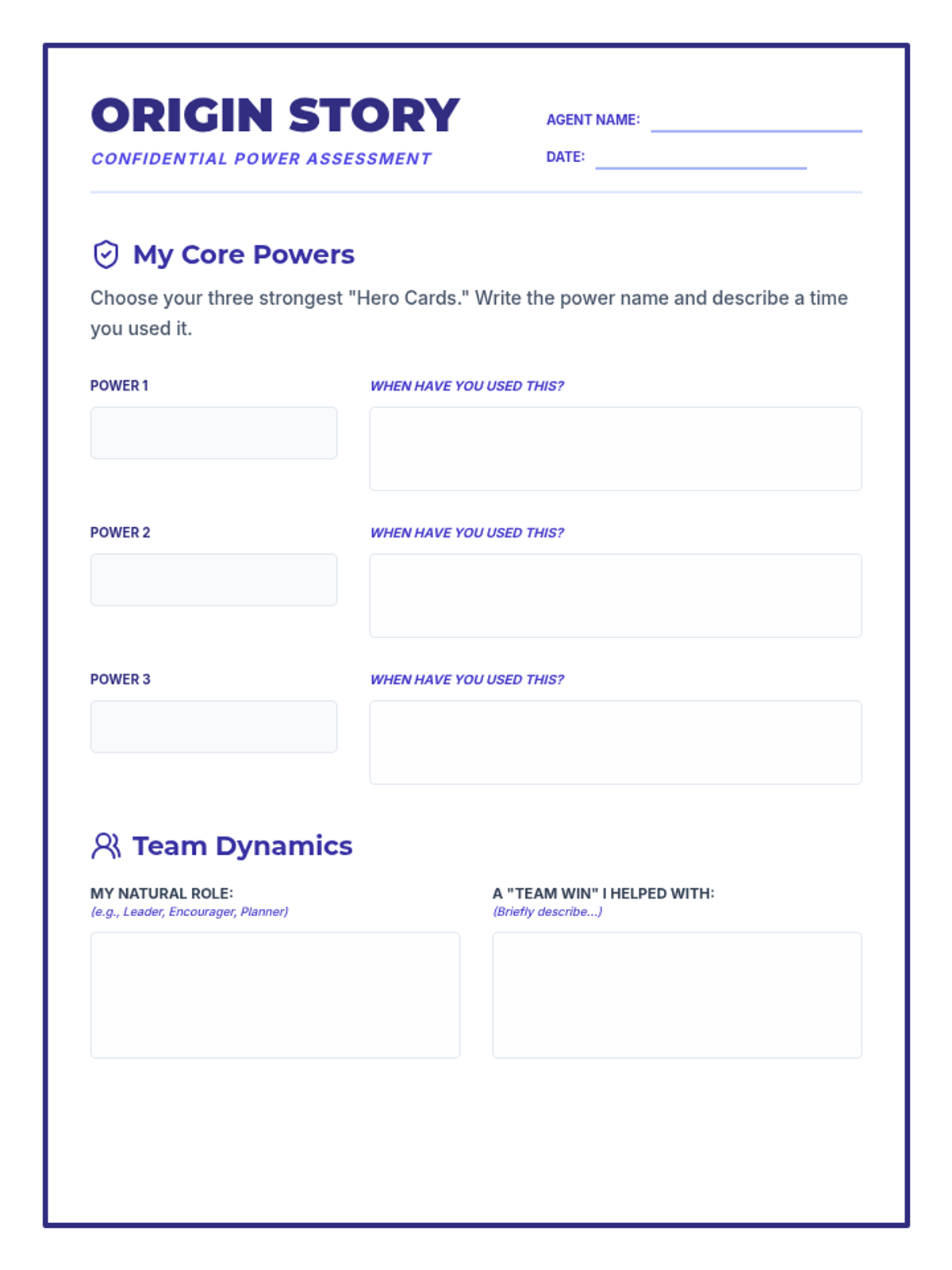
A combined reflection and creative branding worksheet. Students identify their core strengths, design a personal hero symbol, and plan how to use their talents for community impact. Polished with increased contrast and removed placeholders.
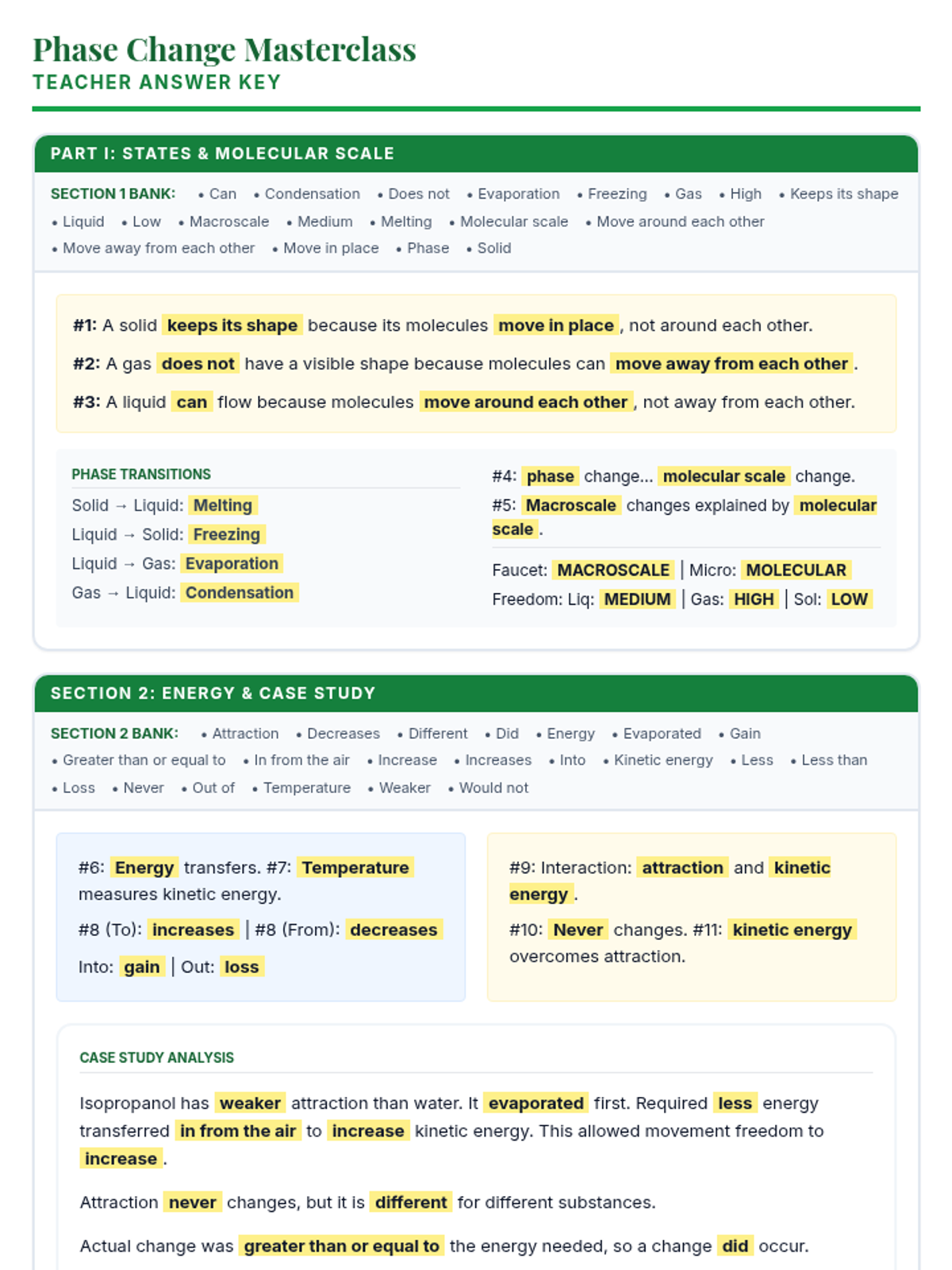
Optimized 1-page teacher answer key with section-specific word banks, consistent highlighting, and matched terminology for the student workbook.
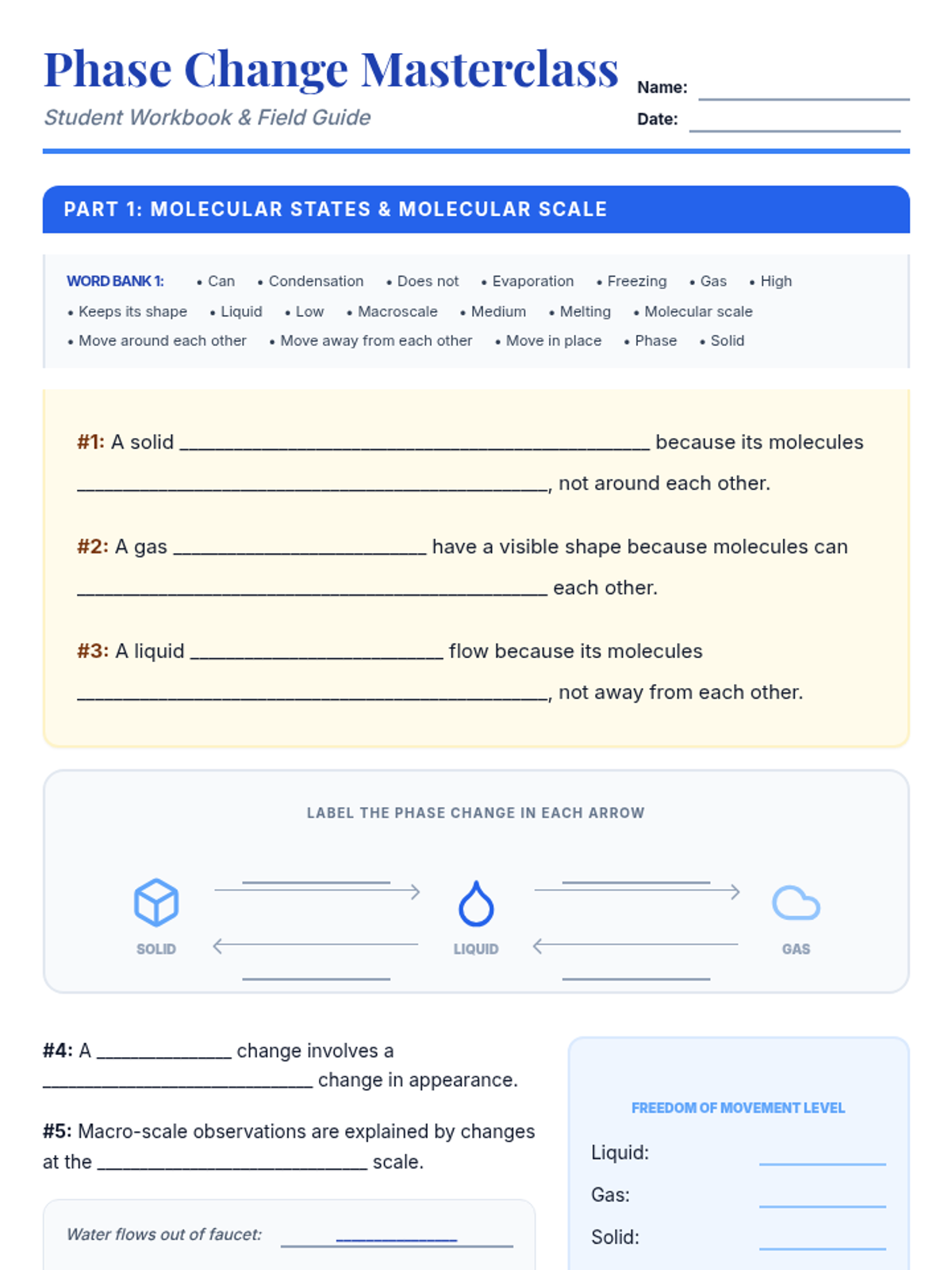
Polished 2-page student workbook with section-specific word banks, consistent handwriting spaces (up to 2.1 leading), and high-contrast instructional diagrams. Ensures all content fits on two sheets.
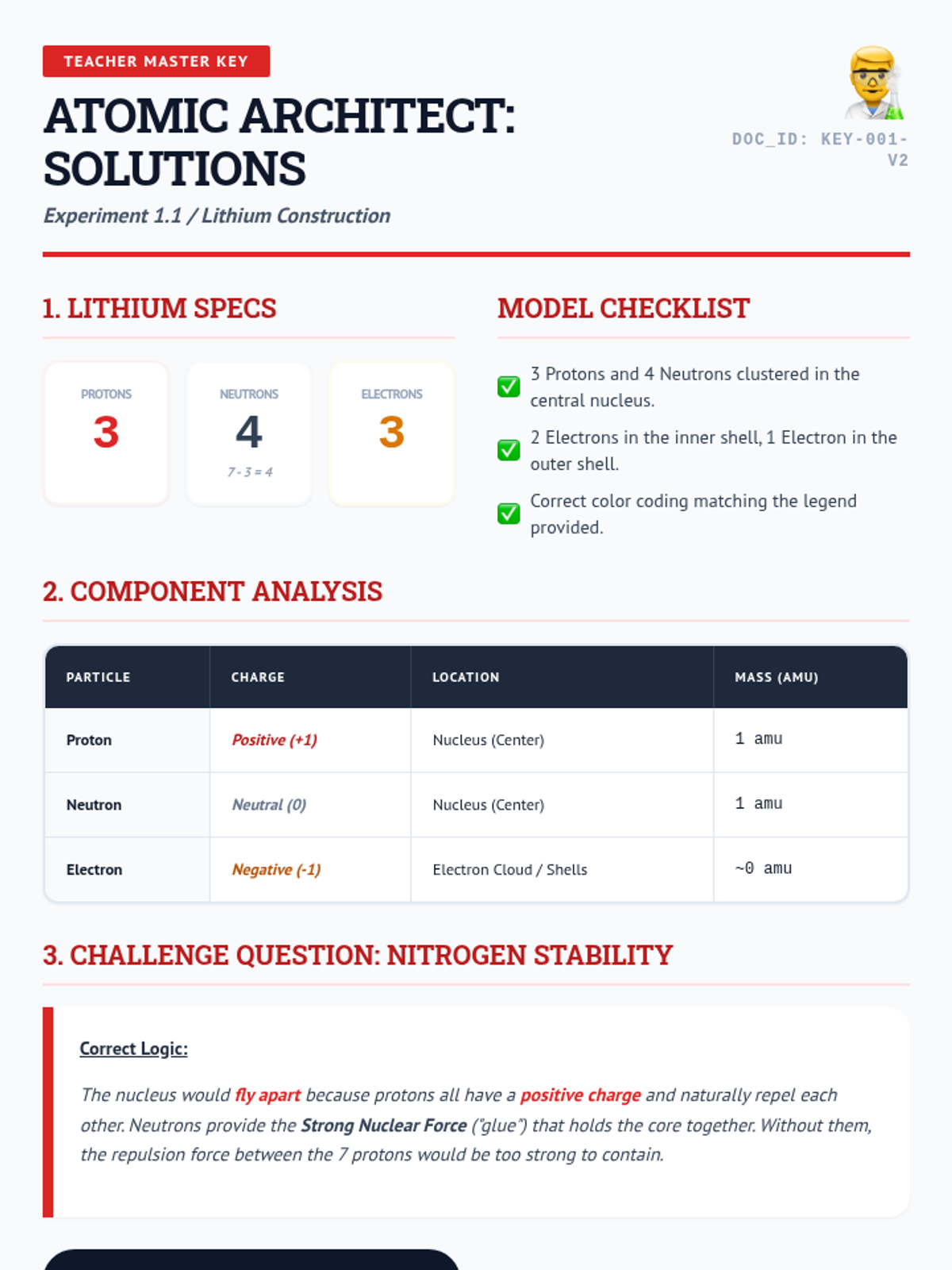
The answer key for the Atomic Architect worksheet, providing solutions for the Lithium atom model, the subatomic particle table, and the stability concept question.
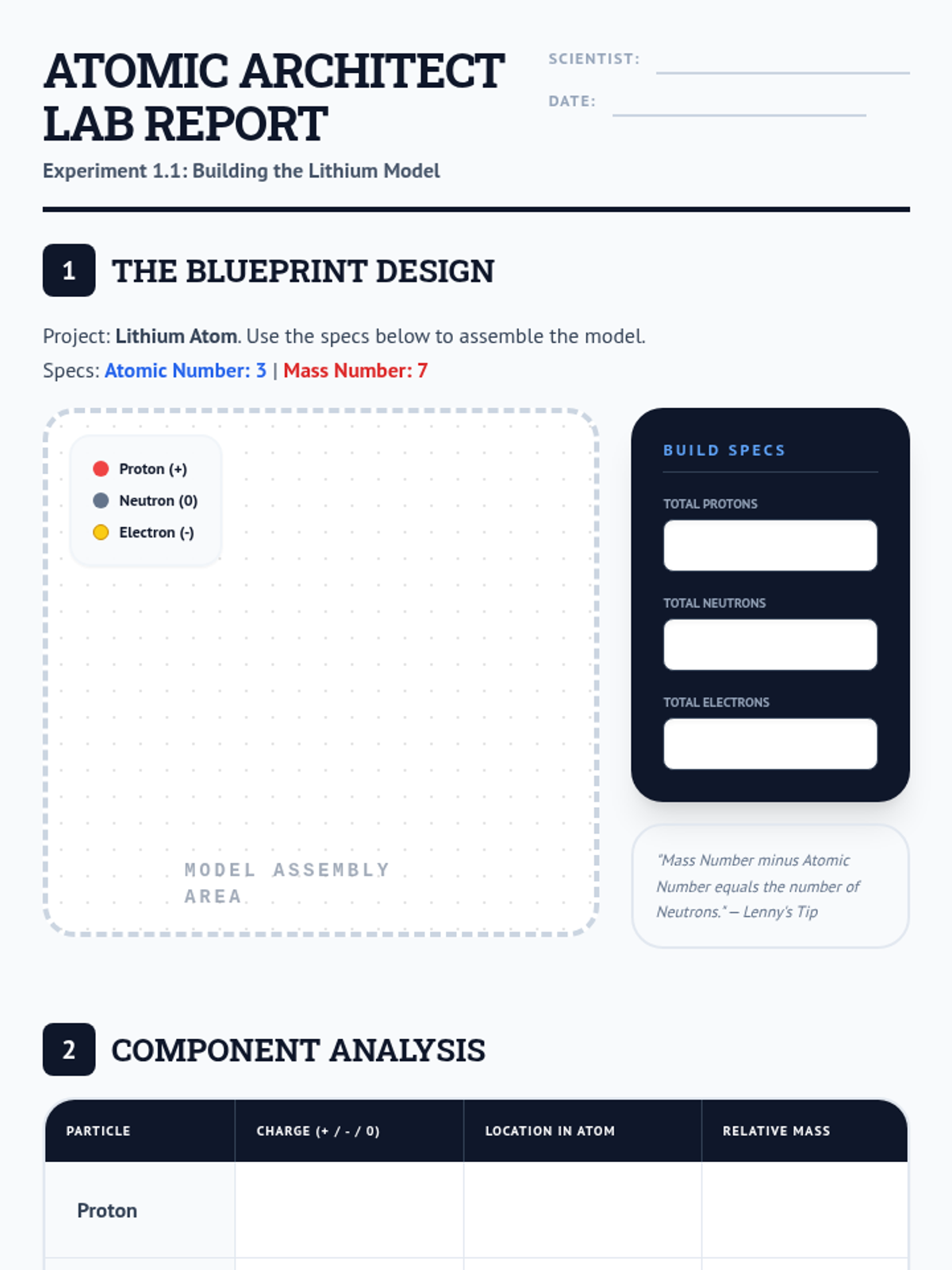
A student lab report worksheet for modeling atoms. Includes a drawing area for a Lithium atom, a subatomic properties table, and a conceptual challenge question.
A 5-slide blueprint-themed presentation exploring atomic structure. Features animated subatomic particles and technical details about protons, neutrons, and electrons.

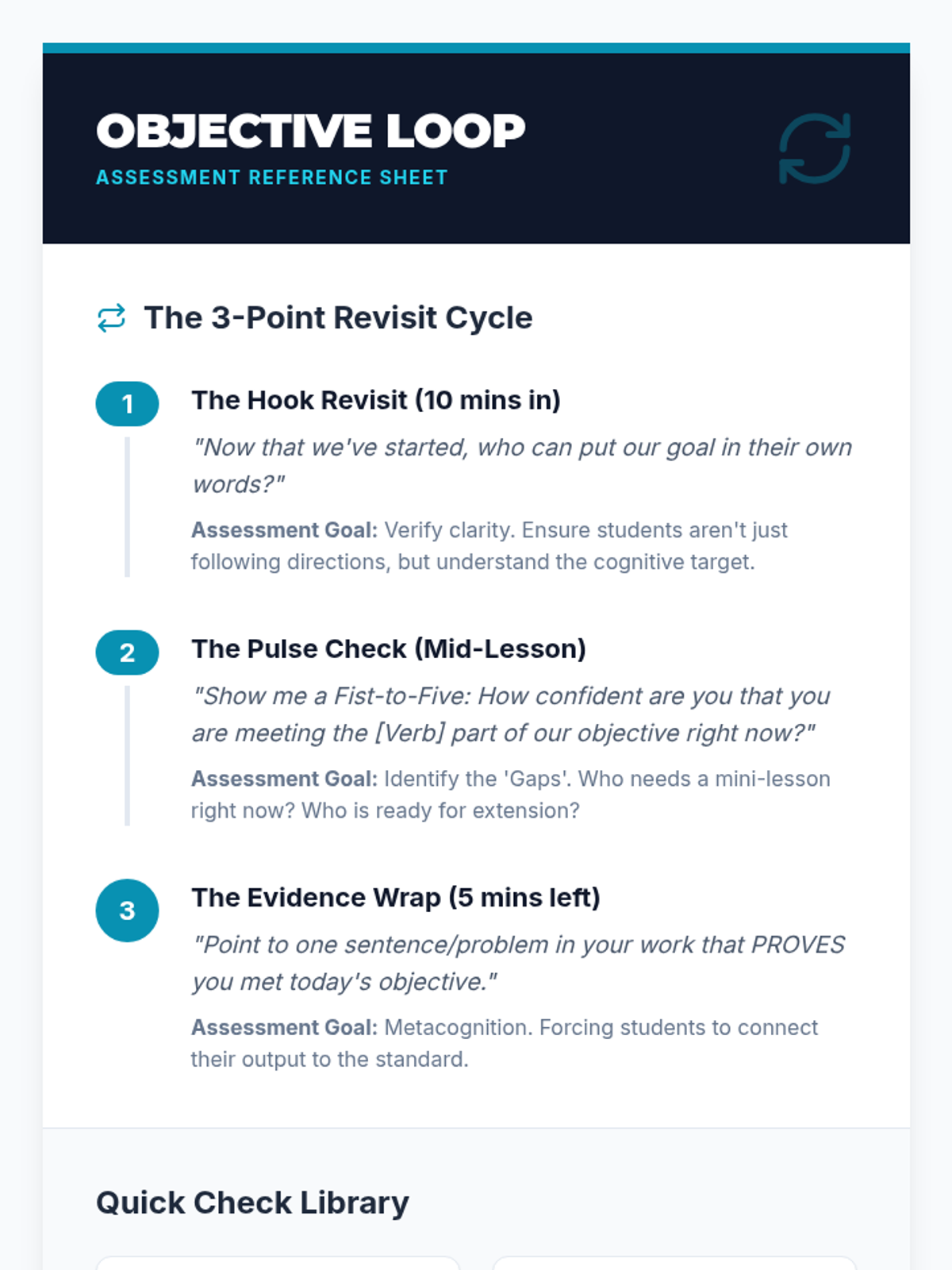
A practical reference sheet for teachers detailing the 3-point revisit cycle and a library of quick formative assessment techniques to use during lessons.
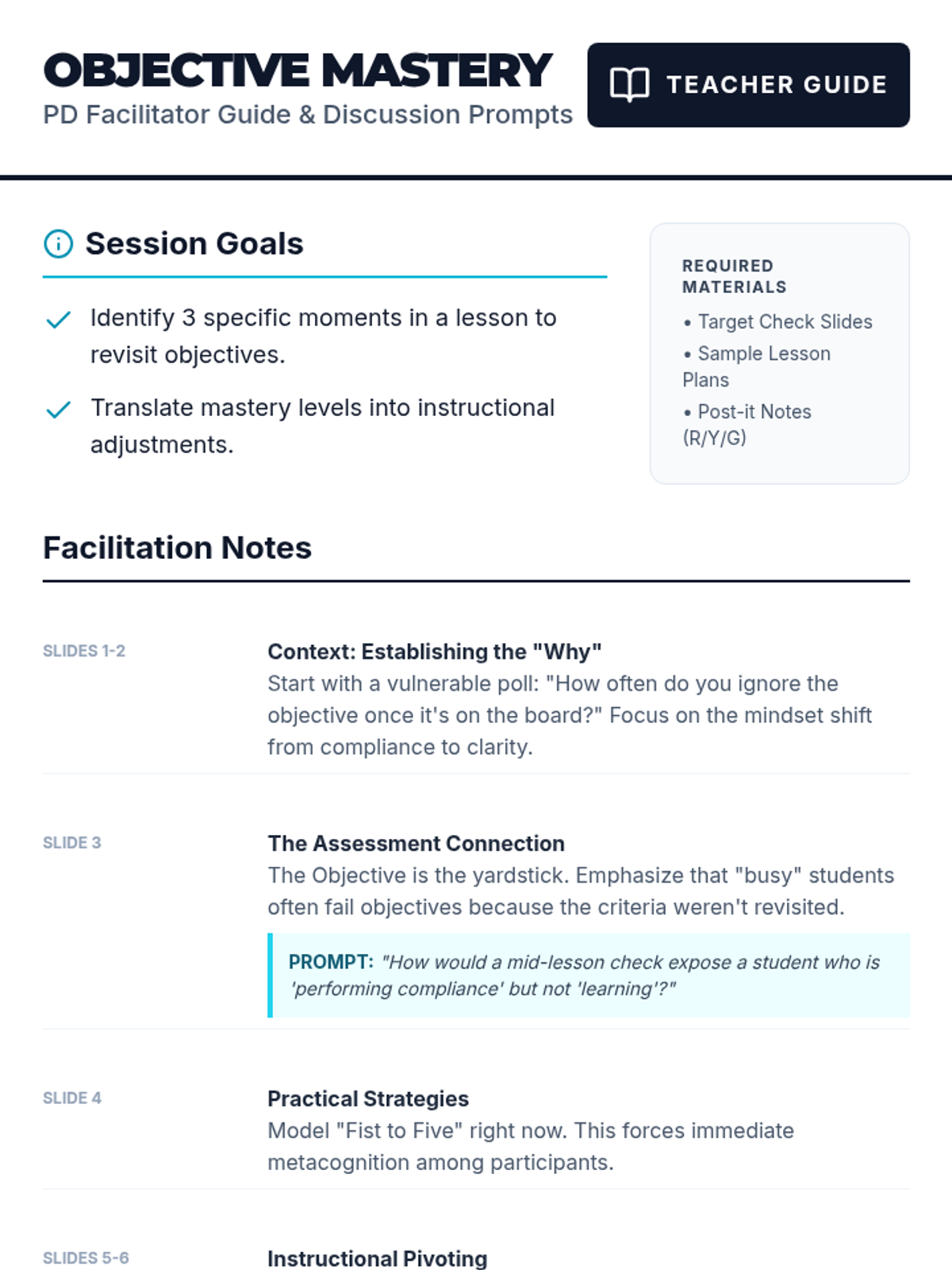
A facilitator guide for conducting a professional development workshop on revisiting lesson objectives, including talking points, discussion prompts, and an applied practice activity for teachers.
A professional development slide deck for educators on the instructional strategy of revisiting lesson objectives during a lesson to facilitate teacher assessment and student self-reflection.
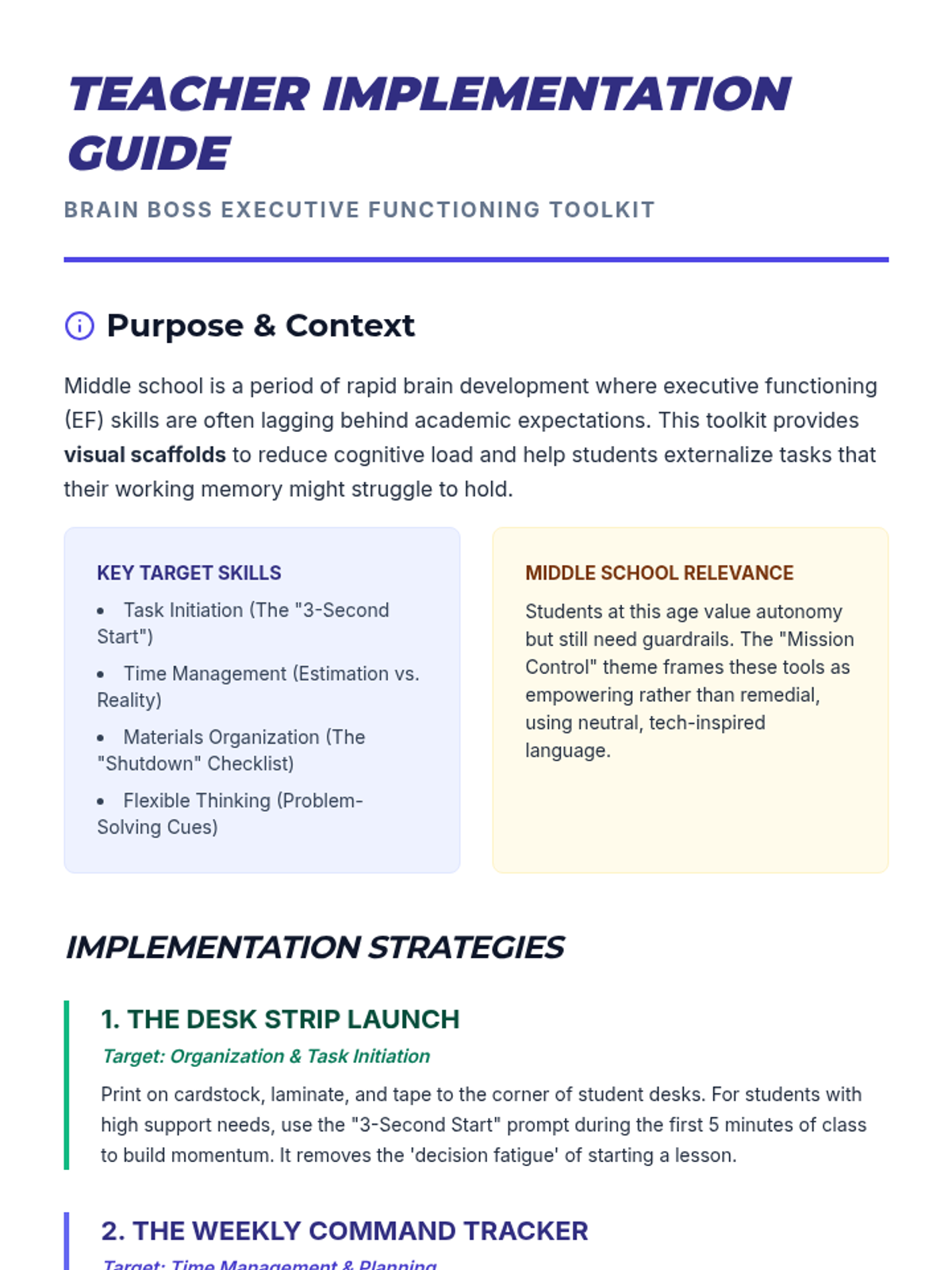
A facilitation guide for teachers on how to effectively use the Brain Boss executive functioning tools. Includes implementation strategies for task initiation, time management, and scaffolding techniques for middle schoolers.
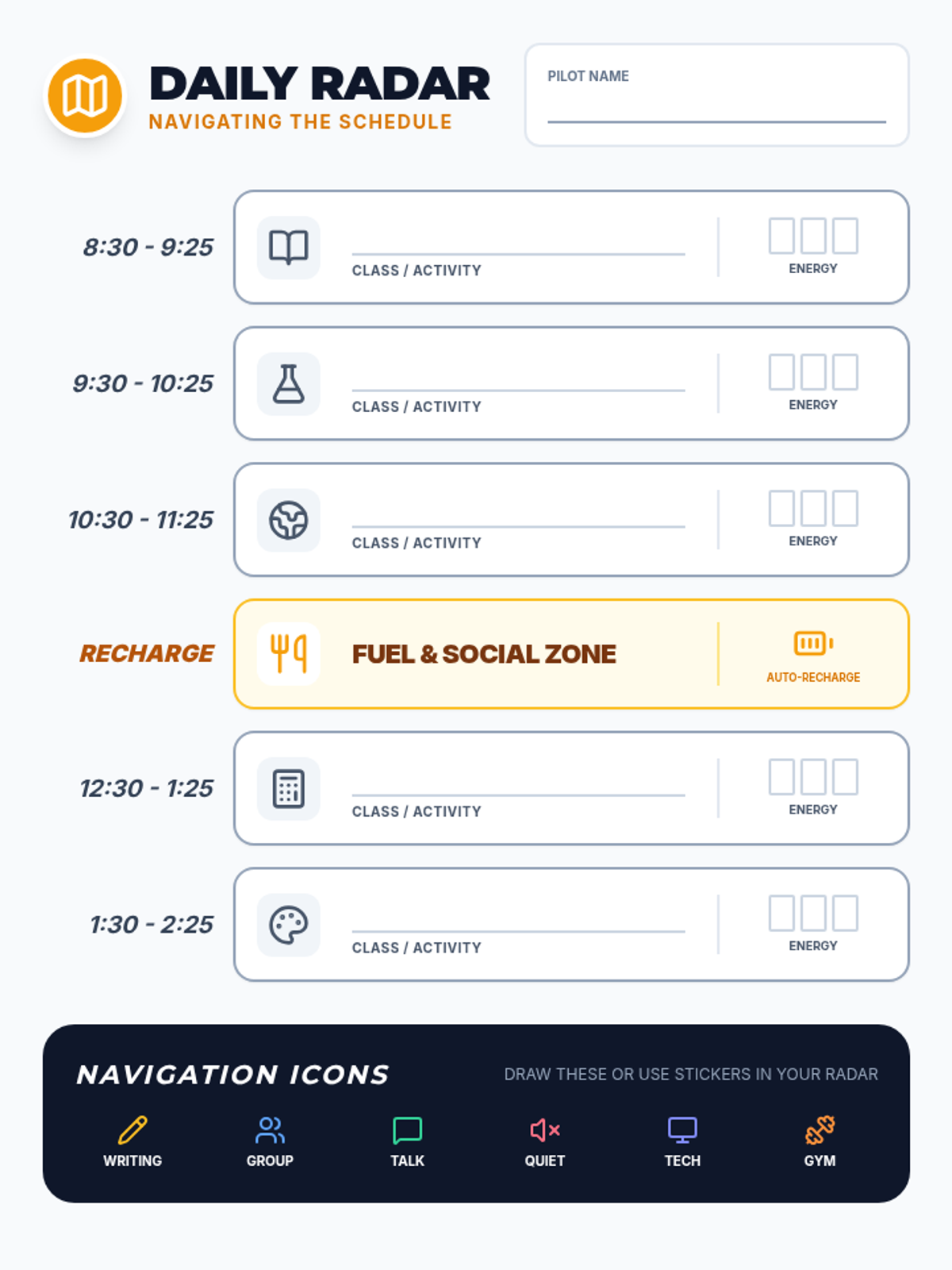
A visual daily schedule template for middle schoolers. Features time slots with icons for various subjects and activities, plus an "Energy Level" battery to help students predict and manage their cognitive load throughout the day.
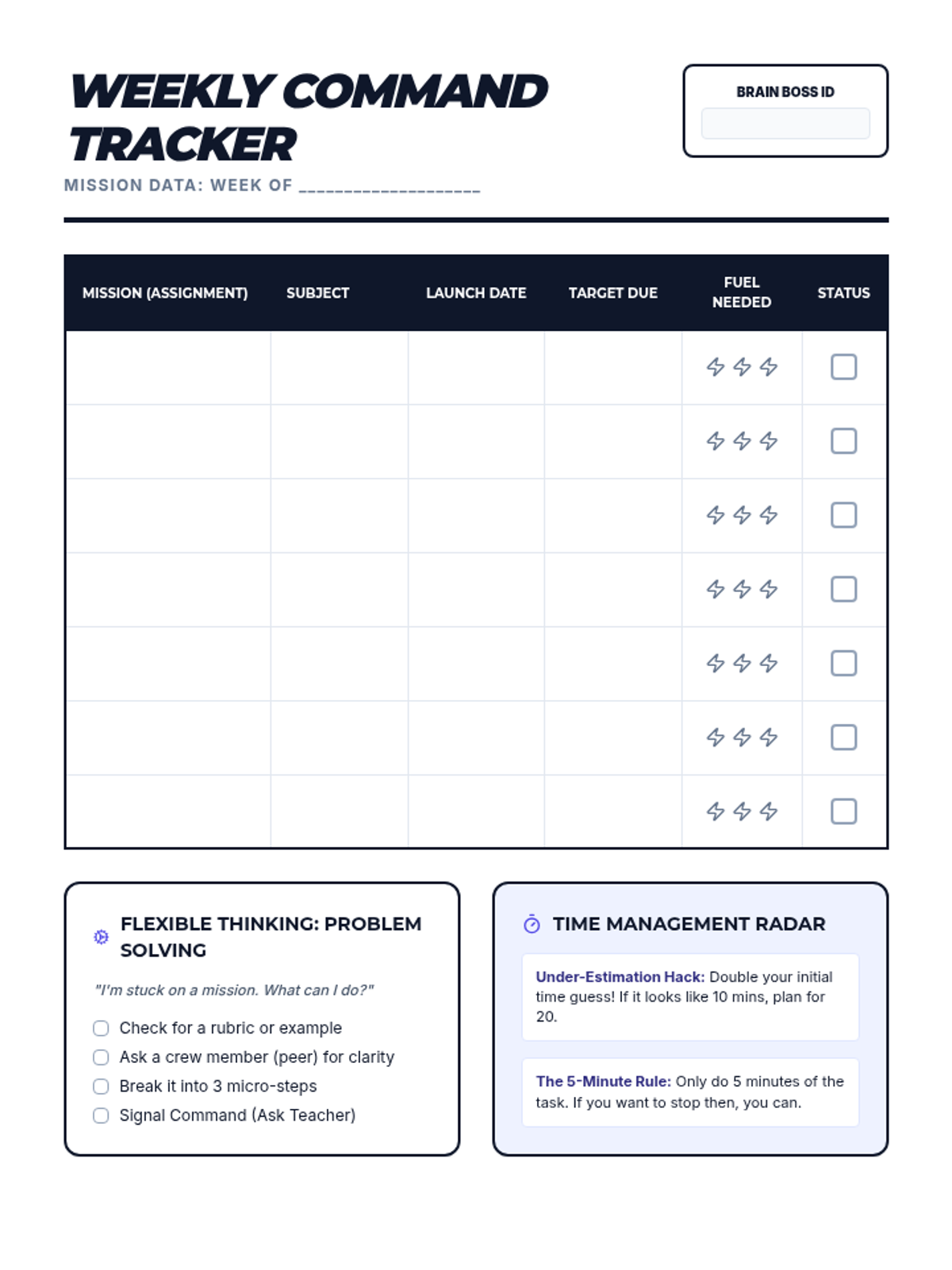
A weekly assignment tracker for middle schoolers that emphasizes time estimation, start dates, and problem-solving strategies. Includes a "Fuel Needed" scale for effort estimation and flexible thinking tips.
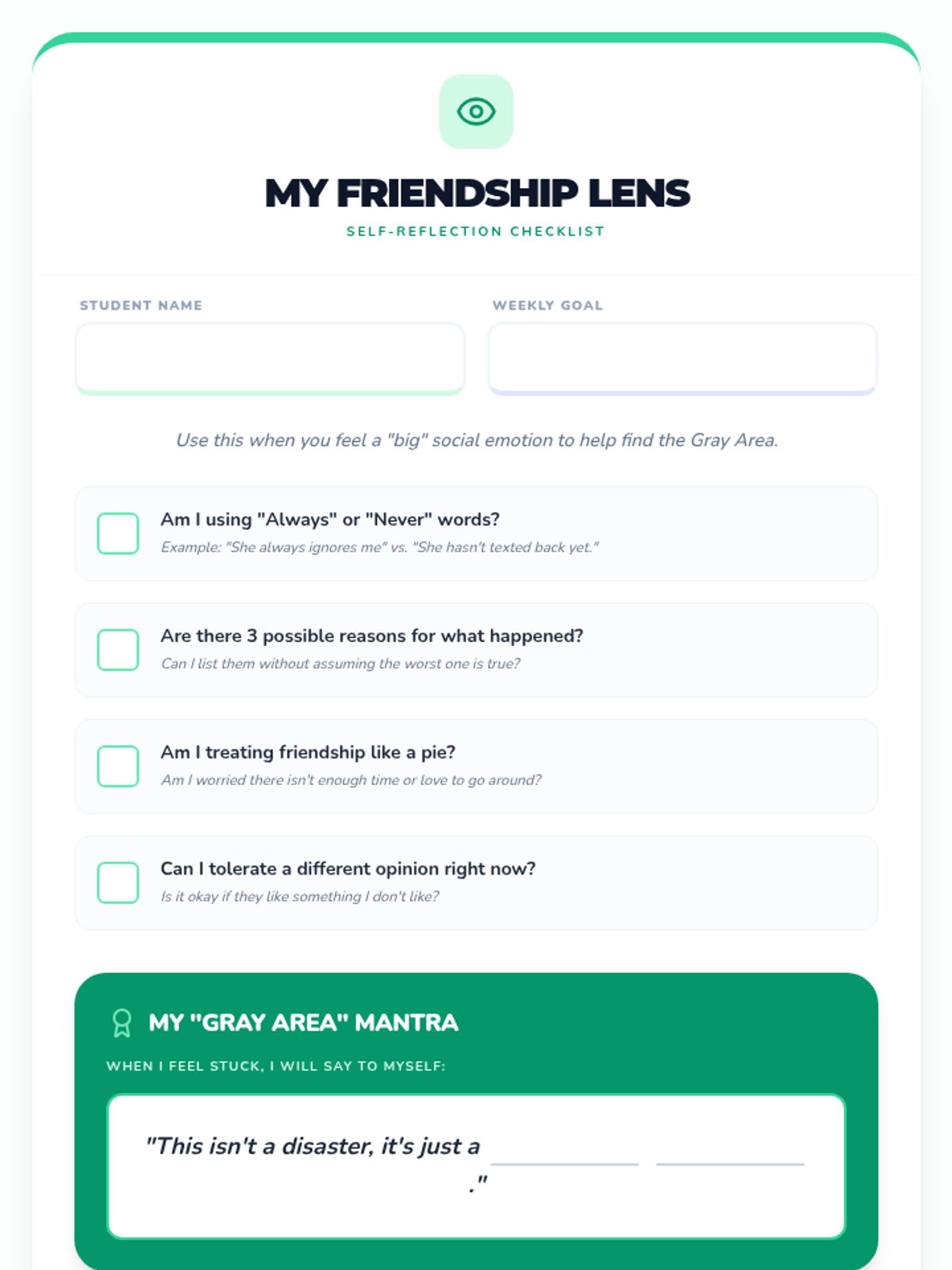
A self-reflection checklist for students to monitor their own social thinking patterns. It helps students identify 'Always/Never' language, consider multiple perspectives, and challenge the idea of friendship as an exclusive 'pie'. Includes a section for a personal 'Gray Area' mantra.
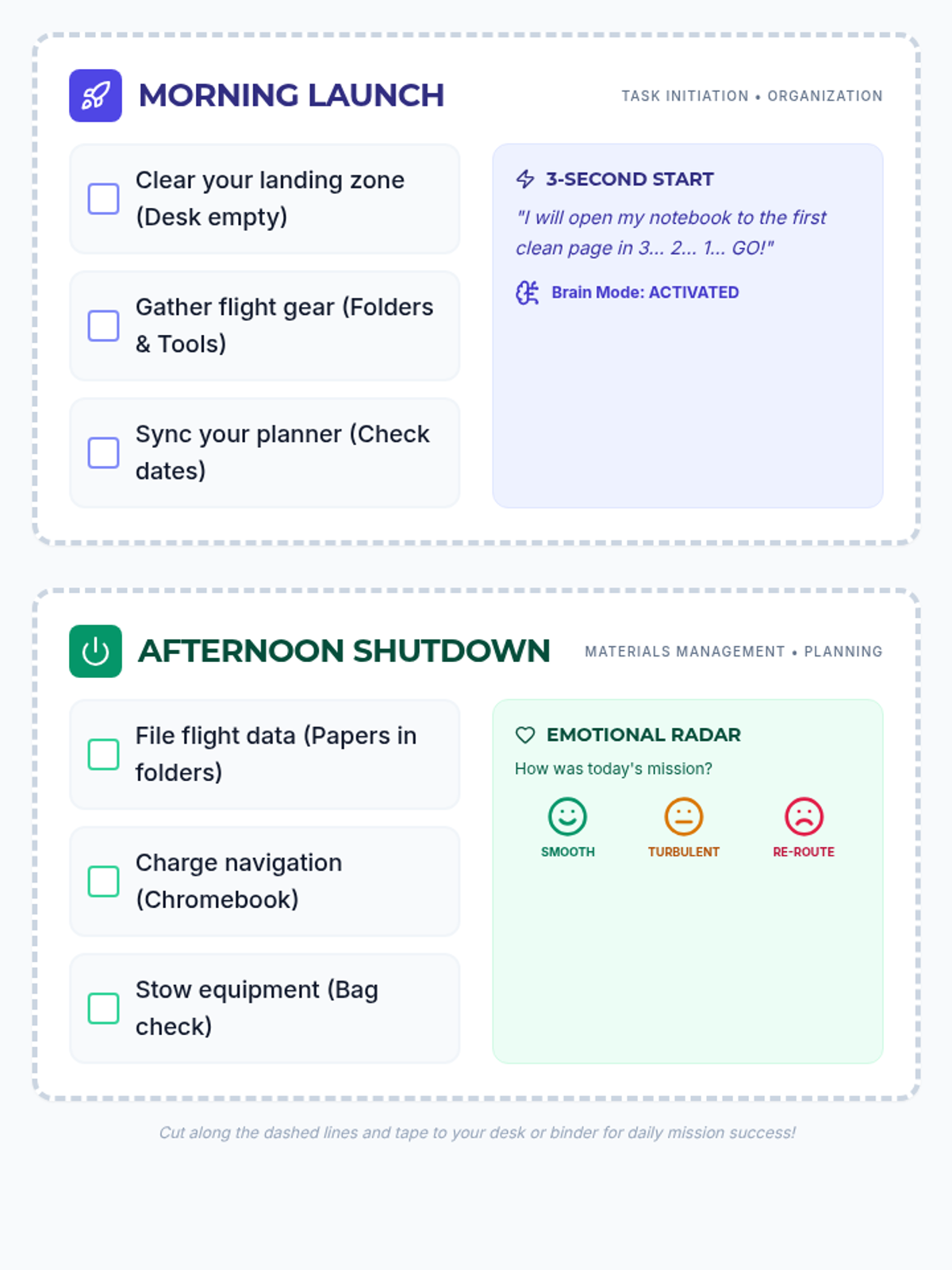
A set of printable desk strips designed for middle schoolers to manage morning arrivals and afternoon departures. Features visual checklists for organization, task initiation prompts, and an emotional regulation check-in.
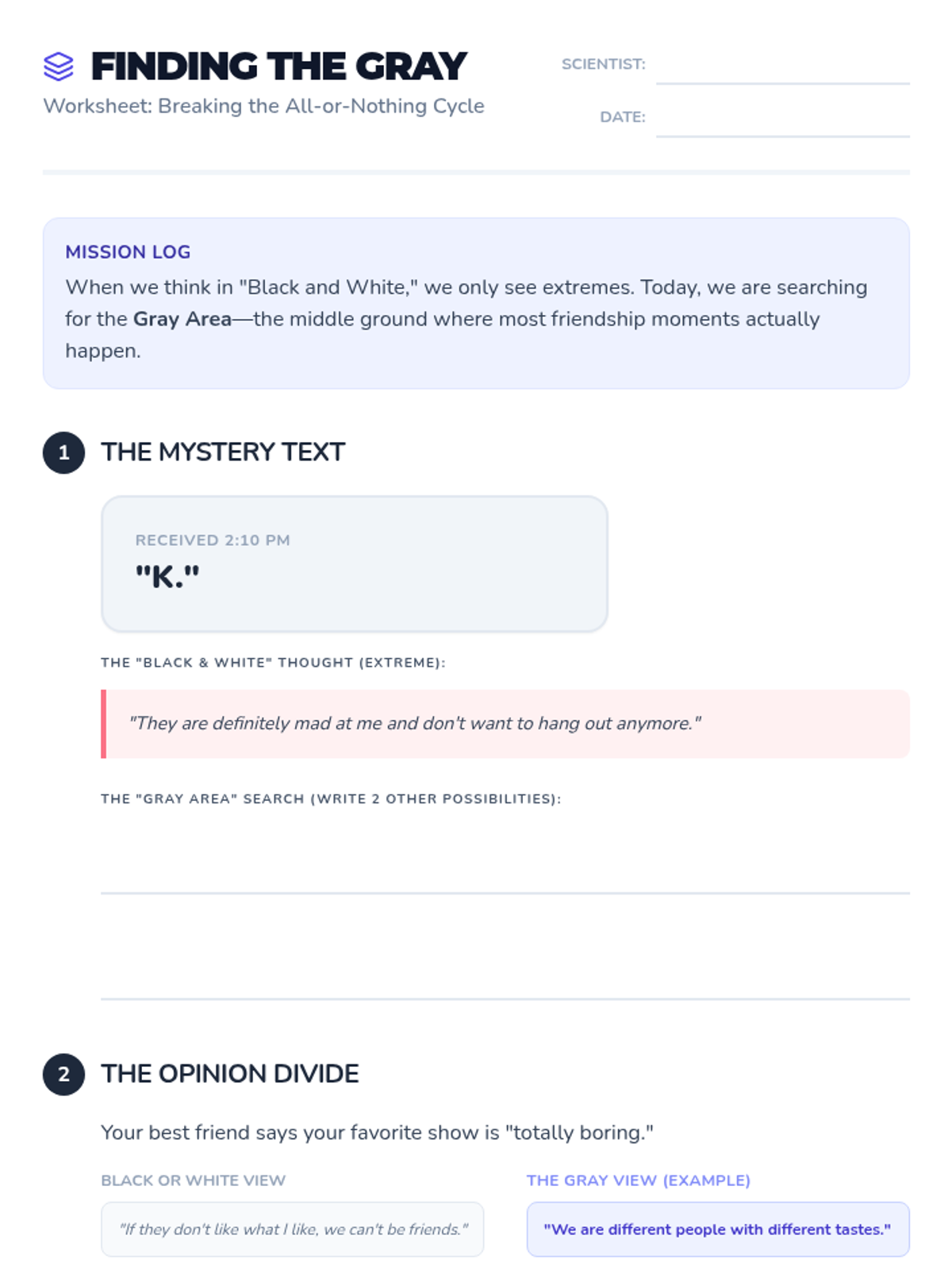
A student-facing worksheet focused on visual 'Gray Scale' thinking. It provides social scenarios (text messages and differing opinions) and guides students to find middle-ground interpretations. It includes a unique 'Friendship Dimmer Switch' visual to help visualize the spectrum between social extremes.
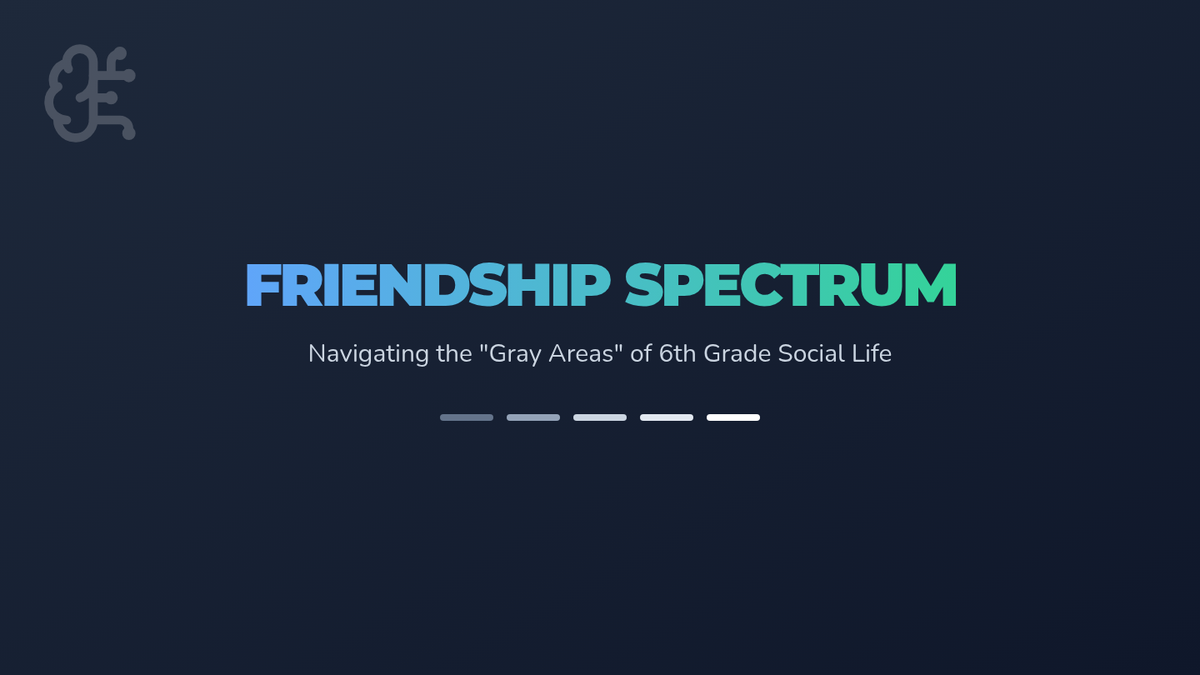
A visually engaging 6-slide presentation designed for 6th-grade students to explore the concept of 'Gray Area' thinking in friendships. It covers black-and-white thinking traps, text message interpretation scenarios, handling differing opinions, and understanding that friends can have multiple connections.
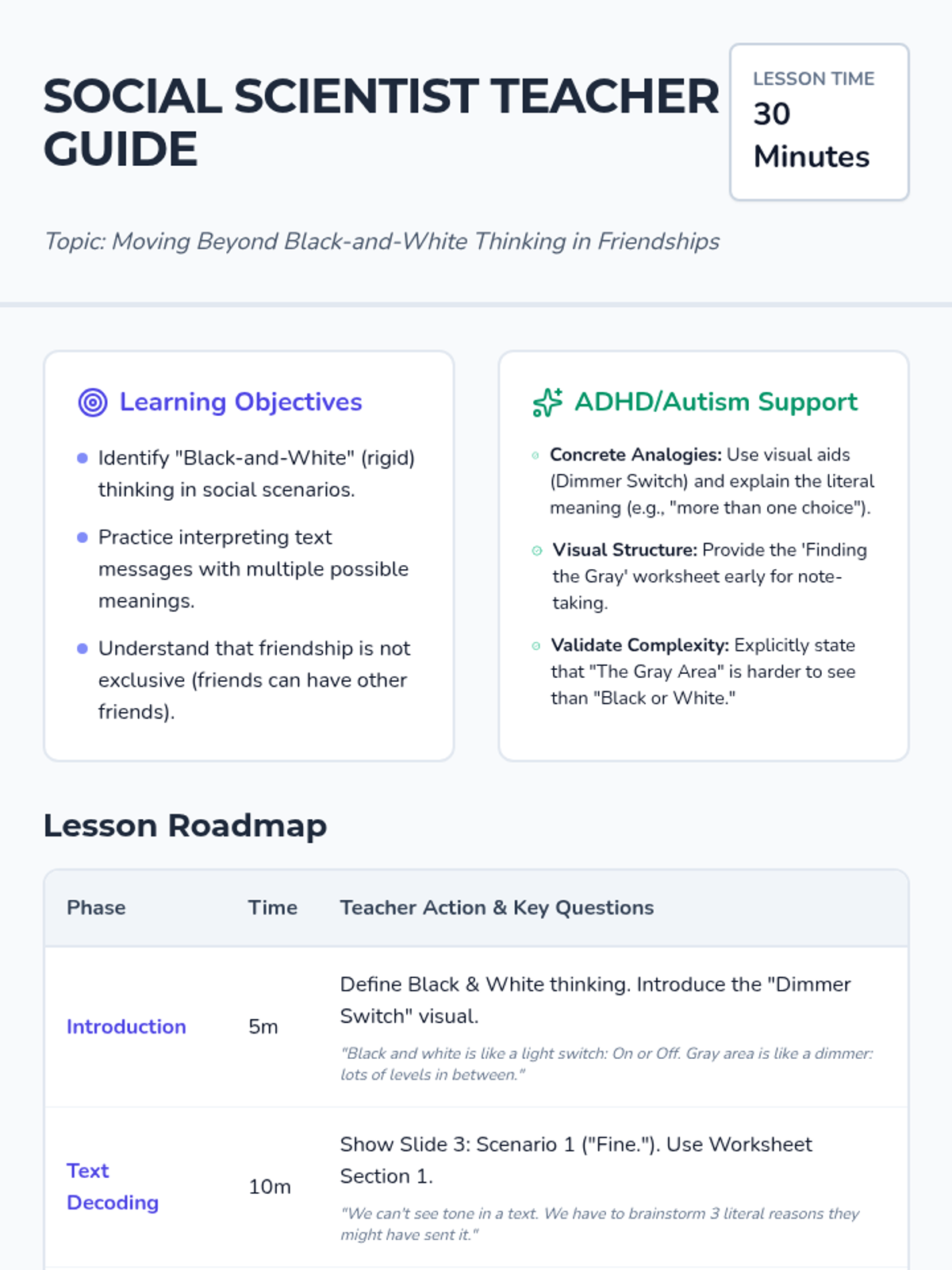
A comprehensive teacher's guide for a 30-minute lesson on social-emotional learning, specifically designed for students with ADHD and Autism. It includes learning objectives, ADHD-specific support strategies, a detailed pacing guide, and helpful scripts for managing rigid thinking.
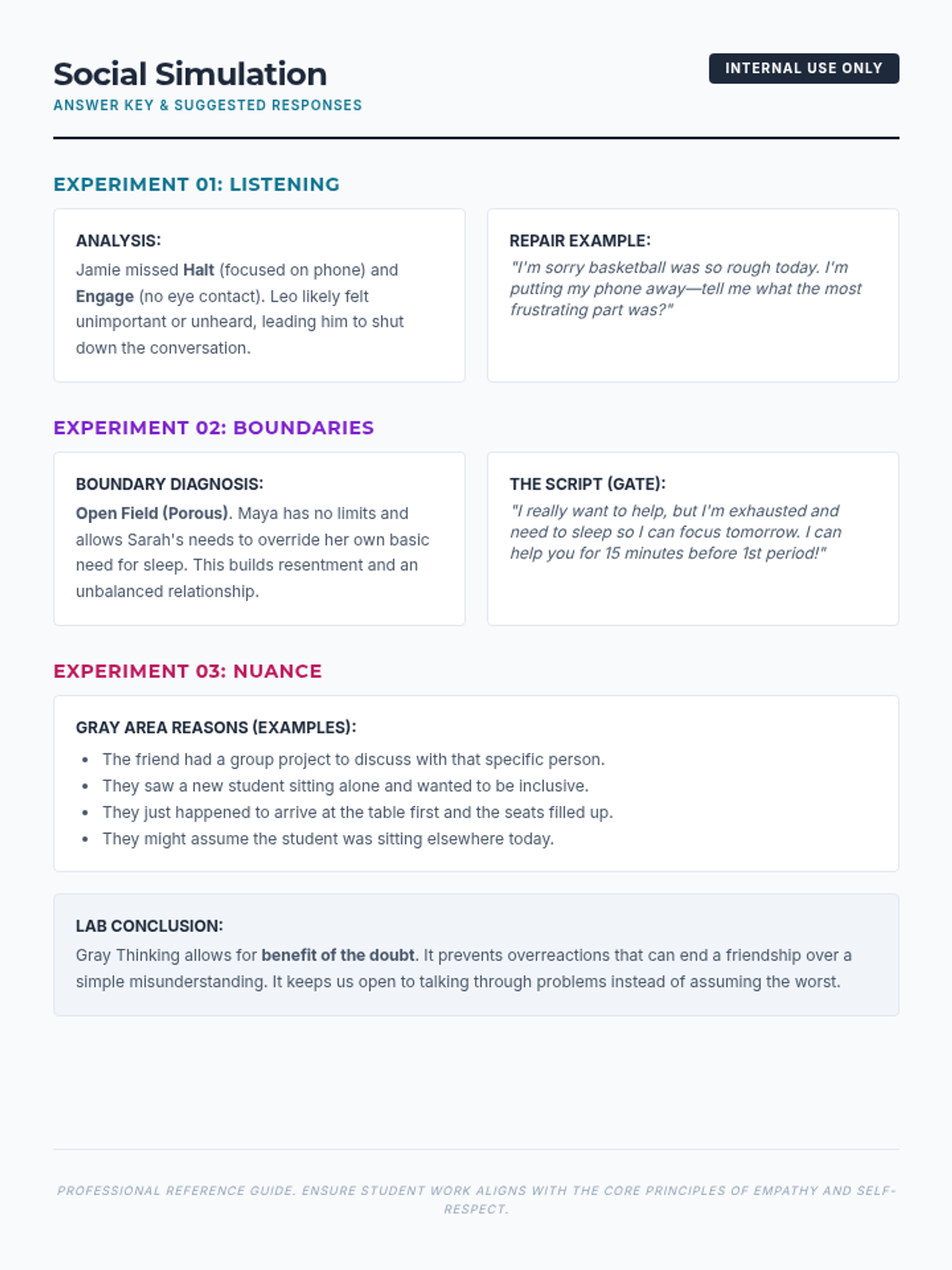
Updated answer key for the Social Simulation worksheet, condensed into a single page with improved layout and clear suggested responses for all experiments.
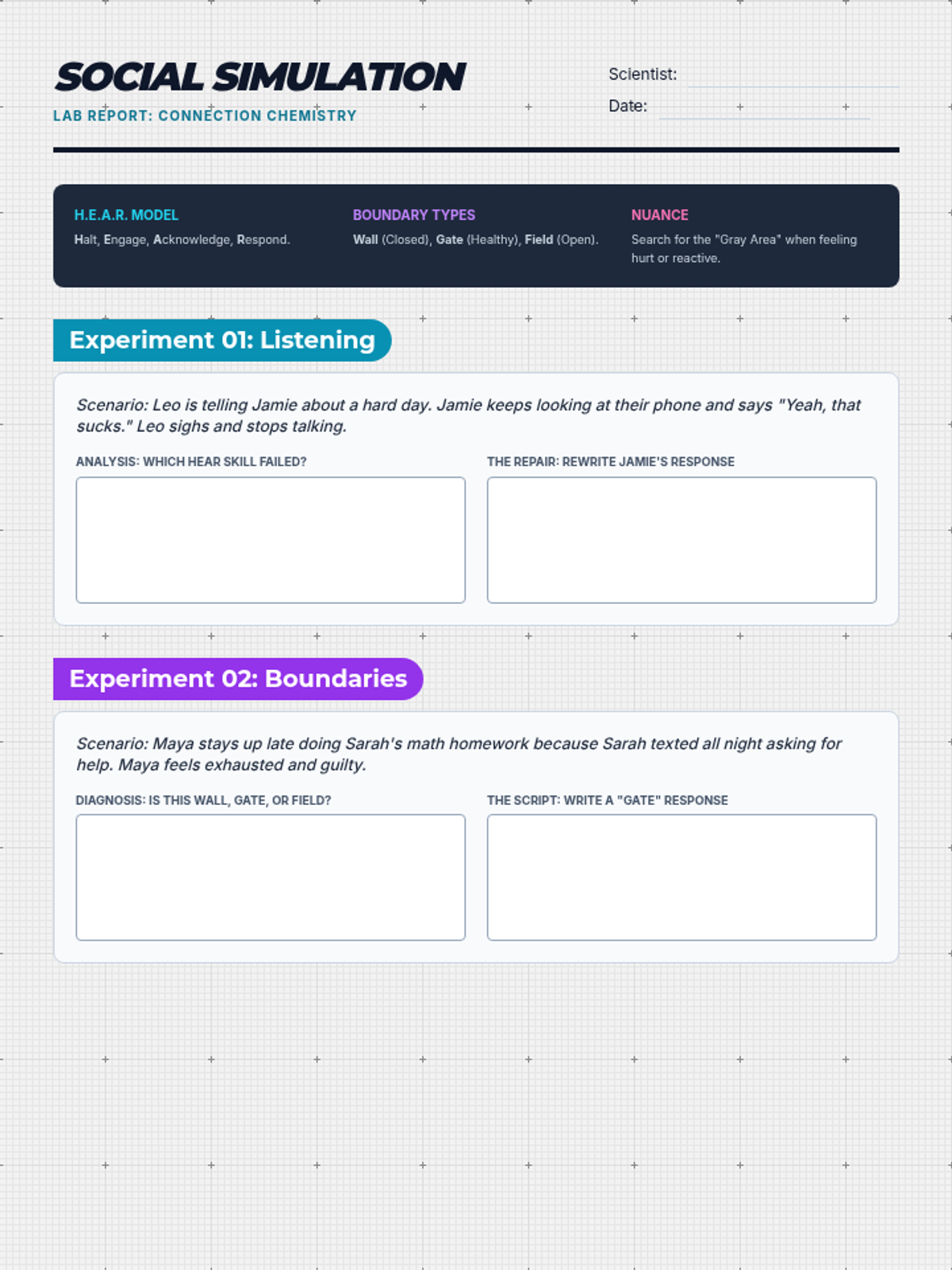
Updated student worksheet for the Friendship Lab, featuring a new reference sidebar for key models, increased student work areas, and improved page breaks to keep experiments logically grouped.
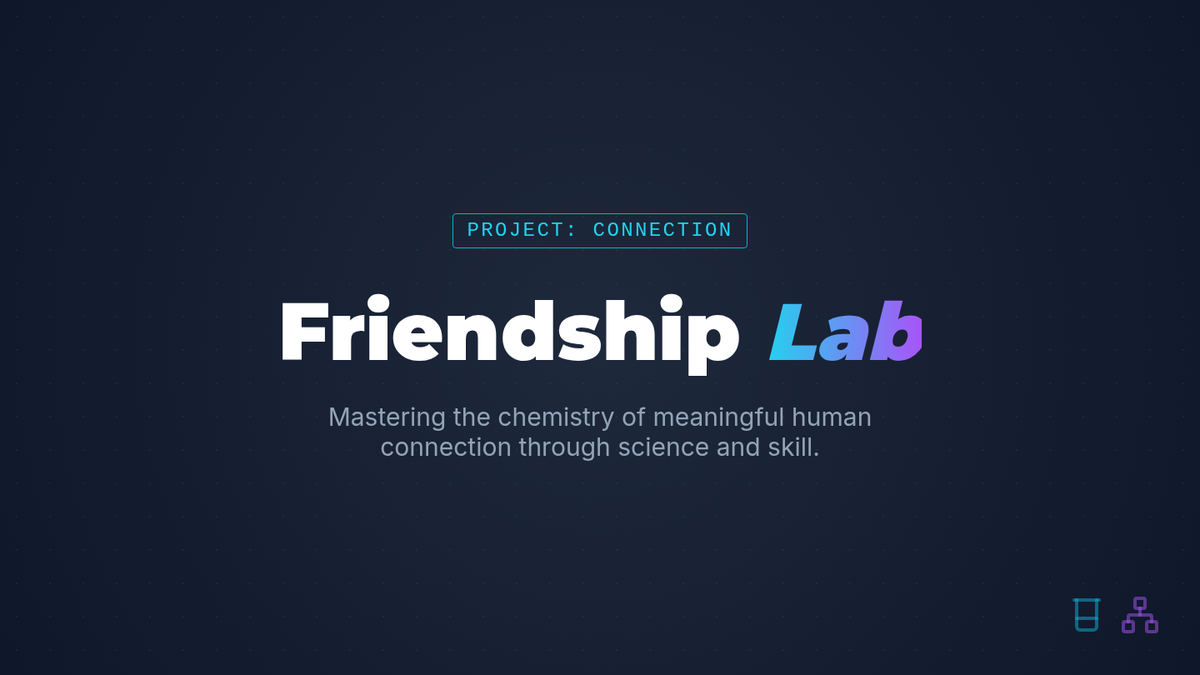
A visually engaging slide deck titled 'Friendship Lab' that introduces active listening via the H.E.A.R. model, boundary setting using a fence metaphor, and the importance of nuanced (gray area) thinking in social connections.
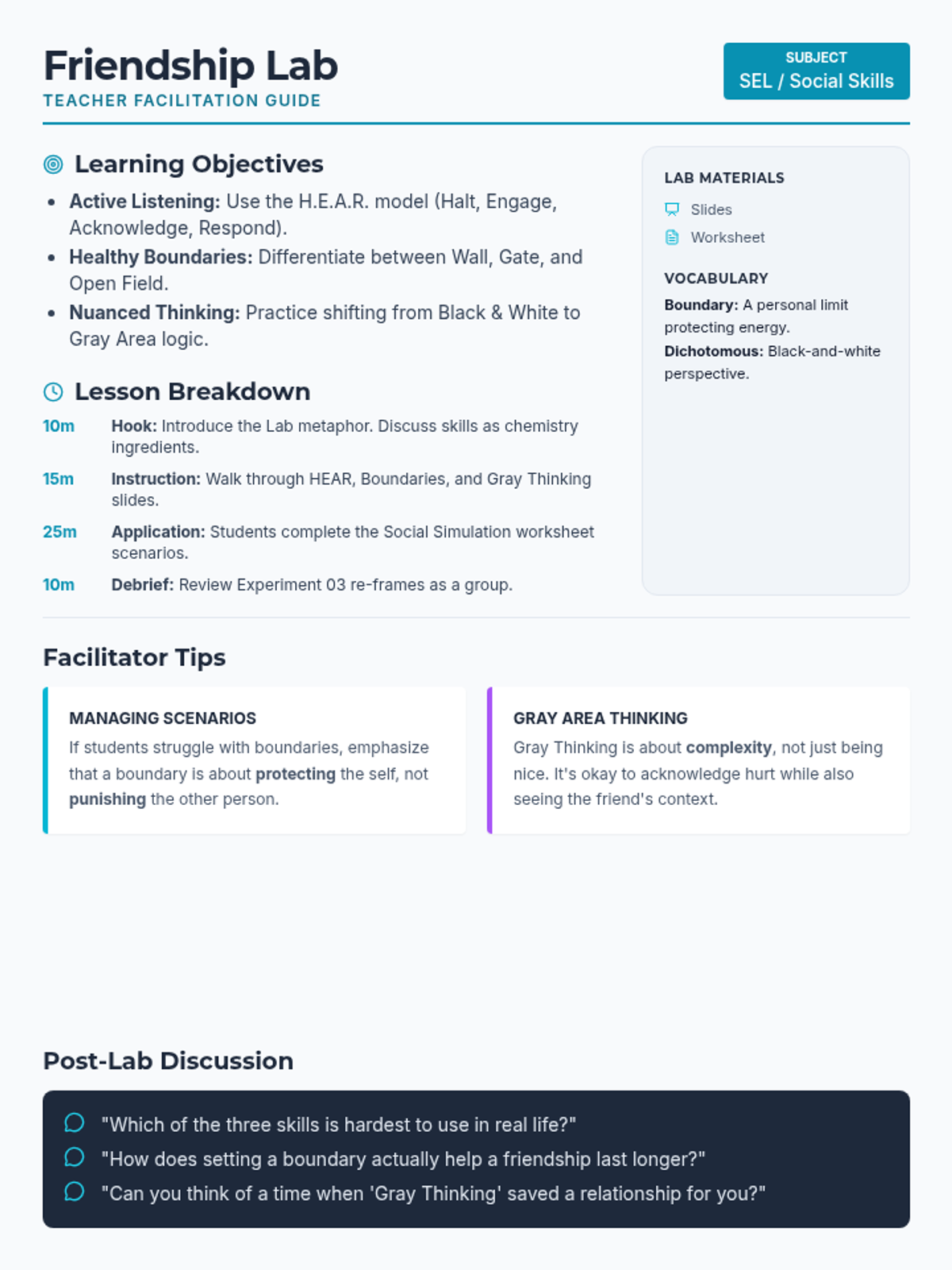
Updated teacher guide for the Friendship Lab lesson, revised to fit on a single page with improved text sizes and added discussion prompts for a better facilitator experience.
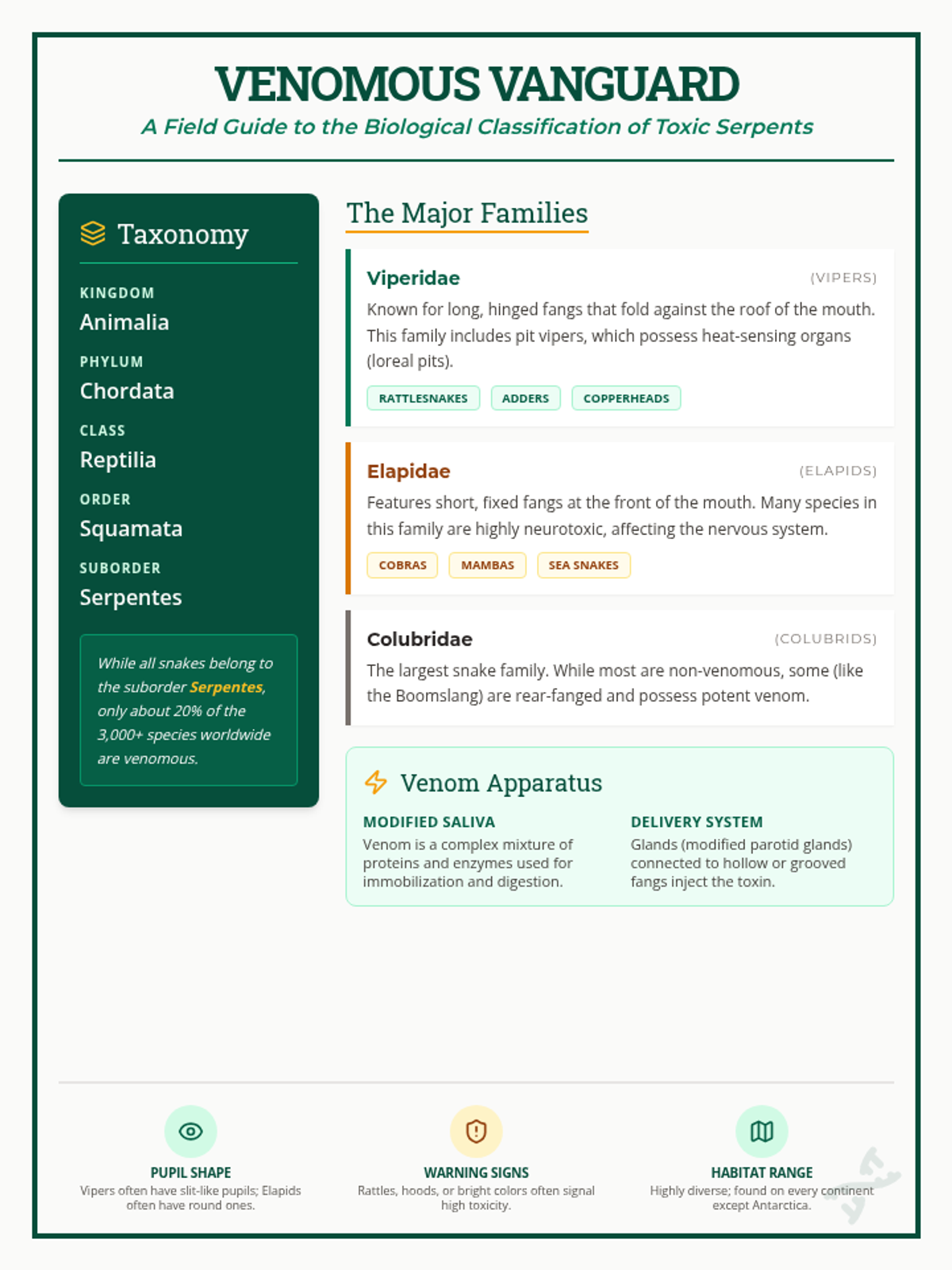
A comprehensive fact sheet poster detailing the biological classification of venomous snakes, highlighting the differences between major families like Viperidae and Elapidae with a professional field-guide aesthetic.
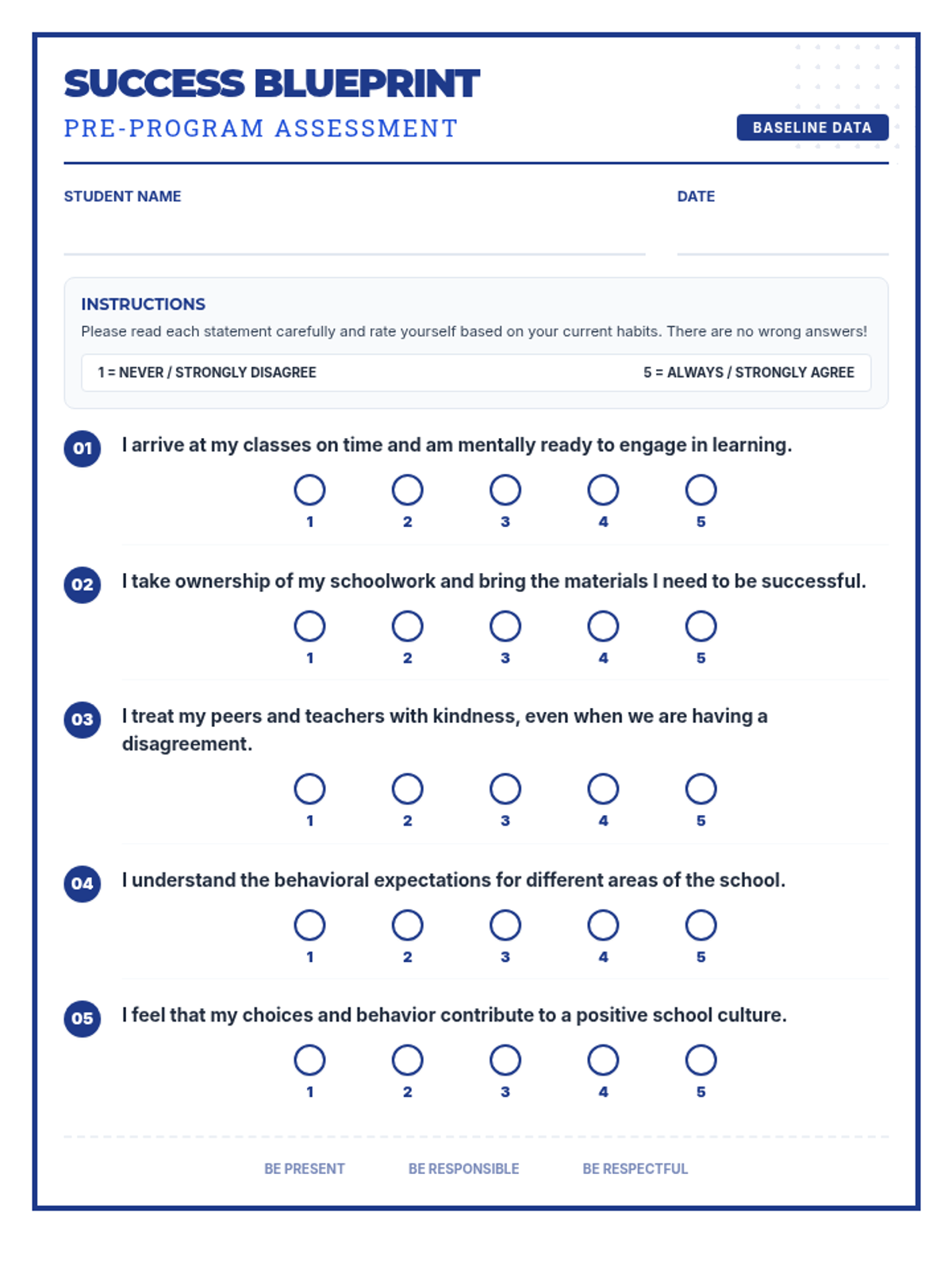
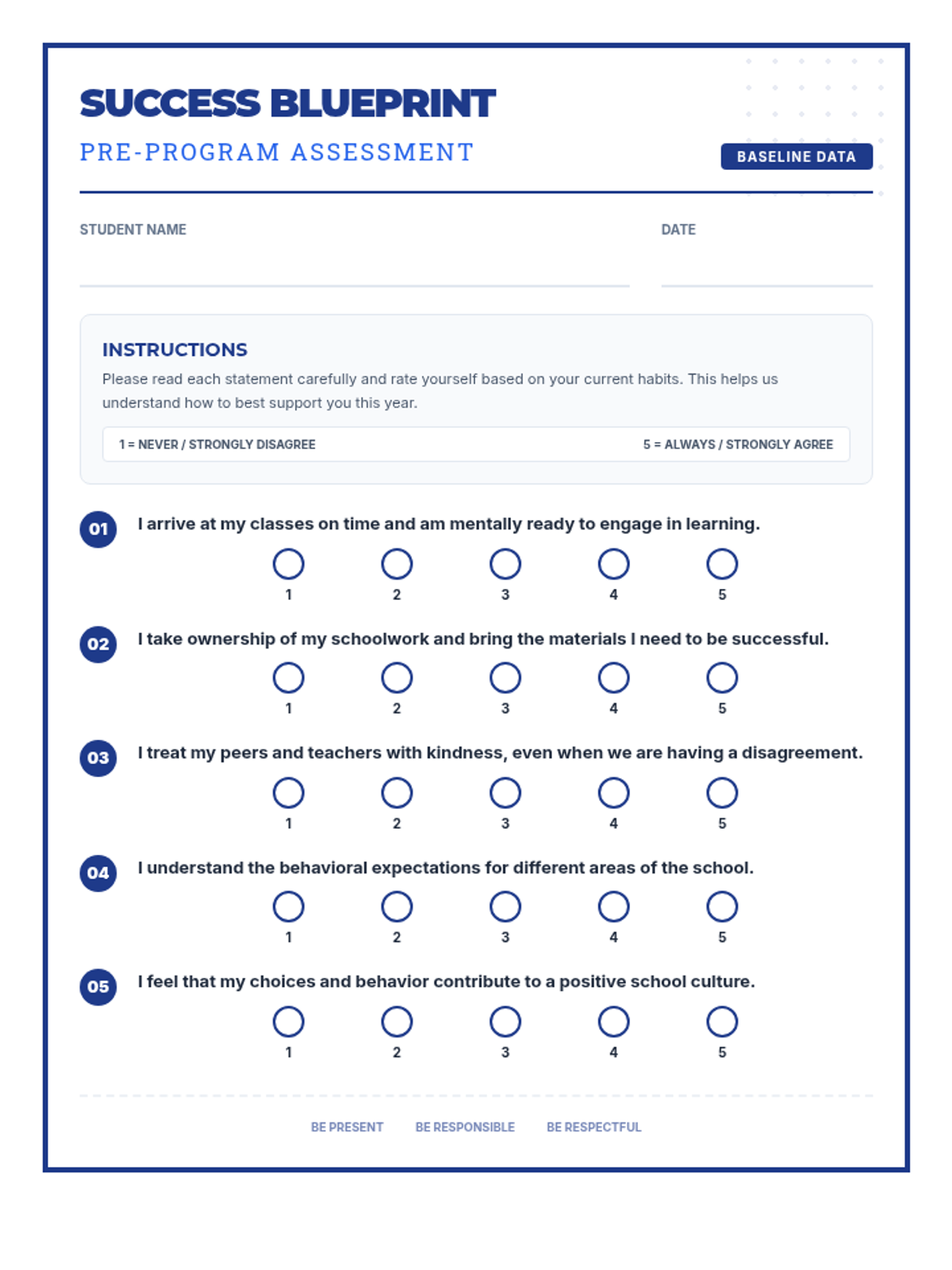
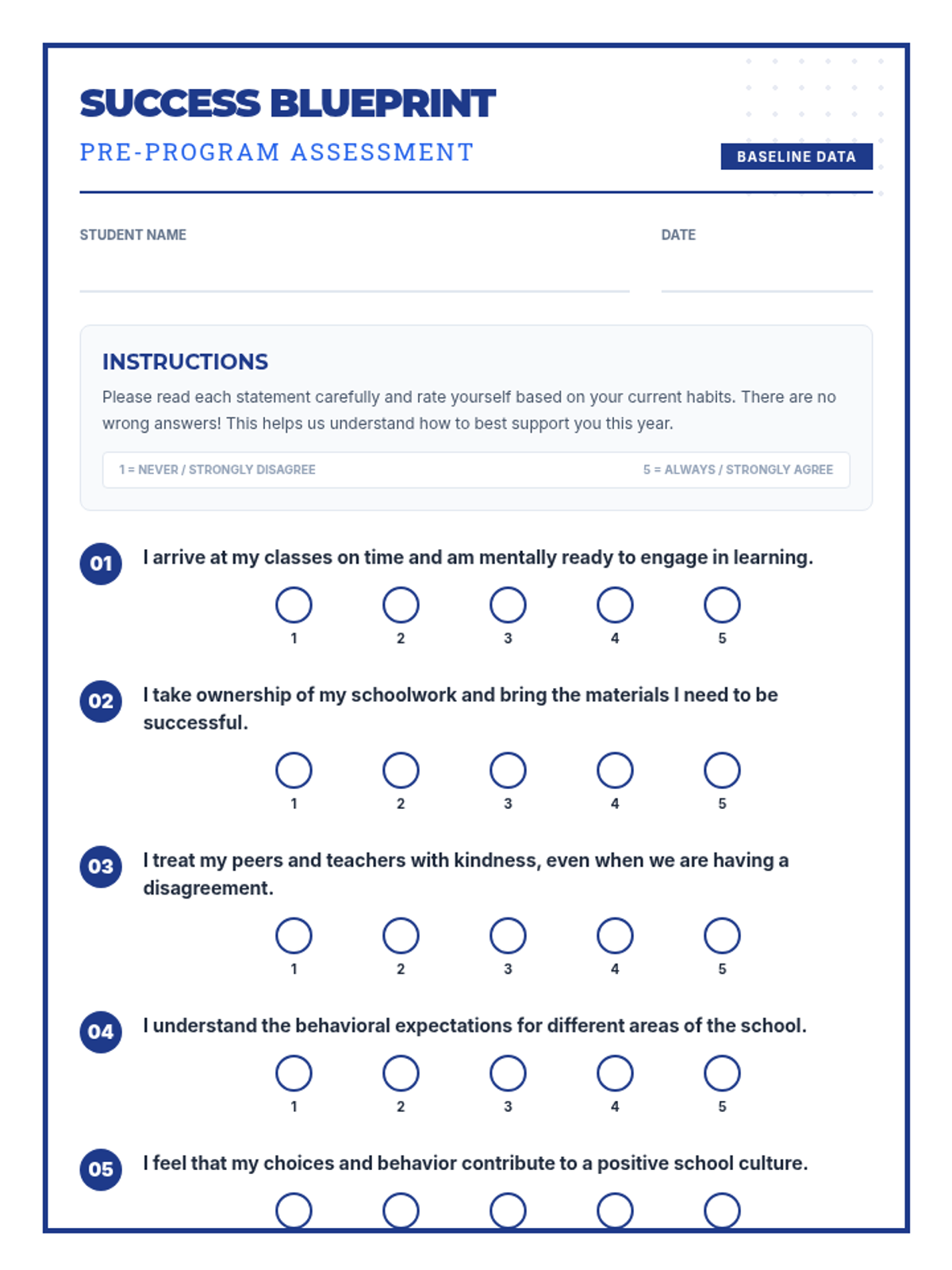
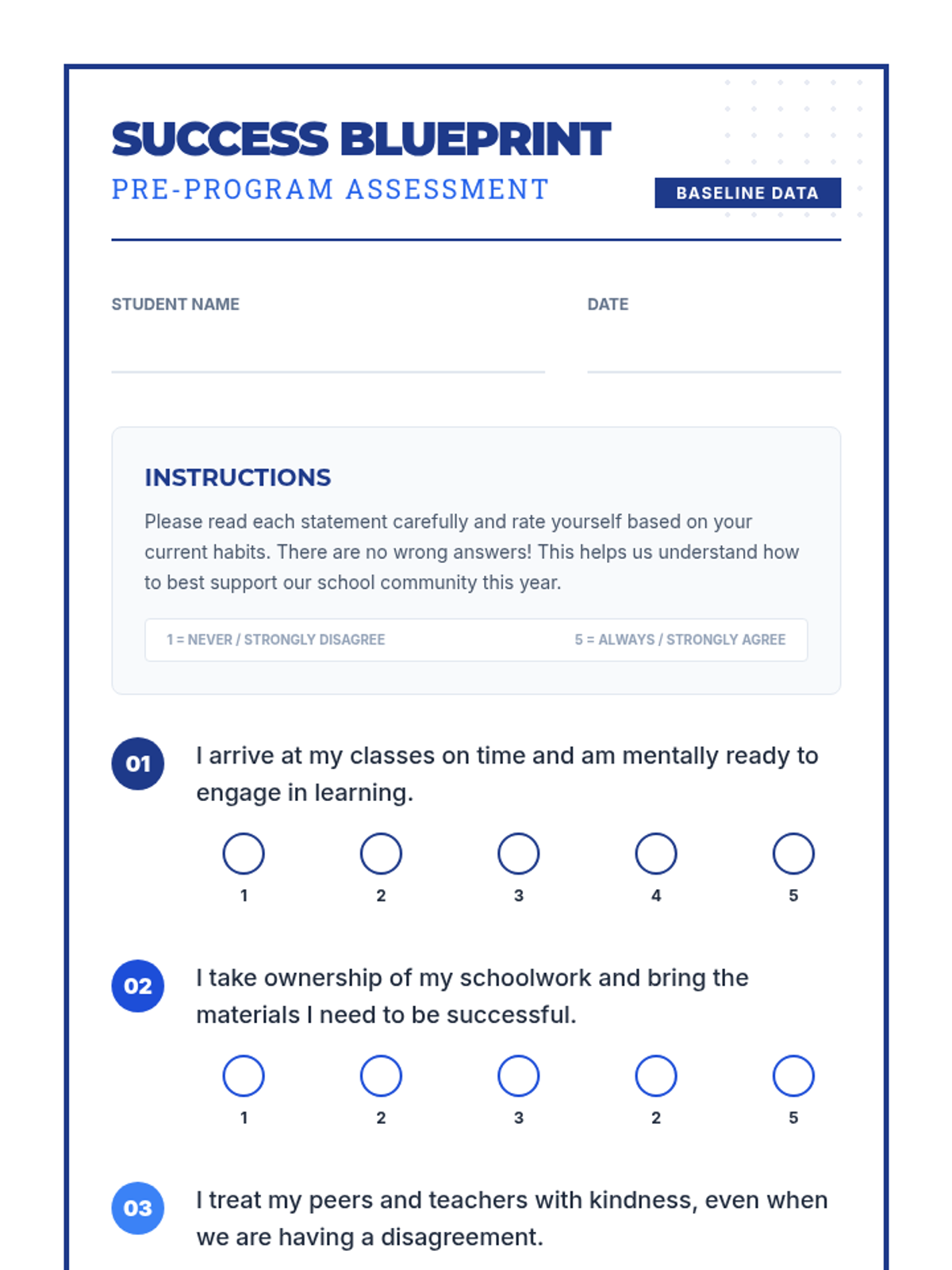
A 5-question pre-assessment for students to baseline their self-perception regarding being present, responsible, and respectful. Fixed page breaks and scale errors.
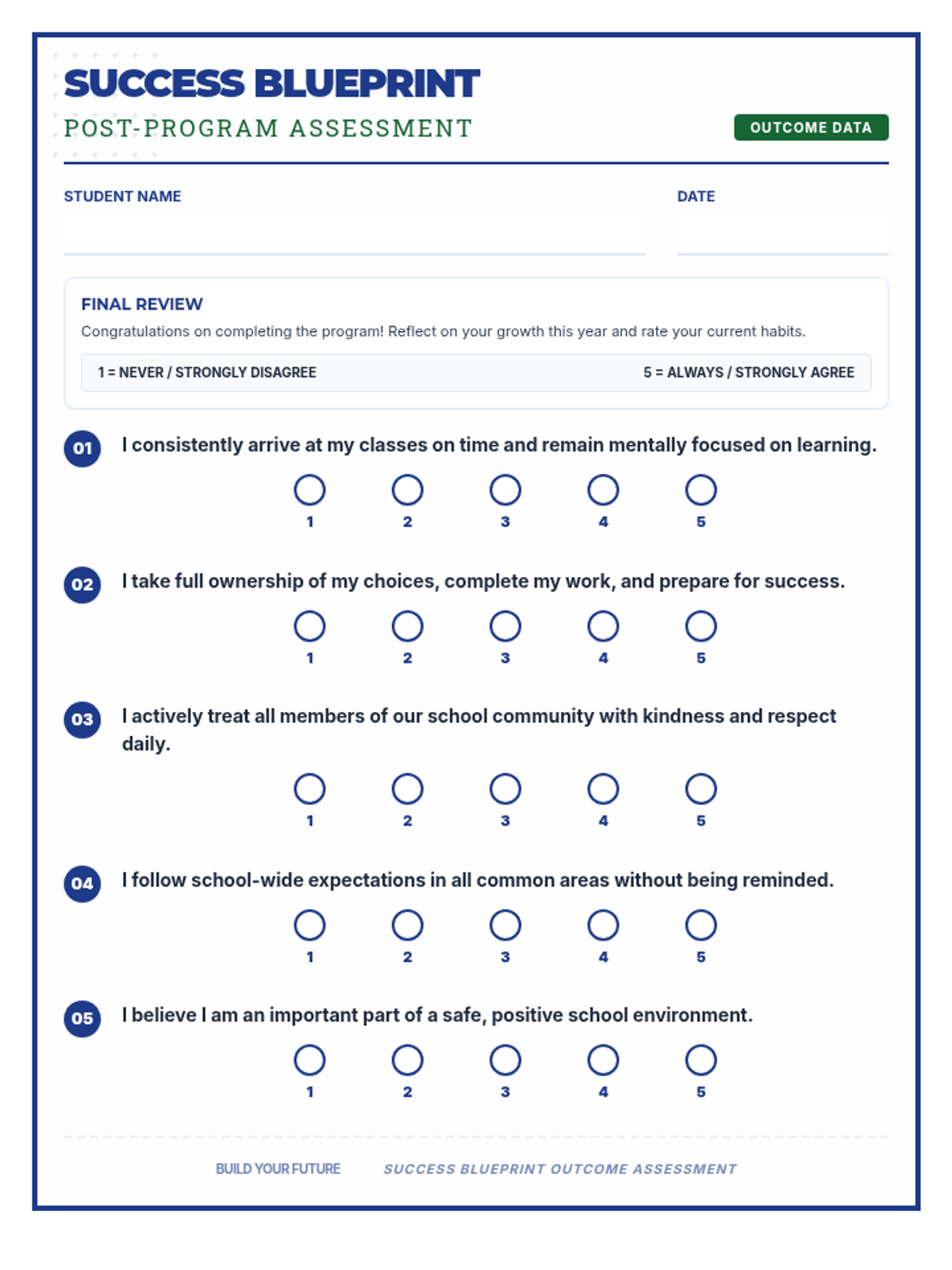
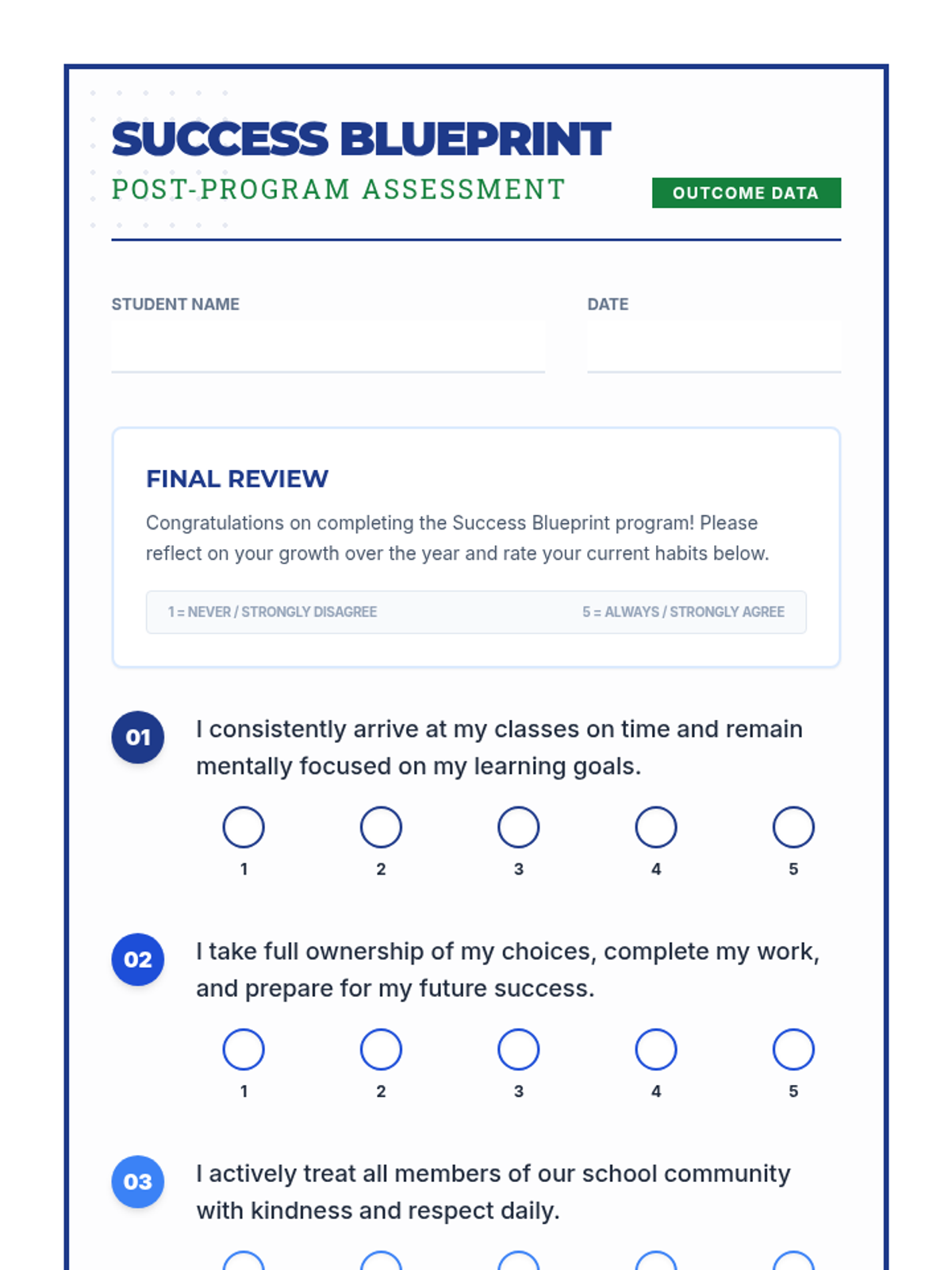
A 5-question post-assessment for students to measure their growth in being present, responsible, and respectful at the end of the program. Corrected page breaks and standardized colors.
A 5-question post-assessment for students to measure their growth in being present, responsible, and respectful at the end of the program.
A 5-question pre-assessment for students to baseline their self-perception regarding being present, responsible, and respectful.
A professional development slide deck for staff to learn about the Social Compass program, covering the implementation matrix and core social navigation tools.
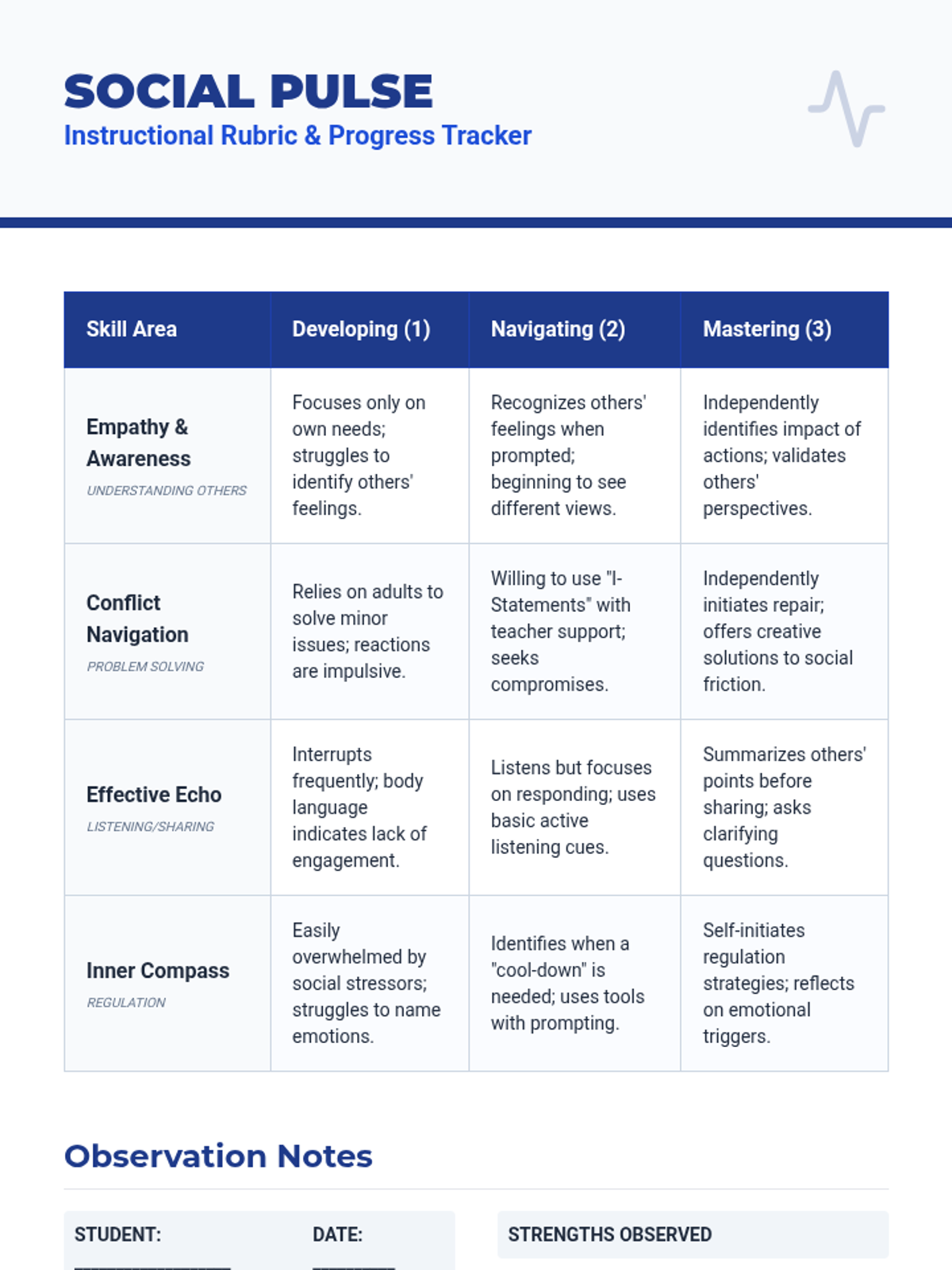
An instructional rubric for teachers to assess student progress across four key social skill domains: empathy, conflict resolution, communication, and self-regulation.
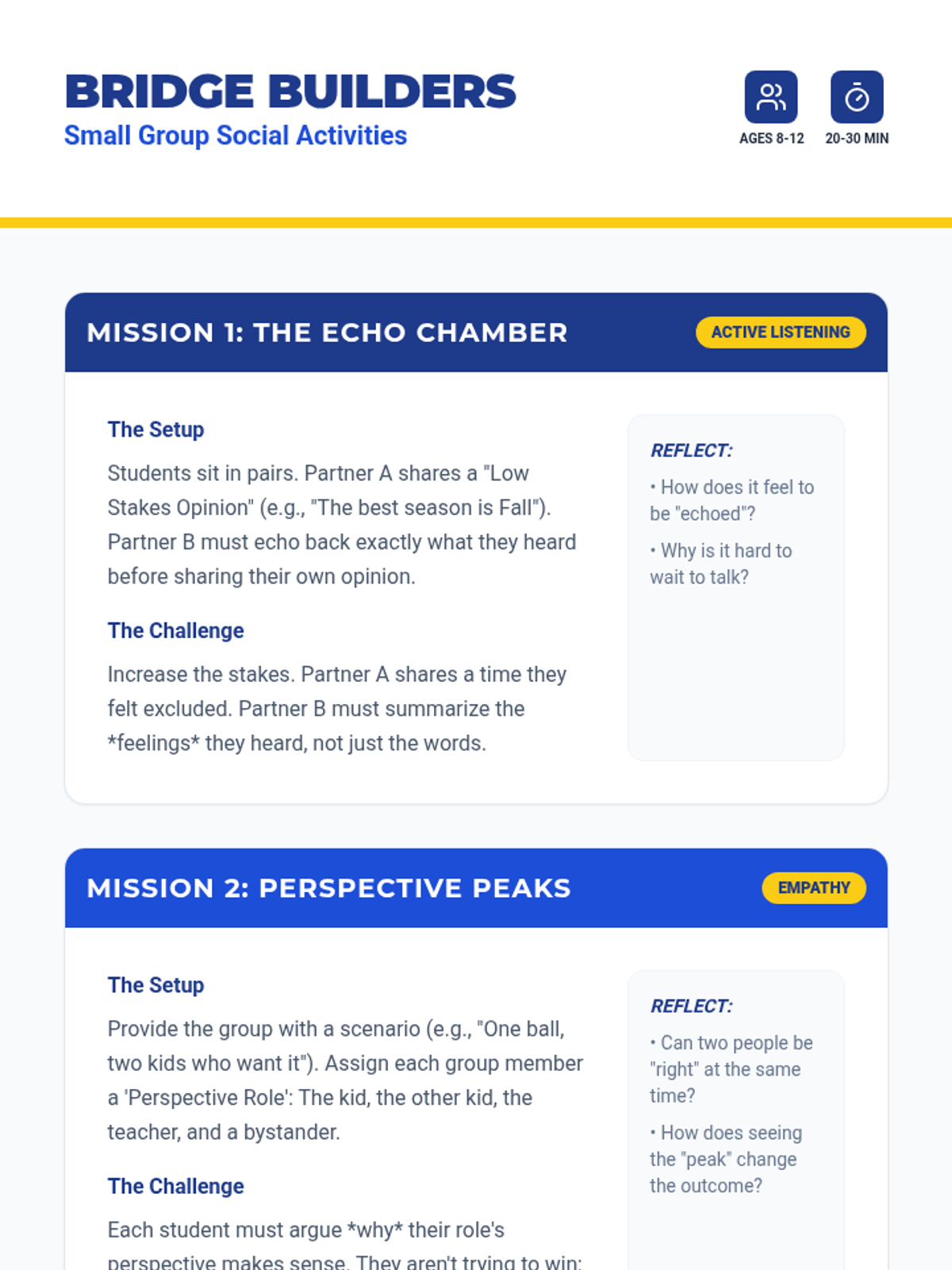
A student-facing activity guide featuring small group missions focused on active listening and empathy, including a 'Social Detective' reflection worksheet.
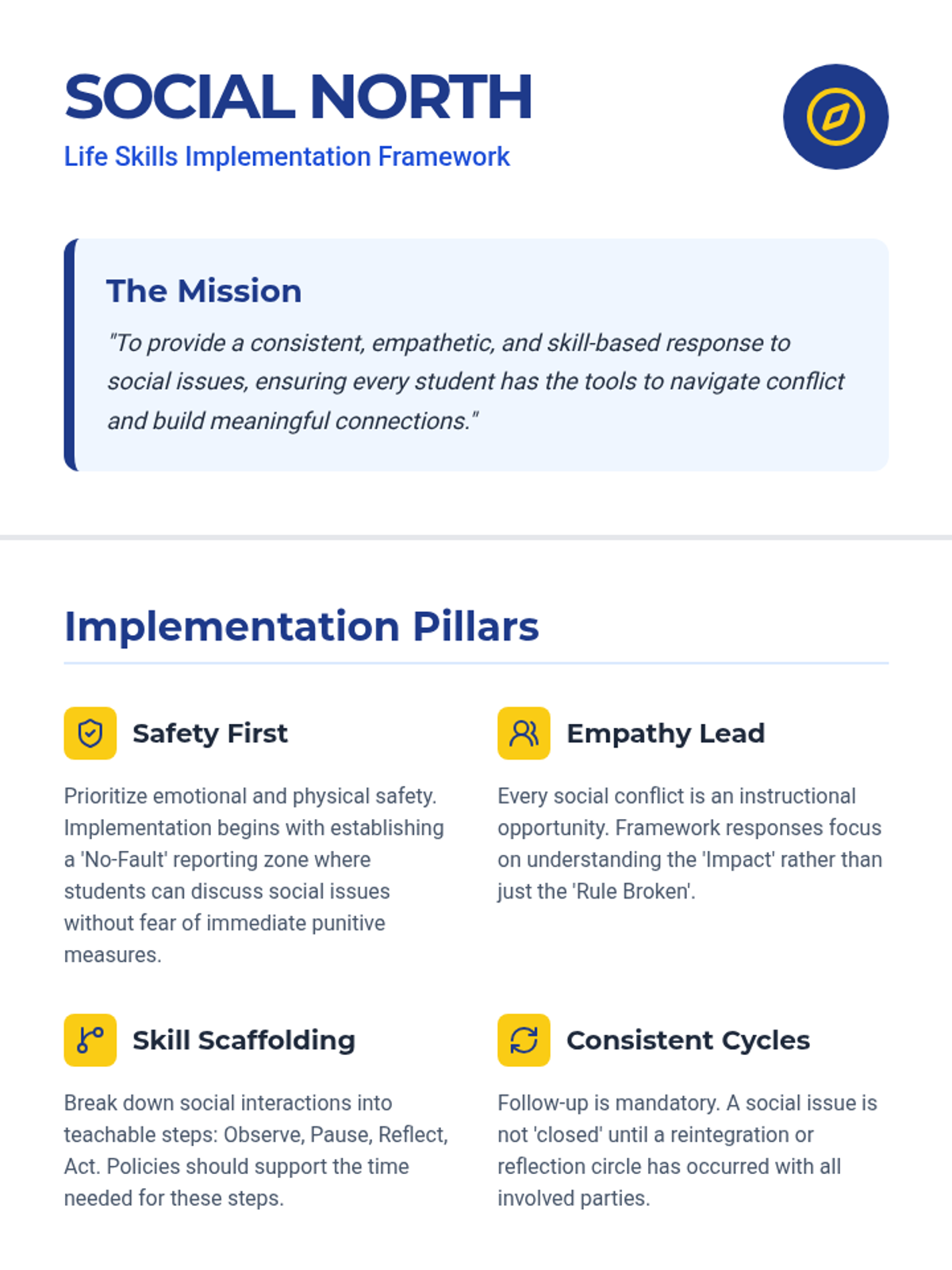
A strategic framework for educational administrators and teachers to implement social-emotional policies, featuring a response matrix and implementation checklist.
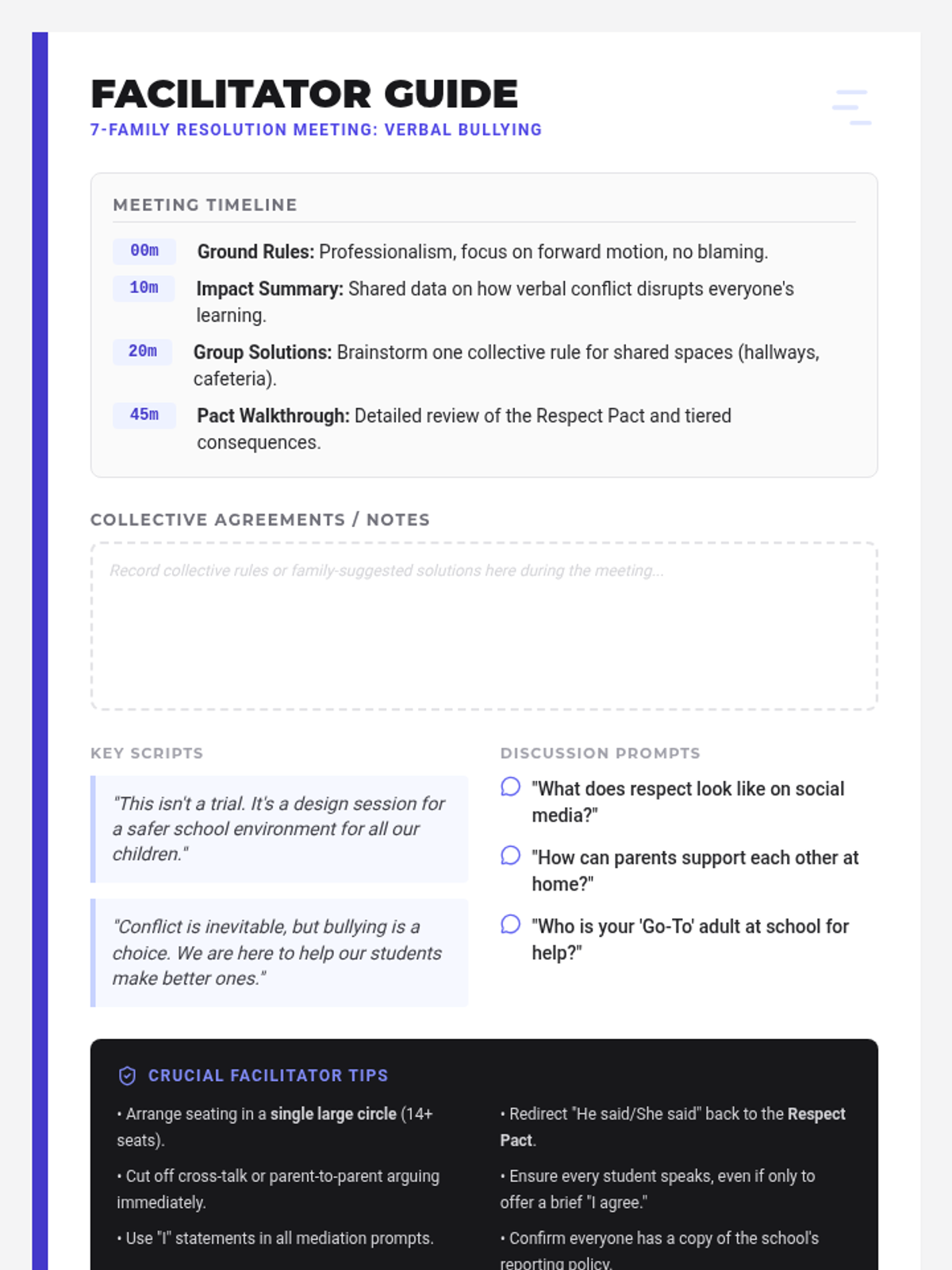
A facilitator guide for teachers and administrators to lead a productive family meeting for group conflict resolution, featuring an agenda, talking points, and discussion prompts.
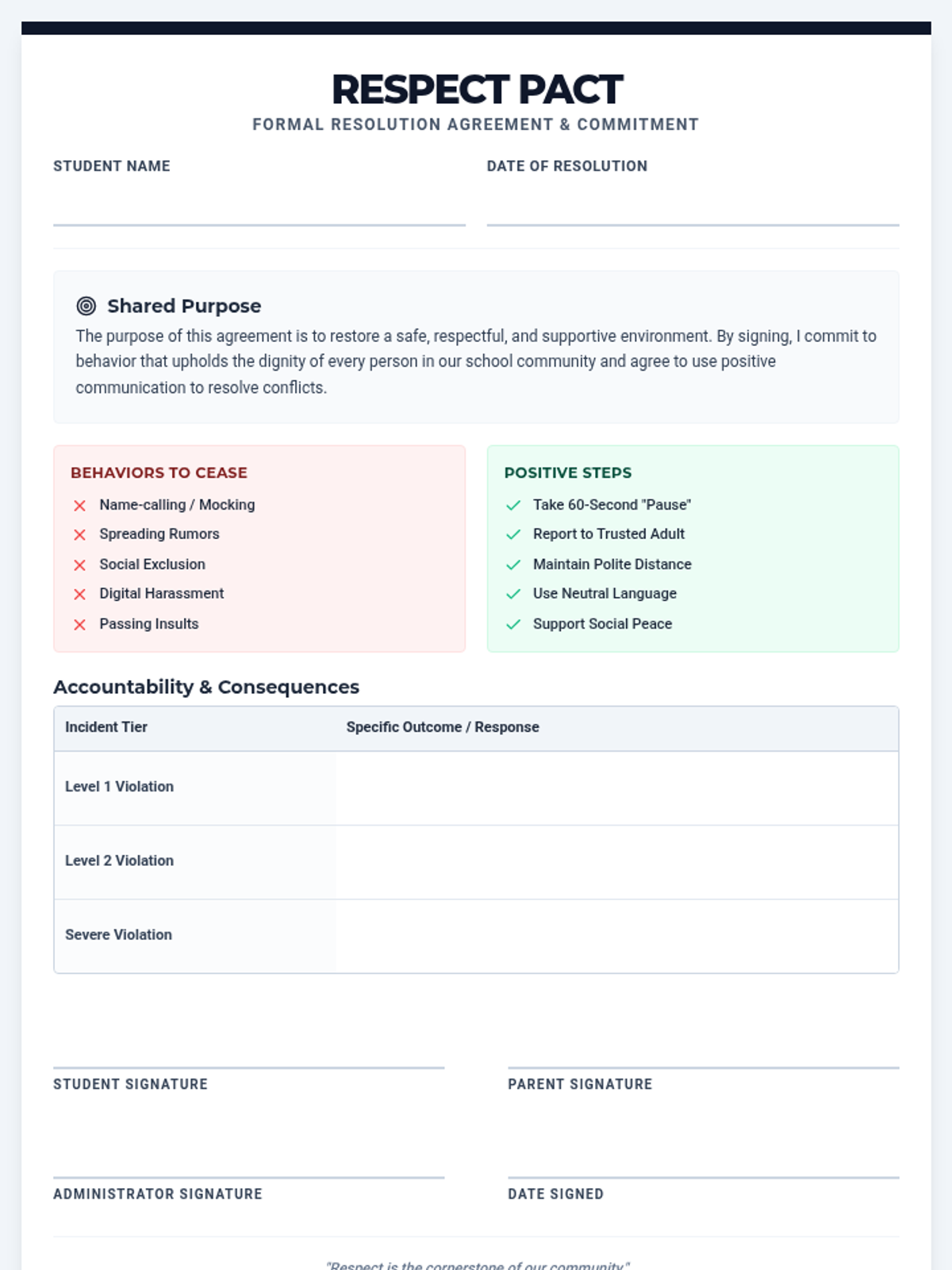
A formal behavioral contract designed for students and families to sign, specifically addressing verbal bullying and establishing clear expectations for respectful conduct.
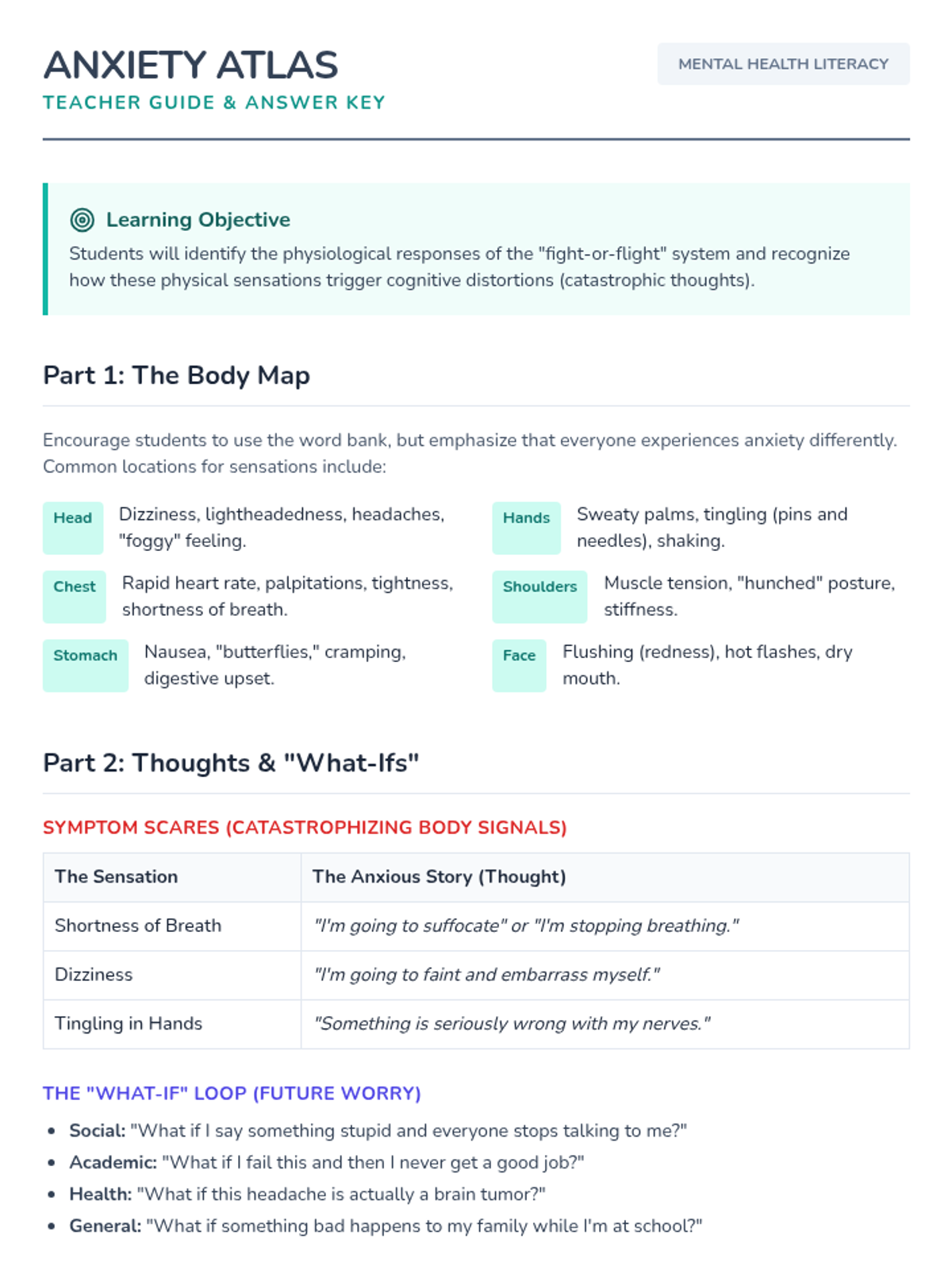
A teacher's companion guide for the Anxiety Atlas lesson, providing common examples of physiological sensations, cognitive distortions, and discussion prompts for classroom use.
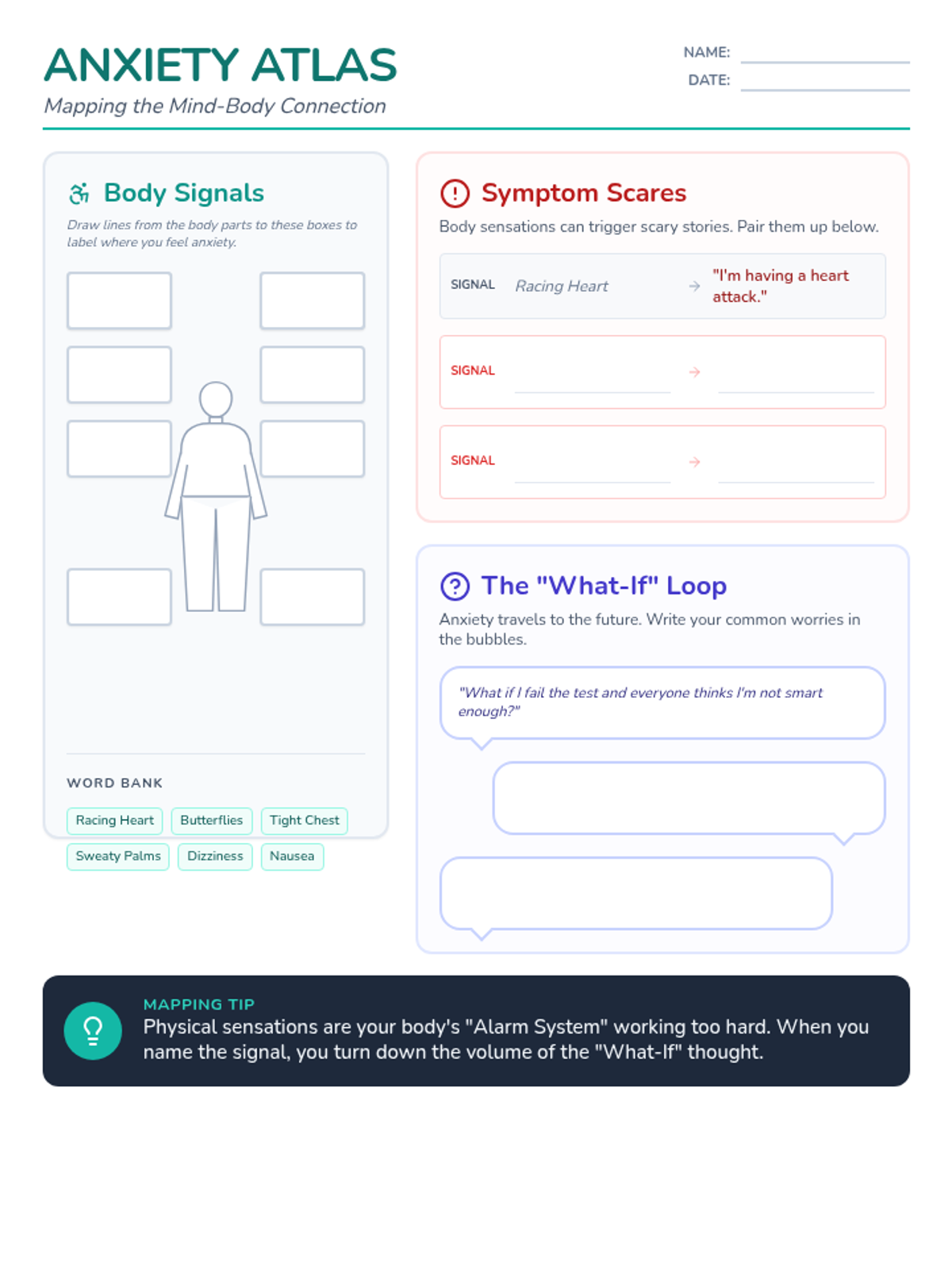
An interactive worksheet featuring a body map for labeling anxiety's physical sensations and sections for documenting catastrophic 'What-If' thoughts and symptom-focused worries.
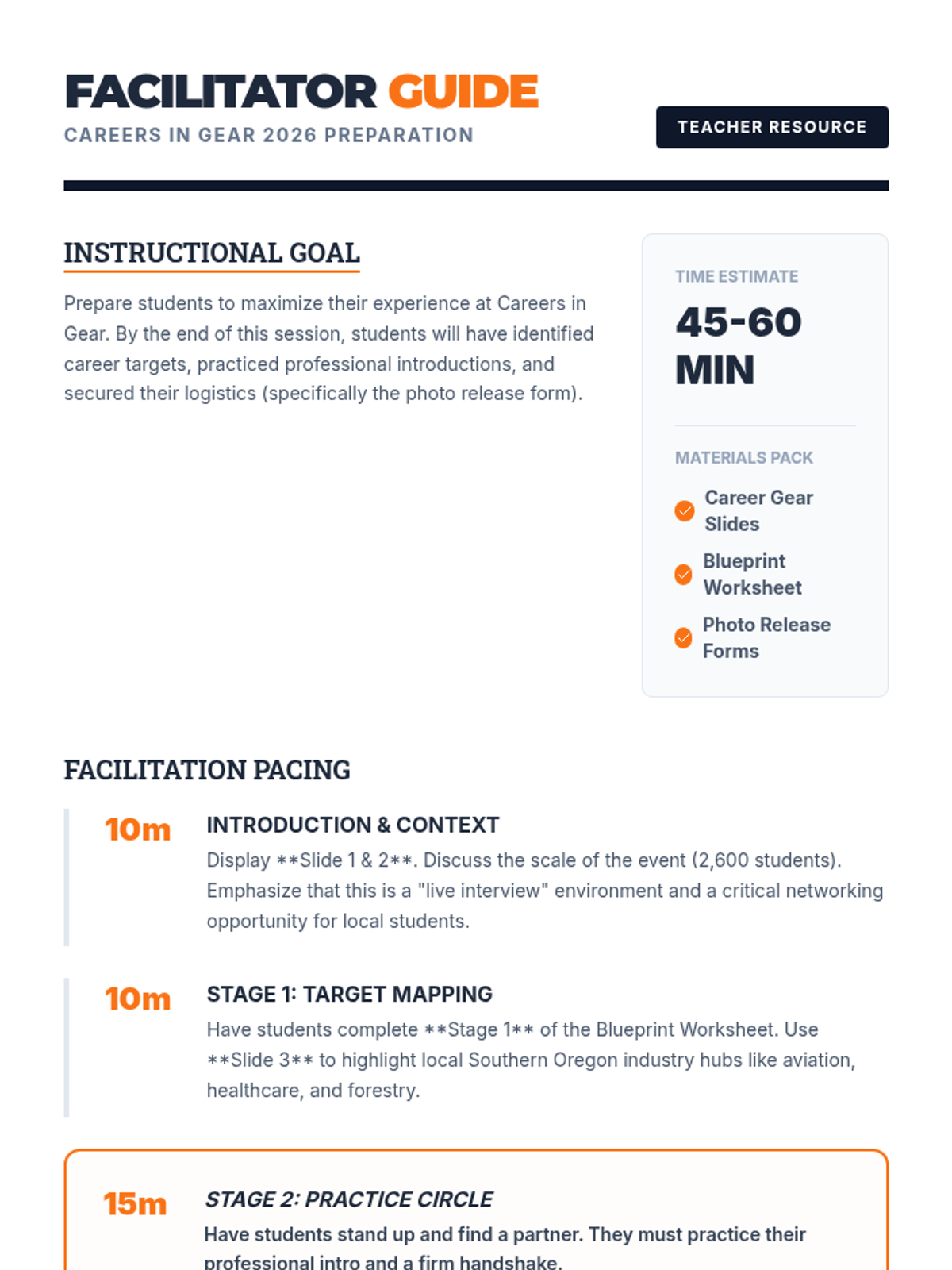
A comprehensive instructional guide for teachers to lead the Careers in Gear 2026 preparation session. Includes a timed pacing guide, active learning exercises for handshakes/introductions, and discussion prompts.
A high-impact visual presentation to introduce high school students to the Careers in Gear 2026 event. Covers event logistics, professional etiquette, networking strategies, and the mandatory photo release form.