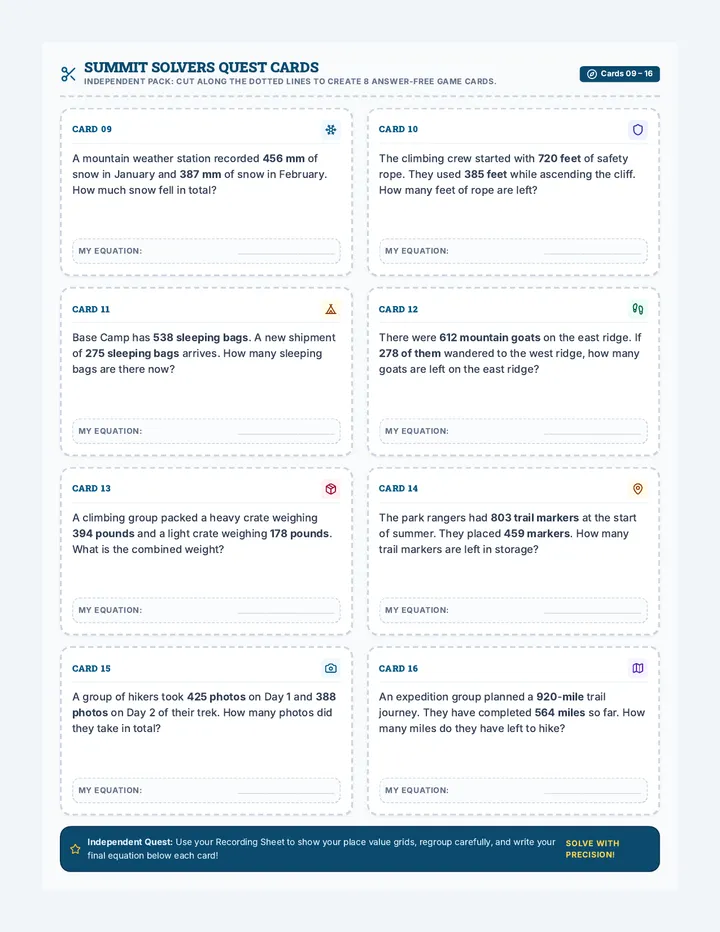
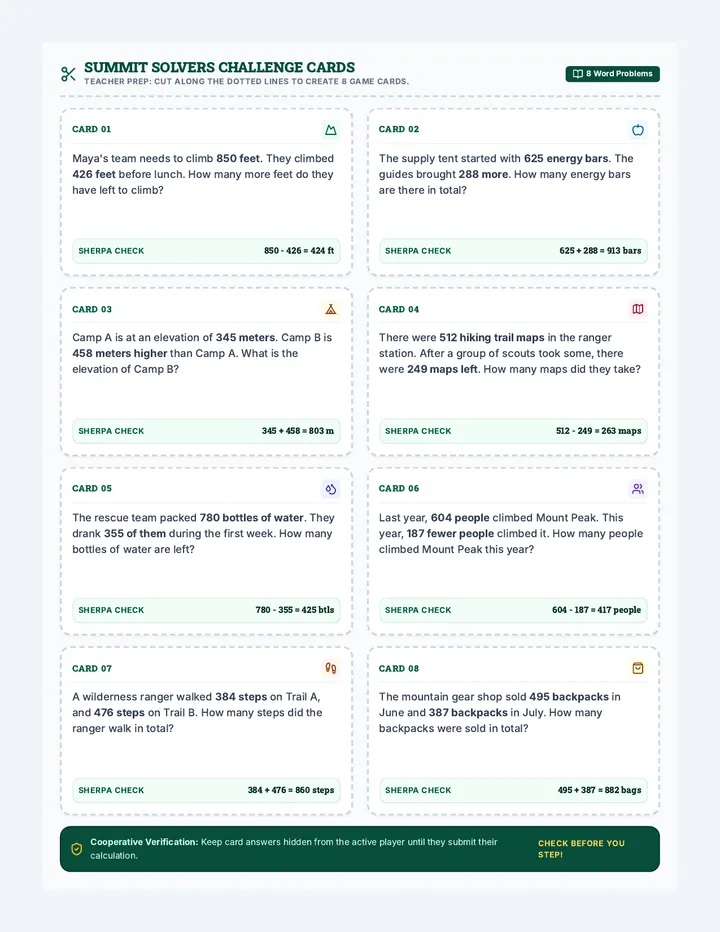
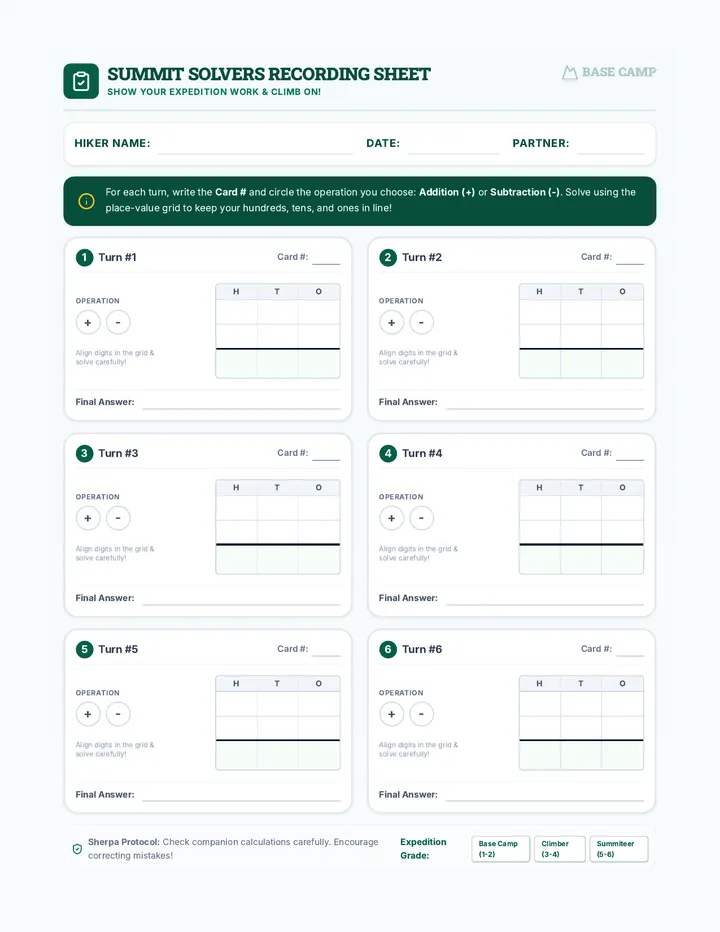
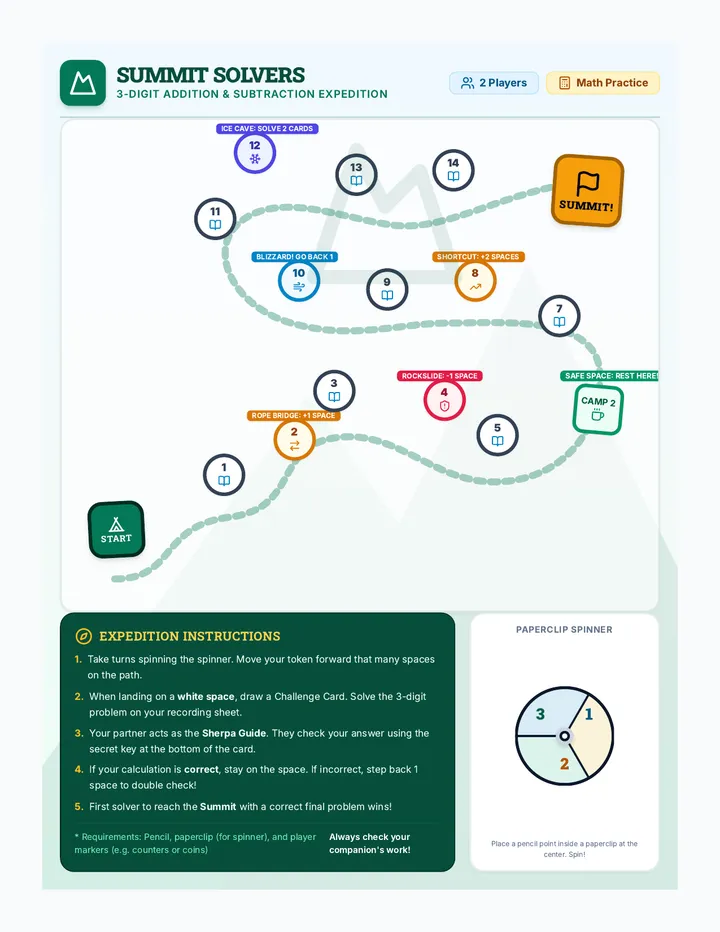
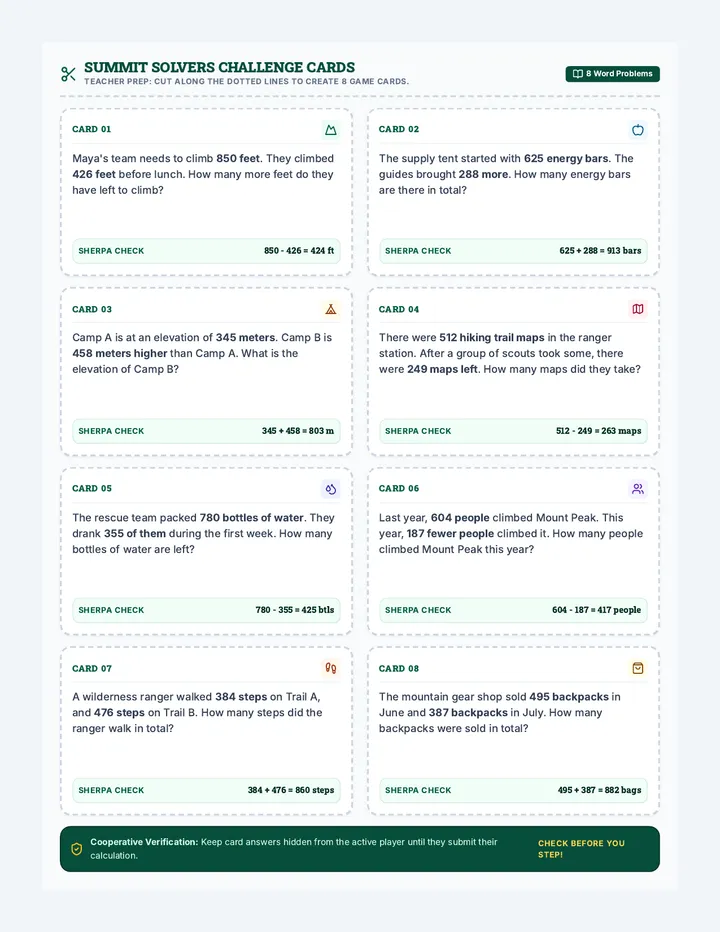
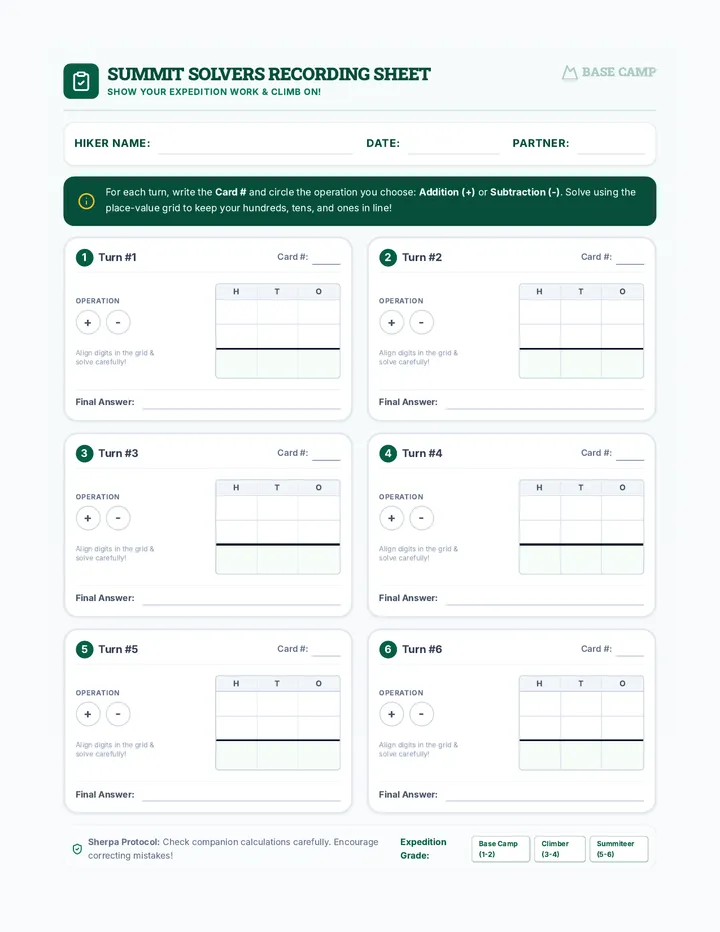
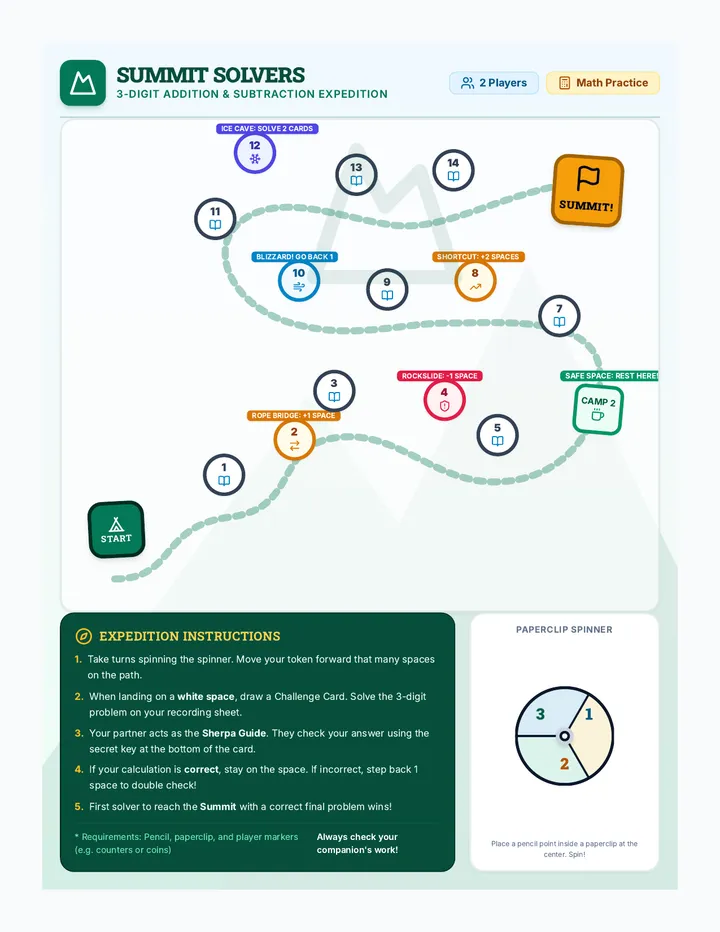
A game for multi-digit subtraction with regrouping, including mission cards and a high-impact 'Mission Dashboard' for trading base-ten blocks. Follows the 'Subtraction Superhero' theme. Now condensed to a single-page dashboard for easier printing.
A simplified scenario-based practice worksheet for students using AAC or who are minimally verbal. Features clear icons and single-choice answers to reinforce the best Peace Petal for common conflicts.
A parent handout designed to support inclusive conflict resolution at home, providing tips for families of students who use AAC or are minimally verbal to practice the 'Peace Petals' framework.
An inclusive, highly visual slide deck for the 'Peace Petals' lesson, featuring simplified text, large icons, and symbol support to engage students who are minimally verbal or use AAC.
Visual scenario cards designed for students who are minimally verbal or use AAC. Each card features a clear, icon-based conflict and a selection of the four Peace Petals for easy communication and choice-making.
A specialized communication board for recess, featuring key vocabulary for conflict resolution, the four Peace Petals, and basic playground needs. Ideal for students using AAC or who are minimally verbal.
A visual-choice worksheet for students who are minimally verbal or use AAC, featuring large icons and simplified options for communicating recess problems and solutions.
A visual poster and a set of mini-reminders featuring high-contrast symbols and simplified text to support students who are minimally verbal or use AAC.
A teacher-facing facilitator guide for the inclusive 'Peace Petals' lesson, providing specific strategies for supporting students who are minimally verbal or use AAC.
A visual cheat sheet for converting between improper fractions and mixed numbers. It includes clear definitions of key terms and illustrated step-by-step examples for both conversion processes. Optimized for single-page printing. Visual "Circle" cues and remainder labeling added. Page break and icon clarity fixed.
A hands-on cut-and-paste sorting activity where students categorize visual cards into 'Body Clues' (physical signs of anger) and 'Expected Choices' (appropriate calm-down actions). Cards use neutral colors to ensure students sort based on meaning rather than color-matching.
A high-contrast, step-by-step visual poster for classroom display. It outlines a four-step process (Stop, Feel, Breathe, Choose) to help students manage anger, using large numbered icons and simple directives. All steps fit on a single page for optimal visibility.
A multi-page social story designed for students with low cognitive functioning. It uses simple language, large icons, and clear visual cues to explain what anger feels like in the body and how to make calm, expected choices.
A detailed teacher answer key for the Blueprint Bounds Exit Ticket. It provides definitive step-by-step logic and clear final answers for all 10 problems. The headers and layout have been improved for higher contrast and readability.
A 5-page exit ticket designed with a clean blueprint theme. It contains 10 problems that challenge students to find missing side lengths and calculate area using formulas for rectangles and complex rectilinear shapes. All diagrams and labels have been optimized for clarity and high contrast.
A simplified, high-visual social story for 2nd graders with low cognitive function, teaching the emotional and behavioral steps of waiting for a turn.
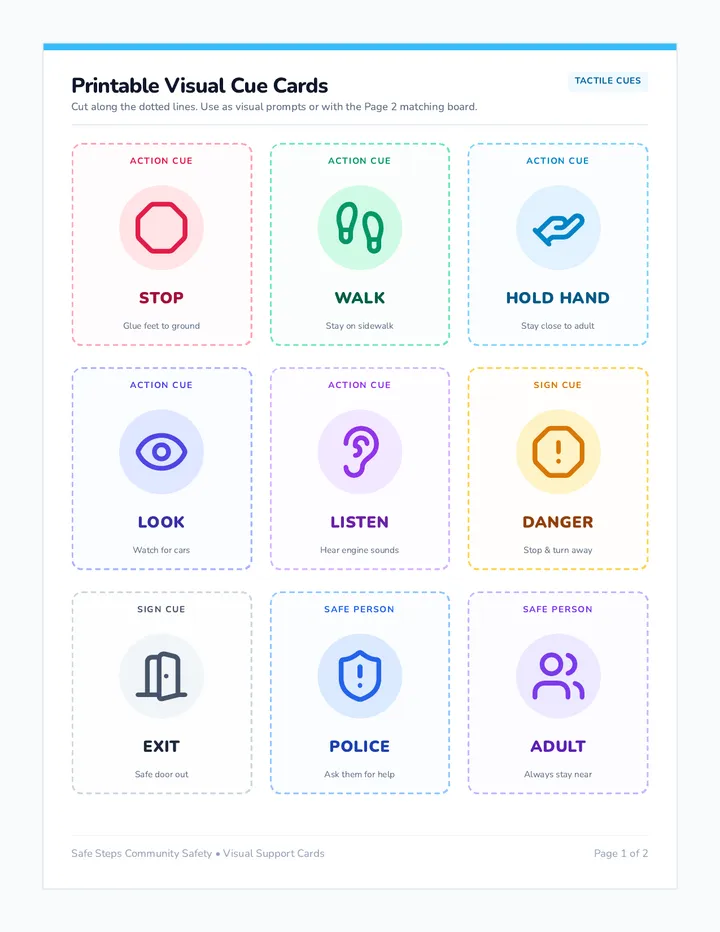
Large, high-contrast visual cue cards for classroom use, featuring "Stop," "Wait," "Go," and "Breathe" signals to support turn-taking transitions.
A teacher guide for the 'Waiting for a Turn' lesson, featuring learning objectives, material lists, and a multi-part instructional sequence including a hands-on 'Wait and Go' game.
Answer key for the Missing Factor Worksheet.
A worksheet focusing on the relationship between division and multiplication, asking students to find the missing factor to solve division problems.
A printable card game where students combine onset 'color threads' with rime 'base threads' to weave new words, reinforcing phoneme blending and word family recognition.
A student practice worksheet where they segment phonemes into 'thread boxes' and then blend them together to write the full word in 'woven cloth' boxes, featuring CVC and digraph words.
A presentation deck that introduces the weaving metaphor for word blending, providing visual models of phoneme synthesis for CVC and digraph words with clear guidance on 'never breaking the thread'.
A comprehensive teacher guide for the Word Weaver's Loom intervention, featuring a loom metaphor to explain phoneme blending, step-by-step instructional procedures, and multisensory strategies for struggling readers.
A teacher's answer key for the Ticket to Time Activity and the Departure Board Worksheet, providing clear, highlighted solutions for easy grading.