Lenny.com
Explore
Create
ActivitiesNewMathEnglish Language ArtsScience & EngineeringSocial StudiesGlobal LanguagesHealth & Physical EducationSpecial EducationCounseling & Life SkillsArts & CreativityESL
Lenny.com
Lenny.com
Explore
Create
ActivitiesNewMathEnglish Language ArtsScience & EngineeringSocial StudiesGlobal LanguagesHealth & Physical EducationSpecial EducationCounseling & Life SkillsArts & CreativityESL
Lenny.com
Lenny.com

Solutions

Lenny for EducatorsLenny for SchoolsLenny for Districts

Product

ExploreSign inCreateSupportAbout

Resources

Getting startedMTSS Acceleration Program

© 2026 Lenny Learning Inc.

TermsPrivacyAccessibility
LinkedInInstagramX
Lenny
MathNumbers & CountingCounting ObjectsNumber NamesComparing NumbersNumber OperationsCounting SequenceNumbers 0-10Place Value Understanding and SystemAdd and Subtract Within 20Addition and Subtraction ConceptsAddition and Subtraction EquationsAddition and Subtraction ProblemsFoundations for MultiplicationMultiplication and Division PropertiesMultiply and Divide Within 100Multiplication and Division ProblemsFactors and MultiplesProperties of OperationsPatterns and RelationshipsGenerate and Analyze PatternsMulti-Digit ArithmeticPlace Value OperationsMulti-Digit and Decimal OperationsNumerical ExpressionsFour Operations and PatternsFour Operations Problem SolvingMeasurement & DataMeasurable AttributesMeasuring LengthsMeasure and Estimate Lengths in Standard UnitsRelate Addition and Subtraction to LengthClassifying and Counting ObjectsTime and MoneyArea Concepts and MeasurementPerimeter and Area MeasuresAngle Concepts and MeasurementTime, Volume, and MassMeasurement Unit ConversionsGeometryIdentifying ShapesShapes and AttributesShape Attributes and ReasoningShapes and CompositionClassifying 2D FiguresGeometric Figures and RelationshipsLines, Angles, and ShapesAngle, Area, and VolumeGeometric MeasurementVolume of 3D ShapesCoordinate Plane ApplicationsTransformations in the PlaneCongruence and SimilarityUnderstand congruence in terms of rigid motionsSimilarity and TransformationsProve Theorems Involving SimilarityPythagorean TheoremTrigonometry for General TrianglesMake Geometric ConstructionsProve Geometric TheoremsTheorems About CirclesFind Arc Lengths And Areas of Sectors of CirclesVolume FormulasRelationships Between Two-Dimensional and Three-Dimensional ObjectsProve Simple Geometric Theorems AlgebraicallyTranslate Between Geometric Description and Equation for Conic SectionApply Geometric Concepts in Modeling SituationsFractions & DecimalsFractions as NumbersBuilding FractionsFraction Equivalence and OrderingAdding and Subtracting FractionsMultiplying and Dividing FractionsDividing FractionsDecimal FractionsMulti-Digit Computation and FactorsAdd, Subtract, Multiply, and Divide Rational NumbersRational Number SystemIrrational Numbers and ApproximationsRatiosRatios and ProportionsProportional RelationshipsUnit RateAlgebraAlgebraic ExpressionsGenerate Equivalent ExpressionsQuantitative RelationshipsProportional Relationships and Linear EquationsEquations and InequalitiesEquation Solving and ReasoningLinear Equations and SystemsGraph Equations and InequalitiesSystems of EquationsReal-World Algebraic ProblemsQuantitative Reasoning with UnitsExpression StructureEquivalent Expression FormsRadicals and Integer ExponentsRational ExponentsRational and Irrational NumbersPolynomial OperationsPolynomial IdentitiesPolynomial Zeros and FactorsRational ExpressionsComplex Number OperationsComplex Numbers in PolynomialsComplex Numbers on PlaneStatistics & ProbabilityRepresent and Interpret DataData DistributionsStatistical VariabilityProbability ModelsCompound Event ProbabilitiesStatistical SamplingInterpret Categorical and Quantitative DataBivariate Data PatternsInterpret Linear ModelsComparing Two PopulationsRandom Processes in StatisticsIndependence and Conditional ProbabilityExpected ValuesProbability-Based Decision MakingStatistical Inference and ConclusionsFunctionsFunction Concepts and NotationDefine and Compare FunctionsInterpret Functions in ContextAnalyze Function RepresentationsModel Relationships with FunctionsIdentify Linear vs Exponential GrowthDistinguish Between Function TypesCompare Growth RatesInterpret Function ExpressionsBuild Functions from RelationshipsConstruct and Model FunctionsTransform and Combine FunctionsModel Comparison and SelectionSolve Exponential EquationsTrigonometryTrigonometric Ratios Involving Right TrianglesTrigonometric Functions and Unit CircleModel with Trigonometric FunctionsTrigonometric IdentitiesVectors & MatricesIntroduction to Vectors and MatricesVector QuantitiesVector OperationsMatrix OperationsCalculusLimits and ContinuityDerivative Concepts and NotationDerivative Rules and TechniquesApplications of DerivativesOptimization ProblemsRelated RatesCurve Sketching and AnalysisIntegration Concepts and NotationAntiderivatives and Indefinite IntegralsDefinite Integrals and AreaFundamental Theorem of CalculusIntegration TechniquesApplications of IntegrationDifferential EquationsSequences and SeriesParametric and Polar FunctionsVector-Valued Functions

Trick or Treat Math

A 3rd-grade math lesson featuring 12 Halloween trick-or-treat addition and subtraction single-step word problems. Students apply the CUBES strategy with dedicated workspace and equation lines, supported by an answer key and paraprofessional instructional coaching scripts.

SWStephanie Wooten

Grade 3 Math Standard 3.NBT.A.2

5

Bowl started with [150] candy corns. Only [43] pieces left. How many pieces were taken?

Subtraction (Missing Part)

Equation

150 − 43 = 107

Final Answer

107 pieces of candy corn

Algorithm Work

4  10

  1 5 0

−   4 3

  1 0 7

Regrouping Check

Regroup 1 ten to make 10 ones. 10 − 3 = 7 ones. 4 tens − 4 tens = 0 tens. Bring down 1 hundred = 107.

6

Jackson had [67] sour spiders. Ava gave him [56] more. How many sour spiders does Jackson have now?

Addition

Equation

67 + 56 = 123

Final Answer

123 sour spiders

Algorithm Work

1  1

    6 7

+  5 6

  1 2 3

Double Regrouping

7 + 6 = 13 (regroup 1 ten). 1 + 6 + 5 = 12 tens (regroup 1 hundred, leaves 2 tens). Result = 123.

7

Mrs. Gable had [240] caramel apple pops. She passed out [185] pops. How many pops does she have remaining?

Subtraction

Equation

240 − 185 = 55

Final Answer

55 caramel apple pops

Algorithm Work

1 13 10

  2 4 0

− 1 8 5

    5 5

Two-Step Regrouping

Regroup tens to ones: 10 − 5 = 5. Regroup hundreds to tens: 13 tens − 8 tens = 5 tens. 1 − 1 = 0 hundreds.

8

Parade had [136] superhero costumes and [89] monster costumes. How many total students marched in the parade?

Addition

Equation

136 + 89 = 225

Final Answer

225 students

Algorithm Work

1  1

  1 3 6

+   8 9

  2 2 5

Place Value Check

6 + 9 = 15 (regroup 1 ten). 1 + 3 + 8 = 12 tens (regroup 1 hundred). 1 + 1 = 2 hundreds. Total = 225.

Page 2 of 3 • Teacher & Paraprofessional Reference Key

🦇

Trick or Treat Math

Answer Key

Page 3 • Problems 9 – 12 & Scoring Rubric

Grade 3 Math Standard 3.NBT.A.2

9

Liam’s bucket: [315] oz. Zoe’s bag: [278] oz. How many more ounces did Liam's bucket weigh than Zoe's?

Subtraction (Compare)

Equation

315 − 278 = 37

Final Answer

37 more ounces

2 10 15

  3 1 5

− 2 7 8

    3 7

Regroup tens to ones: 15 − 8 = 7. Regroup hundreds to tens: 10 tens − 7 tens = 3 tens. 2 − 2 = 0 hundreds.

10

Priya: [158] patties. Maya: [164] patties. How many peppermint patties did the sisters have altogether?

Addition

Equation

158 + 164 = 322

Final Answer

322 peppermint patties

 1  1

  1 5 8

+ 1 6 4

  3 2 2

8 + 4 = 12 (regroup 1 ten). 1 + 5 + 6 = 12 tens (regroup 1 hundred). 1 + 1 + 1 = 3 hundreds. Total = 322.

11

Started with [300] eyeballs. Trick-or-treaters took 168. How many chocolate eyeballs remained?

Subtraction (Across Zeros)

Equation

300 − 168 = 132

Final Answer

132 chocolate eyeballs

2  9 10

  3 0 0

− 1 6 8

  1 3 2

Subtracting across zeros:

Regroup 300 into 2 hundreds, 9 tens, 10 ones. 10 − 8 = 2; 9 − 6 = 3; 2 − 1 = 1.

12

Lucas counted [225] fruit rolls and [198] lollipops. How many treats does Lucas have in total?

Addition

Equation

225 + 198 = 423

Final Answer

423 treats

1  1

  2 2 5

+ 1 9 8

  4 2 3

5 + 8 = 13 (regroup 1 ten). 1 + 2 + 9 = 12 tens (regroup 1 hundred). 1 + 2 + 1 = 4 hundreds. Total = 423.

3-Point Problem Scoring Guide Total Possible: 36 Points (3 pts × 12 problems)

1 Point: CUBES & Equation Numbers/words marked, valid addition or subtraction equation written.

1 Point: Computation Accurate calculation showing regrouping/renaming steps.

1 Point: Labeled Answer Correct numeric value with appropriate candy/item unit label.

Page 3 of 3 • Teacher & Paraprofessional Reference Key

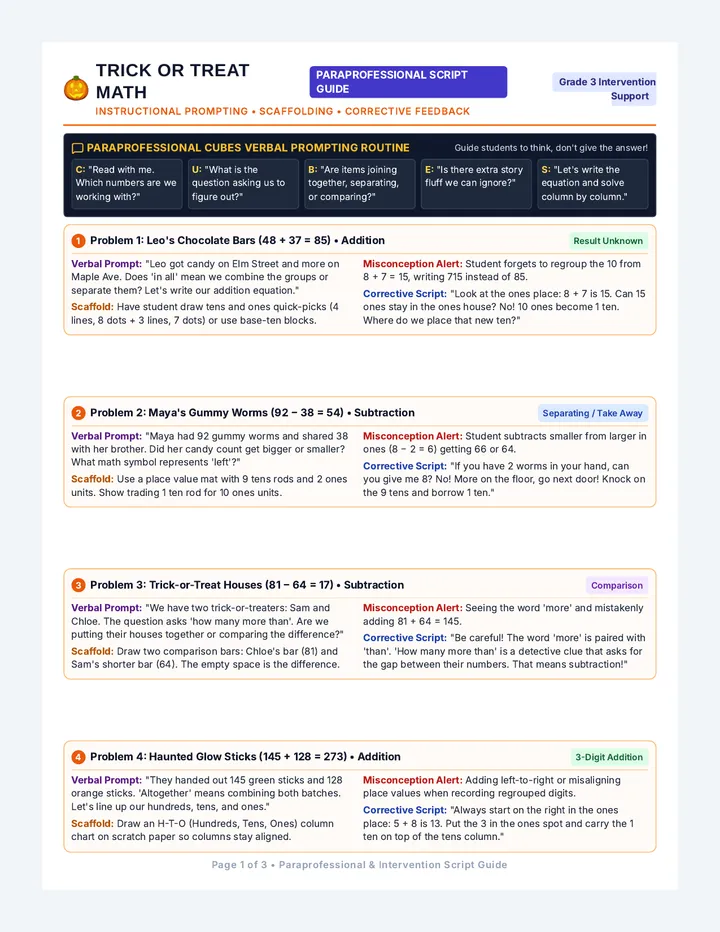
Scaffold: Draw an H-T-O (Hundreds, Tens, Ones) column chart on scratch paper so columns stay aligned.

Misconception Alert: Adding left-to-right or misaligning place values when recording regrouped digits.

Corrective Script: "Always start on the right in the ones place: 5 + 8 is 13. Put the 3 in the ones spot and carry the 1 ten on top of the tens column."

Page 1 of 3 • Paraprofessional & Intervention Script Guide

🍬

Trick or Treat Math

Paraprofessional Script Guide

Page 2 • Scripts & Intervention Prompts for Problems 5 – 8

Prompting • Not Giving Answers

5 Problem 5: Candy Corn Bowl (150 − 43 = 107) • Subtraction Part-Part-Whole / Missing Part

Verbal Prompt: "The bowl had 150 pieces at the start. Now there are only 43 pieces left. The rest were taken. If we know the total and one part, how do we find the missing taken part?"

Scaffold: Part-Part-Whole box diagram. Top box: 150 (Whole). Bottom boxes: 43 (Part Left) and ? (Part Taken).

Misconception Alert: Subtracting 0 − 3 = 3 or getting 117 instead of 107 because of regrouping.

Corrective Script: "Look at the zero in 150. You have 0 ones. Can you give away 3? No! You must ungroup 1 ten from the 5 tens. That turns the 0 into 10 ones, and leaves 4 tens. What is 4 tens − 4 tens?"

6 Problem 6: Sour Spider Candies (67 + 56 = 123) • Addition Joining with Double Regrouping

Verbal Prompt: "Jackson had 67 sour spiders and Ava gave him 56 more. Did his stash increase or decrease? What action word in the story tells you to add?"

Scaffold: Decompose by place value: (60 + 50 = 110) and (7 + 6 = 13). Then add 110 + 13 = 123.

Misconception Alert: Student forgets the regrouped 10 when adding tens (6 + 5 = 11, resulting in 113 instead of 123).

Corrective Script: "7 + 6 gave you 13. You put the 3 down and carried 1 ten. Don't forget that little guest sitting on top of the 6! Add 1 + 6 + 5. How many tens is that?"

7 Problem 7: Caramel Apple Pops (240 − 185 = 55) • Subtraction 3-Digit Subtraction with Two Trades

Verbal Prompt: "Mrs. Gable prepared 240 pops and handed out 185. The question asks how many pops are 'remaining'. Does remaining mean add or subtract?"

Scaffold: Open number line counting up from 185 to 240: jump +5 to 190, jump +10 to 200, jump +40 to 240. Total jump = 5 + 10 + 40 = 55.

Misconception Alert: Struggling with two consecutive regroupings (regrouping tens to ones, then hundreds to tens).

Corrective Script: "Take it one room at a time. First ones: 0 − 5 won't work, so borrow 1 ten from 4 tens (now 3 tens, 10 ones). 10 − 5 = 5. Now tens: can you take 8 tens from 3 tens? Borrow from the hundreds!"

8 Problem 8: Costume Parade (136 + 89 = 225) • Addition Combining 3-Digit & 2-Digit

Verbal Prompt: "We have 136 superhero kids and 89 monster kids marching together. What is the keyword in the question that tells us what to do? Yes, 'total'!"

Scaffold: Ensure proper vertical alignment. Remind student that 89 has 8 tens and 9 ones, so 8 sits beneath the 3 tens, not the 1 hundred.

Misconception Alert: Aligning 89 to the left under 136, treating 89 as 890.

Corrective Script: "Wait! Check your columns. Is 89 eighty-nine or eight hundred ninety? Put the 8 under the tens column and 9 under the ones column. Keep your walls straight!"

Page 2 of 3 • Paraprofessional & Intervention Script Guide

🦇

Trick or Treat Math

Paraprofessional Script Guide

Page 3 • Scripts for Problems 9 – 12 & Small Group Intervention Tools

Building Independence

9 Problem 9: Bucket Weights (315 − 278 = 37) • Subtraction Measurement Comparison

Verbal Prompt: "Liam's bucket is 315 ounces; Zoe's is 278 ounces. Who has the heavier bucket? How many more ounces? What operation compares the two weights?"

Scaffold: Ask: "What number goes on top in our subtraction equation? The bigger total weight!" (315 on top, 278 underneath).

Misconception Alert: Subtracting 8 − 5 = 3 and 7 − 1 = 6 instead of regrouping.

Corrective Script: "Remember our rule: you cannot flip numbers upside down in subtraction! If you have 5 ounces, you can't take away 8. Borrow 1 ten to turn 5 into 15."

10 Problem 10: Peppermint Patties (158 + 164 = 322) • Addition 3-Digit Double Regrouping

Verbal Prompt: "Priya has 158 and Maya has 164. 'Altogether' tells us to unite their collections. What is our equation? Let's check both regrouping steps."

Scaffold: Estimate first: 158 is close to 160; 164 is close to 160. 160 + 160 = 320. Our final exact answer should be very close to 320!

Misconception Alert: Adding 5 + 6 = 11 and forgetting the 1 carried over from 8 + 4 = 12.

Corrective Script: "Point your finger at the top of the tens column. Did you write down the carried 1? Read all three numbers in the tens column out loud: 1 + 5 + 6. What do they equal?"

11 Problem 11: Chocolate Eyeballs (300 − 168 = 132) • Subtraction Subtracting Across Zeros

Verbal Prompt: "The bowl had exactly 300 eyeballs. Trick-or-treaters took 168. How many remained? This has zeroes in the tens and ones place. Where must we go to borrow?"

Scaffold: "Box the 30 tens in 300! If you take 1 ten from 30 tens, how many tens do you have left? 29 tens! That makes regrouping across zeros simple: 29 tens and 10 ones."

Misconception Alert: Writing 0 − 8 = 8, 0 − 6 = 6, 3 − 1 = 2 (answer 268) or making both zeros into 10s.

Corrective Script: "Walk with me through the house: the ones ask the tens, but the tens have zero. So the tens ask the hundreds! 3 hundreds becomes 2 hundreds, the tens become 9, and the ones become 10."

12 Problem 12: Fruit Rolls & Lollipops (225 + 198 = 423) • Addition 3-Digit Addition

Verbal Prompt: "Last problem! Lucas has fruit rolls and lollipops. 'In total' tells us to combine. Let's write our equation and finish with our candy unit label!"

Scaffold: Mental math check: 198 is just 2 away from 200! Add 225 + 200 = 425, then take away 2 = 423. Celebrate their hard work!

Misconception Alert: Forgetting to write the unit label (candies/treats) on the final blank line.

Corrective Script: "423 what? Pumpkins? Witches? Don't leave your number naked! Put a label on it: 423 treats or candies."

Three Golden Rules for Math Intervention Aides 3rd Grade RTI / MTSS Tier 2

1. Wait Time (5-7 Seconds) Give student processing time before jumping in with verbal cues.

2. Model with Questions Instead of "Write 85", ask "What do you get when you combine 48 and 37?"

3. Praise Strategy Use Praise them for circling numbers, checking columns, and writing neat labels.

Page 3 of 3 • Paraprofessional & Intervention Script Guide
You might also like

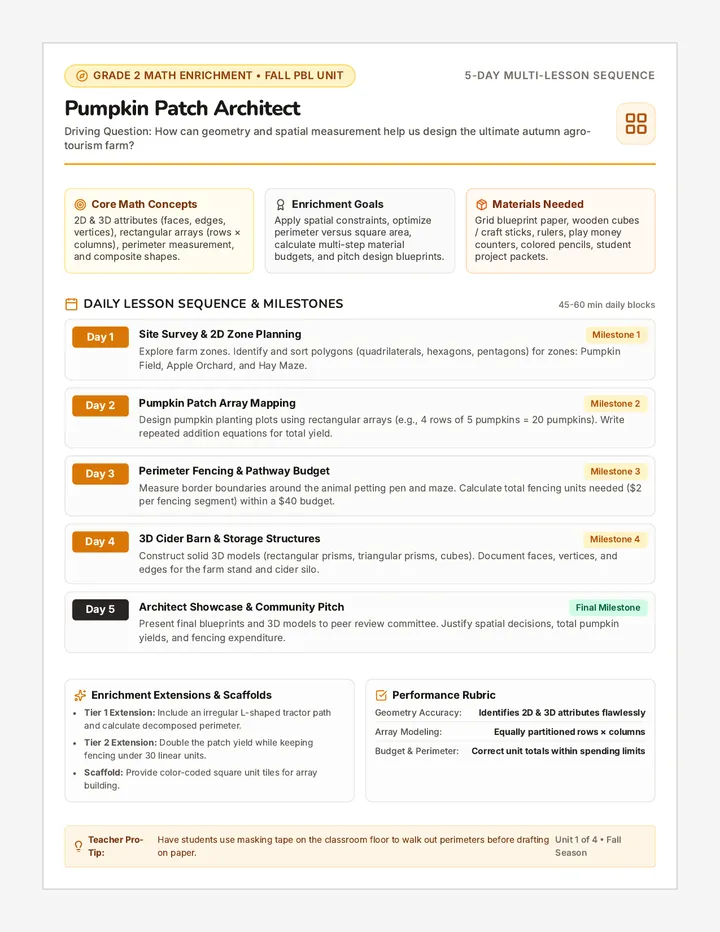
Pumpkin Patch Unit Plan

Seasonal Math Quests

A collection of four seasonal project-based learning units for Grade 2 math enrichment featuring autumn harvest and winter wonderland design missions. Students apply advanced geometry, multi-digit money math, precision measurement, and elapsed time to solve authentic real-world challenges.

K

kkipperman

8
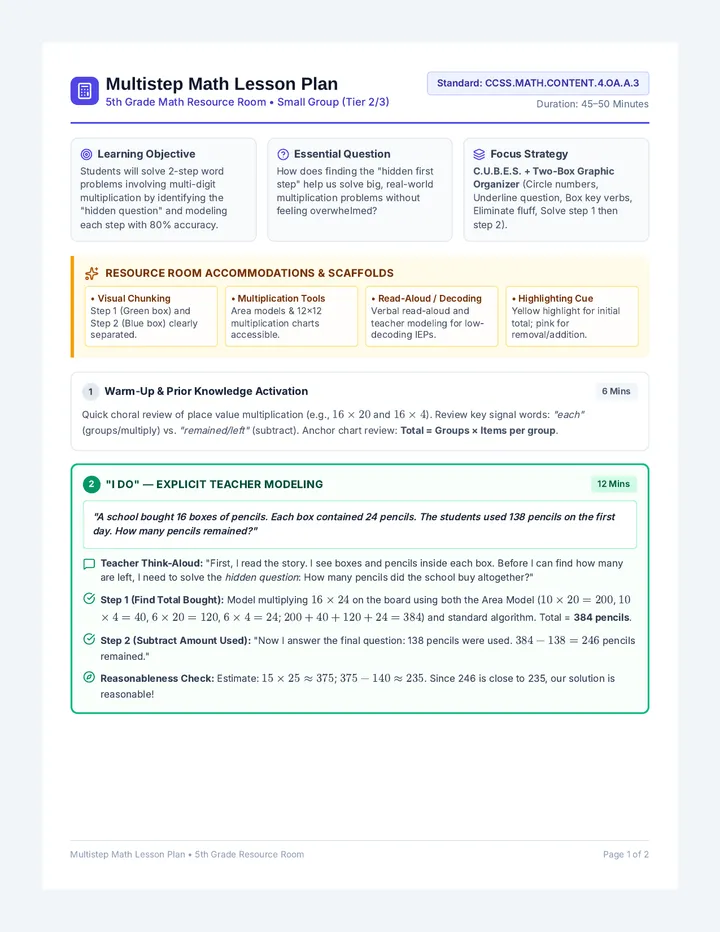
Multistep Math Lesson Plan

Multistep Multiplication Mission

A targeted 5th-grade math resource room lesson addressing standard 4.OA.3 through multi-digit multiplication and two-step word problems using the 'I Do, We Do, You Do' gradual release model with visual supports and accommodations.

AC

Aaron Conlin

4
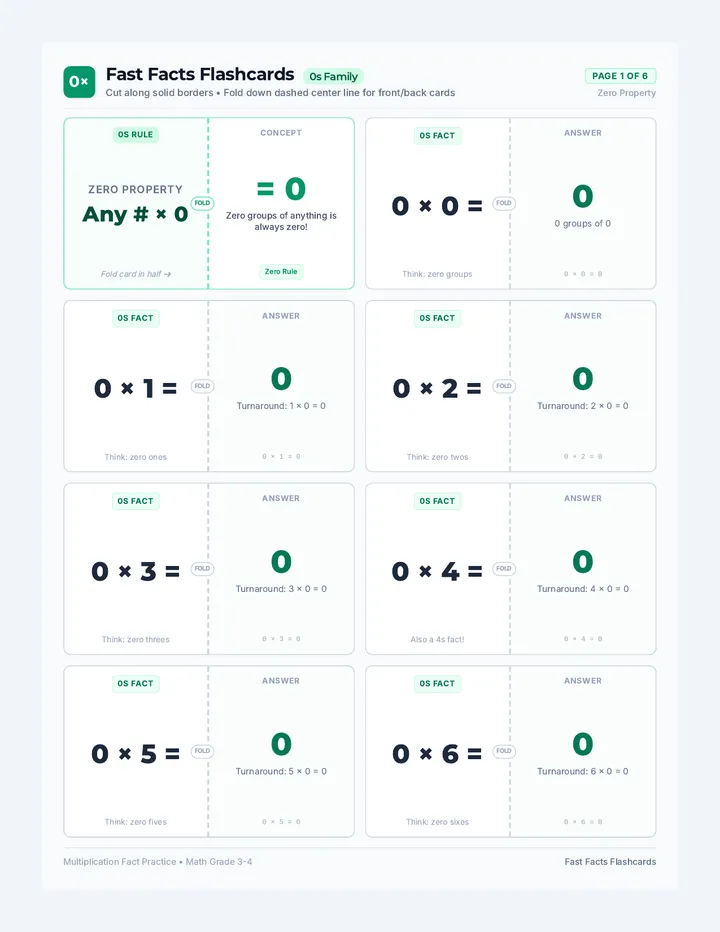
Fast Facts Flashcards

Fast Facts Flashcards

A comprehensive printable flashcard set for multiplying by 0s, 1s, and 4s featuring fold-and-cut double-sided cards, conceptual strategy tips, turnaround facts, and a buildable storage pocket with a mastery tracker.

CB

Caroline Beaumier

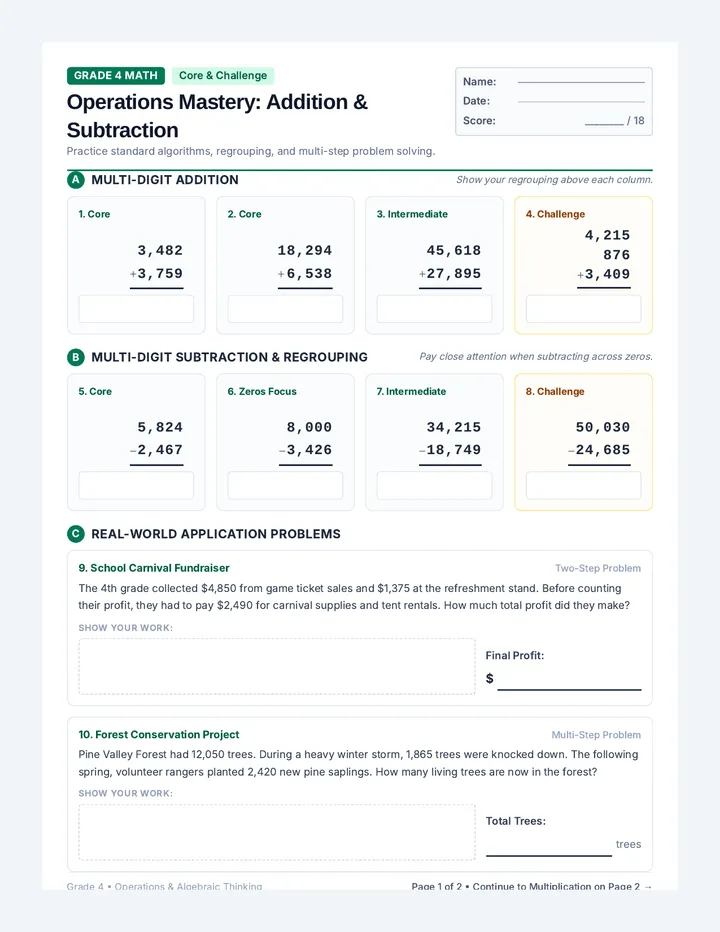
Fourth Grade Math Worksheet

Math Powerhouse

A targeted multi-grade mathematics sequence focusing on mastering whole-number operations including addition, subtraction, and multi-digit multiplication. It equips fourth and fifth-grade learners with procedural fluency, conceptual problem-solving, and rigorous challenge tasks.

T

temetropolis

4
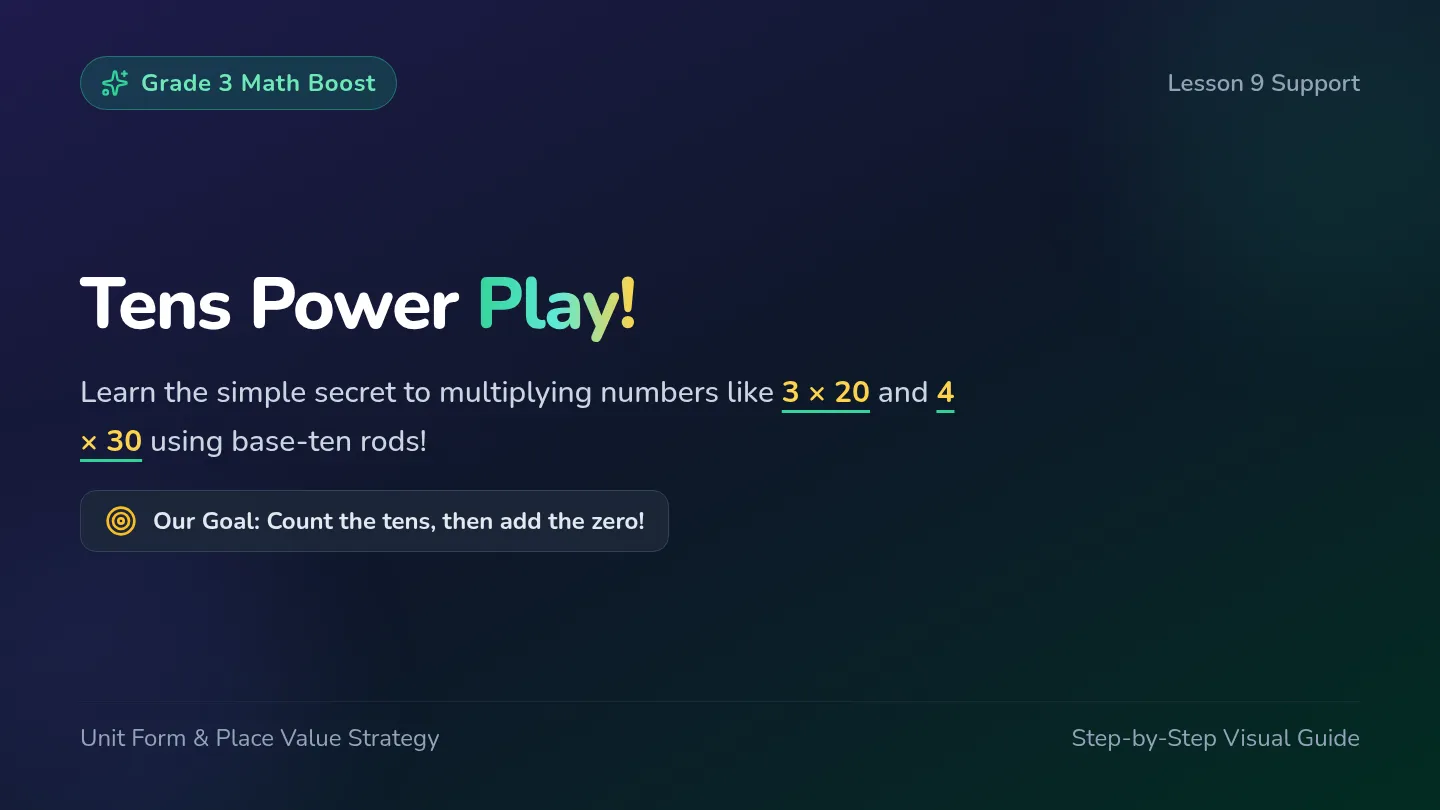
Tens Power Slides

Tens Power Play

A modified, highly scaffolded math lesson designed for students needing foundational support in multiplying single-digit numbers by multiples of 10. The lesson transitions students from concrete base-ten models to unit form reasoning with structured visual supports and manageable basic facts.

JW

Jorlian Wynes

5
Lightning Multiplication Flash Cards

Lightning Multiplication Flash Cards

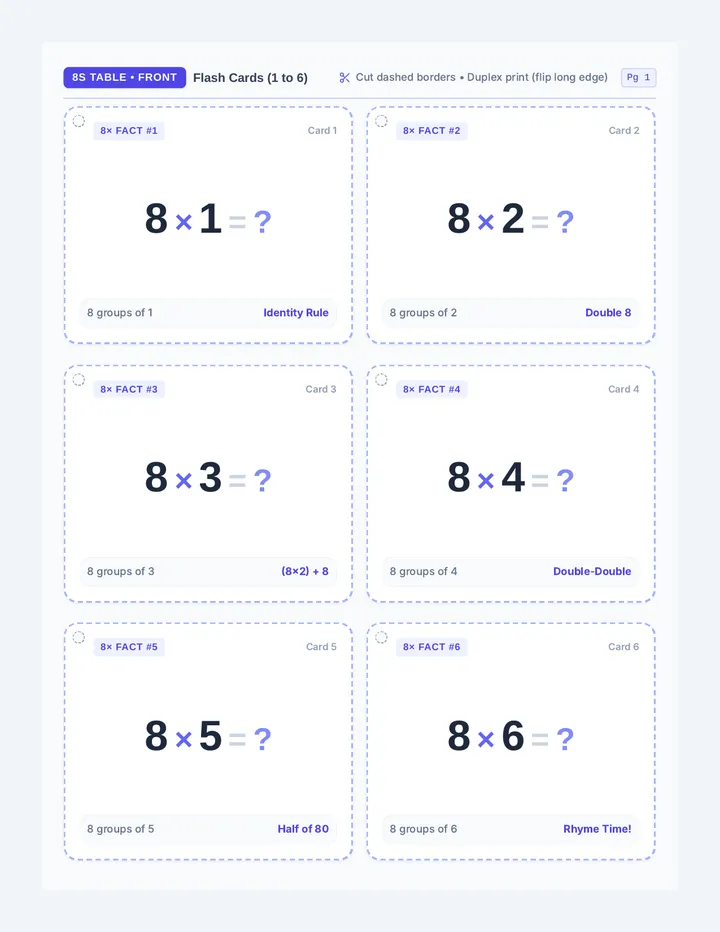
A comprehensive 10-page printable flashcard set covering the 8 and 9 multiplication tables up to 12. Designed for duplex long-edge printing or cut-and-paste matching, featuring large high-contrast problems on fronts and giant answers with mental-math strategies on backs, plus bonus strategy reference cards and mastery trackers.

CB

Caroline Beaumier

Linear Equations Practice Worksheet

Coordinate Geometry Mastery

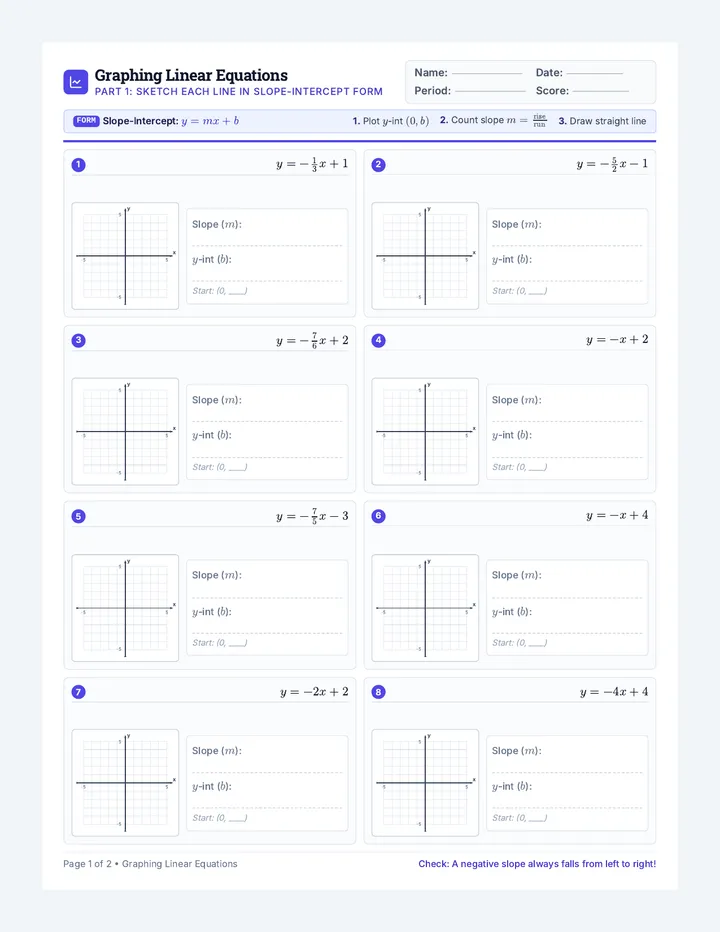
A secondary mathematics curriculum sequence exploring linear functions and geometric transformations on the Cartesian coordinate plane, featuring print-ready guided practice and teacher keys.

FM

Fernando Mancini

4
Number Power Practice Packet

Place Value Power

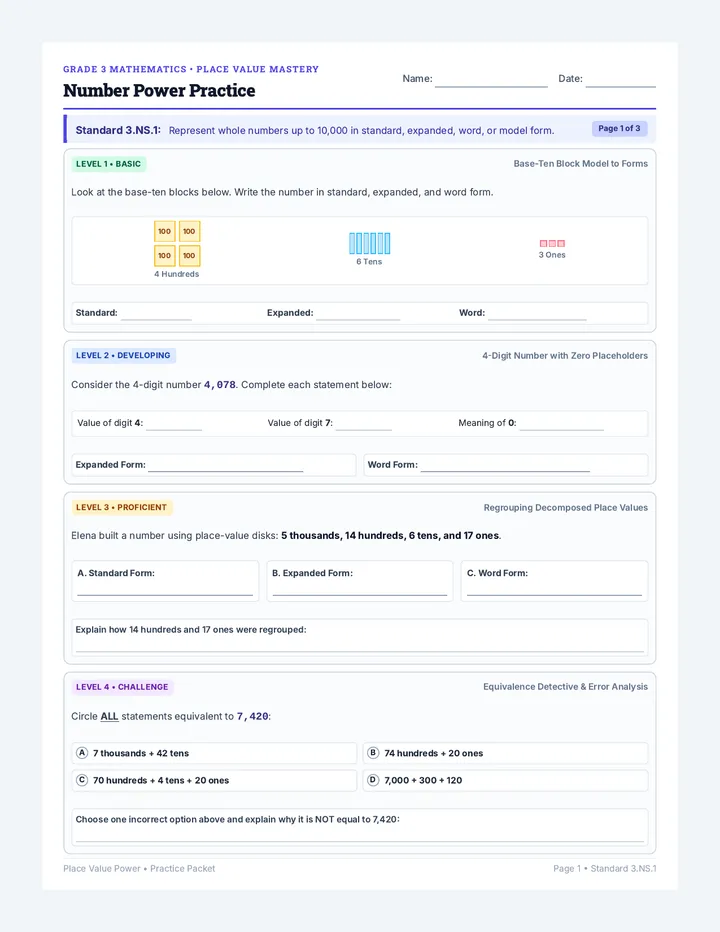
A comprehensive third-grade mathematics unit covering place value representations up to 10,000, rounding to the nearest ten with benchmark values and number lines, and real-world word problems using algebraic equations and bar models.

C

craig.buckler

6
Spooky Treat Parapro Guide

Spooky Treat Parapro Guide

A comprehensive 3-page instructional coaching script guide for paraprofessionals and aides. Provides problem-by-problem dialogue prompts, manipulative scaffolds, error alerts, and corrective feedback for all 12 Halloween word problems.

SW

Stephanie Wooten

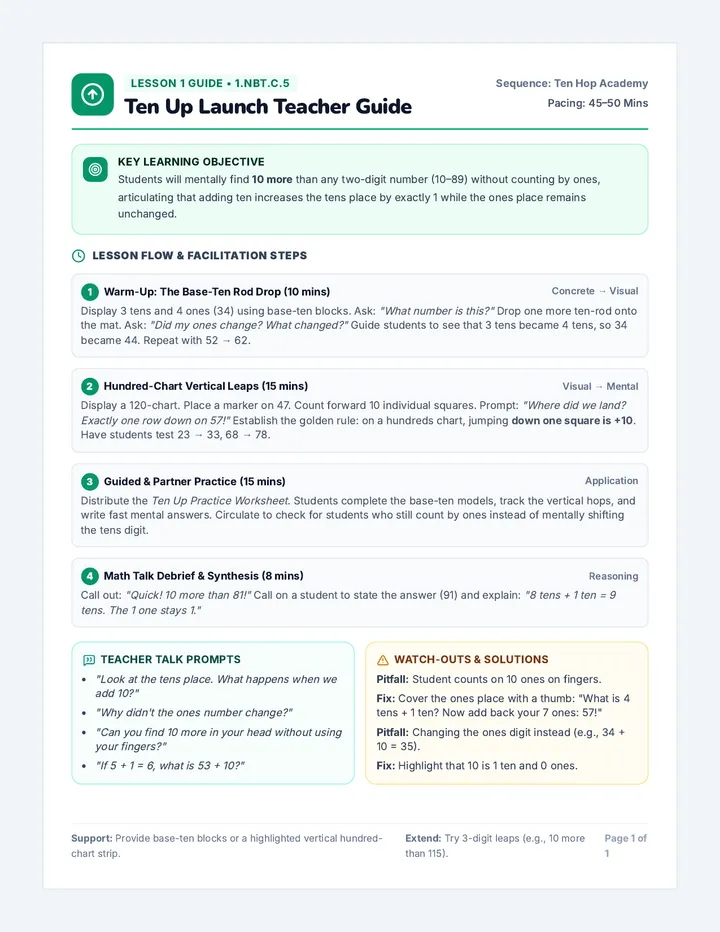
Ten Up Teacher Guide

Ten Hop Academy

A comprehensive 3-lesson primary math sequence designed to develop first graders' mental fluency with finding 10 more and 10 less than any two-digit number. Students transition from concrete base-ten models and hundreds-chart leap patterns to rapid mental calculations and clear verbal explanations.

K

kkipperman

9
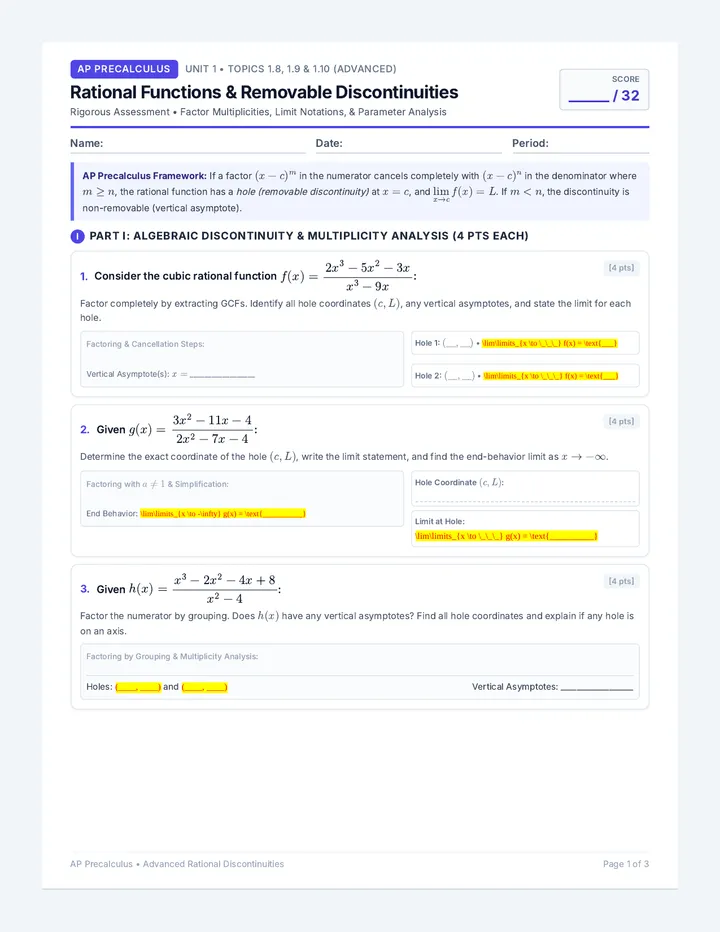
Hole Hunter Mini Assessment

Holes and Limits Assessment

A focused AP Precalculus mini-assessment and worked solutions key targeting rational functions, removable discontinuities (holes), graphical limit notations, and numerical table investigations.

R

Robinson

2
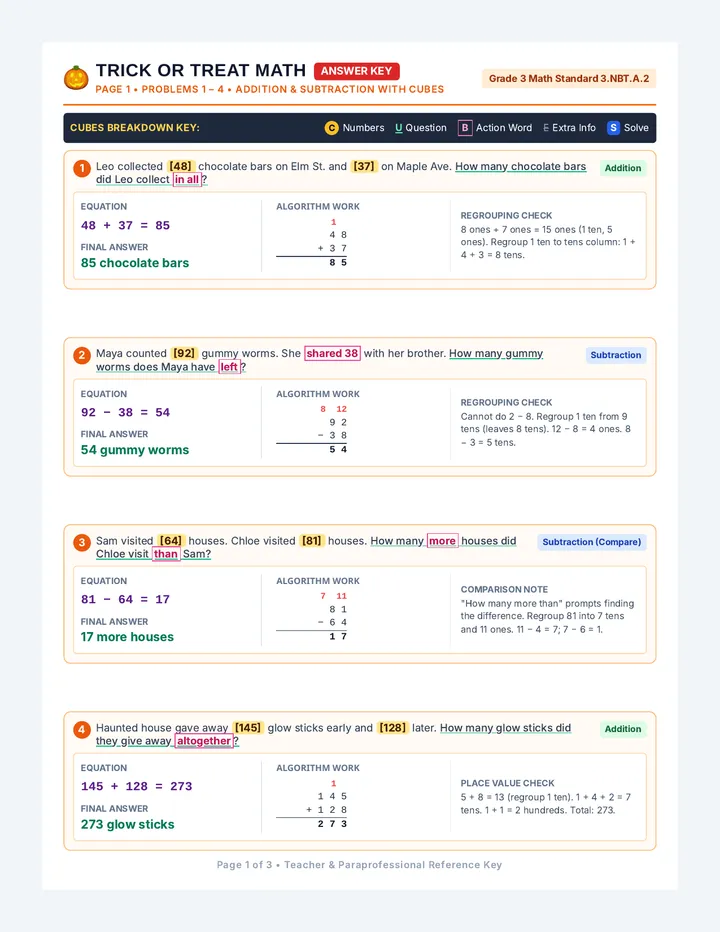
Spooky Treat Answer Key

Spooky Treat Answer Key

A comprehensive 3-page teacher and aide answer key matching the 12 Halloween trick-or-treat word problems. Displays full CUBES text annotations, required equations, step-by-step regrouping computation models, and final labeled answers.

SW

Stephanie Wooten