Introduces Gregor and his family members through high-frequency vocabulary and visual matching to establish the premise of the story.
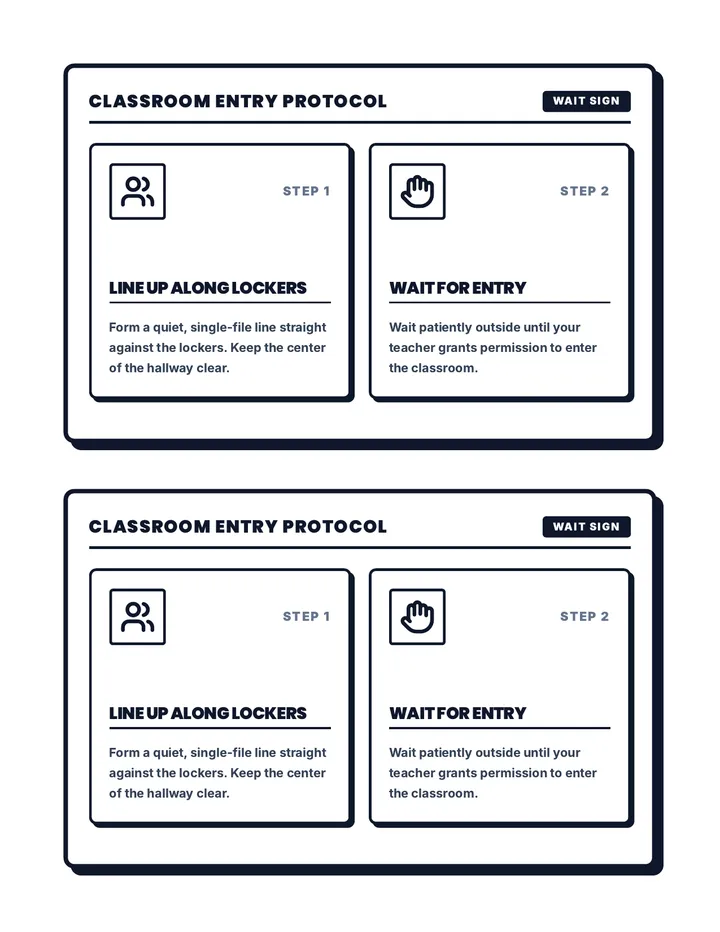
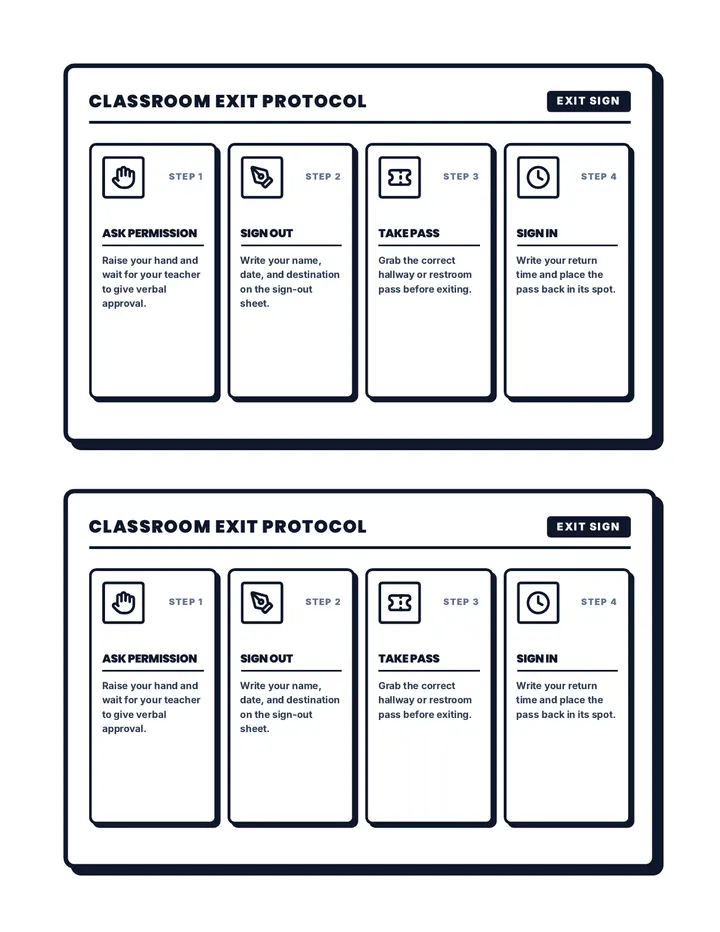
A collection of matching visual aids and signs to help manage classroom routines and expectations, including entry and exit procedures.
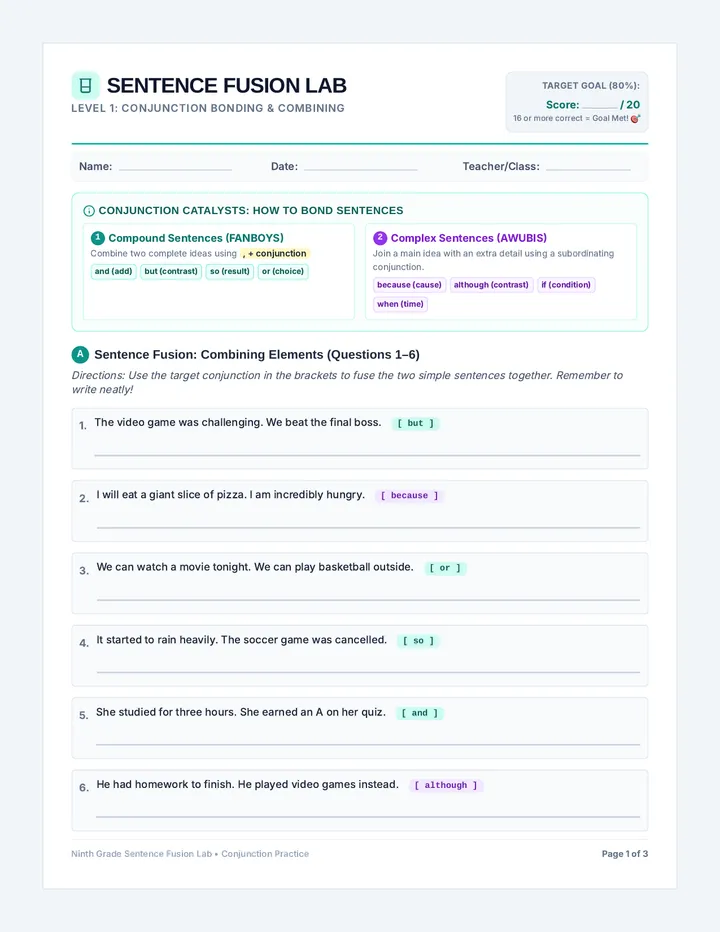
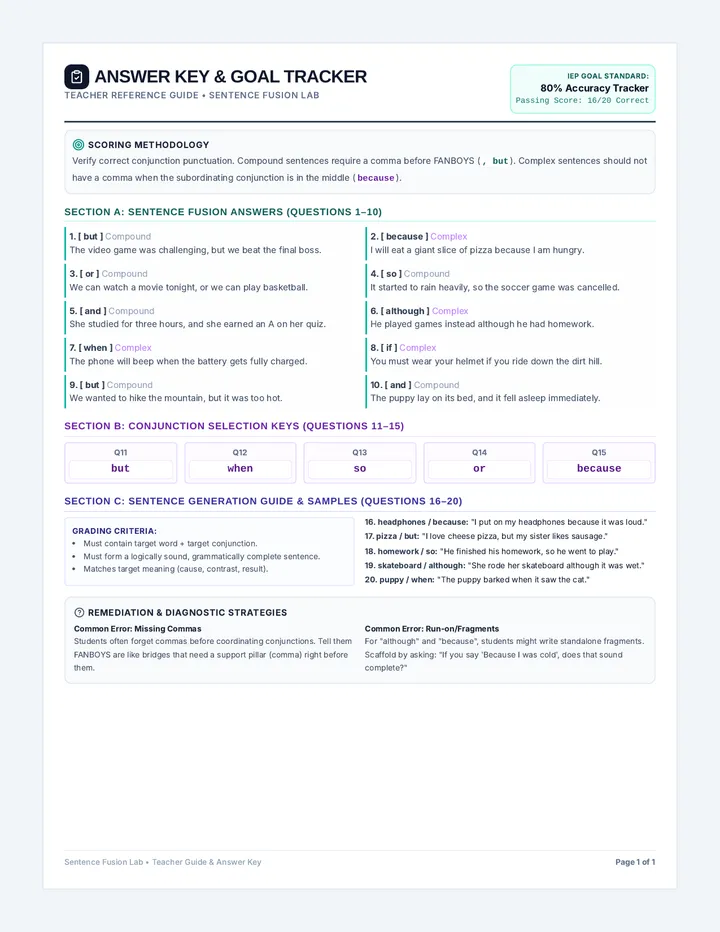
A highly scaffolded grammar and sentence-combining lesson designed for 9th-grade special education. Students learn to use coordinating and subordinating conjunctions to combine and generate compound and complex sentences.
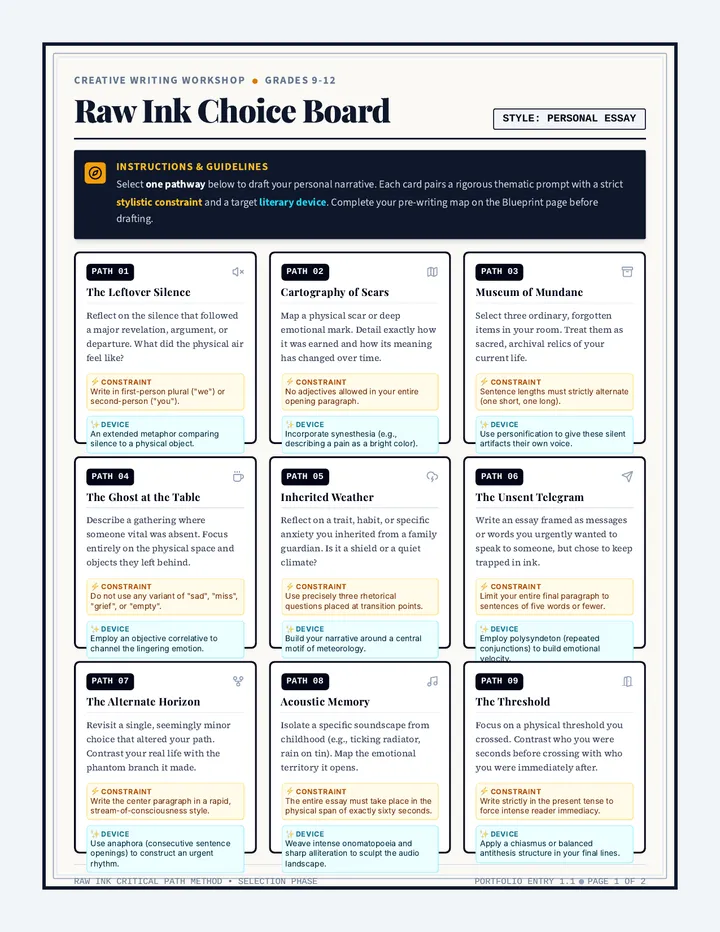
A high school creative writing workshop focusing on personal narrative, journaling, and reflective essays. Students are challenged with complex personal themes, stylistic constraints, and literary devices.
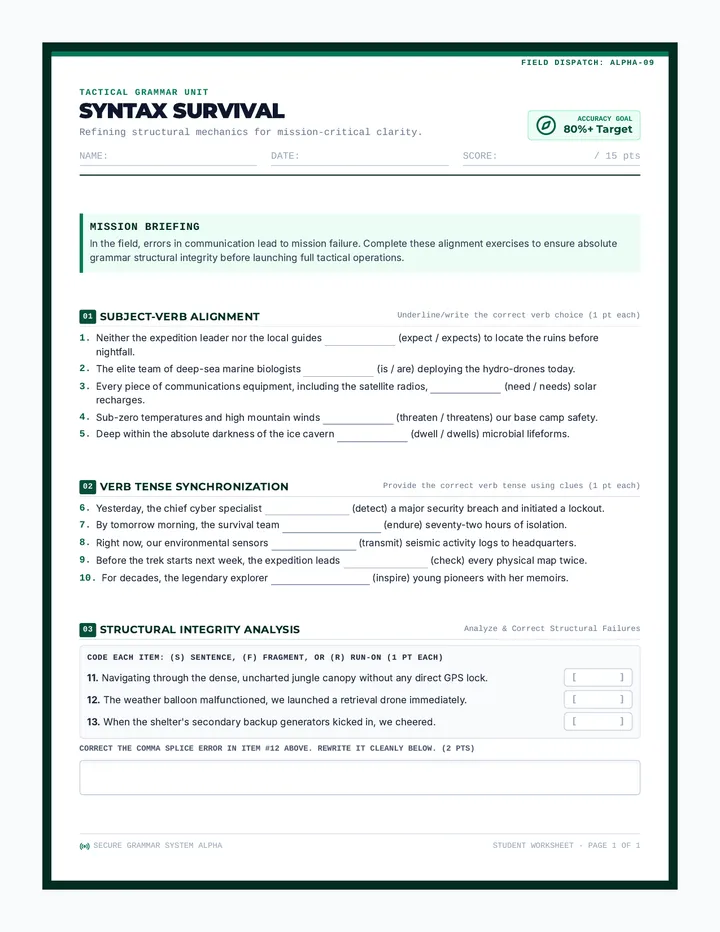
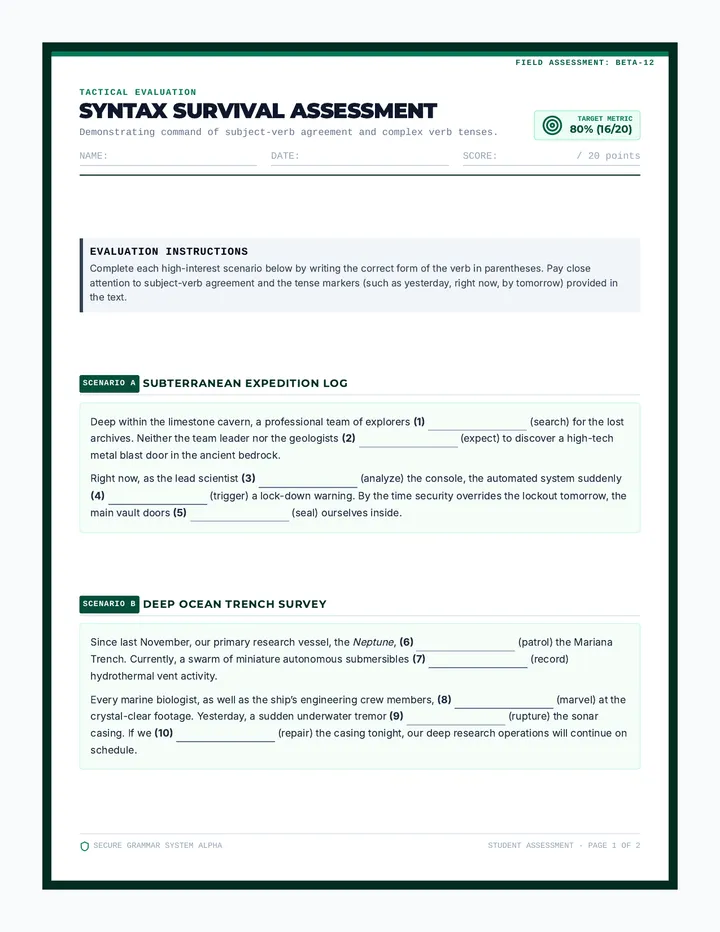
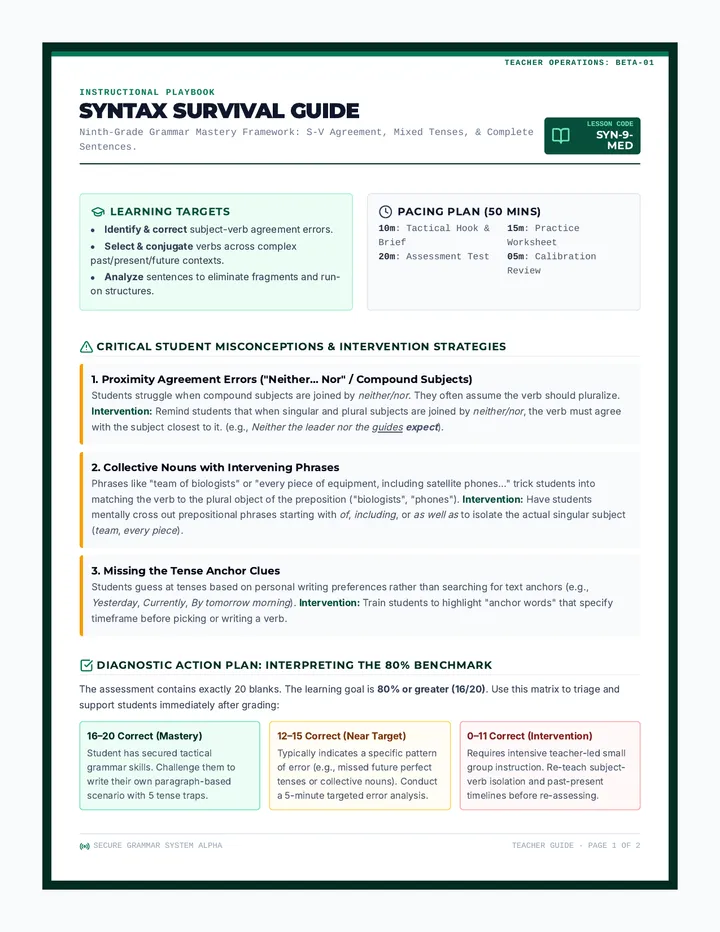
A grammar lesson for 9th-grade students focusing on subject-verb agreement, verb tenses, and complete sentence structures using highly engaging, real-world narrative contexts. Includes a targeted practice worksheet, a 20-question paragraph-based fill-in-the-blank assessment, and a comprehensive teacher guide with answer keys.
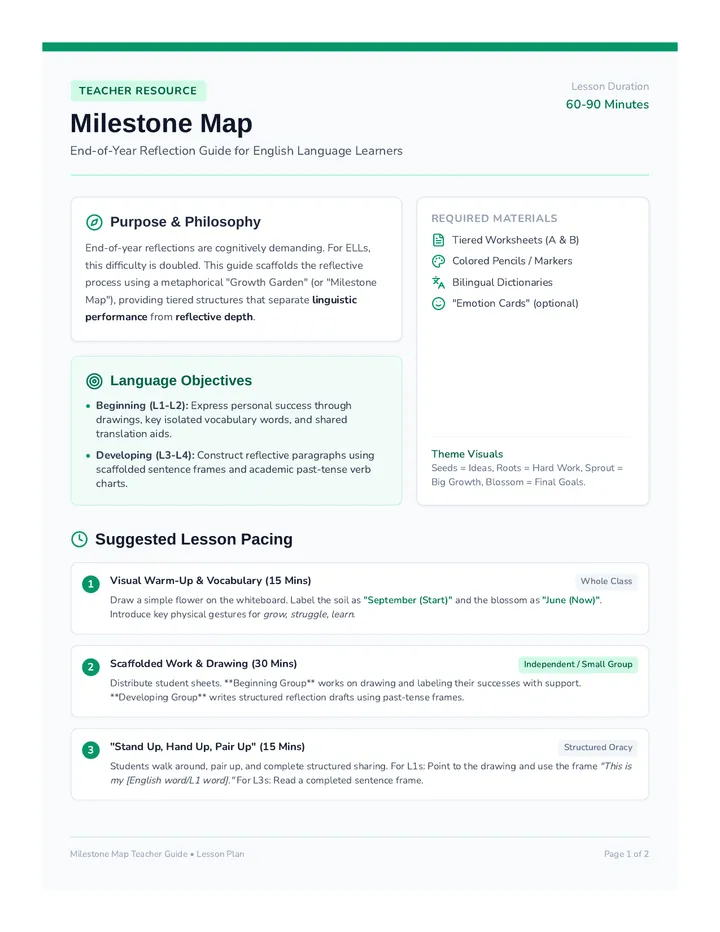
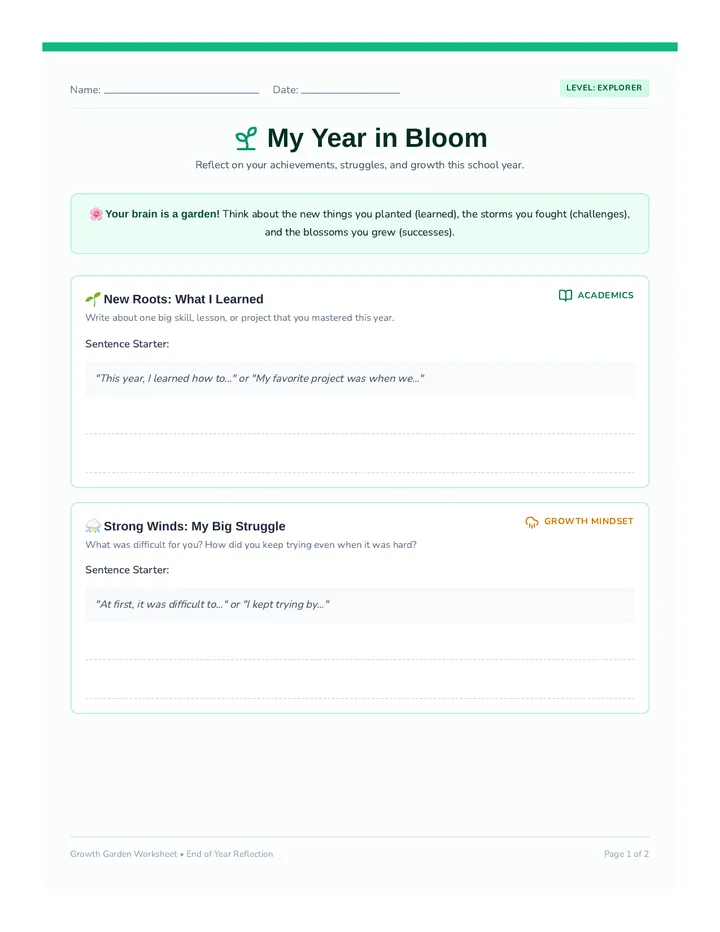
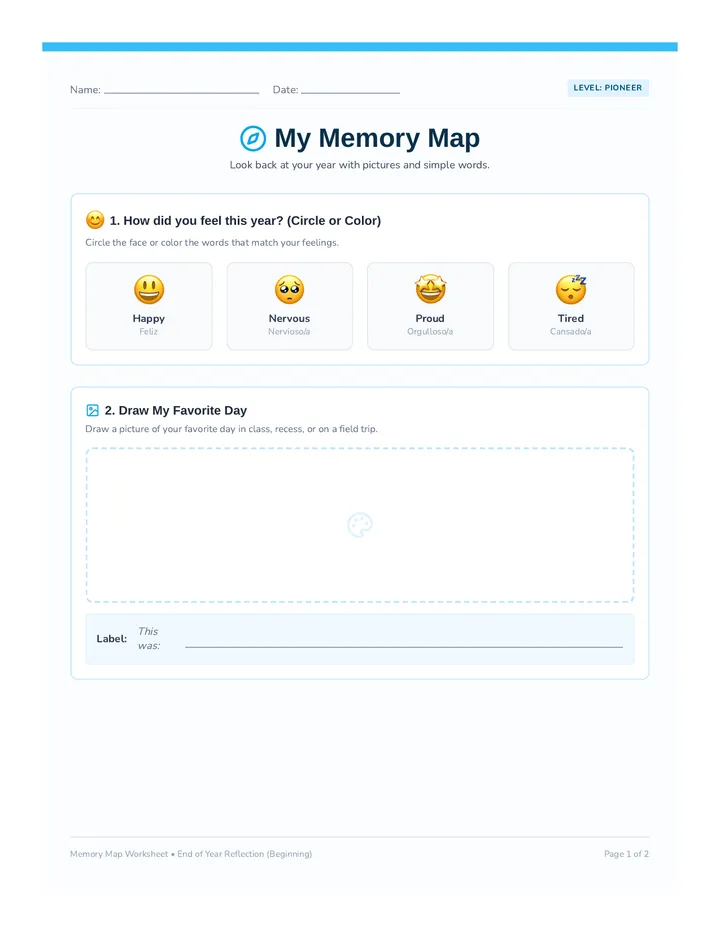
An end-of-year reflection lesson designed specifically for English Language Learners, featuring tiered worksheets for Beginning/Entering and Developing/Expanding levels, supported by a detailed facilitator guide.
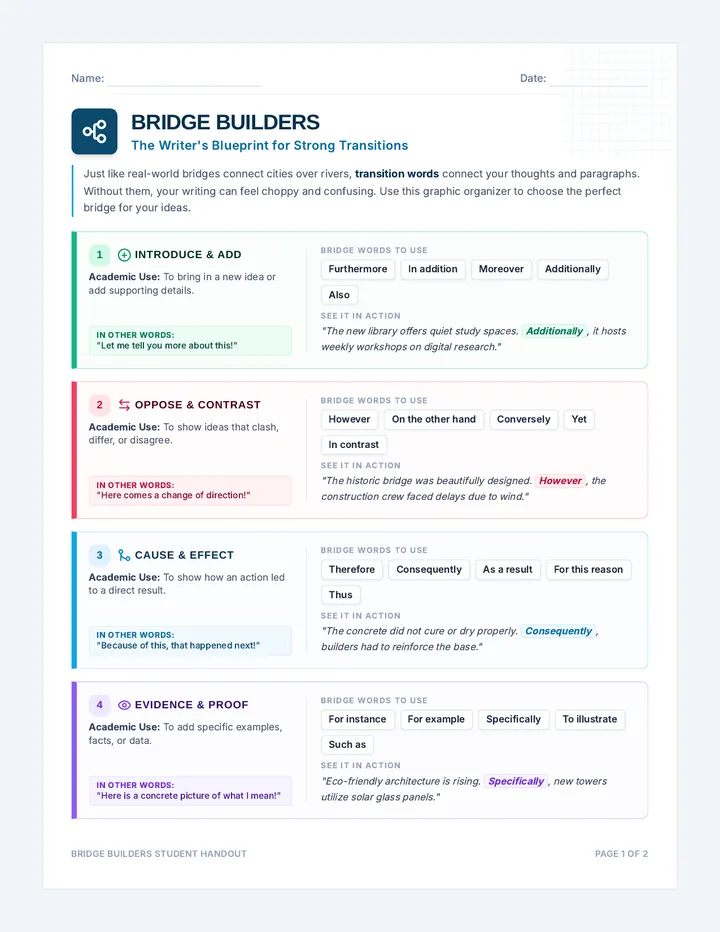
A comprehensive lesson focused on understanding and applying transition words to build logical, smooth connections between ideas in writing.
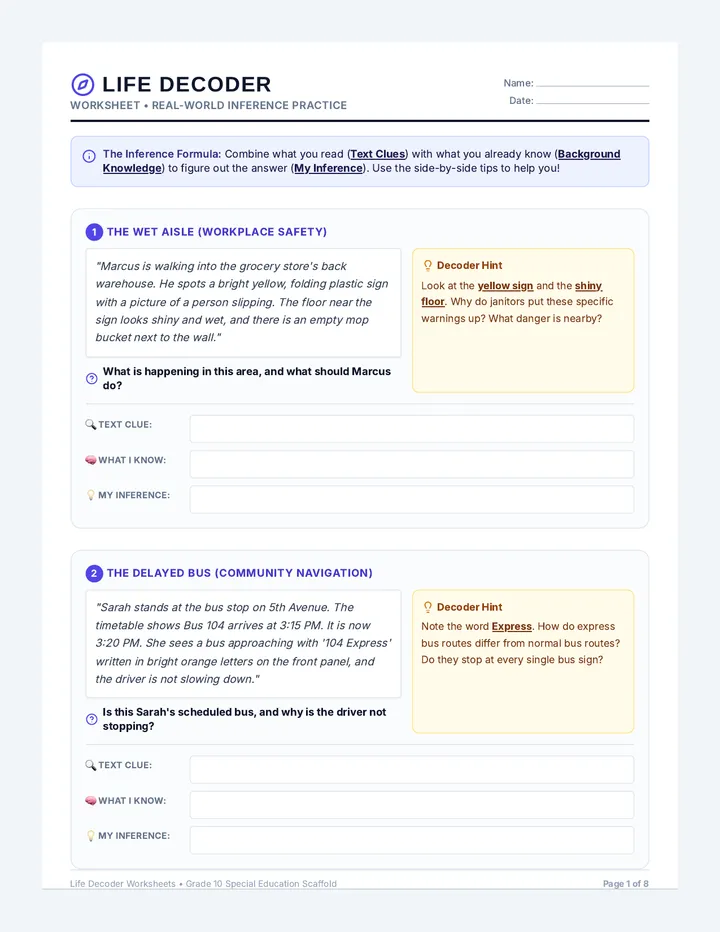
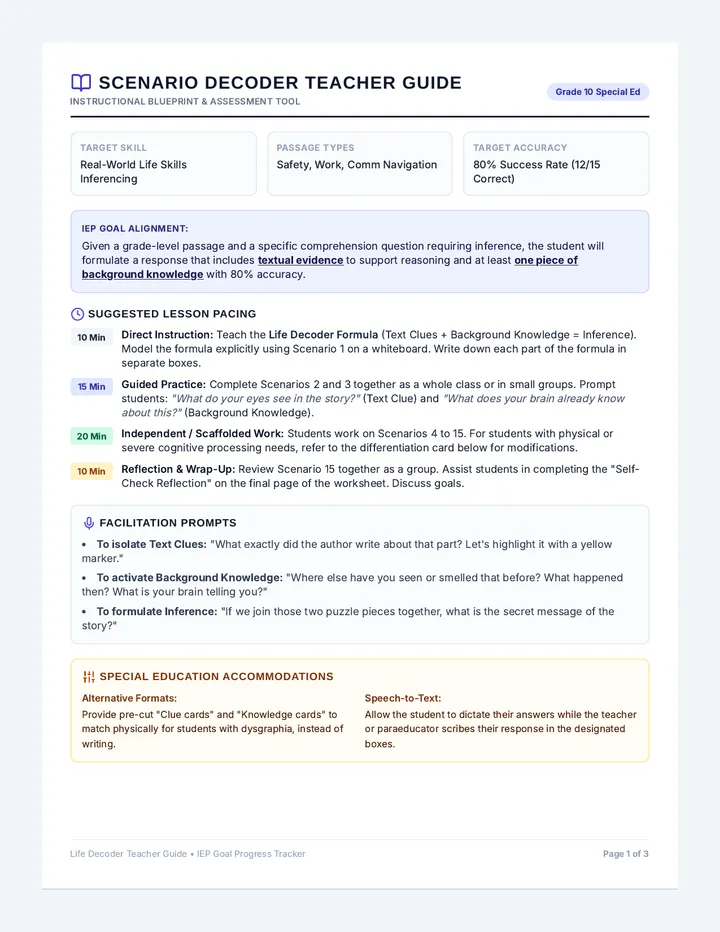
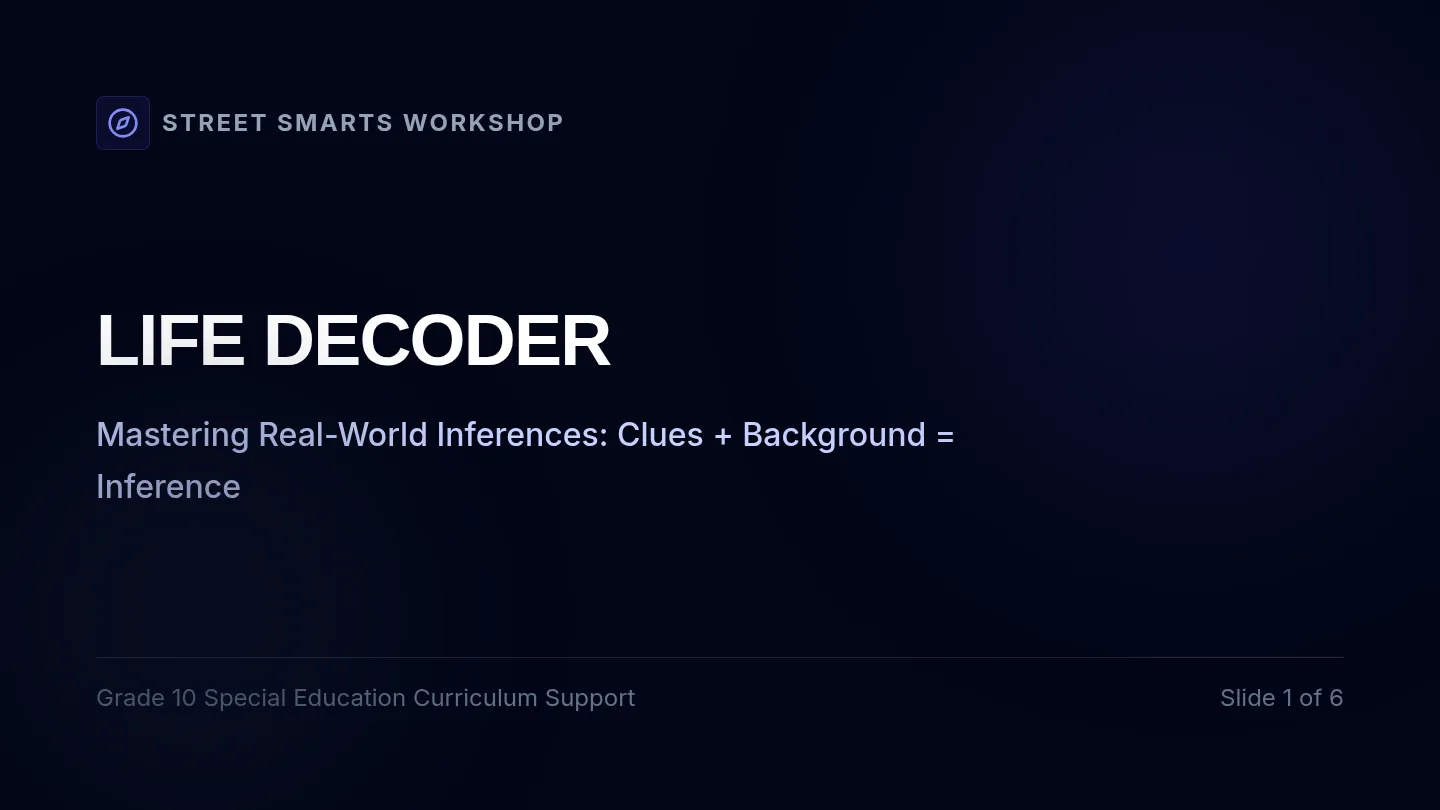
A lesson focused on developing real-world inferencing skills for tenth-grade students with special needs. Through life-skills scenarios, students learn to combine textual clues with prior knowledge to make logical conclusions.
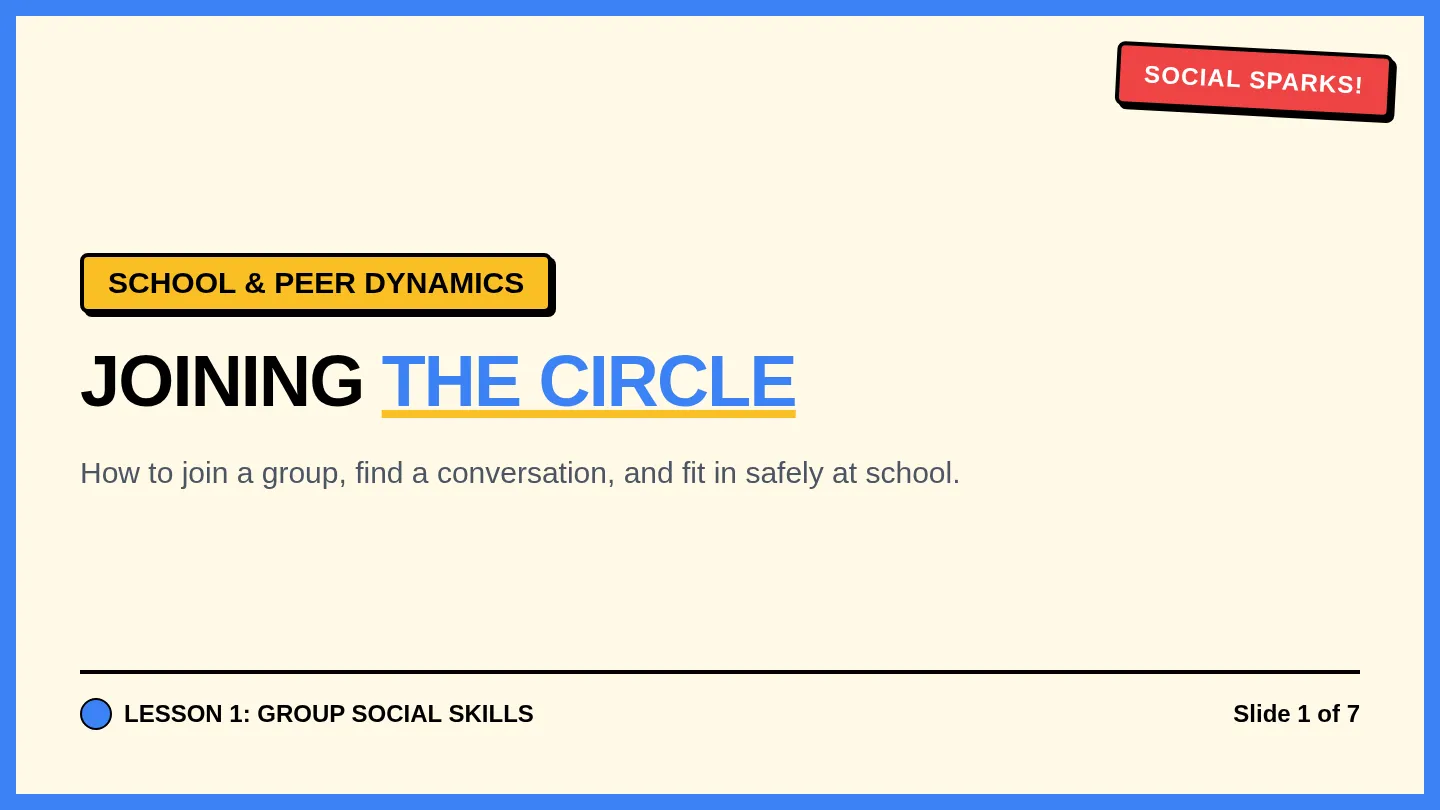
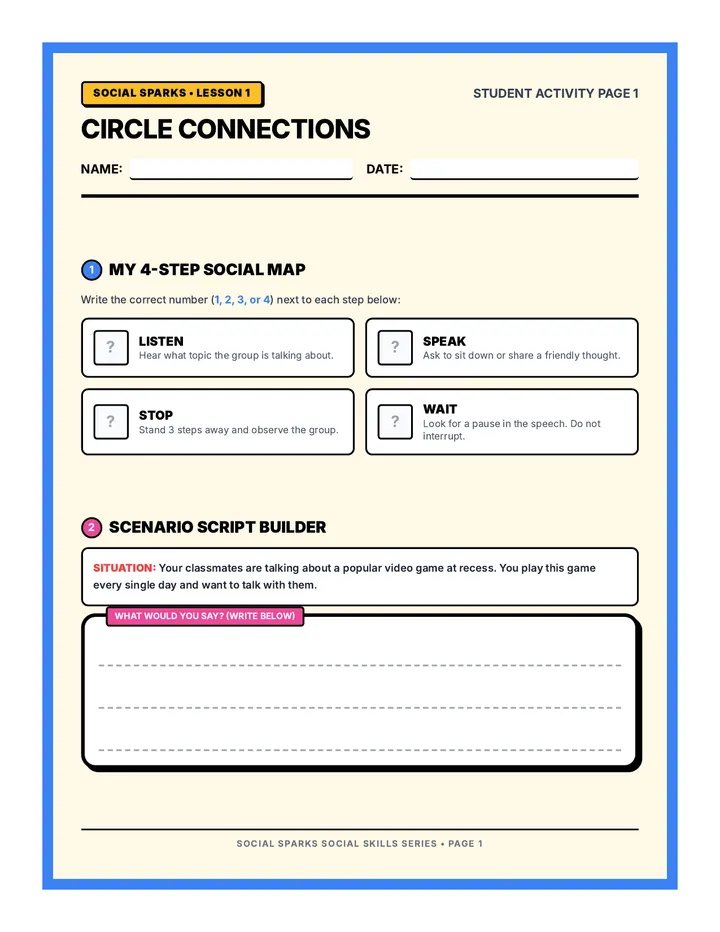
Teaches students how to join an ongoing peer conversation or group activity at school (e.g., at lunch or recess) using clear, structured visual steps. Includes an interactive slide deck and a visual reflection worksheet.
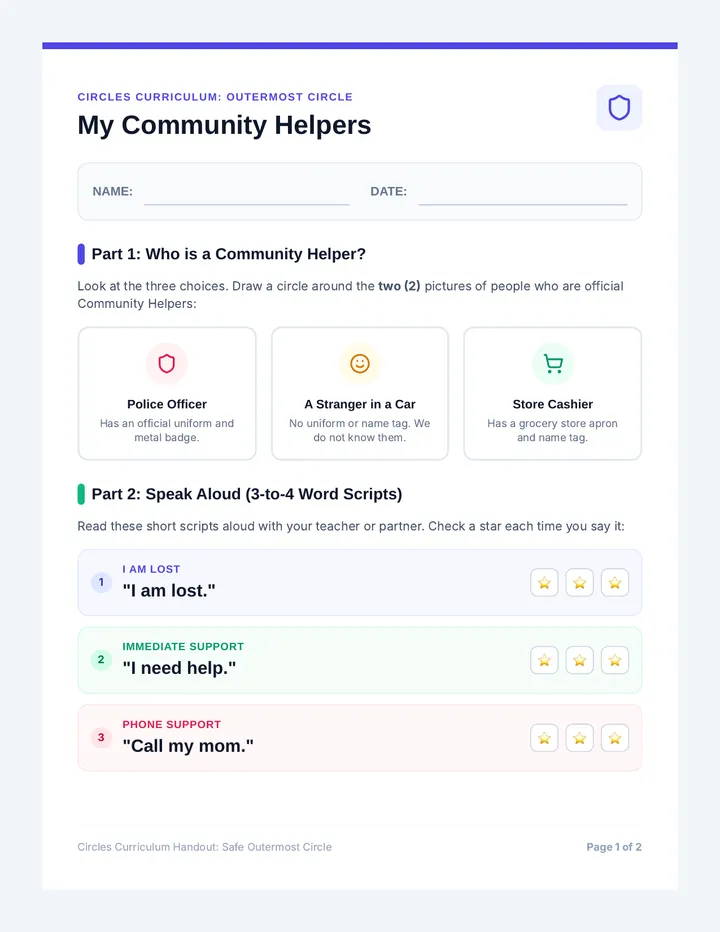
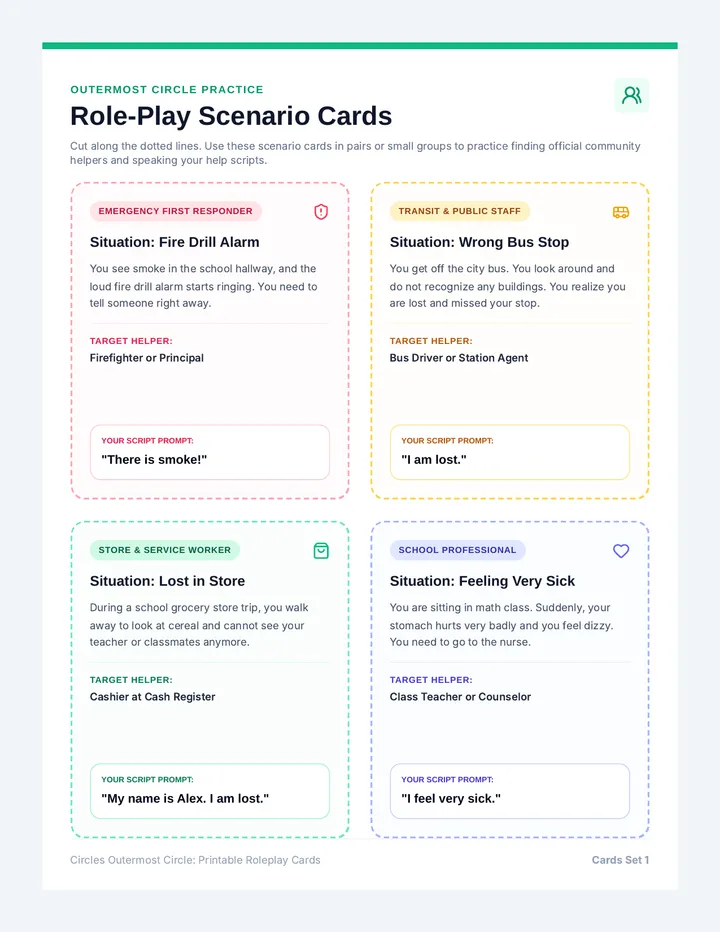
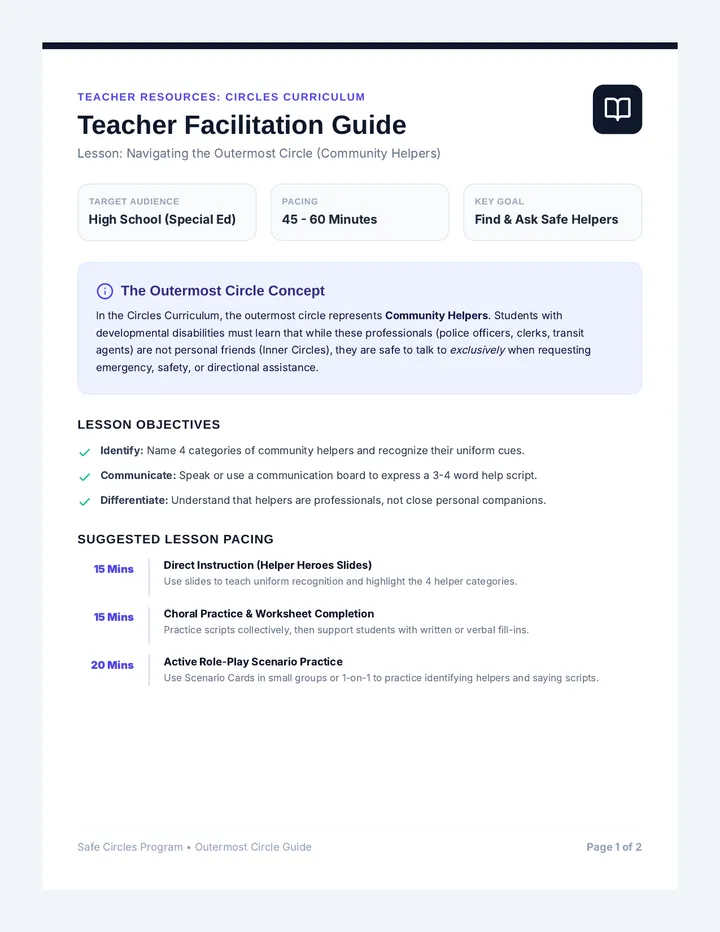
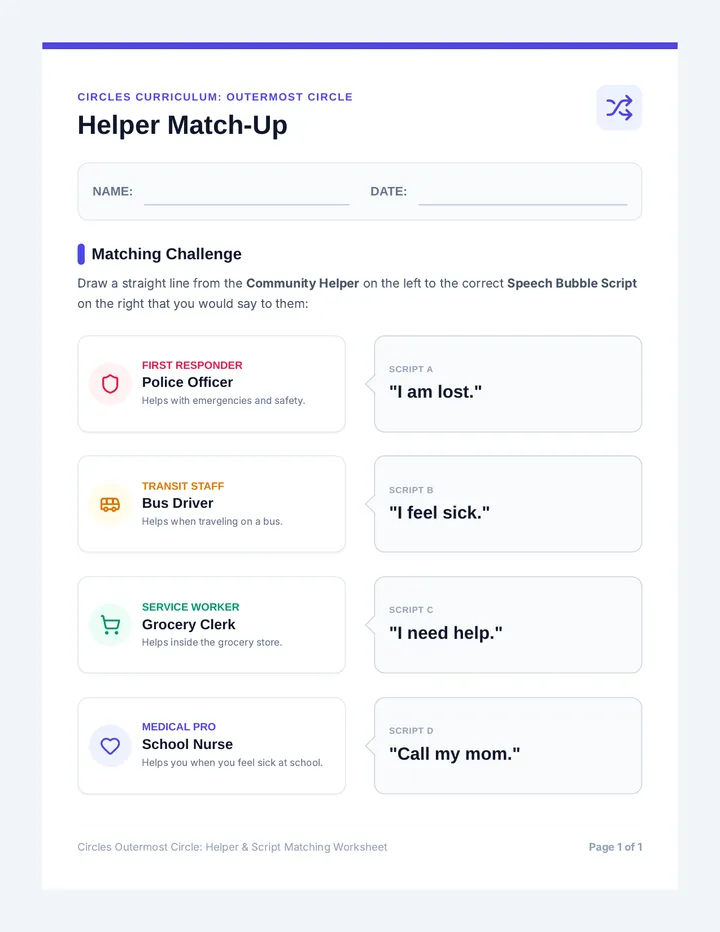
A comprehensive lesson for high school students with developmental disabilities focusing on the outermost circle of the Circles Curriculum: Community Helpers. It includes interactive slides, a structured script worksheet, ready-to-use role-play scenario cards, and a teacher facilitation guide.
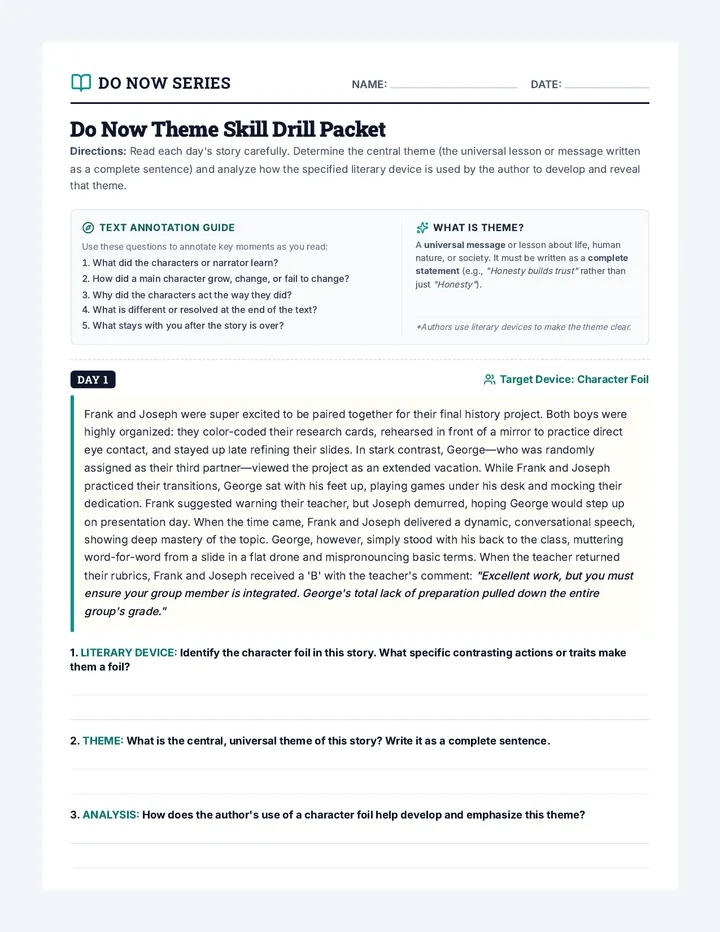
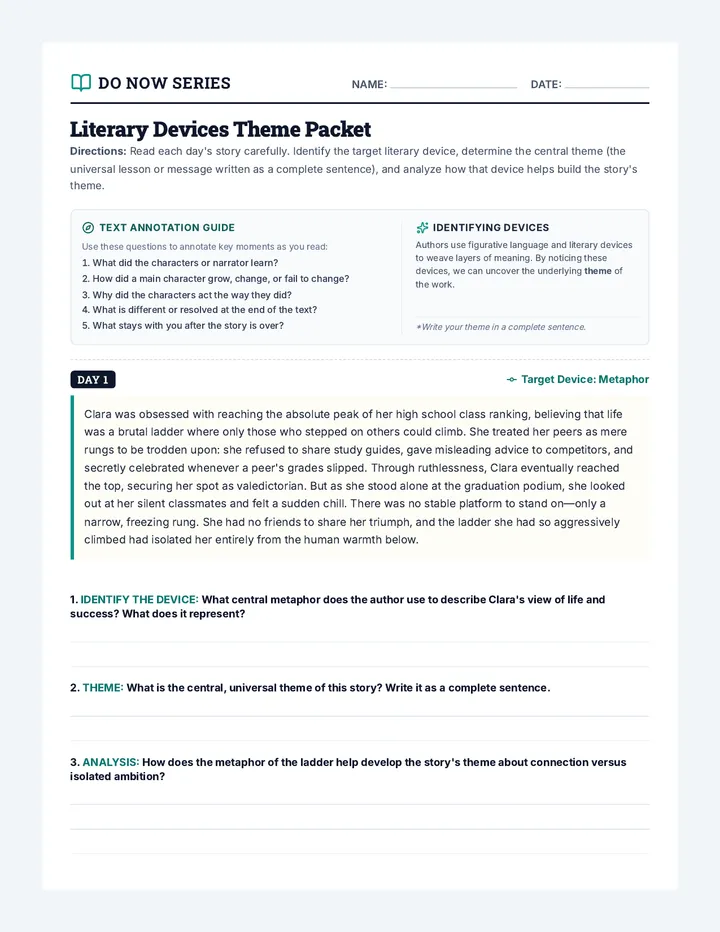
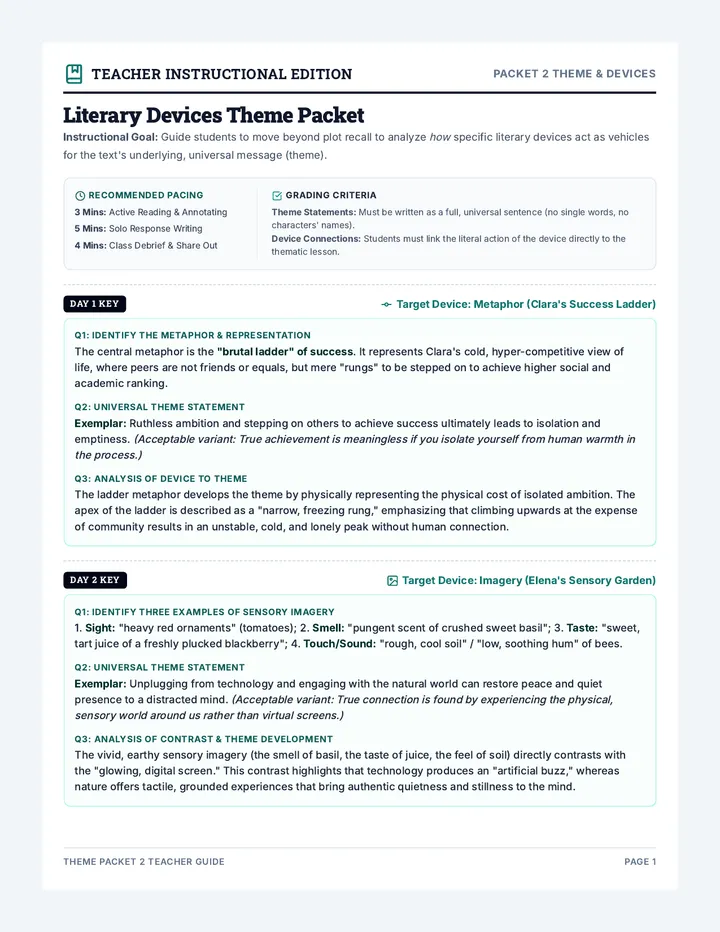
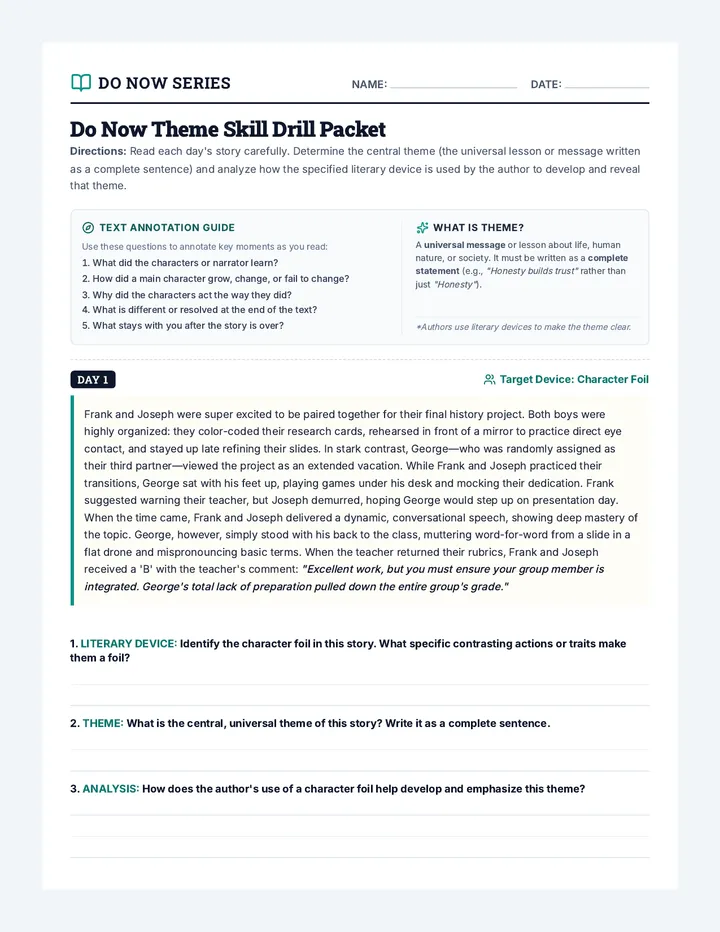
A cohesive lesson and drill series designed to help students master the connection between explicit literary devices and the central themes of literary texts.
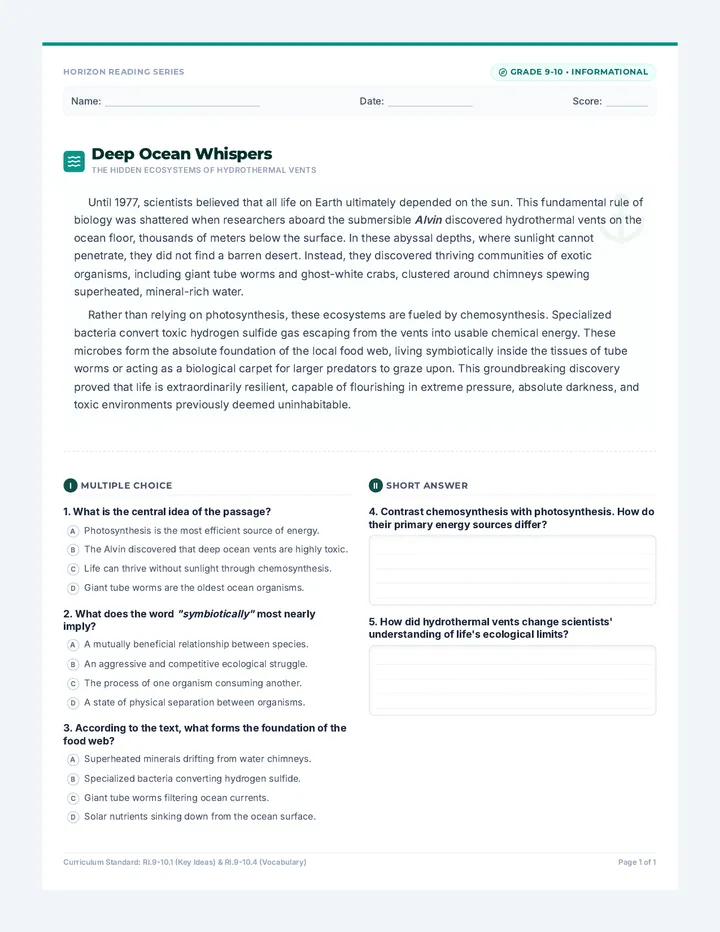
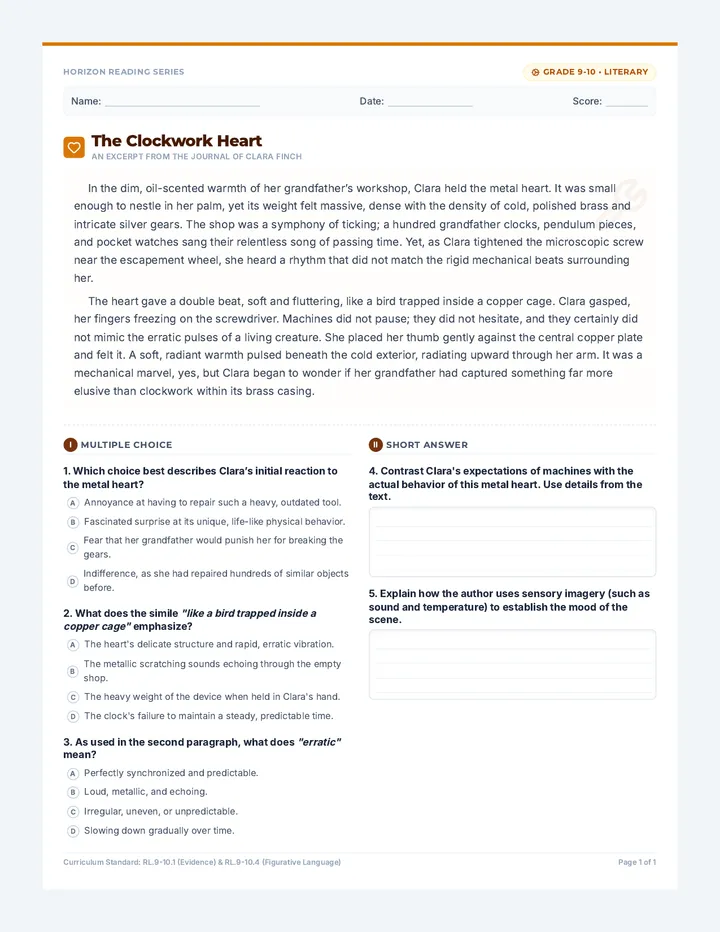
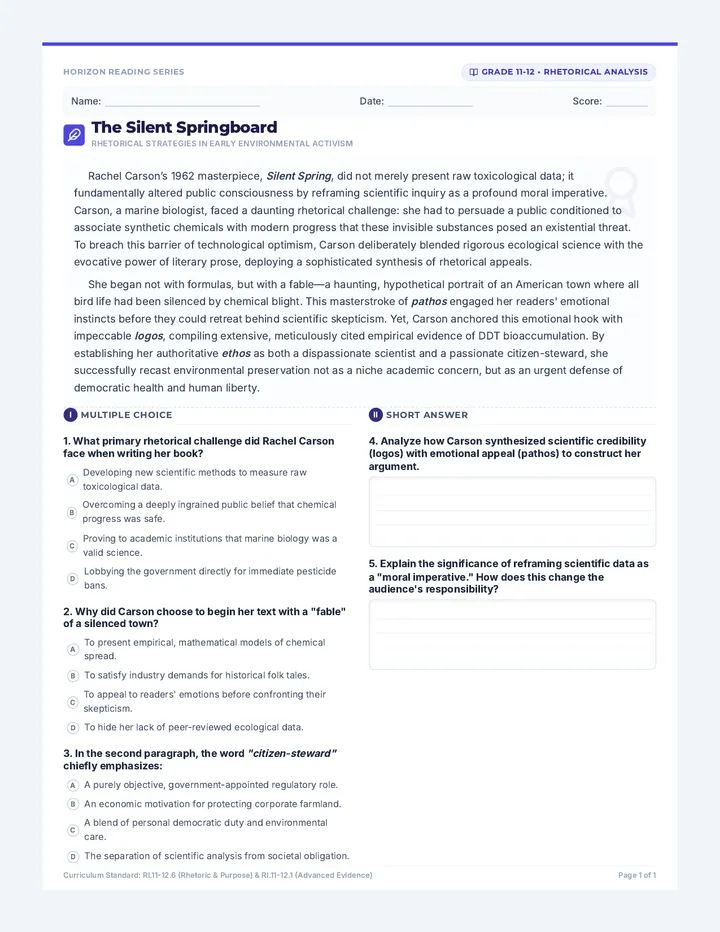
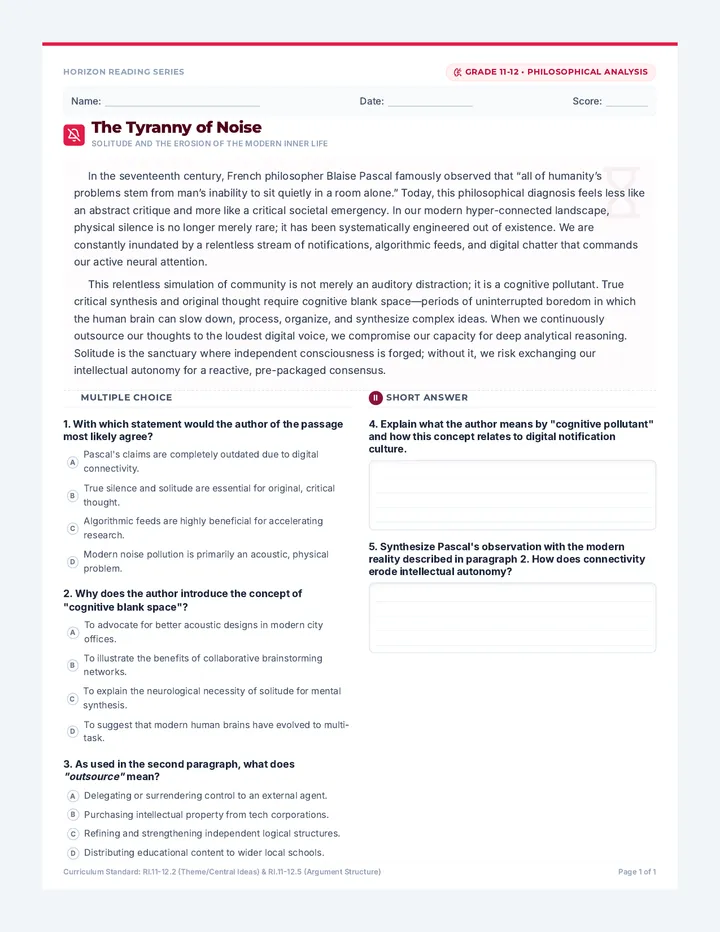
A foundational set of four reading comprehension sheets, split between Grade 9-10 (focusing on core inference and vocabulary) and Grade 11-12 (emphasizing rhetorical analysis and synthesis).
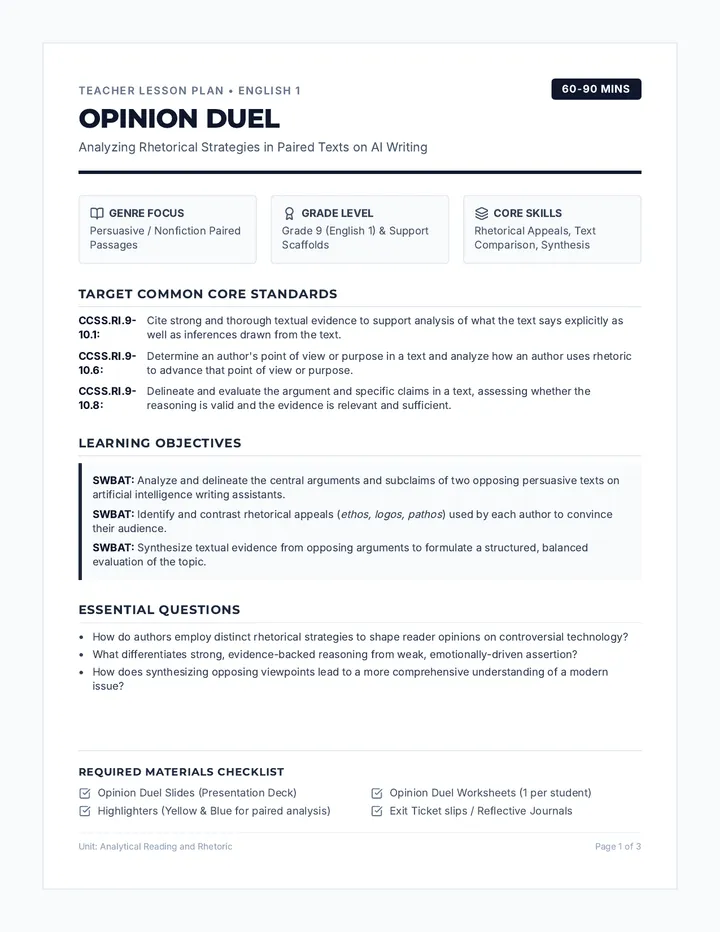
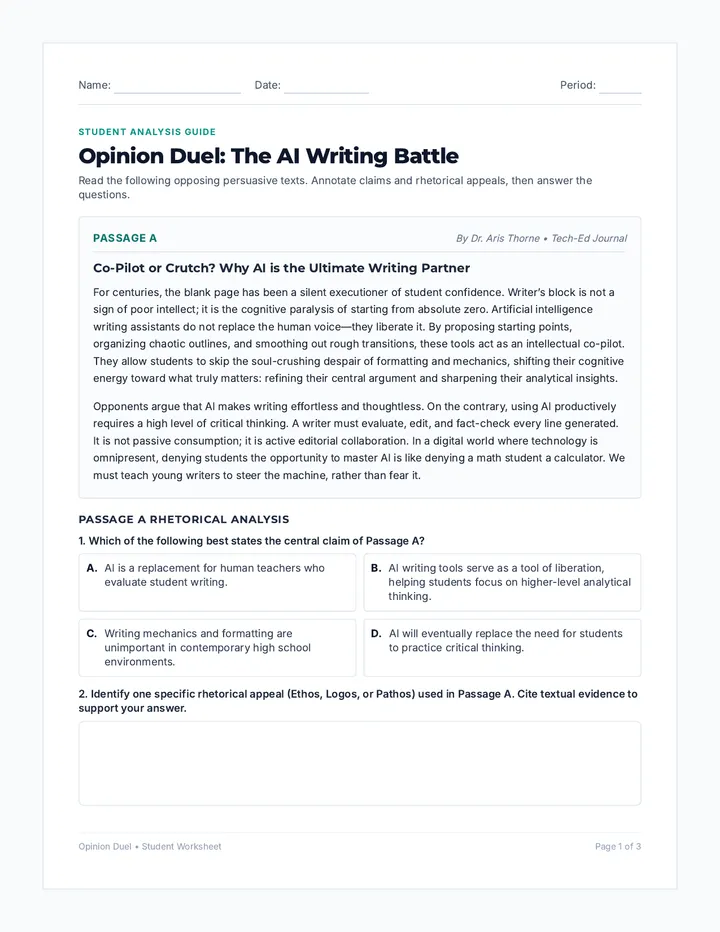
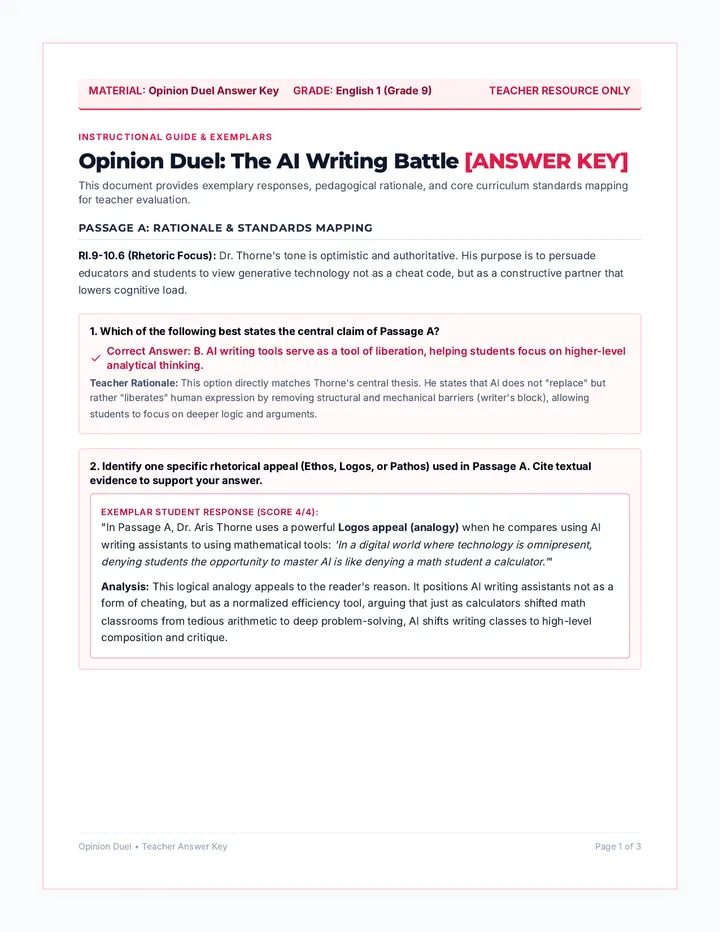
An English 1 lesson focused on comparing and analyzing paired persuasive texts about the use of AI writing assistants. Students learn to evaluate contrasting arguments, identify rhetorical devices, and synthesize opposing viewpoints using text-based evidence.
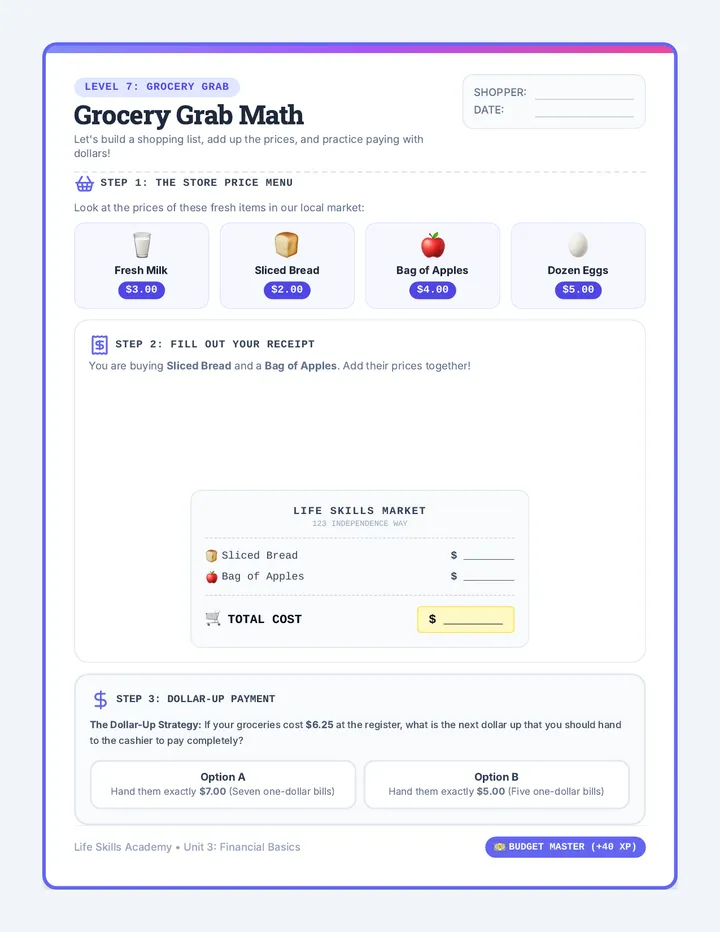
Focuses on grocery shopping, making a grocery list, identifying food groups, and understanding store sections to locate items independently.
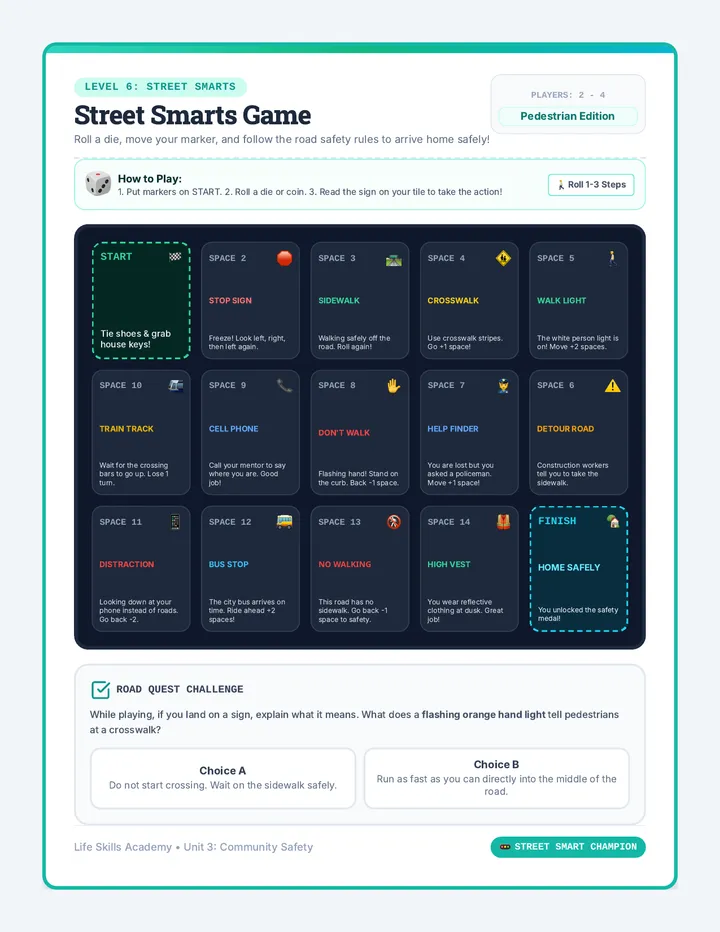
Teaches safety signs, navigation, and community navigation skills. Students learn to read pedestrian signs, crosswalk signals, and locate help in public spaces.
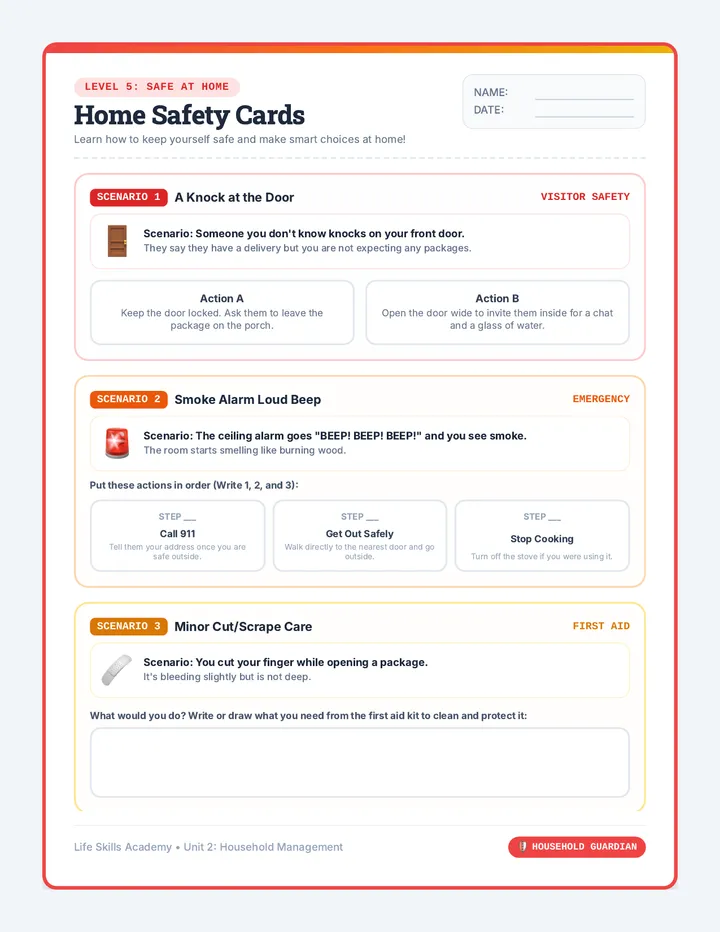
Teaches critical safety skills for the home environment, including dealing with emergencies, basic first aid, and managing visitors safely.
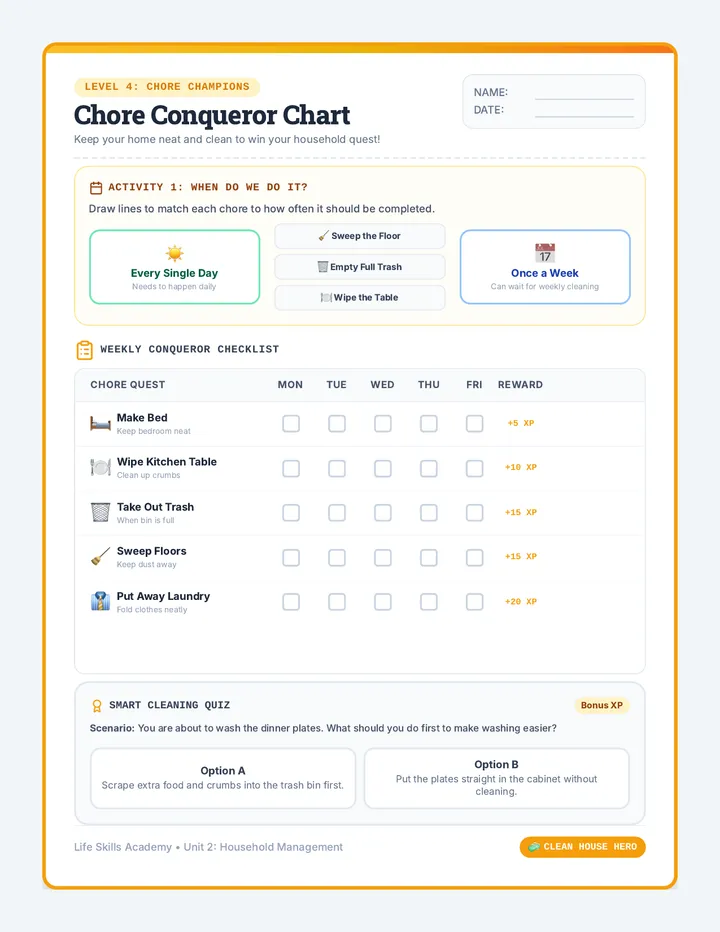
Focuses on household cleaning tasks, organizing chores, and maintaining a clean living space. Students practice sorting chores by frequency and completing a chore checklist.
Covers essential kitchen safety rules, using simple kitchen tools, and selecting healthy food. Students practice identifying safe and unsafe kitchen scenarios.
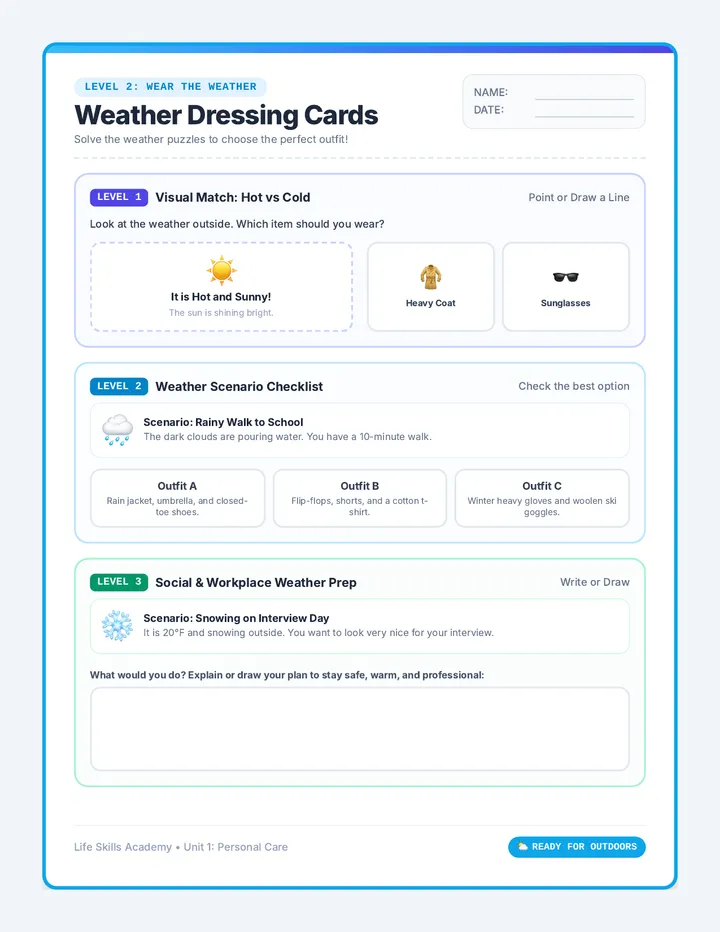
Teaches students to check the weather and choose appropriate clothing and accessories. Focuses on seasonal dressing and selecting clothing for safety and comfort.
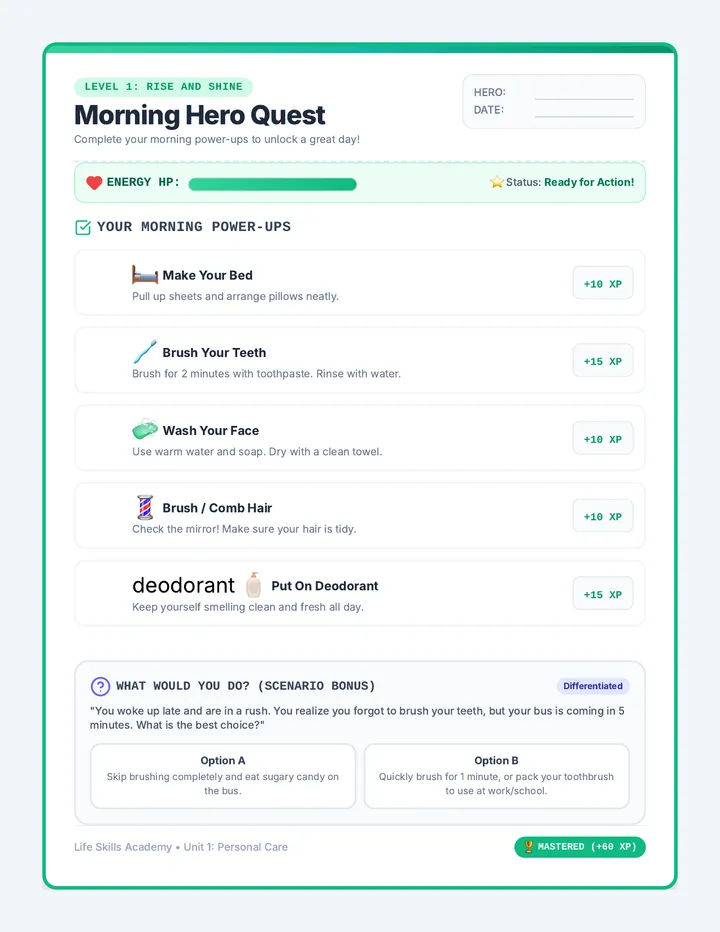
Focuses on morning routines and personal hygiene. Students learn to use visual checklists for brushing teeth, washing up, and self-care.
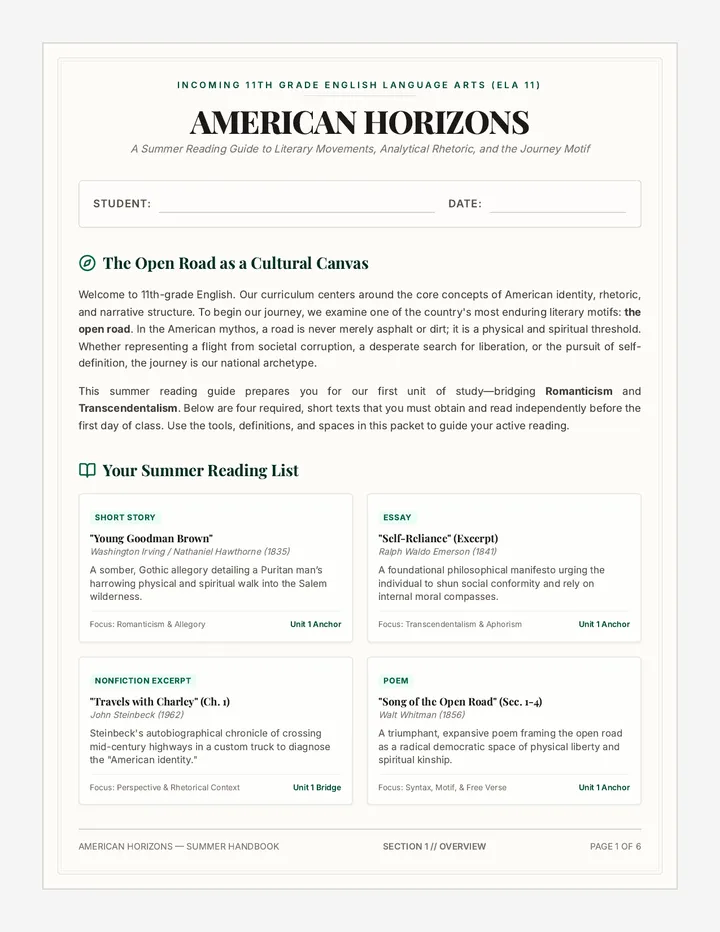
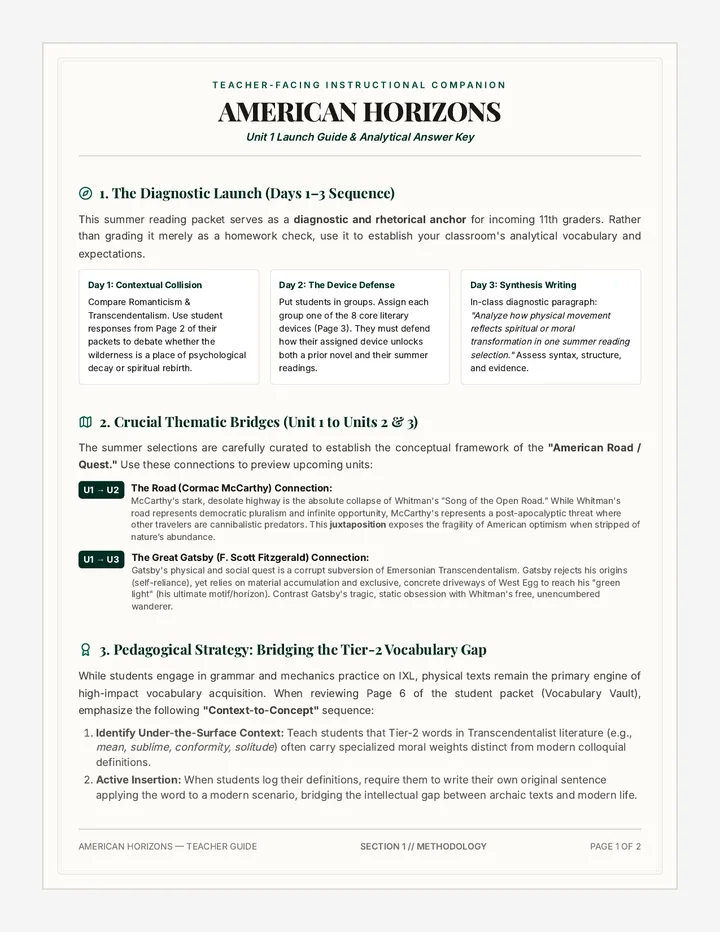
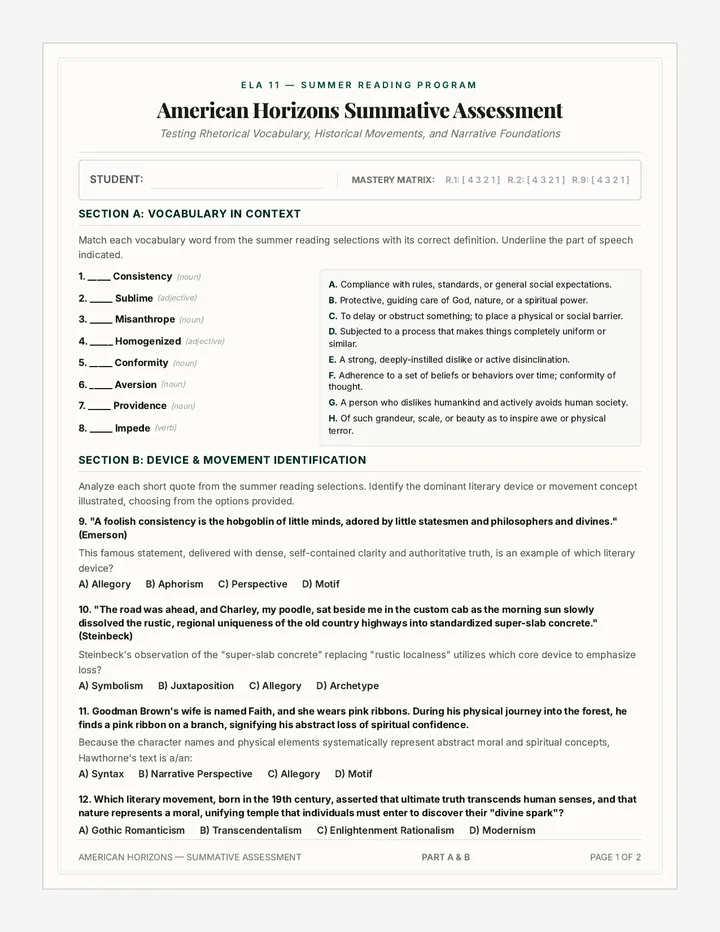
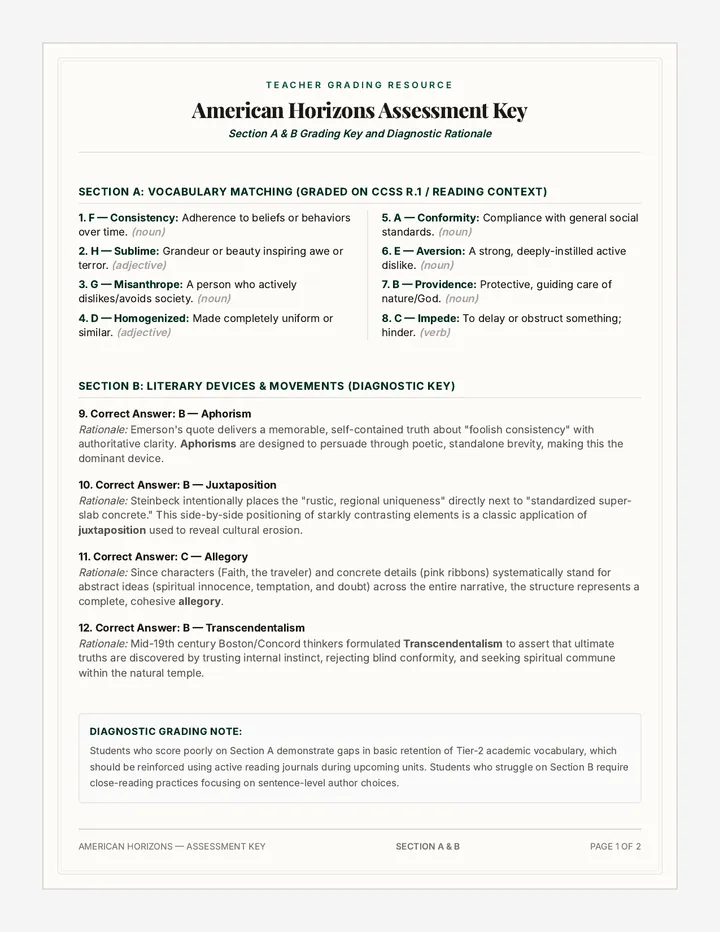
A preparatory summer reading curriculum designed to bridge historical literary movements, analytical vocabulary, and journey-themed texts for incoming 11th graders.