A comprehensive set of tools for assessing and tracking a student's ability to identify numbers 1 through 20 in randomized order.
A set of resources for third graders to master telling time to the nearest minute using analog clocks, featuring a whimsical Clockwork Kingdom theme.

A targeted lesson for 5th-grade resource room students to master identifying the main idea and supporting details through a detective-themed investigation.
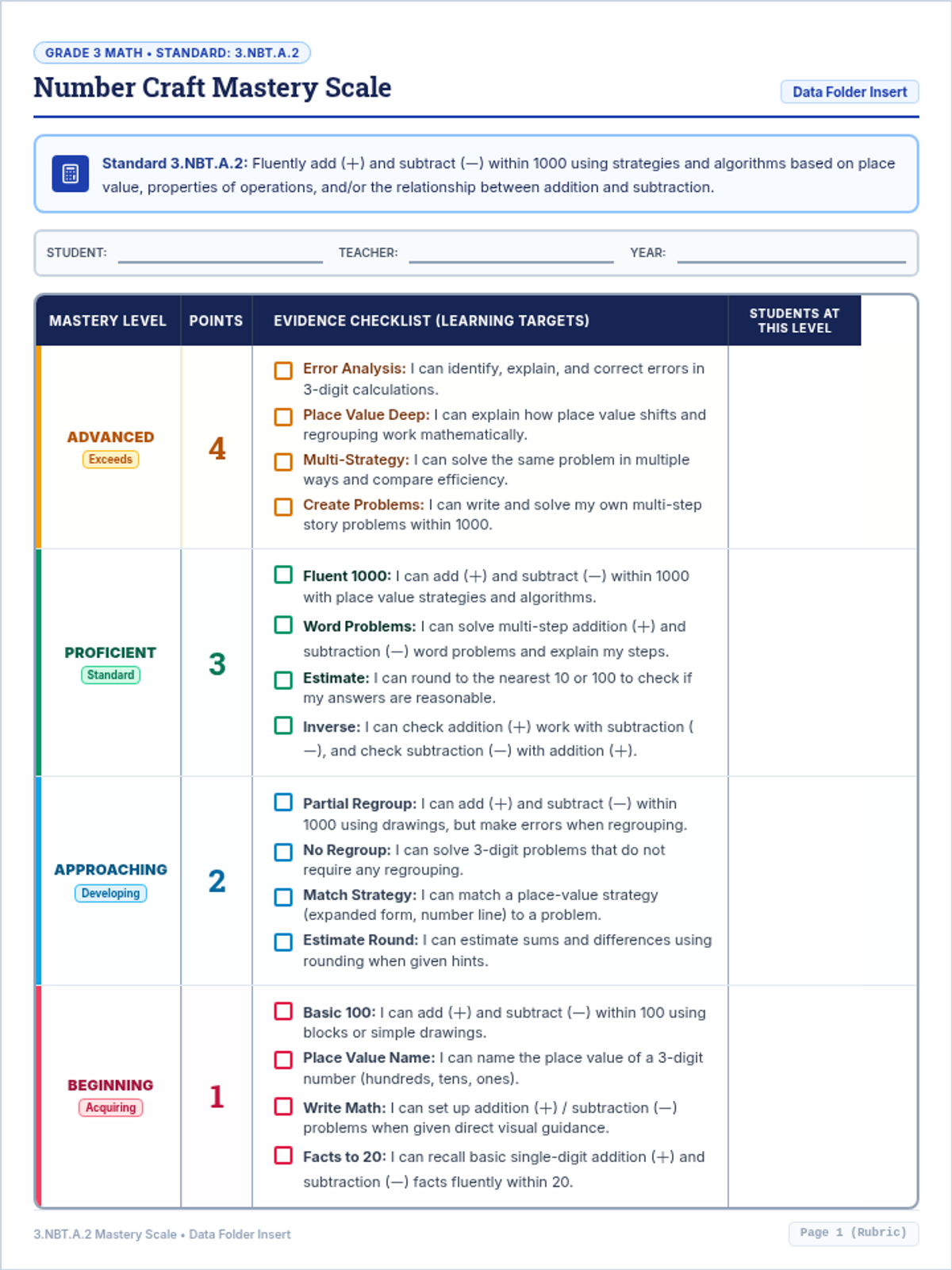
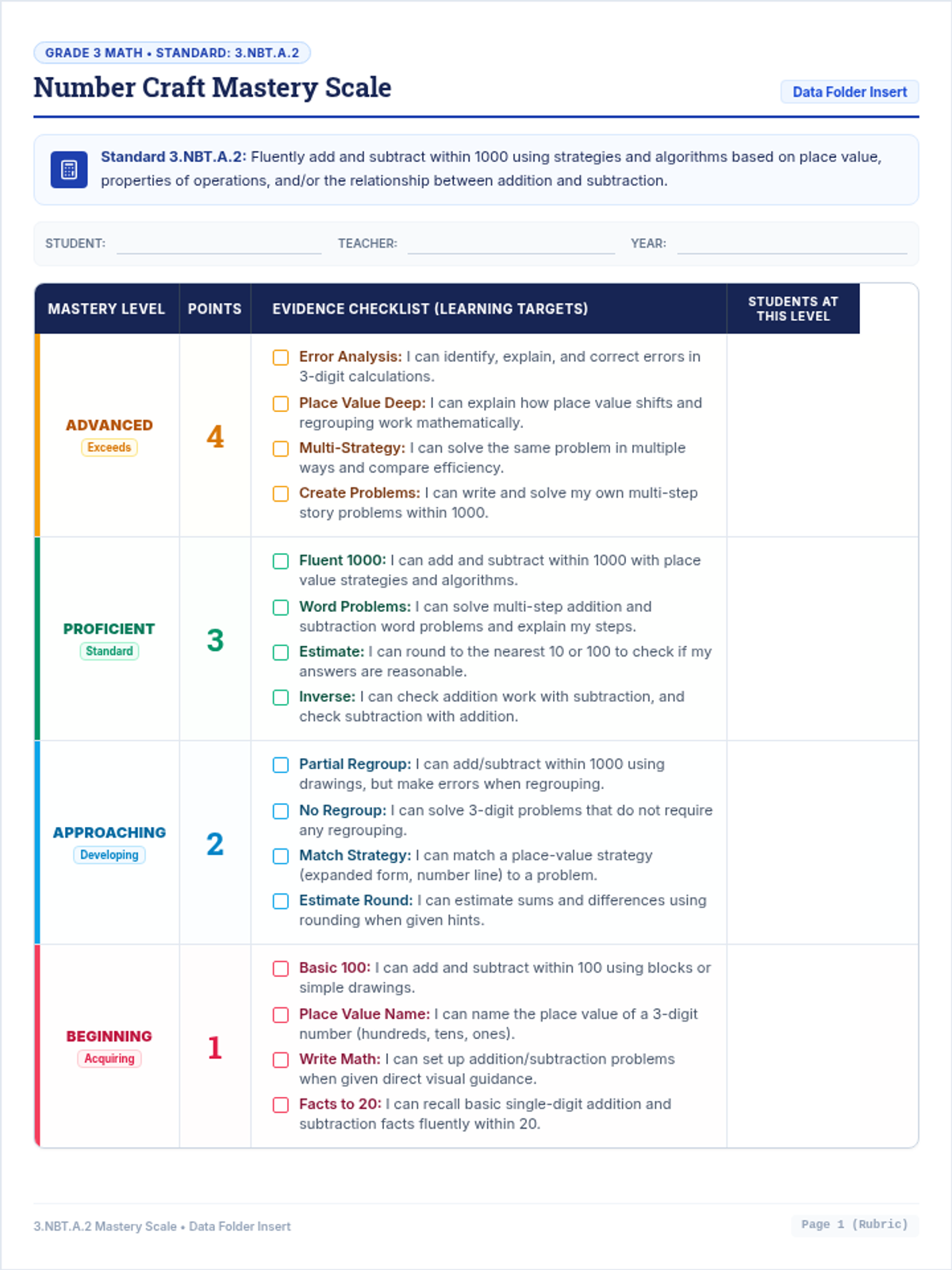
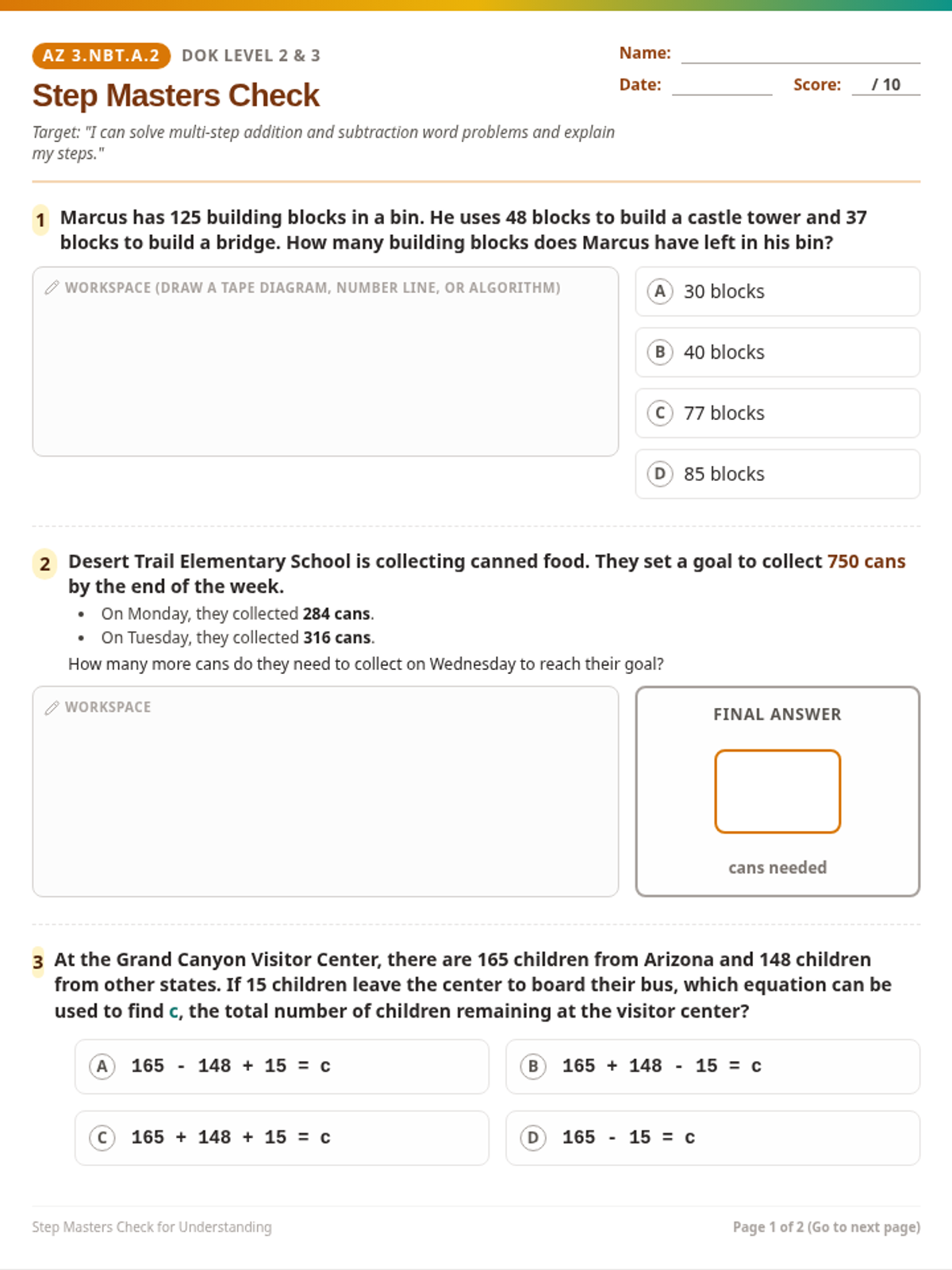
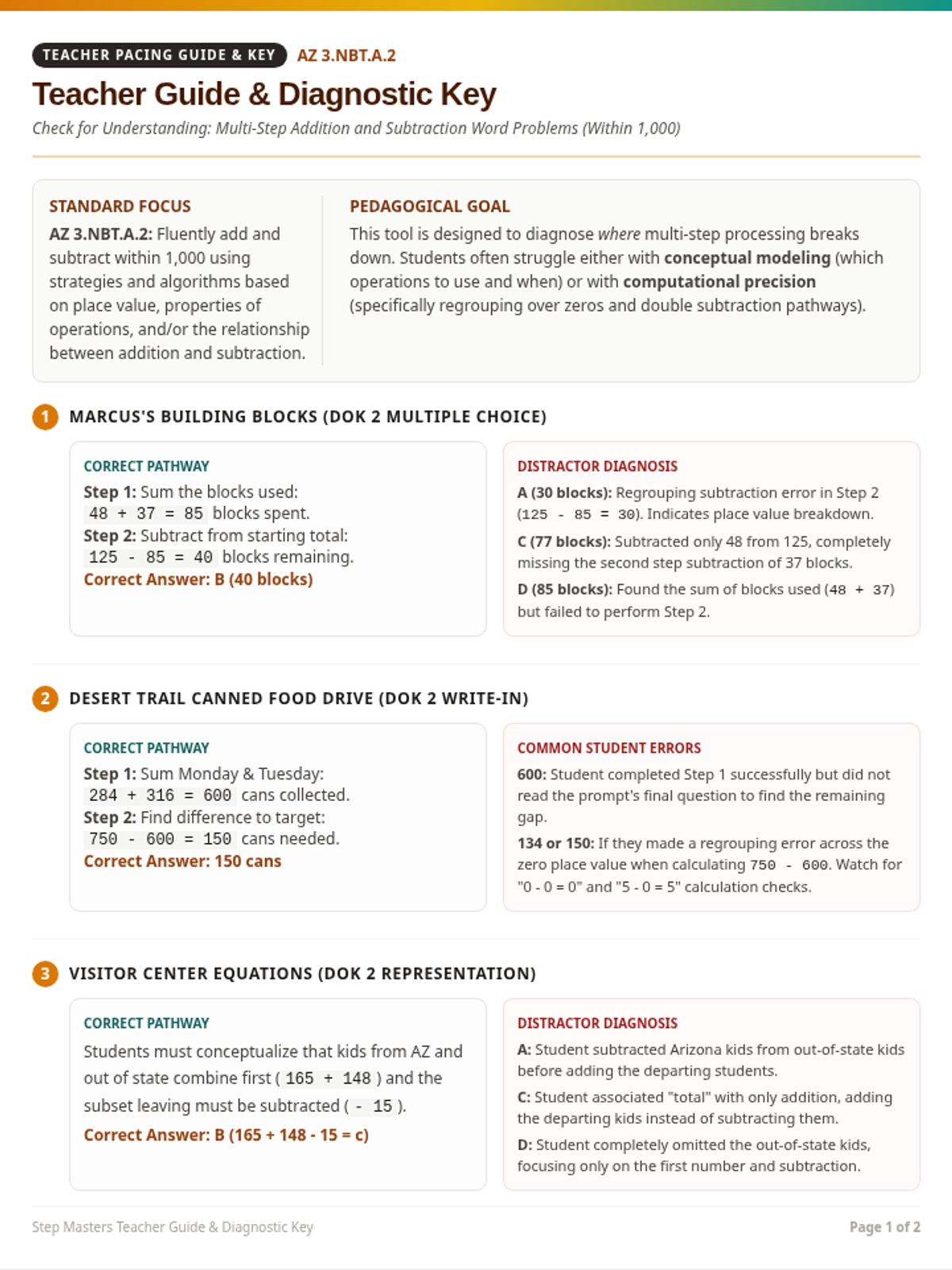
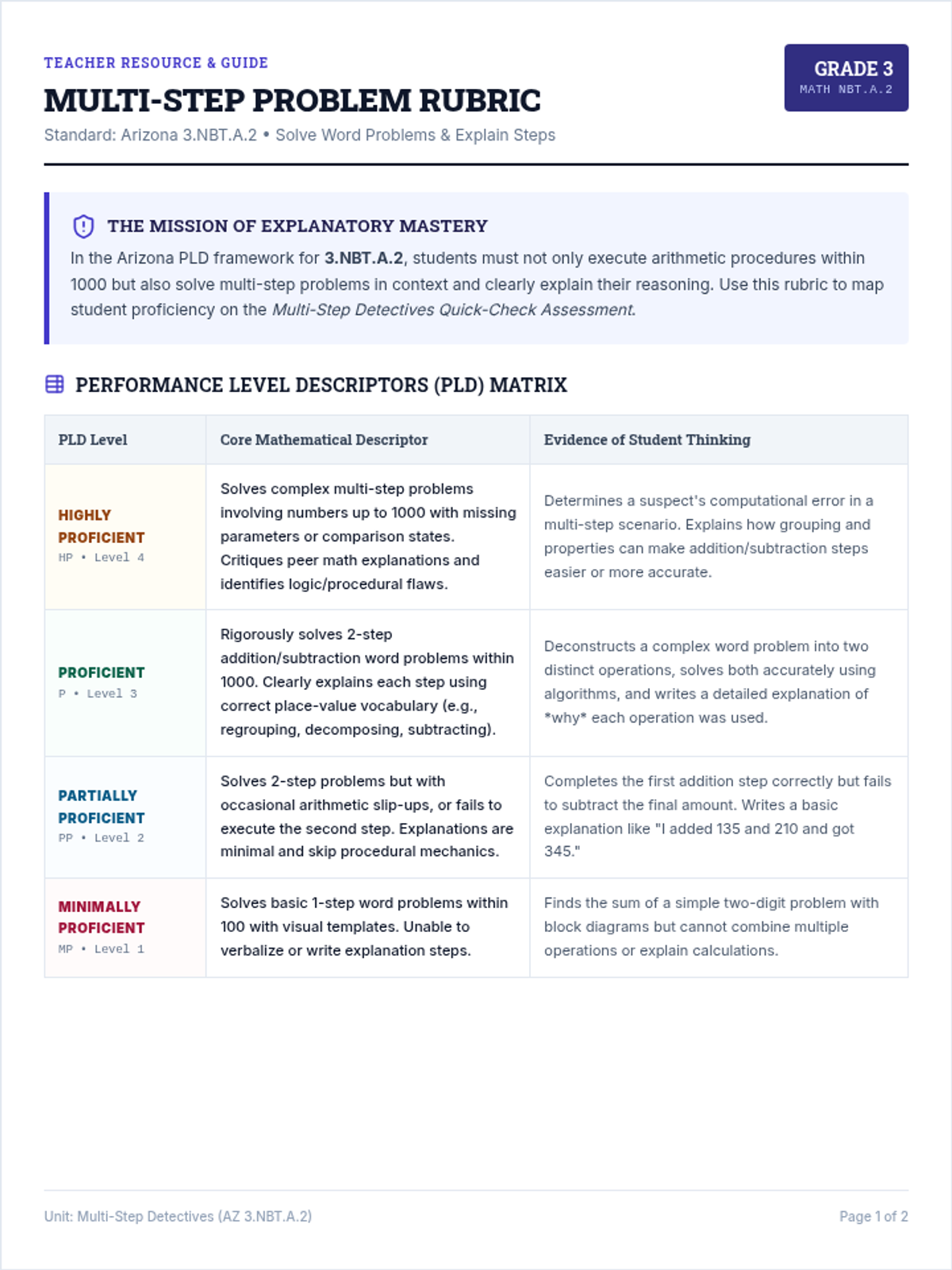
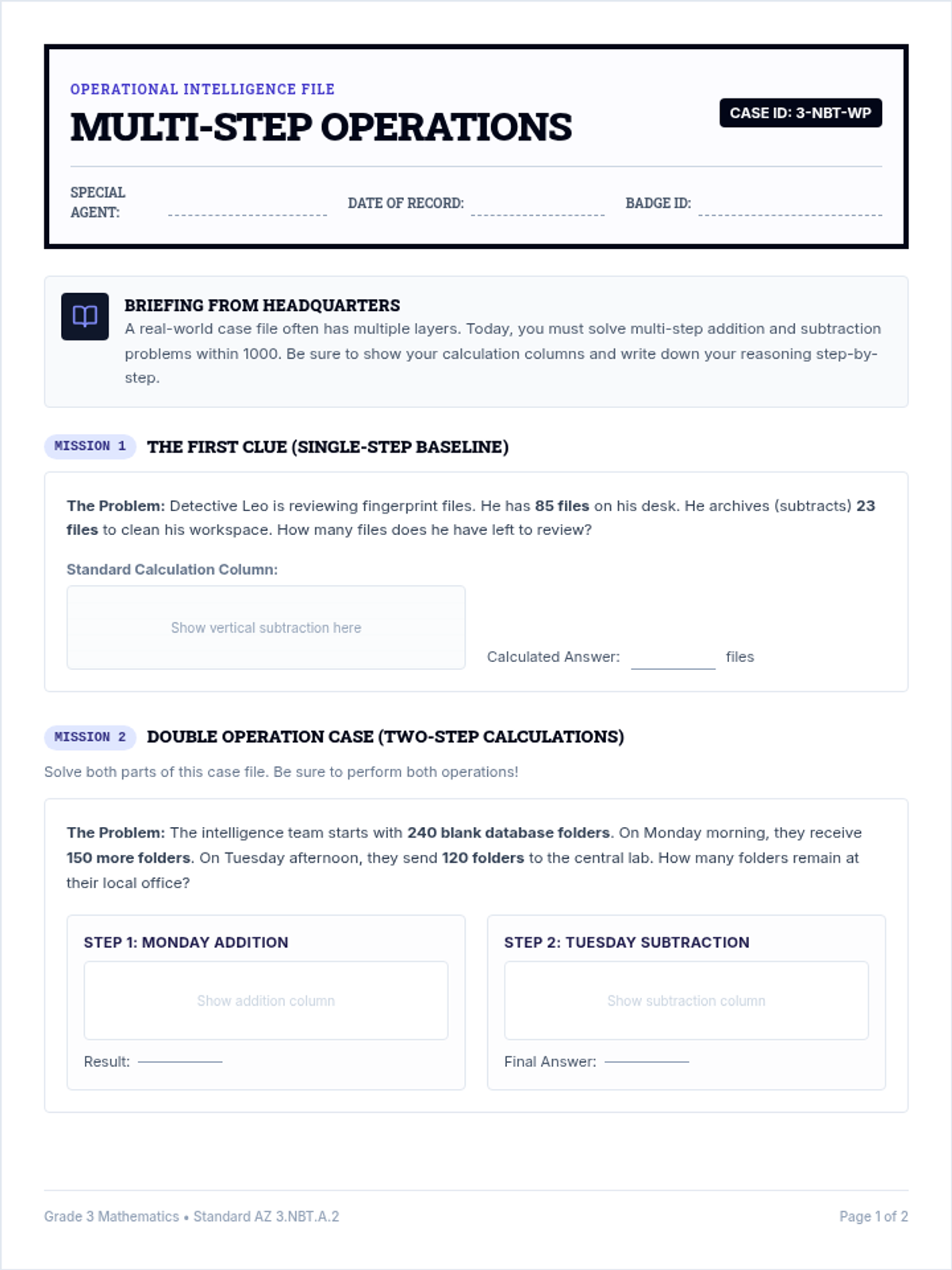
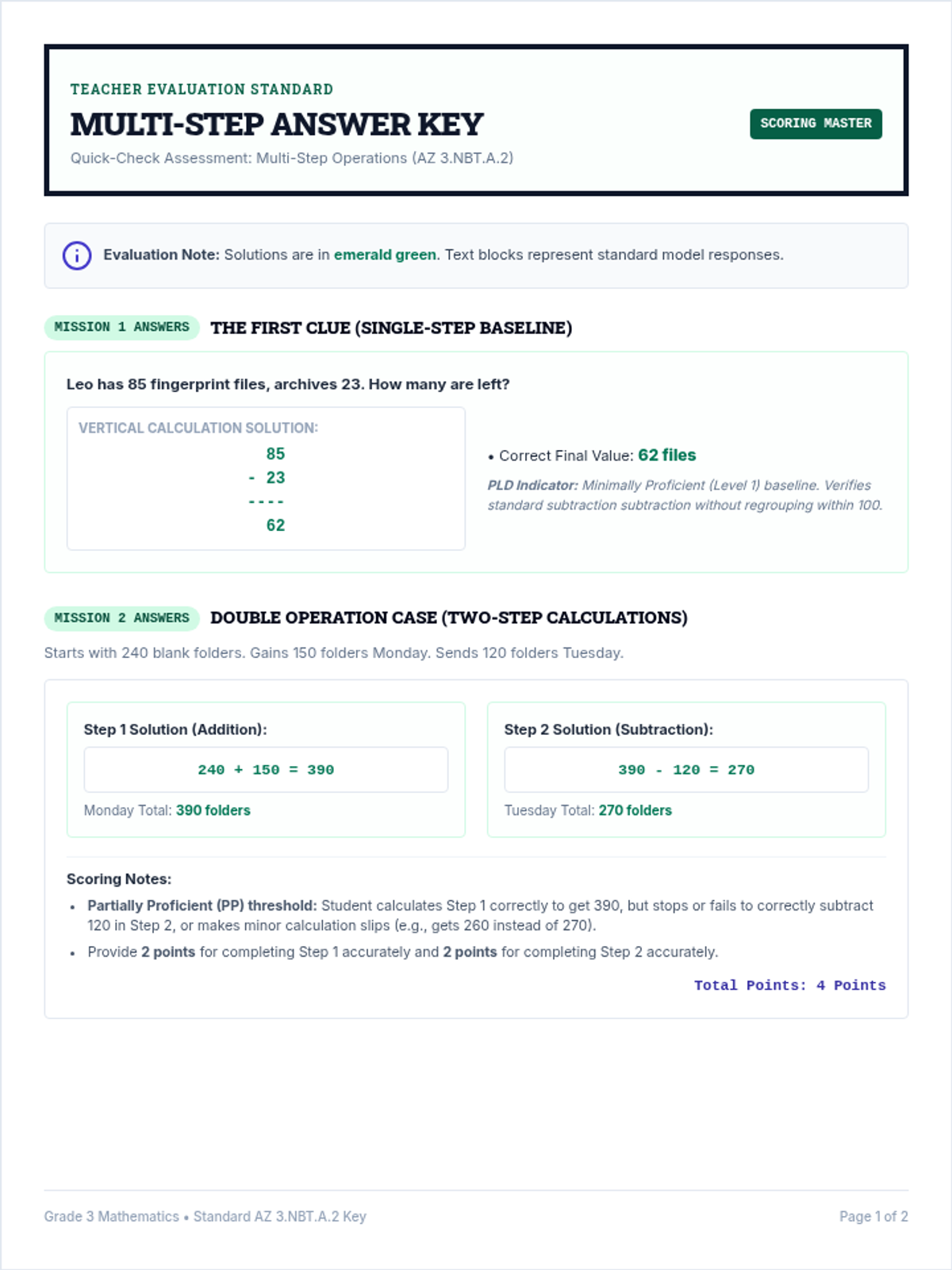
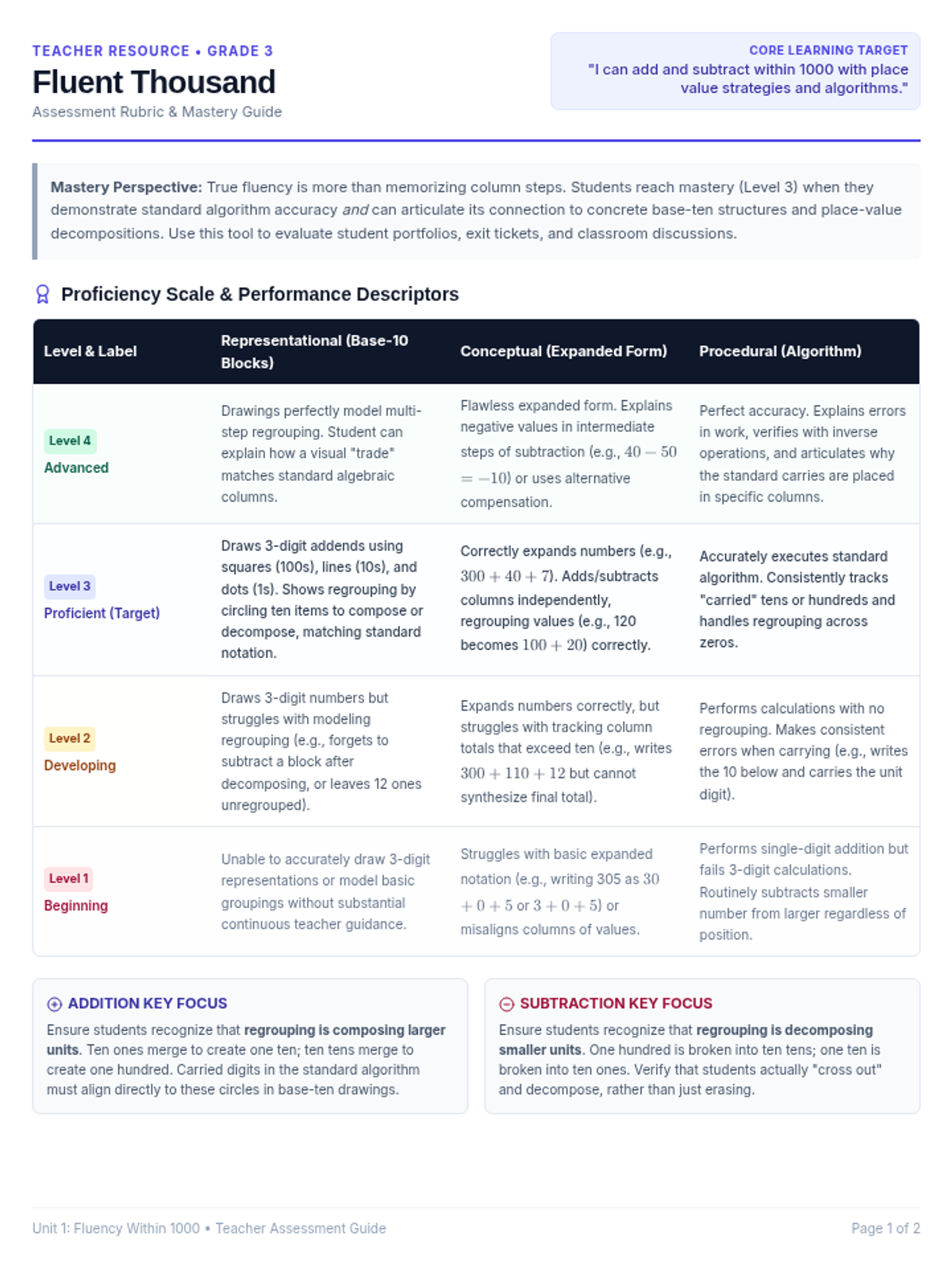
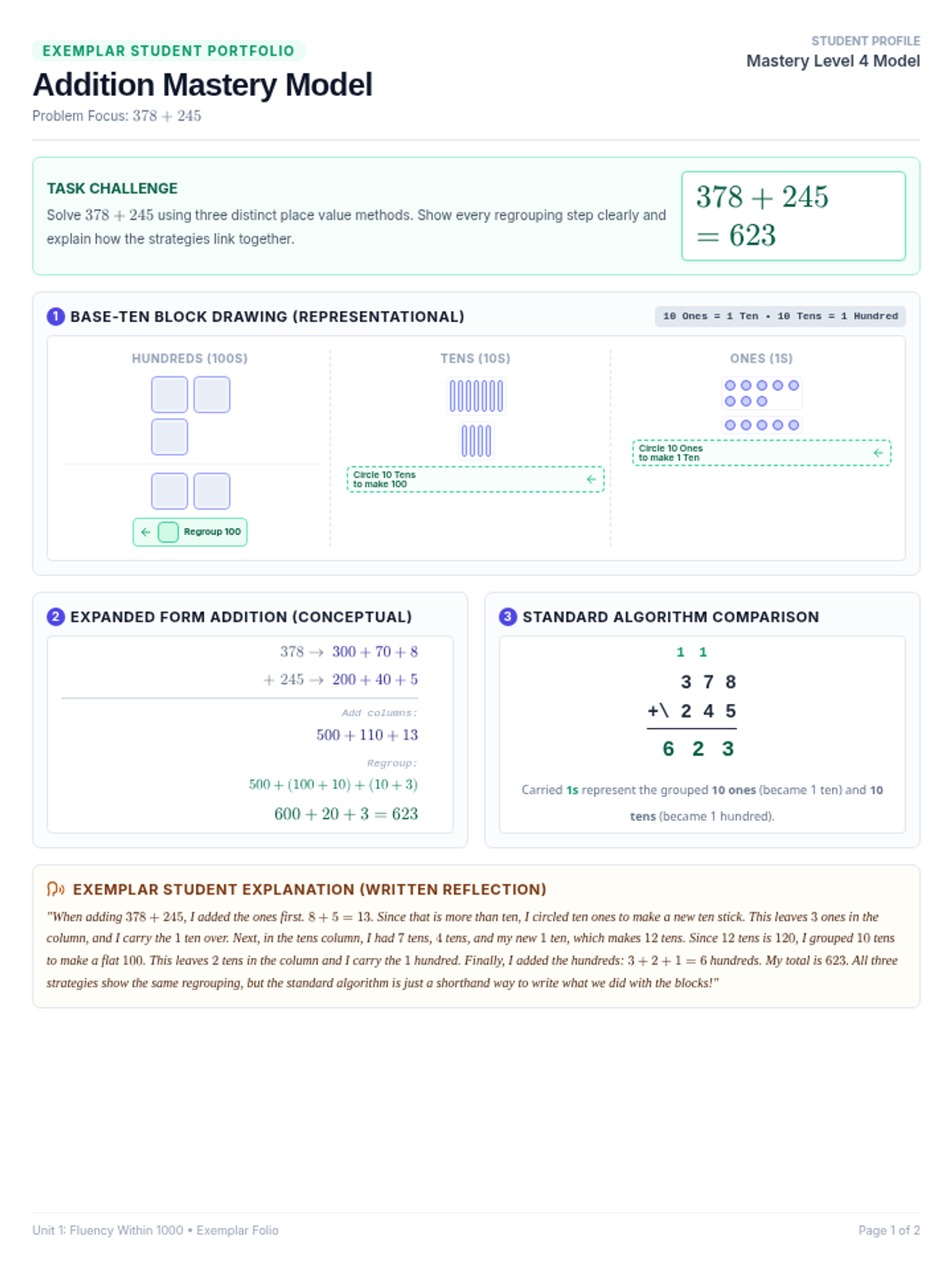
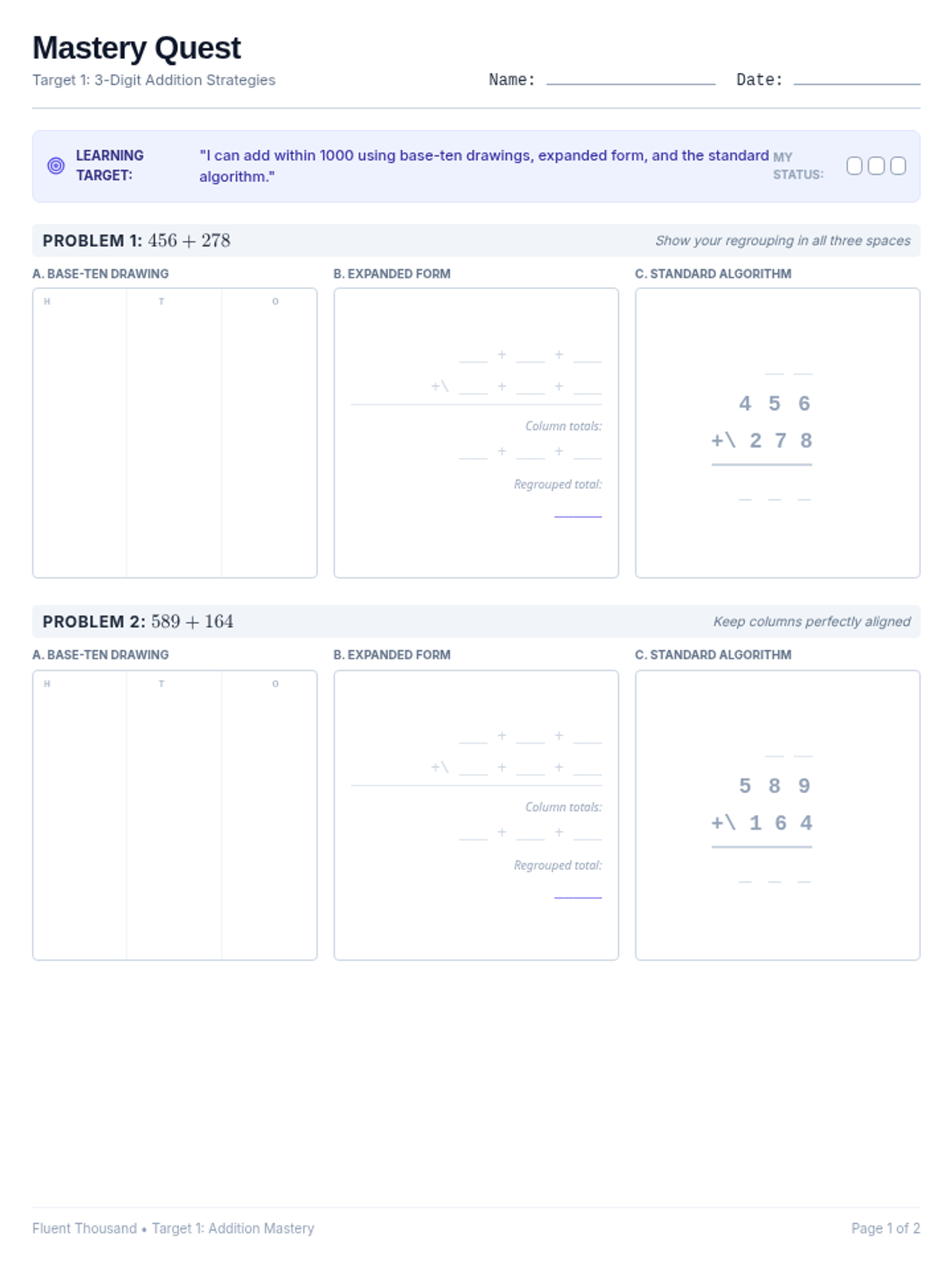
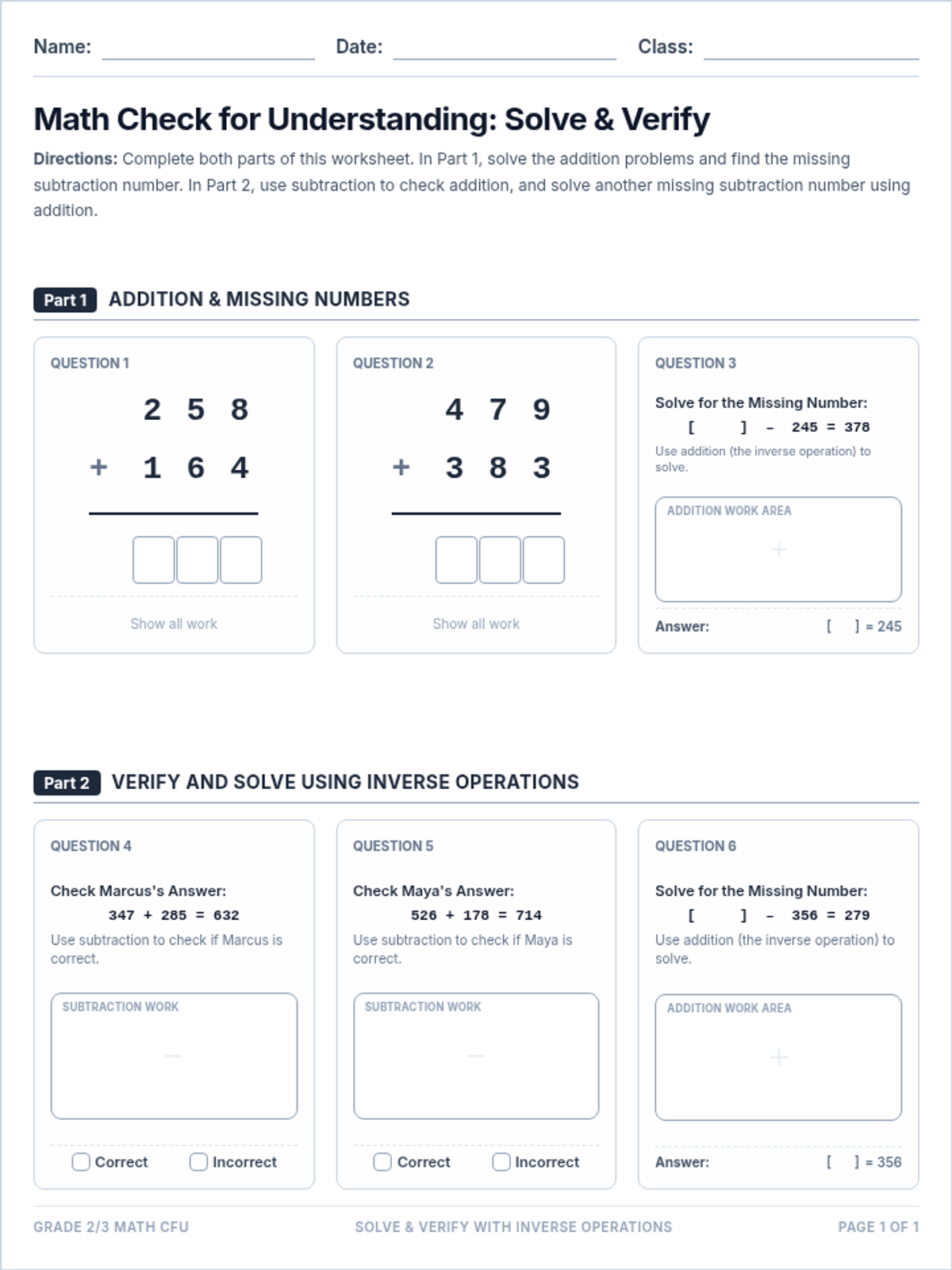
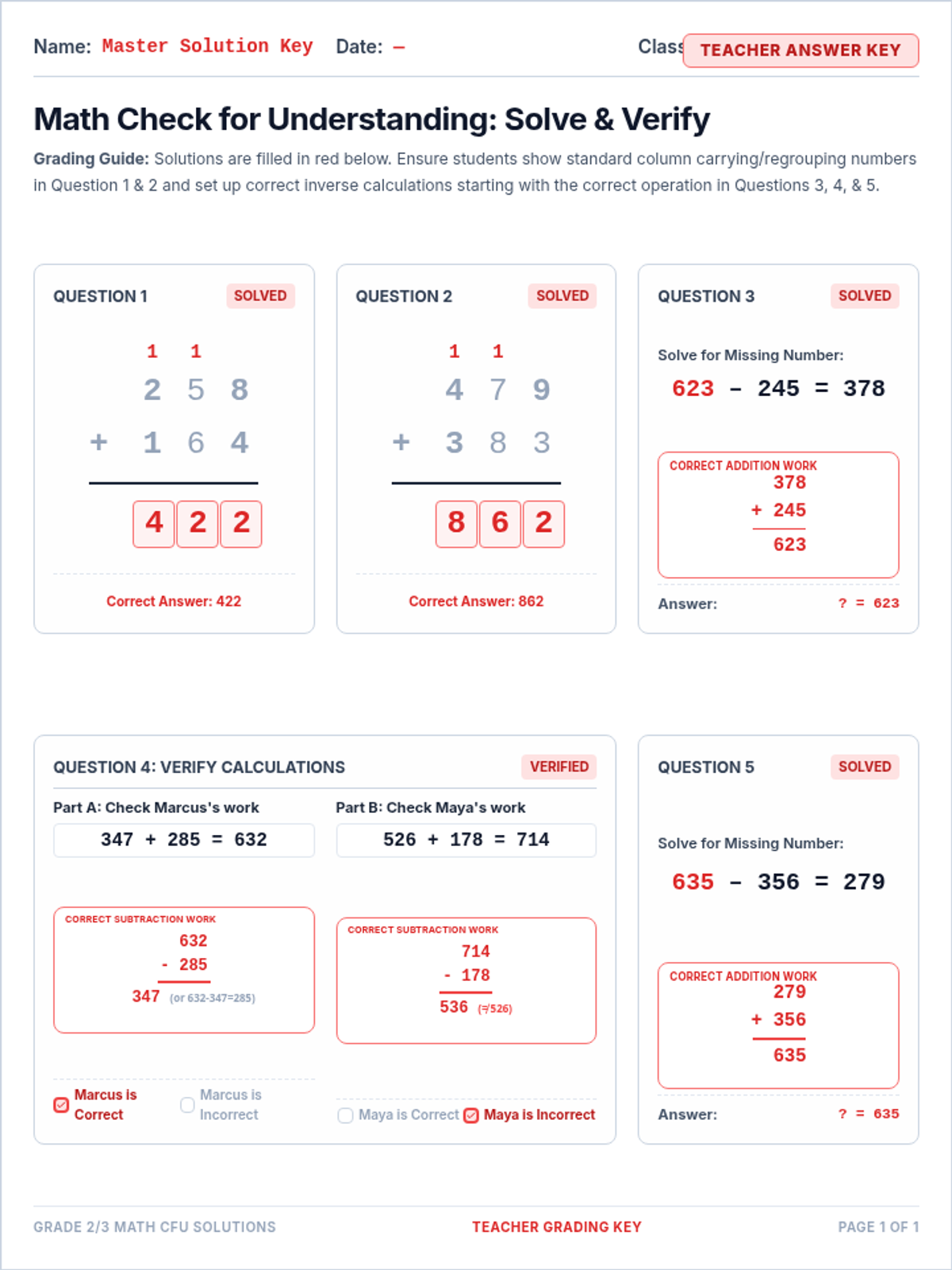
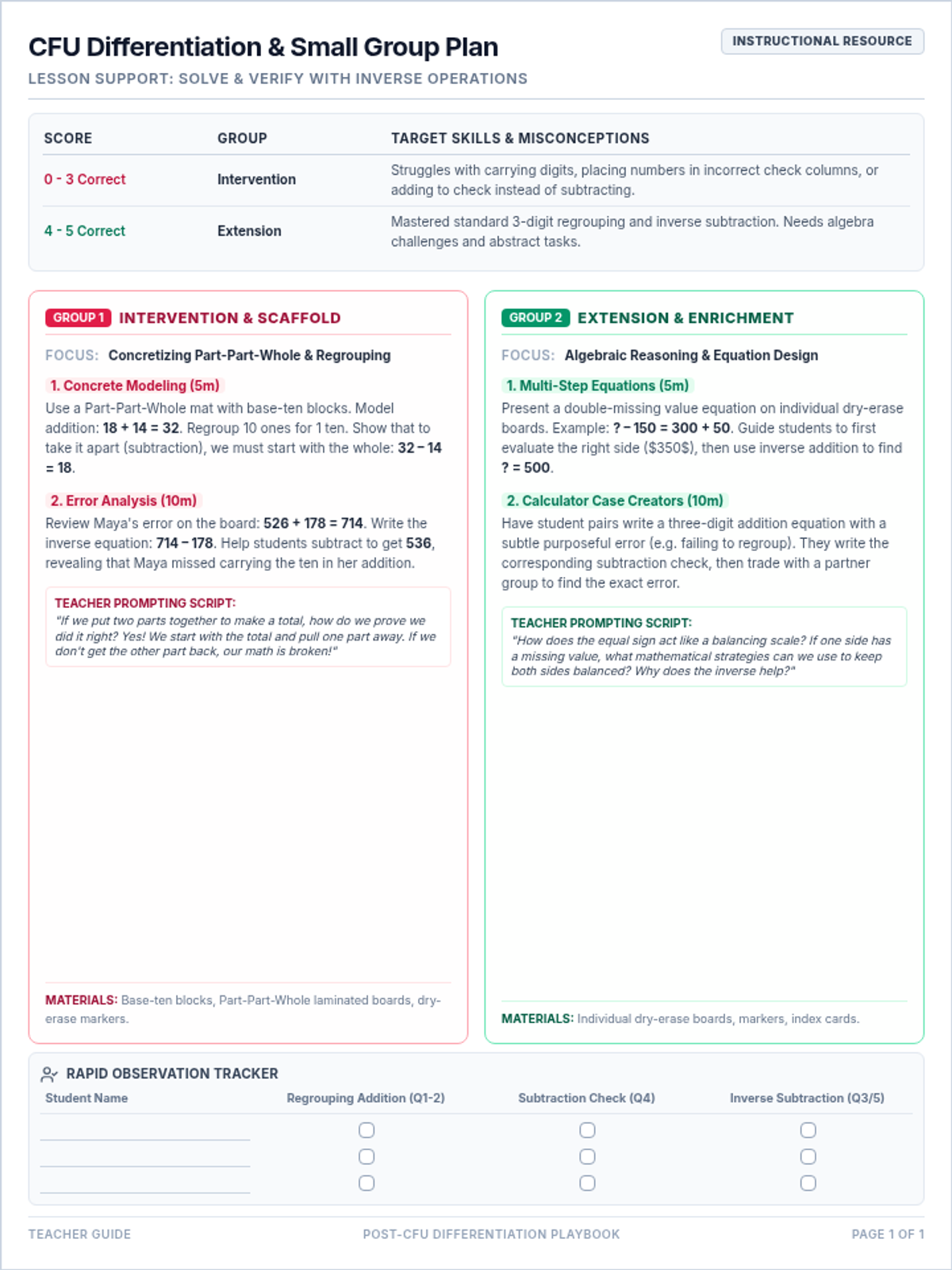
In this lesson, students will master 3-digit addition and subtraction while exploring the concept of equality as a balance. They will use 'blueprint' strategies to decompose numbers and solve two-step word problems within 1,000.
Introduces strategies for balancing and solving one-, two-, and multi-step linear equations using inverse operations.
Focuses on mastery of integer operations, absolute value, and rational number properties through visual number line navigation.
Advanced operations and algebraic thinking for the RIT 211-220 range, covering factors, multiples, prime/composite numbers, and multi-step word problems with remainders.
A targeted practice session focusing on Operations and Algebraic Thinking for students in the RIT 201-210 range, featuring multi-step word problems, patterns, and algebraic properties.
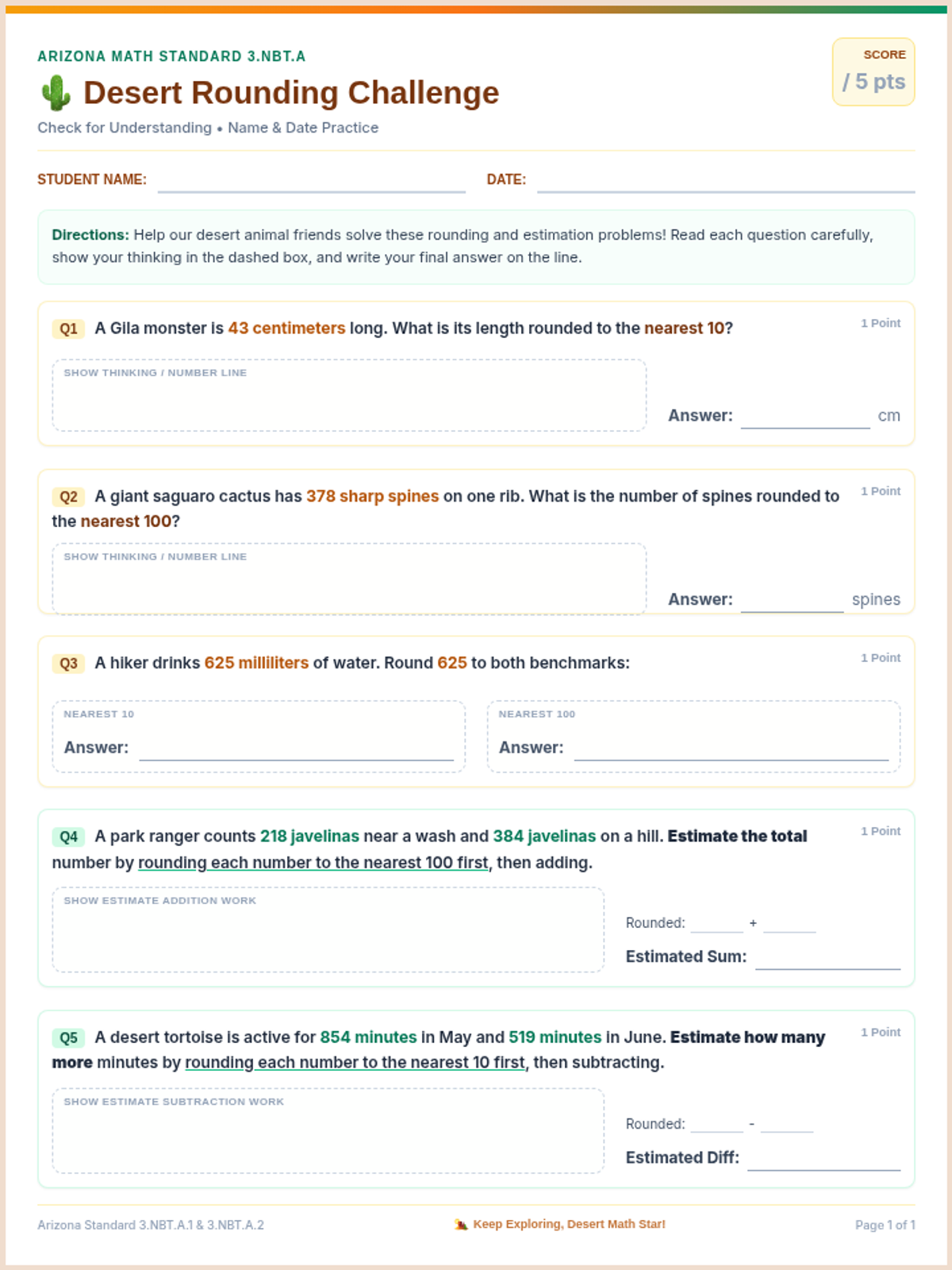
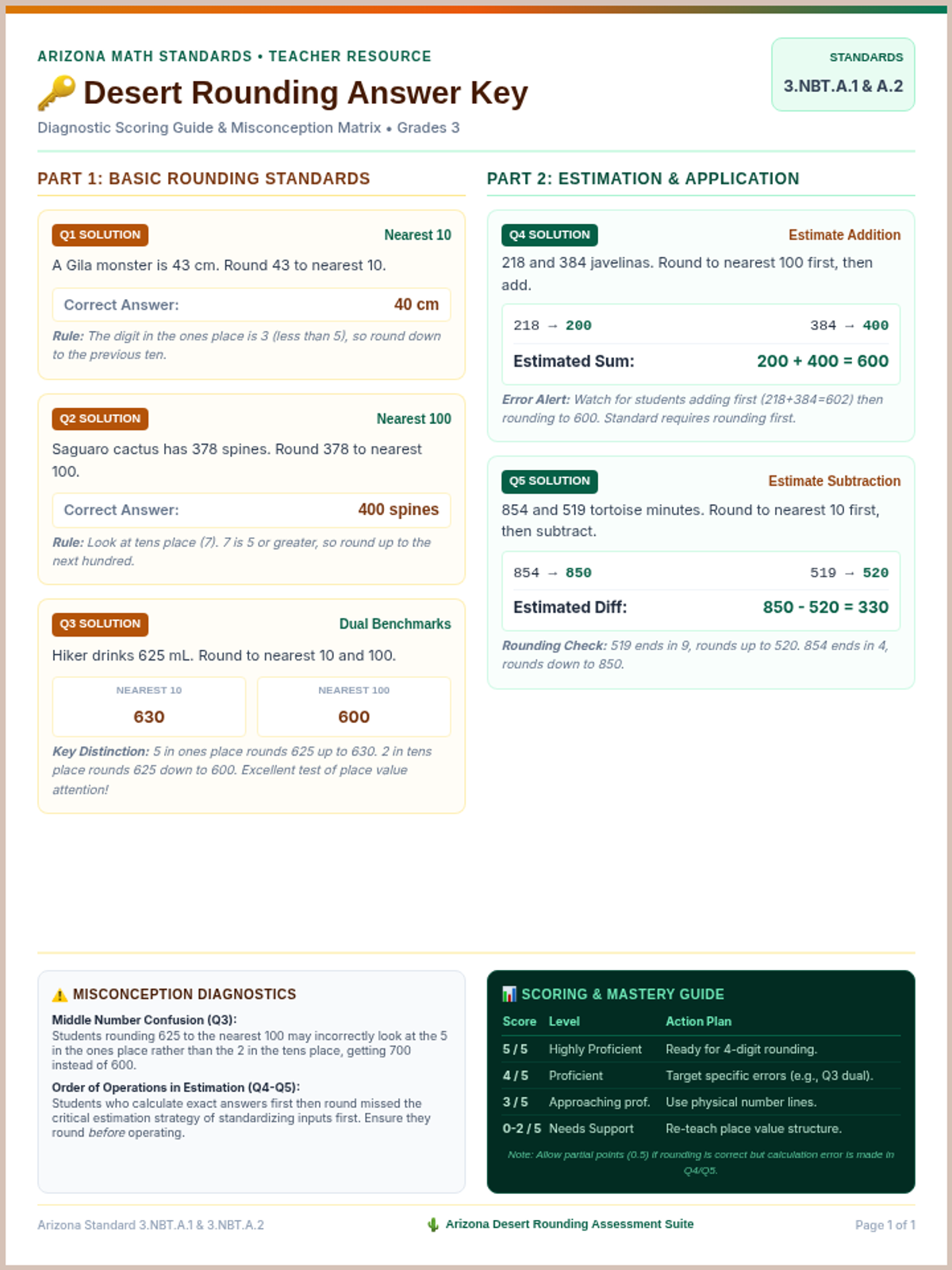
A lesson focused on bridging the conceptual understanding of decimal division with the standard algorithm, covering three key scenarios: decimal by whole number, whole number by decimal, and decimal by decimal.
A comprehensive end-of-year math review for 1st grade students, aligned with Illinois Learning Standards. The lesson covers all major domains including Operations, Base Ten, Measurement, and Geometry through minimalist, high-legibility worksheets.
A lesson focused on adding 10 to any 2-digit number using visual base-ten models and mental math strategies. Students explore how the tens digit increases by one while the ones digit remains constant.
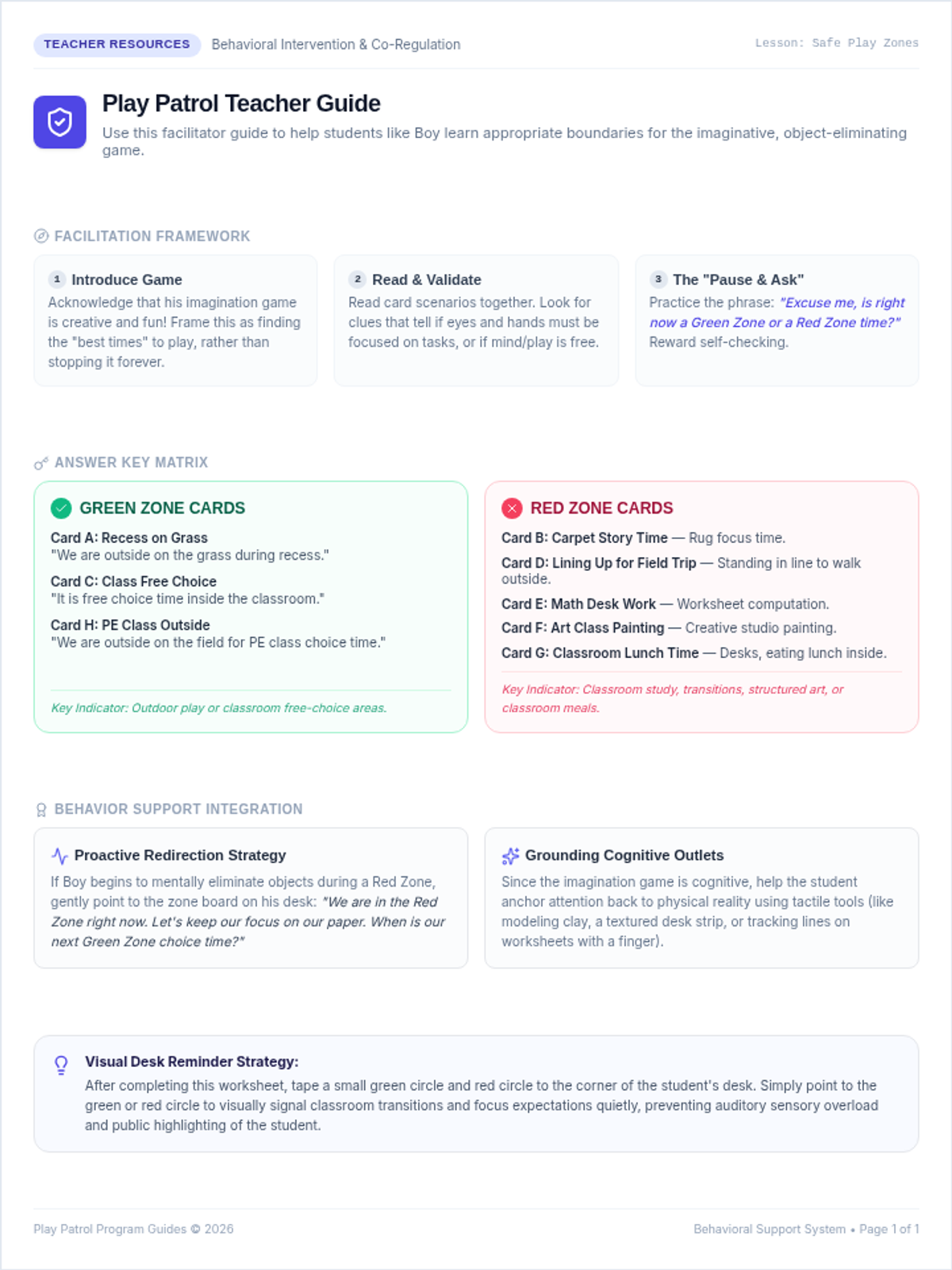
A lesson focused on teaching students how to identify appropriate times to share and how to stay on-task during group instruction.
A set of materials for assessing and practicing 47 key graphemes, including high-visibility flashcards and a comprehensive teacher tracking sheet.
A hands-on exploration of geometry and spatial reasoning using tangrams, featuring puzzles across four diverse themes with varying difficulty levels.
A lesson designed to help students recognize and build numbers 10 through 20 by connecting visual quantities (ten-frames and groups of stars) to their symbolic representations.
A foundational math lesson focusing on recognizing numbers 10-20, counting on to 20, and counting backwards from 10. Students embark on a nature-themed journey to build number sense.
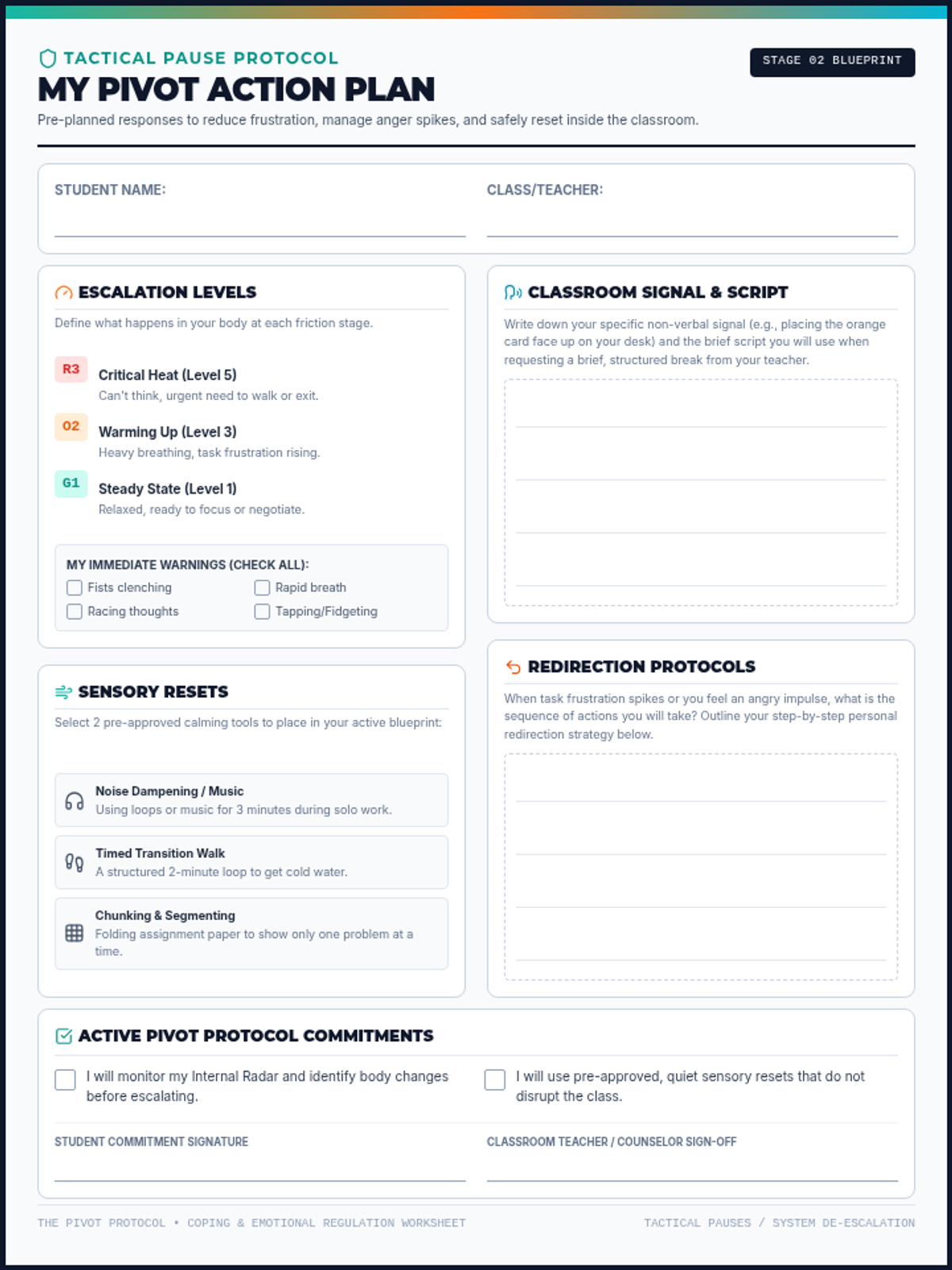
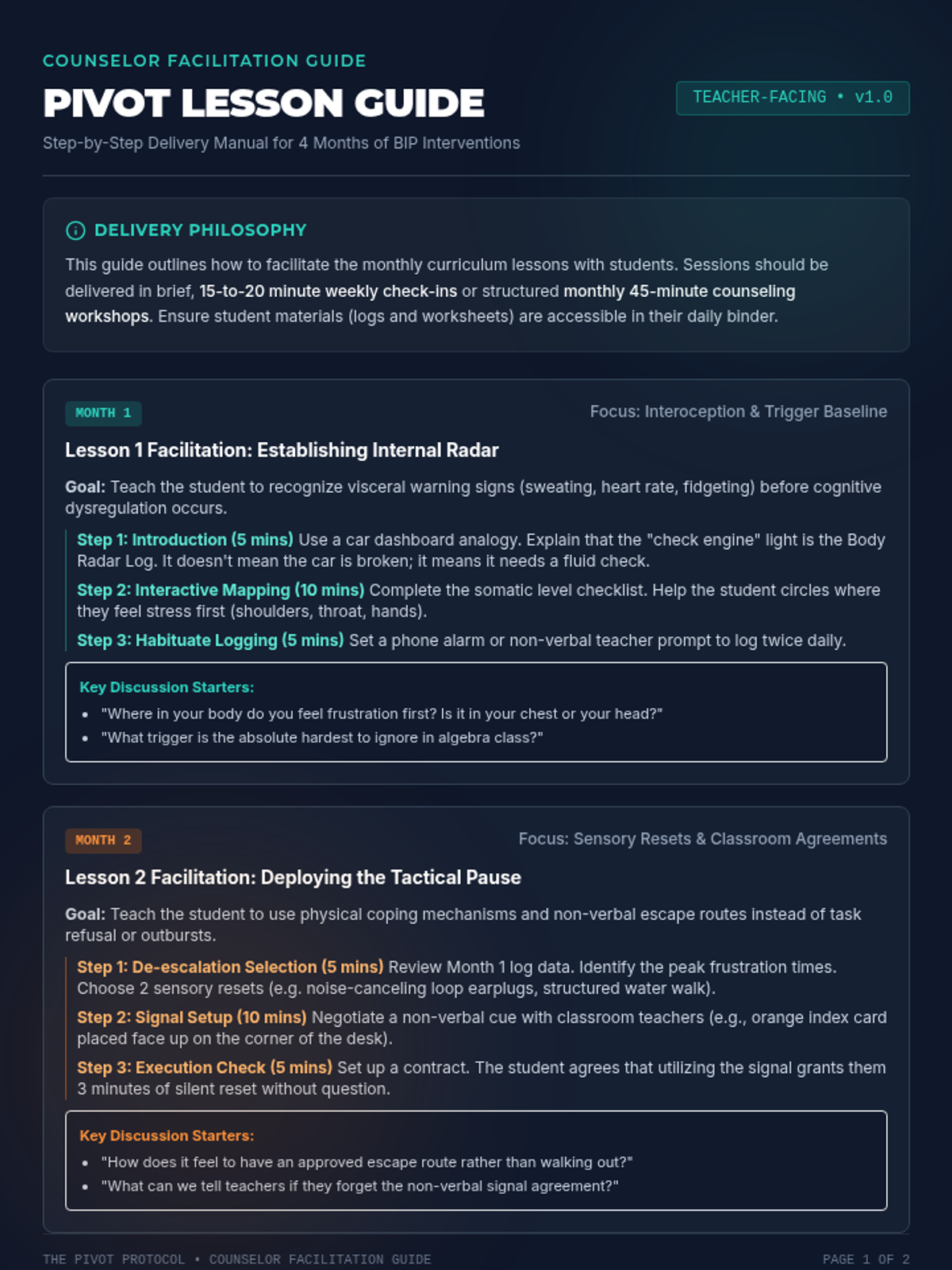
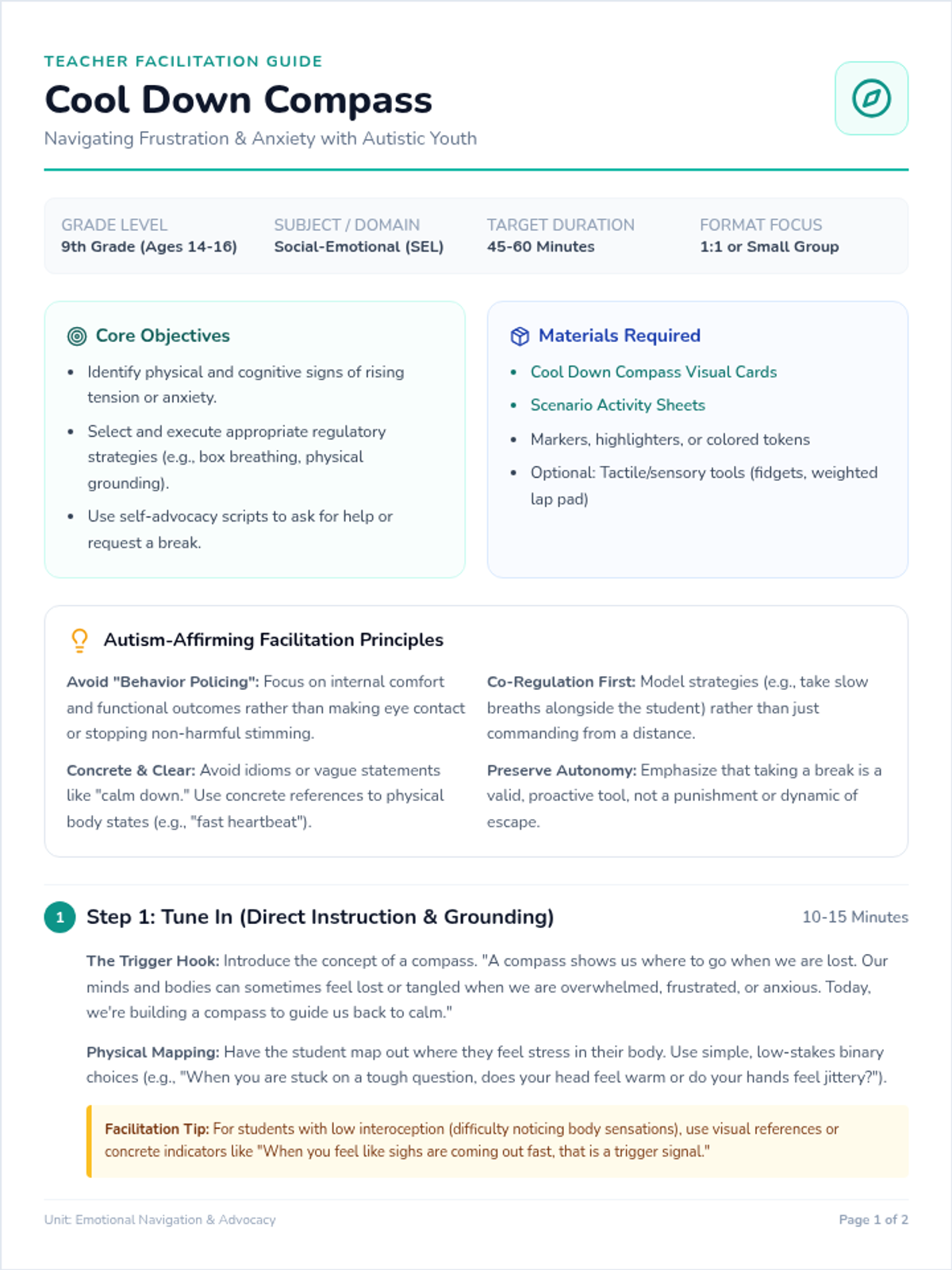
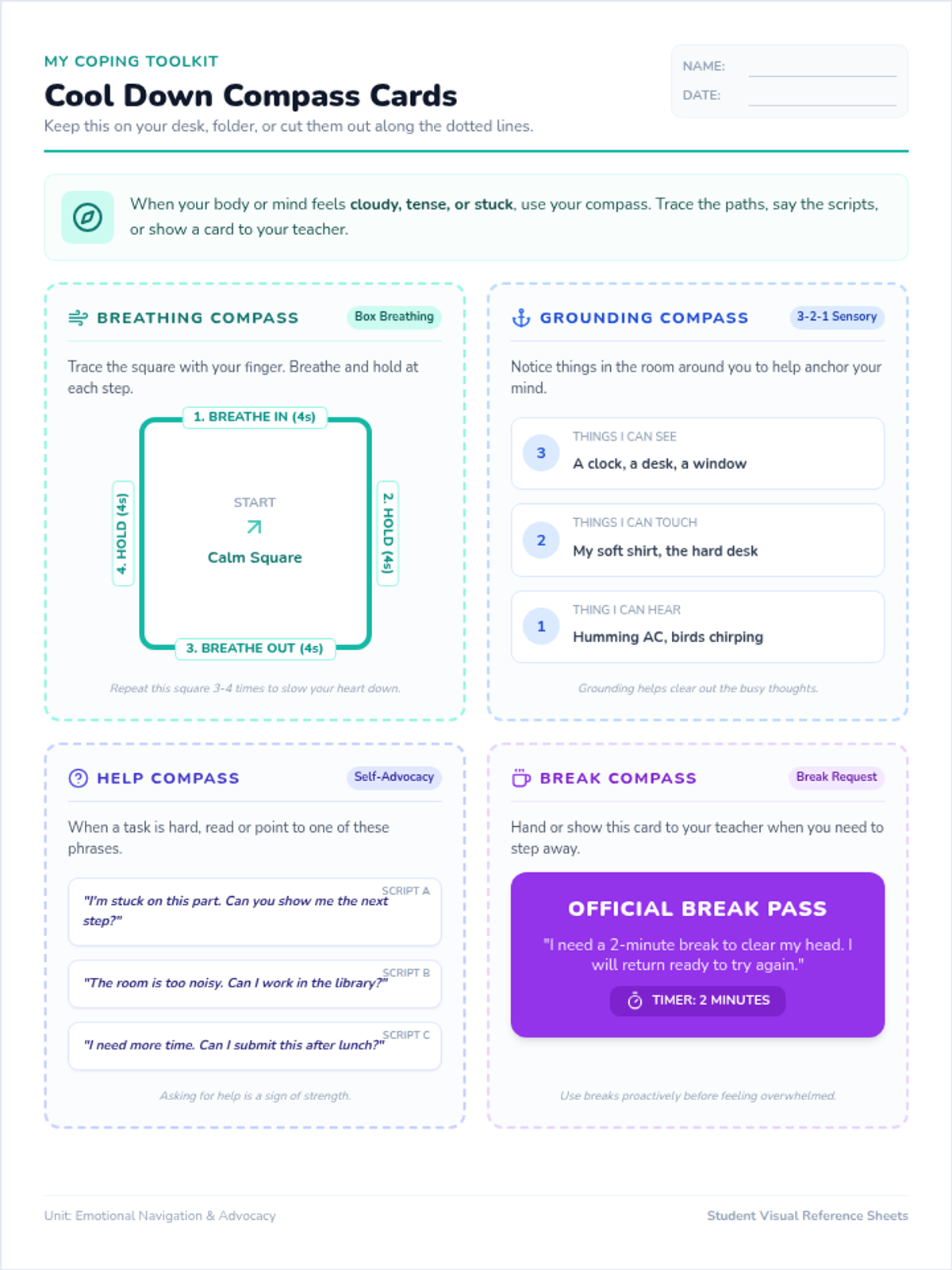
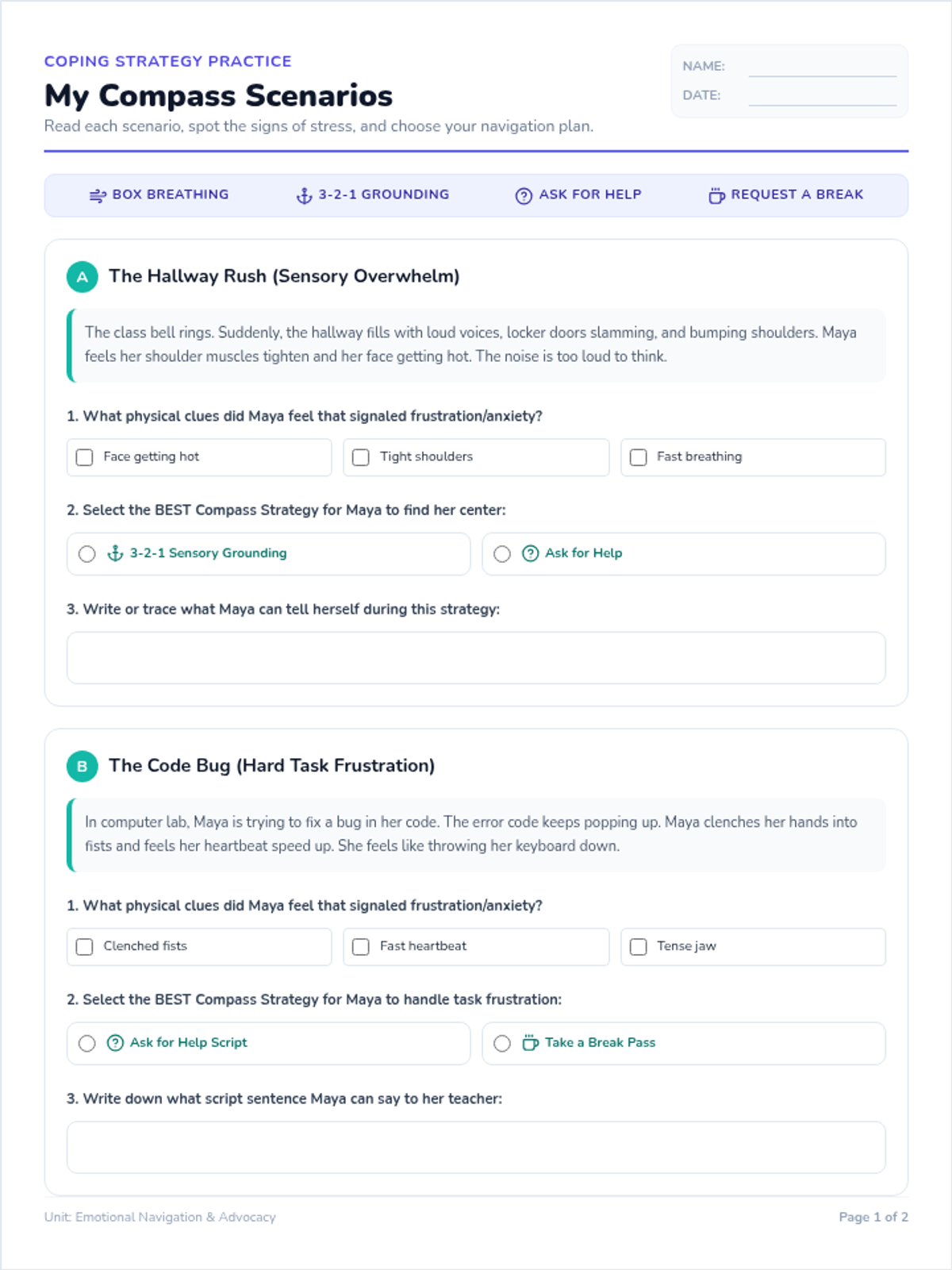
A behavioral and functional lesson designed for a 2nd-grade student with Autism and ADHD to master the 'Launch Sequence' of transitioning from preferred activities to academic tasks. It focuses on visual schedules, clear 'First-Then' contingencies, and a specific 3-step 'Ignition' process to overcome task initiation hurdles.
A math practice lesson focused on first-grade addition and time-telling skills, themed around the animals of the African savannah.
Materials for assessing and monitoring third-grade oral reading fluency, including a lexile-appropriate passage with word counts and a teacher scoring sheet.
A set of activities designed to help 3rd graders master computer-based testing strategies specifically for the Indiana IREAD-3 assessment, focusing on digital navigation and specific reading skills.
A series of word problems for Grade 2 students focusing on addition and subtraction with numbers up to 100, themed around food and cooking.
A collection of STAAR-aligned multi-step word problems for 4th-grade math, focusing on multiplication, division, fractions, and decimals using the RDW (Read, Draw, Write) strategy.
A 45-minute introductory lesson on independent and dependent variables using sports and nature contexts. Students will learn to identify variables, understand cause-and-effect relationships, and represent them in tables and graphs.
A collection of STAAR-aligned two-step word problems designed for 3rd-grade math mastery. This lesson focuses on problem-solving strategies for addition, subtraction, multiplication, and division scenarios commonly found on the Texas state assessment.
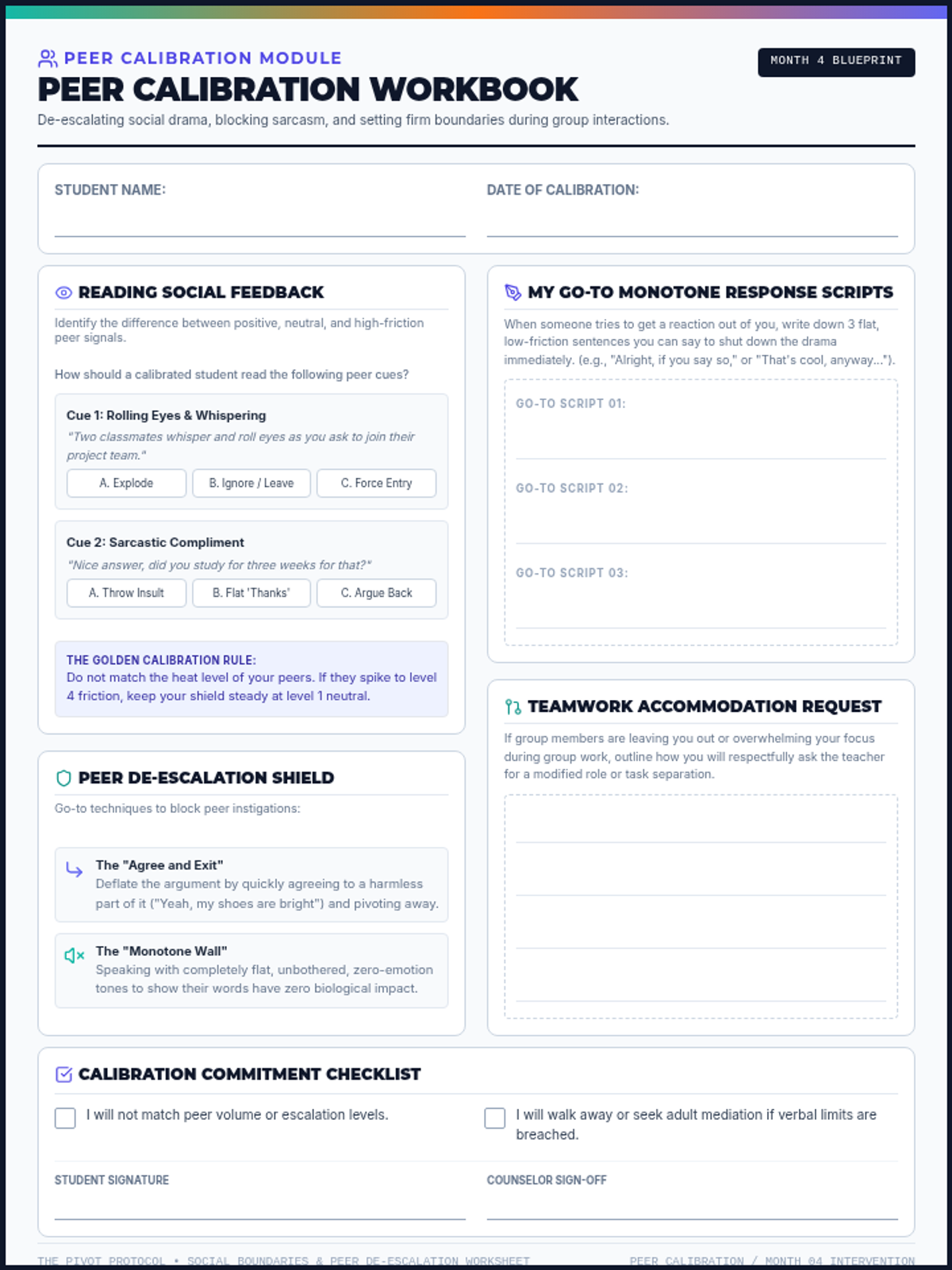
A lesson designed for small group settings to practice 'brave talking' with peers using structured activities and gamified prompts.
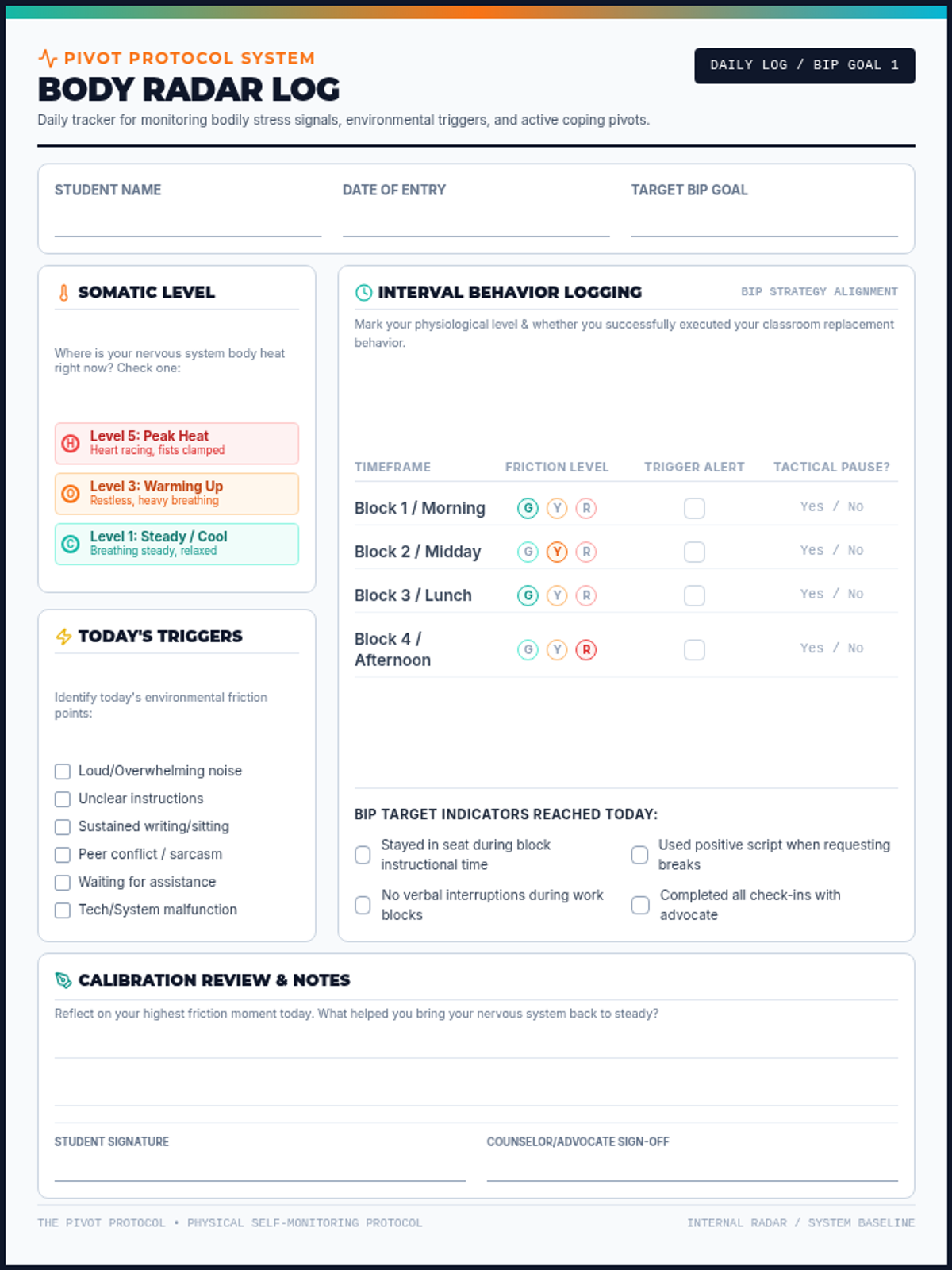
This lesson focuses on developing self-control and "Hand Power" in young students. It provides a structured way to track physical behaviors through a superhero-themed tally system, helping students and teachers identify patterns and celebrate growth.
A visual, video-game themed lesson on two-way frequency tables designed for 8th-grade special education students using Minecraft and Garry's Mod examples.
A fun introduction to basic shapes through tracing and recognition activities.
A lesson focused on developing a foundational understanding of volume by counting unit cubes within rectangular prisms, designed for students needing repetitive skill practice and clear visual support.
Students conduct their own small-group survey, create a bar graph, and solve math problems based on their unique data.
Students use addition and subtraction to answer questions about bar graphs, focusing on "how many more" and "how many fewer."
Students learn to translate tally data into bar graphs, visualizing their pet shop findings.
Students learn how to conduct a survey and use tally marks to collect data, using simple addition to find totals within 20.
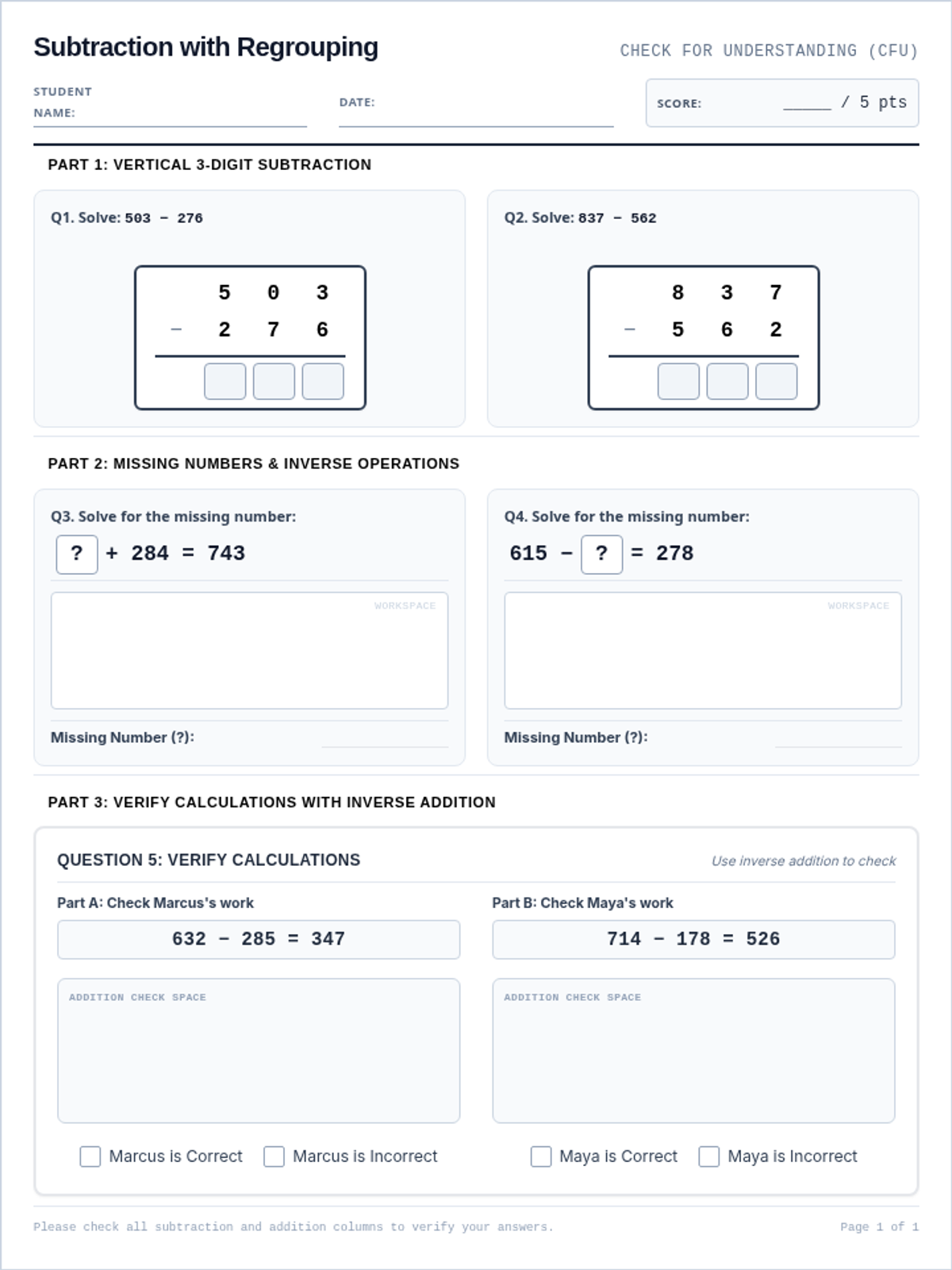
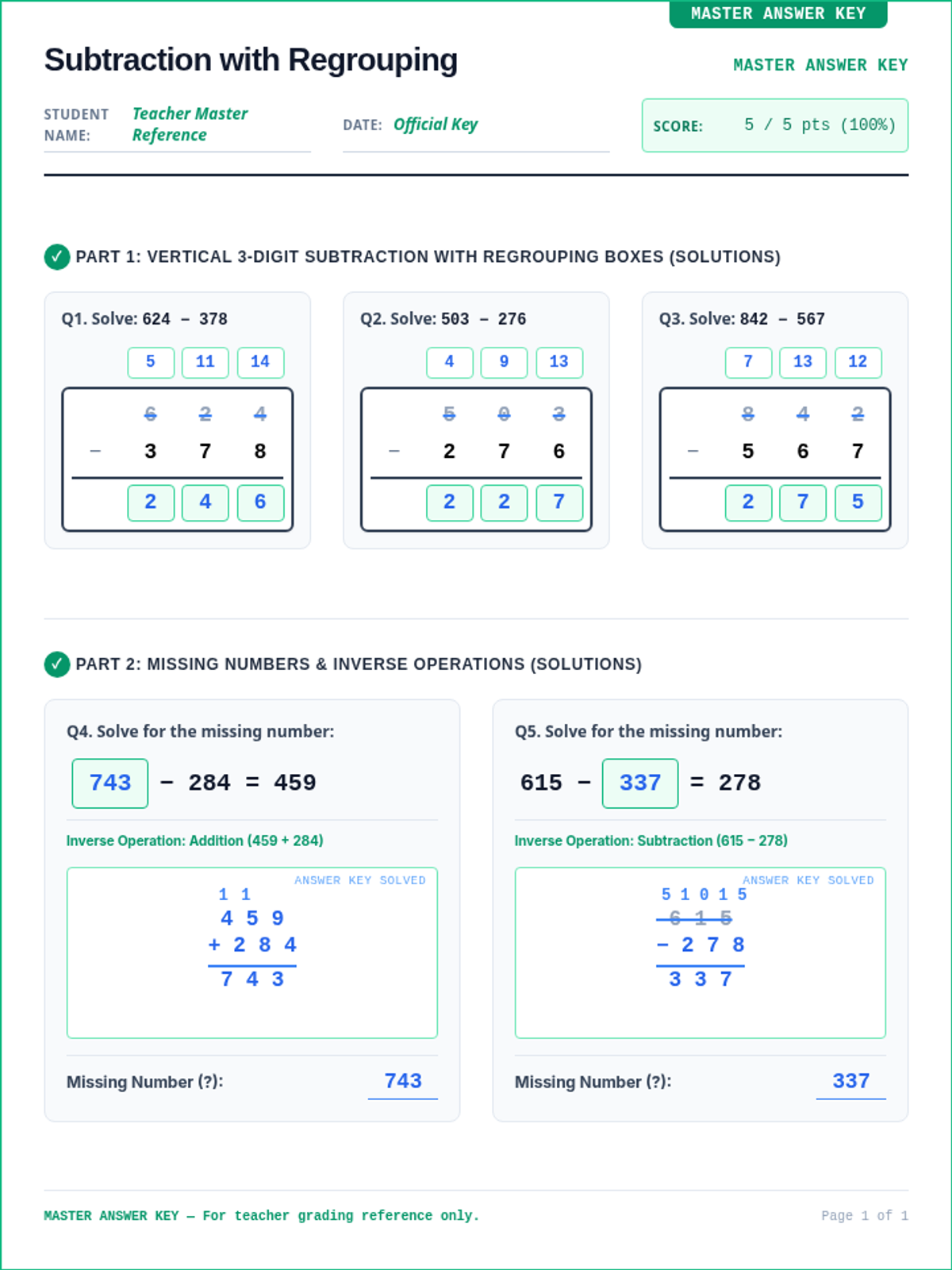
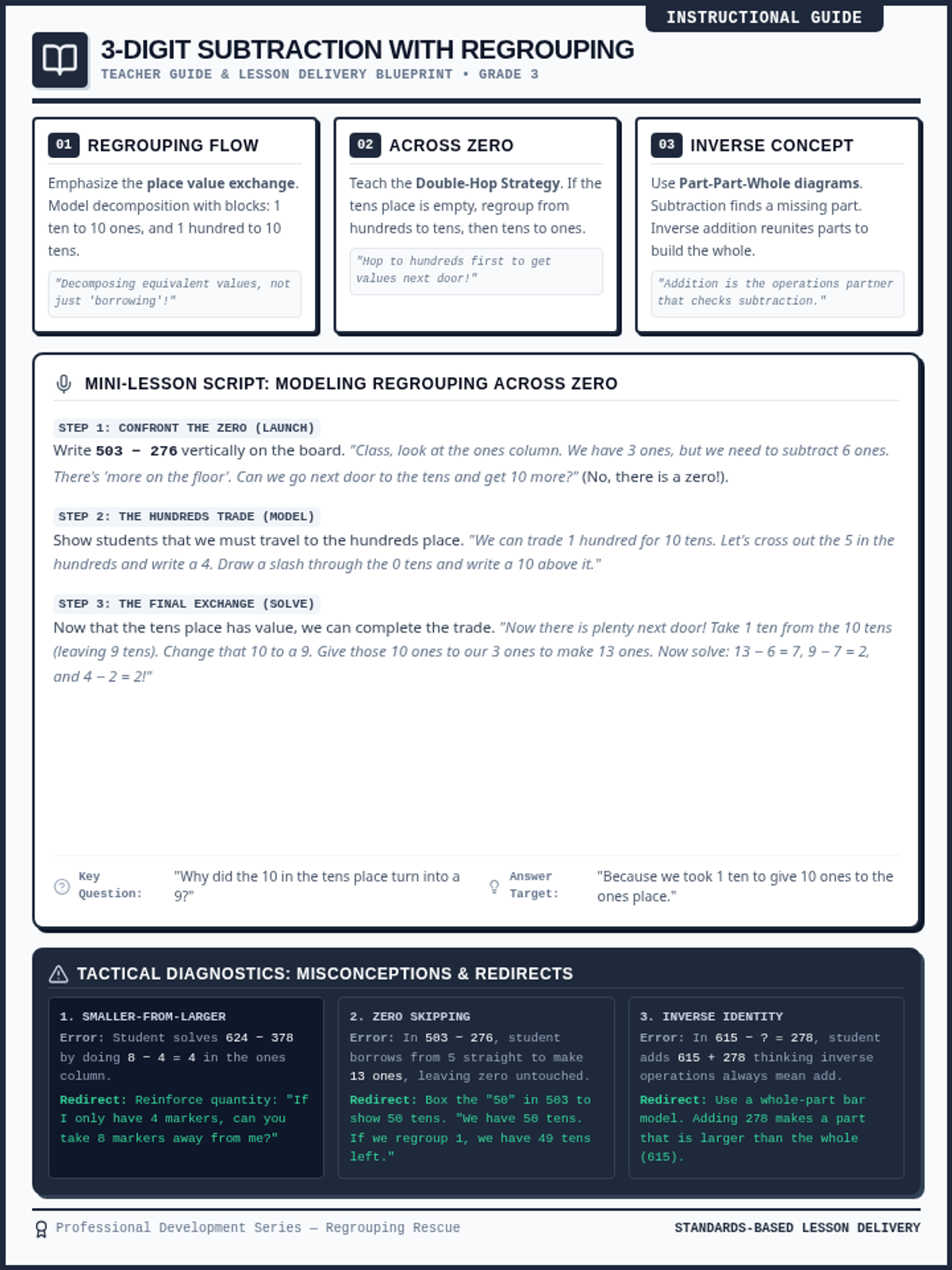
Students practice and master 3-digit subtraction with regrouping through targeted drill exercises.