A set of visual organizers and cover pages to help students navigate the five acts of Macbeth with simplified language and coloring-book aesthetics.
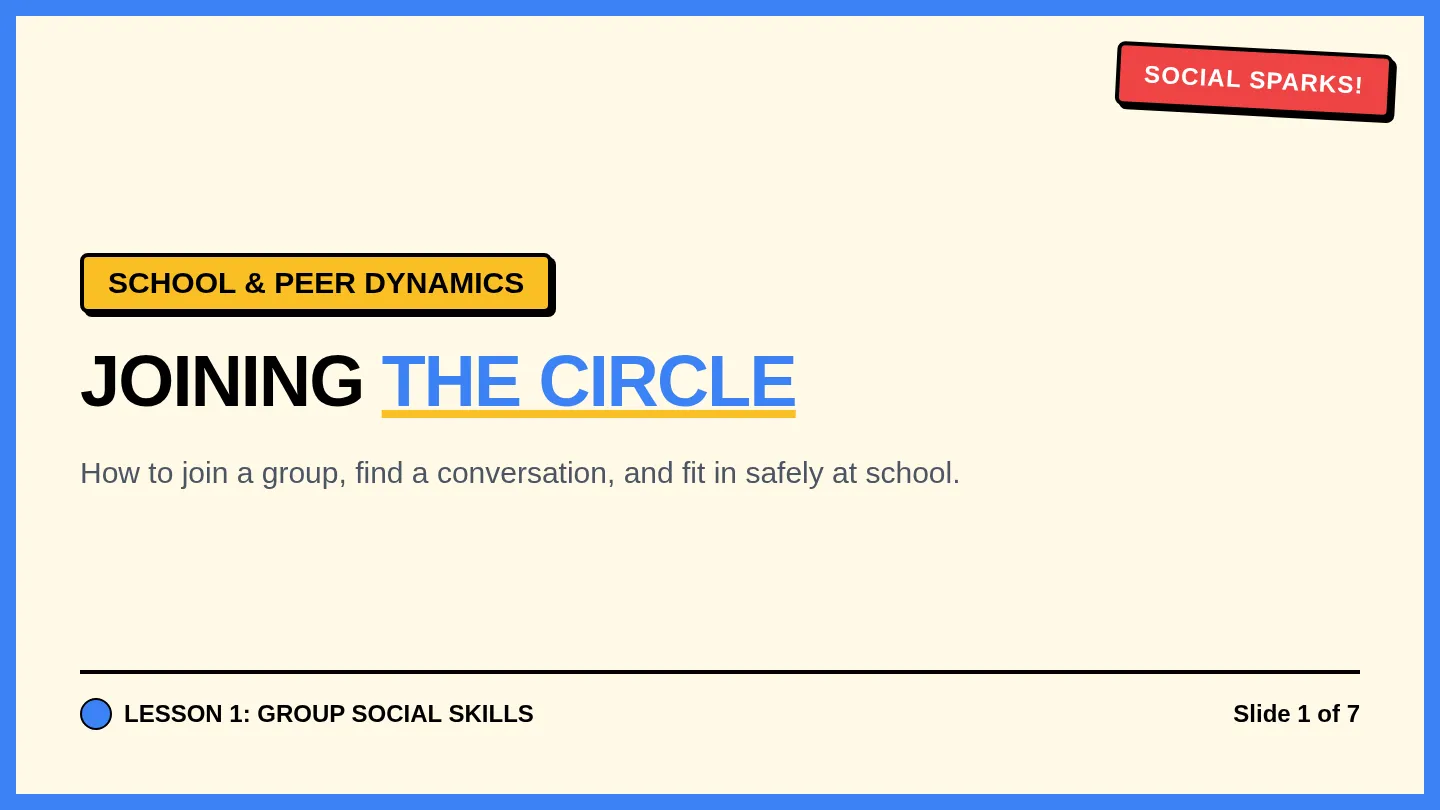
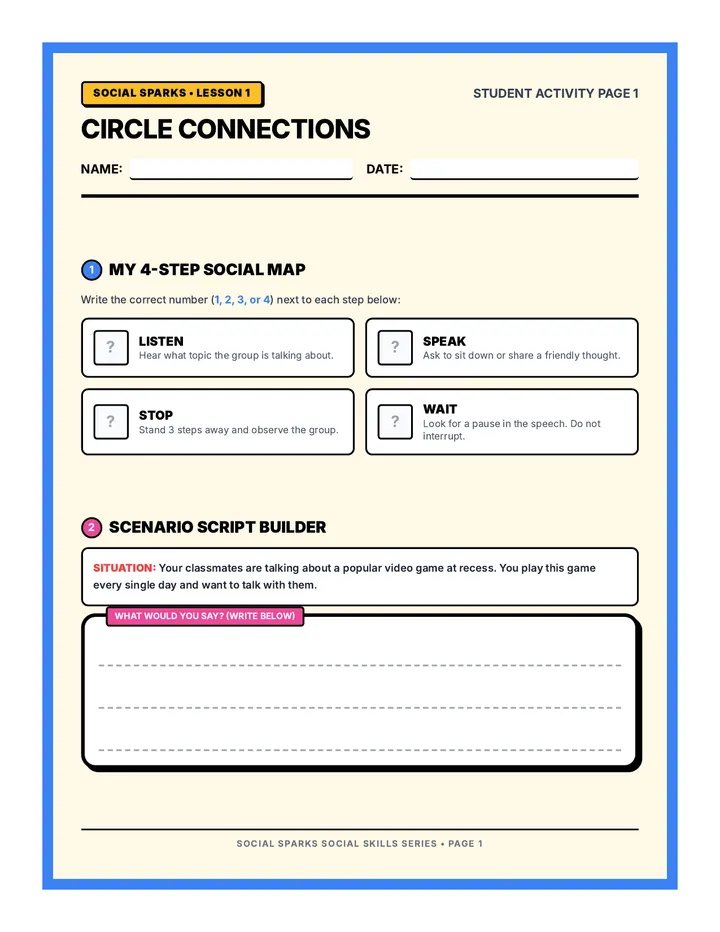
Teaches students how to join an ongoing peer conversation or group activity at school (e.g., at lunch or recess) using clear, structured visual steps. Includes an interactive slide deck and a visual reflection worksheet.
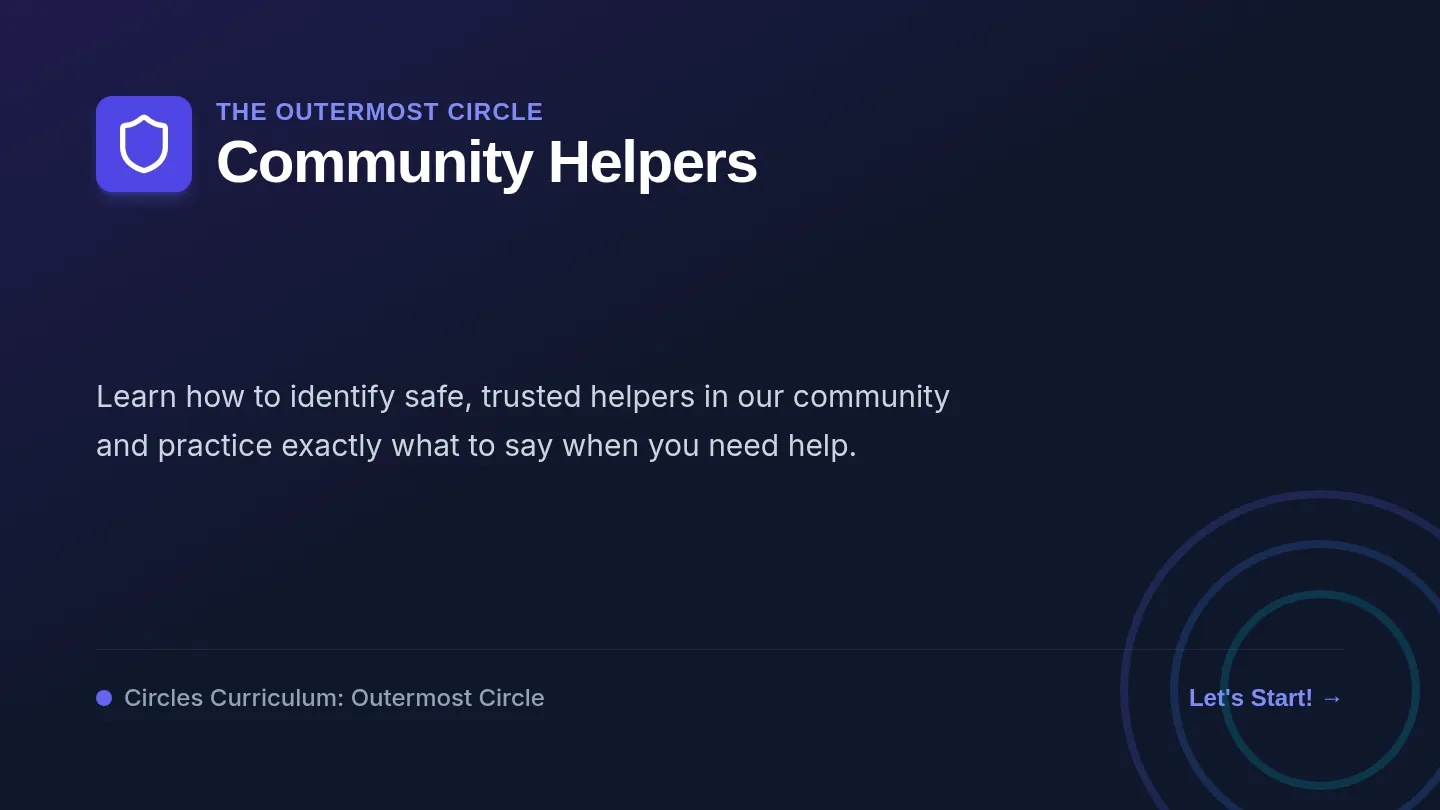
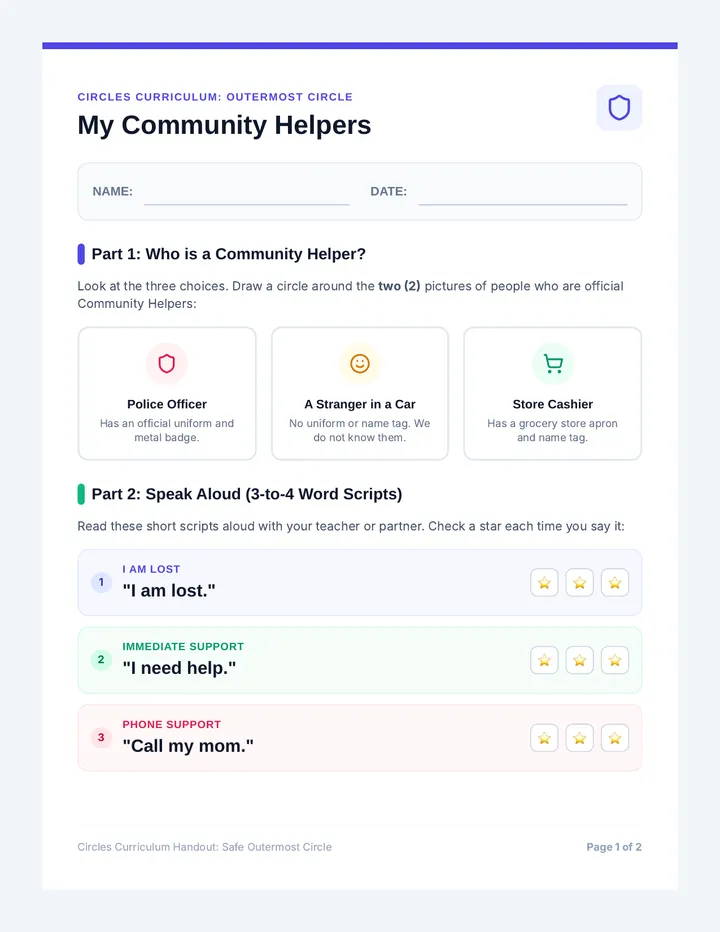
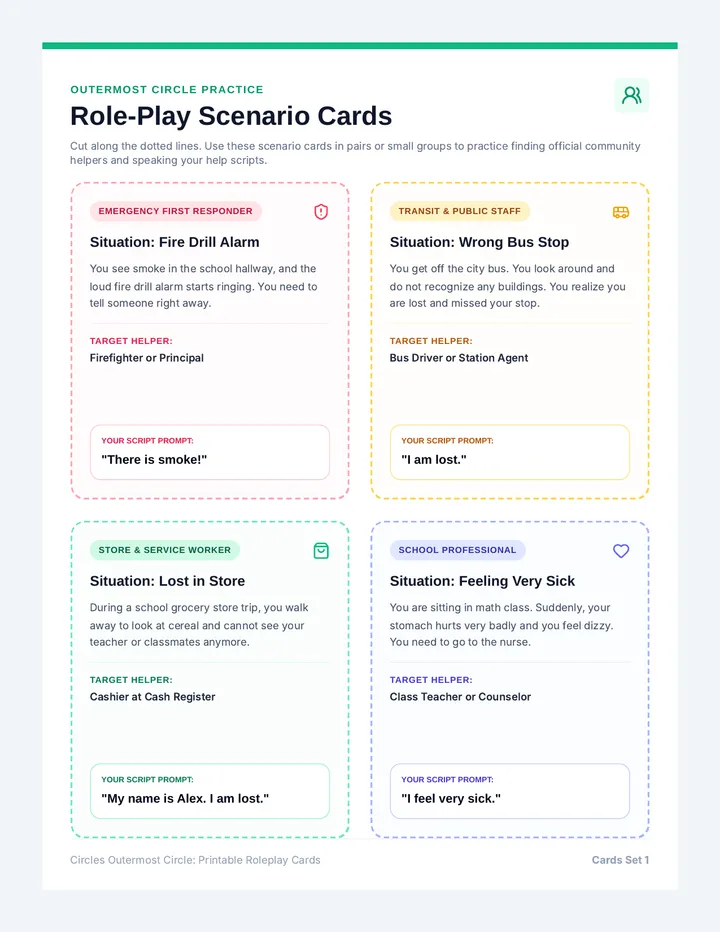
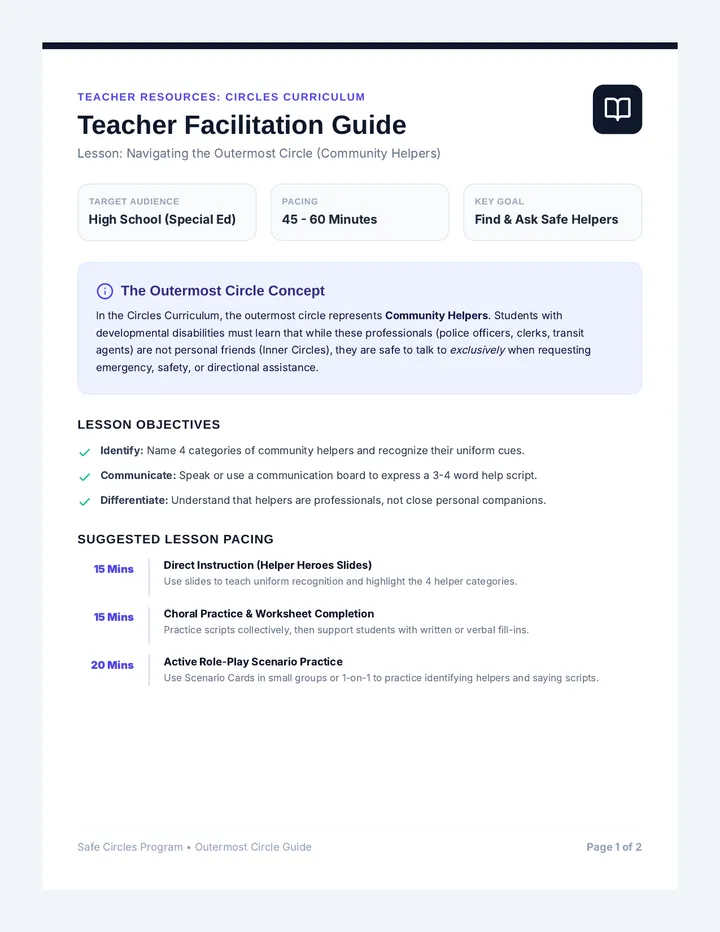
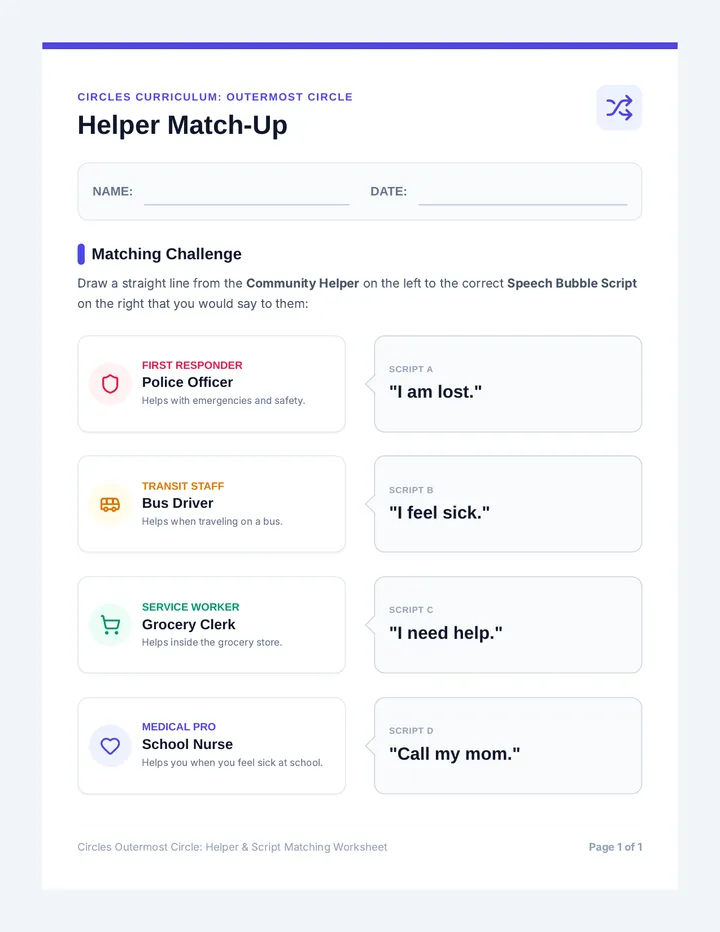
A comprehensive lesson for high school students with developmental disabilities focusing on the outermost circle of the Circles Curriculum: Community Helpers. It includes interactive slides, a structured script worksheet, ready-to-use role-play scenario cards, and a teacher facilitation guide.
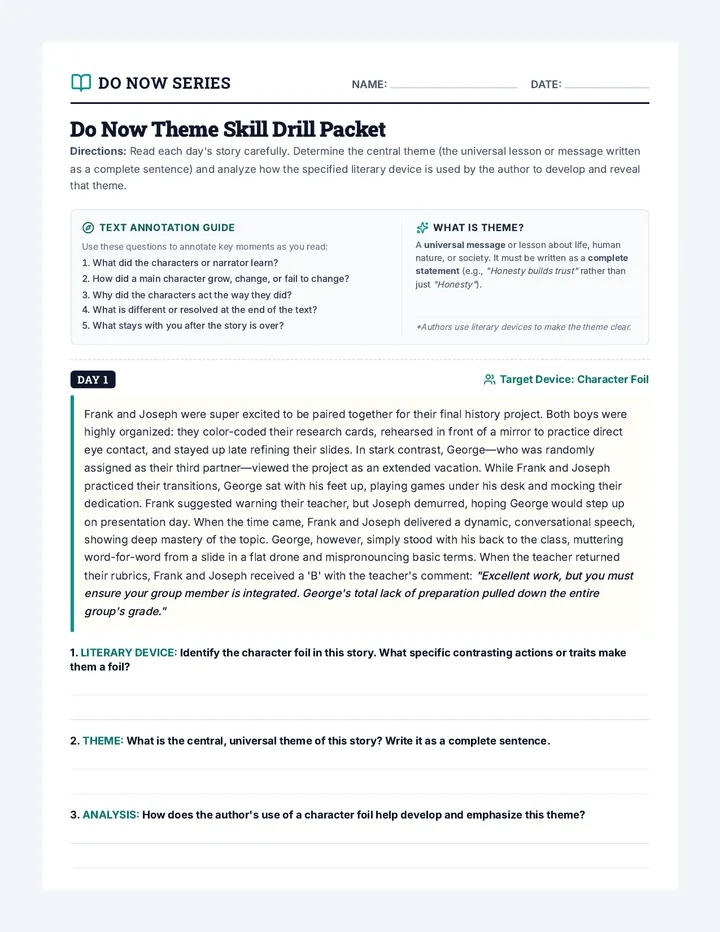
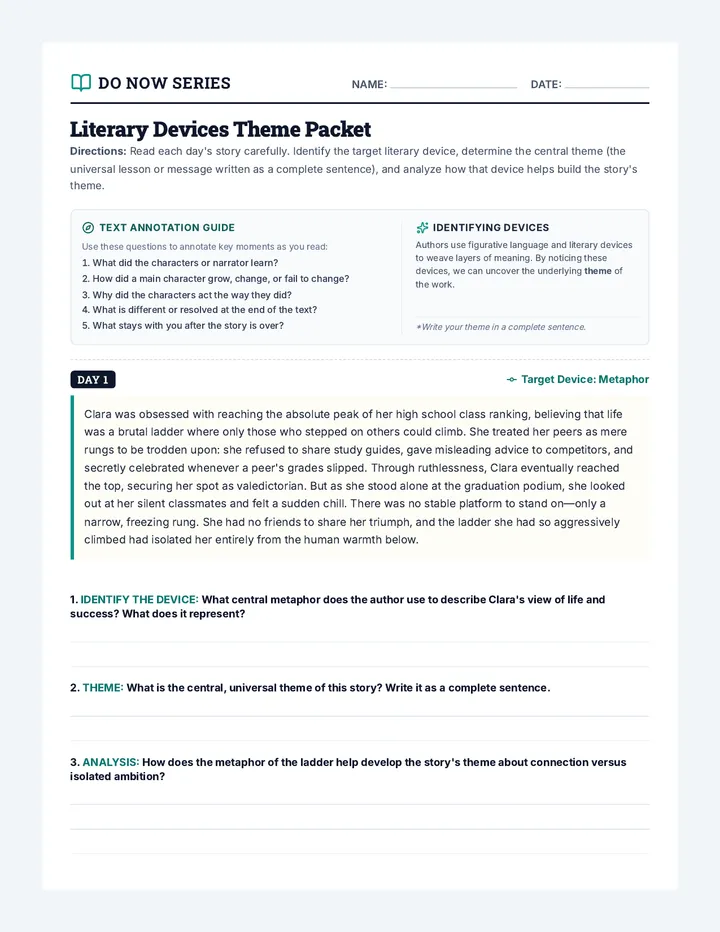
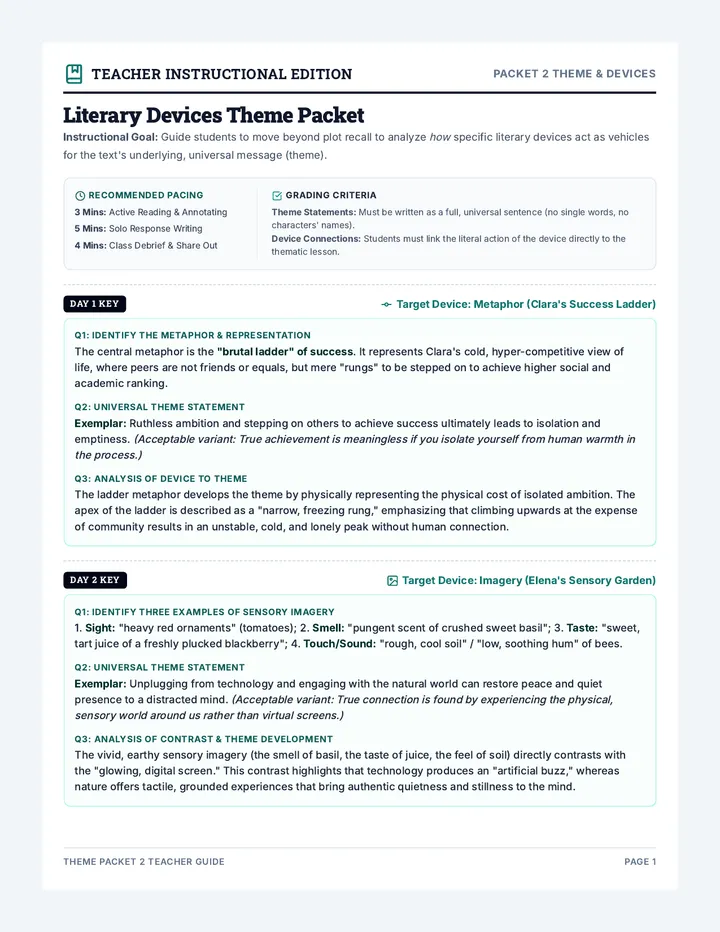
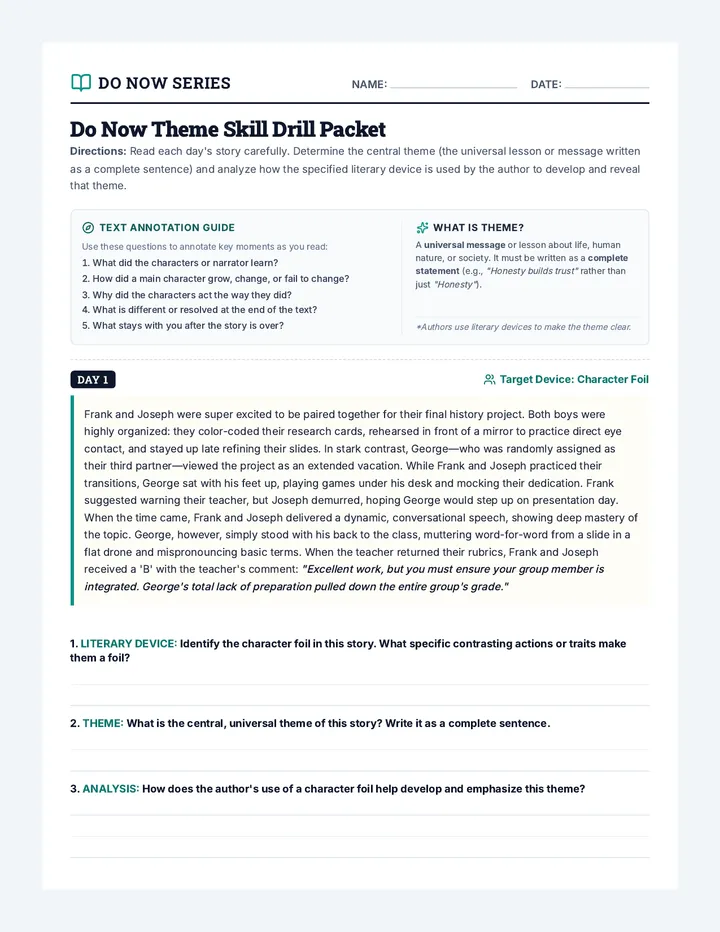
A cohesive lesson and drill series designed to help students master the connection between explicit literary devices and the central themes of literary texts.
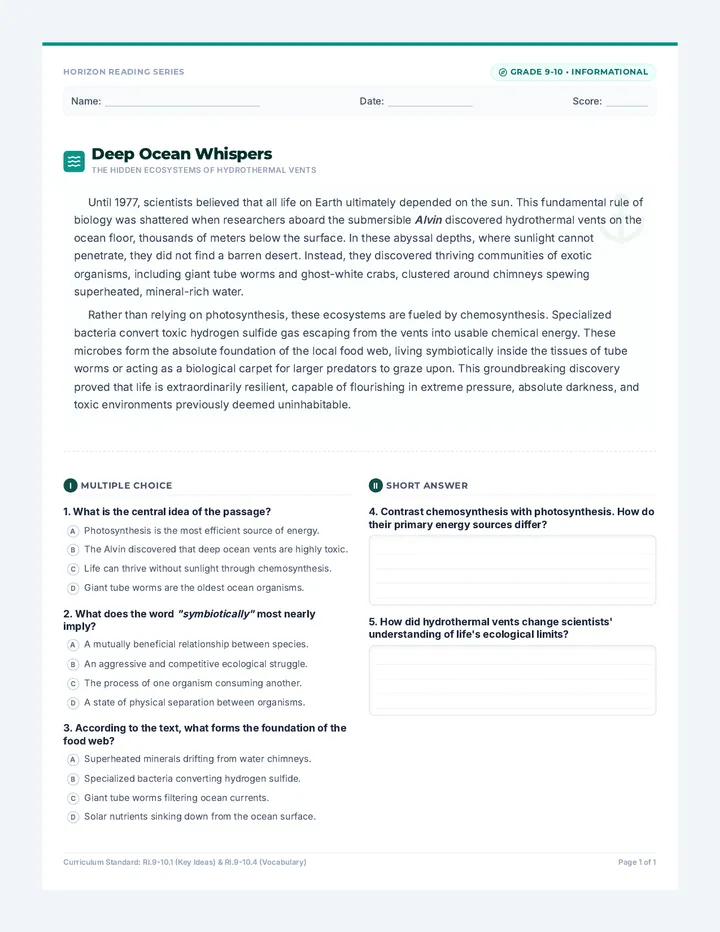
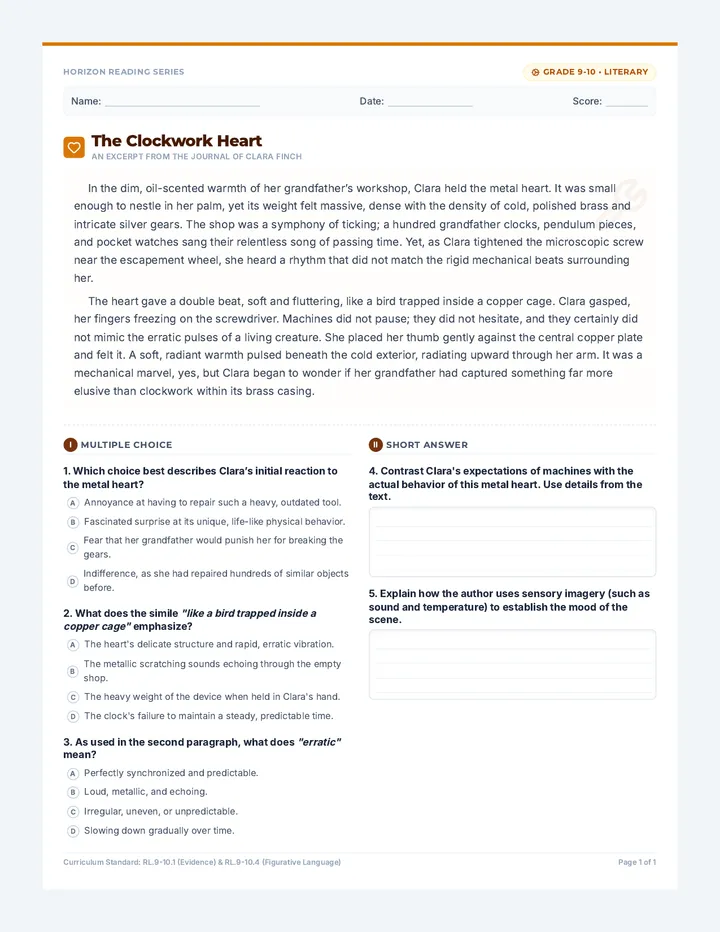
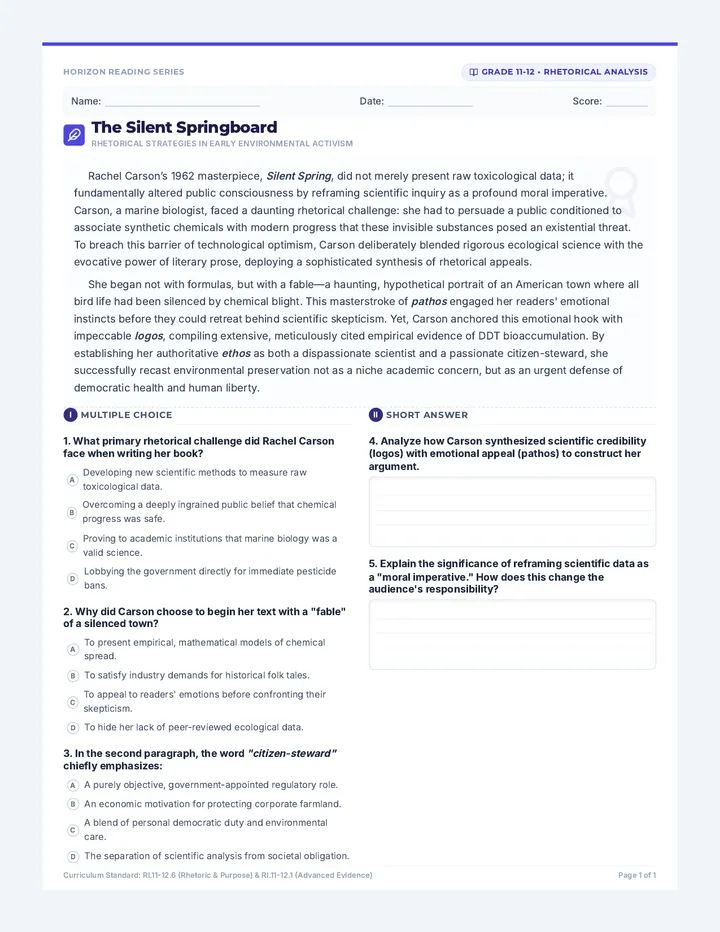
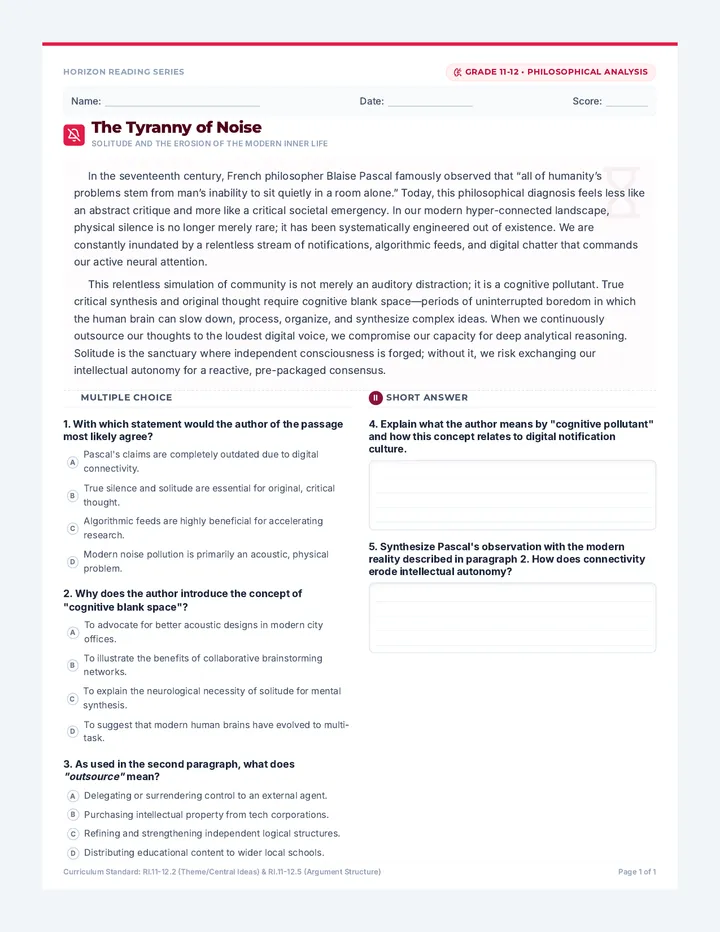
A foundational set of four reading comprehension sheets, split between Grade 9-10 (focusing on core inference and vocabulary) and Grade 11-12 (emphasizing rhetorical analysis and synthesis).
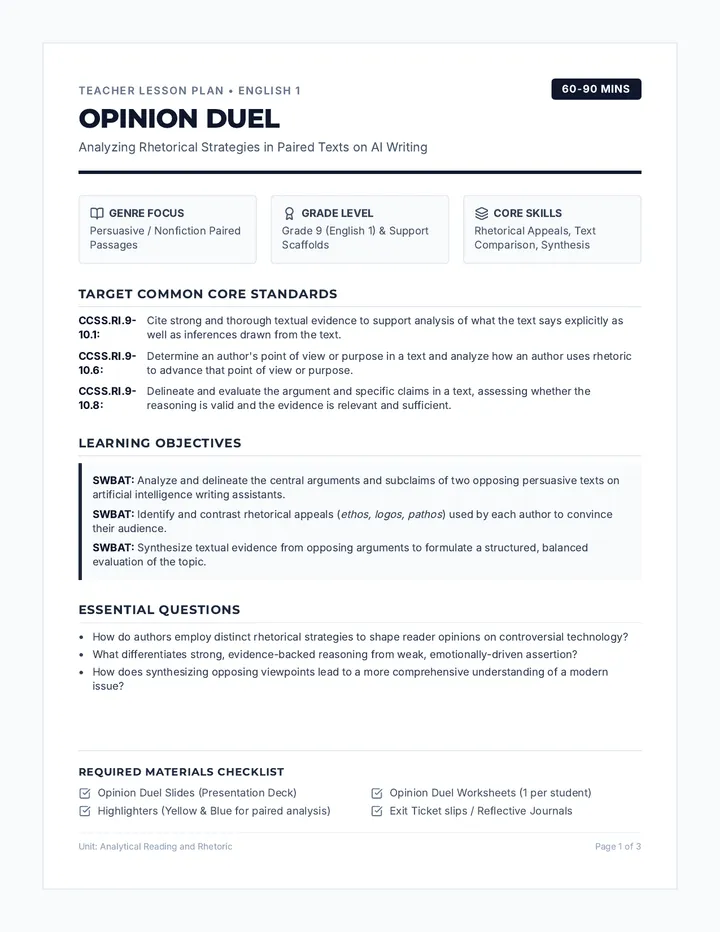
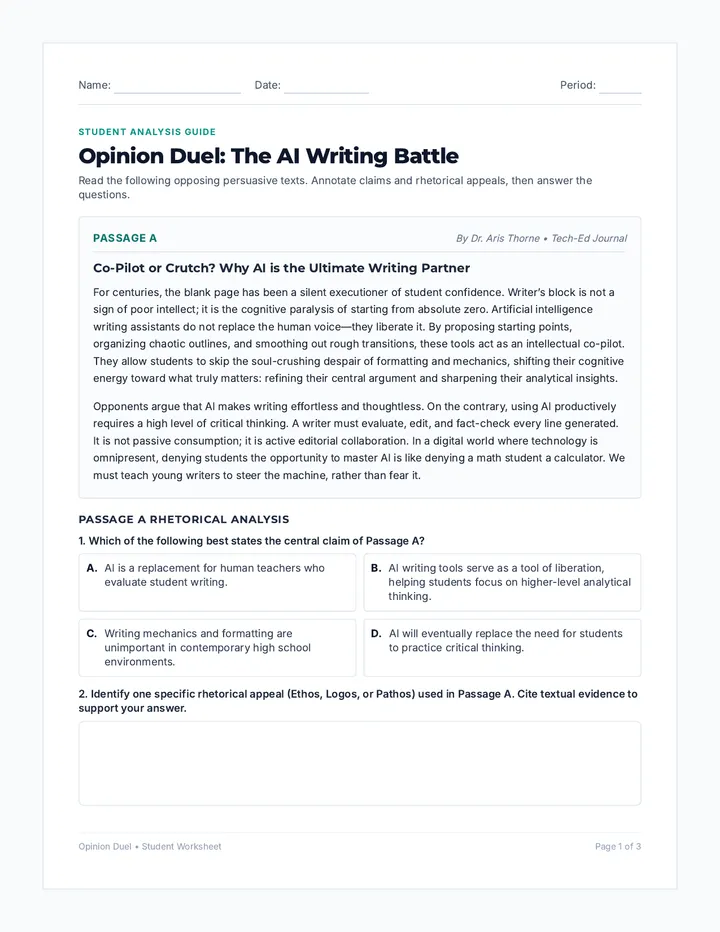
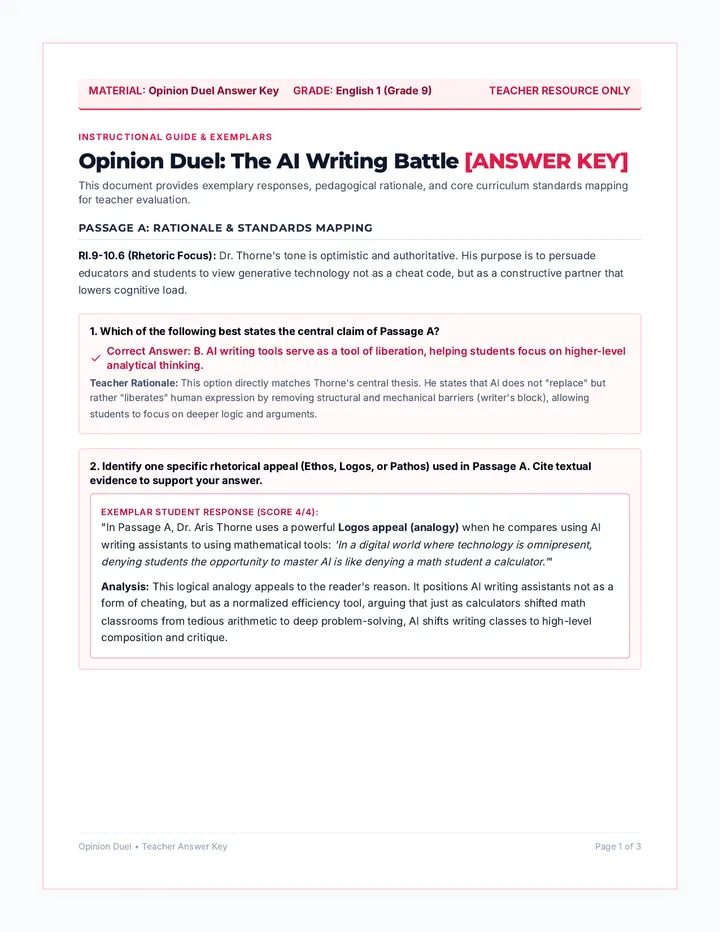
An English 1 lesson focused on comparing and analyzing paired persuasive texts about the use of AI writing assistants. Students learn to evaluate contrasting arguments, identify rhetorical devices, and synthesize opposing viewpoints using text-based evidence.
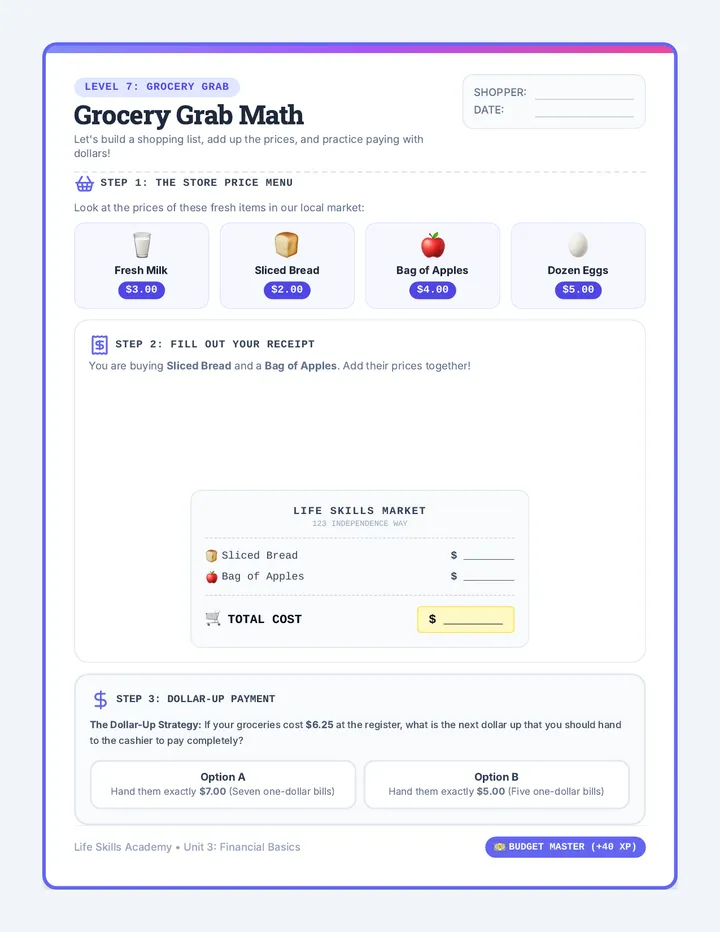
Focuses on grocery shopping, making a grocery list, identifying food groups, and understanding store sections to locate items independently.
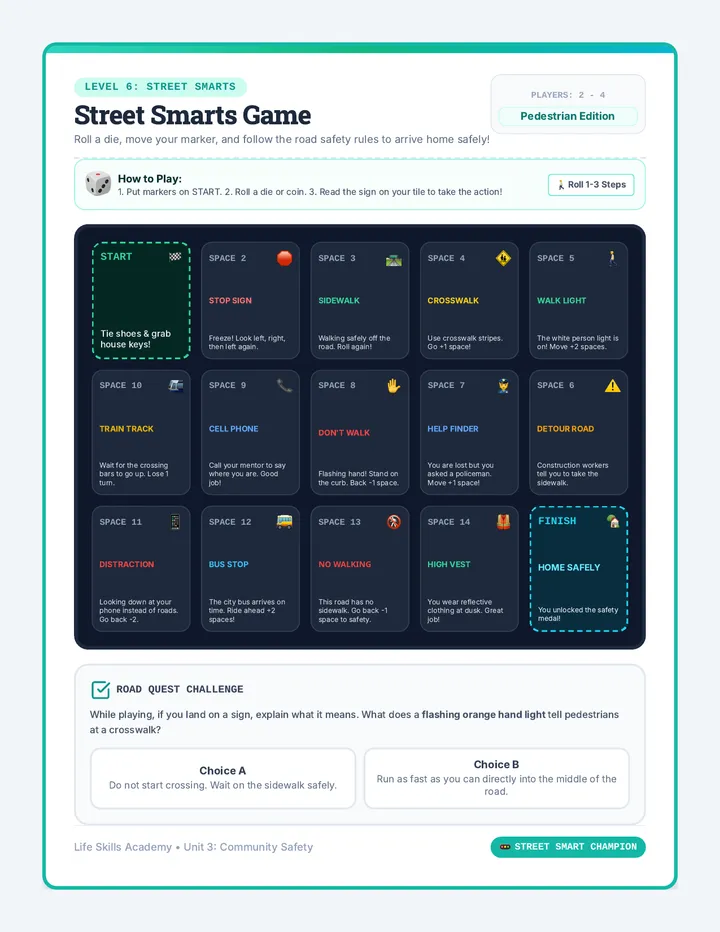
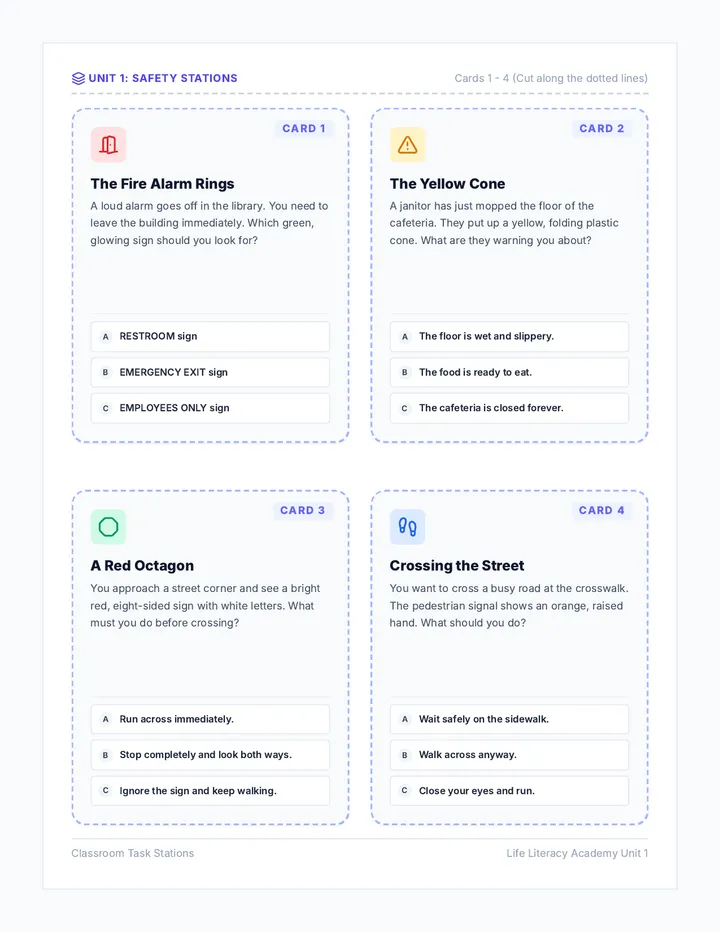
Teaches safety signs, navigation, and community navigation skills. Students learn to read pedestrian signs, crosswalk signals, and locate help in public spaces.
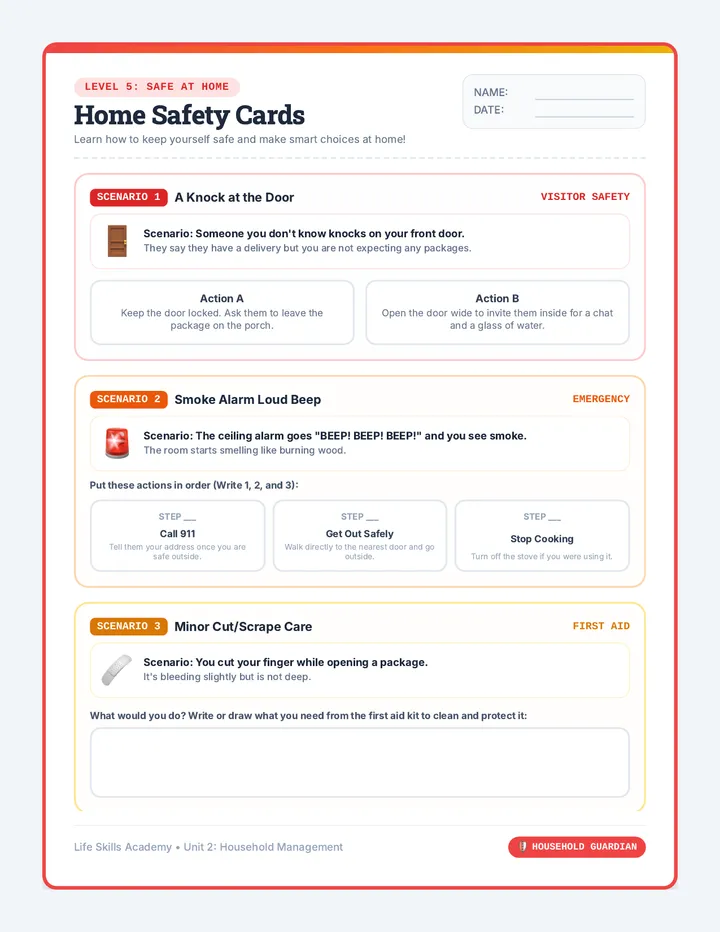
Teaches critical safety skills for the home environment, including dealing with emergencies, basic first aid, and managing visitors safely.
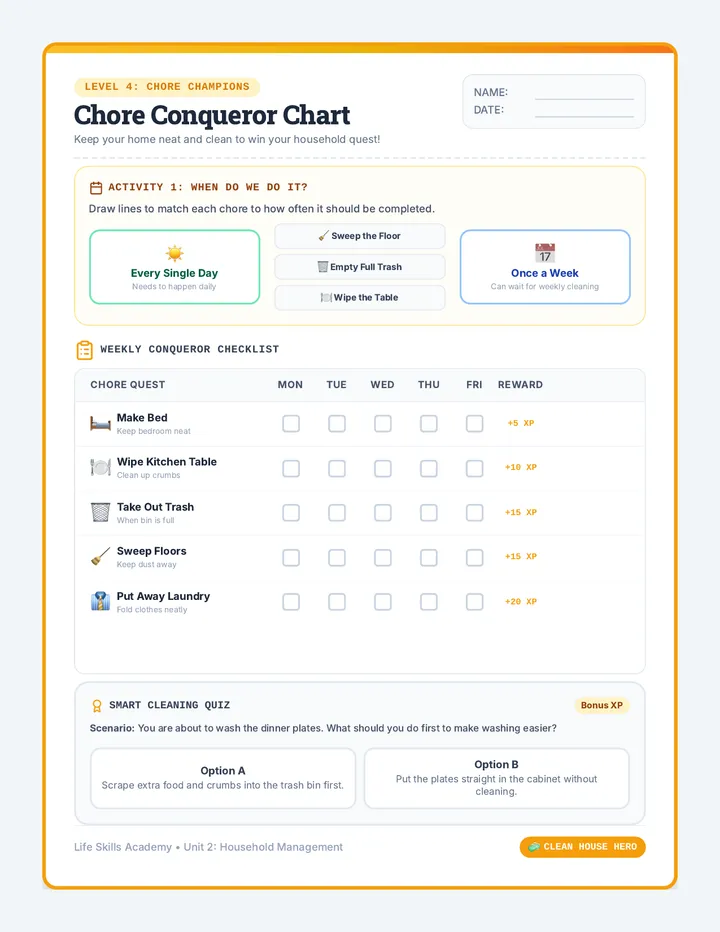
Focuses on household cleaning tasks, organizing chores, and maintaining a clean living space. Students practice sorting chores by frequency and completing a chore checklist.
Covers essential kitchen safety rules, using simple kitchen tools, and selecting healthy food. Students practice identifying safe and unsafe kitchen scenarios.
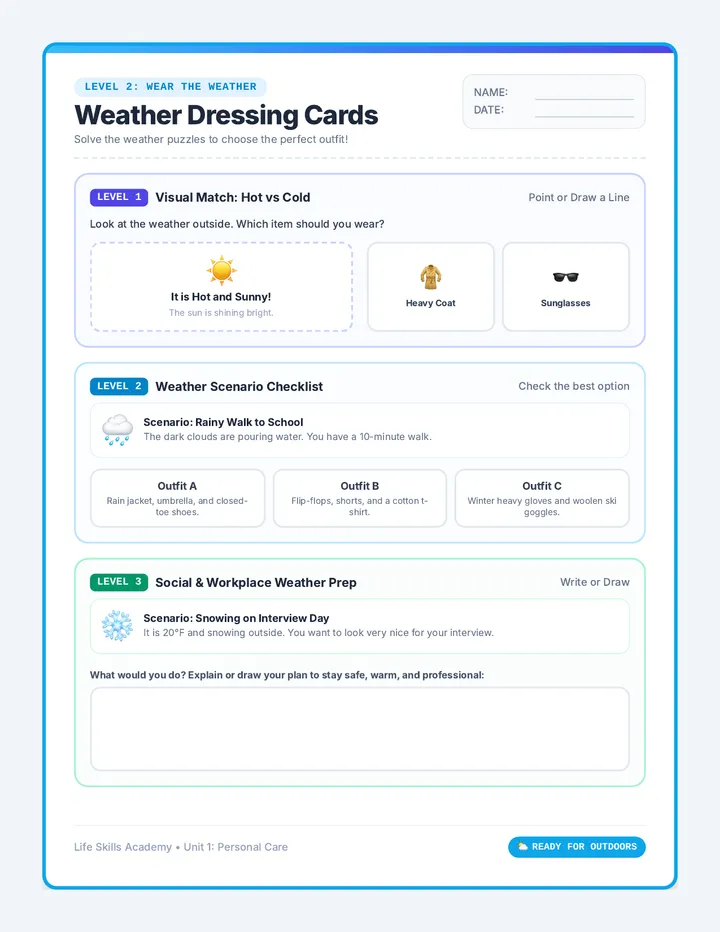
Teaches students to check the weather and choose appropriate clothing and accessories. Focuses on seasonal dressing and selecting clothing for safety and comfort.
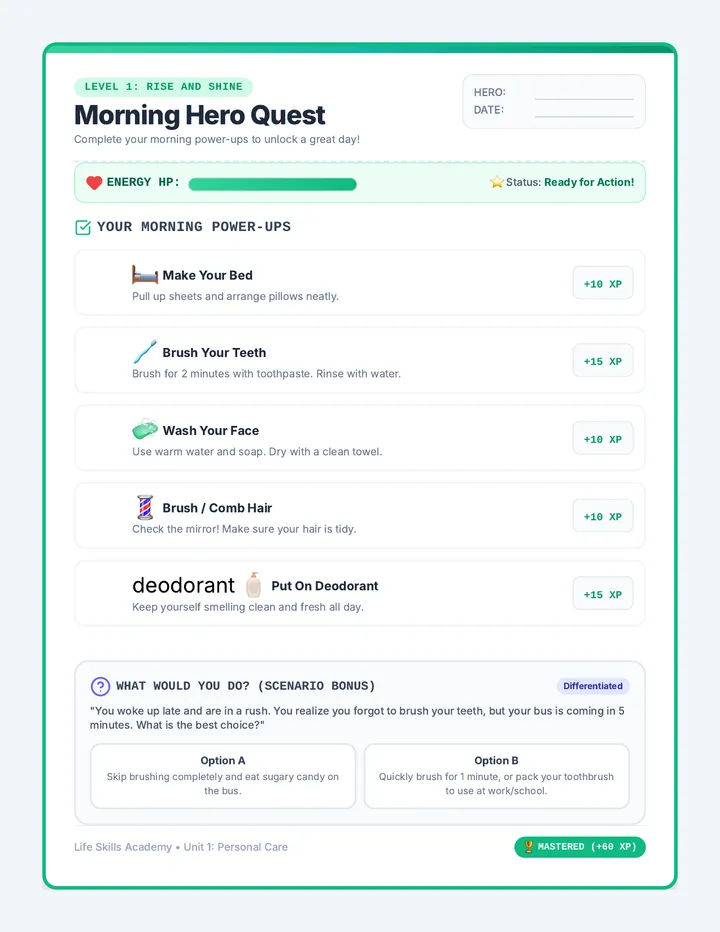
Focuses on morning routines and personal hygiene. Students learn to use visual checklists for brushing teeth, washing up, and self-care.
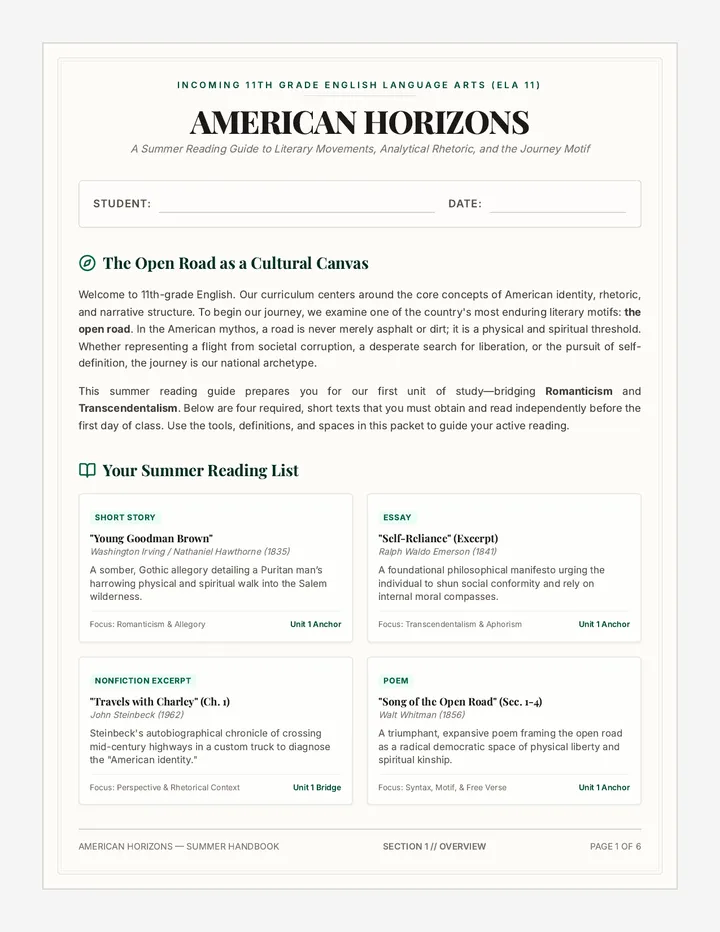
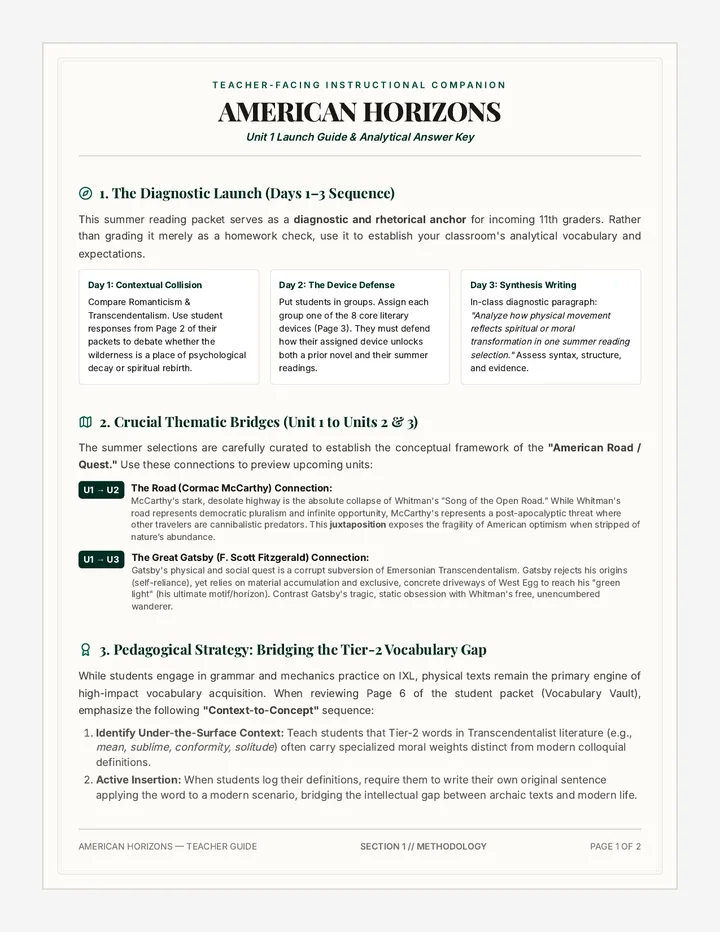
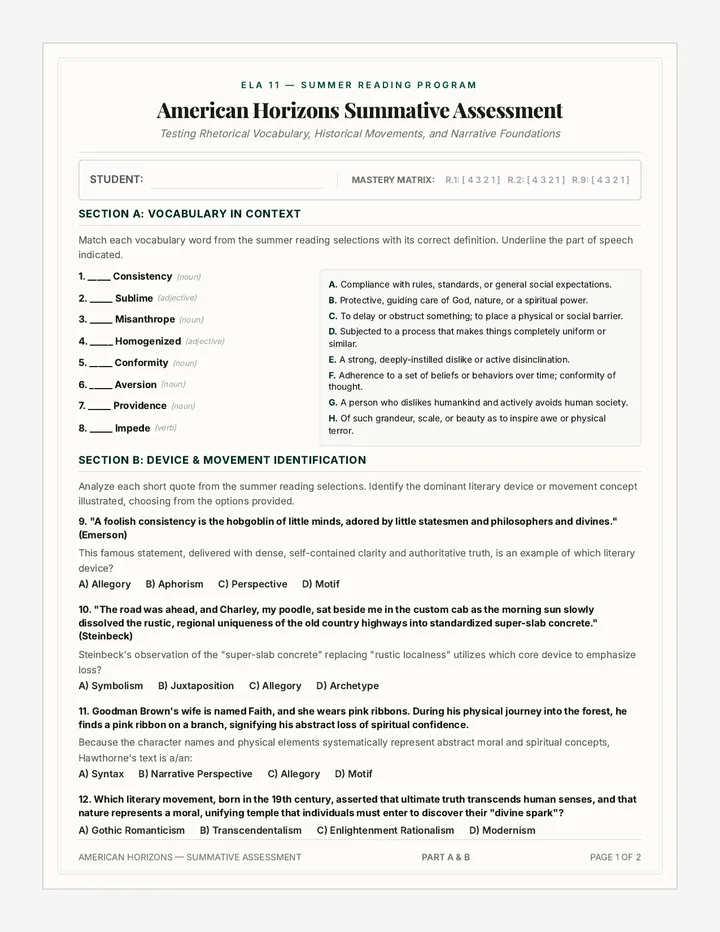
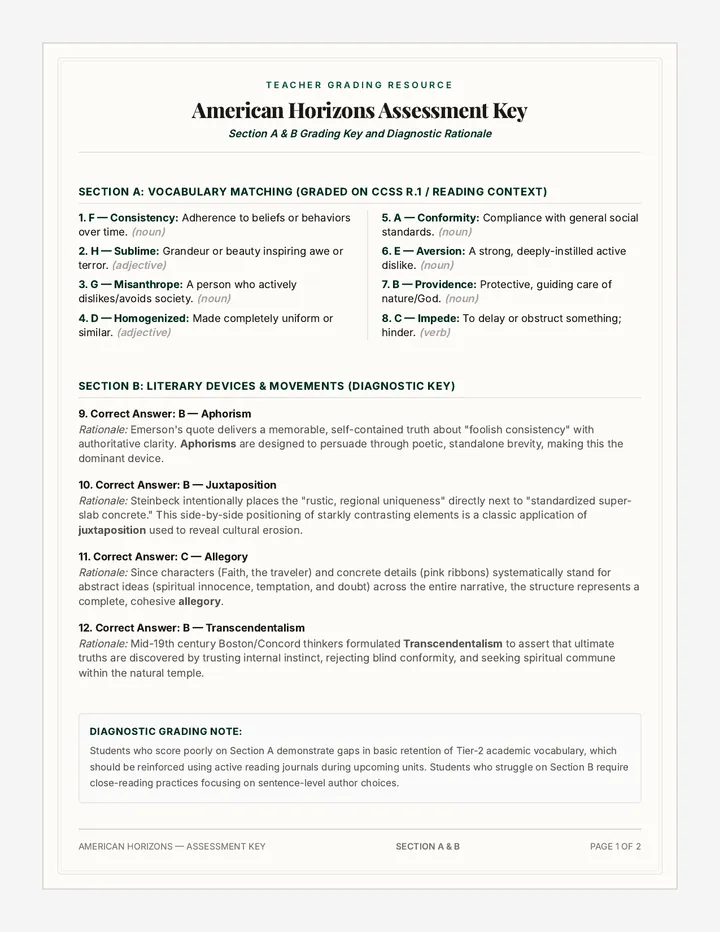
A preparatory summer reading curriculum designed to bridge historical literary movements, analytical vocabulary, and journey-themed texts for incoming 11th graders.
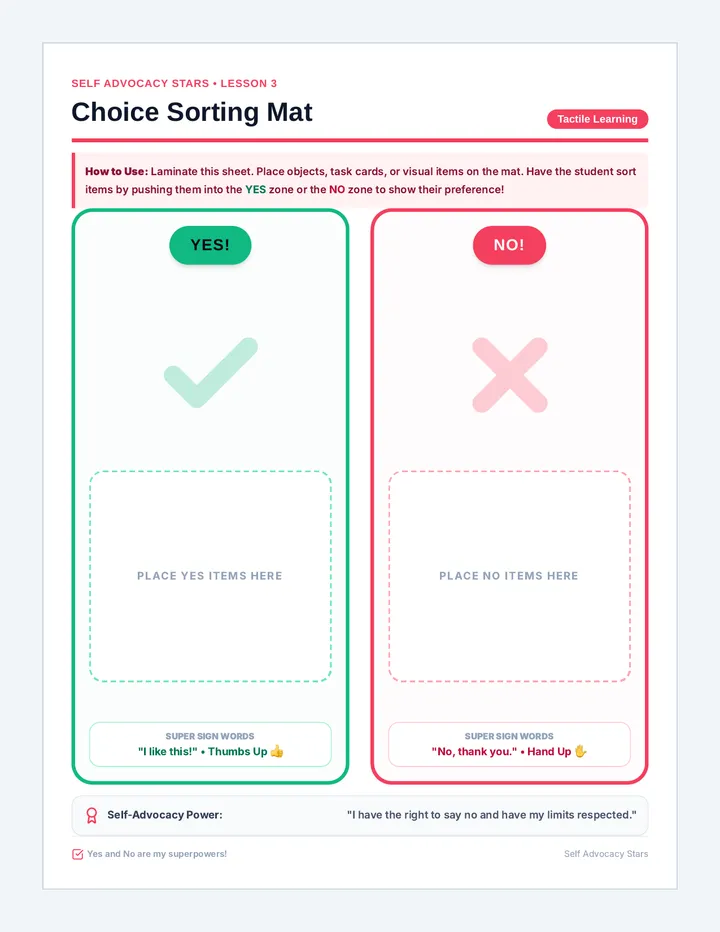
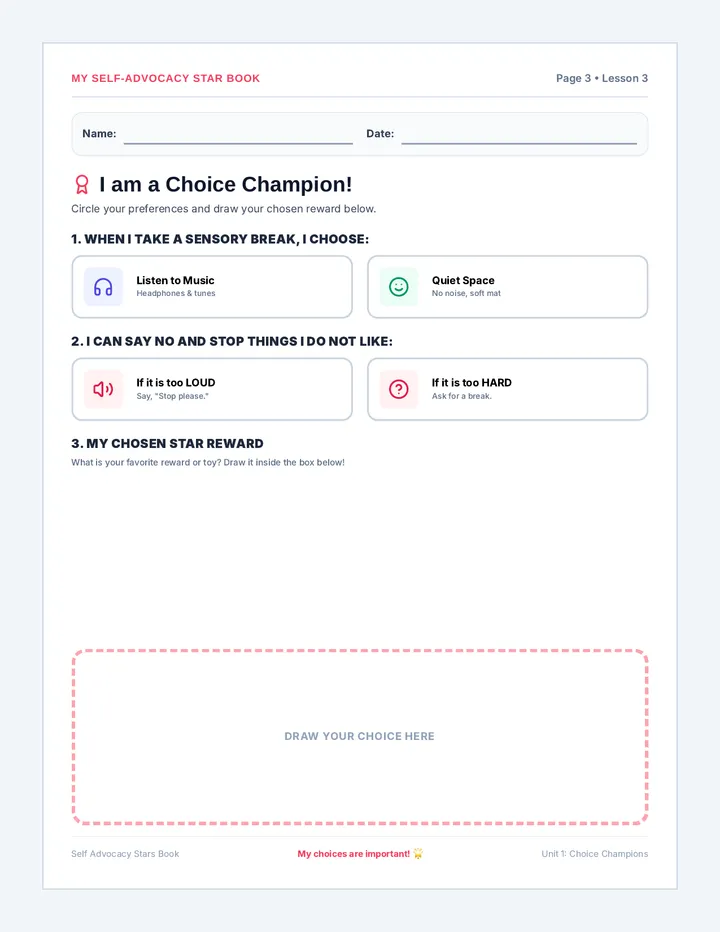
Students practice making independent choices, expressing preferences, and setting boundaries (saying "yes" or "no") using structured choice boards, tactile sorting mats, and interactive role-play.
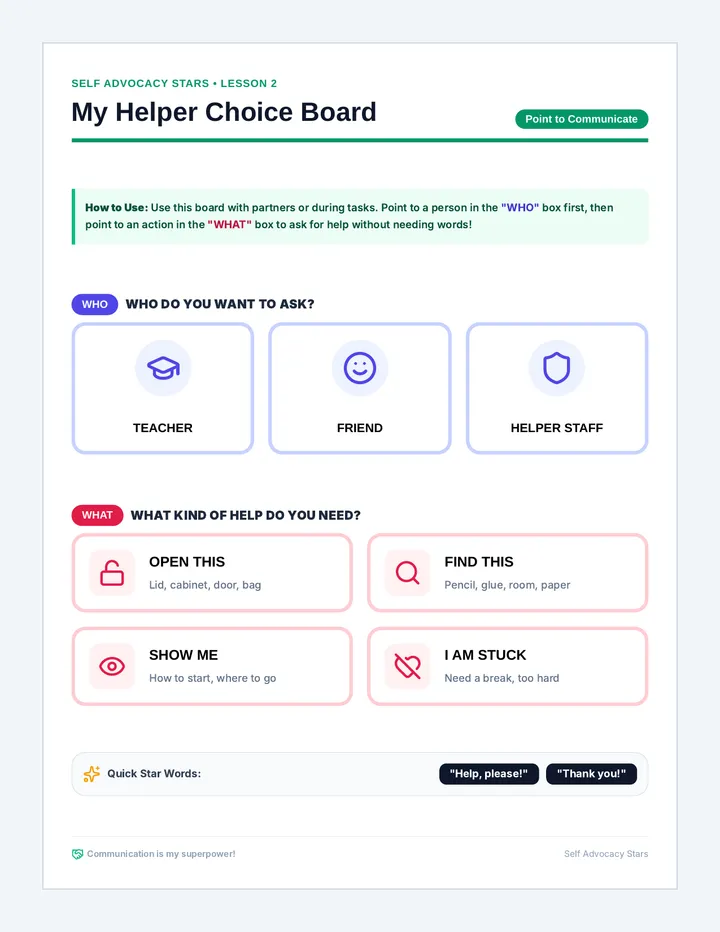
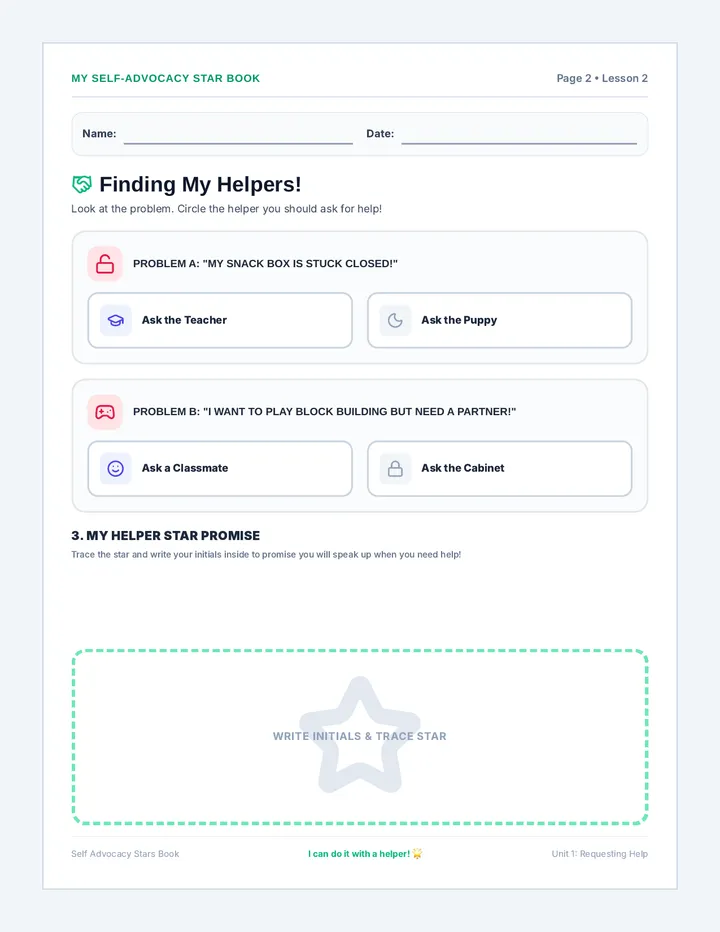
Students practice identifying when they need help, who to ask (teachers, peers, or helpers), and how to communicate that need using visual phrase cards and guided collaborative practice.
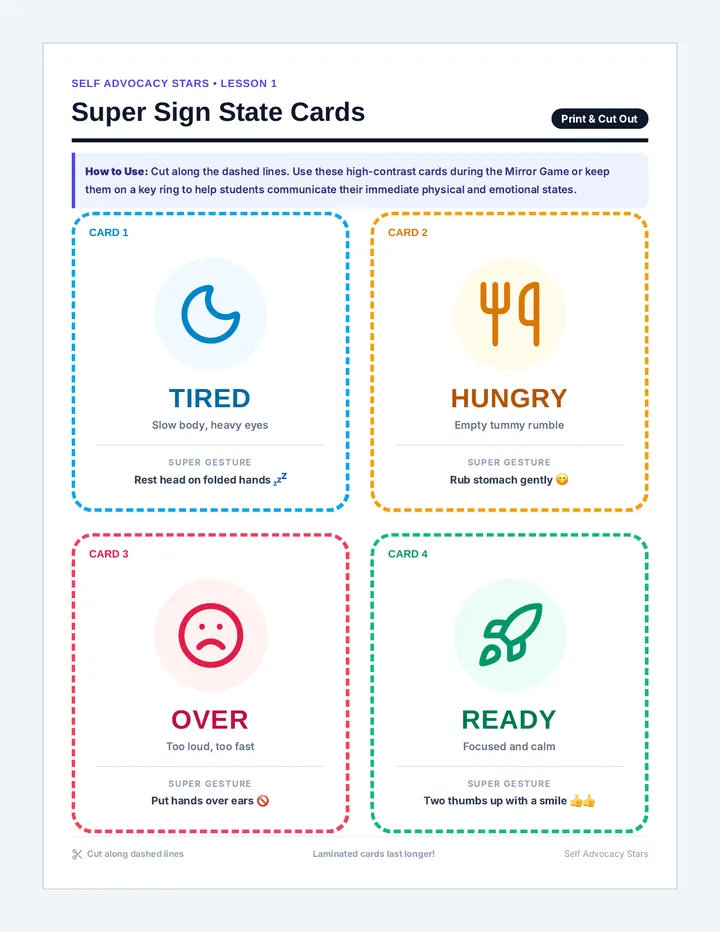
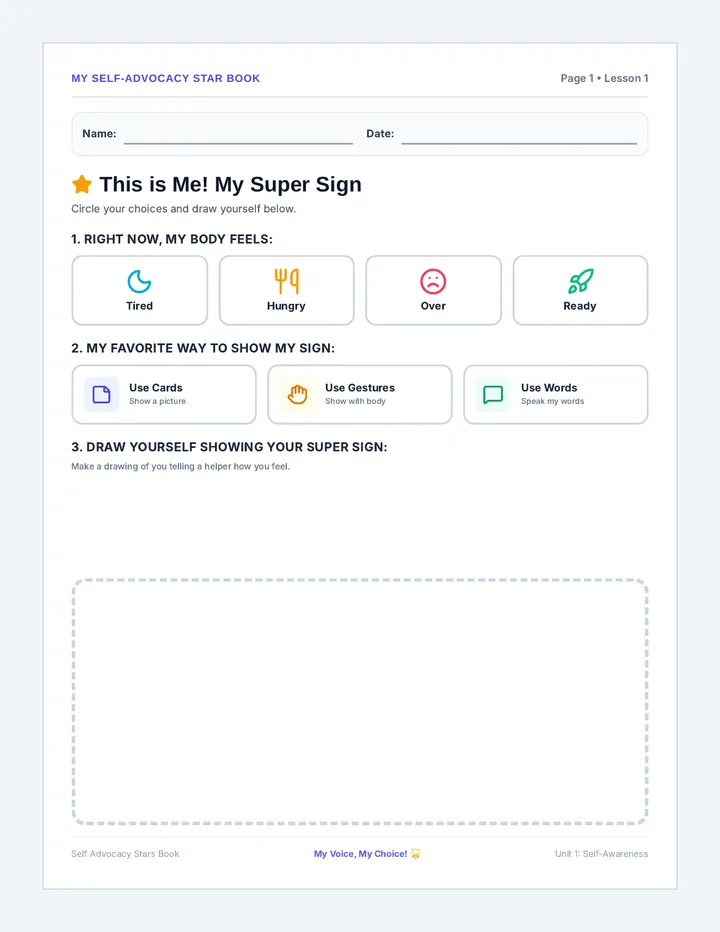
Students learn to recognize and communicate physical and emotional states (like tired, hungry, overwhelmed, or ready to learn) using simple gestures, vocalizations, or visual symbol cards.
Students compile their four-sentence creative stories into a comic strip layout, add simple illustrations, and celebrate their storytelling accomplishments.
Students resolve their story's problem, writing their fourth sentence using "Then, ..." and selecting a happy resolution symbol.
Students introduce a simple conflict or surprise for their character, writing a sentence with "Suddenly..." and problem-based action icons.
Students choose a creative setting (such as outer space or a magic forest) and write a sentence using "They are in..." with visual setting prompt cards.
Students invent a fictional character (such as a superhero or friendly animal) and write a sentence describing them using "This is..." and physical descriptors with visual symbols.
Students present their informational posters to peers using verbal or non-verbal communication supports, celebrating their factual discoveries.
Students assemble their key fact, evidence sentence, and concluding statement into a coherent, illustrated informational poster.
Students conclude their informational piece by writing a third sentence that summarizes their topic using a "Now you know about..." sentence starter and visual symbols.
Students locate visual evidence or supporting clues (such as food or habitat icons) to back up their first key fact, writing a second sentence using "It has..." or "It lives..." frames.
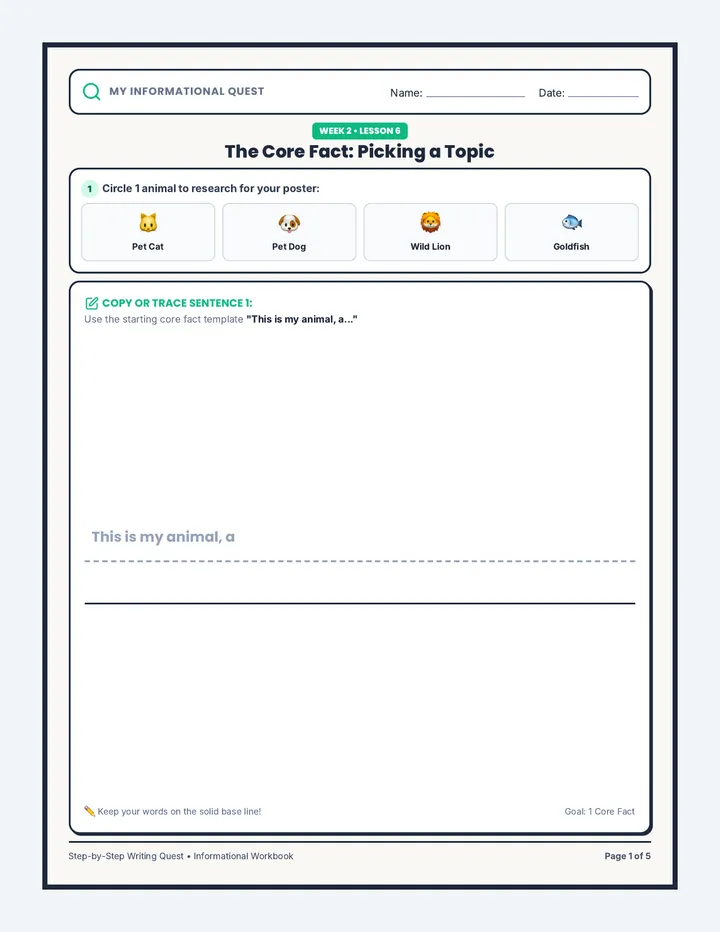
Students choose an informational topic (such as an animal or a local community job) and identify their first key fact using a visual matching organizer and "This is a..." sentence frame.
Students practice reading their three-sentence narratives to a peer or teacher, using visual communication boards as support, and celebrate their completed stories.
Students compile their first, middle, and ending sentences into a complete, logically sequenced three-sentence personal narrative, adding simple decorative illustrations.
Students conclude their personal narrative by writing about the final event using a "Last, I..." sentence starter, focusing on chronological closure and a simple emotion word.
Students continue their personal narrative by writing about the middle event using a "Next, I..." sentence starter and corresponding visual icons to show chronological order.
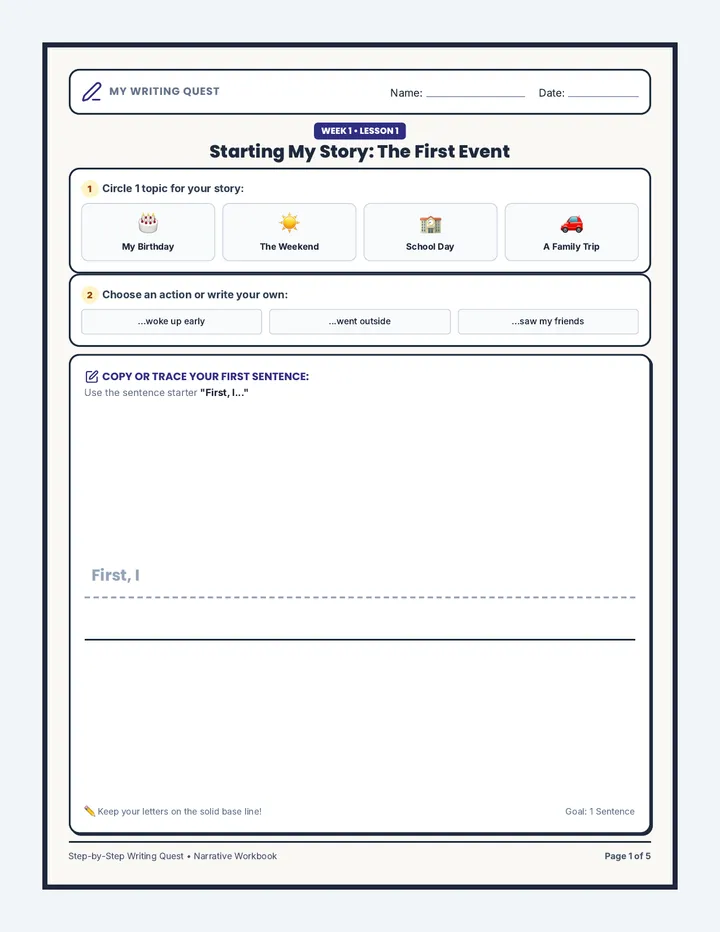
Students choose a personal topic (such as a favorite memory or weekend activity) and write their first complete sentence describing the first event using a "First, I..." sentence starter and visual picture cards.
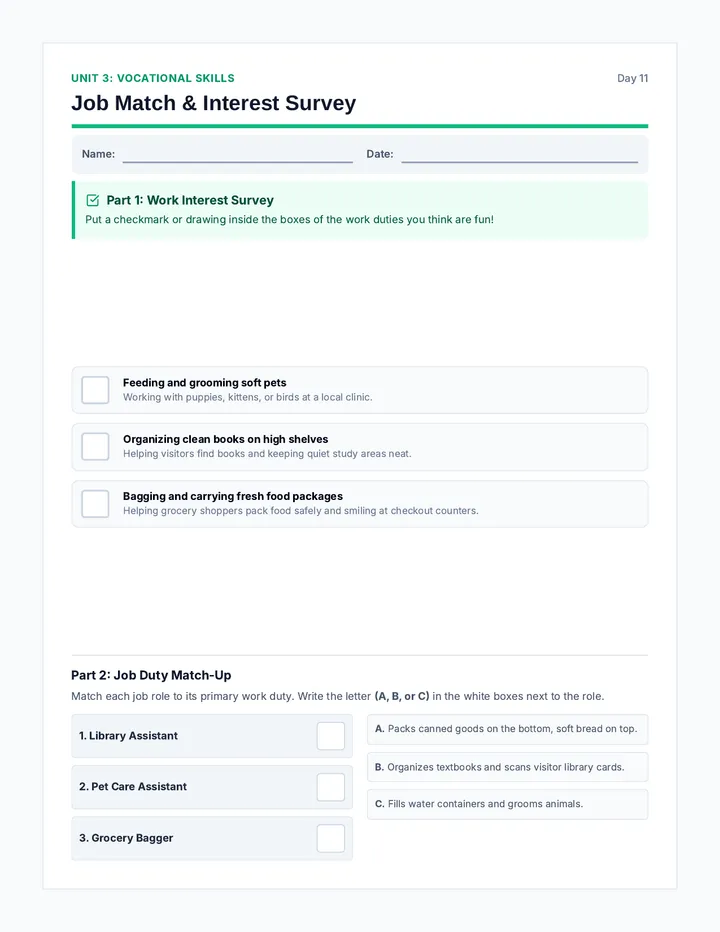
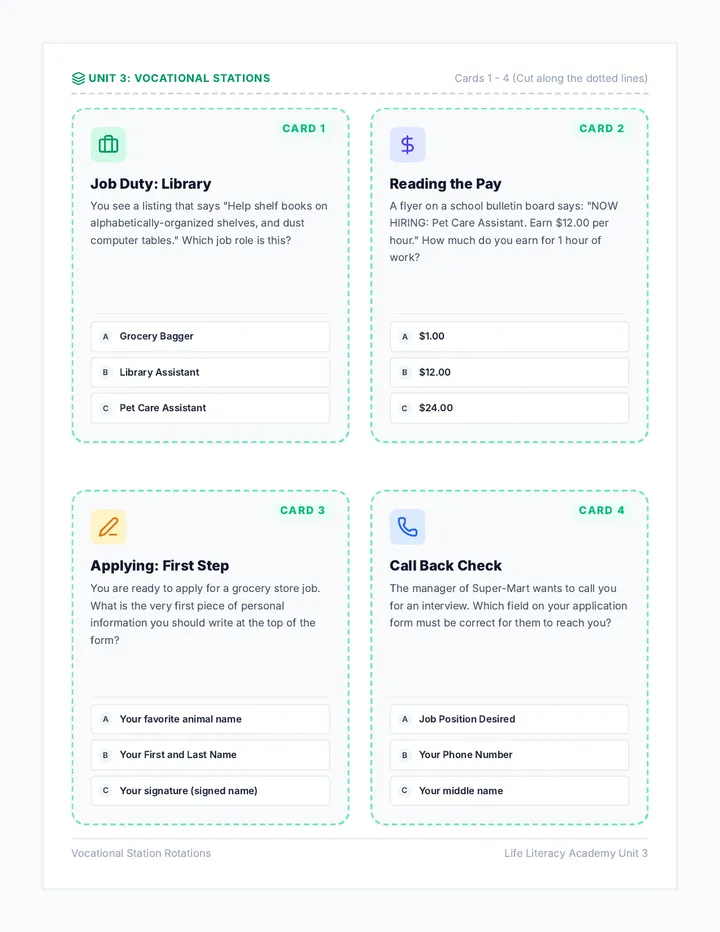
Days 11 to 15 focus on reading simple job postings, filling out functional job applications, understanding work sequencing, and determining theme/purpose.
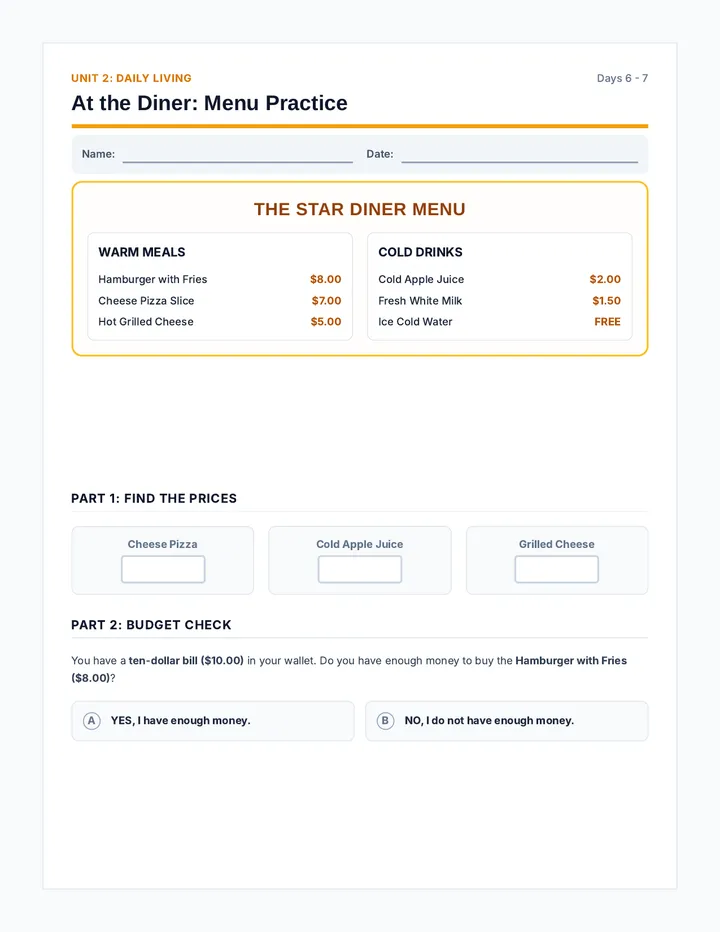
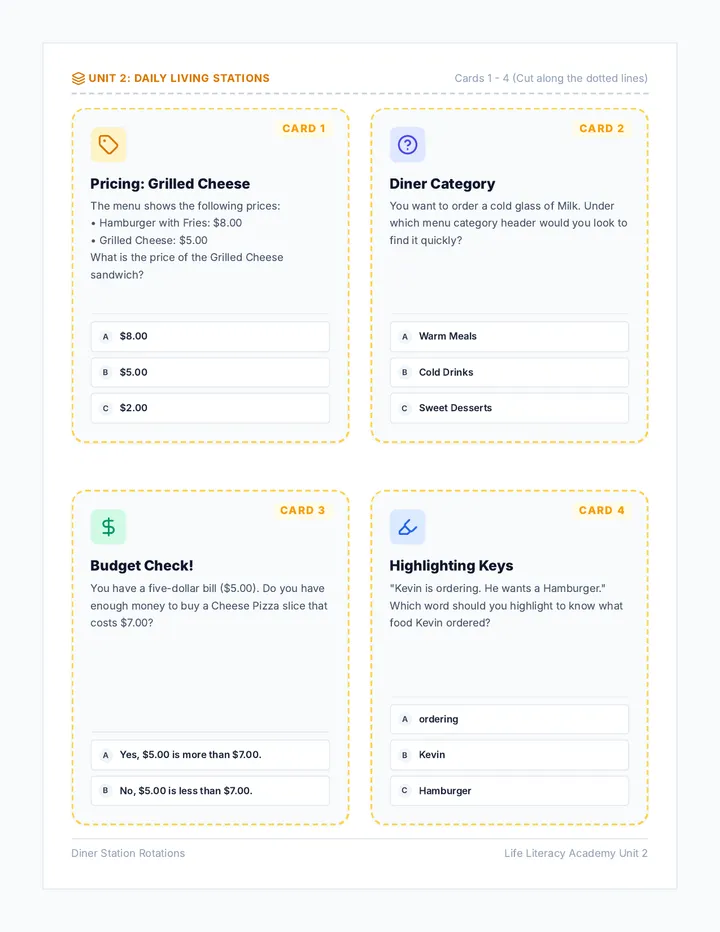
Days 6 to 10 focus on reading menus, highlighting key details, and making inferences about restaurant and everyday scenarios using functional text.
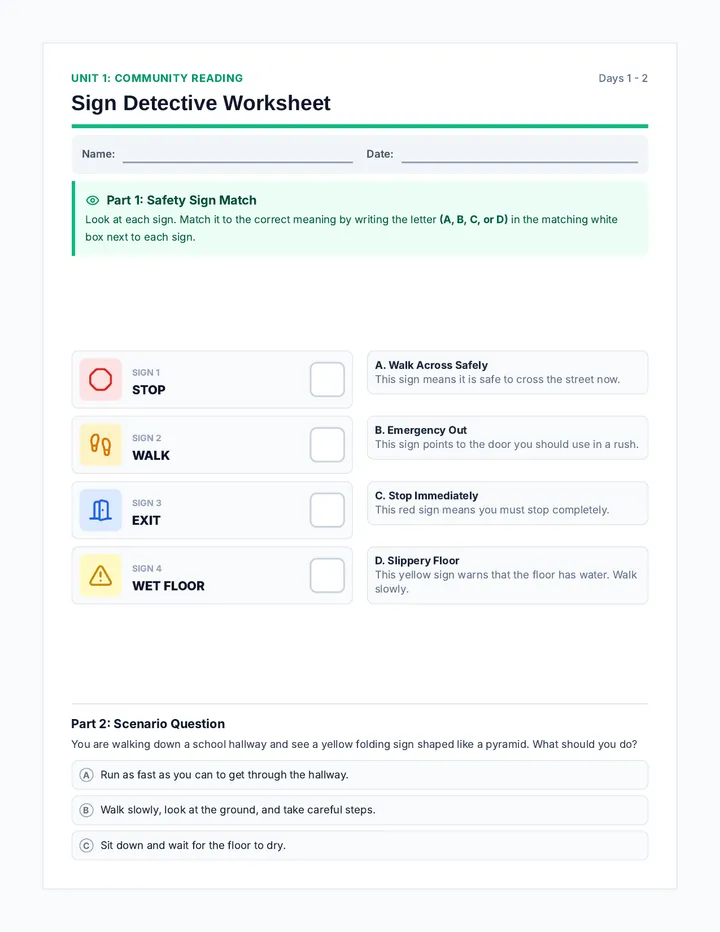
Days 1 to 5 focus on identifying crucial safety signs, understanding school and transit schedules, and answering WH questions about community and adapted literary texts.
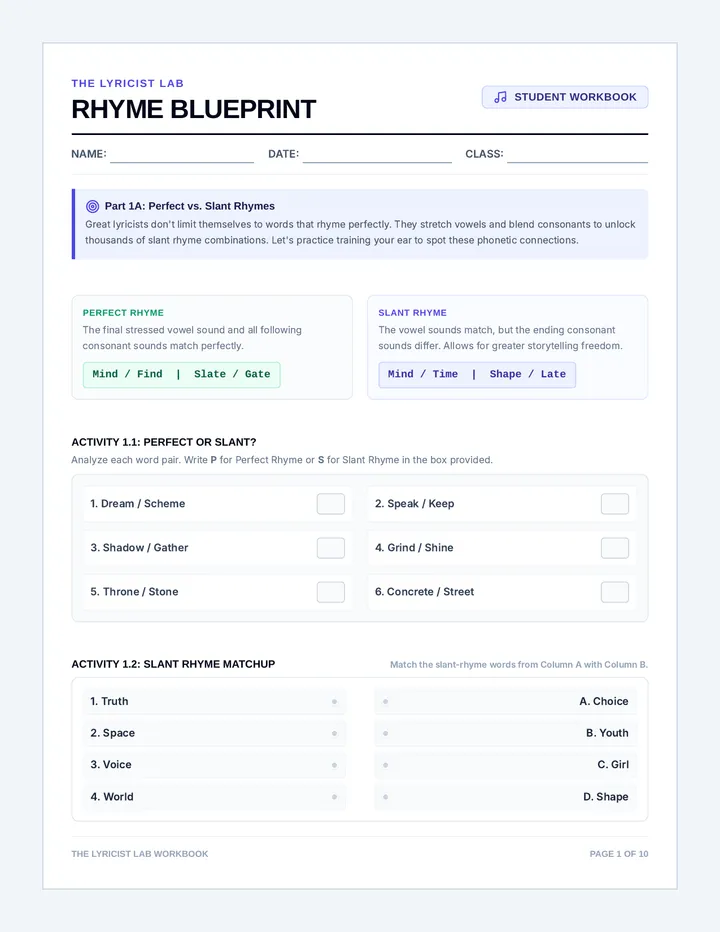
A comprehensive lesson that breaks down the structural, rhythmic, and poetic elements of hip-hop and rap lyrics. Students learn complex rhyming, flow cadence, figurative imagery, and wordplay, then plan and write a complete 16-bar verse using highly visual scaffolding.