Urban Living Lesson Plan
The Great Apartment Hunt
Lesson Plan: Systems of Equations in the Real World
Math Grade 12
Duration
90-120 Minutes (2 Class Periods)
Subject
Algebra II / Financial Math
Core Standard
CCSS.MATH.CONTENT.HSA.REI.C.6
Overview
Students act as recent high school graduates looking for their first apartment in Rochester, NY. They must compare two different housing options using systems of equations to determine which is more cost-effective over time, considering move-in fees, monthly rent, and utility structures.
Objectives
- Model real-world costs using linear equations (y = mx + b).
- Solve systems of equations using substitution or elimination.
- Interpret the intersection point (break-even point) in context.
Materials Needed
Differentiation
Scaffolded
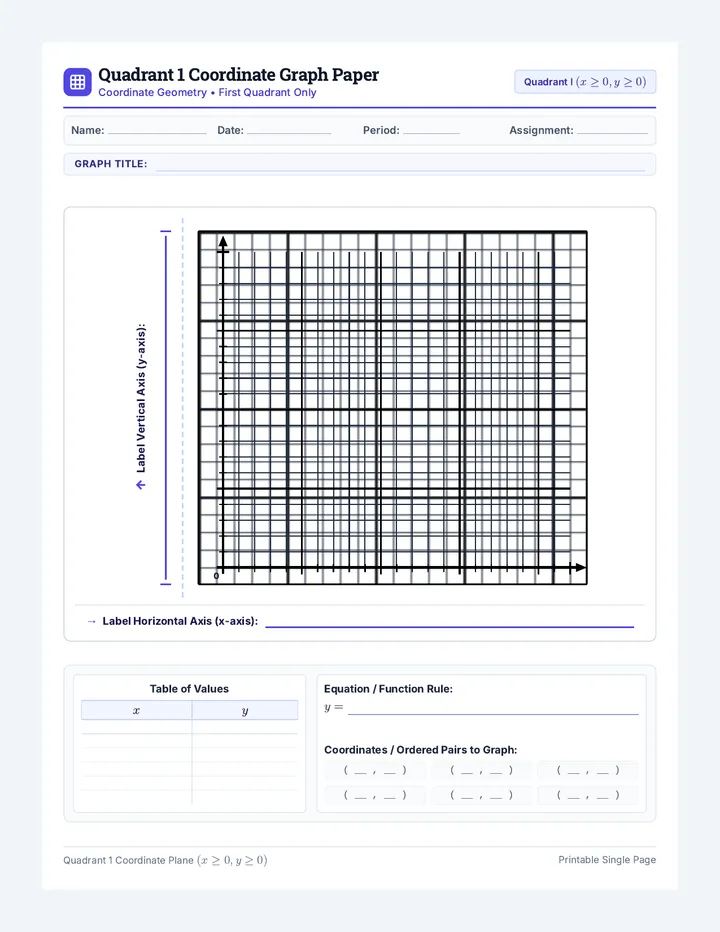
Provide pre-structured equation templates and a coordinate plane with pre-labeled axes for students struggling with graphing from scratch.
Enrichment
Have students factor in compound interest for a security deposit return or compare three competing utility providers with tiered pricing.
Instructional Sequence
10m
The Hook: Moving Out
Discuss the "Hidden Costs" of moving. Ask students what costs they expect beyond rent. Show Slide 2 (Rochester map) to ground the lesson in their local geography.
20m
Direct Instruction: Modeling
Use Slides 4-6 to model translating verbal descriptions into equations. Focus on the distinction between the Fixed Cost (y-intercept) and Variable Cost (slope).
30m
Guided Practice: Break-Even
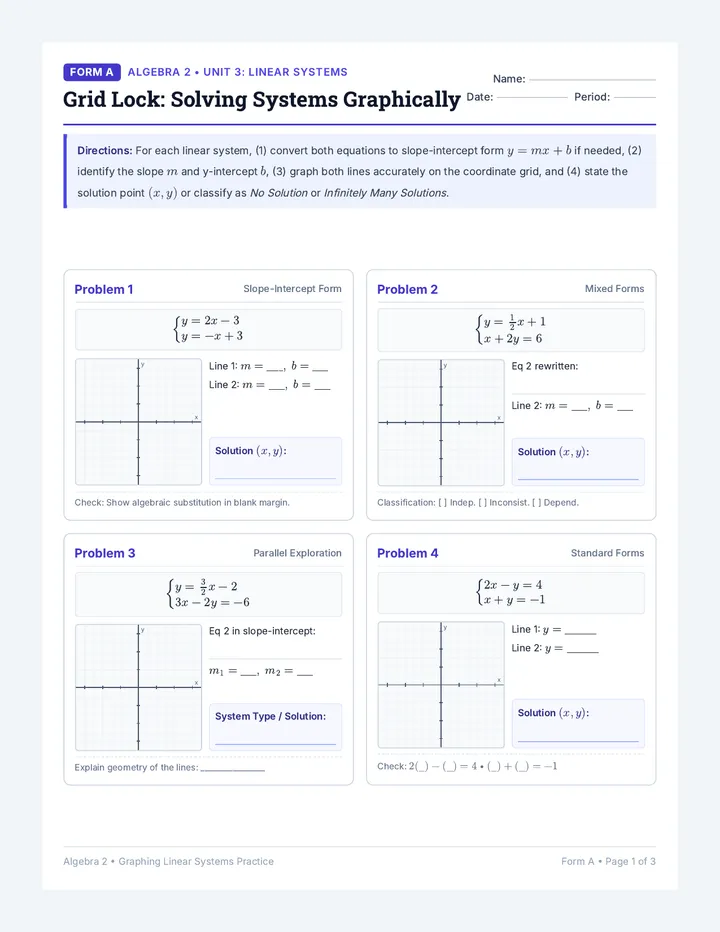
Students work in pairs to compare two example utility plans. Facilitate a discussion on the Substitution Method. Solve for the point where the two lines intersect on the board.
45m
Application: The Hunt
Distribute the "Budget Battle Worksheet." Students select two listings from the "Rochester Rental Guide." They must build their systems, graph the results, and write a one-paragraph lease recommendation based on their financial goals.
15m
Wrap-Up: The Verdict
Exit Ticket: "At what month does the more expensive monthly apartment actually become cheaper overall? Why is this important for someone planning a 12-month lease?"
Pro-Teacher Tips
Remind students that in real life, rent rarely stays fixed, but for this linear model, we assume a standard lease term. Watch for students who confuse the initial deposit as part of the monthly rate.
City Living Slides
Real Estate Analytics
THE GREAT
APARTMENT HUNT
Using Systems of Equations to navigate the Rochester housing market.
The Mission
You've graduated. You've got a job in Rochester. Now, you need a place to live.
Option A
Low upfront costs, high monthly rent.
Option B
High upfront deposit, lower monthly rent.
"When does the higher deposit pay off?"
Today we find the break-even point.
Building the Math
Turning housing data into linear functions.
The Formula
y = mx + b
y
Total Housing Cost
x
Time (Months)
The Slope (m)
Your Monthly Rent.
The Intercept (b)
Your Fixed Move-in Costs.
01
Case Study
The Scenario
- Apt 1: $1,100/mo + $500 deposit
- Apt 2: $950/mo + $1,800 deposit
The Equations
y = 1100x + 500
y = 950x + 1800
The Break-Even Point
Solve for the intersection of both lines.
Solution for X:
8.6 Months
Total Cost ($)
Time (Months)
Begin the Hunt
Grab your Budget Battle Worksheet.
CHOOSE
Pick two unique listings.
SOLVE
Find the intersection.
DECIDE
Recommend a lease.
Budget Battle Worksheet
The Budget Battle
Rochester Apartment Hunt Simulation
Name: ____________________________
Date: _____________________________
1
Select Your Listings
Option A: East End
Rent: $1,350
Deposit: $600
Option B: South Wedge
Rent: $1,100
Initial Fees: $2,400
2
The Algebra
Eq. A:
y = ___________________________
Eq. B:
y = ___________________________
Show Substitution Work:
3
The Visual Comparison
0 5k 10k 15k 0 4 8 12 Total Cost ($) Time (Months)
4
The Verdict
Intersection (x,y):
Final Decision:
Challenge
Option B (South Wedge) adds a $150 pet fee. How does this shift the graph? Explain.
Rochester Schools | Project-Based Math