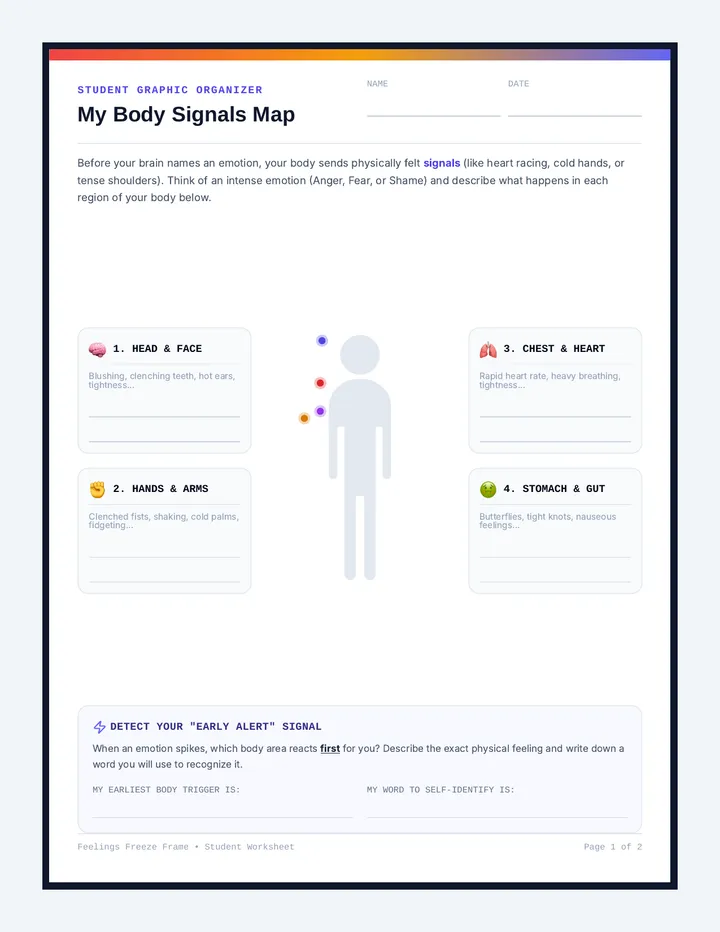
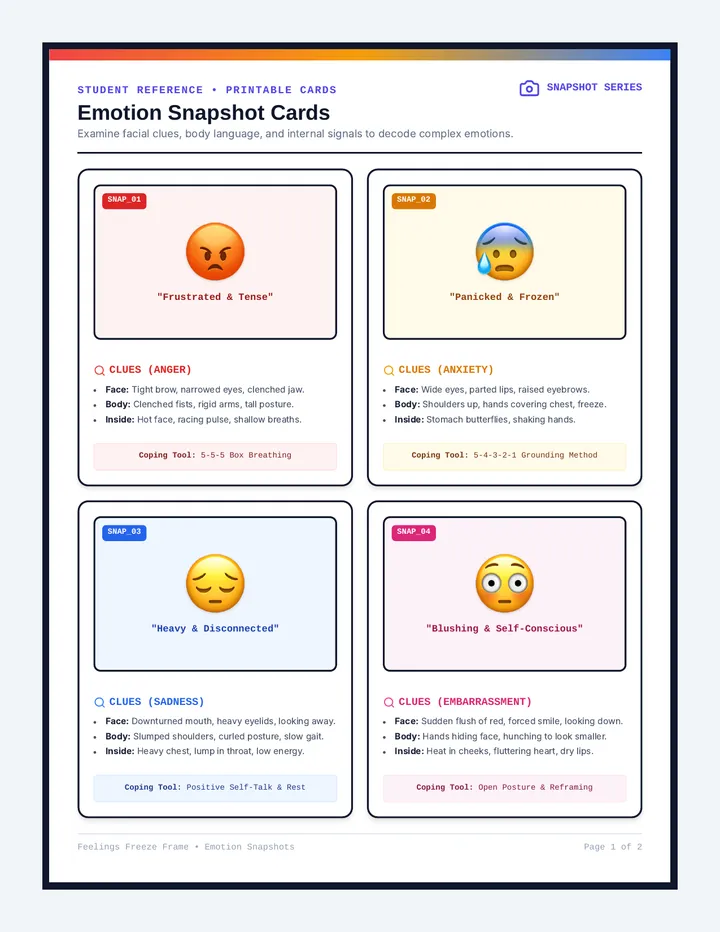
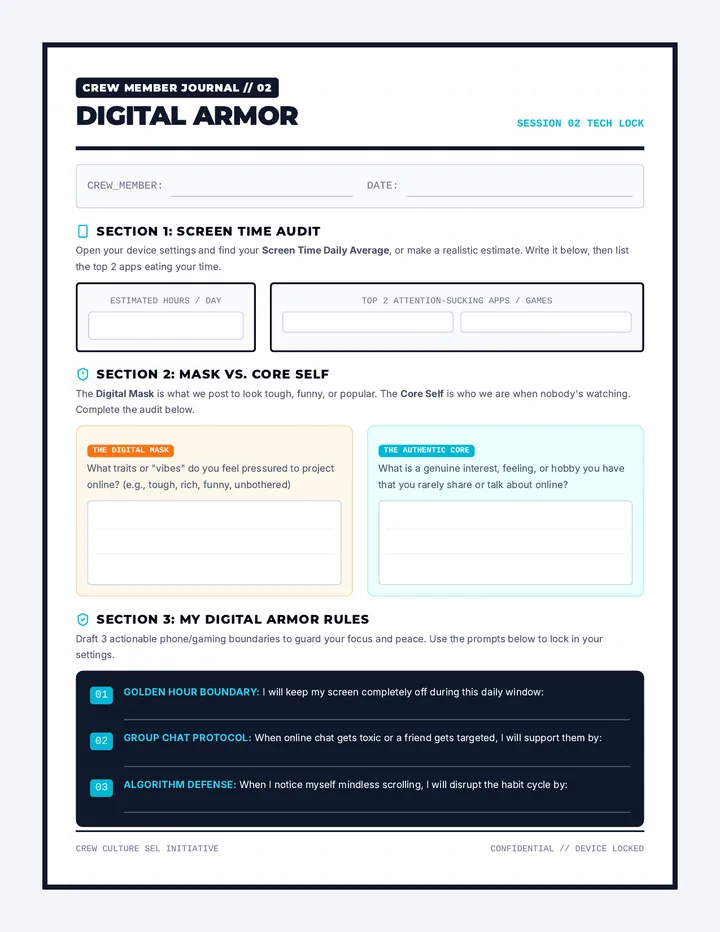
A lesson designed to help students in behavior support programs identify their current emotional state, recognize triggers, and select appropriate coping strategies for self-regulation.

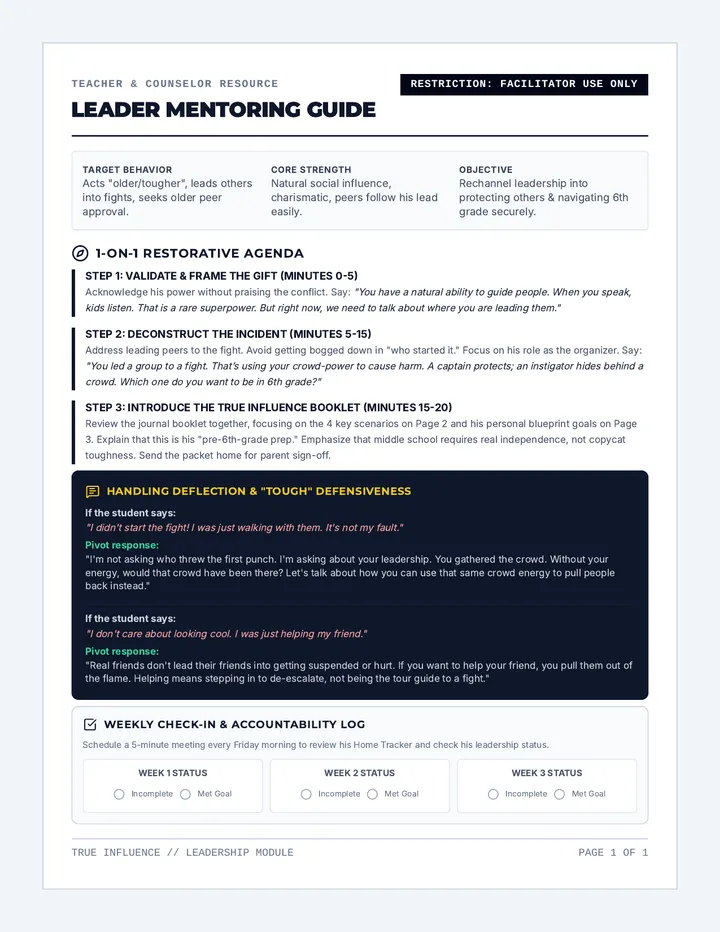
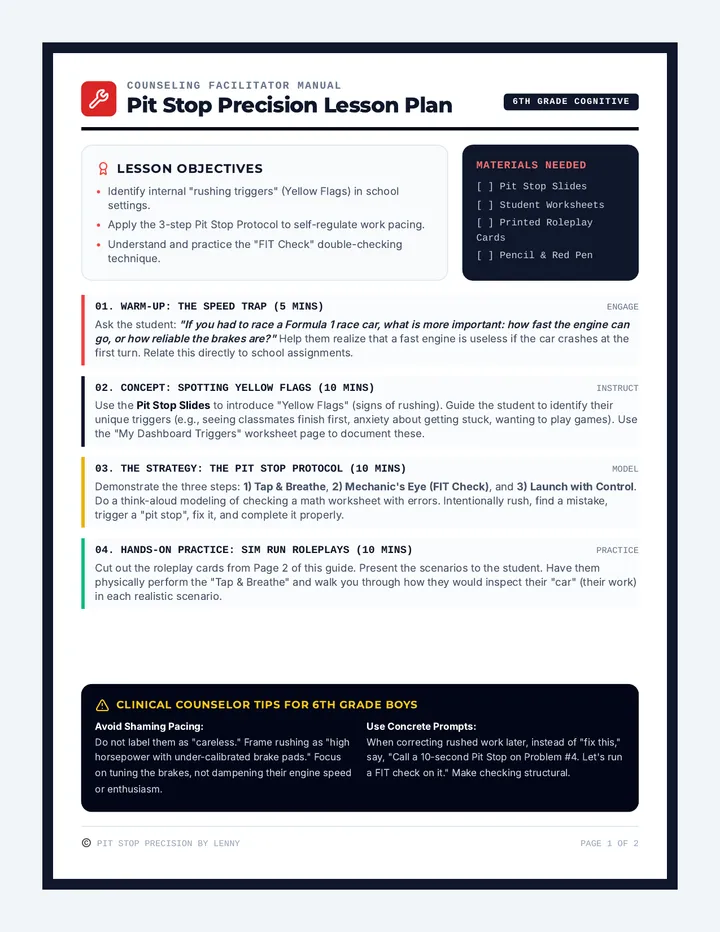
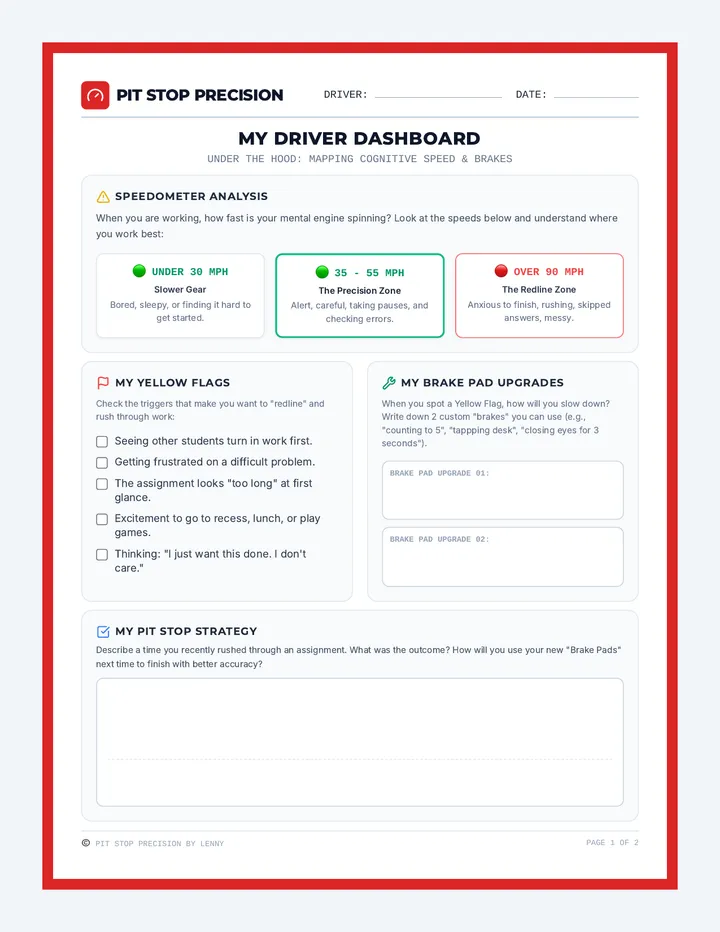
A lesson on impulse control using mechanical and automotive metaphors to teach identifying triggers, consequences, and self-regulation.
A quick, impactful lesson for 5th graders transitioning to middle school. Students explore their internal locus of control through the 'Circle of Control' concept and celebrate their elementary achievements through goal-setting and reflection.
Independent application of a Brain Frame to describe the Hall of Ma'at. Provides choice and structured review of all frames.
Comparing daily life of rich and poor Egyptians. Focuses on specific contrasting words like 'but' and 'different' for 4th grade writers.
Using a Categorizing Frame to group Egyptian inventions. Focuses on word-to-category matching and guided drafting.
Understanding why pyramids were built using a Relationship Frame (Cause and Effect). Uses simplified concepts and clear visual connections.
Comparing the lives of Hatshepsut and Ramses II using a Comparing Frame. Provides clear visual contrasts and sentence-level supports.
Exploring the steps of mummification using the Sequencing Frame. Emphasizes chronological transition words with visual cues.
Learning about the Egyptian social structure using a Telling Frame. Focuses on simple categorization and clear hierarchy visuals for students with dyslexia.
Introduction to the Telling Frame (Main Idea & Details) about the Nile River. Includes dyslexia-friendly formatting, sentence starters, and visual word banks to support 4th grade writers.
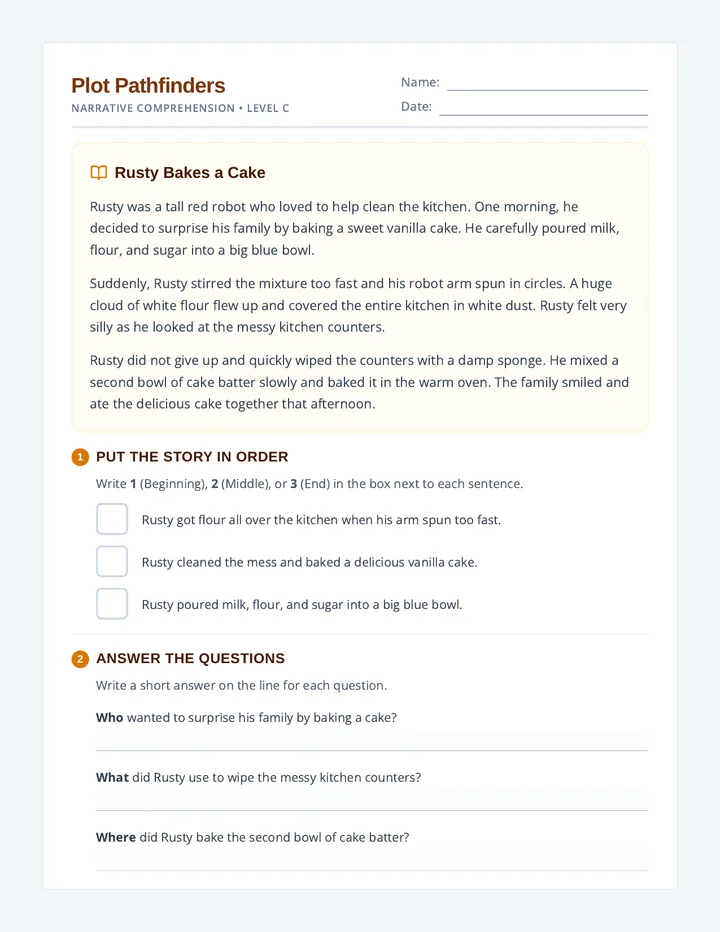
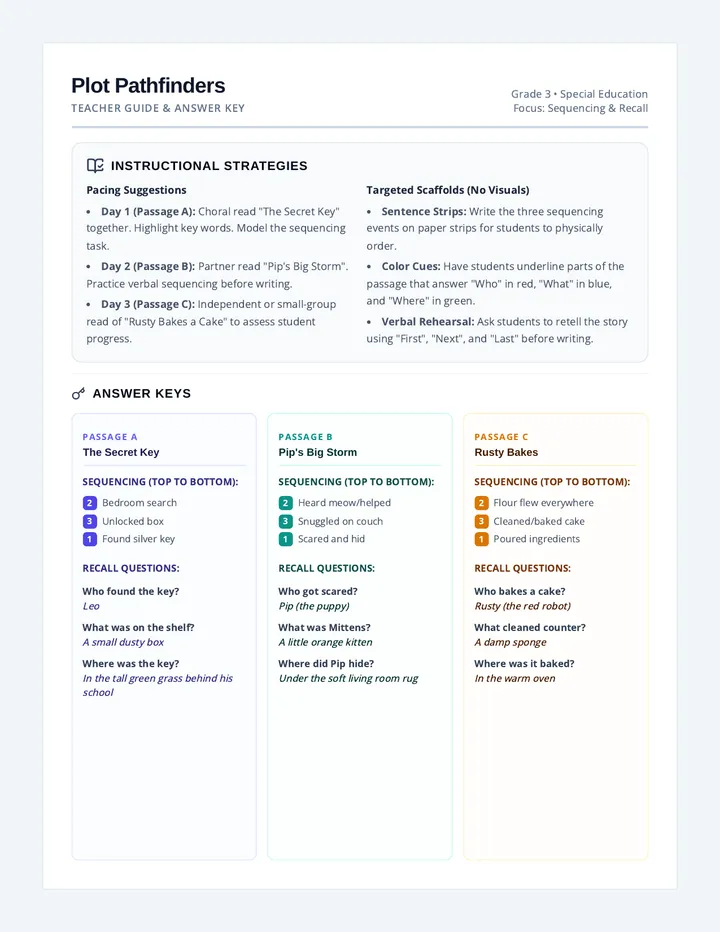
A targeted reading intervention lesson focused on identifying the main idea and supporting details using high-interest, low-readability texts. Designed for students who decode well but struggle with comprehension.
A review and mastery day covering all r-controlled vowel combinations in 2-syllable words. Includes an expedition finale passage and cumulative assessment tasks.
Focuses on 2-syllable words that mix r-controlled syllables with closed, open, and magic e syllables, such as 'pardon', 'report', and 'target'. Includes a jungle-themed passage.
Focuses on 2-syllable words containing 'er', 'ir', and 'ur' syllables, such as 'silver', 'thirsty', and 'turtle'. Includes multi-sensory decoding and a mountain-trek passage.
Focuses on 2-syllable words containing 'ar' and 'or' syllables, such as 'carpet', 'morning', and 'garden'. Includes decoding drills, encoding practice, and an adventure-themed passage.
Cumulative review with a focus on encoding (spelling) 2-syllable words with silent-e syllables.
Mixed practice of closed/open + silent-e syllables with a focus on flexible decoding strategies.
Focuses on 2-syllable words combining an open syllable with a silent-e syllable (e.g., remote, feline, locate).
Focuses on 2-syllable words combining a closed syllable with a silent-e syllable (e.g., sunshine, reptile, mistake).
This lesson teaches students how to calculate total costs of multiple items and make spending decisions based on a fixed budget.
This lesson focuses on identifying US coins (penny, nickel, dime, quarter) and their respective values through visual recognition and matching.
Teaching students the 'Next Dollar Up' strategy to successfully make purchases without needing to calculate exact change, focusing on items up to $10.
A foundational lesson for Transitional Kindergarten students focused on identifying basic emotions and the physical sensation of being 'wiggly' (stressed) vs. 'still' (calm). Introduces 'Turtle Breathing' as a primary regulation tool.
Encourage joint attention and exploration through the core words Open and Look.
Develop social interaction skills and transition management using Mine, You, Finished, and Turn.
Focus on expressing preferences and seeking assistance using core words Like, Don't Like, and Help.
Introduce the primary 'power words' (Go, Stop, More, Want) to establish basic requesting and agency in play-based settings.
Reviewing all strategies, celebrating progress, and creating a personalized self-control plan for future use.
Developing impulse control by 'fast-forwarding' to see the potential consequences of different choices.