Learn the principles of creating effective guided notes (cloze procedures) that balance engagement with support by converting full lecture transcripts into skeletal outlines.
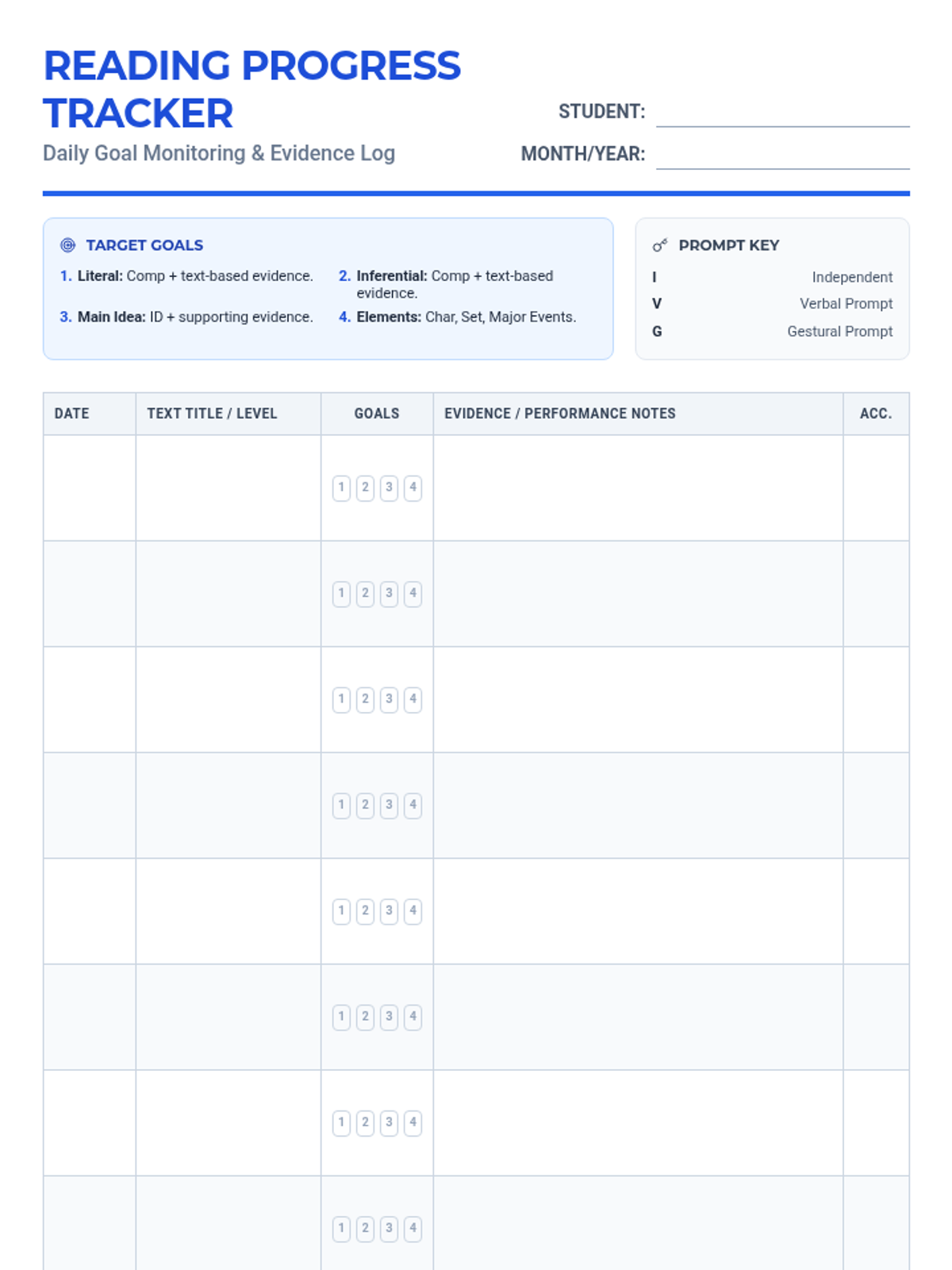
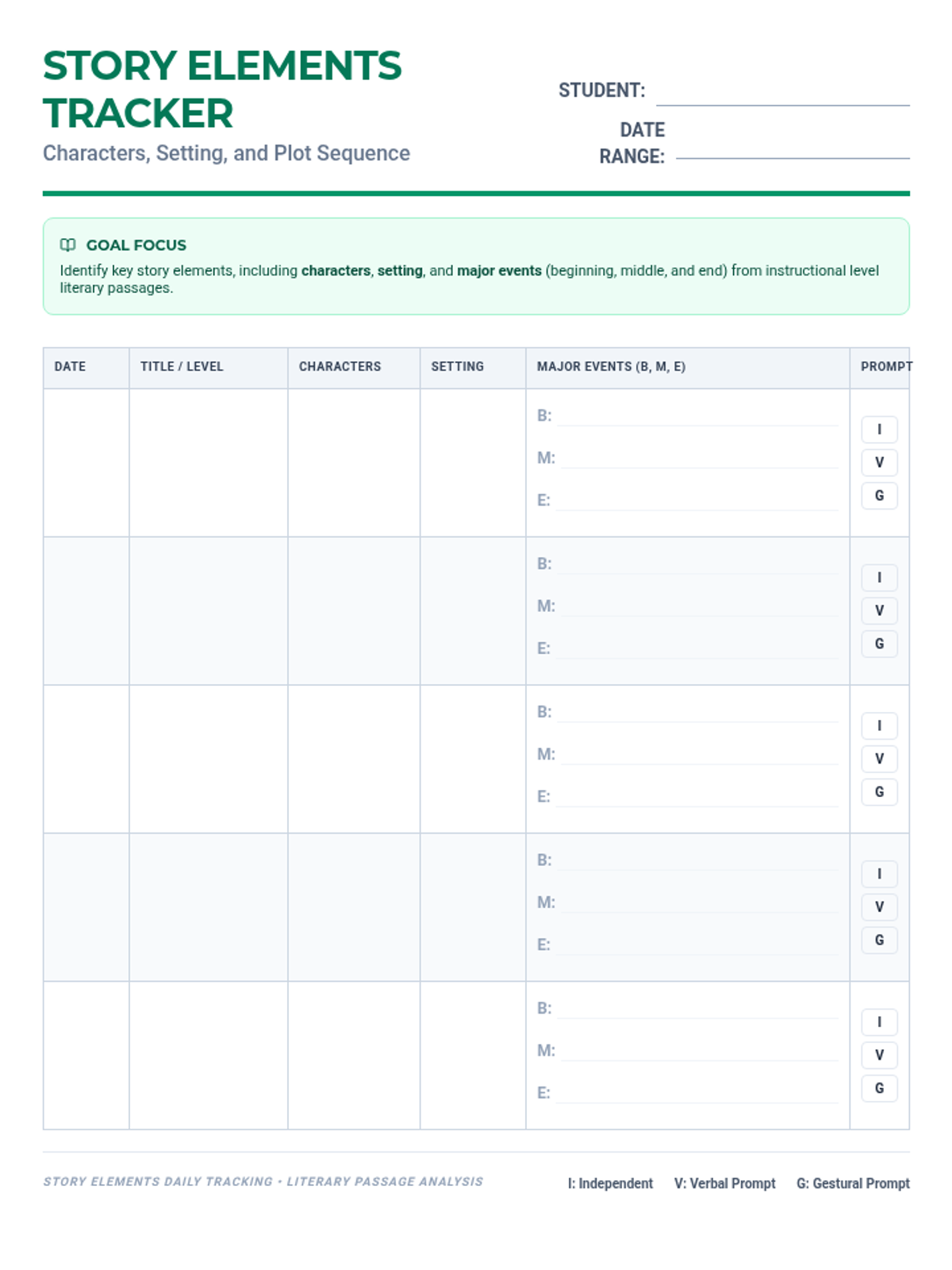
A collection of professional data tracking sheets for monitoring specific reading comprehension goals, including literal, inferential, and story element identification.
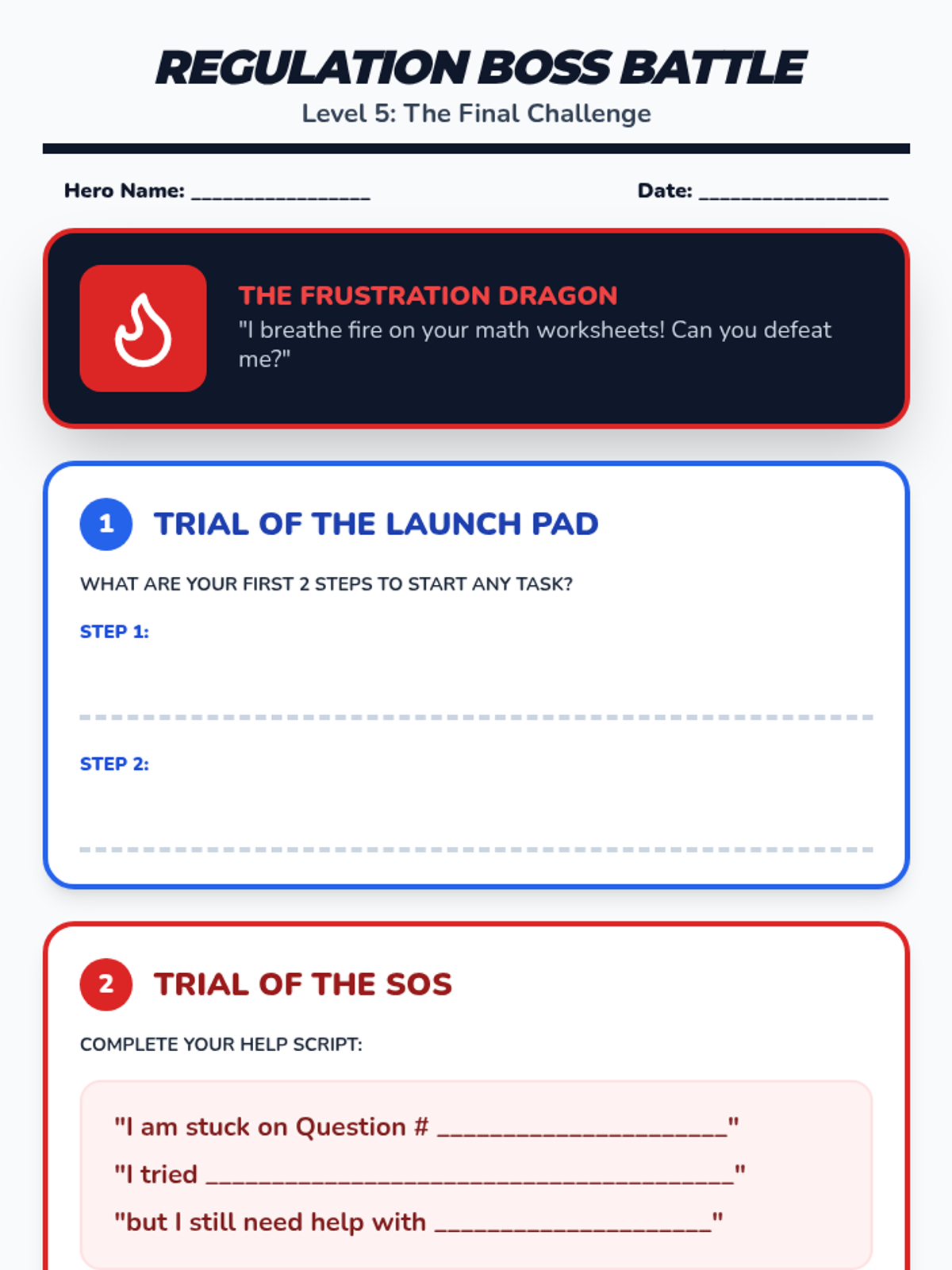
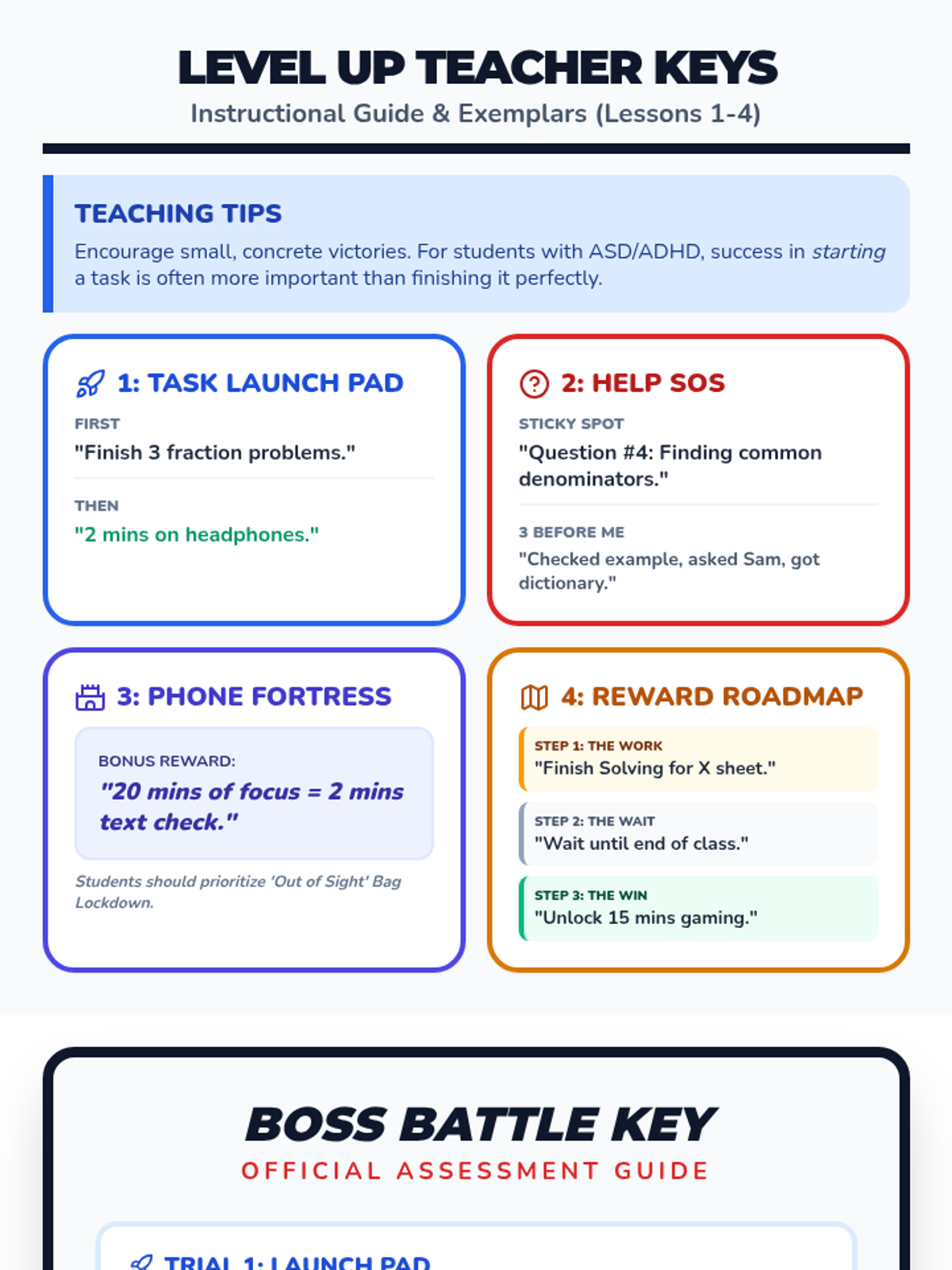
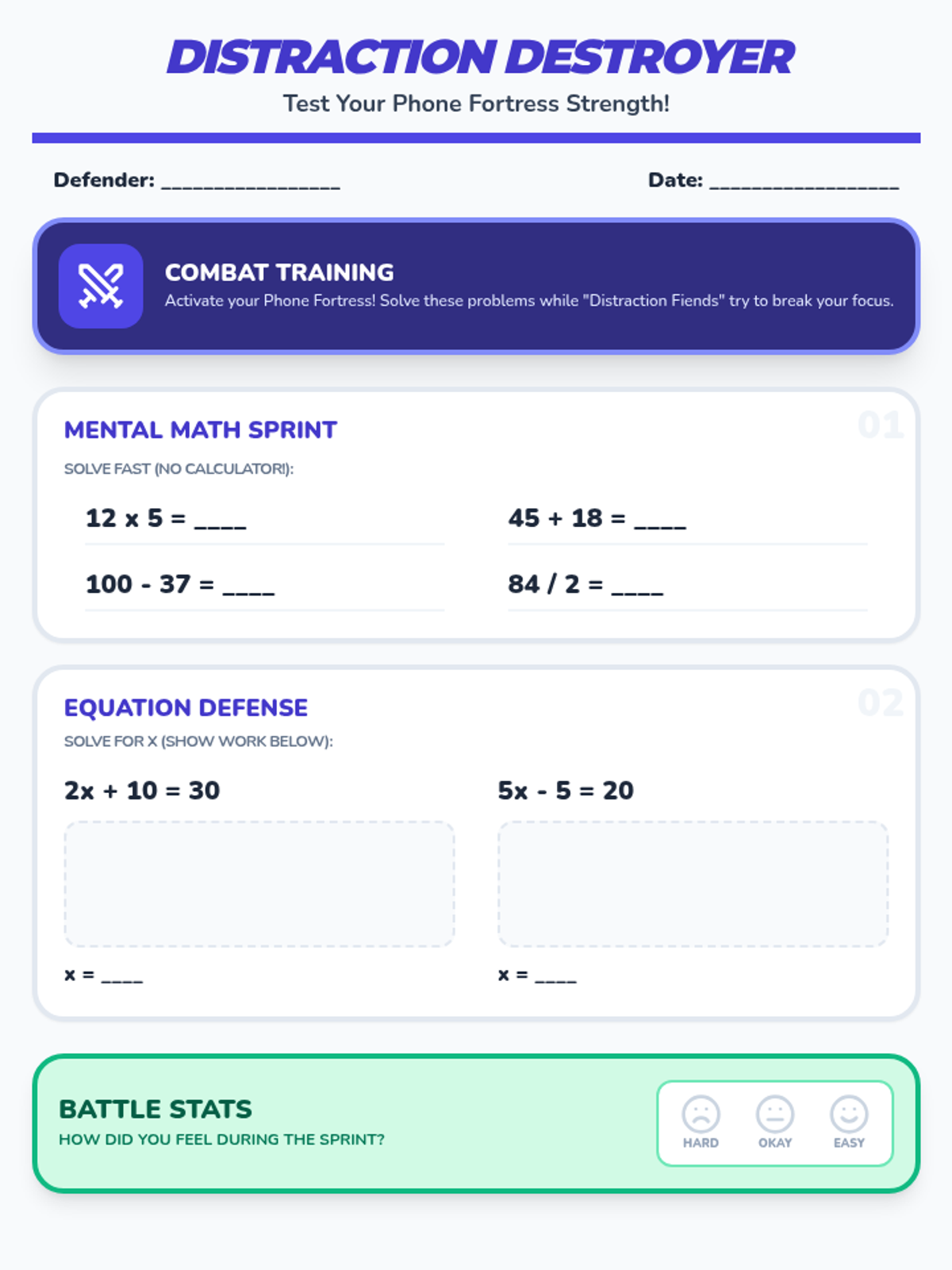
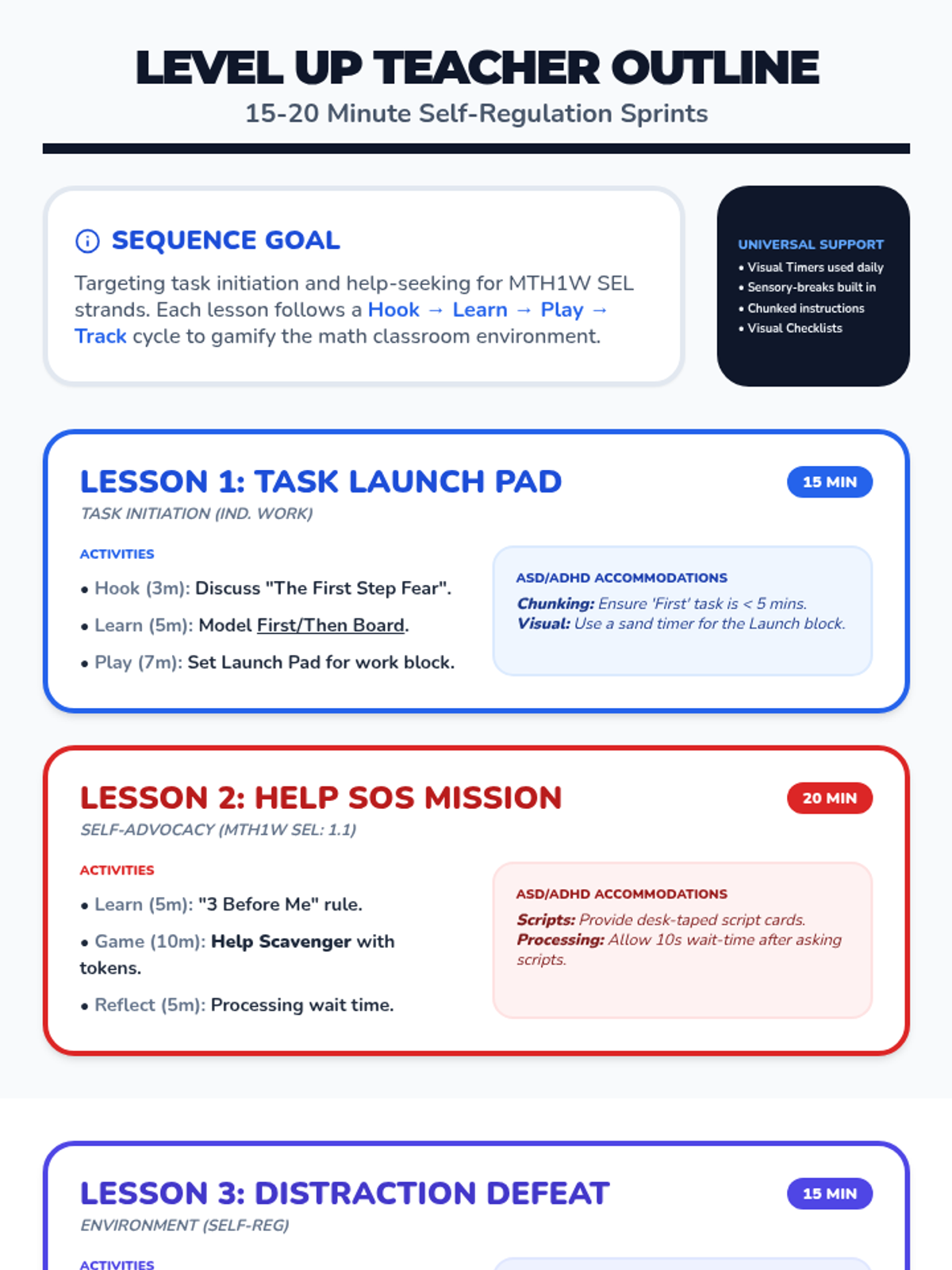
A cumulative 'Boss Battle' review where students use all their regulation tools to solve a series of math-related regulation challenges.
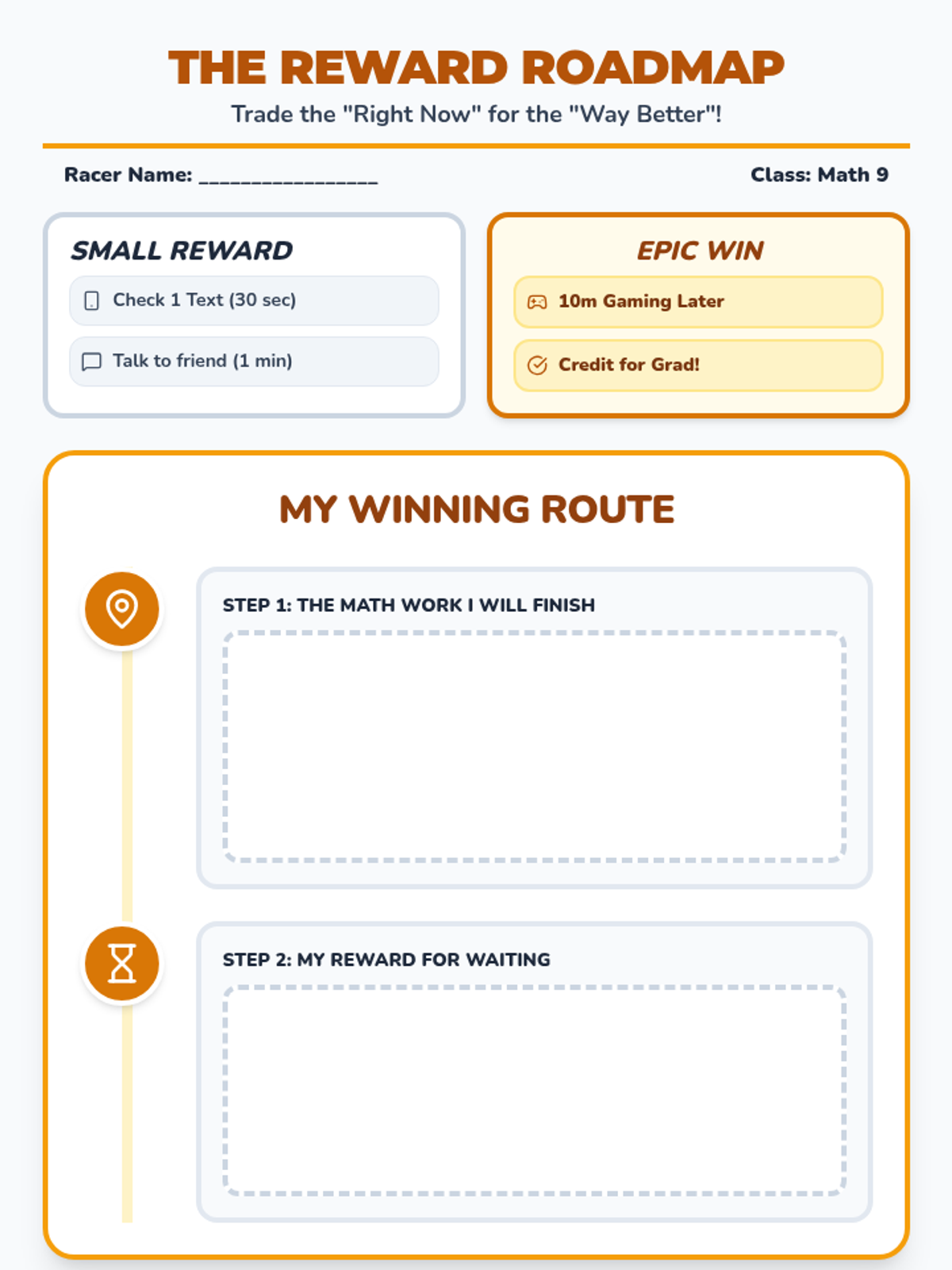
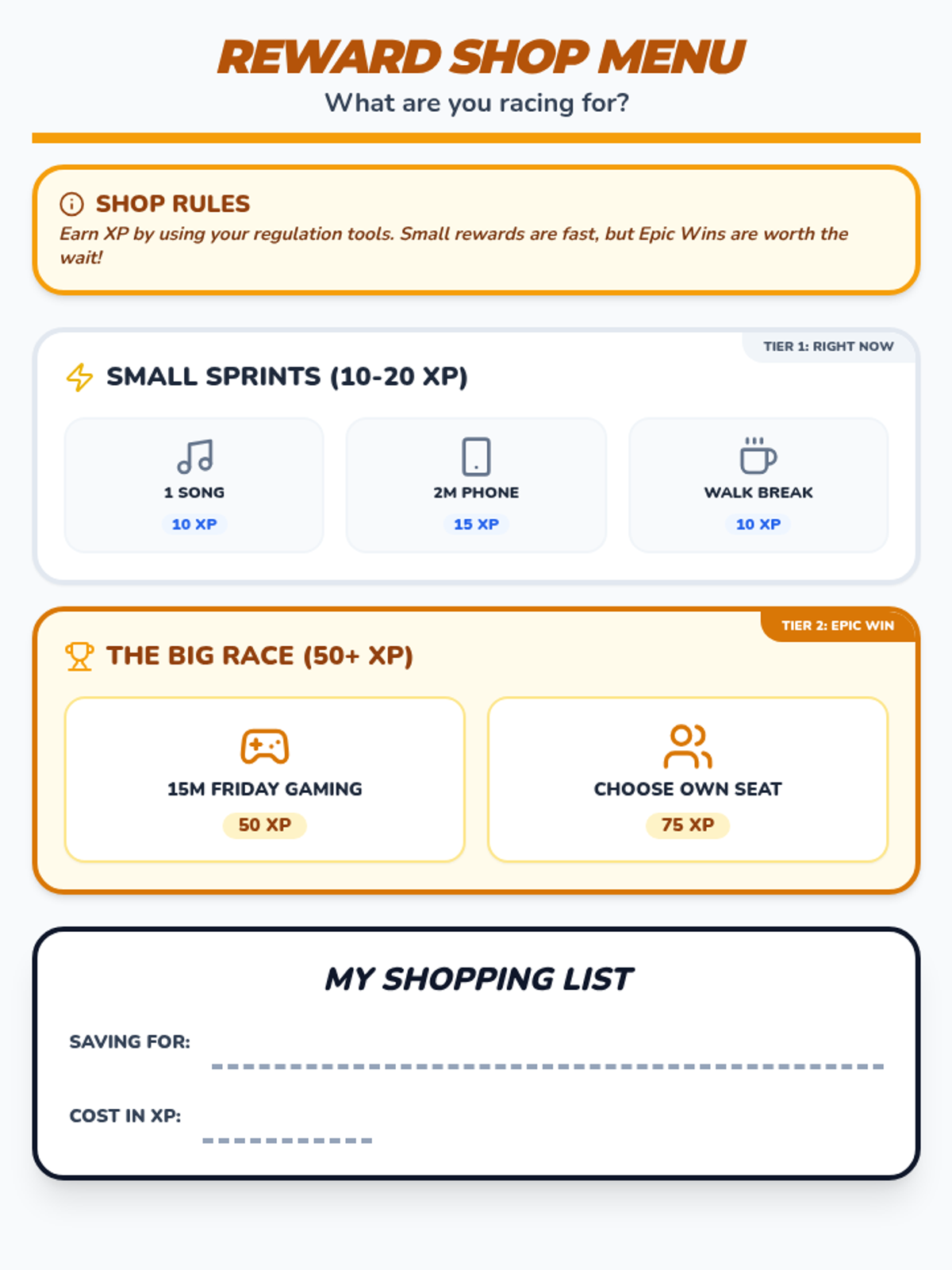
Explores delayed gratification through a 'Reward Roadmap' activity, teaching students to trade immediate distractions for long-term academic success.
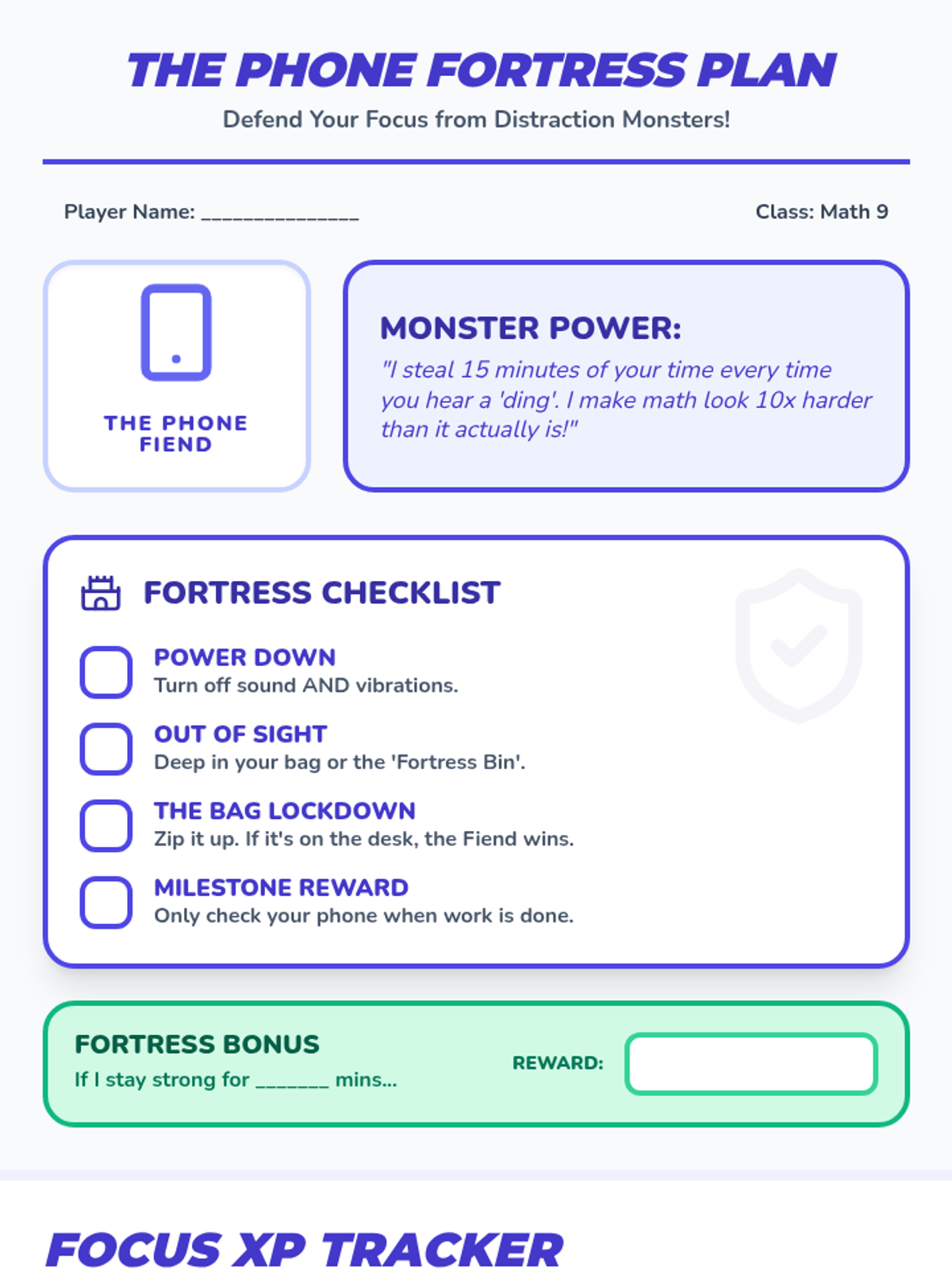
Students identify environmental distractions, specifically phones, and create a 'Phone Fortress' plan using visual checklists to maintain focus.
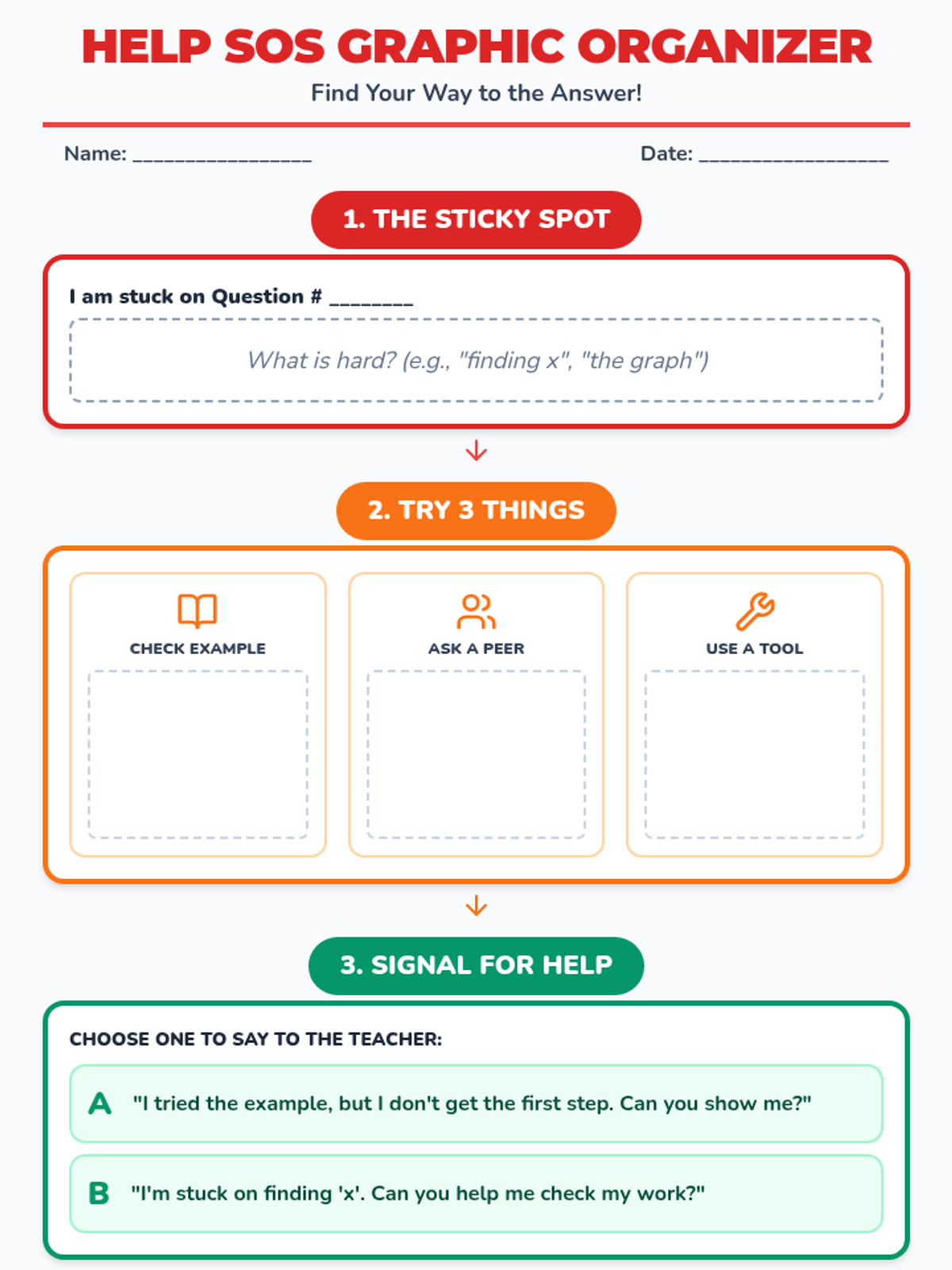
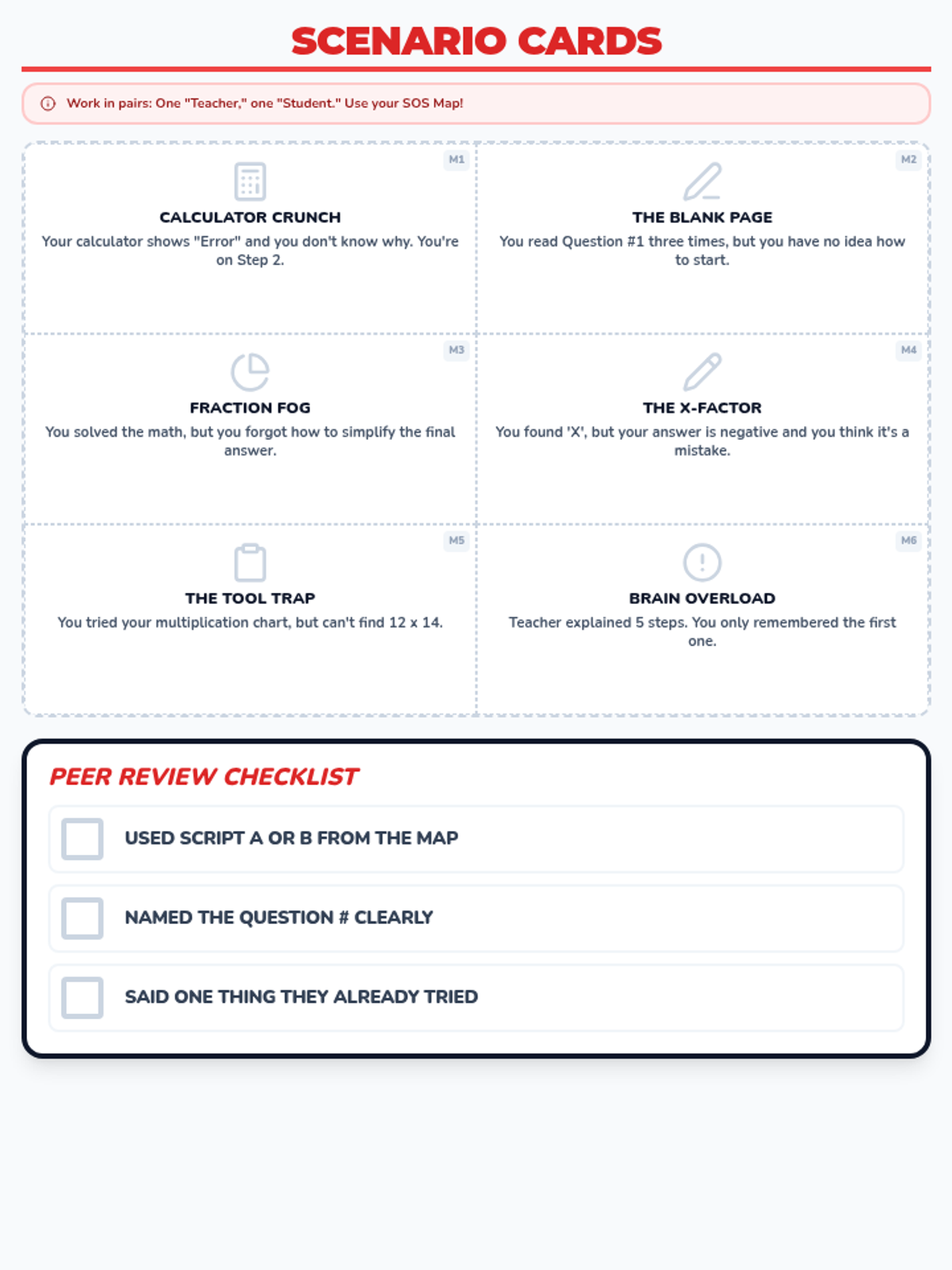
A gamified approach to recognizing when to ask for help and using a structured graphic organizer to communicate specific needs during math problem-solving.
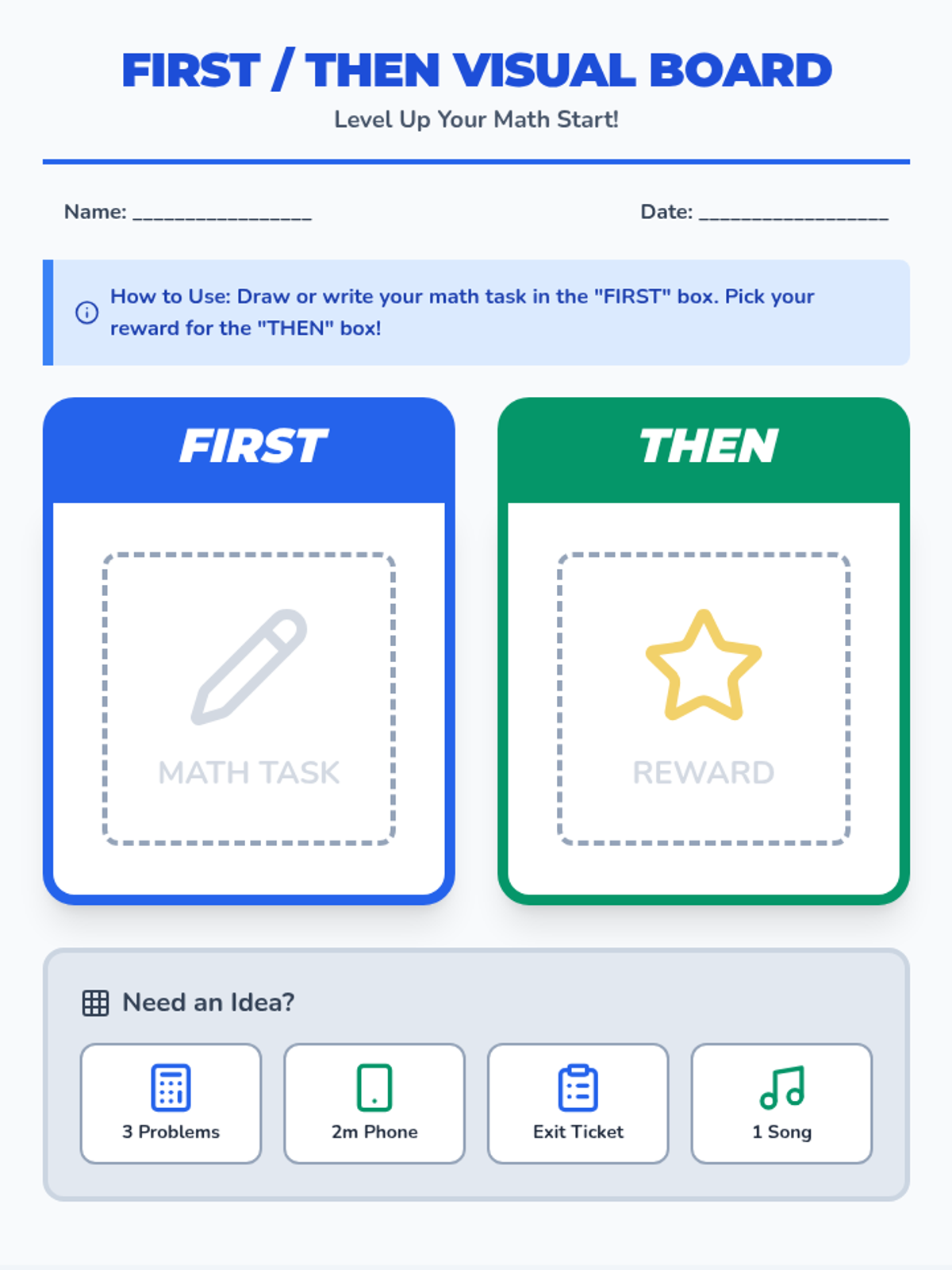
Students learn to use First/Then visual boards and illustrated checklists to overcome task initiation hurdles in math class.
Cumulative review of the year's vocabulary and final progress monitoring to prepare for the transition to 5th grade.
Mastery of advanced multiple-meaning words and applying self-advocacy vocabulary in unstructured school settings.
Focusing on self-regulation vocabulary and identifying themes or 'lessons' in 3rd/4th grade level fiction.
Learning functional vocabulary for school-based transitions and academic vocabulary for story structure (rising action/climax).
Expanding the repertoire of multiple-meaning words and learning to use context clues to differentiate meanings in fiction.
Deepening academic vocabulary with a focus on character traits and descriptive adjectives for self-advocacy and story comprehension.
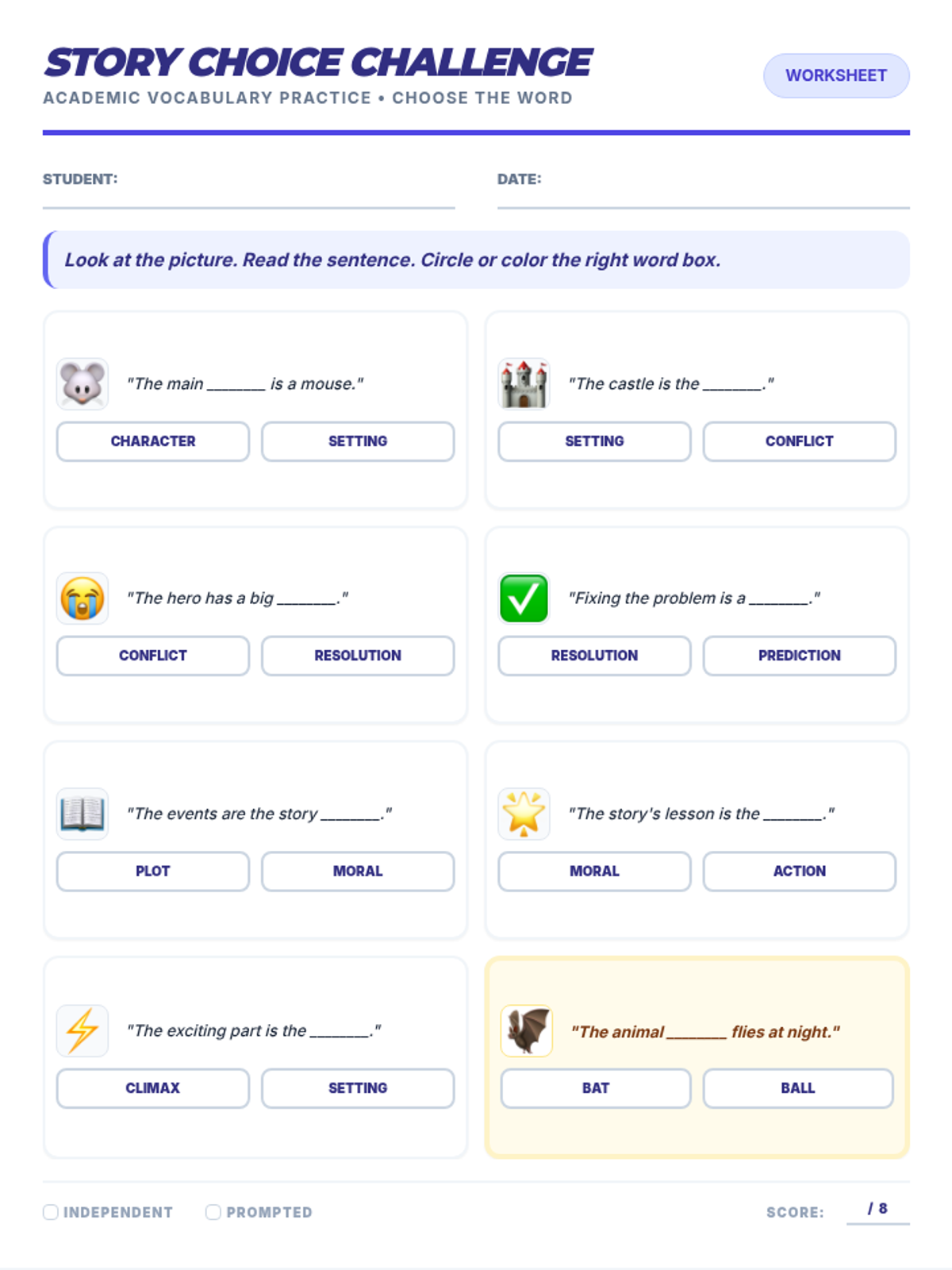
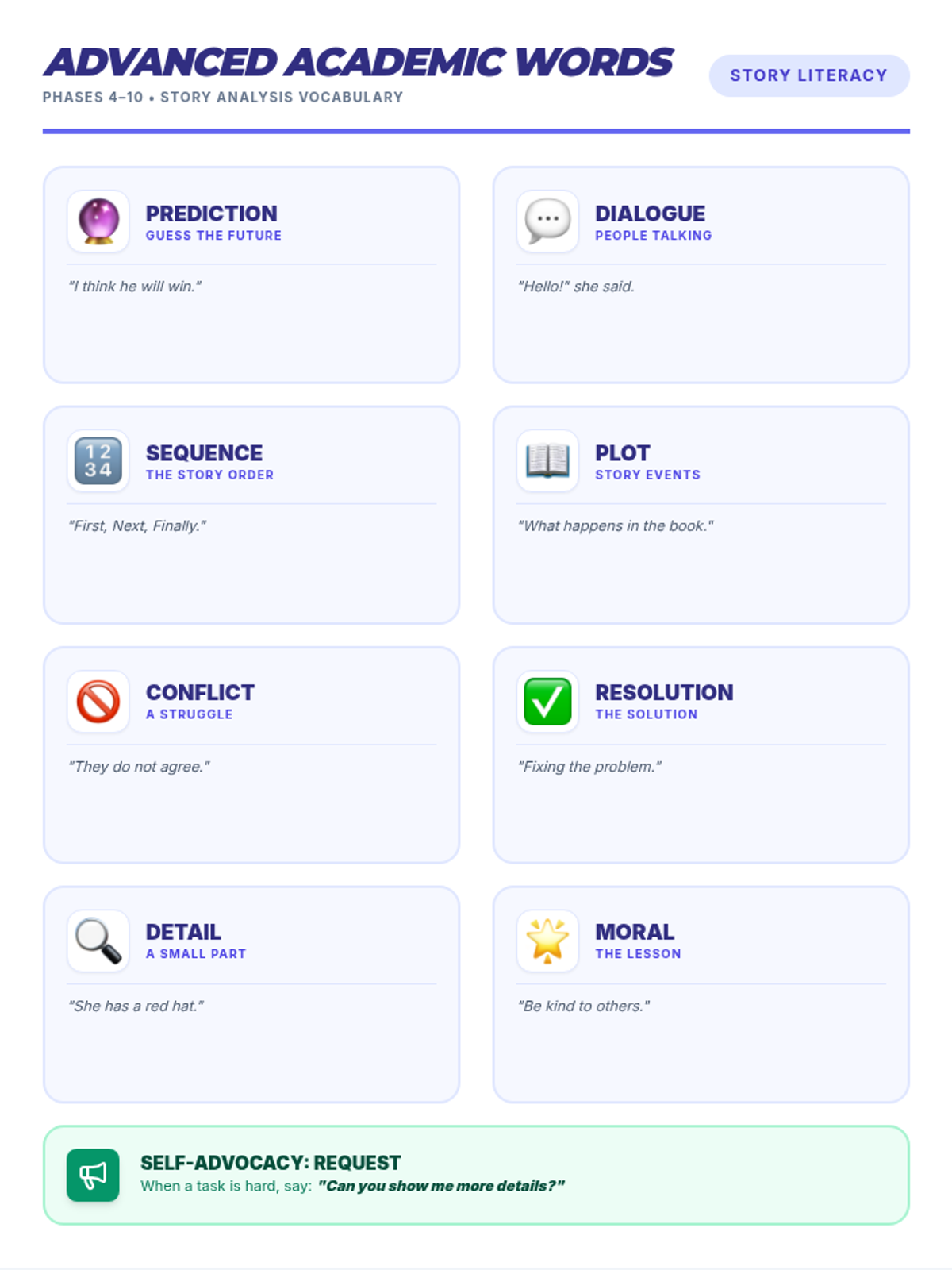
Focusing on social problem-solving, requesting help, and understanding conflict and resolution within fictional narratives.
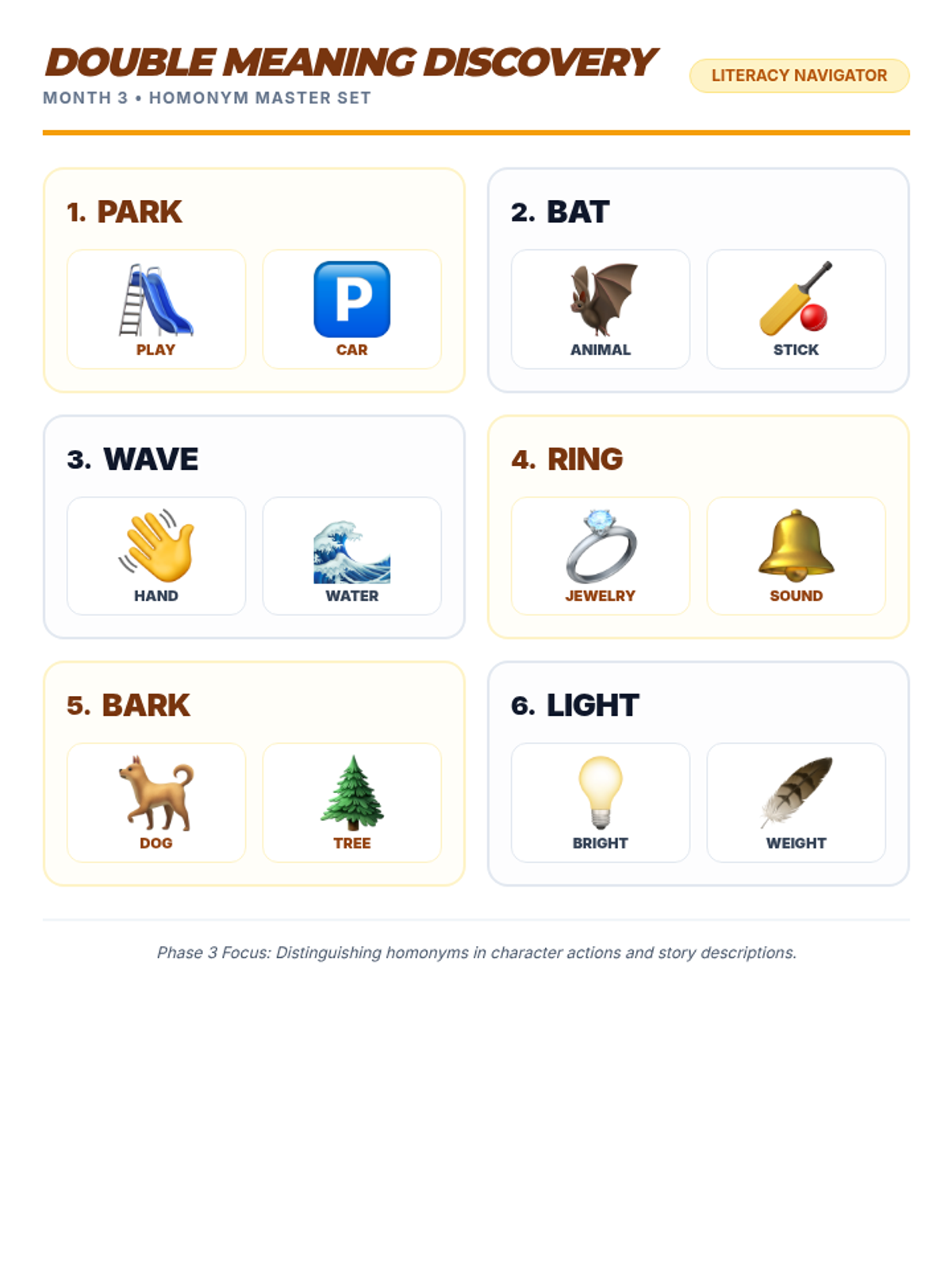
Introduction to high-frequency multiple-meaning words found in 3rd and 4th-grade texts with heavy visual support and functional application.
Focusing on identifying and expressing feelings for self-advocacy and understanding story plots through basic sequencing vocabulary.
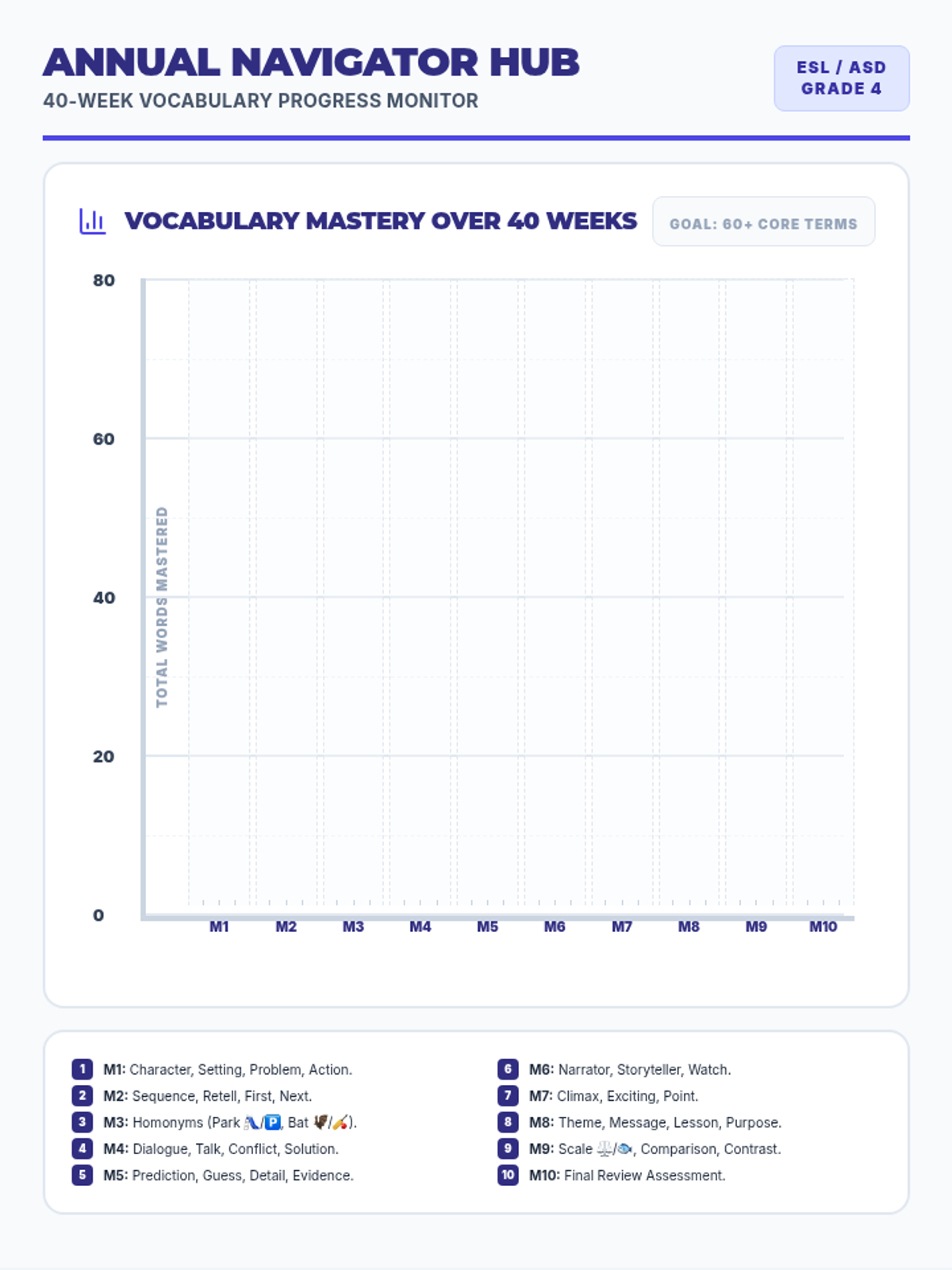
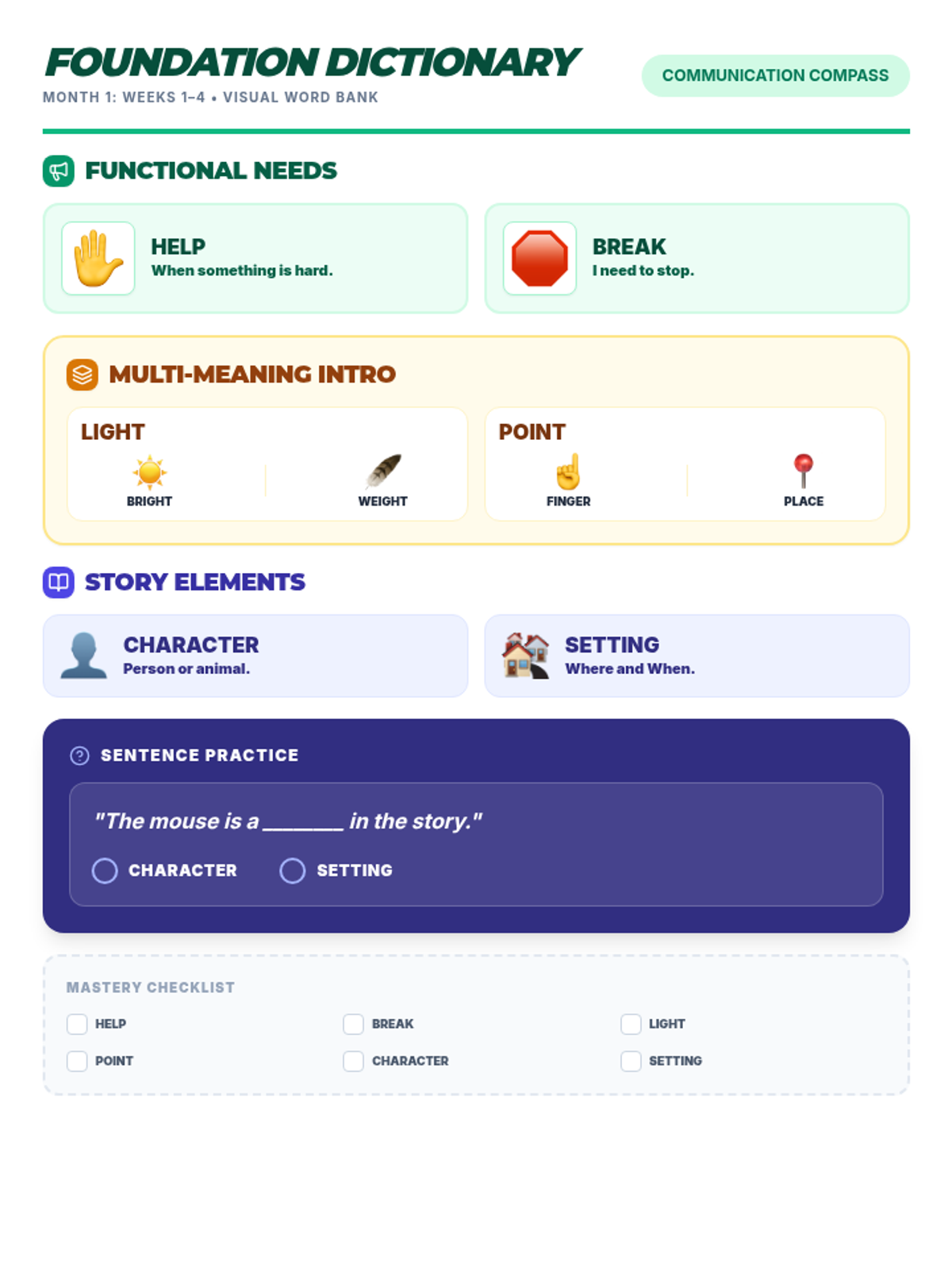
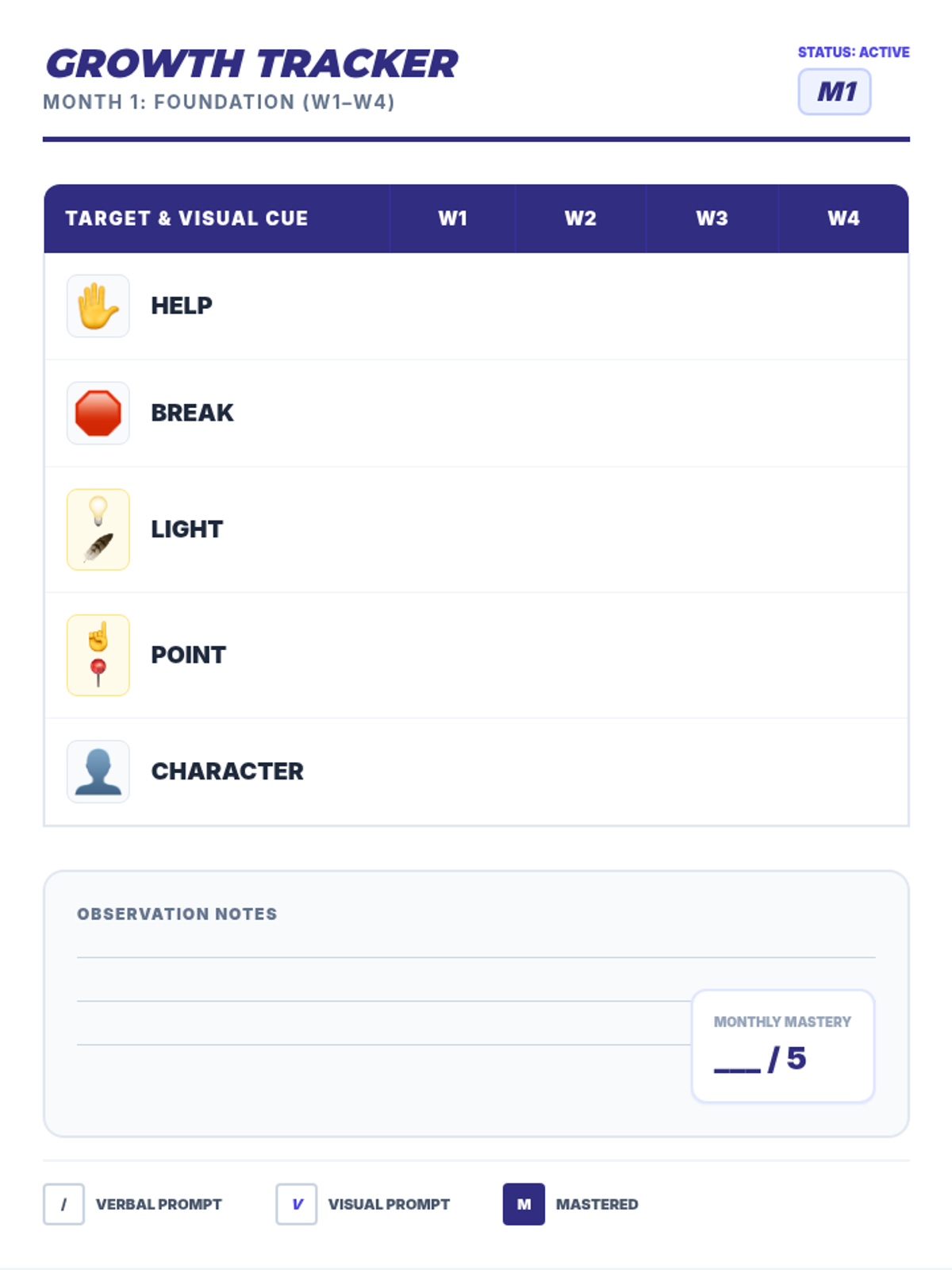
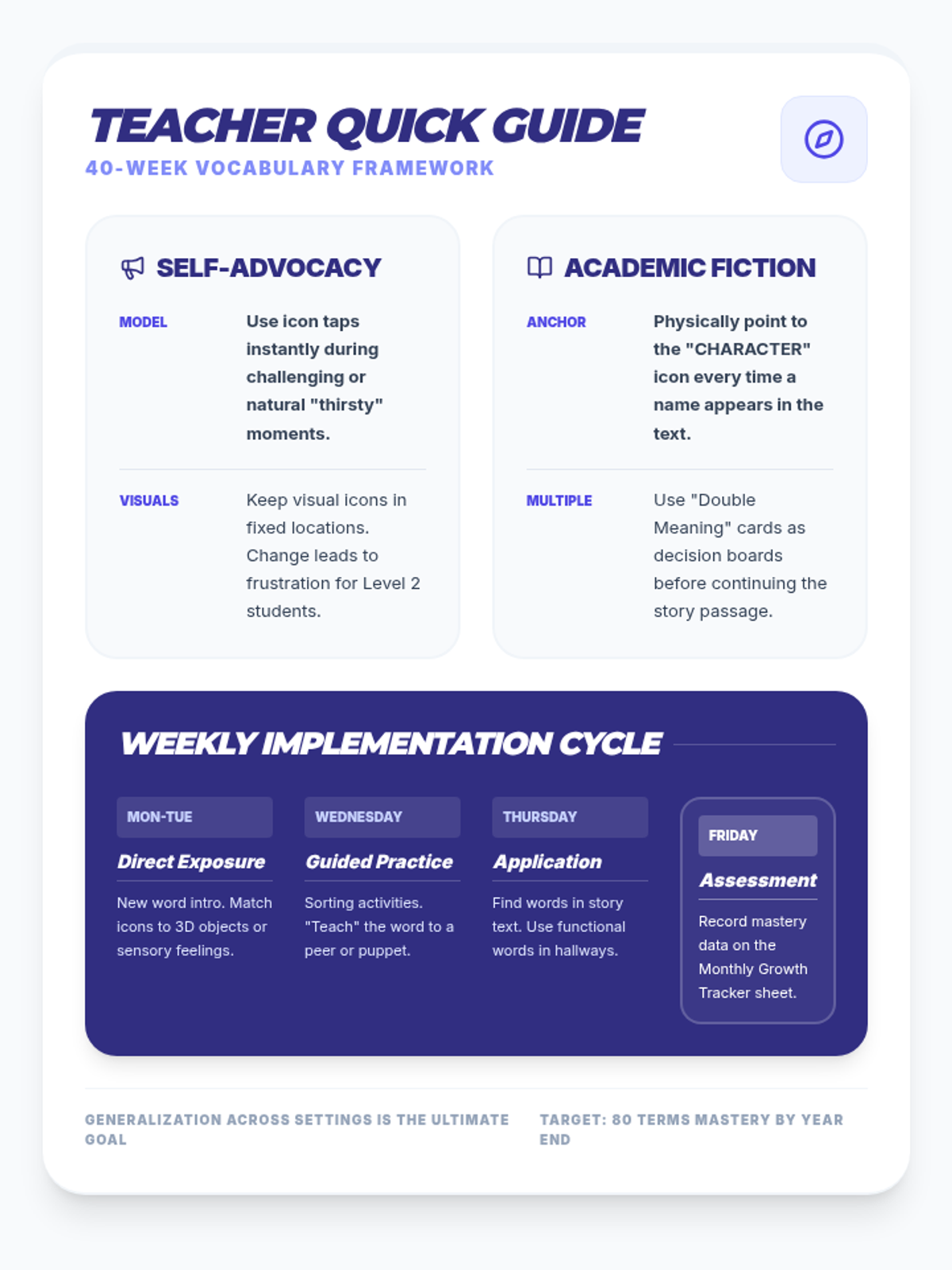
Establishing baseline skills in self-advocacy (needs/wants) and introductory fiction vocabulary (characters/settings) while initiating the 40-week progress monitoring system.