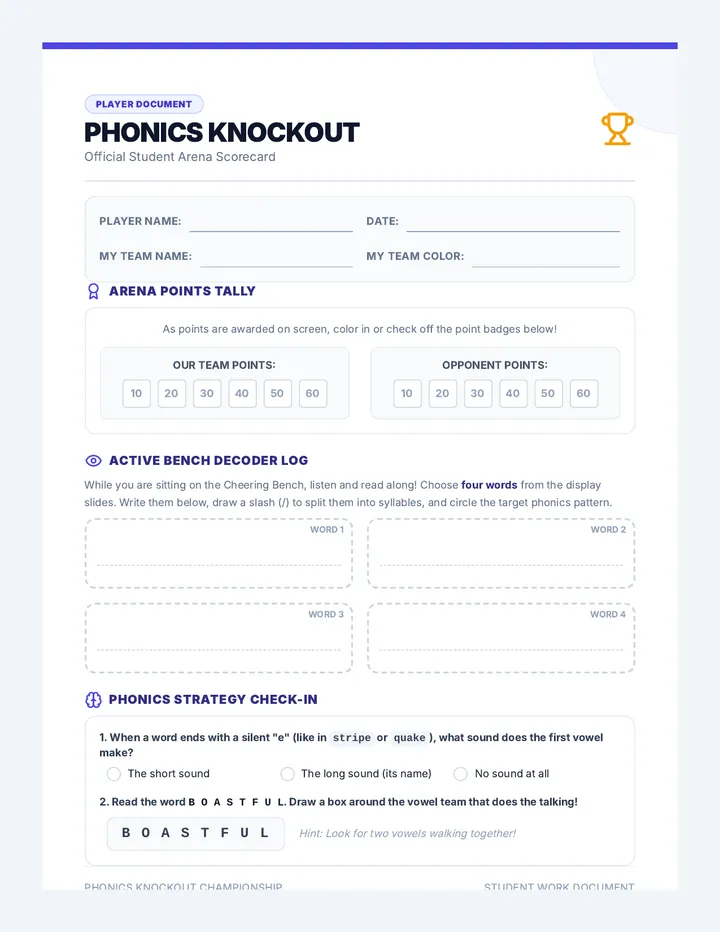
Focuses on discriminating between short /a/ (CVC) and long /a/ (VCe) patterns through phoneme-grapheme mapping and targeted decoding of an encrypted message text.
A cosmic-themed ELA morning work packet for 3rd grade focused on North Carolina standards for informational text. Students complete daily 'Mission Logs' to practice key comprehension skills including main idea, text evidence, and vocabulary.
A high-energy, 120-minute whole-group escape room where students act as Linguistic Archeologists to save the Lost Library of Legend. This lesson reviews 4th-grade ELA standards including sentence structure, parts of speech, text structures, and writing genres.
A comprehension lesson focused on Chapter 13 of 'The Last Kids on Earth and the Nightmare King', where students analyze setting, character teamwork, and a major plot turning point involving a radio signal.
Students will dive into Chapter 13 of 'The Nightmare King' to identify key plot details using the 5 W's strategy at a Grade 3 reading level.
A foundational phonics lesson focusing on short vowel sounds (a, e, i, o, u) and high-frequency sight words using an adventure-themed "Vowel Valley" concept.
A foundational literacy lesson focusing on short vowel sounds and high-frequency sight words through an engaging 'nature expedition' theme. Students will identify vowel sounds in CVC words and practice common sight words.
Students explore vocabulary from the picture book 'The Wombats Go Wild for Words' by identifying synonyms and antonyms using a graphic organizer. This lesson builds 2nd-grade language skills through character-driven word exploration.
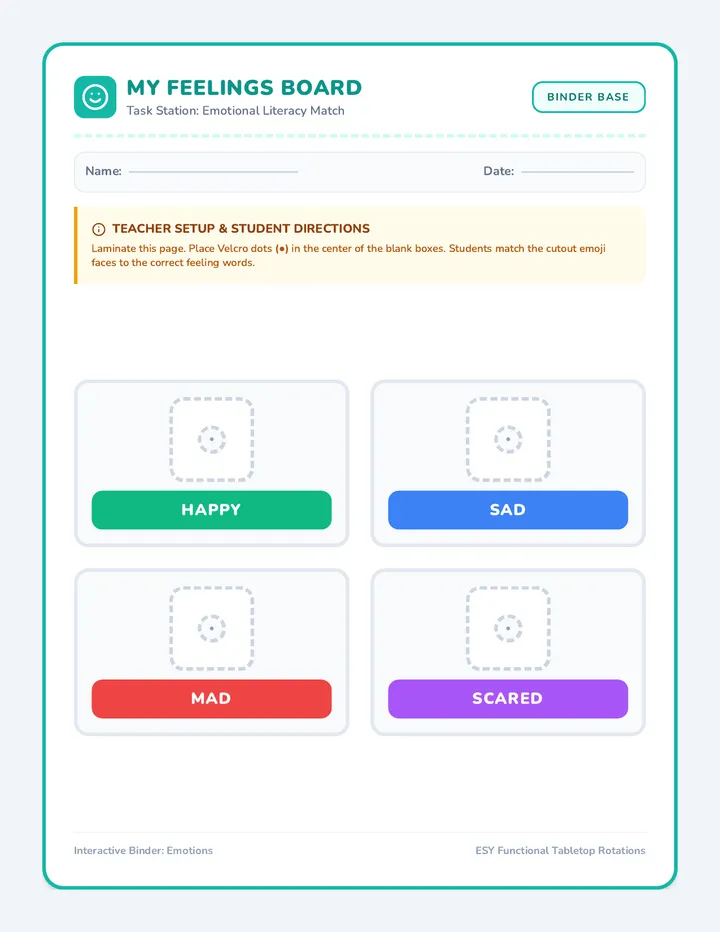
A collection of visual social stories, checklists, and activities designed to help autistic students navigate classroom expectations like listening, waiting, working, and taking breaks.
A high-stakes grammar escape room where students act as secret agents to solve mysteries using their knowledge of parts of speech and subject-verb agreement.
Strategies and quick-reference tools specifically designed for refocusing and redirecting students with ADHD and defiant behaviors in the Least Restrictive Environment.
Students practice reading comprehension and narrative sequencing by ordering sentences from Aesop's classic fable of the boy who cried wolf. The lesson includes a visual storytelling presentation, printable sentence strips for tactile learning, and a follow-up writing activity.
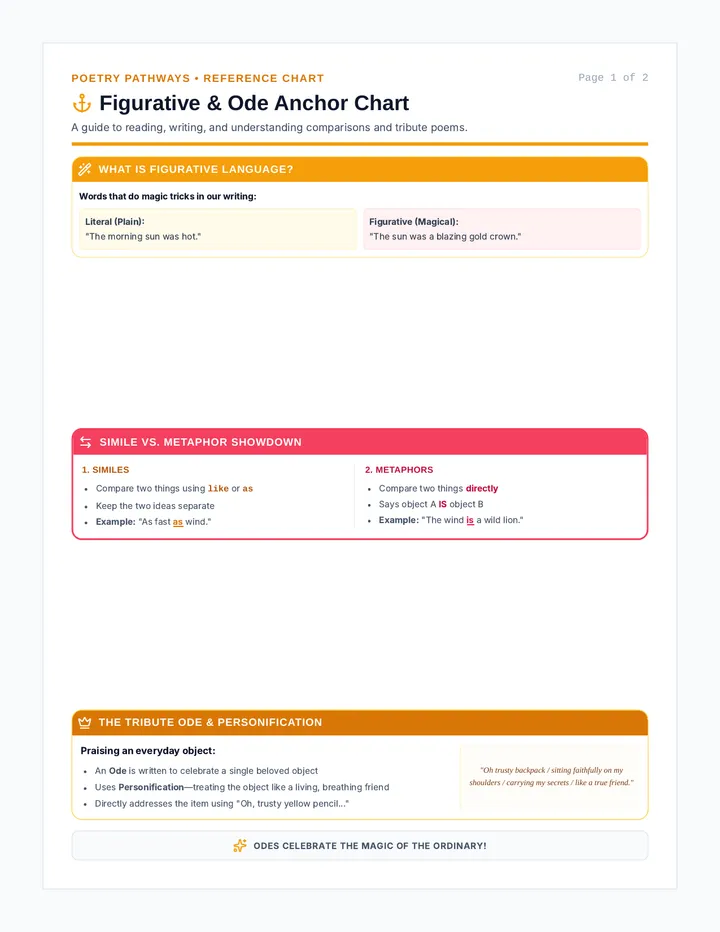
A 3-day intensive study of an original folktale, 'The Weaver of Whispers.' Students analyze character motivations, setting influences, and figurative language before creating their own original myth.
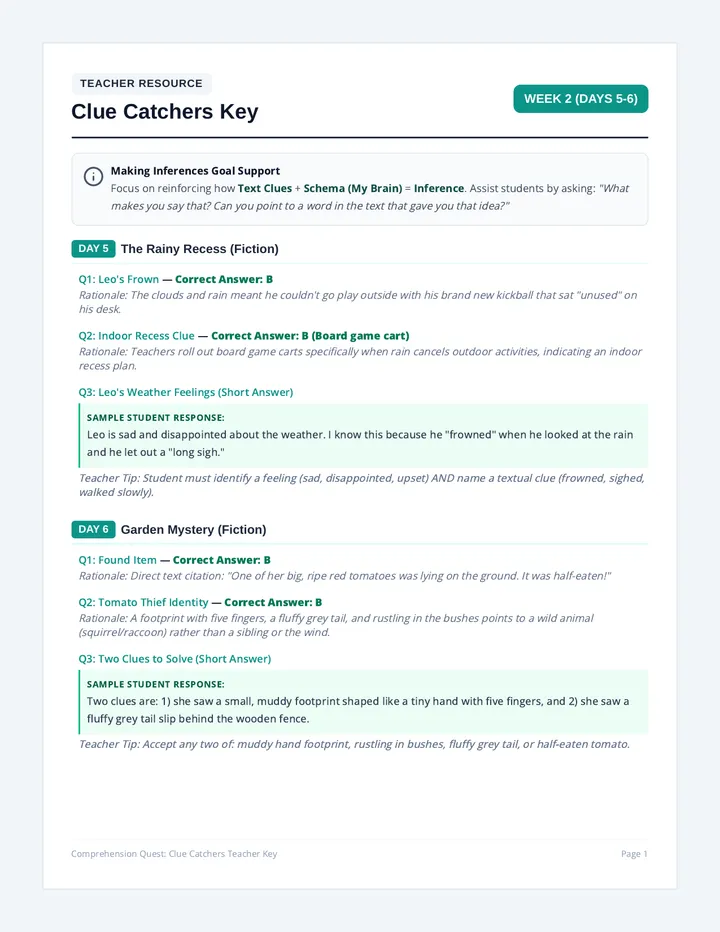
A 3rd-grade ELA lesson focused on reading a narrative passage and answering comprehension questions in the style of the NYS ELA exam. Students explore the theme of overcoming a challenge through the story of a girl facing her fear of the high dive.
A lesson focusing on the transition of the Watson family from Flint to Birmingham, analyzing setting development and character shifts in chapters 12 and 13.
A deep dive into Chapter 10 of 'The Watsons Go to Birmingham – 1963', focusing on how the Appalachian setting and the shroud of night symbolize the growing racial tensions as the family heads South.
Summative assessment on RI.3.1 using a comprehensive extreme weather passage.
A collaborative review and guided practice session preparing for the final assessment.
Students learn to generate their own questions and locate answers within a text about hurricanes.
Focused practice on answering explicit questions using a reading passage about tornadoes.
Introduction to RI.3.1 and building foundational skills for finding evidence in weather-related texts.
A week-long series of warm-up activities focusing on historical biographies and RI.3.1 standards to prepare students for end-of-grade testing.
Sensory support strategies and proprioceptive activities designed for students in grades 3-5. Bridges the gap between play-based movement and functional household participation with age-appropriate "strength challenges."
A comprehensive Grade 2 ESL lesson focused on the art of narration. Students develop academic language through sequencing words and transition phrases while practicing all four language domains (reading, writing, listening, and speaking) through a creative 'Story Lab' theme.
Sensory support strategies and proprioceptive activities specifically designed for students in grades K-3. Focuses on play-based heavy work, animal walks, and simple household participation.
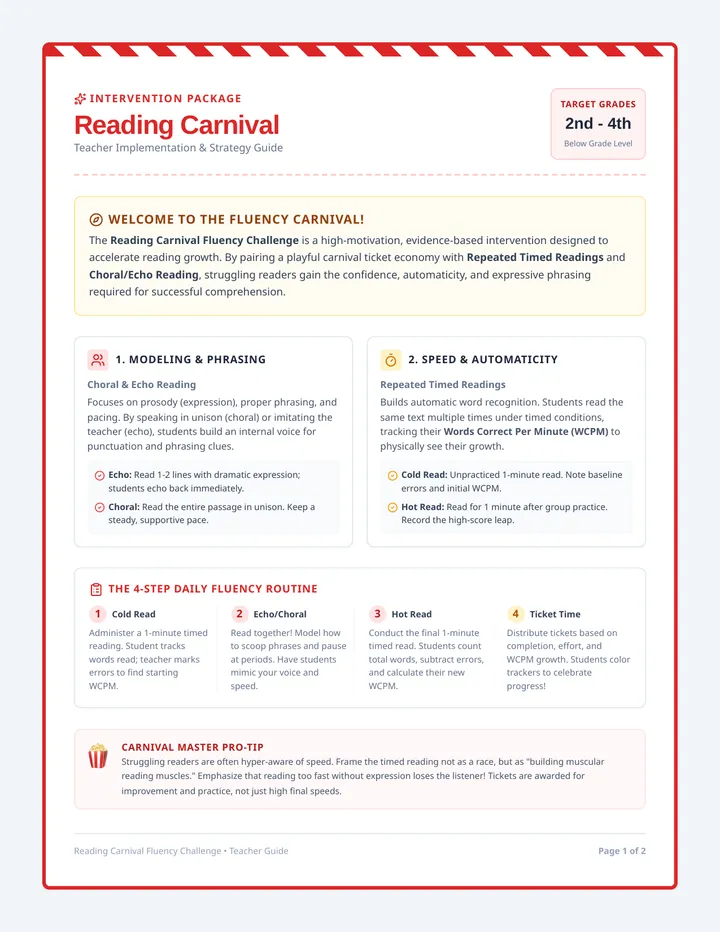
A classroom management system focused on positive reinforcement through a token economy, featuring non-tangible rewards.
A comprehensive lesson designed for 5th-grade students working on foundational sight words (Dolch Primer and Fry First 100). The lesson uses a 'Word Spy' theme to keep the material age-appropriate while targeting K-1 level literacy goals.
A comprehensive K-12 behavior management system that synthesizes best practices from MTSS, PBIS, and restorative justice frameworks. This lesson provides teachers with a clear decision-making flow and a detailed policy handbook for maintaining a positive school culture.
A cumulative review and formal assessment of dictionary navigation and entry analysis skills.
Focuses on the anatomy of a dictionary entry, specifically how to identify and choose between multiple definitions based on sentence context.
Introduction to the physical and digital structure of a dictionary, with a deep dive into using guide words for rapid word location.
A collection of worksheets designed to help students write structured biographical paragraphs about historical figures using mind maps and sentence starters. Each worksheet features a unique theme tailored to the figure's profession.