A focused 30-minute lesson for a 7th-grade student to understand personal space and boundaries, respecting the privacy of staff and students.
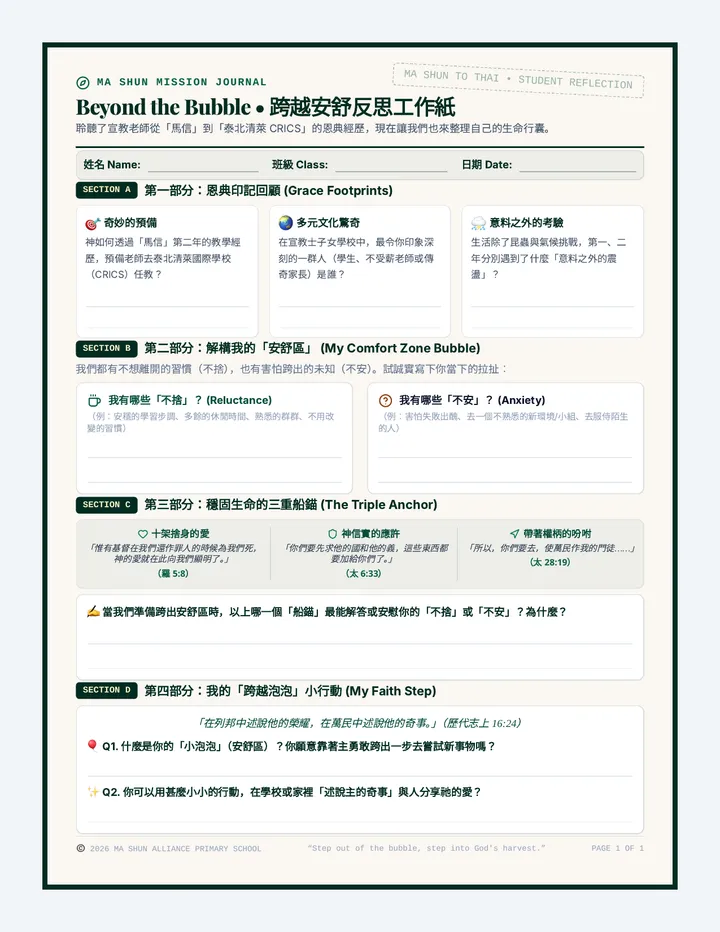
A testimony-based lesson exploring the journey of stepping out of one's comfort zone, overcoming fears through faith, and embracing God's mission in Thailand.
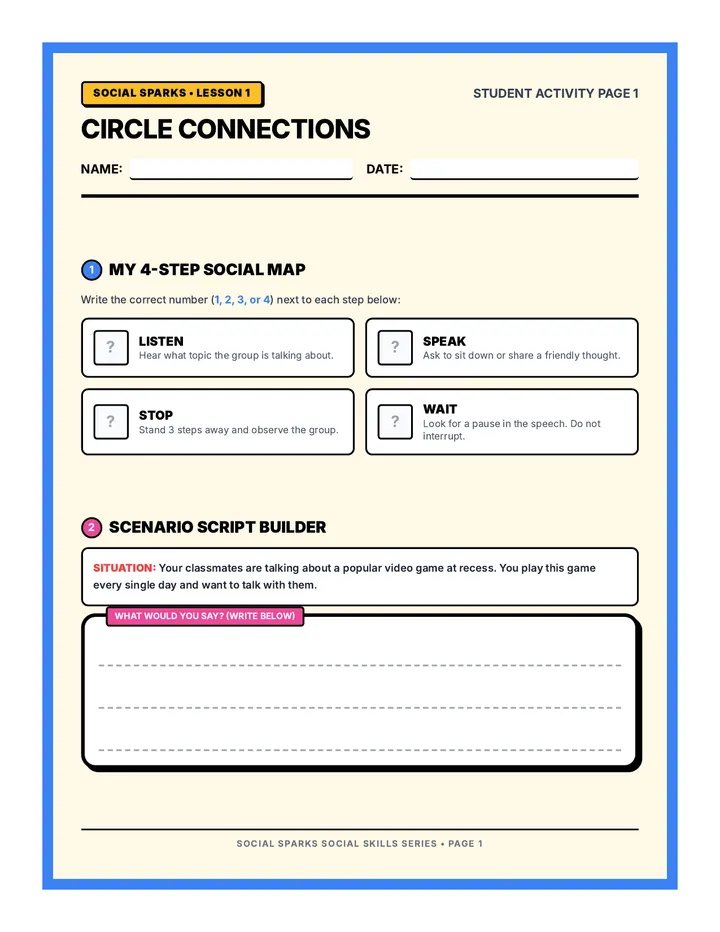
Teaches students how to join an ongoing peer conversation or group activity at school (e.g., at lunch or recess) using clear, structured visual steps. Includes an interactive slide deck and a visual reflection worksheet.
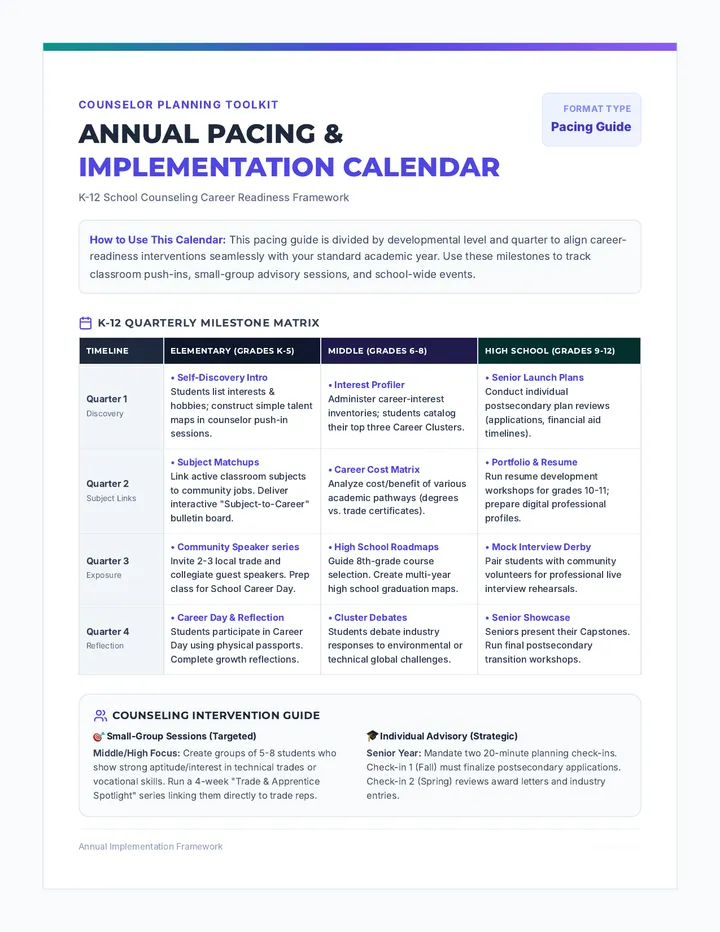
Actionable planning resources, school-wide career day guides, and implementation templates for school counselors to deploy career readiness curricula.
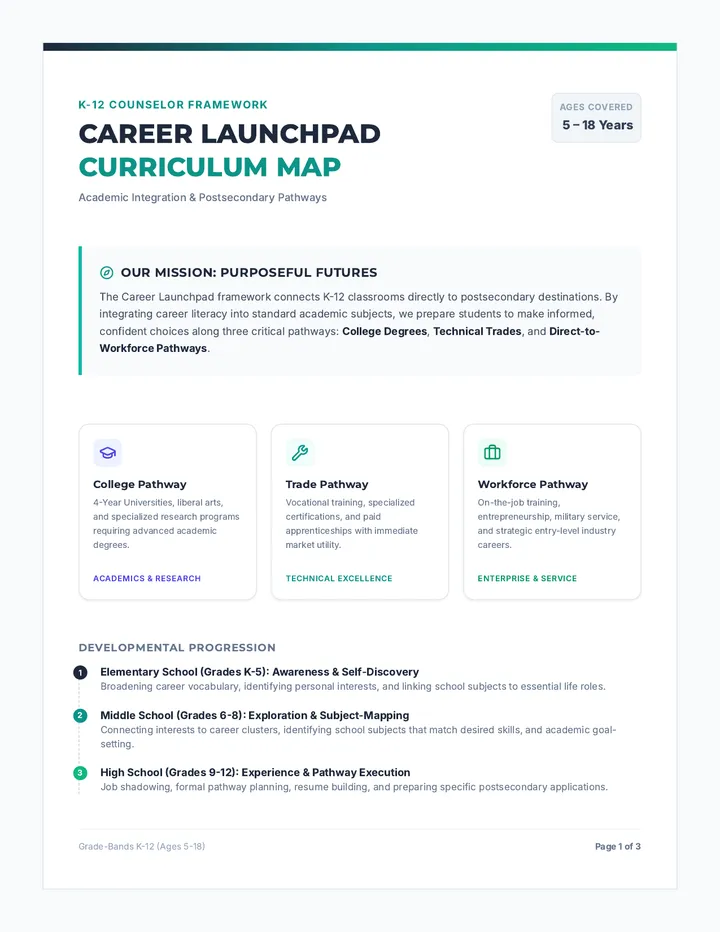
High-level scope, sequence, and developmental milestones for elementary, middle, and high school career exploration. This framework links classroom subjects to real-world college, trade, and workforce pathways.
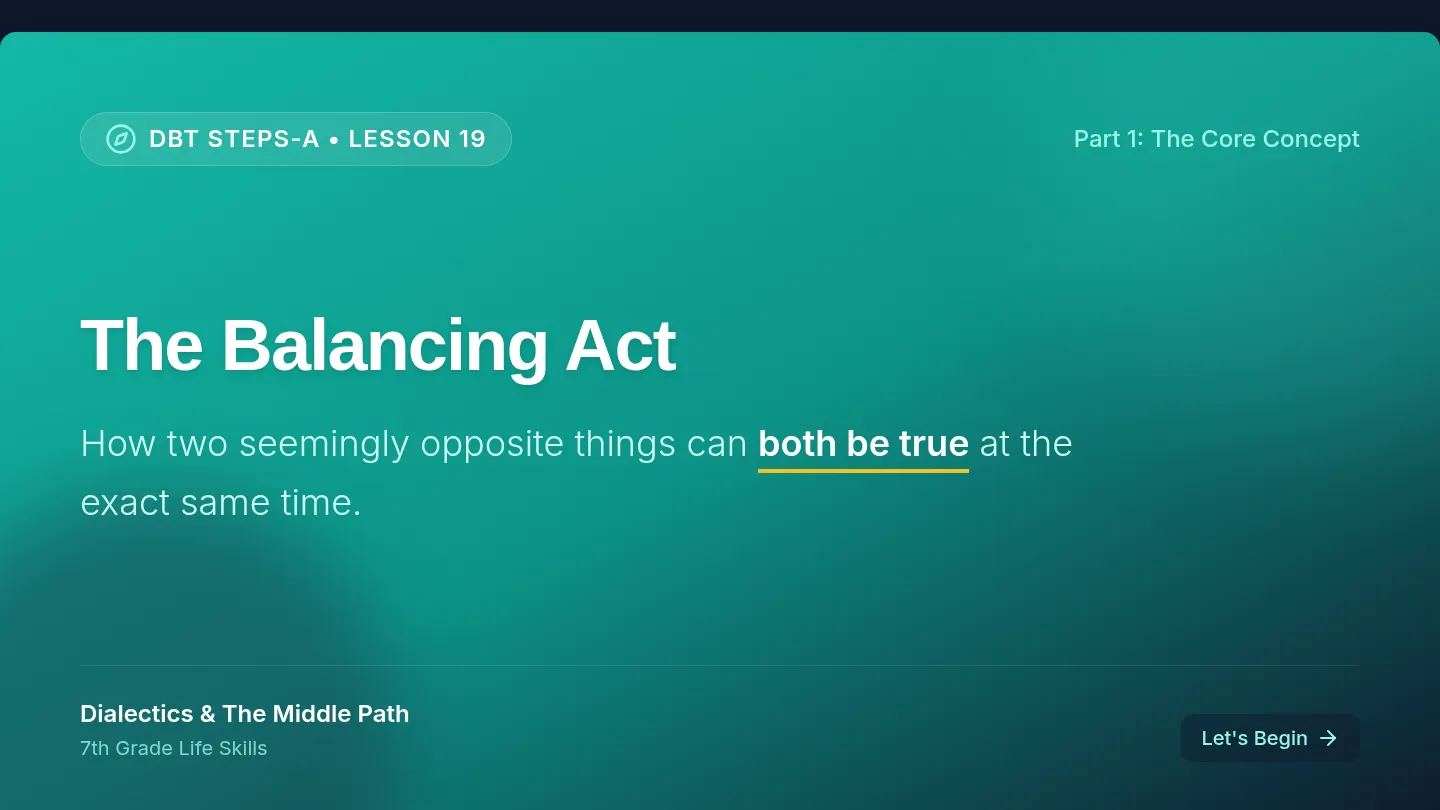
Introduction to DBT STEPS-A Lesson 19, focusing on the core concept of Dialectics. This lesson helps 7th graders understand that two seemingly opposite truths can coexist, guiding them to find a balanced 'middle path' in their emotions, relationships, and daily lives.
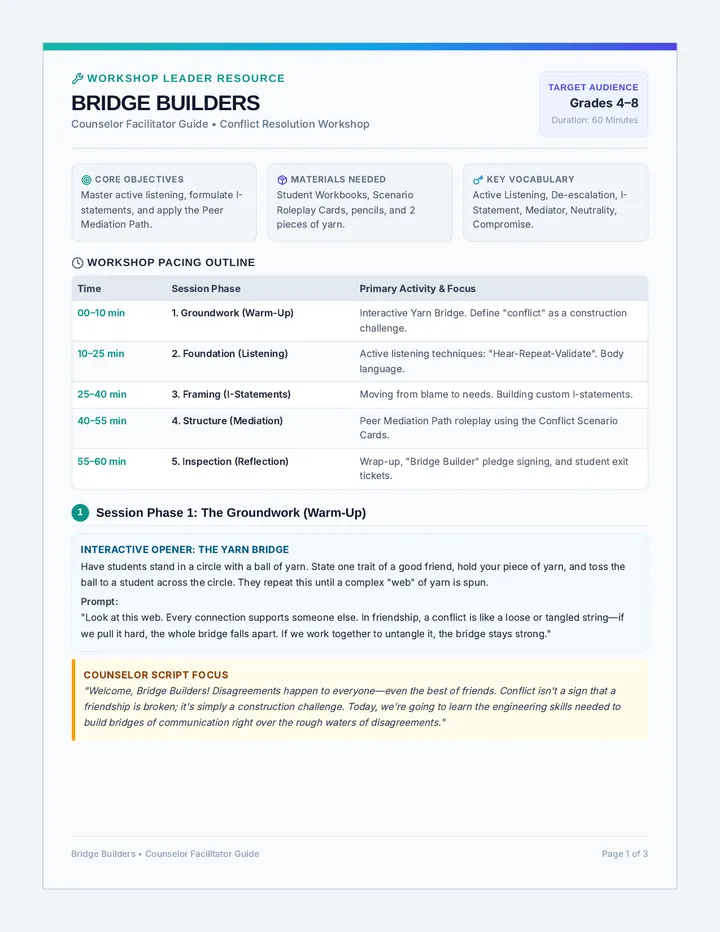
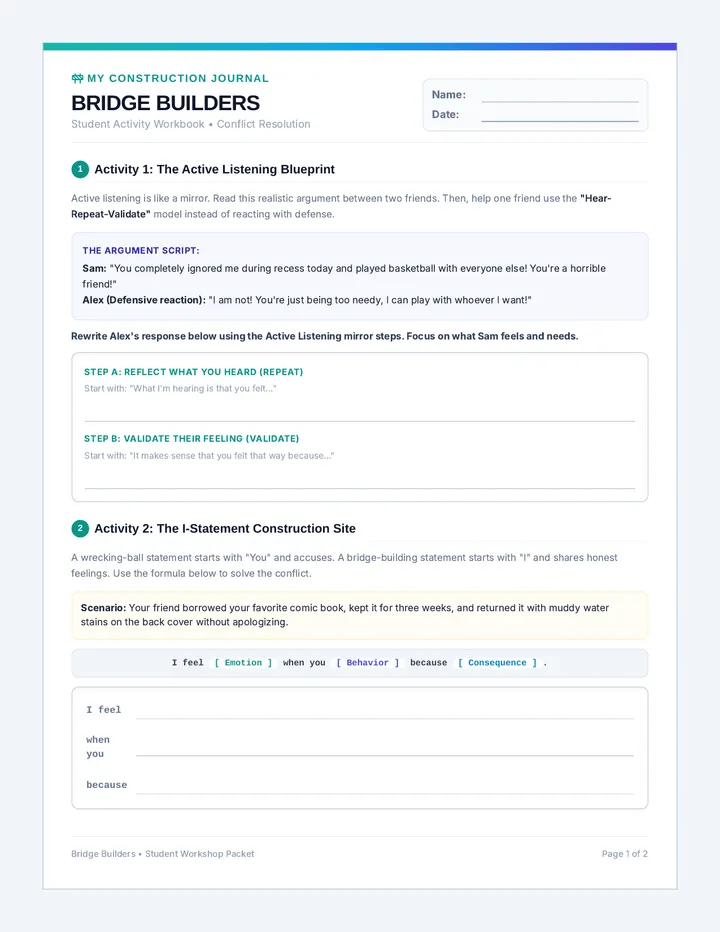
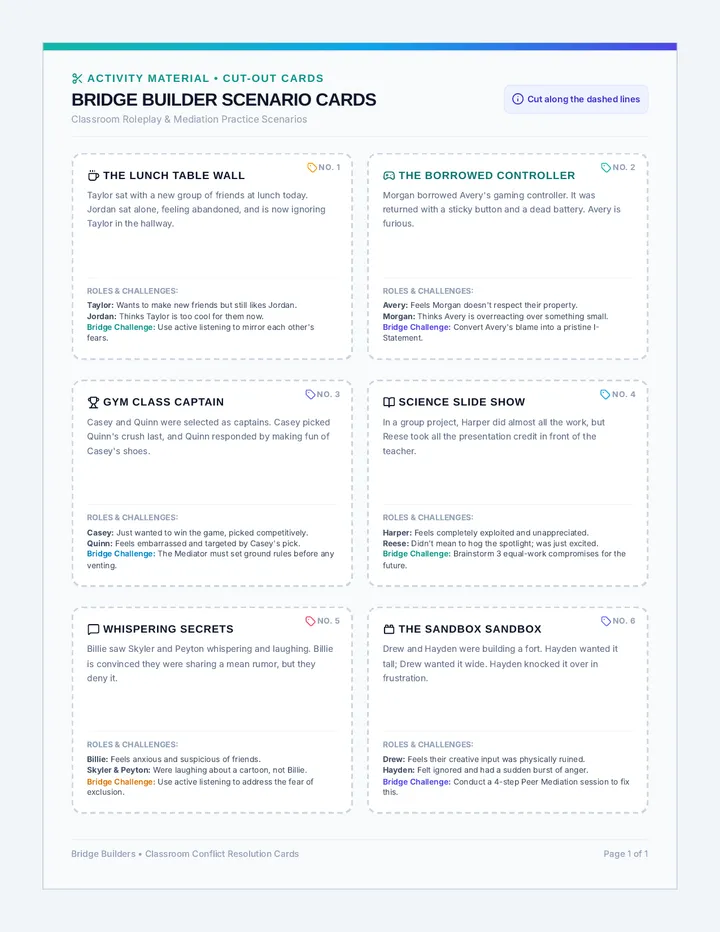
An interactive workshop teaching students essential conflict resolution skills, active listening techniques, and peer mediation frameworks to build stronger, more empathetic friendships.
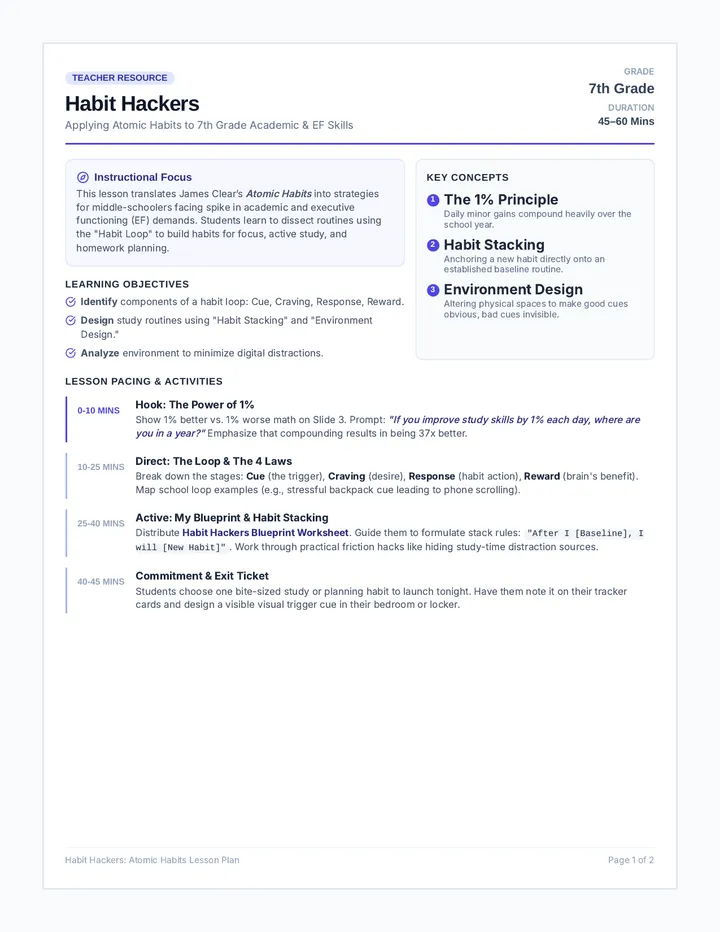
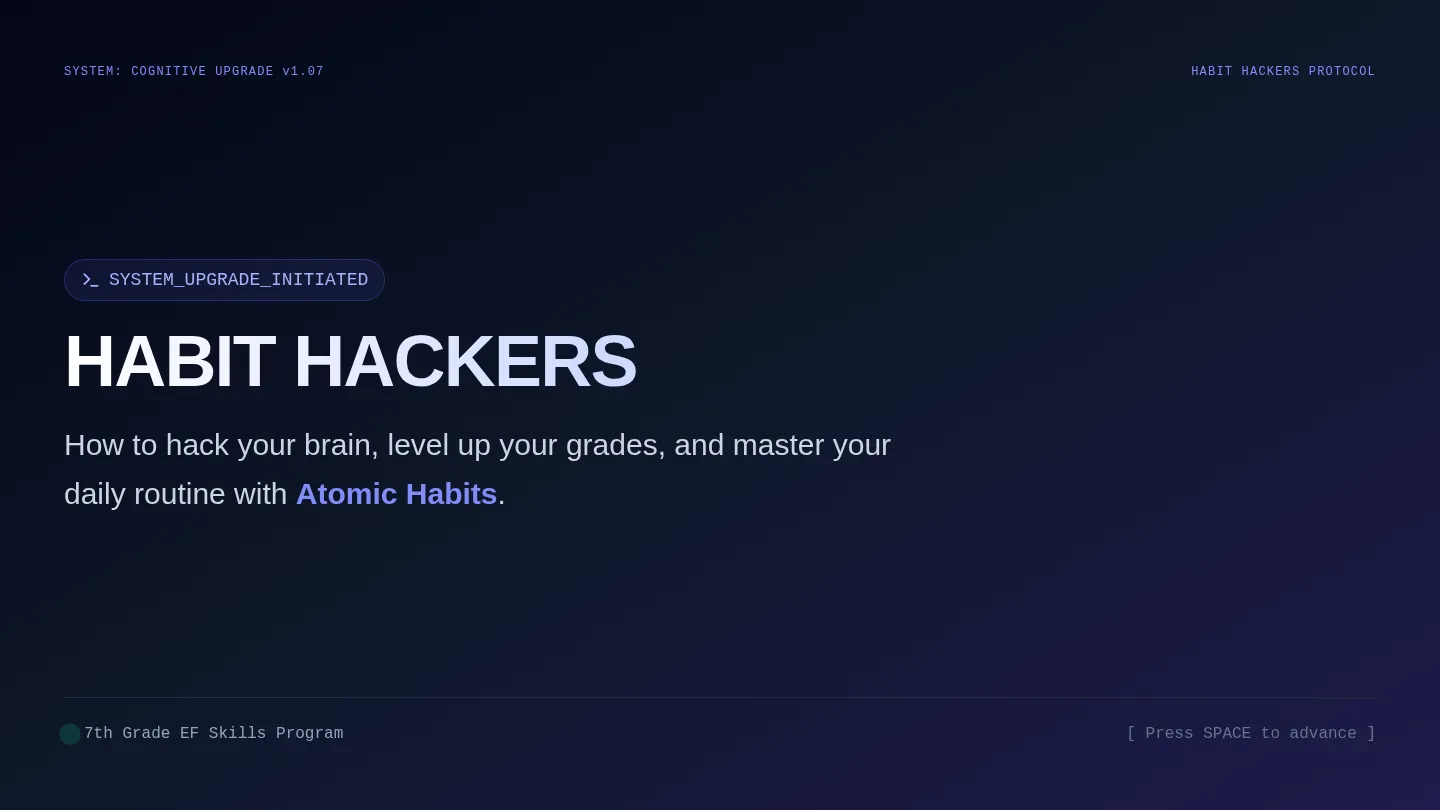
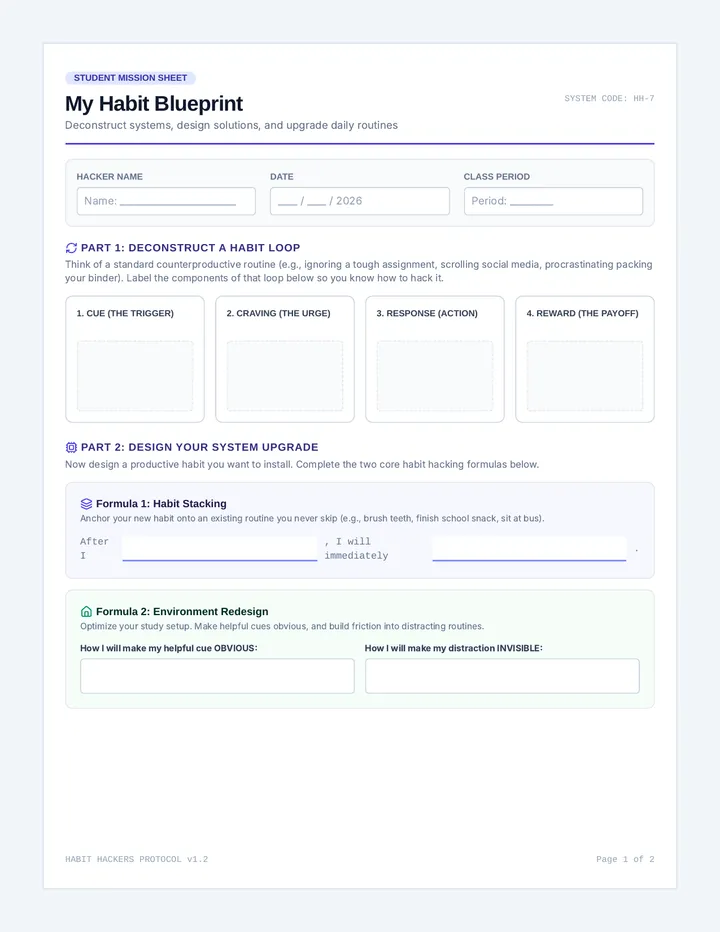
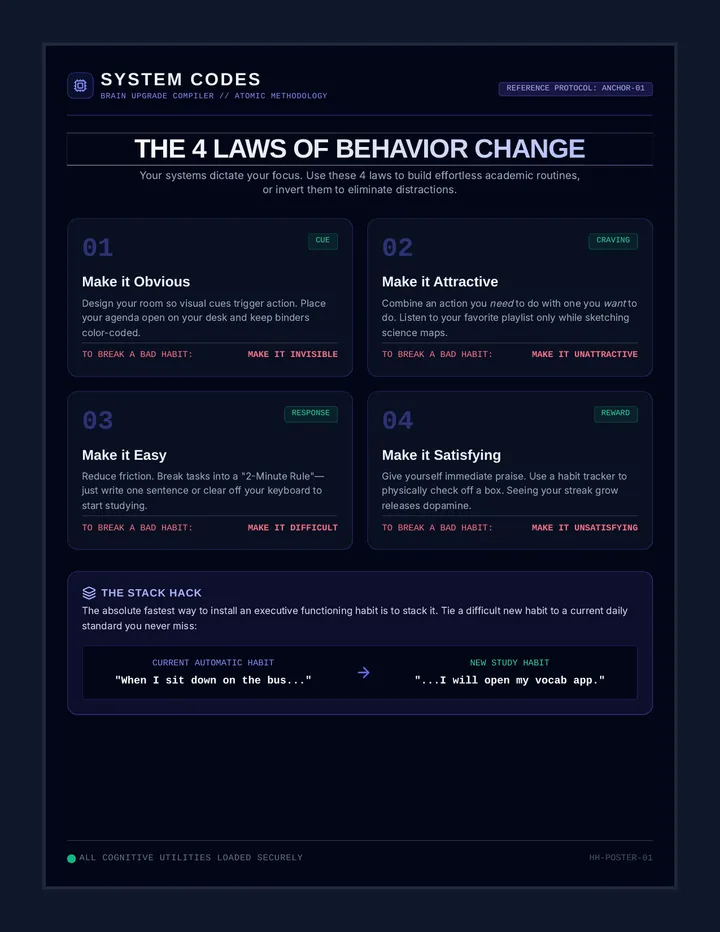
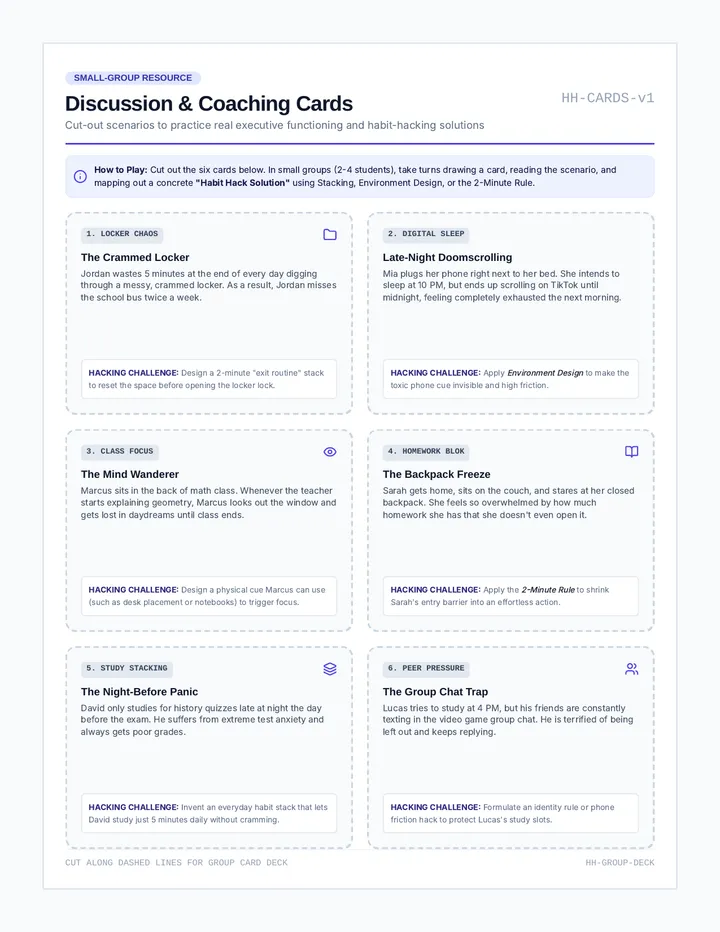
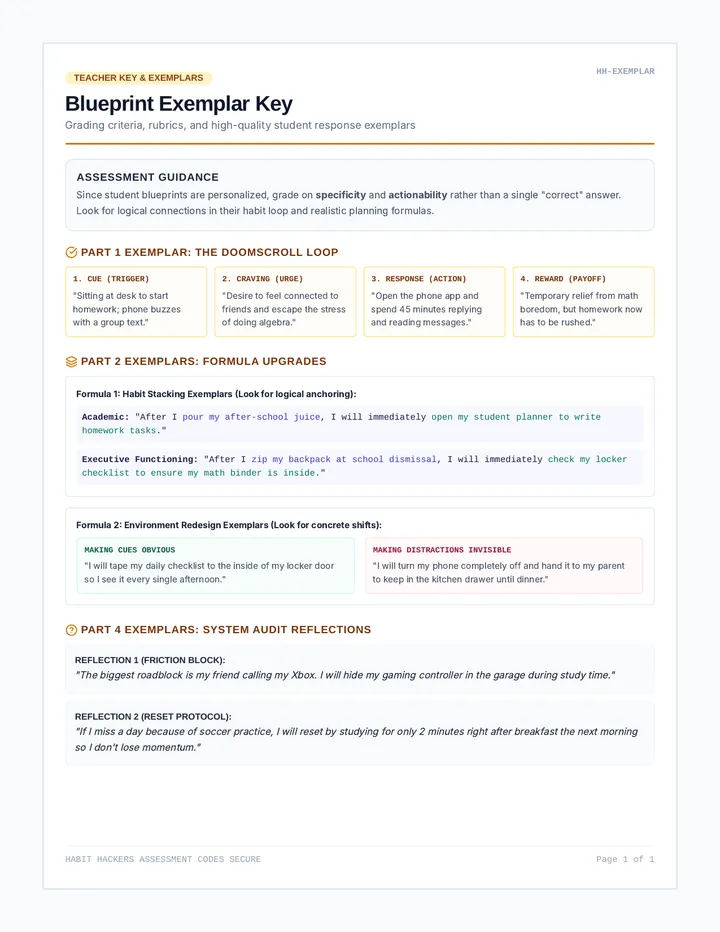
A comprehensive, highly engaging lesson that translates the core principles of Atomic Habits into practical academic, executive functioning, and social strategies for 7th graders. Through interactive slides, concrete worksheets, and structured small-group discussions, students learn to design and track habits that lead to continuous improvement.
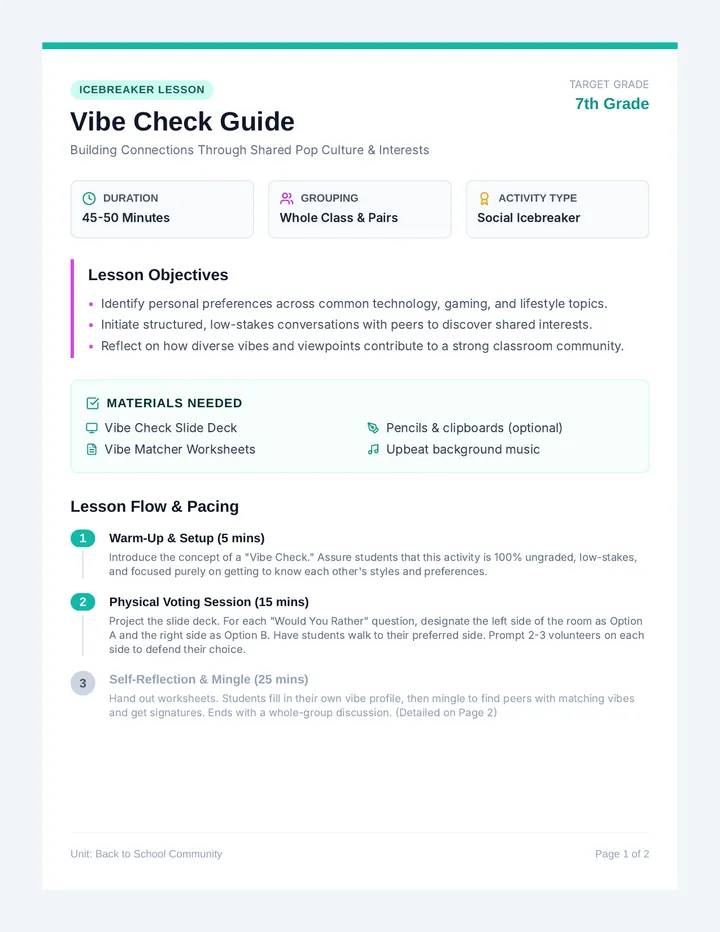
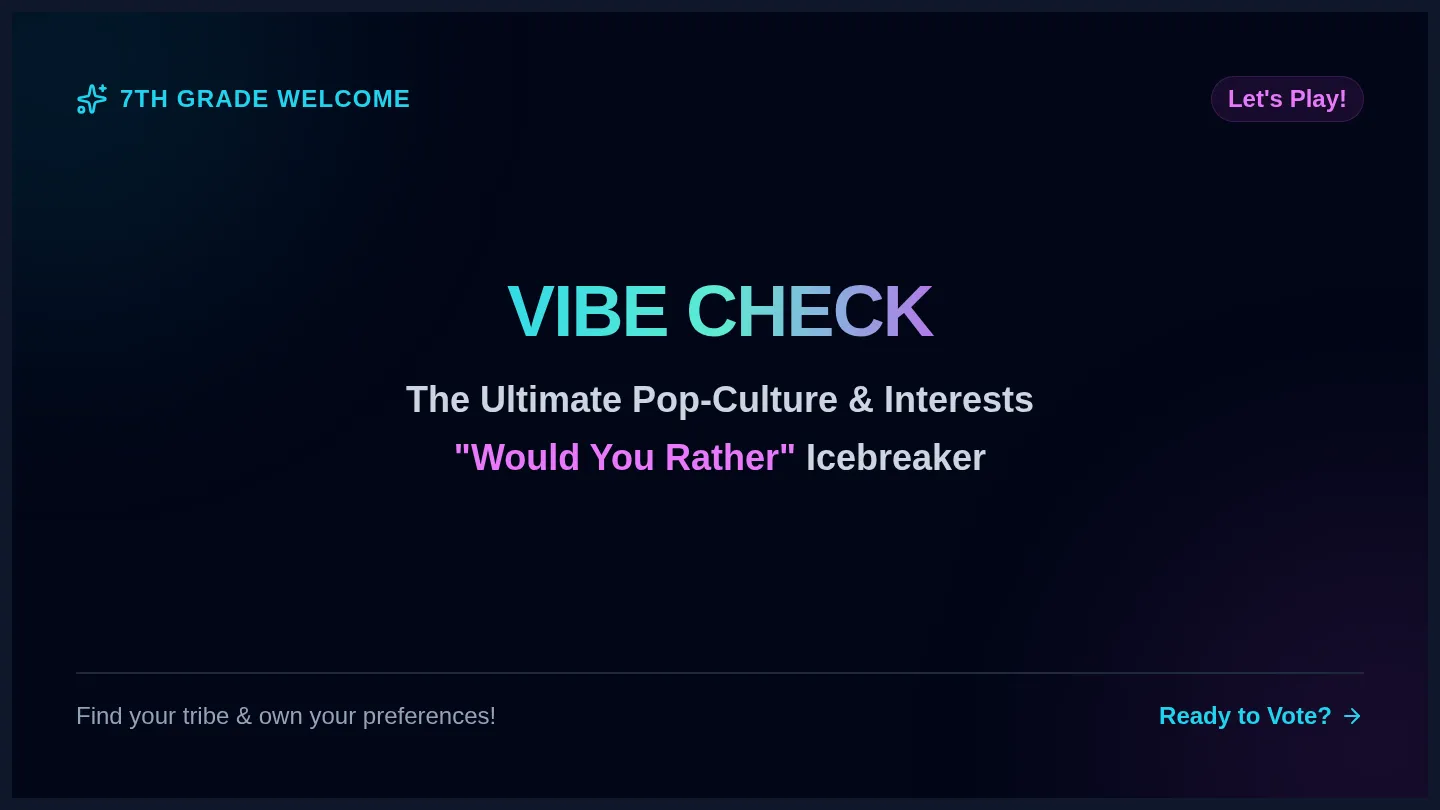
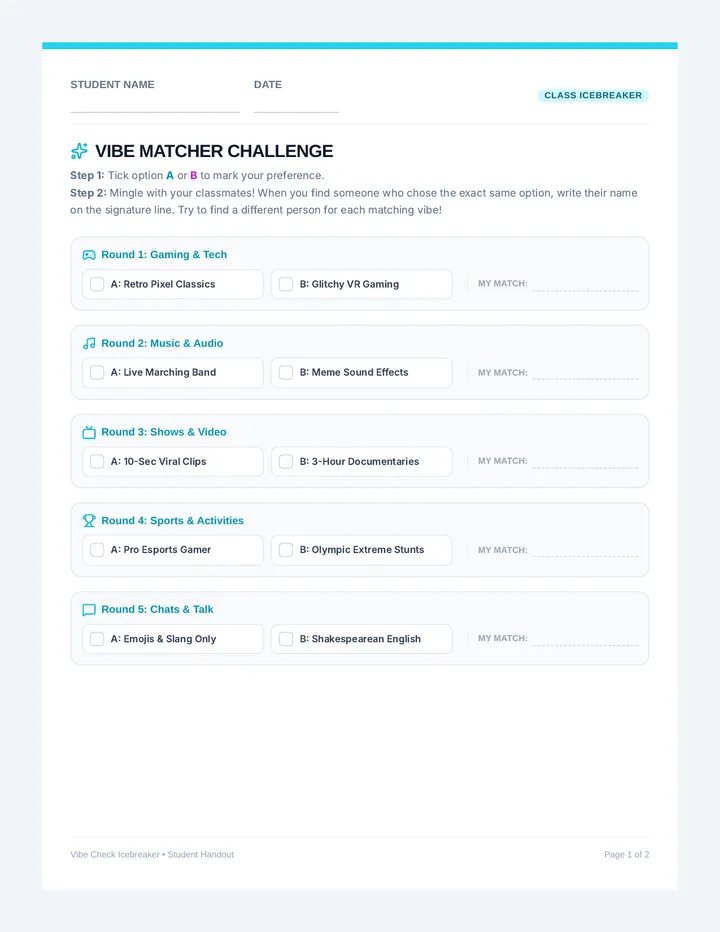
A high-energy, low-stakes icebreaker lesson for 7th graders to ease back-to-school anxiety. Students participate in a visual voting session using a slide deck, complete a self-reflection worksheet, and mingle to find classmates with matching pop culture and interest vibes.
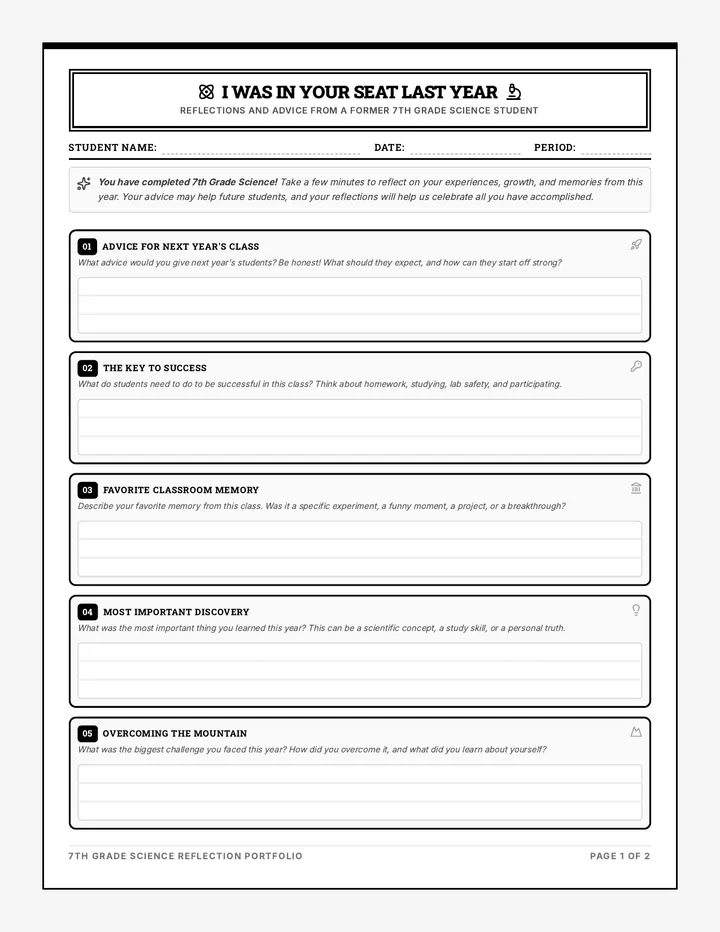
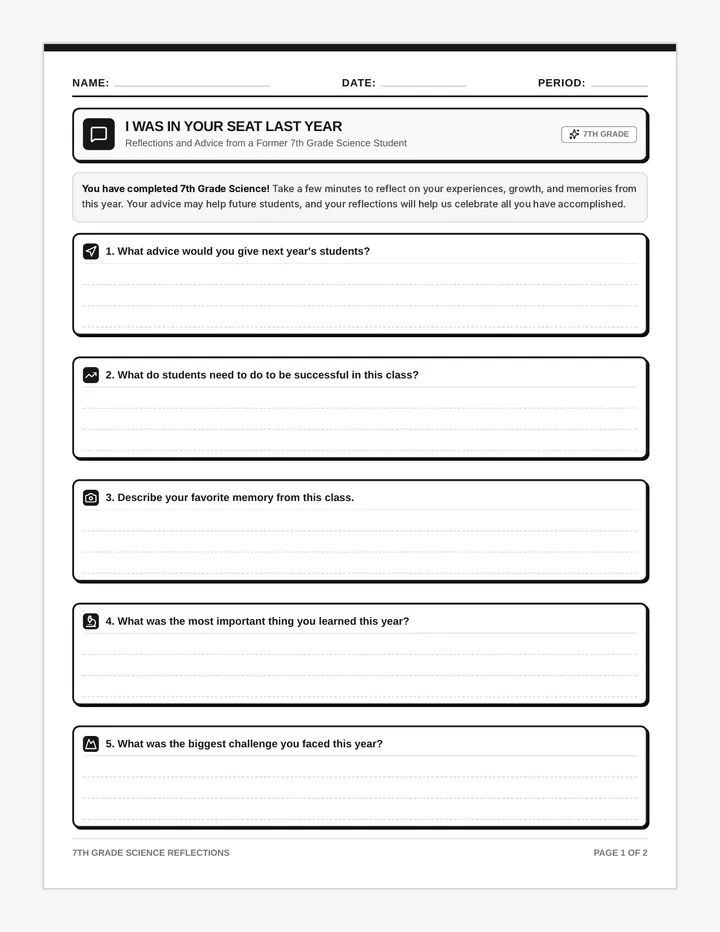
An end-of-year reflection lesson for 7th-grade science students where they reflect on their growth, achievements, and challenges, and leave advice for future students.
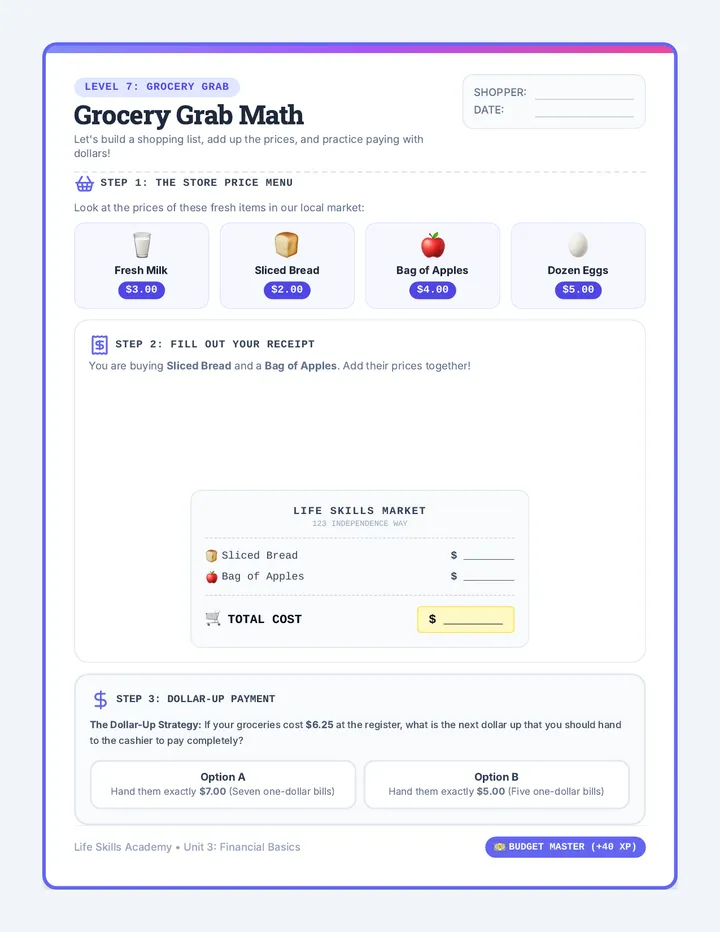
Focuses on grocery shopping, making a grocery list, identifying food groups, and understanding store sections to locate items independently.
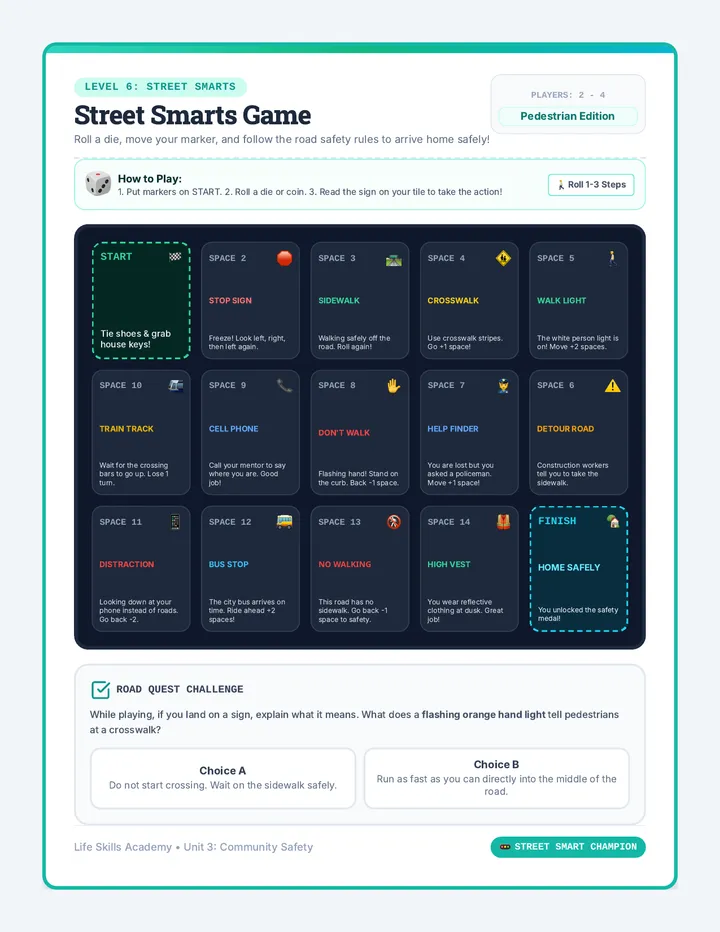
Teaches safety signs, navigation, and community navigation skills. Students learn to read pedestrian signs, crosswalk signals, and locate help in public spaces.
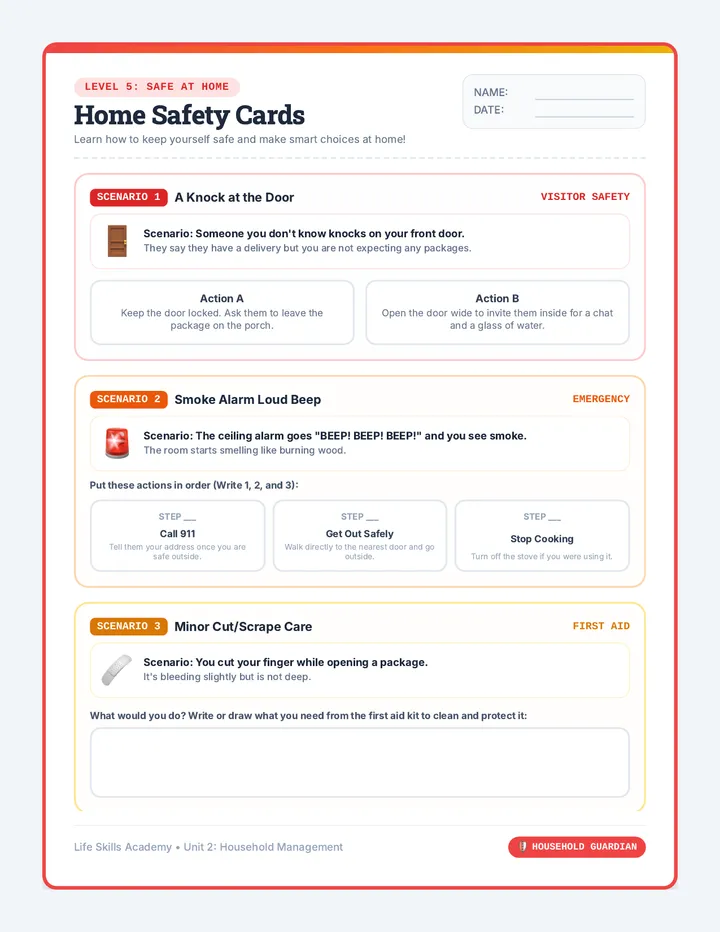
Teaches critical safety skills for the home environment, including dealing with emergencies, basic first aid, and managing visitors safely.
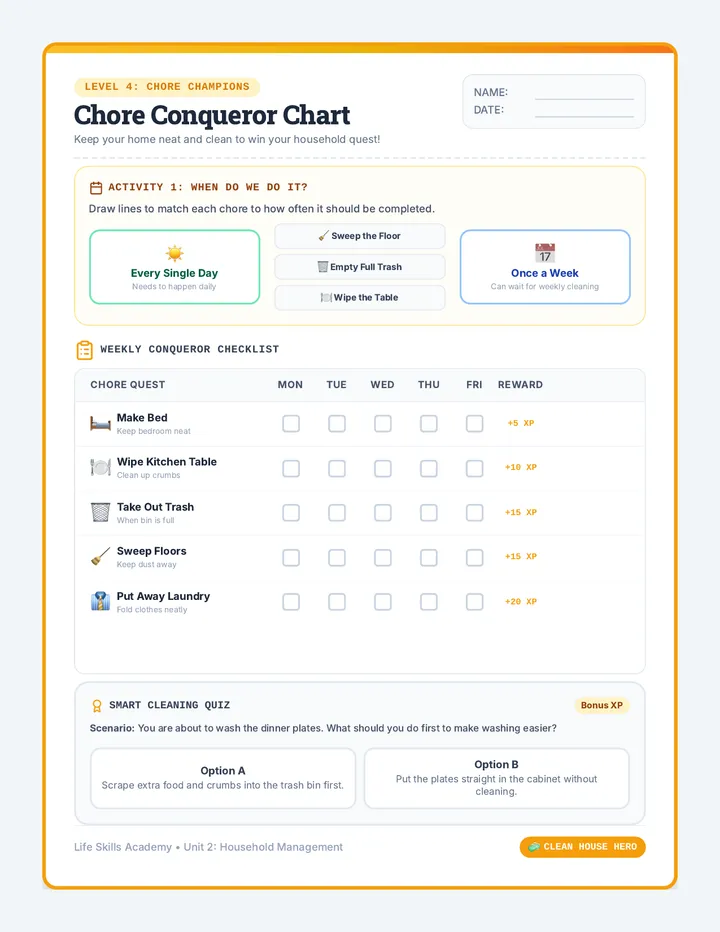
Focuses on household cleaning tasks, organizing chores, and maintaining a clean living space. Students practice sorting chores by frequency and completing a chore checklist.
Covers essential kitchen safety rules, using simple kitchen tools, and selecting healthy food. Students practice identifying safe and unsafe kitchen scenarios.
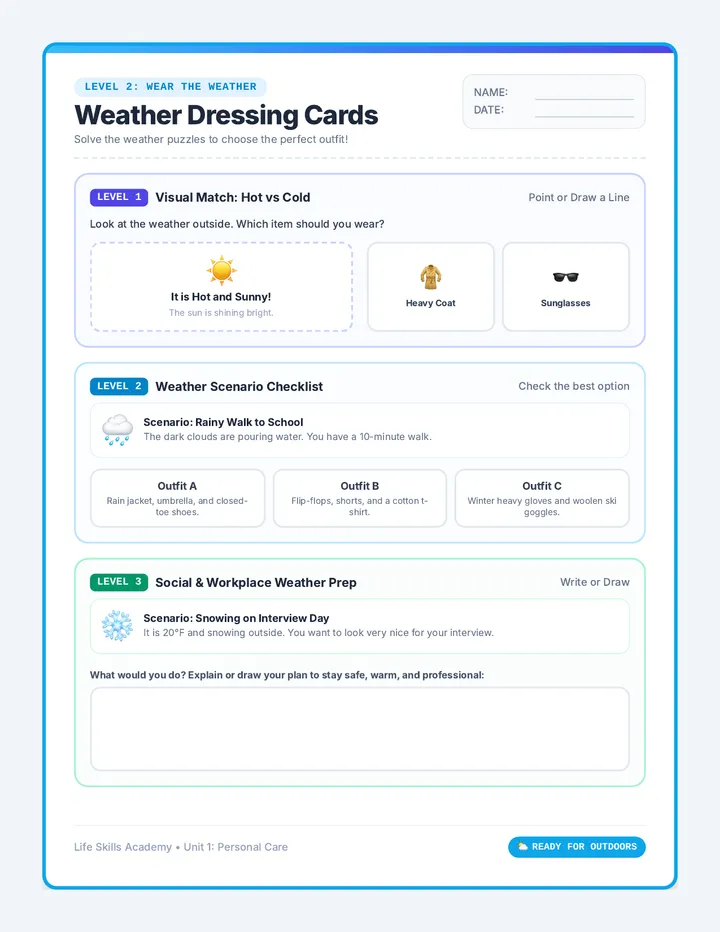
Teaches students to check the weather and choose appropriate clothing and accessories. Focuses on seasonal dressing and selecting clothing for safety and comfort.
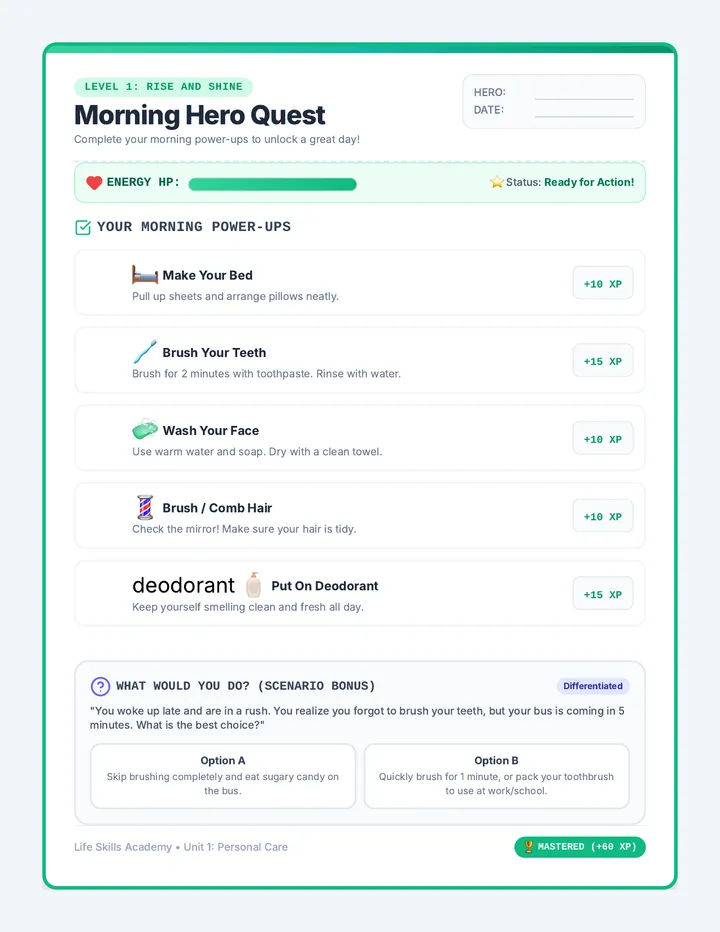
Focuses on morning routines and personal hygiene. Students learn to use visual checklists for brushing teeth, washing up, and self-care.
An end-of-year reflective science lesson where 7th-grade students look back on their progress, share advice for incoming students, and celebrate achievements.
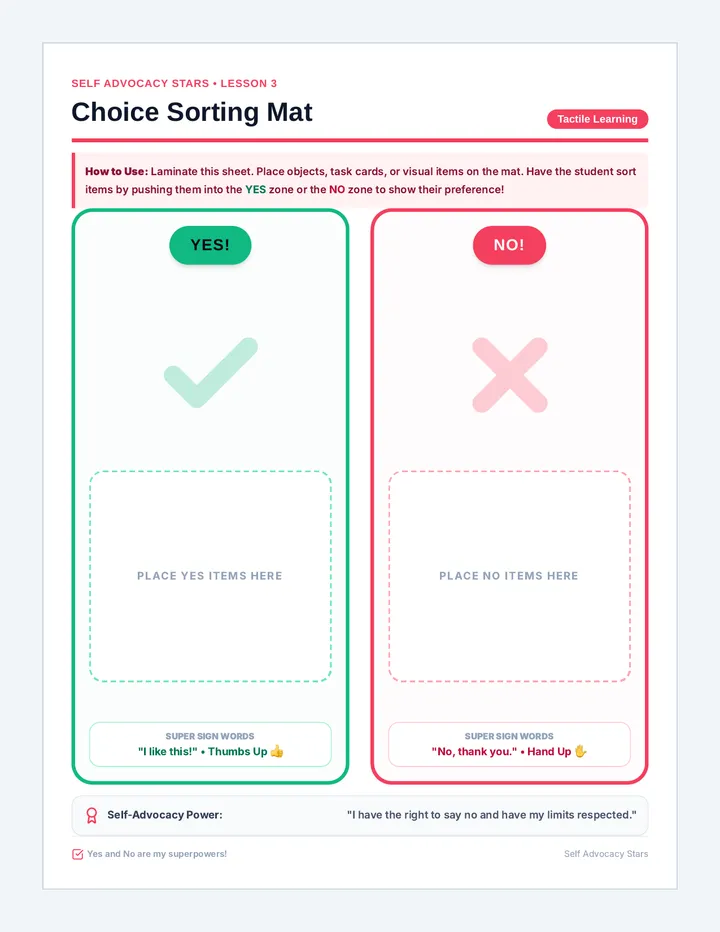
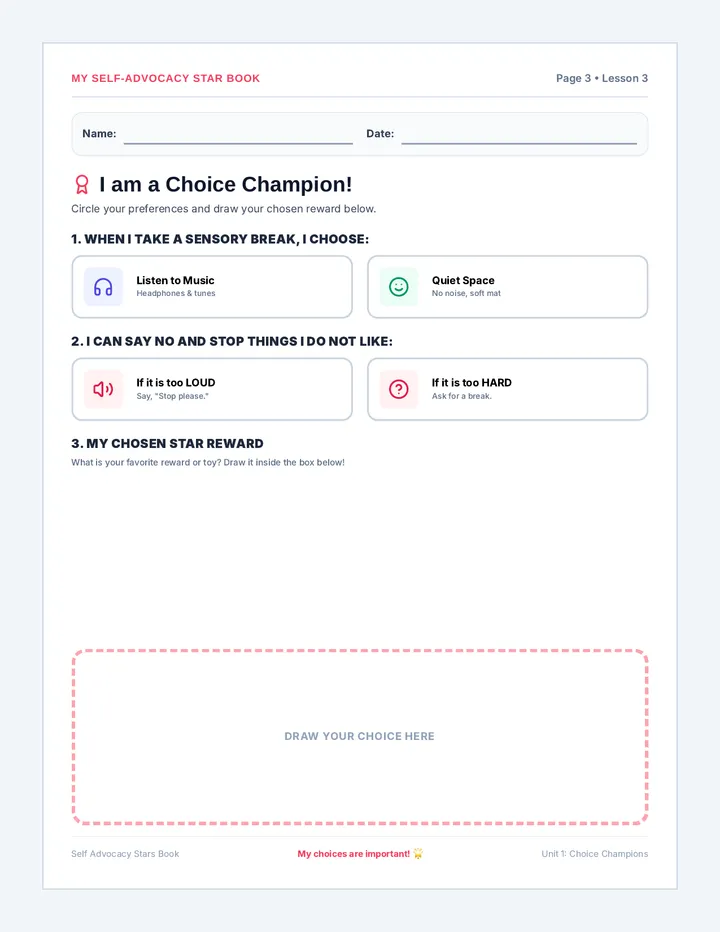
Students practice making independent choices, expressing preferences, and setting boundaries (saying "yes" or "no") using structured choice boards, tactile sorting mats, and interactive role-play.
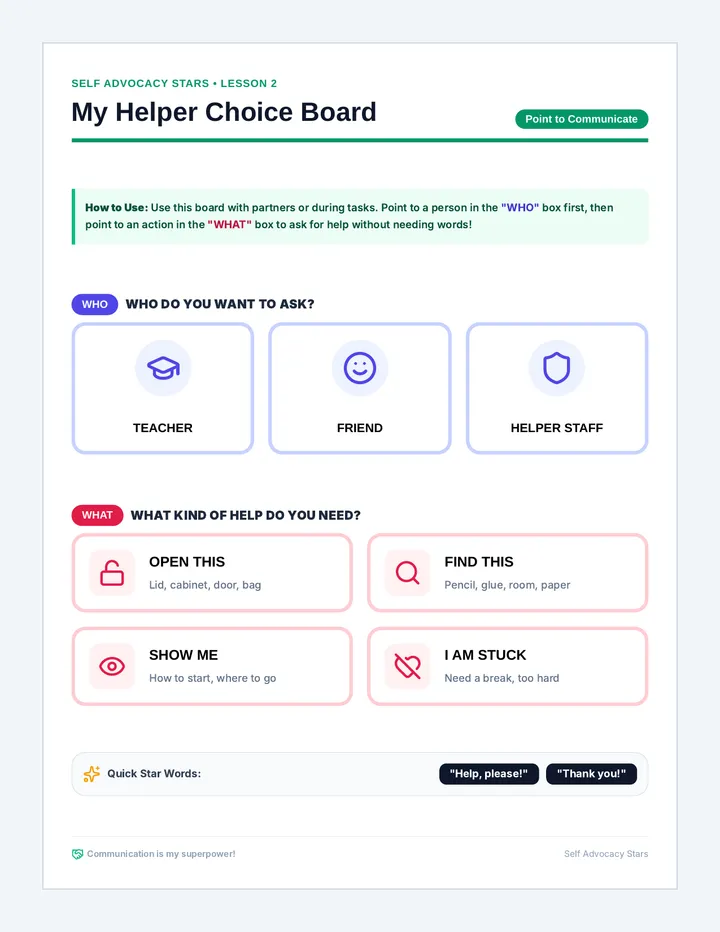
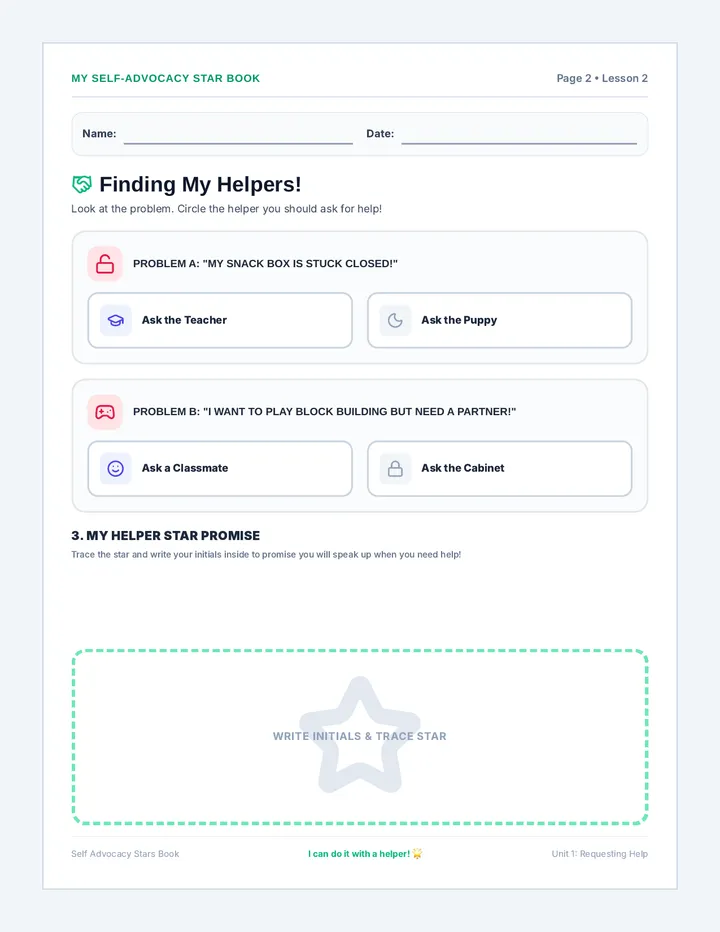
Students practice identifying when they need help, who to ask (teachers, peers, or helpers), and how to communicate that need using visual phrase cards and guided collaborative practice.
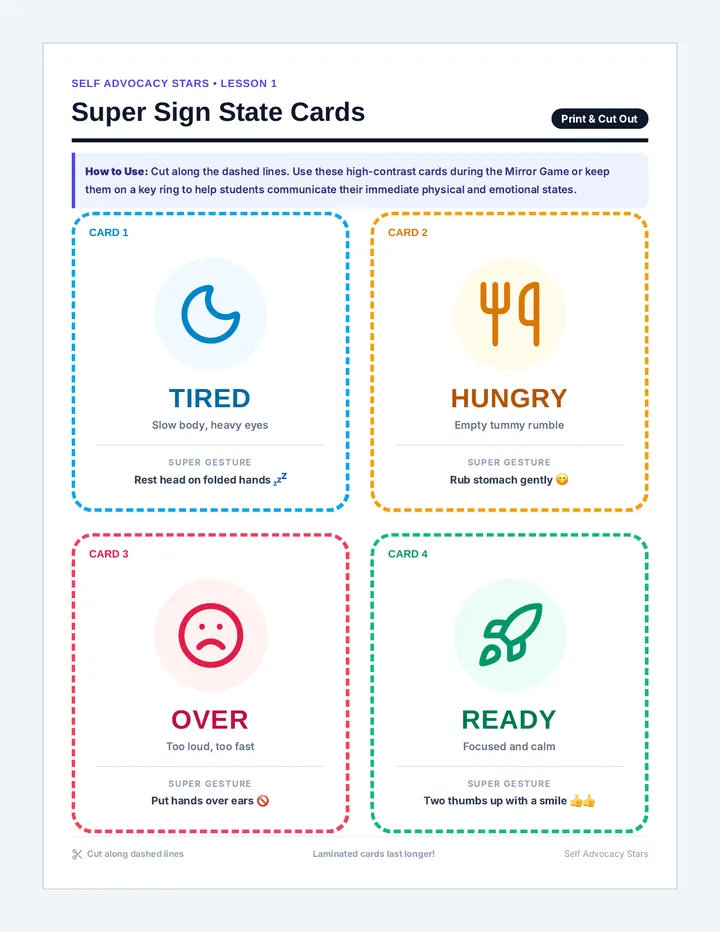
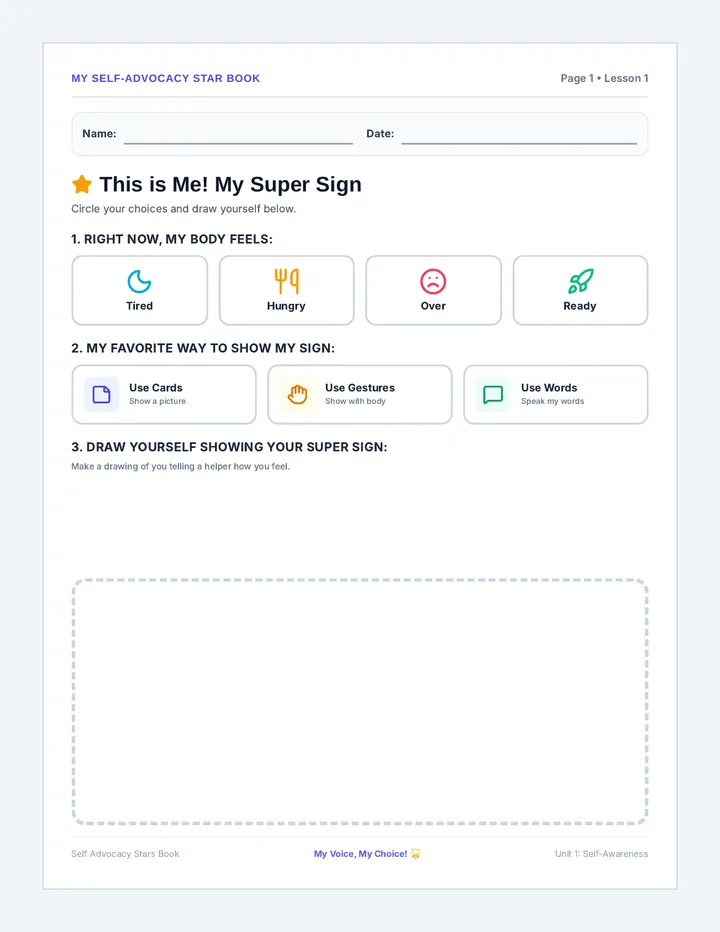
Students learn to recognize and communicate physical and emotional states (like tired, hungry, overwhelmed, or ready to learn) using simple gestures, vocalizations, or visual symbol cards.
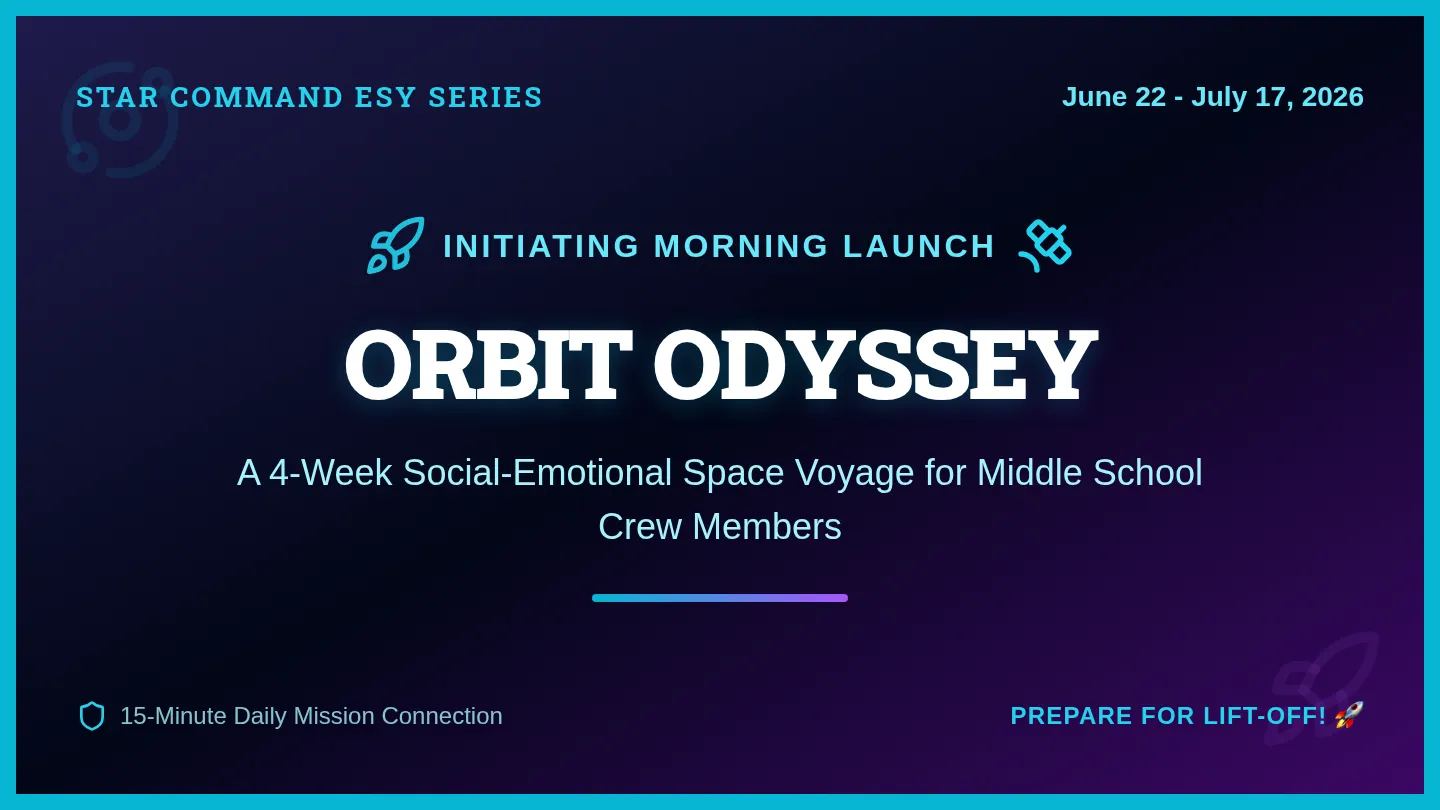
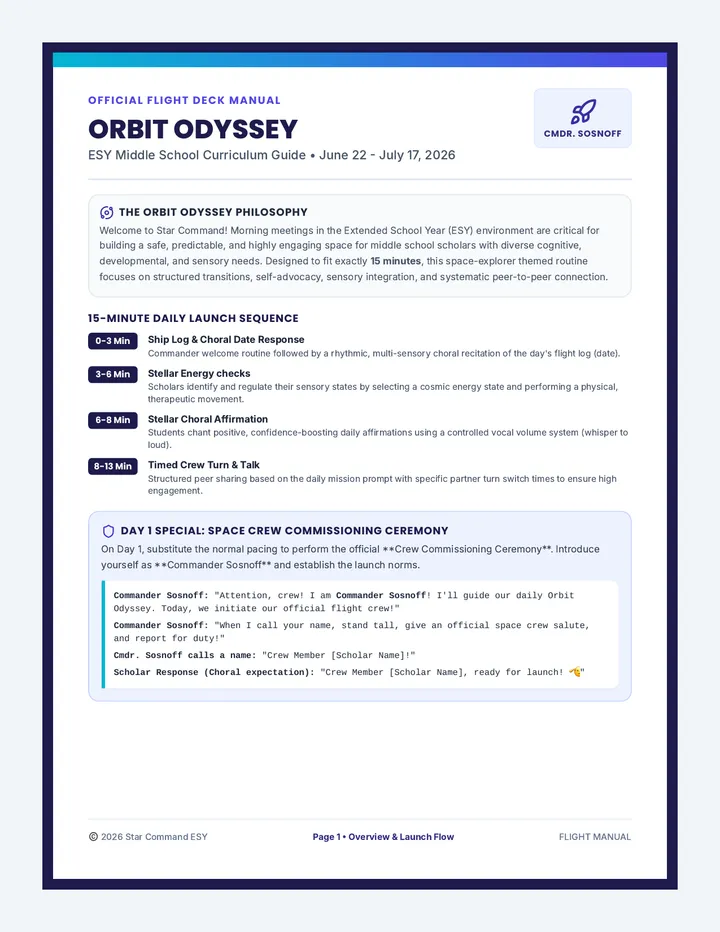
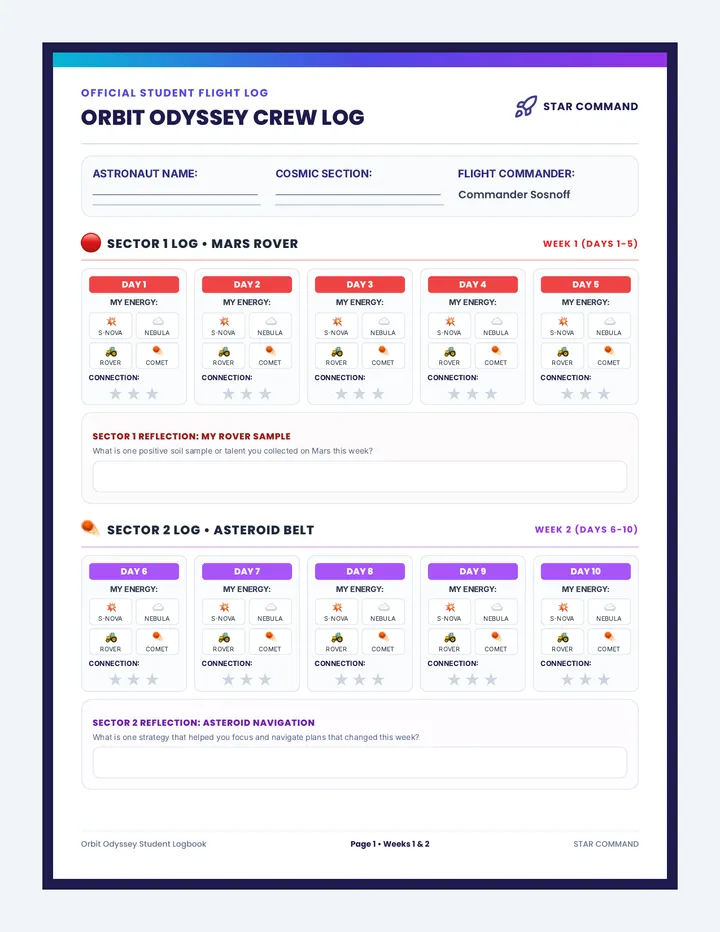
A 4-week space explorer themed morning meeting series for middle school ESY scholars with disabilities. Led by Commander Sosnoff, it covers Mars Rover, Asteroid Navigation, Saturn Rings, and Nebula sectors with calendar ship logs, cosmic energy checks, stellar affirmations, and turn-and-talk communication prompts.
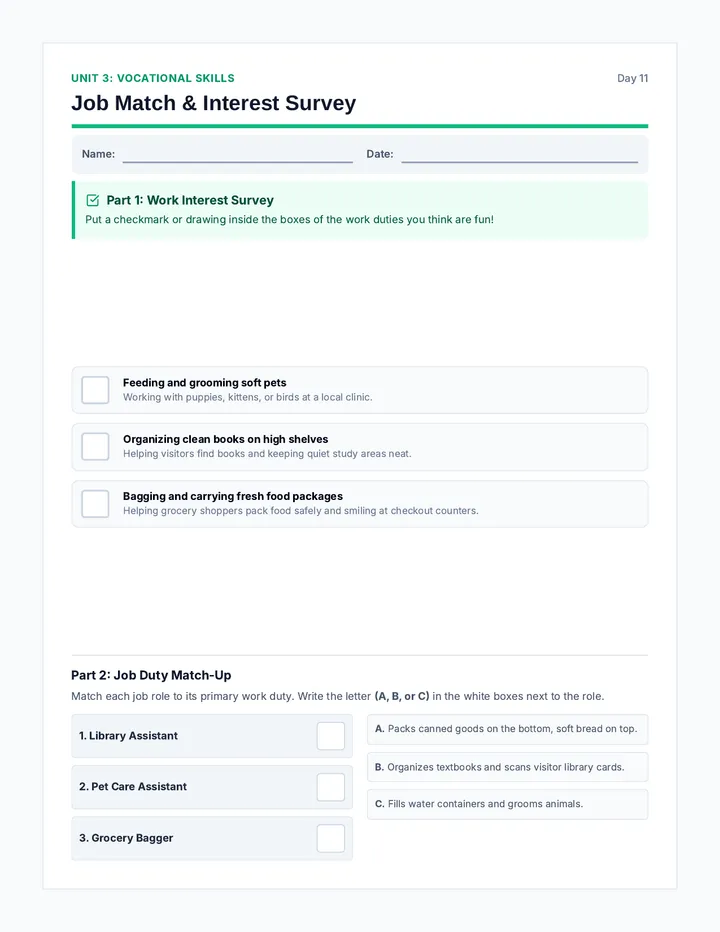
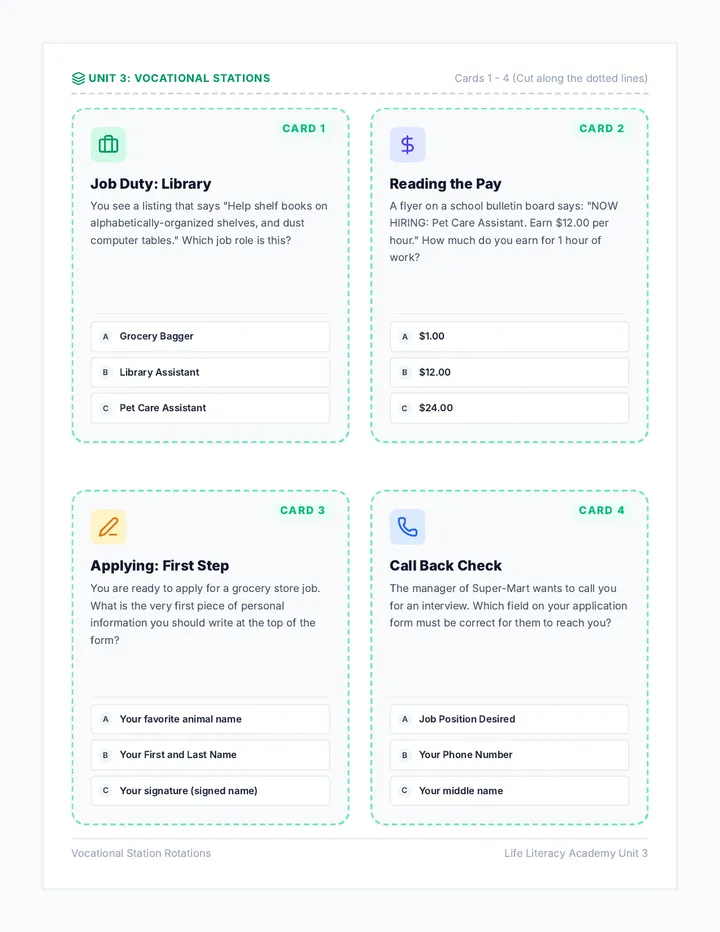
Days 11 to 15 focus on reading simple job postings, filling out functional job applications, understanding work sequencing, and determining theme/purpose.
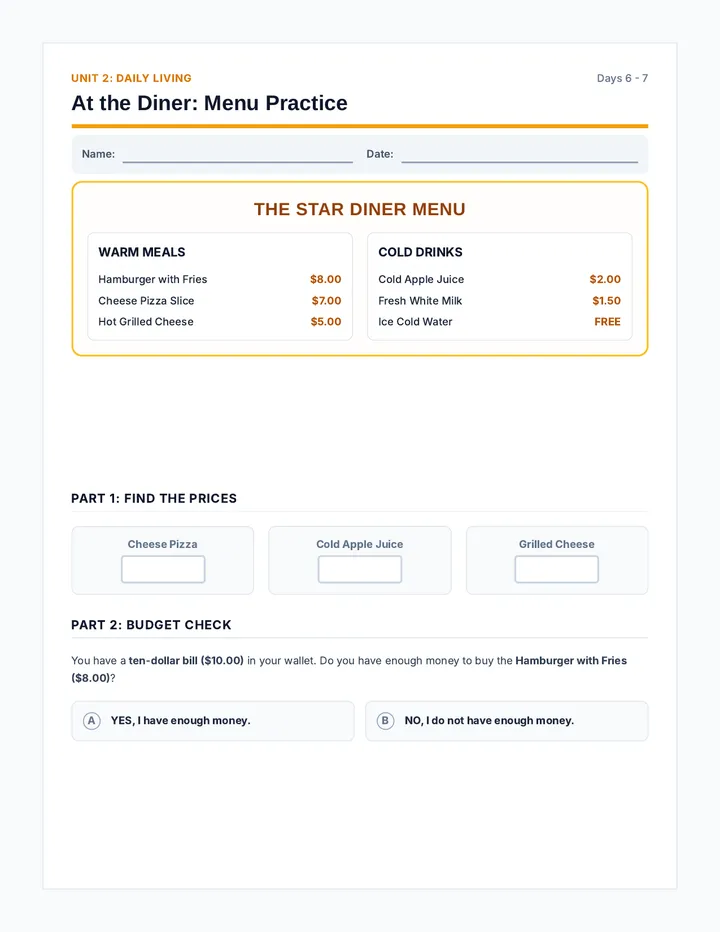
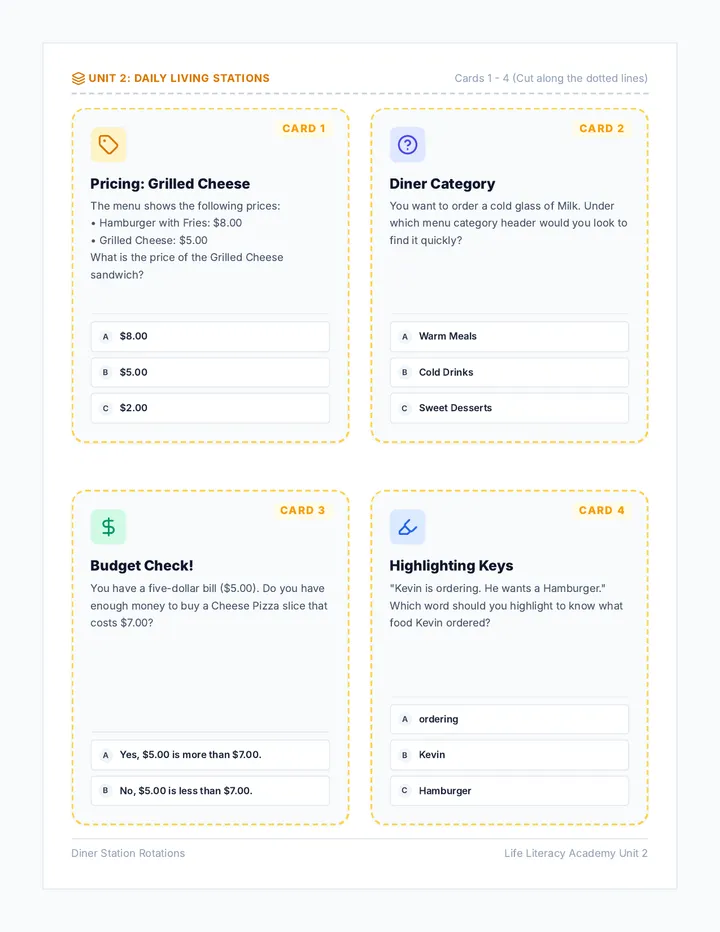
Days 6 to 10 focus on reading menus, highlighting key details, and making inferences about restaurant and everyday scenarios using functional text.