A 6th-grade geometry unit exploring real-world applications of volume, capacity, and logistical optimization. Students solve problems involving liquid conversion, material efficiency, filling rates, and cost estimation through a logistics lens.
A comprehensive sequence focusing on linear measurement conversions, providing step-by-step visual guides and practice for converting between inches, feet, yards, and miles.
A deep dive into geometric transformations, starting with the foundational concepts of symmetry and reflection through hands-on exploration and visual practice.
A 6th-grade math unit focused on standard 6.EE.A.2. Students will learn to write, read, and evaluate algebraic expressions using proper mathematical terminology and the order of operations.
A unit exploring ratios, rates, and unit rates through engaging real-world scenarios and visual modeling techniques like ratio tables and double number lines.
A math unit focused on ratios and rates, using engaging real-world scenarios to teach students how to organize and manipulate proportional data.
A comprehensive 5-week Tier 3 intervention for grades 4-6 focusing on foundational place value concepts from grades 1-4. The sequence uses a 'Digit Detectives' mystery theme to engage students in mastering place value relationships, large numbers, comparison, rounding, and number patterns.
A sequence focused on mastering the fundamental properties of mathematical operations, including commutative, associative, and distributive properties, and understanding why they don't apply to subtraction and division.
A series of inquiry-based lessons exploring the deep connection between prime factorization and decimal representations. Students move from predicting decimal types to mental conversion strategies and advanced simplification.
A series of lessons focused on time management and measurement, starting with the mechanics of analog clocks and moving into complex elapsed time scenarios.
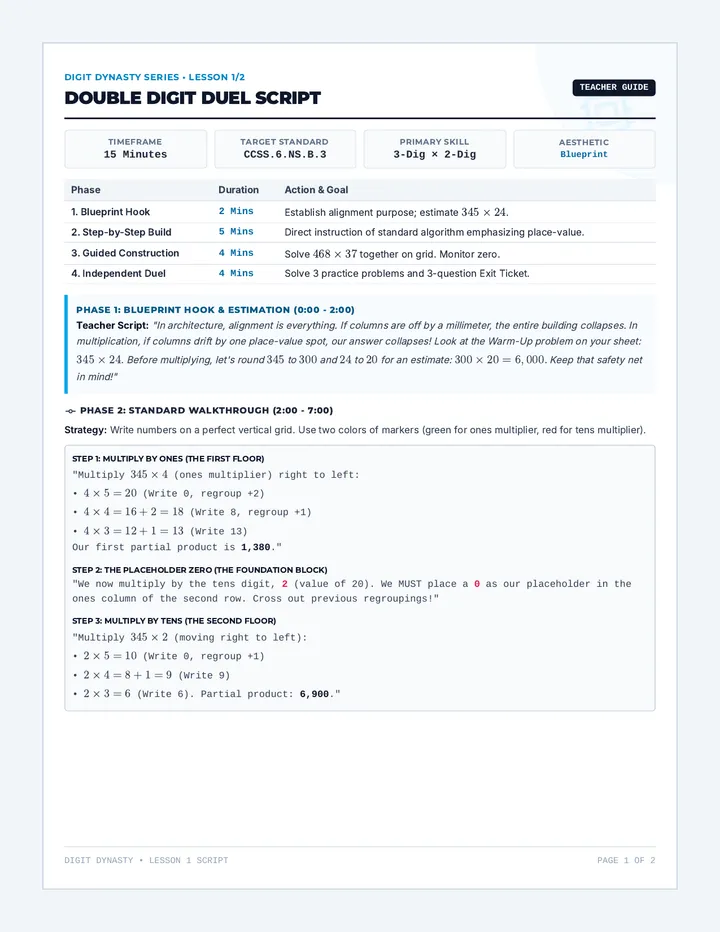
A Tier 2 intervention series focusing on multi-digit division using partial quotients and the standard algorithm. Designed for 15-minute daily sessions to build fluency and confidence in 6th grade students.
A series of lessons focused on building algebraic thinking and problem-solving skills for elementary students, moving from basic expressions to multi-step equations.
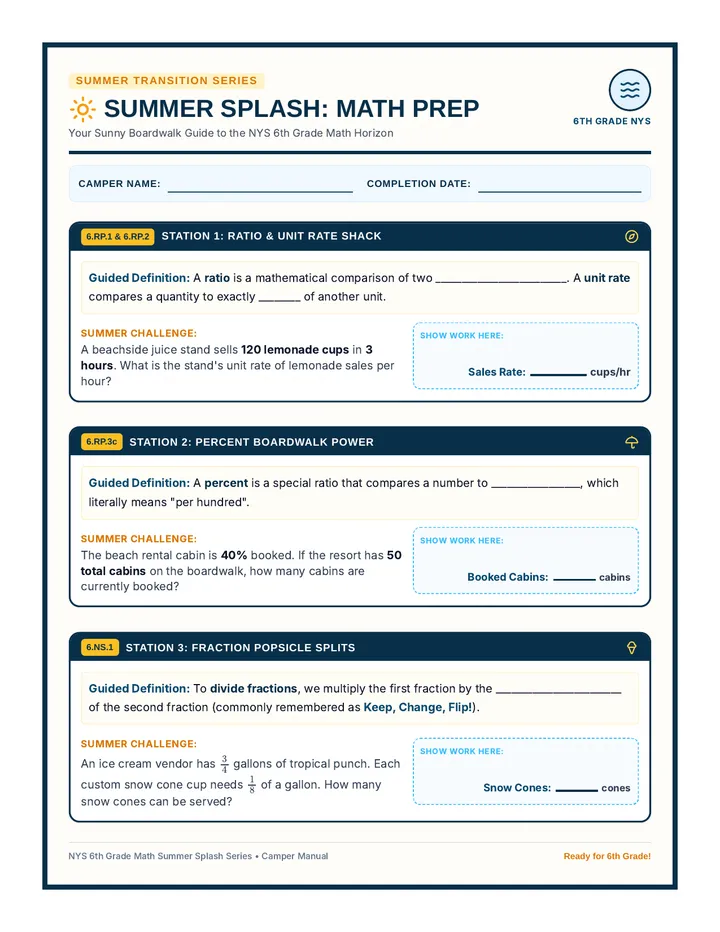
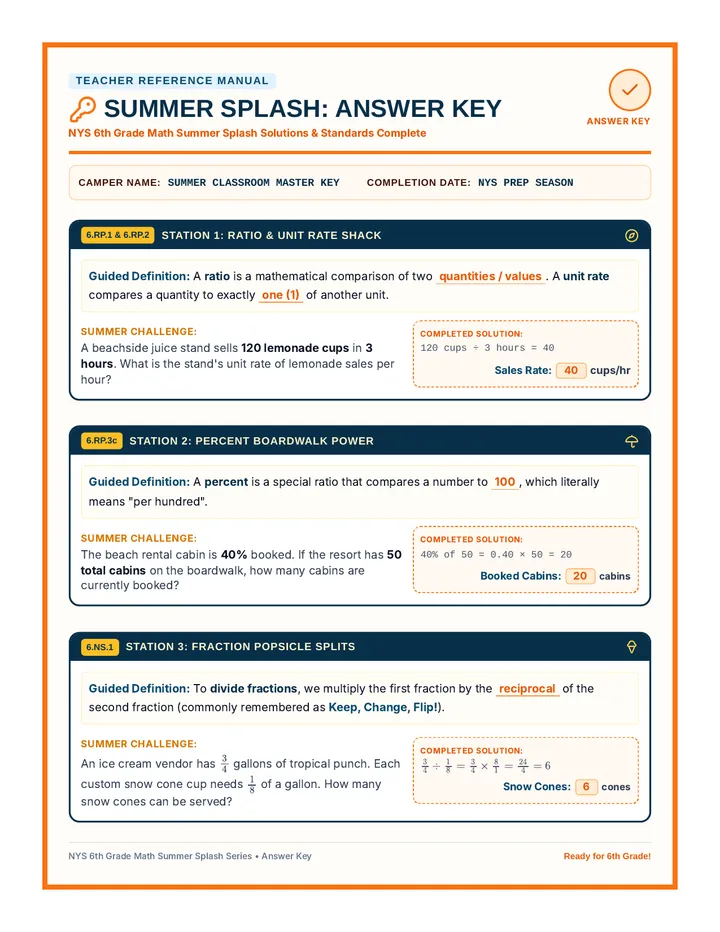
A comprehensive Tier 2 intervention sequence focused on building conceptual understanding of ratios, unit rates, and percents through visual models and real-world applications for 6th-grade students.
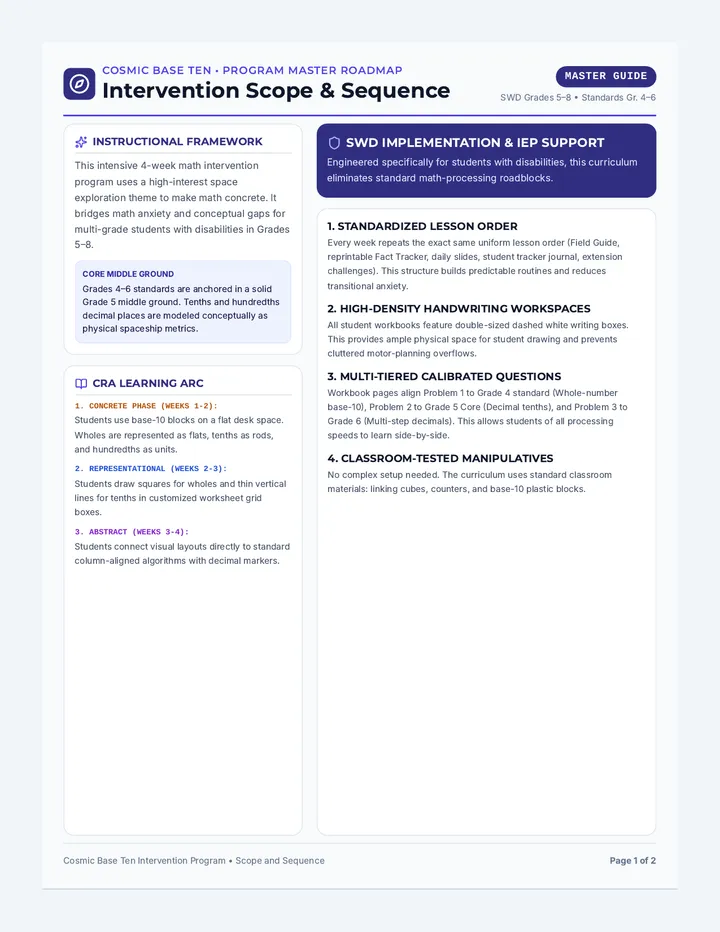
A foundational math sequence for special education students (grades 5-6) focusing on algebraic thinking and spatial reasoning through highly visual, themed units.
Une série de micro-leçons de 10 minutes centrée sur l'optimisation de l'espace papier. Les élèves apprennent à mettre à l'échelle une mise en page de 6 photos (format A4) vers le format Raisin (50x65 cm) en minimisant les chutes.
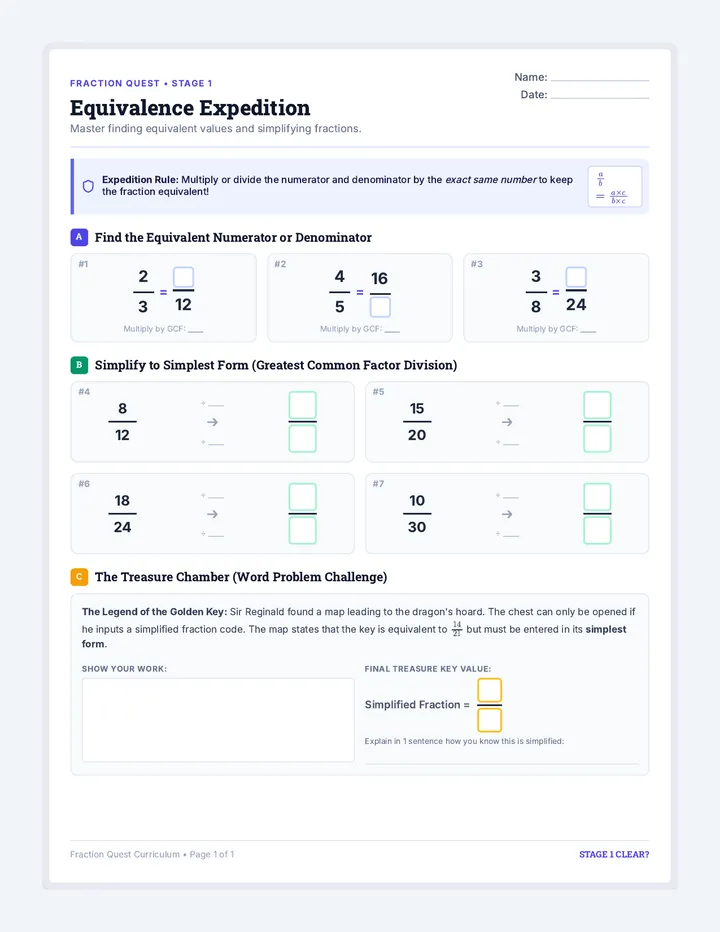
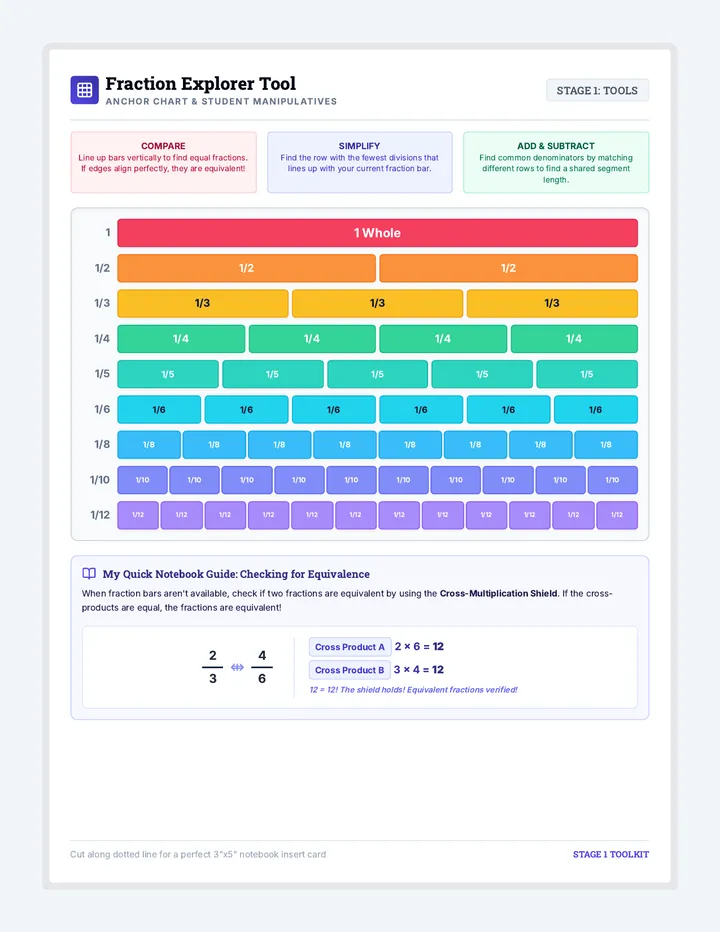
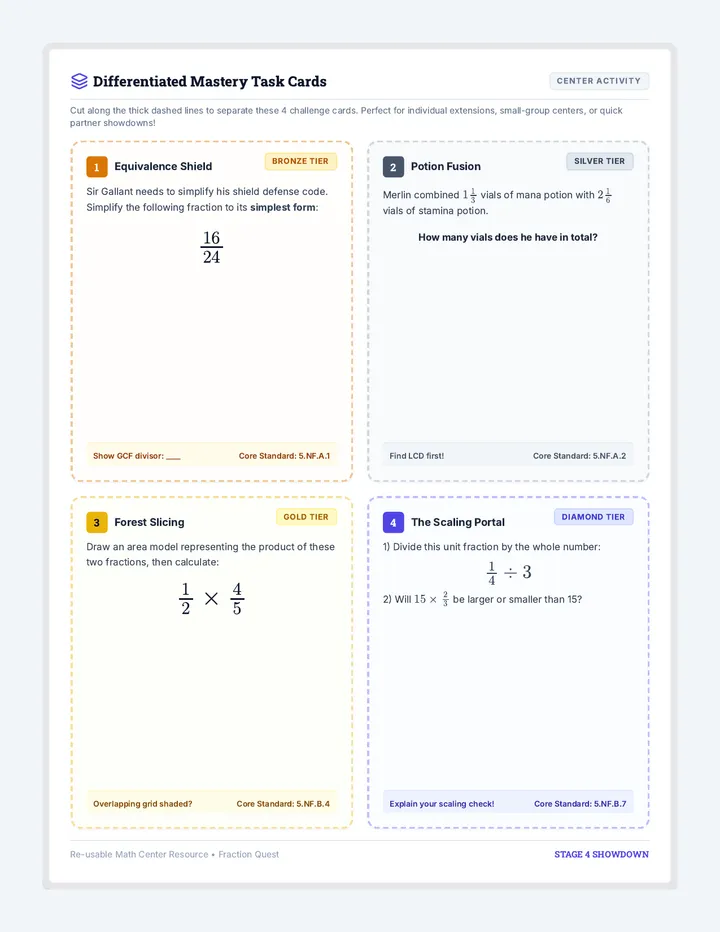
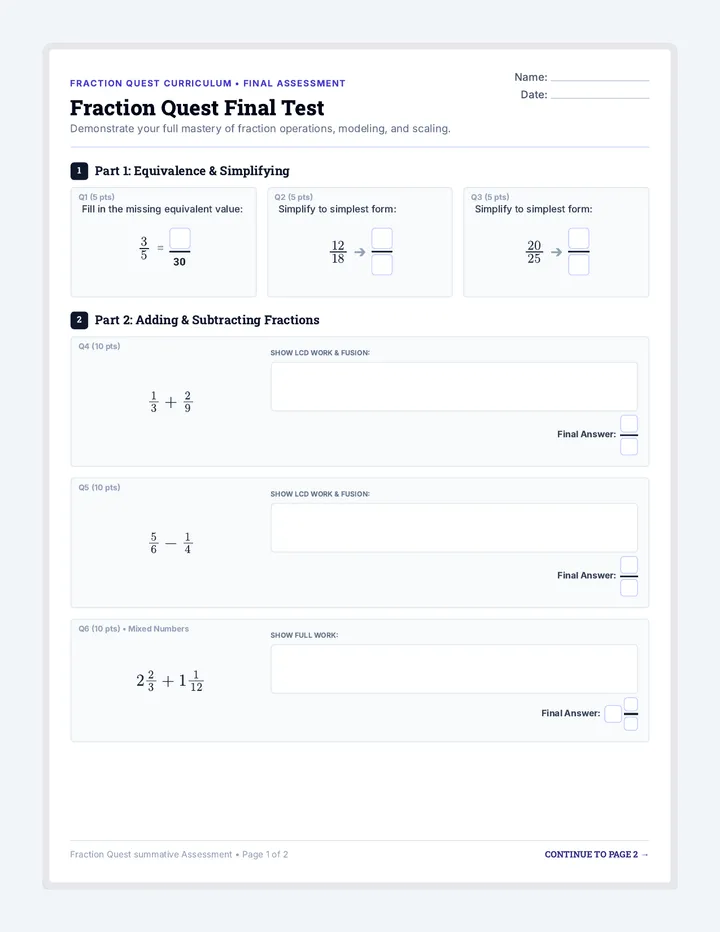
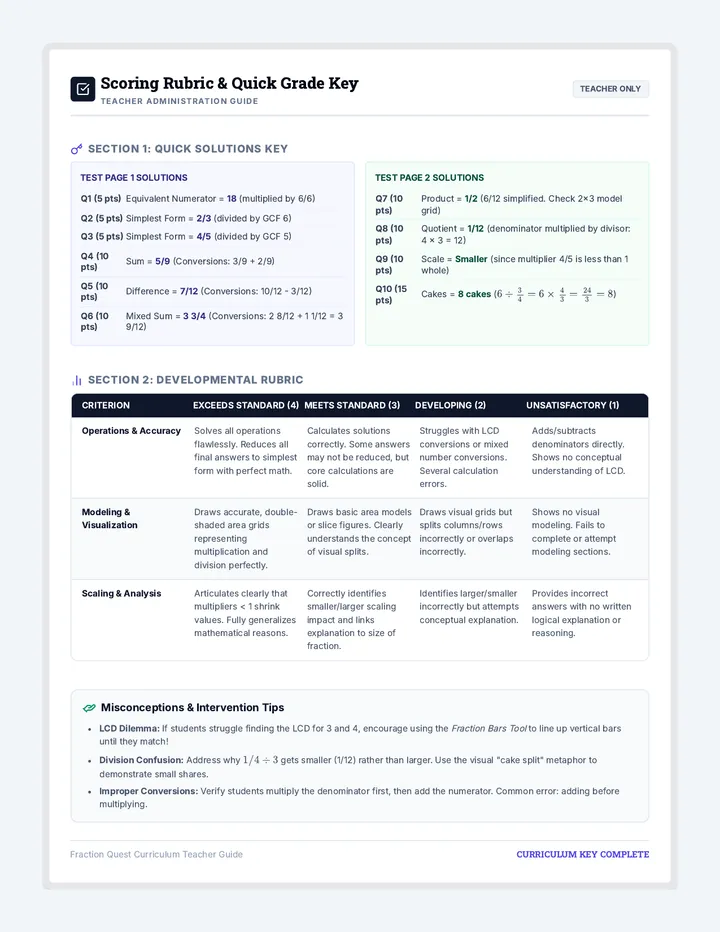
A comprehensive 7-lesson intervention sequence designed to build conceptual fraction understanding through visual models, number lines, and scaffolded practice. The sequence moves from basic area models to adding and subtracting with unlike denominators, prioritizing 'why' over 'how'.
A comprehensive math and SEL integration designed for Grades 5-6, focusing on multi-step fraction word problems through the lens of growth mindset and productive struggle. Students learn to reframe mistakes as data points and persistence as a measurable skill.
A targeted Tier 2 intervention for 6th-grade students focused on writing simple inequalities and graphing their solutions on number lines. This sequence uses real-world constraints and hands-on manipulatives to build conceptual understanding of inequality symbols and their visual representations.
A Grade 6 intervention unit focused on using substitution to determine if values are solutions to equations and inequalities. This sequence targets Tier 2 support for standard 6.EE.5 through scaffolded reasoning and investigative activities.
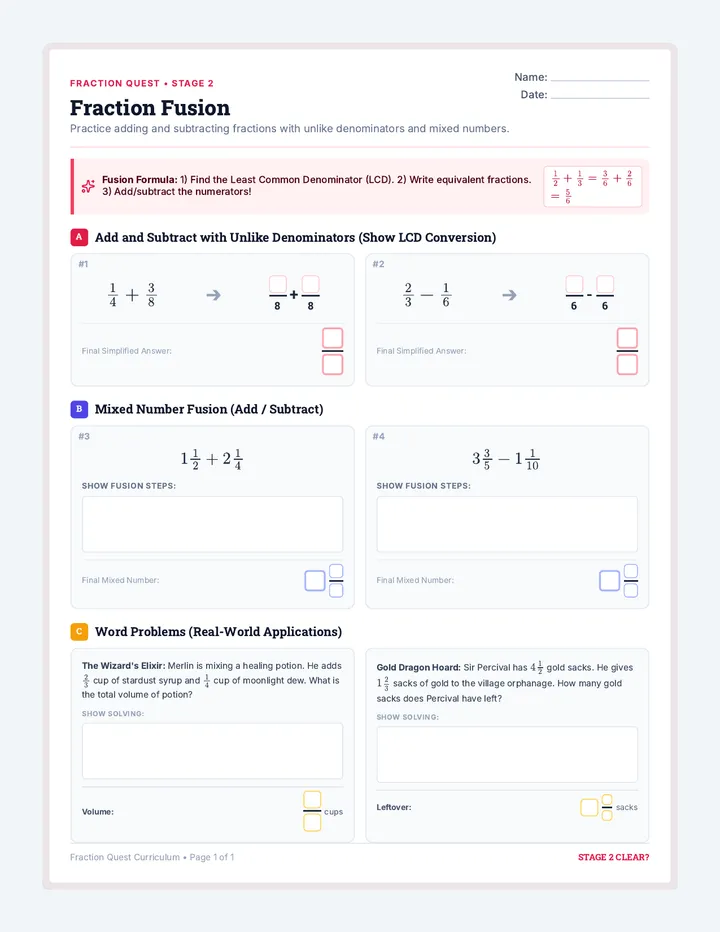
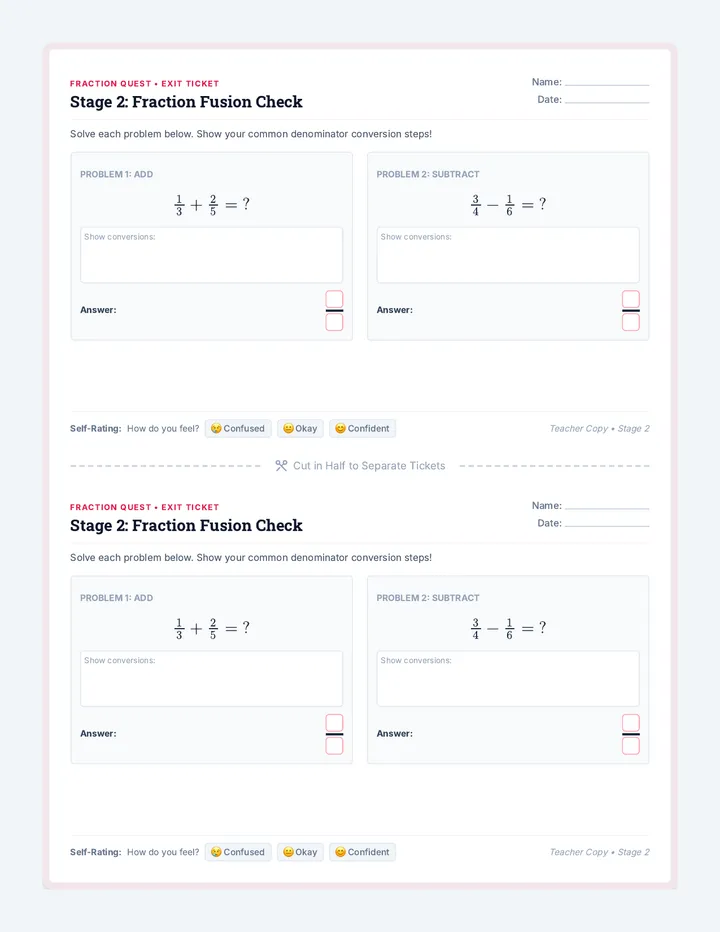
A Tier 2 intervention sequence focused on building conceptual understanding and procedural fluency for adding and subtracting fractions with unlike denominators. Students use visual models and Cuisenaire rods to discover common units and create equivalent fractions.
A Tier 2 intervention unit focused on understanding multiplication as scaling. Students explore how multipliers greater than, less than, or equal to one affect the size of the product compared to the original factor.
A Tier 2 intervention unit focused on mastering the four-quadrant coordinate plane and calculating distances between points using absolute value, aligned with Colorado standard 6.NS.8.
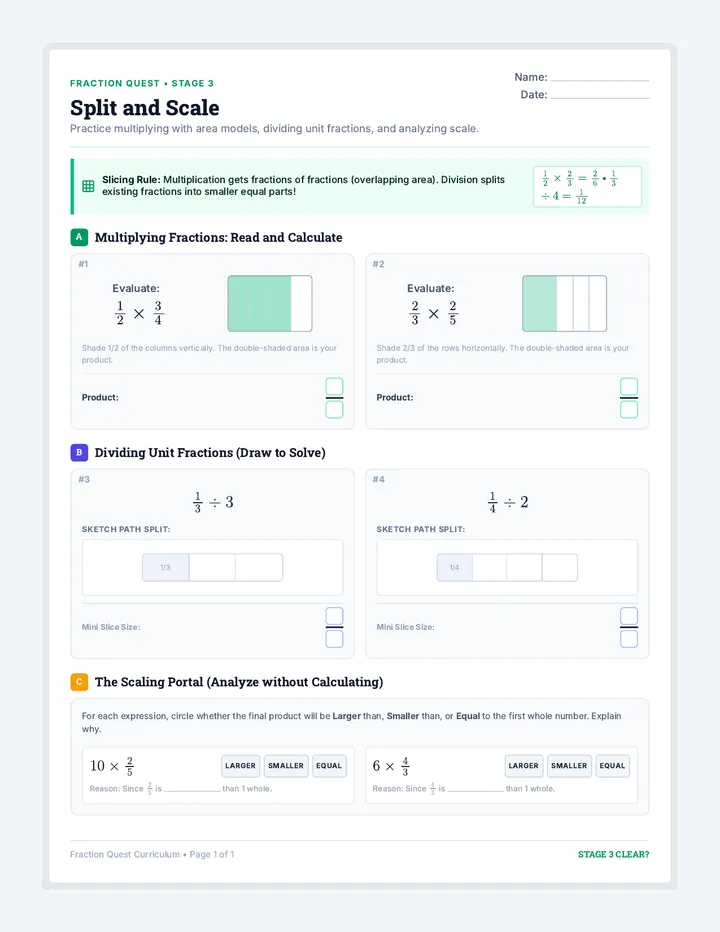
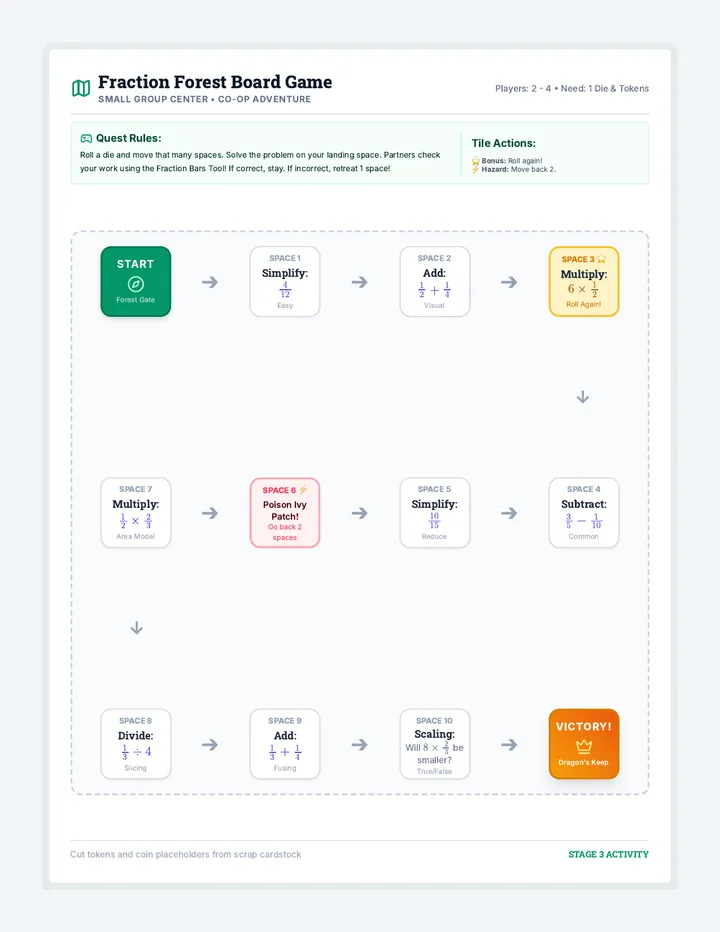
A Tier 2 intervention sequence focused on dividing unit fractions by whole numbers and vice versa, using bakery-themed visual models and story-based learning. Students use fraction strips, number lines, and area models to master 5.NF.B.7.
A targeted intervention sequence for 6th-grade students to master the construction and interpretation of dot plots, histograms, and box plots through hands-on data collection and analysis.
A Tier 2 intervention sequence focused on understanding integers as opposite quantities in real-world contexts, aligned with CO 6.NS.5. Students explore temperature, elevation, and finance using concrete and visual models.
A targeted intervention sequence for Grade 6 students focused on generating equivalent expressions using the properties of operations. This unit utilizes visual models like area models and algebra tiles to build conceptual understanding of the distributive property and combining like terms.
A targeted Tier 2 intervention sequence for 6th grade students focusing on understanding percents as rates per 100 and solving problems involving finding the part and the whole. The sequence utilizes a Concrete-Representational-Abstract (CRA) approach to build conceptual understanding before moving to procedural fluency.