A student practice worksheet featuring addition and subtraction problems within 20. Includes dedicated workspaces for students to draw their base ten block models, reinforcing the link between concrete manipulatives and representational drawings.
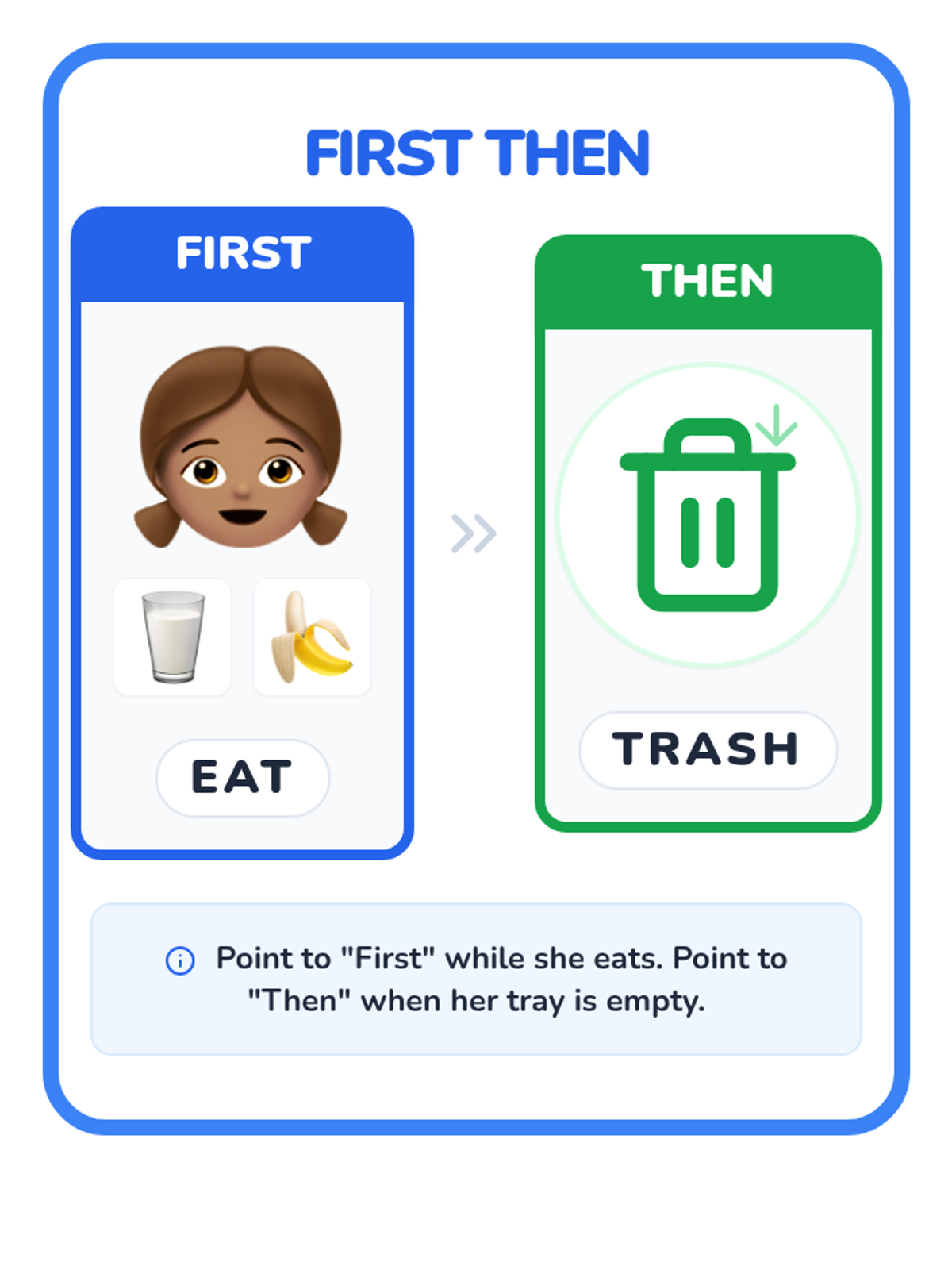
A high-contrast First-Then visual board designed for a kindergarten student. It features an African American girl eating breakfast (First) and a trash can for disposal (Then) to support the transition routine. Updated for better layout and specific food visuals.
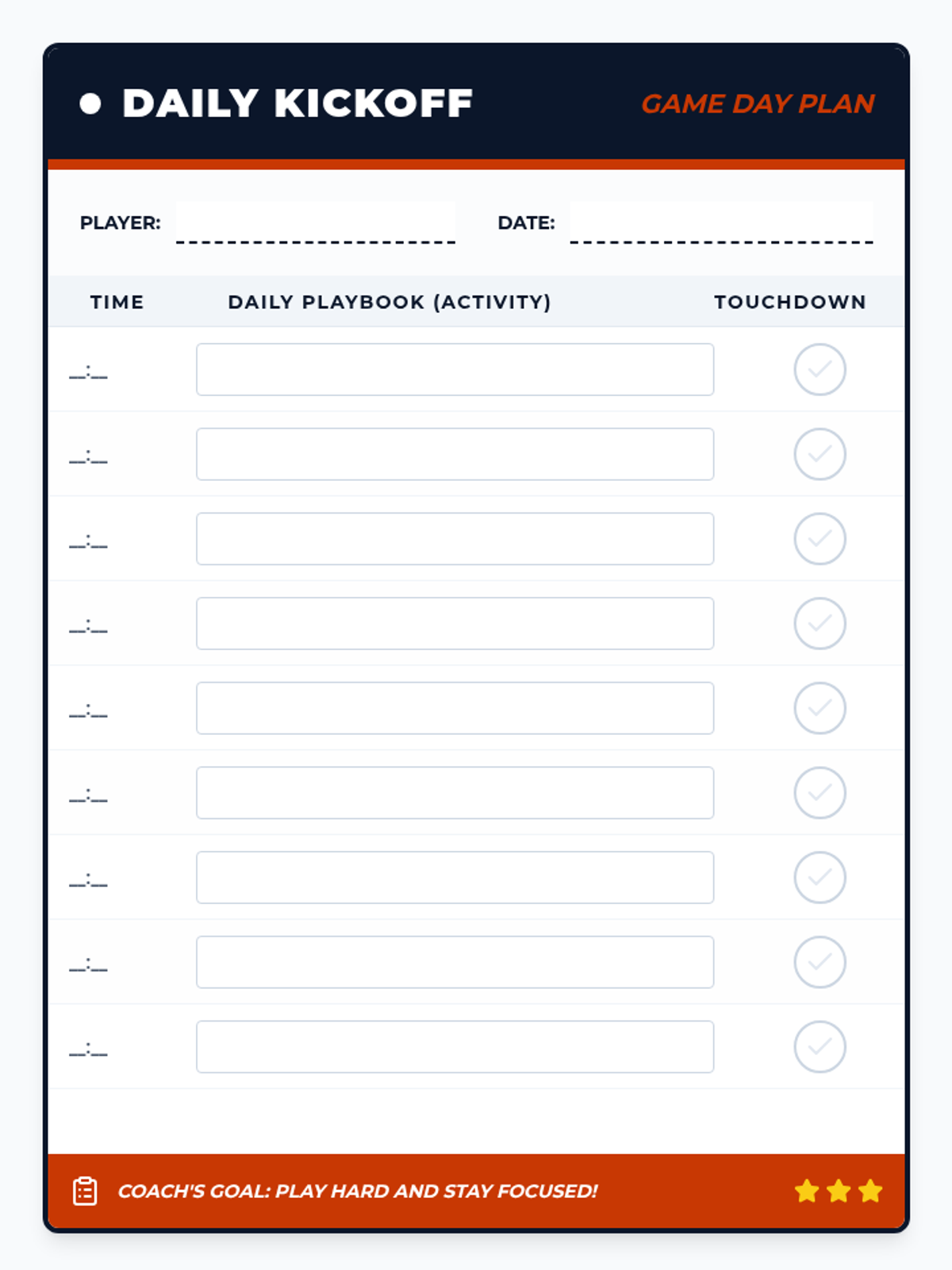
A Chicago Bears themed daily schedule template with a 'Daily Kickoff' header. Includes a printable board for writing or placing icons and a second page with 16 school-activity tokens. Updated with better contrast for printing.
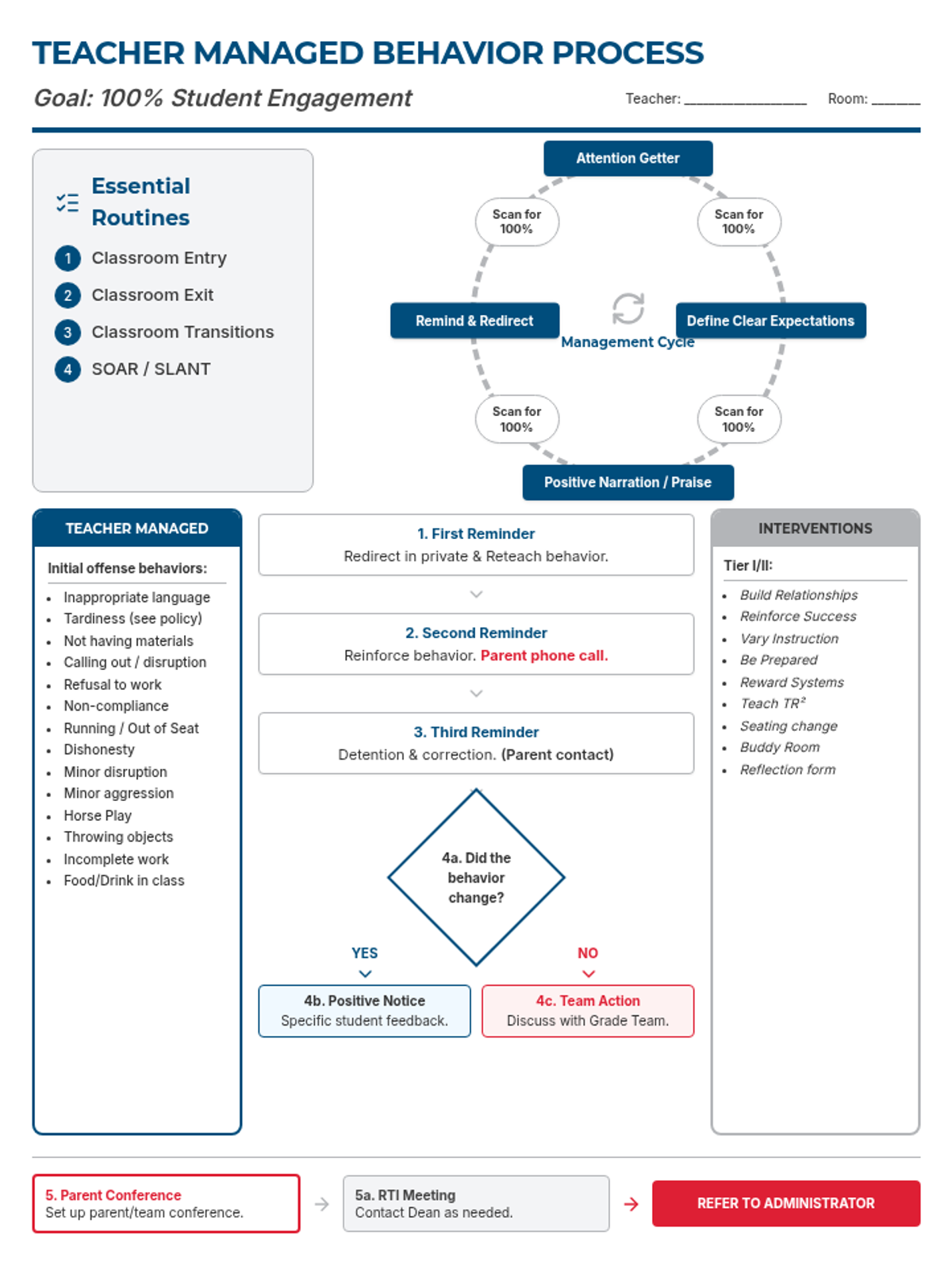
A professional 2-page behavior management process guide. Page 1 outlines the Teacher Managed process, including a management cycle and a detailed response flowchart, while Page 2 covers the Office Managed protocols for major offenses and administrative actions, using a clean color palette of navy, red, and gray.
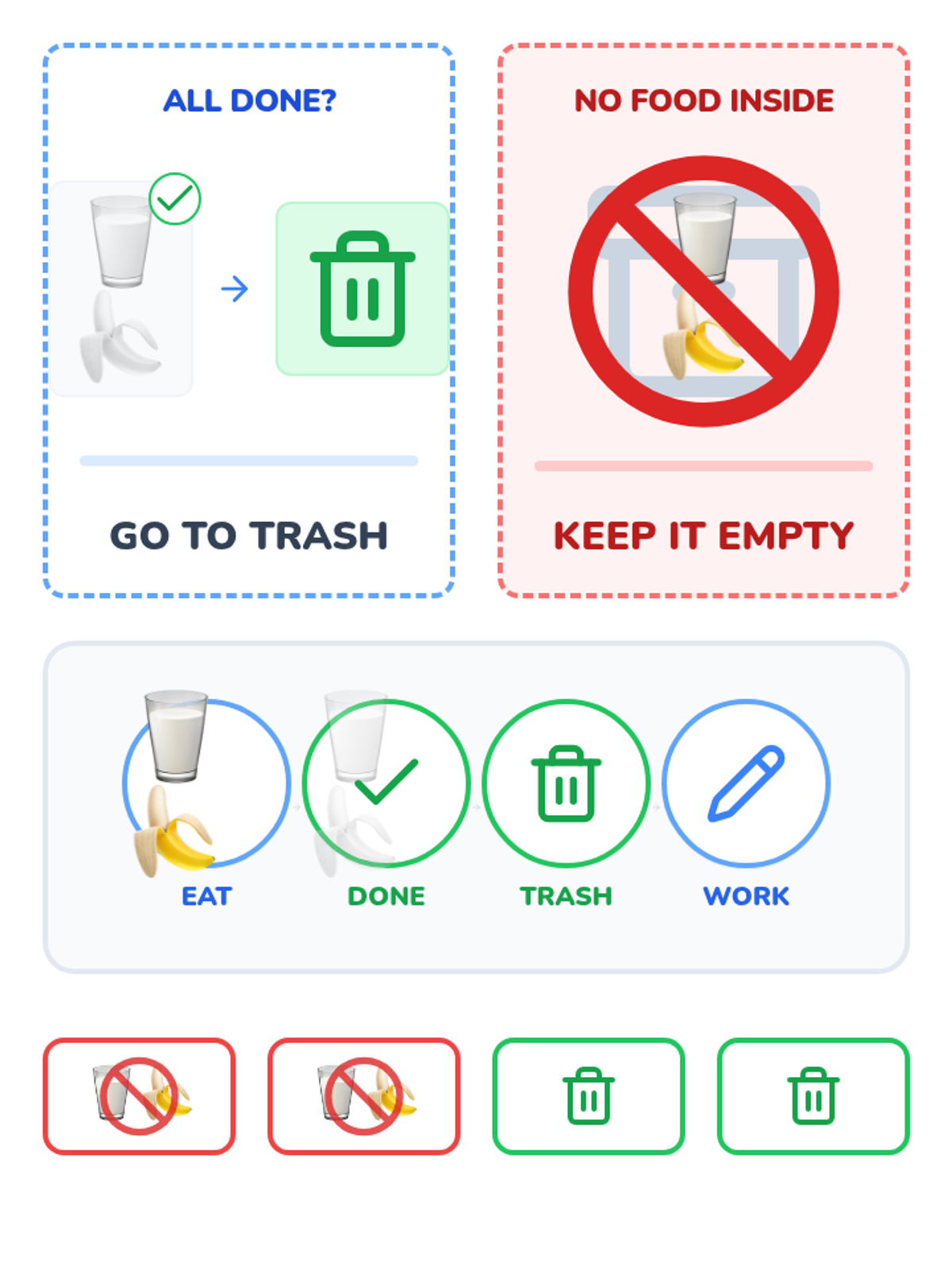
Highly visual desk cards for a non-reading kindergartener. Includes specific emojis for milk and bananas with "No" symbols to clearly communicate the cleanup expectation.
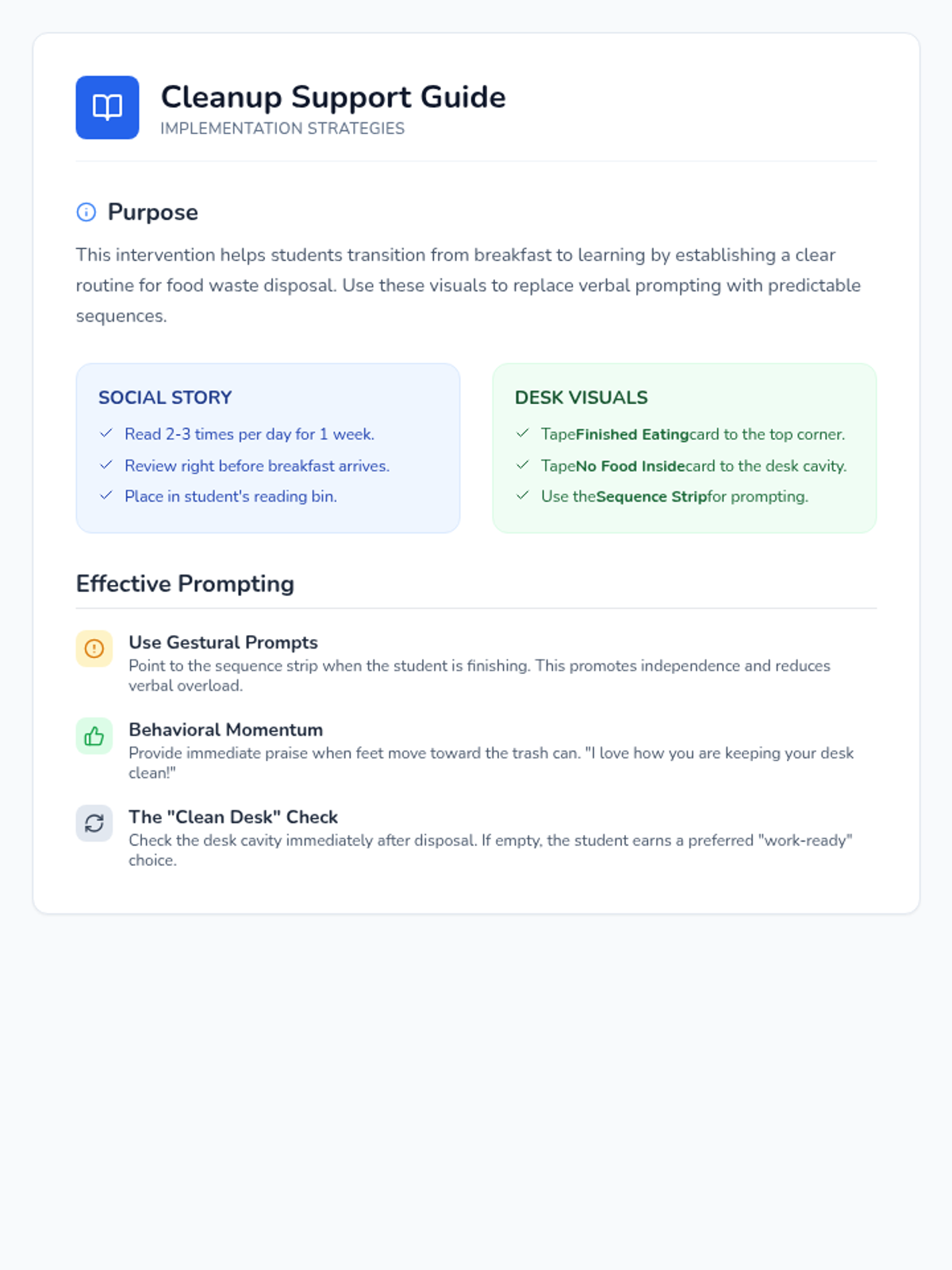
A compact teacher's guide with refined spacing and word separation. Fits on a single page for quick reference.
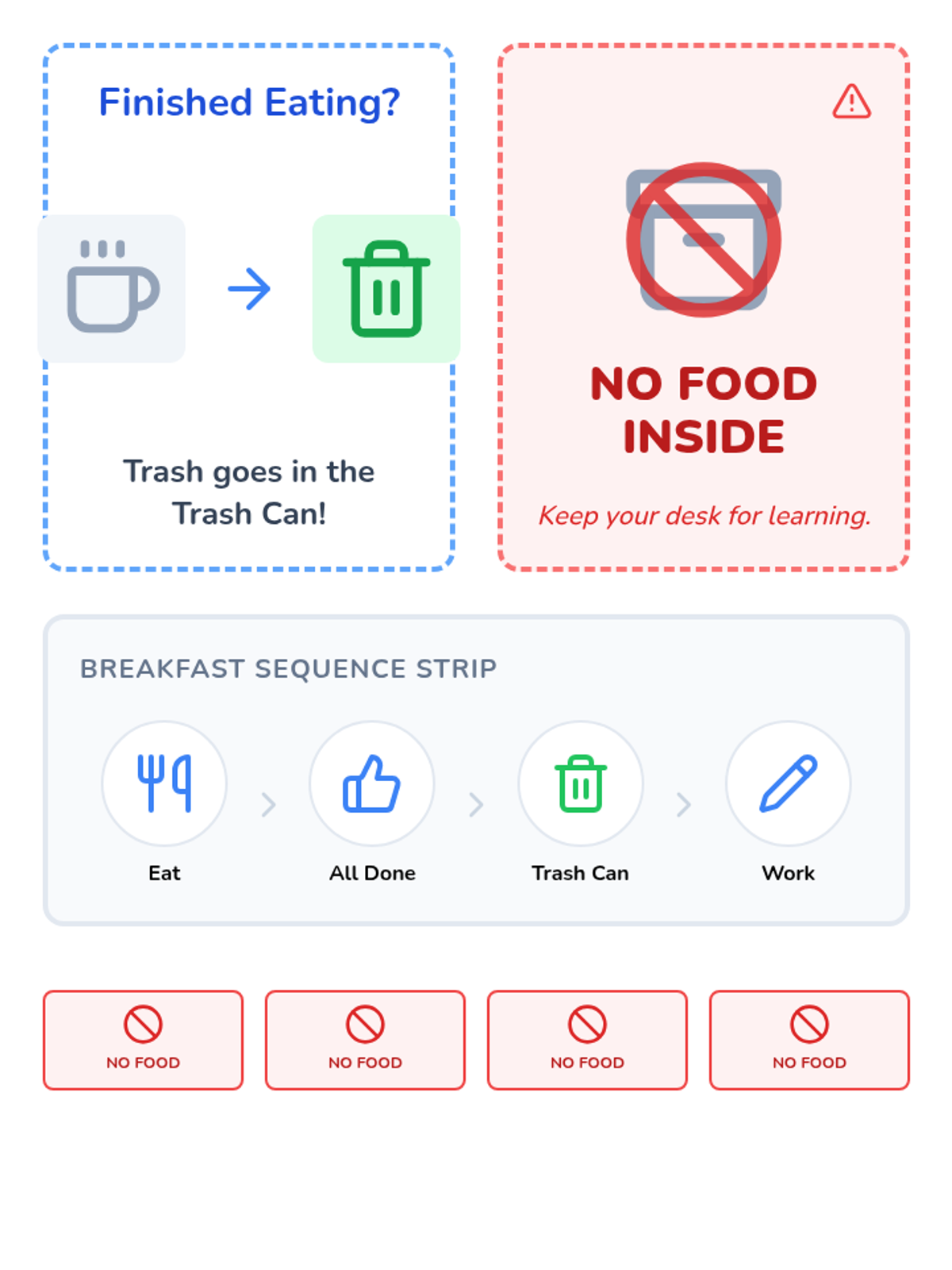
Visual reminder cards for a student's desk, including a finished-to-trash transition card, an 'inside desk' warning sign, and a sequence strip for breakfast routines. Updated terminology for consistency.
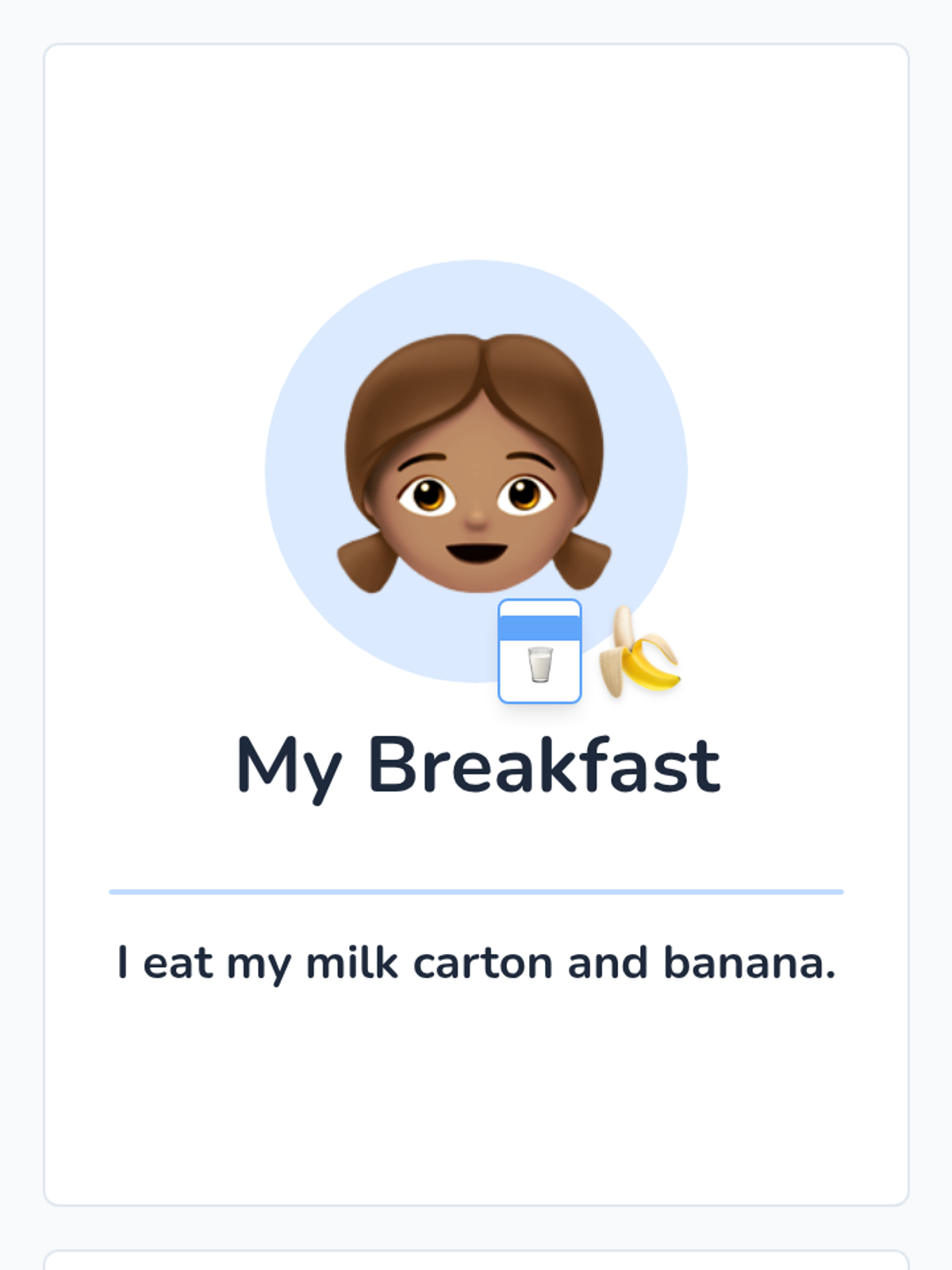
A simple social story updated with specific visuals of an African American girl, milk carton, and banana. Revised for consistency with the student's background and school routine.
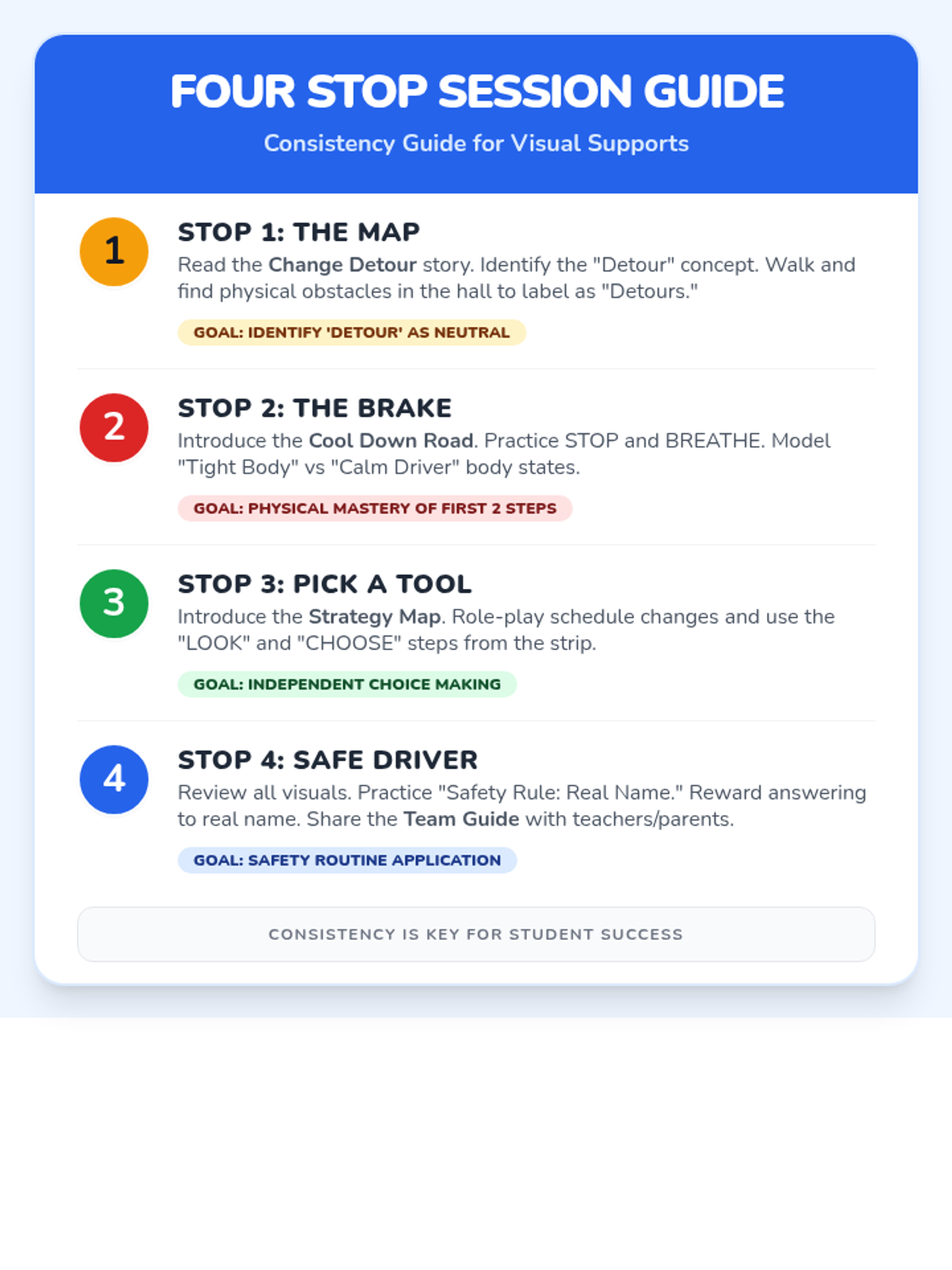
A structured 4-session pacing guide for delivering the "Flexible Routes" intervention, revised to fit on one page with fixed contrast and typos.
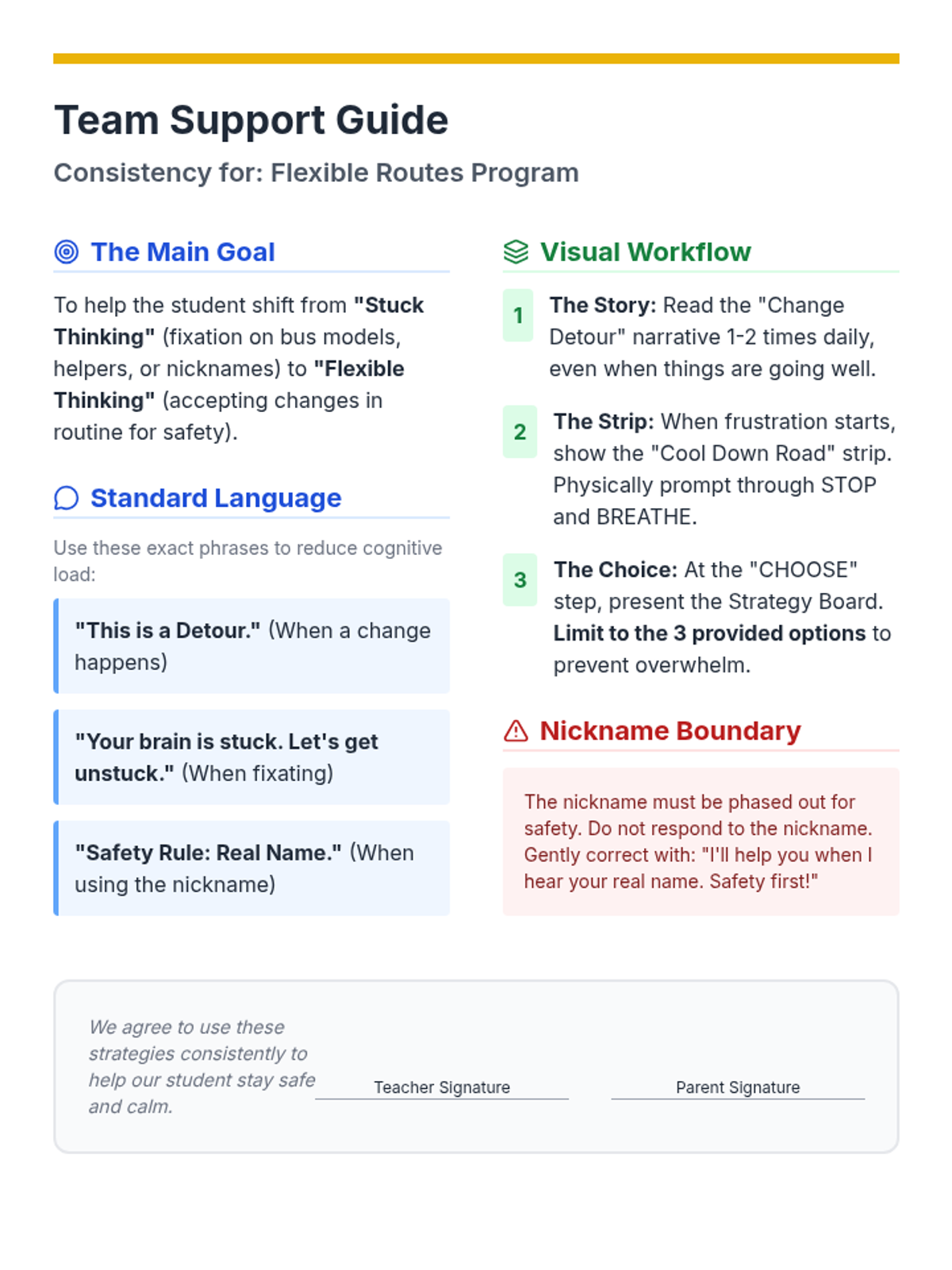
A guide for teachers and parents to ensure consistent use of terminology and visual aids for the "Flexible Routes" intervention. Includes standard phrasing and safety protocols regarding the student's nickname.
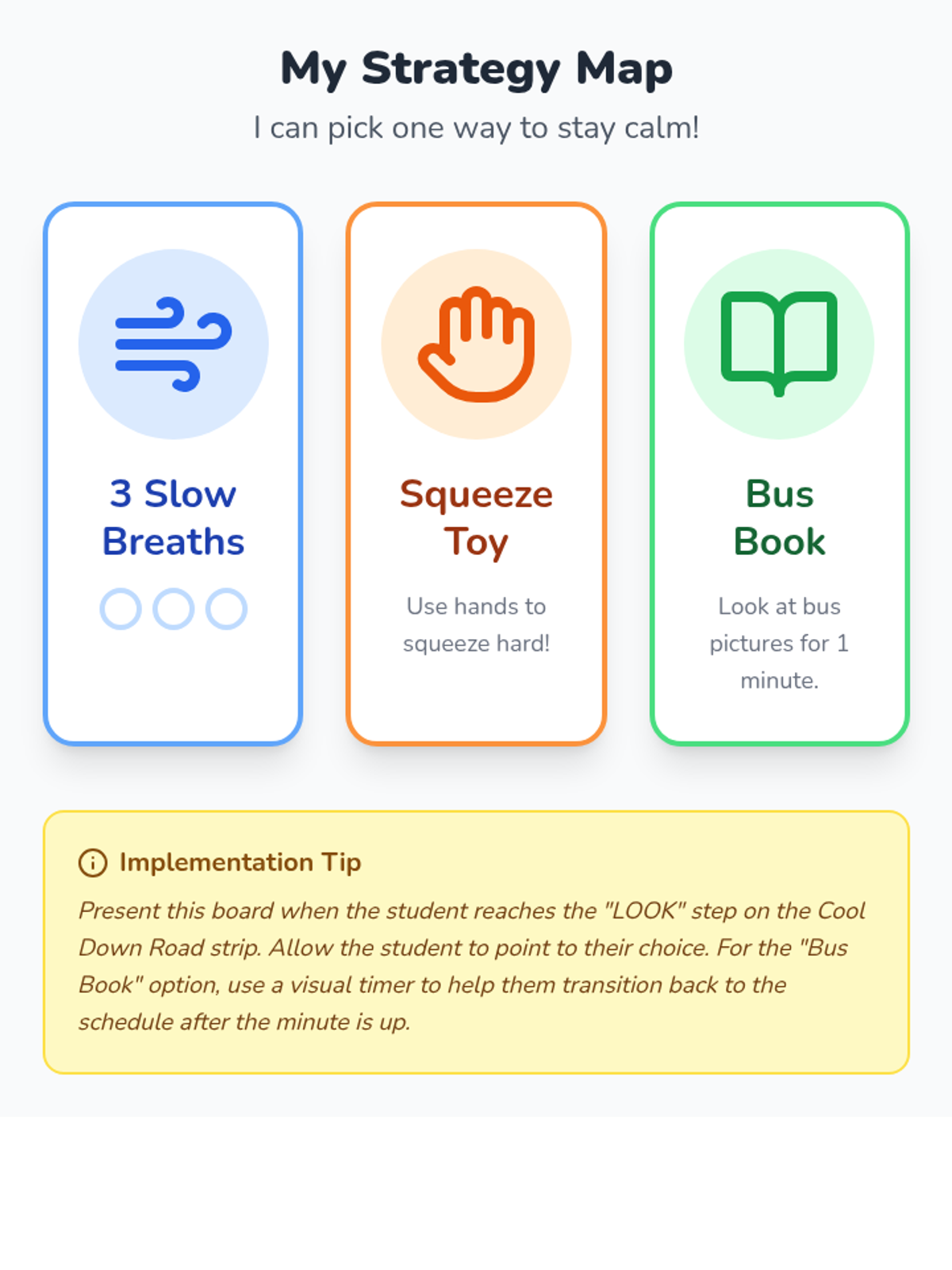
A choice board featuring three simple coping strategies (Breathing, Squeezing, and a Timed Interest Break) with high-contrast visuals for a student with limited communication.
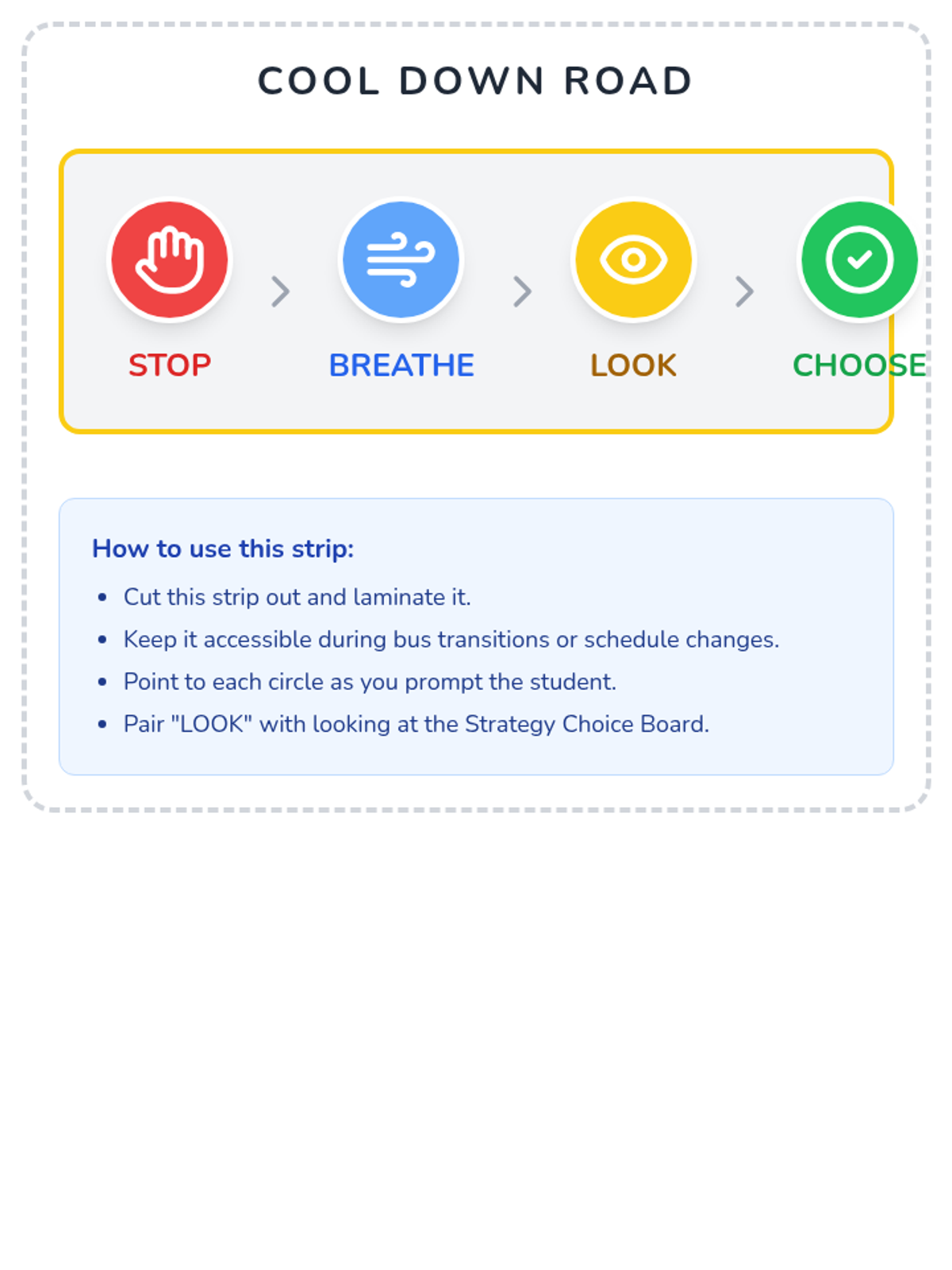
A visual calming strip for an elementary student to follow during moments of frustration or fixation, featuring four simple steps: Stop, Breathe, Look, and Choose.
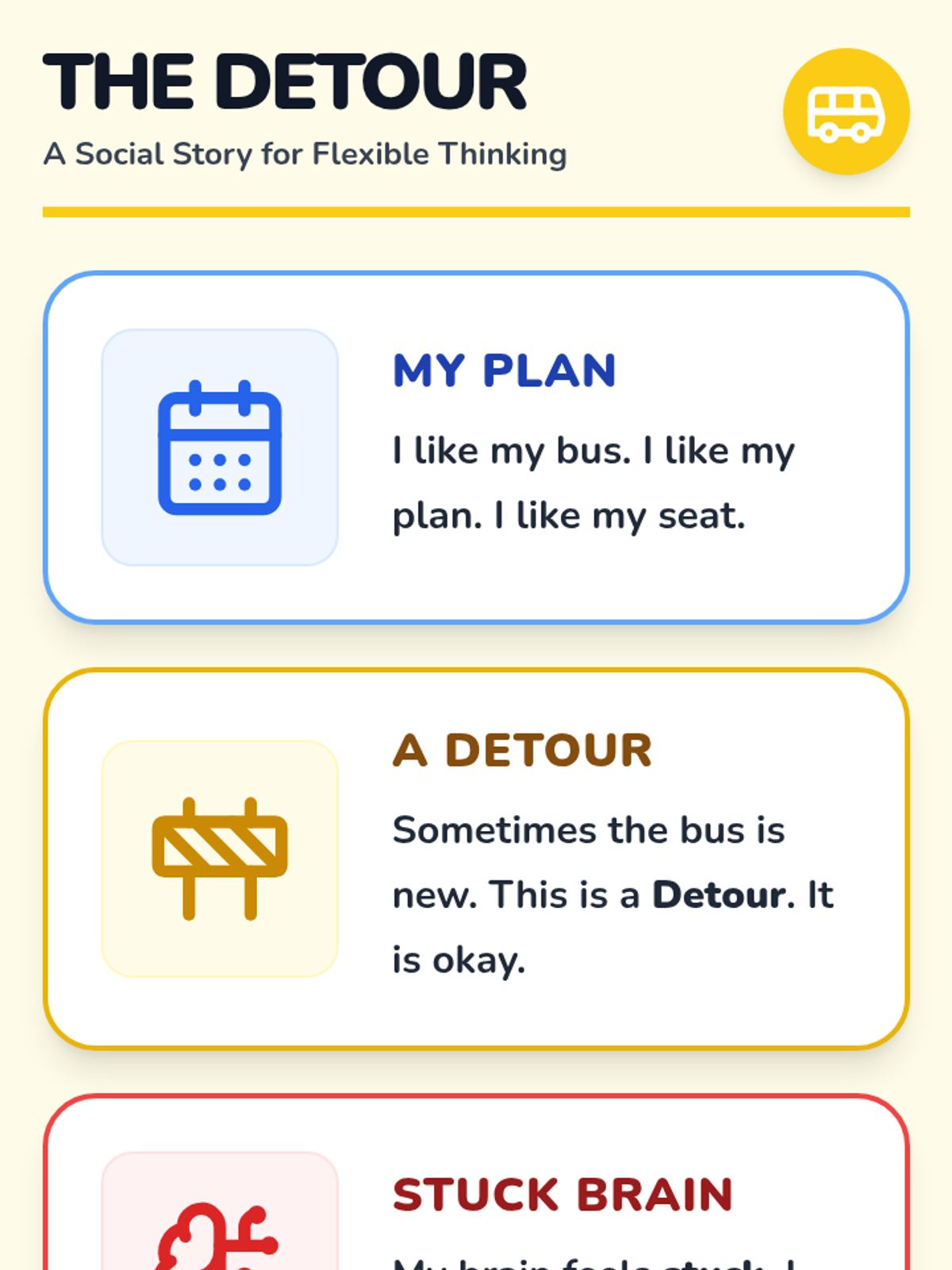
A simple social narrative for an elementary student with ASD/OCD tendencies, using a bus-themed metaphor to explain schedule changes, "stuck" thinking, and the importance of using a real name for safety. Revised with much larger visuals, higher contrast, and simplified text.
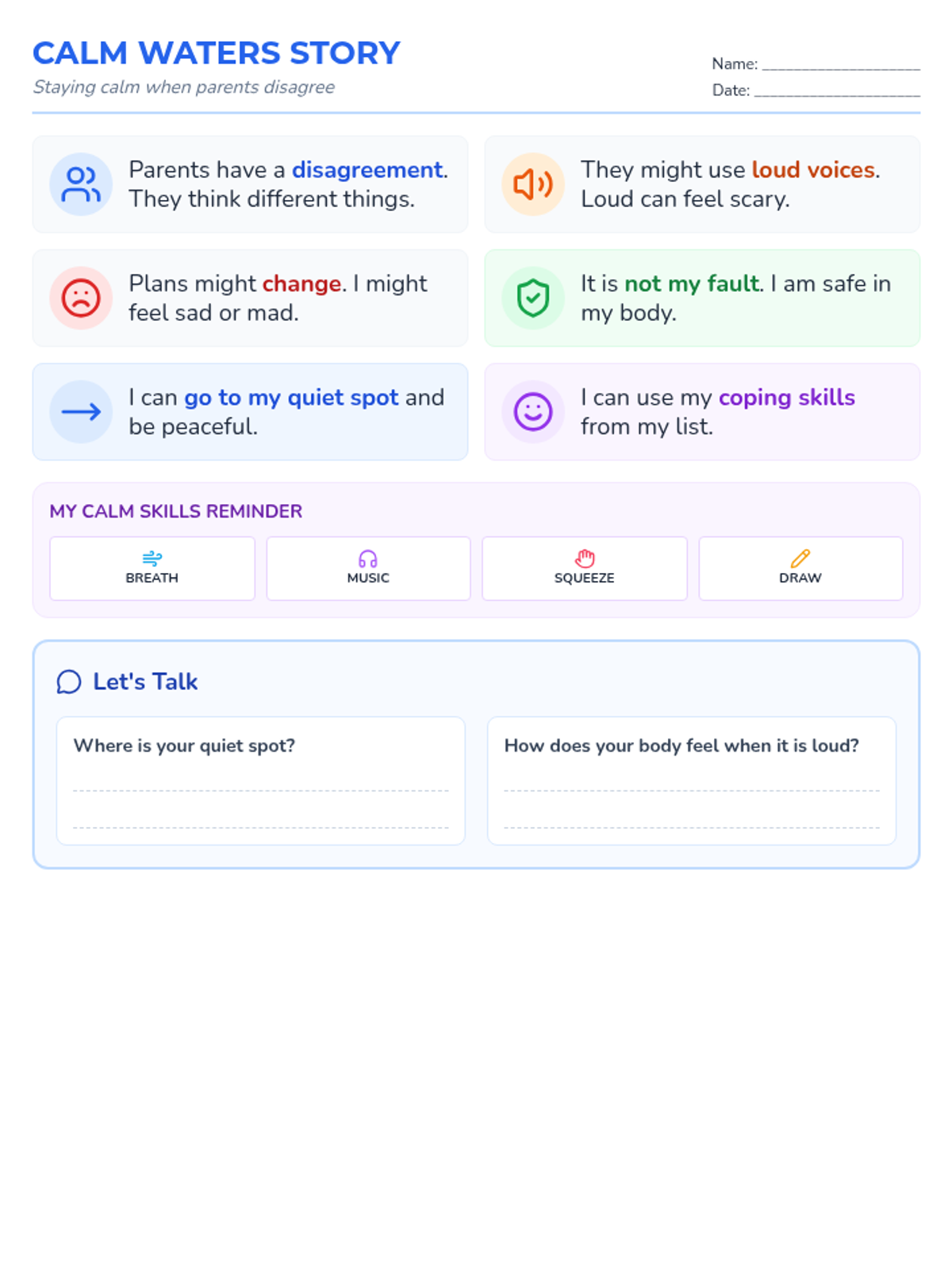
A symbol-supported social story for 8th-grade students with ID, focusing on emotional regulation during parental disagreements. Features a integrated skills reminder and expanded multi-line response areas. Revised for one-page fit.
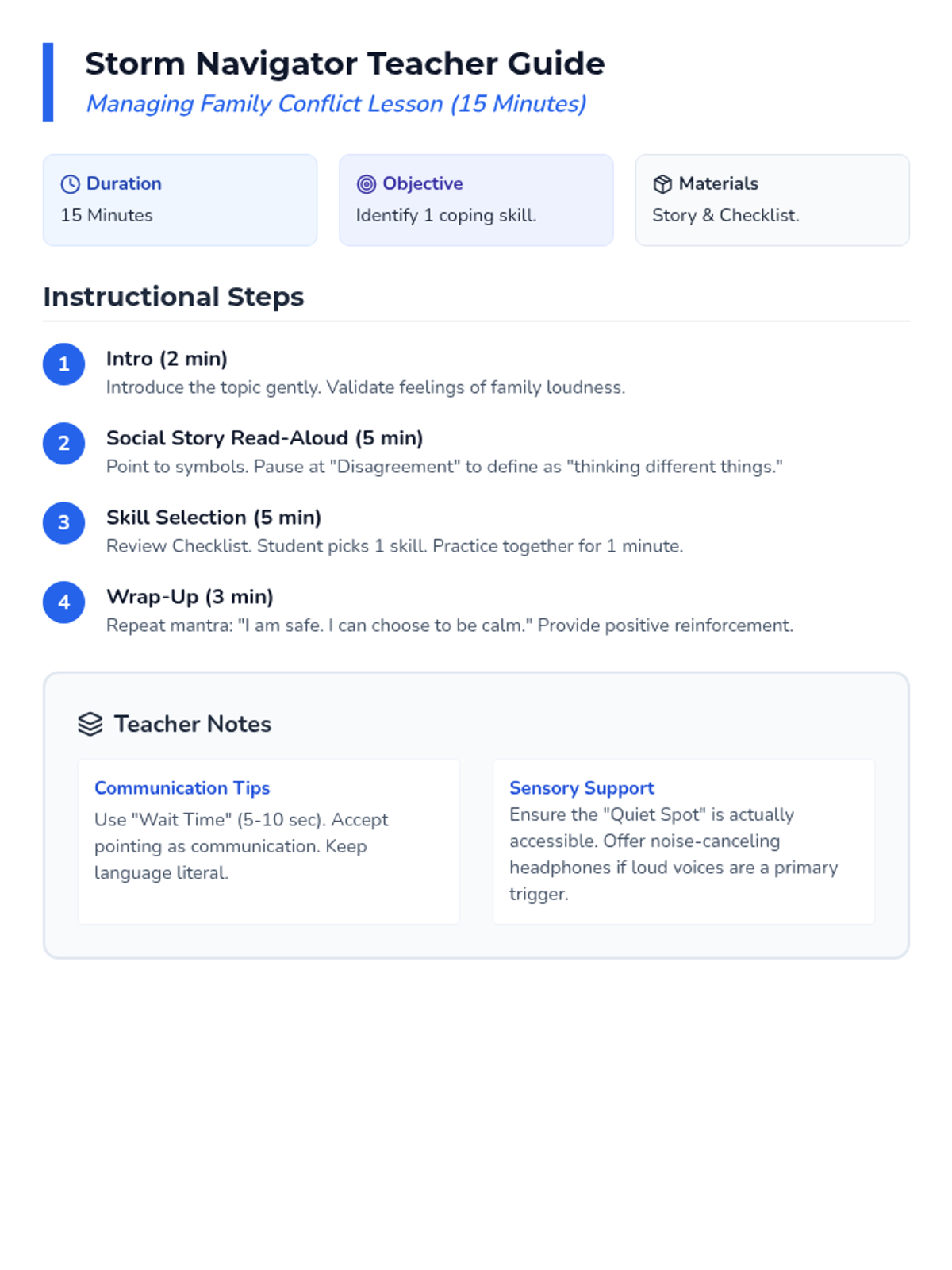
A teacher's guide for a 15-minute social-emotional learning session focused on family conflict and coping skills for students with intellectual disabilities. Revised to fit one page.
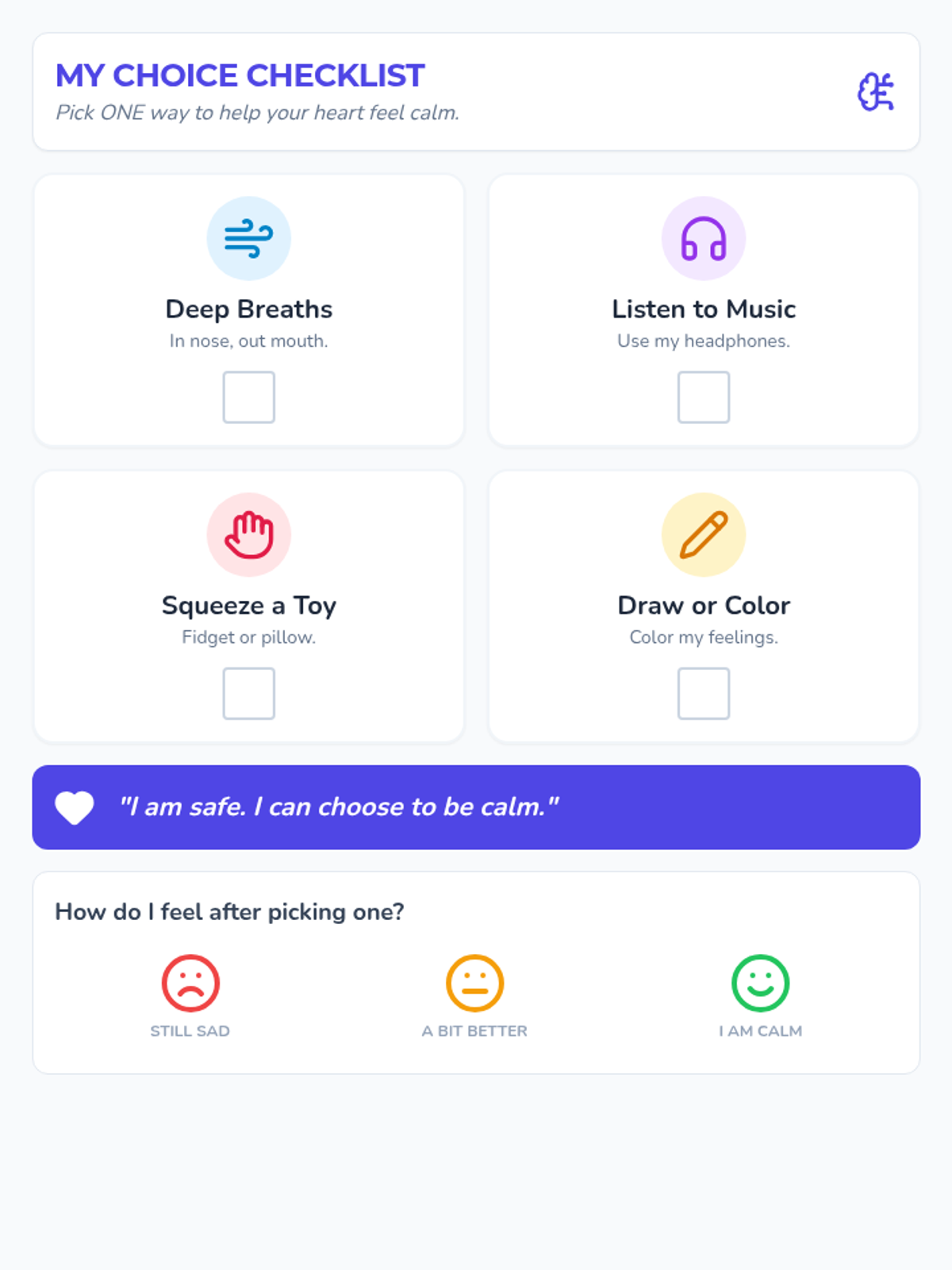
A visual, symbol-supported coping skills checklist to help students with intellectual disabilities select an appropriate self-regulation strategy. Revised to fit one page with improved visibility.
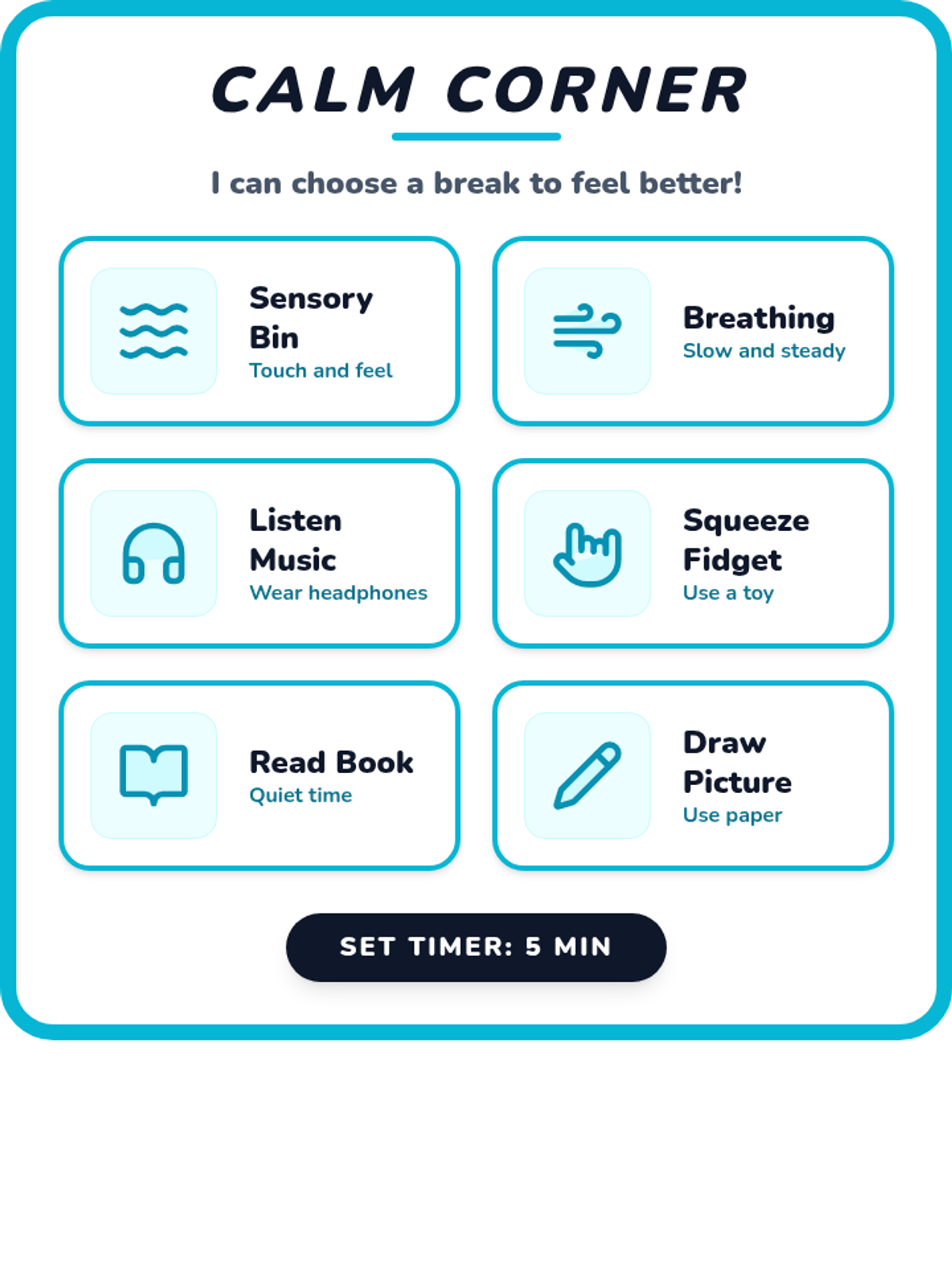
A high-contrast sensory break choice board for a 'calm corner'. Features clear icons and simplified text to help students choose a self-regulation activity when they need a sensory break.
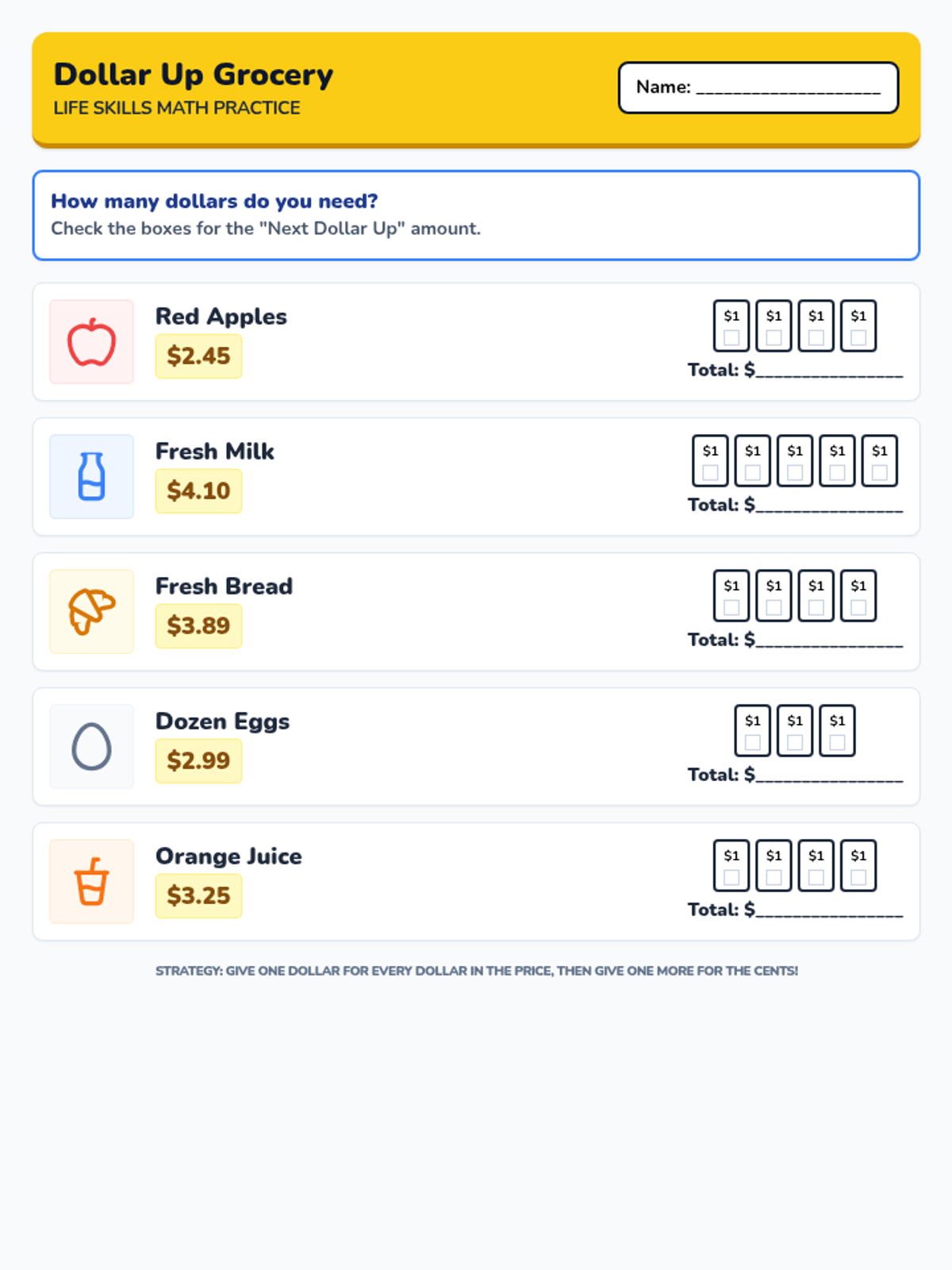
A life skills math worksheet focusing on the 'next dollar up' strategy. Students view grocery items with prices and determine how many one-dollar bills are needed to make a purchase.
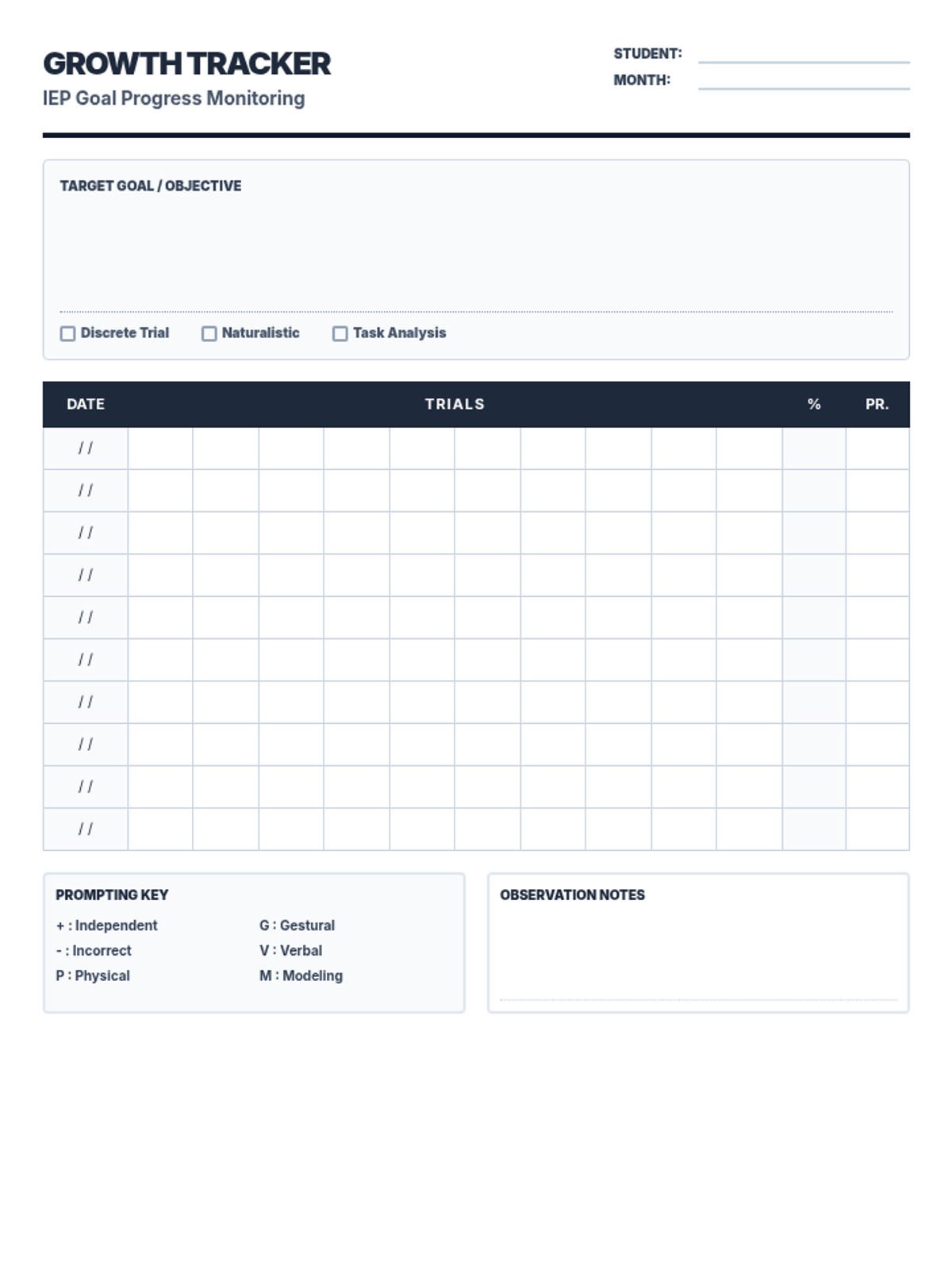
A professional IEP goal tracking data sheet for educators. Features a 10-trial grid system for easy percentage calculation, prompting key, and space for goal definitions and observation notes.
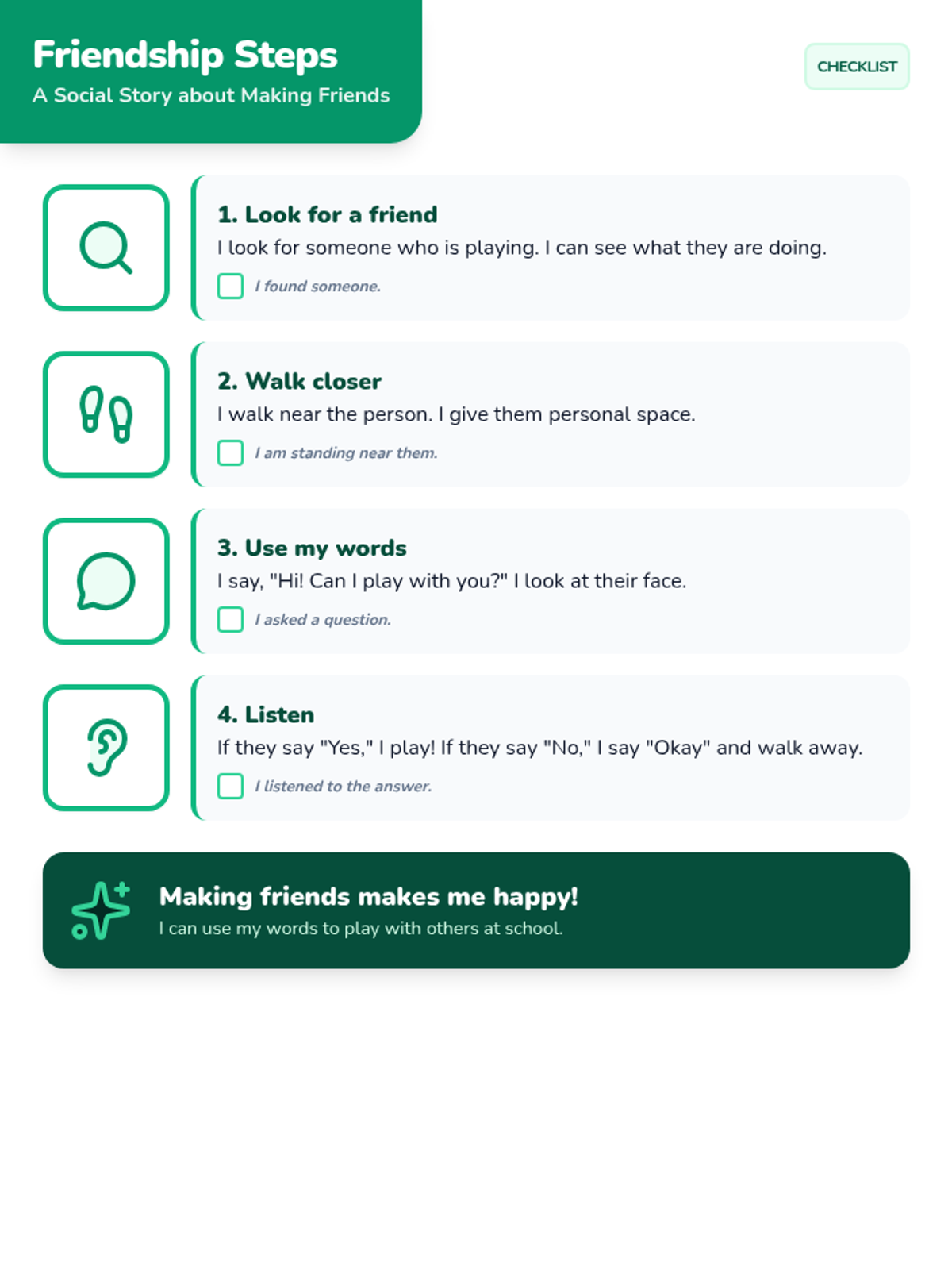
A social story designed with modified text and simple sentences to teach the social steps of initiating play and making friends. Includes a task analysis checklist for student self-monitoring.
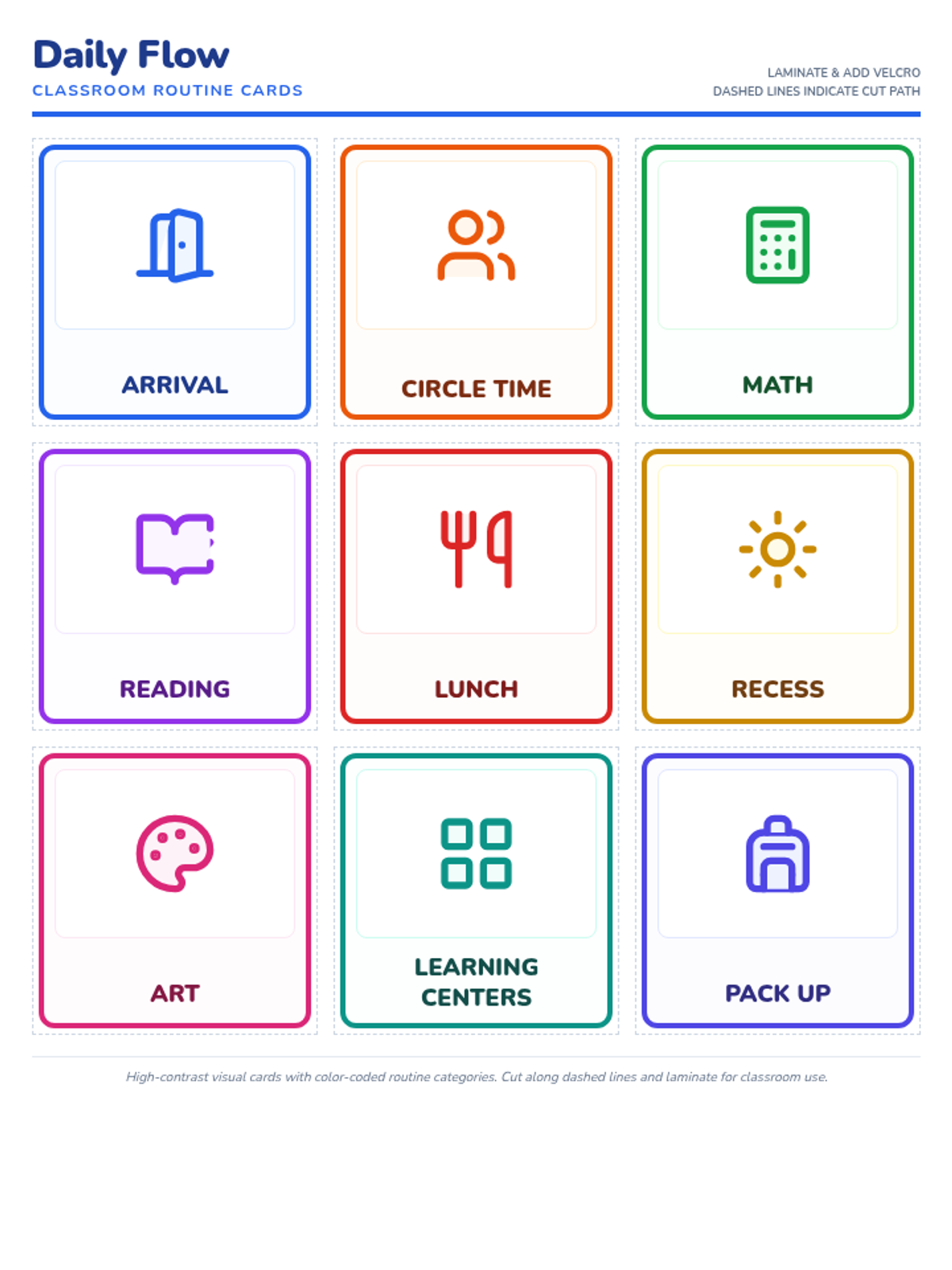
A set of 9 high-contrast visual schedule cards featuring clear icons and bold text to help students navigate daily classroom routines. Each card is color-coded for easy identification.
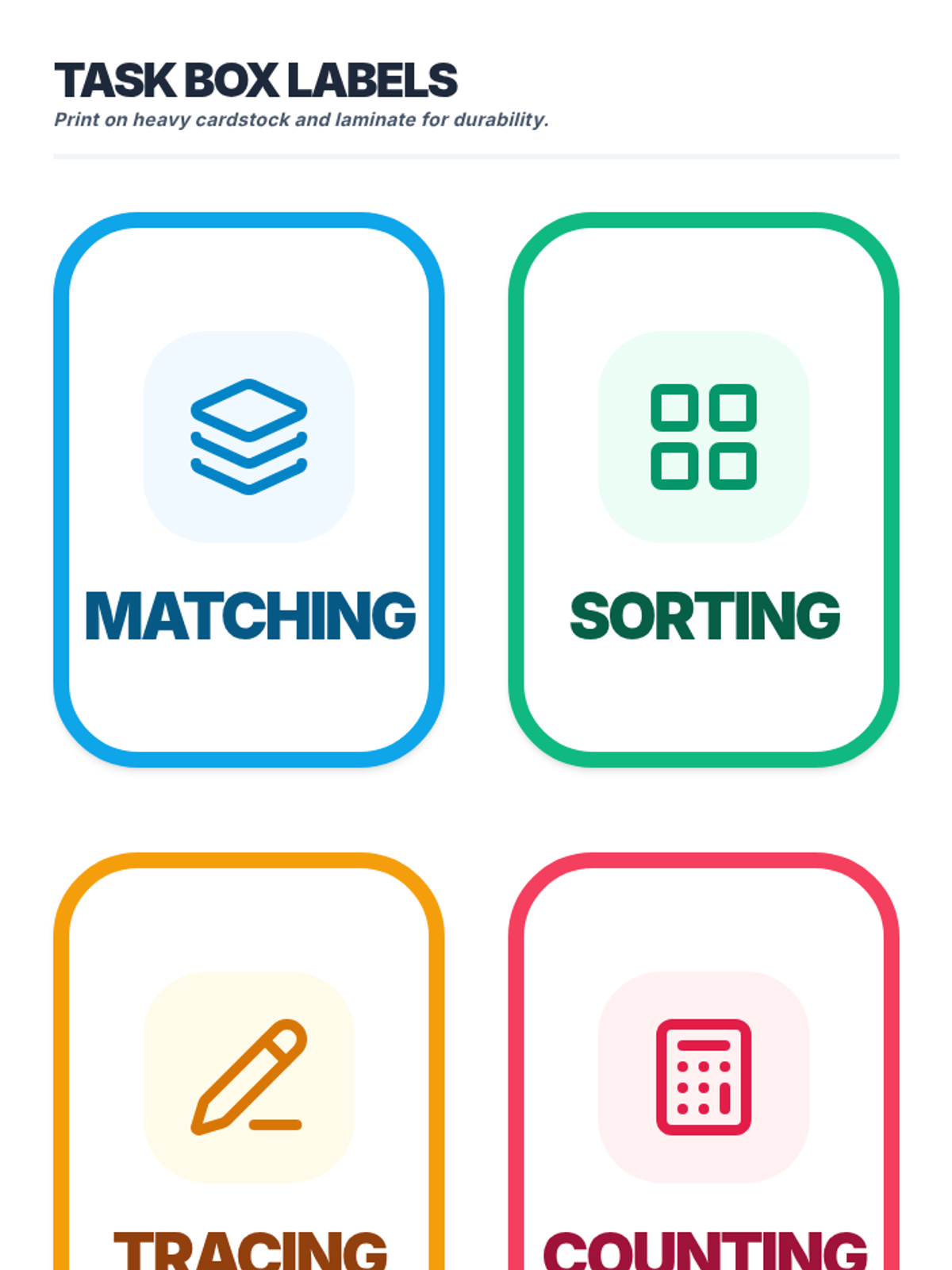
A set of 8 large, high-contrast visual labels for independent task boxes, featuring clear icons and bold text to support classroom organization and student independence.
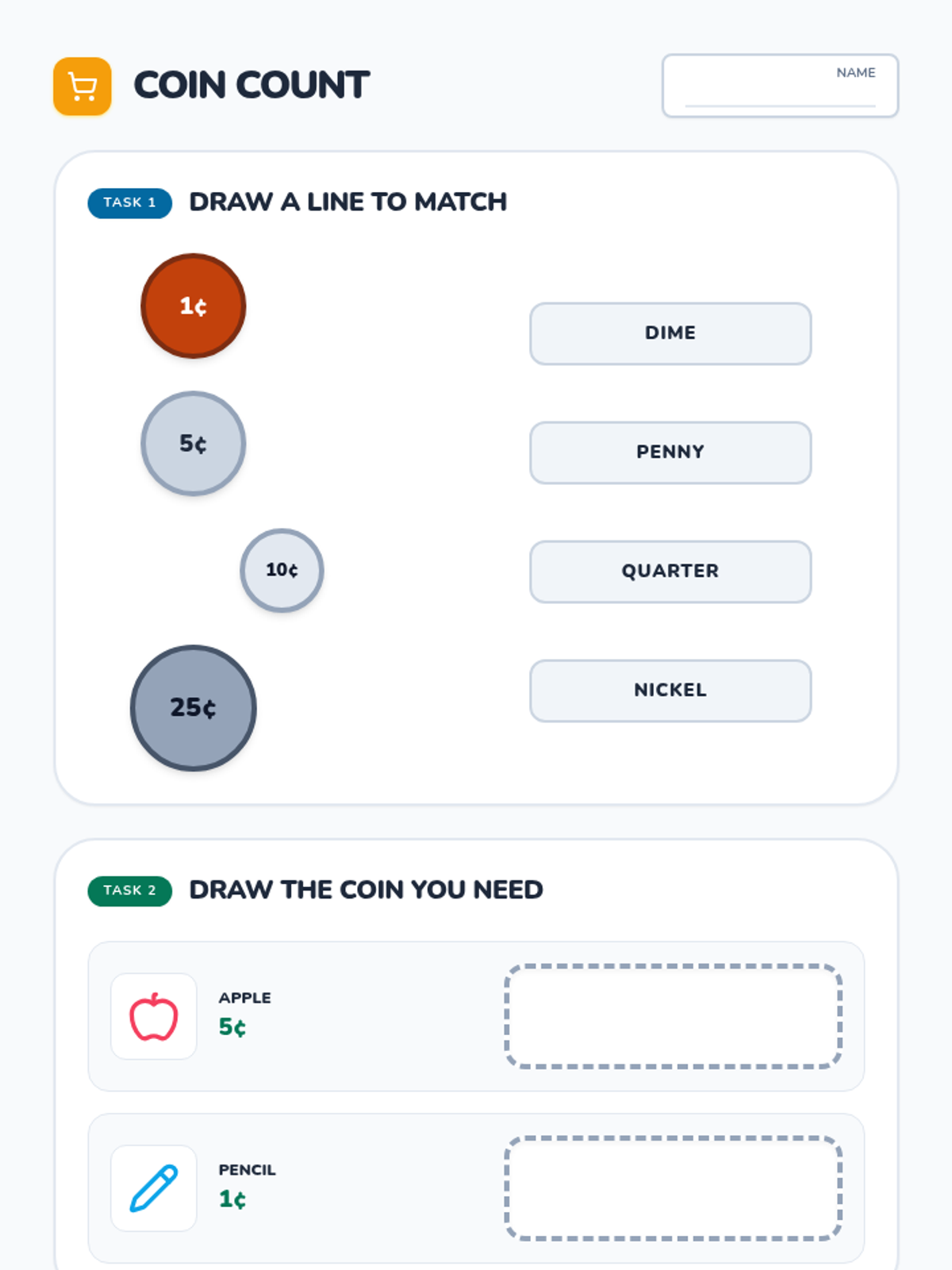
A functional life-skills math worksheet focused on coin identification, matching, and basic value application in a shopping context.
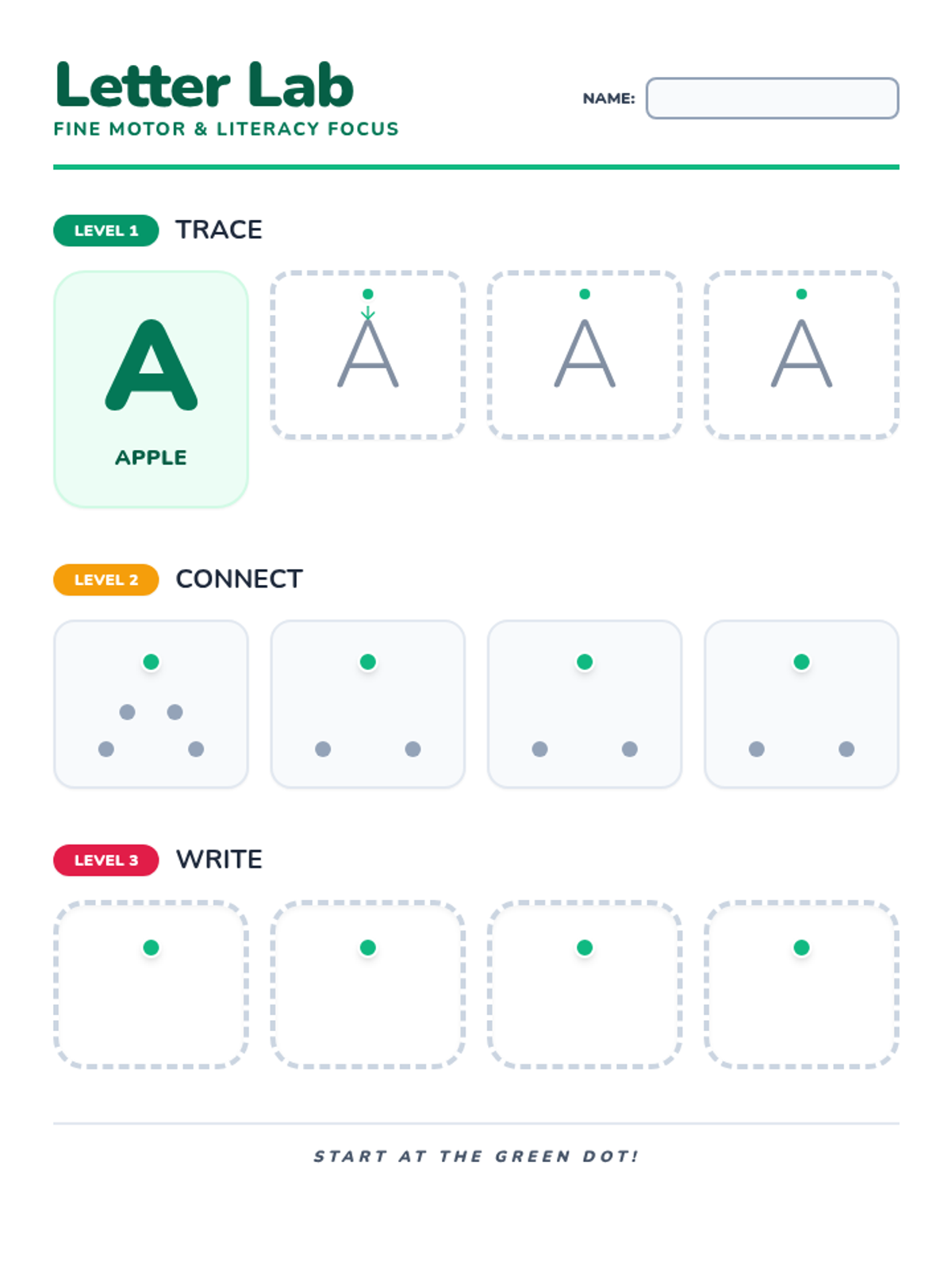
A three-tier differentiated worksheet for letter formation, transitioning from heavy tracing with visual cues to independent writing.
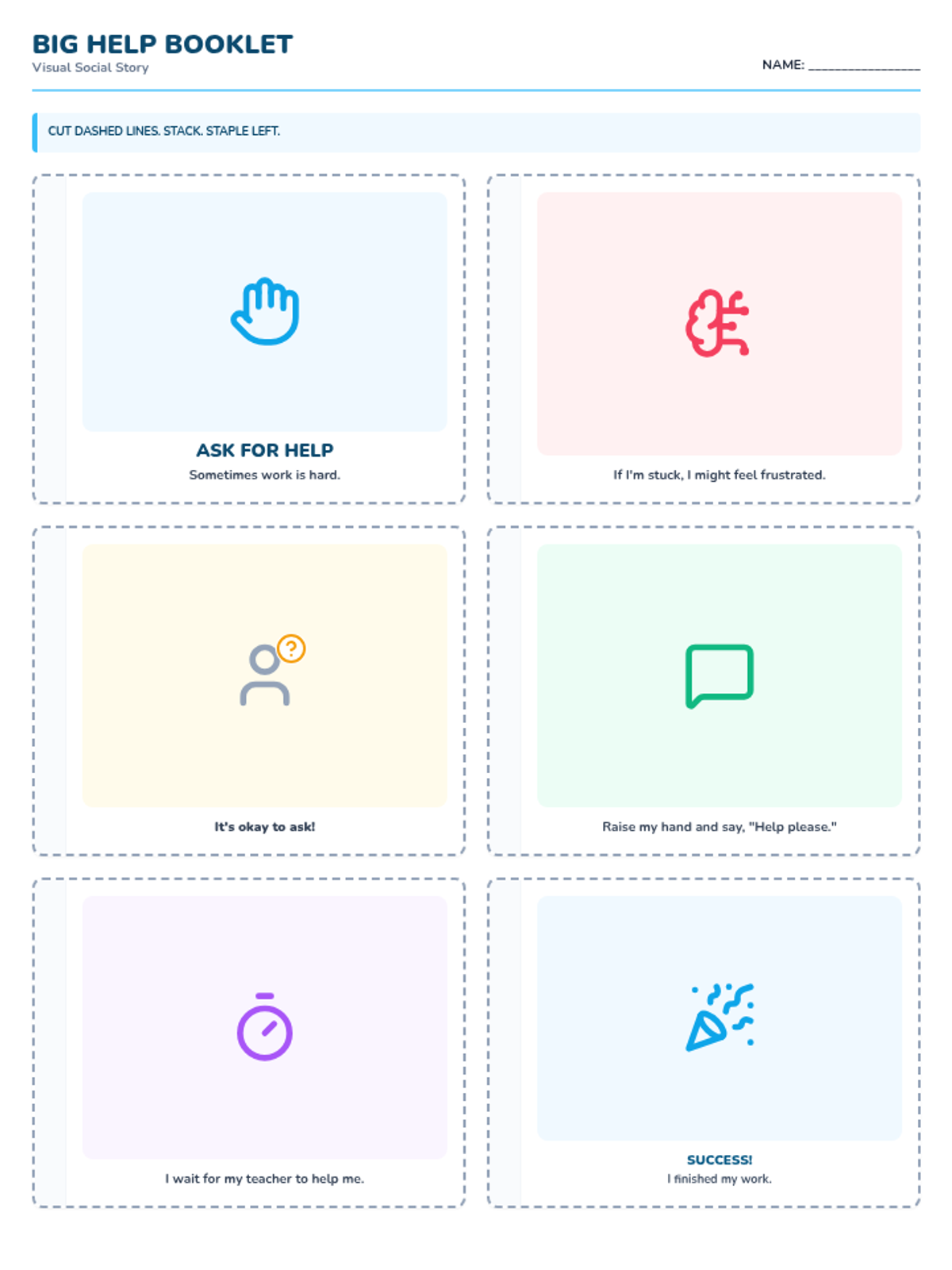
A visual social story booklet that teaches students how to recognize frustration and appropriately ask for help in the classroom.
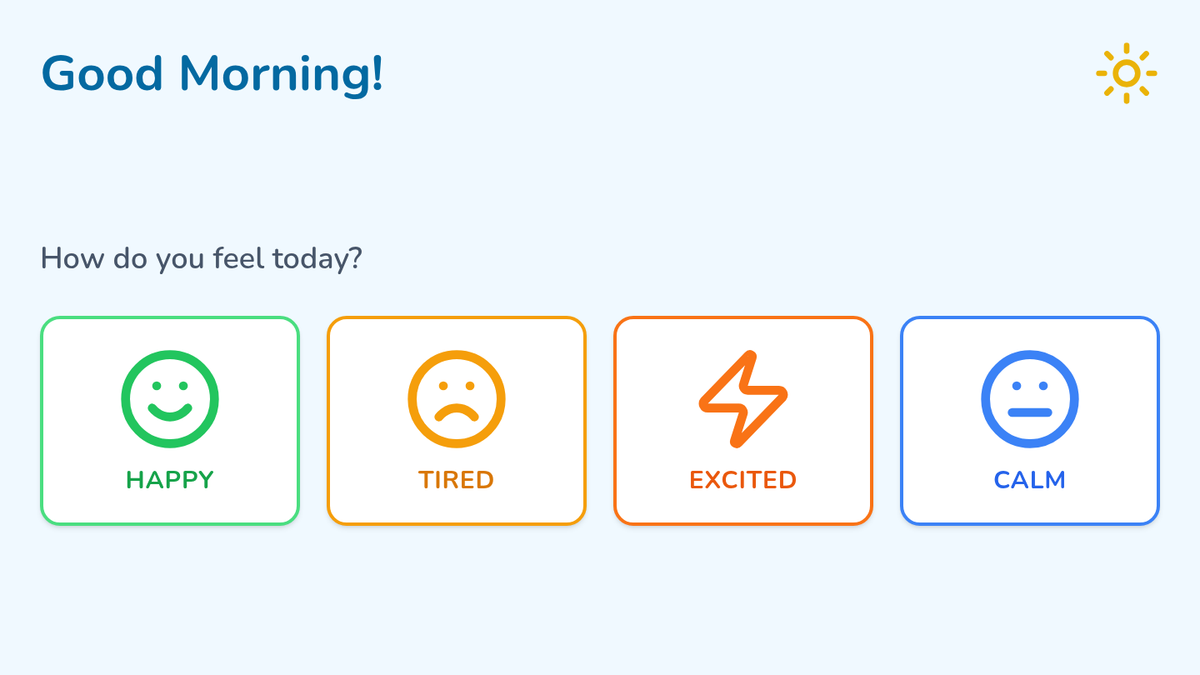
A set of high-contrast, visually supported morning meeting slides featuring daily check-ins, calendar, weather, and schedule prompts.
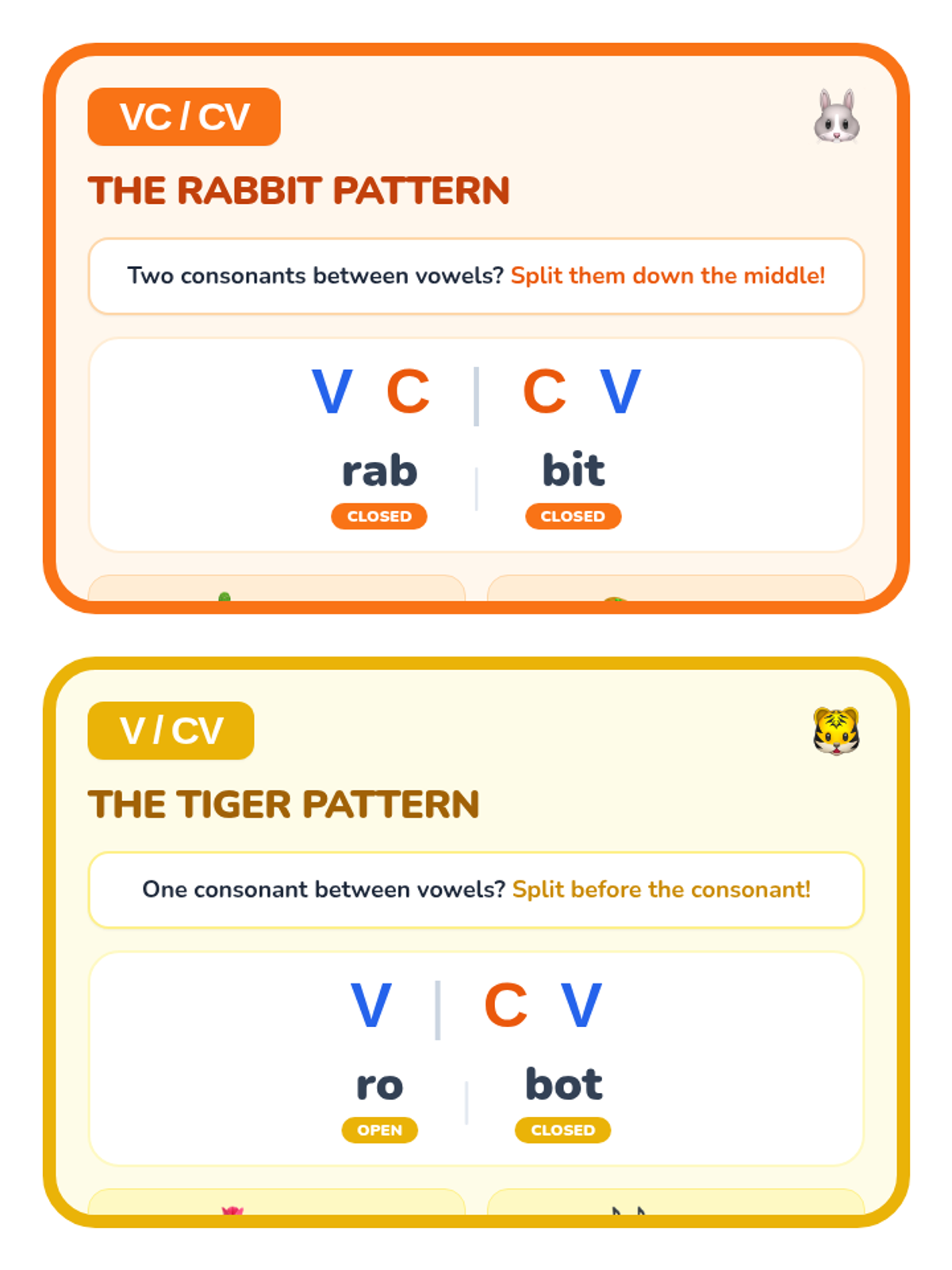
A set of four vibrant anchor charts for syllable division patterns (Rabbit, Tiger, Camel, and Lion), now formatted 2-per-page for space-efficient classroom use. Each chart features a clear rule statement, a visual syllable diagram, an example breakdown, and additional illustrated word examples.
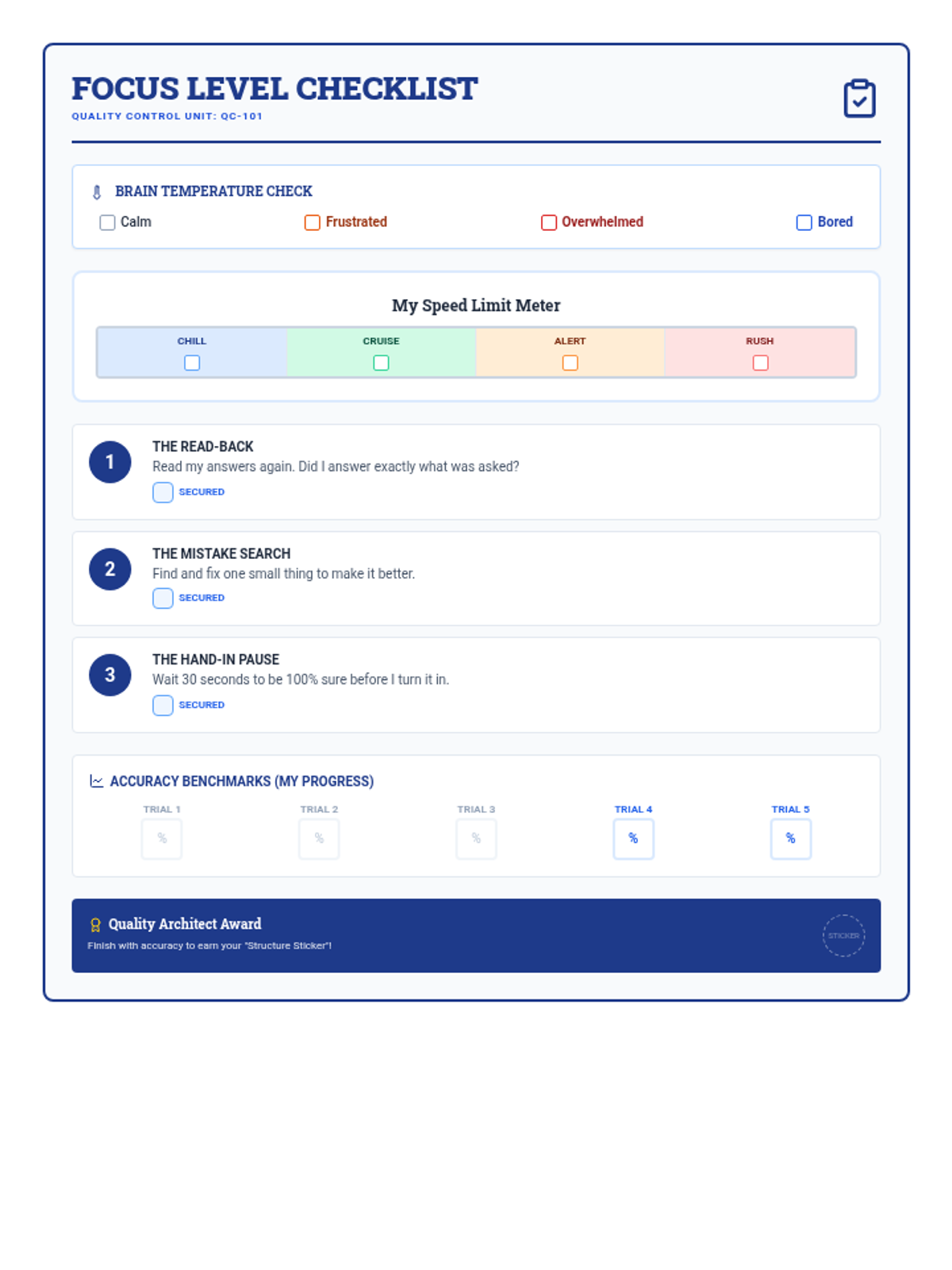
A daily self-monitoring checklist for the student to manage work speed, perform quality checks, and monitor emotional focus levels.
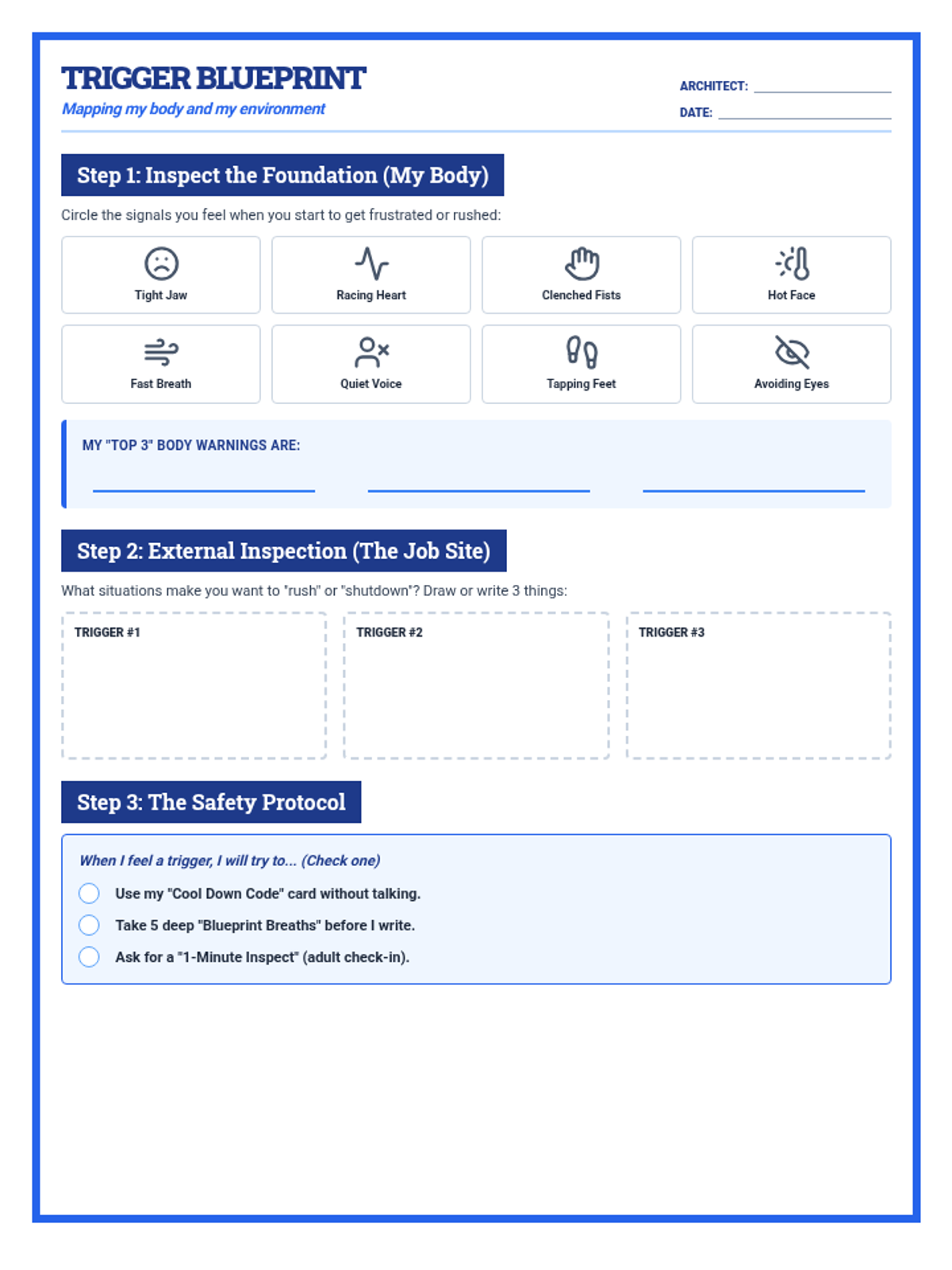
A student-facing worksheet to help identify physical body signals and environmental triggers for emotional shutdowns and rushing.
An instructional slide deck for the student, explaining what triggers are, identifying body signals, and introducing the '2-Minute Quality Rule' to manage rushing.
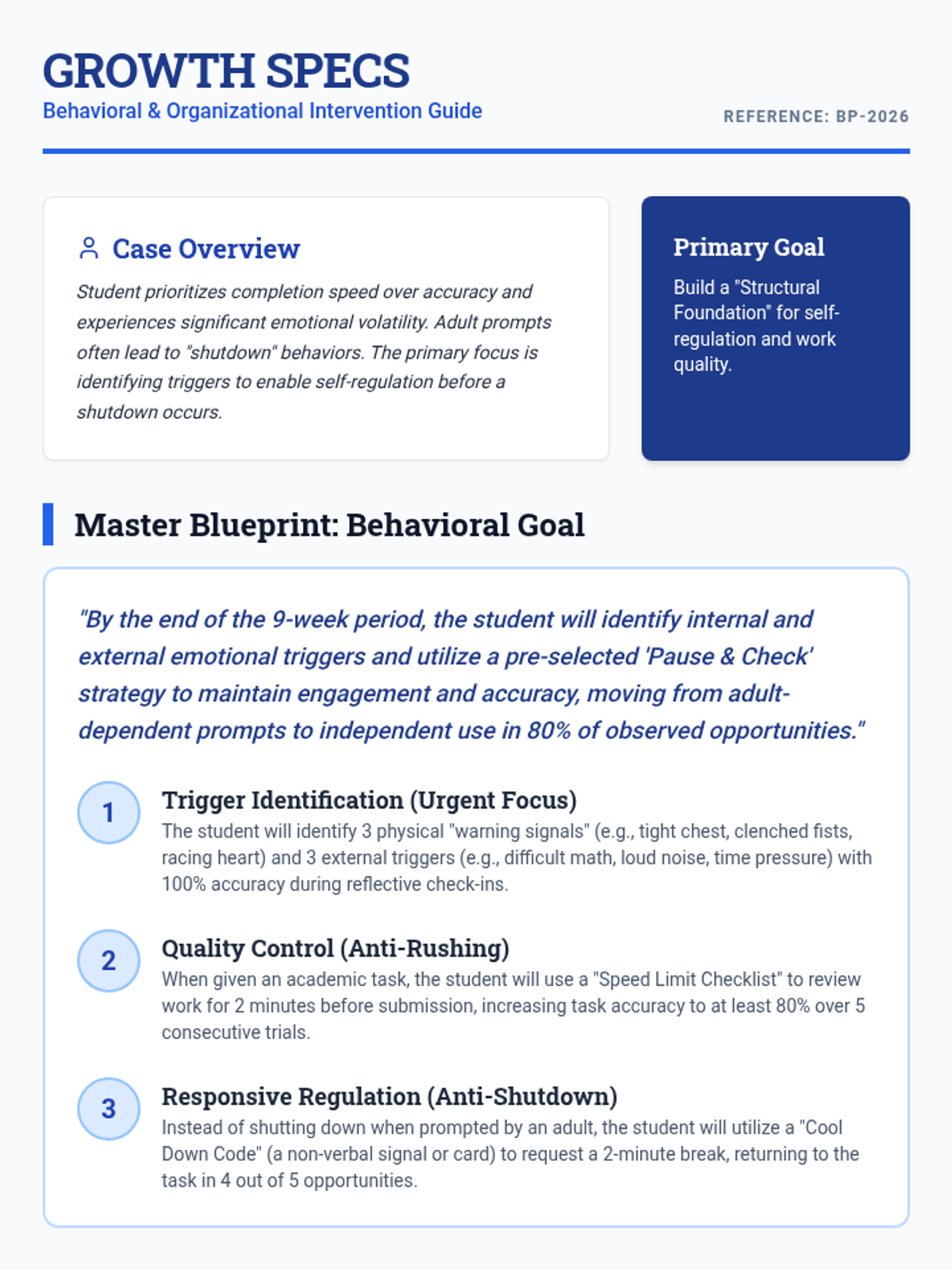
A teacher-facing guide outlining a comprehensive behavioral goal, specific objectives for trigger identification and work quality, and strategies to prevent emotional shutdowns.