A cut-and-paste sorting worksheet where students evaluate various information sources and categorize them as reliable evidence or false leads.

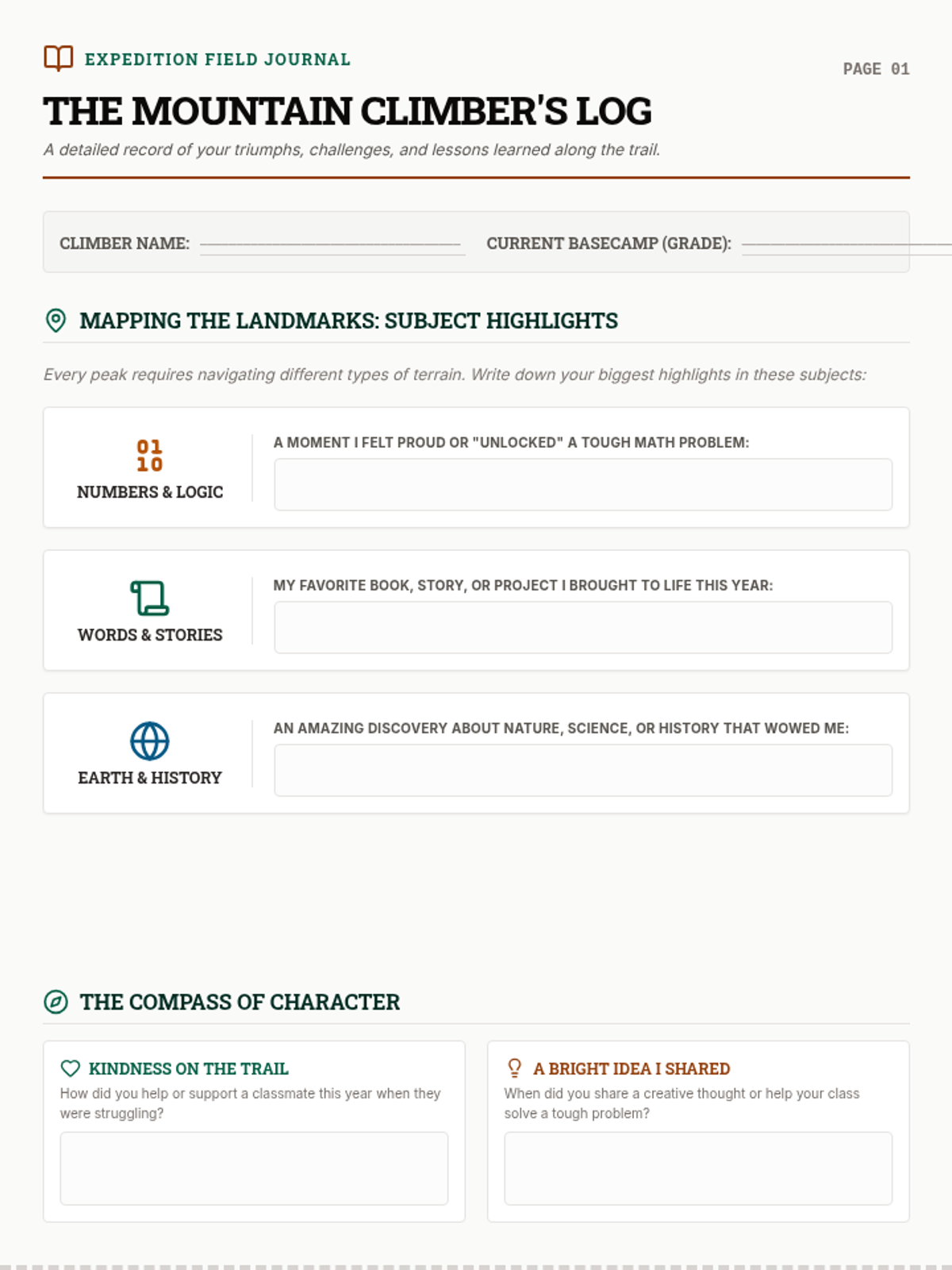
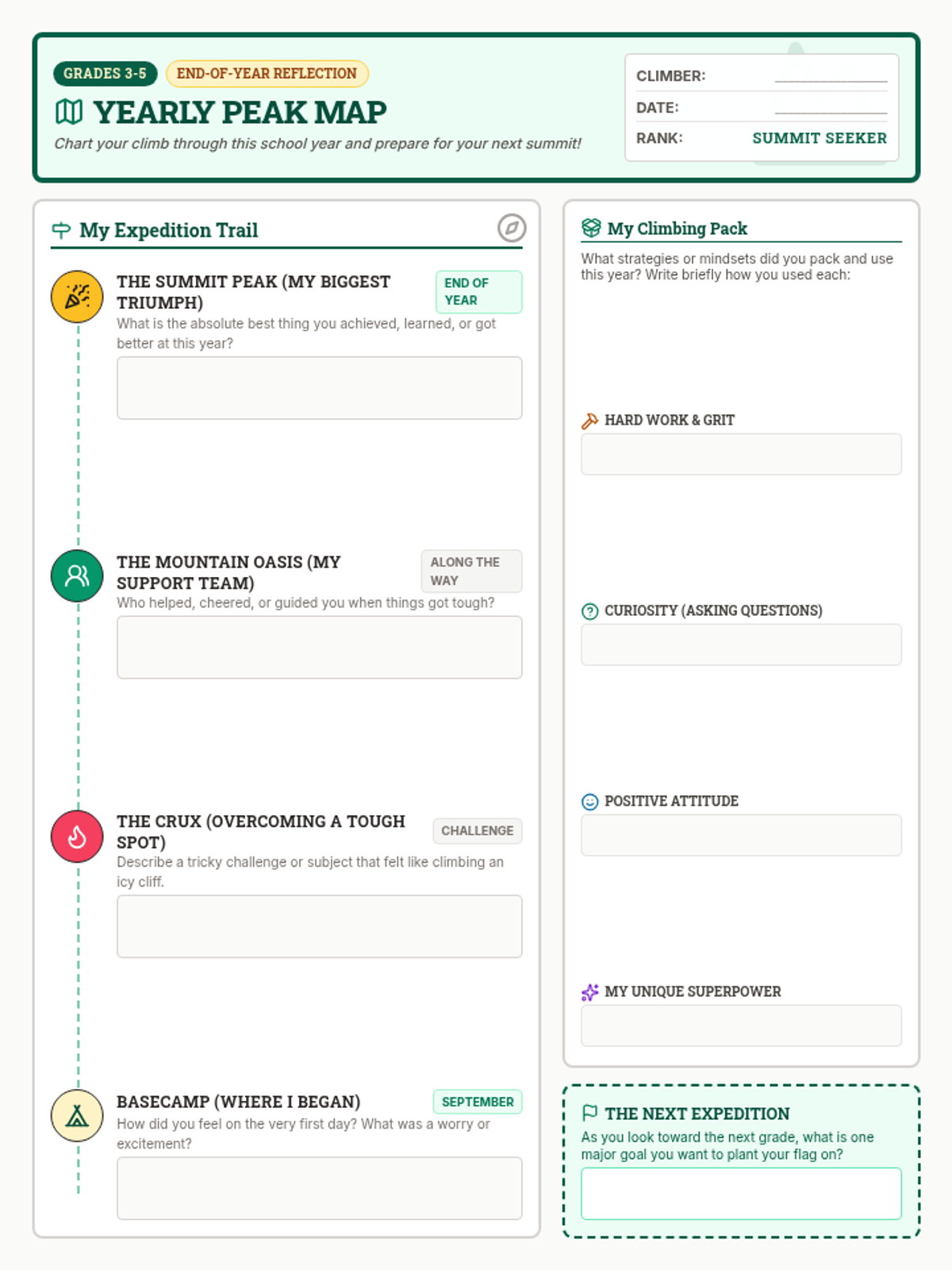
A two-page student activity booklet featuring a Circle of Control diagram, a 5th-grade memory page, a goal-setting chart for middle school, and a reflective letter to their future self.
Visual slide deck for the Flight Path lesson, introducing Locus of Control, the Circle of Control concept, and transition reflection.
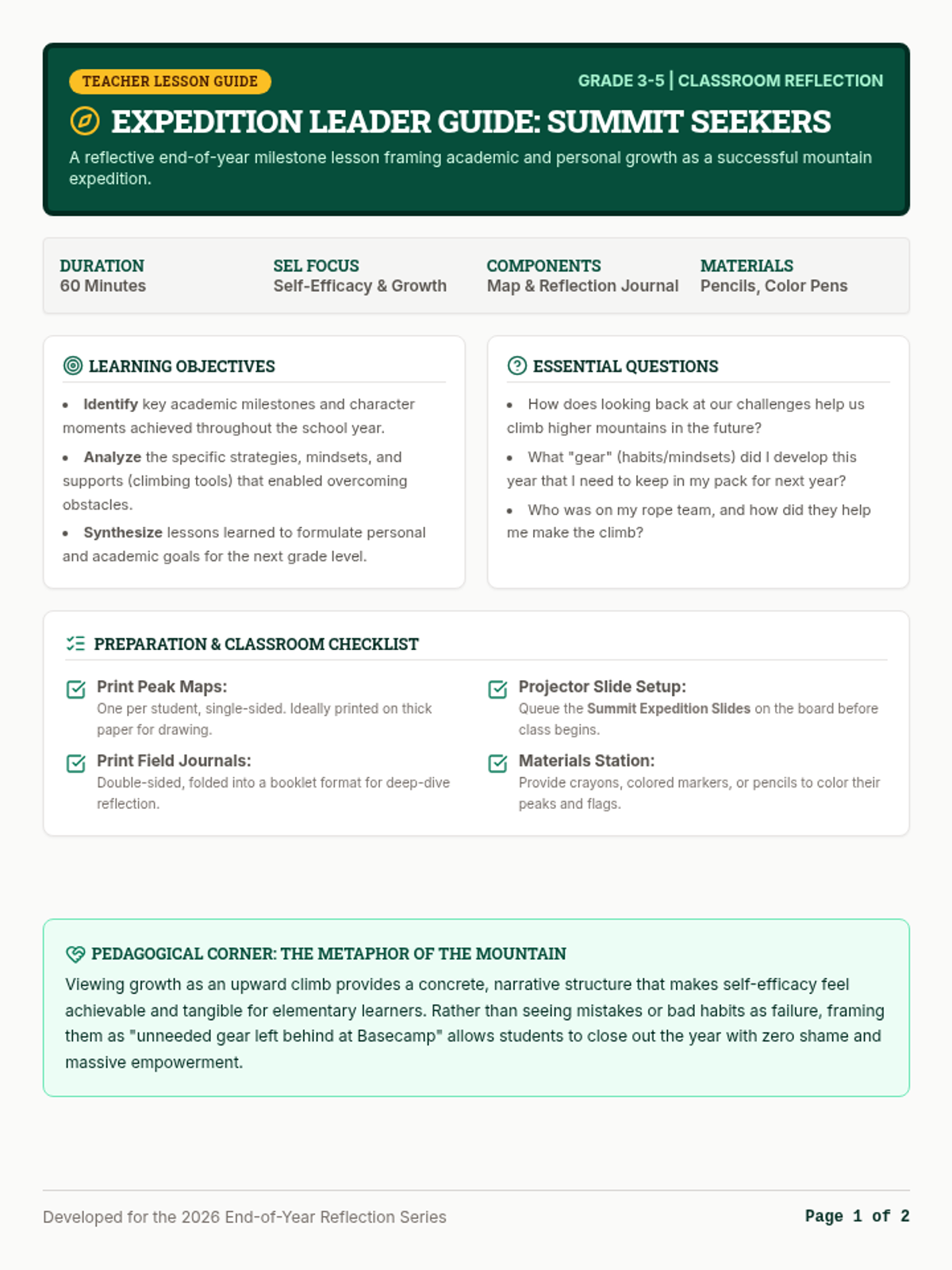
A concise teacher's guide for a 25-minute lesson on Locus of Control and transition reflection, featuring a high-speed pacing guide and discussion prompts.
Culminating presentation for Session 8, reviewing all Brain Frames and explaining the concept of judgment in the afterlife to prepare students for independent writing. Adapted for 4th-grade dyslexia support.
Final independent assessment worksheet for Lesson 8, where students choose between a Sequencing or Telling Frame to organize a paragraph about the Hall of Ma'at and the weighing of the heart. Adapted for 4th-grade dyslexia support.
Slides for Lesson 7, contrasting the lives of wealthy and poor Egyptians. Focuses on using specific transition words like 'however' and 'whereas'. Adapted for 4th-grade dyslexia support.
Student worksheet for Lesson 7 using a Comparing Frame to contrast the lifestyles of wealthy and poor Egyptians. Focuses on using advanced transition words for contrast. Adapted for 4th-grade dyslexia support.
Slides for Lesson 6, focusing on Egyptian inventions and how to use a Categorizing Frame to group related technological advancements. Adapted for 4th-grade dyslexia support.
Student worksheet for Lesson 6, utilizing a Categorizing Frame to organize Egyptian inventions into meaningful groups for paragraph writing. Adapted for 4th-grade dyslexia support.
Slides for Lesson 5, exploring the Cause and Effect relationship between Egyptian afterlife beliefs and pyramid construction using the Relationship Frame. Adapted for 4th-grade dyslexia support.
Student worksheet for Lesson 5, focusing on Cause and Effect relationships between religious beliefs and pyramid construction using the Relationship Frame. Adapted for 4th-grade dyslexia support.
Slides for Lesson 4, comparing the leadership of Hatshepsut and Ramses II. Focuses on using the Comparing Frame to organize similarities and differences. Adapted for 4th-grade dyslexia support.
Student worksheet for Lesson 4 using a Comparing Frame to contrast Hatshepsut and Ramses II. Includes specific transition word supports for comparative writing. Adapted for 4th-grade dyslexia support.
Slides for Lesson 3, introducing the Sequencing Frame and detailing the steps of the Egyptian mummification process. Focuses on chronological transitions. Adapted for 4th-grade dyslexia support.
Worksheet for Lesson 3 using a Sequencing Frame to map out the steps of mummification. Provides a structured word bank and writing area for chronological paragraph practice. Adapted for 4th-grade dyslexia support.
Slides for Lesson 2, explaining the hierarchical structure of Ancient Egyptian society from Pharaoh to Laborers. Includes visuals to support the Telling Frame organization. Adapted for 4th-grade dyslexia support.
Student worksheet for Lesson 2, featuring a Telling Frame for organizing the Ancient Egyptian social hierarchy and a drafting area for a paragraph. Adapted for 4th-grade dyslexia support.
A student-facing progress log to help students visualize their journey through the 8 writing sessions, providing motivation and a sense of accomplishment as they master different Brain Frames.
A teacher data collection form to monitor student progress across all 8 sessions of the Nile Narratives program, tracking independence levels and specific Brain Frame mastery. Updated for 4th-grade dyslexia support.
A universal paragraph writing and Brain Frame rubric for the Nile Narratives sequence, designed to track student growth in organization, transition use, and independence levels. Adapted for 4th grade dyslexia support.
Teacher facilitation notes for Lesson 1, including learning objectives, a minute-by-minute pacing guide, specific scaffolding scripts, and an exemplar answer key for the Nile Gift paragraph. Adapted for 4th grade dyslexia support.
Presentation slides for introducing the Telling Frame and the importance of the Nile River in Ancient Egypt, specifically adapted for 4th graders with dyslexia. Features high-contrast visuals, simplified text, and explicit transition word support.
A student worksheet for Lesson 1, specifically adapted for 4th-grade students with dyslexia. Features the Telling Frame, visual word bank, sentence starters, and increased line spacing for comfortable writing.
A penguin-themed reading passage worksheet. Focuses on identifying the main idea (how a penguin is built for water life) and finding supporting details.
A giraffe-themed reading passage worksheet. Focuses on identifying the main idea (how a giraffe's body is built for height) and finding supporting details.
An answer key for the 'Elephant Case Report Worksheet', highlighting correct choices and providing sample open-ended responses.
A comprehensive teacher guide for reading intervention, providing instructional scripts, the 'Stop & Gist' strategy, and differentiation tips for supporting hyperlexic students.
A zoo-themed reading passage worksheet featuring 'Ellie the Elephant'. Includes multiple-choice questions for main idea and open-ended sections for supporting details about how elephants use their trunks.
A visual anchor chart titled 'Idea Detectives' that uses a hierarchical layout to explain the relationship between a main idea and its supporting details. Perfect for visual learners in primary reading intervention.
An updated single-page answer key for the 'Expedition R-Control' student workbook, reflecting the expanded word lists for all 4 days of instruction.
A 4-page Student Workbook for the 'Expedition R-Control' intervention. Each page corresponds to one day of the program and includes decoding tasks, syllable division, dictation spaces, and a themed 125-word reading passage. Word lists have been expanded to include more practice items per day.
A 4-page Teacher's Manual providing detailed facilitation guides for a 4-day literacy intervention. Each day includes structured timing for warm-ups, decoding, encoding, and passage reading, all themed around an 'Expedition' safari. Practice word lists have been expanded for more intensive student support.
An answer key for the Syllable Scientists student workbook, including syllable division, VCe identification, and dictation words/sentences for all 4 days.
A 4-page student workbook for silent-e syllable intervention. Includes daily decoding exercises, sentence fluency, and cumulative passages (~125 words each) focusing on closed, open, and VCe syllable combinations, plus a dictation section for encoding.
A comprehensive teacher manual for a 4-day silent-e intervention, featuring daily lesson plans, scripted prompts, syllable division strategies, and word lists for closed, open, and VCe syllable combinations.
A coin value worksheet without visual supports. Students convert coin names and quantities (e.g., "4 Dimes") into numerical values and calculate the total for each "bag."
A comprehensive teacher's guide for the Money Mastery unit, including learning objectives, lesson breakdowns, and differentiation strategies for coin counting and budgeting.
Teacher answer key for the Snack Shop Budget Worksheet, including sample affordable combinations and common student pitfalls.
A student worksheet for identifying snack prices, calculating totals for pre-set lists, and making spending choices within a $1.00 budget.
Instructional slides for calculating total costs and making budgeting decisions, featuring "The Golden Rule of Spending" and clear comparison examples.
Teacher answer key for the Coin Detective Worksheet, including visual matching solutions and total value calculations.
A visual slide deck introducing the four main US coins (penny, nickel, dime, quarter) with their identification features and values. features a "Coin Detective" theme.
A coin identification and value worksheet using a "Coin Detective" theme. Includes a field guide, matching activity, and basic counting problems.
A visually-supported morning routine checklist for students at home, featuring clear icons in photo-style frames and large checkboxes for tracking completion of daily tasks. Updated to include 'Backpack' step and refined visual elements including a toothbrush visual.
A teacher answer key for the Price Tag Worksheet, showing the correct number of dollars for each item.
A student worksheet featuring grocery items with price tags where students must determine the 'Next Dollar Up' and identify the correct number of bills.
An instructional presentation teaching the 'Next Dollar Up' strategy with visual steps and realistic bill representations.