Worksheets and store planner containing the Job Matching activity, visual Grocery Math practice featuring real inventory prices, and 'Build a Better Grocery Store' planning sheet. Formatted with large text and spacious writing areas.
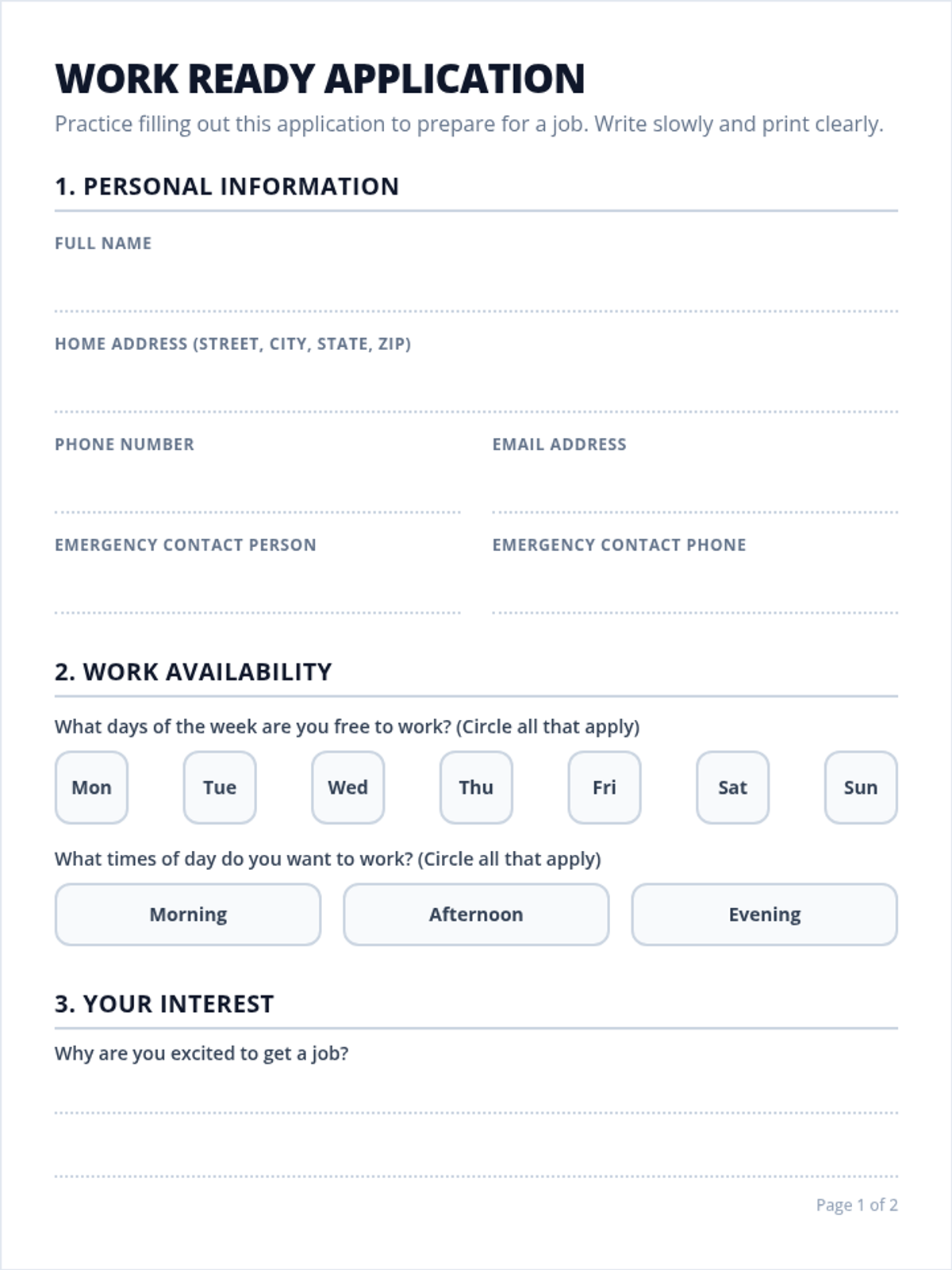
A clean, uncluttered two-page practice job application worksheet designed for high school special education students. It contains simplified language, extra-wide dotted handwriting lines for personal information, standard and scenario-based preference checklists, and accommodation needs, without distracting visual icons or interactive elements.
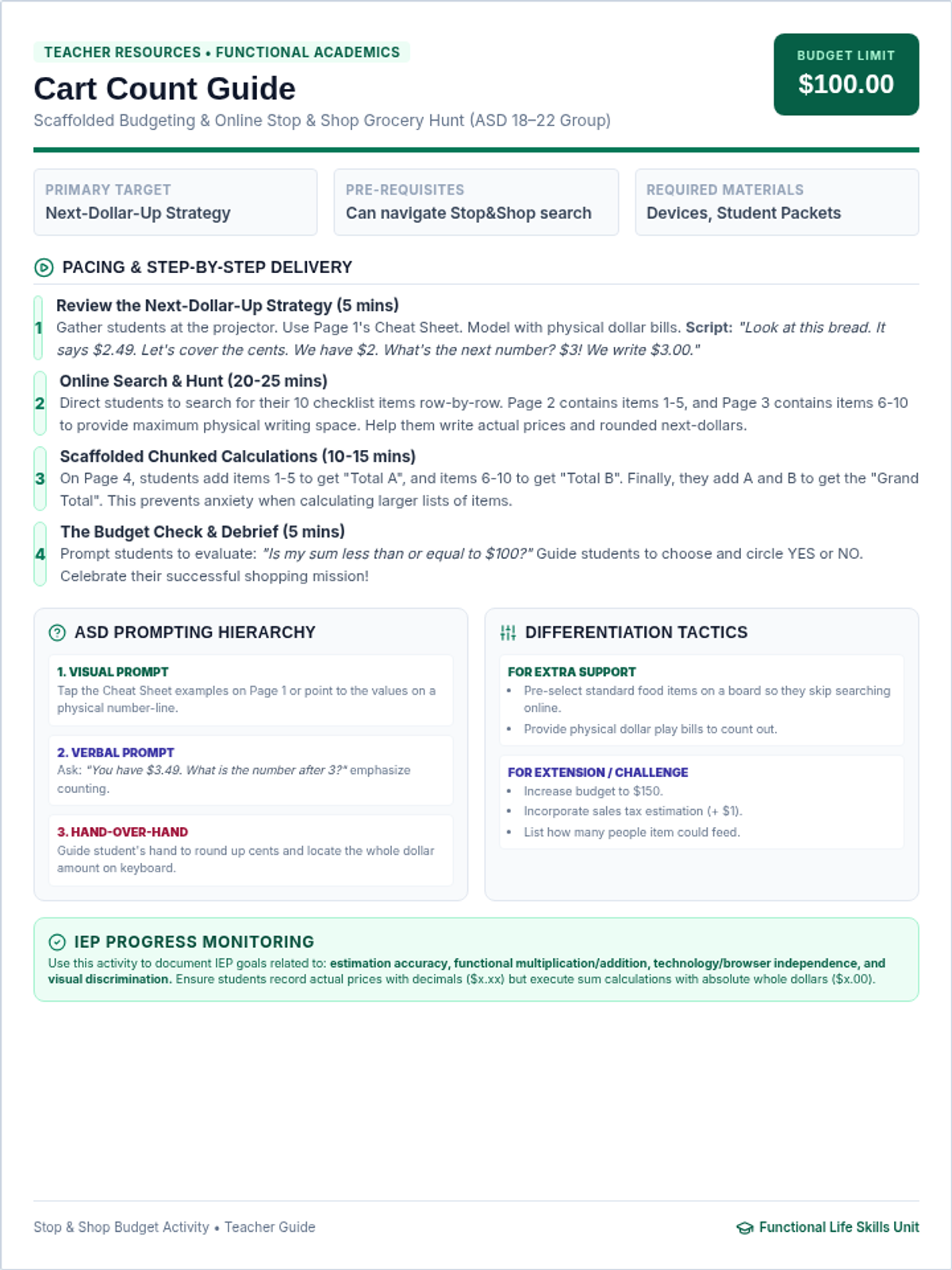
A highly organized, 1-page teacher facilitation guide featuring instructional scripts, a step-by-step lesson sequence, and a visual prompting hierarchy tailored for students with ASD and low cognitive profiles.
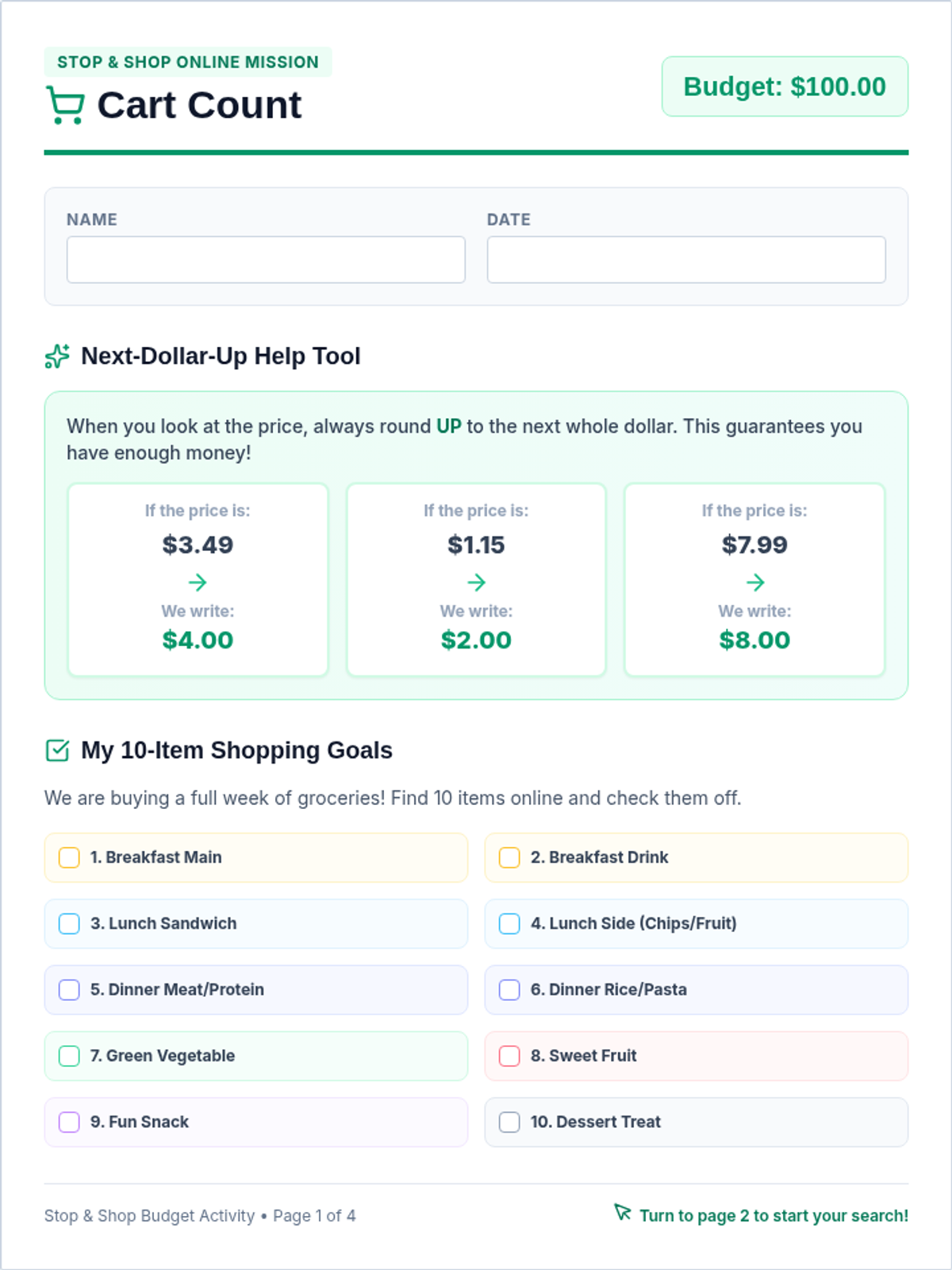
A highly scaffolded, 4-page printable shopping packet for students to practice meal planning and next-dollar-up estimation while browsing the Stop & Shop website under a strict $100 budget. Includes 10 items split into two pages for ample handwriting space and scaffolded chunked addition.
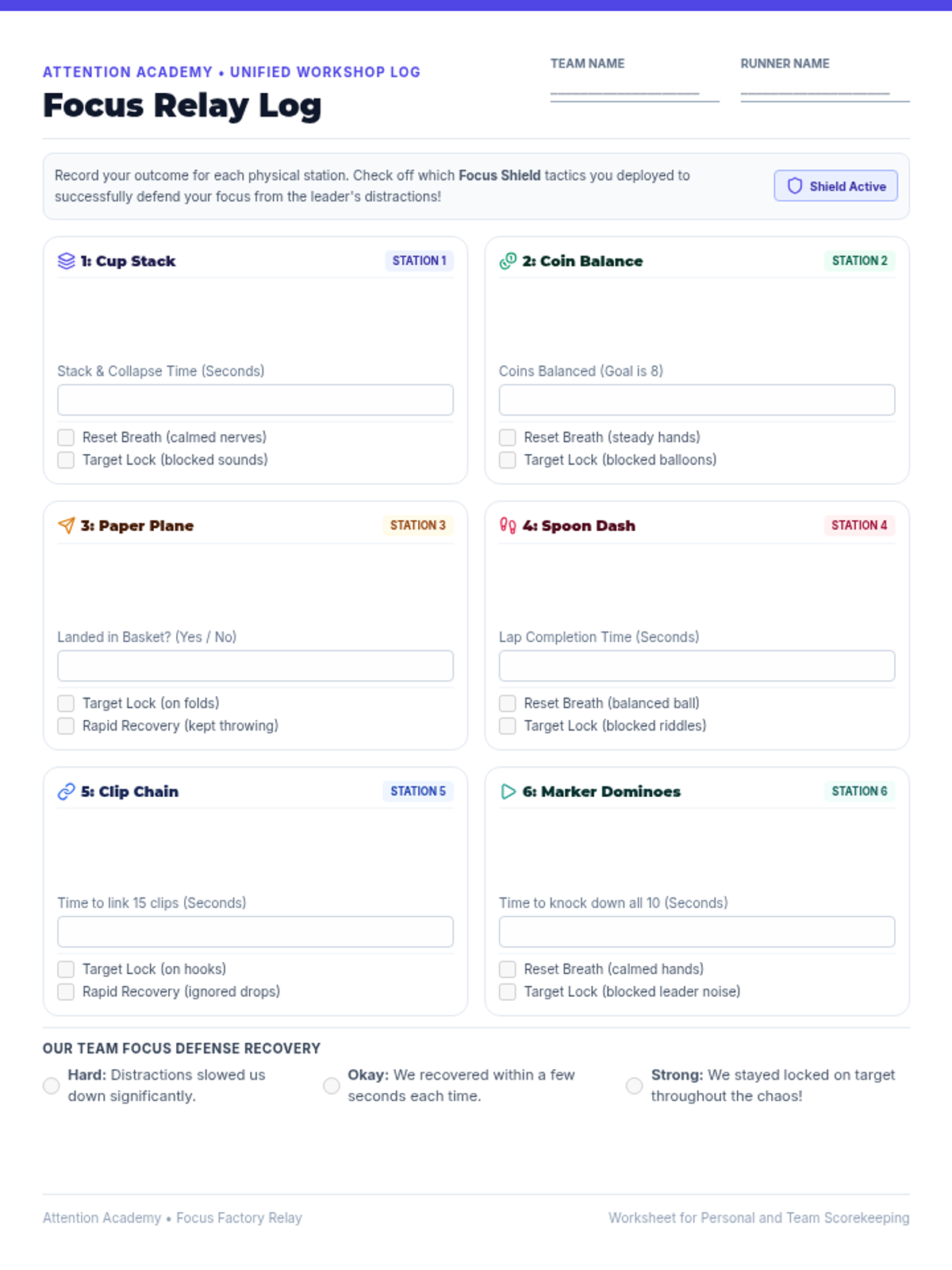
A professional-style student log for recording answers to the focus relay drills, checking off Focus Shield strategies used during distractions, and conducting a final focus recovery self-assessment.
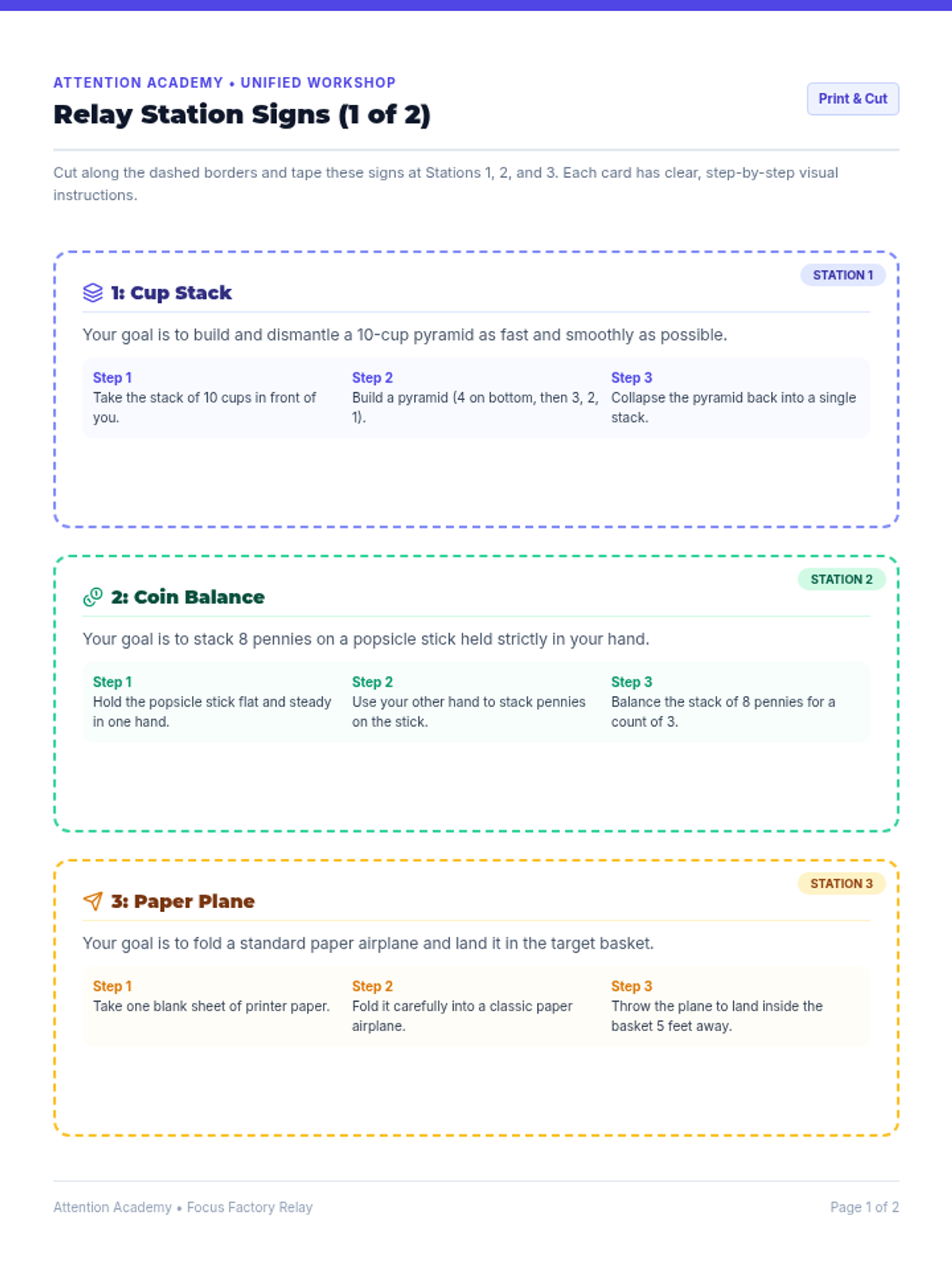
A 2-page printable worksheet containing six high-concentration active relay station signs. Each card features step-by-step instructions for physical coordination drills designed to test students' focus.
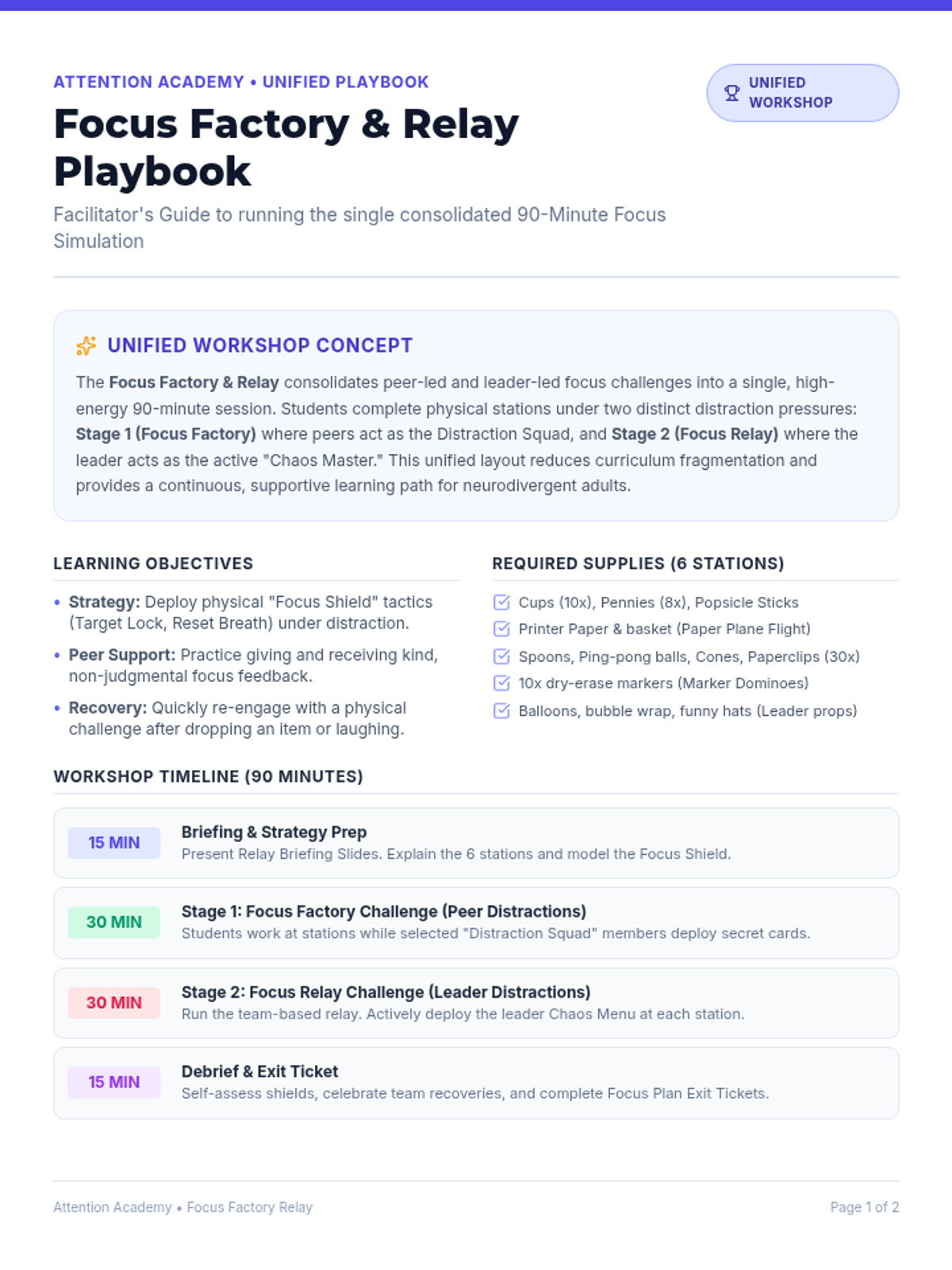
A 2-page instructional playbook for the facilitator. Outlines the game rules, a 90-minute session timeline, a 'Chaos Menu' of calibrated leader distractions, and supportive coaching strategies for adults with IDD.
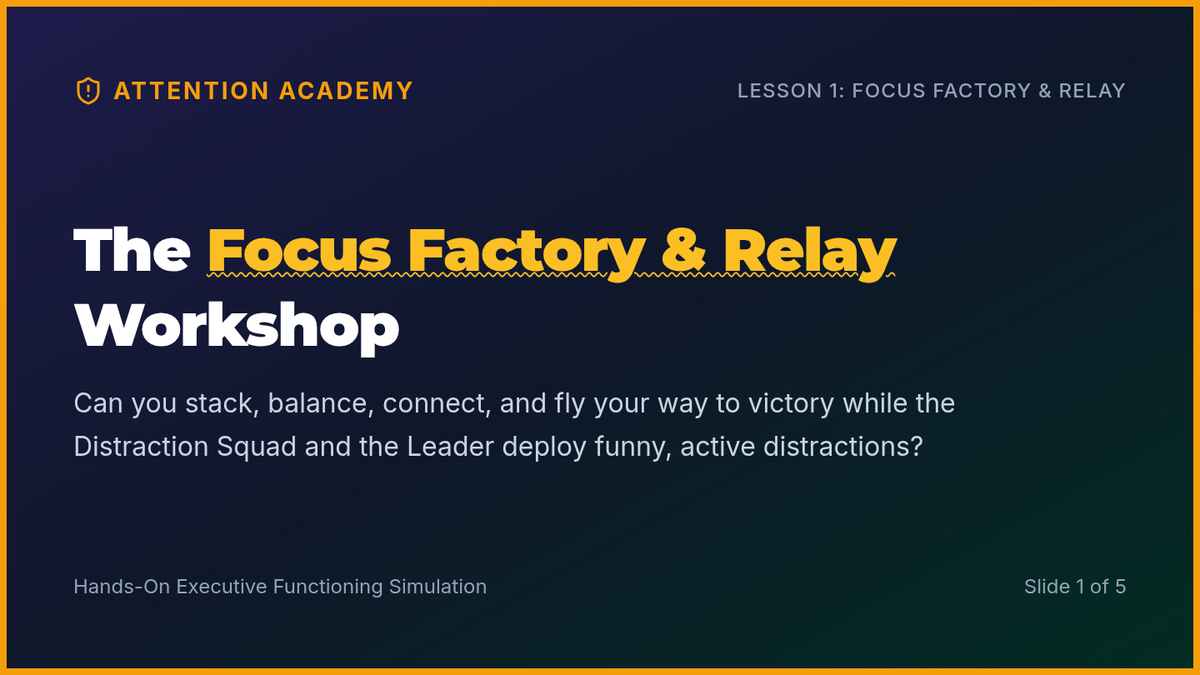
A 5-slide introductory deck for the leader-led Focus Relay challenge. Teaches participants the core strategy of using a Focus Shield, defines the facilitator's Chaos Levels, and reviews the rules for recovering from interruptions.
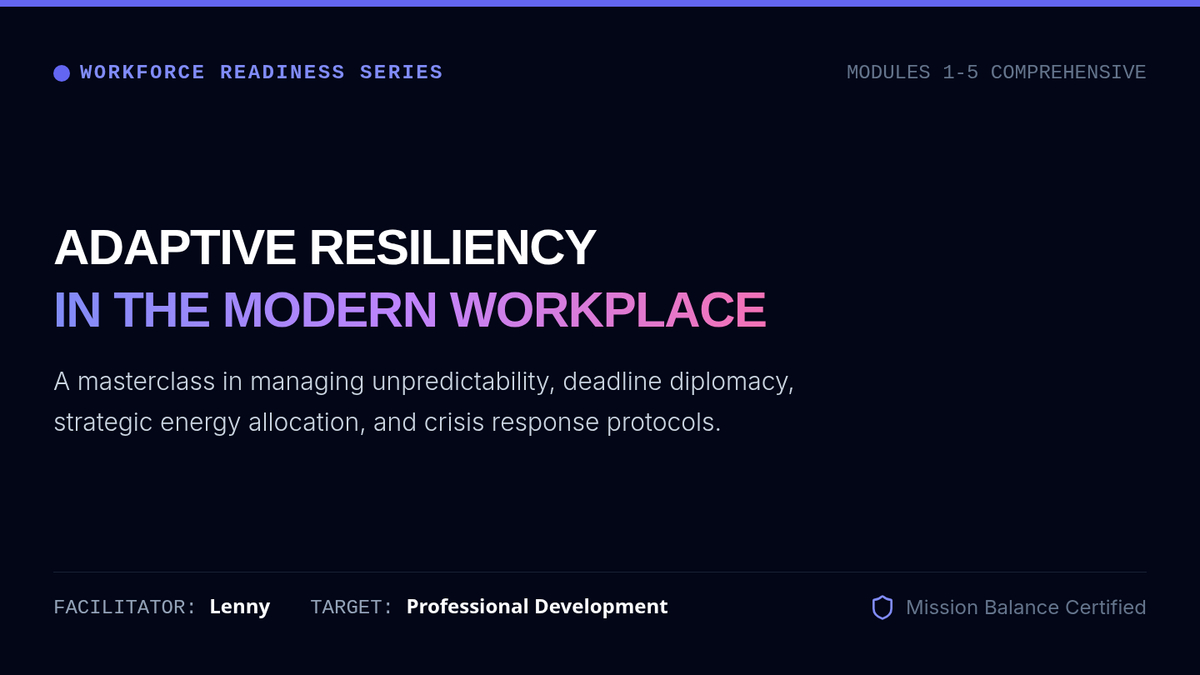
A highly-polished master slide deck designed for adult professional training in adaptive resiliency. Covers the 4 core pillars: The Chaos Factor, Deadline Diplomacy, Energy Allocation, and Red Alert Crisis Triage, formatted cleanly for 16:9 presentations with strict adherence to a 24px minimum font size.
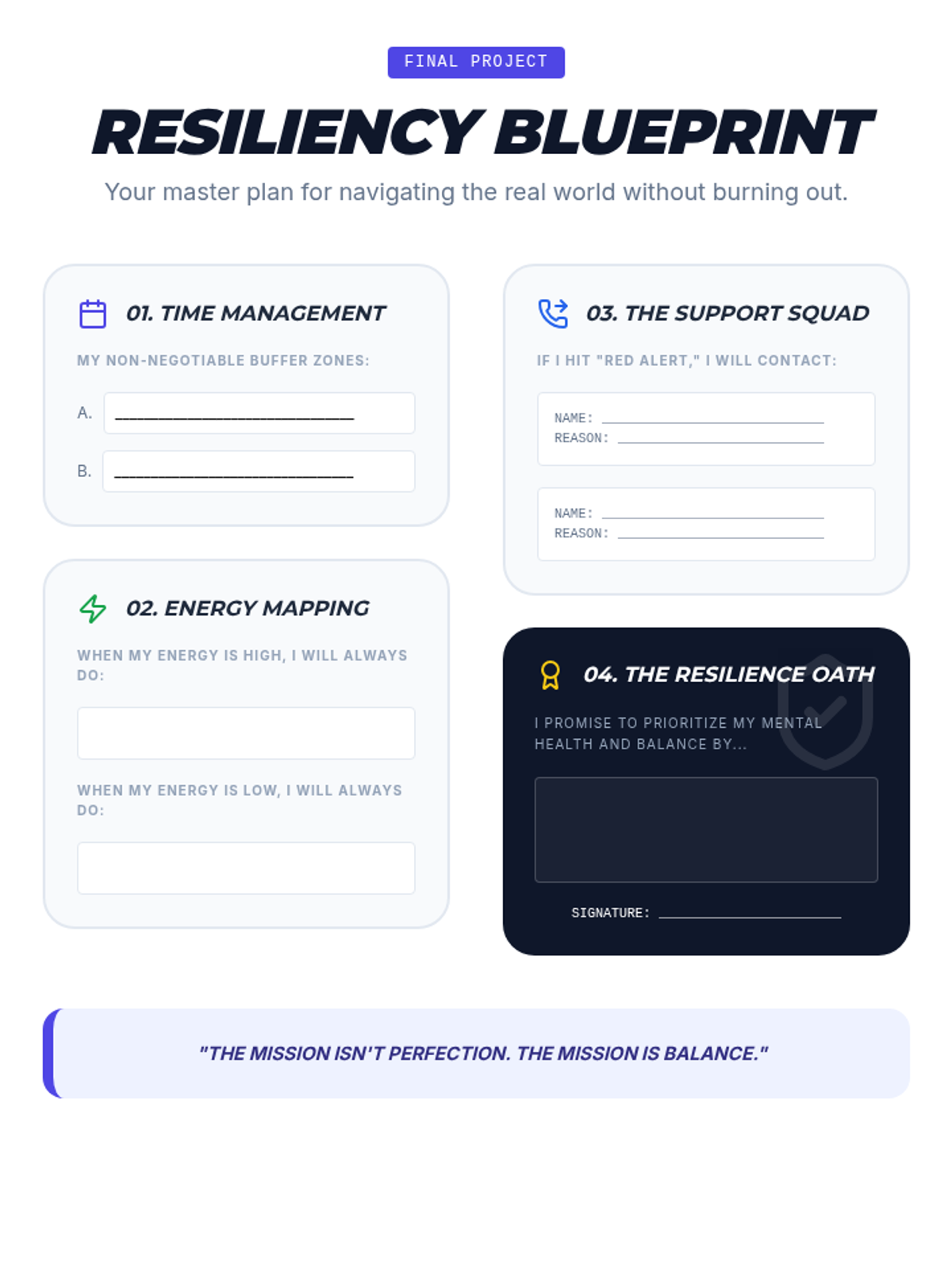
A summative project document where students synthesize everything they have learned into a personal 'Resiliency Blueprint' for real-world application.
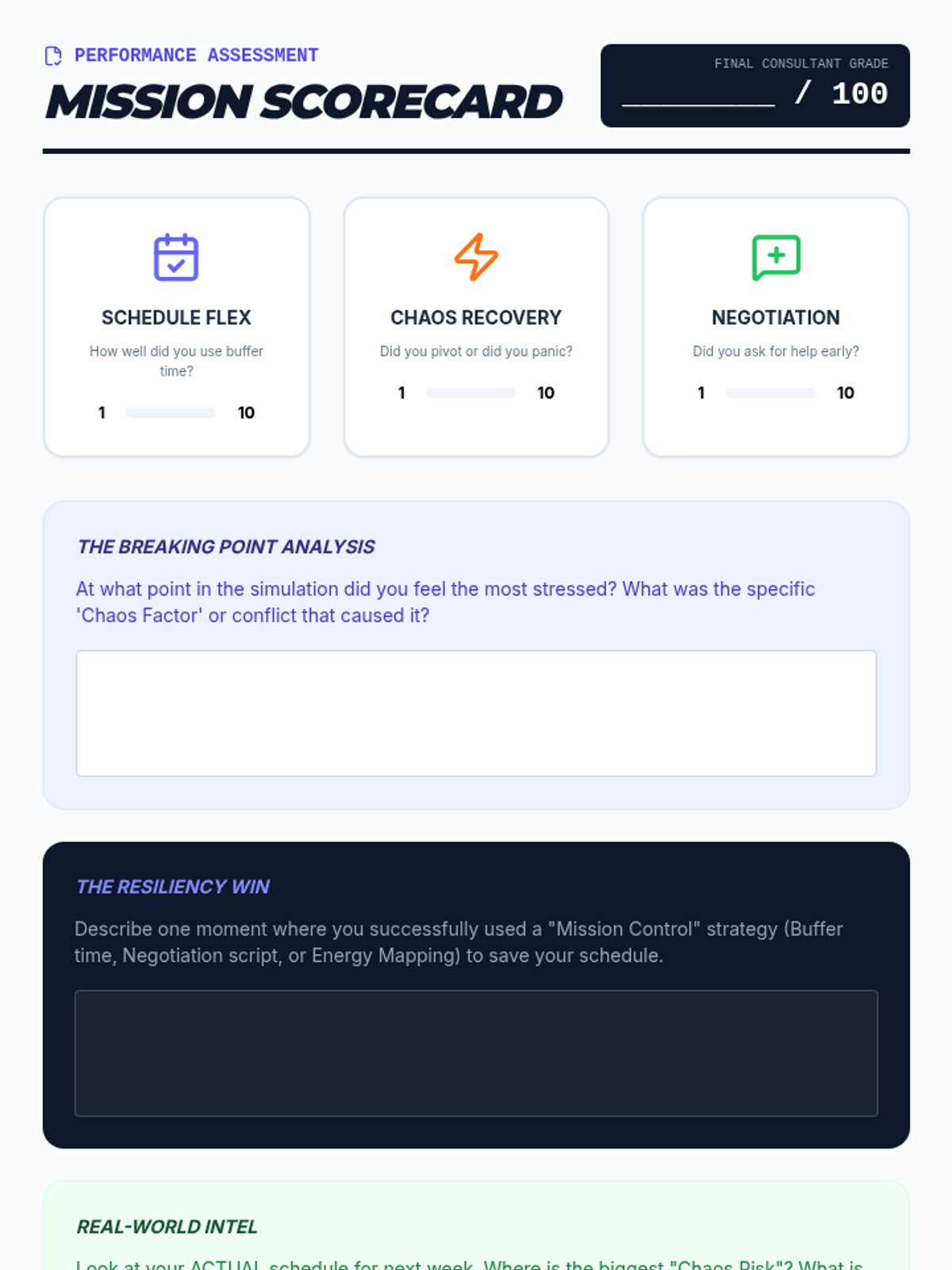
A final self-assessment 'Scorecard' for the Mission Balance sequence, allowing students to rate their performance and reflect on their growth in schedule management and resiliency.
Final presentation for the Mission Balance sequence, reviewing core concepts of chaos management, negotiation, and energy management, and introducing the final scorecard activity.
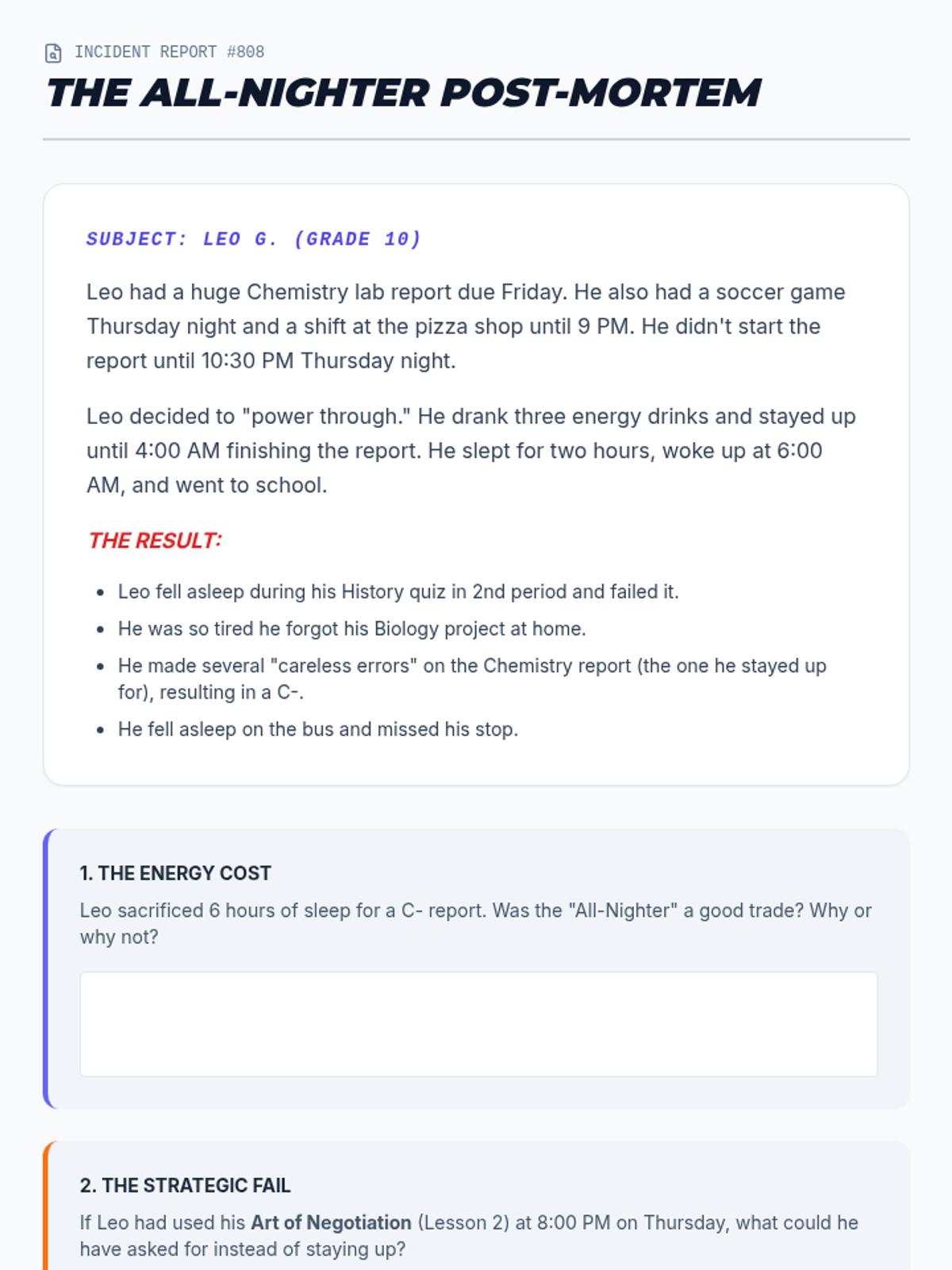
A case study analysis of a student's 'all-nighter' experience, prompting students to evaluate the consequences and identify alternative strategies from the sequence.
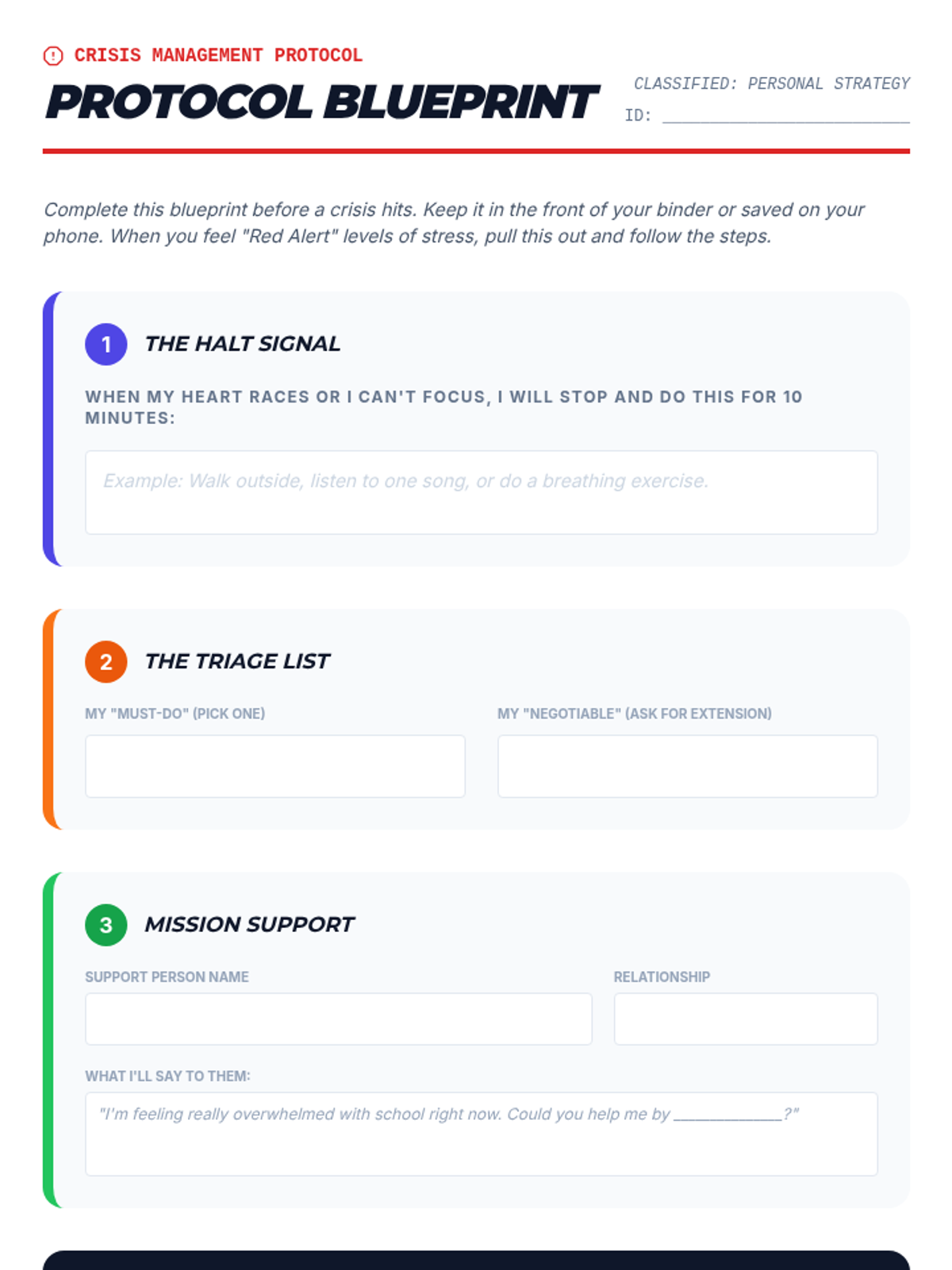
A personal crisis management worksheet where students document their specific 'Red Alert' protocols, including triage strategies, support contacts, and recovery plans.
Lesson 4 slides on crisis management protocols, teaching students how to identify burnout, prioritize tasks during 'Red Alert' scenarios, and activate support systems.
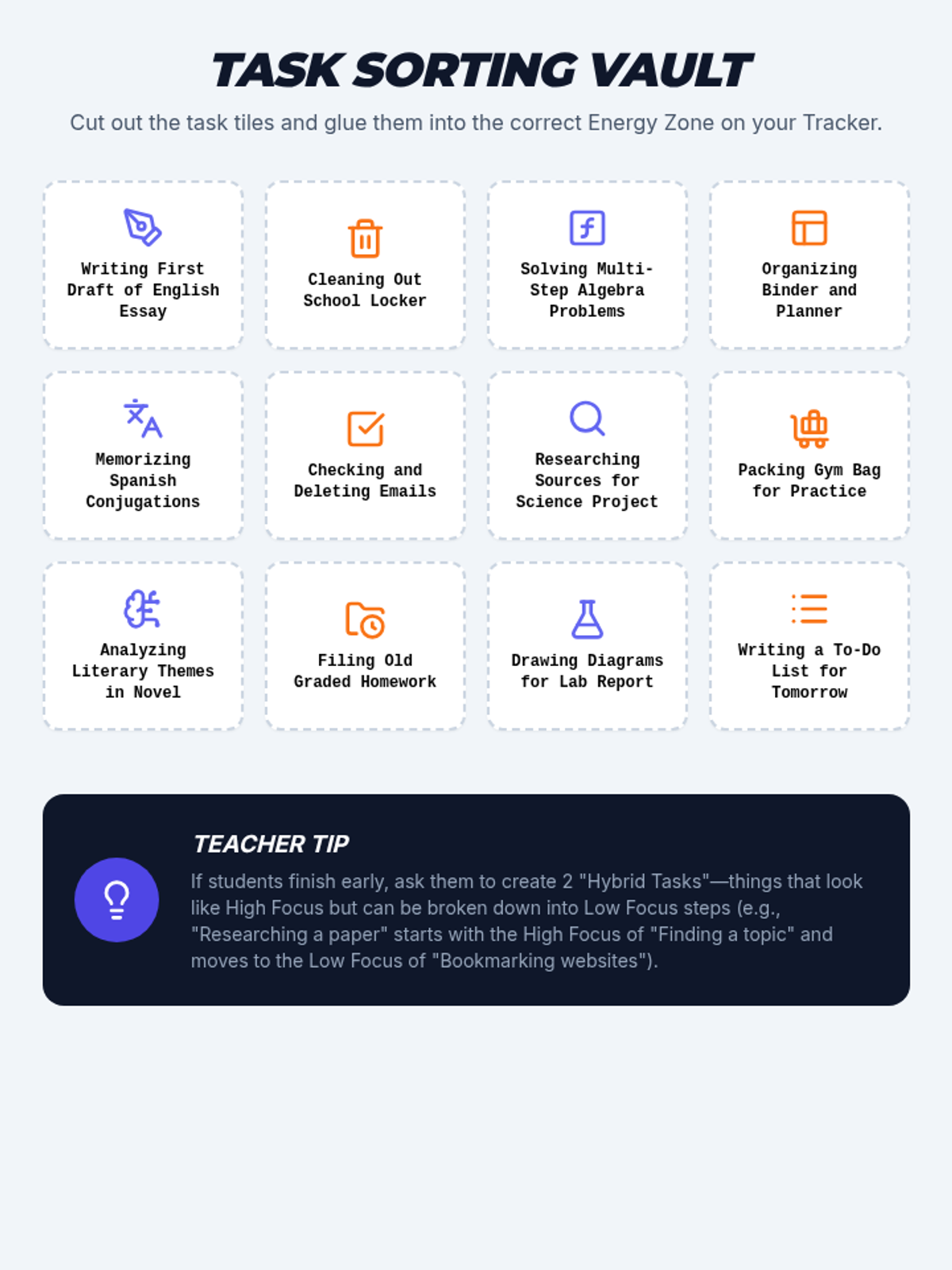
A cut-and-paste sorting activity for students to categorize common school and life tasks as either 'High Focus' or 'Low Focus' energy requirements.
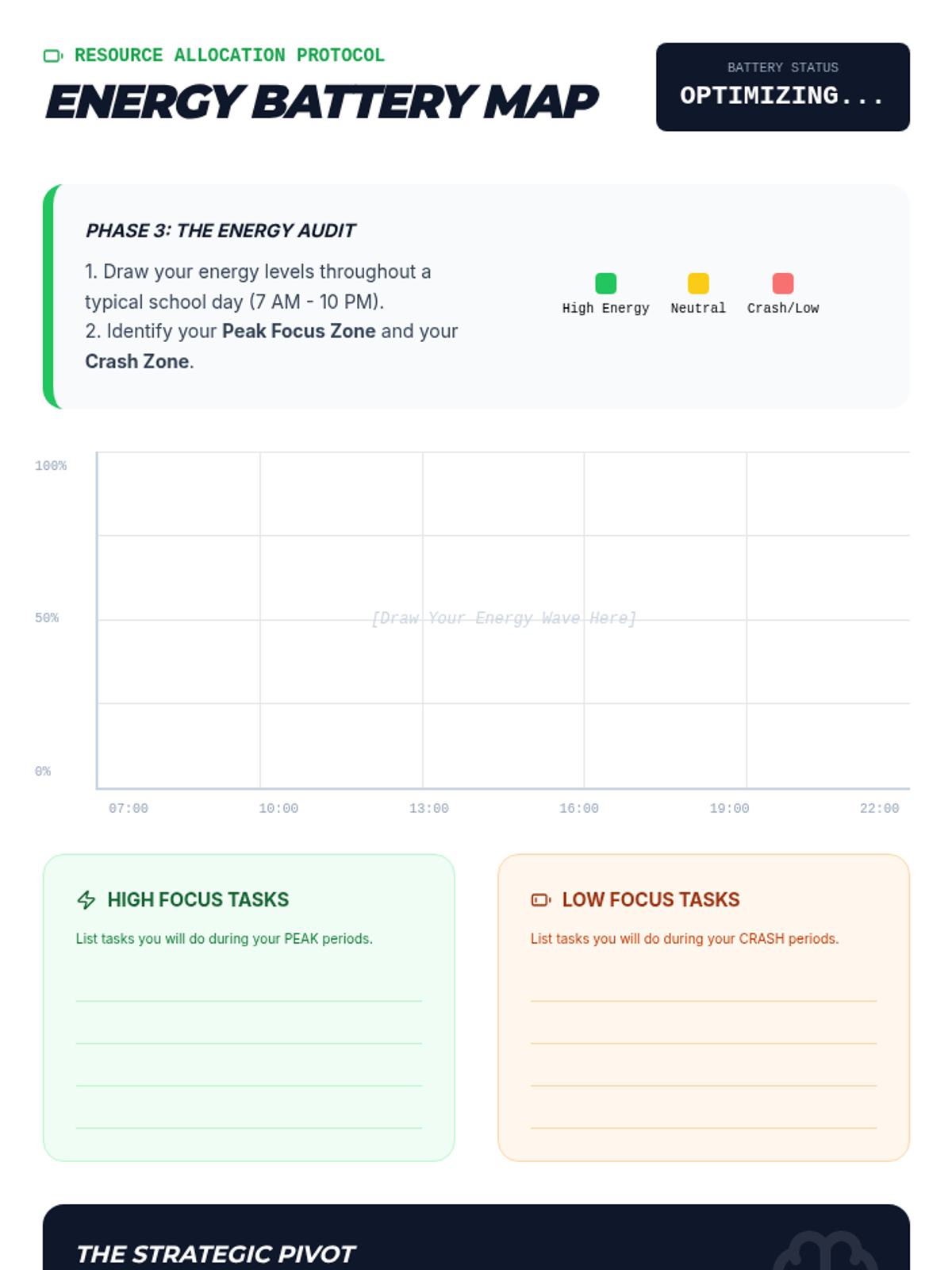
A worksheet for students to map their daily energy levels and strategically assign tasks based on their peak focus periods.
Lesson 3 presentation on energy management, teaching students to differentiate between High Focus and Low Focus tasks and to identify their personal peak energy periods.
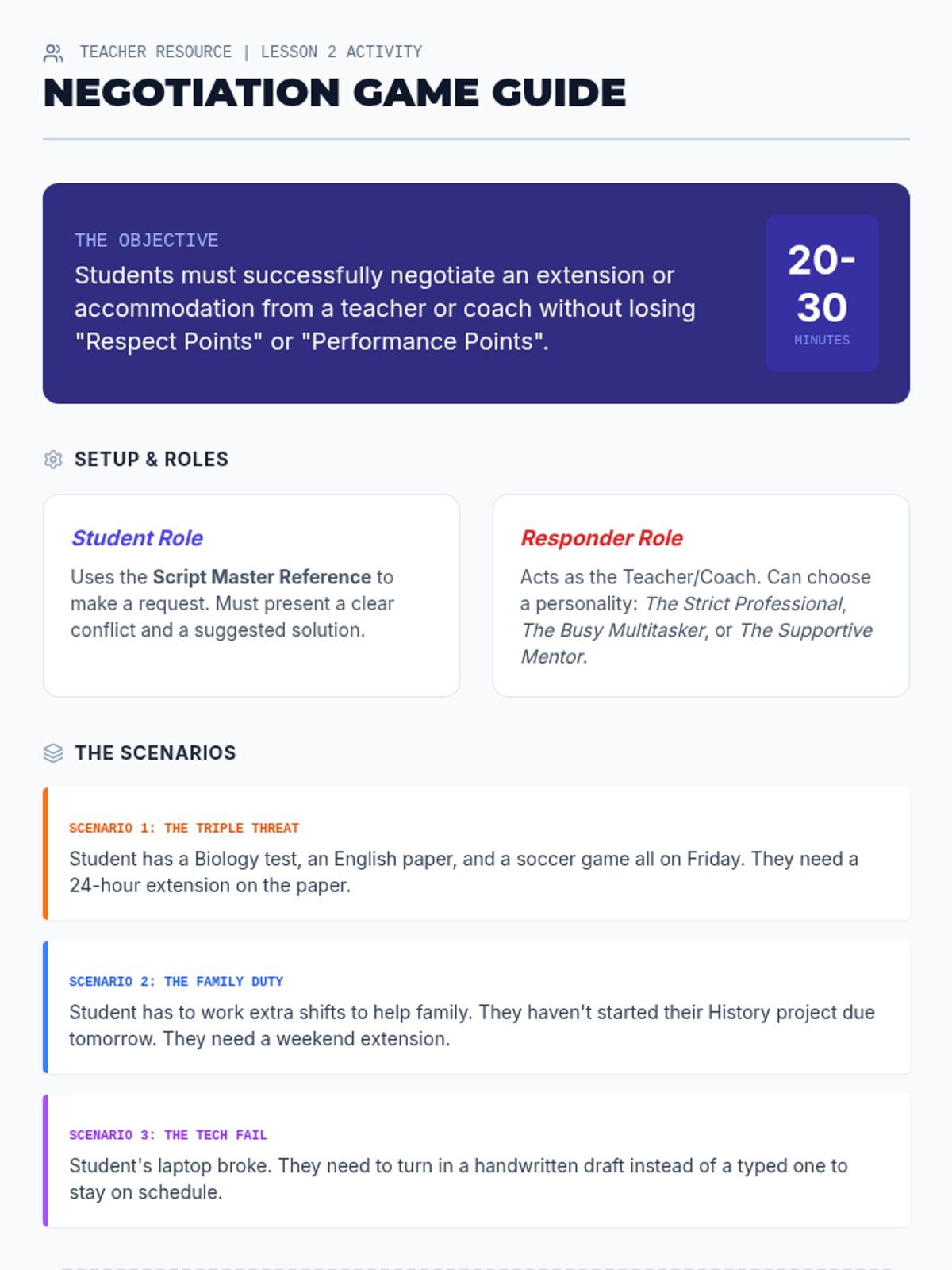
Teacher facilitation guide for the Lesson 2 role-play simulation, providing scenarios, roles, and assessment criteria for student negotiations.
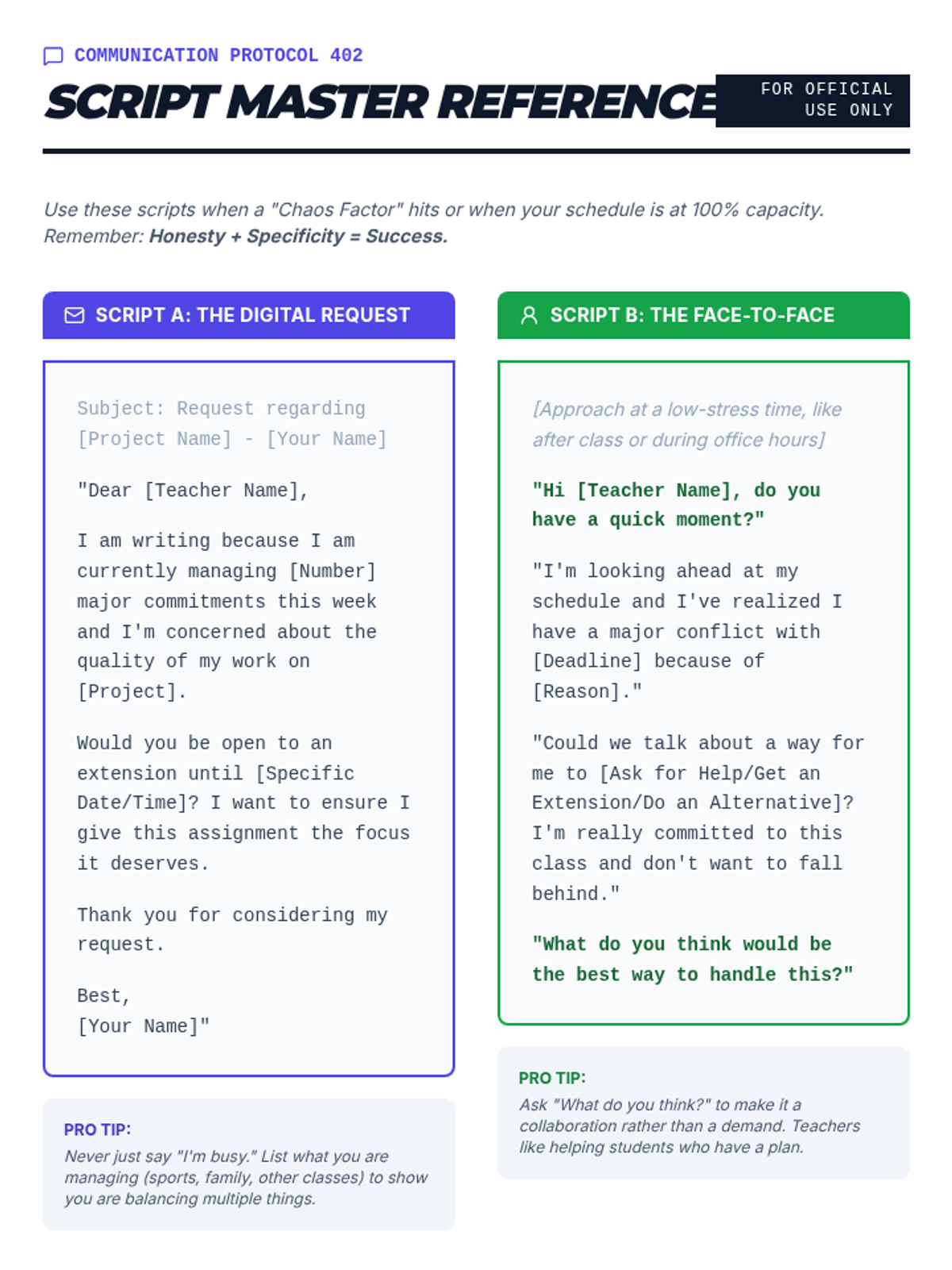
A professional communication guide for students, featuring scripted templates for digital and in-person deadline negotiations, including a practice exercise.
Slide deck for Lesson 2, teaching students the difference between hard and soft deadlines and providing a professional framework for negotiating extensions.
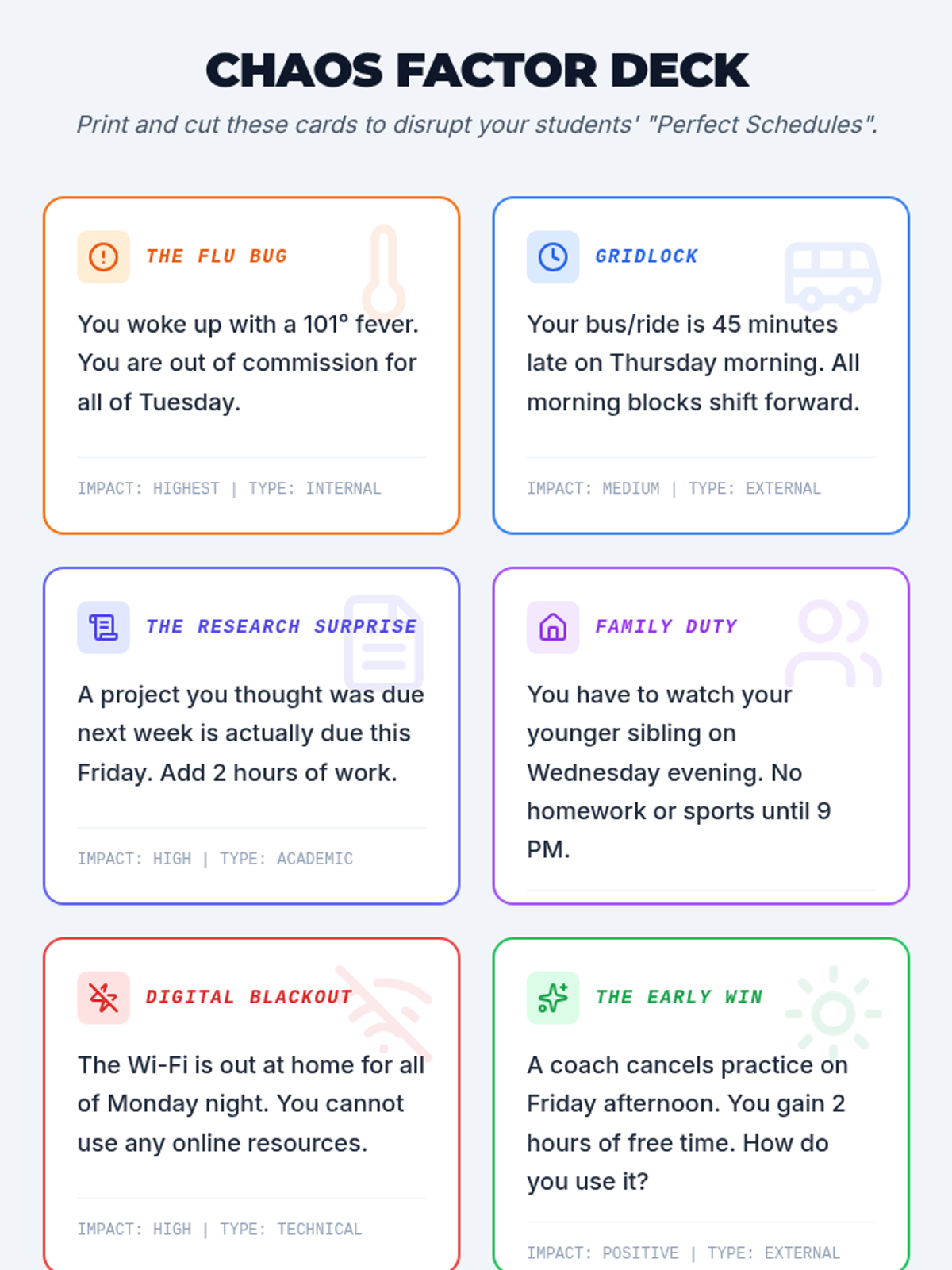
A set of printable 'Chaos Factor' cards for teachers to use in the Mission Balance simulation, featuring various disruptions to a student's schedule.
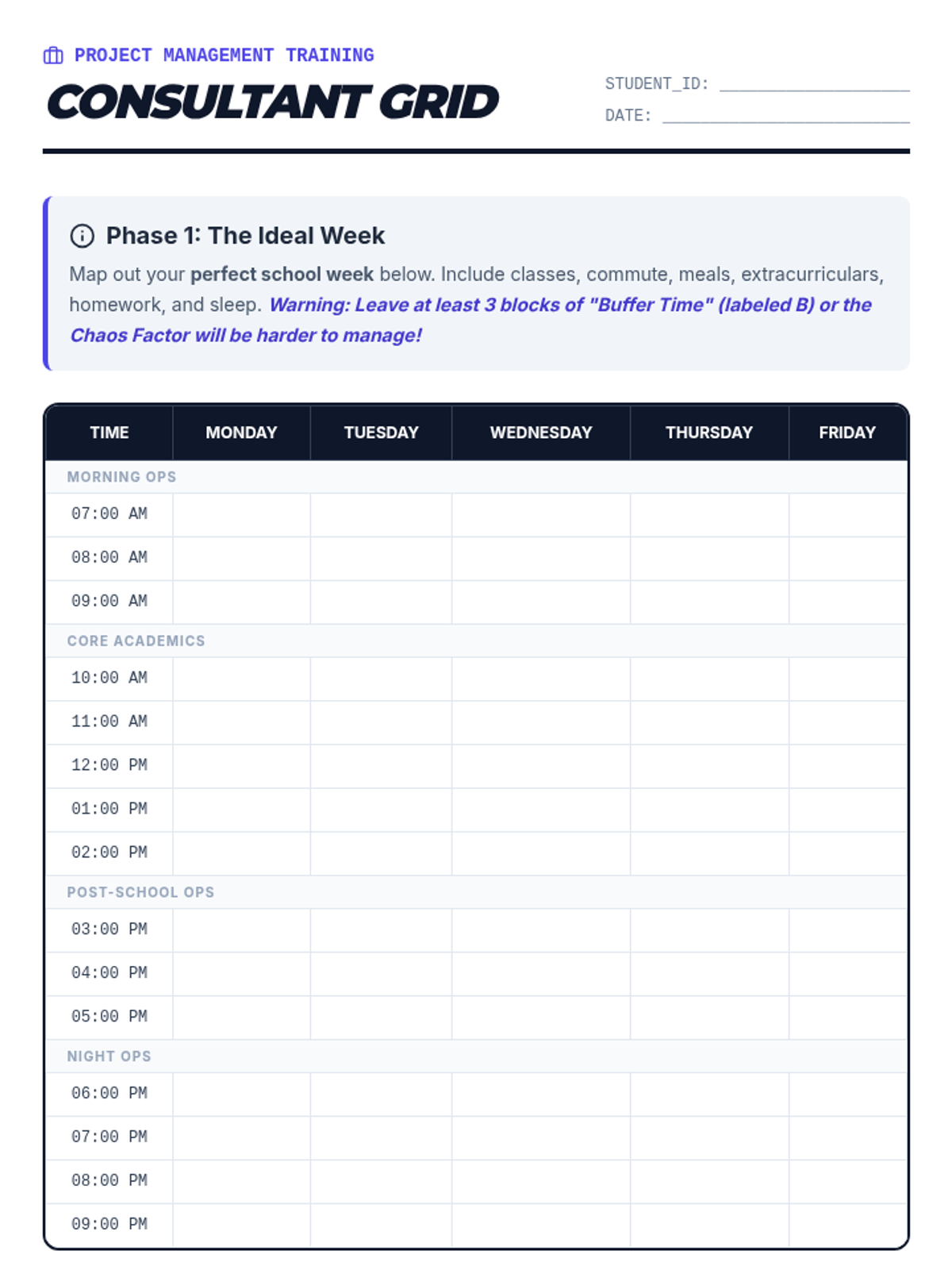
A student-facing weekly scheduling grid designed for the Mission Balance simulation, including a section for analyzing and responding to 'Chaos Factor' disruptions.
Introductory presentation for the Mission Balance sequence, teaching students about the 'Chaos Factor' and the importance of 'Buffer Time' in scheduling.
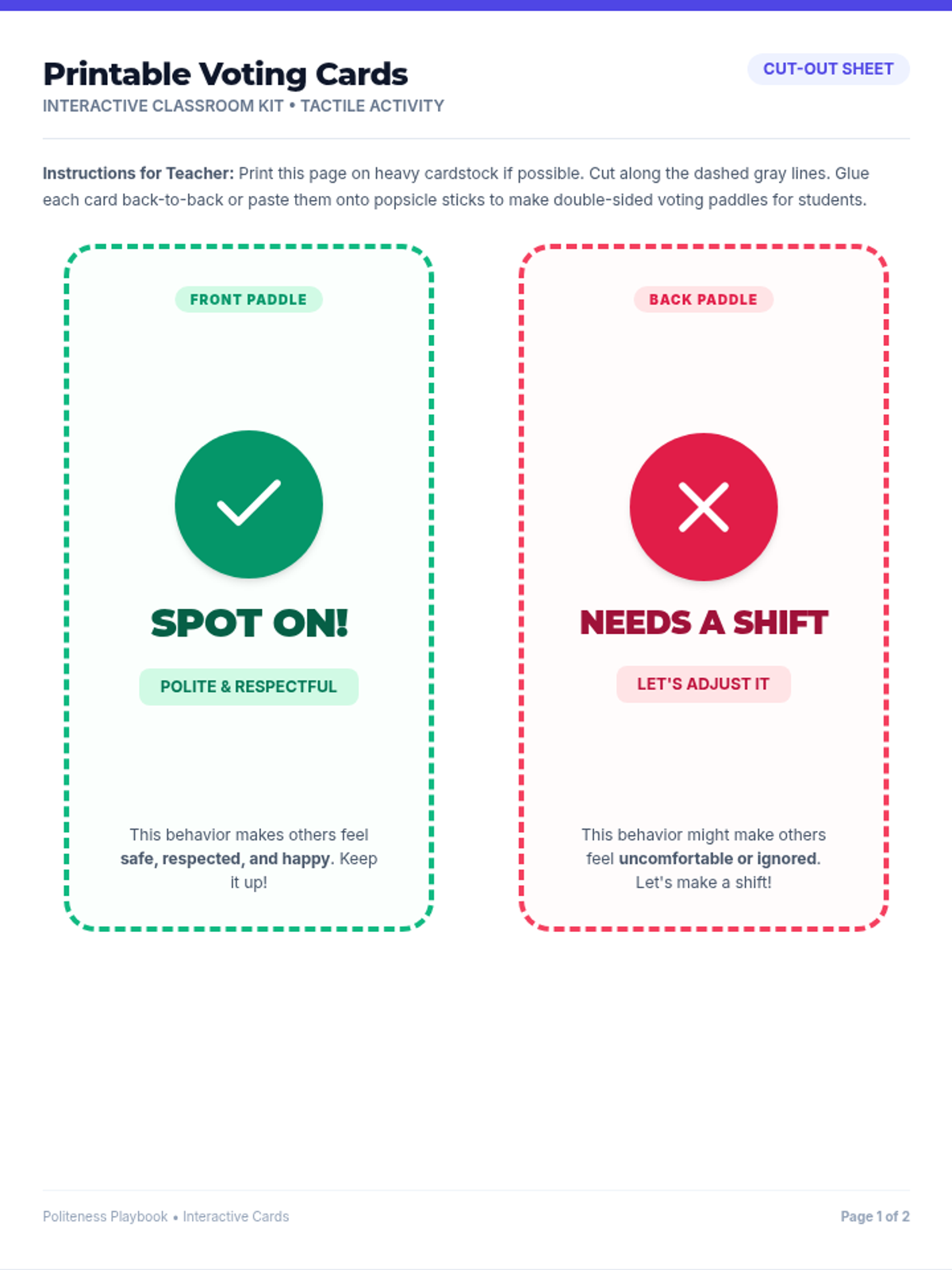
A 2-page cut-out printable featuring high-contrast green/red physical voting cards, 4 structured social scenario cards (Interrupting Ivan, Sharing Space Sarah, and 2 bonus scenarios), and 4 printable "Social Champion" recognition reward labels.
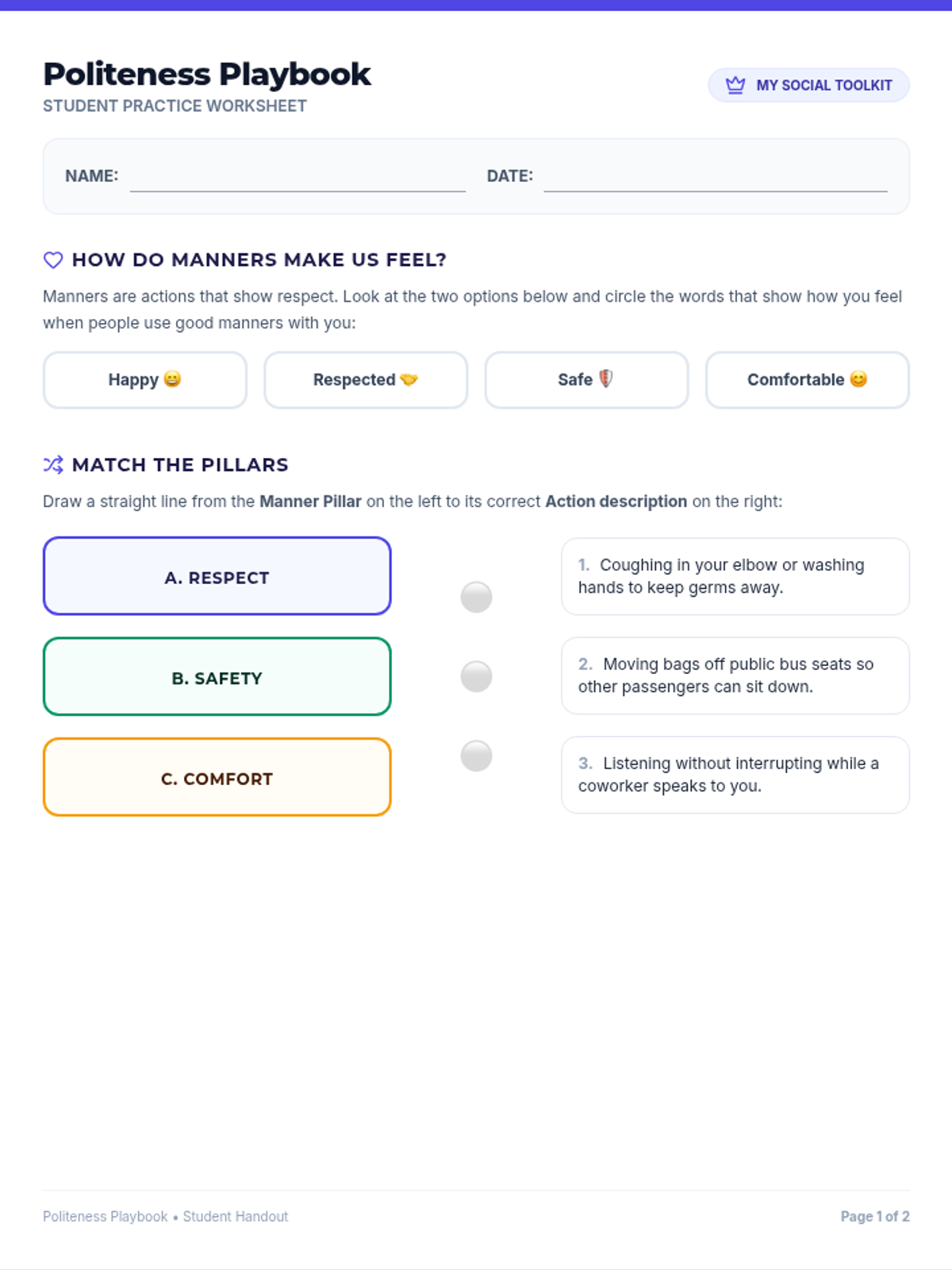
A high-accessibility 2-page print-ready student handout designed for adults with IDD. Includes clean headers, a visual manner-matching activity, clear guided reflection blocks for the case studies, and a personal goals checklist with ample physical writing space.
The final polished 16-slide presentation incorporating the two user-provided YouTube videos on Slide 5 (Manners in Action) and Slide 6 (How Rude Story) as fully integrated embeds, complete with large high-contrast visual cues and interactive discussion questions.