An all-in-one Shape Monster craft sheet for students with low cognitive abilities. Includes simplified 3-step instructions at the top and large, thick-bordered shapes (square and circles) for coloring, cutting, and assembly.
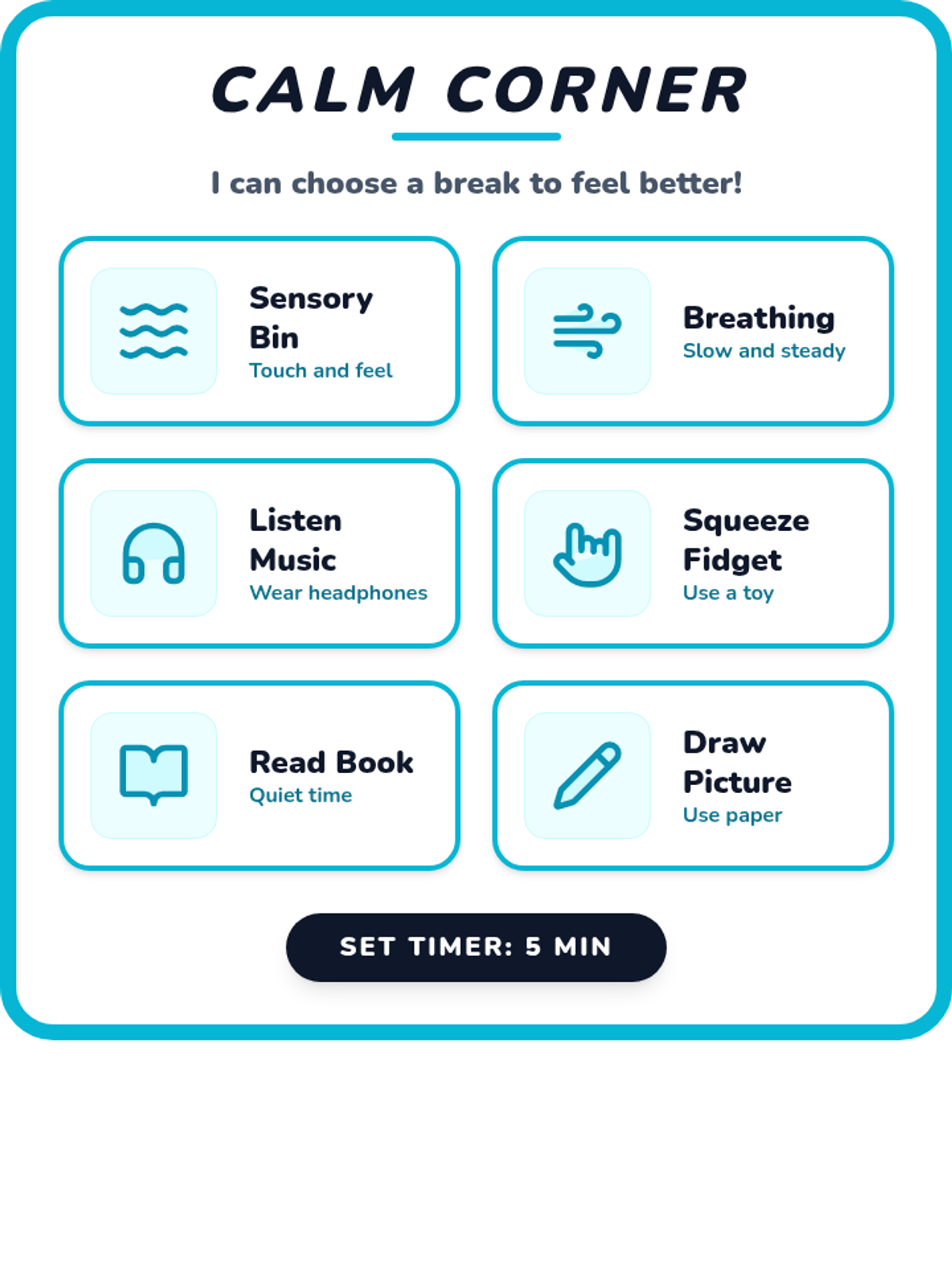
A high-contrast sensory break choice board for a 'calm corner'. Features clear icons and simplified text to help students choose a self-regulation activity when they need a sensory break.
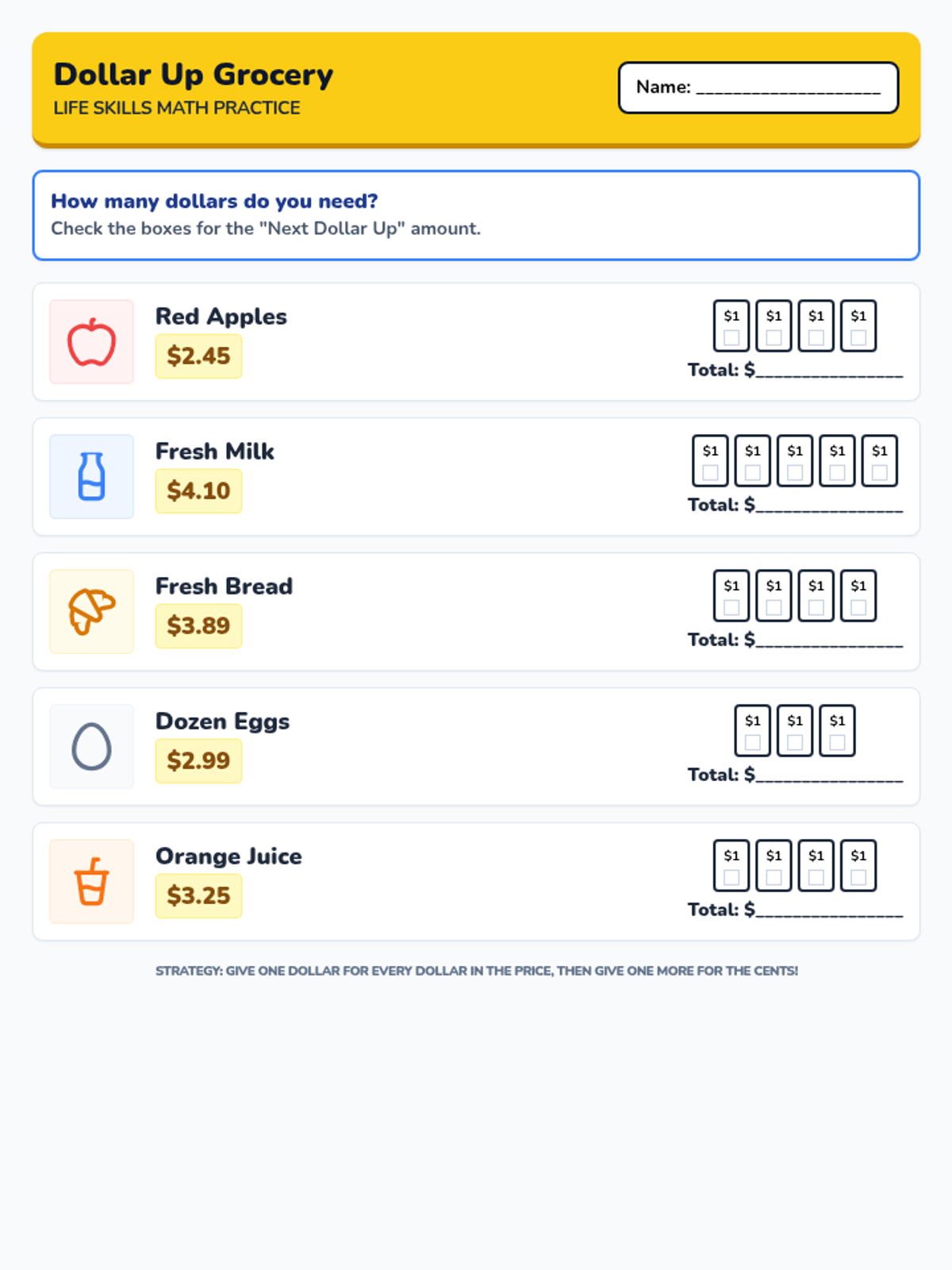
A life skills math worksheet focusing on the 'next dollar up' strategy. Students view grocery items with prices and determine how many one-dollar bills are needed to make a purchase.
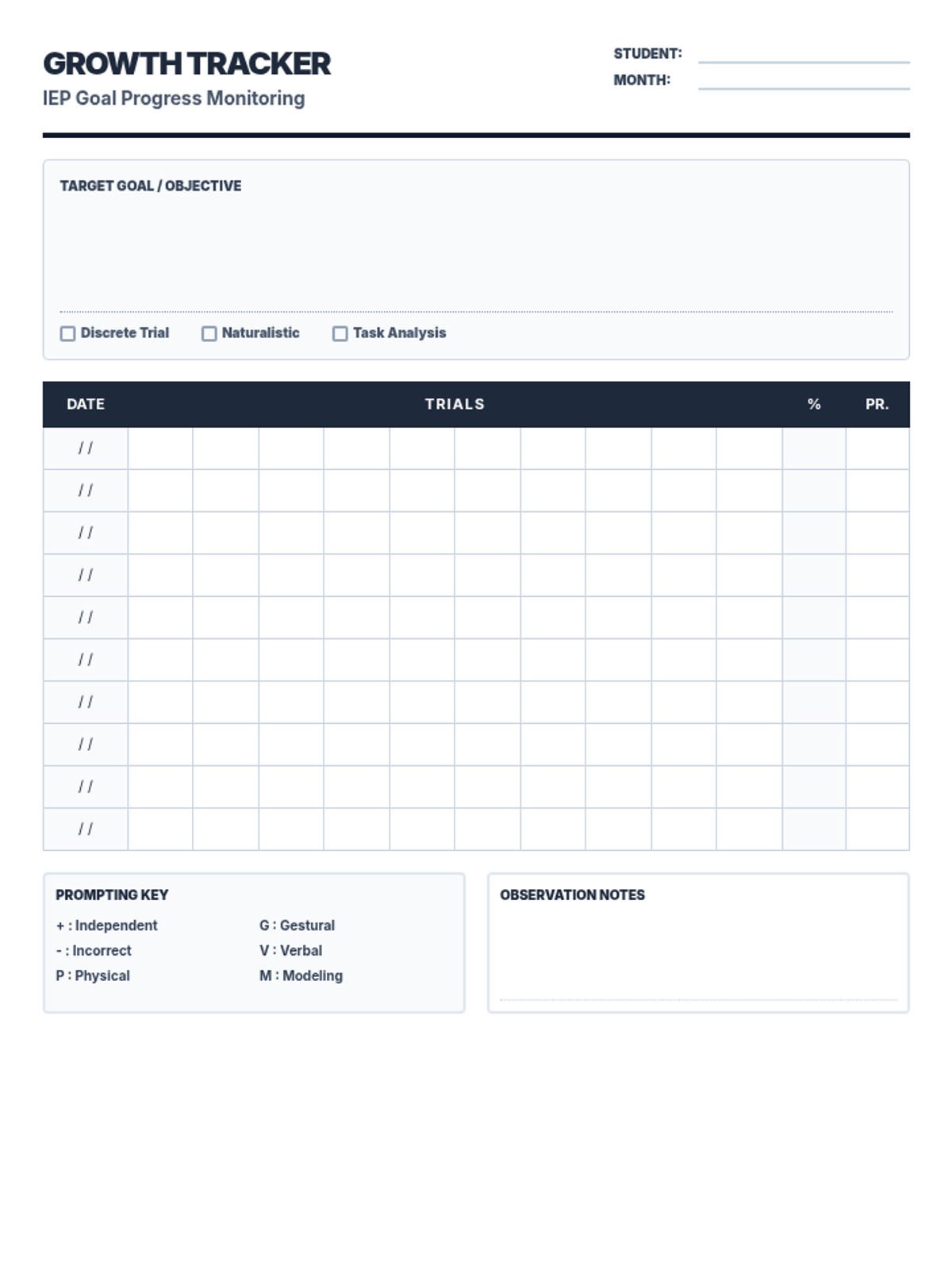
A professional IEP goal tracking data sheet for educators. Features a 10-trial grid system for easy percentage calculation, prompting key, and space for goal definitions and observation notes.
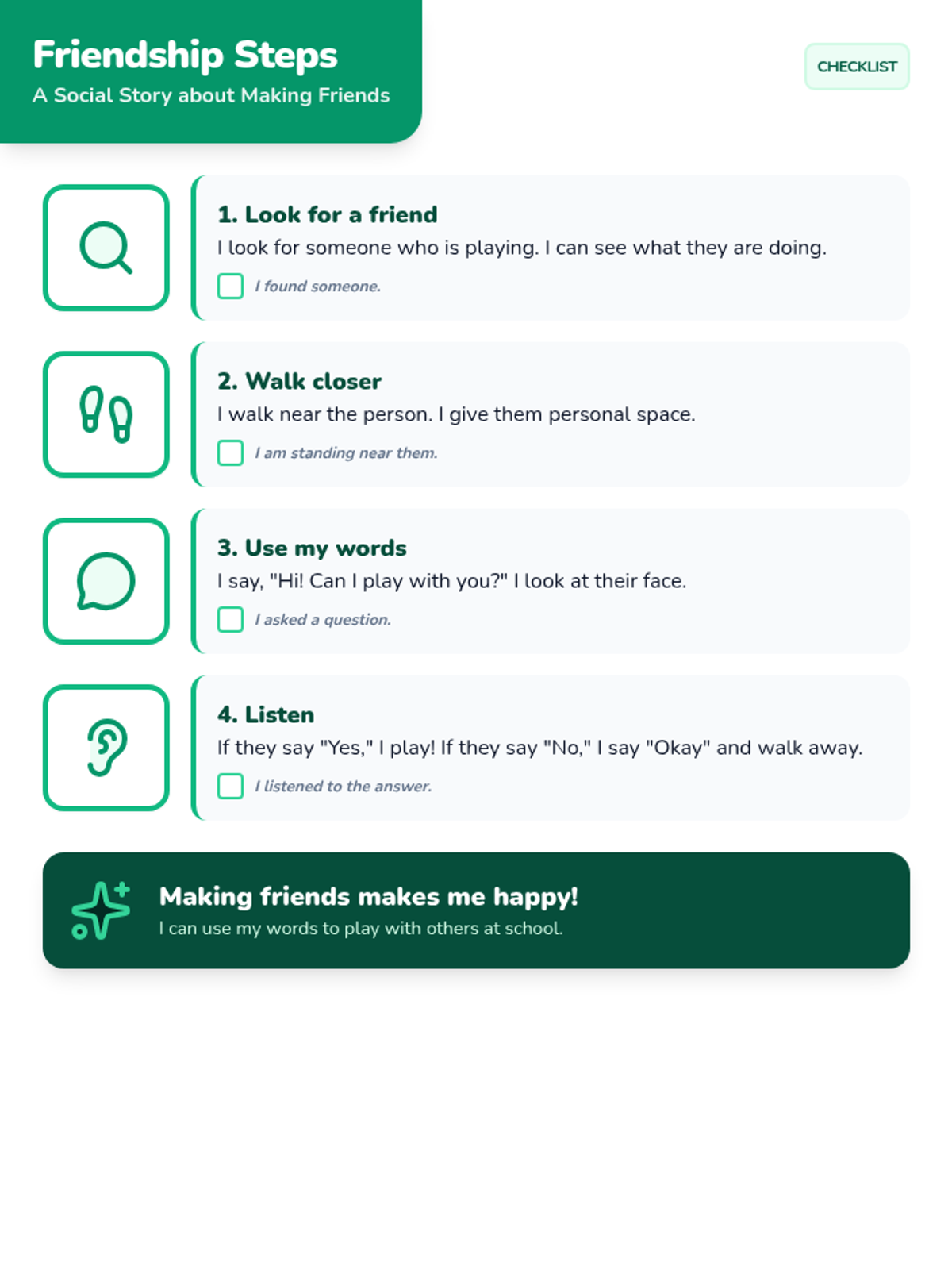
A social story designed with modified text and simple sentences to teach the social steps of initiating play and making friends. Includes a task analysis checklist for student self-monitoring.
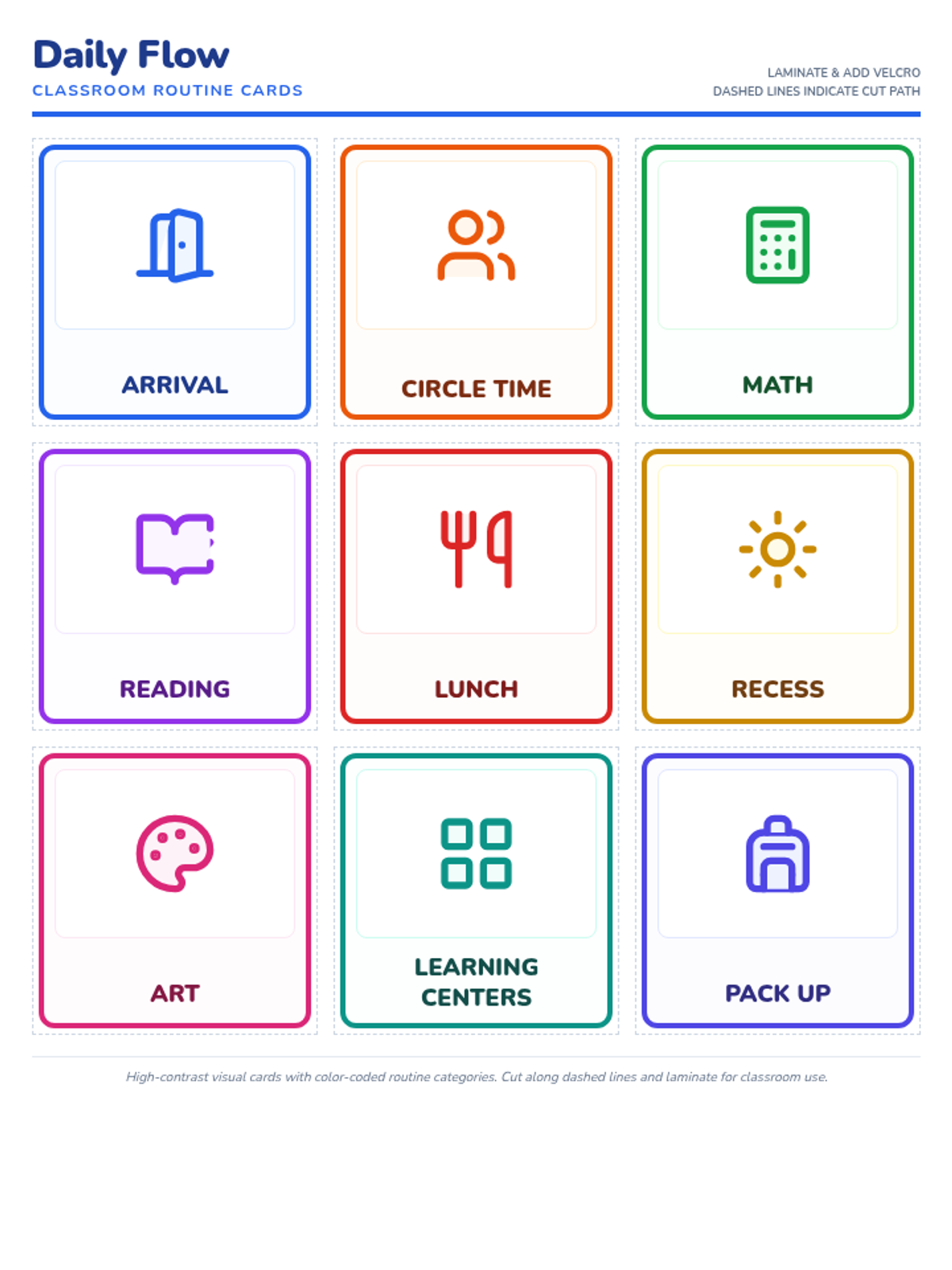
A set of 9 high-contrast visual schedule cards featuring clear icons and bold text to help students navigate daily classroom routines. Each card is color-coded for easy identification.
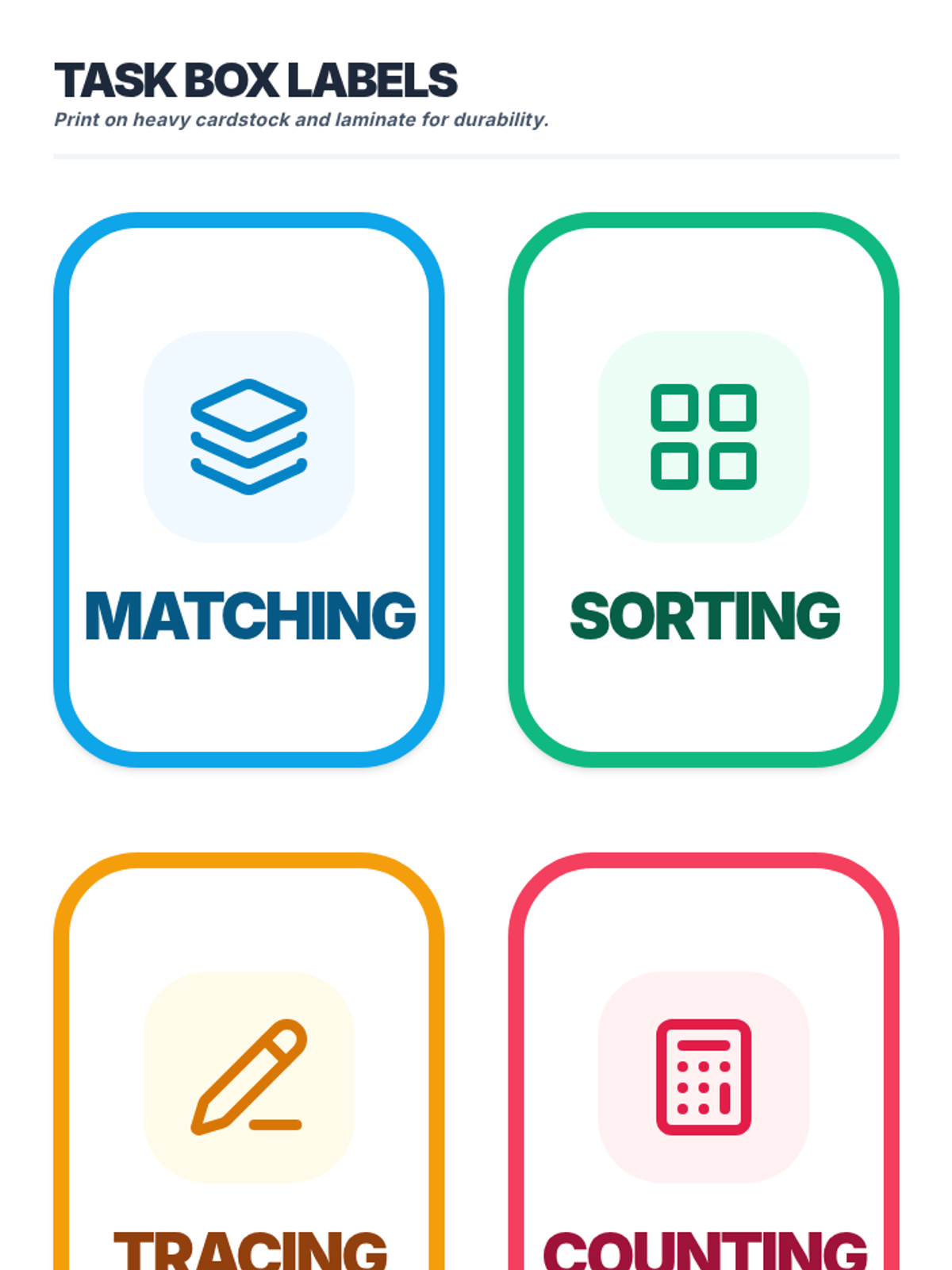
A set of 8 large, high-contrast visual labels for independent task boxes, featuring clear icons and bold text to support classroom organization and student independence.
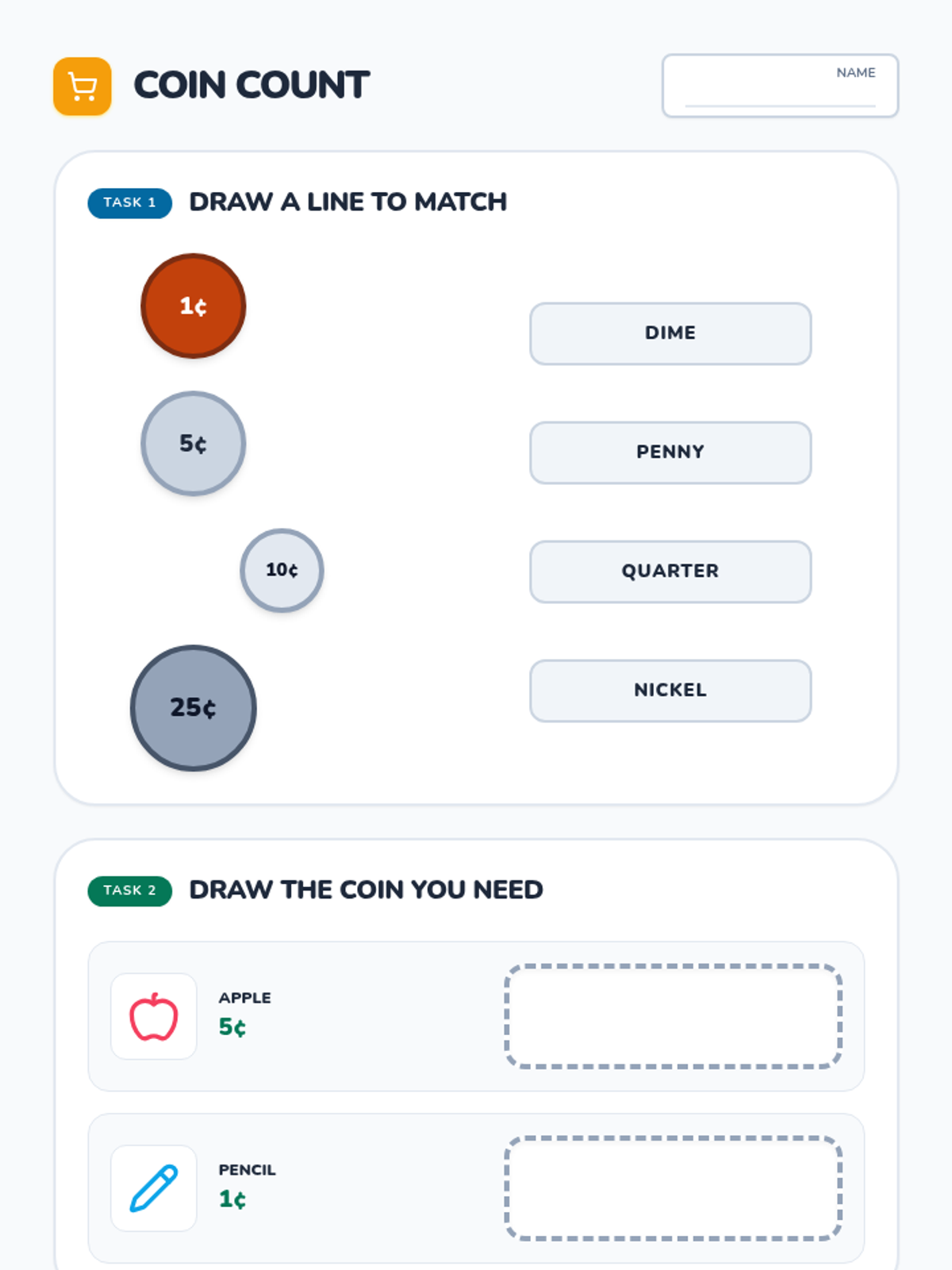
A functional life-skills math worksheet focused on coin identification, matching, and basic value application in a shopping context.
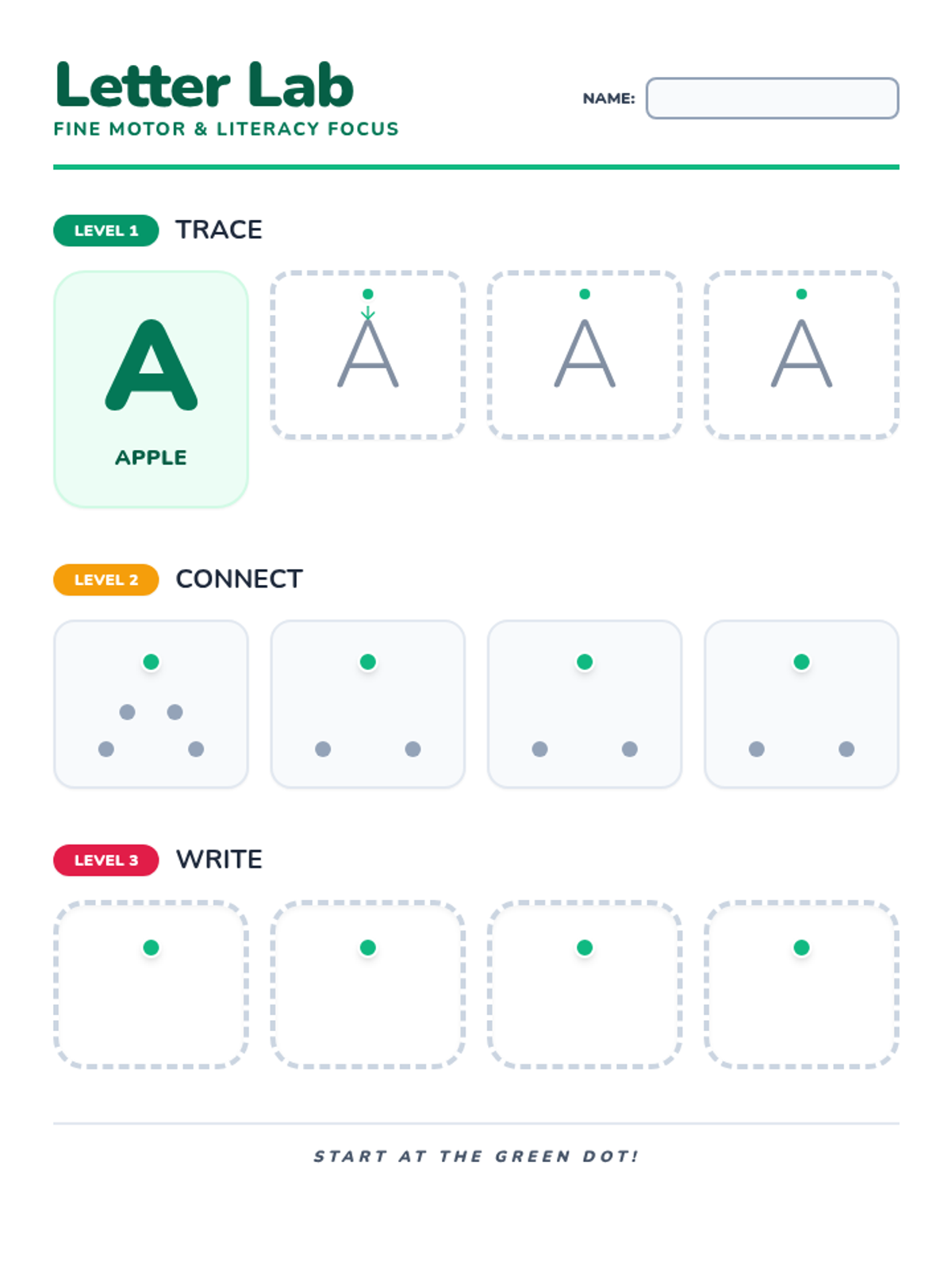
A three-tier differentiated worksheet for letter formation, transitioning from heavy tracing with visual cues to independent writing.
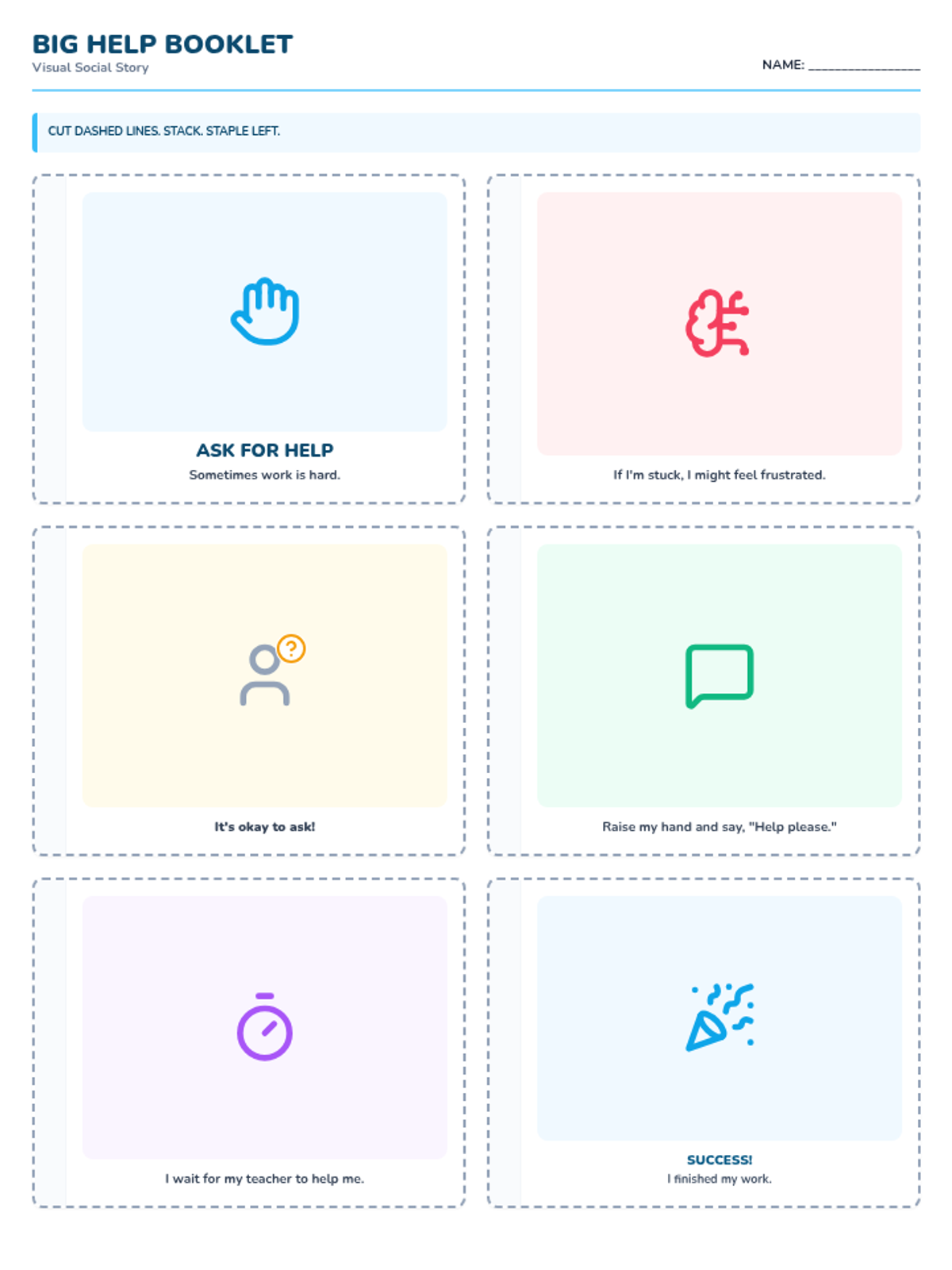
A visual social story booklet that teaches students how to recognize frustration and appropriately ask for help in the classroom.
A set of high-contrast, visually supported morning meeting slides featuring daily check-ins, calendar, weather, and schedule prompts.
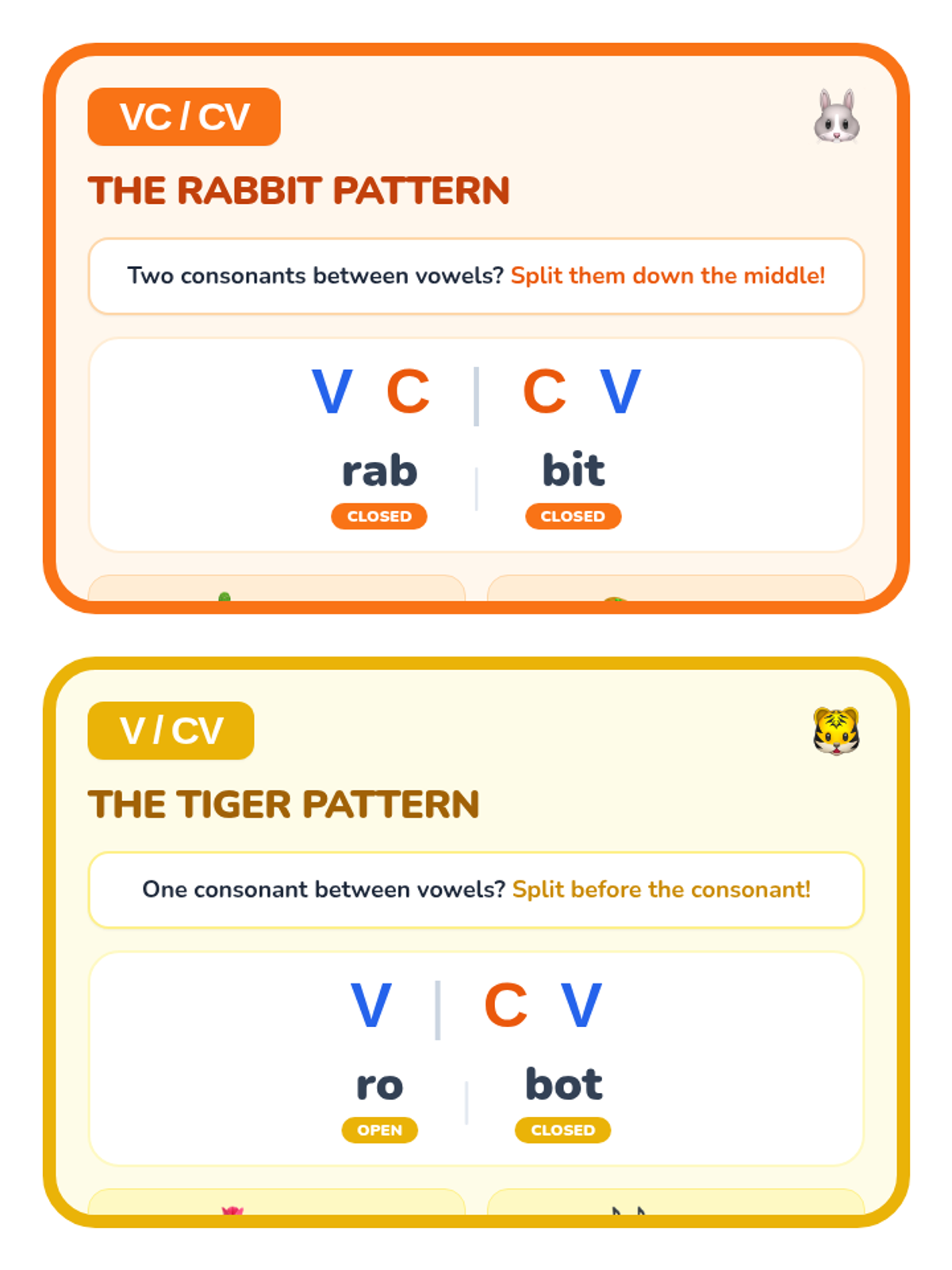
A set of four vibrant anchor charts for syllable division patterns (Rabbit, Tiger, Camel, and Lion), now formatted 2-per-page for space-efficient classroom use. Each chart features a clear rule statement, a visual syllable diagram, an example breakdown, and additional illustrated word examples.
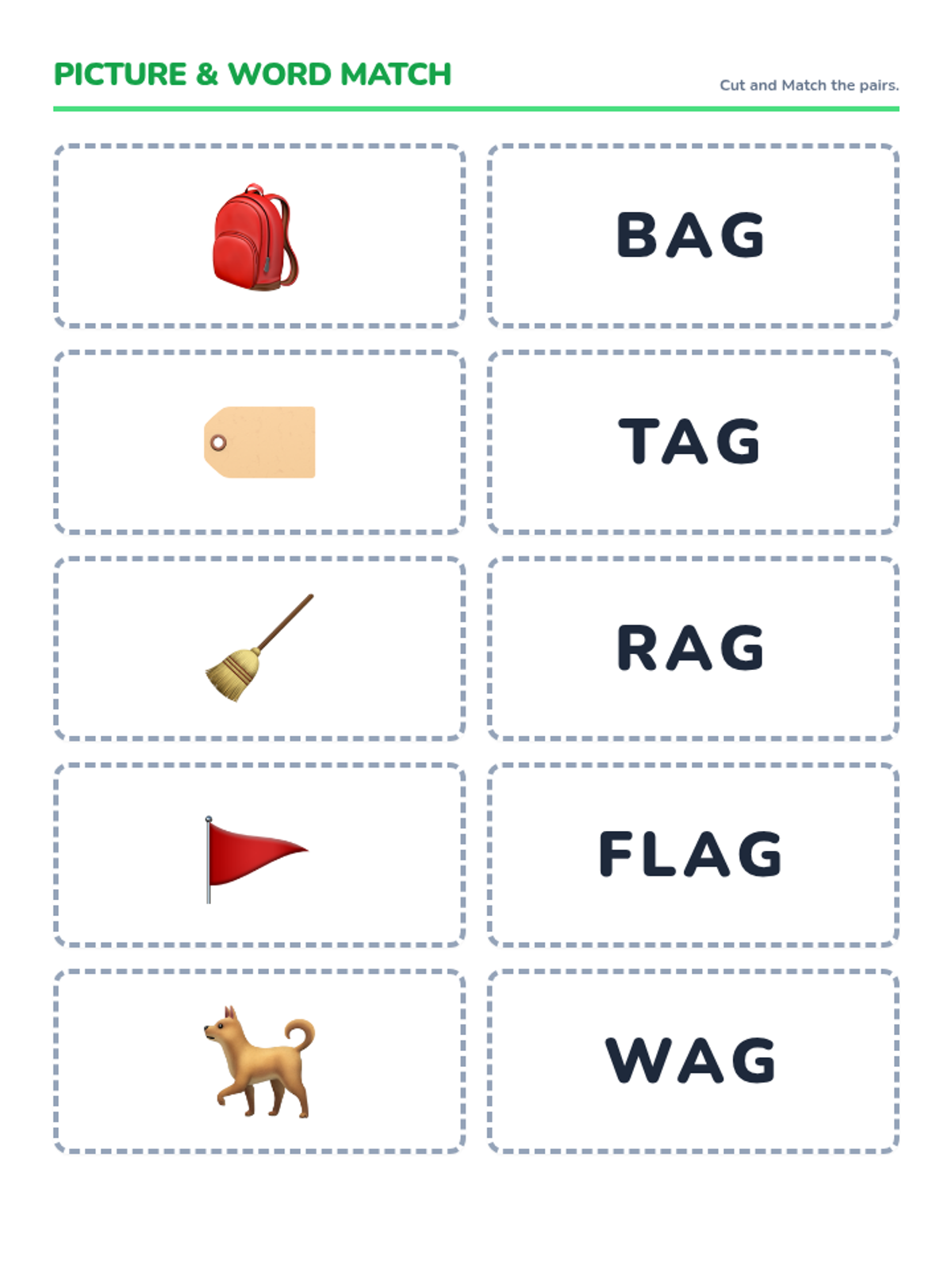
A matching game featuring the '-ag' word family. Includes two sets of cards: one with icons and one with words. Students can play memory or simple matching games to reinforce the connection between visual concepts and their written forms.
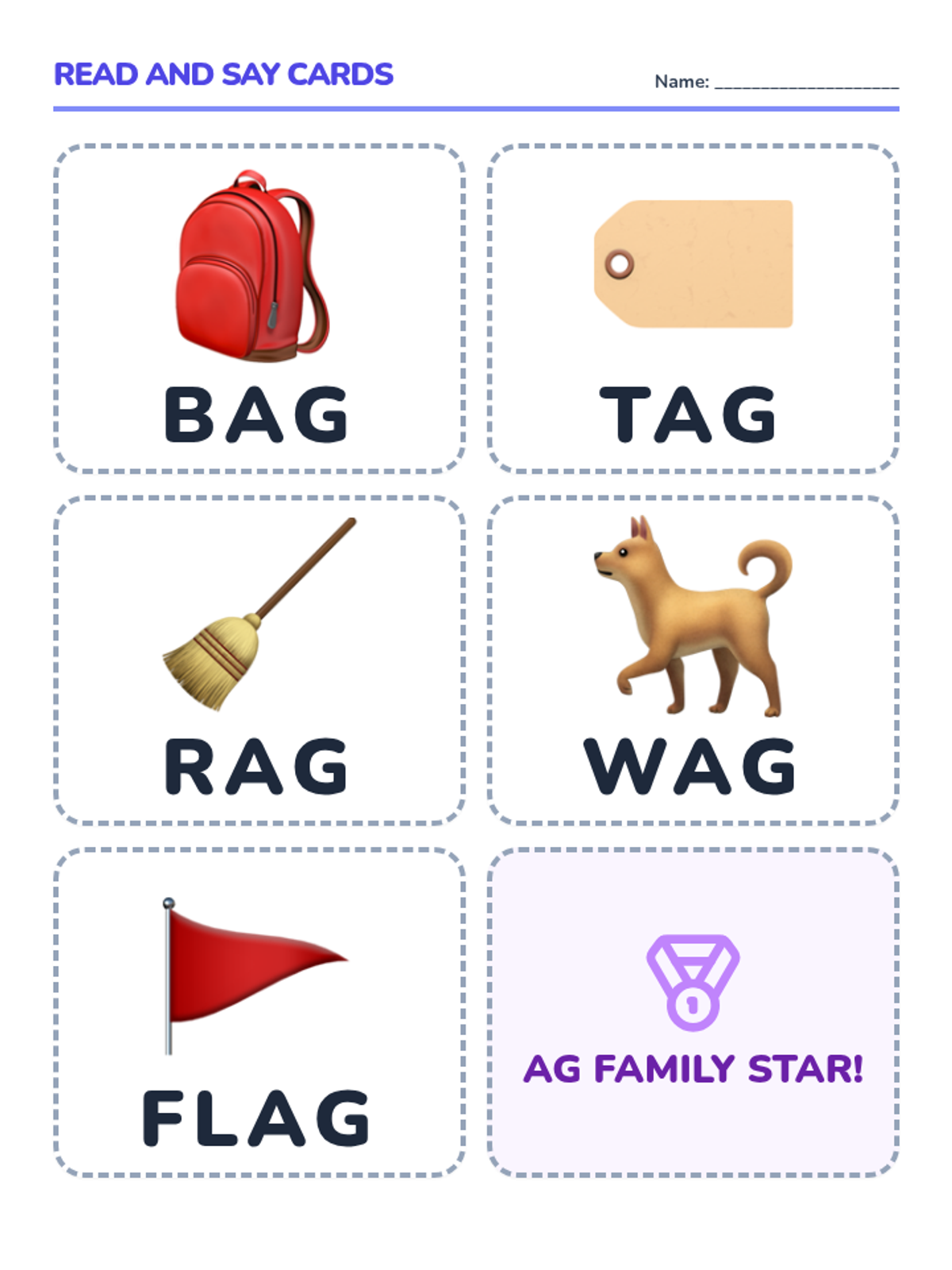
A set of large, high-contrast flashcards for the '-ag' word family, featuring both a clear icon and the word. Designed for reading practice and building sight word recognition for students with significant cognitive needs.
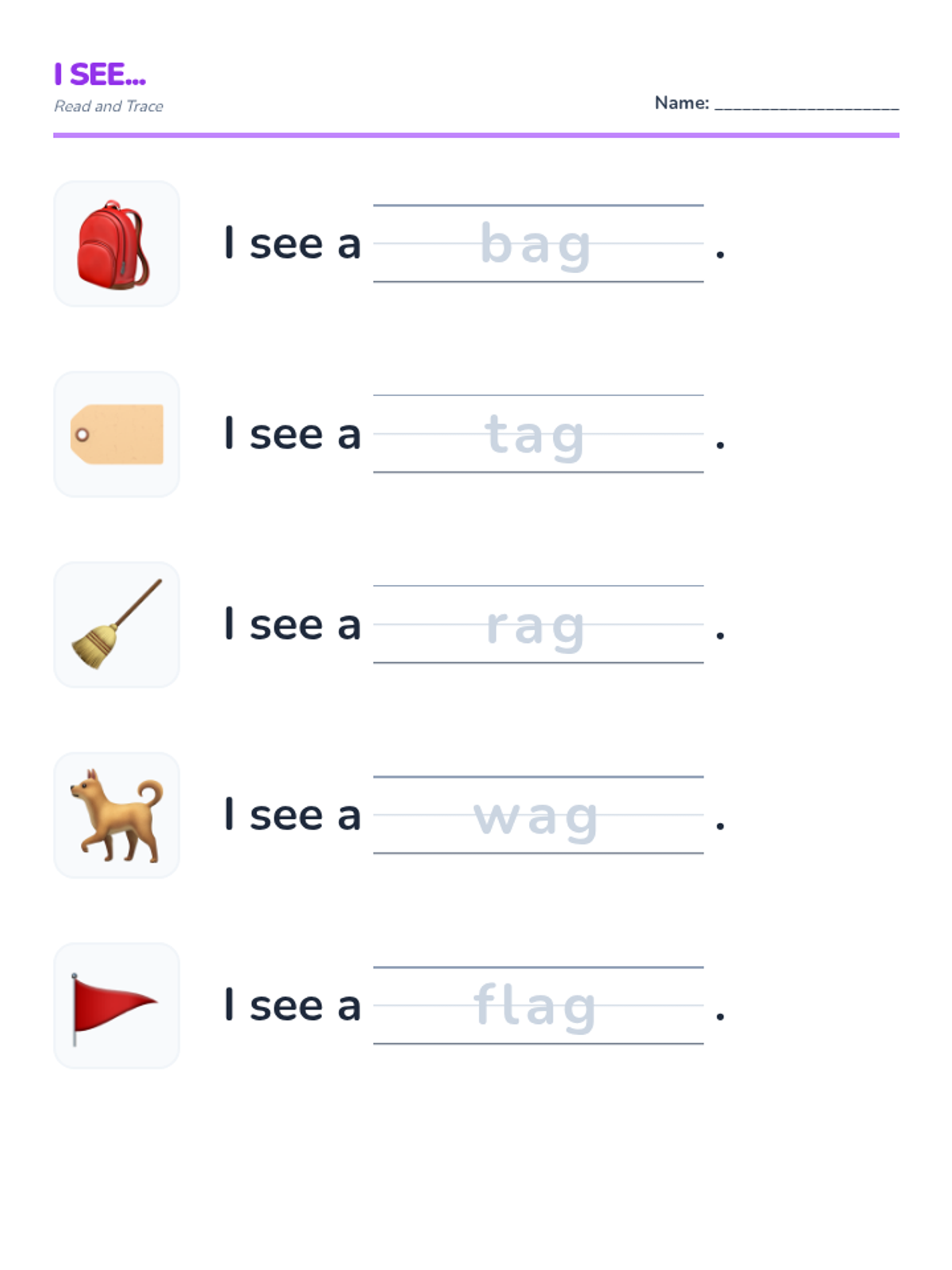
A simple fill-in-the-blank sentence worksheet for the '-ag' word family. Each sentence follows the repetitive 'I see a...' structure with a ghosted word on primary lines and a corresponding visual icon to support reading and writing practice.
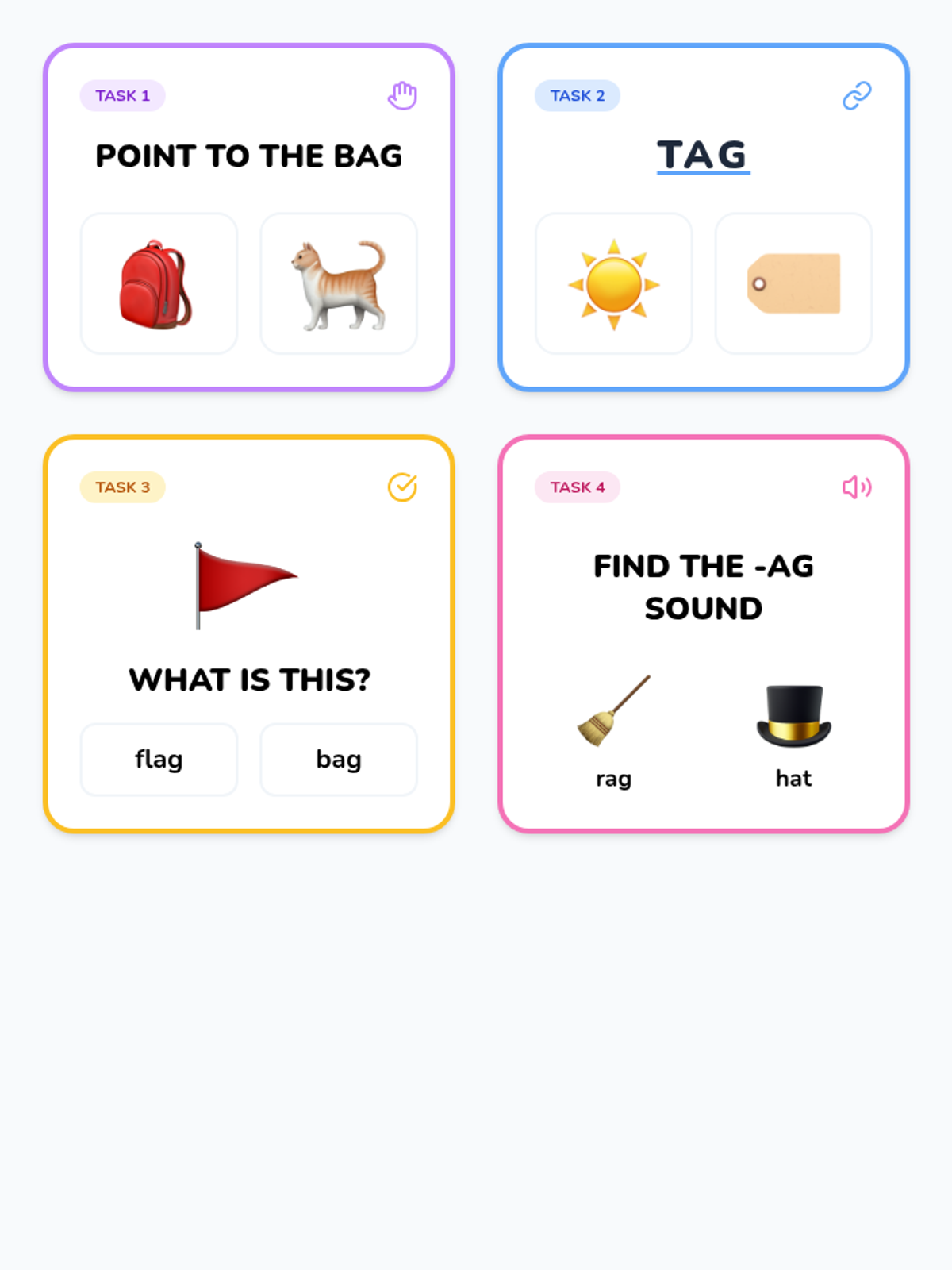
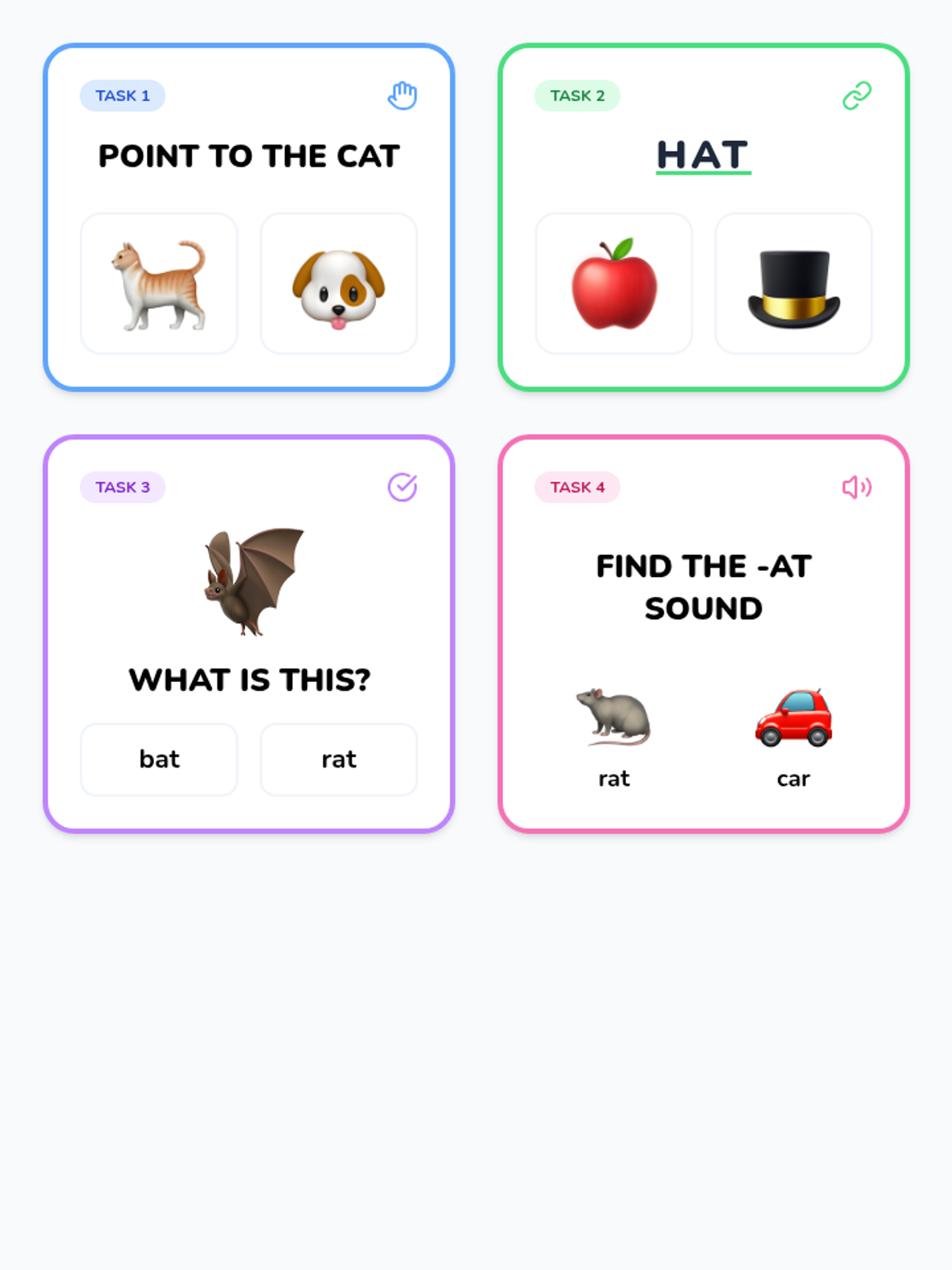
A set of four instructional task cards designed for one-on-one or small group intervention. Each card focuses on a different receptive language skill: pointing, matching, identification, and phoneme isolation.
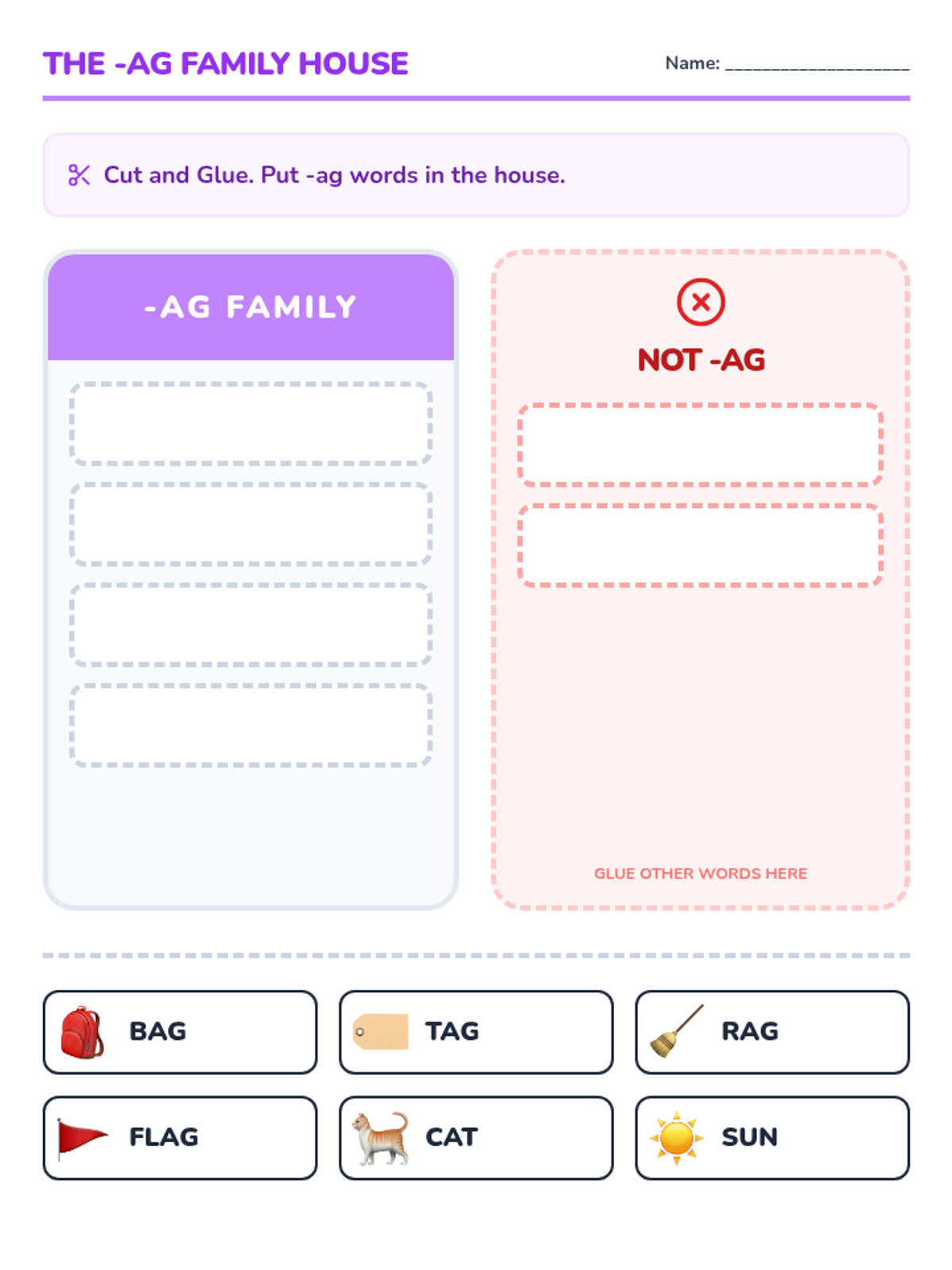
A cut-and-paste sorting activity where the student categorizes pictures as belonging to the '-ag' word family house or the 'not -ag' area. This builds phonemic awareness and visual discrimination. Includes improved contrast and a single-page layout for easier use.
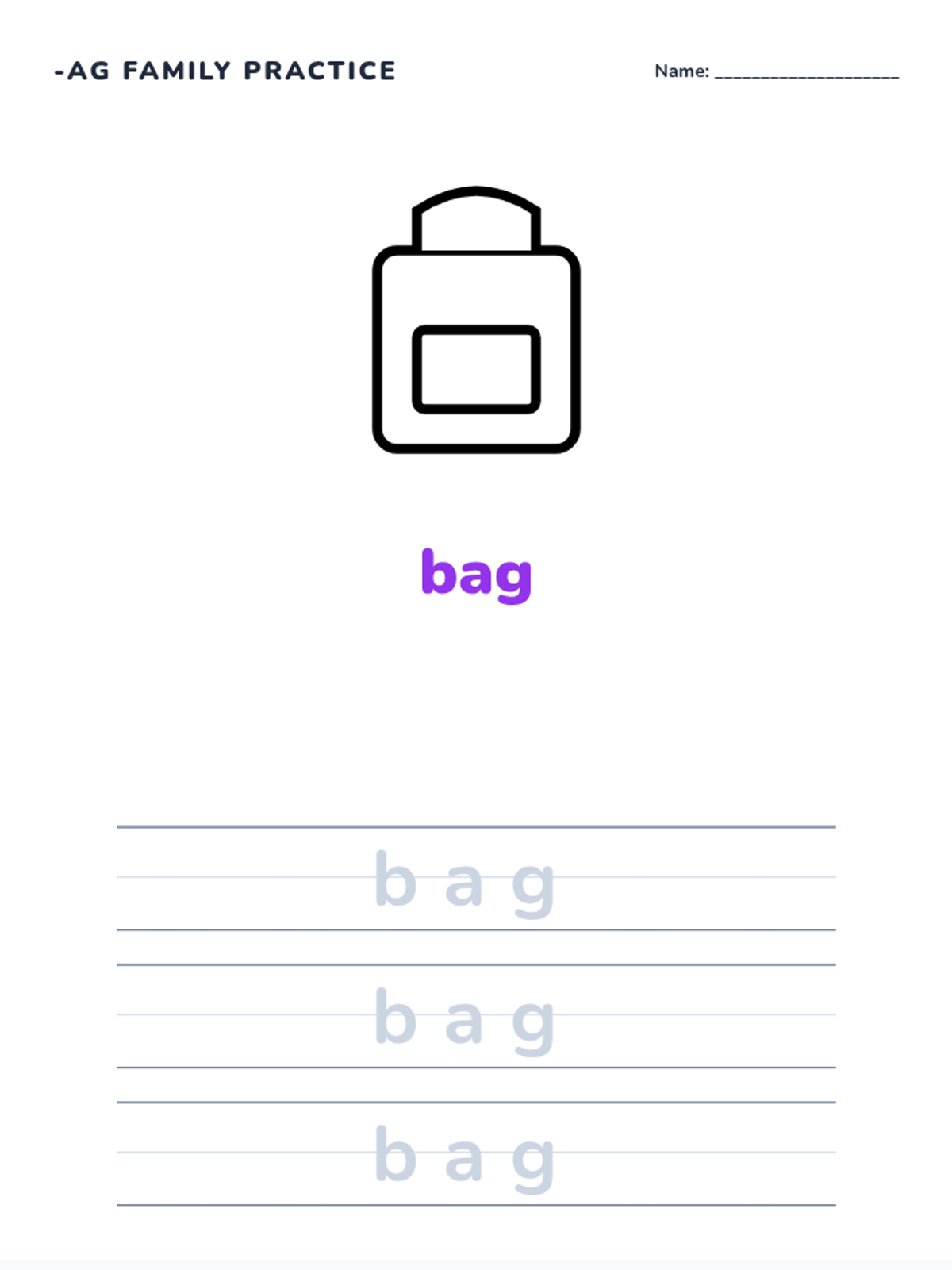
A multi-page coloring and tracing book for the '-ag' word family, providing extended independent practice time. Each page features a large icon and multiple tracing lines to build fine motor skills and word recognition. Each page includes improved tracing lines and clear coloring areas.
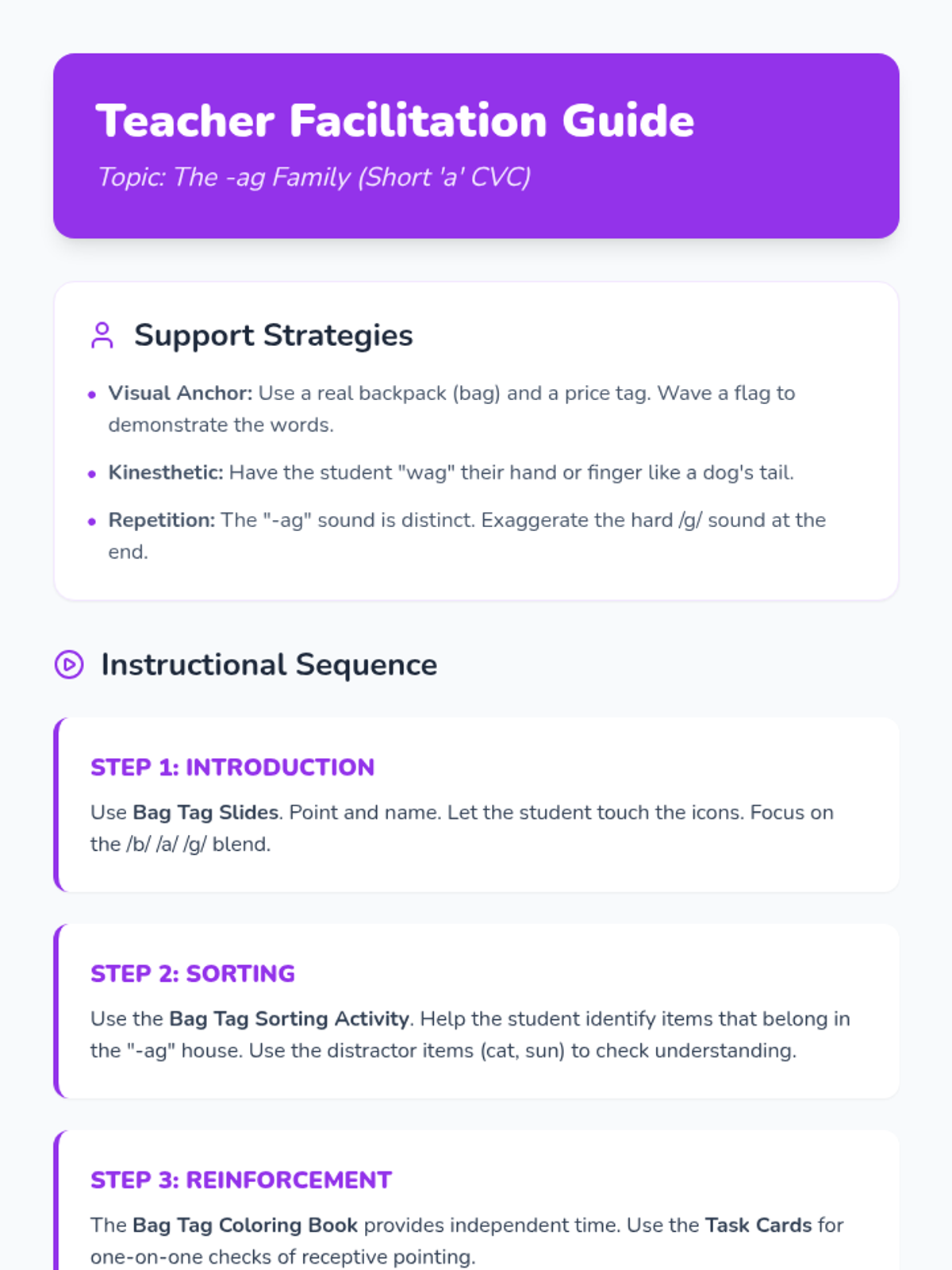
A teacher-facing guide providing specific instructional strategies and pacing advice for teaching '-ag' CVC words to a student with significant cognitive and language needs.
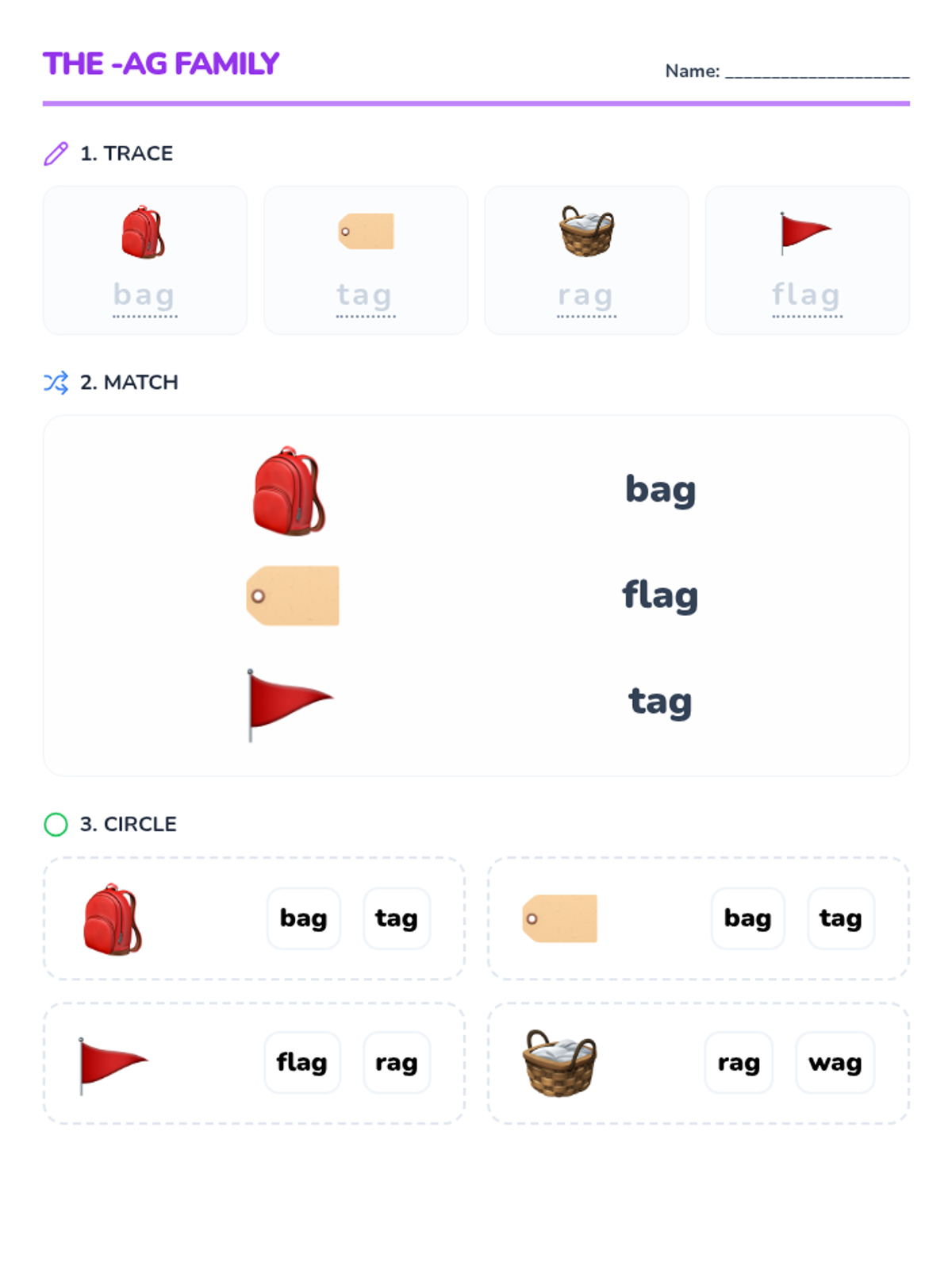
A highly visual phonics worksheet for the '-ag' word family, featuring tracing, matching, and identification exercises specifically designed for a student with significant cognitive and language delays. Condenses multiple activities onto a single page for efficient printing.
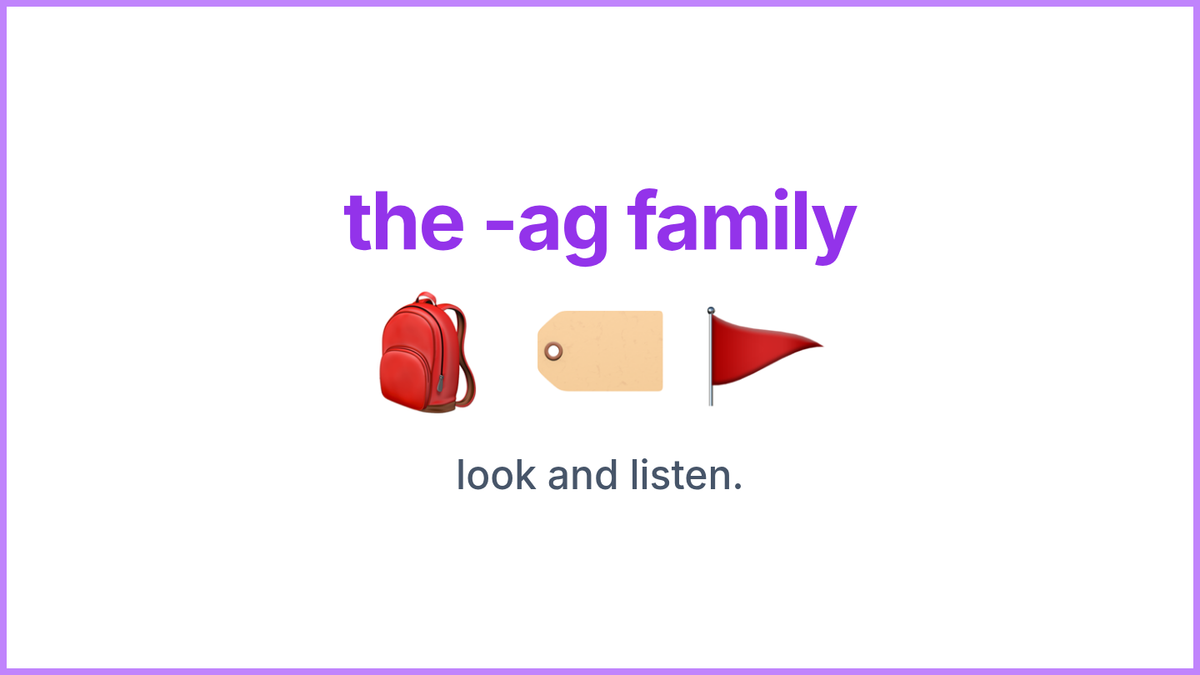
Visual introductory slides for the '-ag' CVC word family, featuring large emojis, color-coded phonemes, and clear, lowercase text to support a non-verbal ESL student with cognitive challenges.
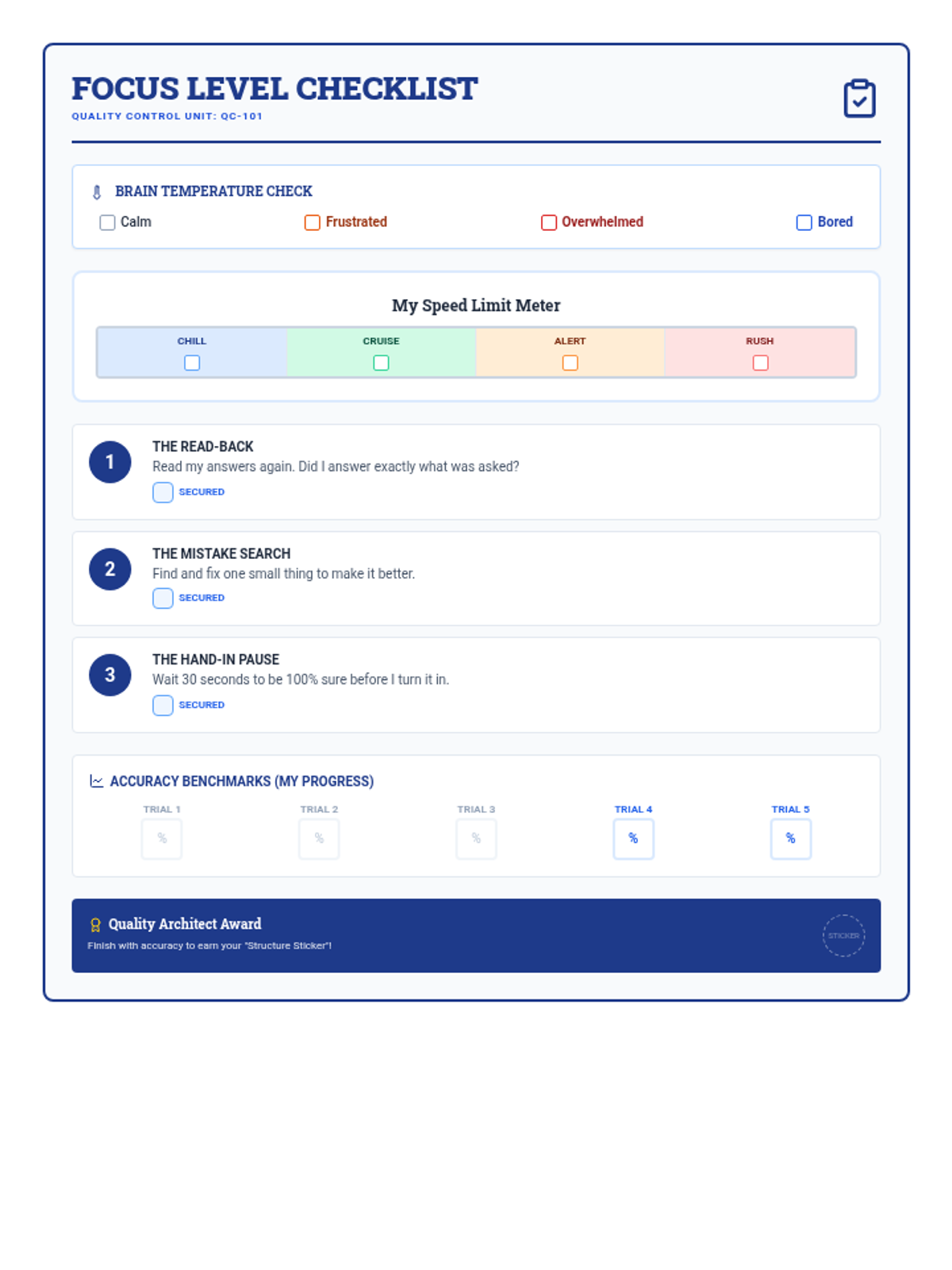
A daily self-monitoring checklist for the student to manage work speed, perform quality checks, and monitor emotional focus levels.
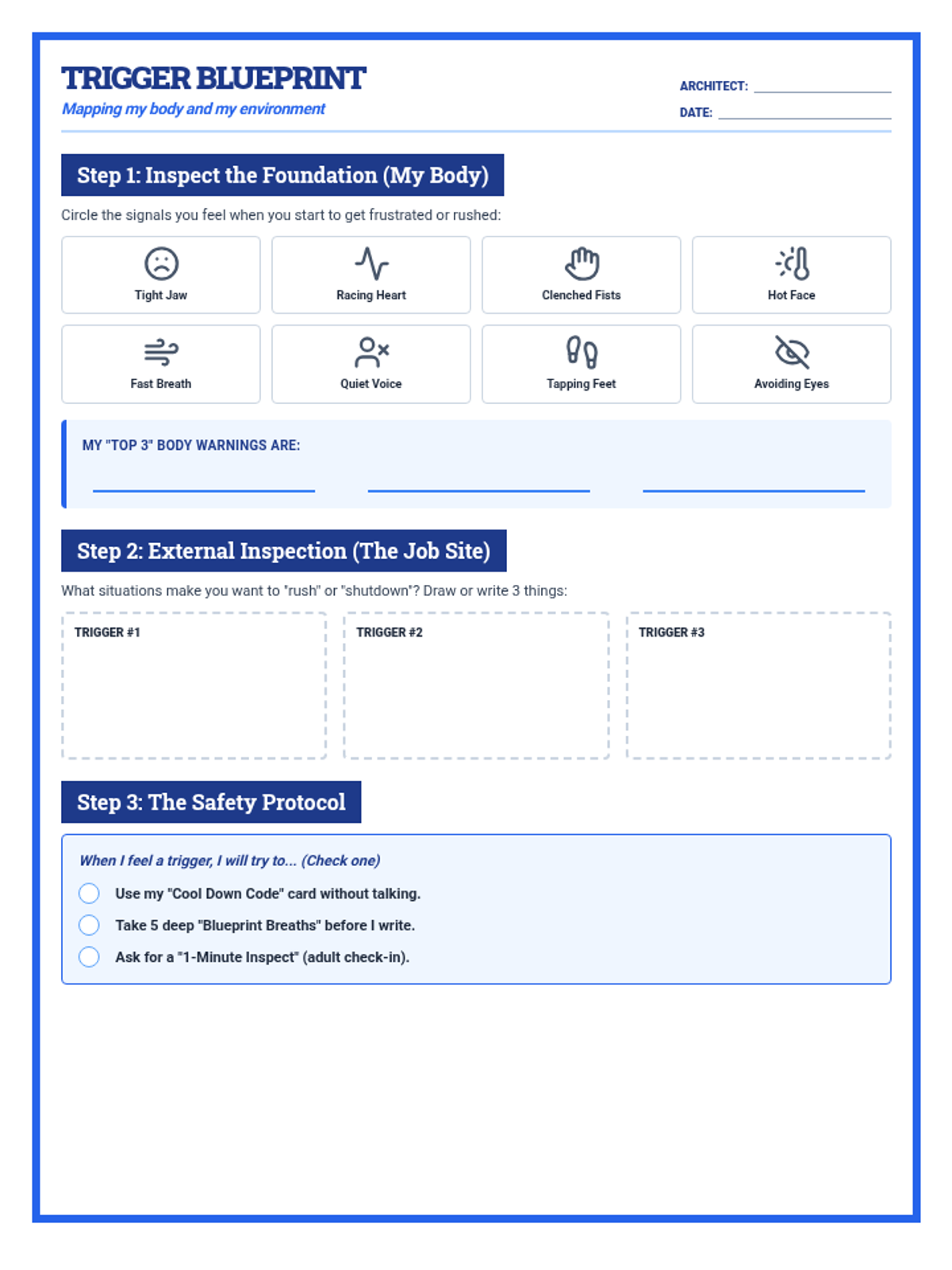
A student-facing worksheet to help identify physical body signals and environmental triggers for emotional shutdowns and rushing.
An instructional slide deck for the student, explaining what triggers are, identifying body signals, and introducing the '2-Minute Quality Rule' to manage rushing.
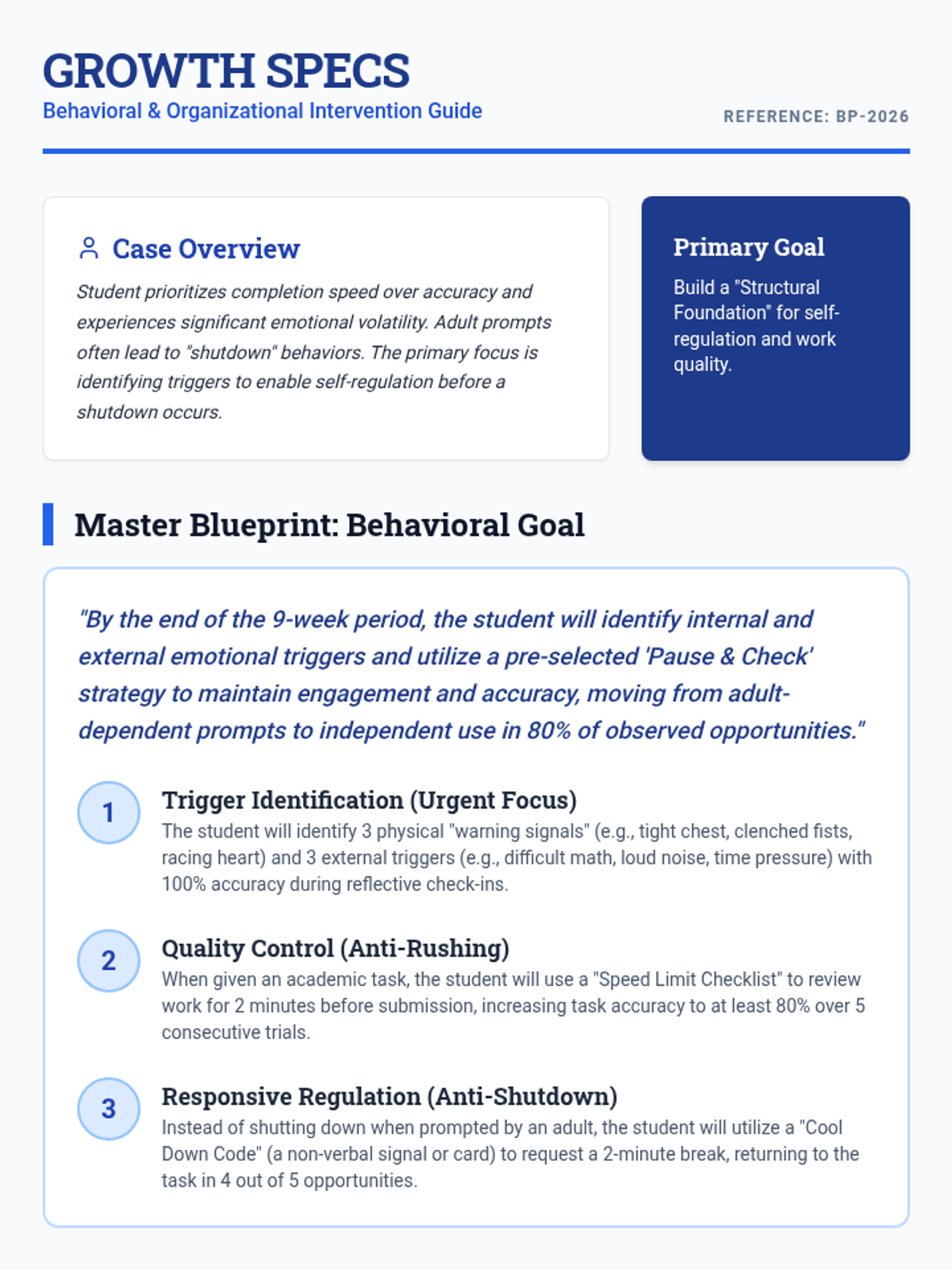
A teacher-facing guide outlining a comprehensive behavioral goal, specific objectives for trigger identification and work quality, and strategies to prevent emotional shutdowns.
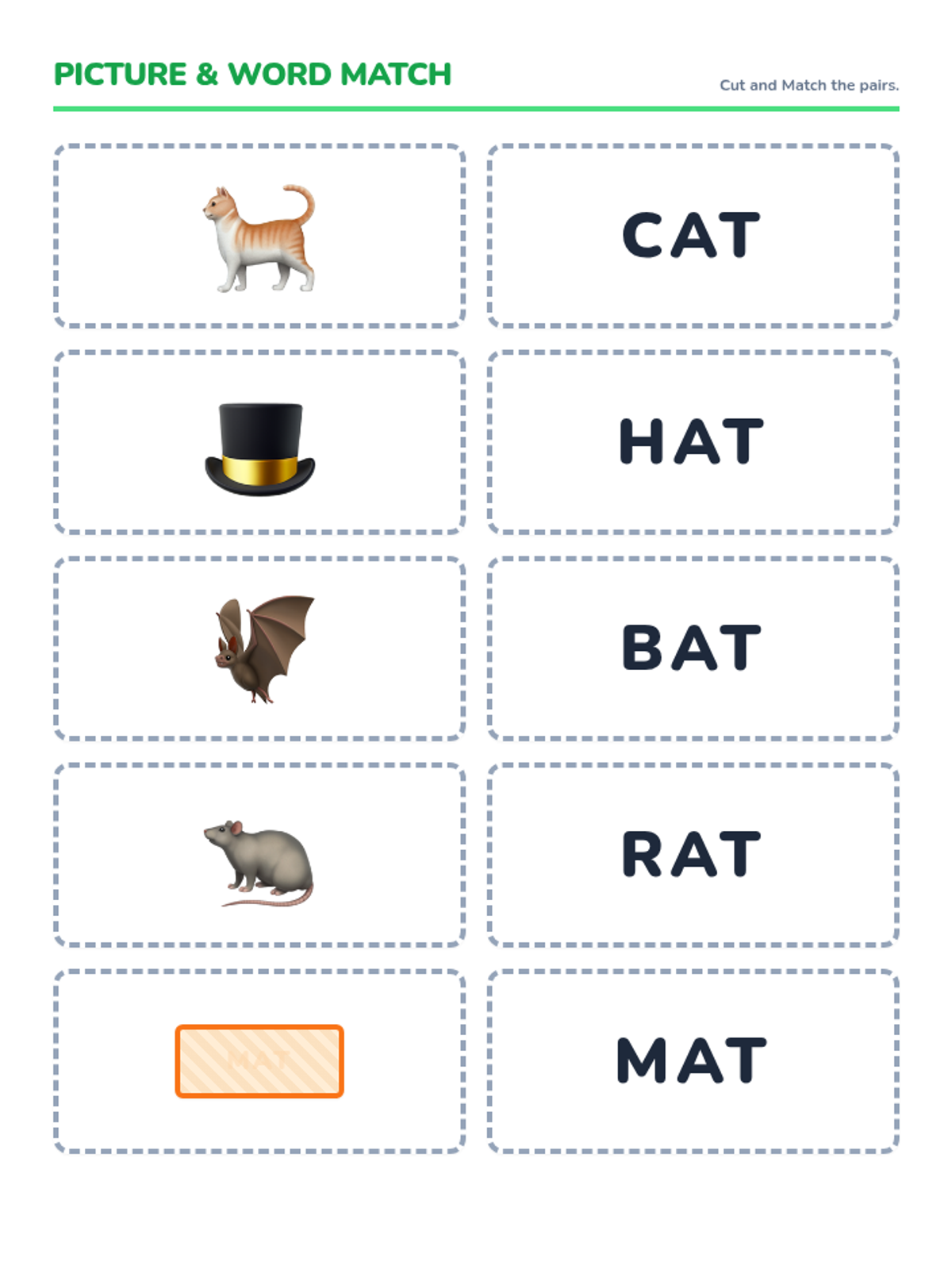
A matching game featuring the '-at' word family. Includes two sets of cards: one with icons and one with words. Students can play memory or simple matching games to reinforce the connection between visual concepts and their written forms.
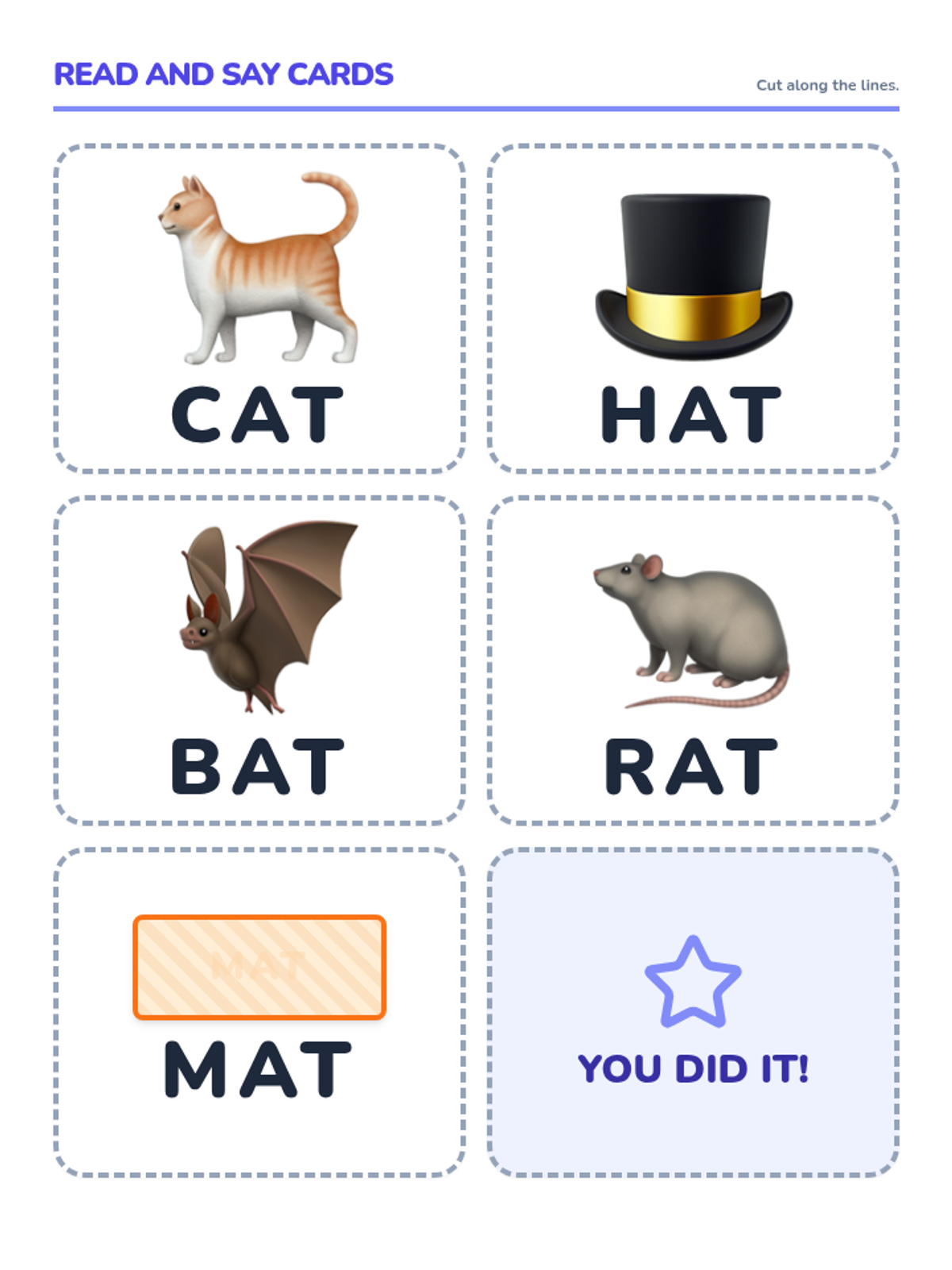
A set of large, high-contrast flashcards for the '-at' word family, featuring both a clear icon and the word. Designed for reading practice and building sight word recognition for students with significant cognitive needs.
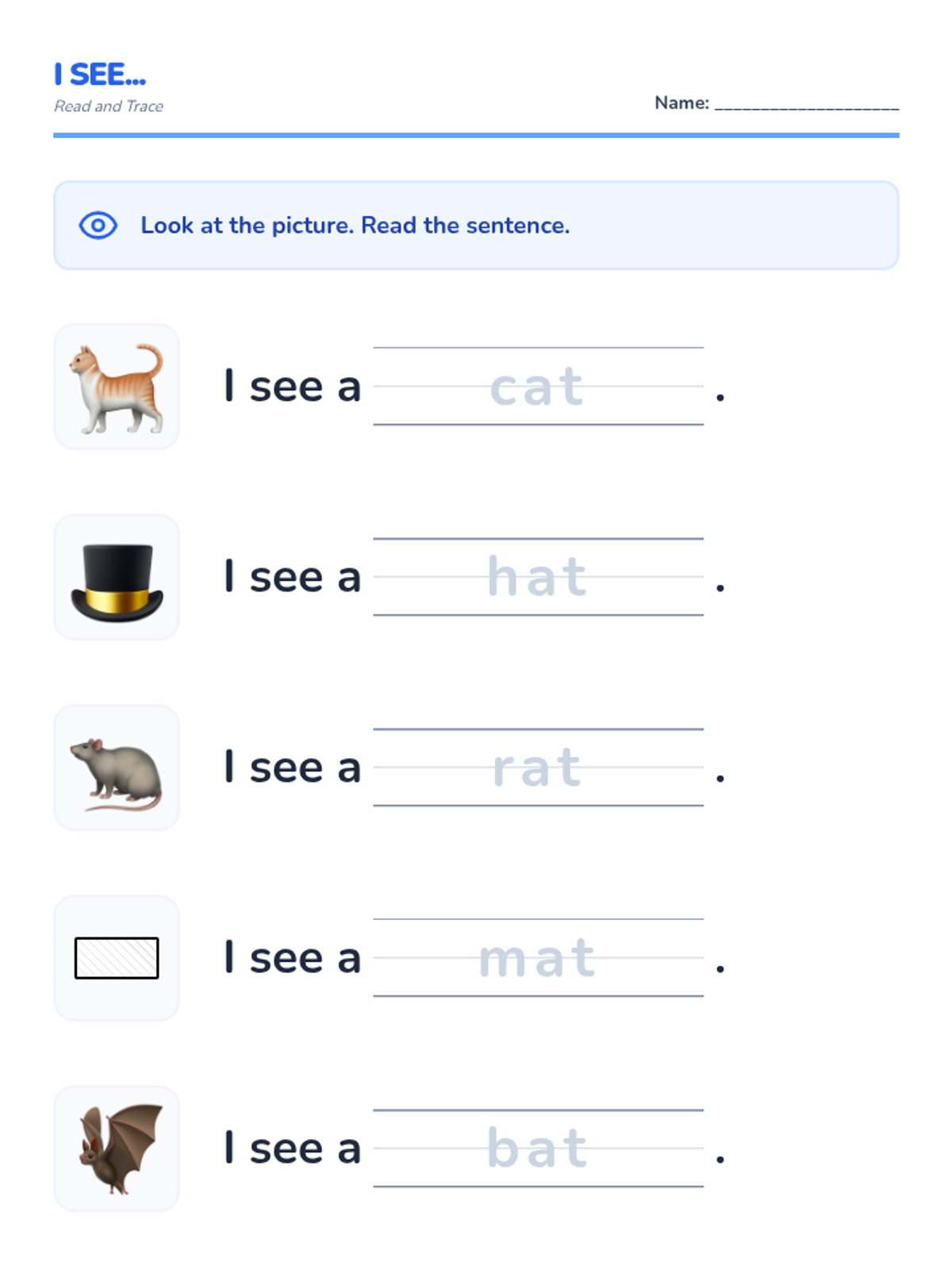
A simple fill-in-the-blank sentence worksheet for the '-at' word family. Each sentence follows the repetitive 'I see a...' structure with a ghosted word on primary lines and a corresponding visual icon to support reading and writing practice.
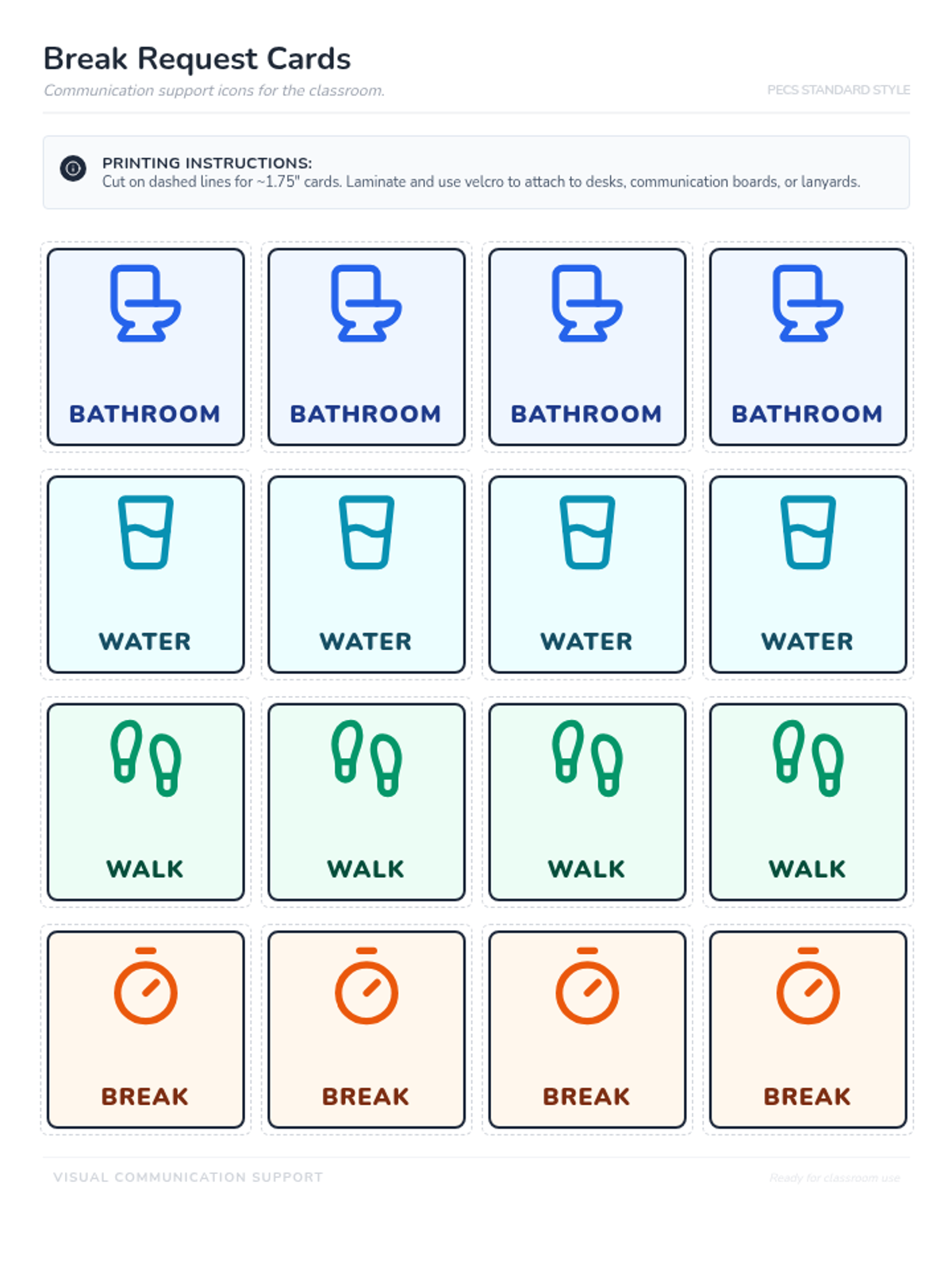
A collection of printable communication cards for students to request various types of breaks, including water, bathroom, and hallway walks. Each card features a clear icon and high-contrast text for easy visual recognition.
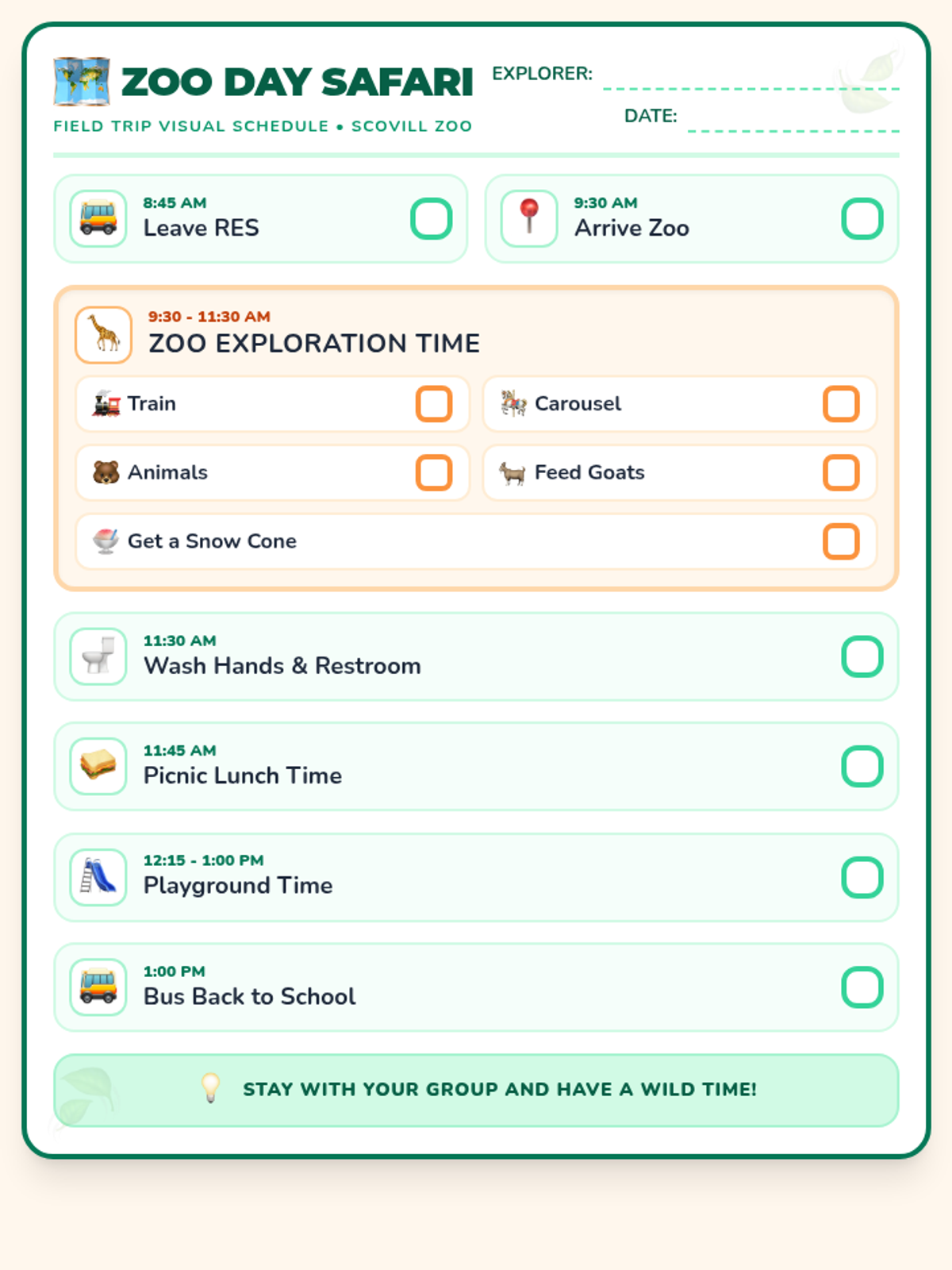
A vibrant, zoo-themed visual schedule for a field trip to Scovill Zoo. All icons have been replaced with emojis, including a bear for the animal section and a single toilet emoji for restrooms. Design is scaled up to fill the entire page for maximum visibility.
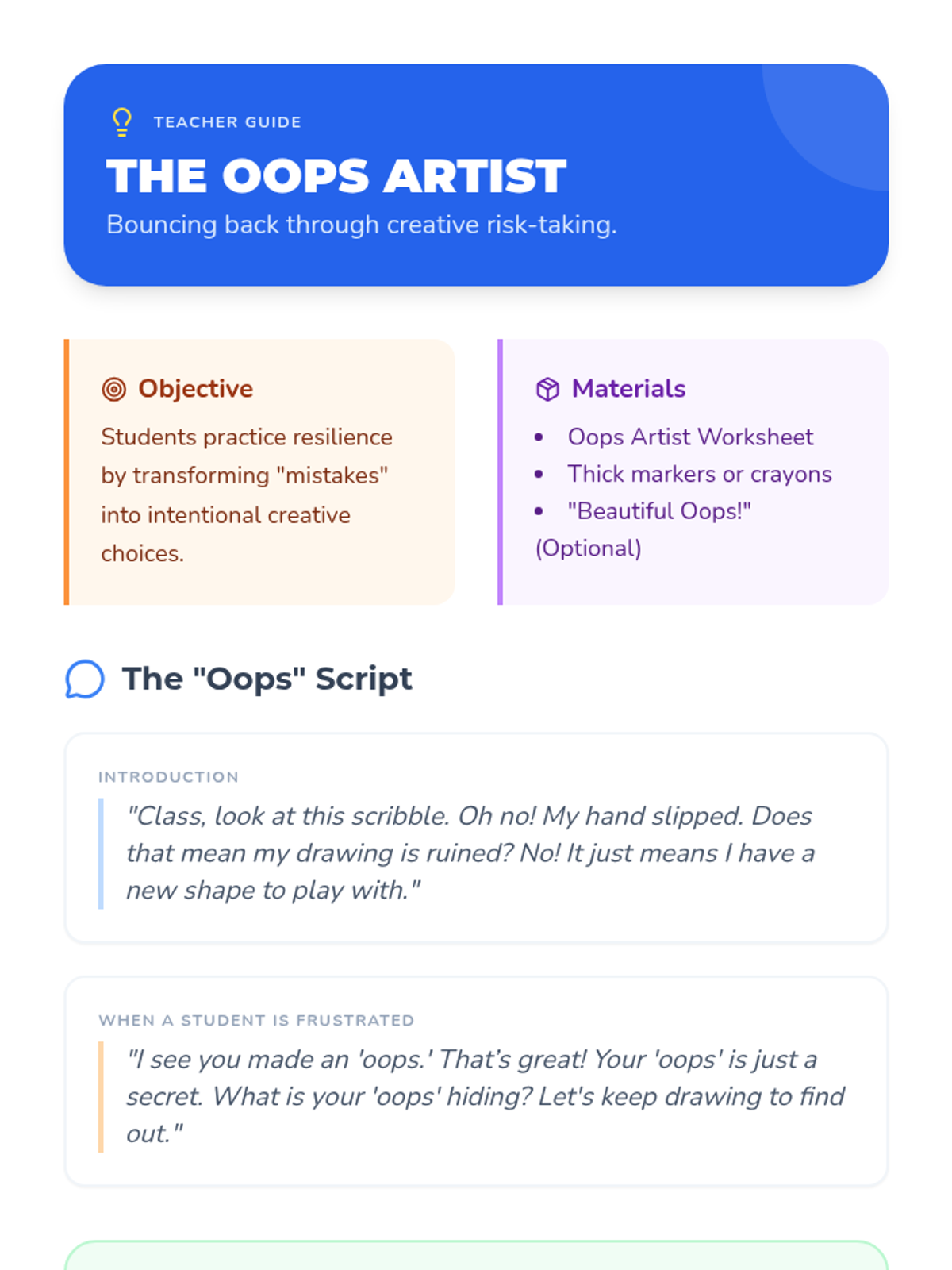
A teacher guide for facilitating the 'Oops Artist' activity, providing scripts, differentiation strategies, and learning objectives focused on resilience for first graders.
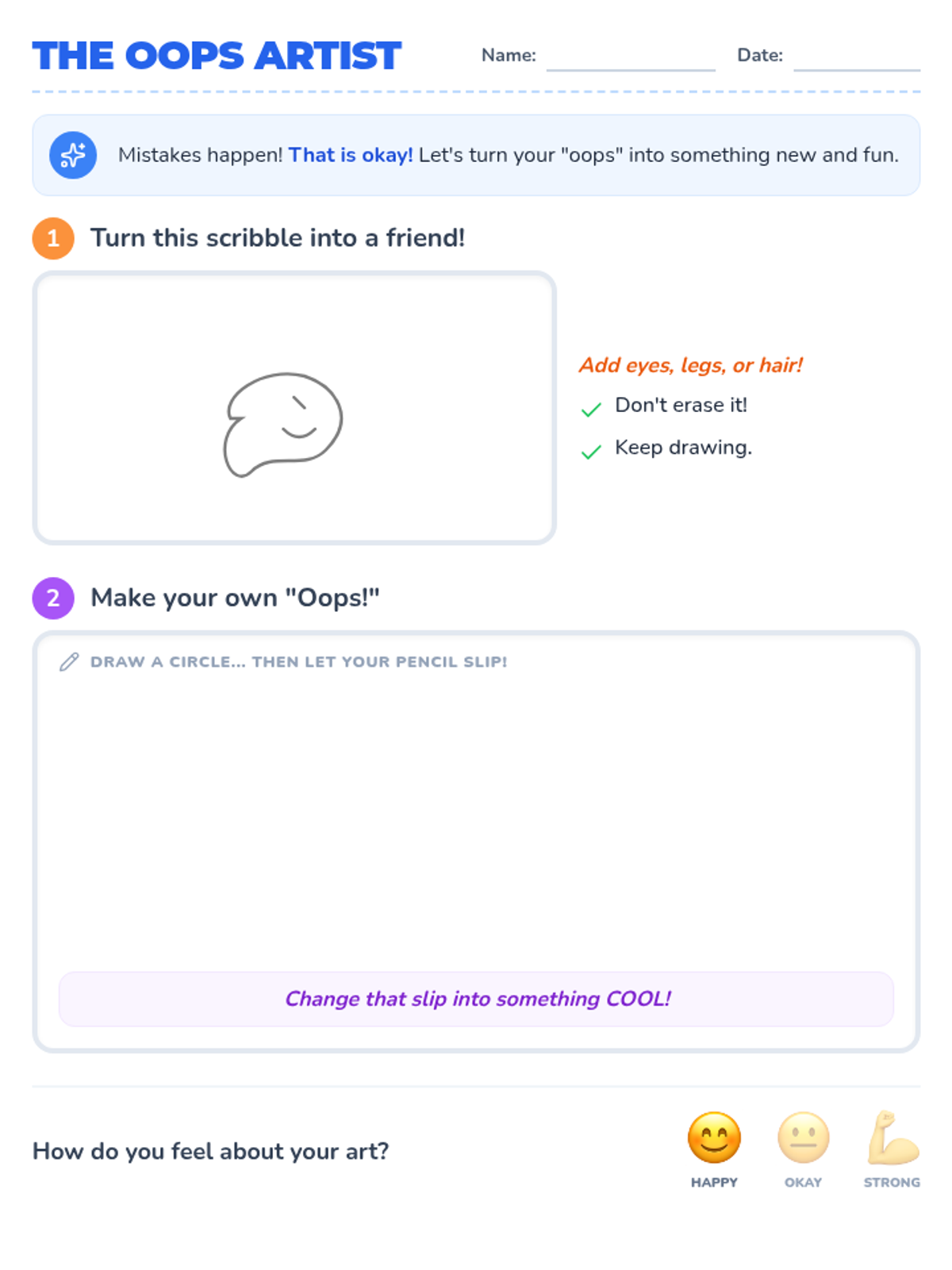
A playful drawing worksheet for first graders that encourages them to turn 'mistakes' (scribbles) into creative characters, fostering resilience and a growth mindset.
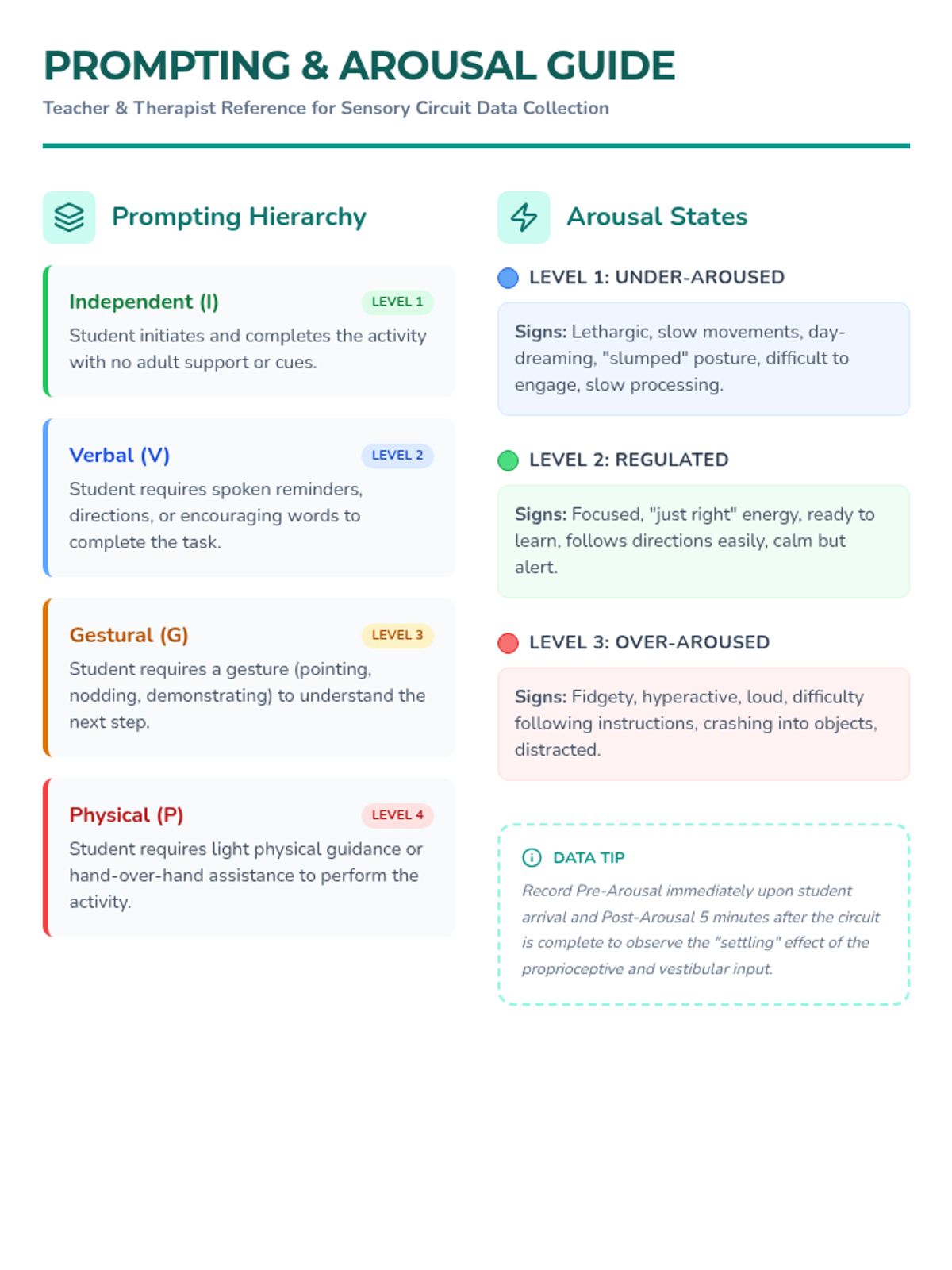
A reference guide for teachers and therapists defining prompting levels and arousal states to ensure consistent data collection during sensory circuits.
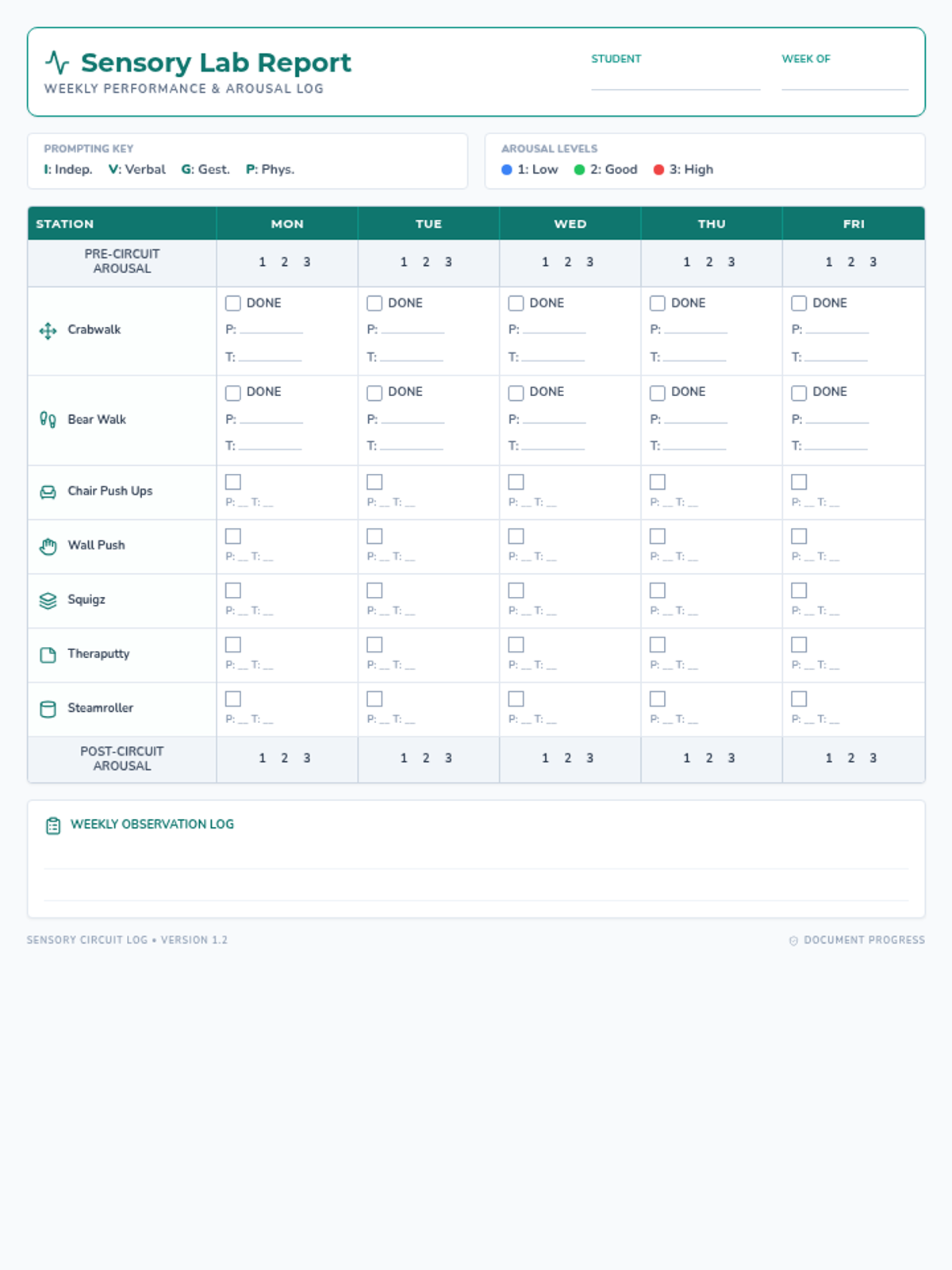
A weekly sensory circuit data tracking sheet for monitoring student performance across seven stations. Includes fields for completion, prompting levels, pre/post arousal scores, and duration per station.