A comprehensive 2-page worksheet titled 'Sequence Sleuths Case File' designed for adults with IDD. It includes activities for visual pattern recognition, workplace routine sequencing, safety signal matching, and social conversation loops.
An interactive slide deck styled like an futuristic arcade game dashboard to present the rules of 'Mind Glitch Control', demonstrating the Stop-Think-Act method and the gameplay phases with clear high-readability slides.
A printable student self-reflection worksheet styled like a diagnostic dashboard. Students calibrate personal stress levels on dials, outline two of their main triggers (Glitches), write out step-by-step physical calming codes (Reboot Protocols), and sign a regulatory self-contract.
A sheet of 6 printable retro-themed gameplay cards for 'Mind Glitch Control'. Features 3 high-relatability trigger cards (Glitches) and 3 highly effective calming action cards (Reboot Codes) with clear, step-by-step instructions.
A comprehensive facilitator's guide for the Mind Glitch Control game. This document details learning objectives, setup instructions, the 4-step game loop (Drift, Glitch, Freeze, Reboot), discussion prompts, and concrete differentiation strategies for 4th-grade classrooms.
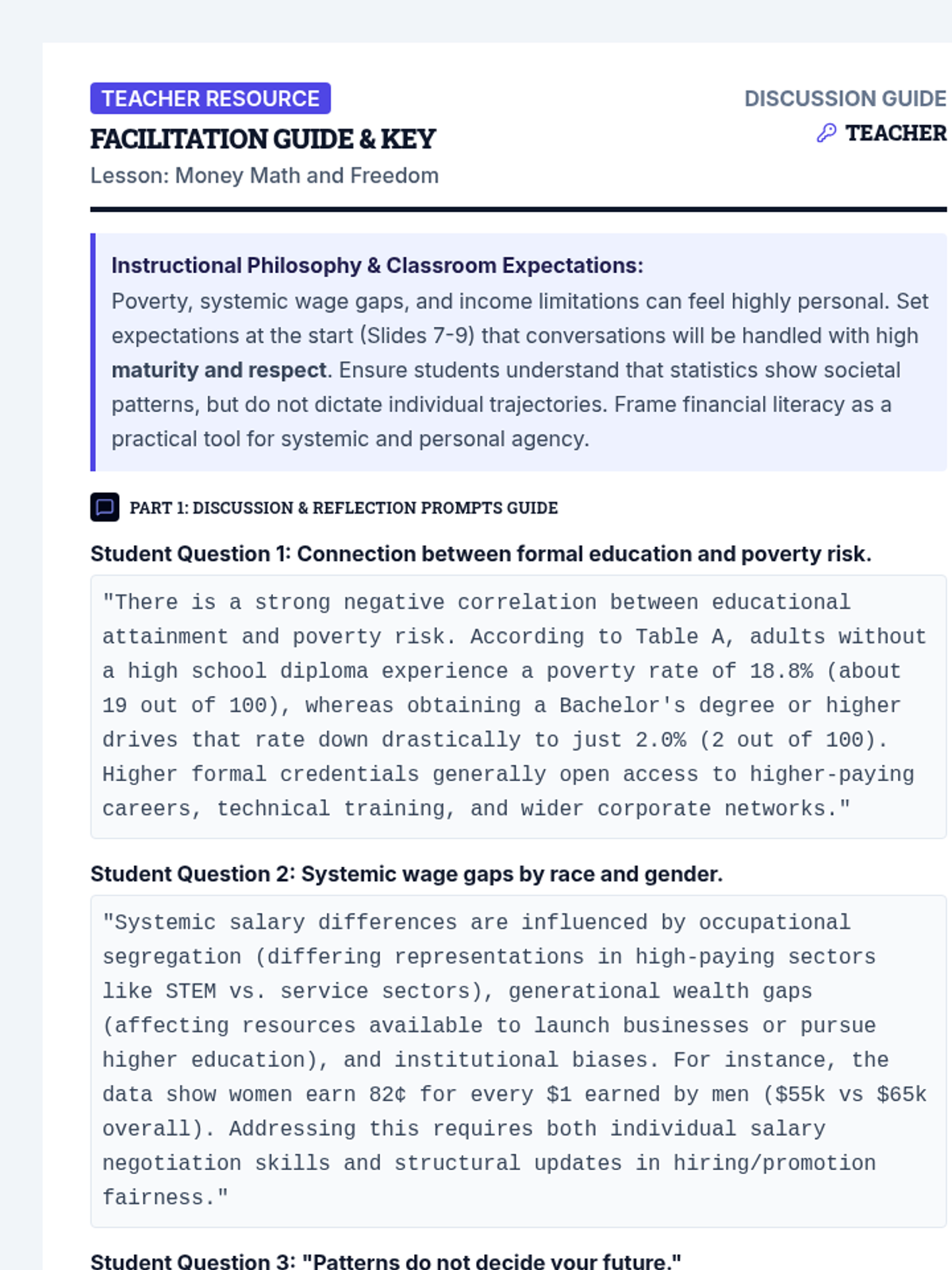
An educator-facing guide and key offering lesson facilitation tips, sensitive discussion management protocols, full vocabulary answers, step-by-step math calculations, and an evaluation rubric for the Vision Board project.
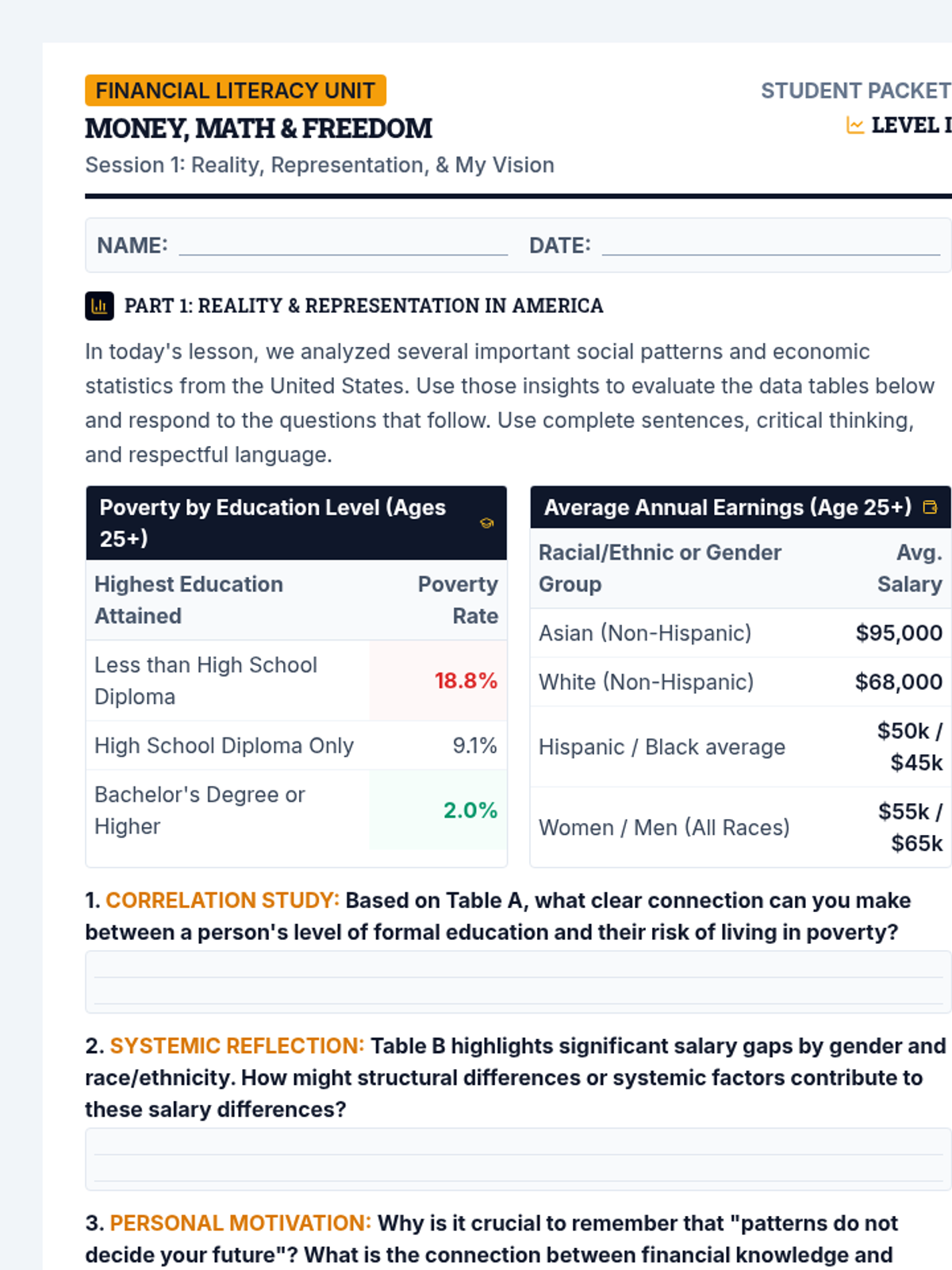
A comprehensive 5-page student work packet containing classroom discussion notes, statistical analysis of poverty tables, BizKid$ companion terms, math-focused compound calculations, and a project blueprint planner.
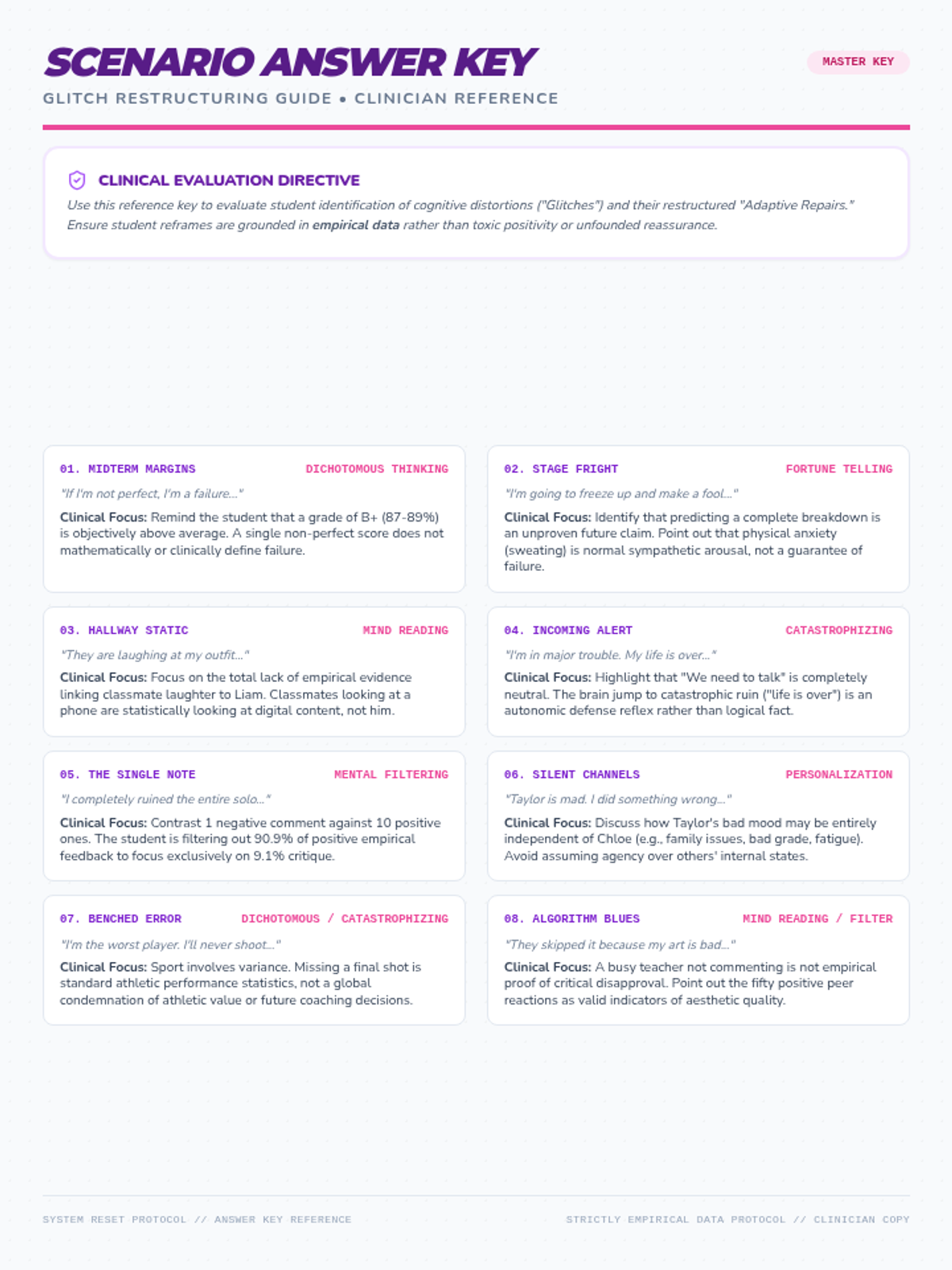
An educator-facing clinical answer key for the Glitch Scenario Cards. It provides the identified distortion name, key clinical focus points, and guidance on how to evaluate student reframing attempts without using reassurance.
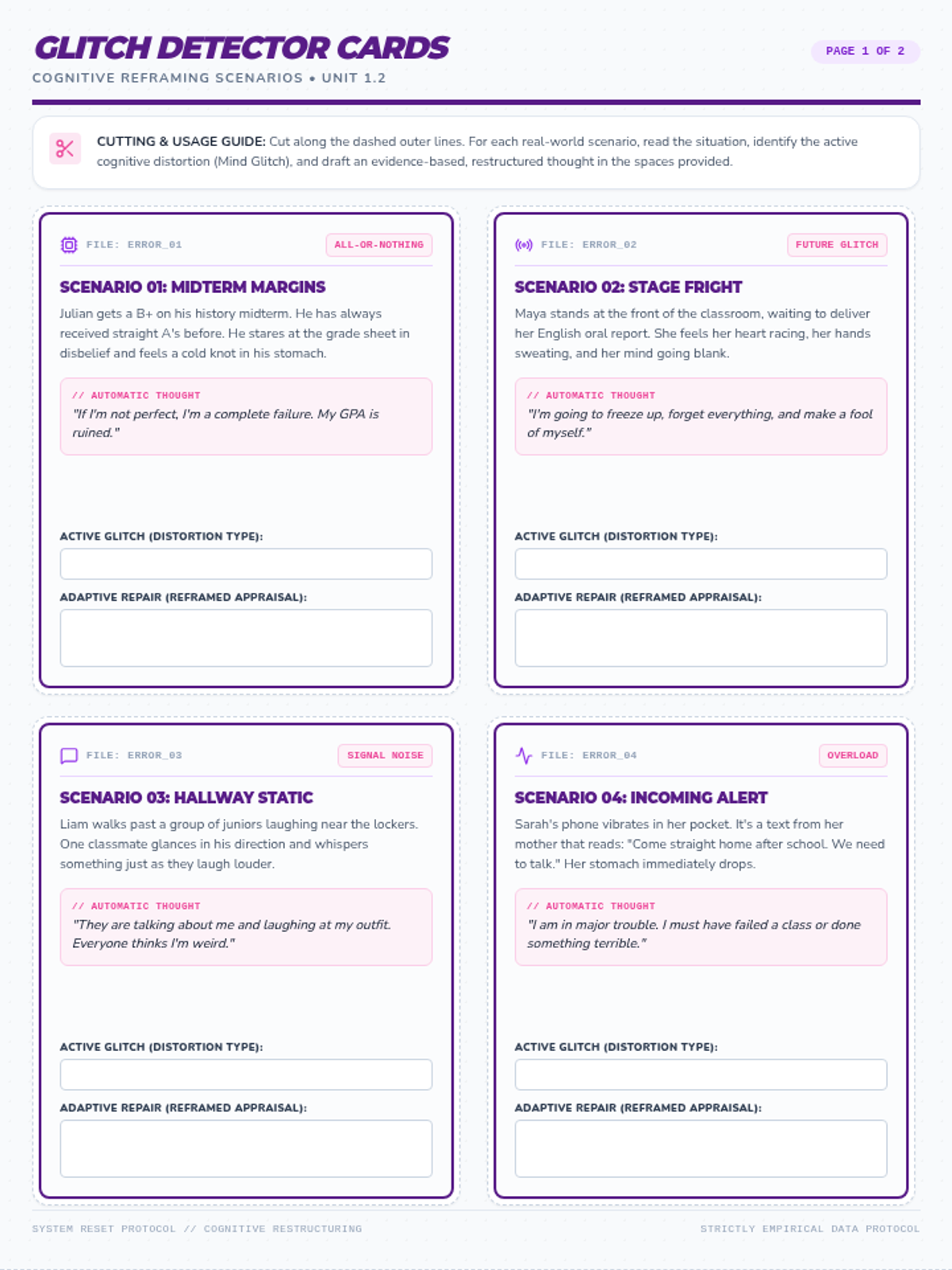
A 2-page print-ready set of 8 cognitive distortion scenario cards for teens. Formatted with a Y2K tech aesthetic, they provide real-world scenarios and blank areas for students to write down identified glitches and write adaptive cognitive upgrades.
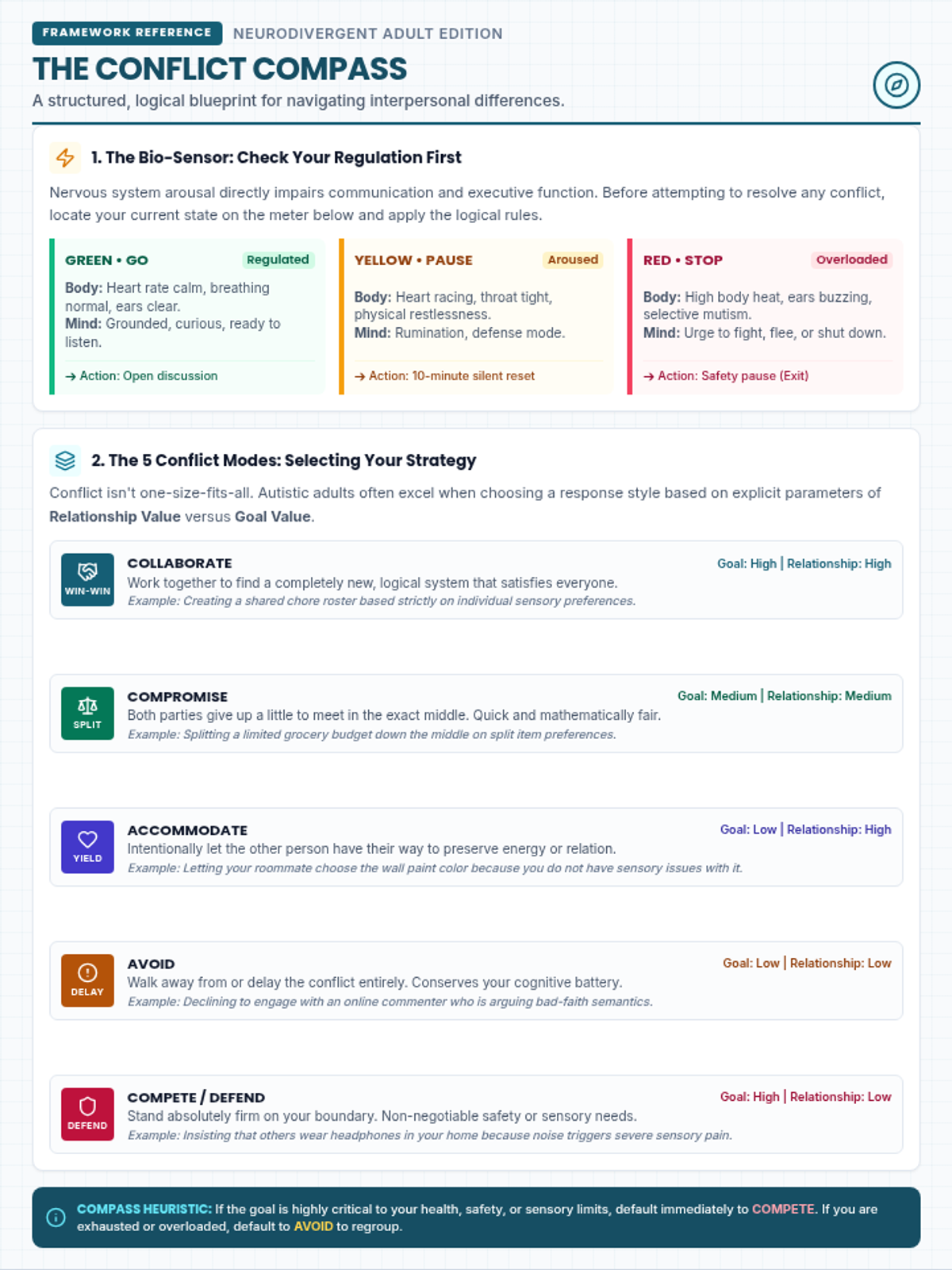
A professional, neurodivergent-friendly visual anchor chart designed for adults (18+) on the autism spectrum. Features physical self-regulation steps, a structured conflict styles matrix, an 'I-Statement' formula with contrast examples, an active listening loop, and cognitive overwhelm pause scripts.
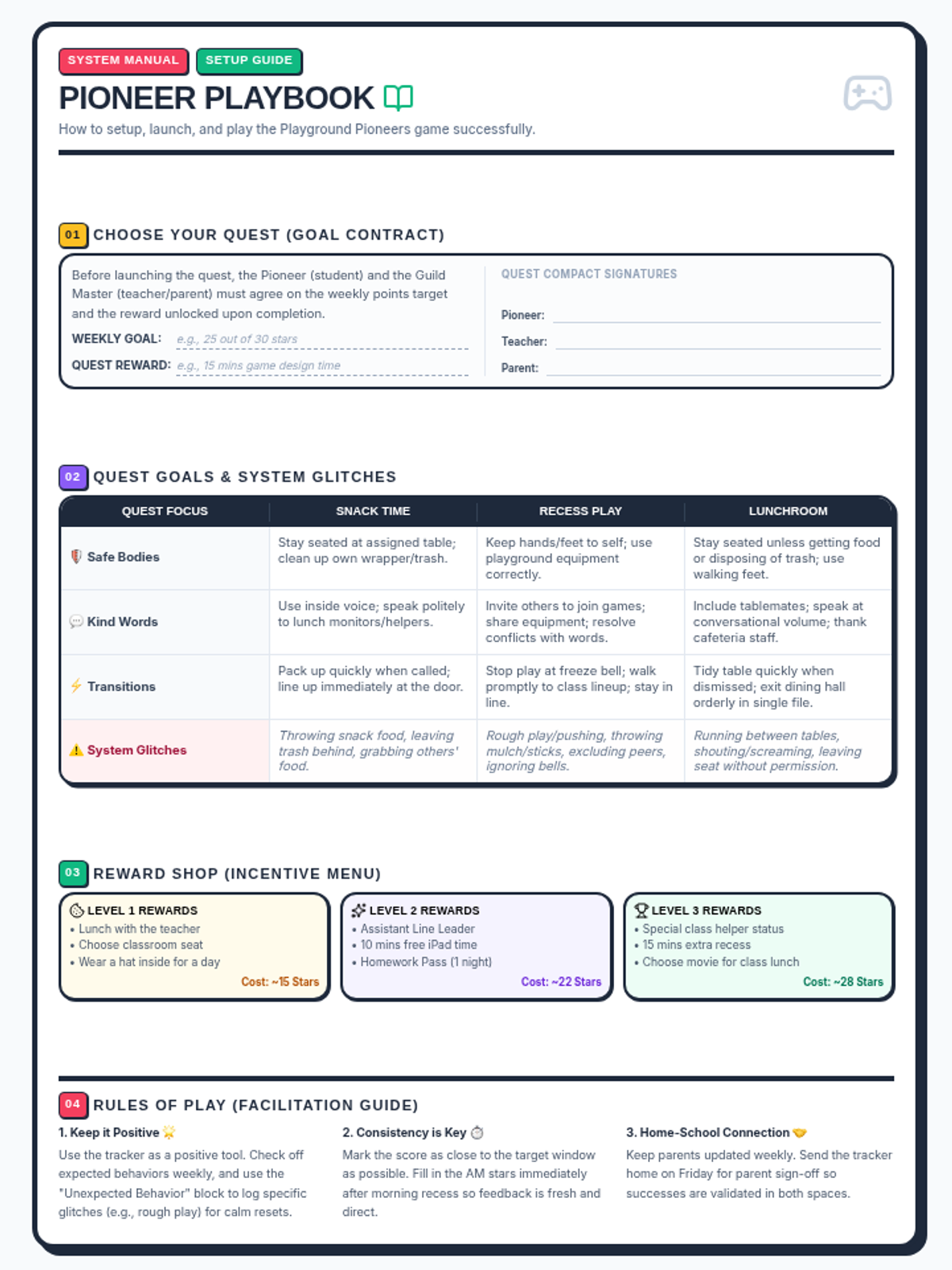
A goal-setting setup guide and behavior compact contract designed to launch the Playground Pioneers program. Explains point targets, behaviors in snack, recess, and lunch, and provides suggestions for setting up custom reward options.
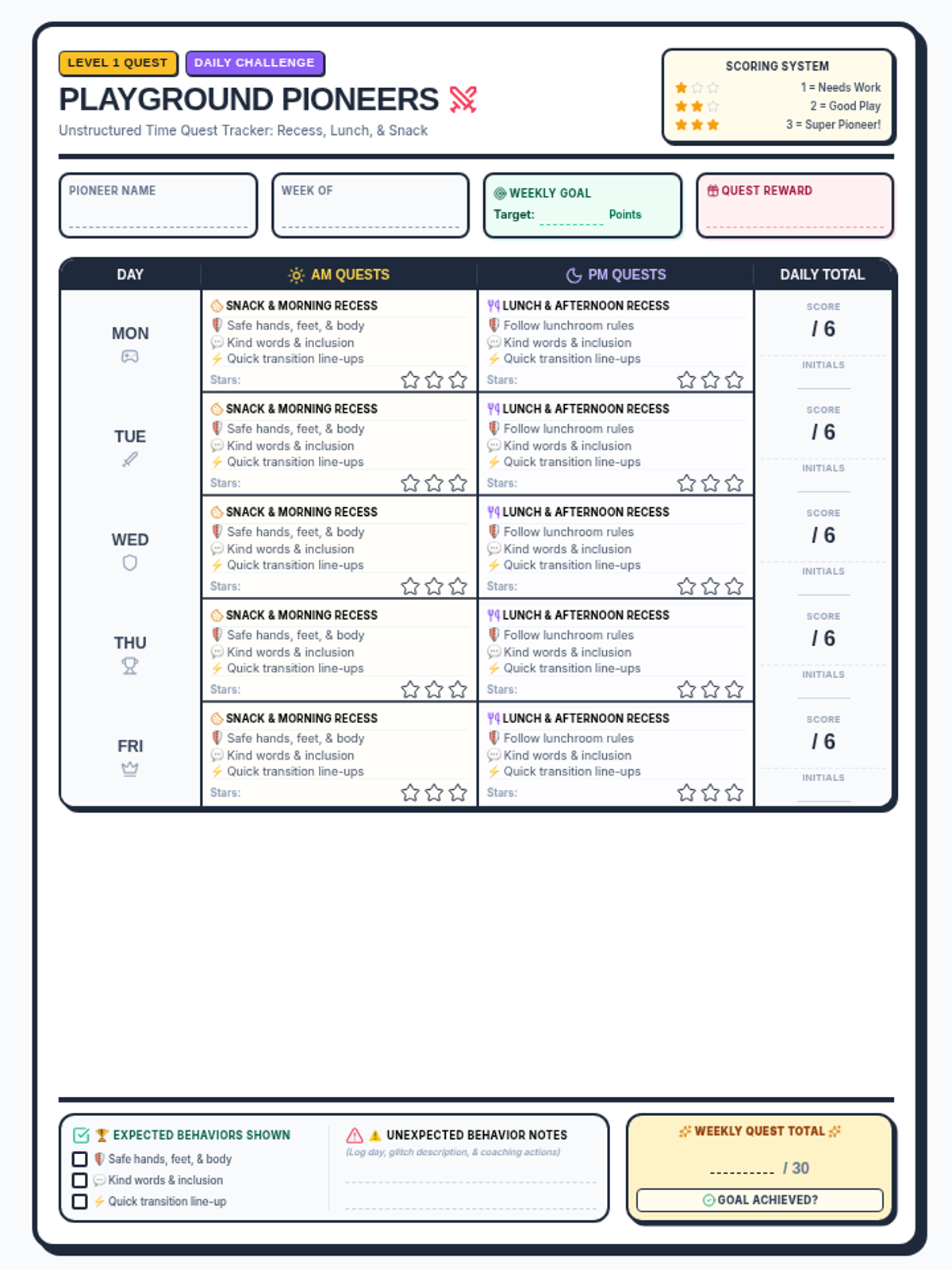
A retro-arcade styled weekly behavior chart for tracking student behavior during AM (Snack & Recess) and PM (Lunch & Recess) unstructured school hours. Students earn stars based on key expectations, summing to a weekly grand total toward a special reward.
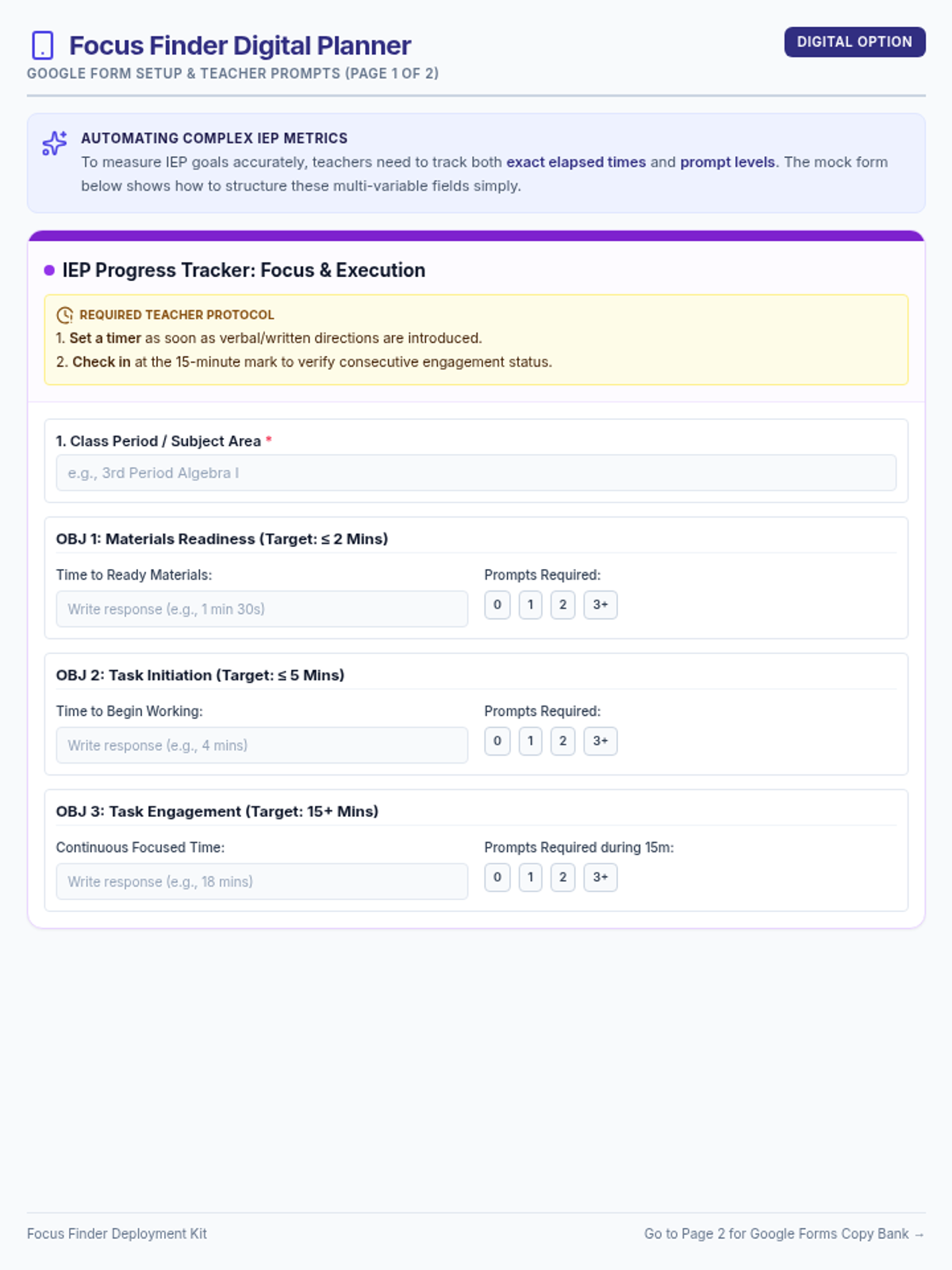
A Google Form setup guide and template containing precise copy-paste question configurations designed to gather teacher observation data digitally for IEP metrics. It includes a simulated form preview layout.
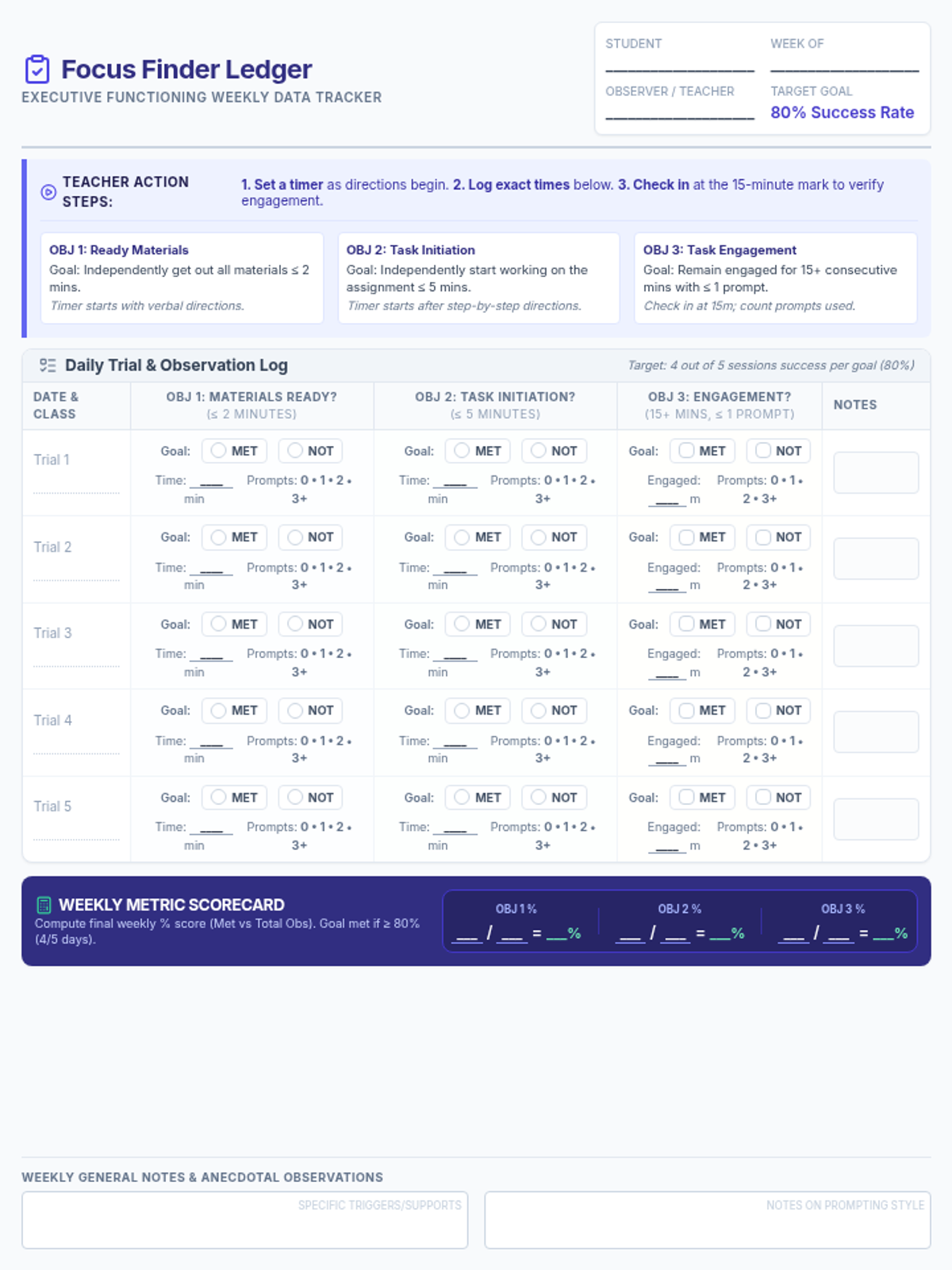
A pristine 1-page printable data sheet for busy teachers to quickly record progress on the student's materials setup, task initiation, and sustained attention goals across 5 structured observation trials per week. Includes a quick reference guide and an IEP success calculator.
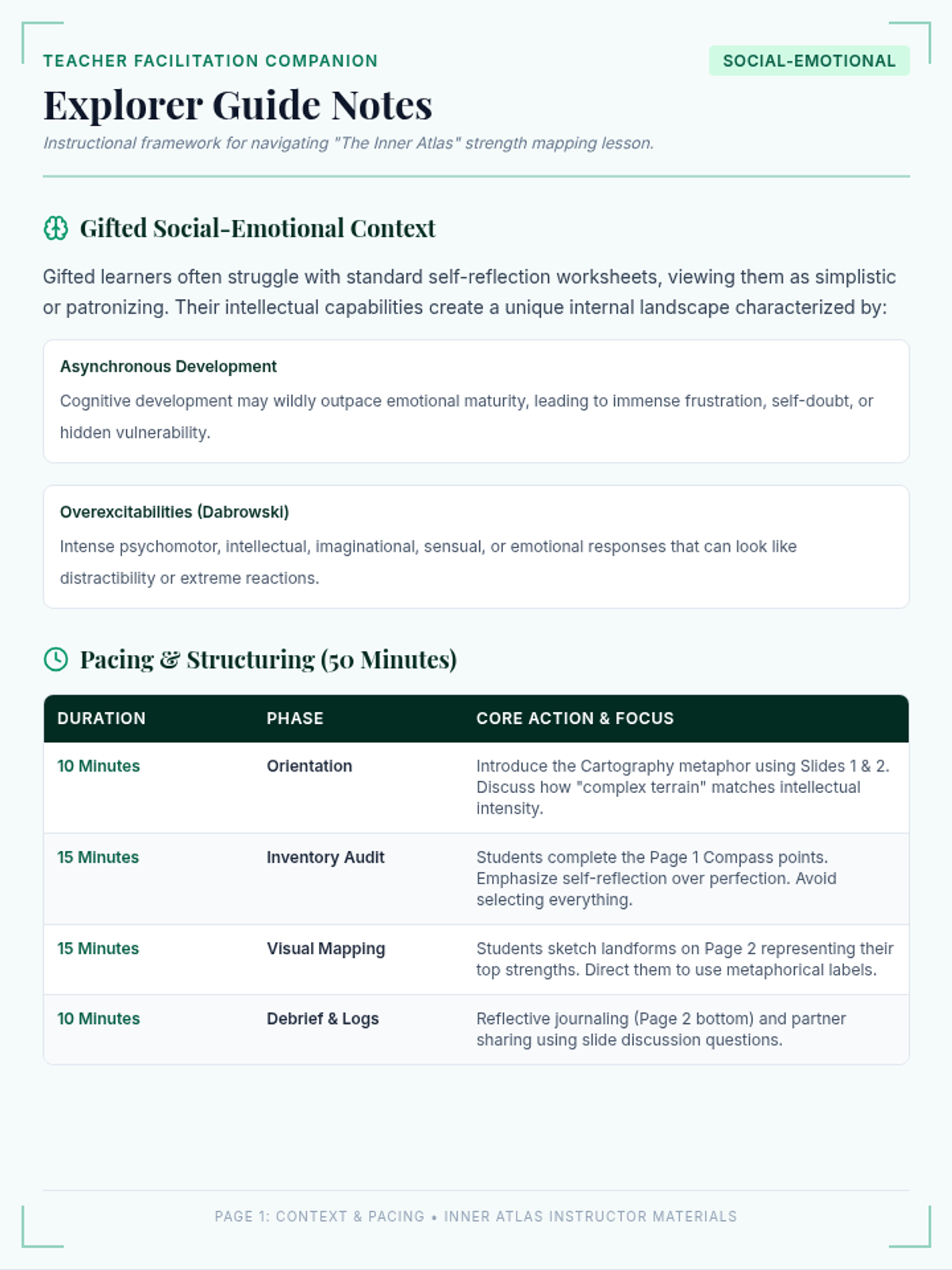
An instructional guide for teachers delivering the Inner Atlas strength mapping lesson. Contains pedagogical background on gifted traits like asynchronous development and overexcitabilities, a 50-minute pacing blueprint, slide facilitation prompts, and Socratic reflection questions.
A stunning, cartography-themed visual presentation with five masterfully styled slides. Designed with an ultra-polished deep indigo background, custom map gridlines, and bold elegant typography, this slideshow visually frames the strength mapping lesson for gifted middle school students.