A structured data tracking sheet designed to monitor a student's independent requests for headphones and their tolerance for noise during a sensory advocacy session.
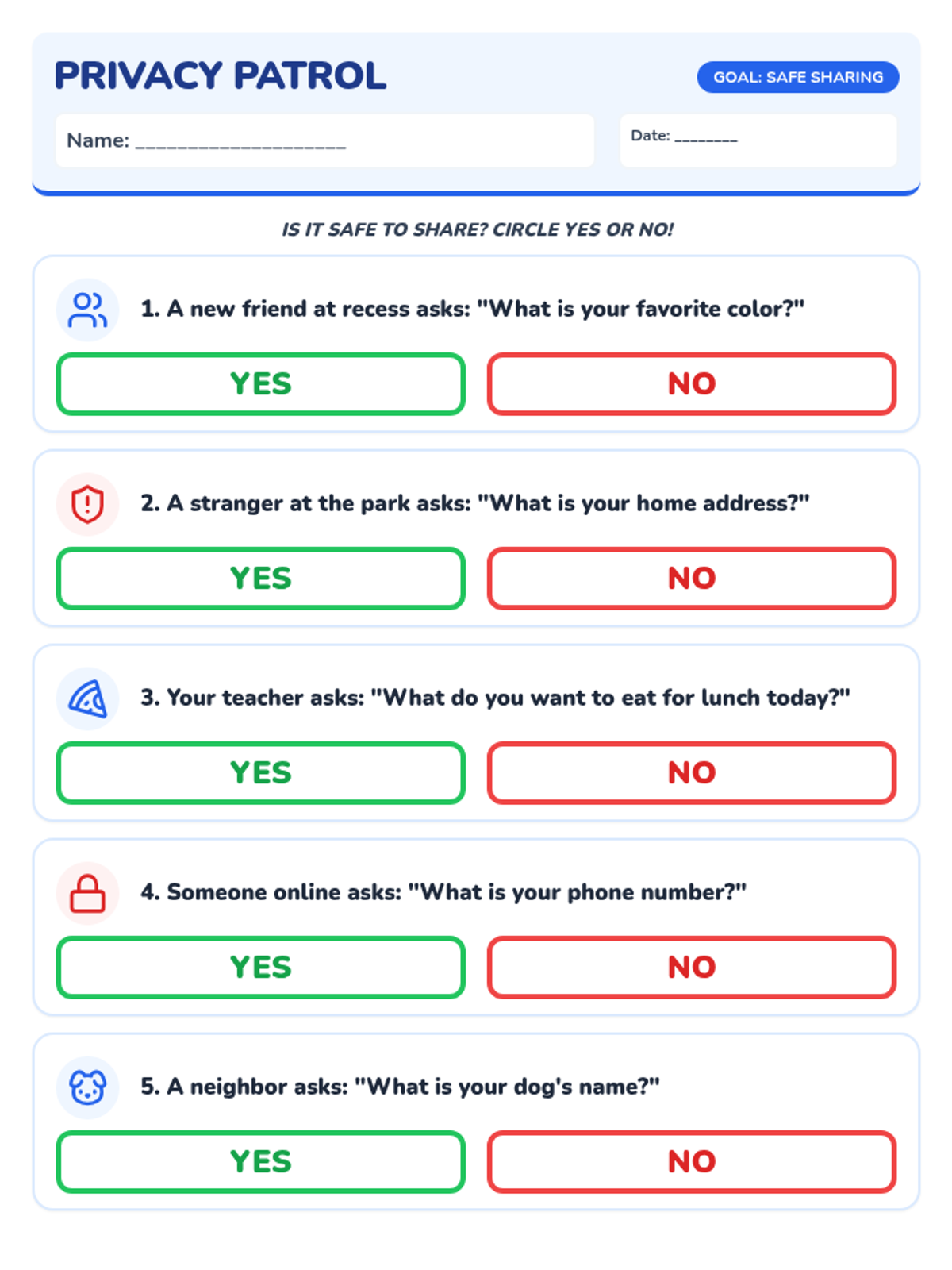
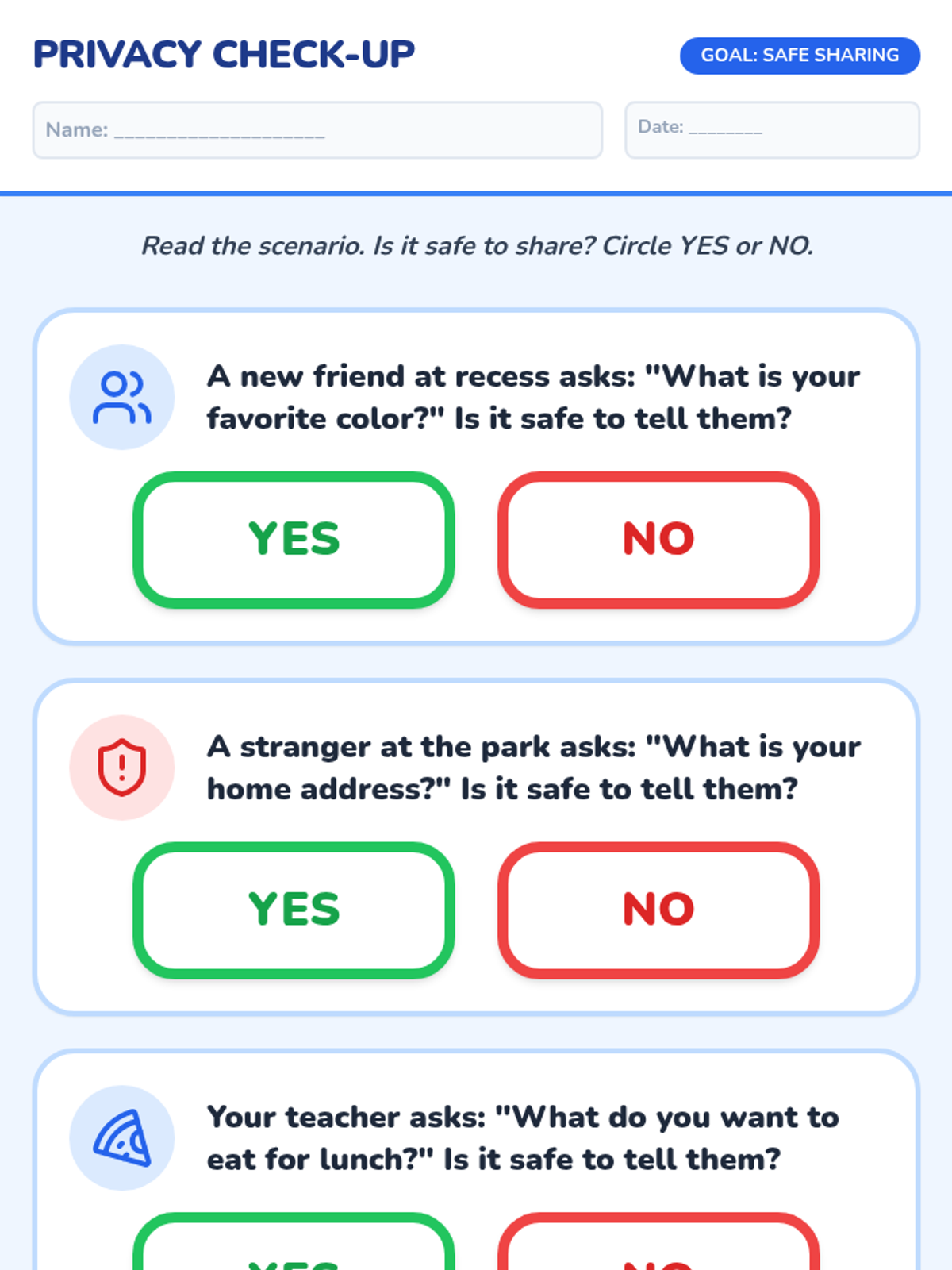
A 2-page adaptive worksheet with 10 large yes/no scenario cards to help students practice distinguishing between safe public sharing and risky private sharing. Includes updated scenario count and fixed page breaks. Clean white background for ink efficiency.
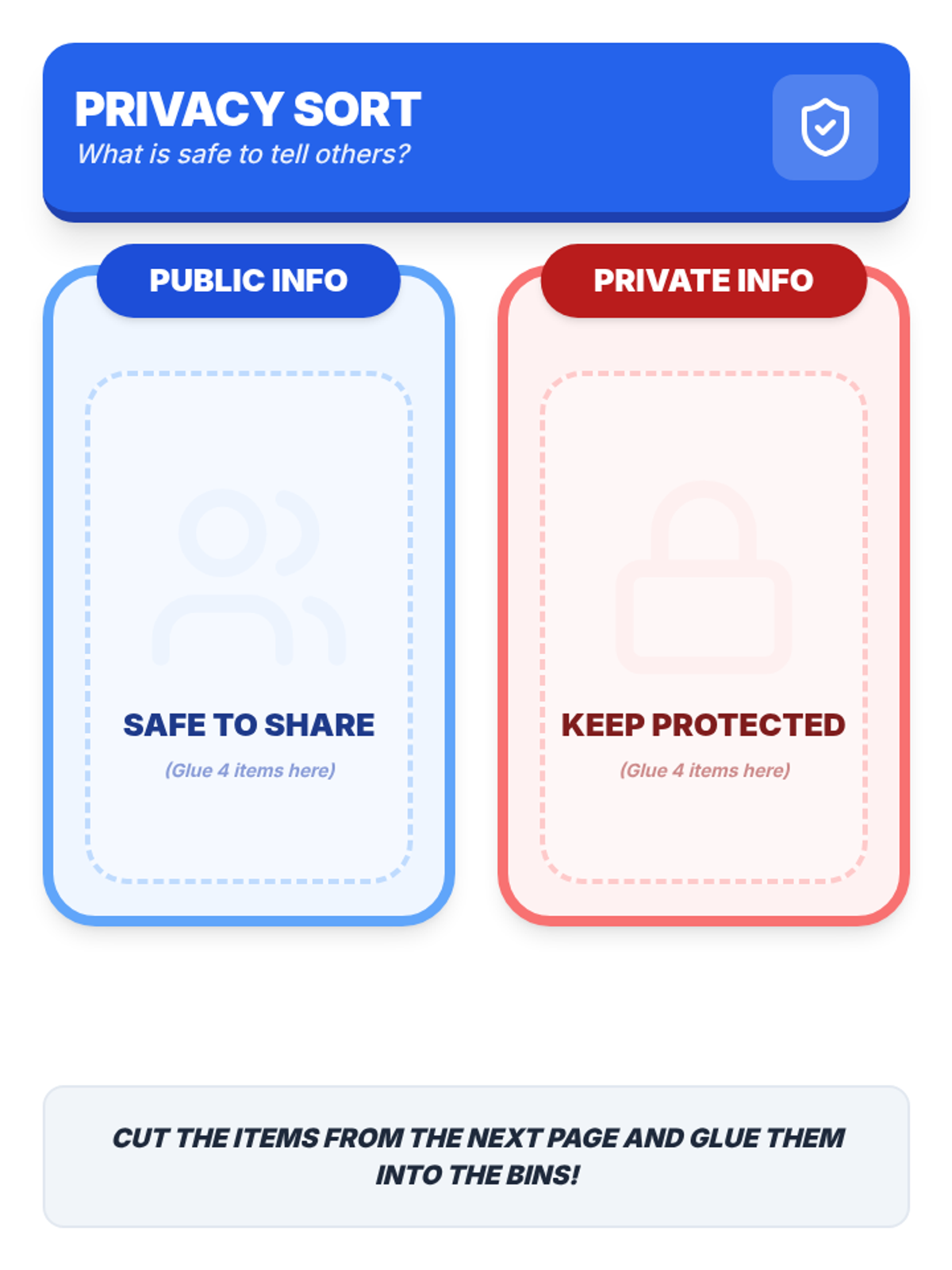
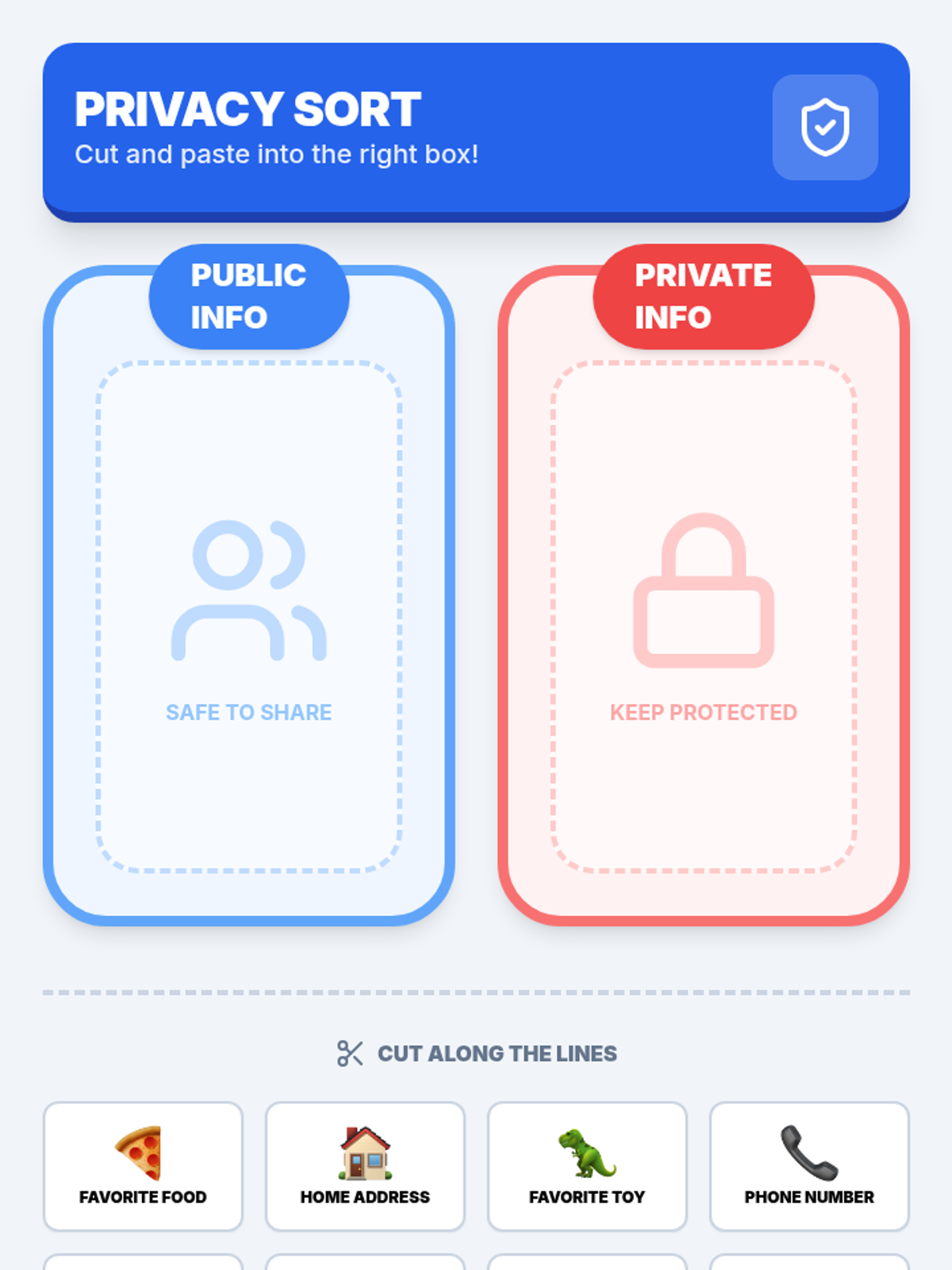
A 2-page cut-and-paste sorting activity for public vs. private information. Page 1 is the sorting board, and Page 2 contains 8 cut-out items with dashed guide lines. background color removed for ink efficiency.
A 1-page adaptive worksheet with large yes/no scenario cards to help students practice distinguishing between safe public sharing and risky private sharing.
A cut-and-paste sorting activity where students categorize various types of personal information (e.g., home address vs. favorite food) as either Public or Private.
An introductory slide deck for the Privacy Patrol lesson, teaching students the difference between Public (safe to share) and Private (keep protected) information through visual examples.
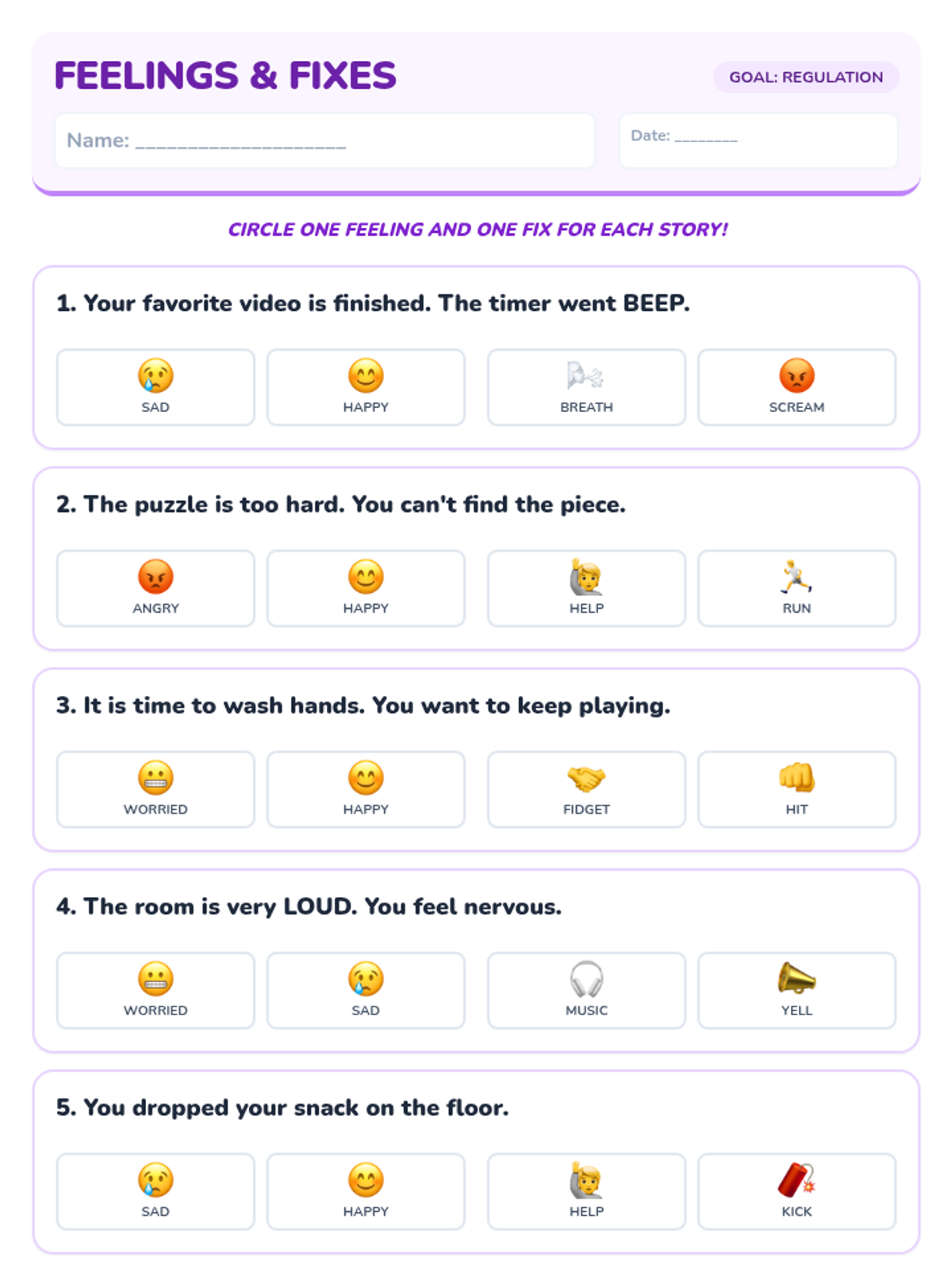
A 2-page adaptive worksheet featuring 10 emotional regulation scenarios with neutral choice formatting. Students identify emotions and appropriate coping strategies using visual choice icons. No character references.
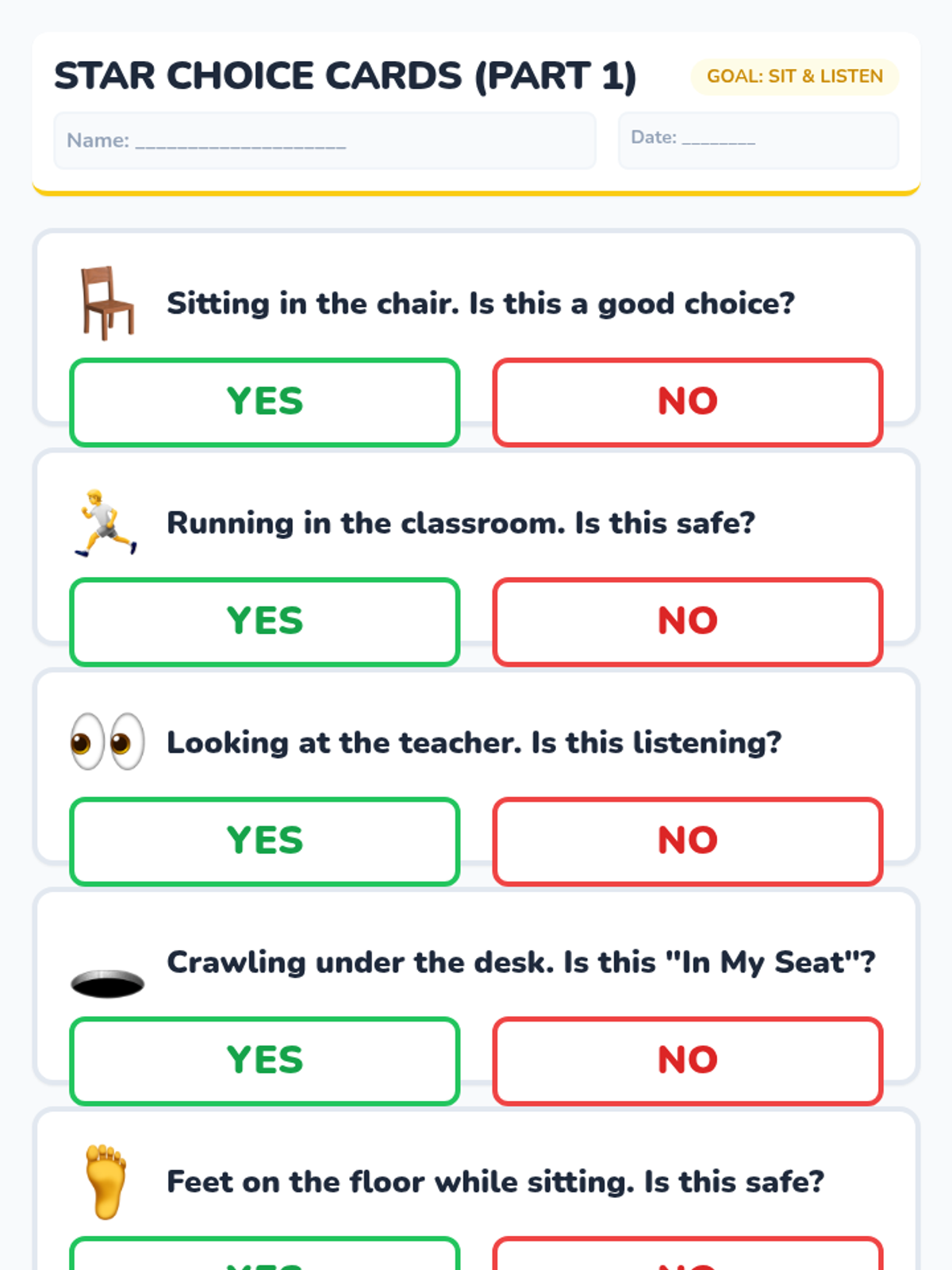
A 2-page adaptive worksheet featuring 10 generic yes/no scenario cards designed for a student with autism. The cards focus on classroom behaviors like staying in seat and listening, with star student branding and no character references.