Teacher guide for Lesson 2. Includes instructions for the "Working Memory Overload" hook, guidance on visual strip implementation, and troubleshooting tips for students who struggle with visual prompting.
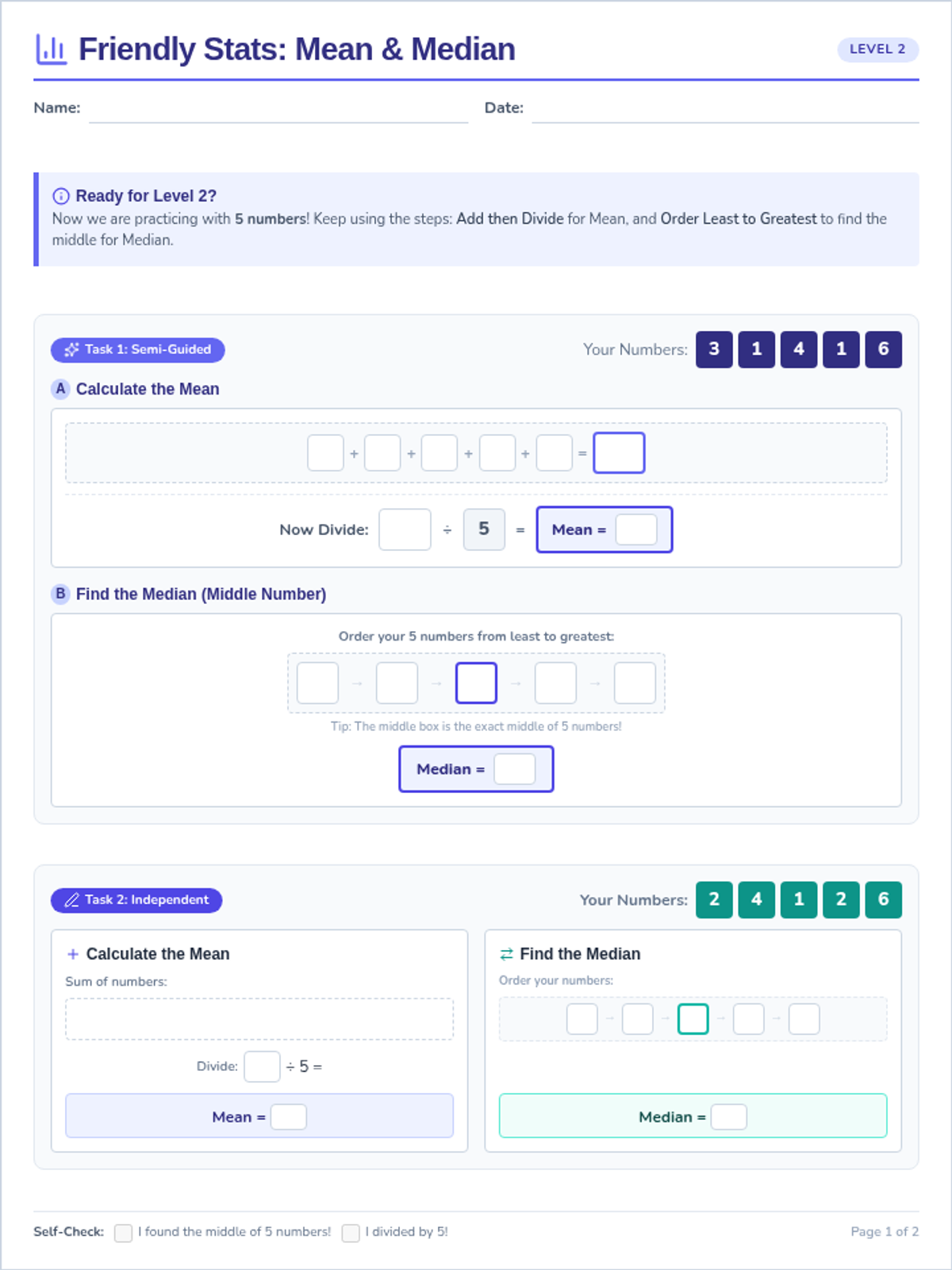
A 2-page intermediate-level practice worksheet for students who are ready to transition to 5-digit single-digit datasets with slightly reduced scaffolding while maintaining highly readable boxes and clear graphic organizers.
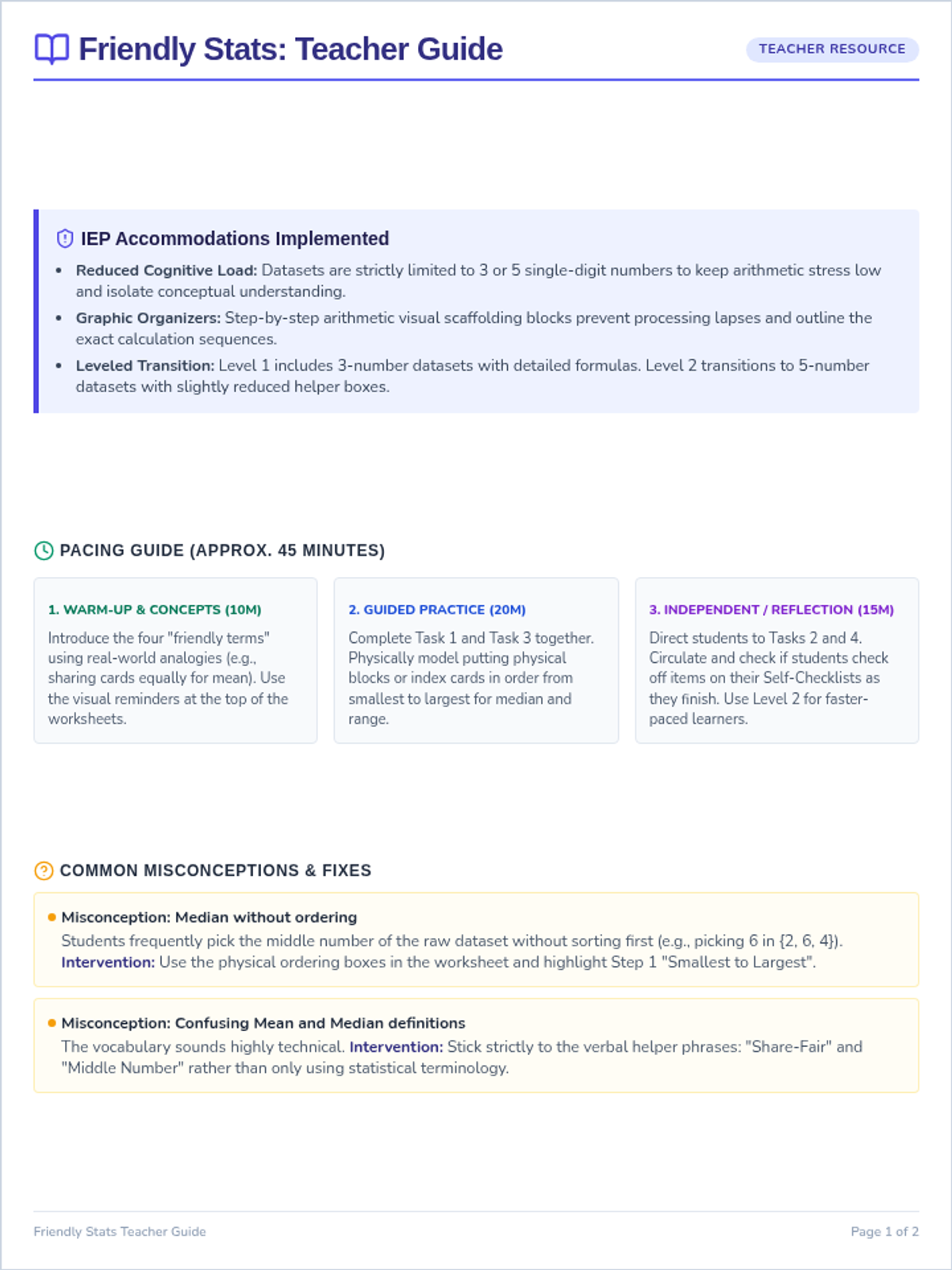
A 2-page teacher-facing guide with pedagogical tips for delivery, IEP accommodation guidelines, common student misconceptions, and fully solved visual answer keys for the student worksheets.
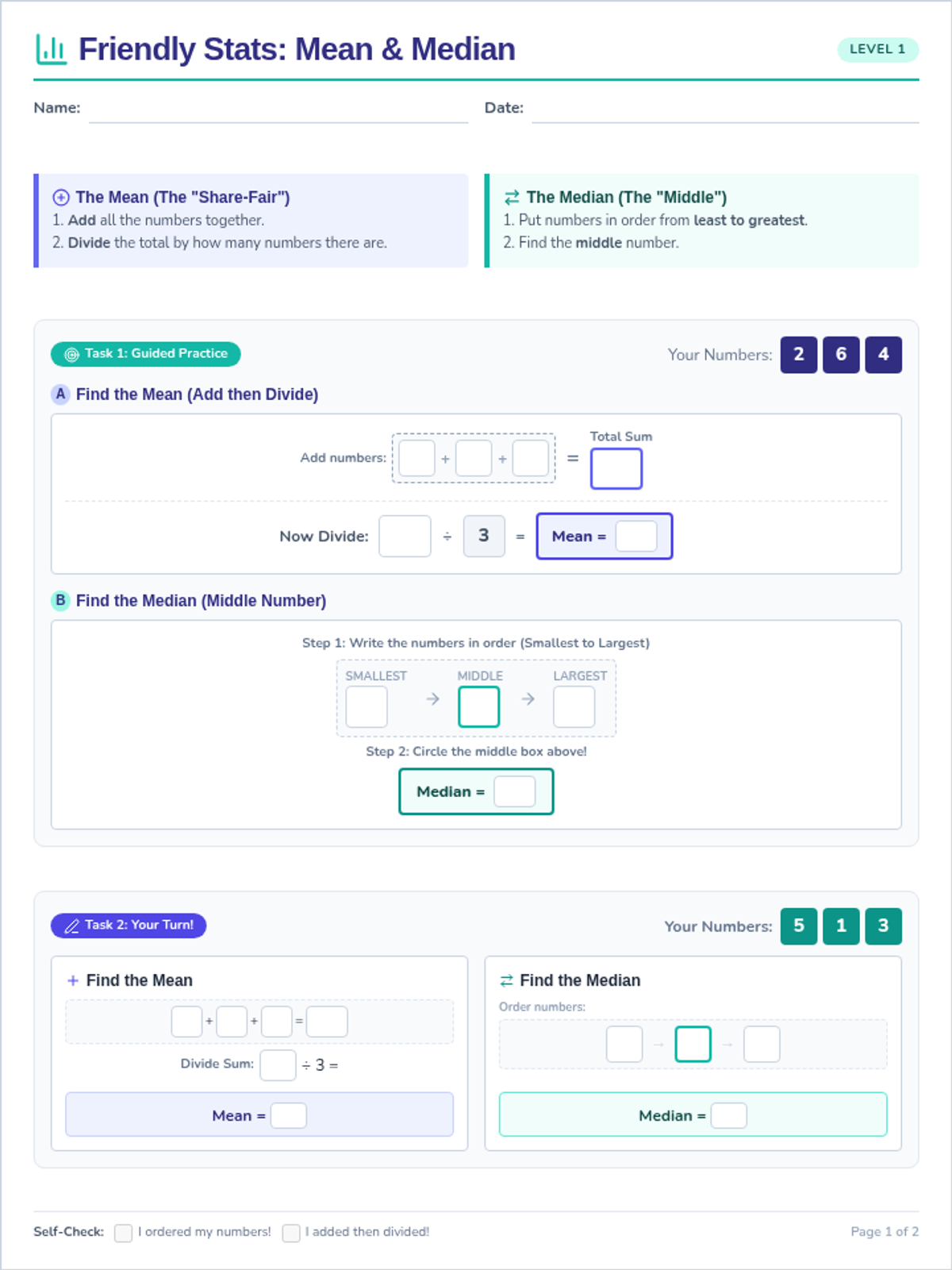
A 2-page highly scaffolded worksheet for finding the mean, median, mode, and range using small, single-digit datasets (3-5 numbers), featuring visual graphic organizers and large text sizes for accessibility.
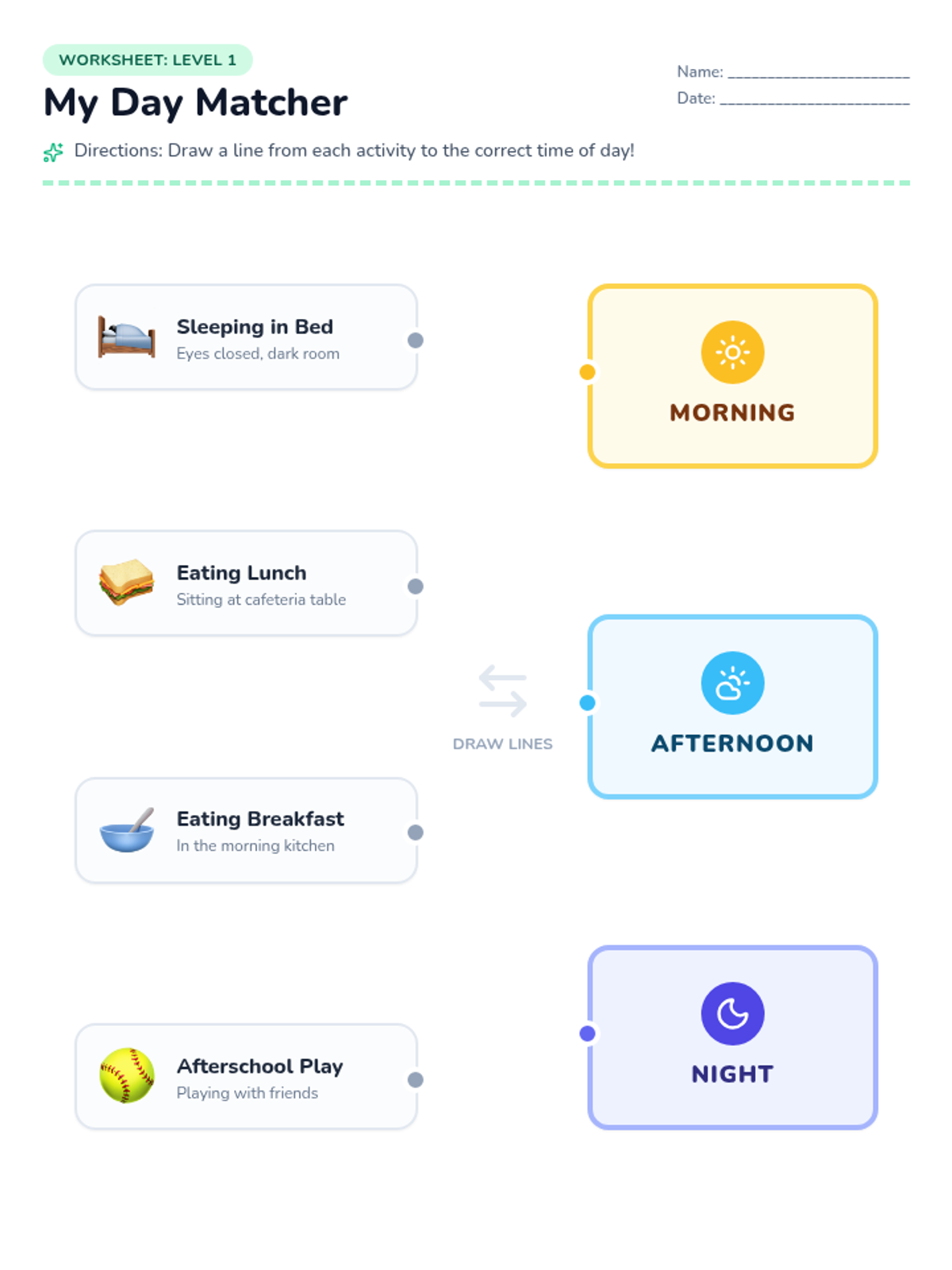
Differentiated activity worksheets with extensive visual supports. Page 1 focuses on morning, afternoon, and night matching. Page 2 scaffolds reading analog clocks to the hour for key day transitions. All options styled identically to prevent styling-based answers.
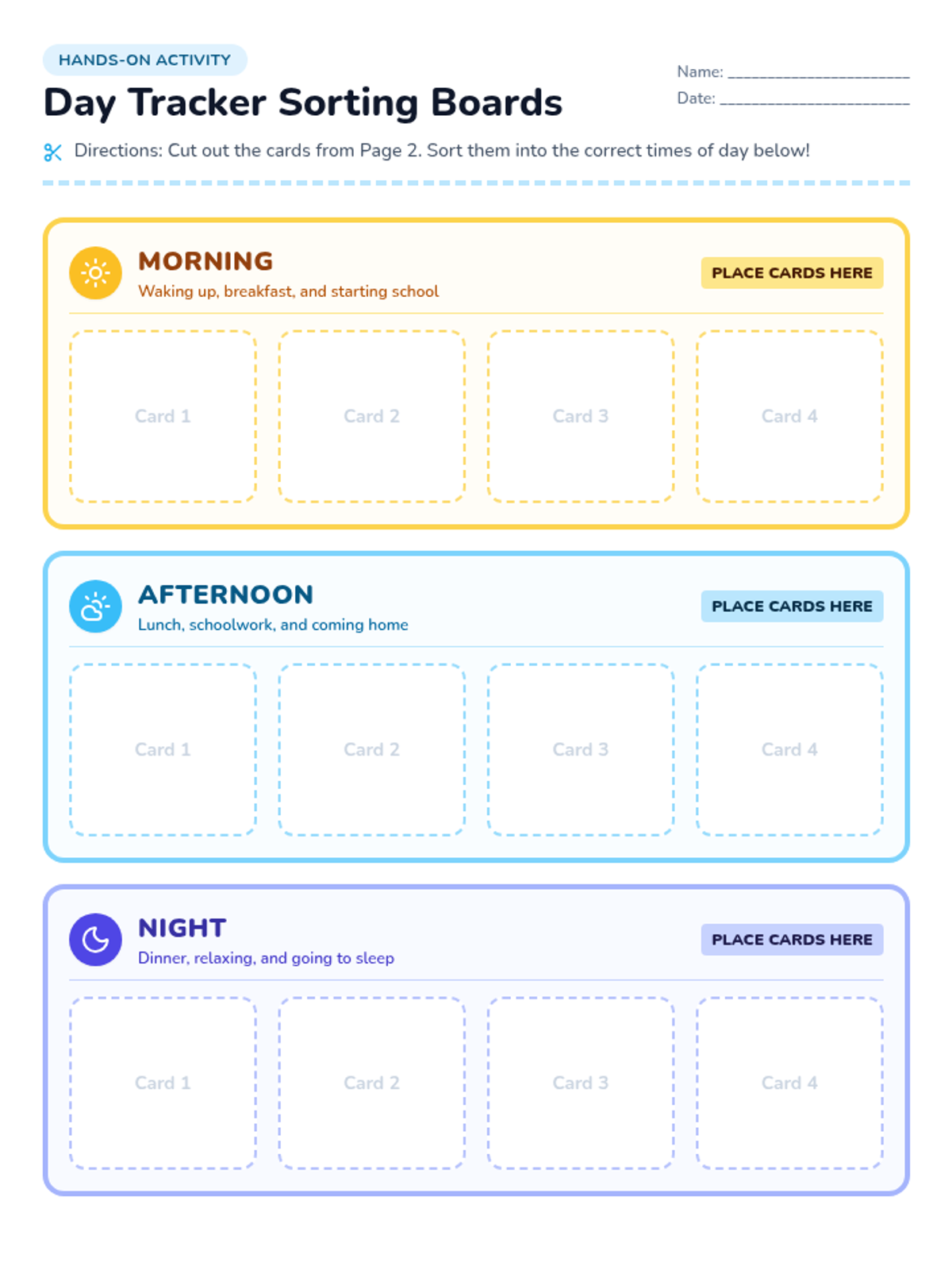
Printable visual sorting boards and 12 daily routine card cut-outs designed for low-cognitive ability students. Includes morning, afternoon, and night color-coded classification mats with clear icons and visual schedules.
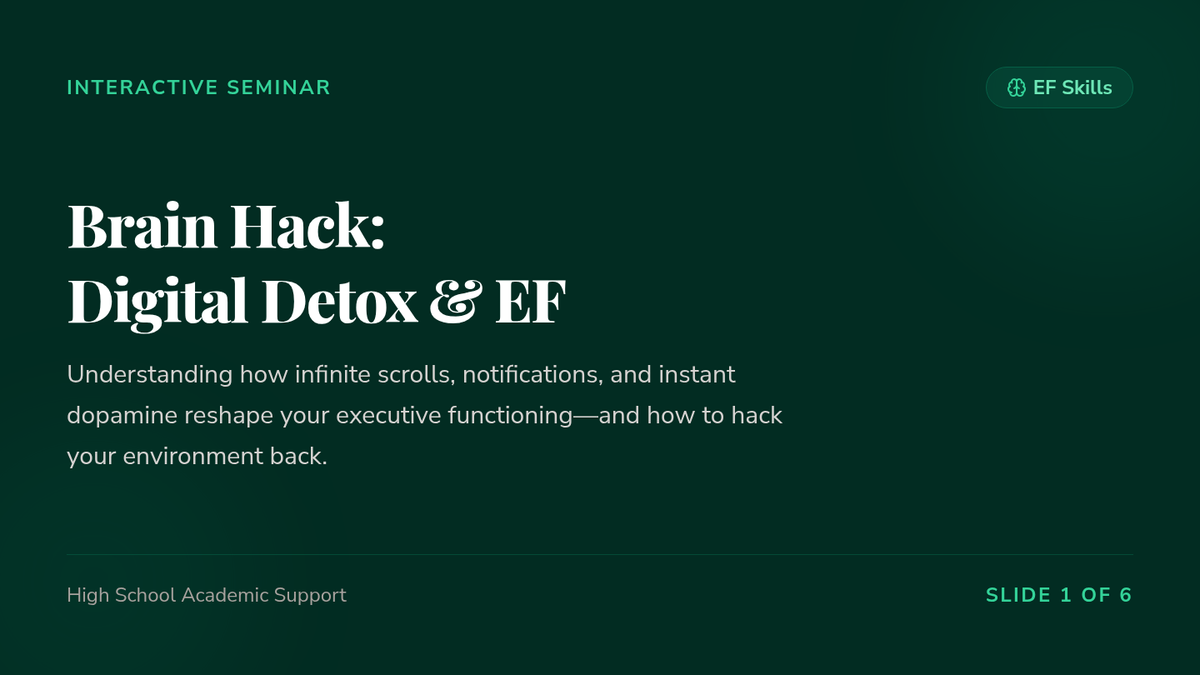
An engaging 6-slide presentation exploring the relationship between digital habits, screen time, and executive functioning skills. Designed with a clean, high-impact aesthetic to support classroom discussion and student reflection.
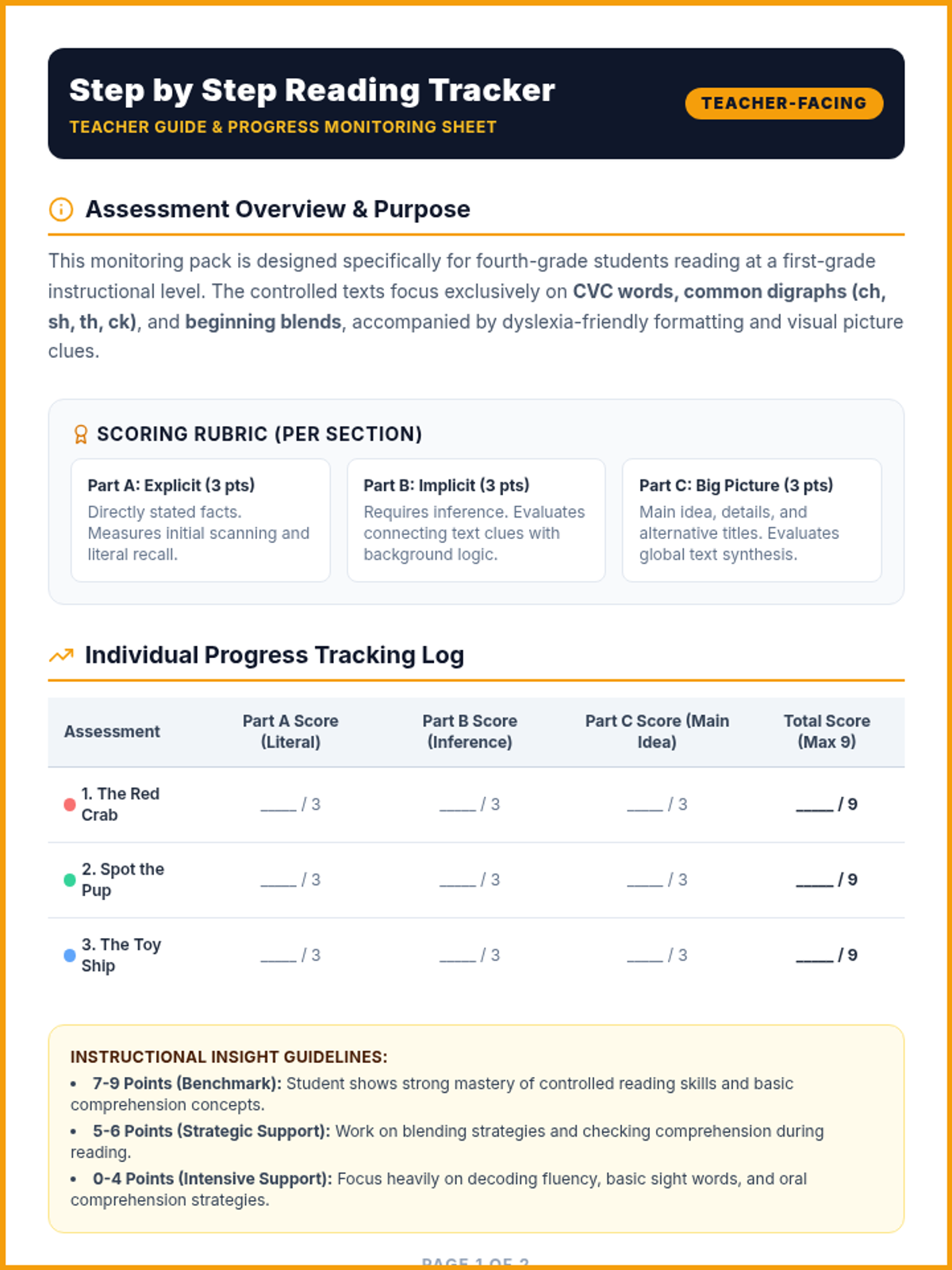
A teacher resource guide providing instruction scripts, target rubric standards, developmental progress tracker charts, and direct answer keys for all three assessments in the progress monitoring pack.
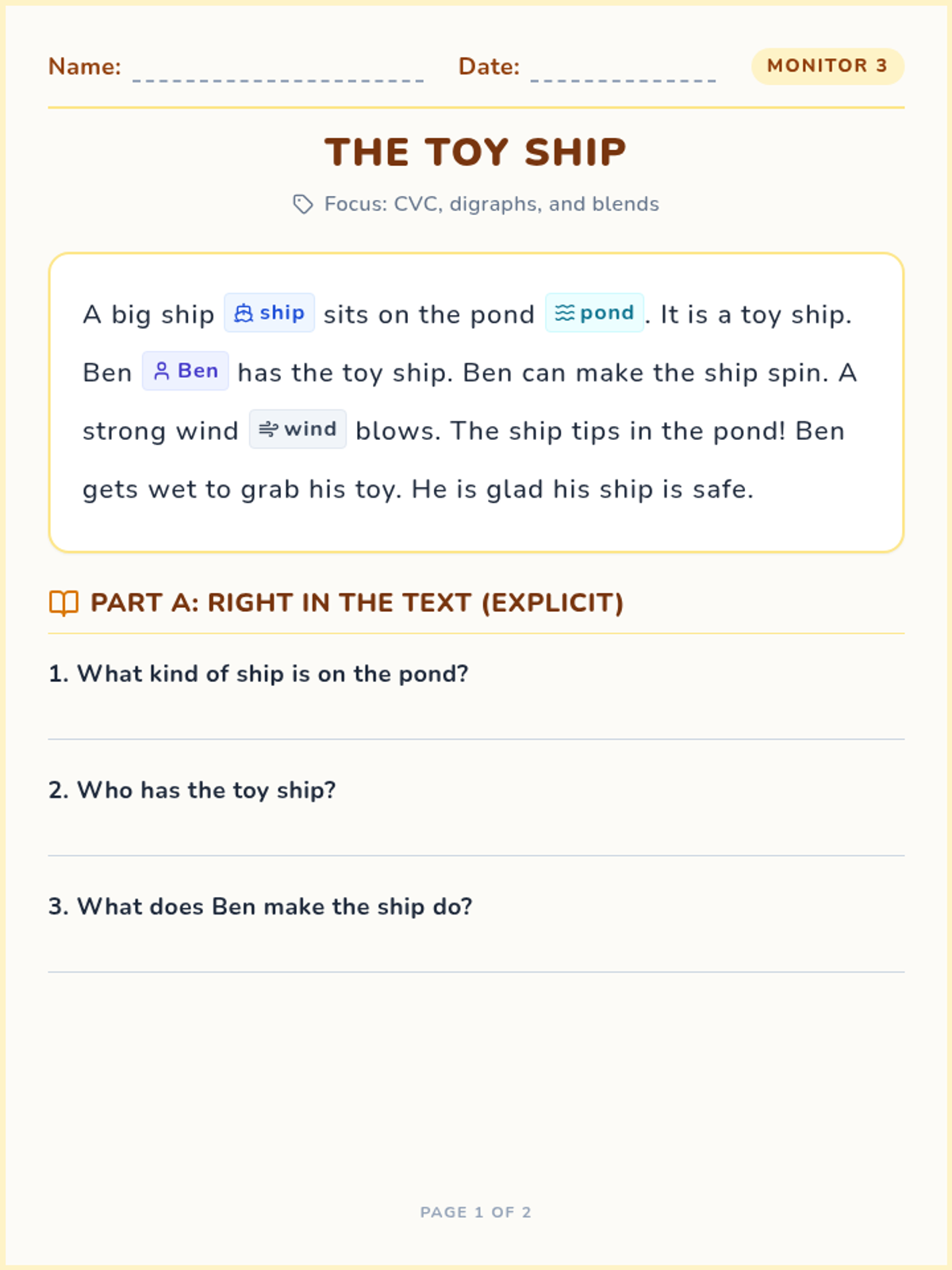
Assessment 3 of the reading progress monitoring pack, featuring the phonics-controlled story 'The Toy Ship' with dyslexia-friendly spacing, visual icon supports, and questions focusing on explicit, implicit, and main idea skills.
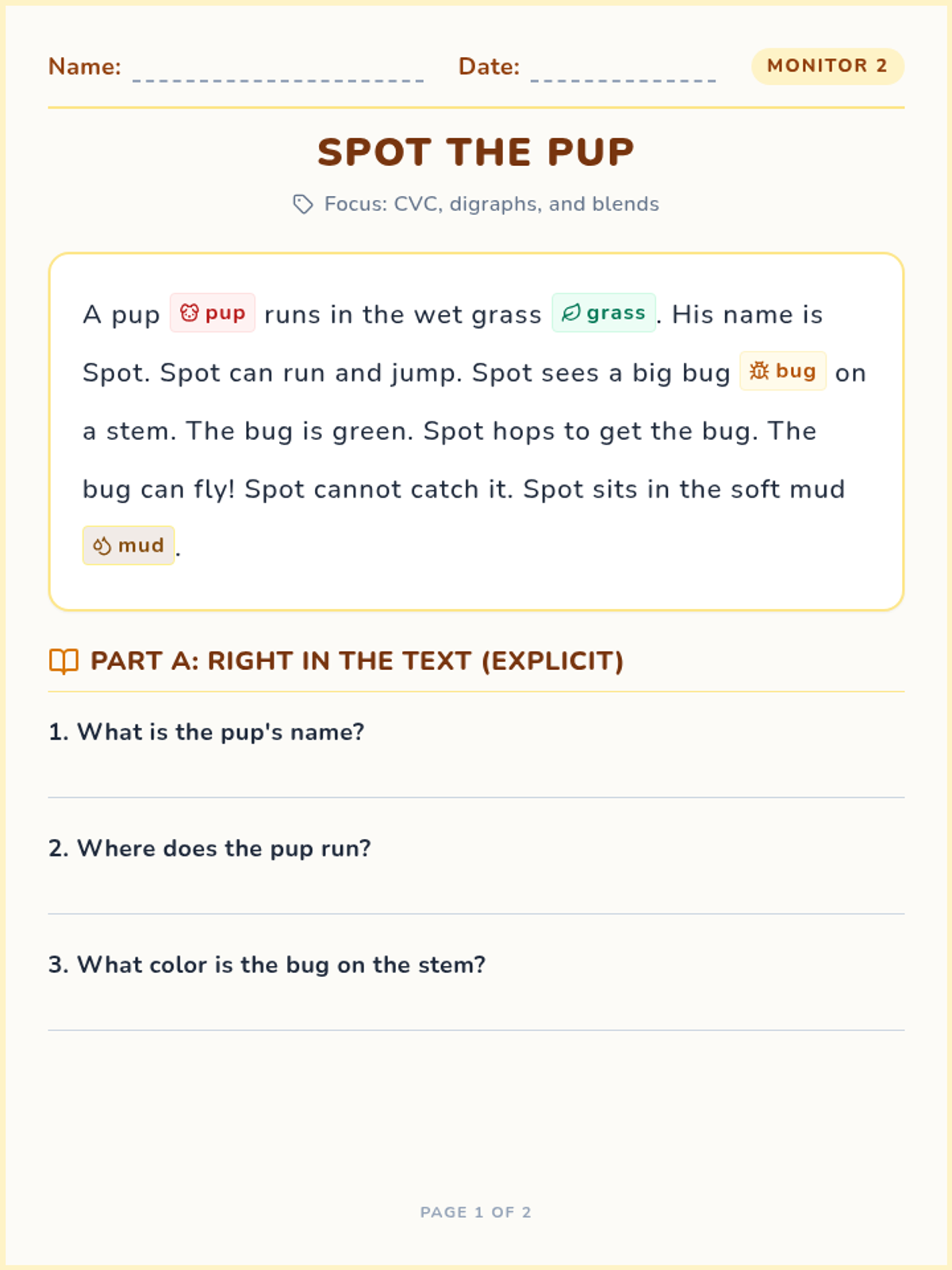
Assessment 2 of the reading progress monitoring pack, featuring the phonics-controlled story 'Spot the Pup' with dyslexia-friendly spacing, visual icon supports, and questions focusing on explicit, implicit, and main idea skills.
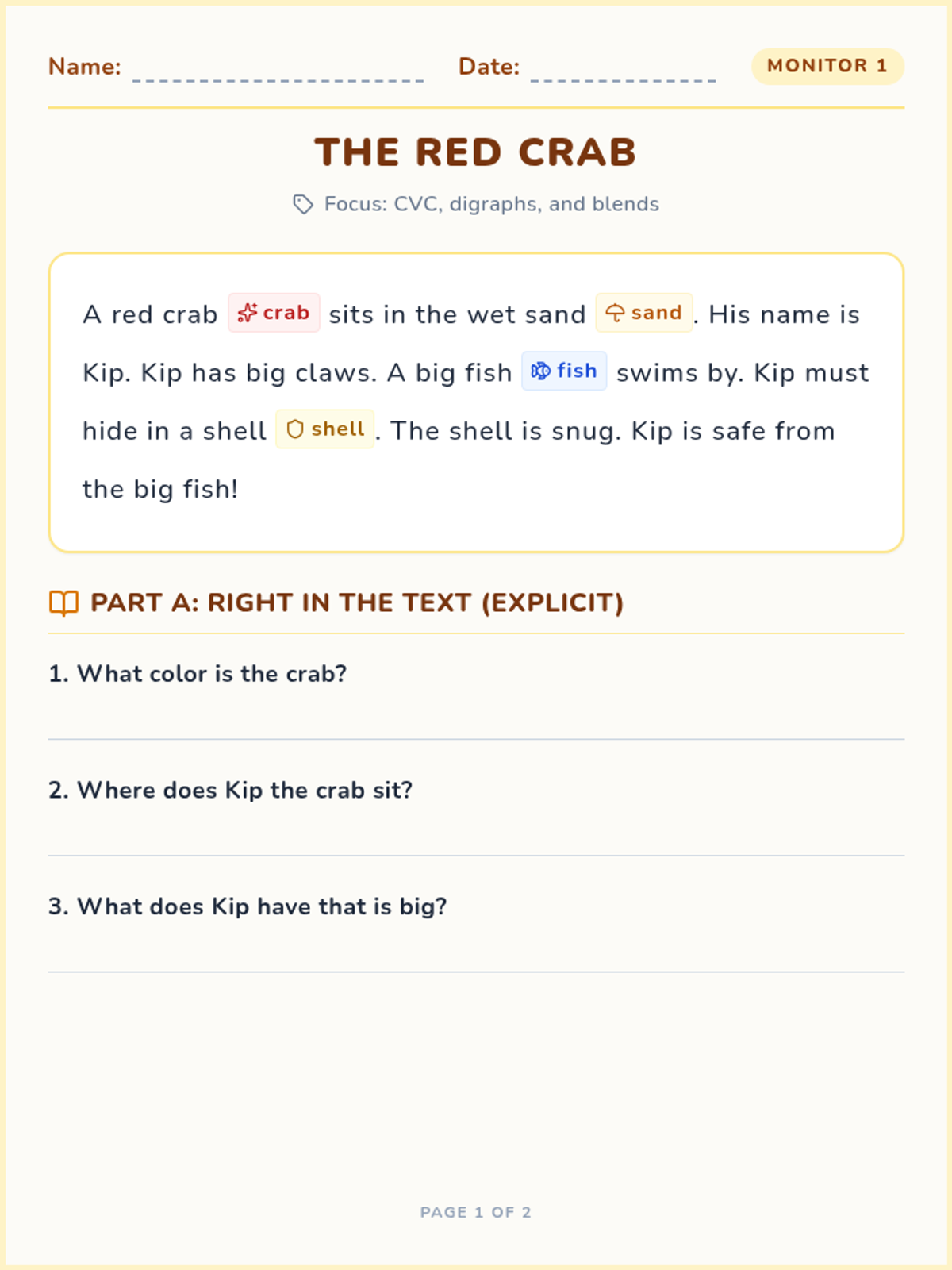
Assessment 1 of the reading progress monitoring pack, featuring the phonics-controlled story 'The Red Crab' with dyslexia-friendly spacing, visual icon supports, and questions focusing on explicit, implicit, and main idea skills.
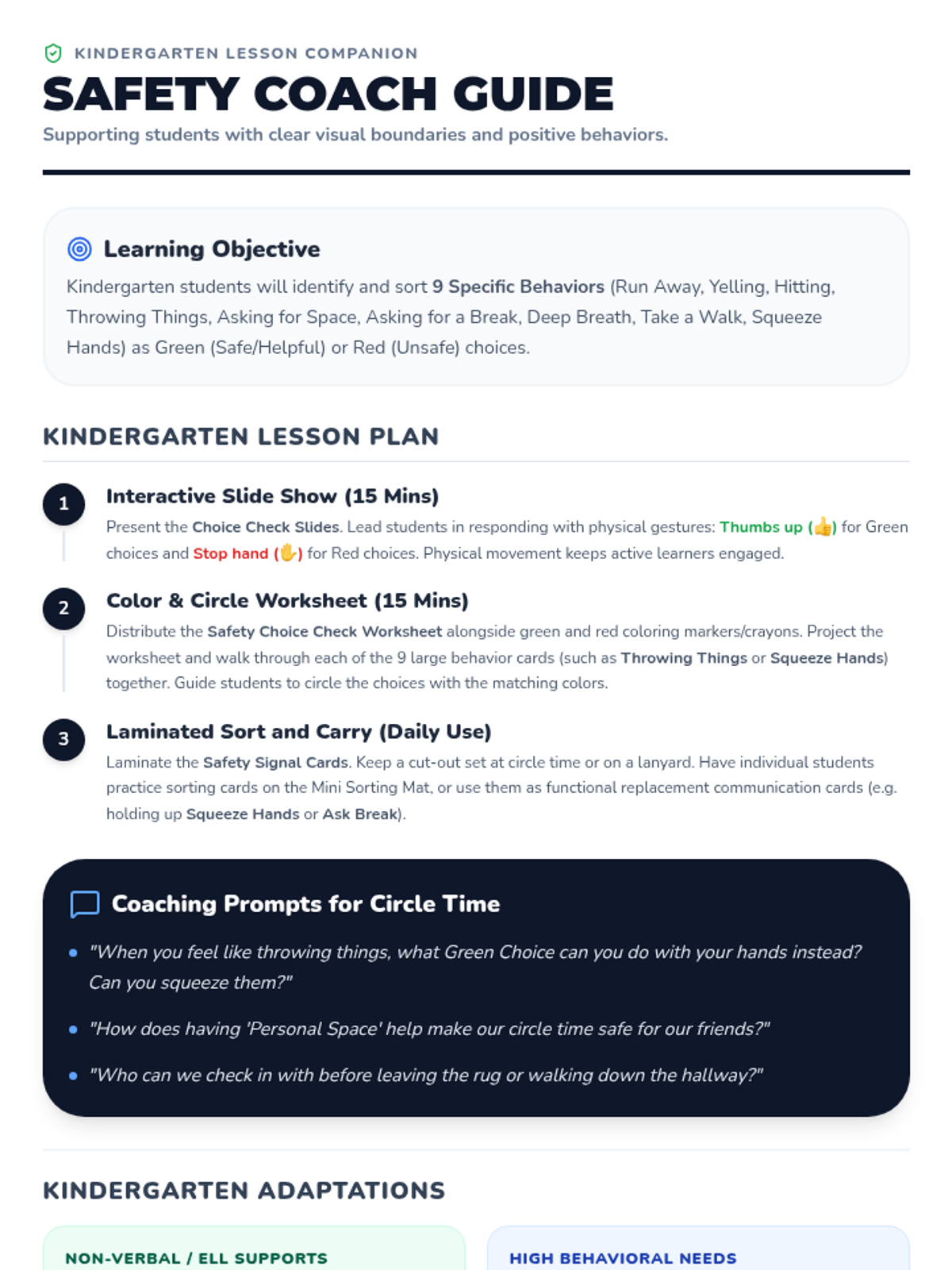
Instructional guide for teachers to facilitate the safety choices lesson. Includes discussion prompts, implementation steps, and differentiation strategies.
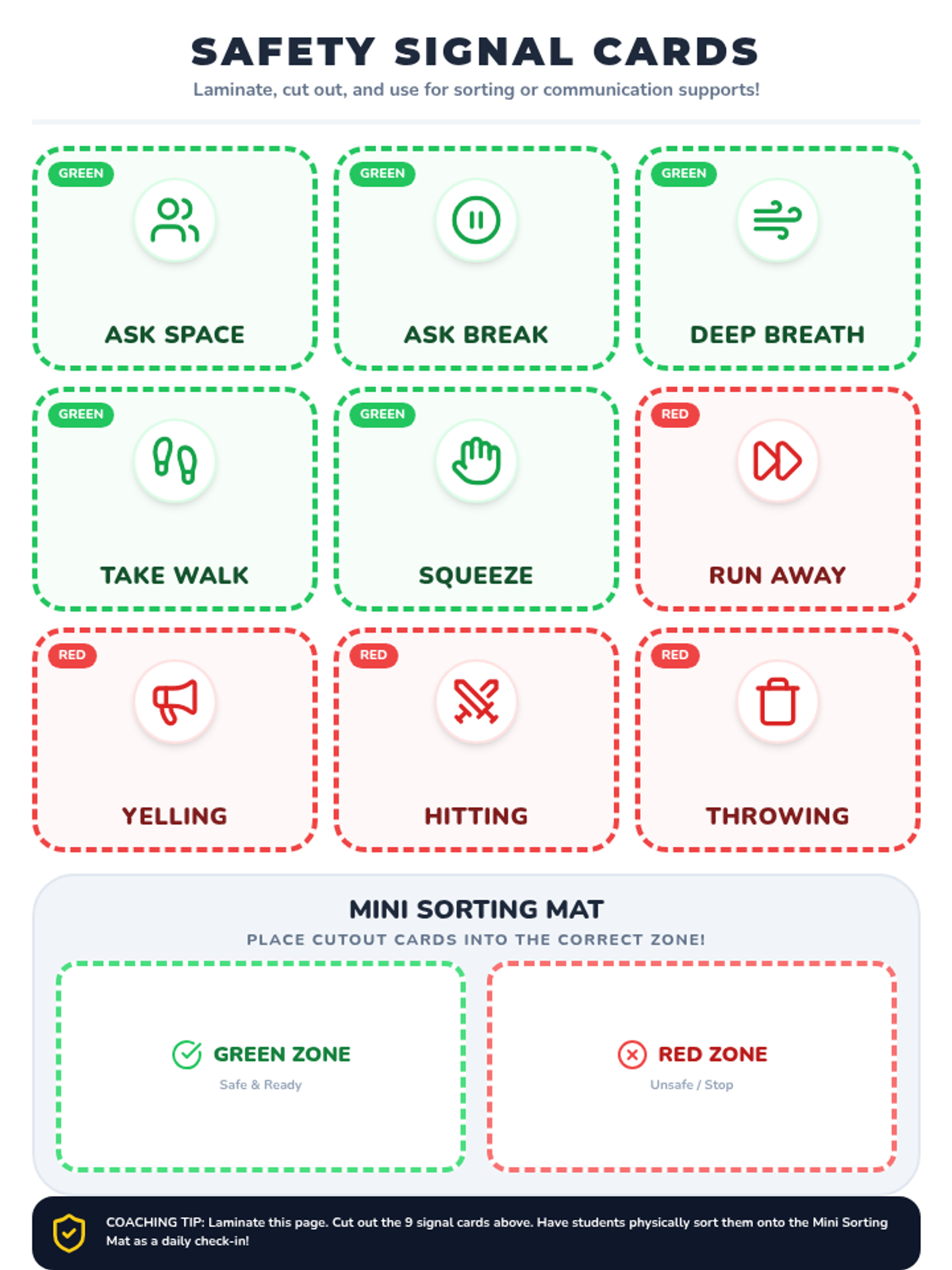
A visual reference sheet with cards that can be cut out and used as communication prompts for students. These cards reinforce safe "Green Choice" alternatives to unsafe behaviors.
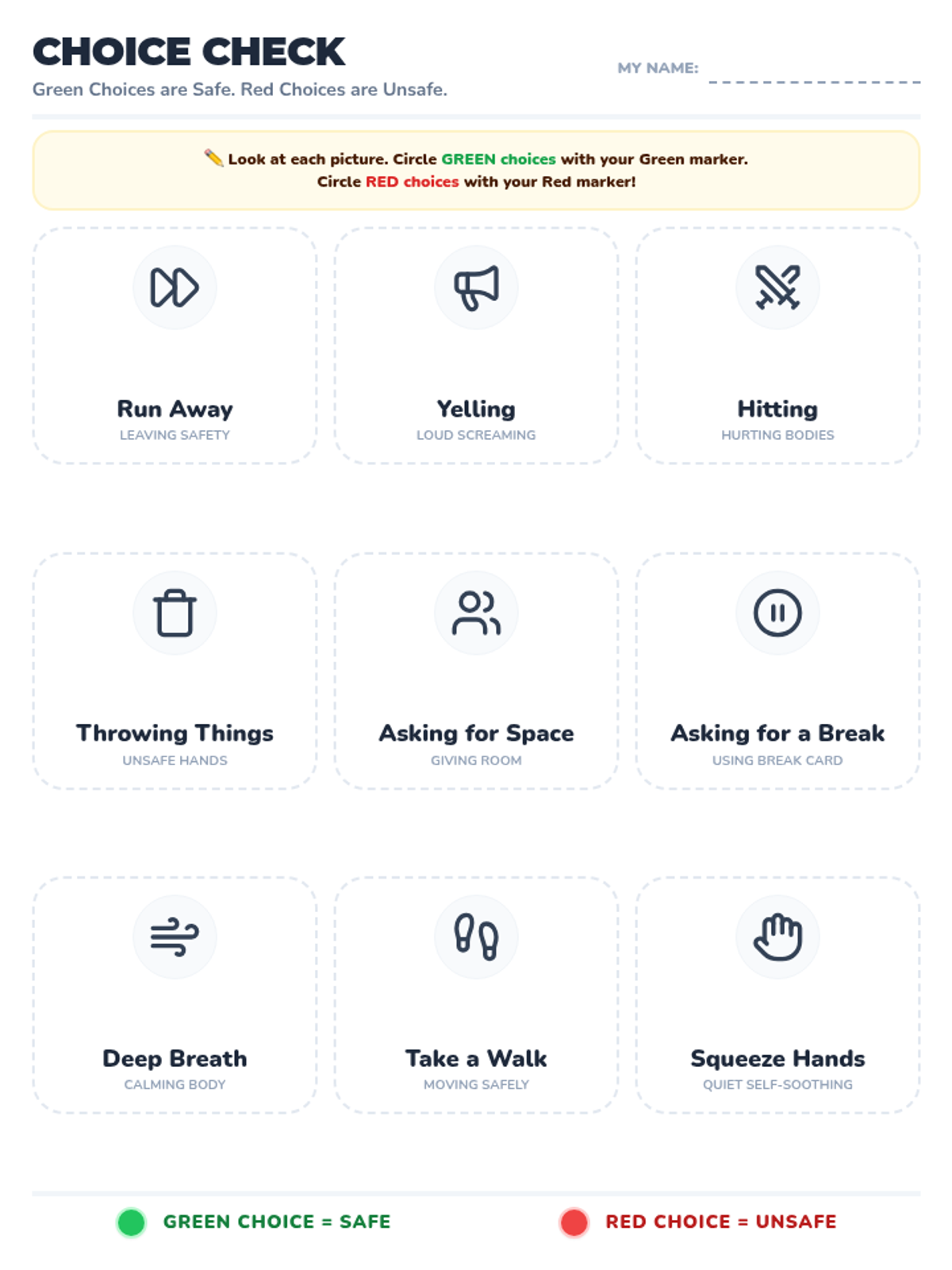
A visual worksheet designed for Kindergarten where students use green and red markers to circle 9 large behavior cards as Green (Safe) or Red (Unsafe) choices.
A Kindergarten-optimized slideshow introducing Green (safe, helpful) and Red (unsafe, unhelpful) choices with large fonts, bright visuals, and interactive sorting slides.
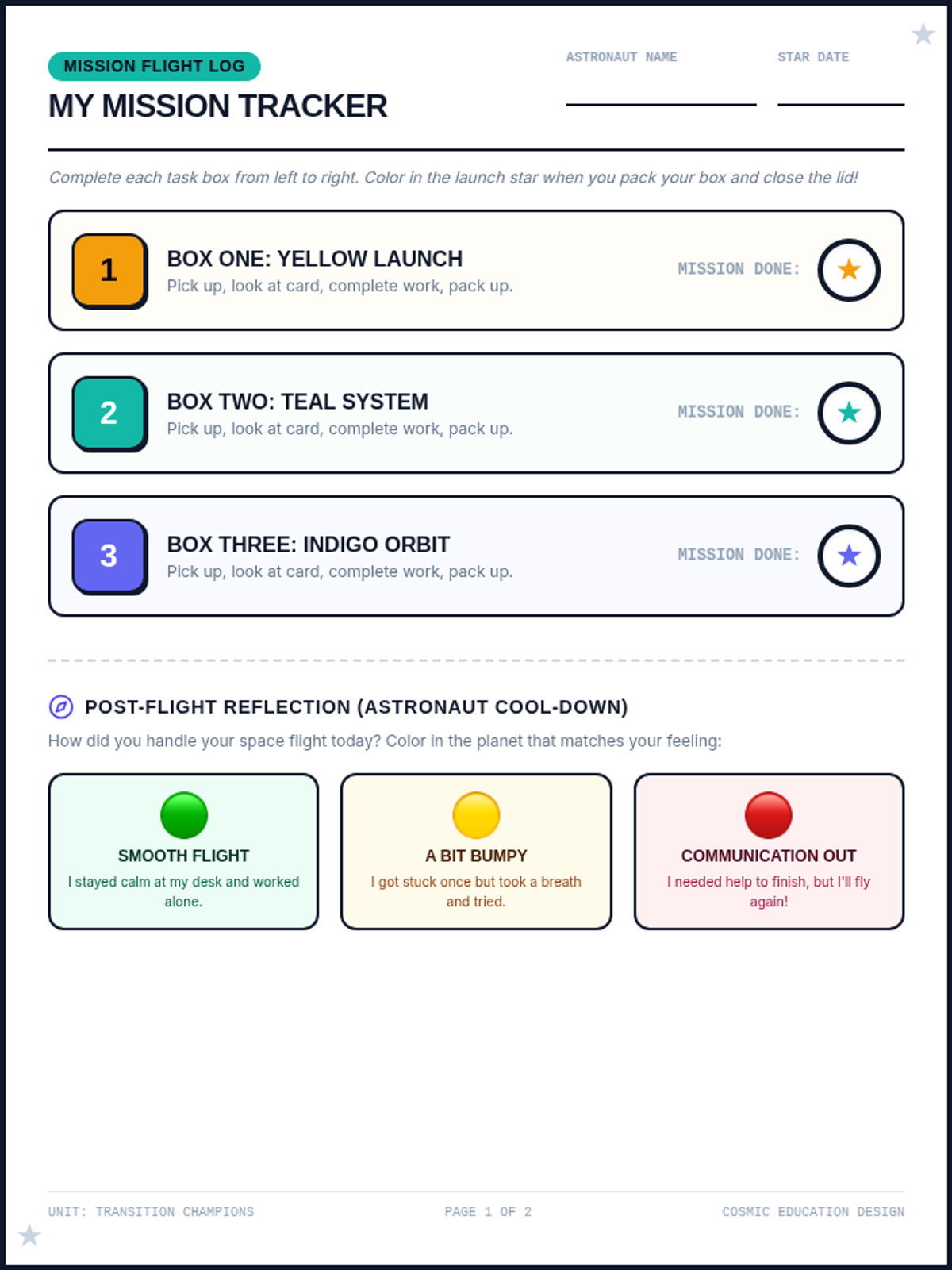
A student-facing self-monitoring desk strip and emotional cool-down reflection log, accompanied by a structured teacher data tracker to measure independence and stamina over multiple days.
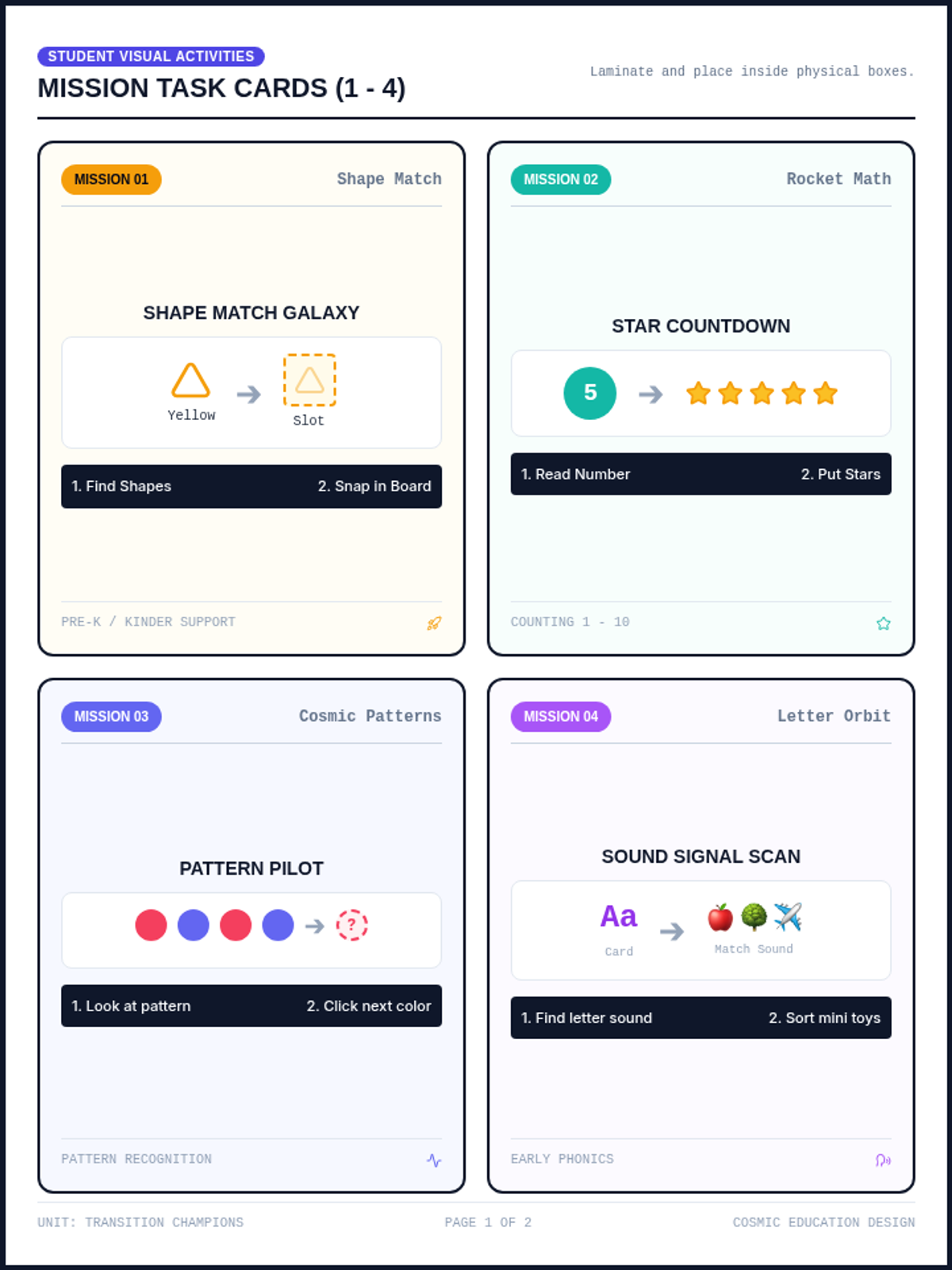
A set of 8 printable space-themed visual instructional task cards. These cards are placed directly inside student task boxes to guide hands-on learning tasks with minimal text and heavy visual prompts.
An engaging, highly visual 4-slide dashboard designed to present the 'Mission Independence' protocol directly to students. It introduces the four-step workflow, coping cards for getting stuck, and features an active mission start screen.
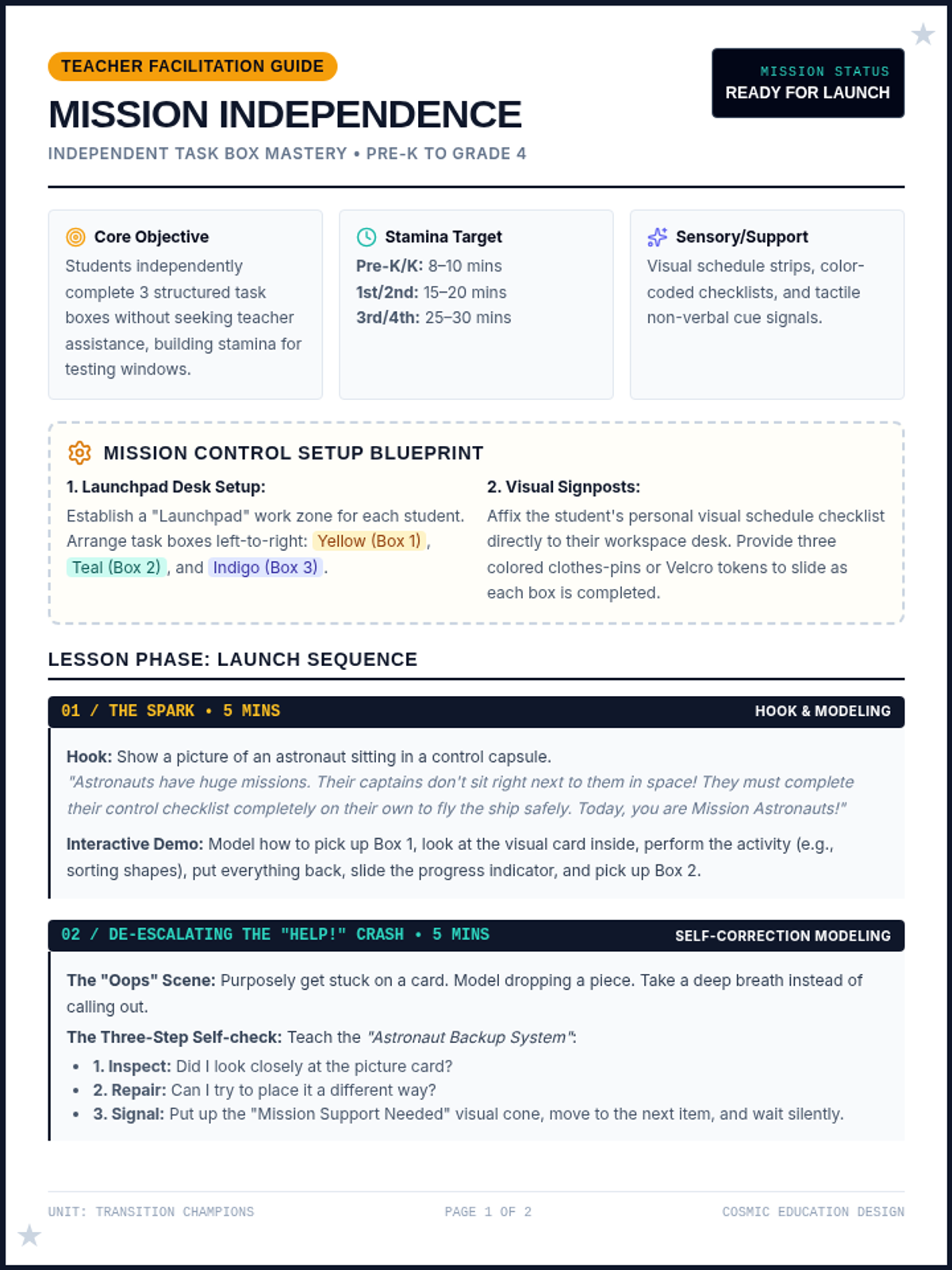
A structured, space-themed guide for teachers to implement the 'Mission Independence' task box system. It includes setup blueprints, step-by-step facilitation scripts, differentiation strategies, and visual staging tips.
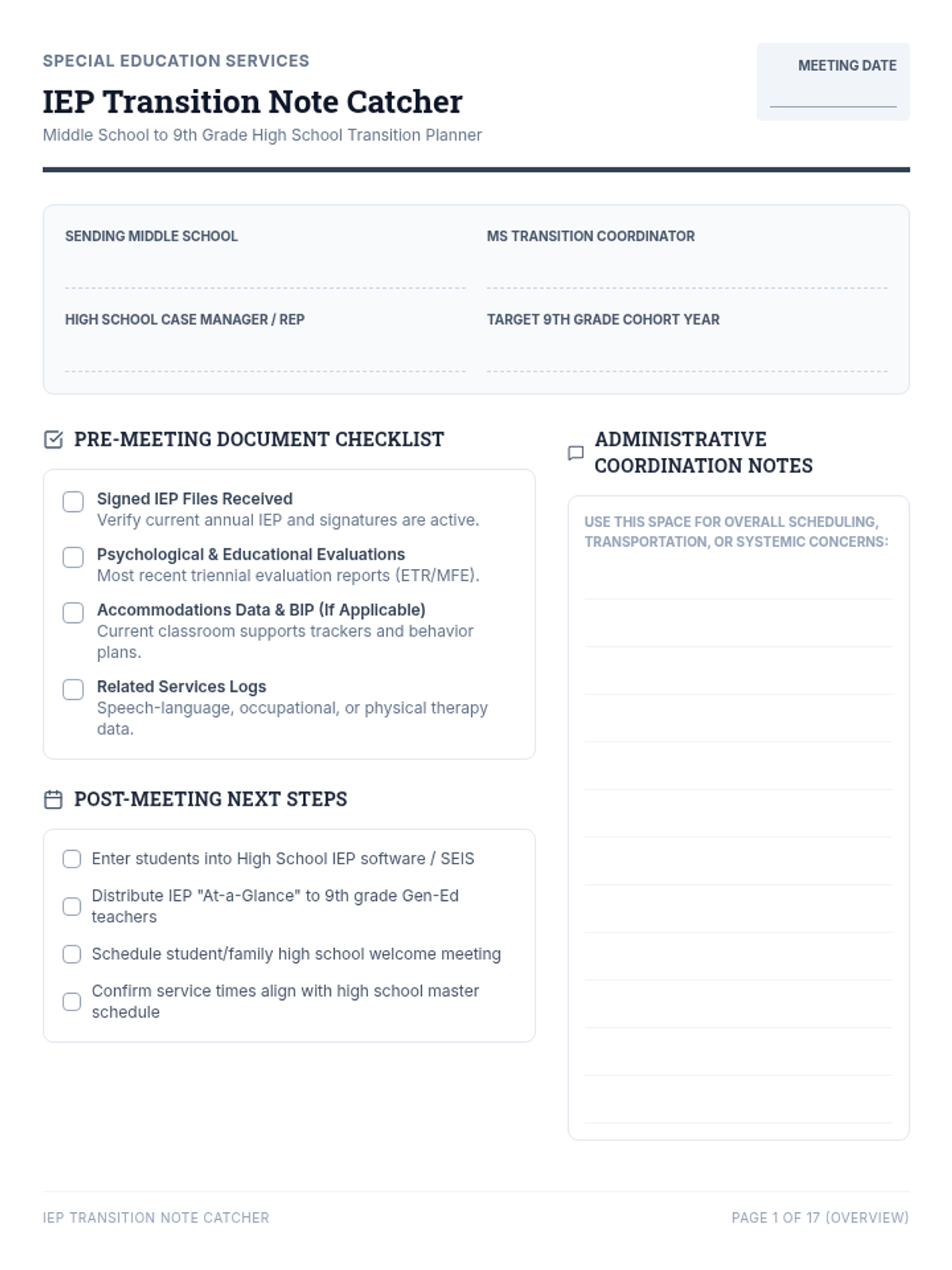
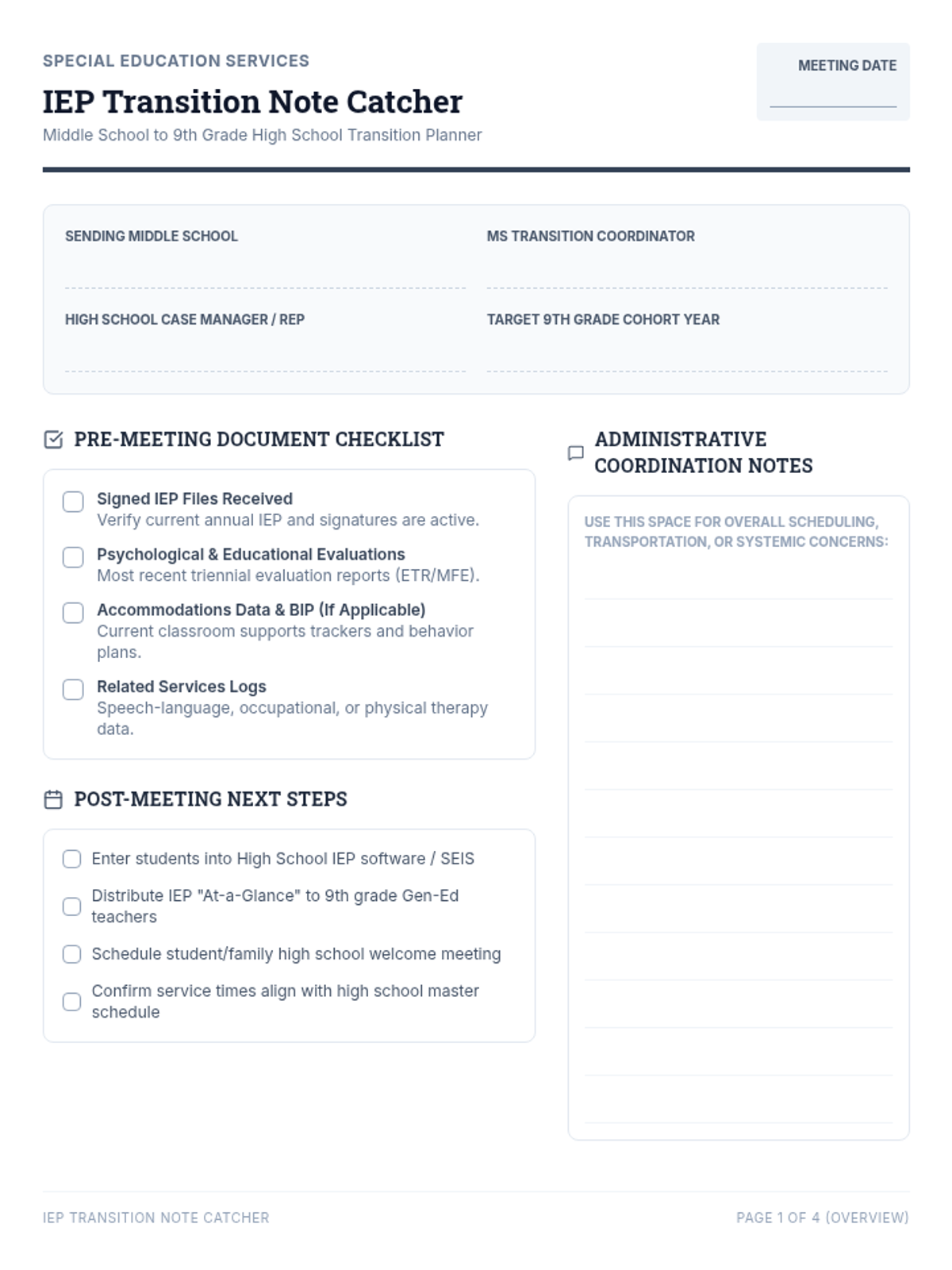
A seventeen-page transition note catcher designed for larger cohorts, featuring an administrative checklist, a cohort roster summary with 15 student rows on page 2, and 15 individual student transition profiles for high-capacity meetings.
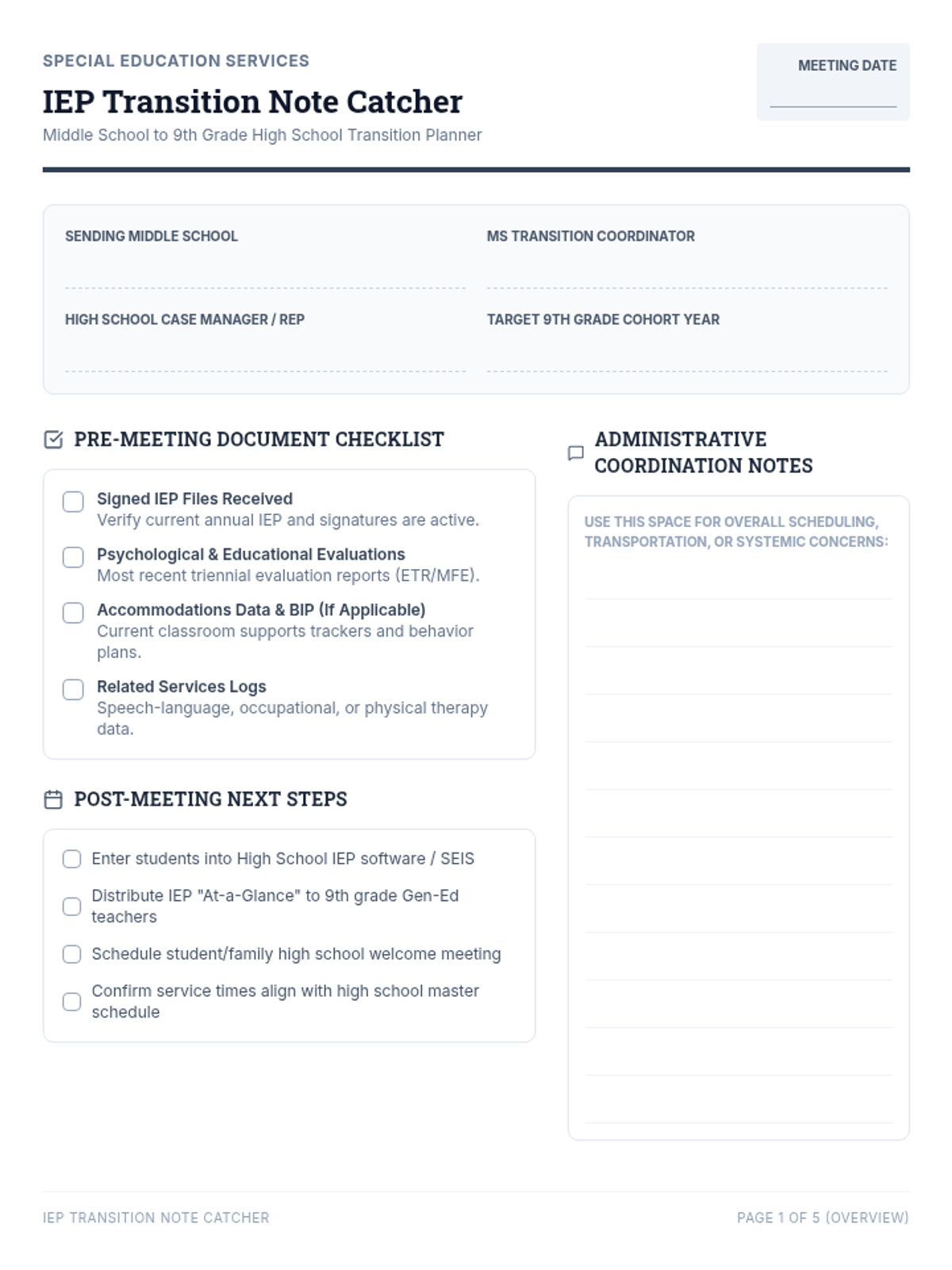
A five-page printable transition note catcher featuring an administrative checklist, an overall student roster summary table, and three individual student IEP transition profiles.
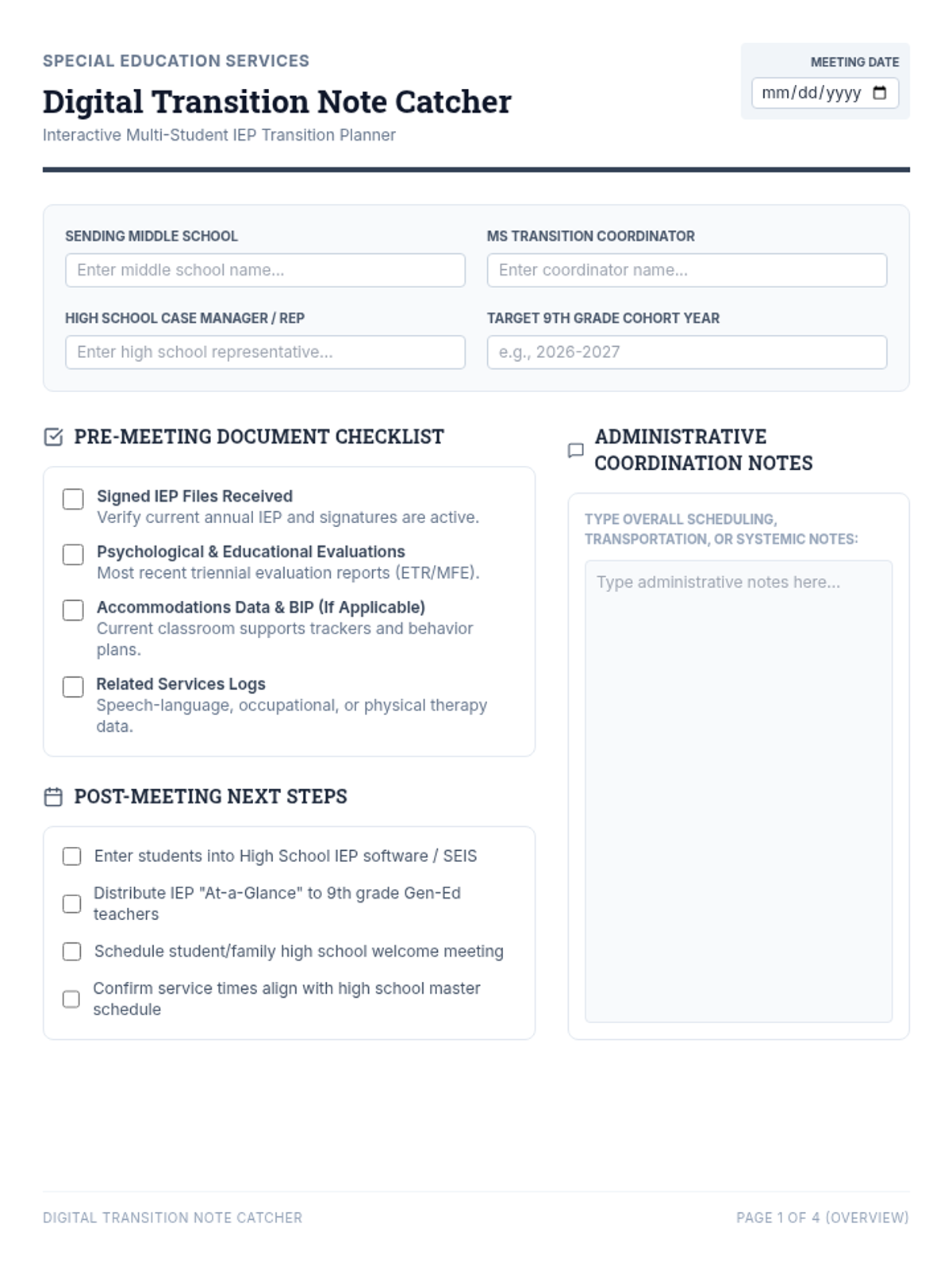
An interactive digital version of the IEP Transition Note Catcher, featuring fillable text inputs, textareas, and checkboxes, allowing special education teachers to type notes directly during meetings or export as a fillable PDF.
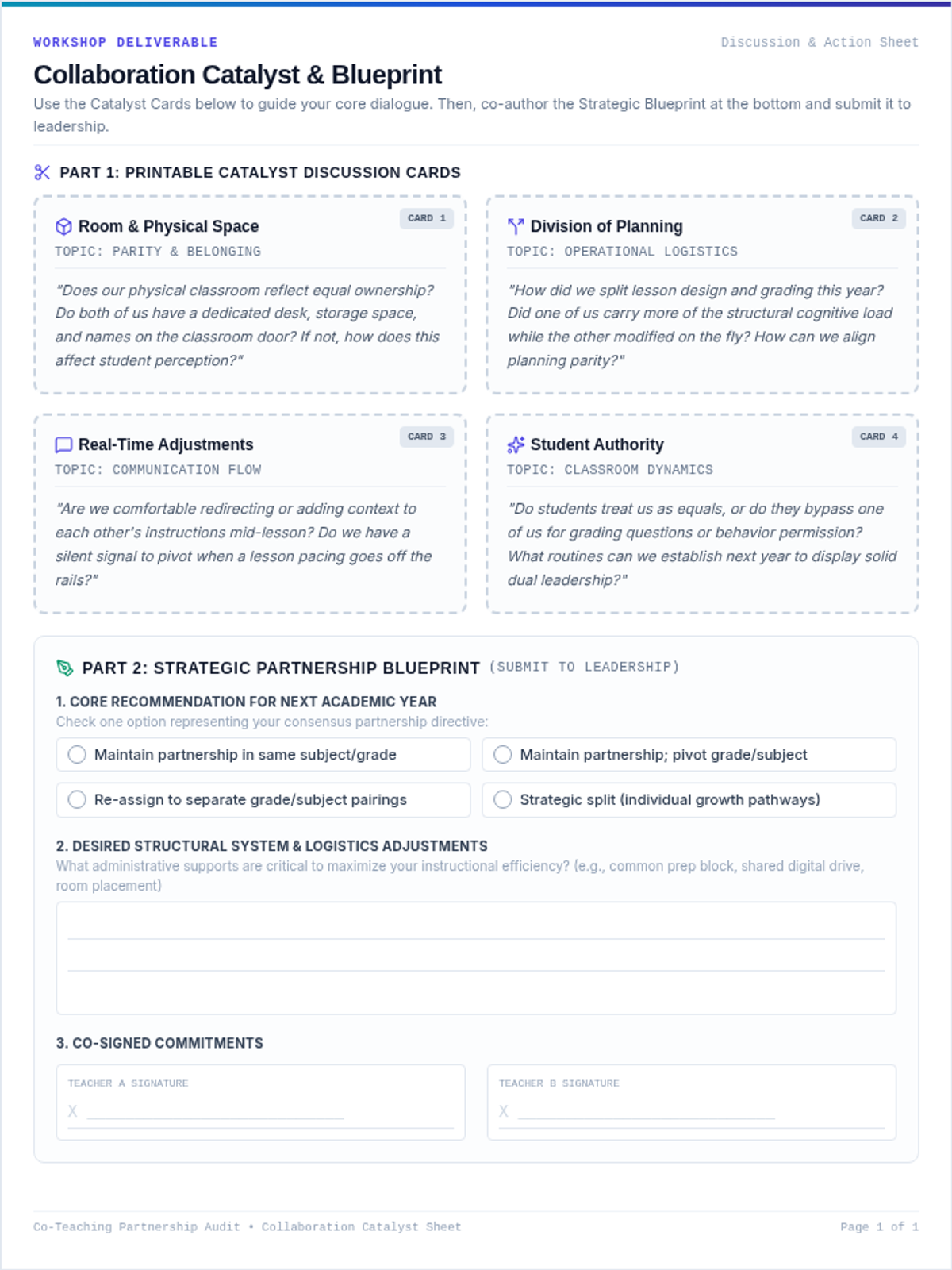
A 1-page printable tool containing 4 cut-out discussion prompt cards (Catalyst Cards) and a structured administrative recommendation form (Strategic Partnership Blueprint) to be completed by co-teaching pairs.
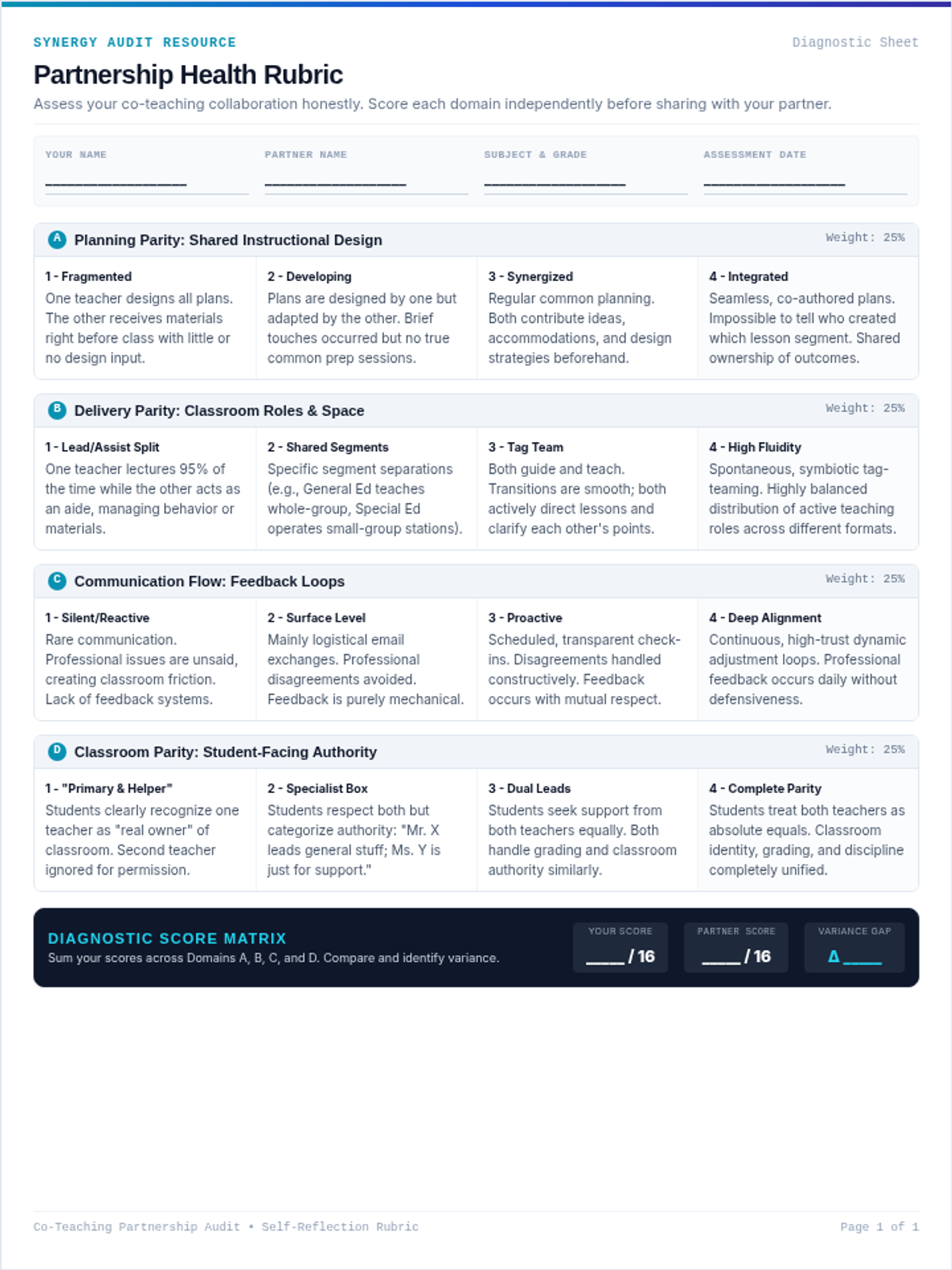
A 1-page structured self-reflection diagnostic rubric evaluating co-teaching partnerships across four key domains: Planning Parity, Delivery Parity, Communication Flow, and Classroom Parity. Features a 1-4 scale.
A 6-slide companion presentation deck for school leaders to project during the workshop. Features high-contrast typography (all text 24px+), clean visual aids of co-teaching models, and clear participant instructions.
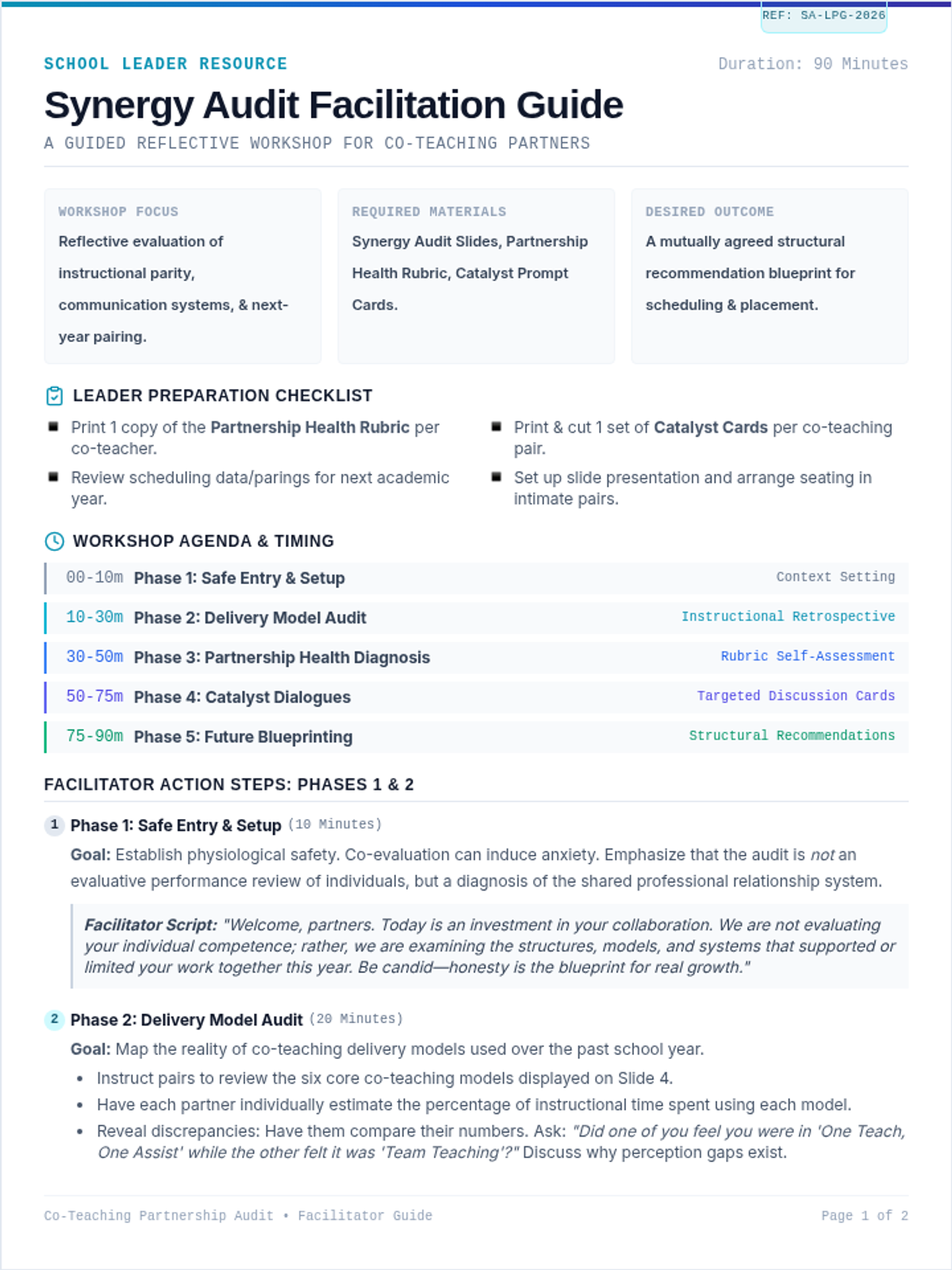
A 2-page step-by-step facilitation guide for school leaders to run a structured 90-minute end-of-year reflective workshop with co-teaching pairs. Includes workshop prep, timing, coaching tips, and transition steps.
An optimized four-page transition note catcher with maximized note-taking areas for Math, Reading, Writing, and Other IEP goals, alongside streamlined accommodations and behavior blocks.
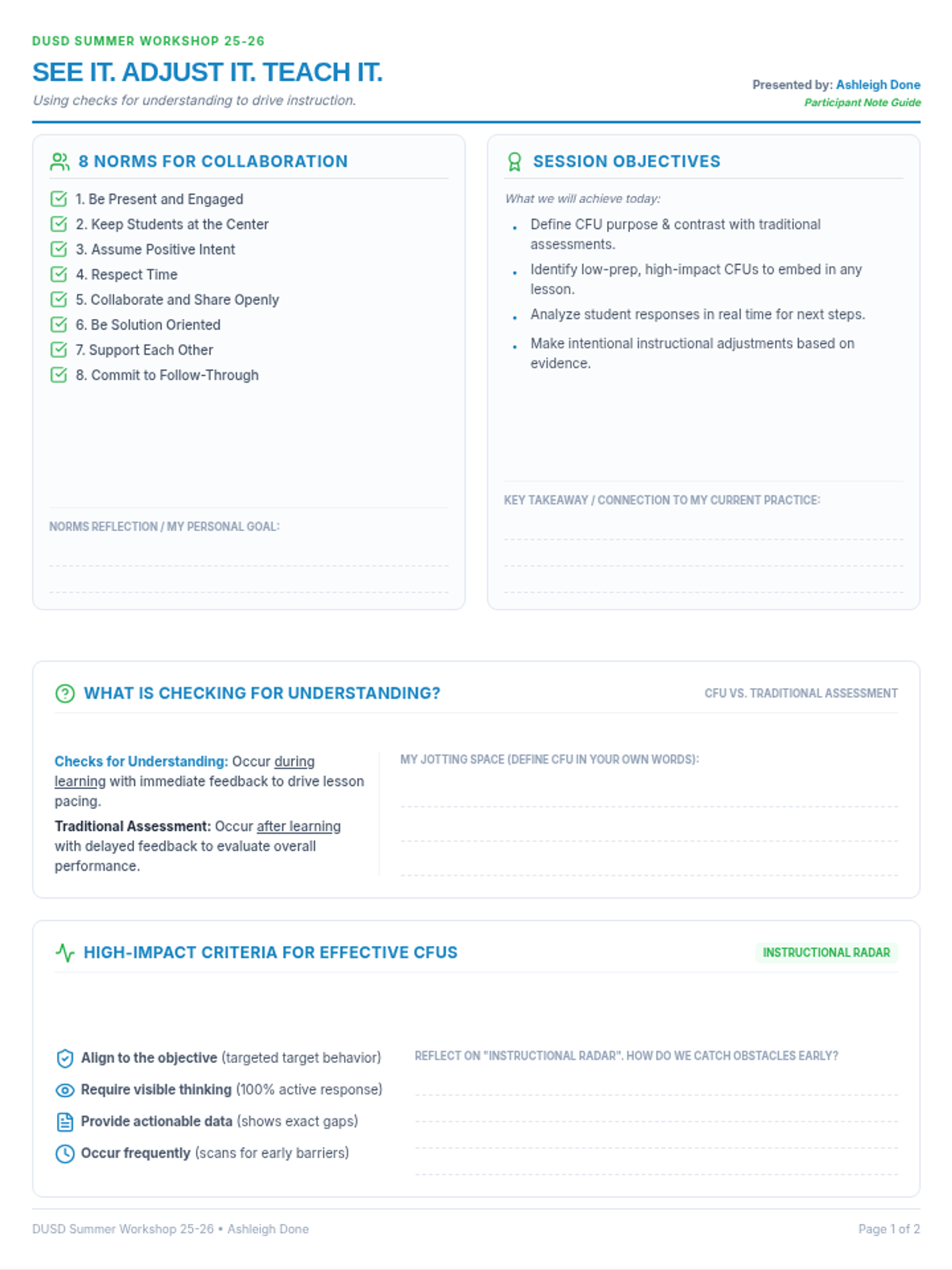
A two-page (front and back) clean, organized professional development note-taking guide custom-designed for the DUSD Summer Workshop presented by Ashleigh Done. It utilizes the workshop's specific blue and green brand colors to frame sections for session norms, objectives, CFU criteria, checking methods, and the R.A.M.P. framework.
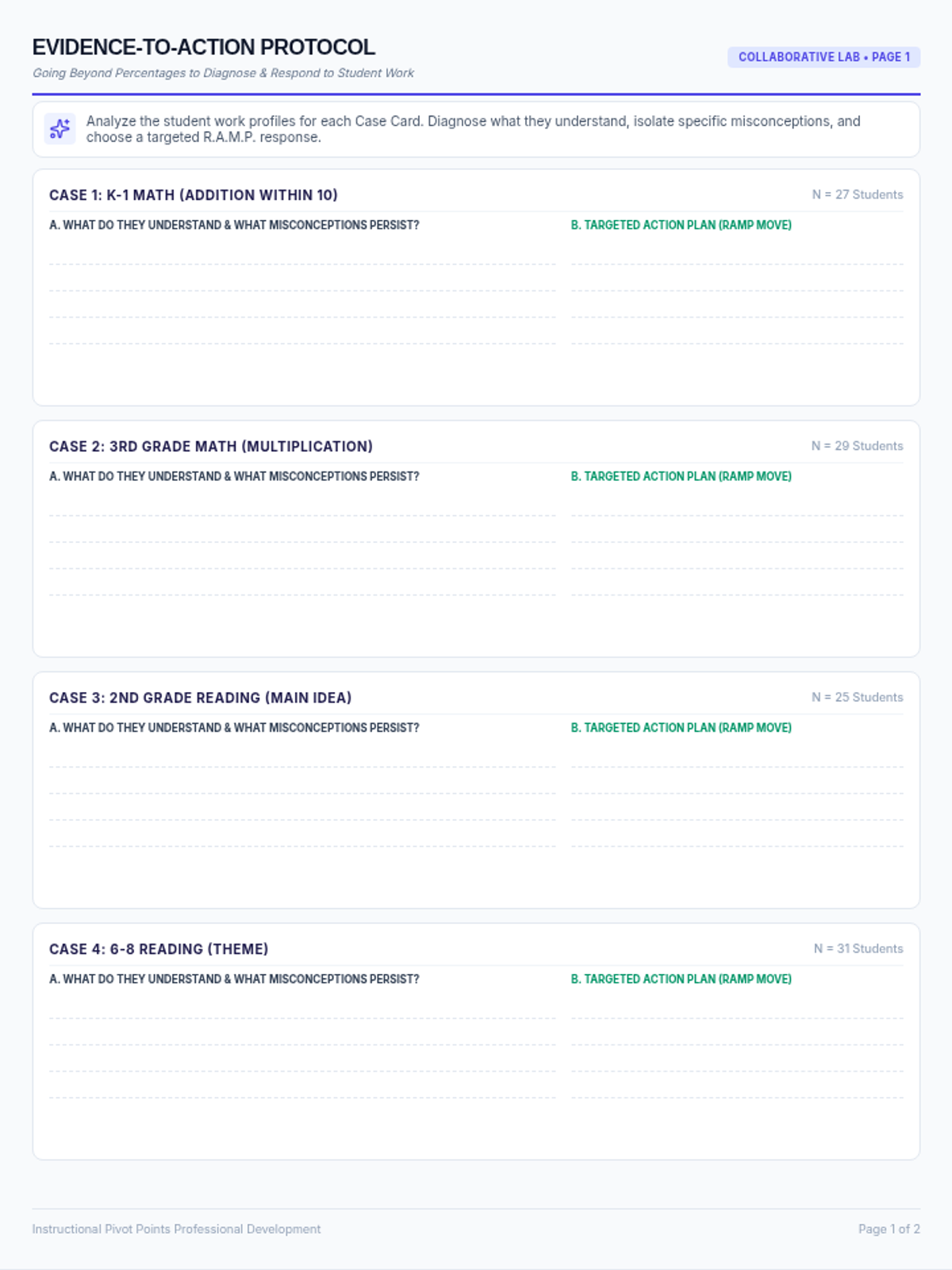
A revised two-page (front and back) professional development workshop handout for teachers to analyze raw student performance data across seven case cards. It uses an ultra-efficient, full-width row layout on both pages (4 rows per page) with a 2-column structure in each row, maximizing comfortable, wide handwriting lines.
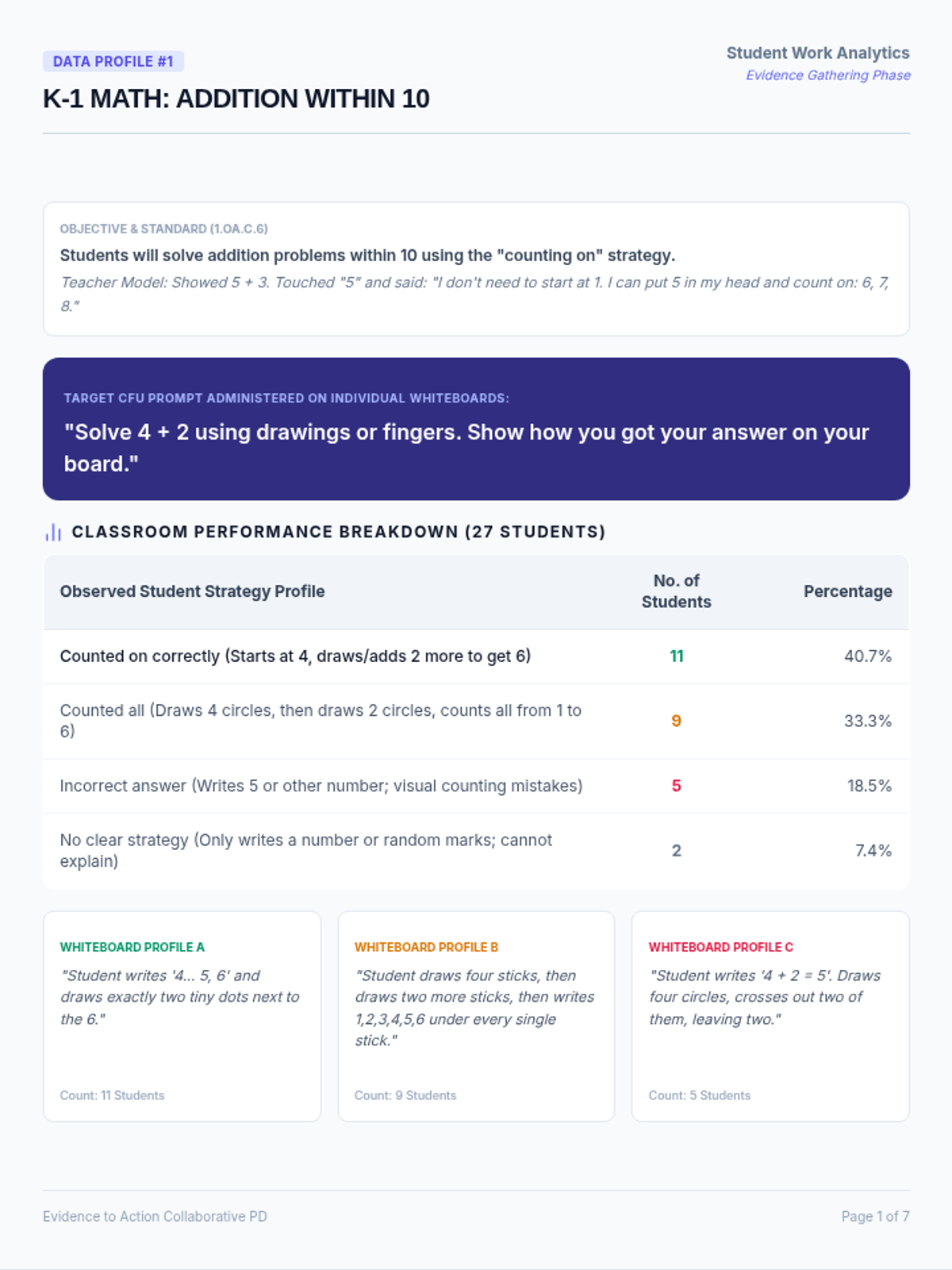
A seven-page professional development resource packet presenting realistic student work case studies and CFU raw datasets across multiple grades and subjects, including reading, math, and special education. It strips out the answers from the original PDF so participants must analyze the data, profile student misconceptions, and determine the next instructional actions themselves.
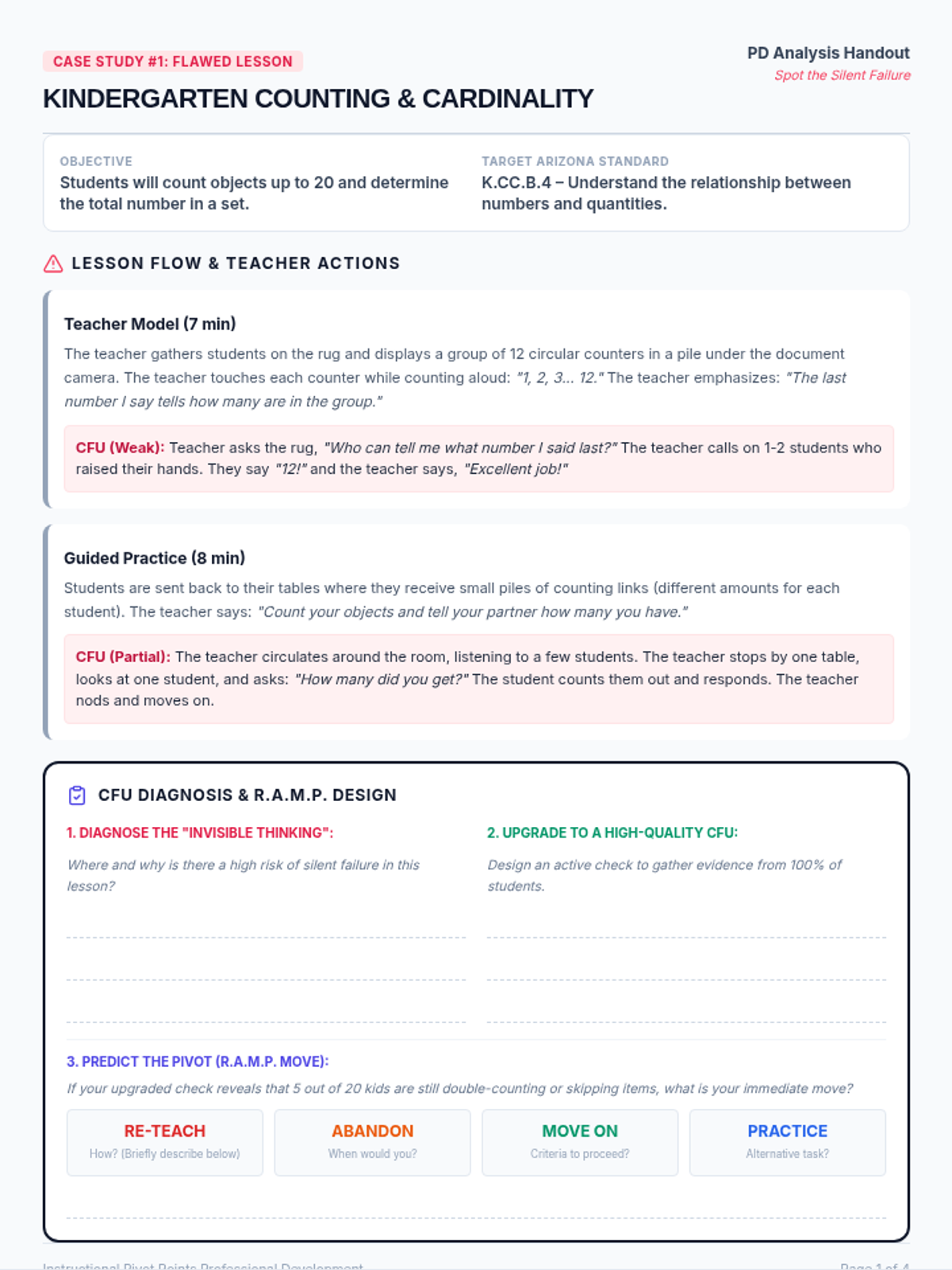
A revised four-page workshop packet featuring detailed but intentionally flawed lesson plans. Participants must analyze where student thinking is hidden, evaluate the weak CFUs, and design R.A.M.P. pivot moves to capture actionable evidence.