A set of 8 themed scenario cards designed for role-playing and skill practice, covering emotional regulation, communication, and boundary safety. Spacing adjusted for printer safety.
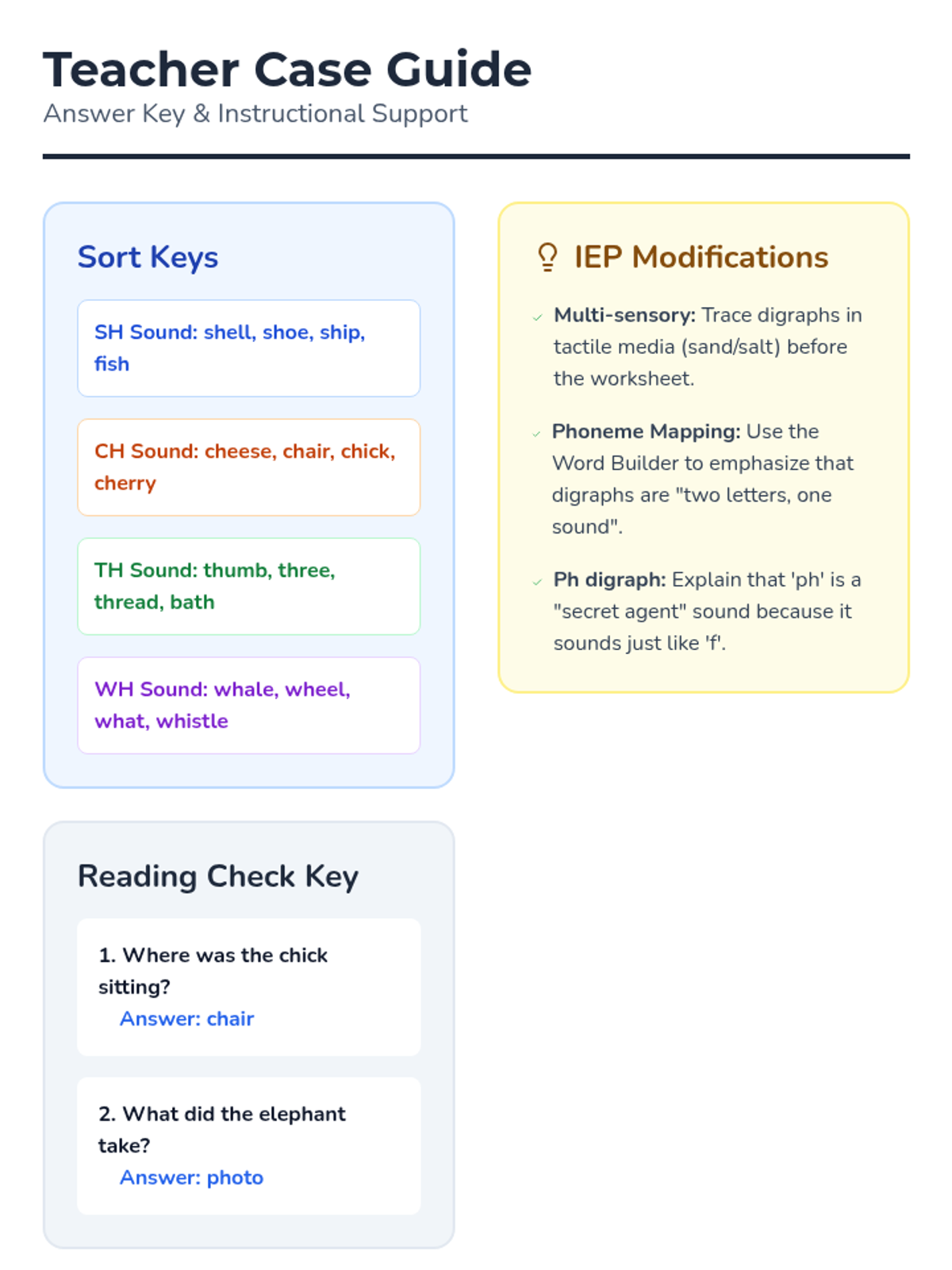
An answer key and teacher guide for the Digraph Detectives lesson, including correct sorting placements, reading comprehension answers, and specific instructional modifications for students with IEPs.
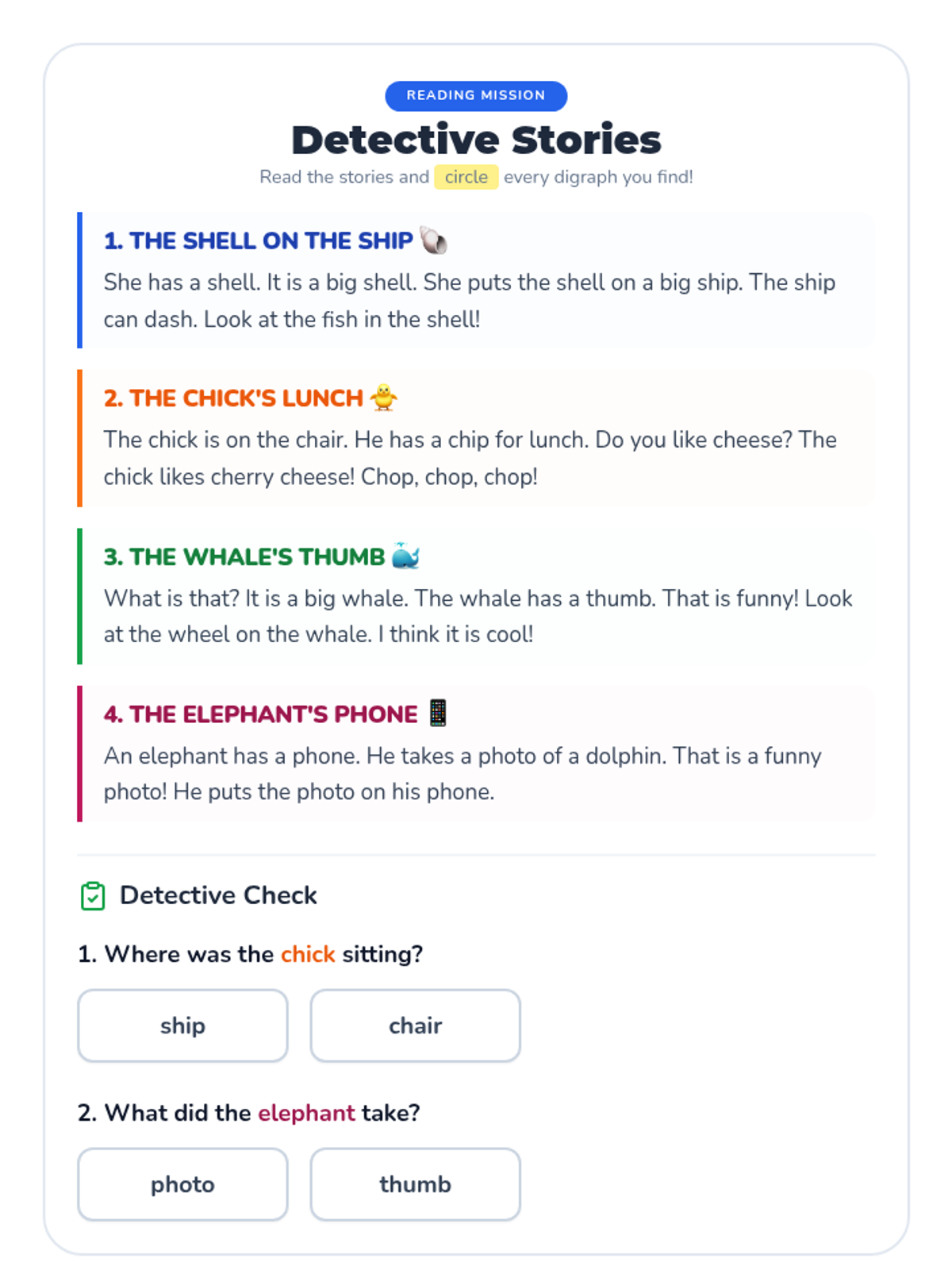
A collection of simple, decodable reading passages for students to practice identifying and reading digraphs in context. The text is large and spaced out, making it accessible for students with reading difficulties.
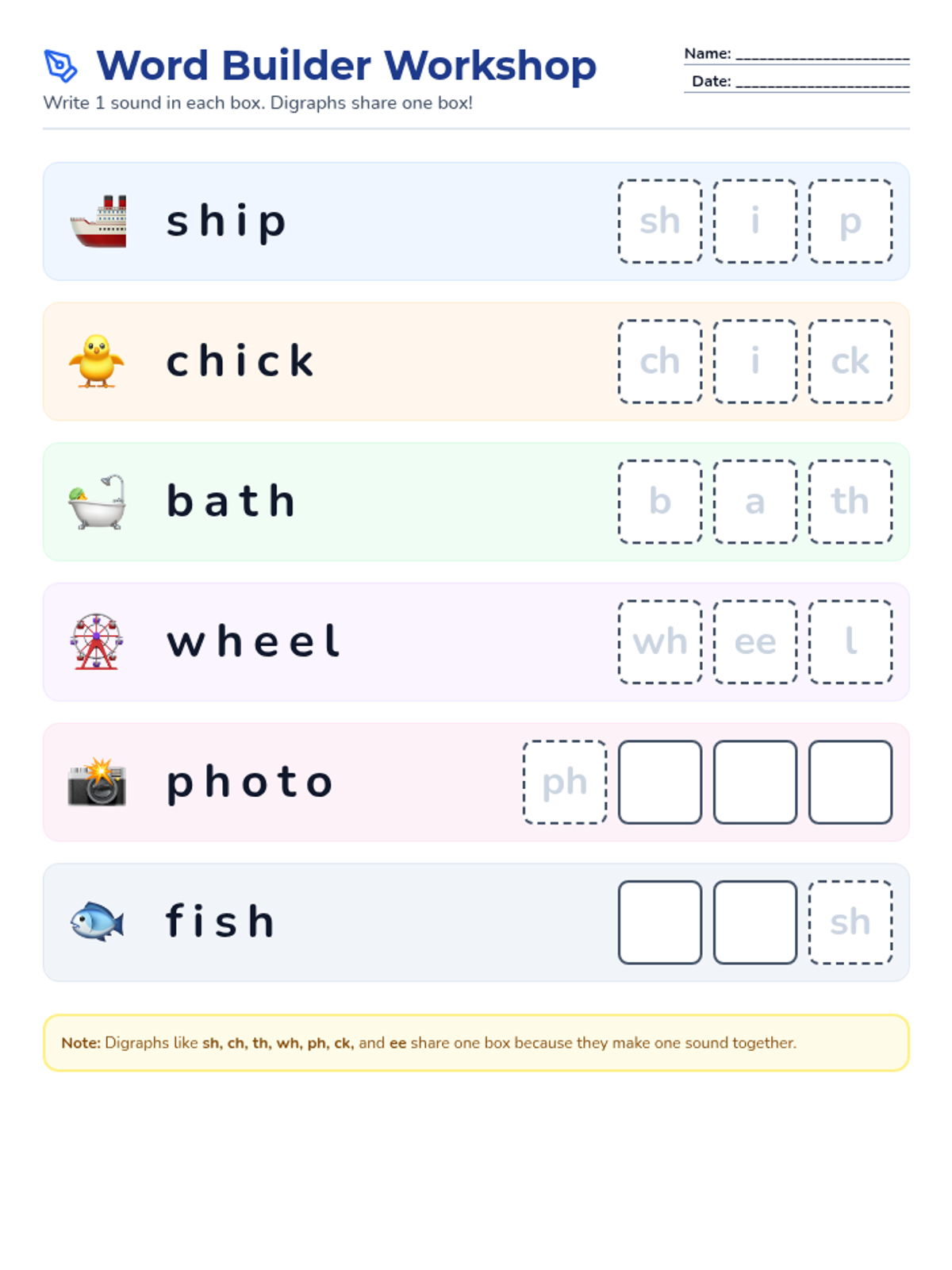
A scaffolded word-building worksheet where students trace digraphs and write entire words in letter boxes. This helps reinforce the 1:1 correspondence of sounds to letters and digraphs.
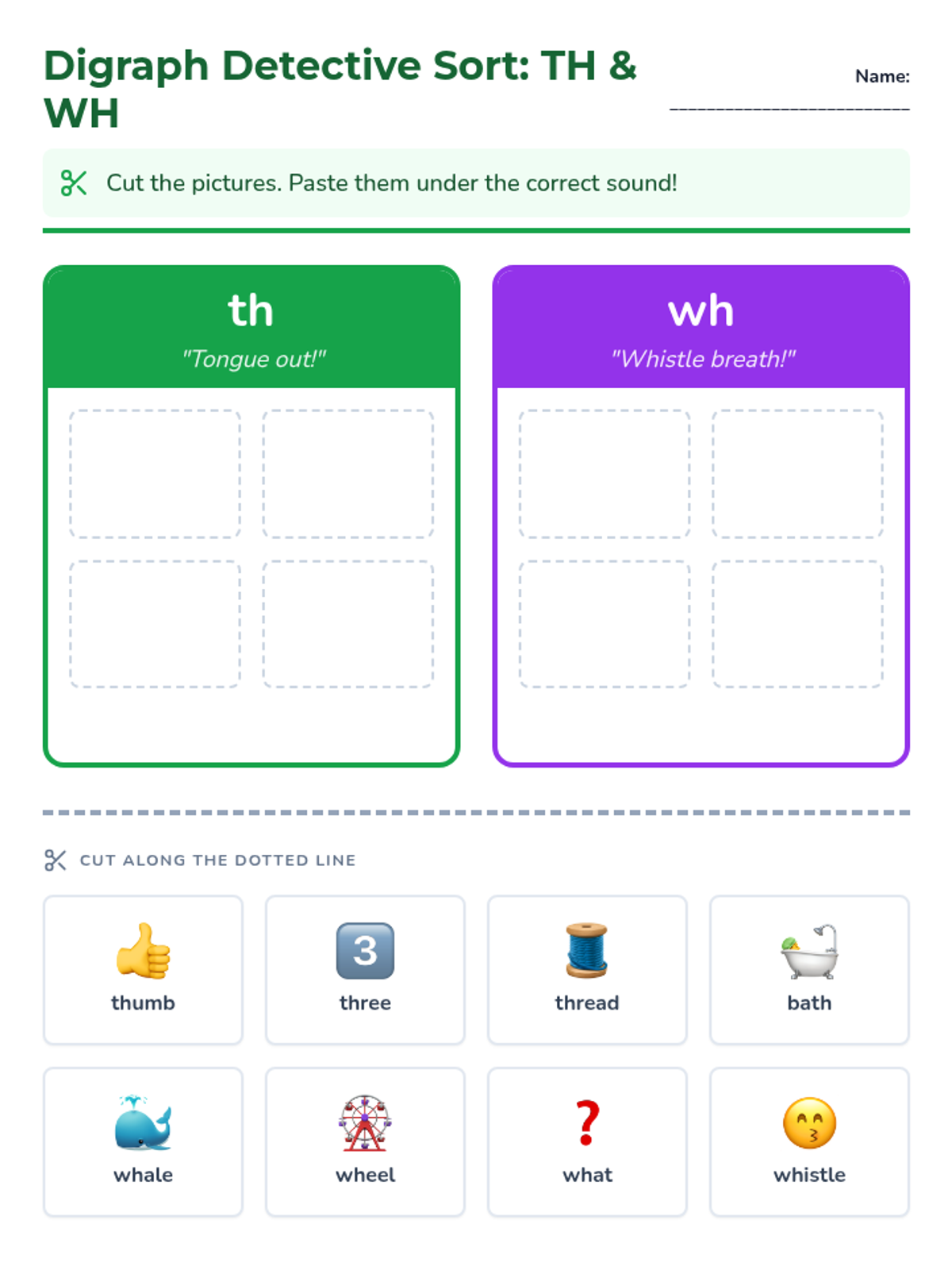
A cut-and-paste sorting worksheet focusing on the 'th' and 'wh' sounds. Students categorize images and words into the correct columns, providing tactile and visual reinforcement for sound discrimination.
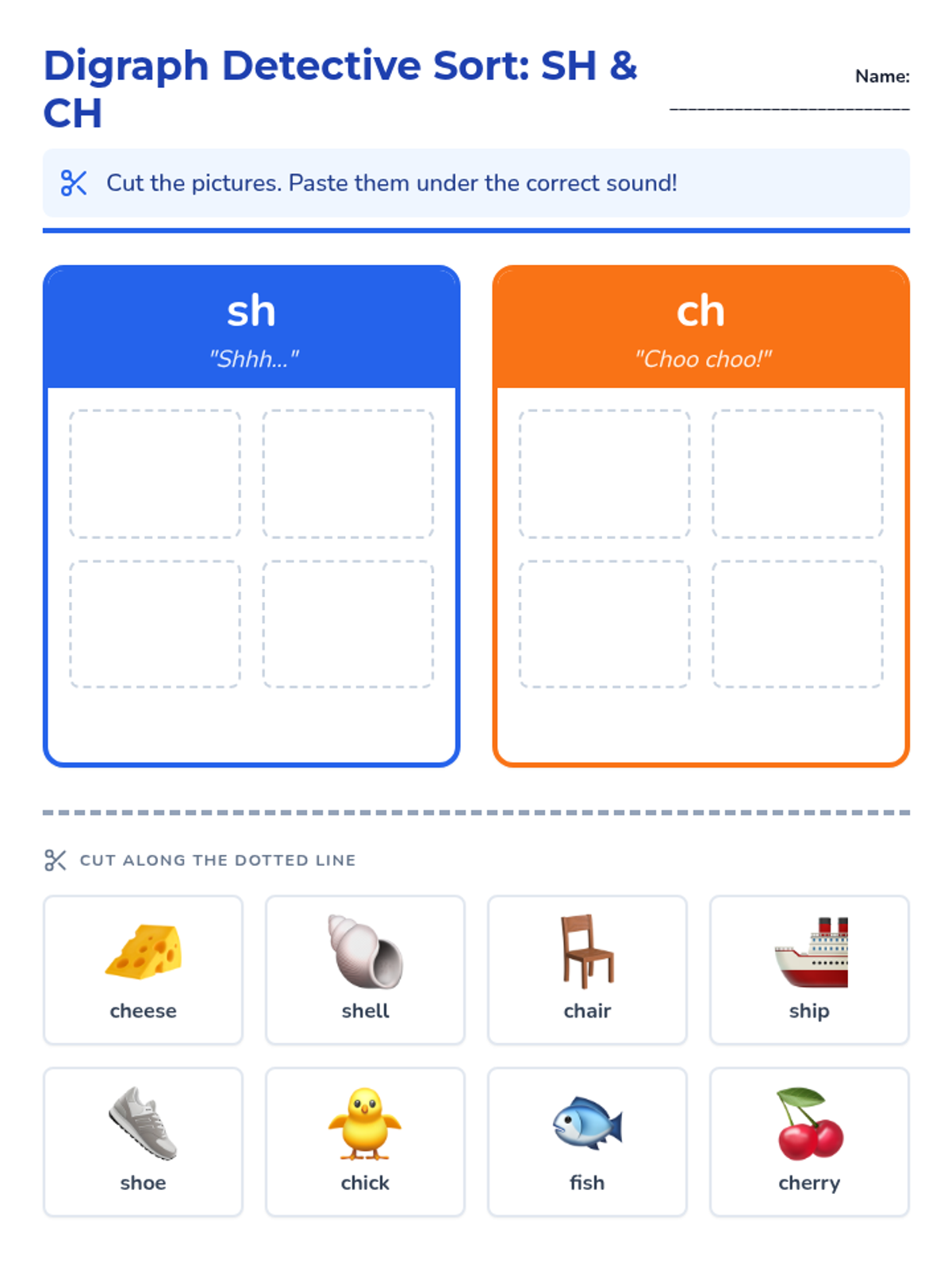
A cut-and-paste sorting worksheet focusing on the 'sh' and 'ch' sounds. Students categorize images and words into the correct columns, providing tactile and visual reinforcement for sound discrimination.
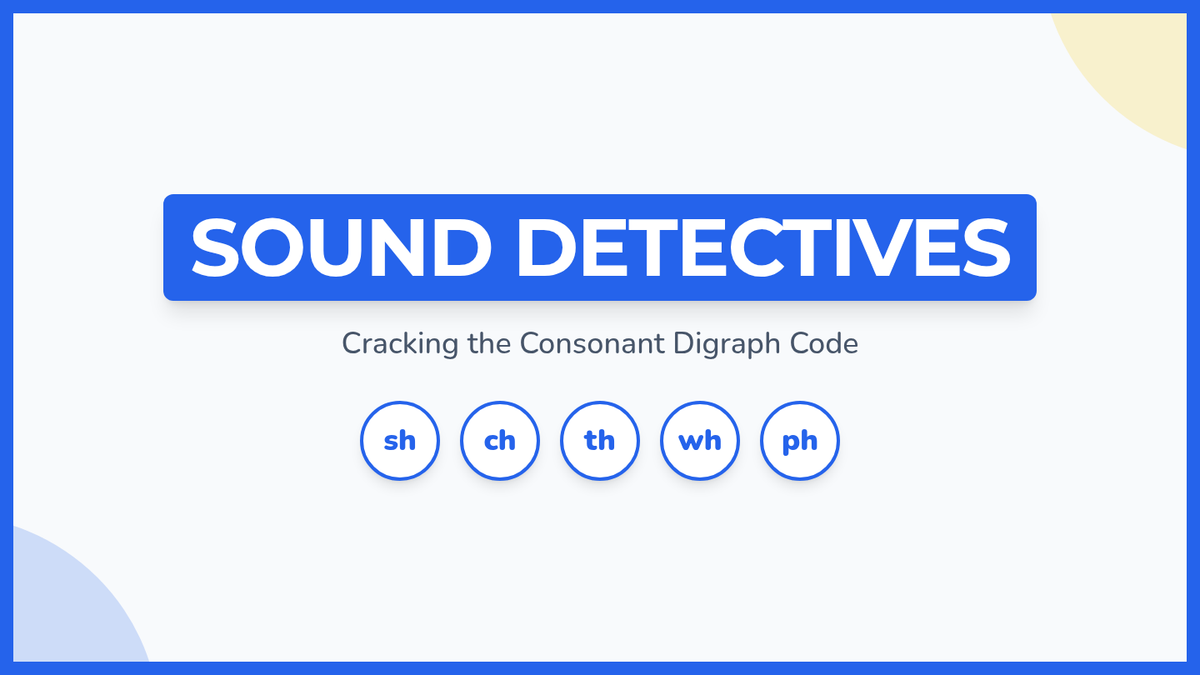
A set of visual anchor charts for sh, ch, th, wh, and ph digraphs with clear emojis, large text, and sound cues to help students identify and remember the unique sound each team of letters makes.
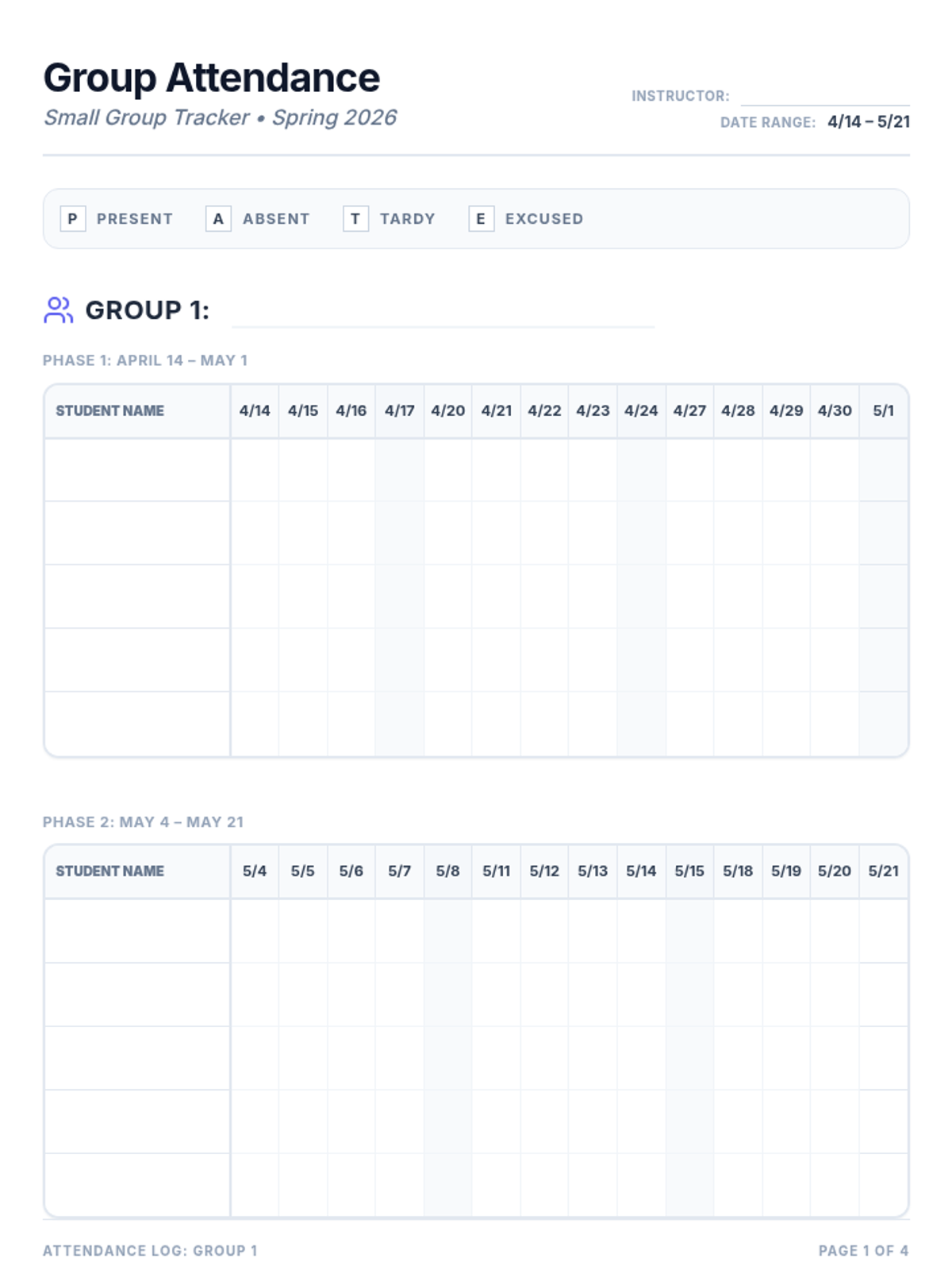
A clean, professional daily attendance tracker for small groups, featuring two-part horizontal tables for each group to ensure legible writing space for all dates from April 14 to May 21. Each section repeats the student name column and instructor fields for clarity.
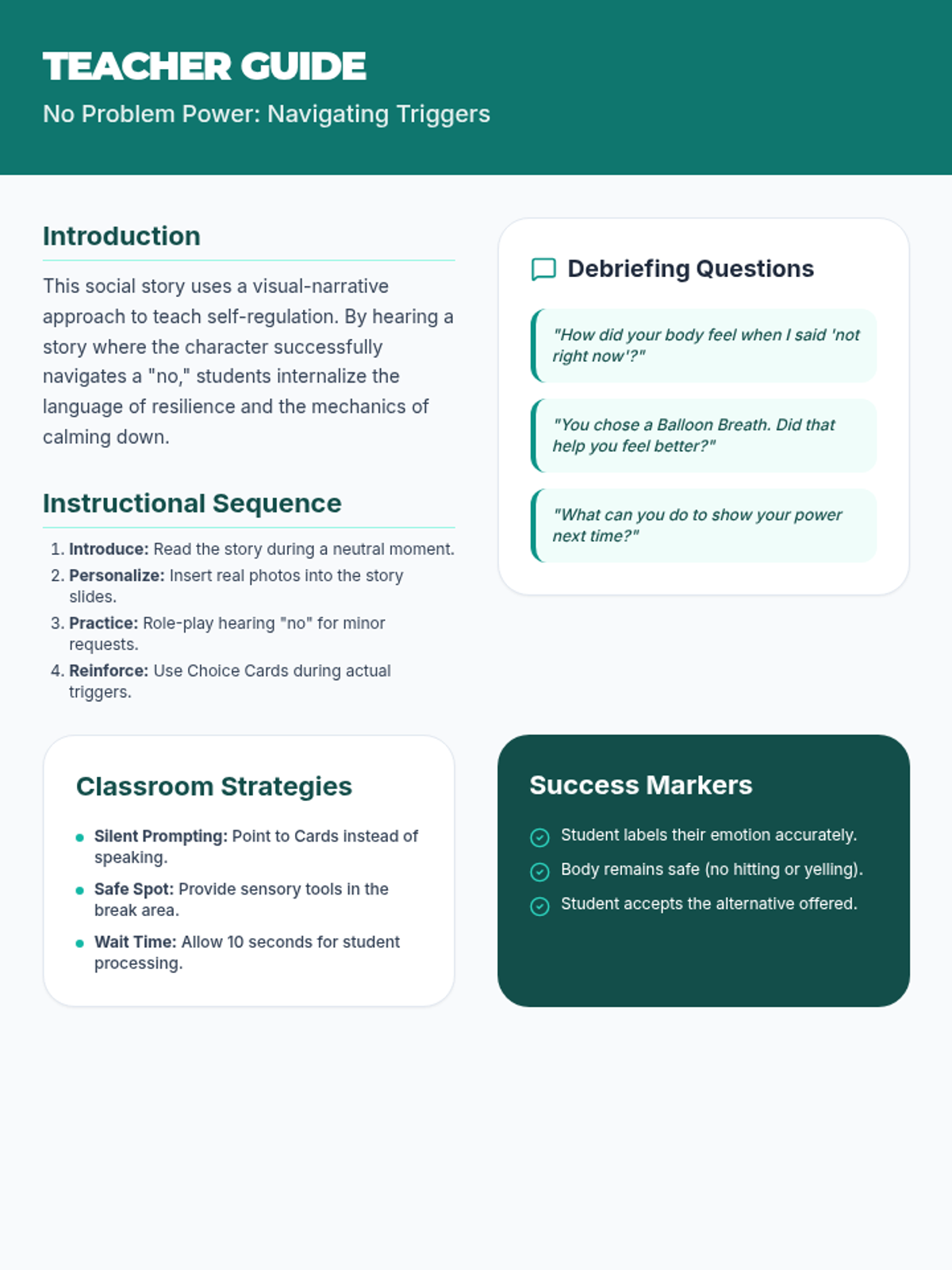
A teacher's guide for implementing the 'No Problem Power' social story, including instructional strategies, discussion prompts, and success markers.
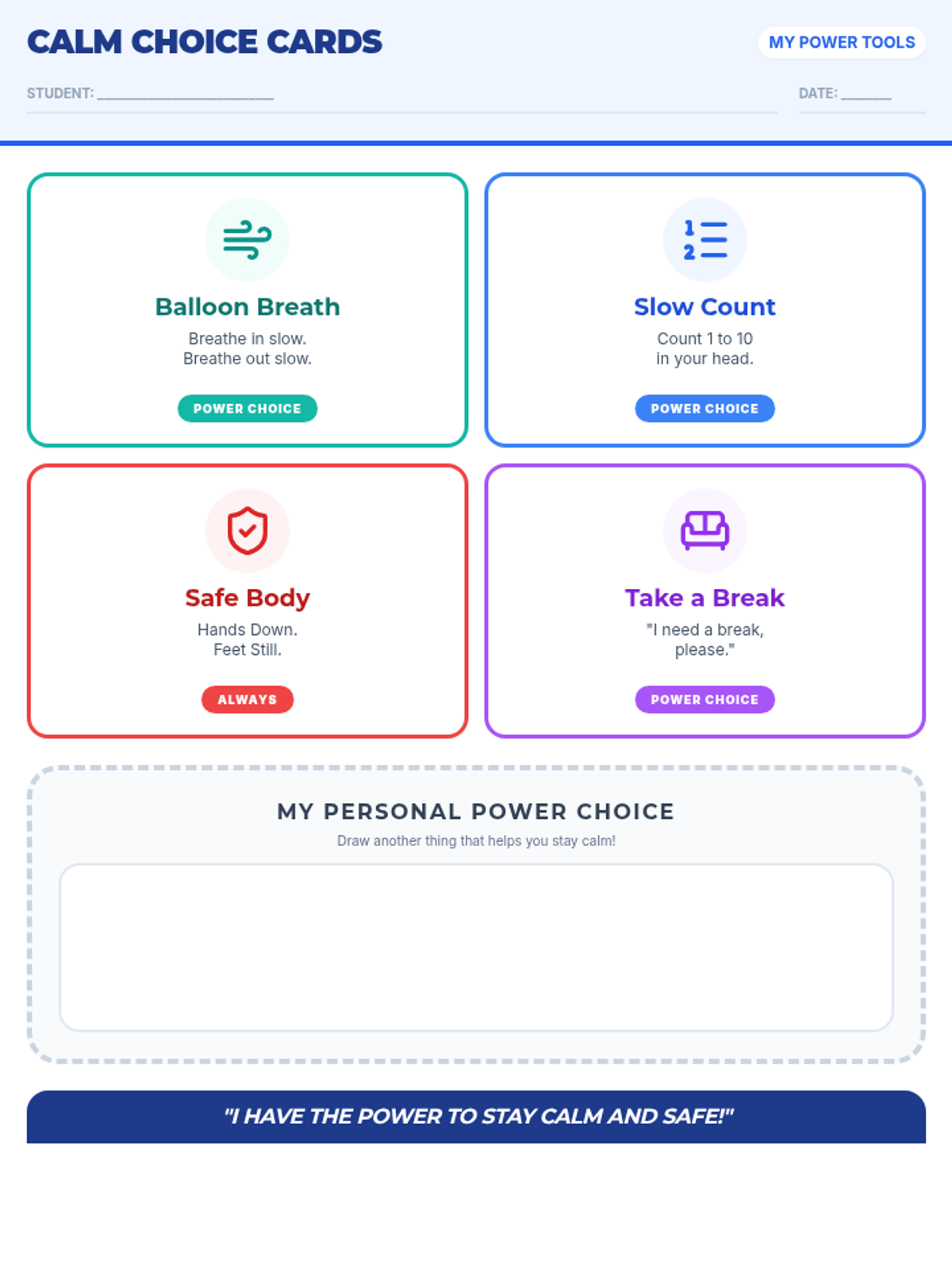
A printable set of visual prompt cards and a personalized drawing area to help children identify and use calming strategies.
A 10-slide social story presentation designed to help children manage their anger when told 'no', featuring visual photo-placeholders with detailed scene descriptions and clear calming strategies.
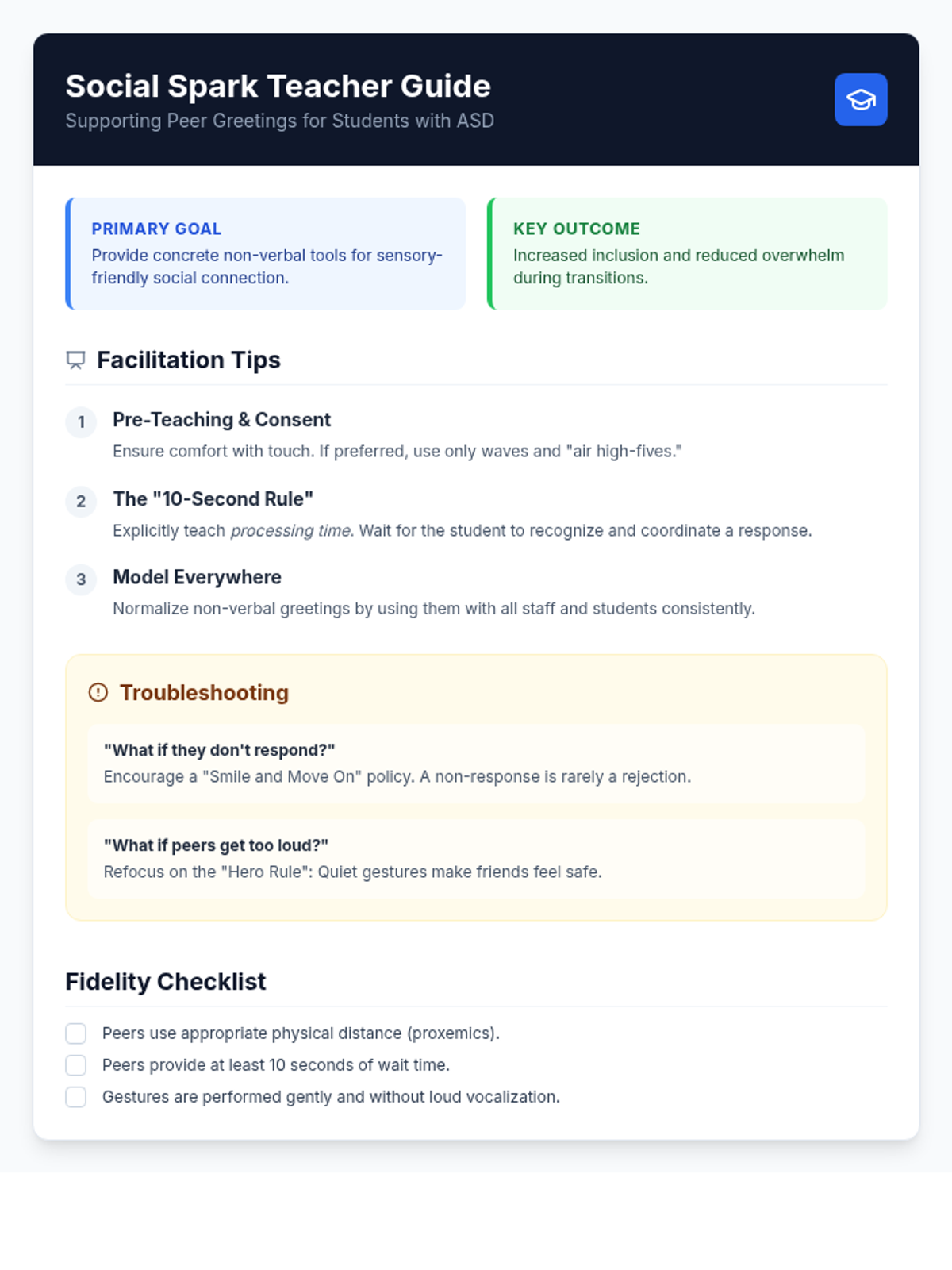
A facilitator guide for teachers providing instructional strategies for teaching non-verbal greetings, including the "10-second rule" for processing time and troubleshooting tips for social non-responses.
A classroom presentation to introduce students to non-verbal greetings, explaining the sensory benefits of gestures and providing step-by-step practice for waves, high-fives, and fist bumps.
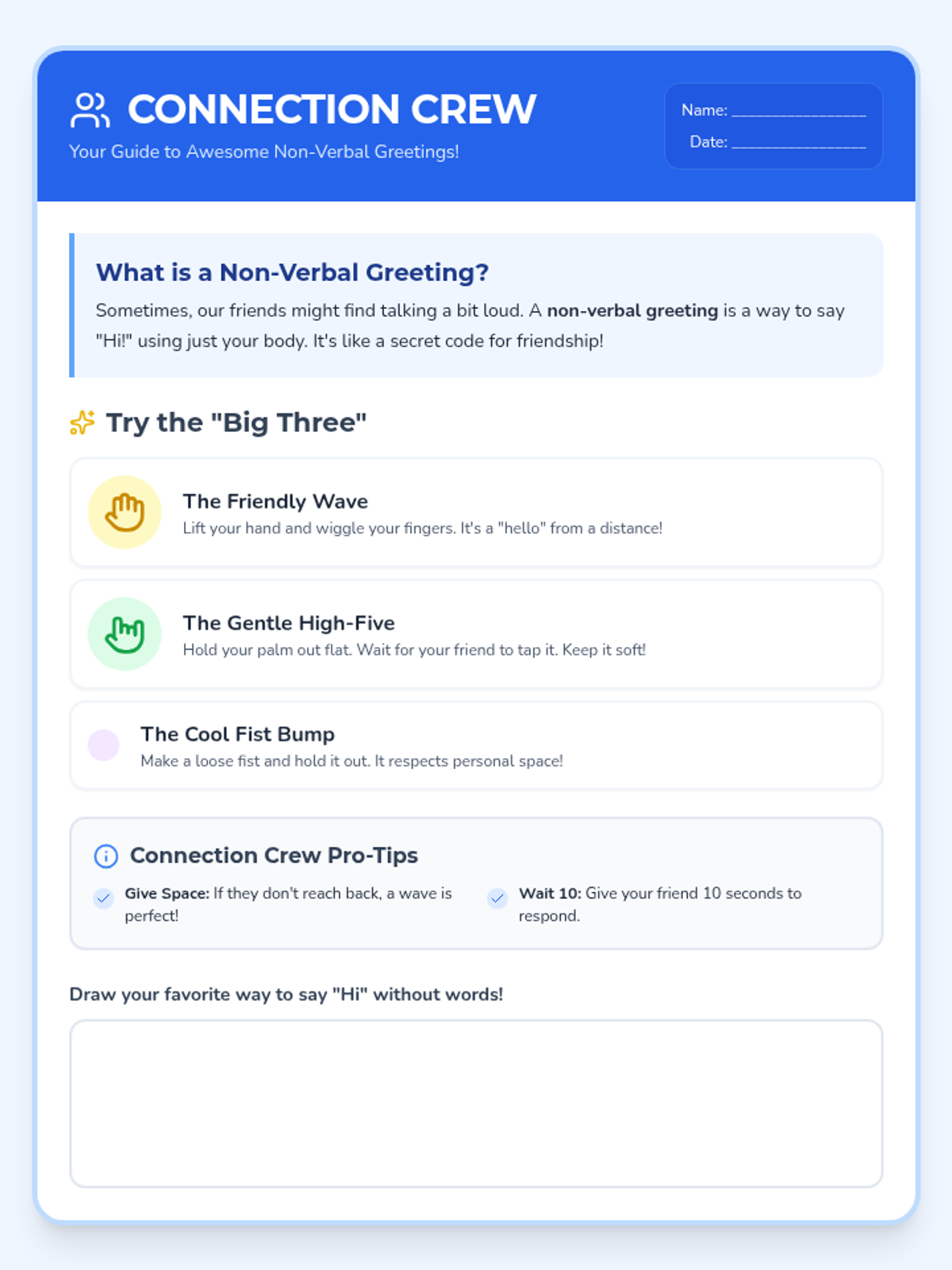
A student-facing handout designed for peers to learn and practice non-verbal greetings like waves, high-fives, and fist bumps, with tips on respecting personal space and providing wait time.
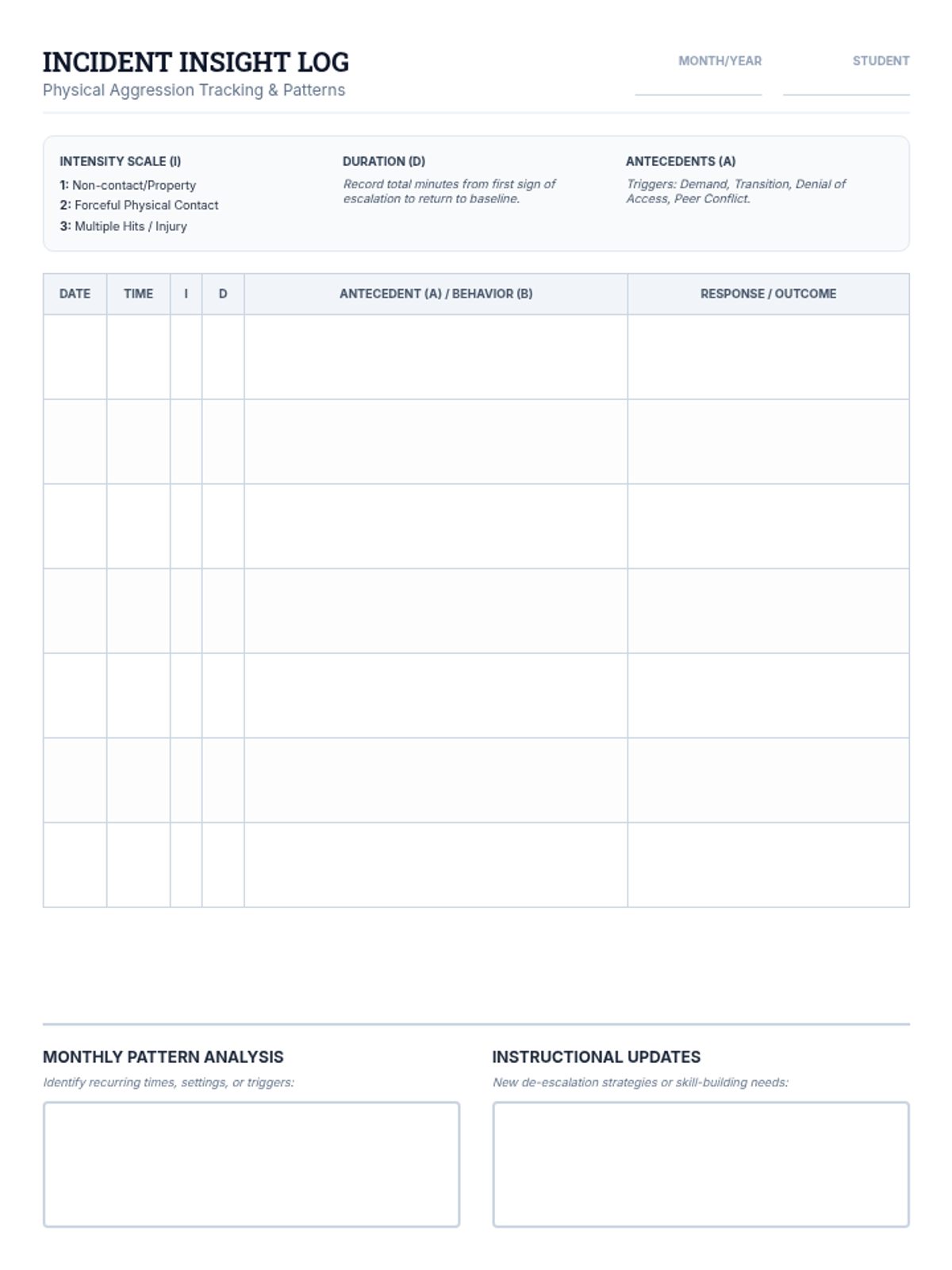
A professional data collection tool for educators to track behavioral incidents, identifying patterns in antecedents, behaviors, and the effectiveness of de-escalation strategies.