A worksheet for Lesson 2 focusing on exact minute calculations for elapsed time. Students use a "chunking" method to subtract messy minute values from specific arrival times in a transit hub theme.
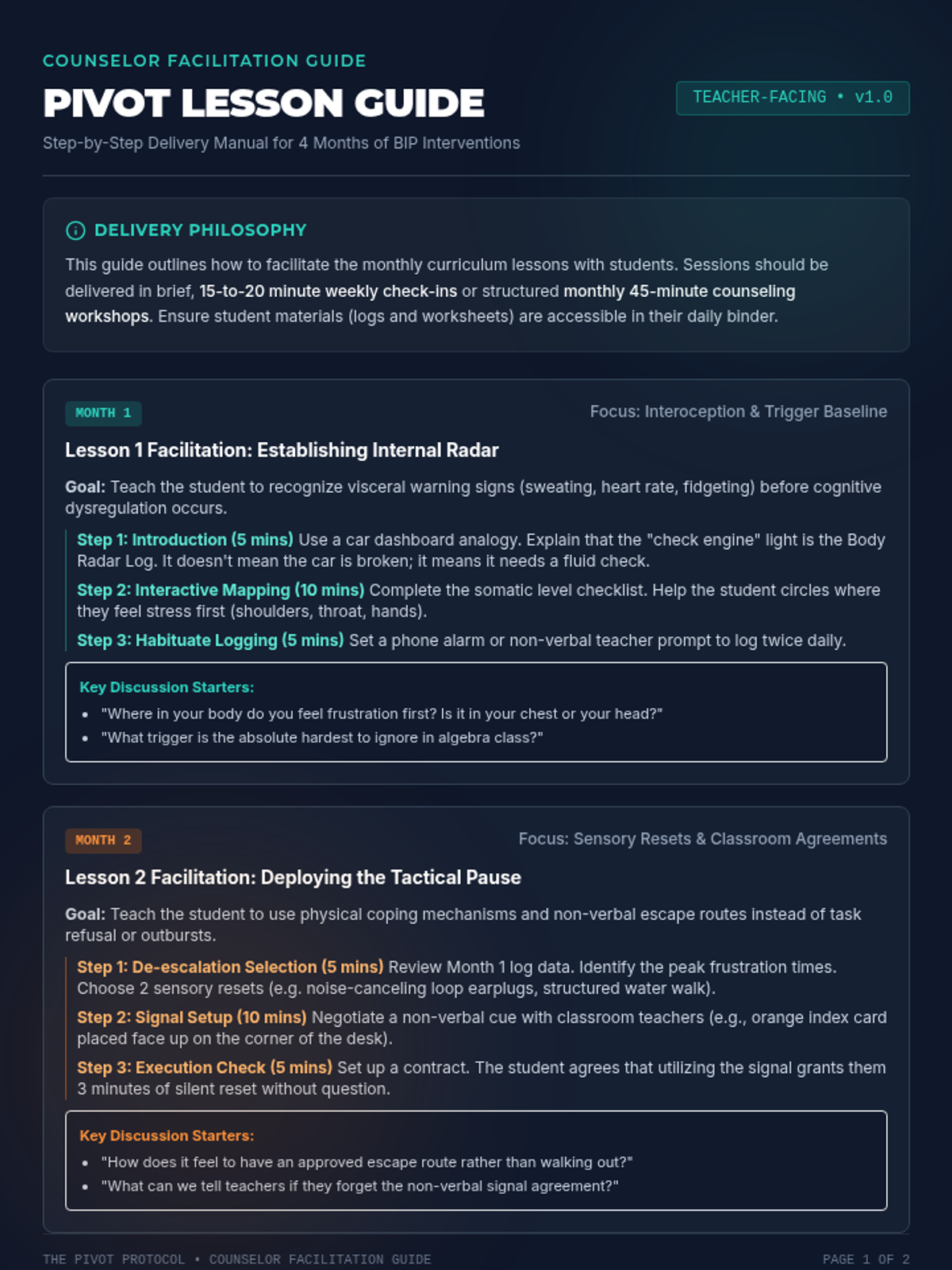
A comprehensive lesson facilitation guide for school counselors and special educators. Provides step-by-step instructions, discussion questions, role-play prompts, and BIP data tracking review methods for Months 1 through 4.
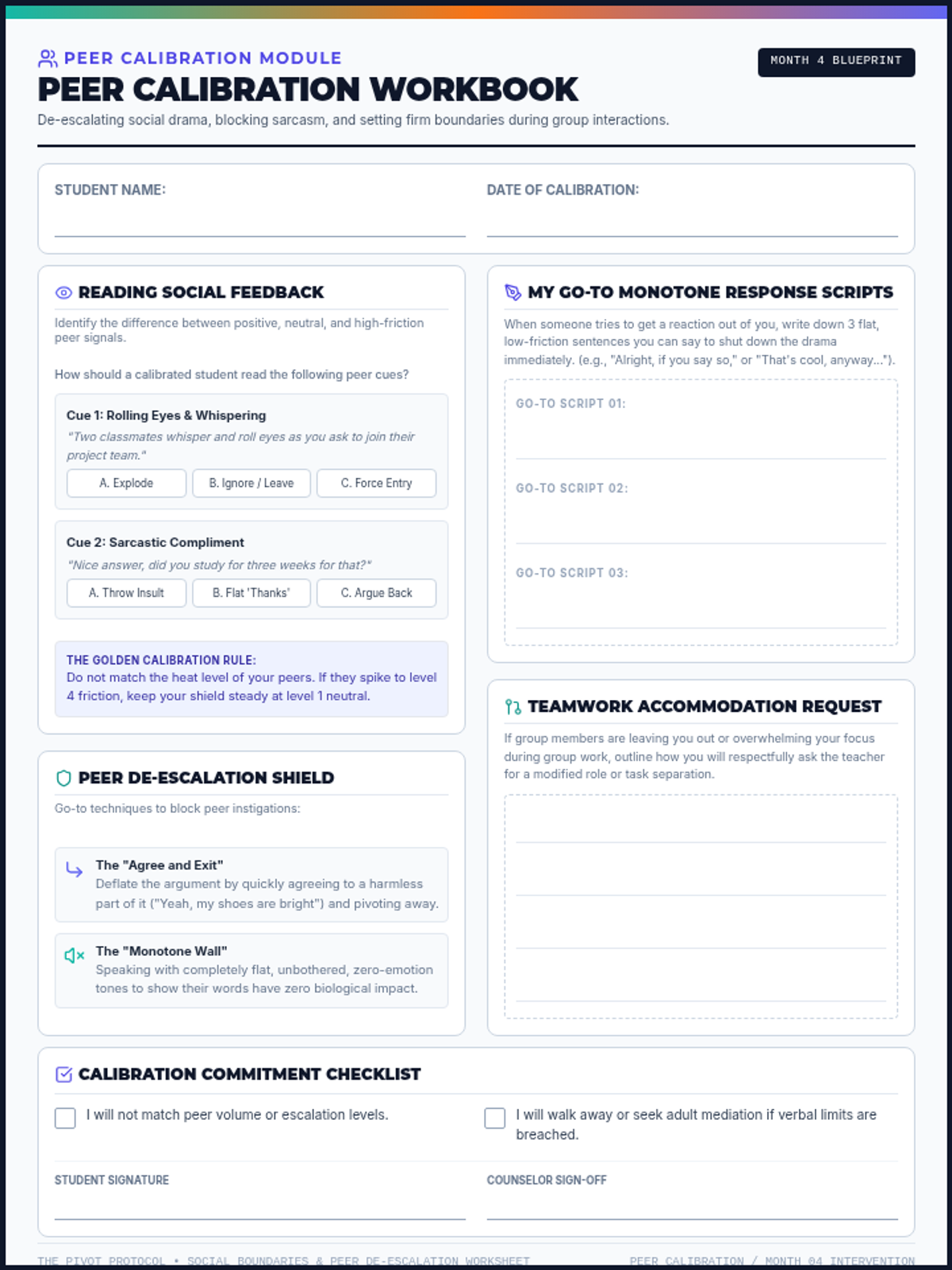
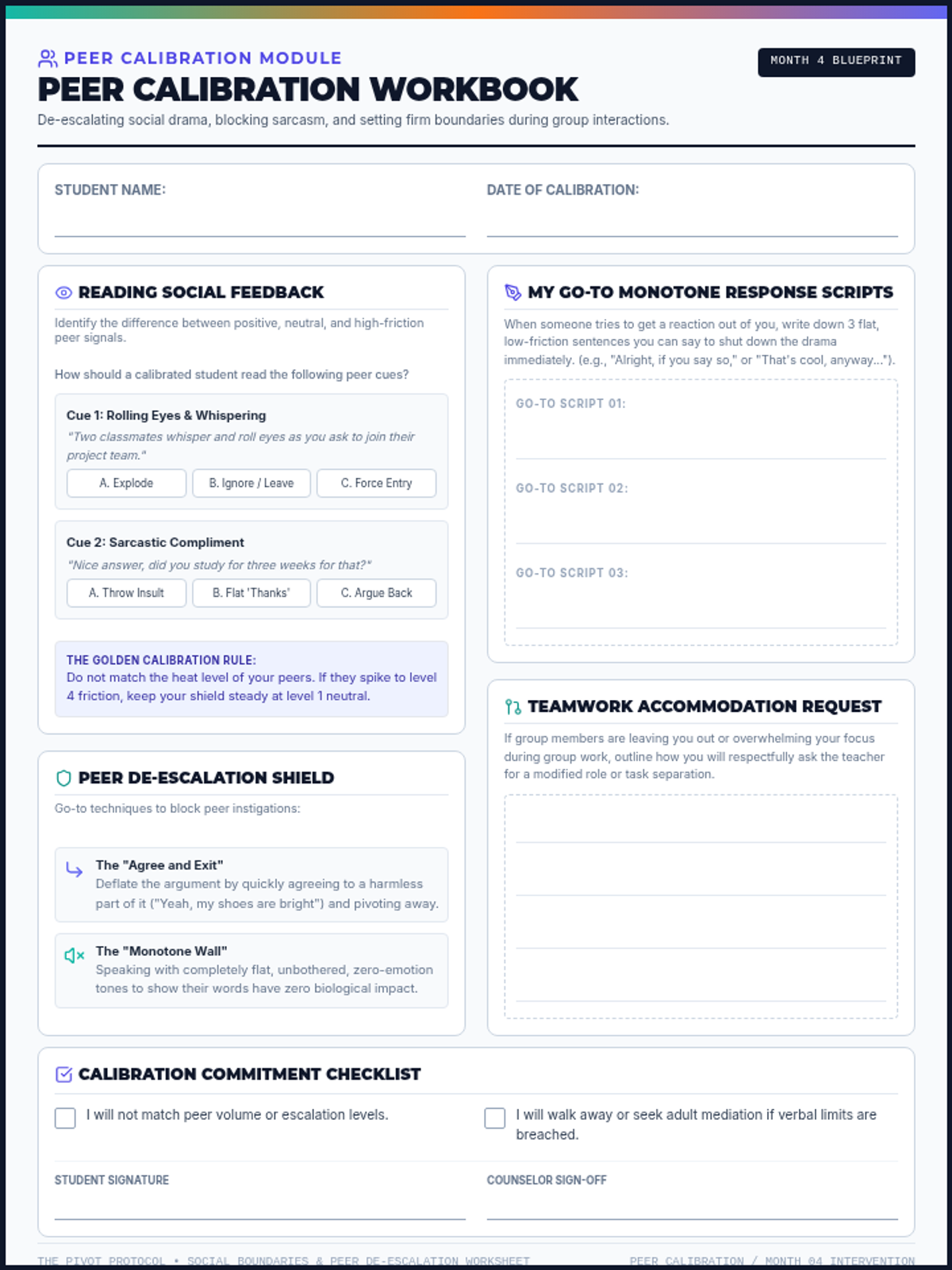
An interactive student workbook sheet for Month 4 (Peer Calibration). Guided exercises help high school students dissect social tension, map passive/reactive/calibrated feedback, and script their own peer de-escalation responses.
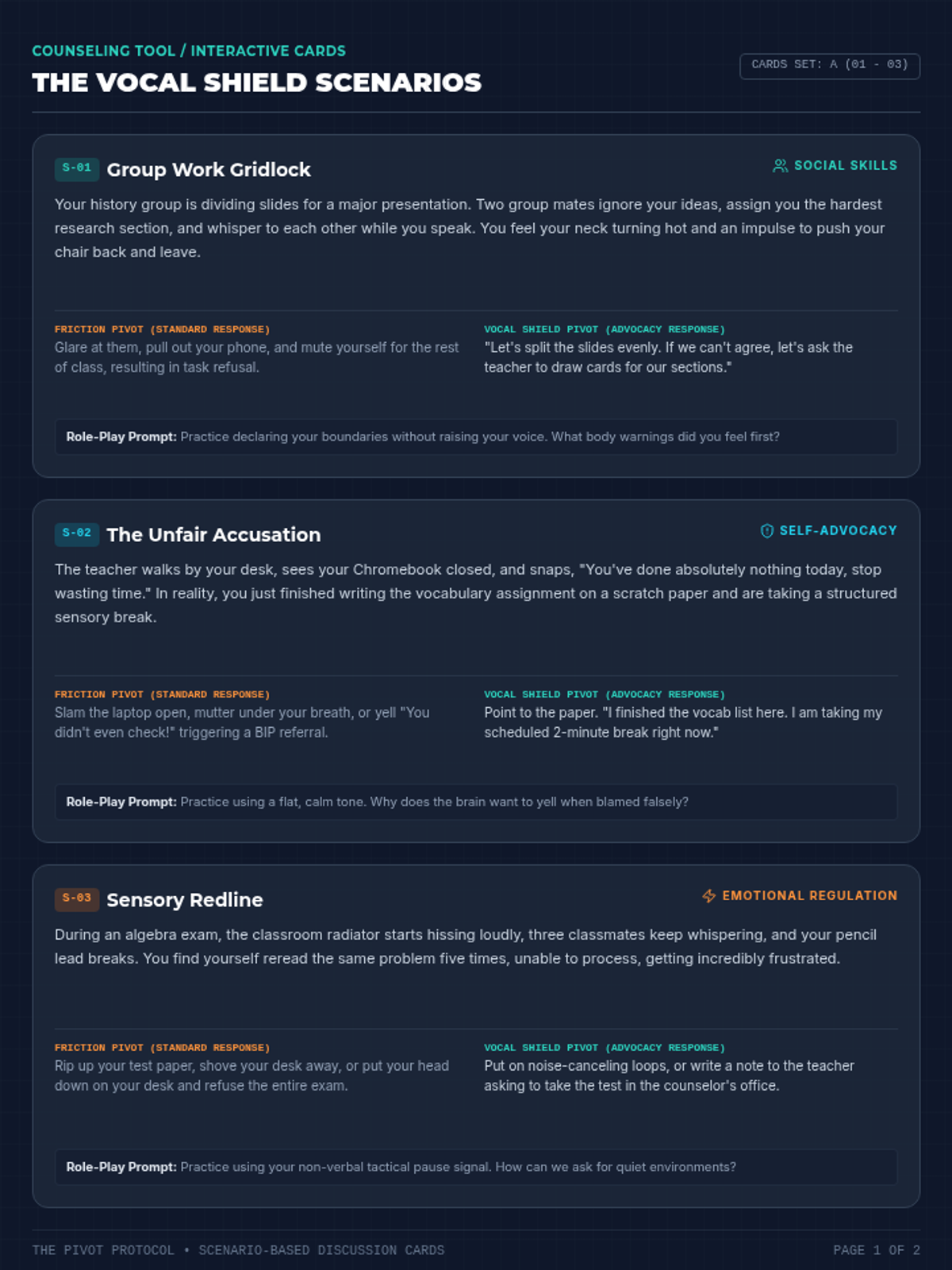
A set of printable, scenario-based discussion and role-play cards designed to build self-advocacy, conflict resolution skills, and frustration tolerance in high schoolers with ADHD.
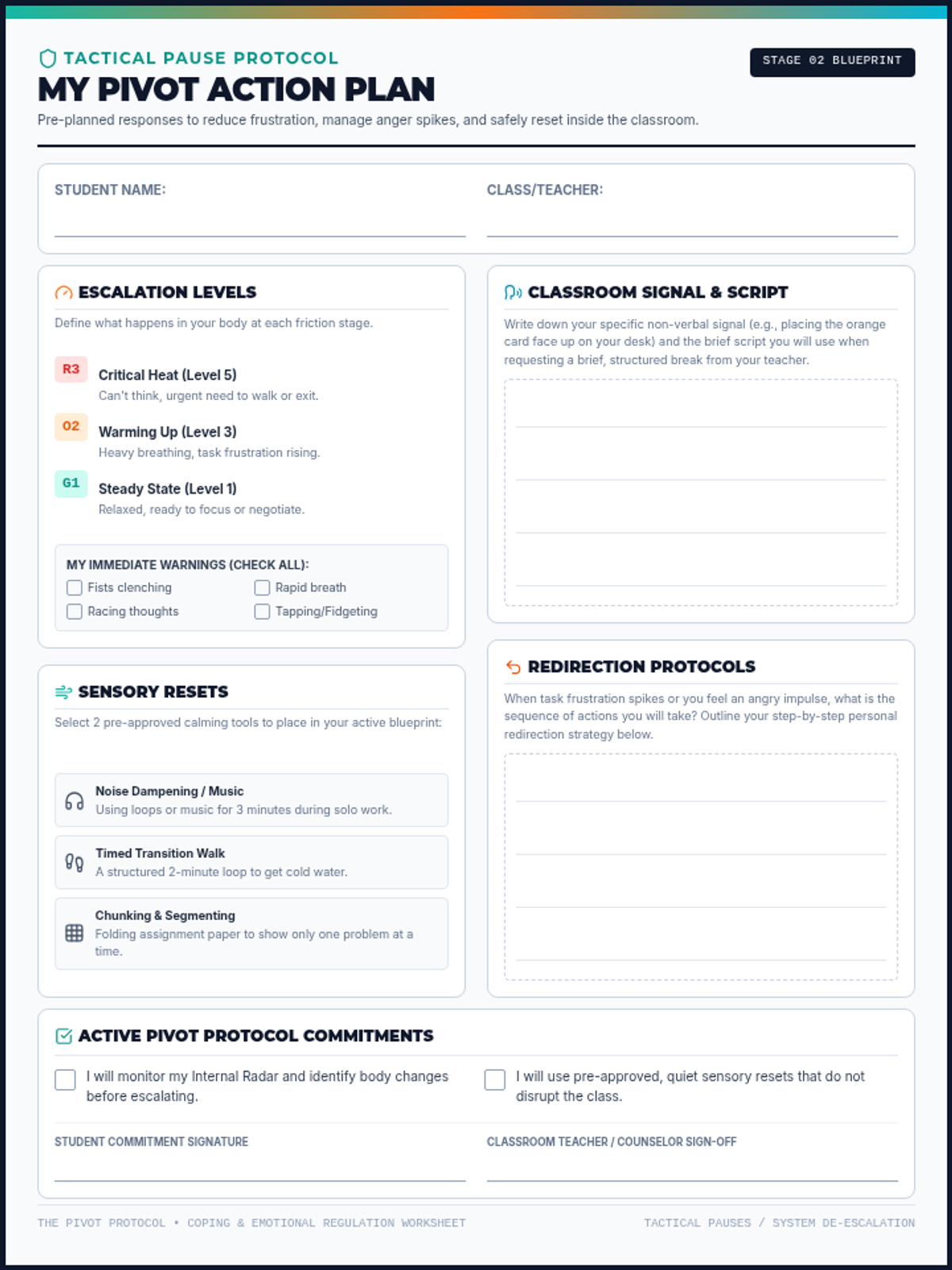
An interactive student worksheet to build a personalized 'Tactical Pause Action Plan.' Helps students identify personalized sensory coping strategies, sensory resets, and negotiate non-verbal classroom cues.
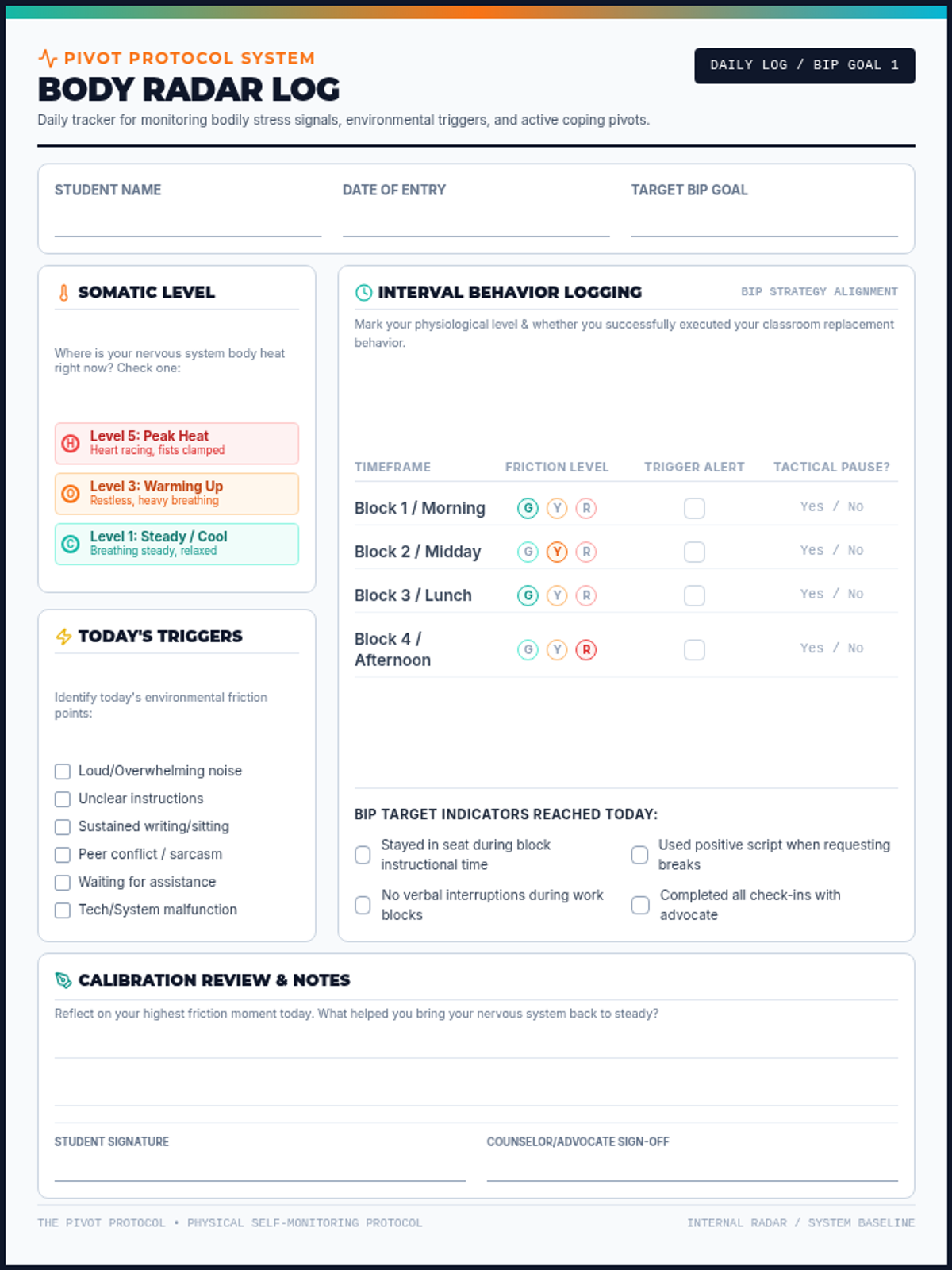
A physical student daily self-monitoring log to track bodily markers of stress, sensory triggers, and positive BIP behavior indicators. Features clean, handwriting-friendly tracking sections.
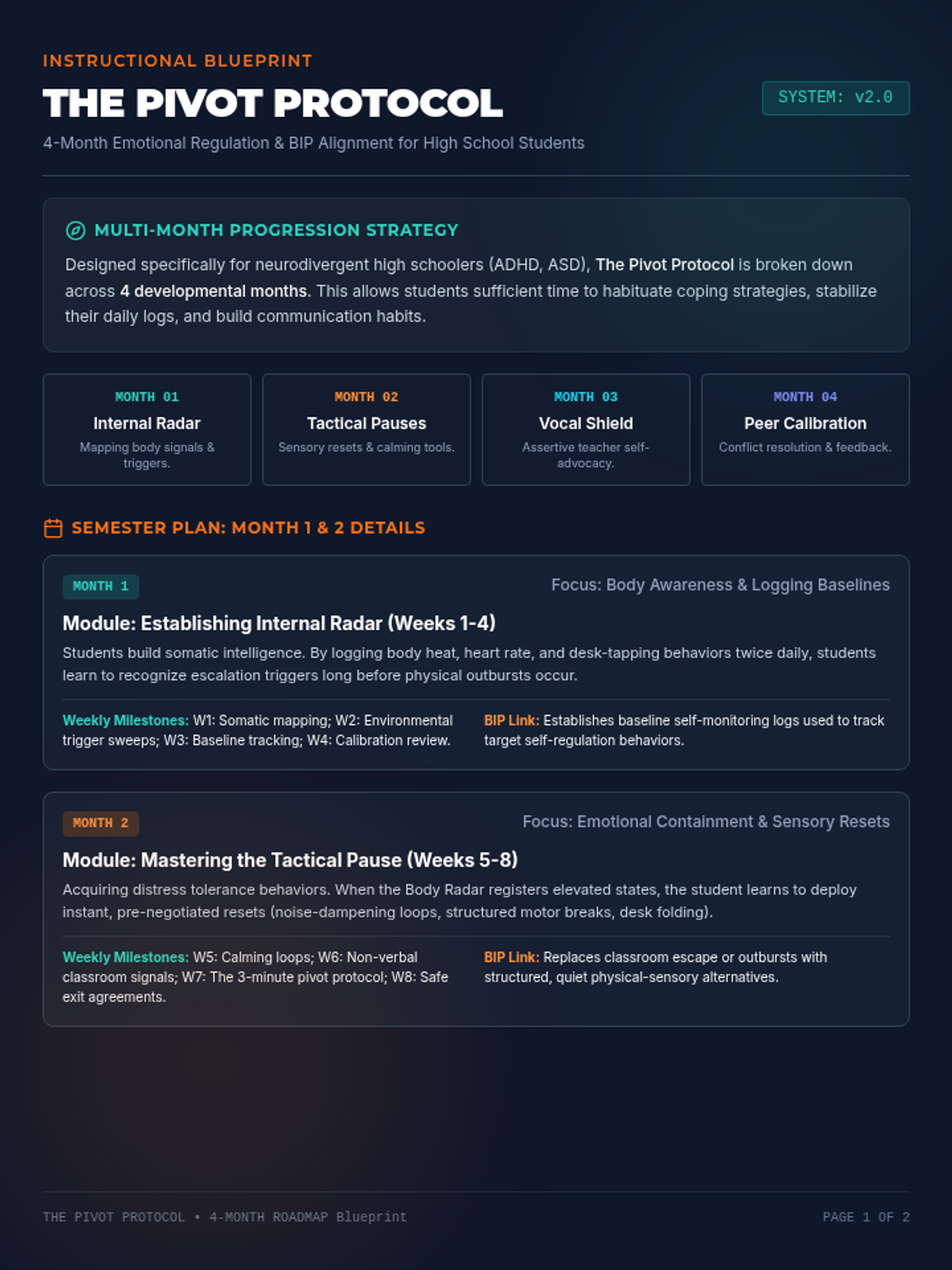
An expanded 4-month curriculum roadmap designed for high school counselors and educators. Outlines monthly themes, weekly goals, BIP target alignment strategies, and neurodivergent-affirming coping interventions.
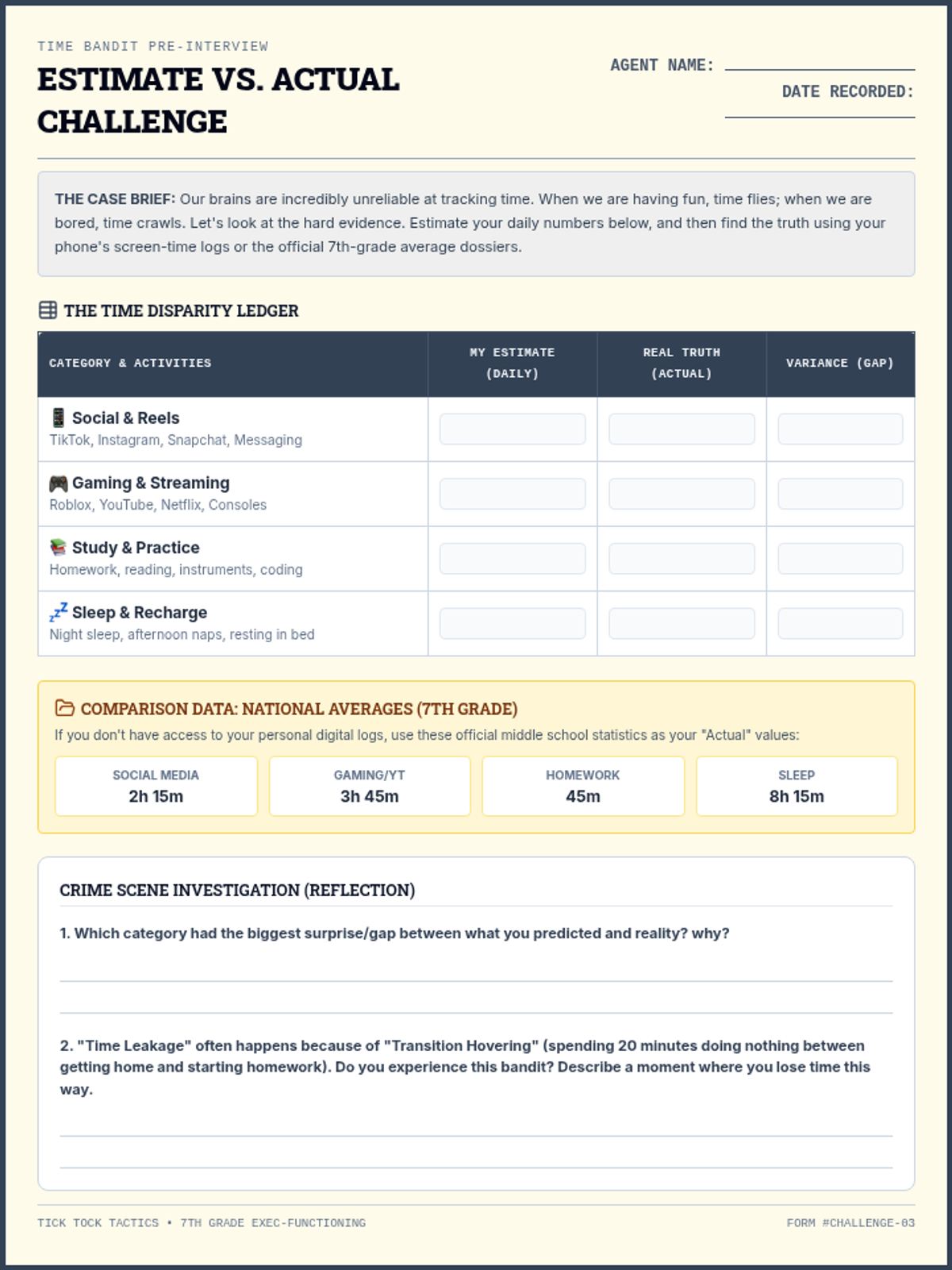
A single-page student activity sheet comparing predicted time allocations for screen use, sleep, and studying against actual tracking data and national middle school benchmarks.
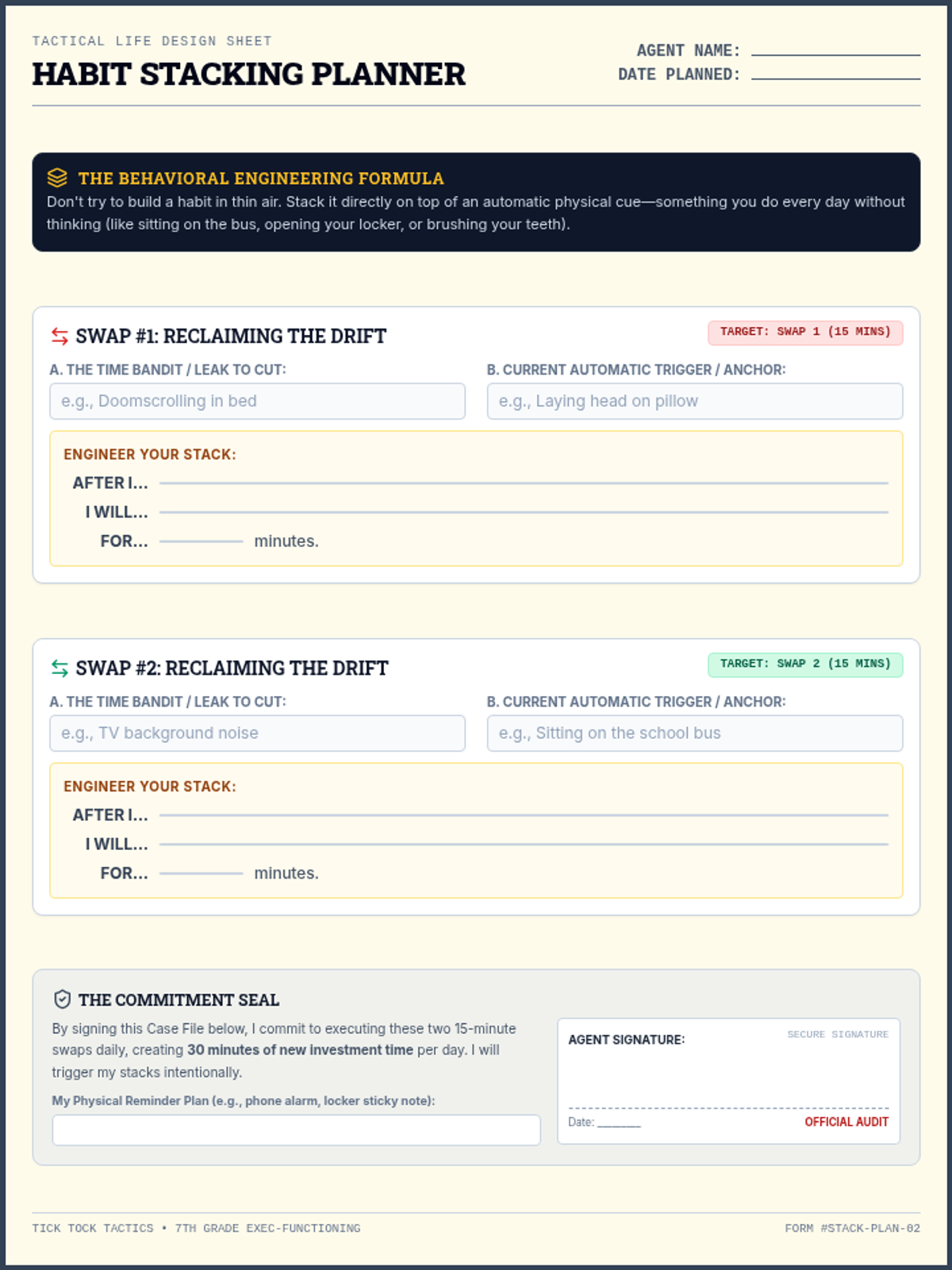
A creative, single-page student planning worksheet utilizing the atomic habit formula to design and commit to two 15-minute time-reclamation swaps.
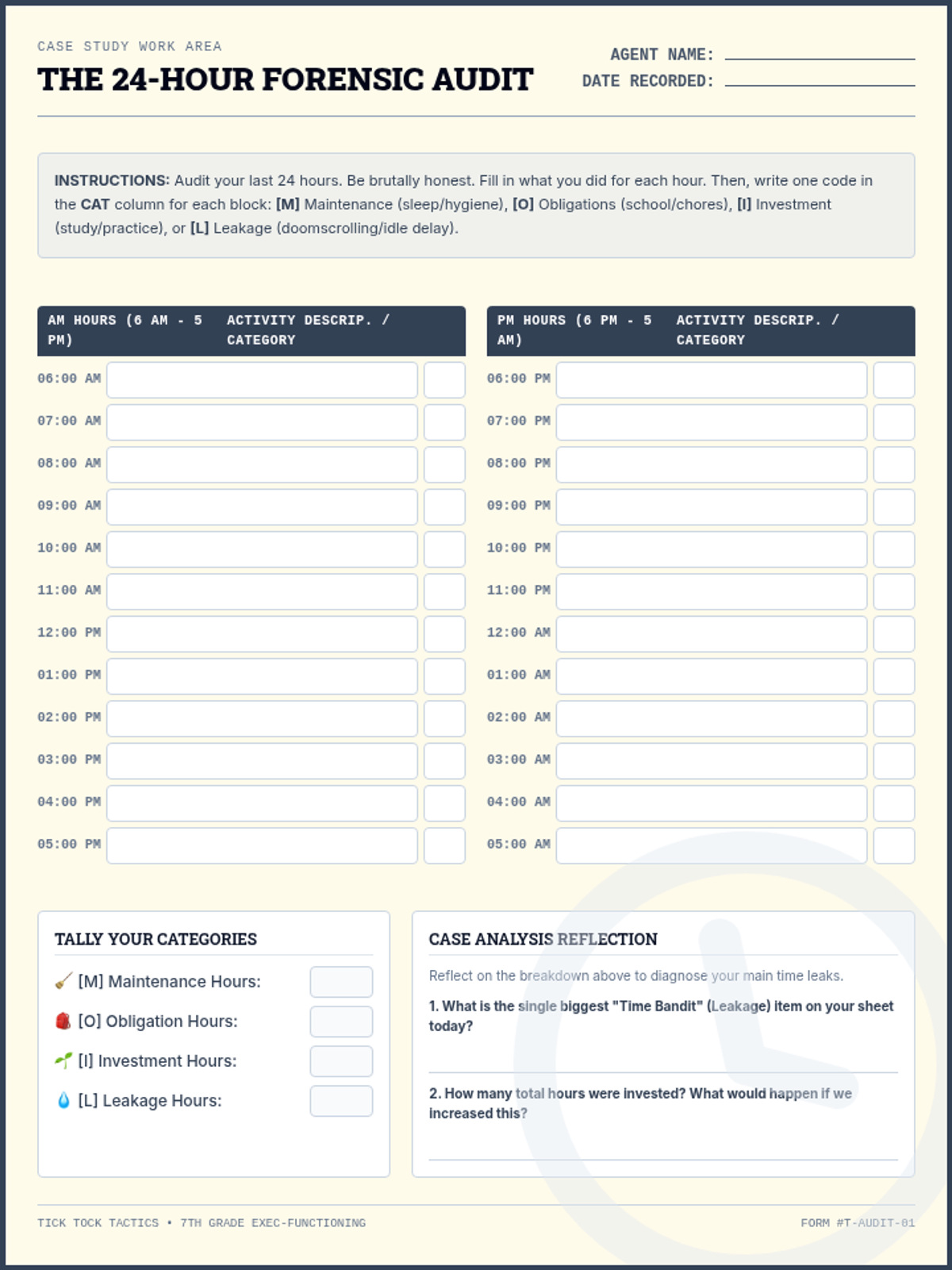
A highly structured, single-page student time-tracking worksheet featuring a dual-column 24-hour daily grid and an hourly category tally box.
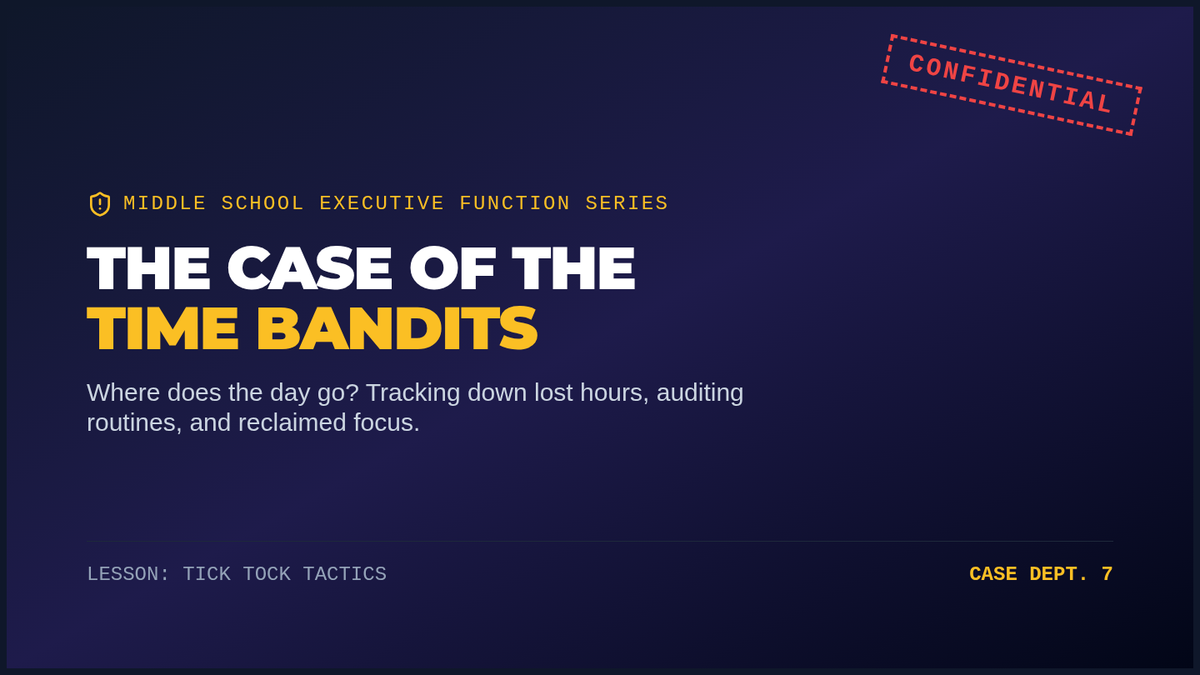
A sleek, high-visibility 6-slide presentation designed to introduce students to time categories, the screen time illusion, and the mechanics of habit stacking.
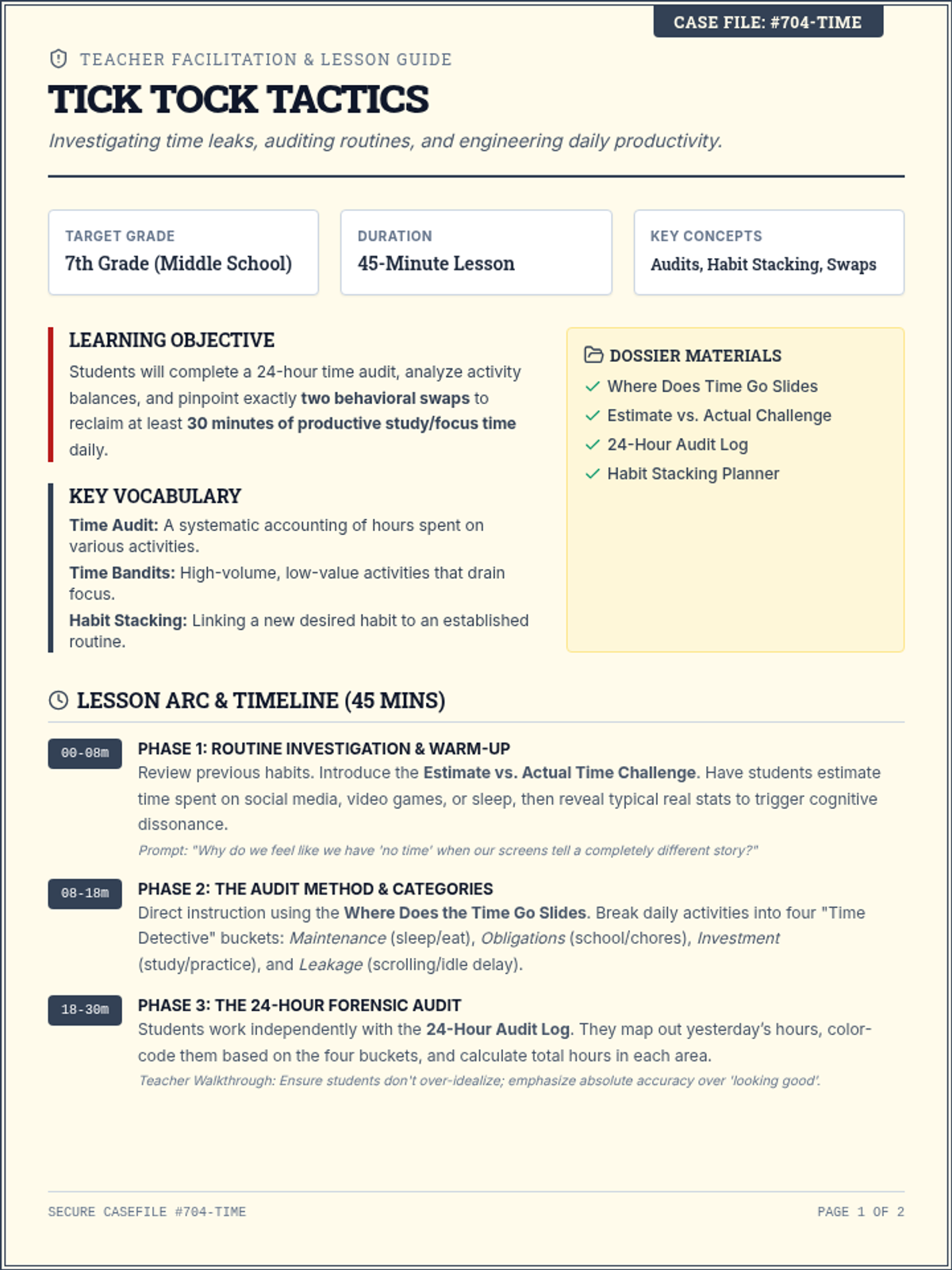
A comprehensive 2-page teacher-facing delivery guide featuring a lesson timeline, facilitation tips, discussion prompts, and differentiation strategies for teaching time audits and habit stacking.
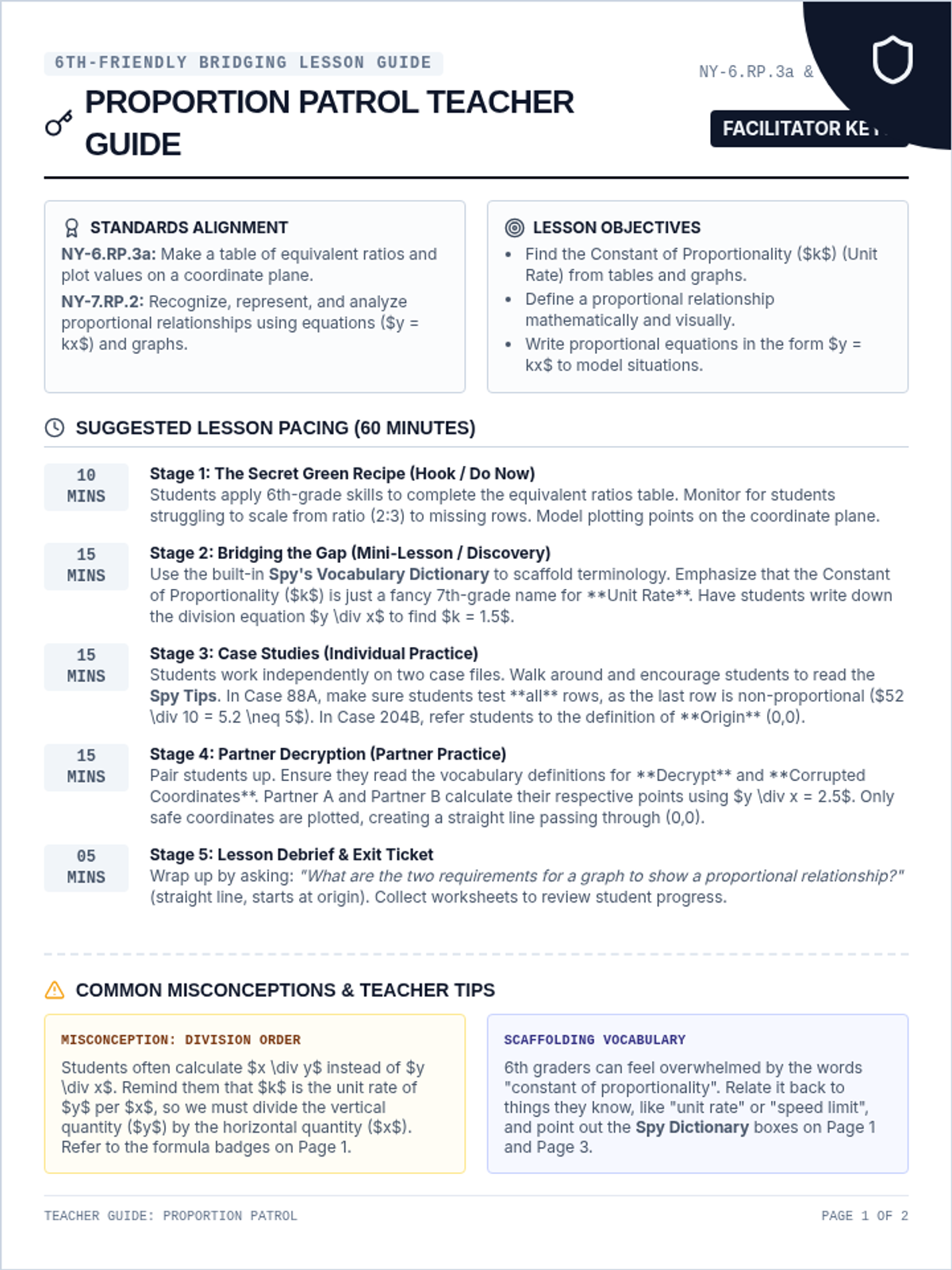
A comprehensive 2-page teacher-facing guide and answer key for the "Proportion Patrol" lesson. Contains standard alignments, step-by-step pacing notes, anticipated misconceptions, and complete answers for the student worksheet.
An interactive, visually rich 6-slide presentation to support the "Proportion Patrol" bridge lesson, updated with simplified, 6th-grade friendly terms, clear math definitions matching the worksheet, and supportive visual cues.
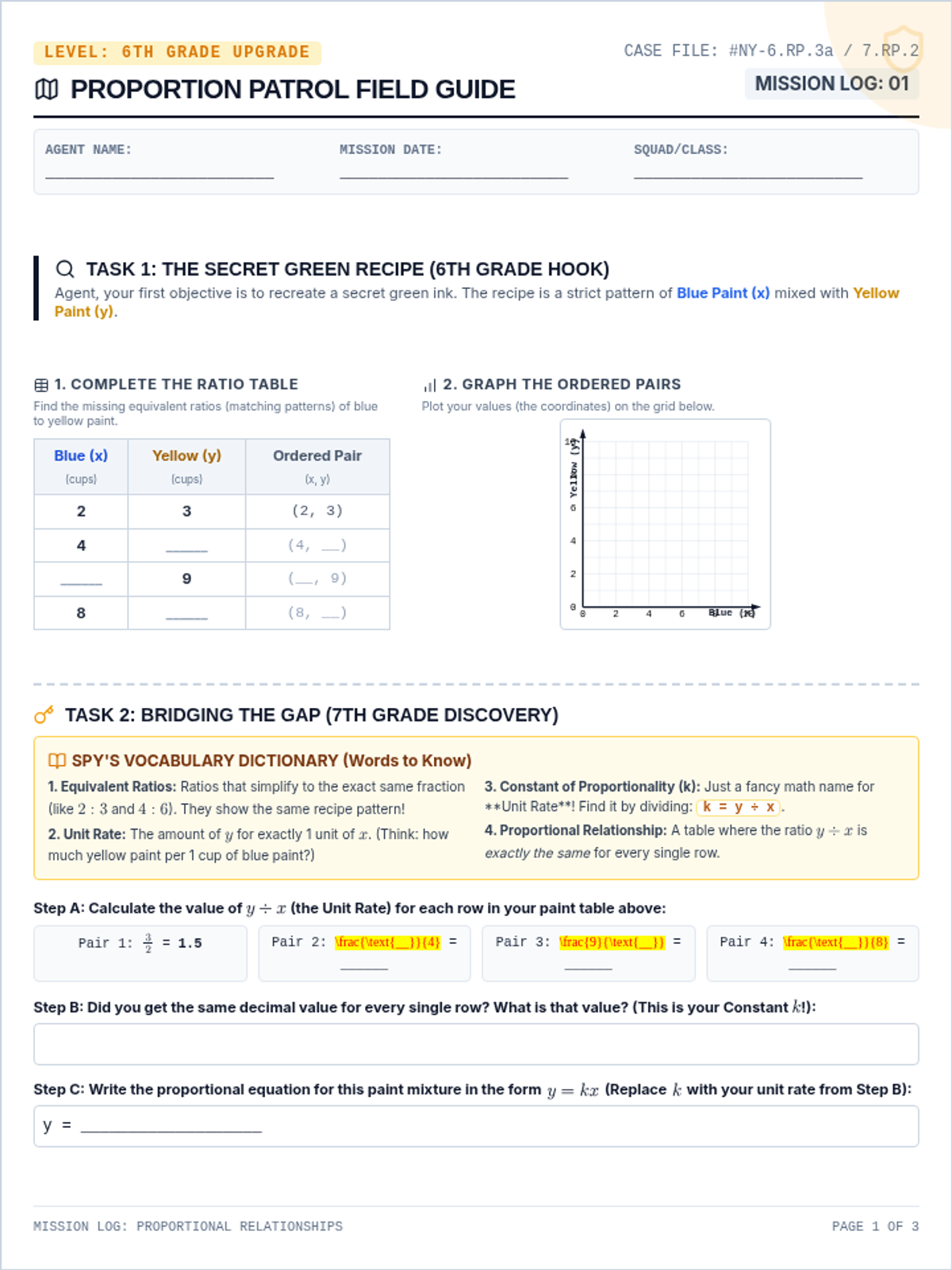
A highly engaging 3-page student-facing worksheet for a 6th-to-7th grade bridging lesson on proportional relationships, now updated with friendly simplified text, a built-in Spy Dictionary defining challenging vocabulary (Constant of Proportionality, Proportional, Origin, Decrypt, Corrupted), and helpful Spy Tips for 6th grade success.
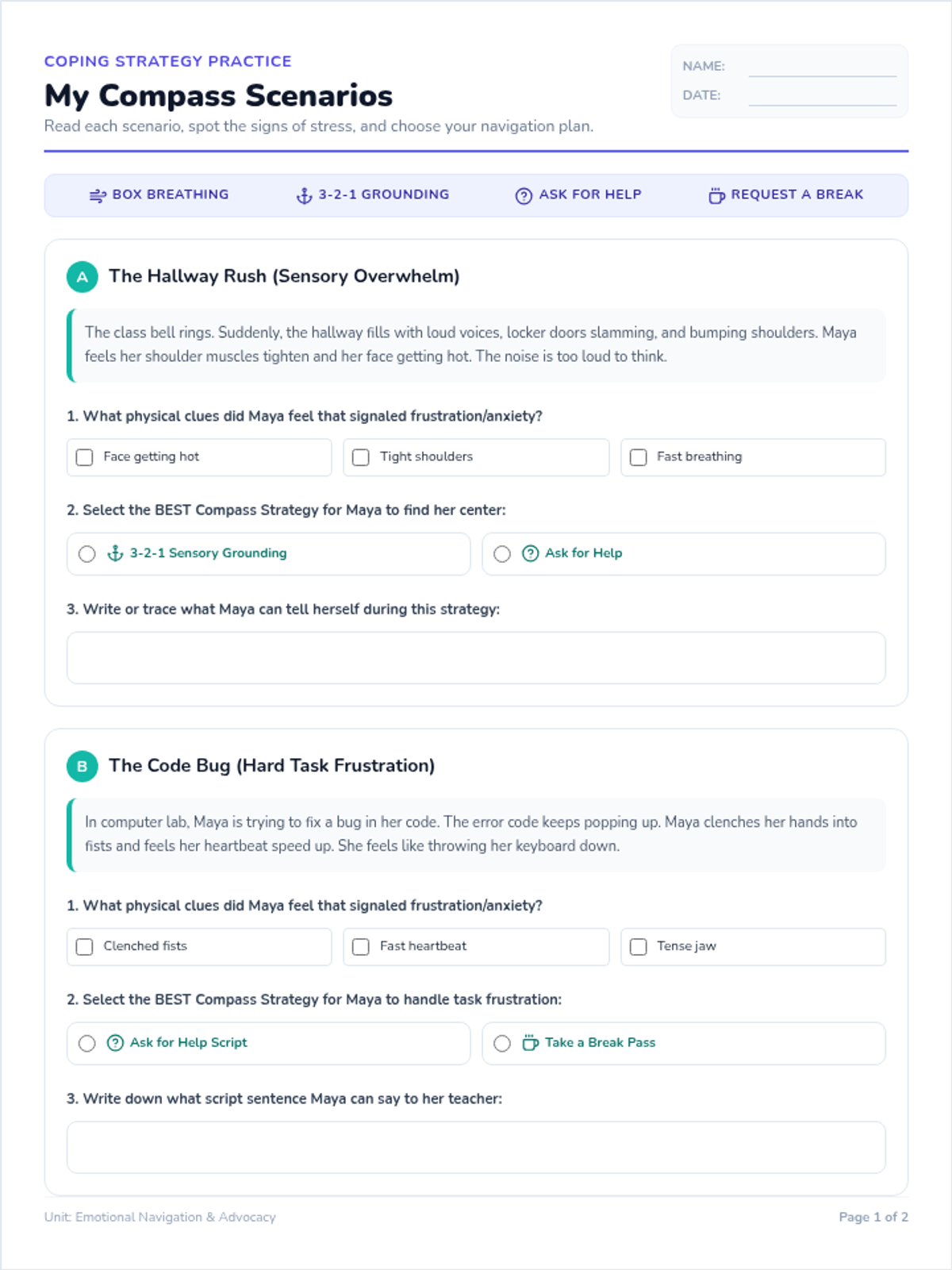
A 2-page student-facing scenario activity worksheet. It walks 9th-grade students through real-world high school scenarios of anxiety and frustration, helping them identify physiological triggers and choose from their Cool Down Compass strategies.
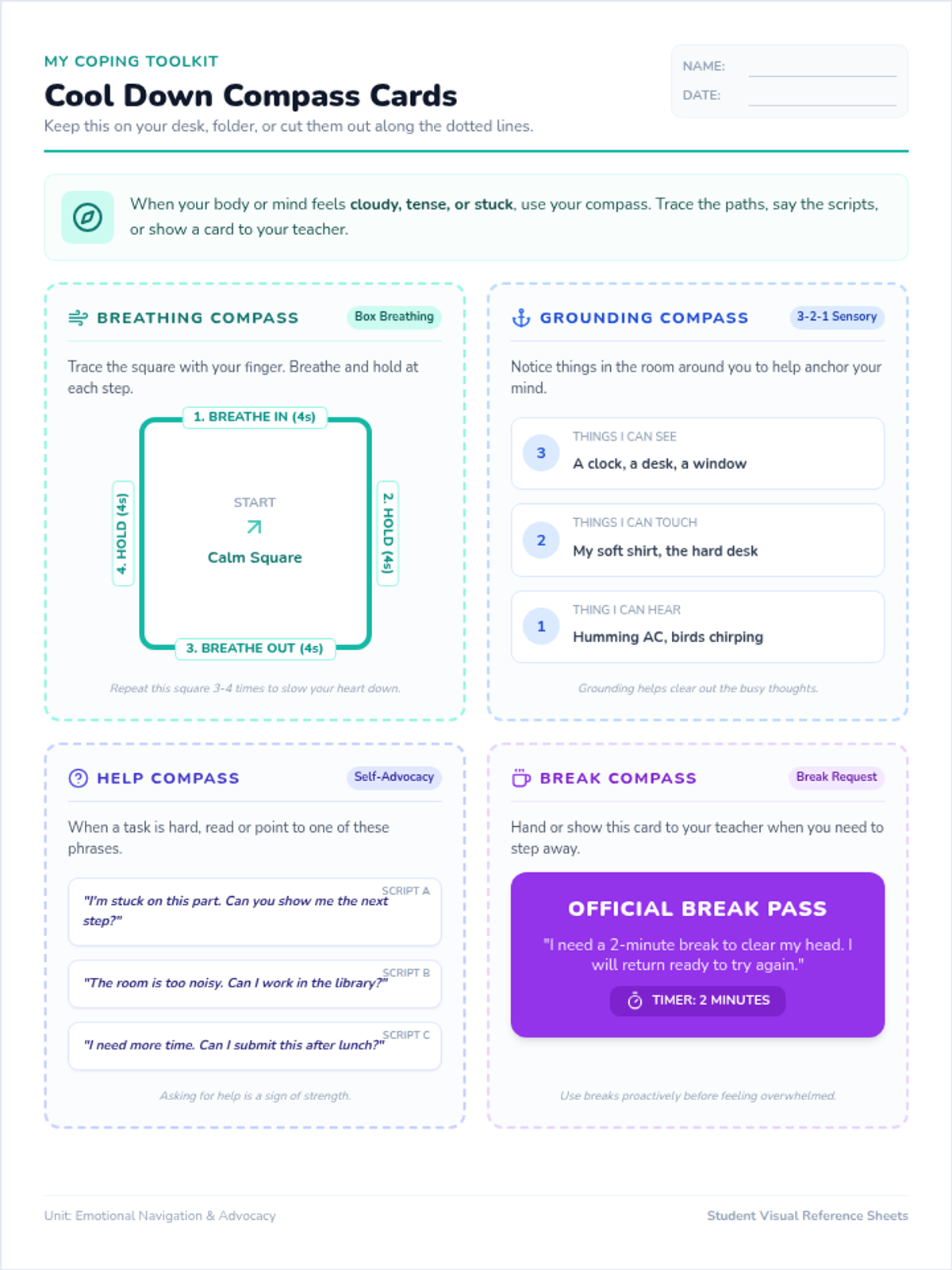
A highly visual, soothing, and structured student-facing reference card sheet. It features four distinct visual coping strategy cards (box breathing, sensory grounding, help scripts, and break passes) designed with clear paths, simple steps, and calming graphics for 9th-grade autistic students.
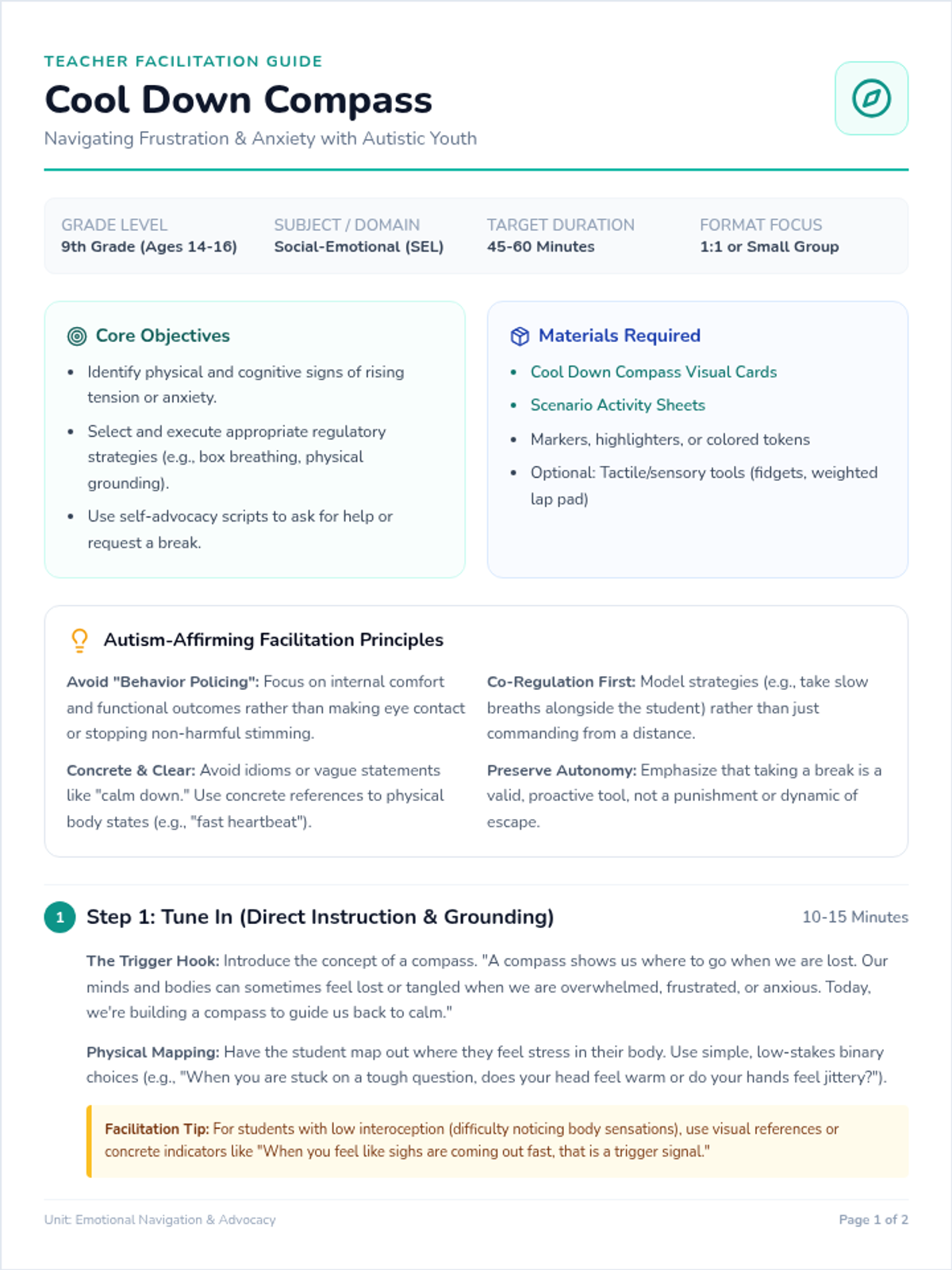
A structured, teacher-facing facilitation guide and lesson plan designed for educators supporting 9th-grade autistic students. It details specific instructional steps, neurodivergent-affirming strategies, and pacing instructions for teaching self-regulation and self-advocacy.
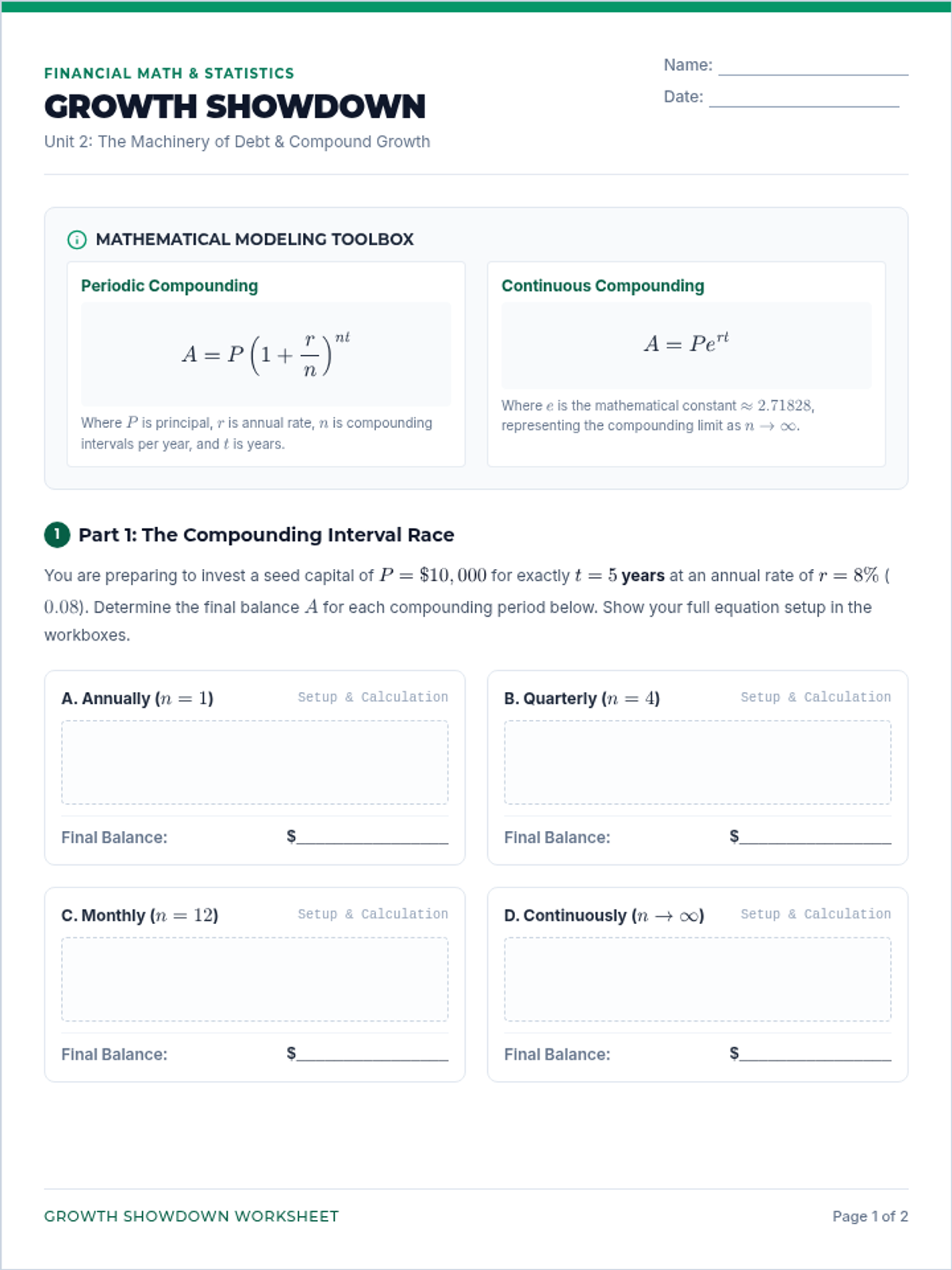
A hands-on student worksheet focusing on compounding interest models, continuous compounding derivations, and comparing real-world investment growth profiles.
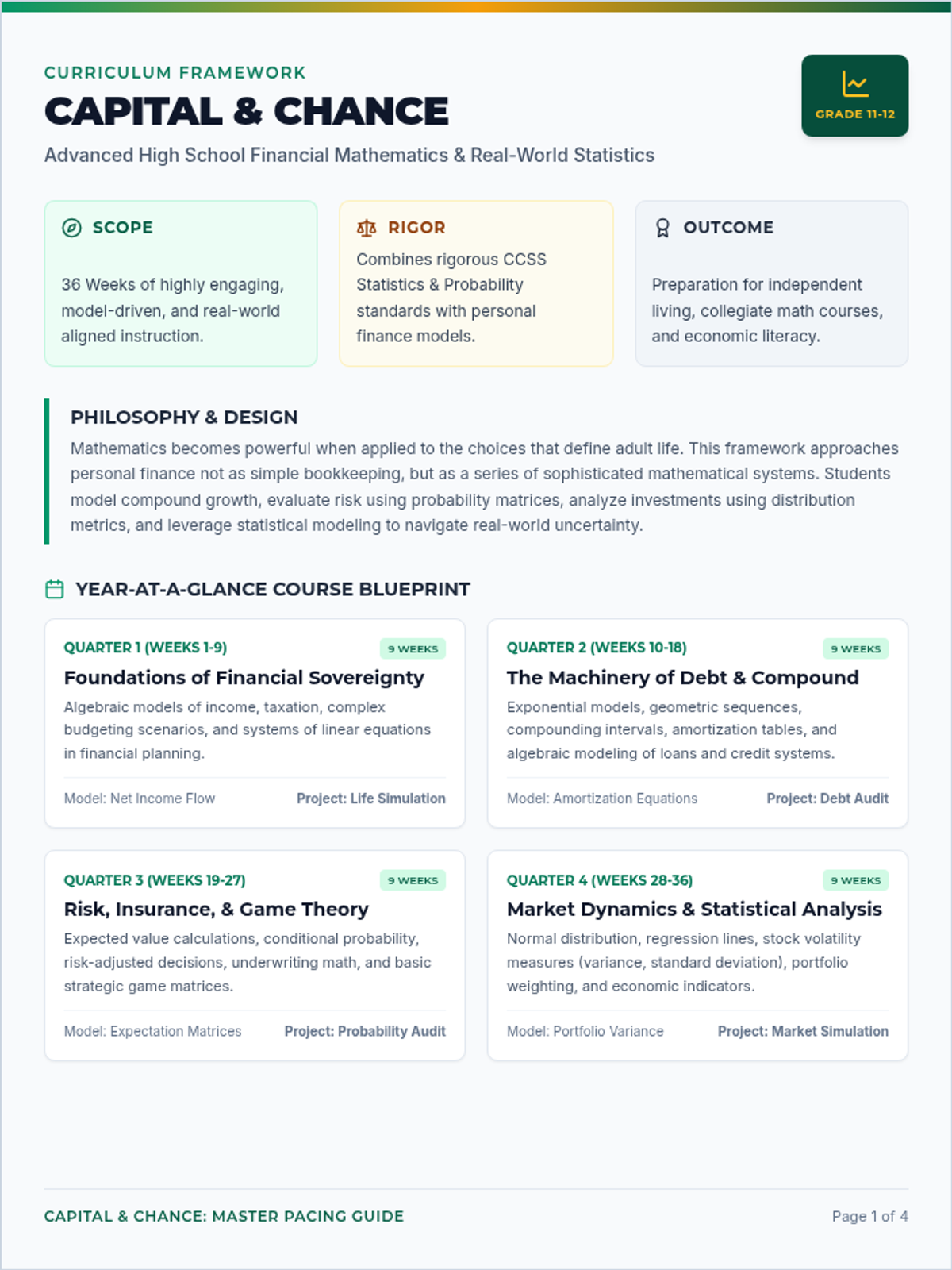
A highly structured, 4-page curriculum framework and pacing guide for High School Financial Math & Statistics. Includes quarter-by-quarter unit timelines, weekly learning objectives, mathematical models, and authentic assessment performance tasks.
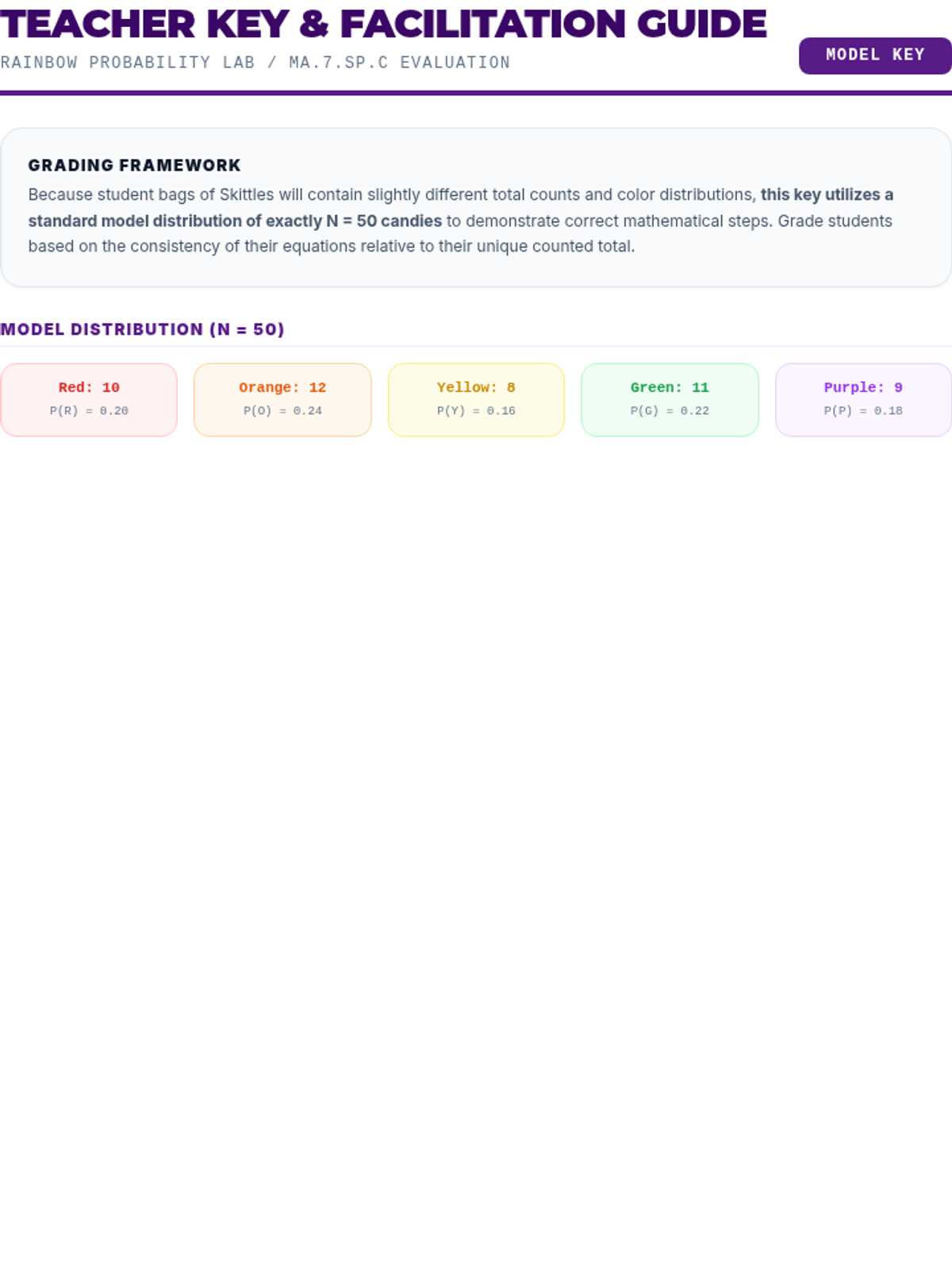
A detailed teacher reference and answer key for the Rainbow Probability Lab. It features sample frequency data (assuming a typical bag count of 50), calculated probability values for single and compound draws, and a pedagogical guide for grading.
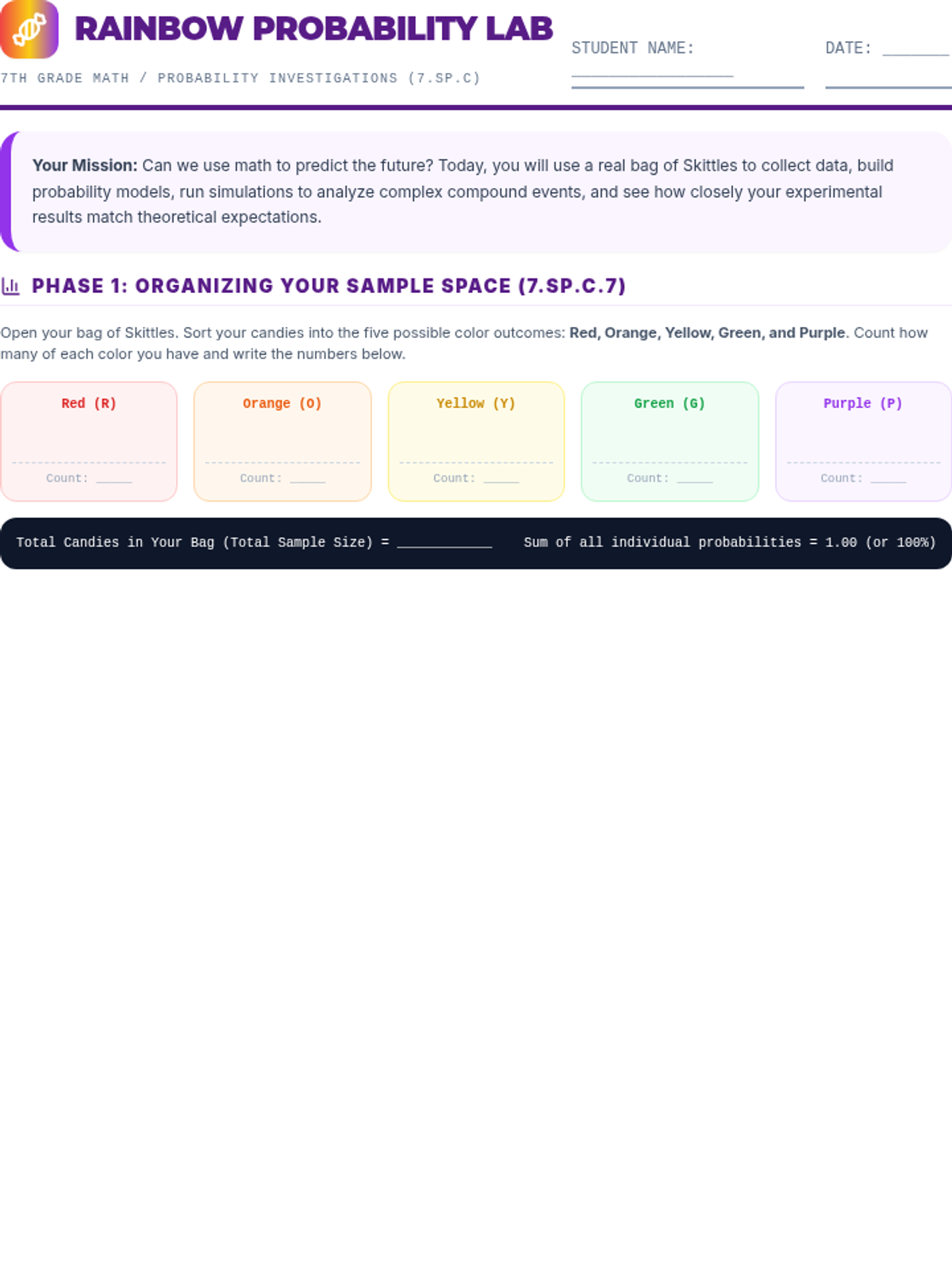
A comprehensive 2-page student lab guide for the Rainbow Probability Lab. Designed specifically for 7th-grade math students, it uses clear, age-appropriate language to count Skittles, build probability models, compare experimental and theoretical rates, and construct tree diagrams to analyze compound events.
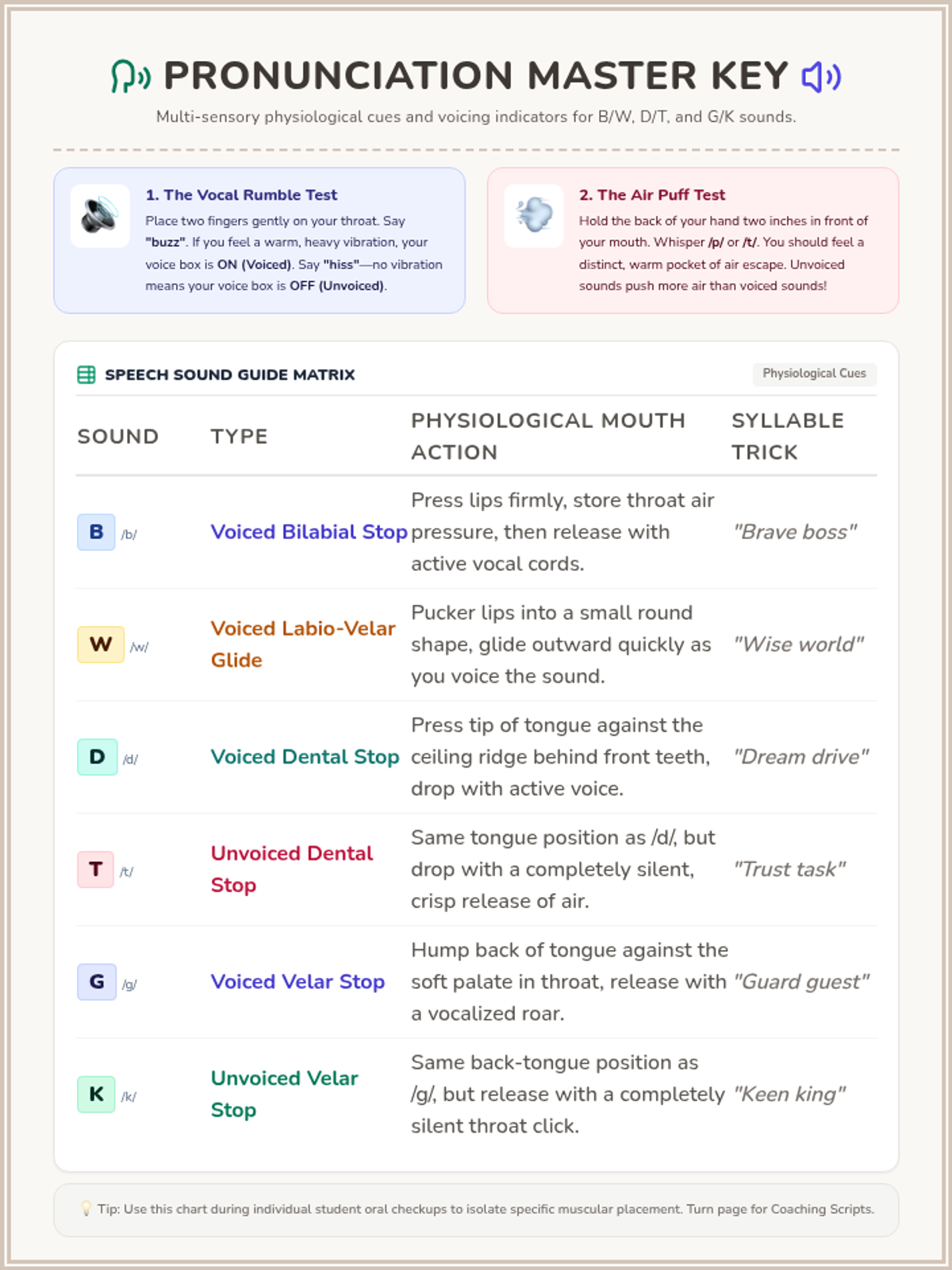
A master multi-sensory speech sounds pronunciation guide for teachers and students. Provides physiological cues, voicing tests (puff and rumble), and positive coaching scripts for B/W, D/T, and G/K sounds.
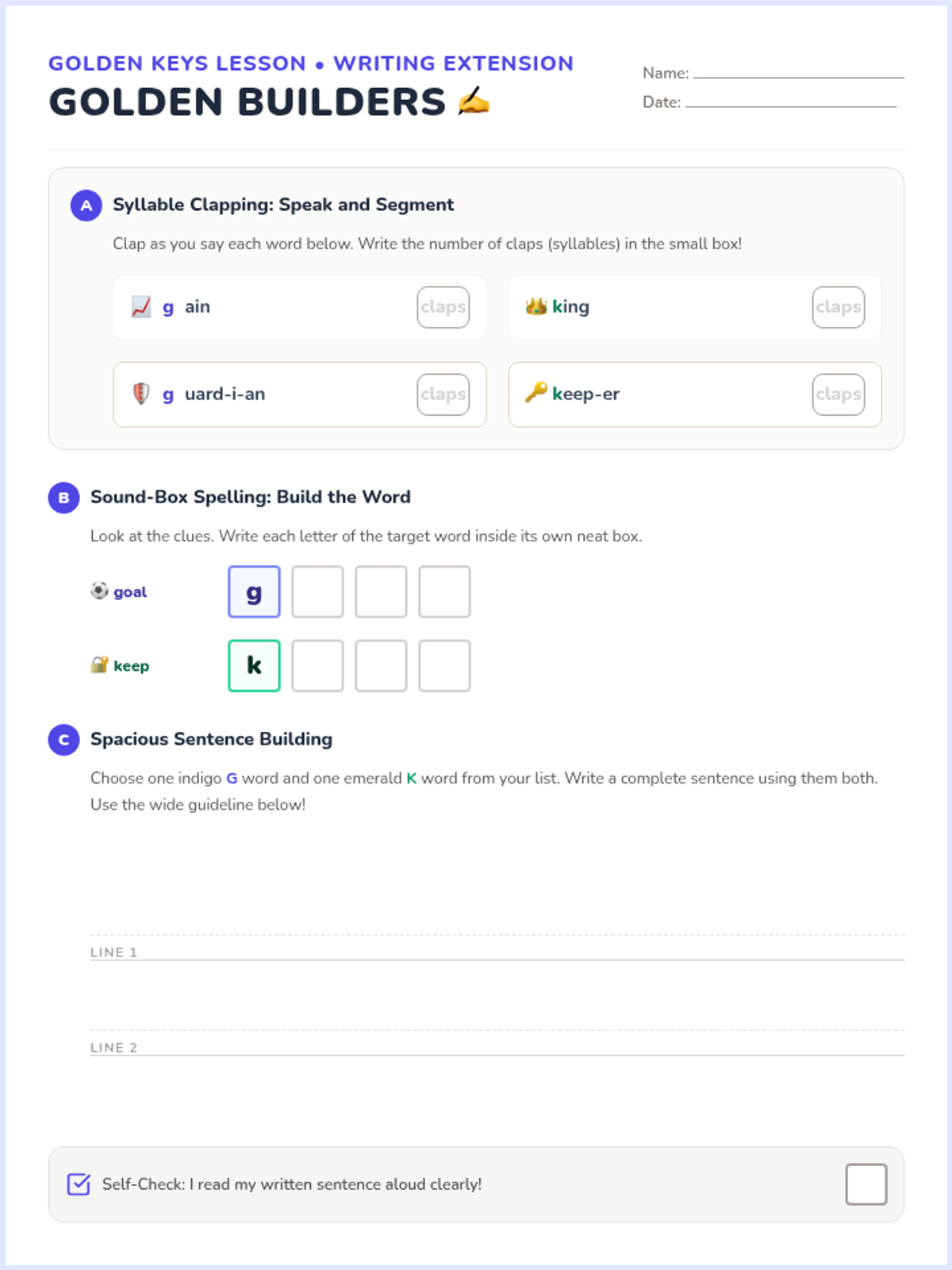
A multi-sensory spelling and writing worksheet for letters G and K. Includes syllable clapping, word builders, and creative sentence-writing with spacious writing guidelines to prevent visual crowding.
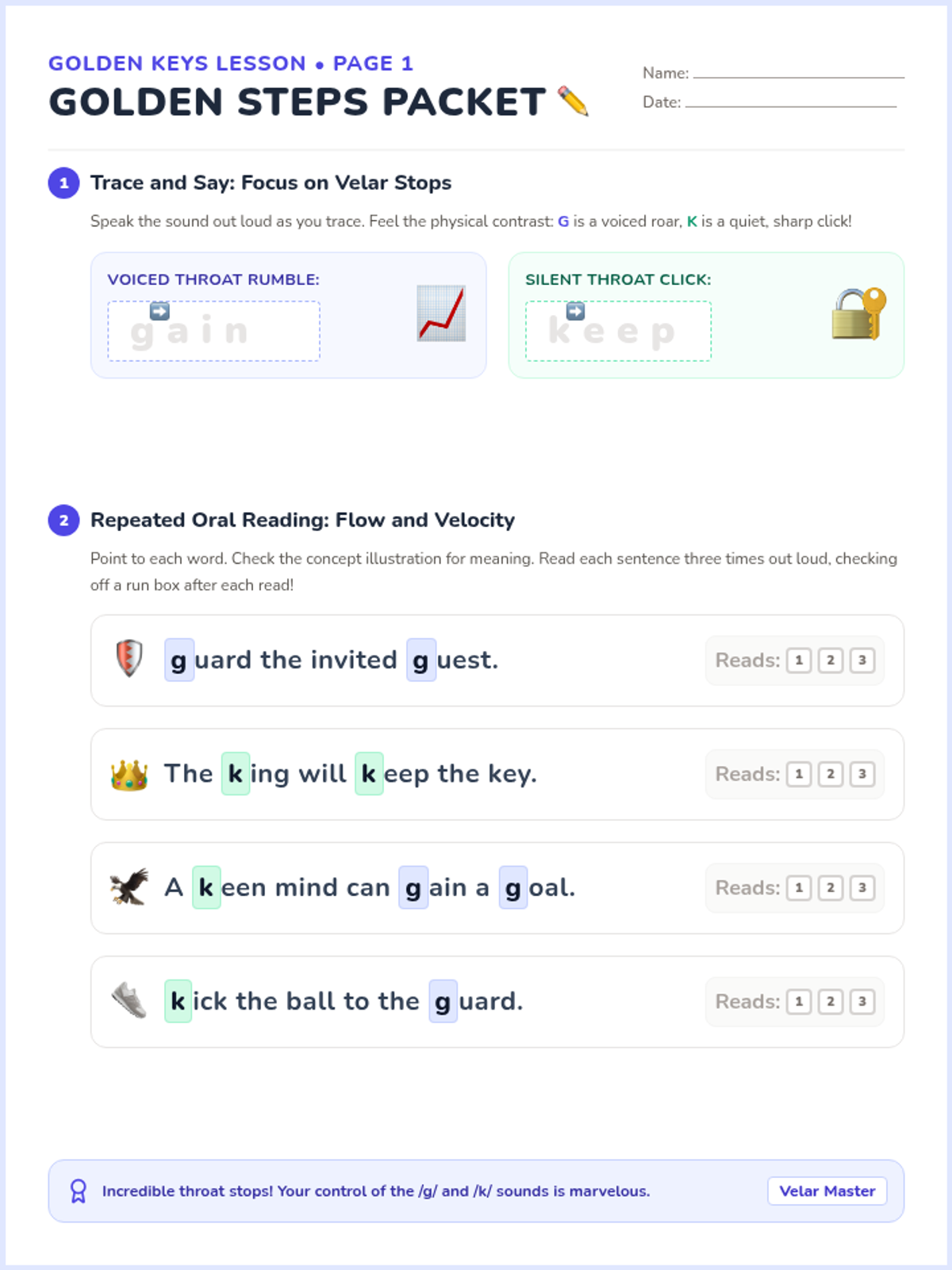
A 2-page dyslexia-friendly structured routine packet for letters G and K. Page 1 offers structured trace, read, and repeated reading check-offs. Page 2 provides an oral reading assessment with a built-in teacher evaluation rubric.
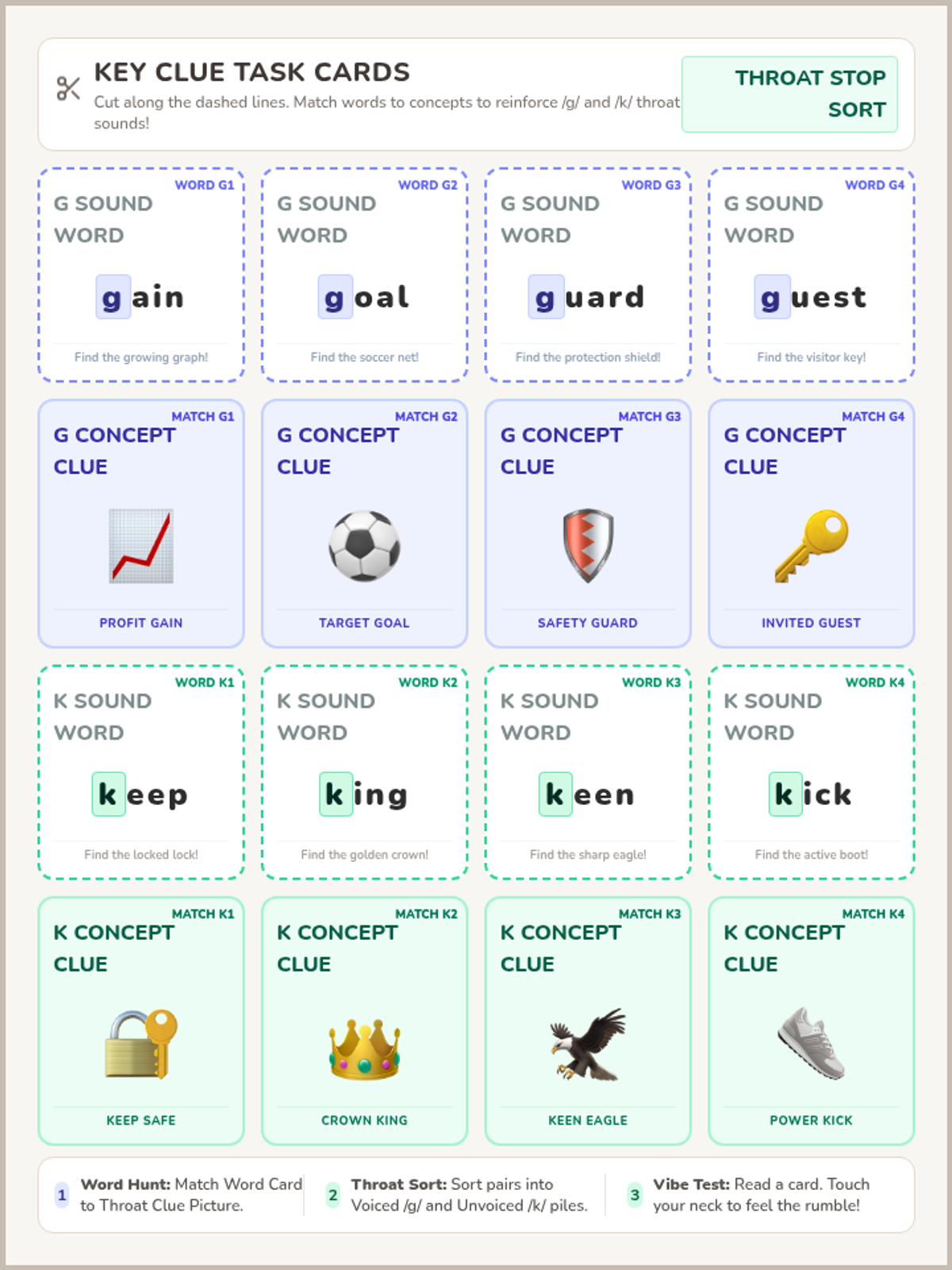
A printable sheet of 16 double-coded matching task cards for letters G and K. Features 8 word cards and 8 matching high-contrast picture cards, split between indigo-themed G words and emerald-themed K words.
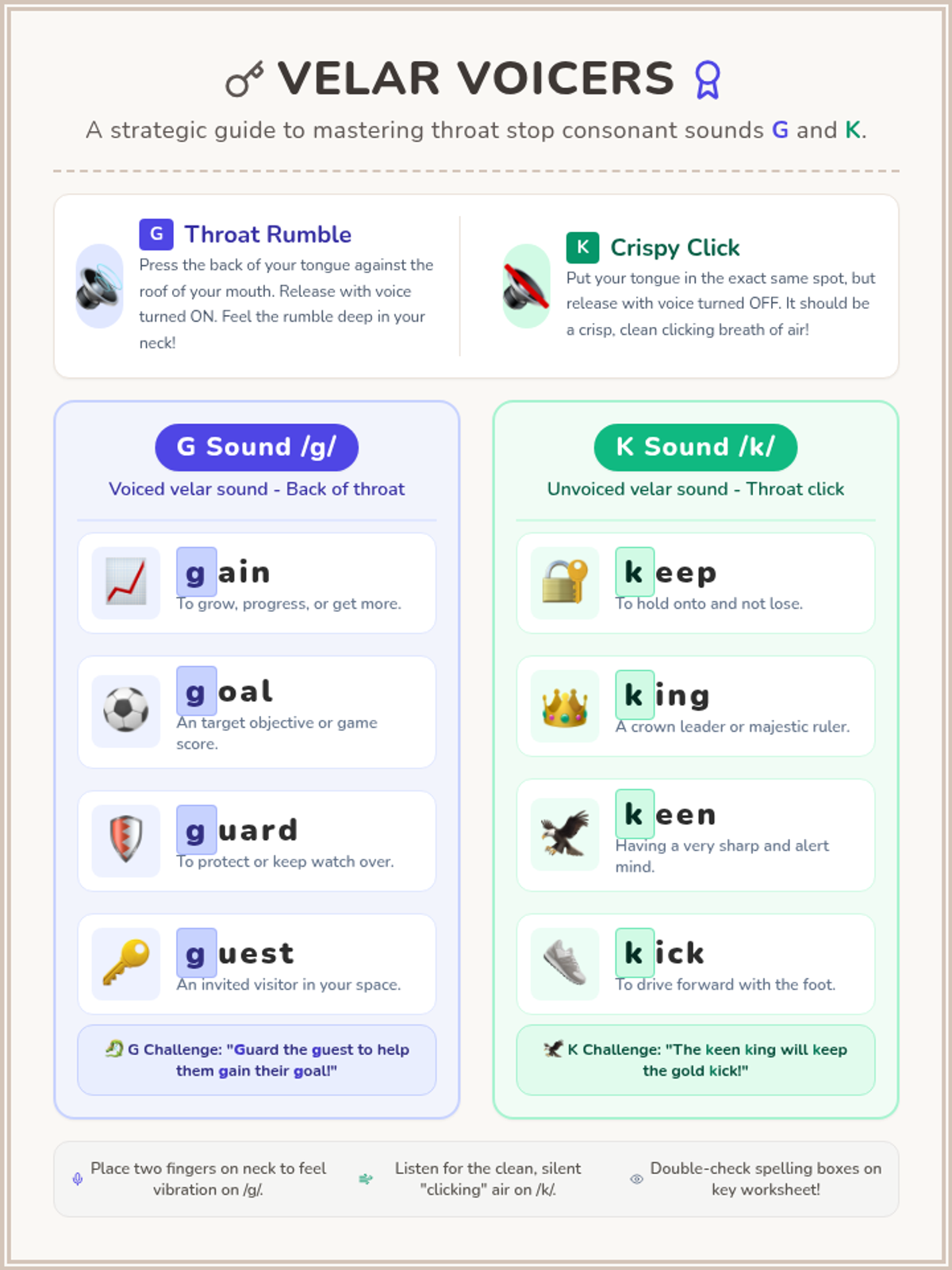
A color-coded visual reference anchor chart for letters G and K. Contrasts voiced /g/ and unvoiced /k/ mechanics with high-interest vocabulary (gain, goal, guard, guest, keep, king, keen, kick) and speech-therapy guides.
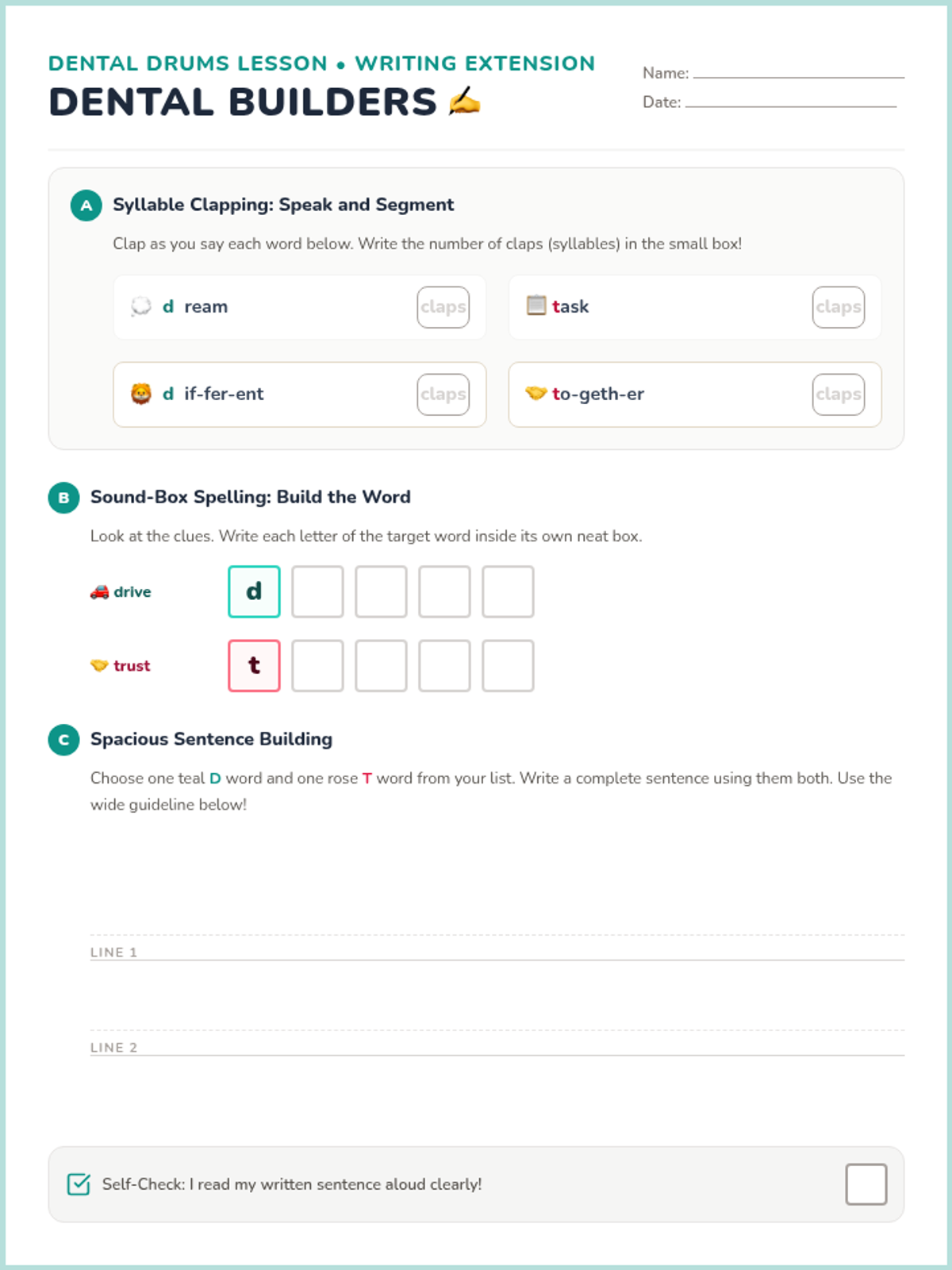
A multi-sensory spelling and writing worksheet for letters D and T. Includes syllable clapping, word builders, and creative sentence-writing with spacious writing guidelines to prevent visual crowding.
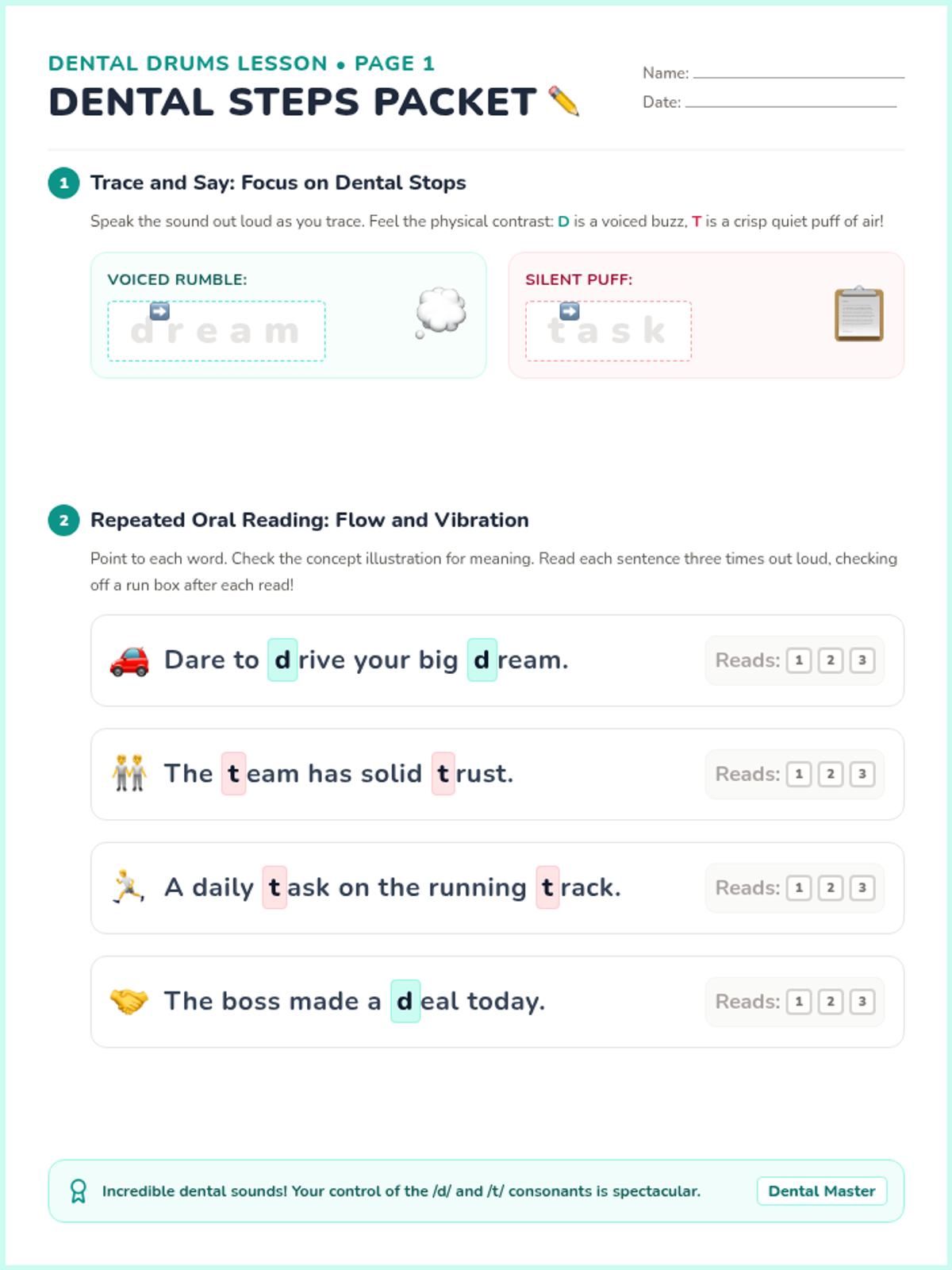
A 2-page dyslexia-friendly structured routine packet for letters D and T. Page 1 offers structured trace, read, and repeated reading check-offs. Page 2 provides an oral reading assessment with a built-in teacher evaluation rubric.
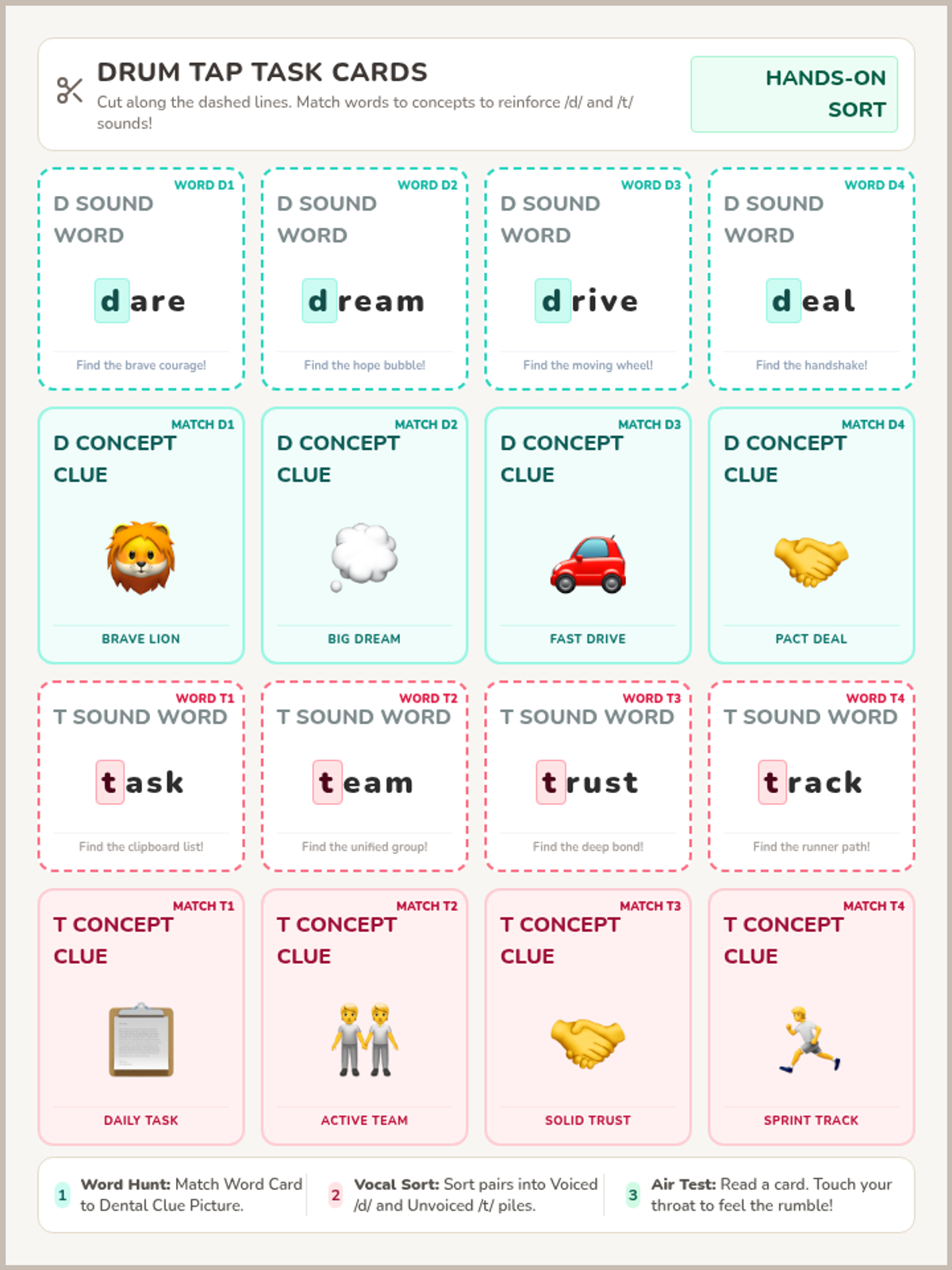
A printable sheet of 16 double-coded matching task cards for letters D and T. Features 8 word cards and 8 matching high-contrast picture cards, split between teal-themed D words and rose-themed T words.
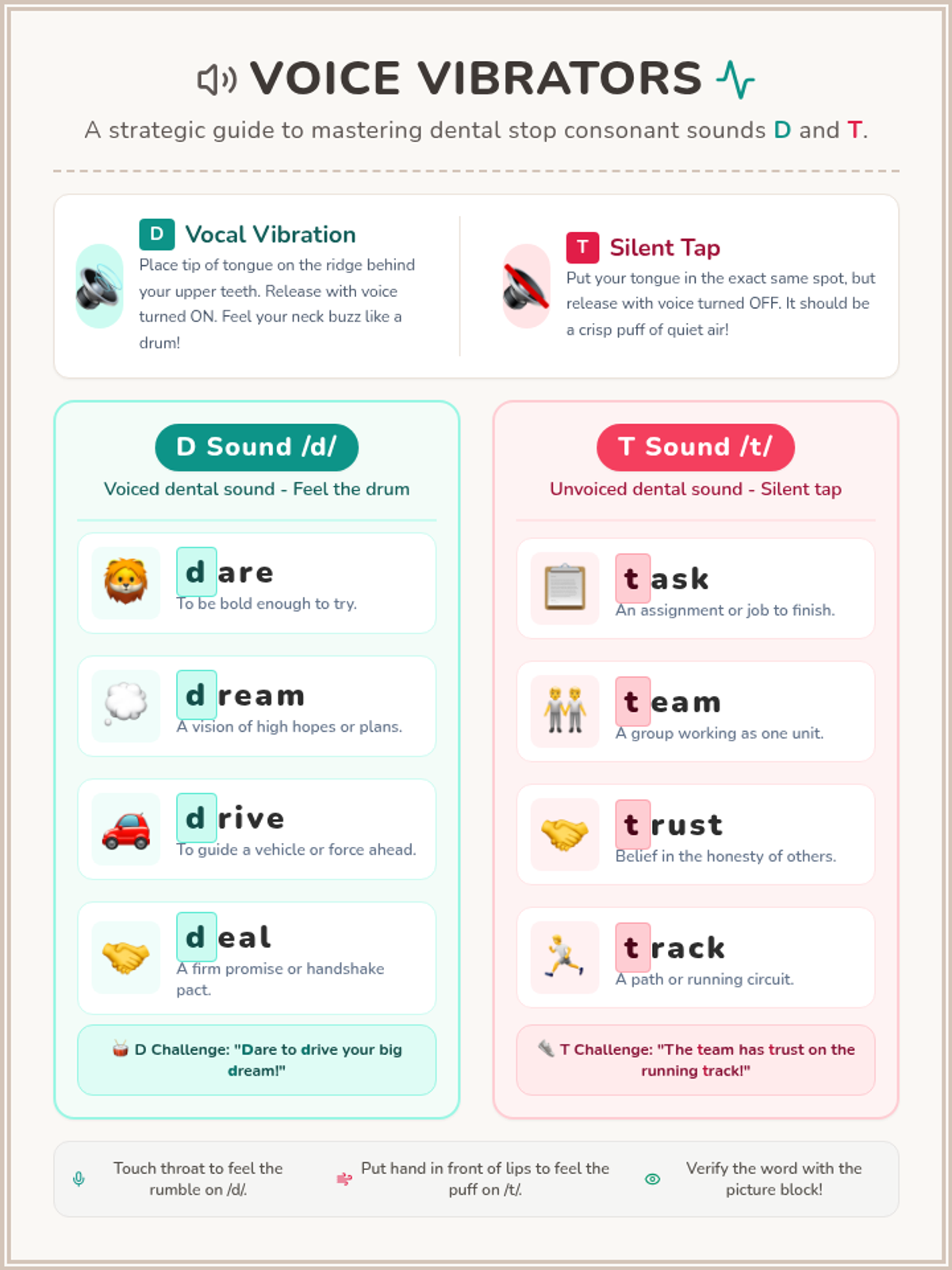
A color-coded visual reference anchor chart for letters D and T. Contrasts voiced /d/ and unvoiced /t/ mechanics with high-interest vocabulary (dare, dream, drive, deal, task, team, trust, track) and speech-therapy mouth-shape guides.
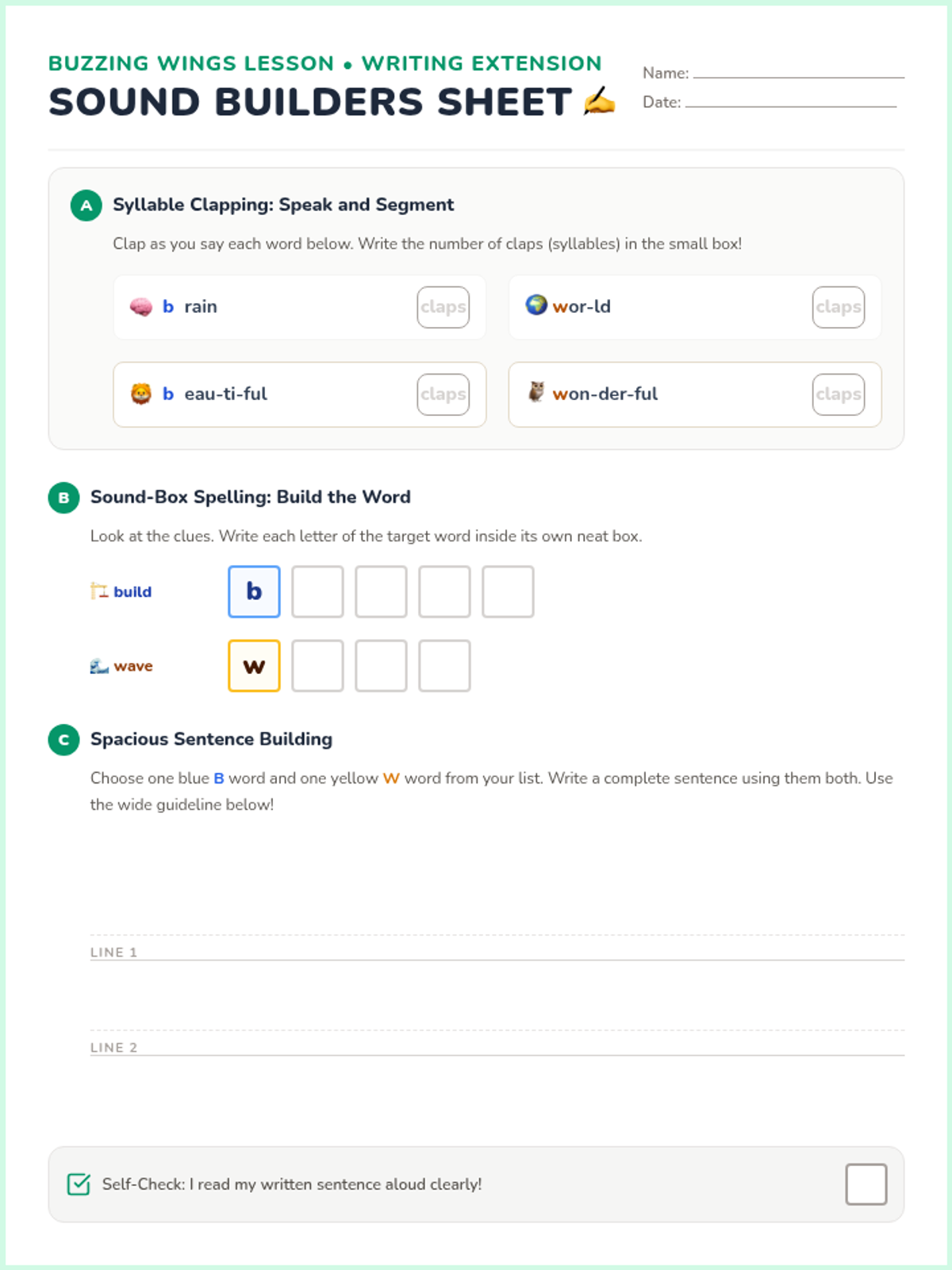
A multi-sensory spelling and writing worksheet. Includes syllable clapping, word builders, and creative sentence-writing with B and W words, using spacious writing lines to prevent visual crowding.
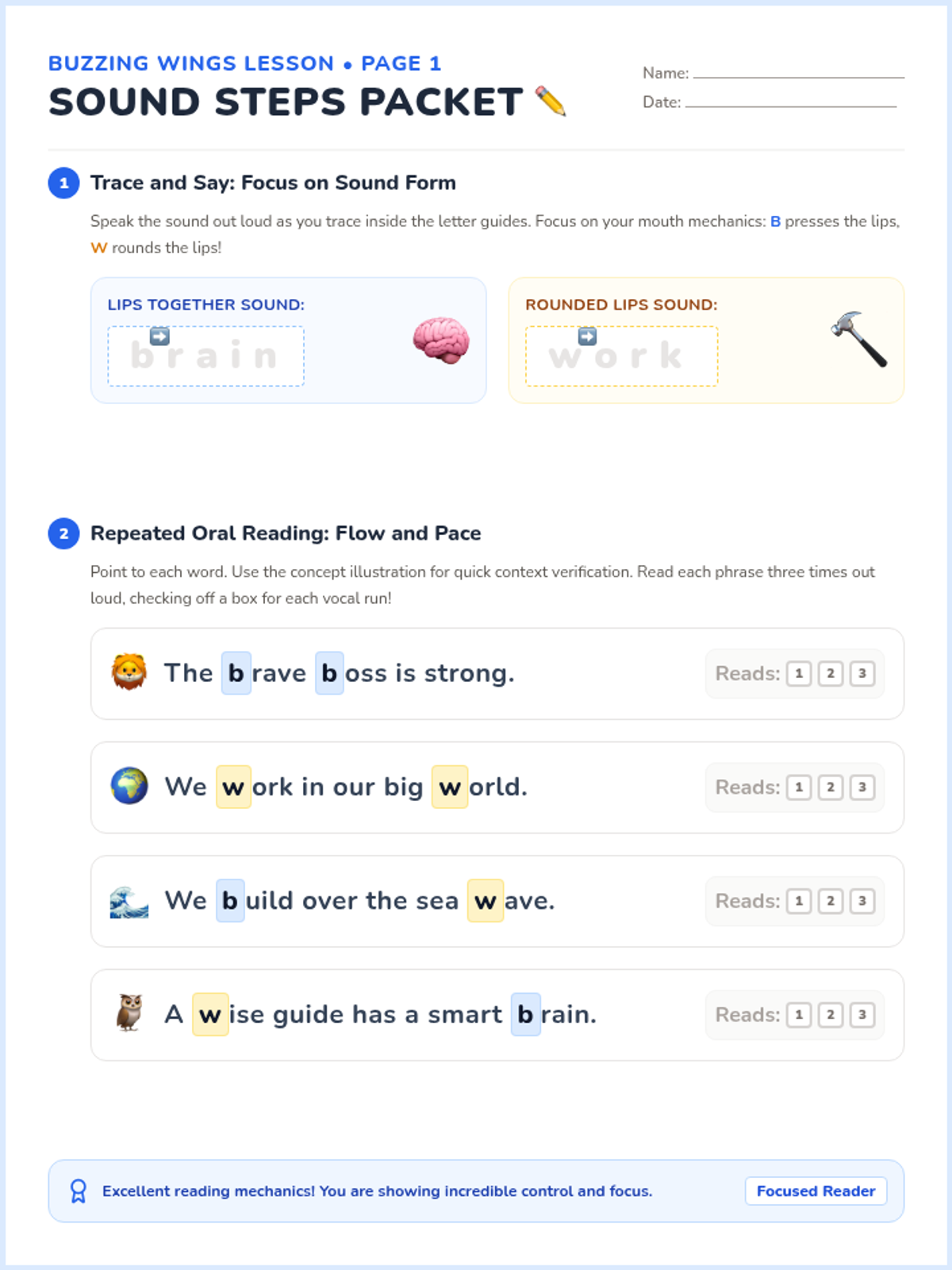
A 2-page dyslexia-friendly structured routine packet. Page 1 offers structured trace, read, and repeated reading check-offs. Page 2 provides an oral reading assessment with a built-in teacher evaluation rubric.
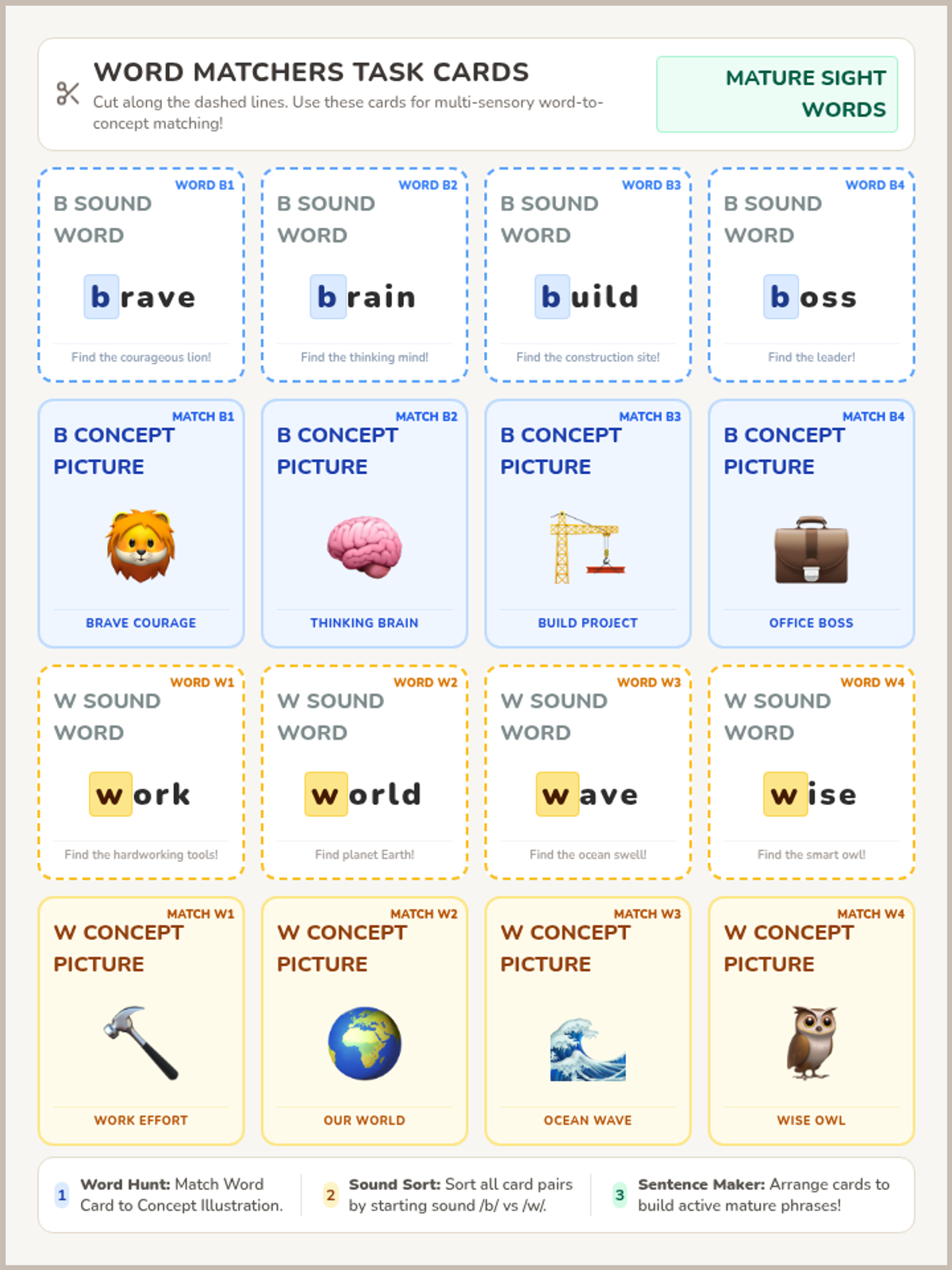
A printable sheet of 16 double-coded matching task cards. Features 8 word cards and 8 matching high-contrast picture cards, split between blue-themed B words and yellow-themed W words.
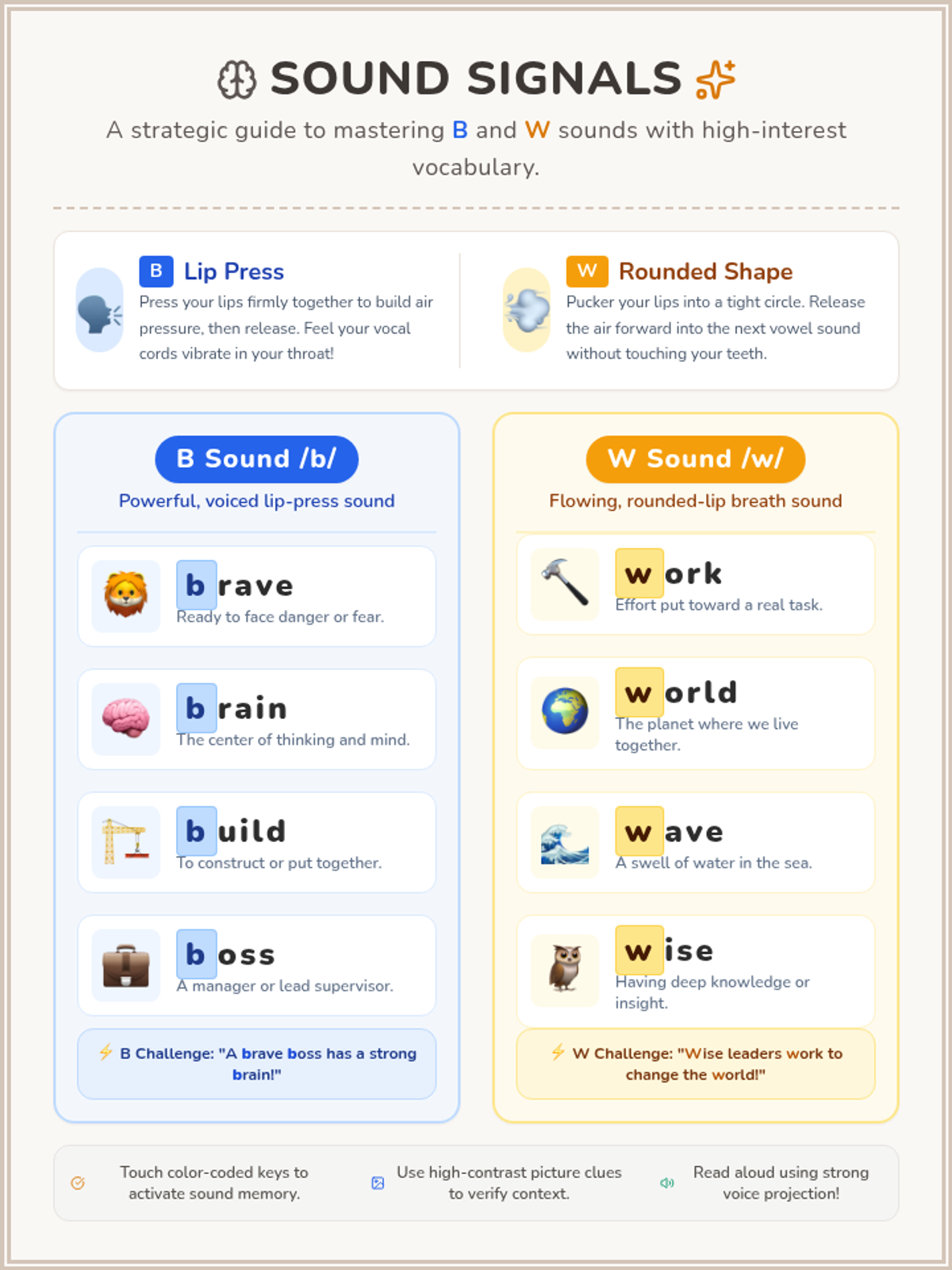
A color-coded visual reference anchor chart for letters B and W designed for older students. Includes anatomical mouth-shape cues, high-interest sight words (brave, brain, build, boss, work, world, wave, wise), and mature picture scaffolding.
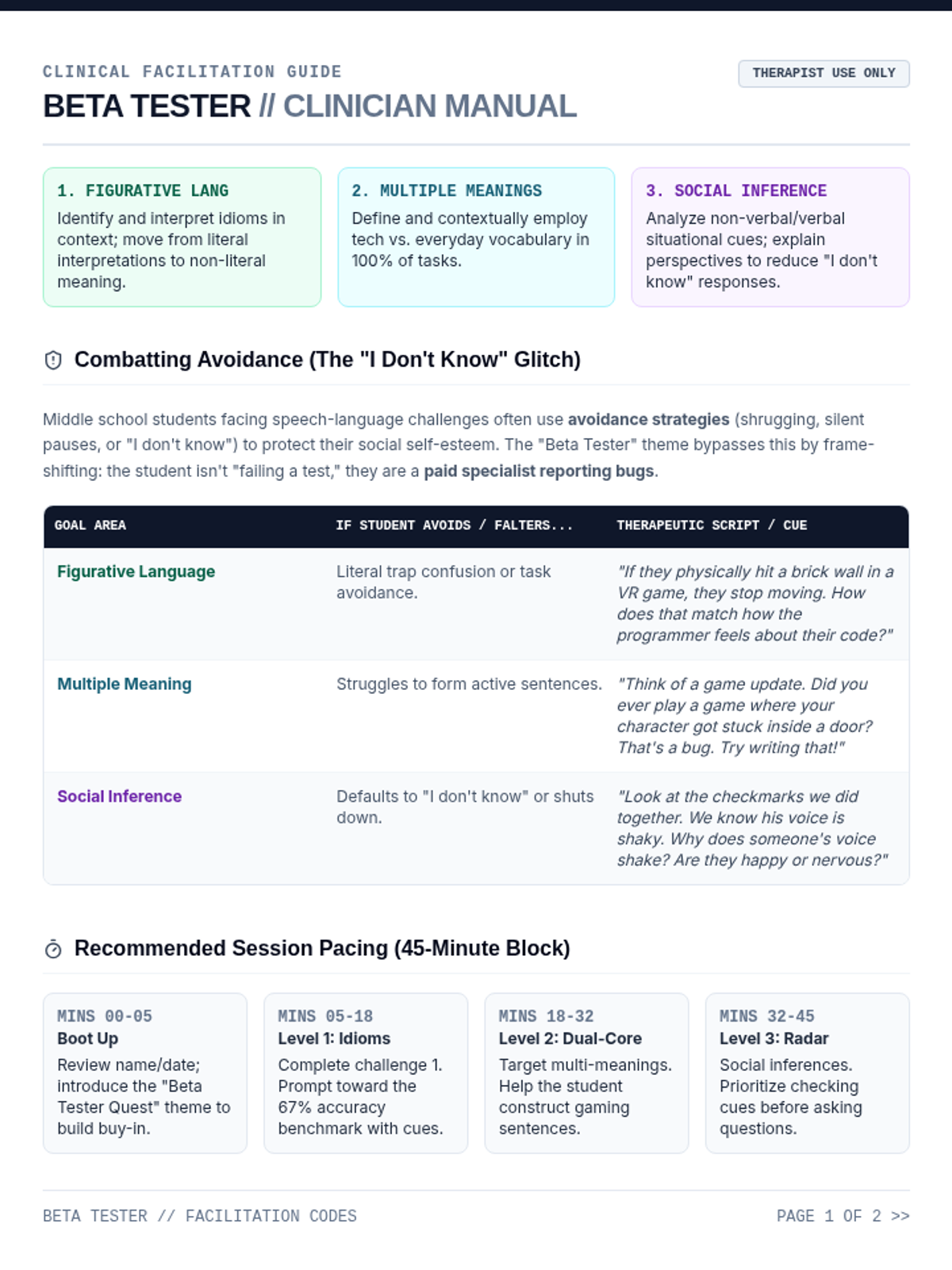
A comprehensive teacher and clinician facilitation guide for the Beta Tester unit, featuring a multi-tiered prompting hierarchy to combat therapeutic avoidance, session pacing, and a detailed answer key.
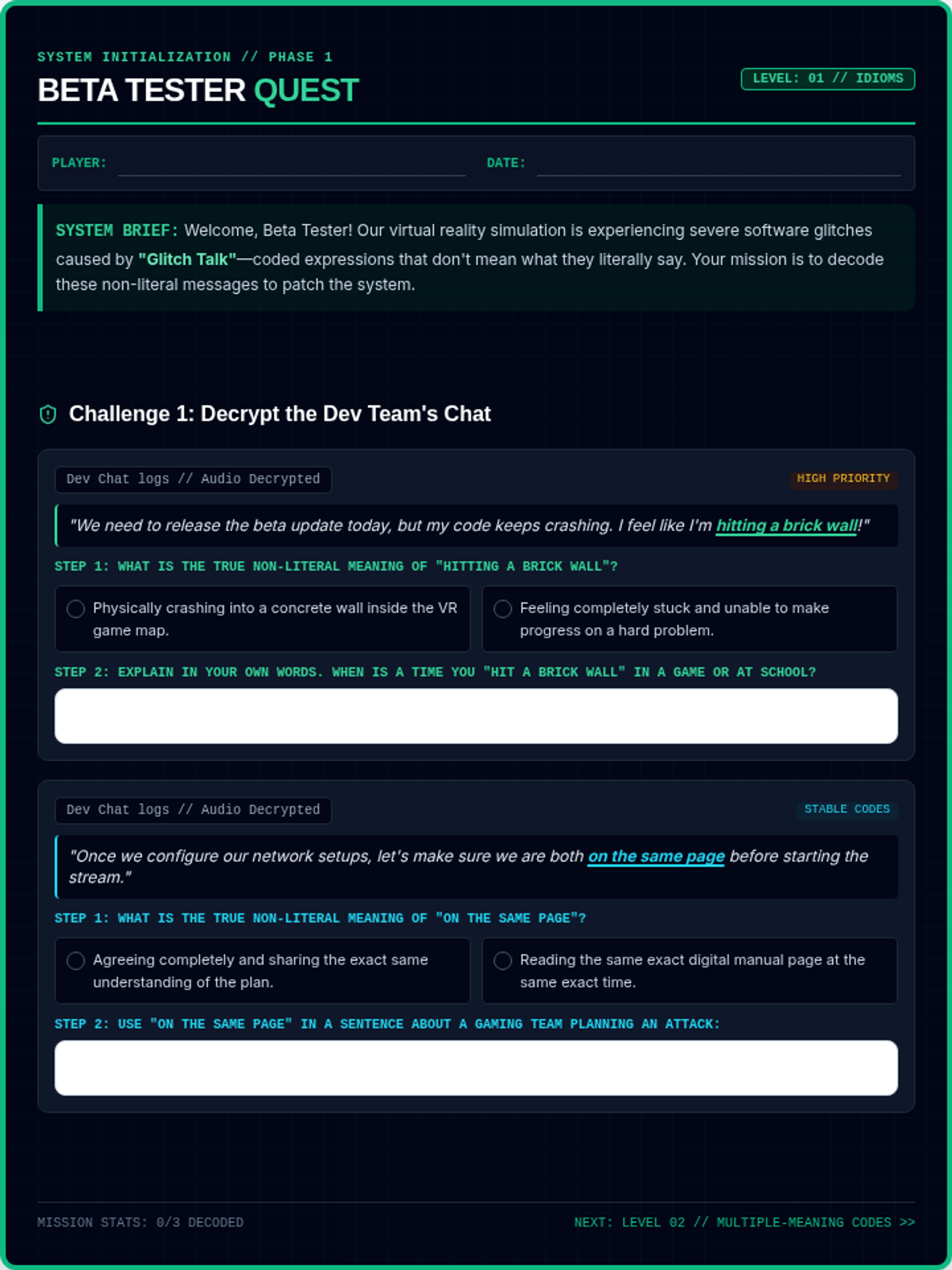
A highly engaging gaming and technology-themed speech-language therapy student workbook targeting figurative language, multiple-meaning words, and social inference, designed specifically for middle school students with visual scaffolds and choices to combat avoidance.
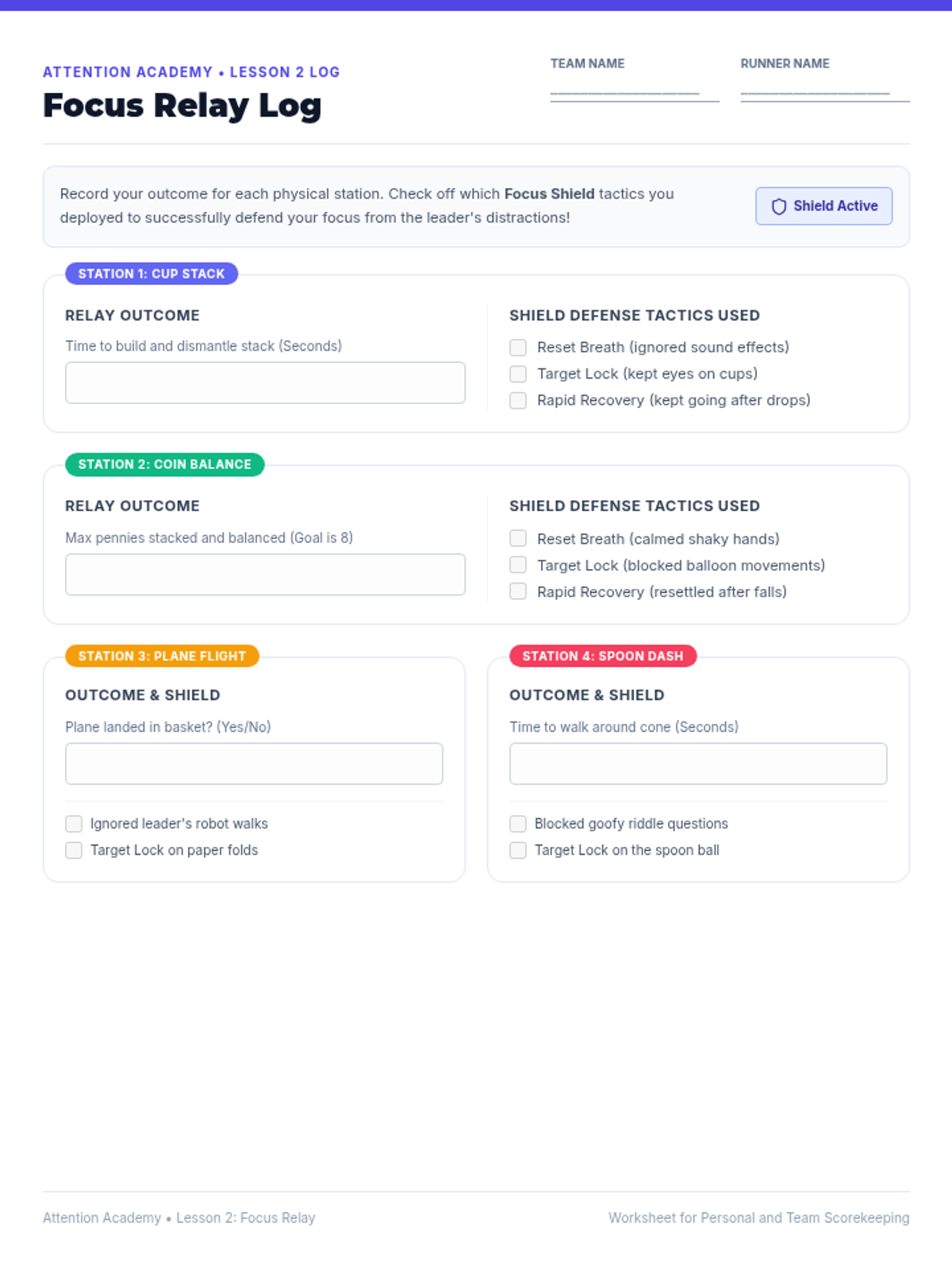
A professional-style student log for recording answers to the gauntlet focus drills, checking off Focus Shield strategies used during distractions, and conducting a final focus recovery self-assessment.
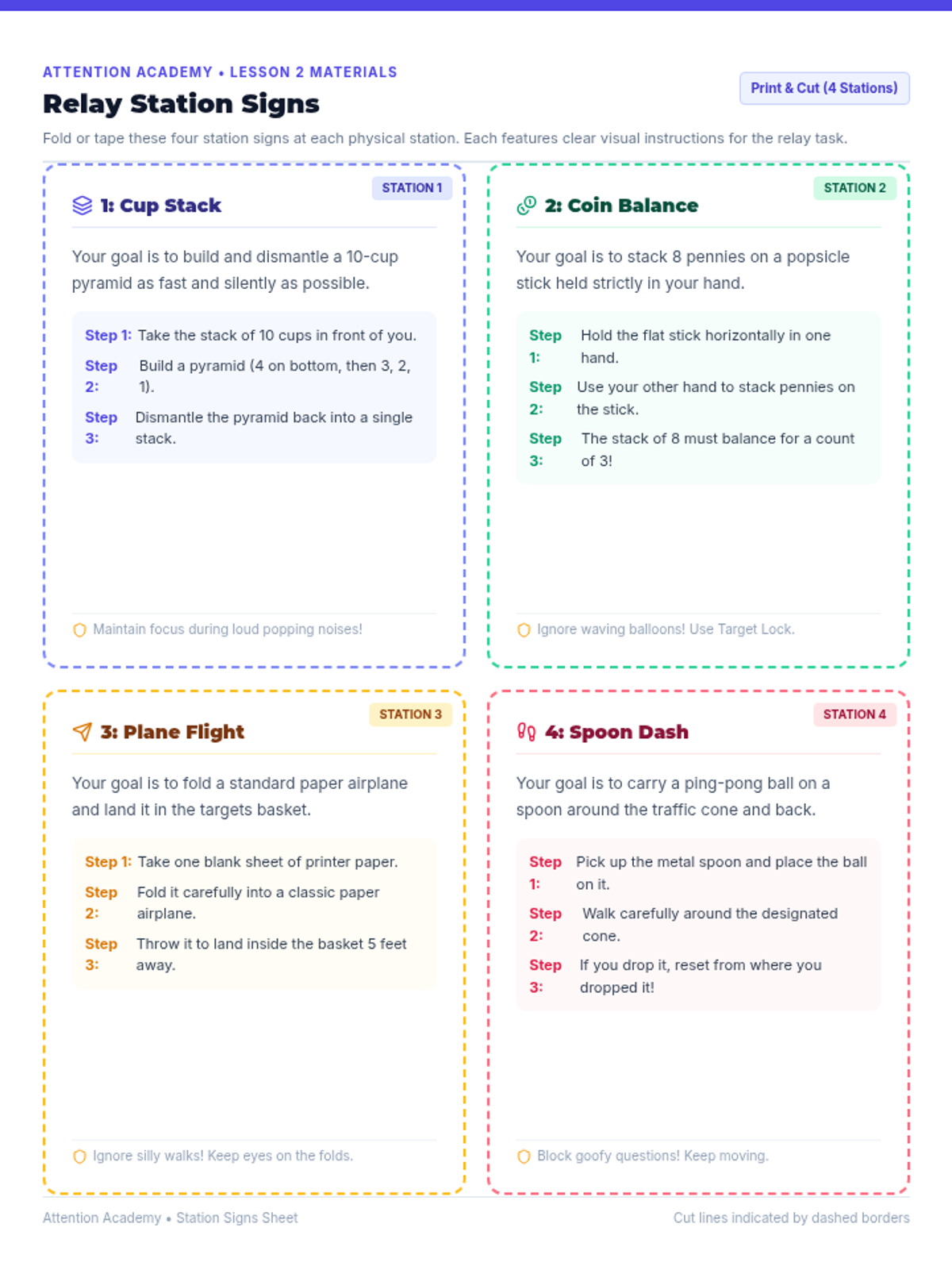
A 1-page printable worksheet containing four high-concentration clerical task cards. Tasks include data audits, code verifications, and sorting drills designed to test students' focus.
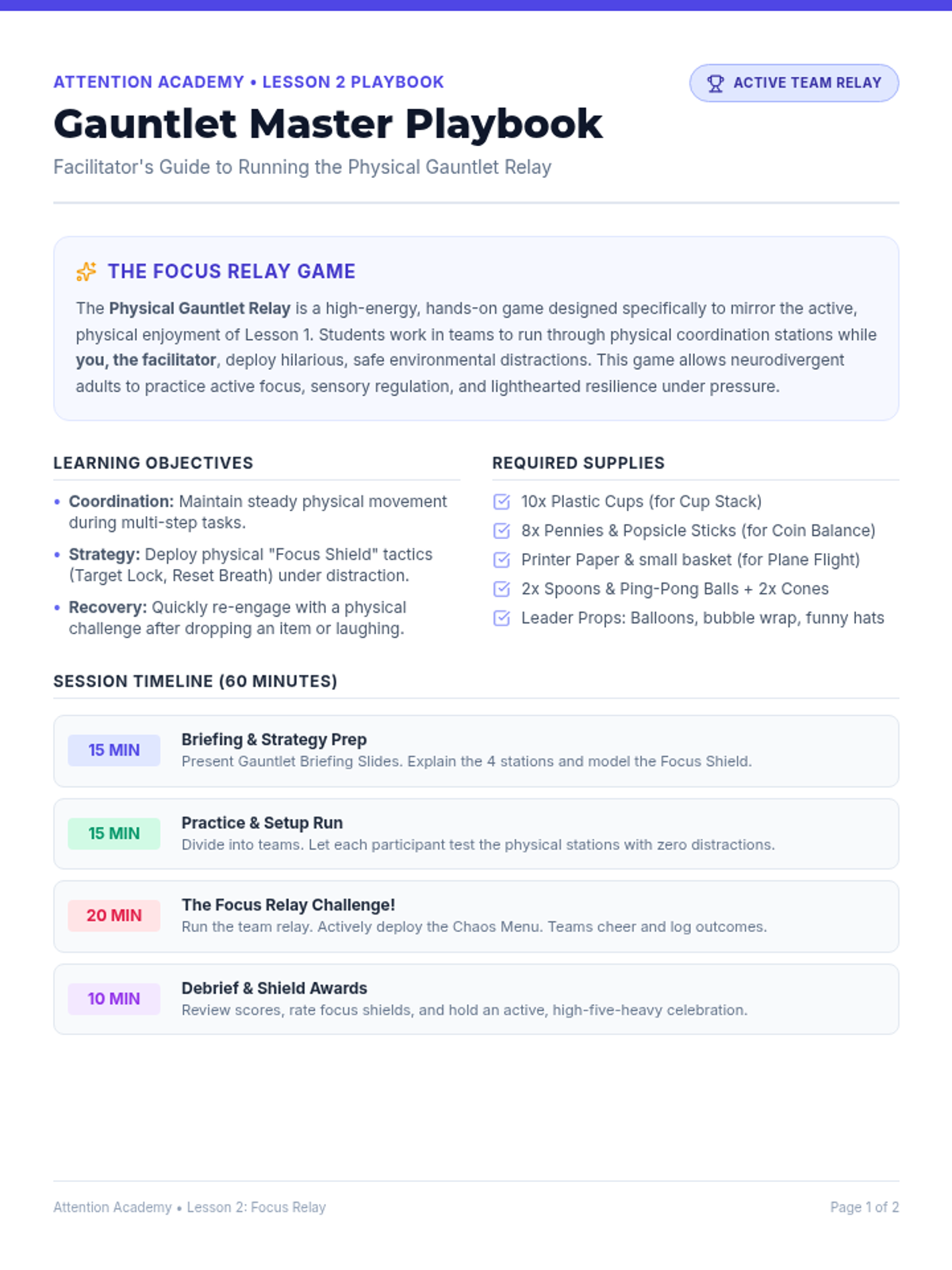
A 2-page instructional playbook for the facilitator. Outlines the game rules, a 60-minute session timeline, a 'Chaos Menu' of calibrated leader distractions, and supportive coaching strategies for adults with IDD.