A student worksheet for Lesson 4 focusing on prefixes 'pre-' and 'post-', featuring timeline analysis, context-based meaning, and word building.
An updated detective-themed slide deck for a 6th-grade inferencing lesson. It now includes the full two-paragraph passages from the worksheet, followed by multiple-choice investigation slides for each case.
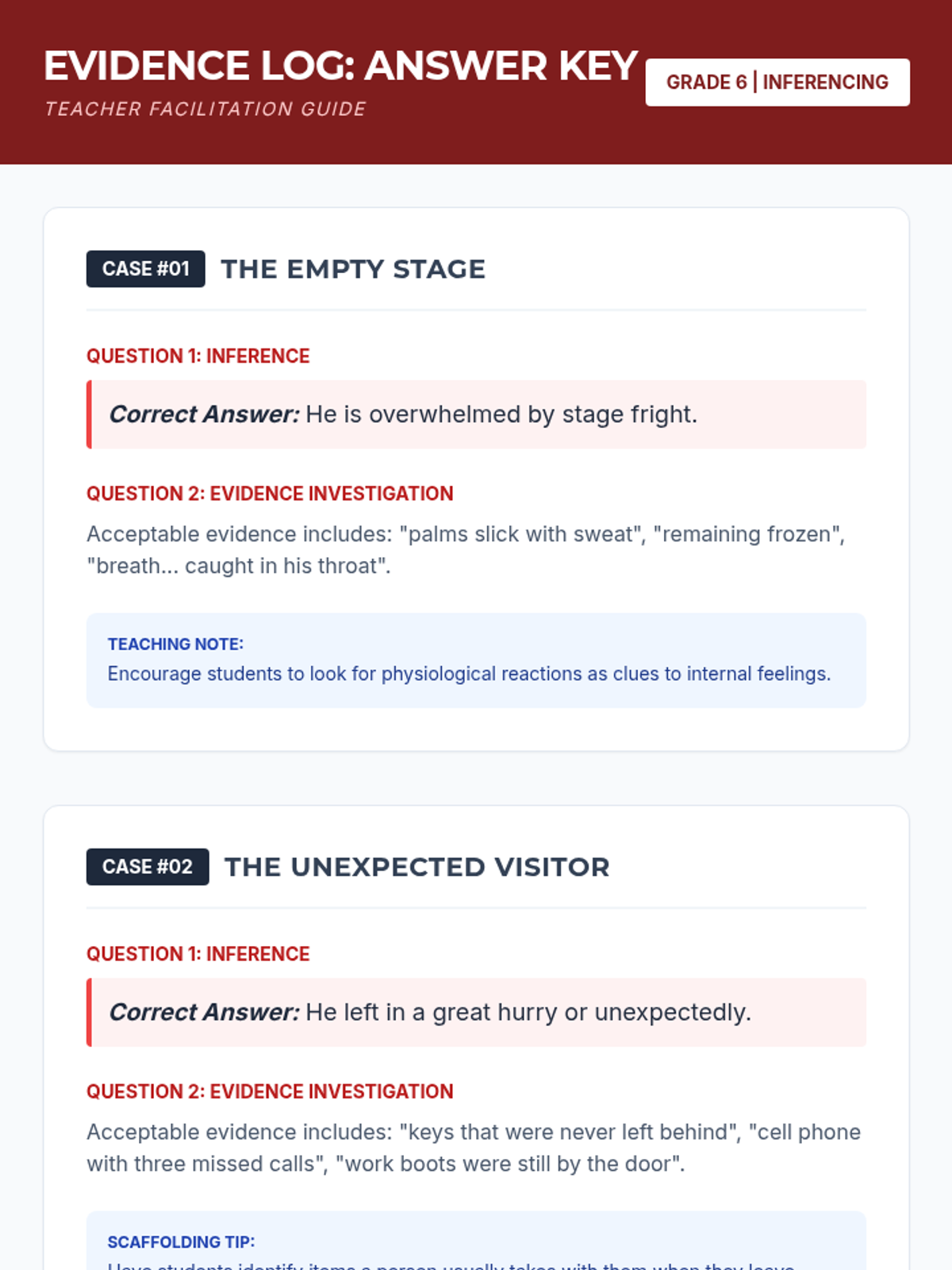
A comprehensive answer key and teacher facilitation guide for the Case Files Worksheet. Includes correct answers, evidence examples, and teaching notes for scaffolding inferencing skills.
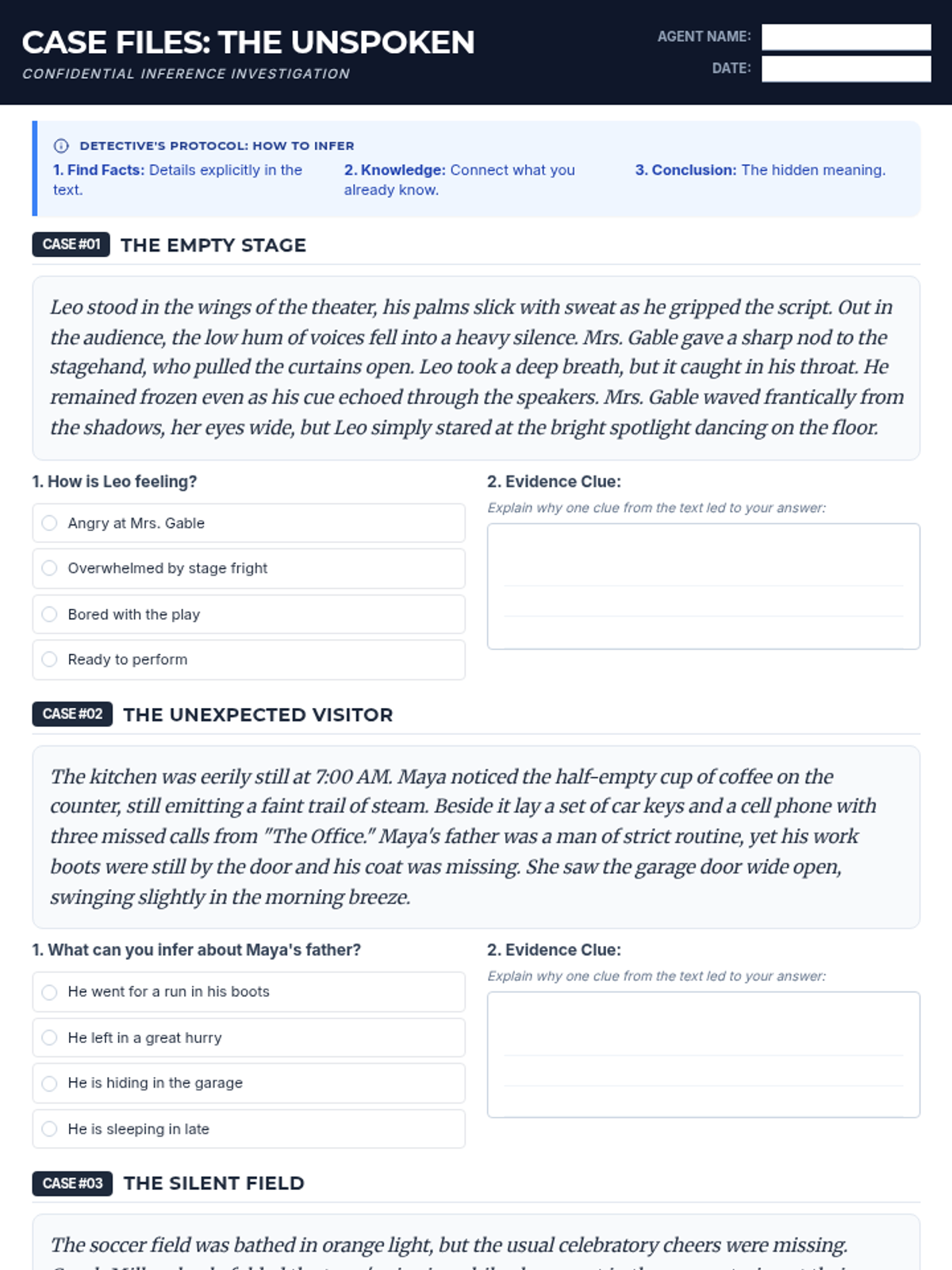
A 6th-grade inferencing worksheet featuring three mystery-themed passages with multiple-choice questions and text evidence tasks. Includes structural scaffolds and lined writing areas to help students connect facts with background knowledge.
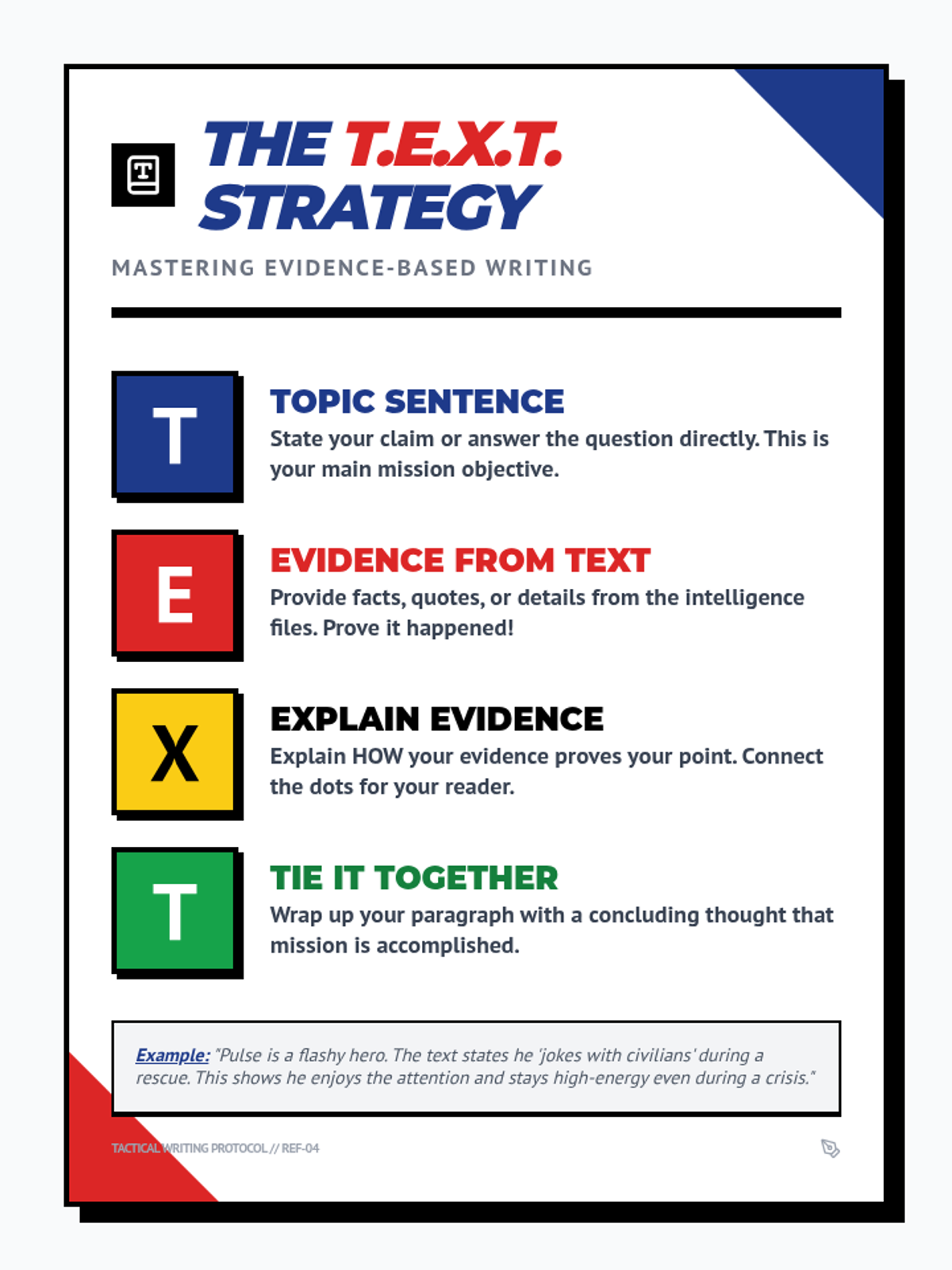
A visual anchor chart explaining the T.E.X.T. strategy (Topic, Evidence, eXplain, Tie it together) for evidence-based writing, styled with the Heroic Havoc comic theme.
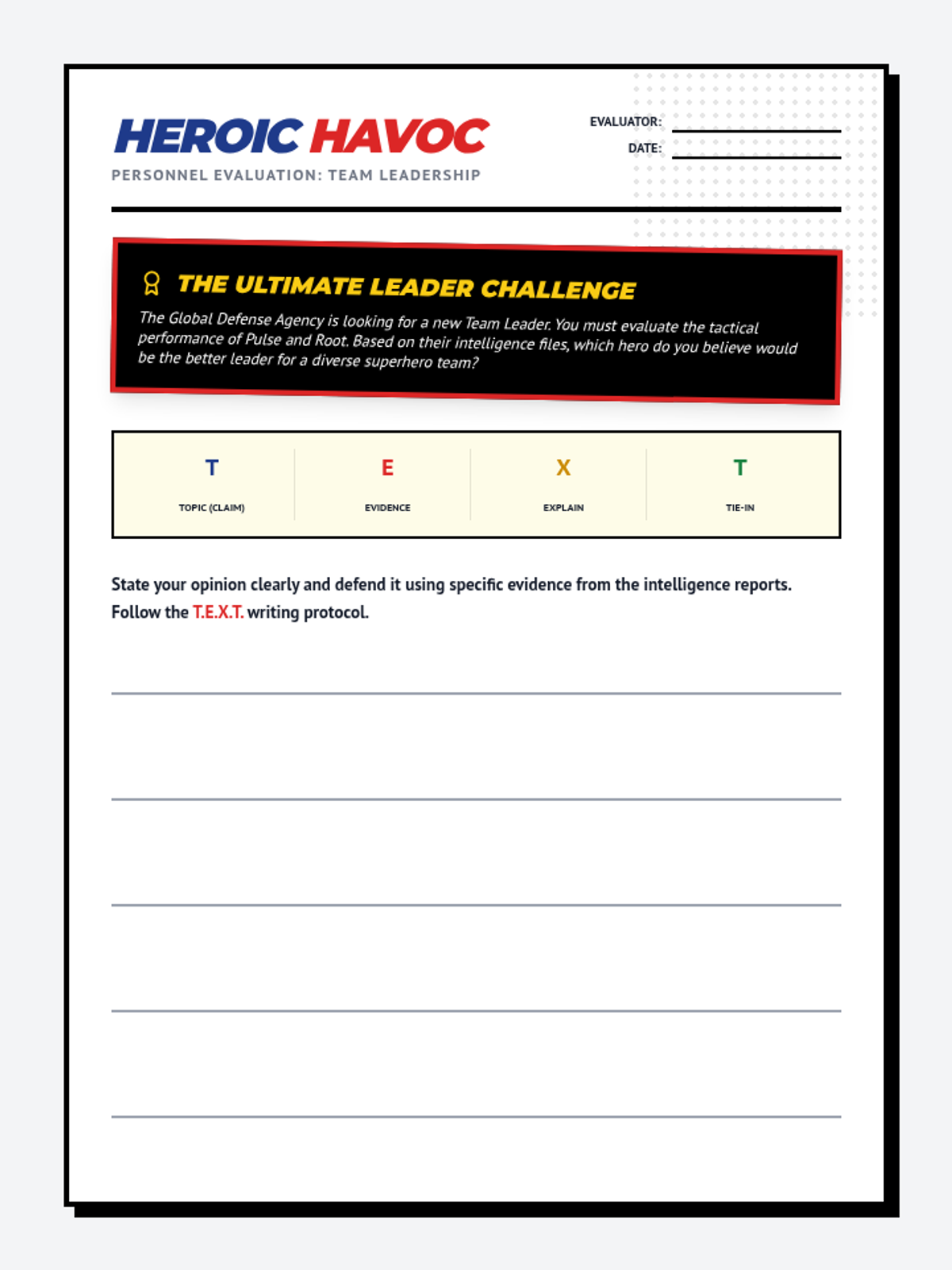
An opinion-based writing prompt challenge where students evaluate whether Pulse or Root would be the better leader for a superhero team, supported by textual evidence and the T.E.X.T. strategy.
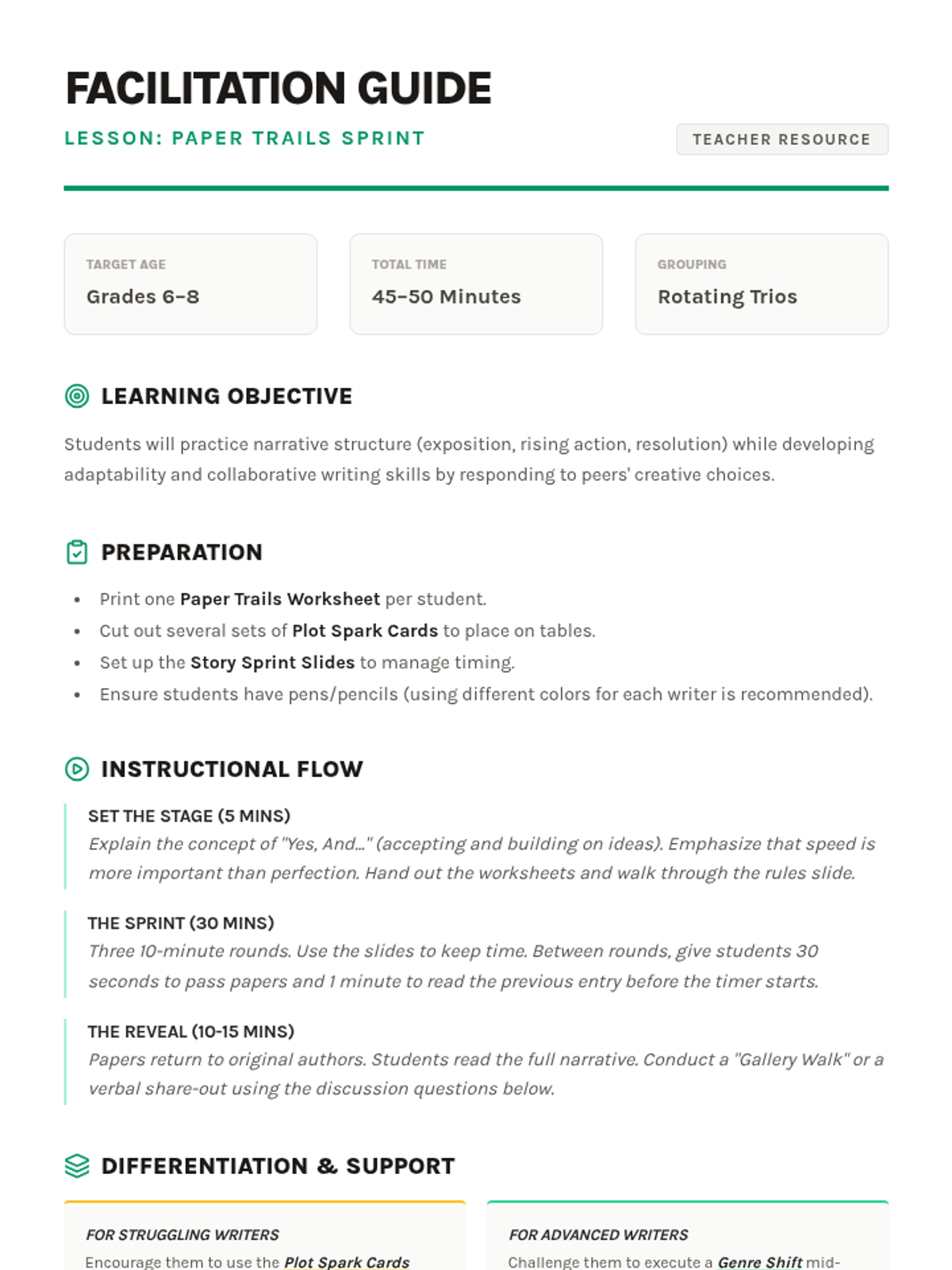
A facilitation guide for teachers to lead the Paper Trails collaborative writing activity, including pacing, prep, and differentiation strategies.
A visually engaging slide deck to guide students through the three 10-minute rounds of the Paper Trails collaborative writing sprint.
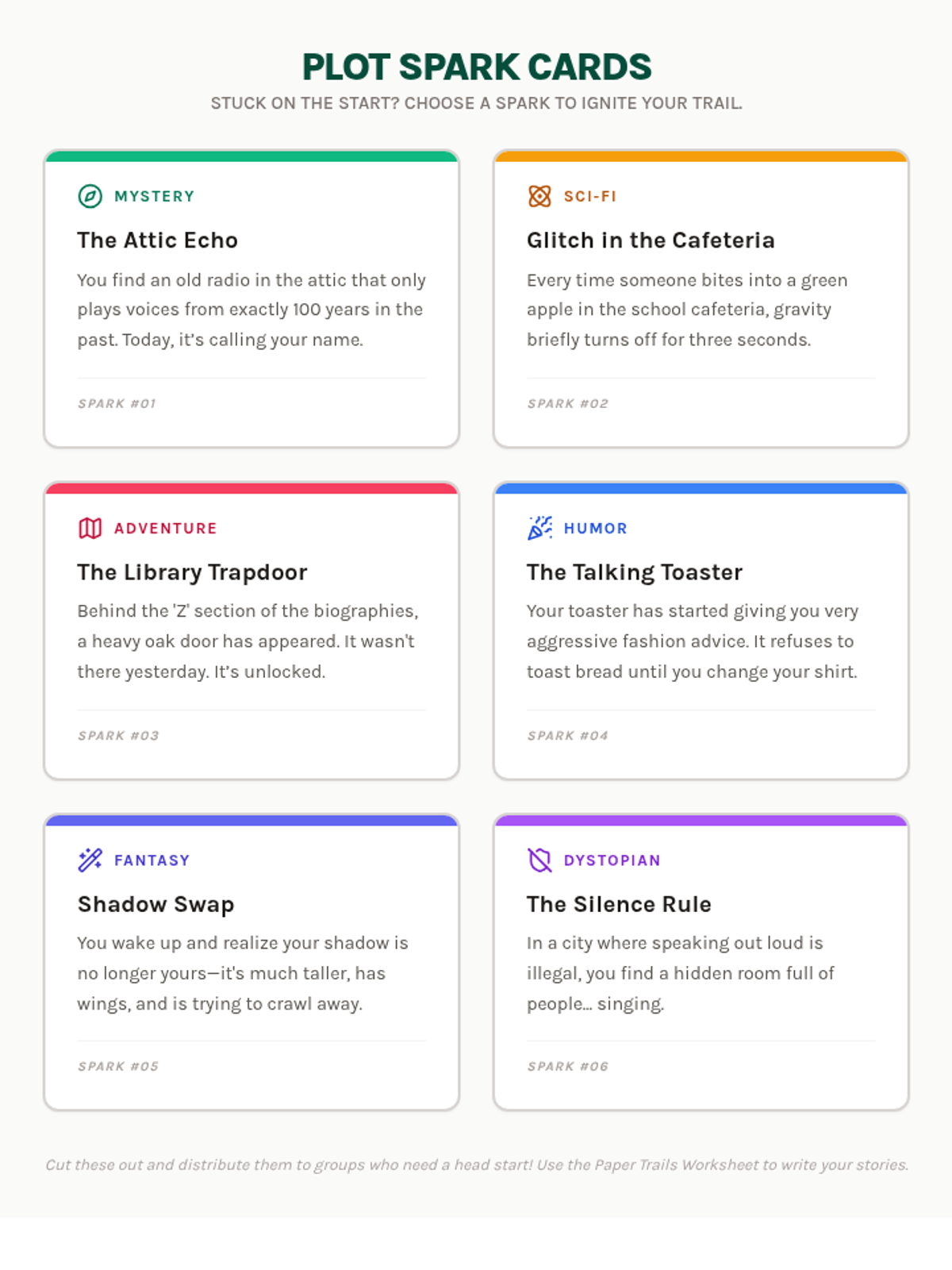
A set of six creative writing prompts categorized by genre to help students jumpstart their collaborative stories.
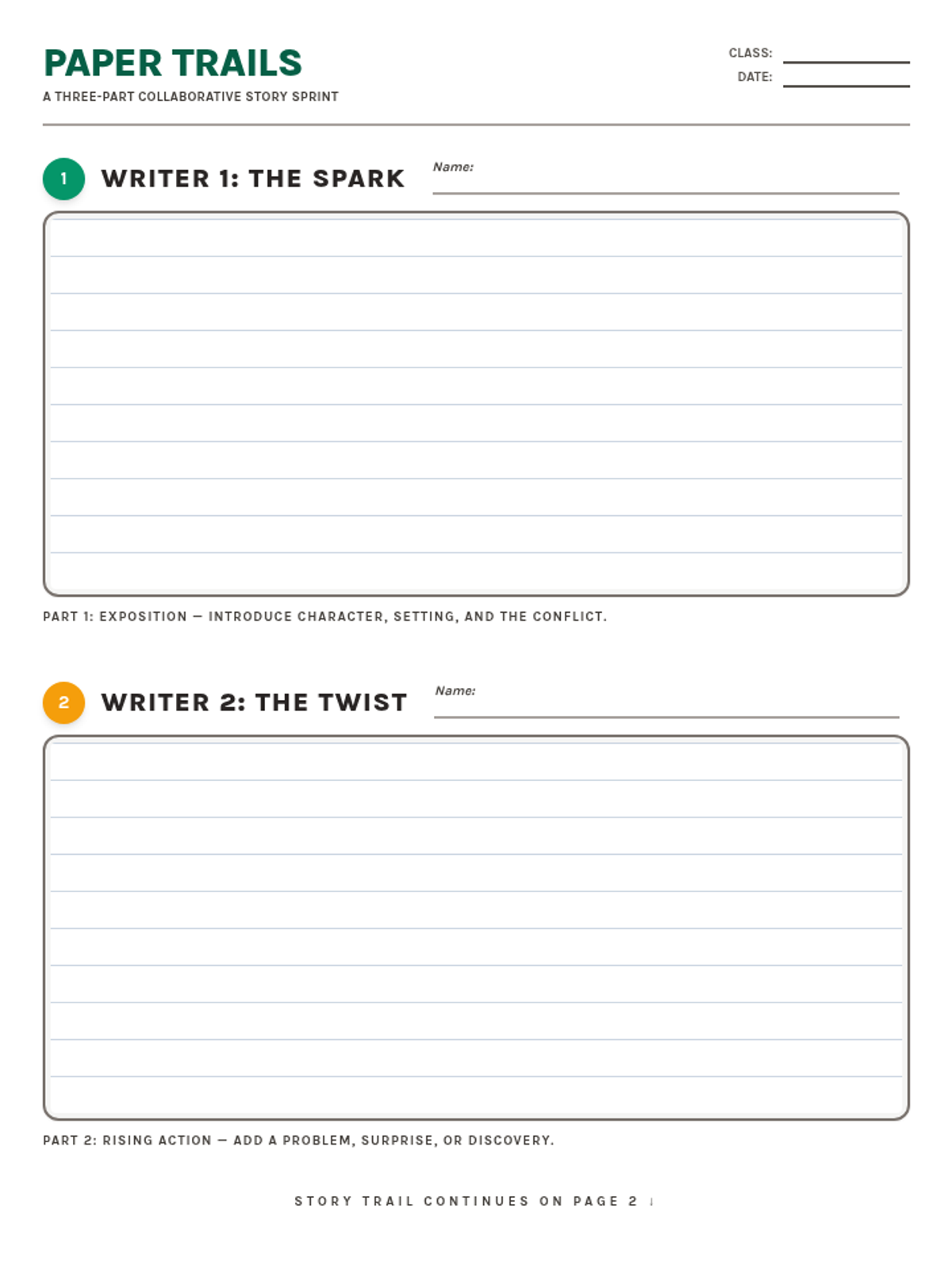
A three-part collaborative writing worksheet designed for 10-minute sprints, providing significantly expanded space for three different student writers to contribute to a single story.
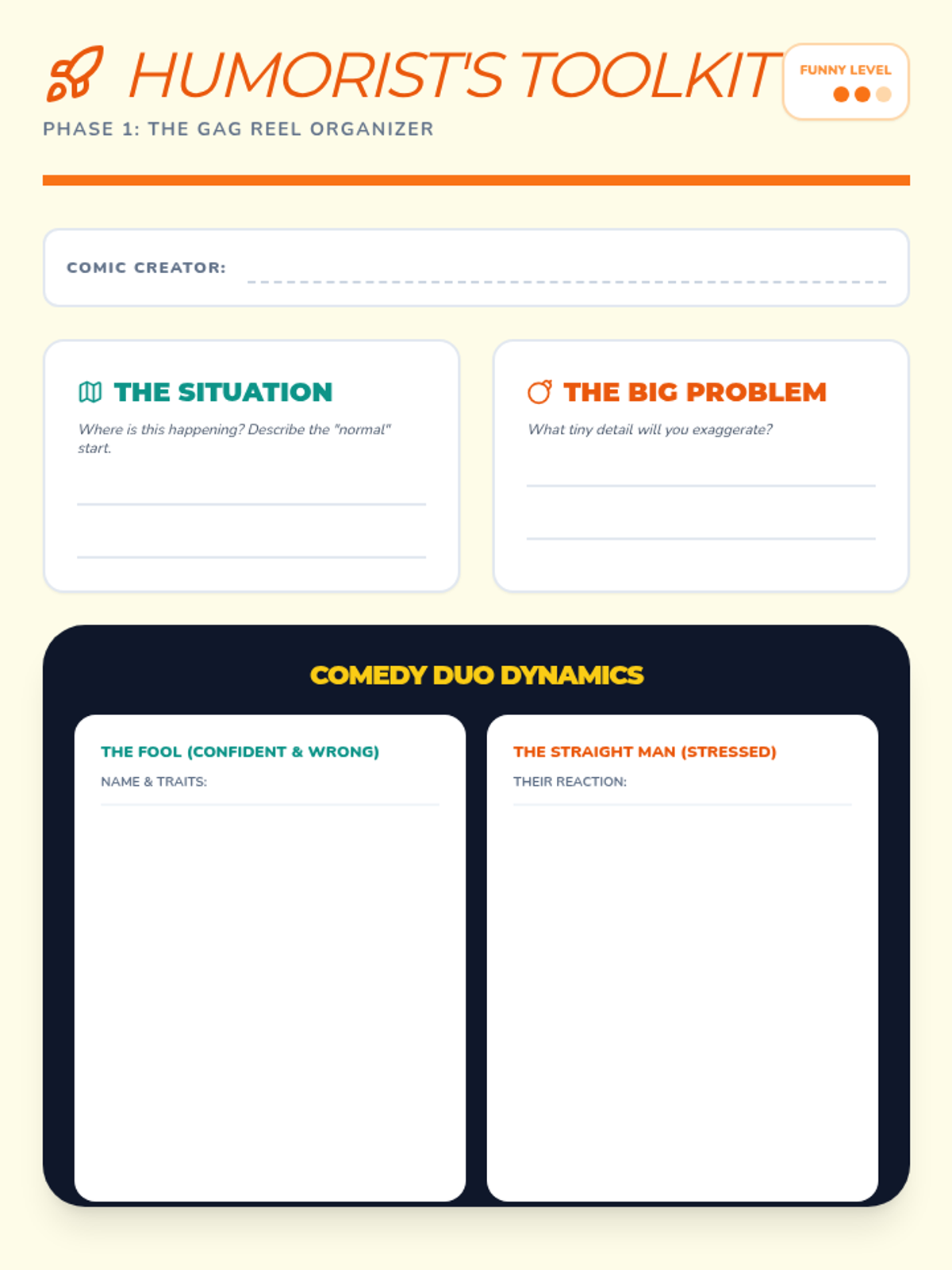
A comprehensive student workbook for humorous story writing, including a structured graphic organizer (The Gag Reel) and a thematic manuscript area for drafting.
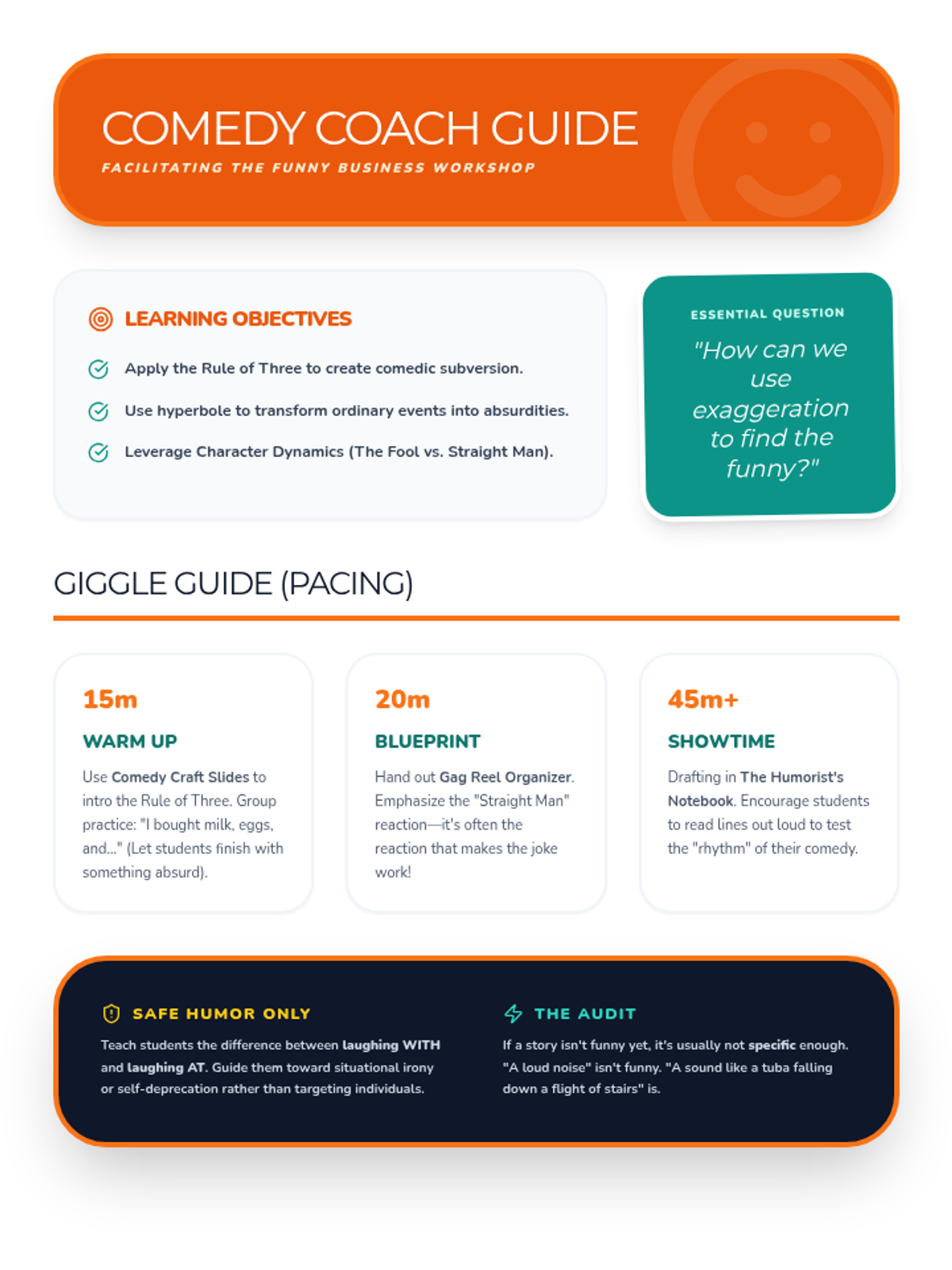
A comprehensive facilitation guide for the Funny Business Workshop, featuring pedagogical strategies for teaching comedy, avoiding offensive humor, and pacing the lesson effectively.
A vibrant and energetic slide deck introducing comedic writing techniques such as the Rule of Three, hyperbole, and character archetypes for middle school students.
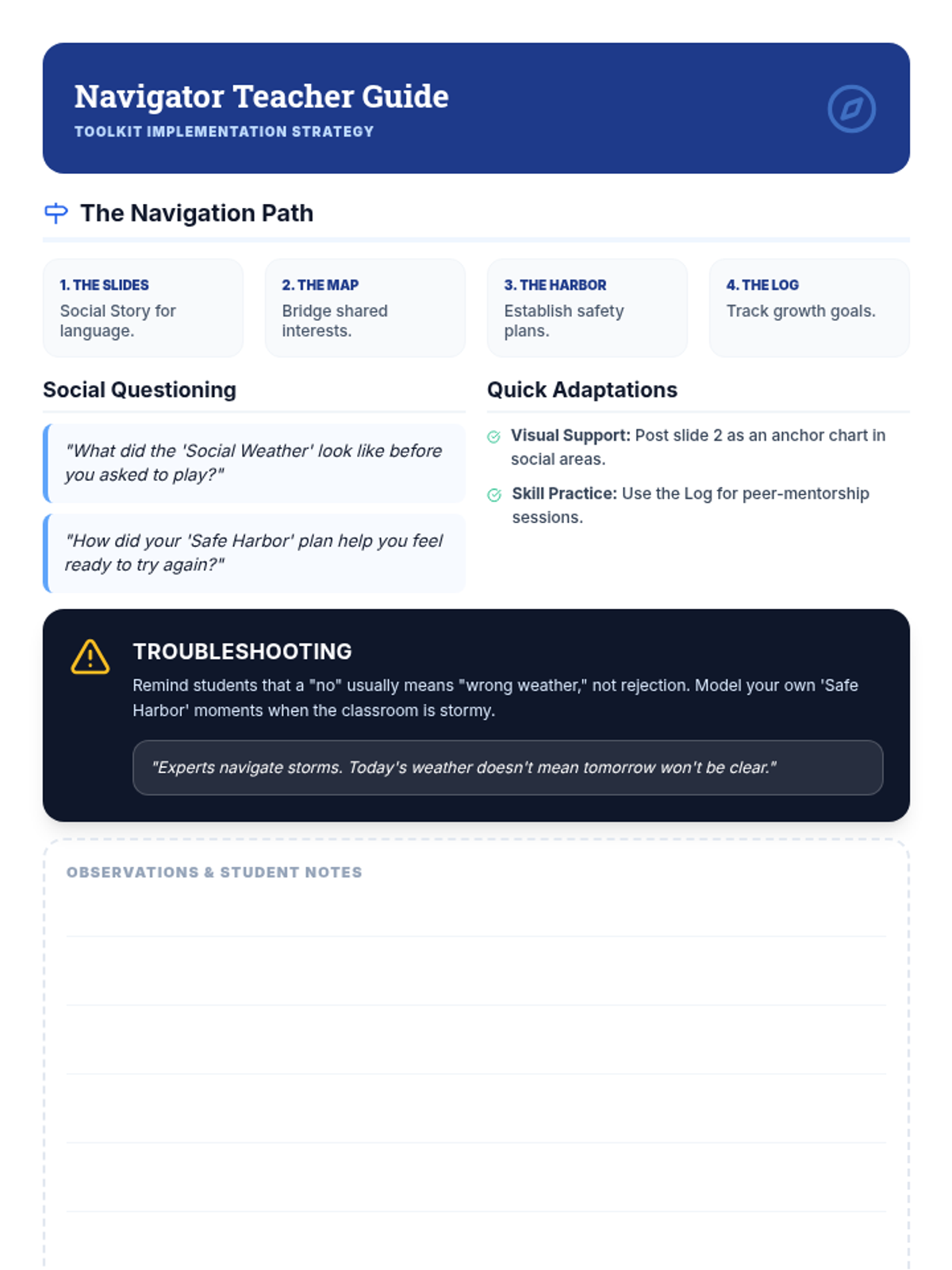
A facilitation guide for teachers to effectively implement 'The Social Compass' toolkit, including pacing suggestions, discussion prompts, differentiation strategies, and common misconceptions.
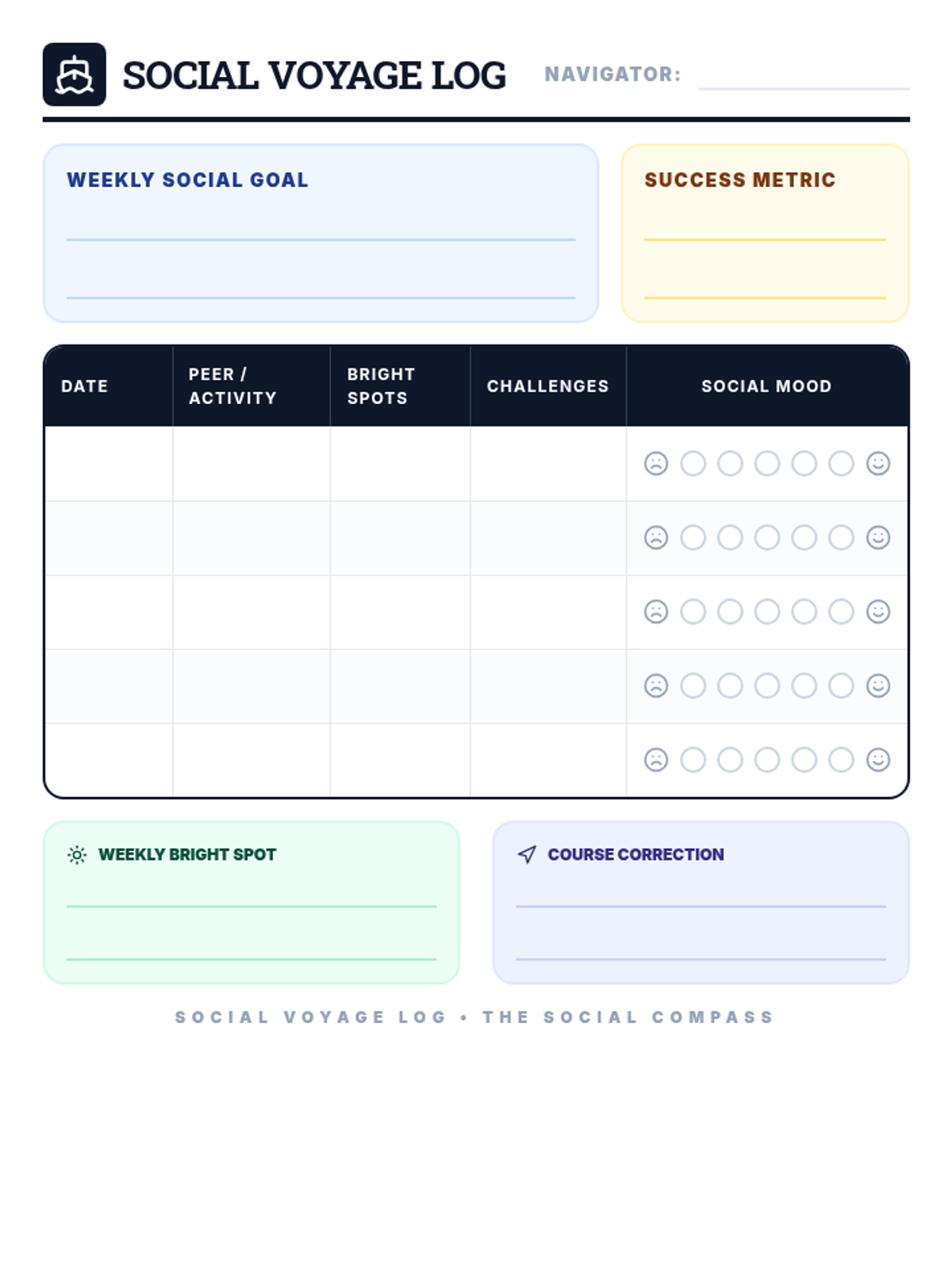
A progress tracking log for social interactions, featuring a goal-setting area, a structured table for logging specific peer interactions, and reflection prompts for students.
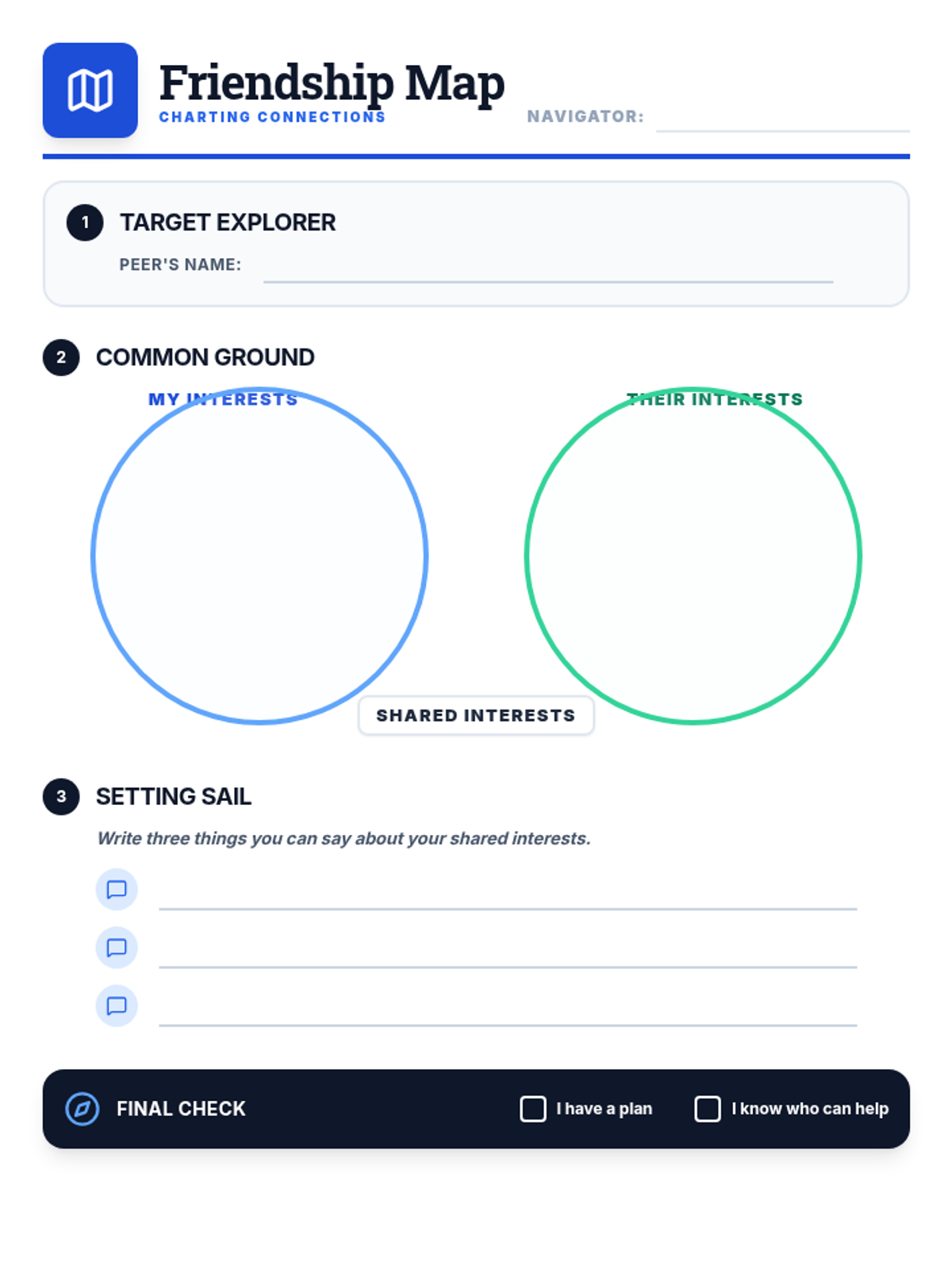
A skill-building worksheet that guides students through identifying shared interests with peers and brainstorming conversation starters using a Venn diagram 'map' format.
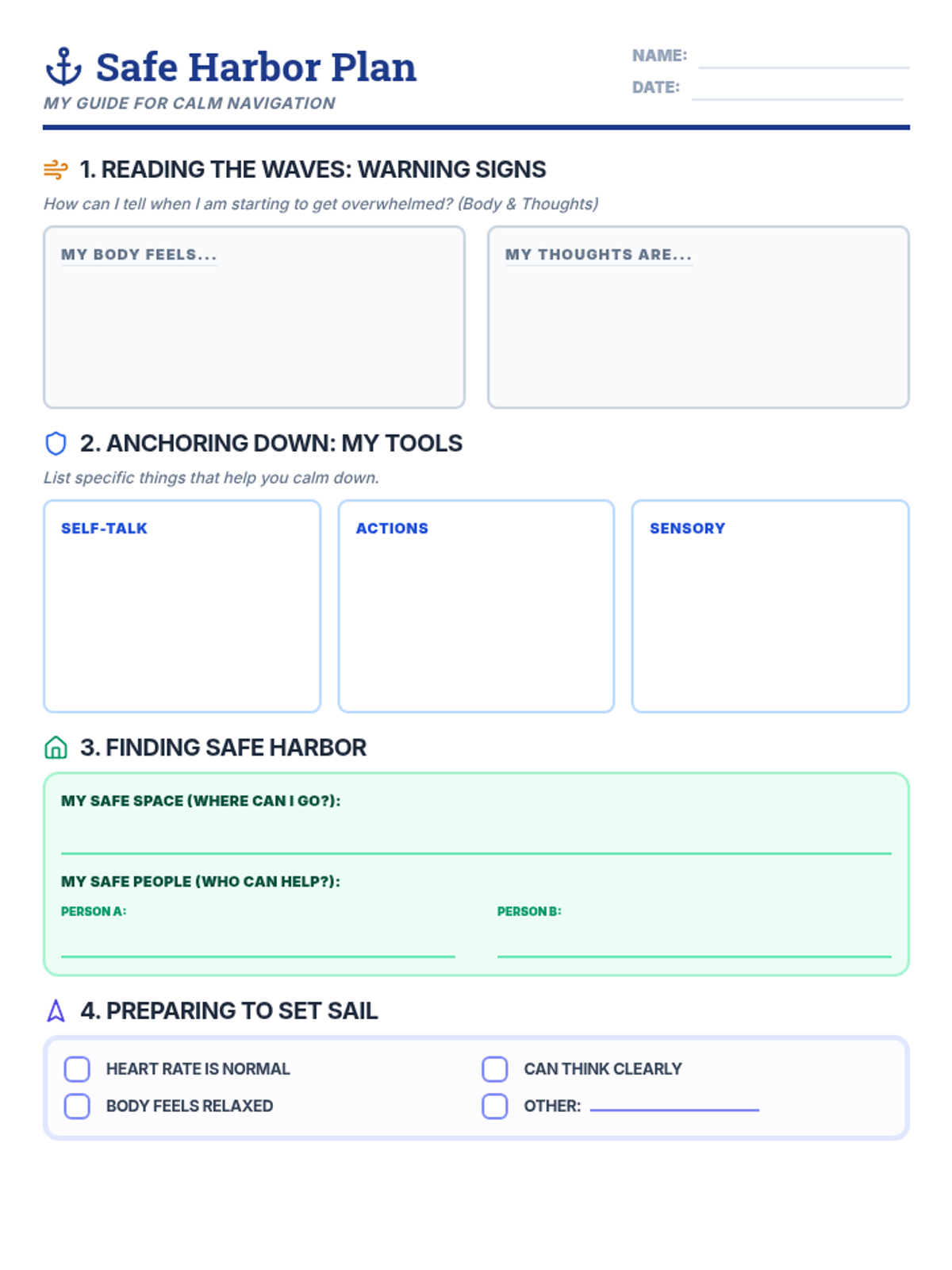
A structured safety and crisis plan template for students to identify early warning signs of social overwhelm and list personalized coping strategies and safe people.
A visually engaging slide deck designed as a social story and visual aid to help students understand social cues, initiation steps, and conversation rules using a nautical 'Social Compass' theme.
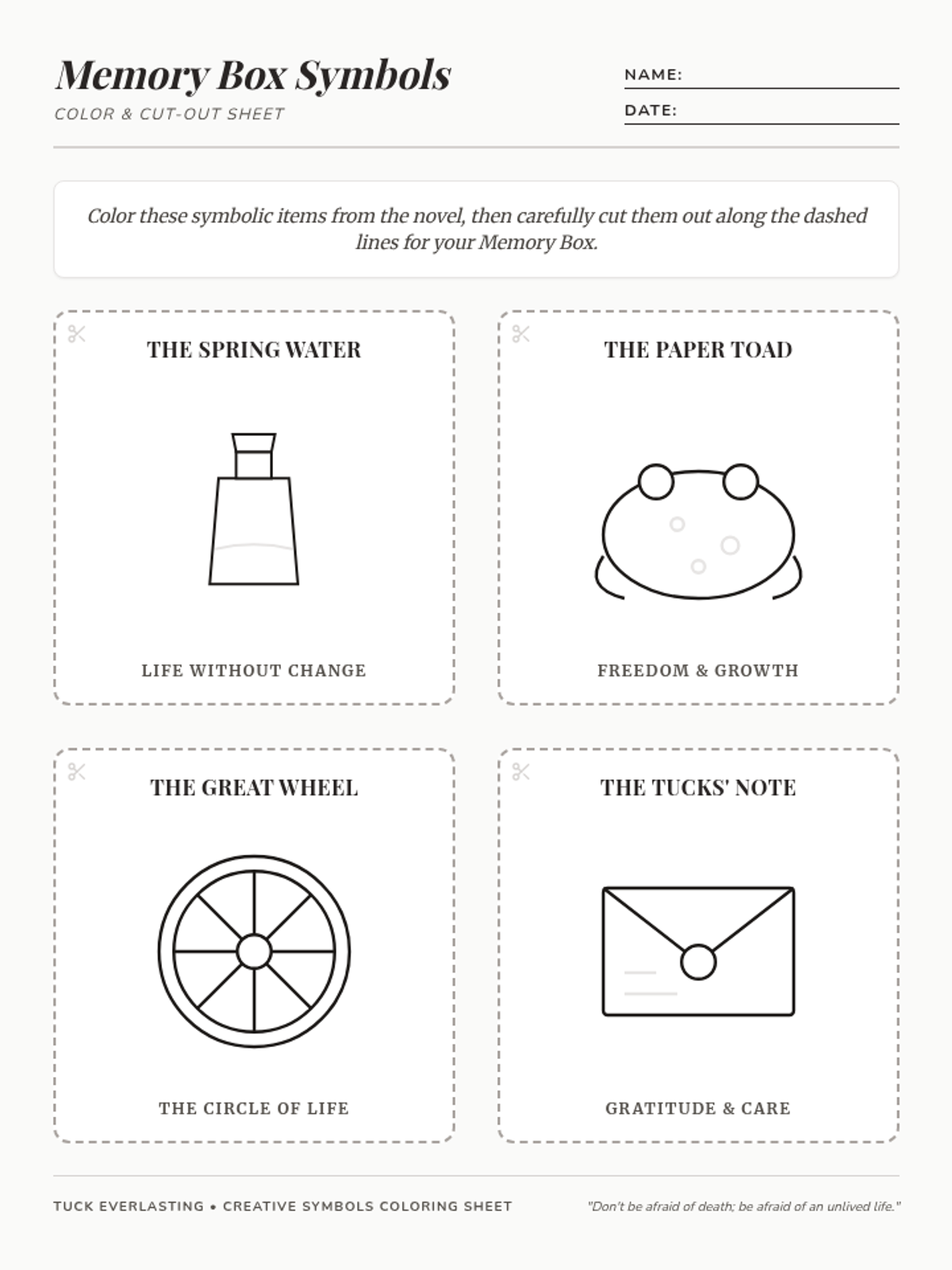
A collection of bold-outlined symbols from Tuck Everlasting—including the spring water bottle, toad, wheel, and thank you note—designed for student coloring and creative projects.
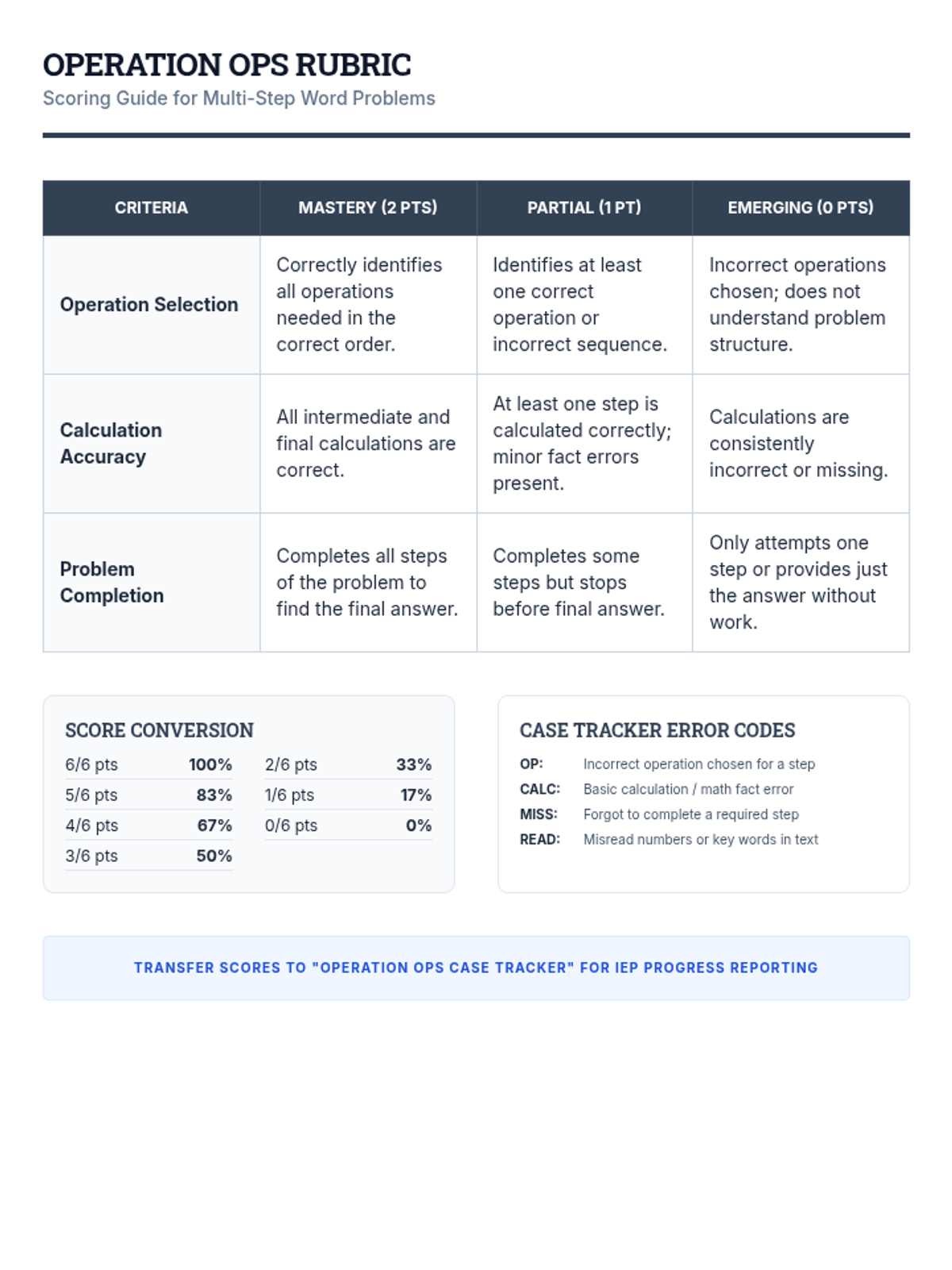
A teacher's scoring guide for assessing multi-step word problems. Includes a 6-point rubric covering operation selection, calculation accuracy, and problem completion, along with a percentage conversion table.
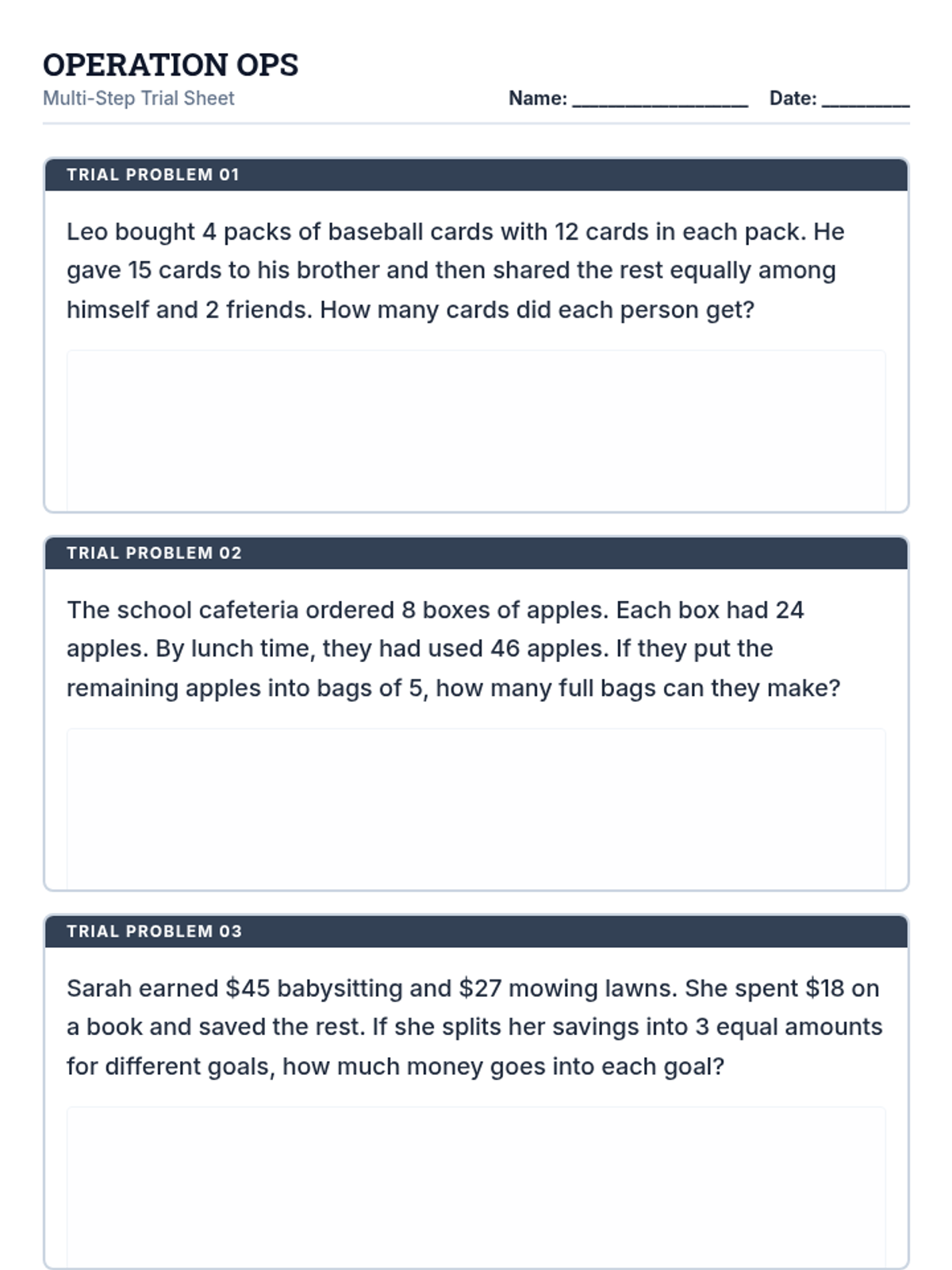
A collection of 6 multi-step word problems tailored for 4th-grade IEP progress monitoring. Each problem includes a mix of the four operations and provides the key for quick teacher reference.
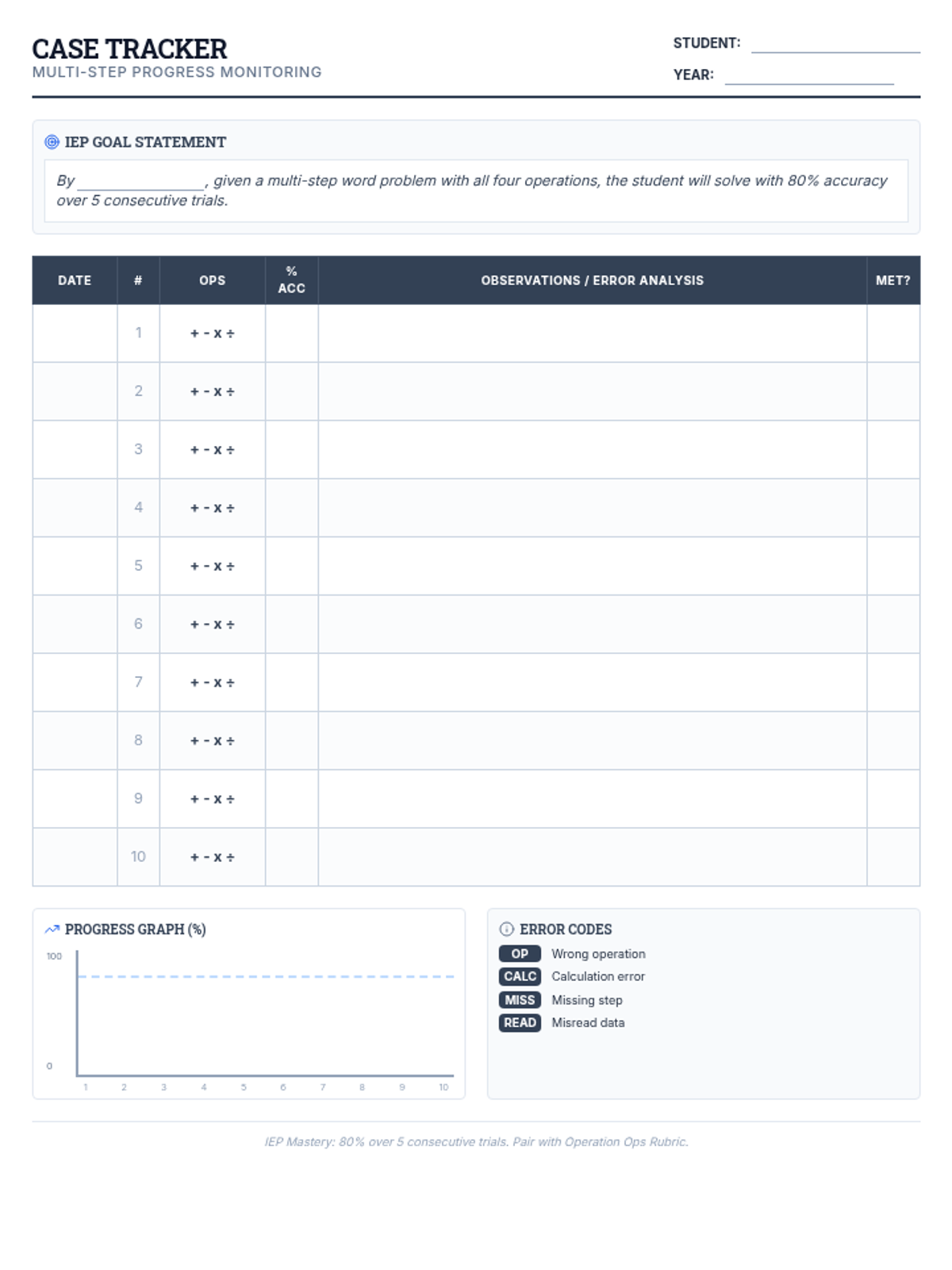
A revised IEP progress monitoring data sheet for multi-step word problems. Features corrected layouts for error codes, a placeholder for dates, optimized column widths for observations, and all tracking elements on a single page for usability.
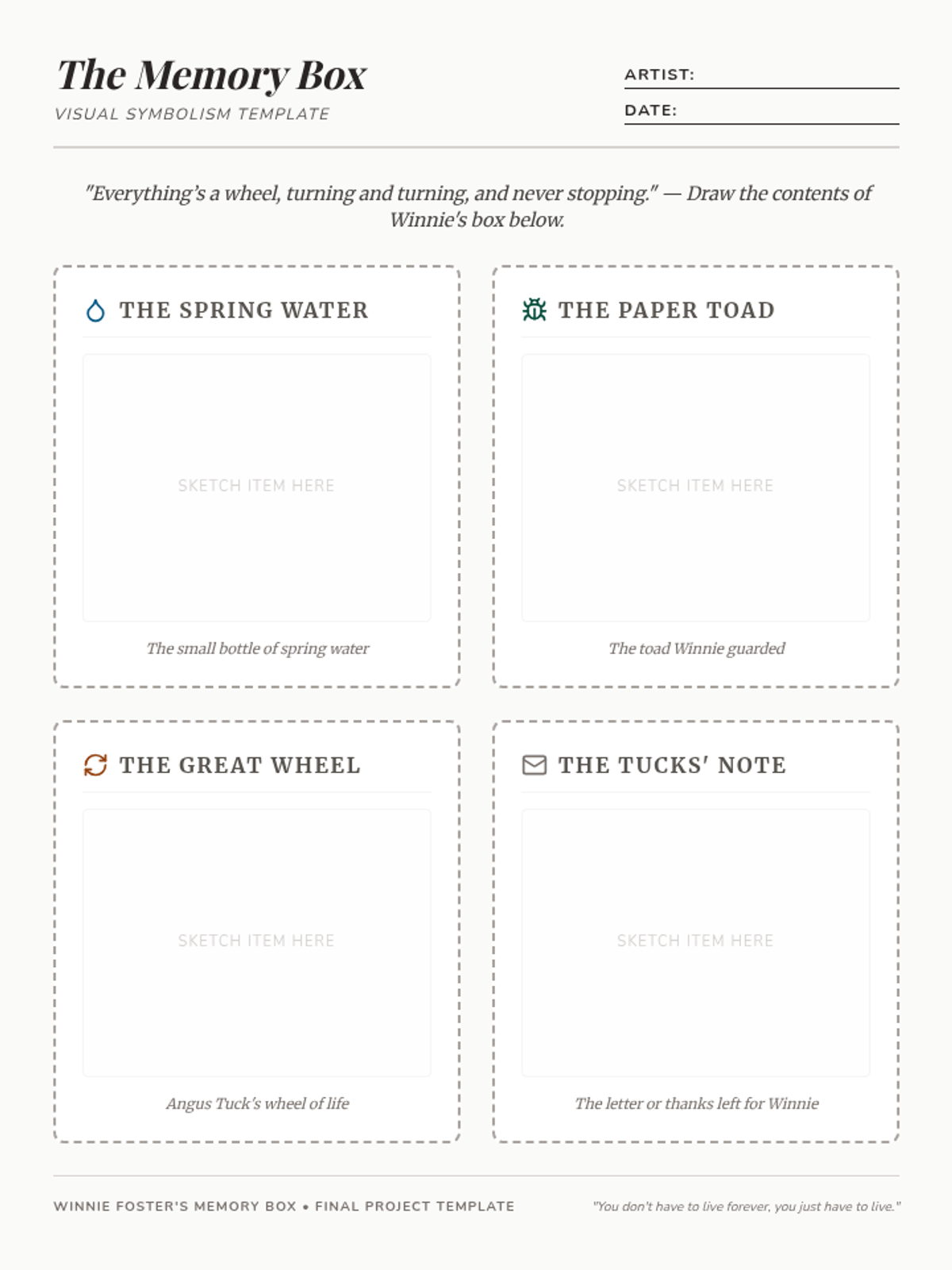
A visual one-pager template featuring four distinct 'compartment' frames for students to draw the key symbolic items of Winnie Foster's memory box.
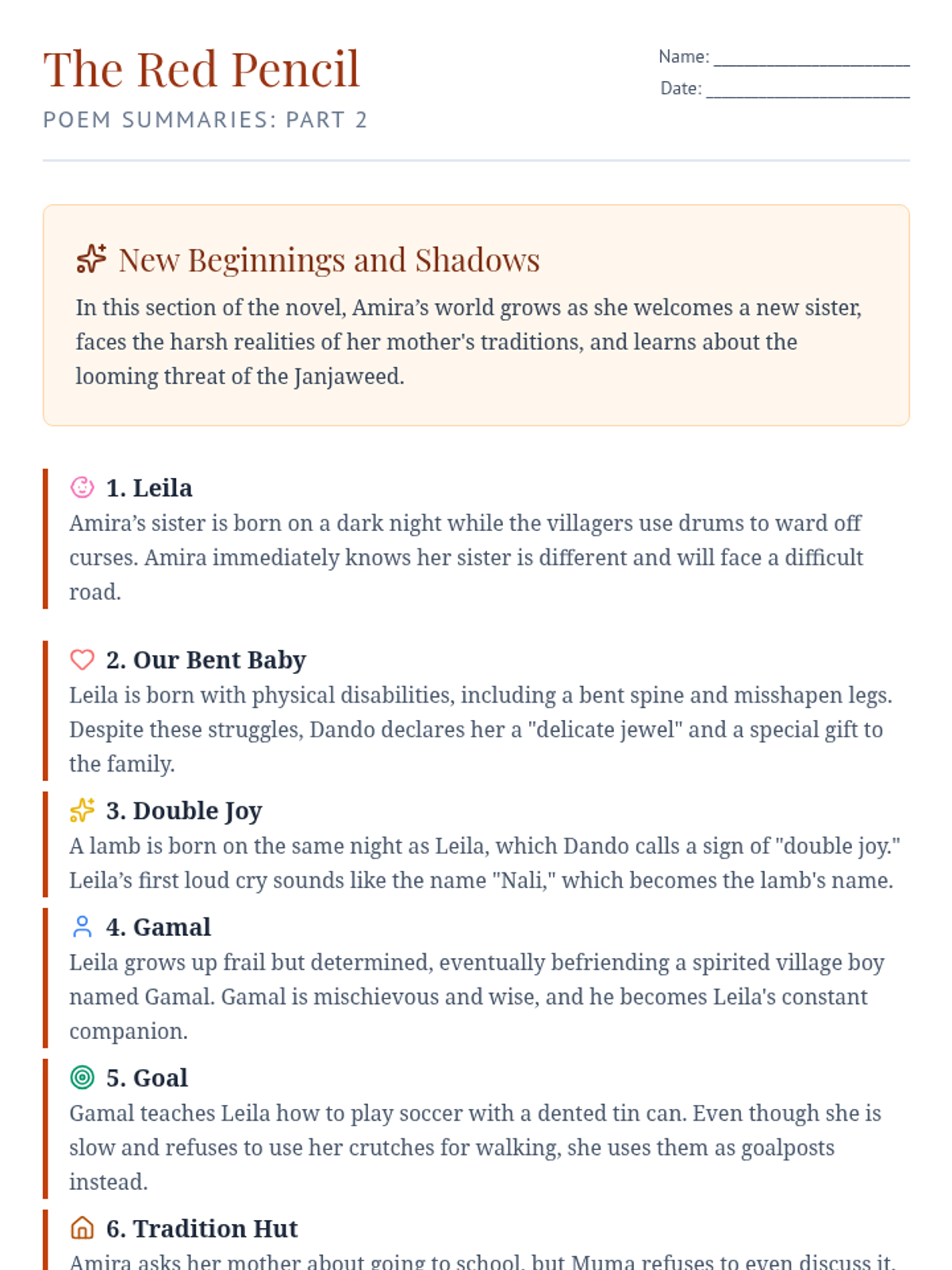
Detailed summaries of poems from 'The Red Pencil' by Andrea Davis Pinkney (Reading Part 2), following the format of Part 1. Each poem features a short summary focused on key plot points and character development for 6th-grade students.
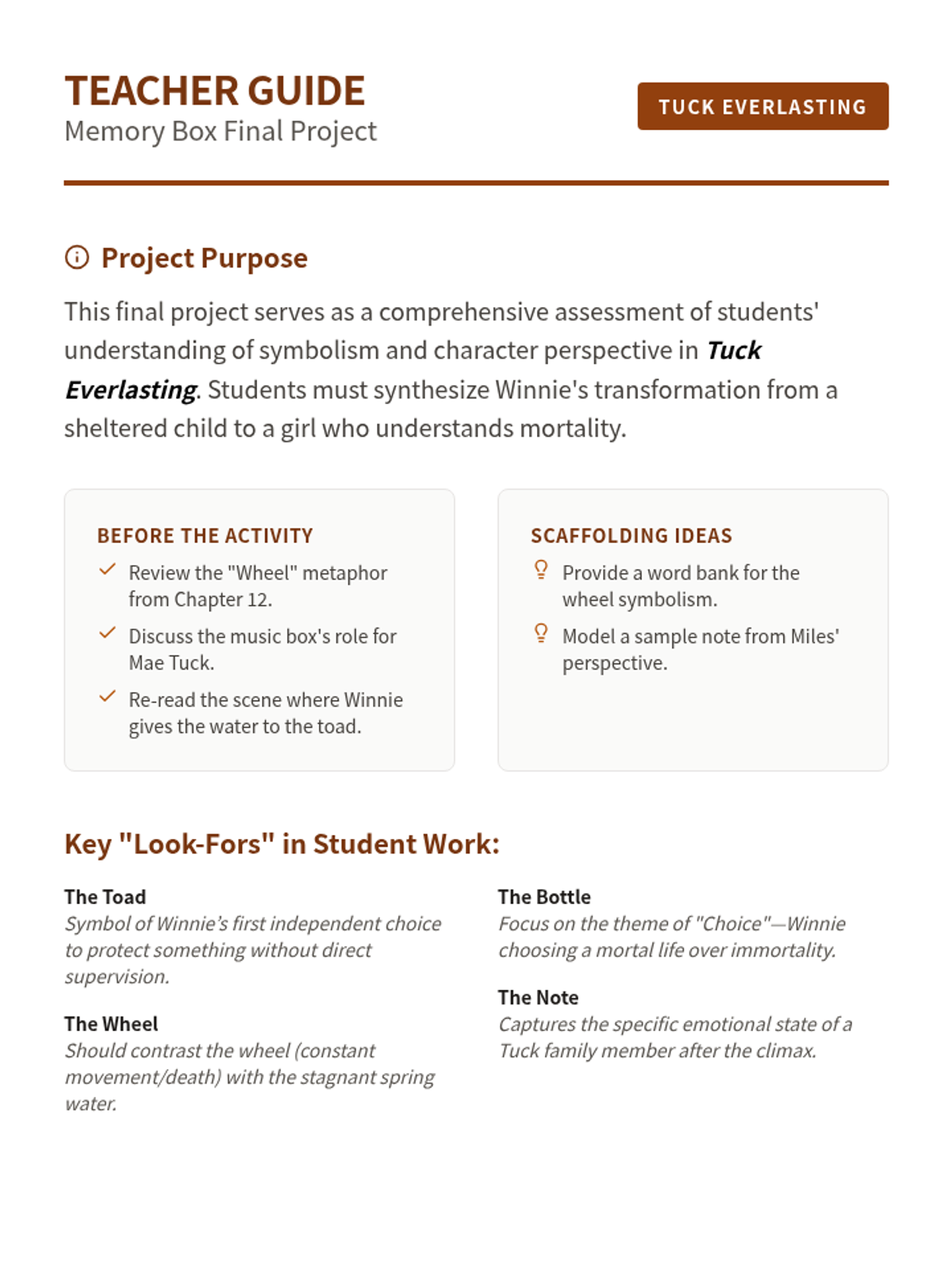
Instructional guidance, implementation tips, and a scoring rubric for the 'Memory Box' final project.
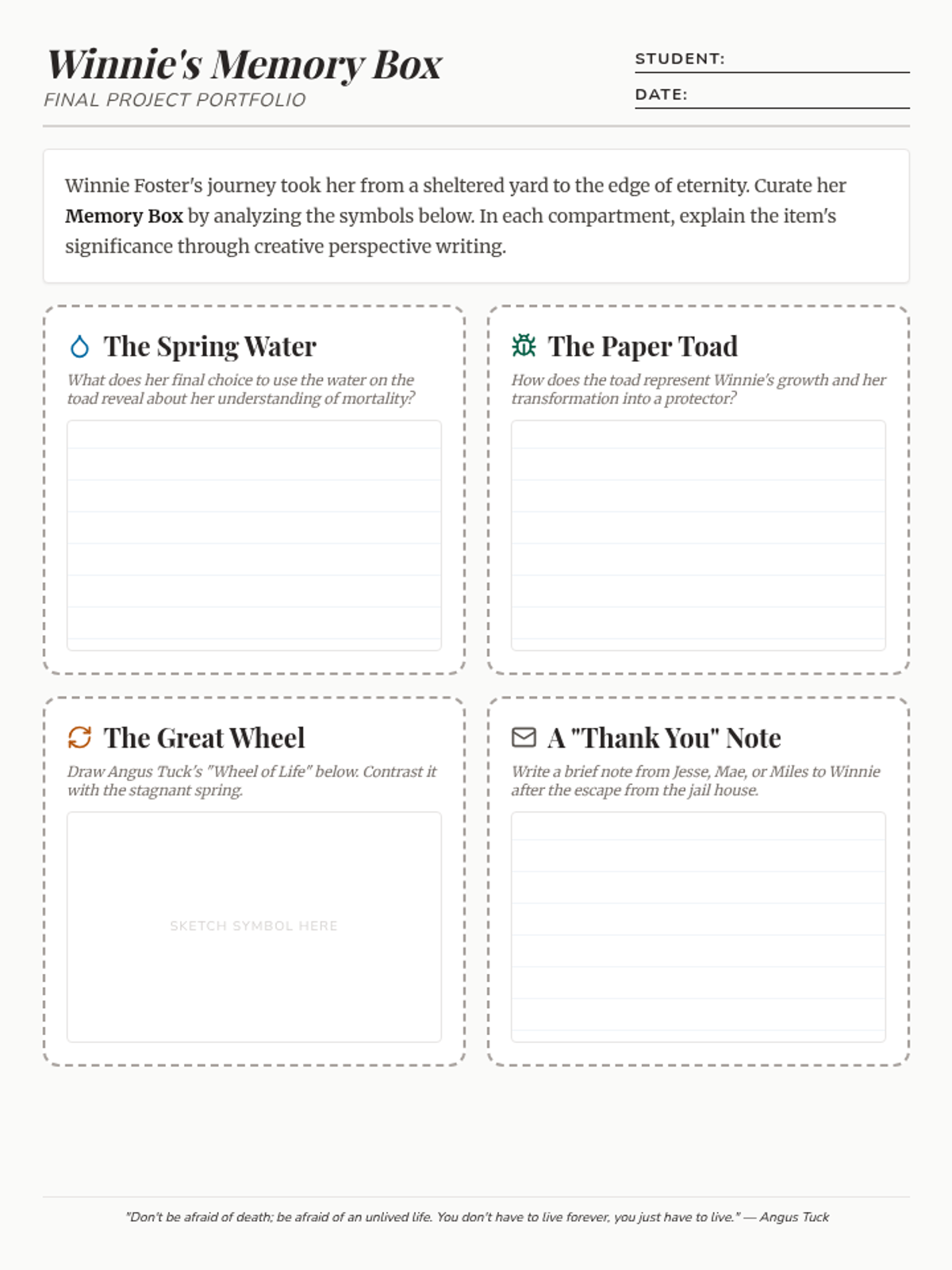
A structured graphic organizer for the 'Memory Box' final project, where students analyze four key symbols from Tuck Everlasting through creative writing and illustration.
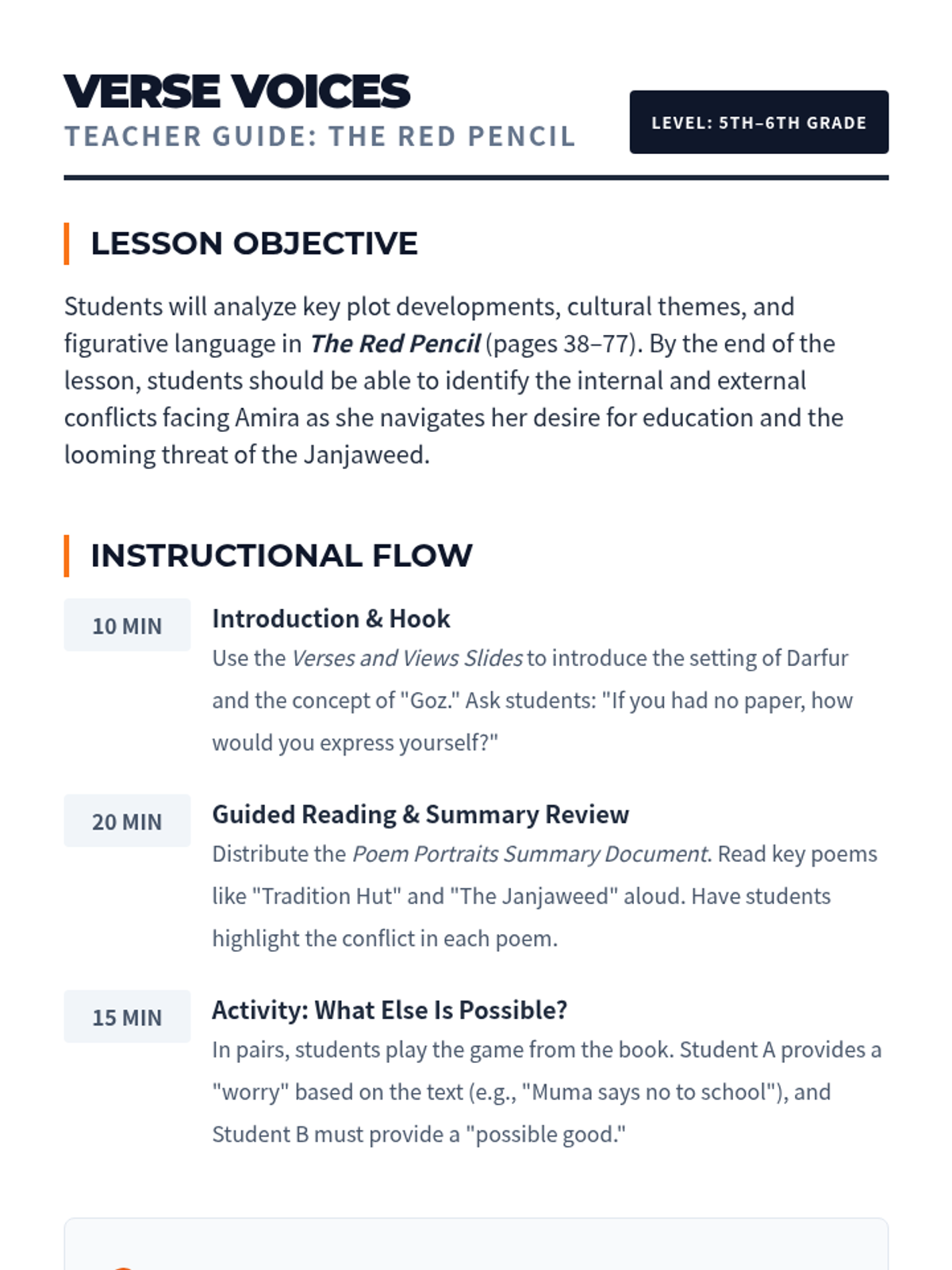
An instructional facilitation guide for teachers using the Red Pencil poem summaries. It includes a pacing guide, deep-dive discussion questions, and differentiation strategies for 5th-6th grade classrooms.
A visually engaging slide deck that summarizes the key themes, poems, and metaphors from pages 38-77 of The Red Pencil. It includes sections on the "What Else Is Possible?" game, the importance of "Goz" (sand), and discussion prompts.
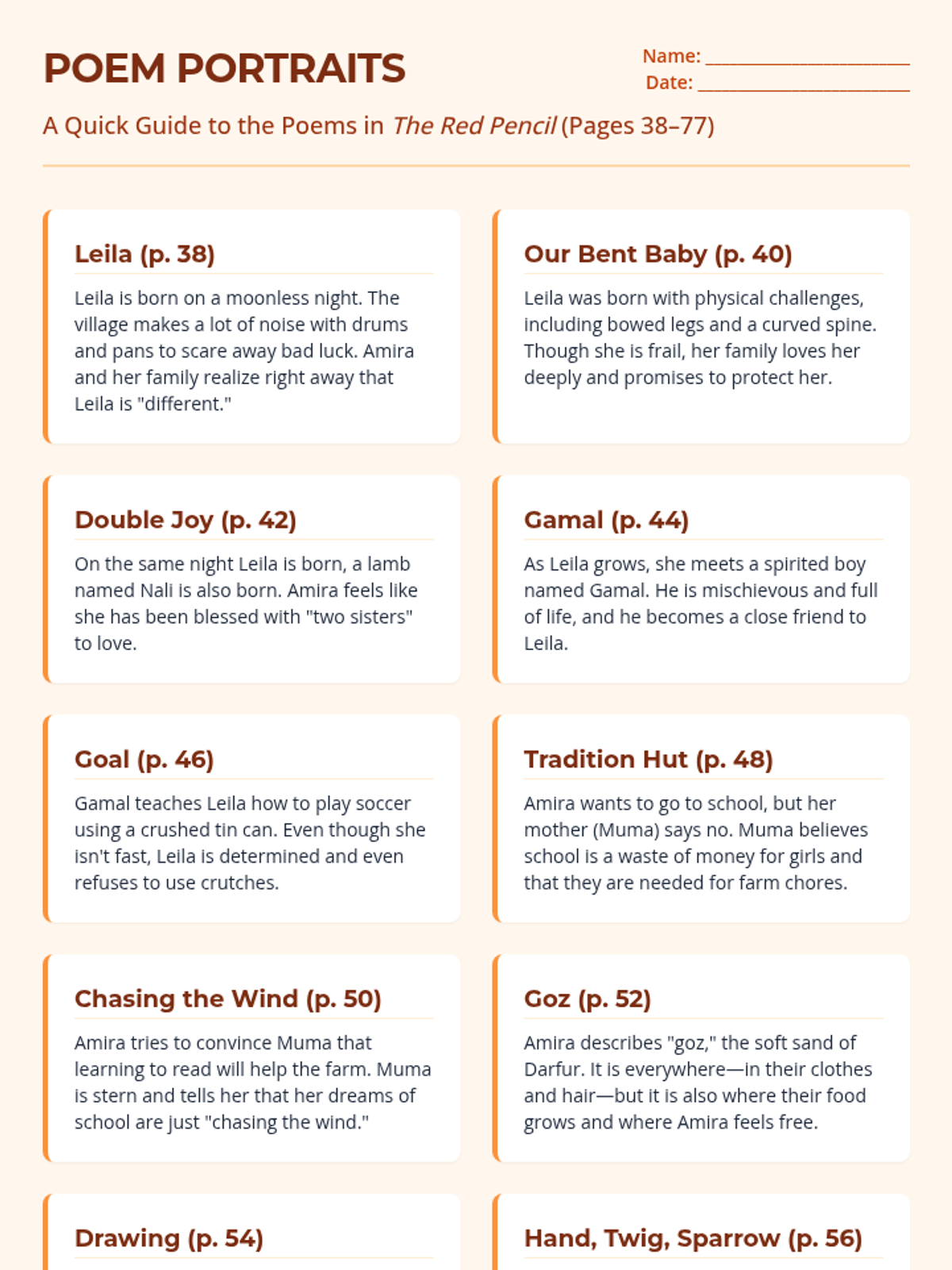
A detailed summary document of the poems found on pages 38-77 of The Red Pencil, written for 5th-6th grade comprehension. It includes short summaries of each section and a reflection area for students.
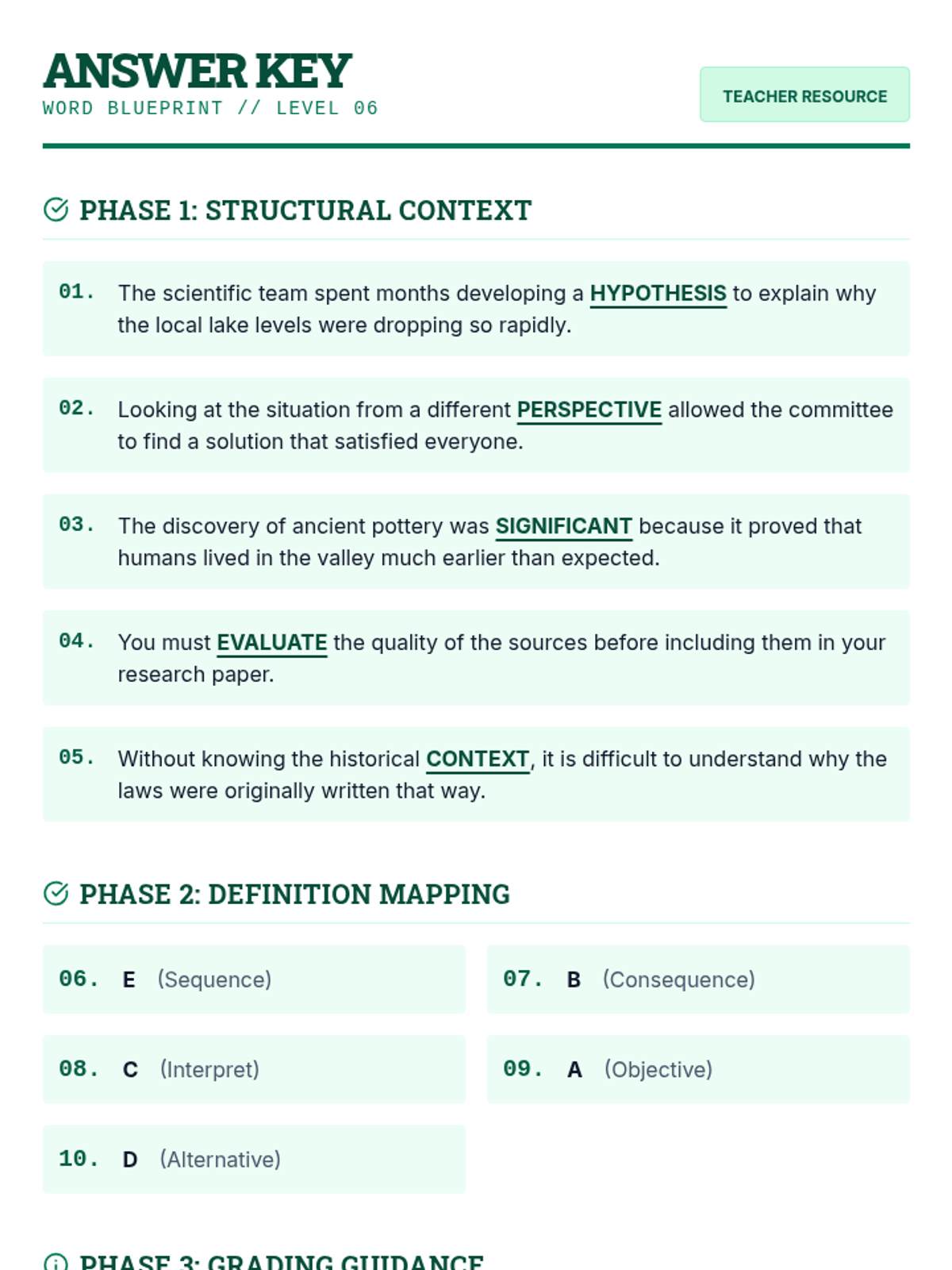
The answer key for the Word Blueprint Worksheet, providing correct responses for context clues and definition matching, as well as grading guidance for open-ended sentences.
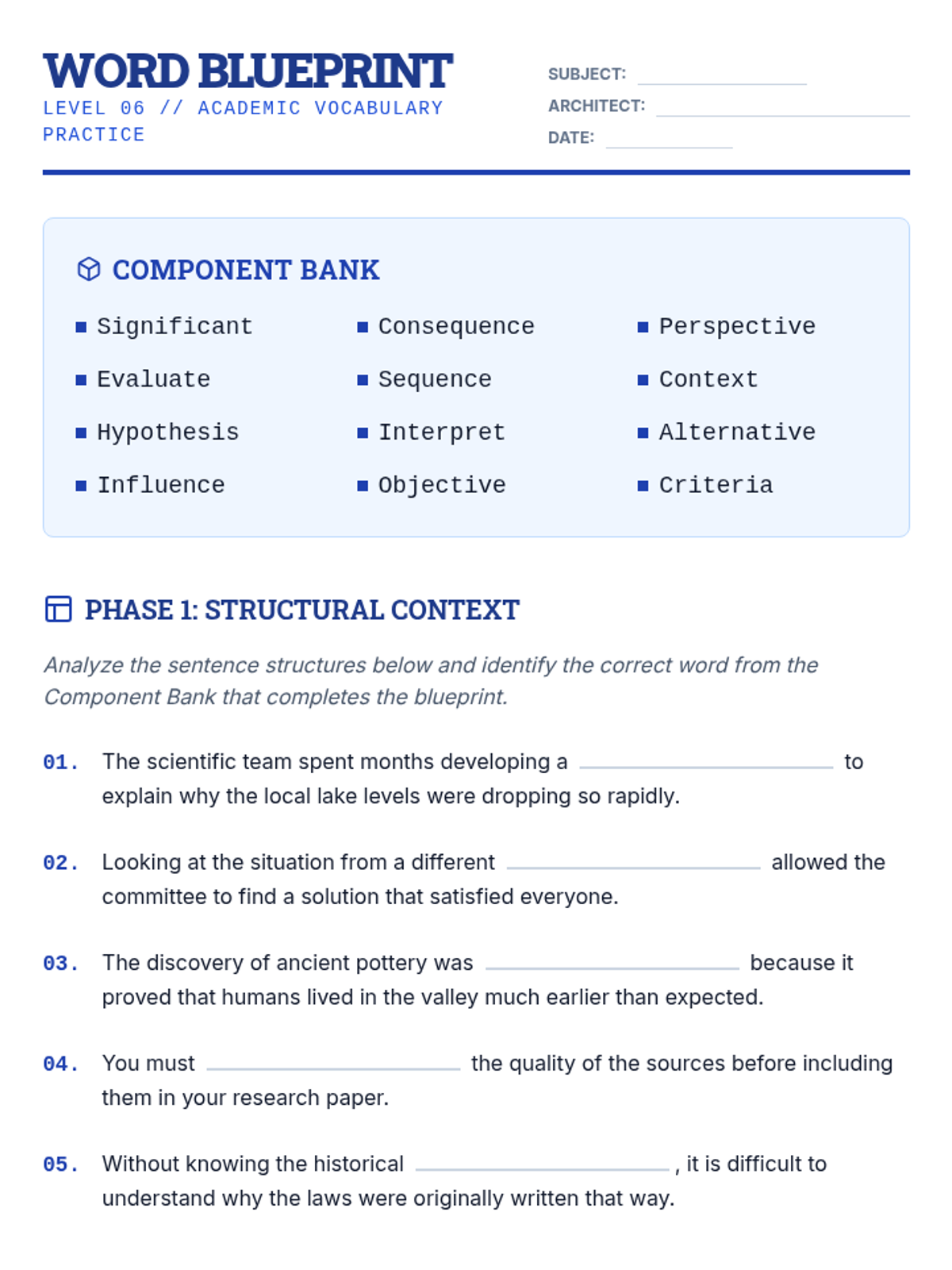
A clean, blueprint-themed academic vocabulary worksheet for 6th grade sight words. It includes sections for context clues, matching definitions, and original sentence construction using 12 high-frequency academic words.
High-energy introductory slides for the Heroic Havoc lesson, featuring bold comic-book visuals, detailed subject profiles, the T.E.X.T. strategy explanation, and 6 assessment slides.
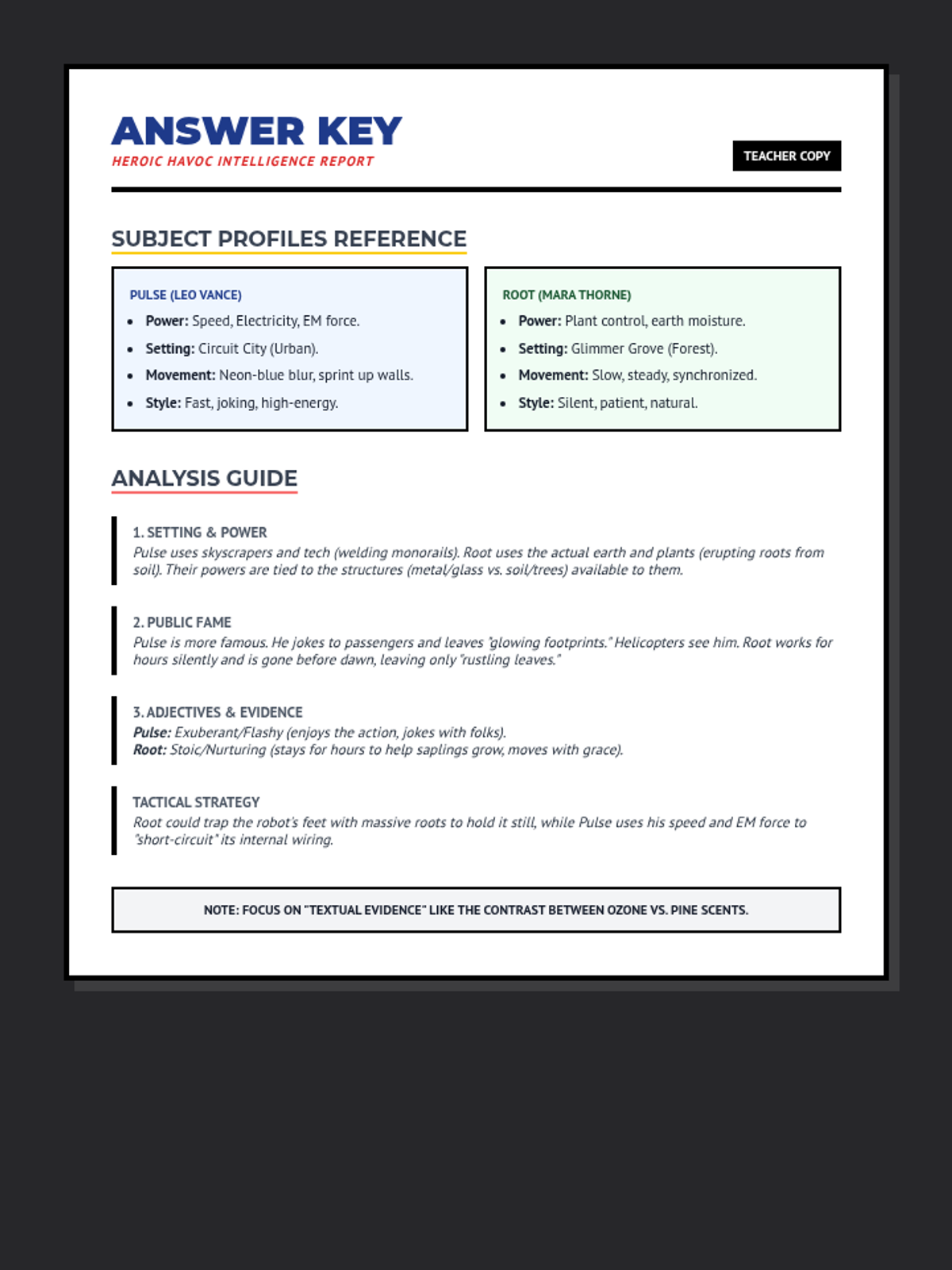
A concise 1-page teacher reference guide with categorized answers for the profile grid and correct options for the 6 multiple-choice analysis questions.