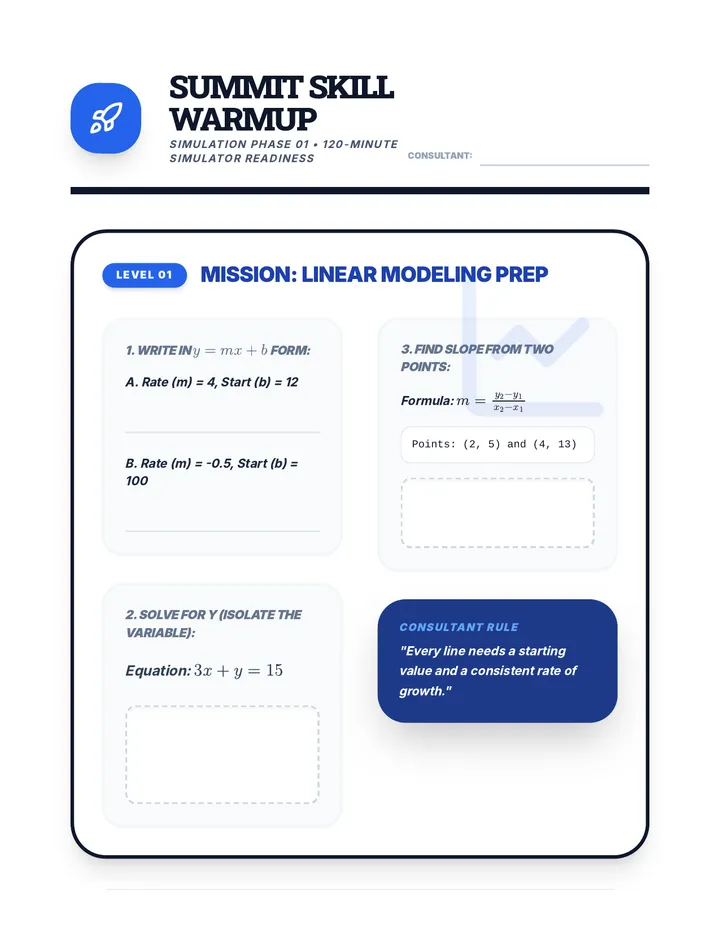
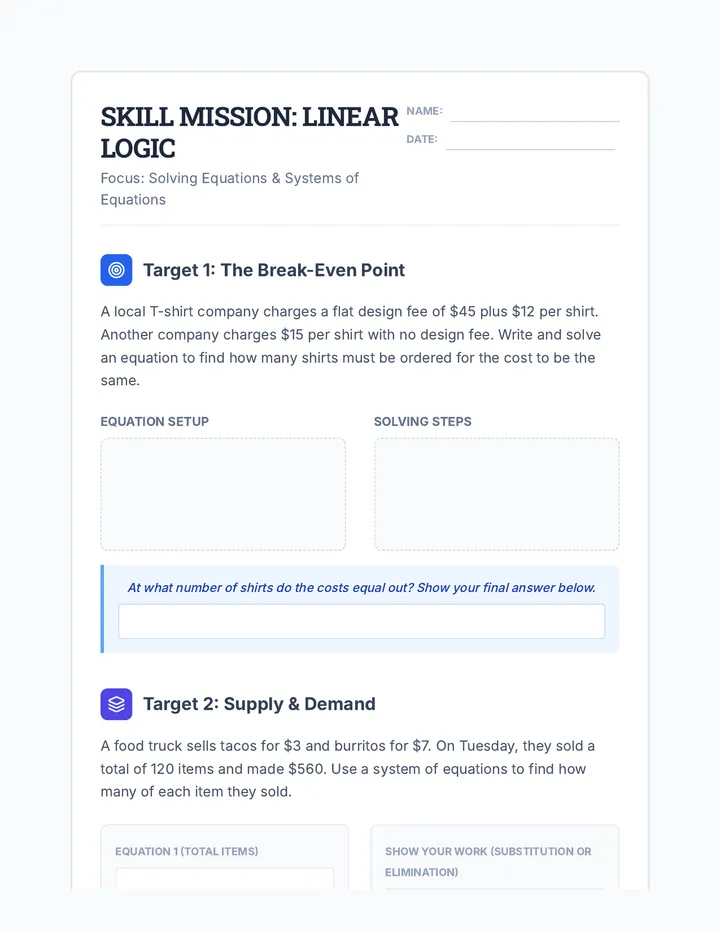
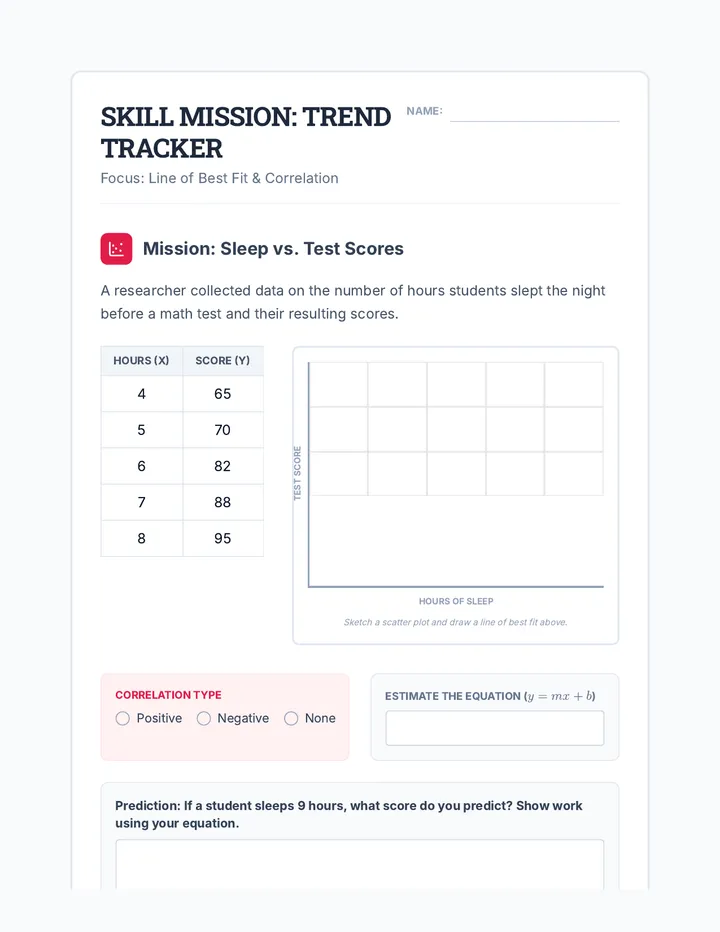
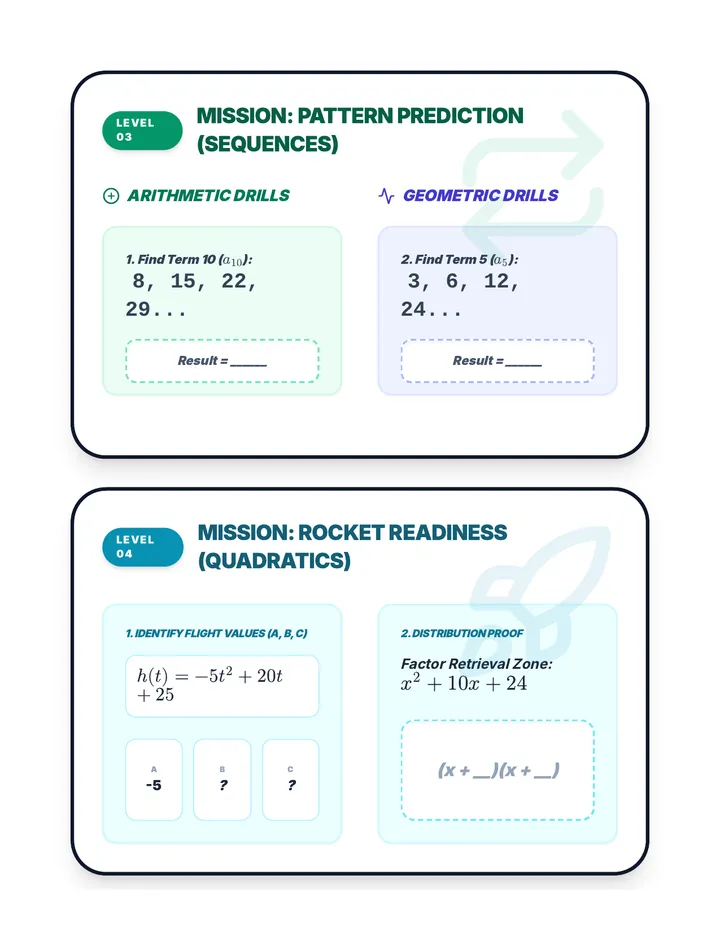
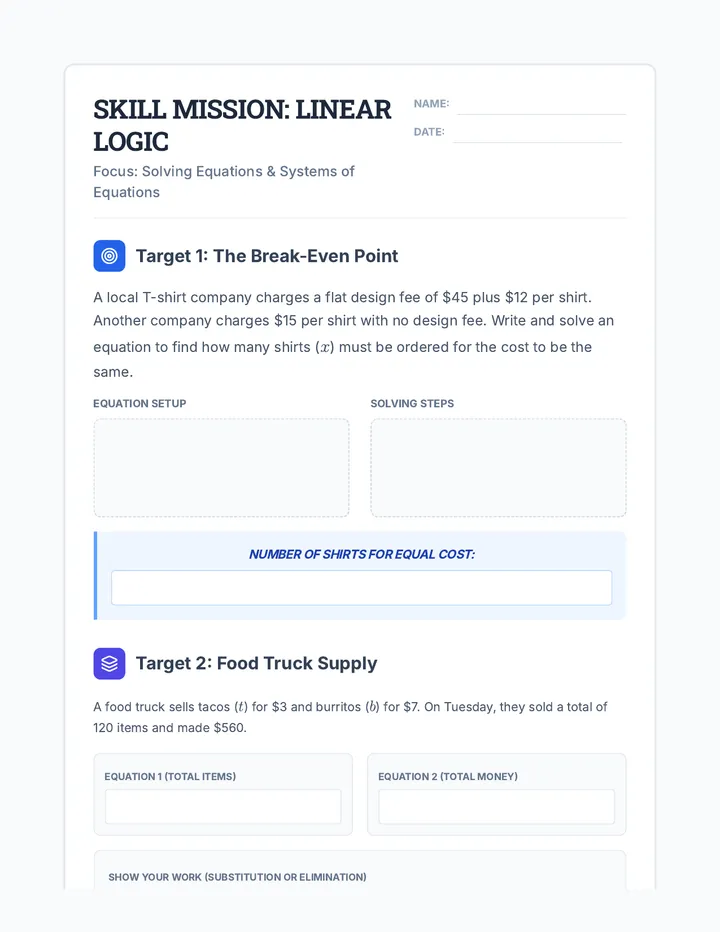
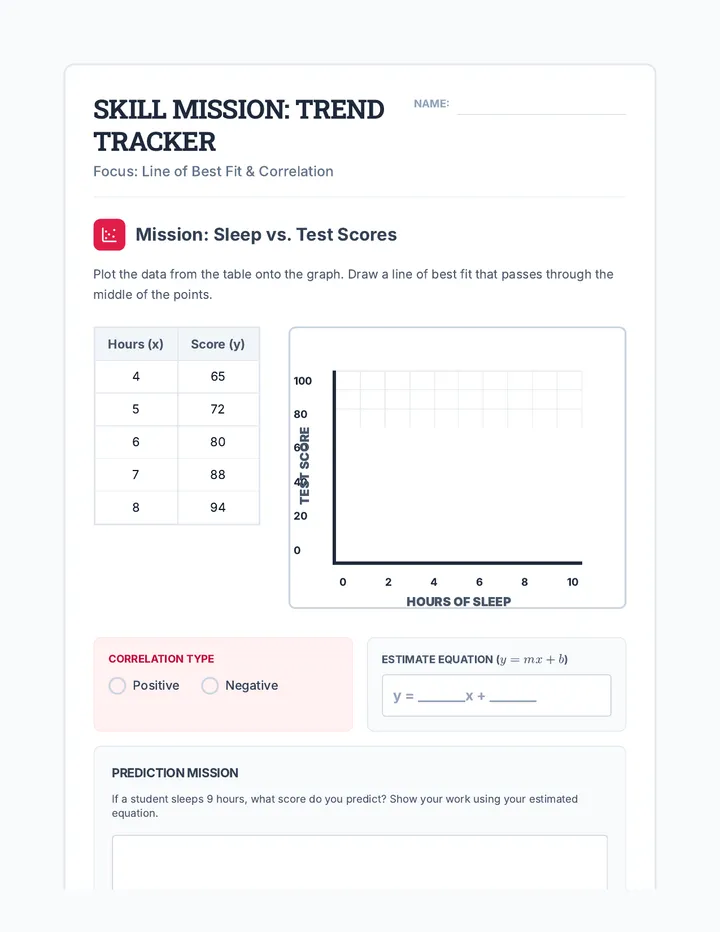
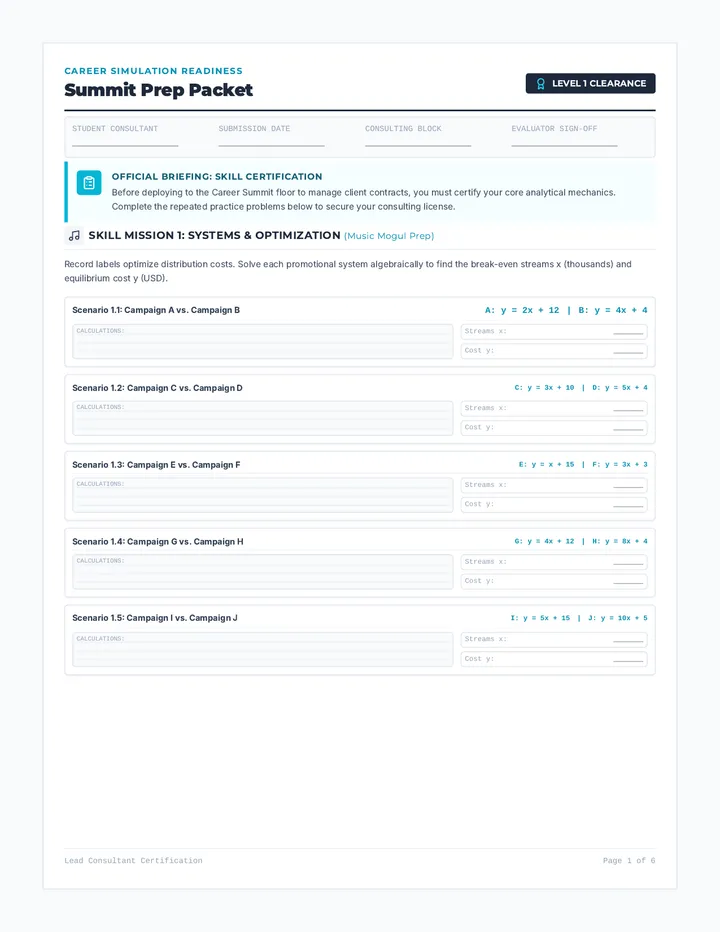
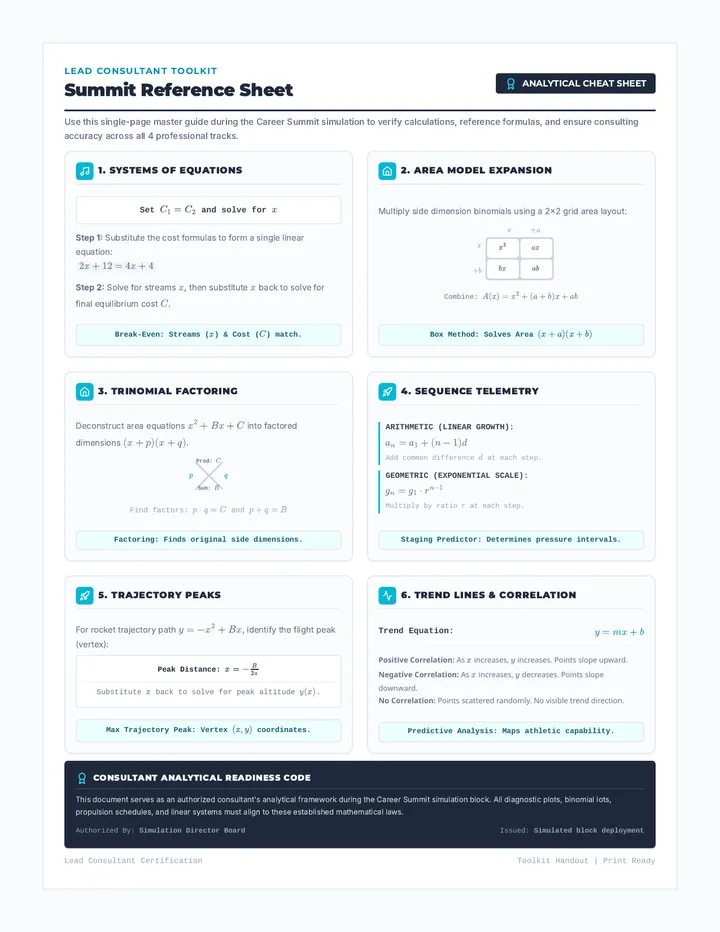
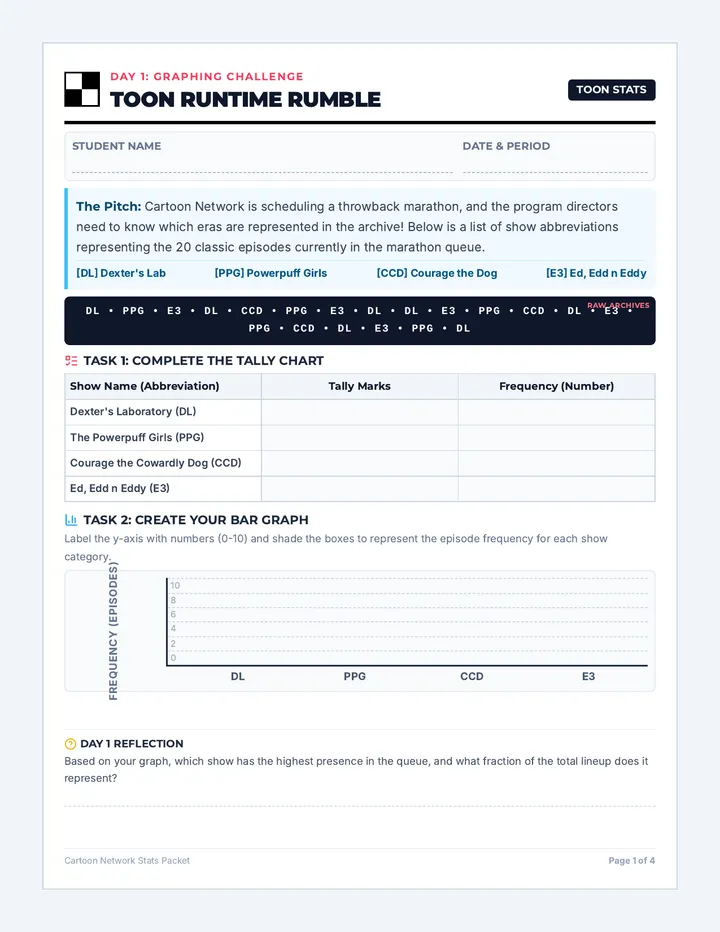
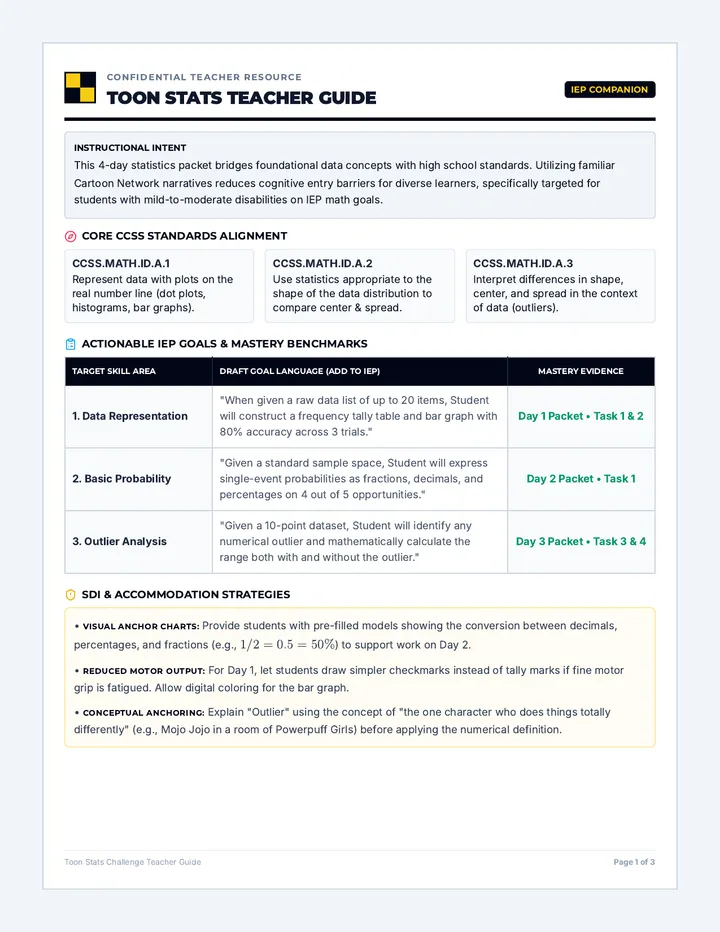
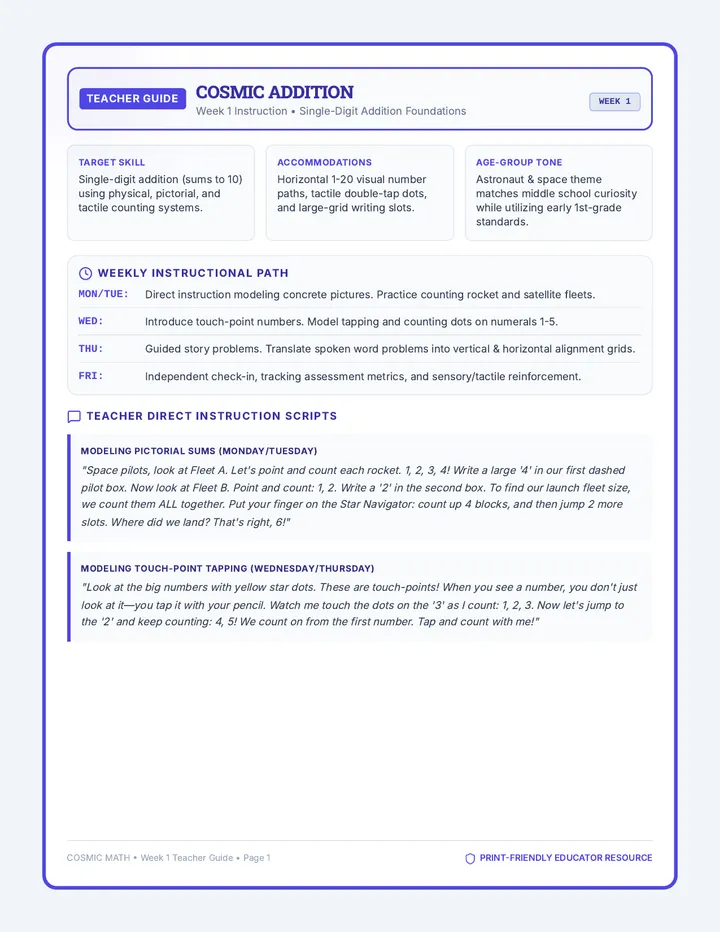
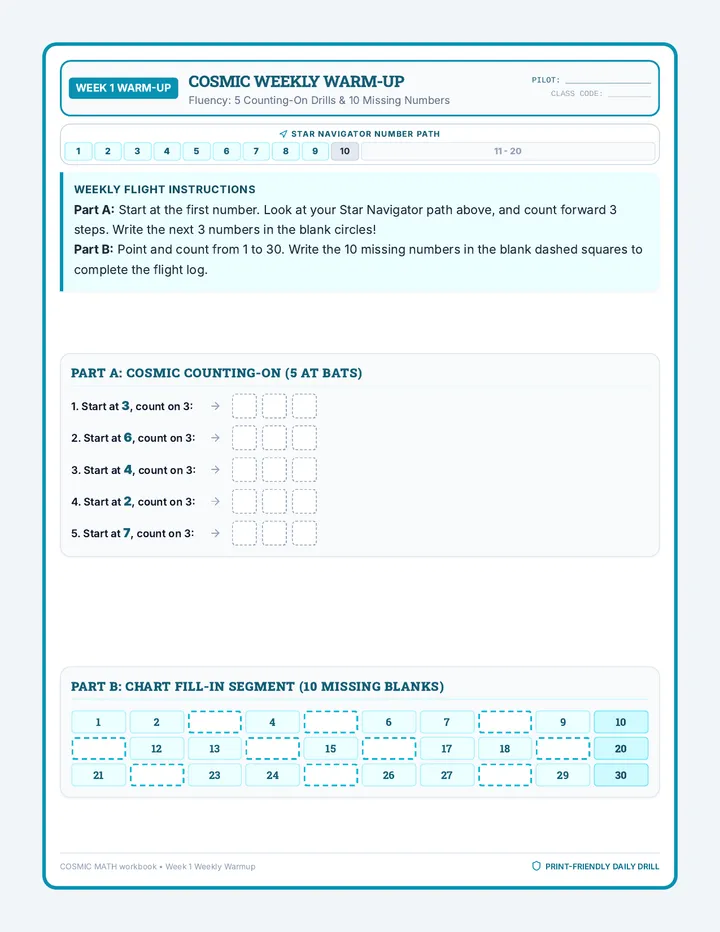
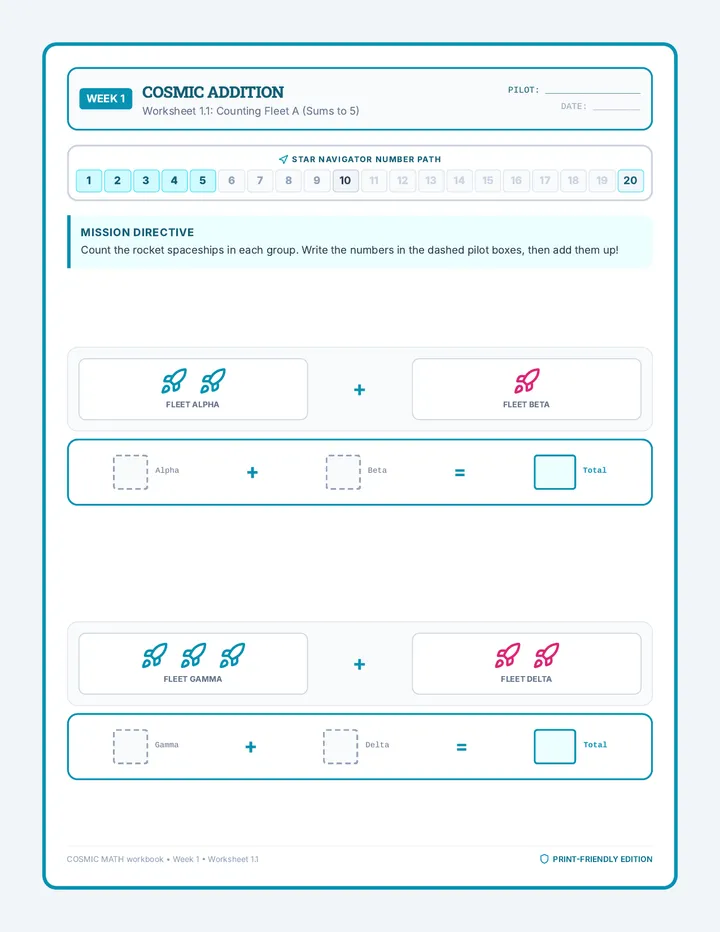
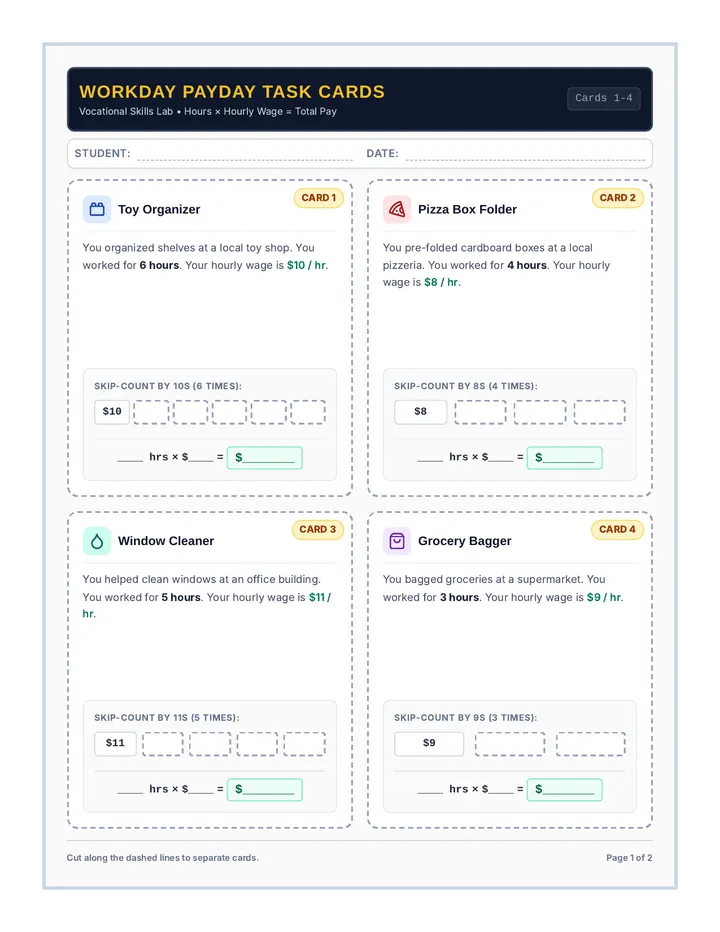
A comprehensive Algebra 2 worksheet for solving polynomial functions using various methods like factoring, synthetic division, and finding complex zeros. Includes themed workspace for student work.
A teacher answer key for the 'Final Inspection Quiz', providing correct answers for the multiple-choice questions and step-by-step solutions for the performance tasks.
A teacher answer key for the 'Construction Zone Worksheet', providing completed equivalent fractions and final decimal answers for all eight practice problems.
A short assessment quiz to check for mastery in converting fractions to terminating decimals. Includes multiple-choice concept questions and performance tasks requiring students to show their work.
A student practice worksheet with two distinct phases: 'The Base Ten Build' for using equivalent fractions, and 'The Division Hammer' for using long division. Includes grid-lined work areas for division precision.
An instructional slide deck for teaching fraction-to-decimal conversion. Features a 'Decimal Architect' theme, step-by-step methods (Base Ten Build and Long Division Hammer), and guided practice problems.
An educational anchor chart illustrating the two primary methods for converting fractions to decimals: the 'Base Ten Build' (using equivalent fractions) and the 'Long Division Hammer'. Includes visual steps and helpful tips.
A detailed teacher guide for the 'Decimal Blueprint' lesson, featuring learning objectives, a step-by-step instructional sequence, common misconceptions, and differentiation strategies for teaching fraction-to-decimal conversion.
A visual presentation for teaching the US standard algorithm for subtraction up to 6 digits. Includes place value concepts, regrouping rules ("More on the floor? Go next door!"), and a step-by-step walkthrough of the blueprint method.
An instructional guide for teachers providing best practices, common pitfalls, and differentiation strategies for teaching the US standard algorithm for subtraction up to 6 digits.
A blank 6-digit place value organizer designed for multi-step subtraction using the standard algorithm. Includes dedicated rows for regrouping/borrowing and clear column alignment up to the hundred thousands place.
Final mastery check and performance task for Session 12. Covers modeling, estimation, algorithms, and context across the entire sequence.
Session 12 slides for the final mastery celebration and review of fraction division concepts.
Session 11 Lab Sheet. Students design their own fraction division story problems and models, then peer-review and solve a partner's challenge.
A comprehensive teacher resource providing instructional strategies for budgeting and ratios, a master answer key for all student materials, and an objective tracking table for monitoring student progress.
Session 11 slides challenging students to write their own story problems for given fraction division expressions.
Session 10 Lab Sheet. Students apply multiple strategies (visual and procedural) to solve a complex garden-themed word problem.
Session 10 slides focusing on multi-step and contextual problems involving fraction division.
A daily warm-up sheet covering one full week (Monday-Friday) with targeted practice in budgeting and ratio simplification. Includes a comprehensive review section for Friday.
Session 9 Lab Sheet. Students practice the 'invert and multiply' algorithm while maintaining a connection to estimation and conceptual logic.
Session 9 slides formalizing the 'invert and multiply' algorithm (Keep-Change-Flip) for fraction division.
Session 8 Lab Sheet. Students explore the concept of reciprocals and verify the relationship between fraction division and multiplication by the reciprocal.
A set of interactive task cards for practicing ratio identification and simplification, featuring both visual sets and word-based problems. Designed to be cut out for hands-on learning.
Session 8 slides introducing the concept of reciprocals and the relationship between dividing by a fraction and multiplying by its reciprocal.
Session 7 Lab Sheet. Students practice predicting the size of the quotient relative to 1 before solving fraction division problems.
Session 7 slides focusing on estimating whether the quotient of a fraction division problem will be greater than or less than 1.
A structured graphic organizer that guides students through the process of identifying, writing, and simplifying ratios using visual sets and numerical problems.
Session 6 Lab Sheet. Students practice converting fractions to a common denominator before dividing the numerators.
Session 6 slides teaching students how to use equivalent fractions to apply the common denominator strategy to problems with unlike denominators.
Session 5 Lab Sheet. Students practice the common denominator strategy, focusing on the conceptual understanding of dividing pieces of the same size.
Session 5 slides introducing the common denominator strategy for dividing fractions with the same denominator.
Session 4 Lab Sheet. Students apply tape diagrams to various fraction division scenarios (whole by unit, unit by whole, and whole by non-unit).
A real-world budgeting worksheet where students calculate total costs of snack items and determine if they stay within a specific budget. Includes calculation areas and budget verification sections.
Session 4 slides introducing formal tape diagrams as a consistent tool for fraction division problems.
Session 3 Lab Sheet. Students transition to measurement division with non-unit fractions, using partitioning and grouping strategies.
Session 3 slides focusing on measurement division with non-unit fractions (e.g., 2 divided by 2/3).
Session 2 Lab Sheet. Students practice dividing unit fractions by whole numbers through visual sharing models and identifying patterns in the results.
A teacher resource providing answer keys, instructional strategies, and data collection tips for the Market Masters money unit.
Session 2 slides focusing on partitive division (unit fraction divided by a whole number).
The master strategy map for the Slice Lab series, associated with the first lesson for reference.
A comprehensive final assessment covering coin identification, money addition, and subtraction from $20 using a calculator. Features clear sectioning and scoring areas.
Session 1 Student Lab Sheet. Includes guided visual modeling for whole number division by unit fractions and a pattern-finding table to build early number sense.
A set of four printable scenario cards featuring real-world math tasks. Each card presents a situation requiring either addition of multiple items or subtraction from $20, specifically designed for calculator use.
Session 1 presentation for the Slice Lab series. This lesson introduces division of whole numbers by unit fractions using measurement models and conceptual reasoning.
A subtraction-focused worksheet helping students calculate change from $20 using a calculator. Includes visual prompts for calculator steps and clear answer fields.
A worksheet featuring three grocery shopping scenarios requiring students to use a calculator to add money amounts up to $20. Includes structured work areas and clear total boxes.
A matching activity worksheet for students to identify penny, nickel, dime, and quarter names and values. includes visual representations and space for value notation.
A data collection tool for teachers to track student progress on IEP goals, specifically monitoring accuracy and prompt levels across multiple opportunities.
A mixed practice worksheet featuring word problems that require identifying operations, counting coins, and making budgeting decisions within a store-themed context.
A set of 8 task cards featuring various items with price tags and groups of mixed coins. Students must calculate the coin totals and determine if they have enough money to make the purchase, with clear "YES" and "NO" selection areas.
A practice worksheet for counting mixed coins (pennies, nickels, dimes, and quarters) up to $1.00, including a mastery check for budgeting.