A comprehensive teacher guide for 'The Great Pivot' lesson, featuring a clear purpose statement, therapeutic instructional strategies, and a minute-by-minute pacing plan for middle school classrooms.
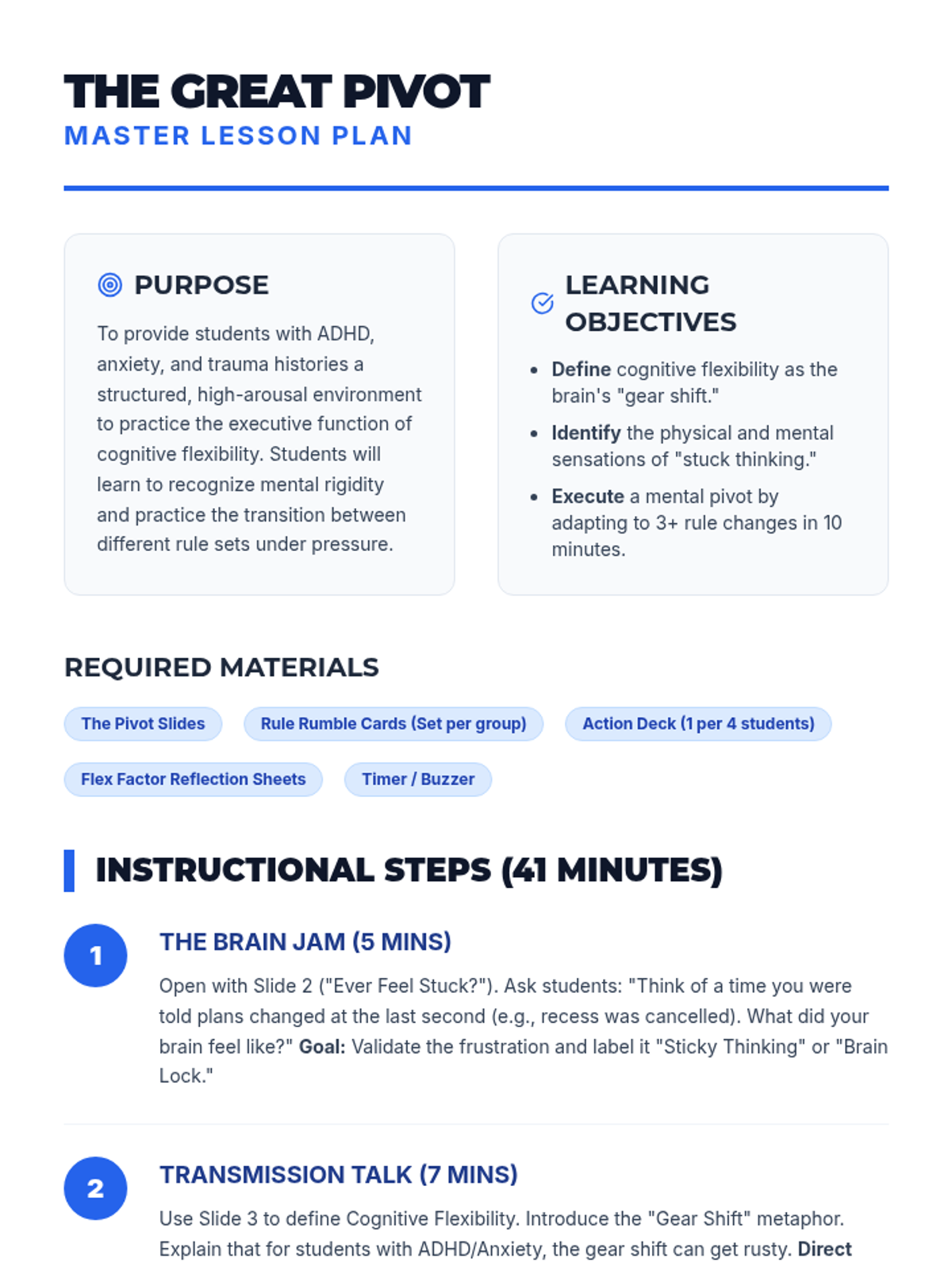
A detailed, 6-step instructional lesson plan for 'The Great Pivot', specifically designed for therapeutic middle school settings. Includes purpose, learning objectives, materials, and a step-by-step pacing guide.
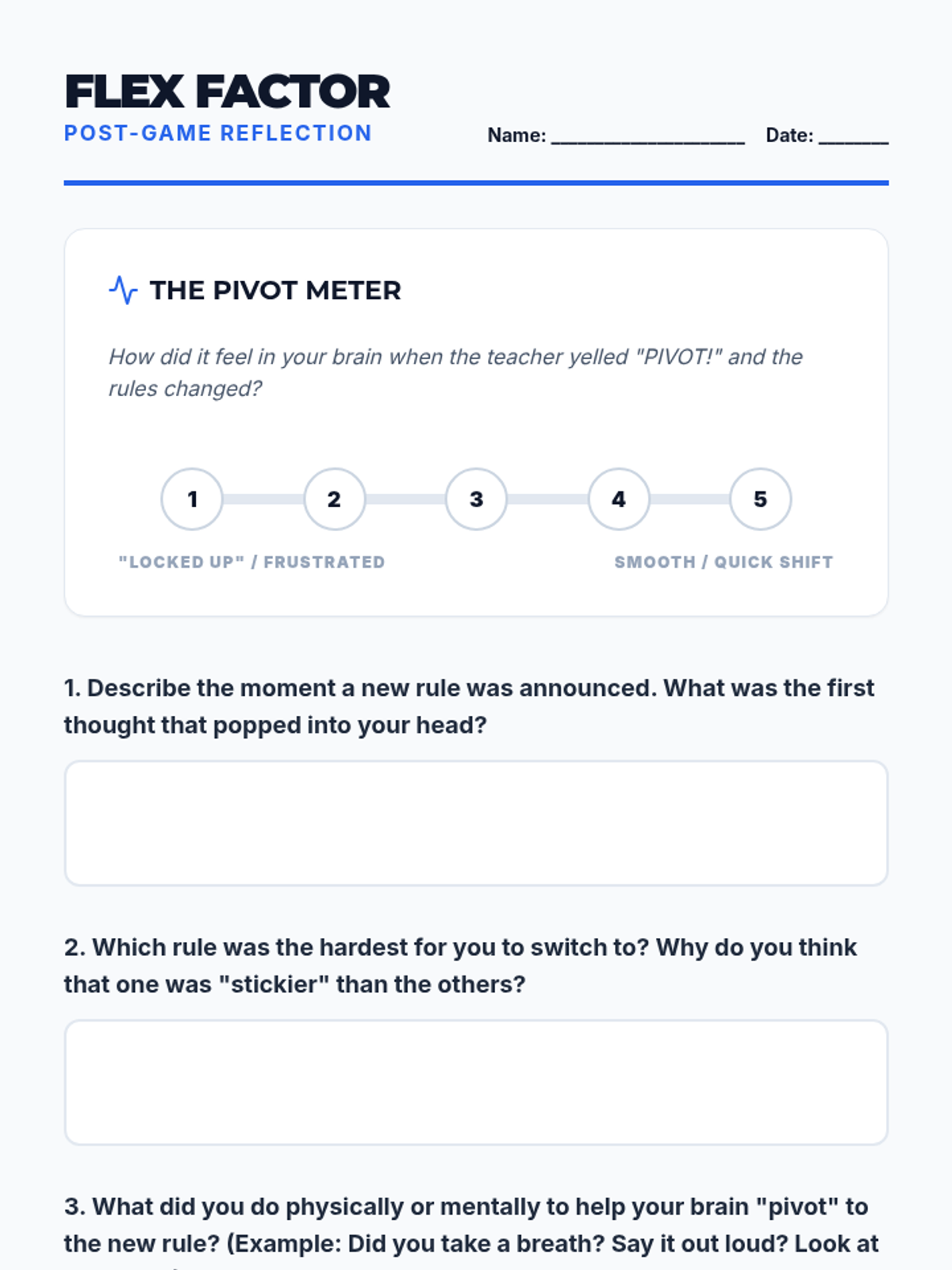
A reflective student worksheet designed for the end of 'The Great Pivot' lesson, featuring a 'Pivot Meter' self-assessment scale and prompts to help students analyze their mental processes during rule changes.
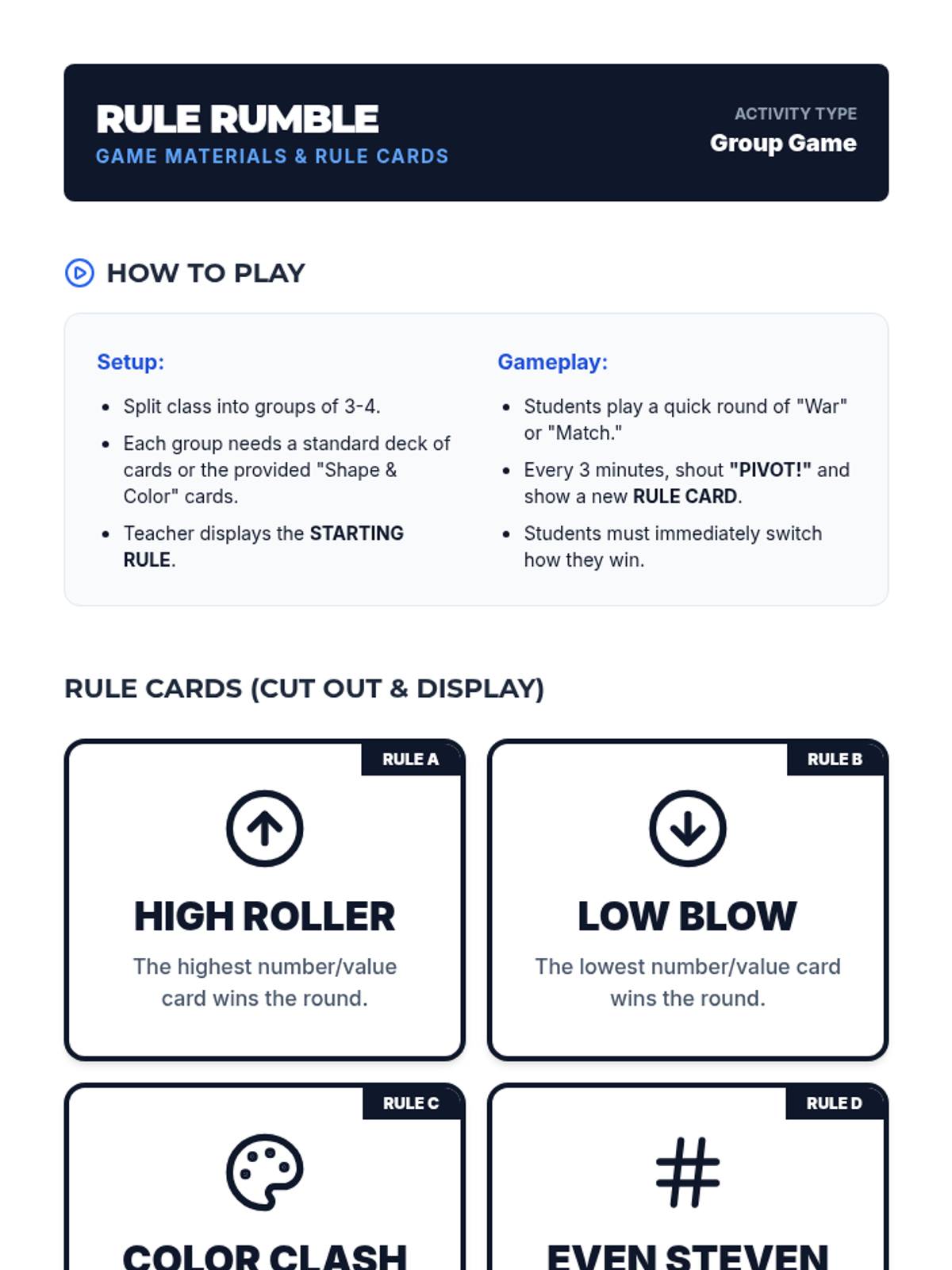
Printable game materials for 'Rule Rumble', including clear visual rule cards for 'High Roller', 'Low Blow', 'Color Clash', and 'Even Steven', along with a template for a custom Action Deck.
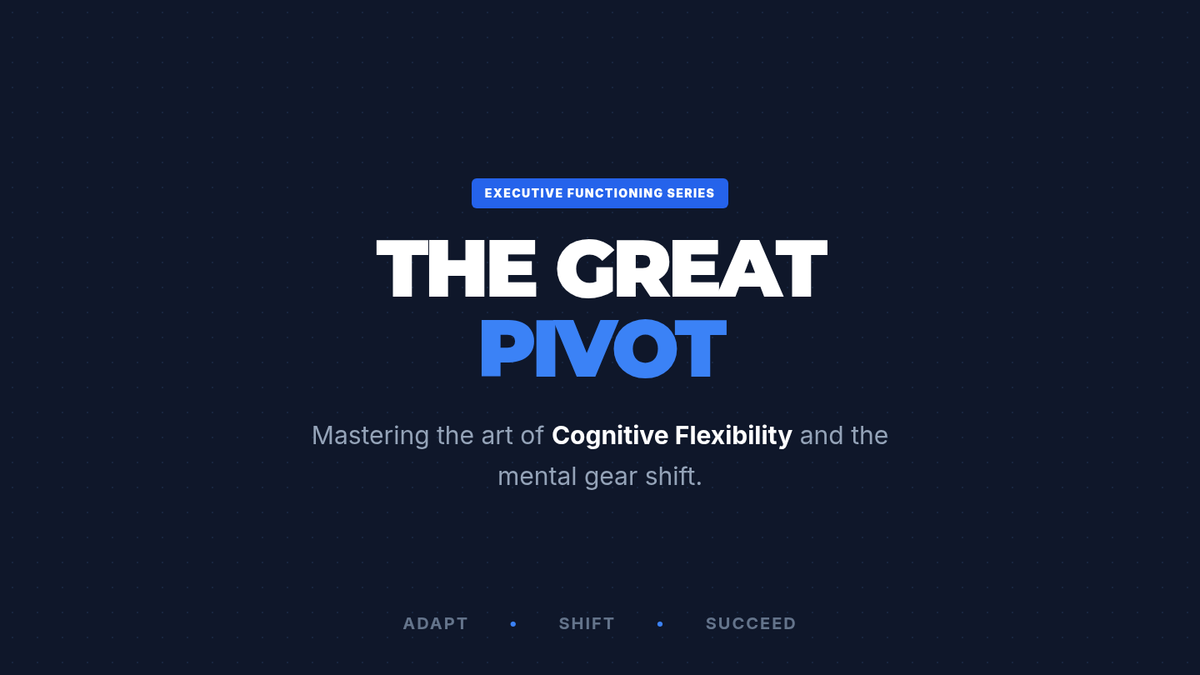
A high-impact, visual slide deck for 'The Great Pivot' lesson, introducing middle schoolers to cognitive flexibility through the metaphor of a brain 'gear shift' and preparing them for the Rule Rumble game.
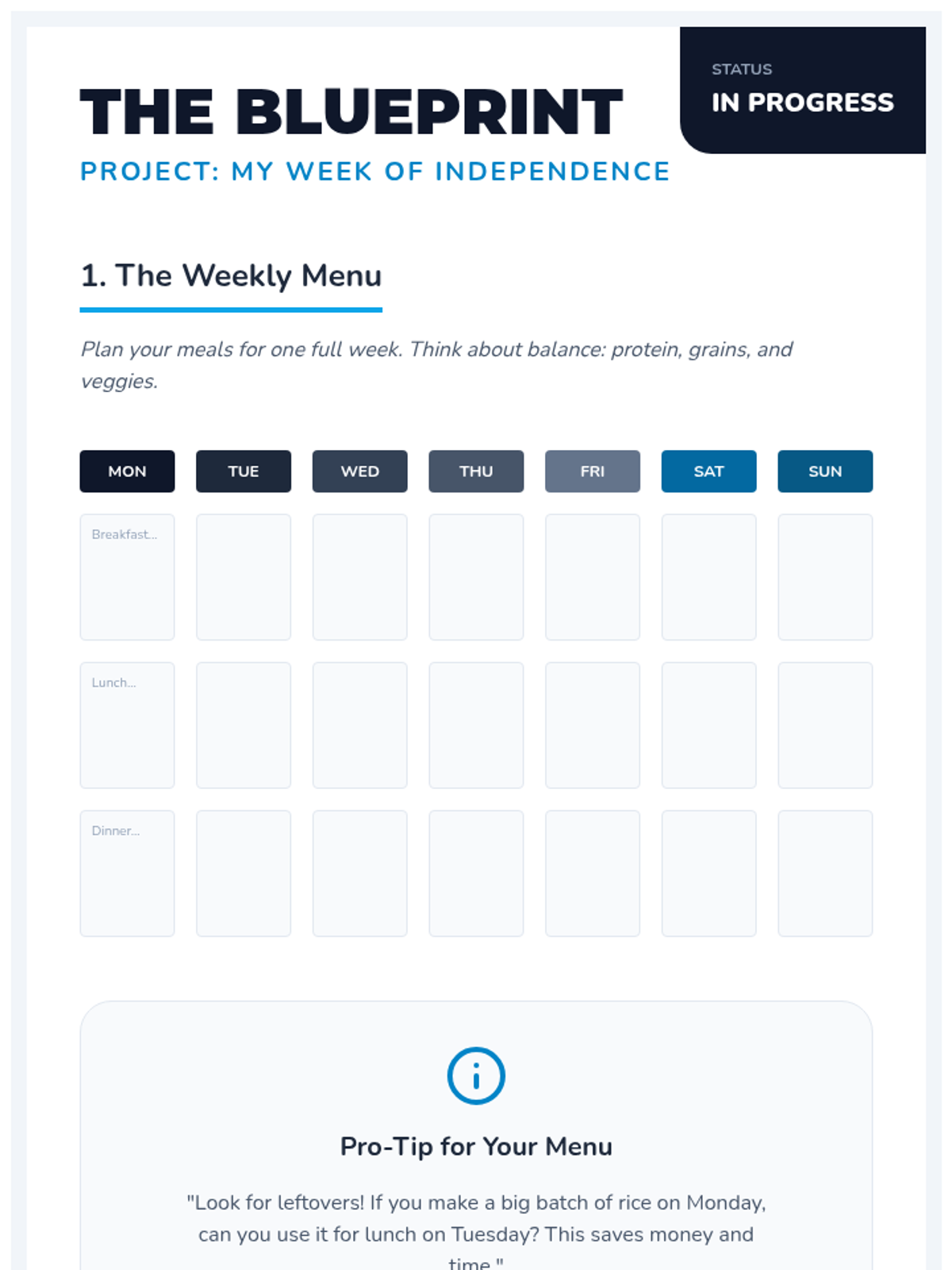
A summative project where students create a comprehensive one-week independence plan, including a detailed menu grid and a personal budget breakdown.
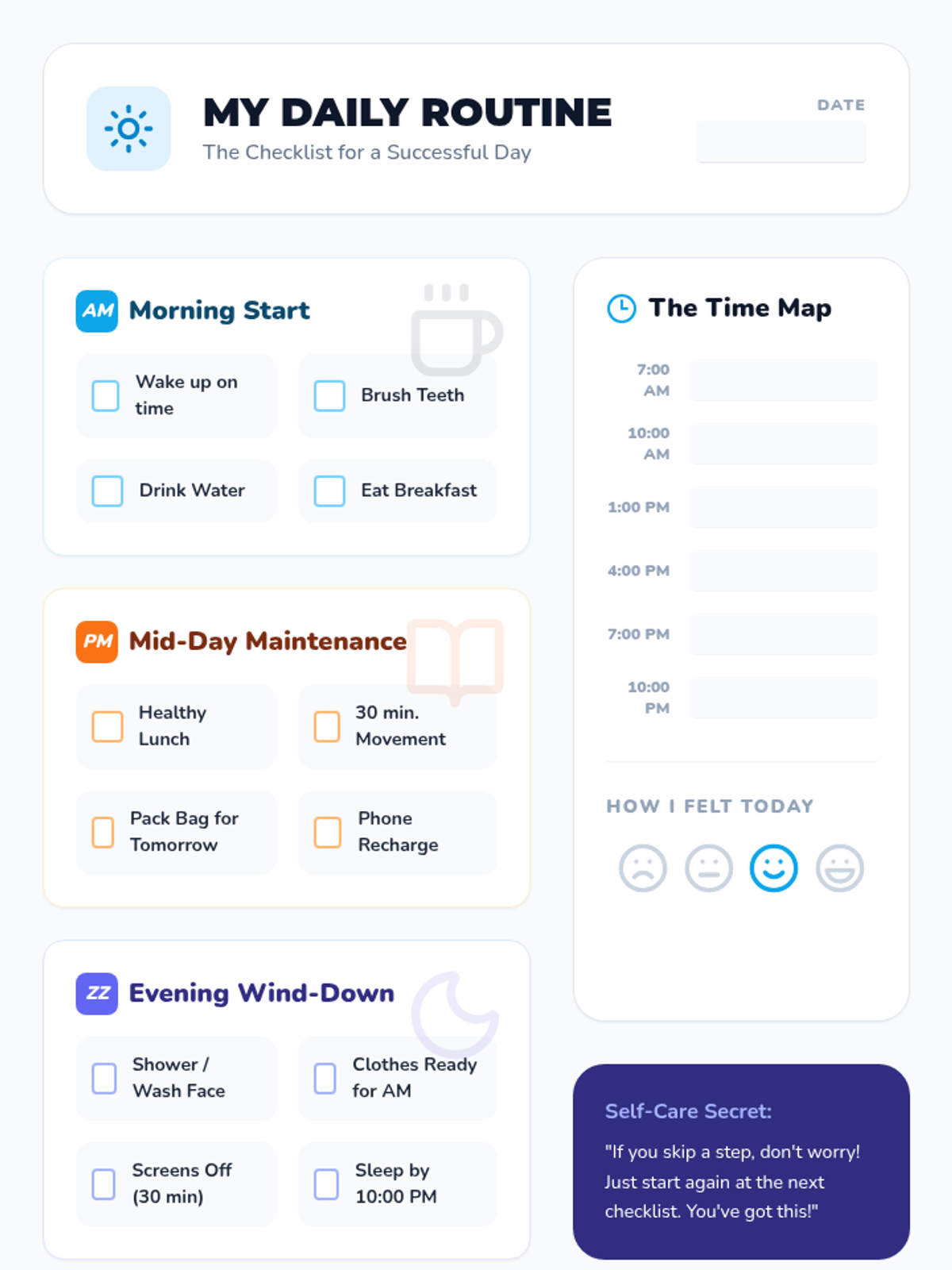
A structured daily routine checklist and time management tool designed to help students build consistent self-care and hygiene habits.
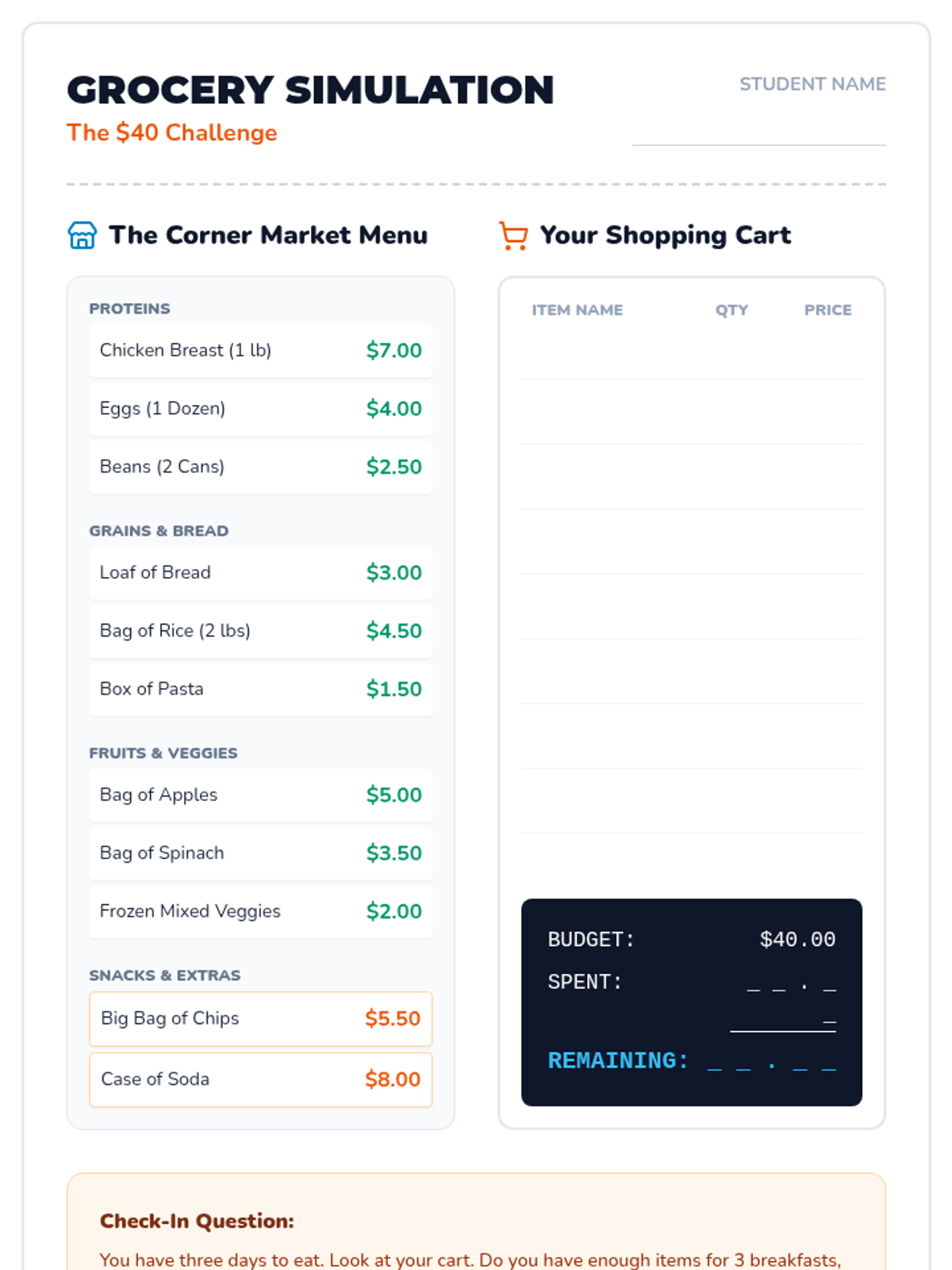
An interactive grocery shopping simulation worksheet where students practice budgeting with a fixed amount of money, revised with optimized student work areas for handwriting legibility.
A visually engaging slide deck that provides explicit instruction on personal finance, meal planning, and self-care for 10th-grade students, revised for better visibility and compliance with font size requirements.
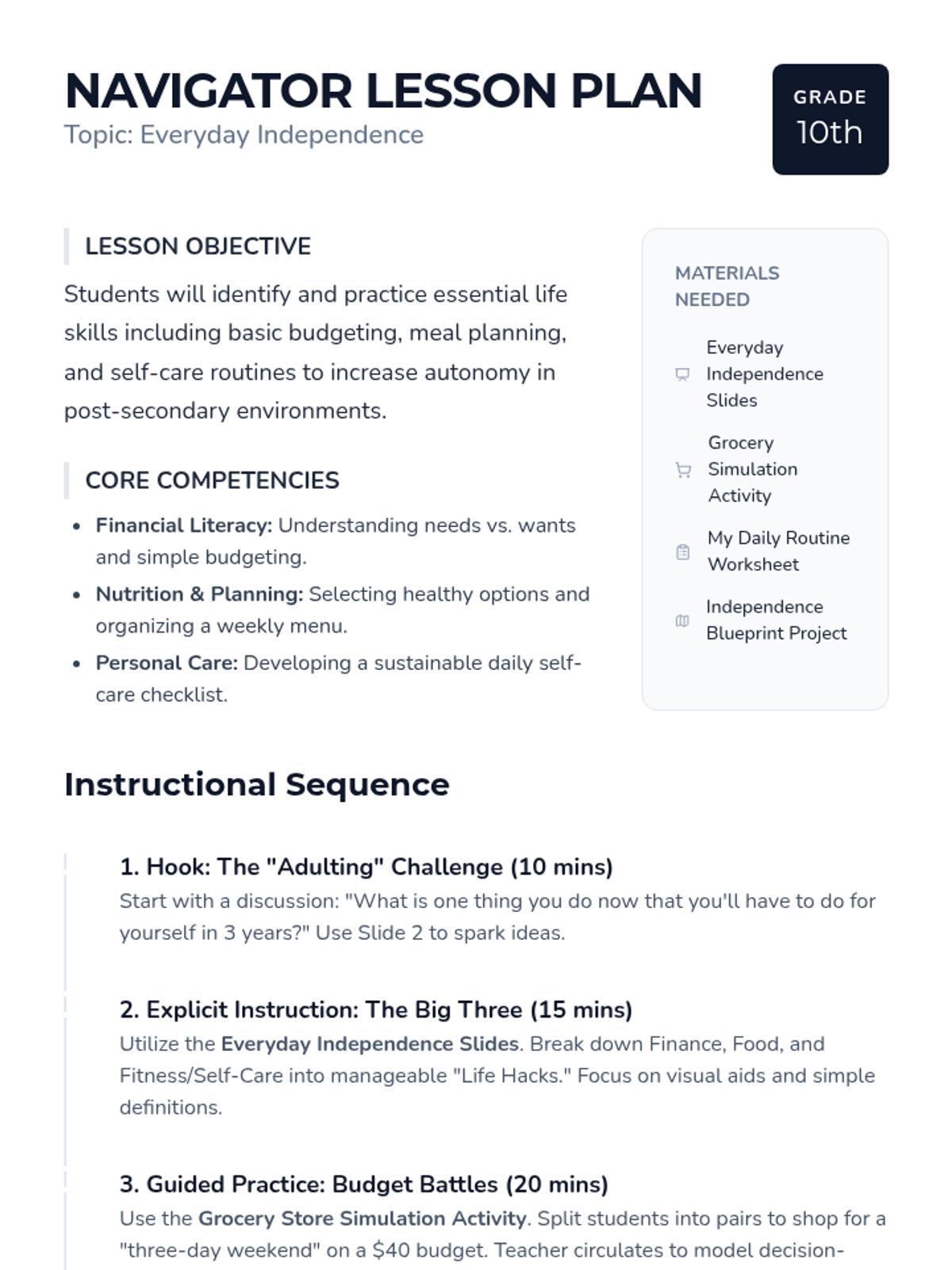
A detailed instructional guide for teachers, outlining the sequence for teaching independent living skills with specific IEP accommodations and assessment strategies.
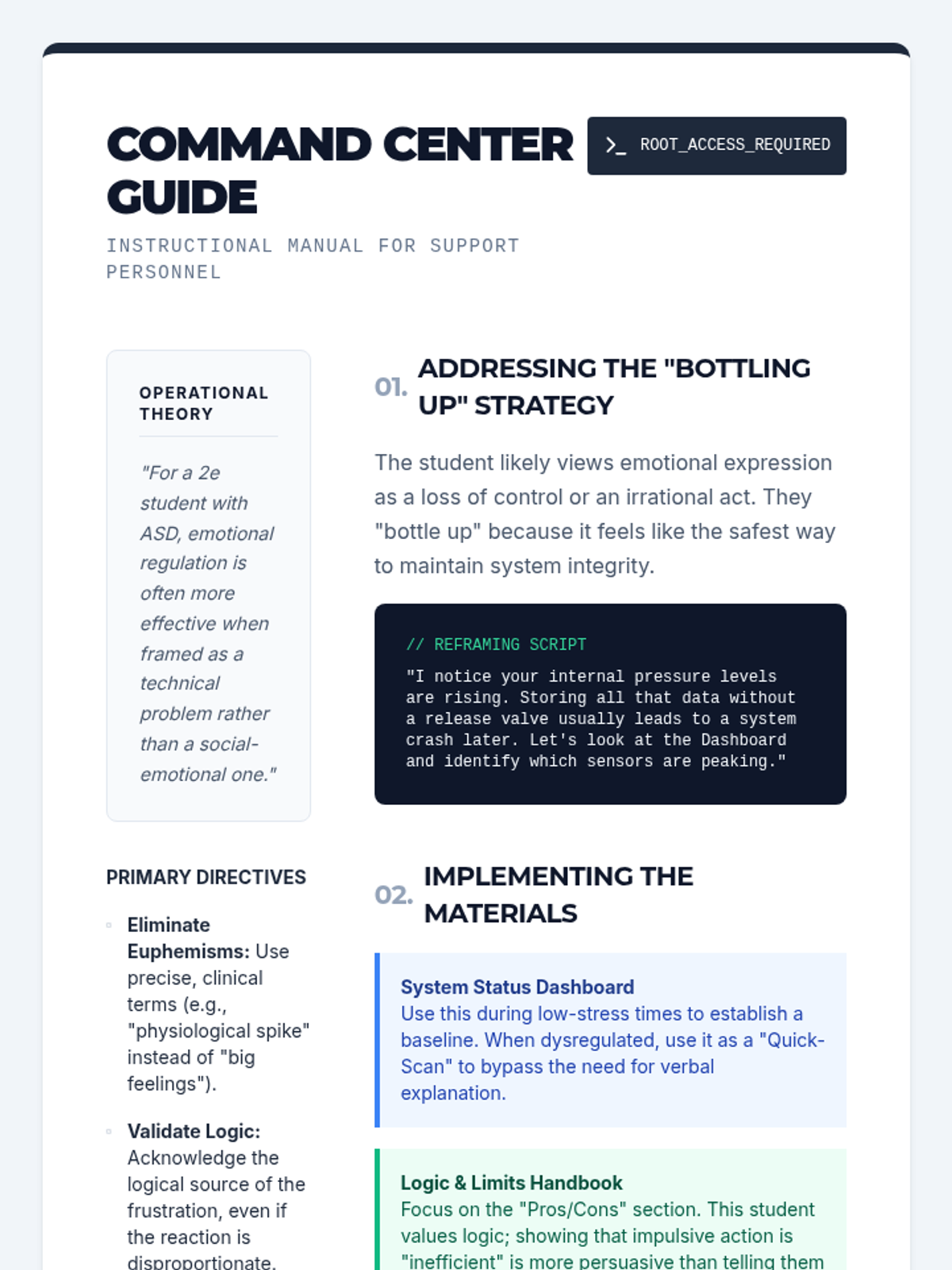
A professional instructional manual for teachers providing strategies for using the "Mental Mechanics" materials with 2e students, focusing on avoiding patronizing language and reframing emotions as data.