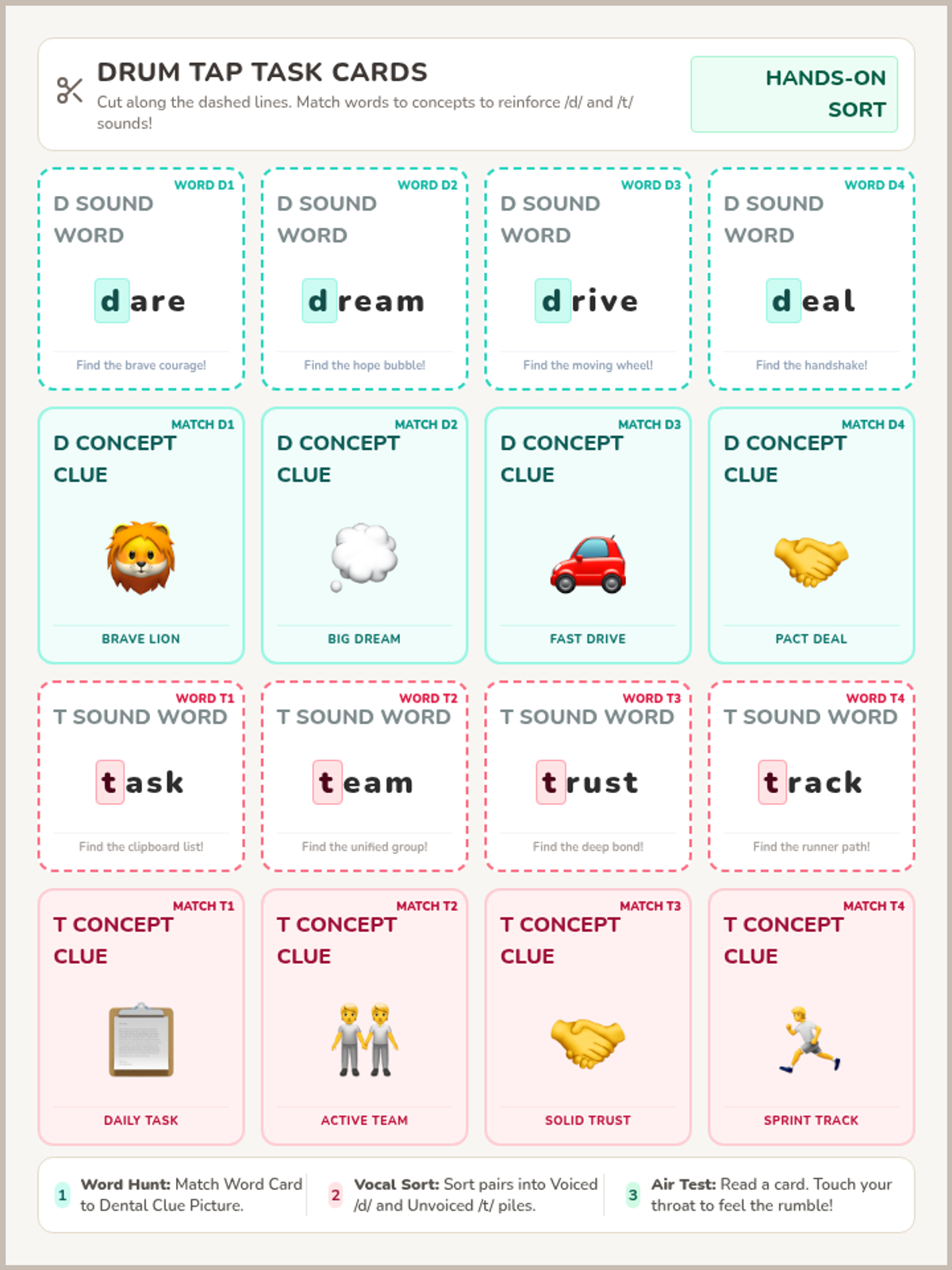
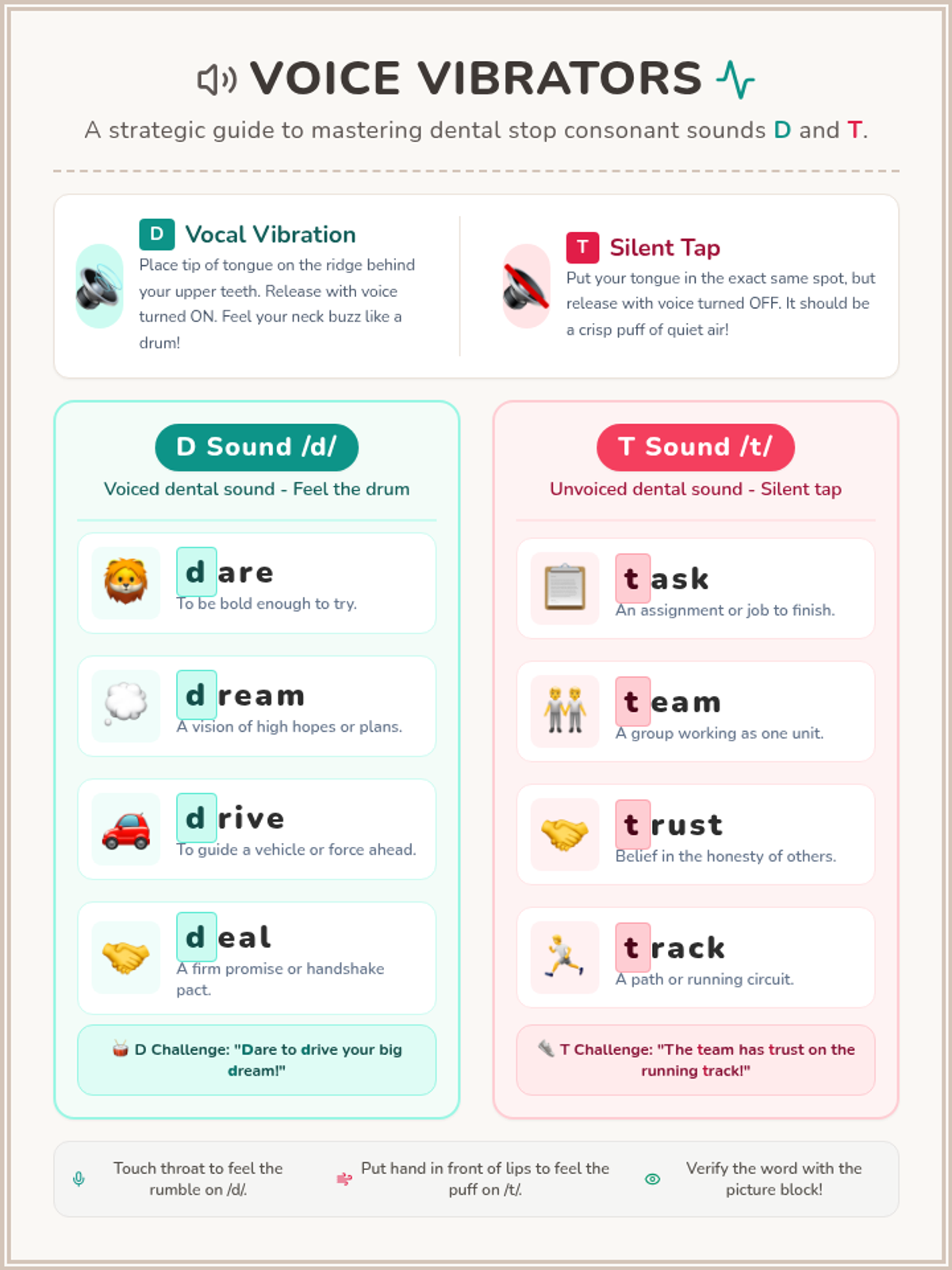
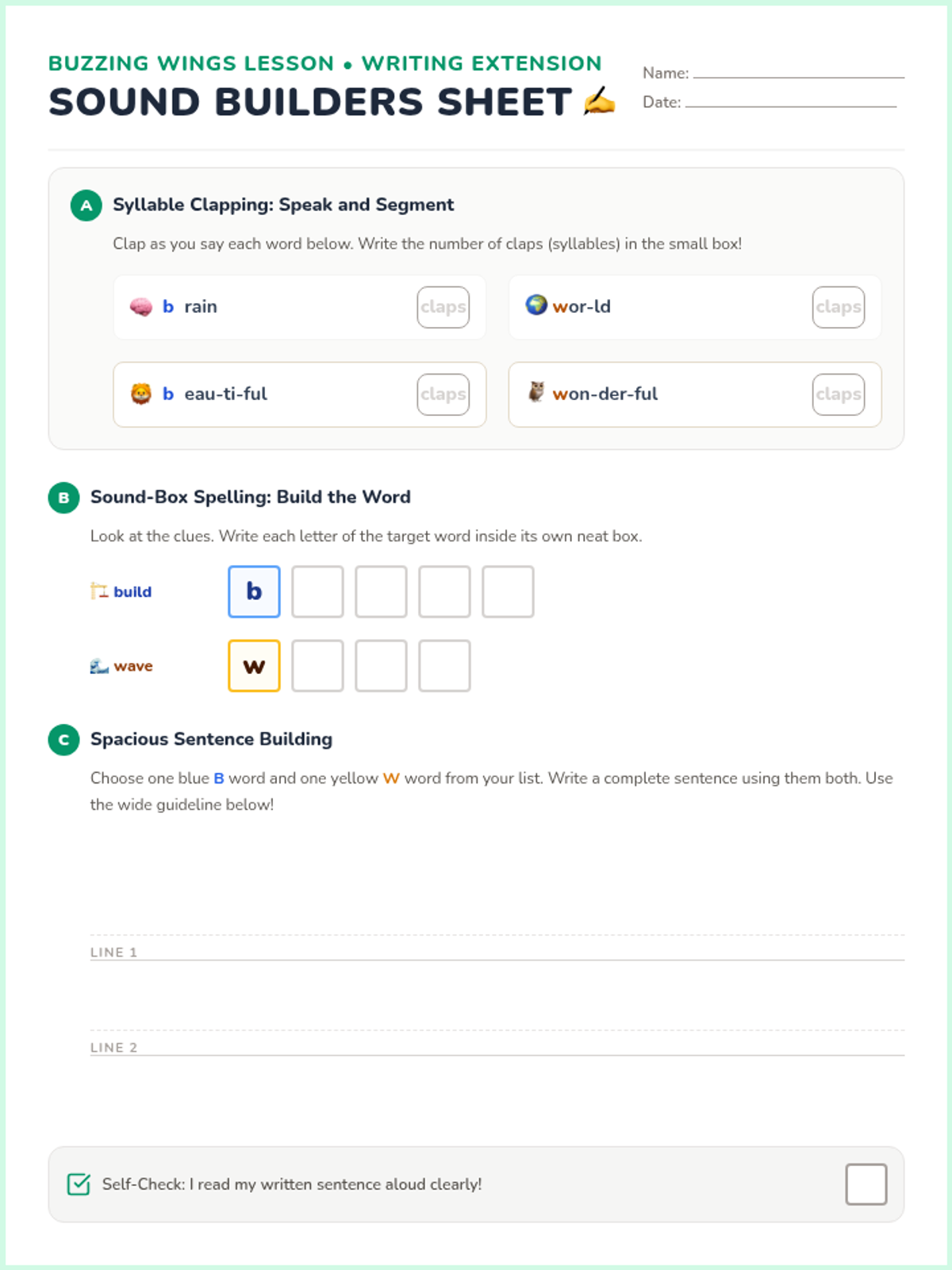
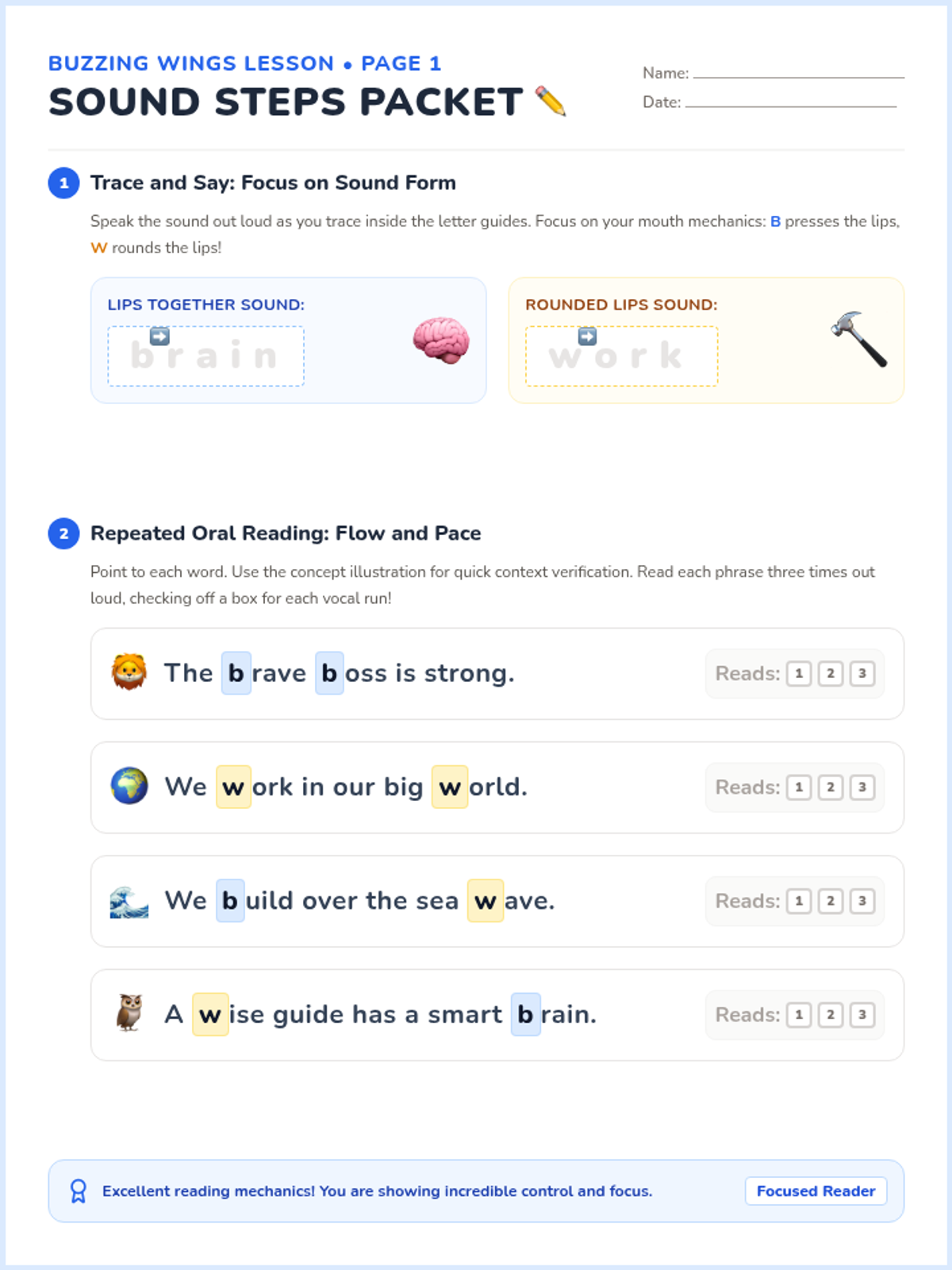
A BINGO game set featuring 4 unique boards and a page of calling cards, designed to review mixed phonics sounds including digraphs, vowel teams, and glued sounds.
A highly visual, 5-page workbook for students with severe ID, focusing on personal space, waiting, and choosing safe behaviors through simple icons and large tracking areas. Revised for icon consistency.
Revised visual presentation for the Space Patrol lesson, updated with consistent icons for Wait and Safe Body to support students with severe intellectual disabilities.
Visual behavior reminders and a First/Then contract specifically designed for students with severe ID, using bold icons and high-contrast shapes. Revised for icon consistency.
A 6-slide visual presentation to introduce the concepts of personal space (The Bubble), bathroom rules (Stop/Wait), and safe body choices (Breathe/Squeeze) using large, bold icons.
Large-format activity cards for role-playing scenarios where the student hears "No" or "Wait" and practices choosing a safe coping strategy (Breathe, Squeeze, or Hand on Desk).
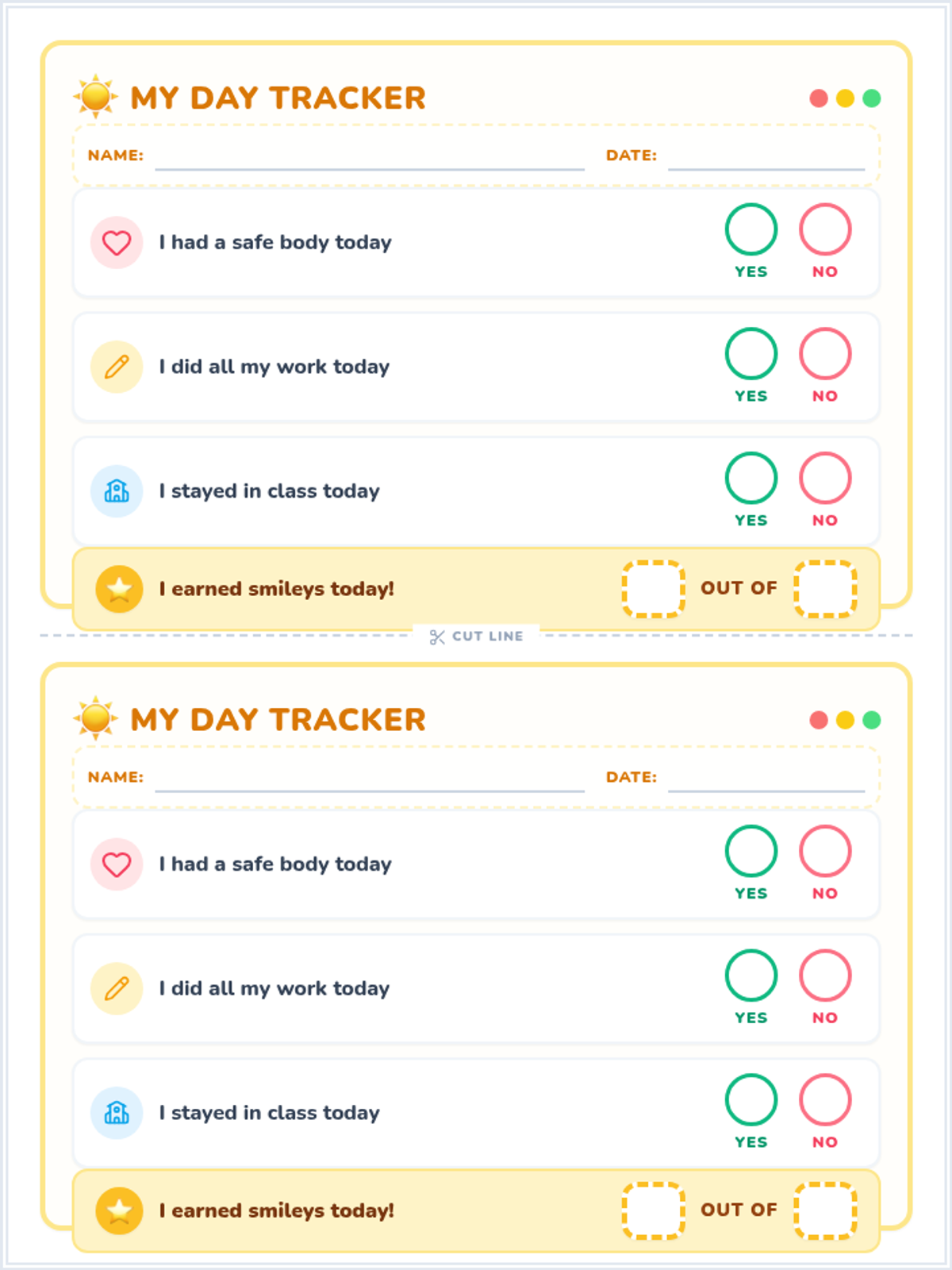
A professional data collection sheet for teachers to track student progress on personal boundaries, waiting, and physical safety behaviors.
A highly visual, 5-page workbook for students with severe ID, focusing on personal space, waiting, and choosing safe behaviors through simple icons and large tracking areas.
Visual behavior reminders and a First/Then contract specifically designed for students with severe ID, using bold icons and high-contrast shapes.
A teacher's guide for a social skills lesson focused on personal boundaries and delayed gratification, specifically designed for students with severe intellectual disabilities.
A daily data tracking sheet for teachers to monitor student progress on greeting choices and independence levels. Includes a prompt hierarchy key and space for notes on student-peer interactions.
A comprehensive teacher facilitation guide for the Hello Heroes lesson. Includes learning goals, material lists, a step-by-step instructional sequence, and a prompting hierarchy specifically for non-verbal students.
A set of 12 high-contrast communication cards (PECS style) for greeting-related interactions. Cards include Wave, High-Five, Talker, My Turn, Your Turn, and basic functional communication.
A high-contrast visual choice board for students to select their preferred greeting method. Includes four clear options: Wave, High-Five, Talker/Device, and Not Now.
A visual social narrative slide deck introducing three ways to say hello: waving, high-fiving, and using an AAC device. Designed with high-contrast visuals and simple language for students with autism.
The final mastery matching game for Lesson 3. Includes 4 large emoji category mats and 12 photo challenge card frames with detailed descriptions for generalization practice across all core emotions.
A visual slide presentation for the final mastery lesson, featuring quick flash reviews and matching challenges across all four core emotions. Includes a celebratory final slide for students.
A teacher-facing lesson plan for the final review lesson, focusing on generalization, mastery assessment, and mixed-emotion discrimination for non-verbal students.
A printable sorting mat and set of photo match cards for the 'Angry' and 'Scared' lesson. Features color-coded landing zones and detailed photo descriptions for visual discrimination practice.
A visual slide presentation introducing the emotions 'Angry' and 'Scared' using large emoji illustrations and clear placeholders for real-life photographic examples. Designed for non-verbal students with high-contrast visuals.
A teacher-facing facilitation guide for Lesson 2, focusing on strategies for teaching 'Angry' and 'Scared' emotions, including anatomical descriptions and physical response techniques.
Printable matching cards for the 'Happy' and 'Sad' lesson. Includes large emoji category cards and smaller frames for real-life photos with descriptive placeholders to help teachers source appropriate visual aids.
A visual slide presentation introducing the emotions 'Happy' and 'Sad' using large emoji illustrations and clear placeholders for real-life photographic examples. Designed for non-verbal students with high-contrast visuals.
A comprehensive teacher guide for Lesson 1, providing instructional strategies, prompting hierarchies, and AAC integration tips specifically for non-verbal students learning happy and sad emotions.
Full-page anchor chart for the Doubling Rule, featuring a comprehensive contrast gallery. Reverted to previous layout.
A full-page anchor chart for the Vowel Protectors (TCH and DGE), with clear rules and bold examples. Reverted to previous layout.
Final practice worksheet for RSP students, reverted to previous height and layout to remove the full-stretch 8.5x11 resize while maintaining comprehensive practice for all four rules.