An interactive, highly visual presentation for adults with IDD that teaches how to count daily work hours on a time card, calculate total hours, and double-check paychecks for errors. Includes real video embeds.
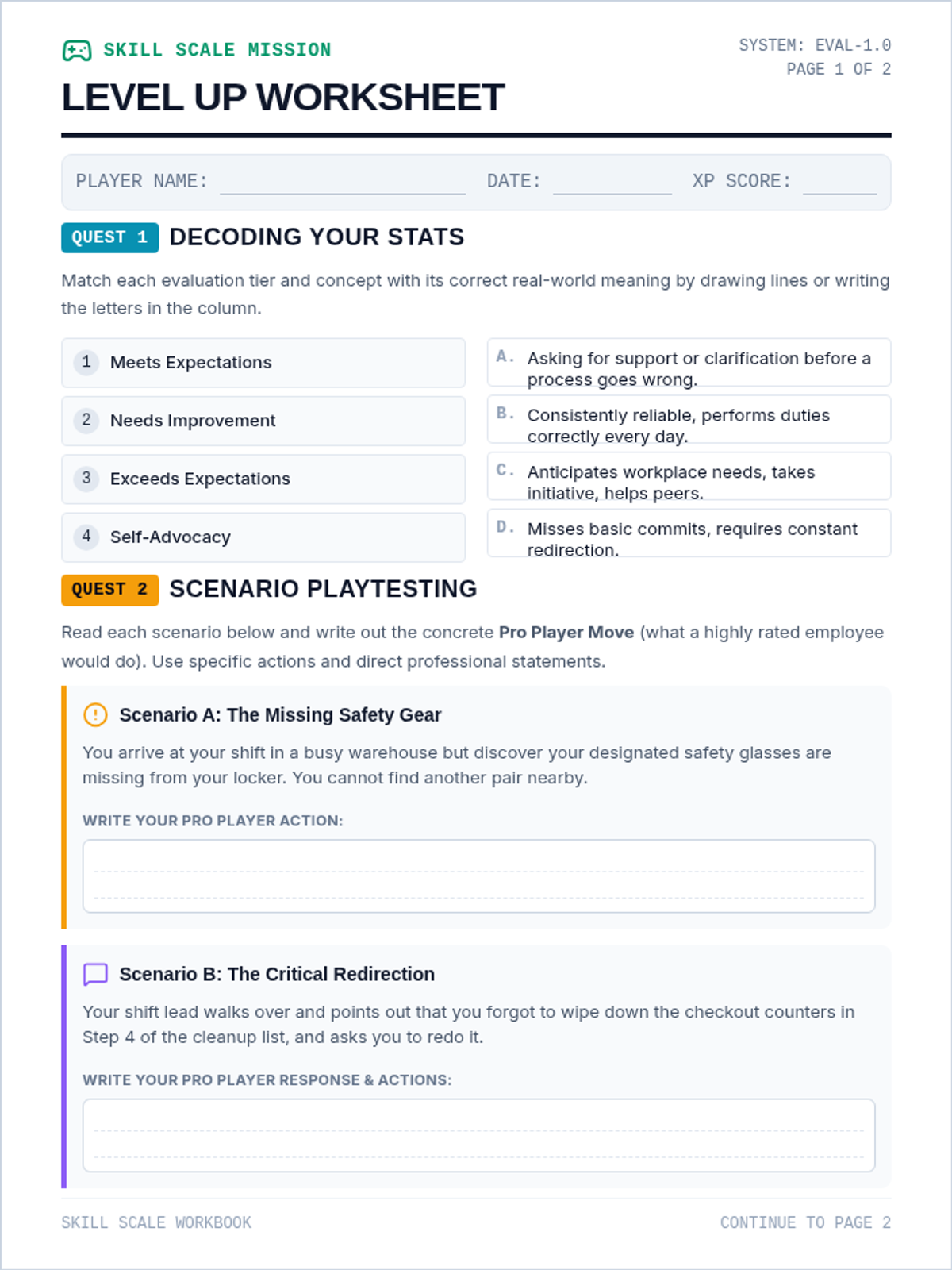
A student-facing worksheet matching the retro-arcade theme of the Level Up Slides. Students complete matching questions, analyze performance scenarios, and fill out a personal skill scorecard.
A retro-arcade themed slide deck that frames employee evaluations as a gaming journey. It scaffolds performance criteria, soft skills, and constructive feedback into actionable steps for workplace success.
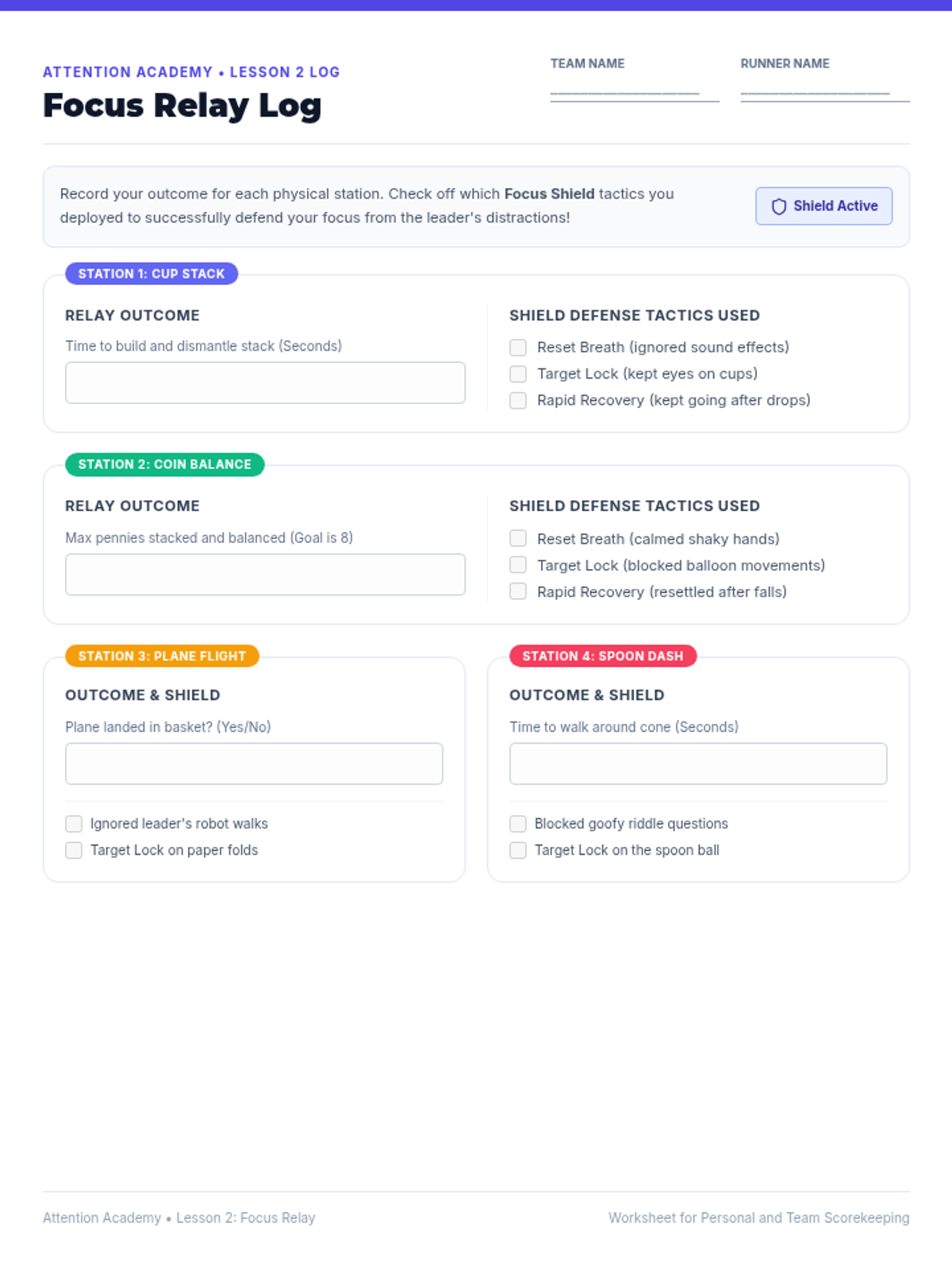
A professional-style student log for recording answers to the gauntlet focus drills, checking off Focus Shield strategies used during distractions, and conducting a final focus recovery self-assessment.
A 1-page printable worksheet containing four high-concentration clerical task cards. Tasks include data audits, code verifications, and sorting drills designed to test students' focus.

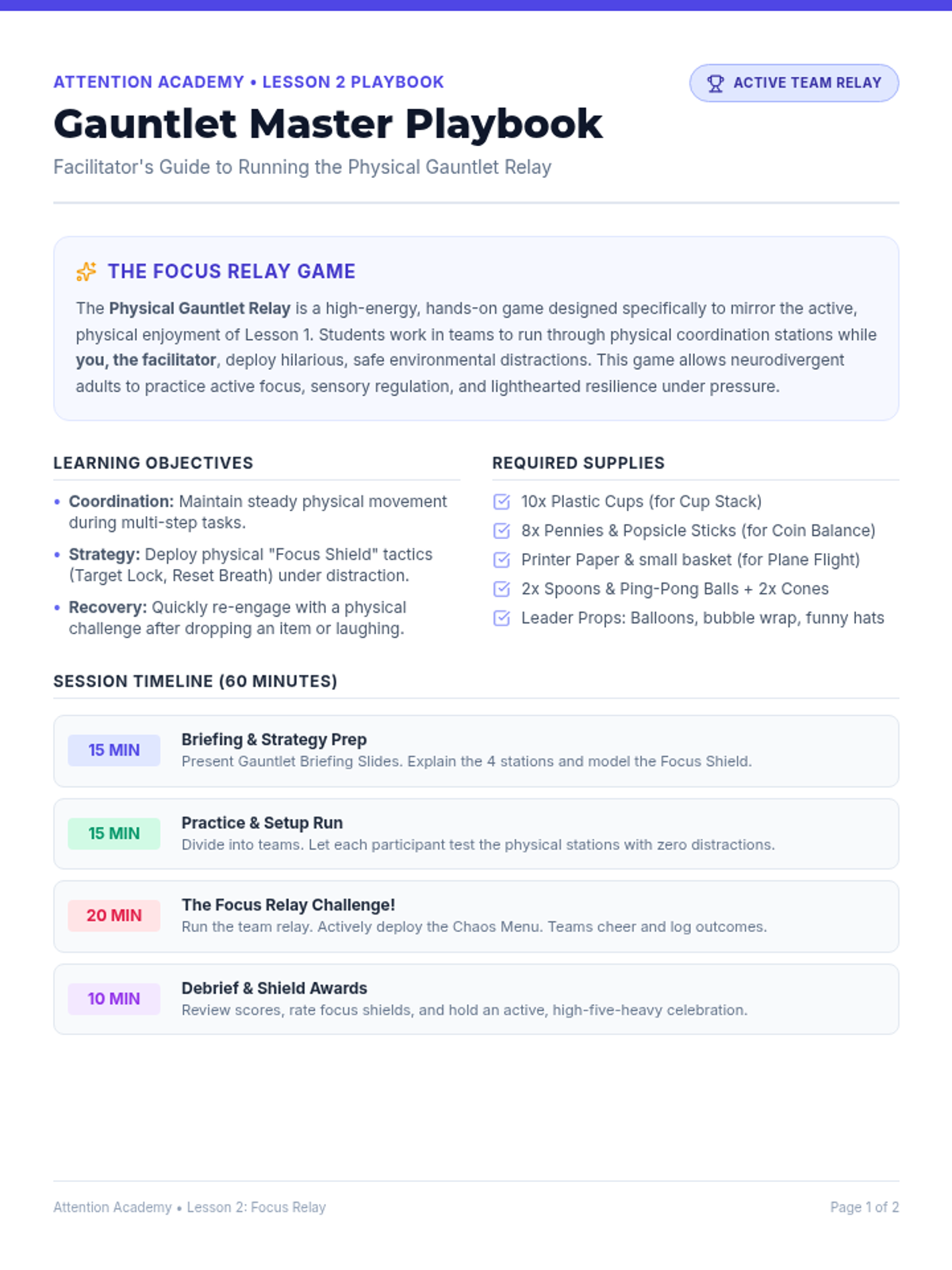
A 2-page instructional playbook for the facilitator. Outlines the game rules, a 60-minute session timeline, a 'Chaos Menu' of calibrated leader distractions, and supportive coaching strategies for adults with IDD.
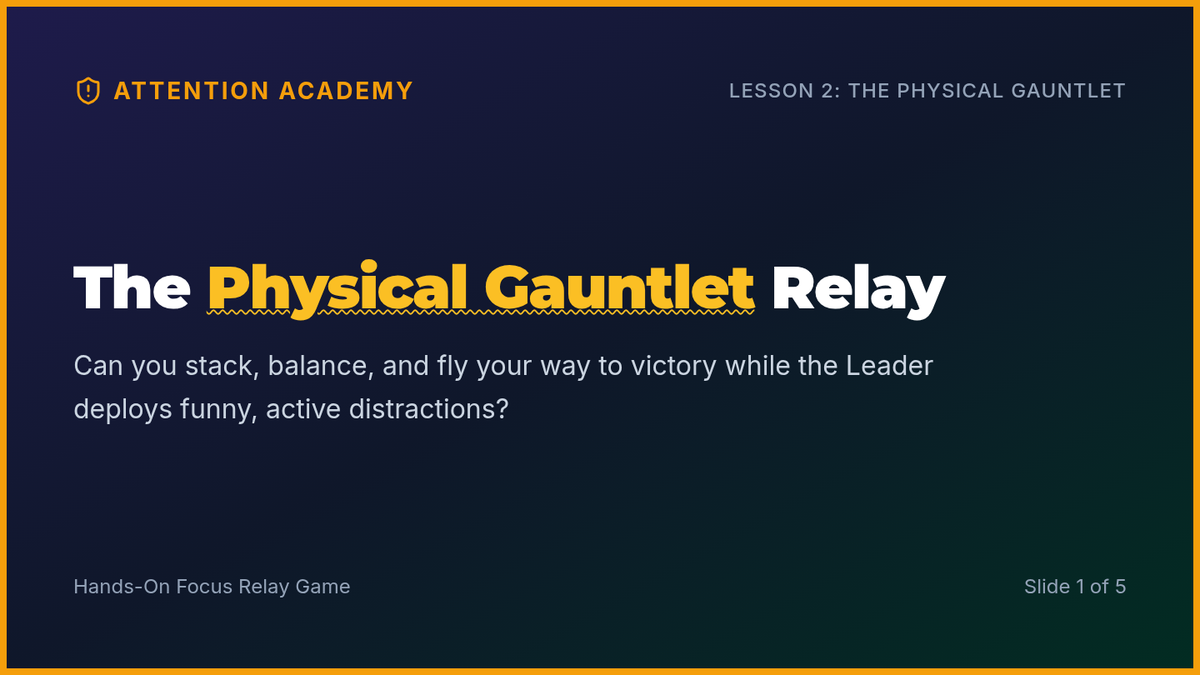
A 5-slide introductory deck for the leader-led Distraction Gauntlet challenge. Teaches participants the core strategy of using a Focus Shield, defines the facilitator's Chaos Levels, and reviews the rules for recovering from interruptions.
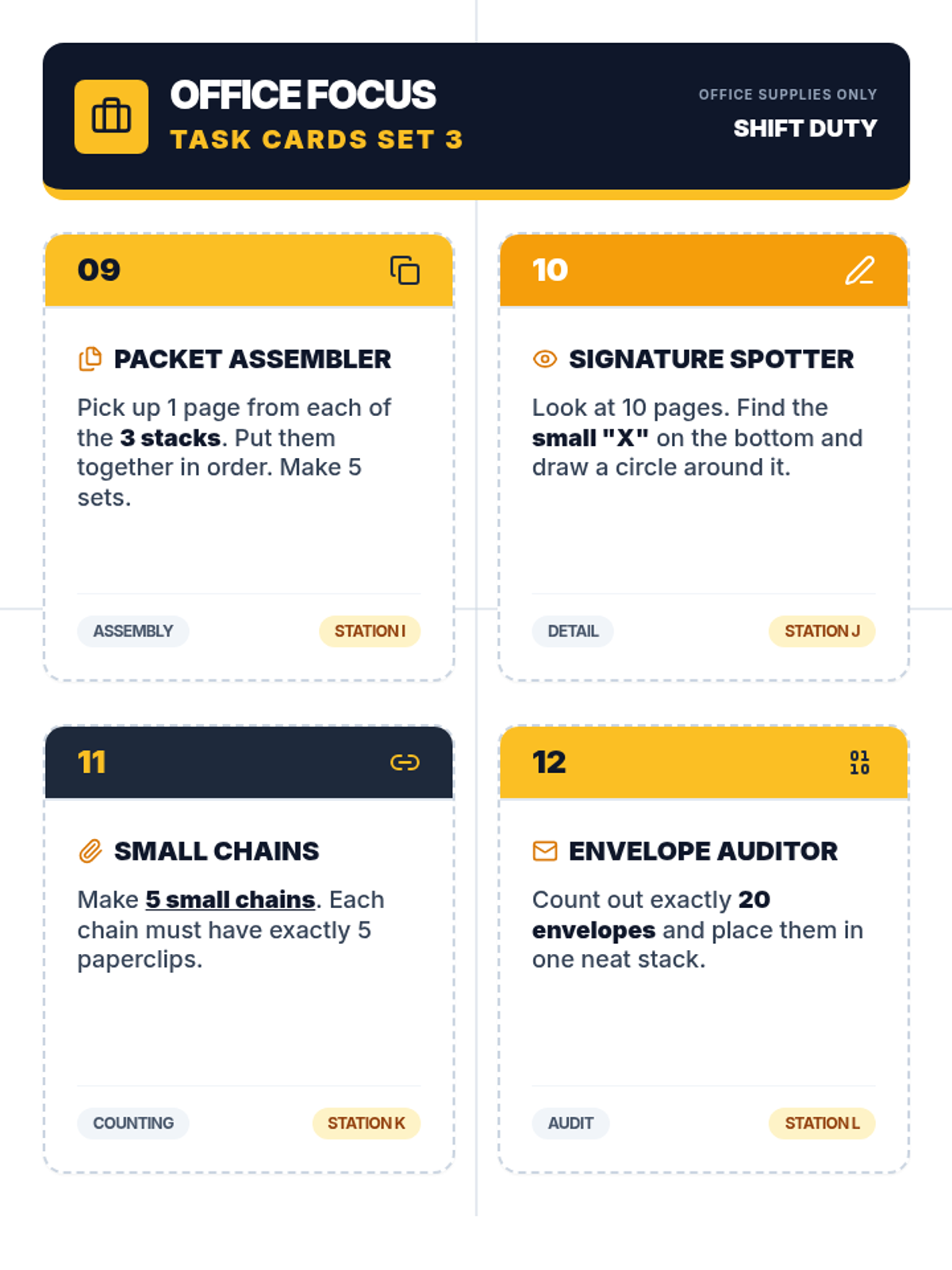
A third set of four printable task cards for the 'Focus Factory' simulation using standard office supplies like paperclips, pens, and envelopes. Includes tasks for assembling packets, spotting signatures, and auditing envelopes.
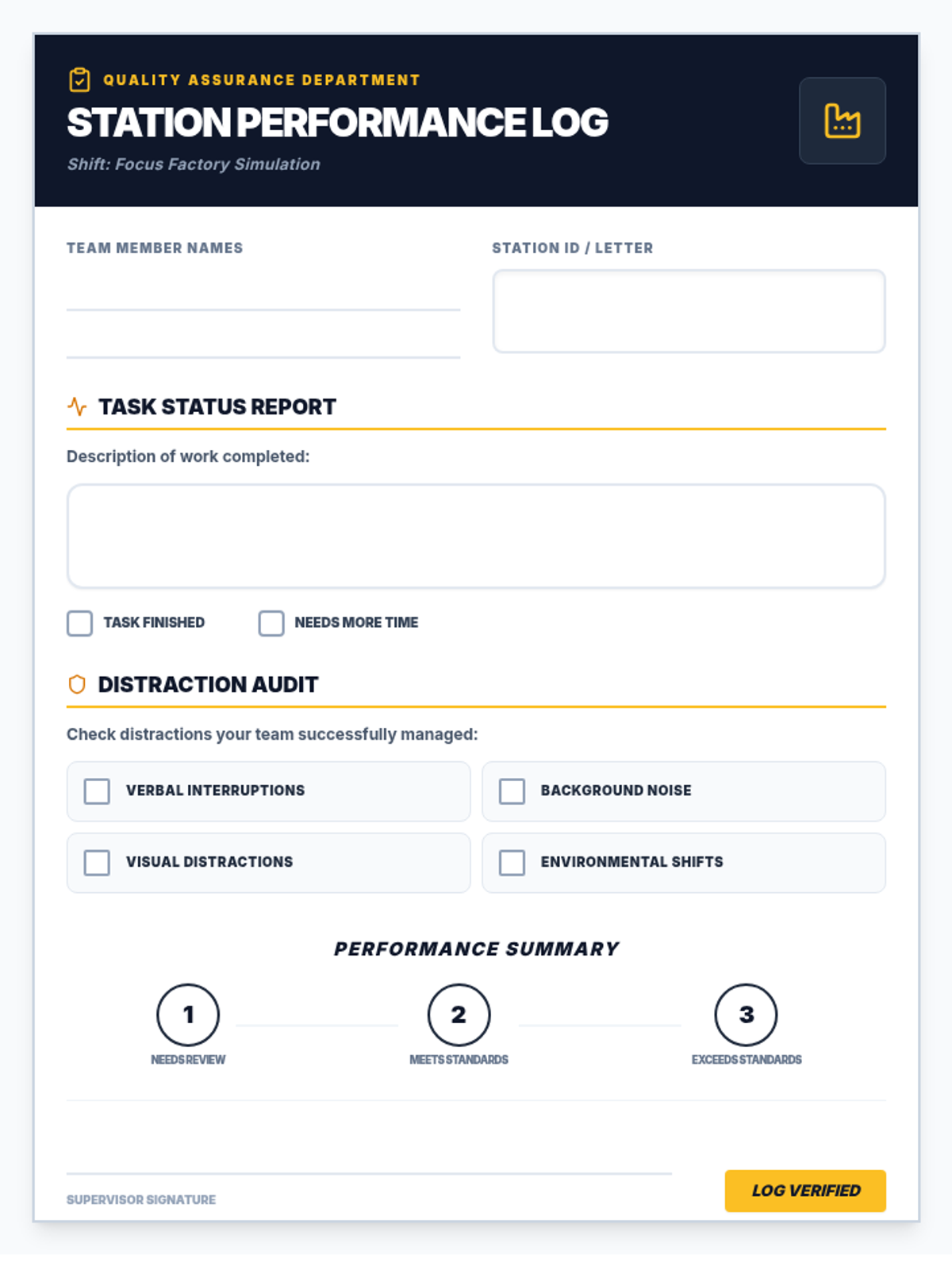
A professional-style Station Performance Log for adult groups to complete during the Focus Factory simulation. Replaces the individual scorecard with a more 'grown up' team-based audit tool using office-appropriate terminology.
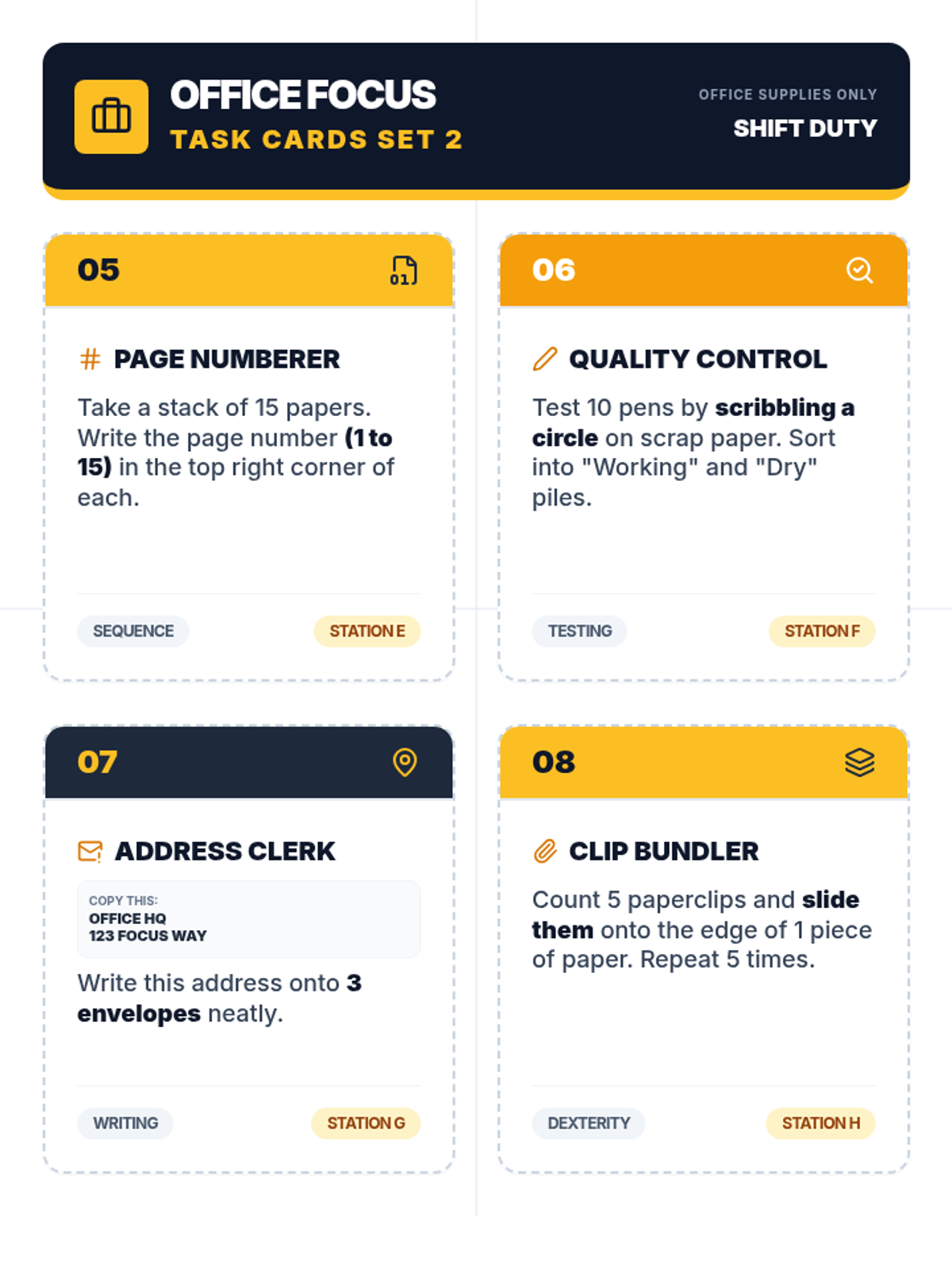
A second set of four printable task cards for the 'Focus Factory' simulation using standard office supplies like paperclips, pens, and envelopes. Includes tasks for numbering pages, testing pens, and bundling clips.
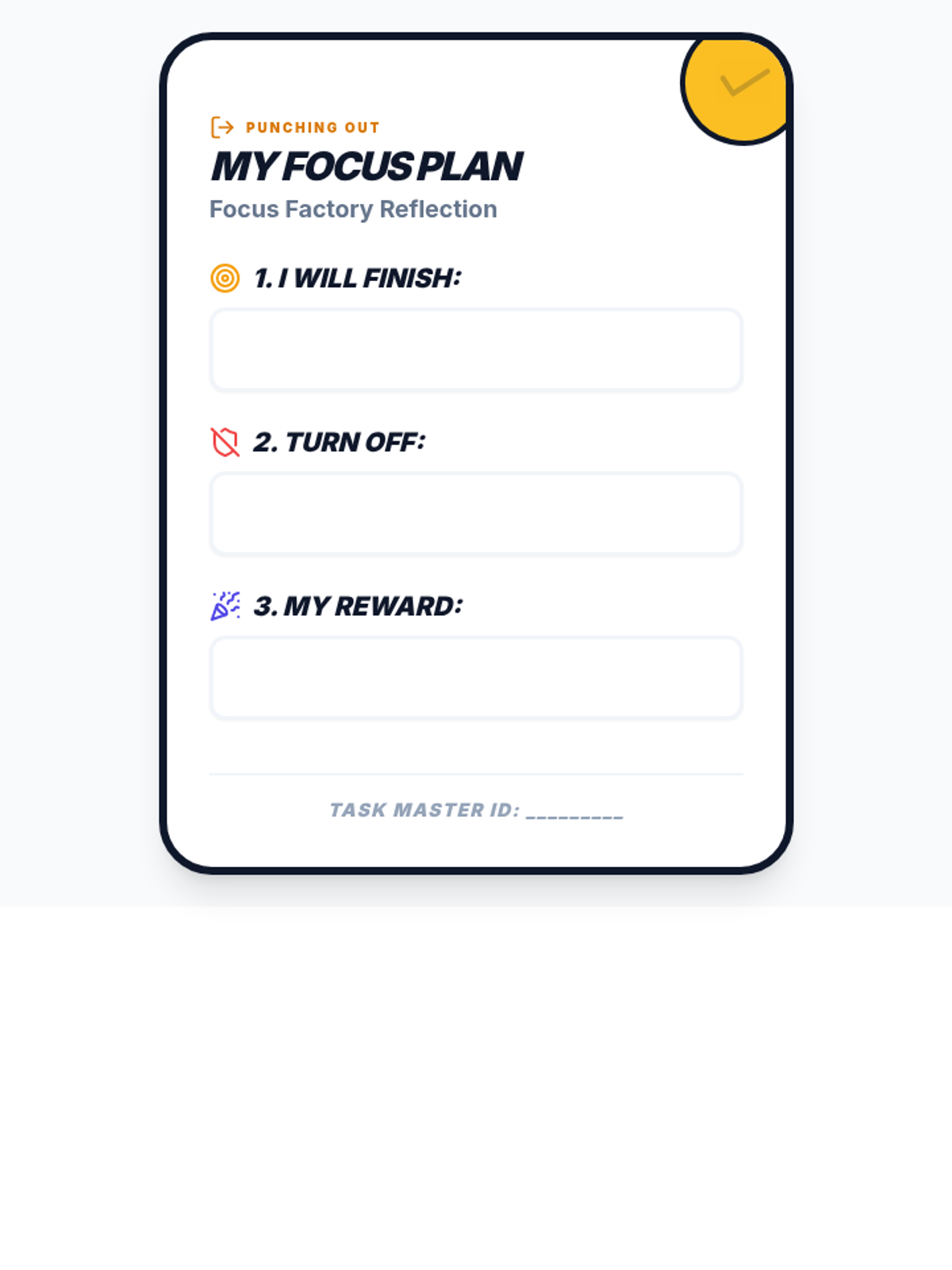
A simple reflection tool for adults with IDD to commit to one task, identify a distraction to remove, and choose a reward for completion.
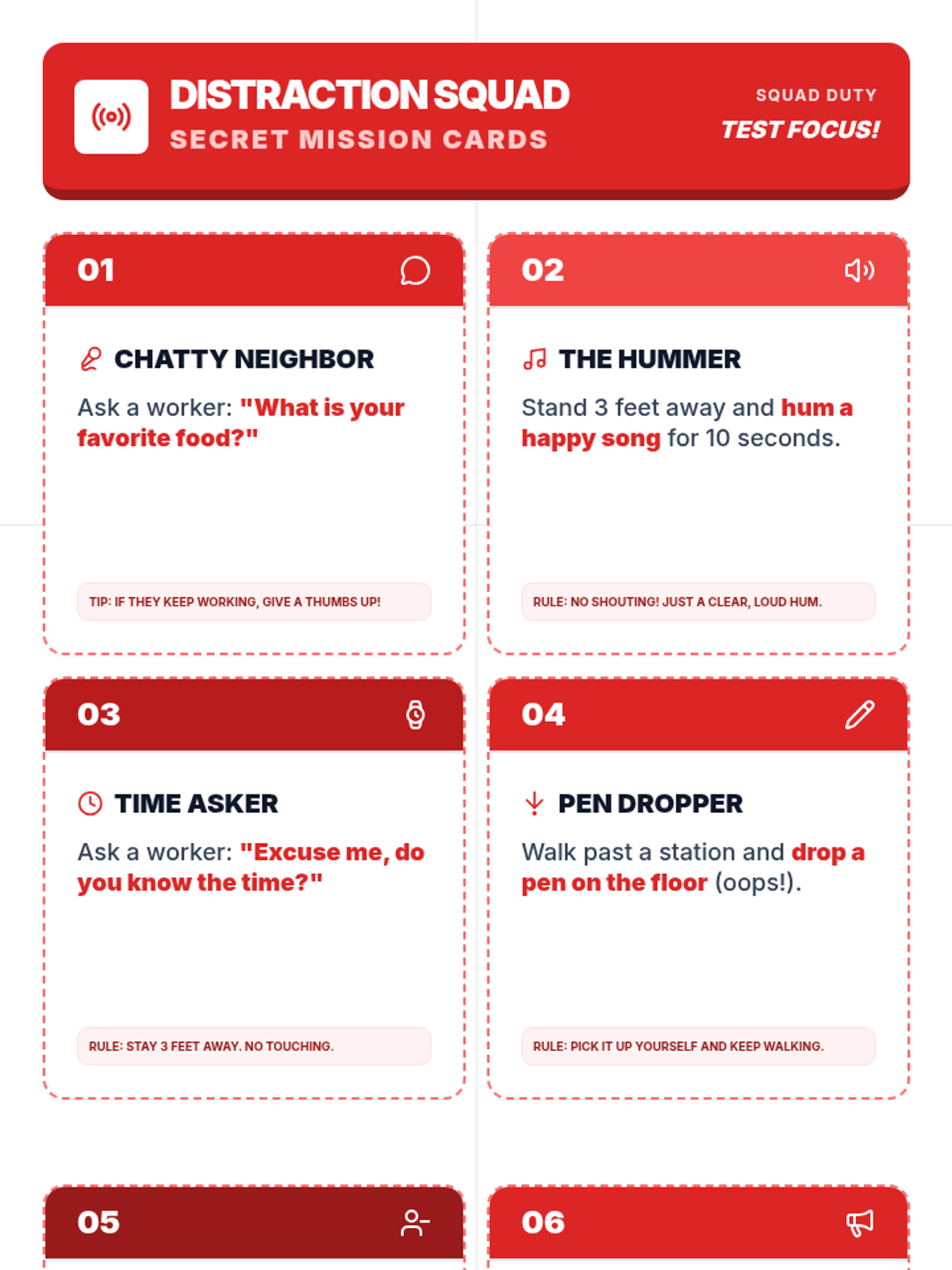
A set of eight secret mission cards for students acting as the 'Distraction Squad'. Each card provides a specific, safe distraction to test their peers' focus during the simulation. Split across two pages for easy printing.
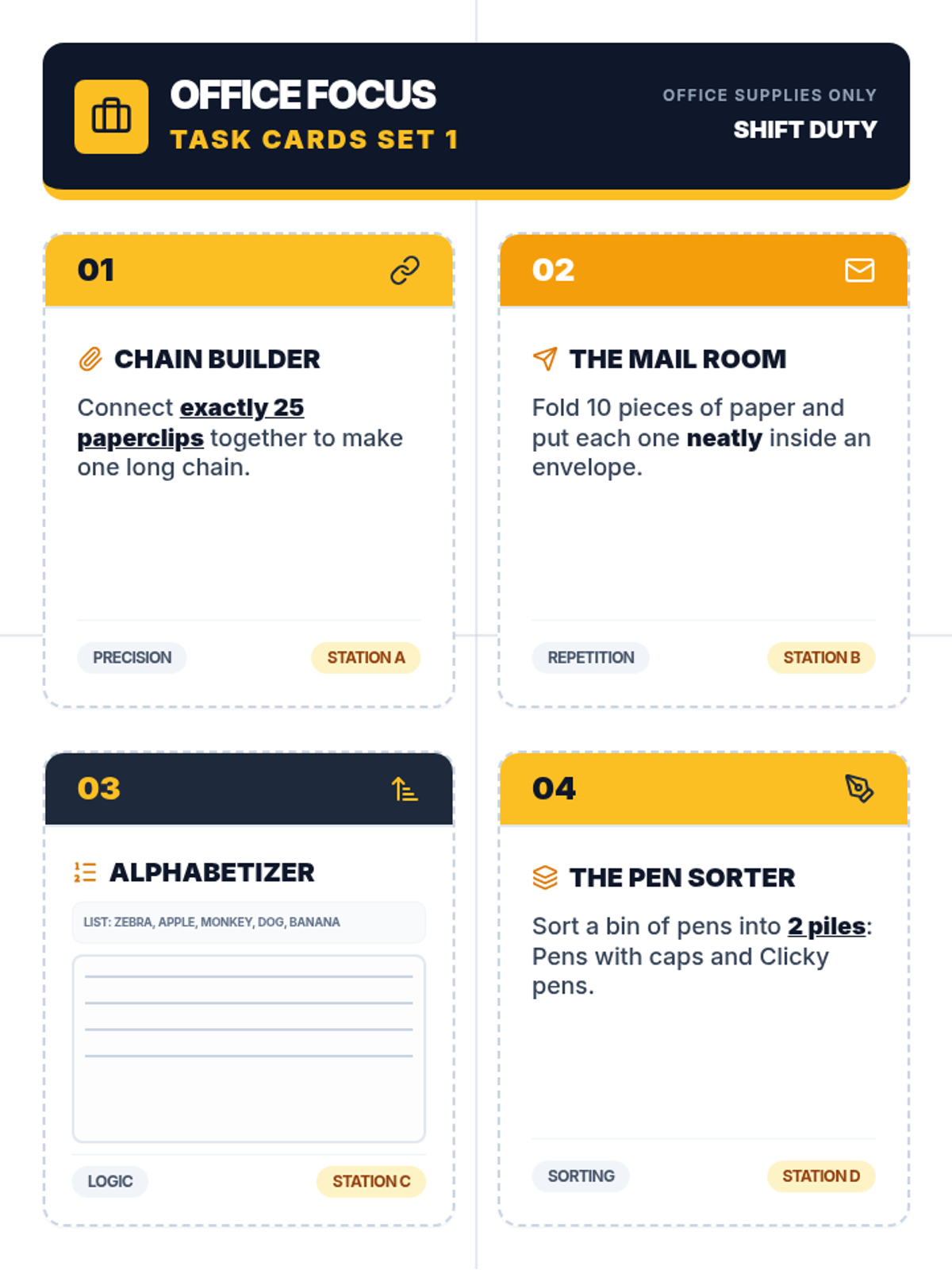
A set of four printable task cards for the 'Focus Factory' simulation. Each card features a simple physical task using common office supplies like paperclips and pens. Fit onto one page with clear cut lines.
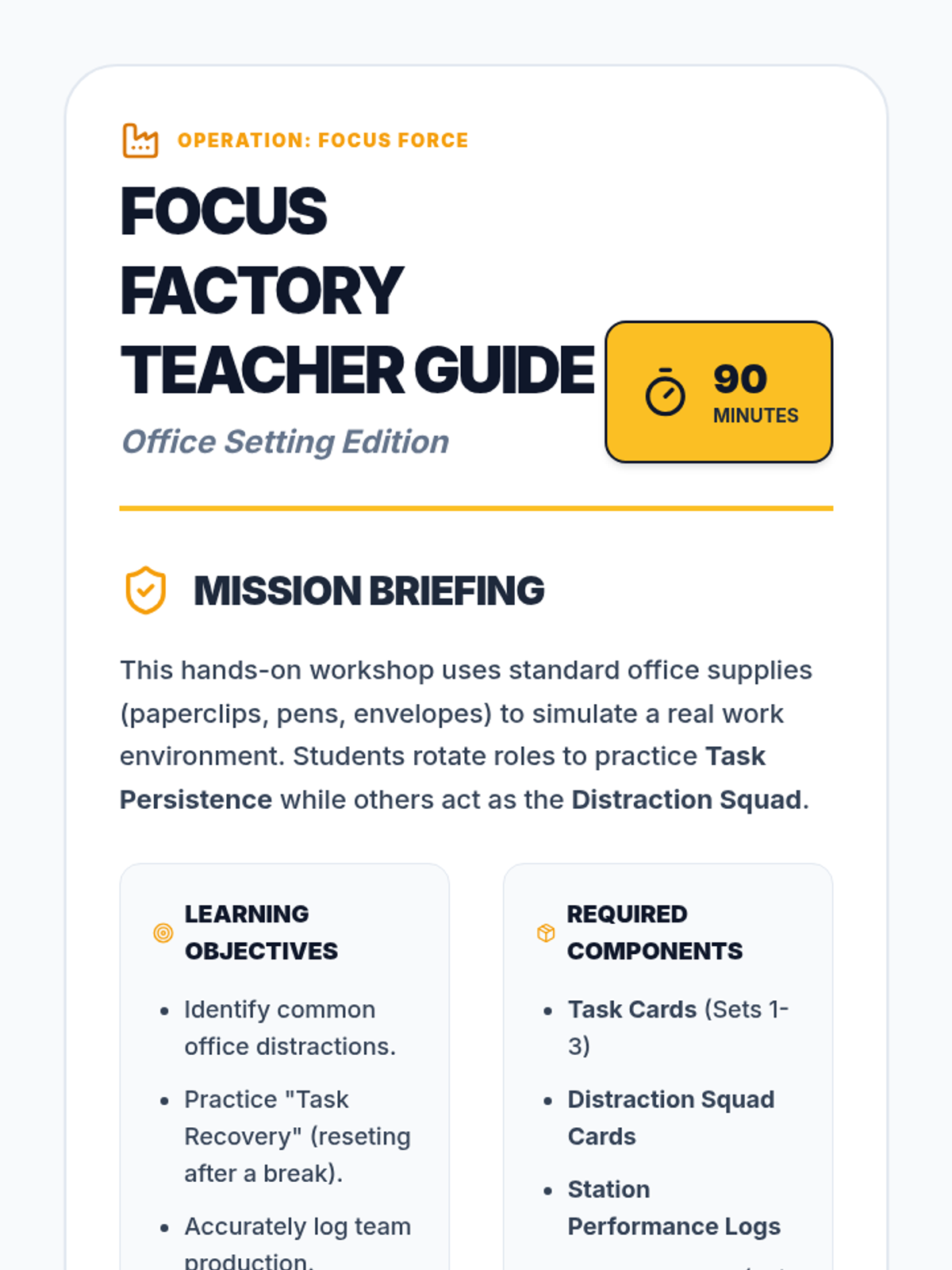
An instructional guide for educators teaching the Task Masters workshop, featuring a 90-minute timeline, facilitation tips specifically for adults with IDD, and lesson objectives. Revised for an office setting using only basic supplies.
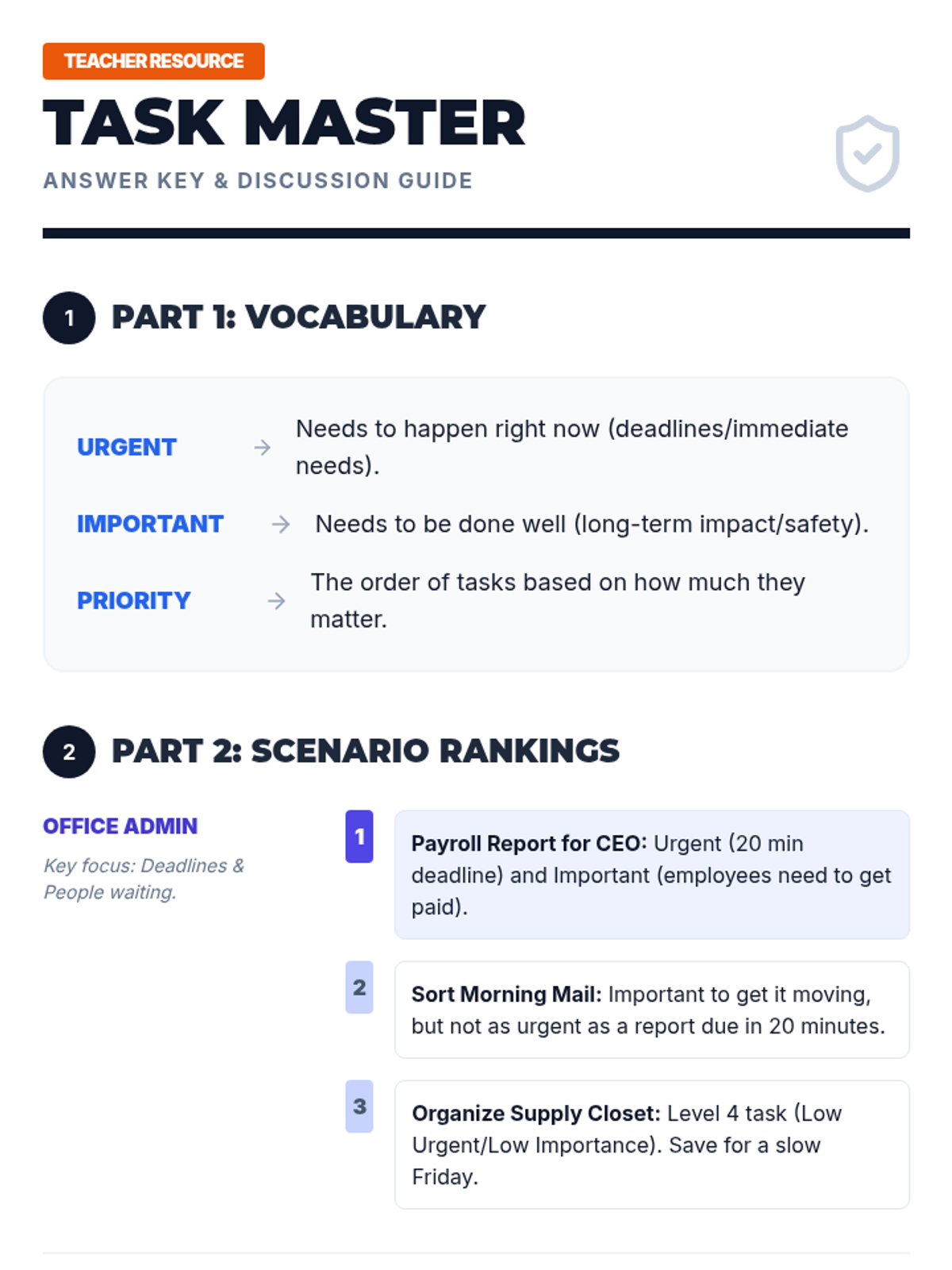
A teacher answer key and discussion guide for the Task Mastery Worksheet. Includes correct task rankings for the office, food service, and maintenance scenarios, along with logic explanations and facilitation tips.
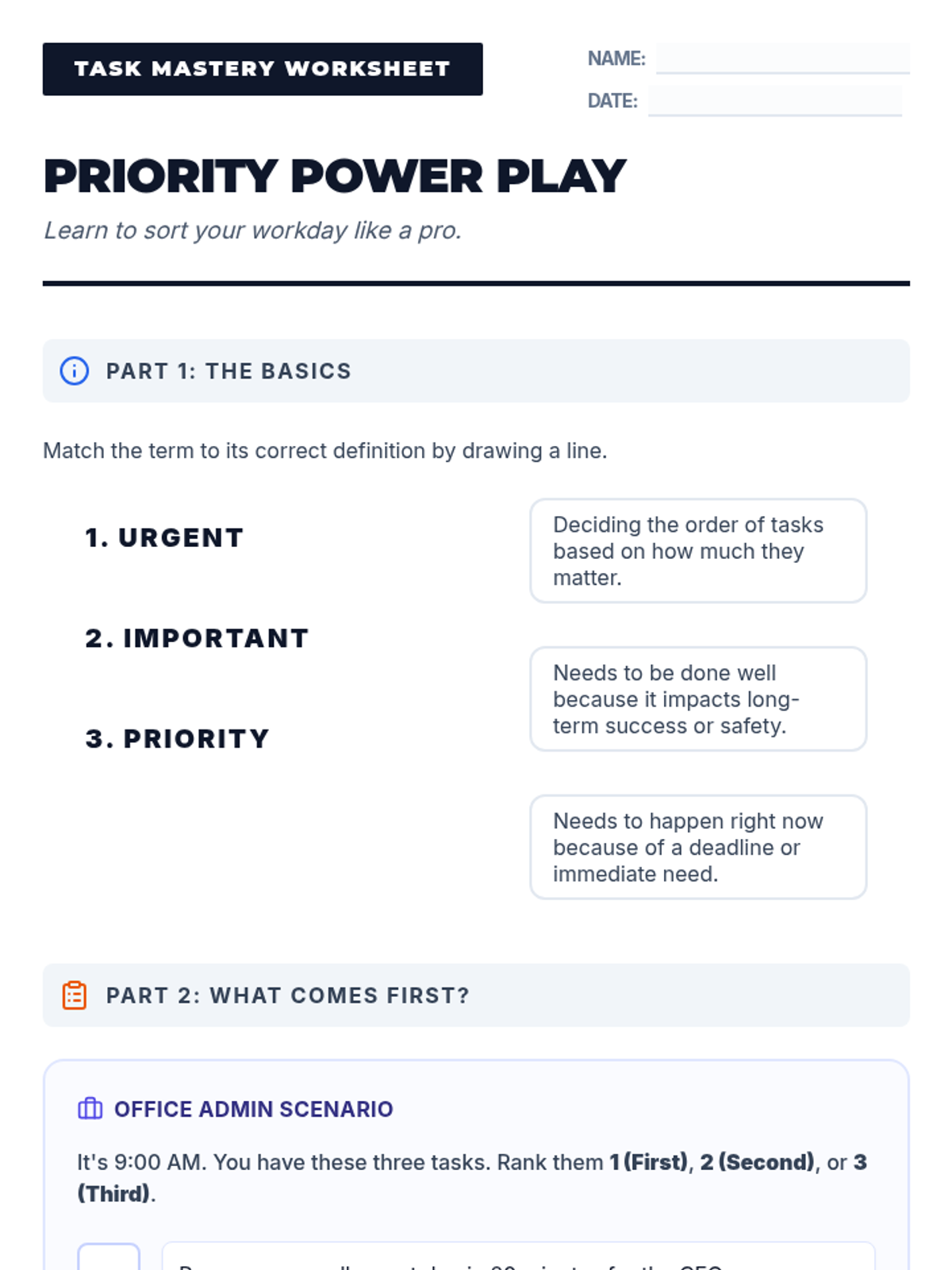
A practice worksheet where students define key prioritization terms and rank tasks in three workplace scenarios (Office, Food Service, Maintenance). Includes a section for personal task management practice.
A 12-slide presentation on prioritization skills for various workplace settings, including food service, office admin, and janitorial maintenance. It introduces the concepts of urgency versus importance and provides real-world decision-making scenarios.
A comprehensive 15-slide presentation on cognitive restructuring. This visual deck guides clients through identifying negative automatic thoughts, uncovering schemas, challenging core biases, and active reframing techniques.
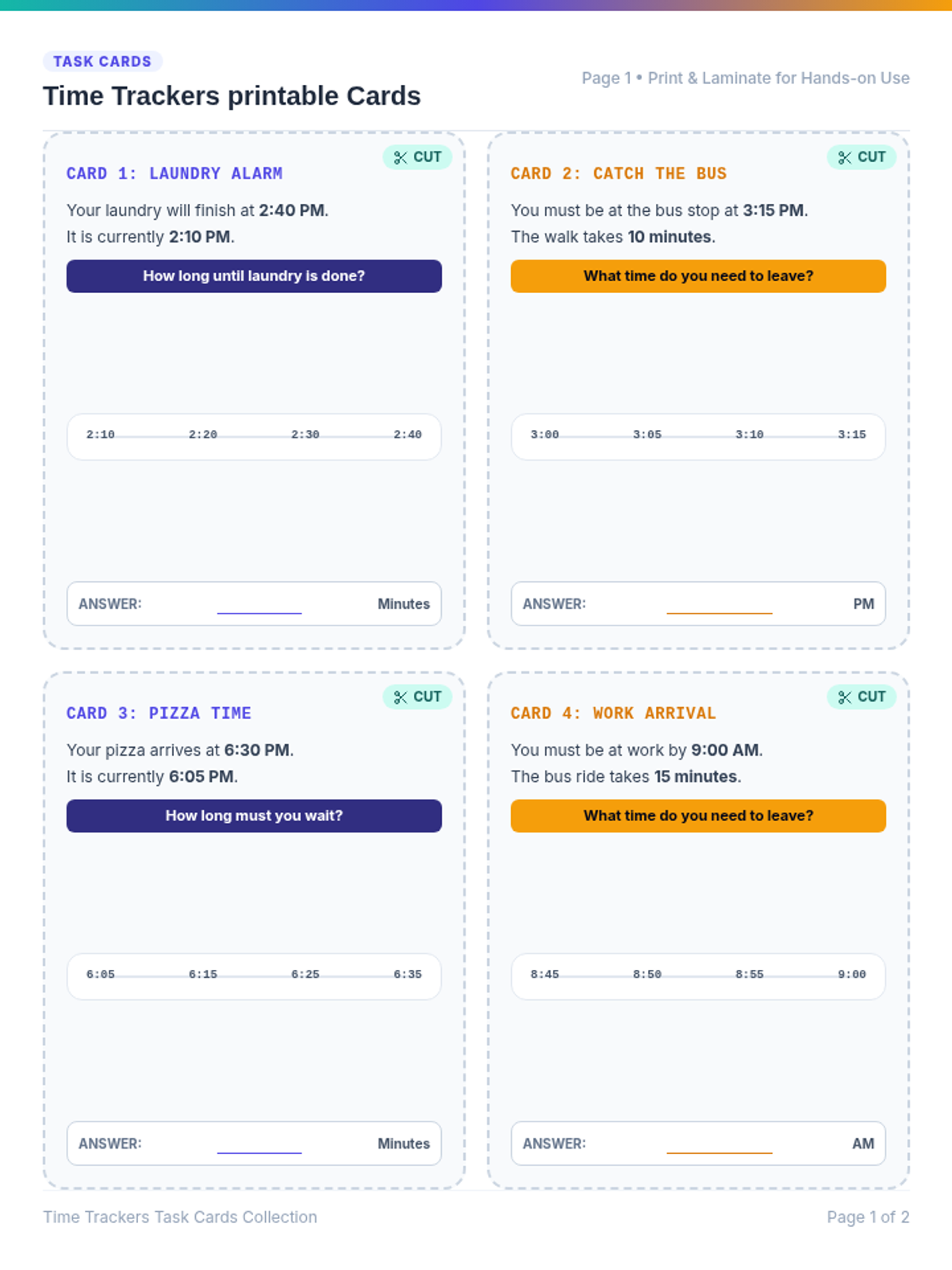
A collection of 8 large, printable task cards arranged in a 2x2 grid per page across 2 pages. Each card includes a hands-on daily living scenario, a visual linear track template, and cutting outlines, perfect for laminating.
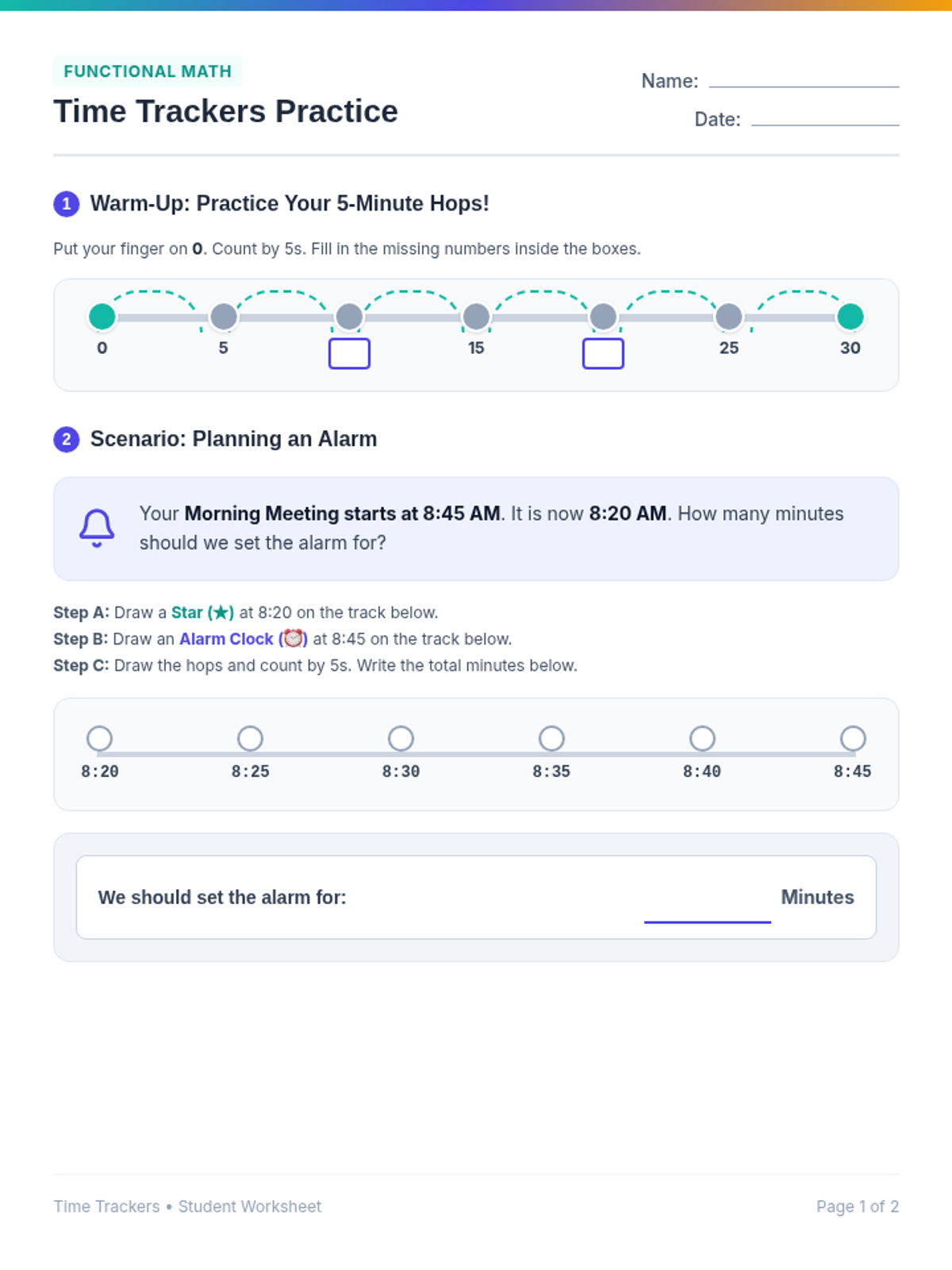
A highly scaffolded, 2-page student worksheet. It includes name and date fields, a counting-by-5s warm-up track, and step-by-step practice problems with visual linear time tracks and white student response blocks for easy handwriting.
A highly engaging, visual 6-slide presentation tailored for direct instruction. Features high-contrast linear time track diagrams, clean graphics, and a dedicated slide demonstrating the 5-minute hop-counting strategy with text strictly over 24px for classroom legibility.
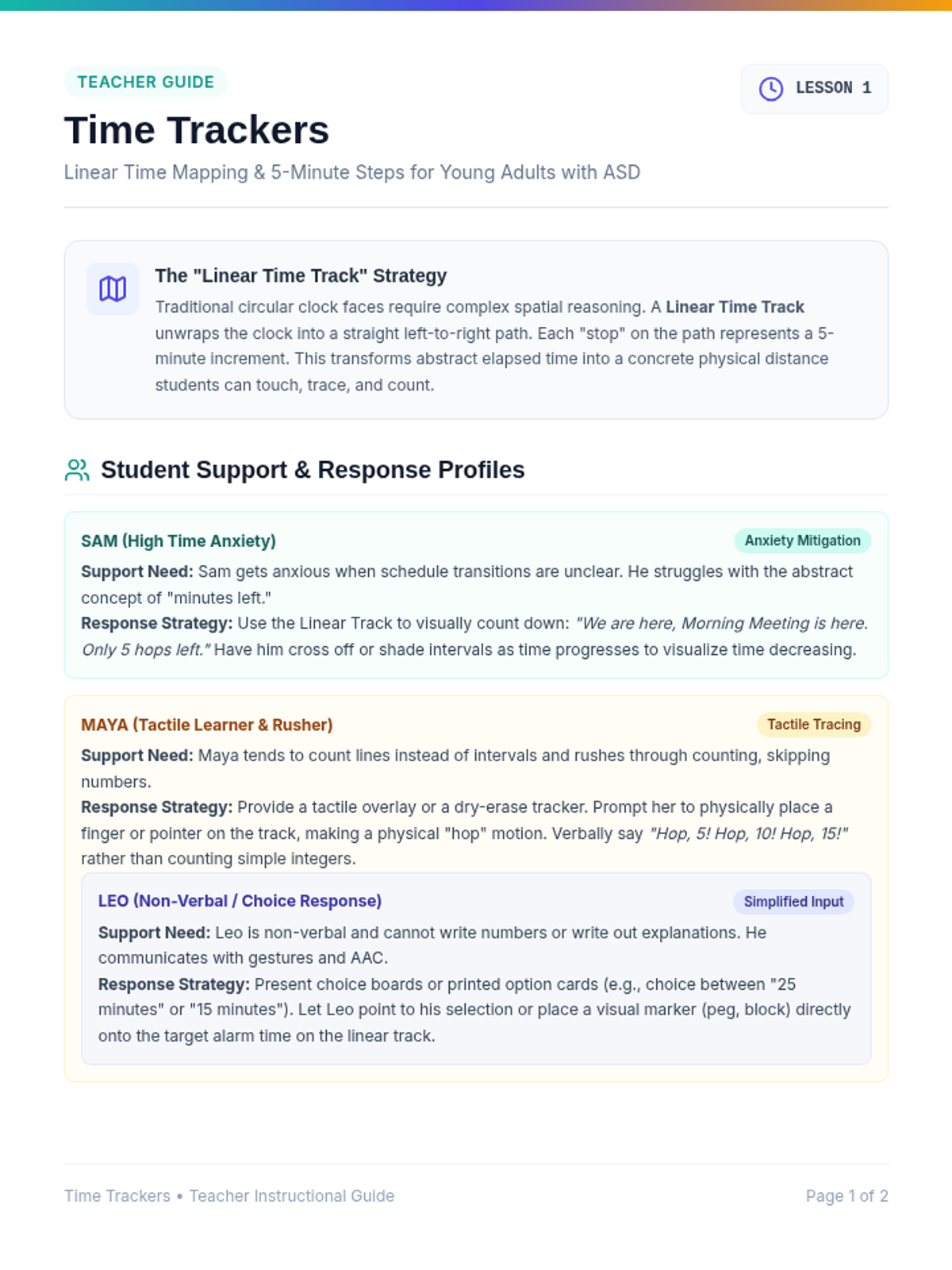
A comprehensive, 2-page teacher-facing guide outlining instruction strategies for young adults with ASD and low cognitive functioning. It features profiles for three specific students, scripted modeling, and an explicit prompting hierarchy for teaching linear time tracks and 5-minute step counting.
An aesthetic, premium telehealth slide deck designed for an 18-year-old female young adult. It provides interactive, visually engaging slides for teaching emotion labeling, 5-4-3-2-1 grounding, box breathing, cognitive reframing, and structured role-playing to manage social anxiety. All slides have been optimized to eliminate vertical overflow and strictly adhere to the 24px minimum font size.
A high-impact 4-slide presentation for Month 9, styled in purple and gold, covering reciprocal support networks, the formal endurance pact, post-assessment reflections, and a dedicated collaborative reflection slide.
A high-impact 4-slide presentation for Month 8, styled in purple and gold, covering mutual appreciation, peer connection, and serotonin production, and a dedicated collaborative reflection slide.
A high-impact 4-slide presentation for Month 7, styled in purple and gold, covering negativity bias, the 3-to-1 ratio, cognitive neuroplasticity reframing, and a dedicated collaborative reflection slide.
A high-impact 4-slide presentation for Month 6, styled in purple and gold, covering dopamine pathways, habit loop designs, Stanford's 91% micro-habit adoption rate, and a dedicated collaborative reflection slide.
A high-impact 4-slide presentation for Month 5, styled in purple and gold, covering cognitive overload, digital boundaries, protecting personal time windows, and a dedicated collaborative reflection slide.
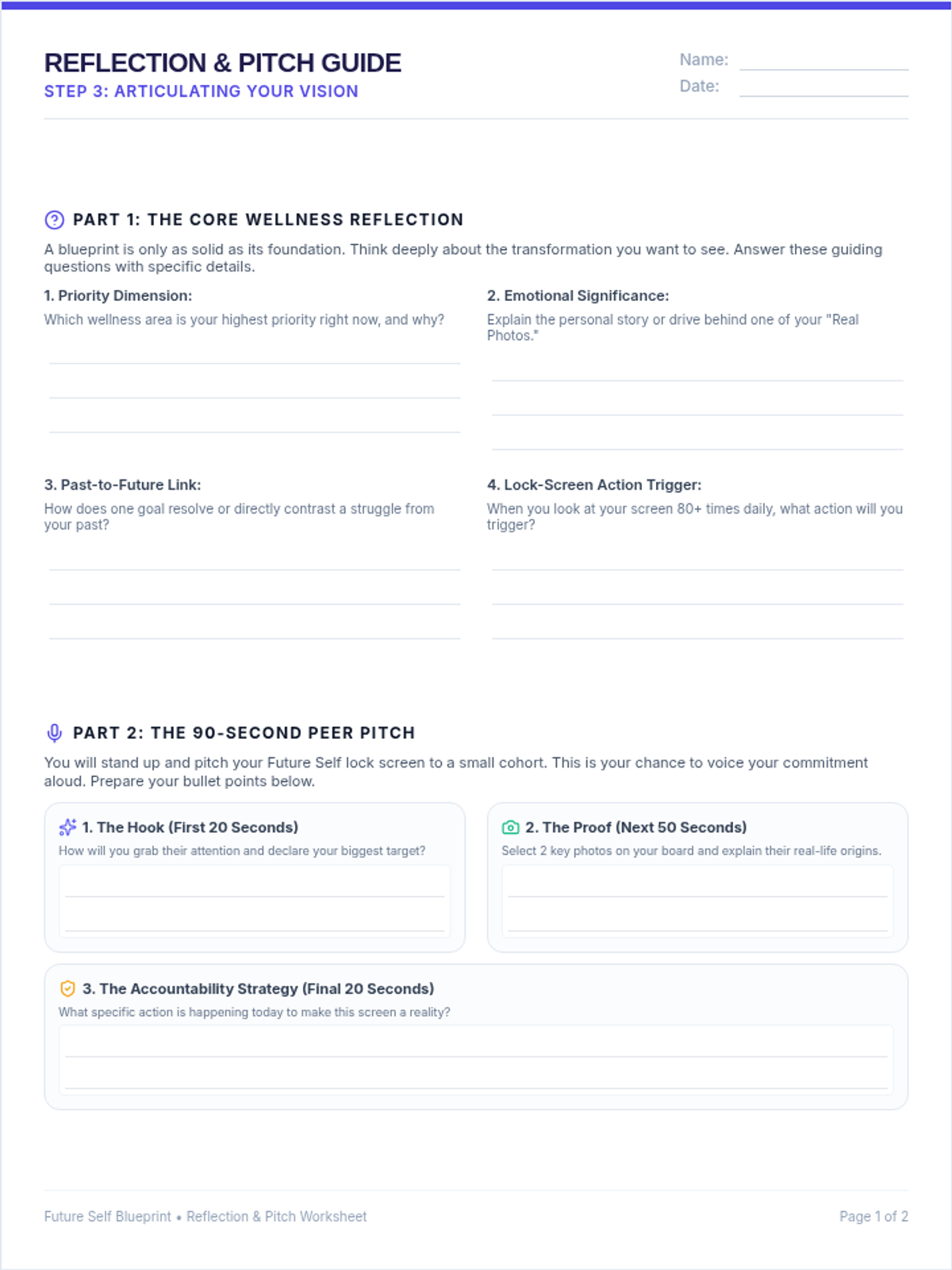
Worksheets for students to write their vision board reflection, prepare their peer presentations, and view the grading rubric.
A high-impact 4-slide presentation for Month 4, styled in purple and gold, covering vagal anchors, social safety nets, and oxytocin release.
A high-impact 4-slide presentation for Month 3, styled in purple and gold, covering mirror neurons, student physiological stress mirroring, Yale's and UBC's 300% student cortisol statistic, and co-regulation tools.
A high-impact 4-slide presentation for Month 2, styled in purple and gold, covering the neuroscience of the amygdala hijack, threats in the classroom, Yale's 75% emotional stress statistic, and a dedicated collaborative reflection slide.
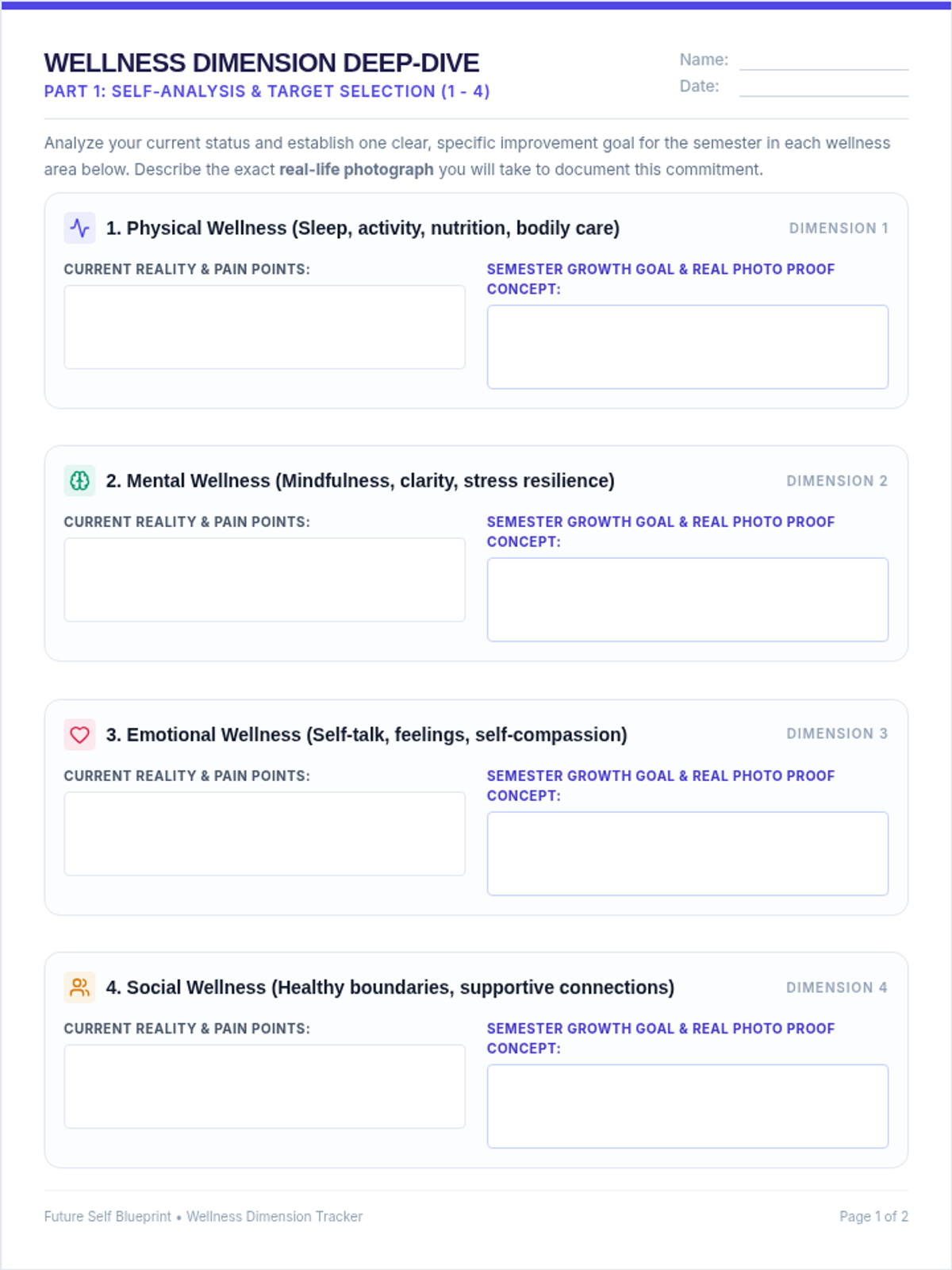
A dedicated student planning organizer and workbook detailing all eight wellness areas with specific deep-dive brainstorming prompts and written layout boxes.
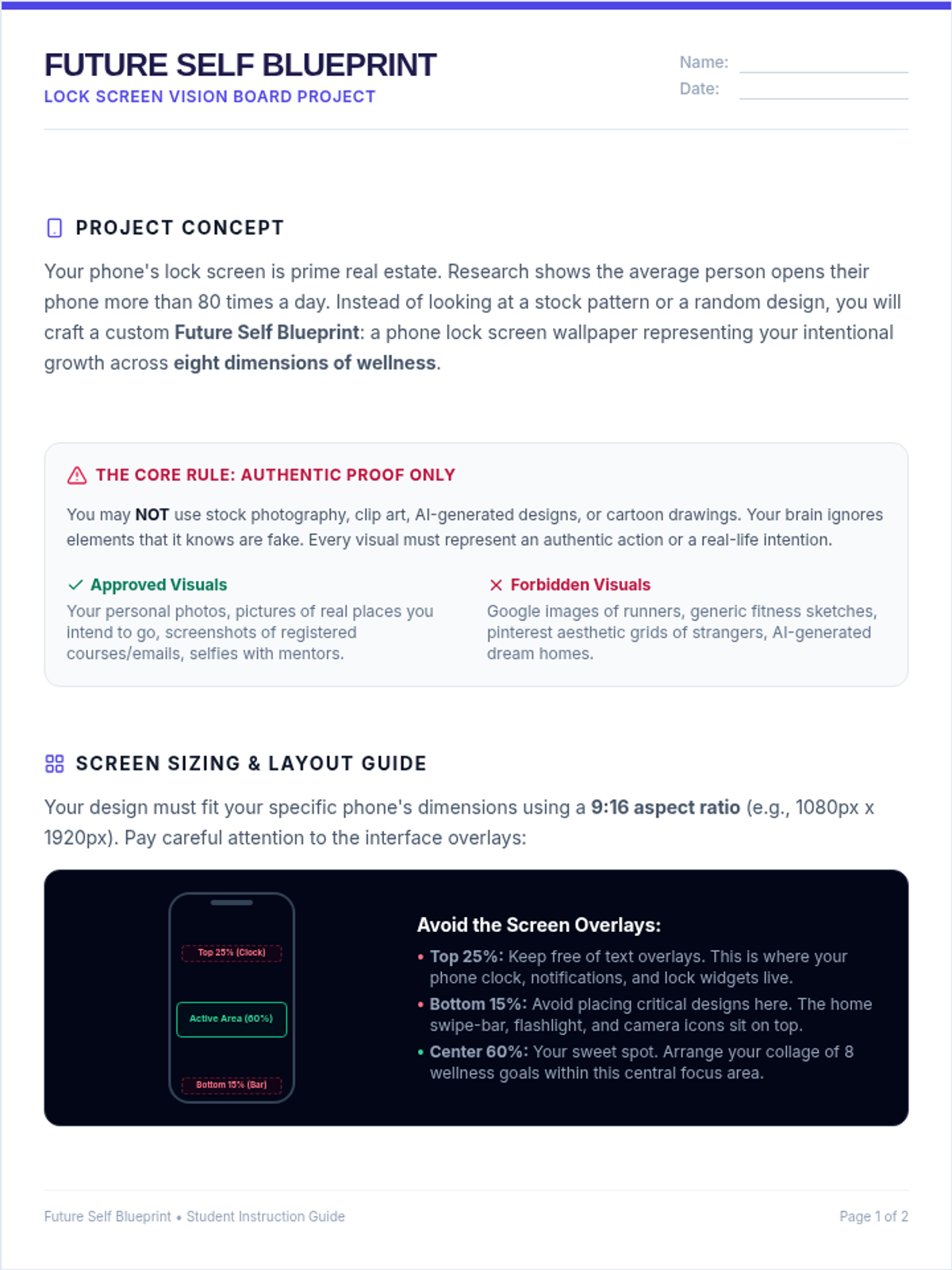
A comprehensive project guide and instruction packet for students, detailing requirements, layout blueprints, screen layout grids, and the strict photo verification checklist.
A highly engaging slide deck to introduce the Future Self Blueprint project, outlining the requirements, the 8 dimensions of wellness, and the strict 'Real-Photo' policy.
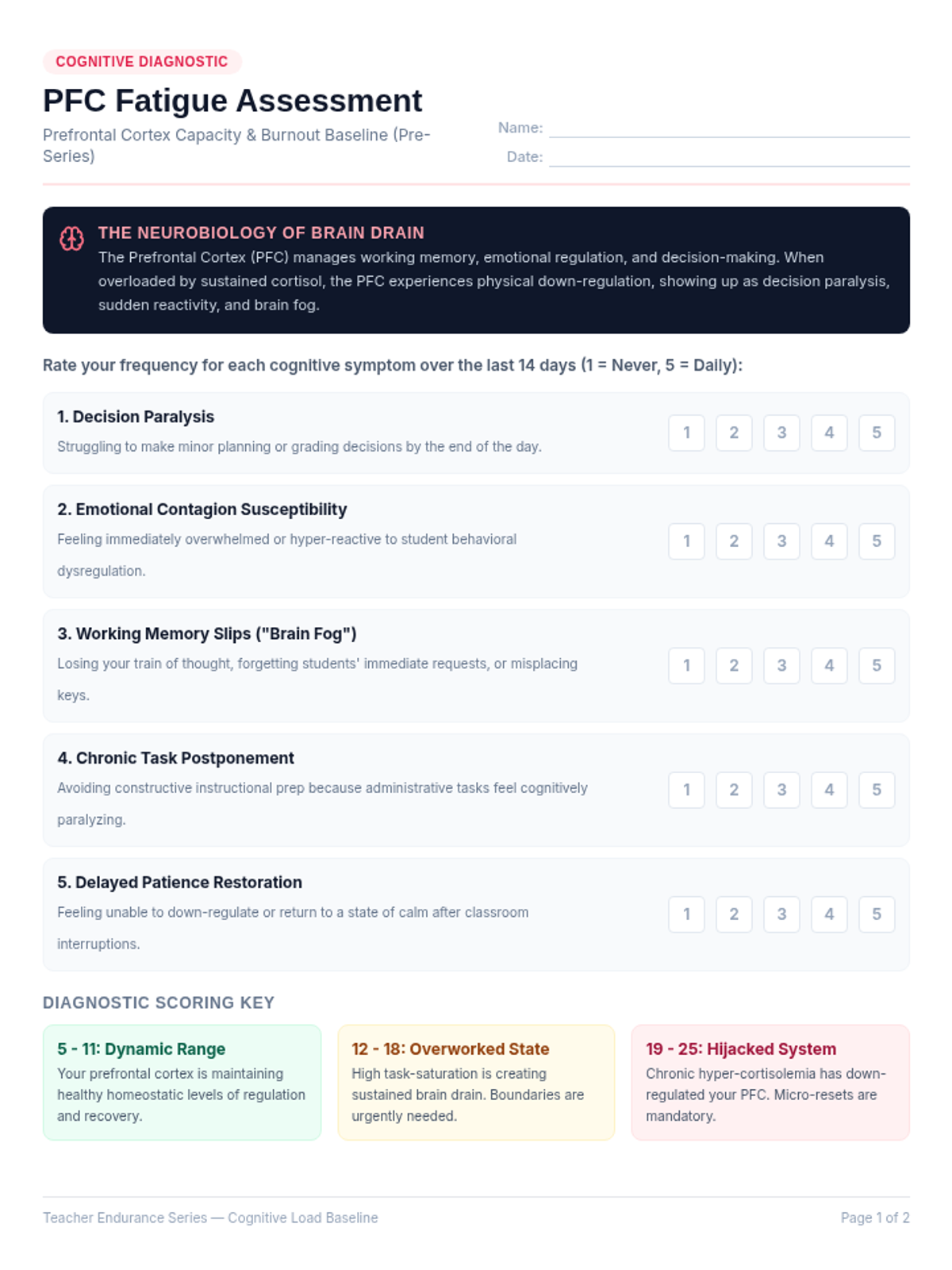
A 2-page printable pre- and post-assessment tool designed to help educators evaluate their prefrontal cortex fatigue, cognitive load, and decision-making capacity.
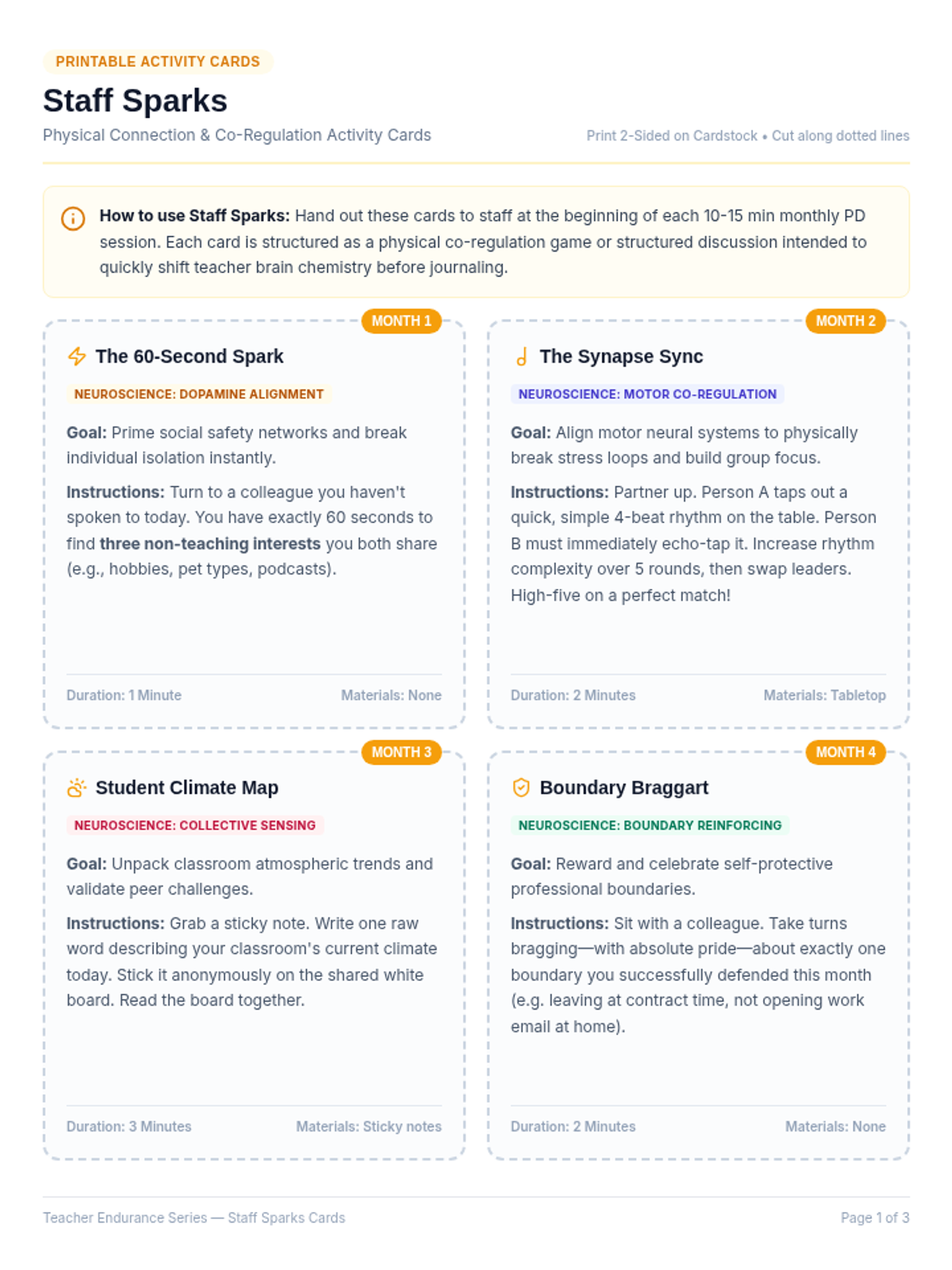
A beautiful 3-page printable set of 10 low-prep connection and support activity cards formatted in a grid for easy physical printing, cutting, and monthly staff distribution.
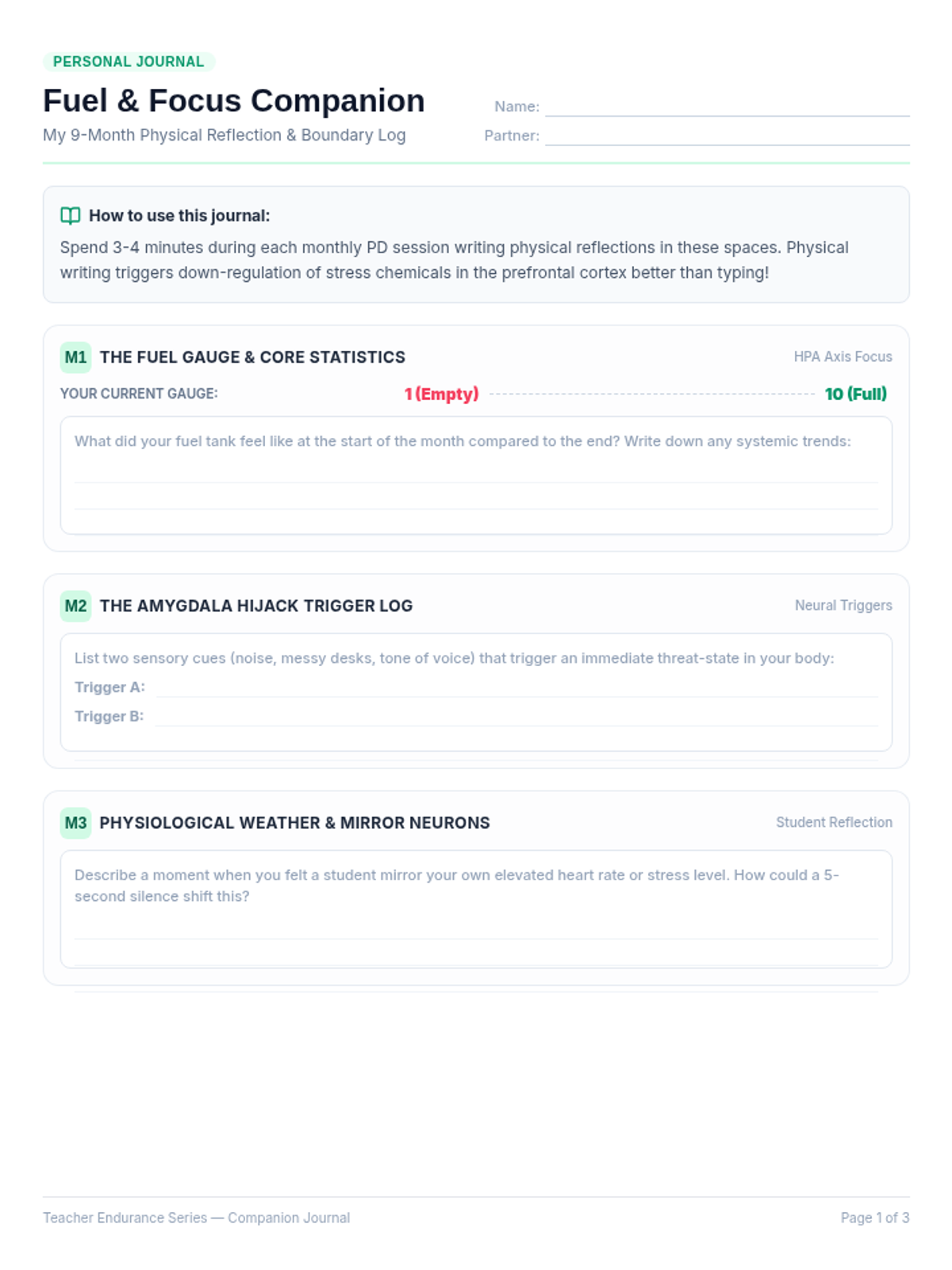
A high-quality 3-page printable self-care companion journal featuring structured writing prompts, neural trigger logs, micro-habit loop builders, and a peer-to-peer endurance pact.
A high-impact 4-slide presentation for Month 1, styled in premium purple and gold, covering Gallup and NEA burnout statistics, the neural baseline, and a dedicated collaborative reflection slide.
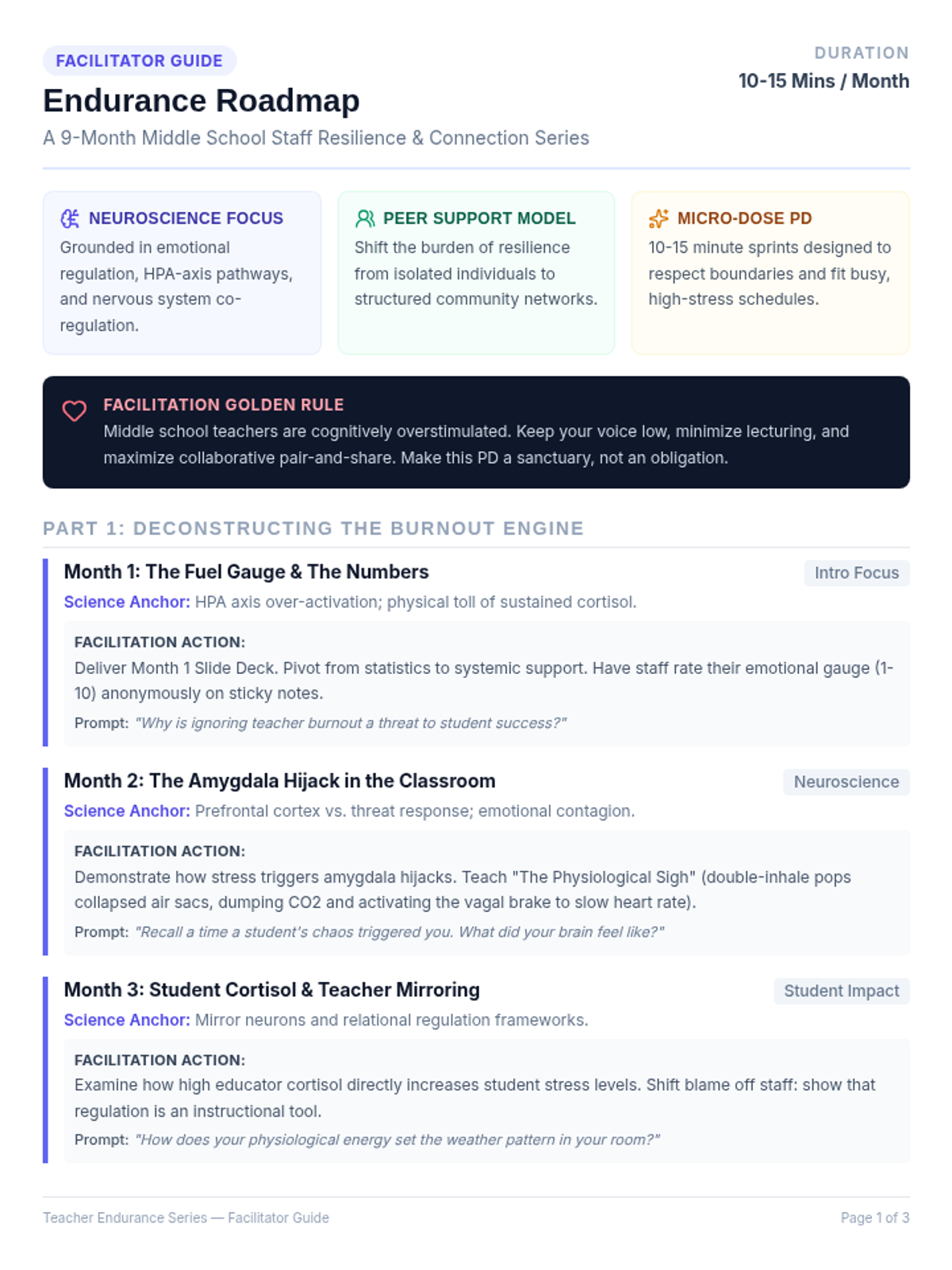
A comprehensive 3-page printable facilitator guide for school leaders or counselors, detailing the 9-month PD roadmap, scientific burnout anchors, step-by-step 10-15 minute session flows, and group discussion prompts.
Week 9 Slide Deck: Graduation & Pledges. Explores forming 3-person support pods and signing the graduation pledge to maintain long-term teacher well-being on campus.
Week 8 Slide Deck: Sustainable Scheduling. Updated to a warm, restorative Indigo and Sunset Apricot color palette.
Week 7 Slide Deck: Somatic Transitions. Updated to a warm, restorative Indigo and Sunset Apricot color palette.
Week 6 Slide Deck: Collective Stamina. Updated to a warm, restorative Indigo and Sunset Apricot color palette.
Week 5 Slide Deck: Venting vs. Validation. Updated to a warm, restorative Indigo and Sunset Apricot color palette.
Week 4 Slide Deck: Emotional Safety and Student Success. Updated to a warm, restorative Indigo and Sunset Apricot color palette.
Week 3 Slide Deck: Somatic Grounding. Updated to a warm, restorative Indigo and Sunset Apricot color palette.
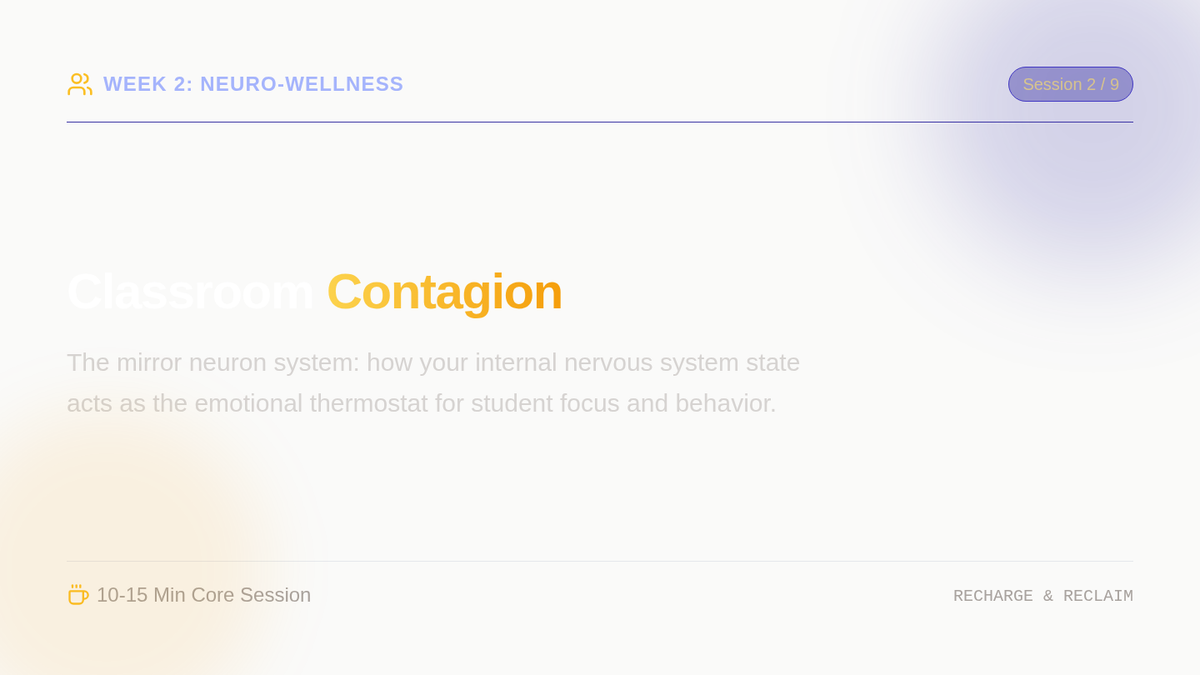
Week 2 Slide Deck: Classroom Contagion. Updated to a warm, restorative Indigo and Sunset Apricot color palette.
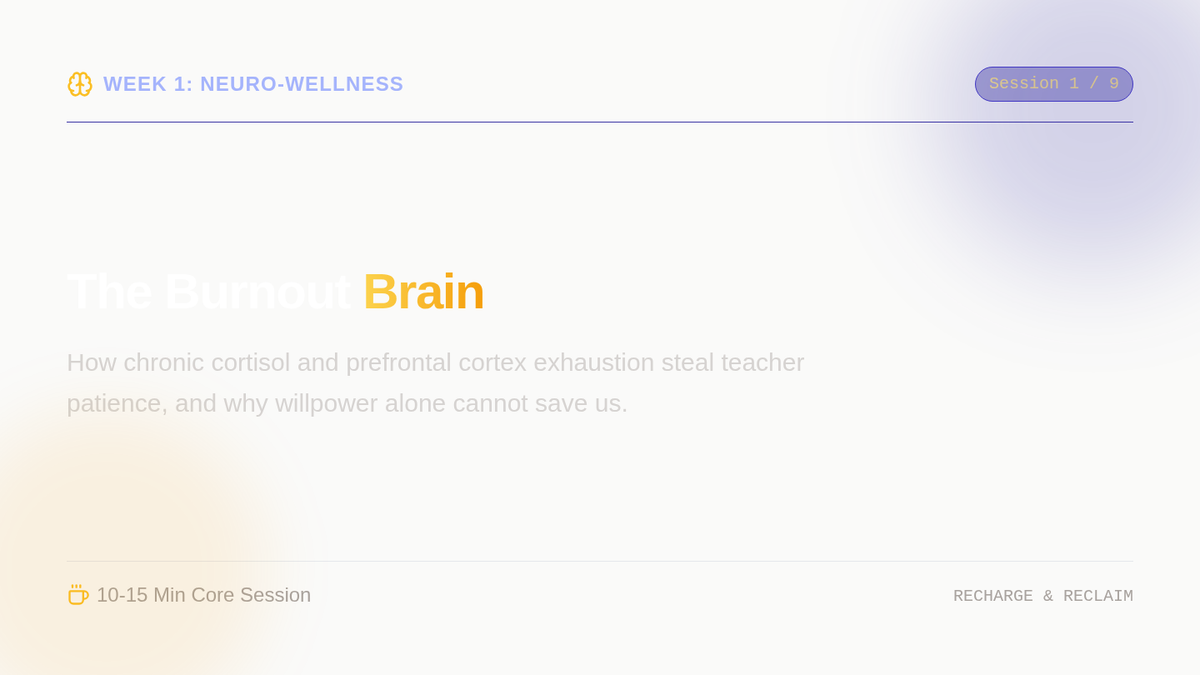
Week 1 Slide Deck: The Neuroscience of Burnout. Updated with teacher burnout statistics (Gallup, 2022) and collaborative reflection prompts on each slide.
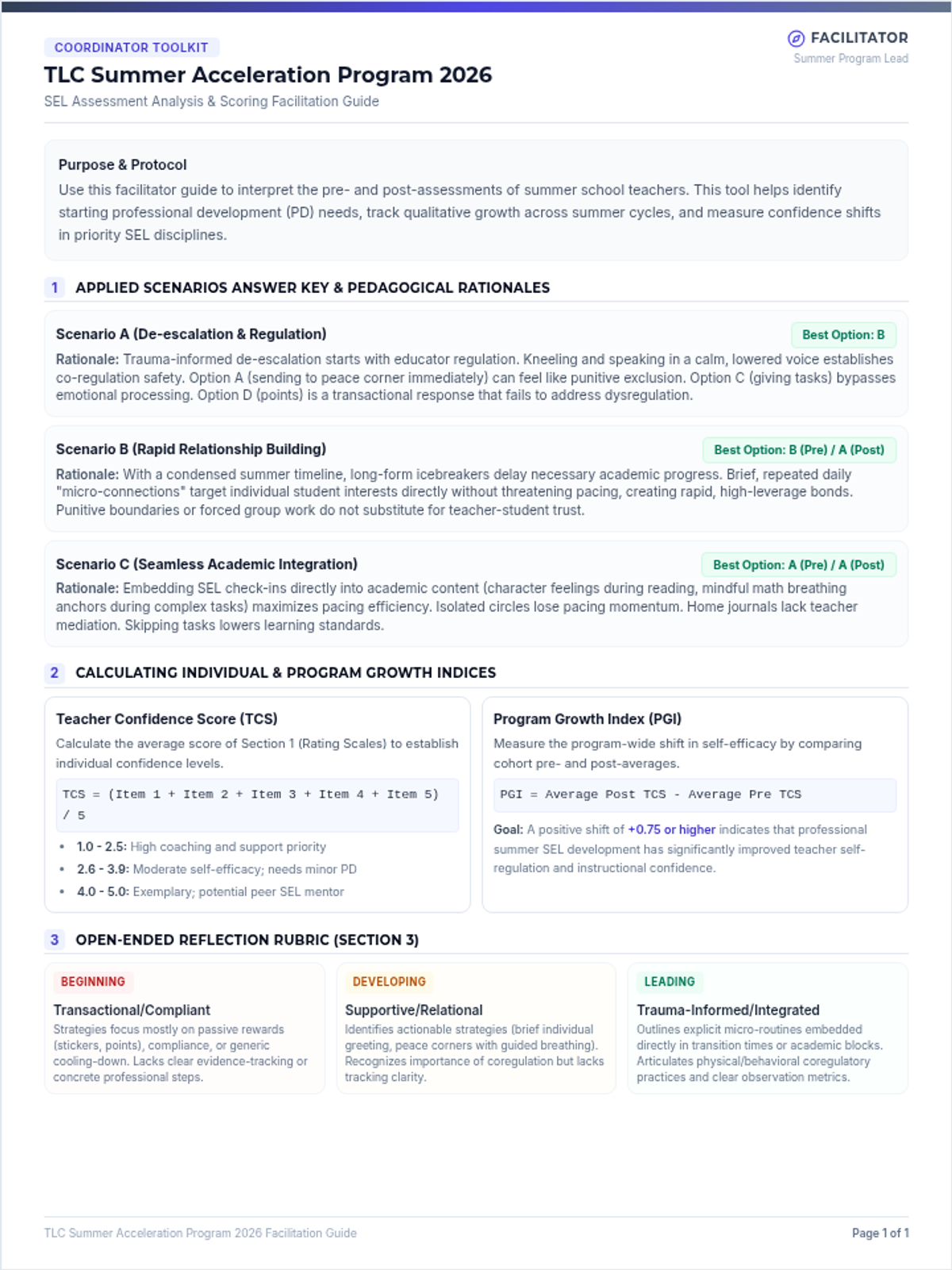
A highly detailed 1-page professional scoring, rationale, and growth analysis guide designed for summer school coordinators and teacher leaders to evaluate results from the pre- and post-assessments. Designed with a clean slate grey and indigo blueprint theme.
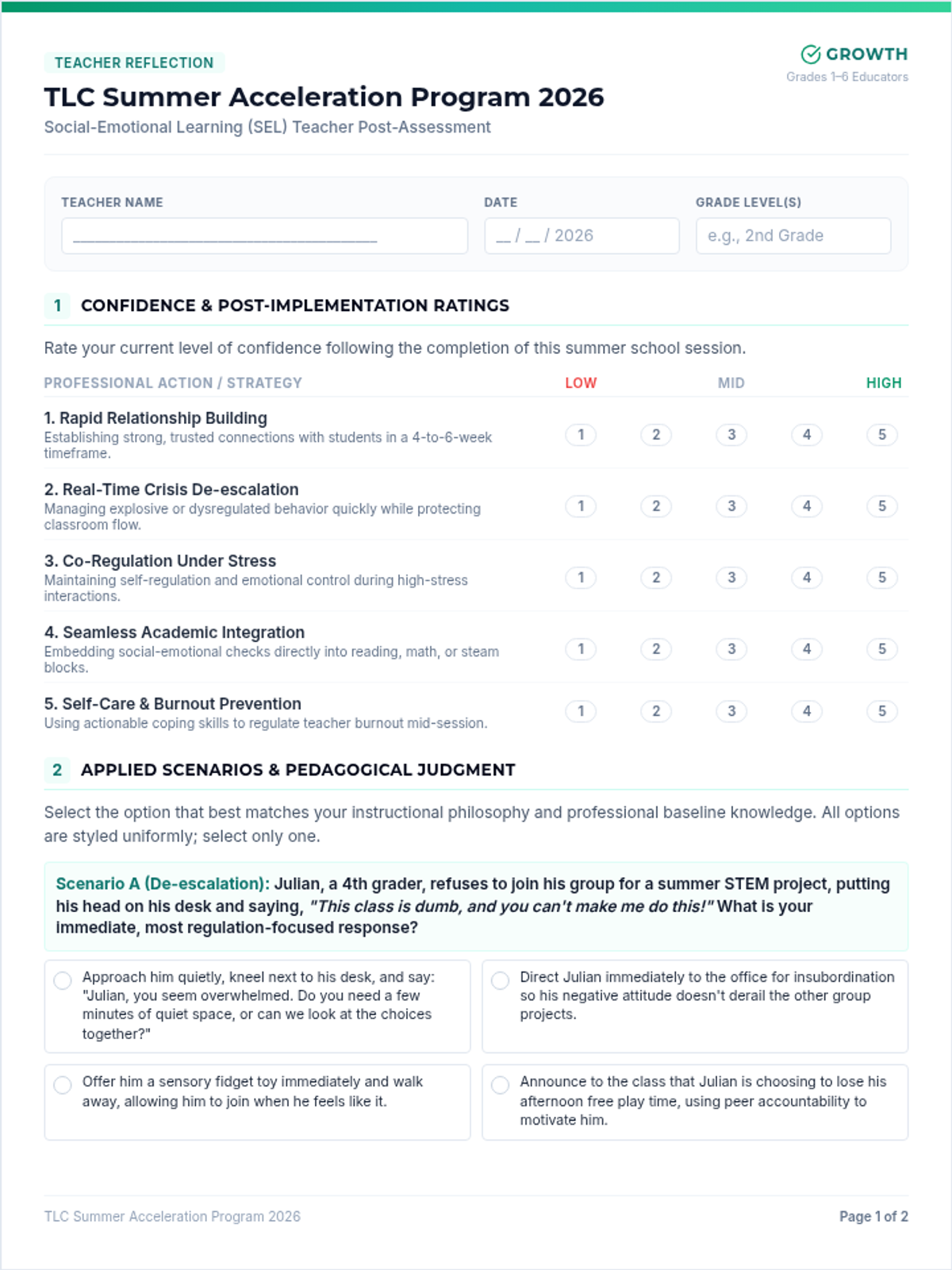
A highly detailed 2-page post-assessment tool for elementary school teachers (Grades 1-6) to evaluate their confidence, pedagogical growth, and overall reflections on classroom social-emotional learning (SEL) after a summer school program. Designed with a calming summer forest teal and emerald theme.