A toolkit of writing exercises for students with OCD. It includes structured exposures like the 'Ugly Word Challenge' and 'Philosophical Placeholders' to help them build tolerance for linguistic imperfection.
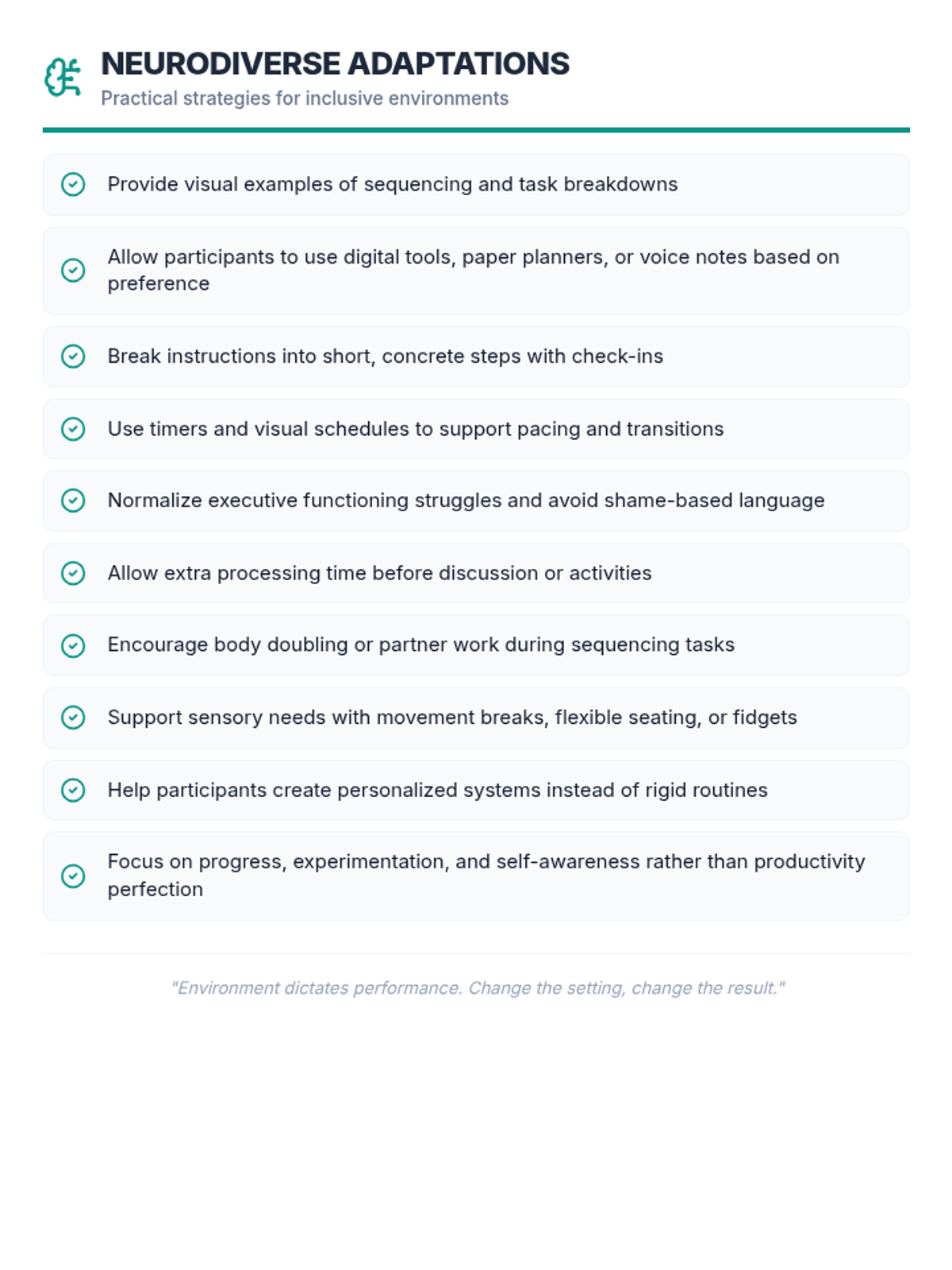
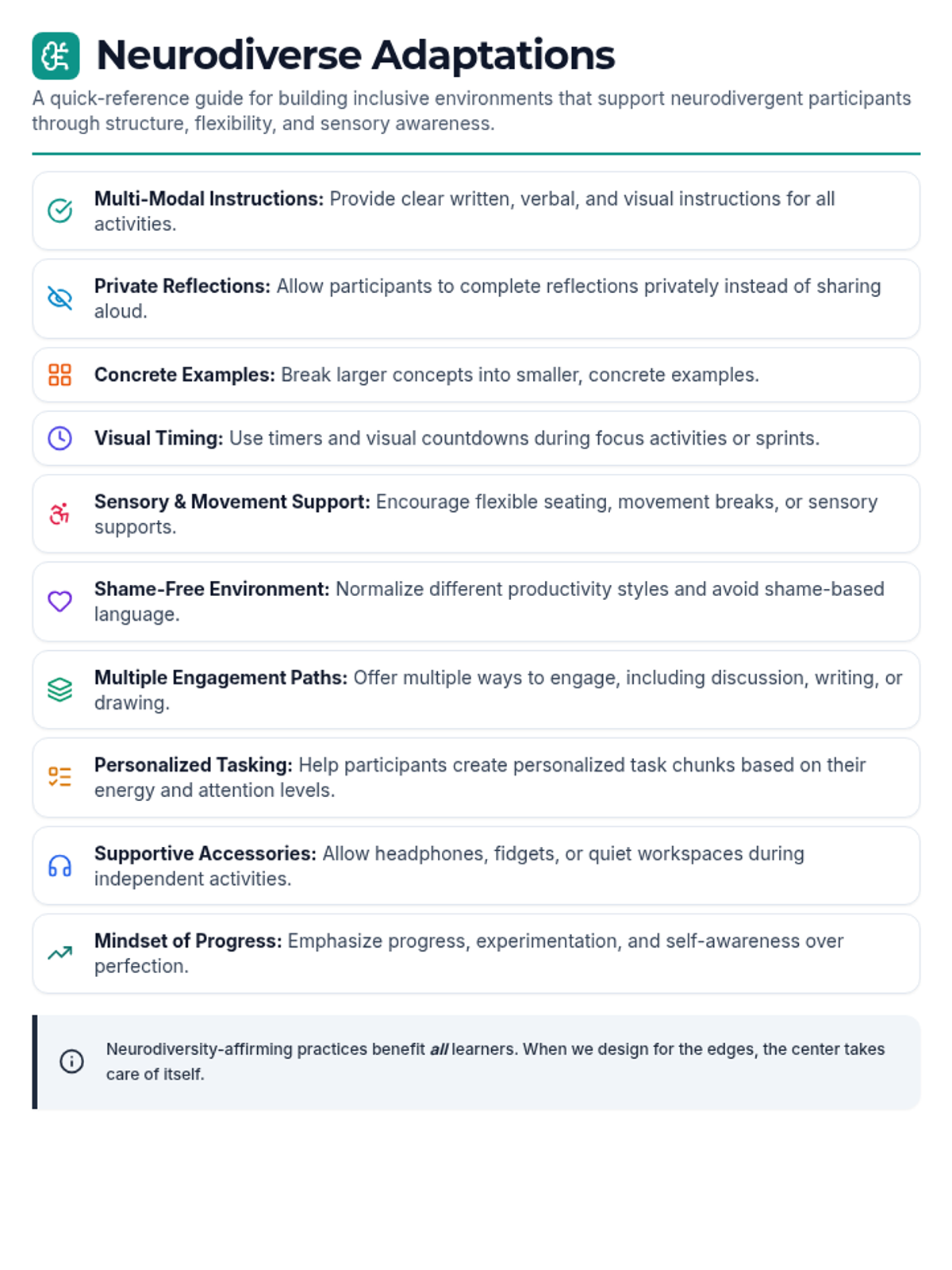
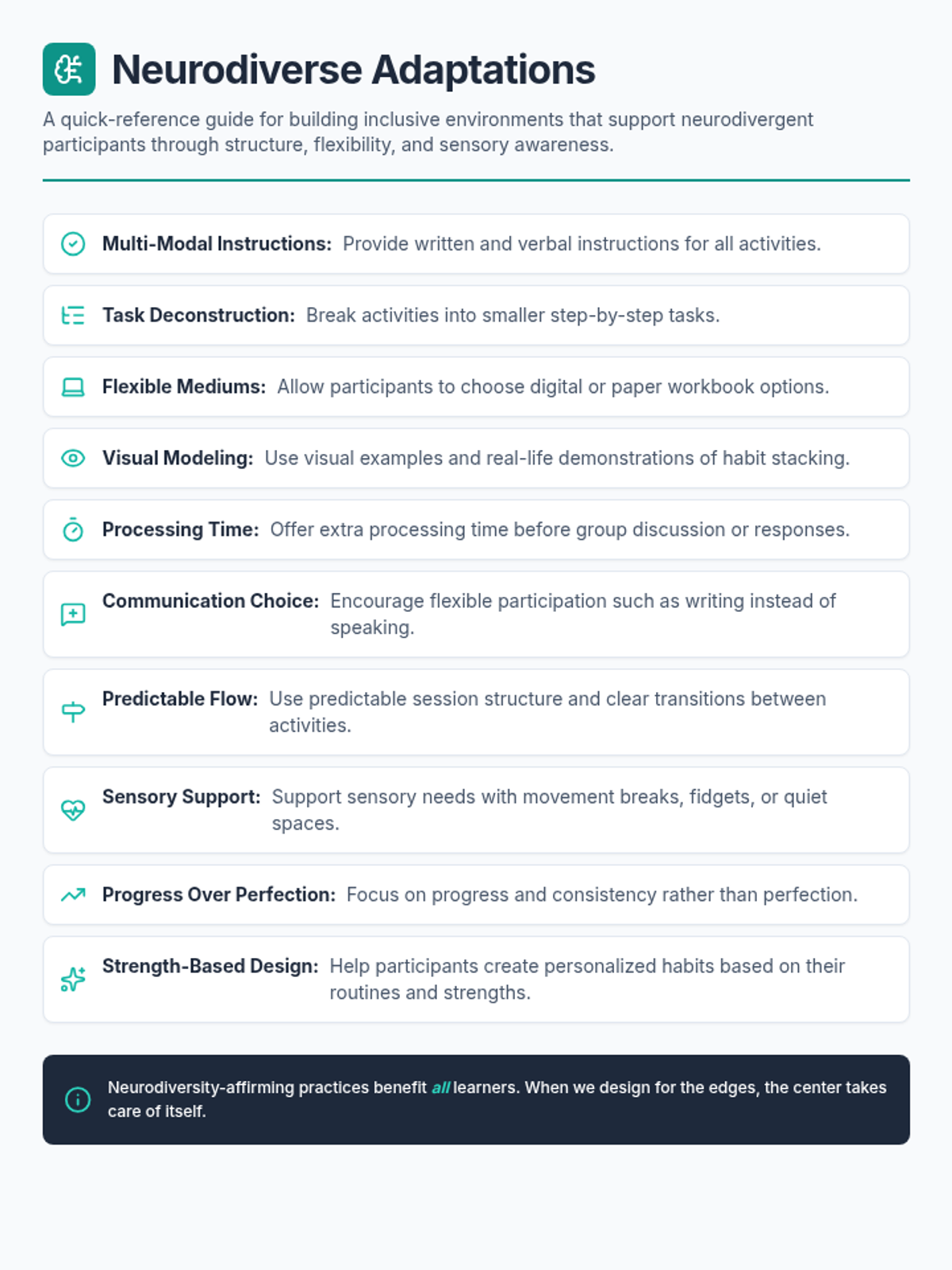
A professional, single-page reference guide listing ten essential neurodiverse adaptations. It uses a clean layout with uniform list items and teal accents, designed for clarity and quick reference.
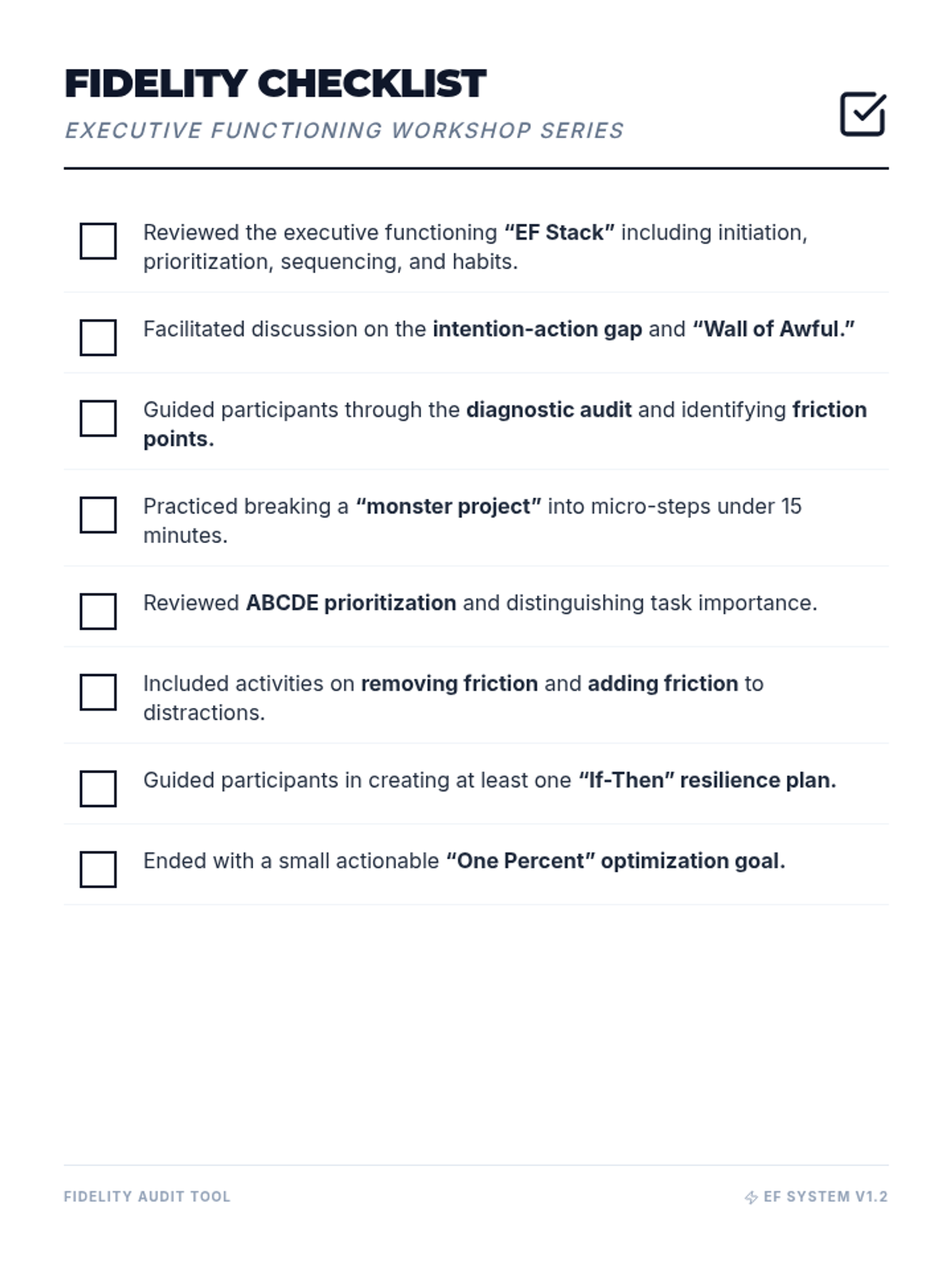
A simplified fidelity checklist for facilitators focusing solely on the core workshop components. Metadata and notes sections have been removed for a cleaner, item-focused layout. Fits on a single page.
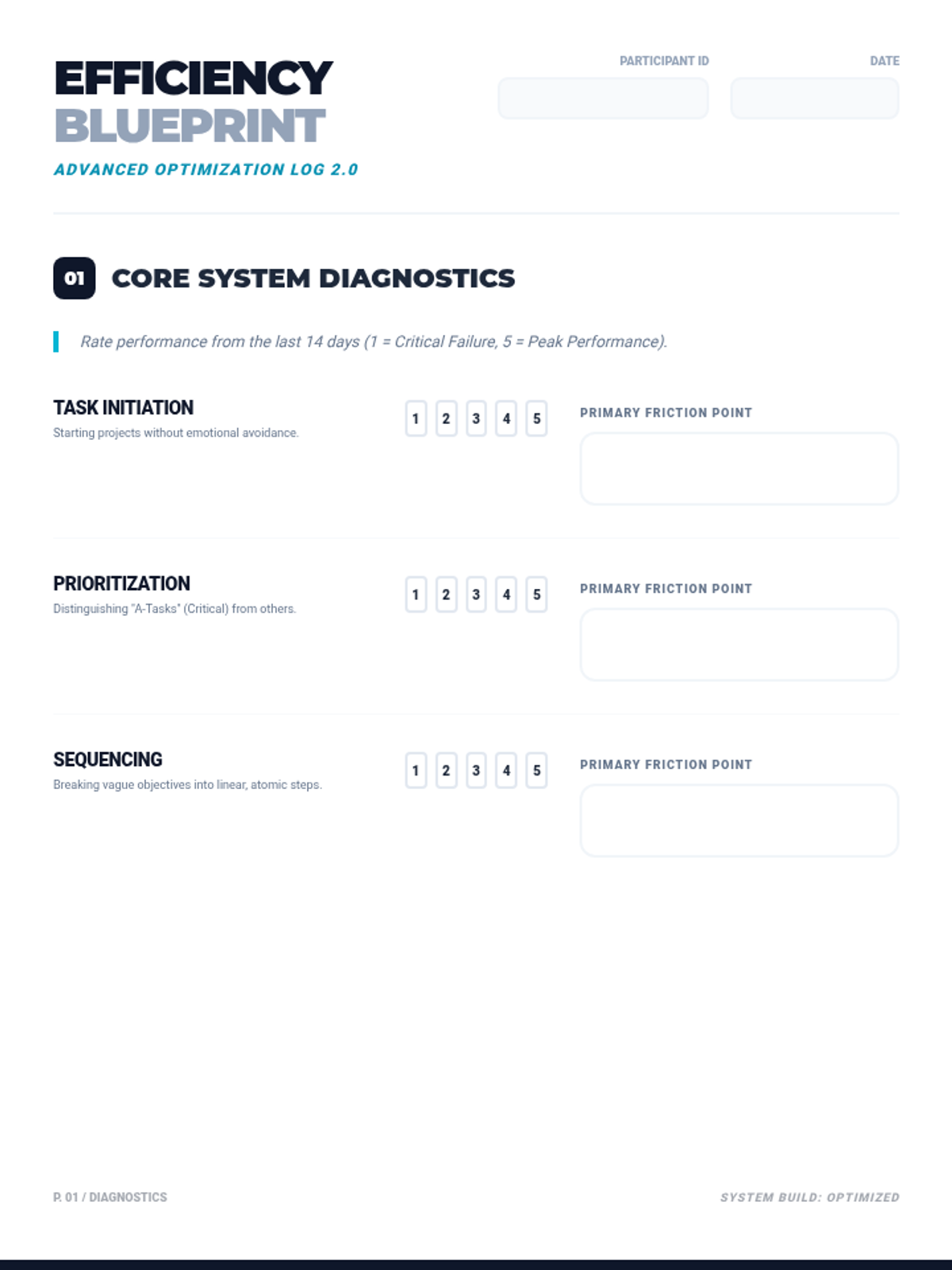
An intensive 4-page workbook designed for advanced executive functioning optimization, featuring a deep skills audit, a 10-step sequencing lab, friction engineering strategies, and long-term if-then planning modules. Each page is meticulously laid out for print legibility and student engagement.
A comprehensive and visually striking slide deck for an advanced 90-minute executive functioning workshop, featuring in-depth modules on task initiation, the ABCDE prioritization method, linear sequencing secrets, and environmental friction engineering.
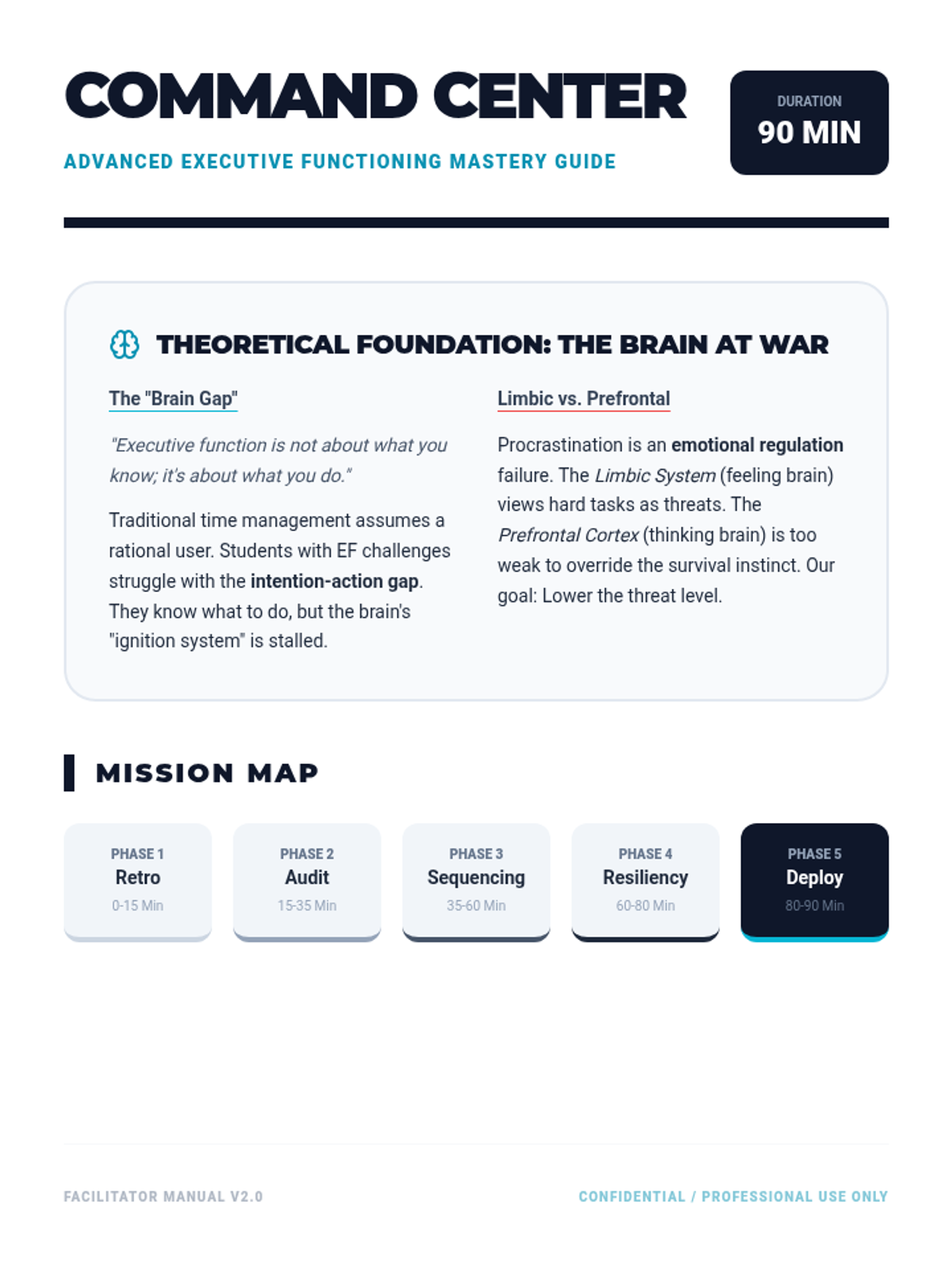
A massive, in-depth 4-page instructor manual designed for professional facilitation of executive functioning skills. It includes specific teaching scripts, neurological background on the limbic system, detailed walkthroughs of all worksheet activities, and high-level troubleshooting strategies for common student hurdles.
A high-fidelity facilitator reference guide with a modern card-based layout, matching the visual style of the Inclusive Habits Checklist.
An updated, space-efficient one-page reference checklist for neurodiverse adaptations, optimized to fit entirely on a single page with professional formatting and clear visual hierarchy.
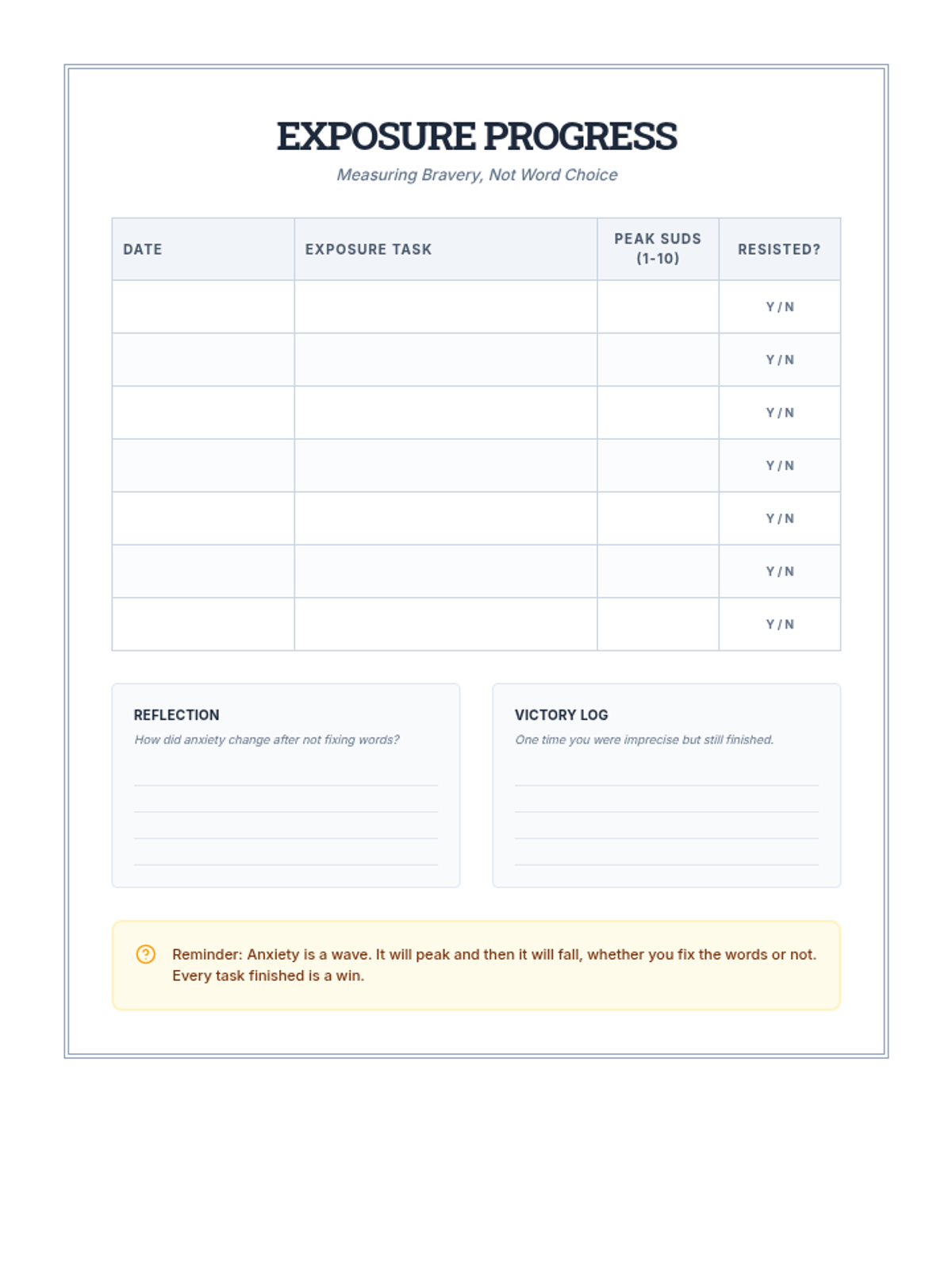
A progress tracking document for students to monitor their distress levels (SUDS) and their ability to resist compulsions during writing exposures. Helps build a record of habituation and successes.
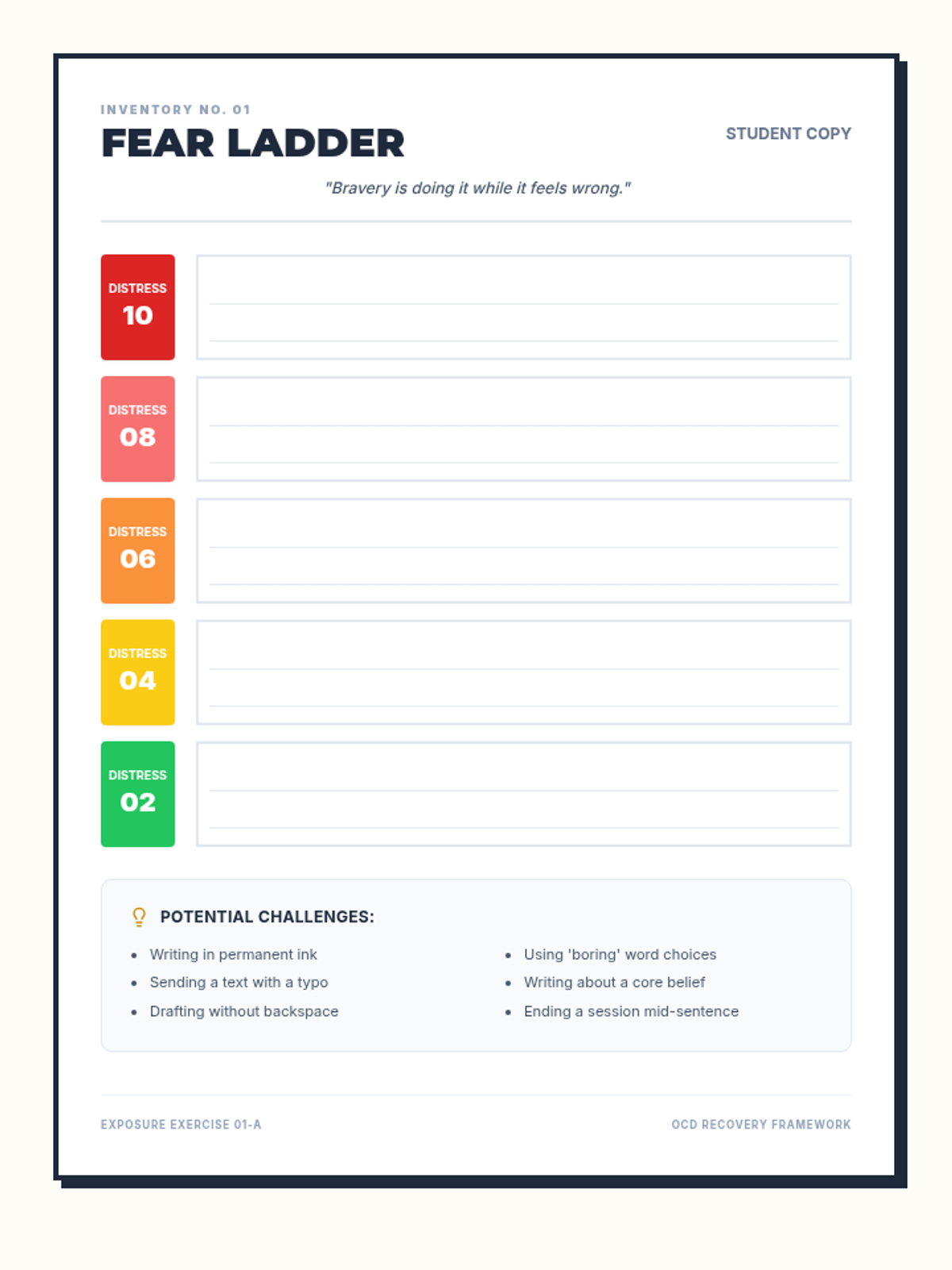
A student-facing 'Fear Ladder' worksheet designed for an 11th-grade student. It allows the student to identify and rank writing-related triggers on a scale of 0-10, providing a roadmap for exposure therapy.