A visually engaging slide deck designed for 1st graders using simple language and large emojis to teach regulation tools through a 'Fix-It Shop' metaphor. Updated with better legibility and icons.
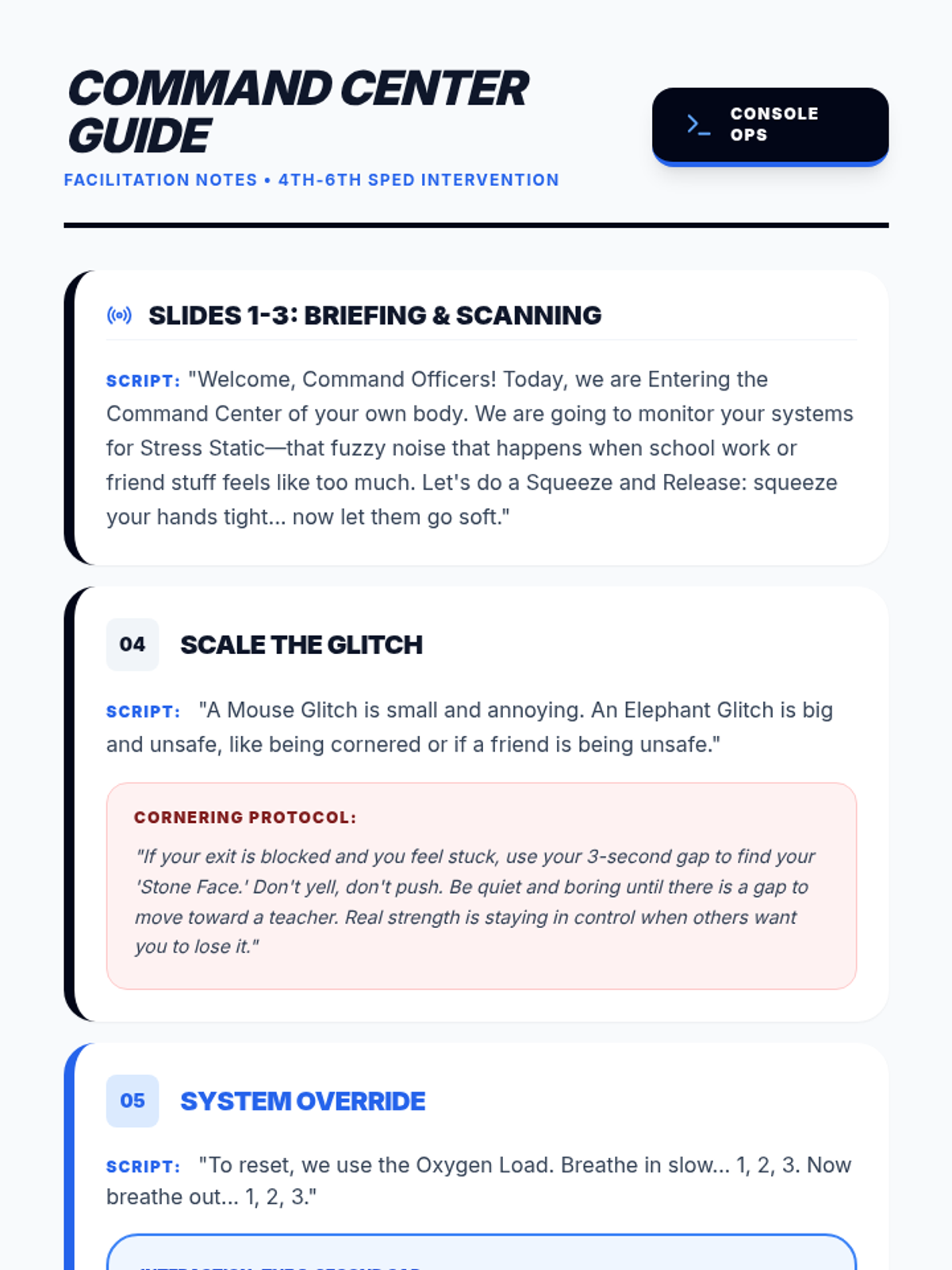
A detailed facilitation guide for the specialized SPED lesson 'The Calm Console'. Includes simplified scripts, sensory-based analogies (Static, Grit), and specific de-escalation guidance. Reframed to focus on school, homework, and demands rather than conflict. Fixed typos and markdown artifacts. Numbering updated. Updated to fit on two pages.
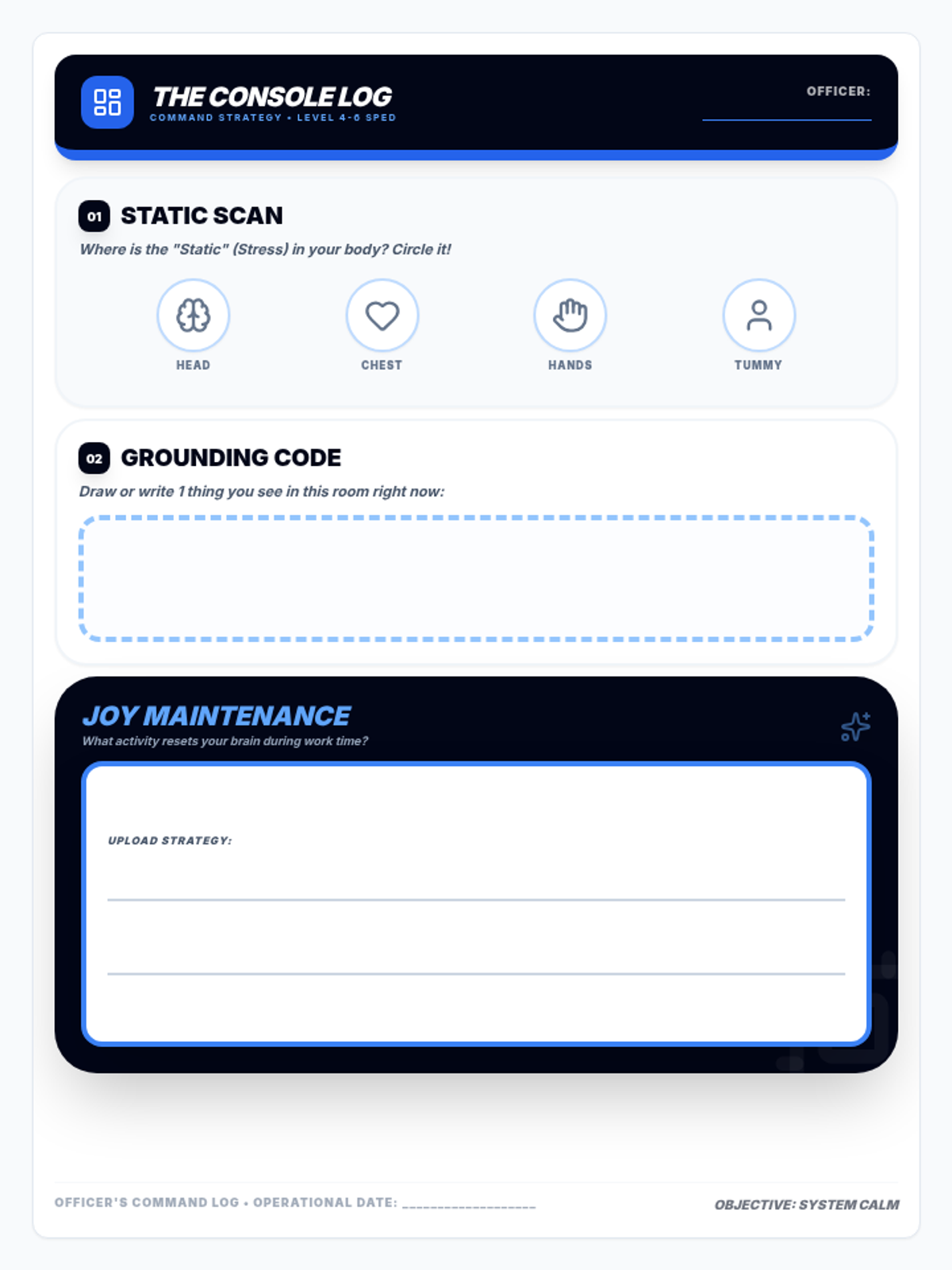
A visual, Command Center themed worksheet for 4th-6th grade SPED students. Includes a body scan checklist, a sensory grounding drawing area, and a joy-based proactive habit section with large, clear work areas. Reframed to focus on academic stressors and fixed for single-page printing. Updated with intuitive icons and better line contrast.
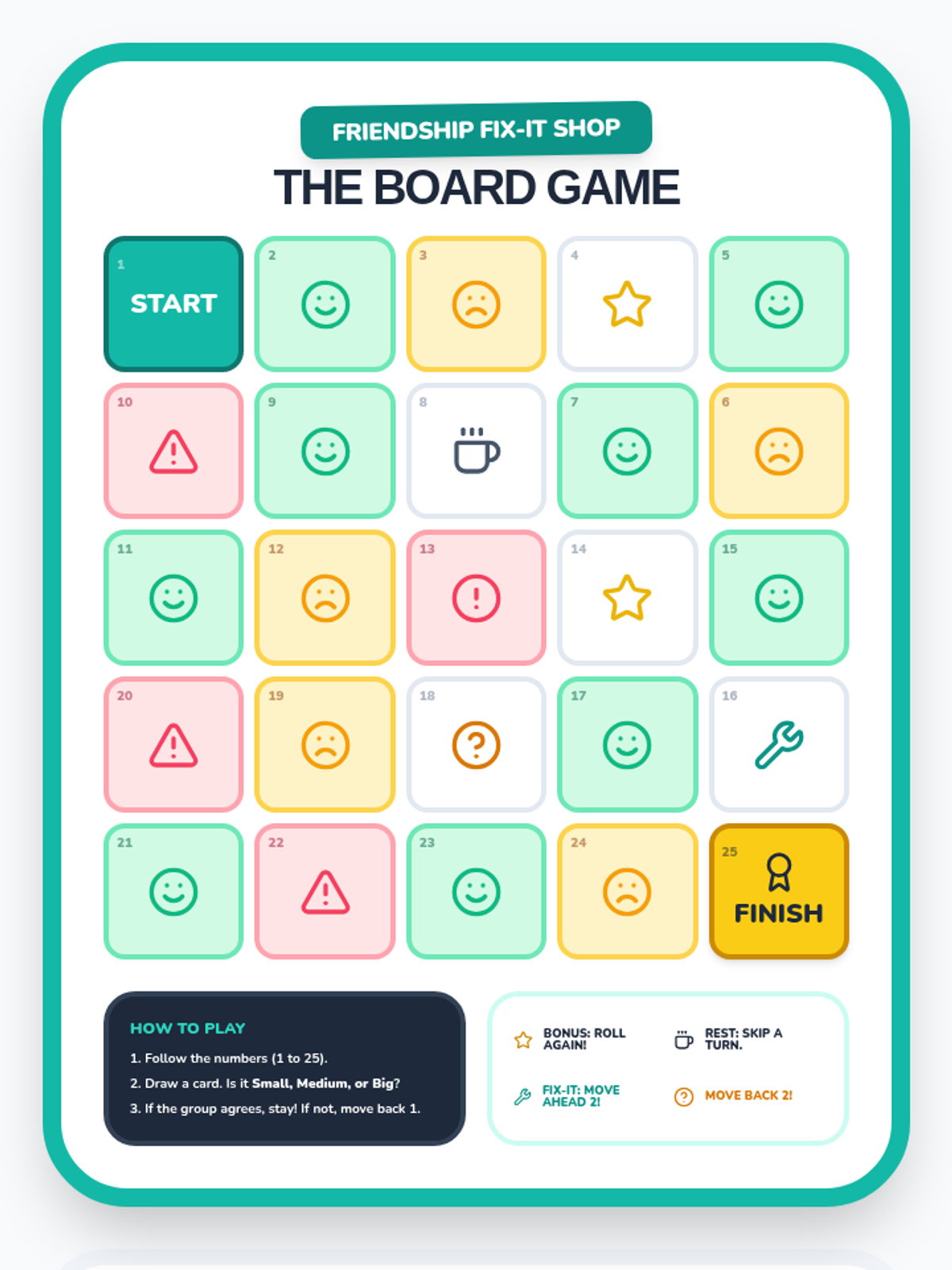
A printable board game for K-2 students that reinforces identifying problem sizes through play and group discussion.
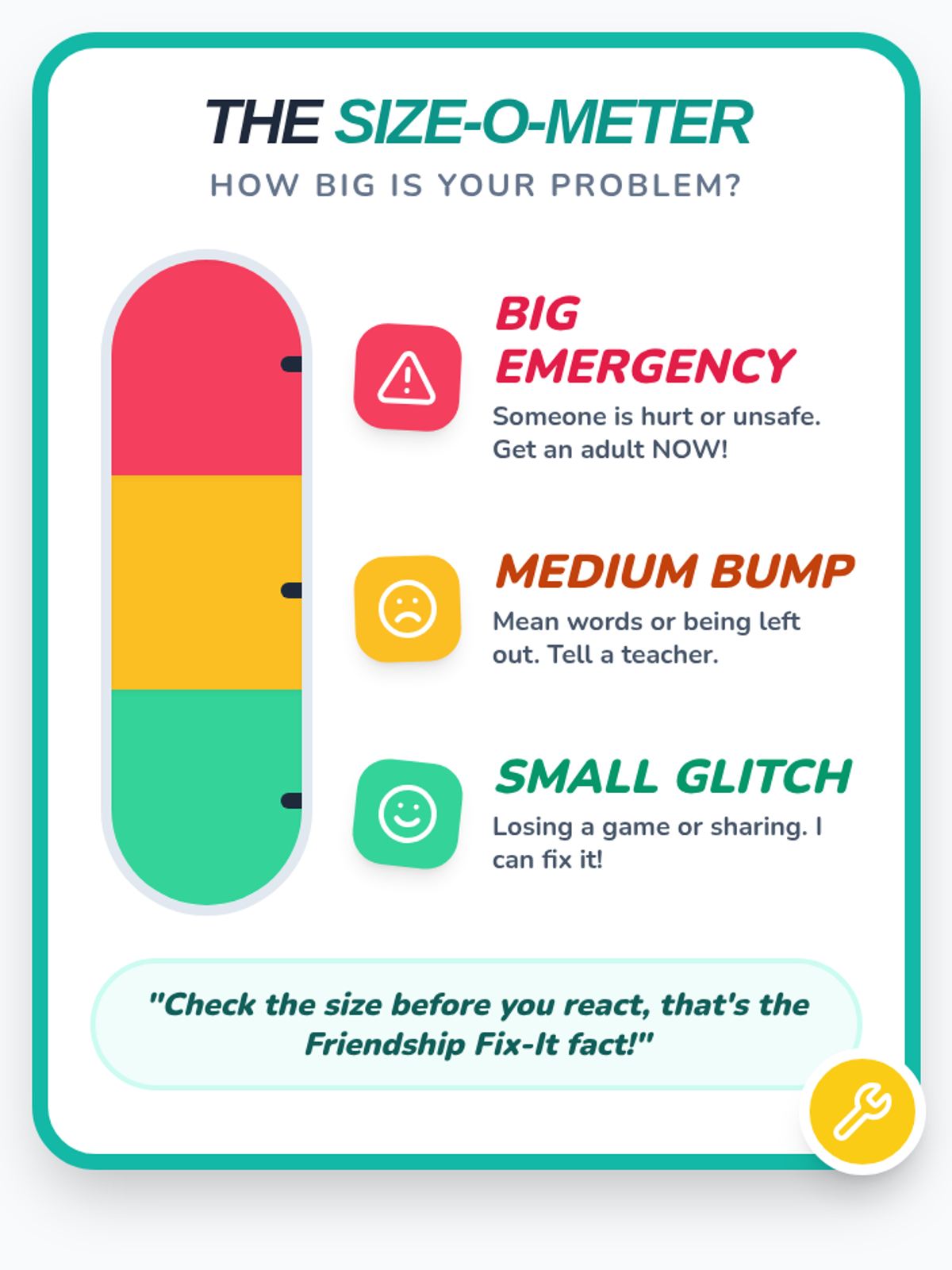
A visual anchor chart for classroom display that defines Small, Medium, and Big problems with clear icons and kid-friendly descriptions.
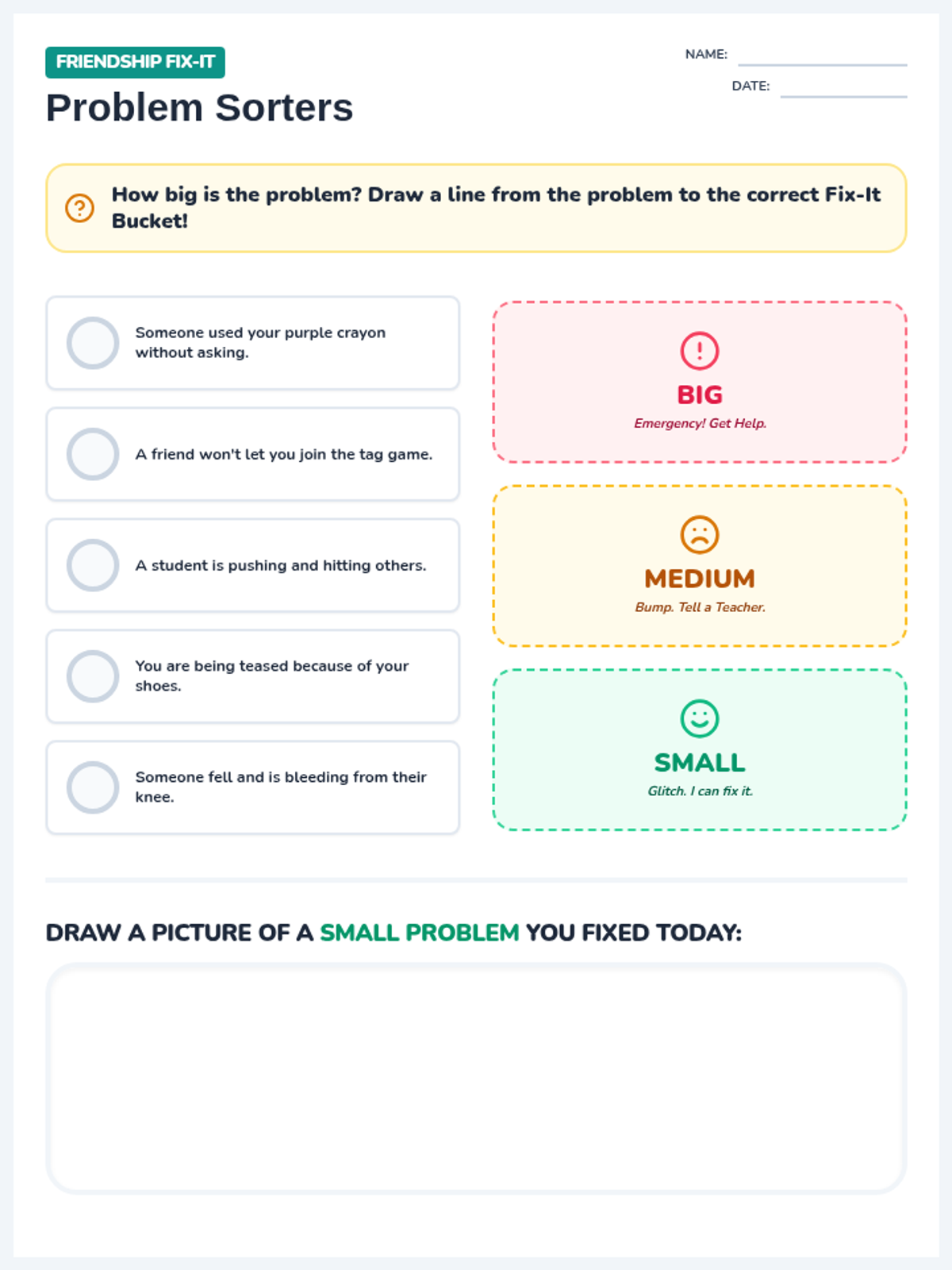
A student activity sheet for K-2 where they categorize friendship scenarios into small, medium, and big problem levels using a matching format.
Interactive presentation for K-2 students teaching the 'Size of the Problem' concept using a 'Friendship Fix-It Shop' theme with clear visual cues and practice scenarios.
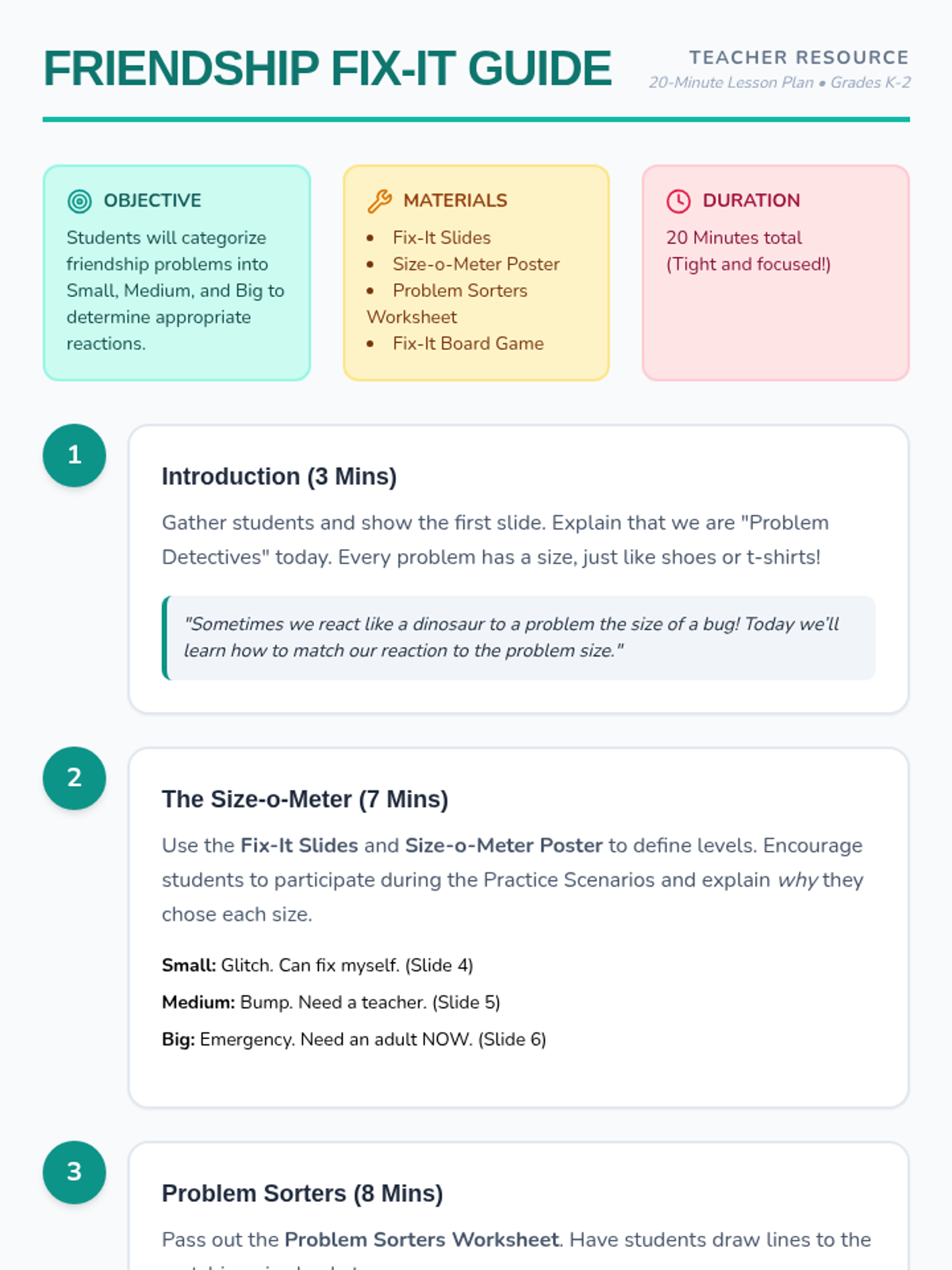
A structured 20-minute lesson guide for K-2 teachers focusing on problem-size identification with a 'Friendship Fix-It' theme.
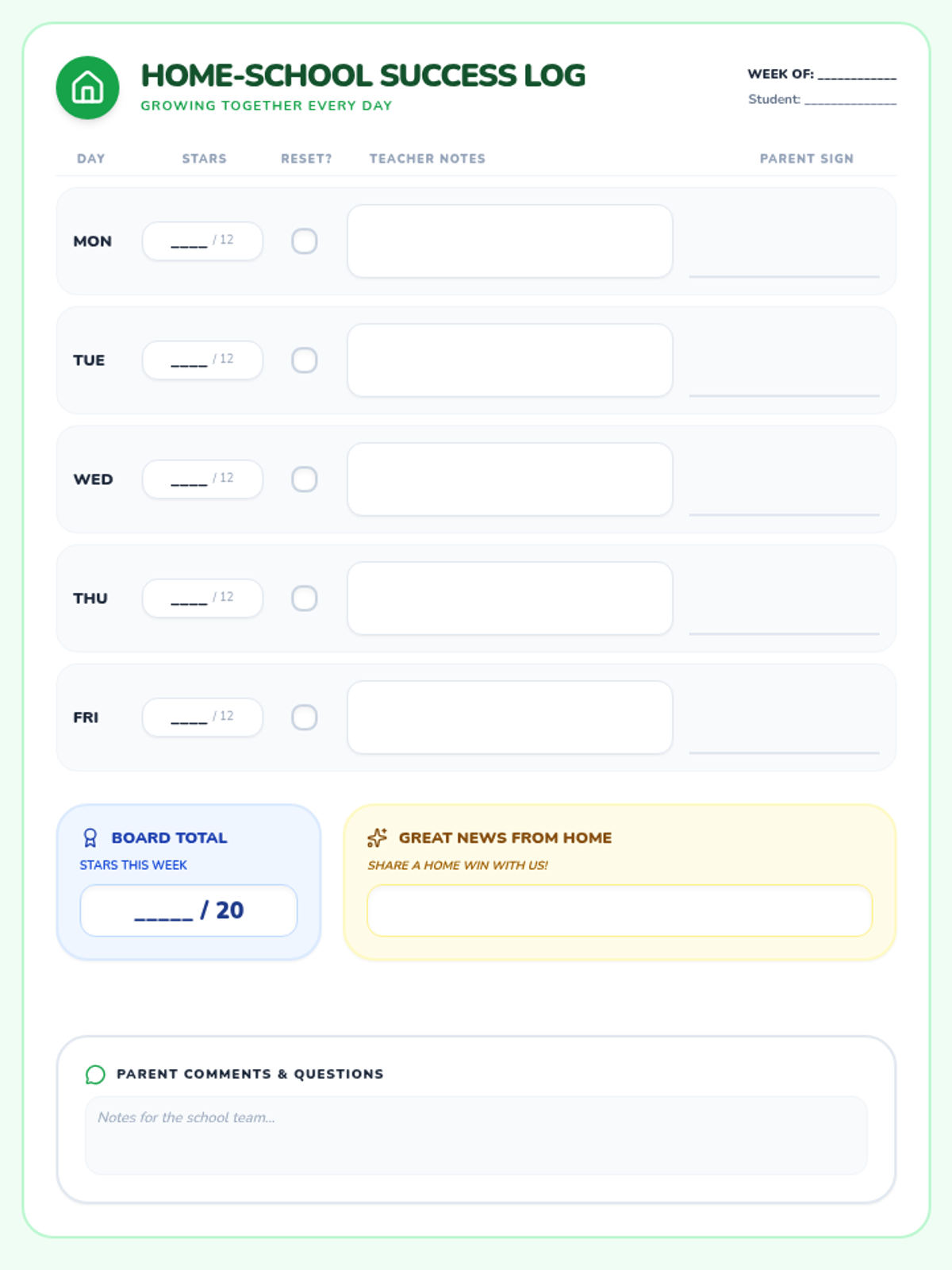
A weekly communication log for parents and teachers to track daily stars, refocus events, and exchange feedback to support the student's behavior goals.
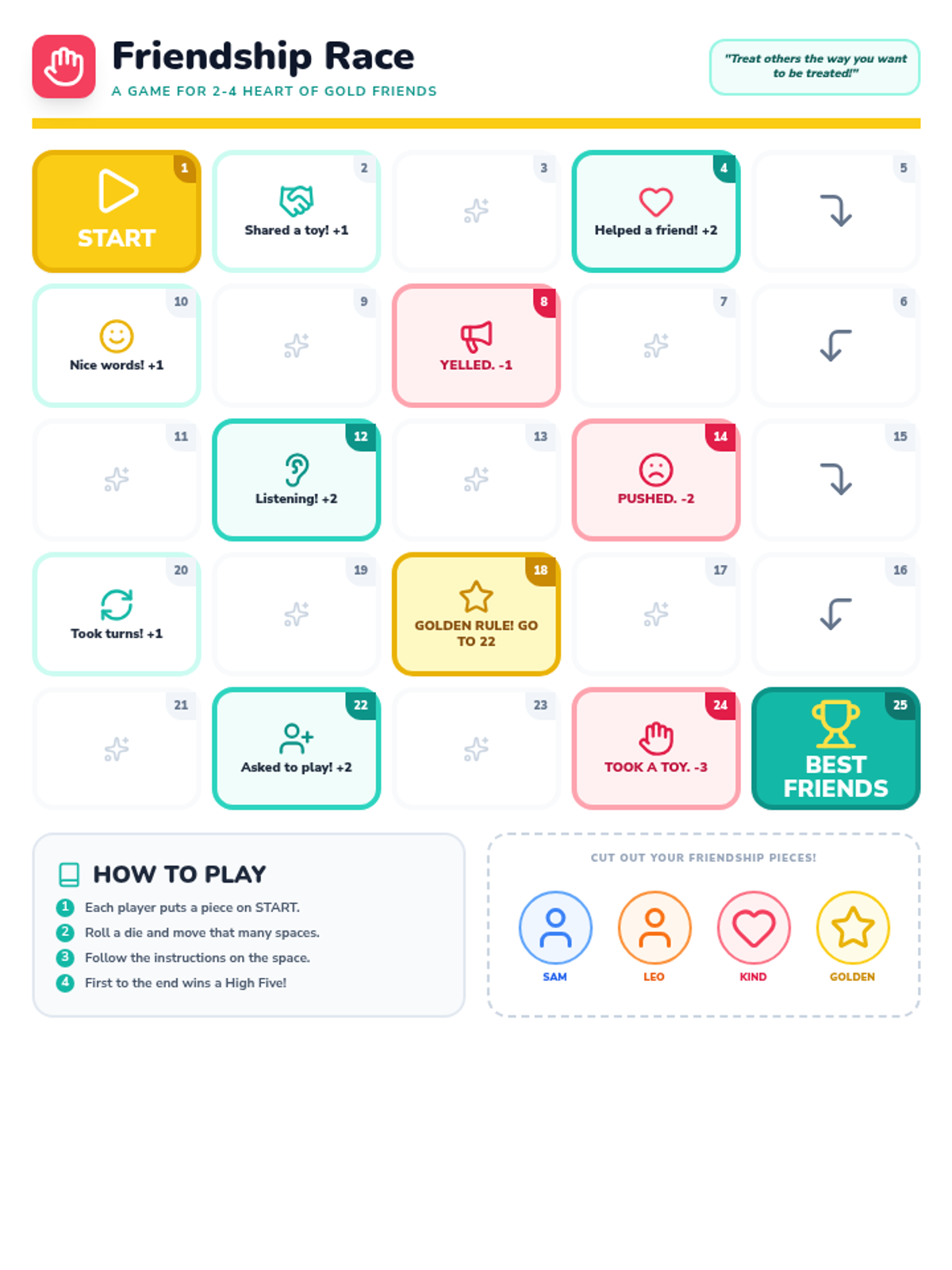
A printable board game for 2-4 players. Students move along a path by identifying positive friendship actions (Heart of Gold traits) and negative ones. Features include printable game pieces, simple instructions, and a focus on the Golden Rule.
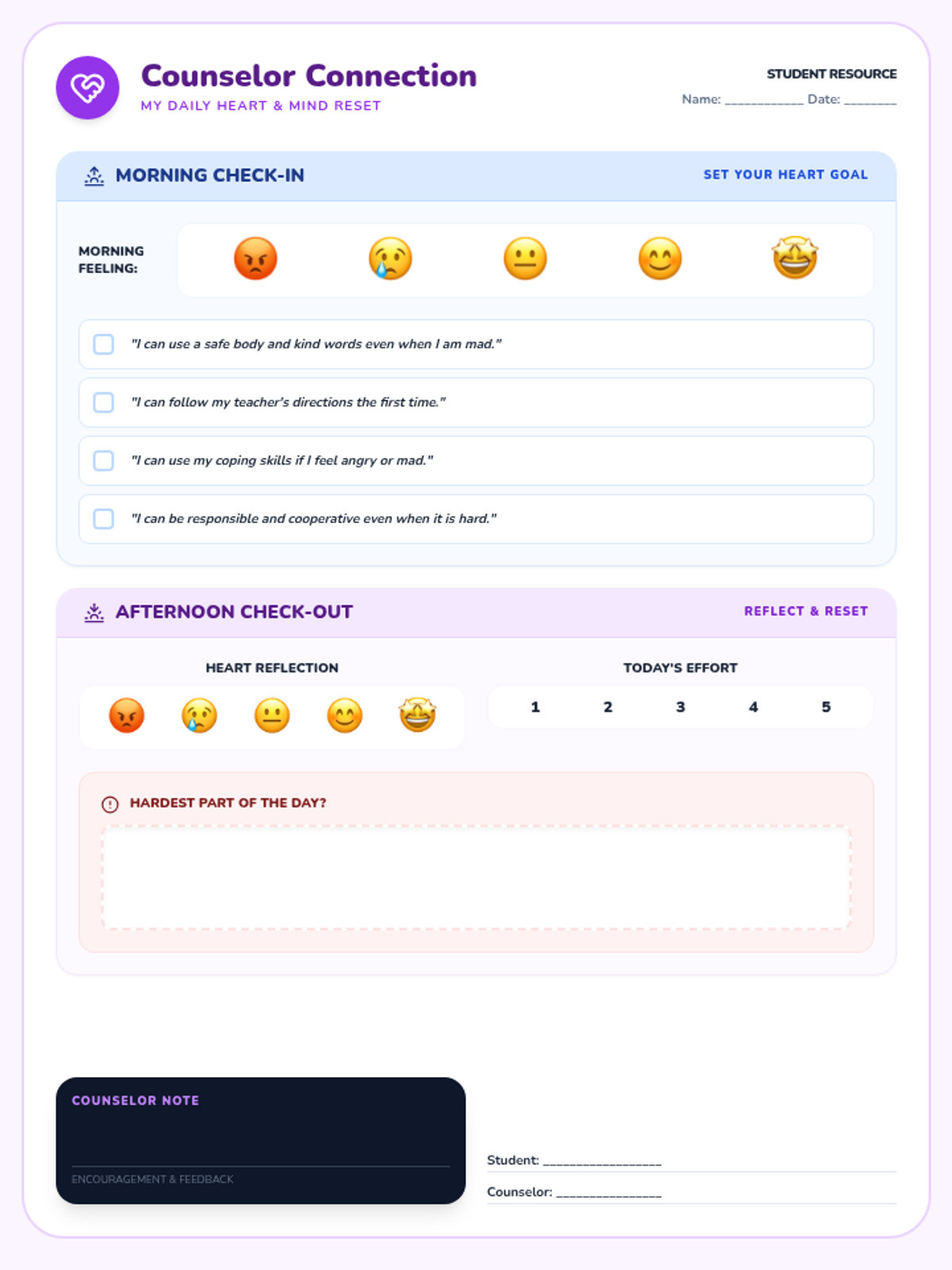
A school counselor's daily check-in and check-out form focusing on emotional regulation, intentional goal setting for self-responsibility and cooperation, and restorative reflection on peer conflicts.