A reading passage featuring Jarren Duran of the Red Sox that incorporates words with the suffixes -ly, -tive, -less, -ment, and -ness for morphemic analysis and fluency practice.
Culminating presentation for Session 8, reviewing all Brain Frames and explaining the concept of judgment in the afterlife to prepare students for independent writing. Adapted for 4th-grade dyslexia support.
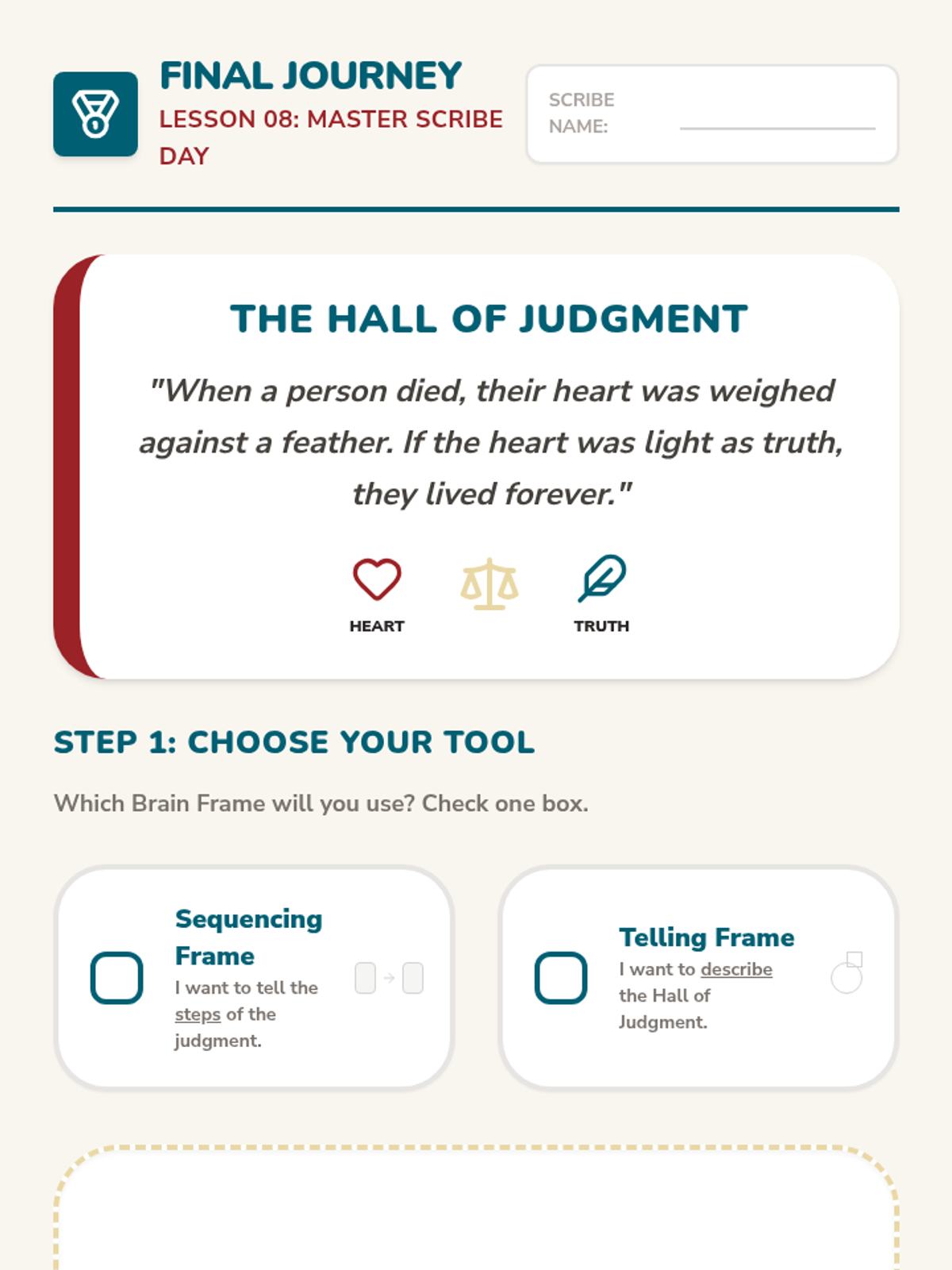
Final independent assessment worksheet for Lesson 8, where students choose between a Sequencing or Telling Frame to organize a paragraph about the Hall of Ma'at and the weighing of the heart. Adapted for 4th-grade dyslexia support.
Slides for Lesson 7, contrasting the lives of wealthy and poor Egyptians. Focuses on using specific transition words like 'however' and 'whereas'. Adapted for 4th-grade dyslexia support.
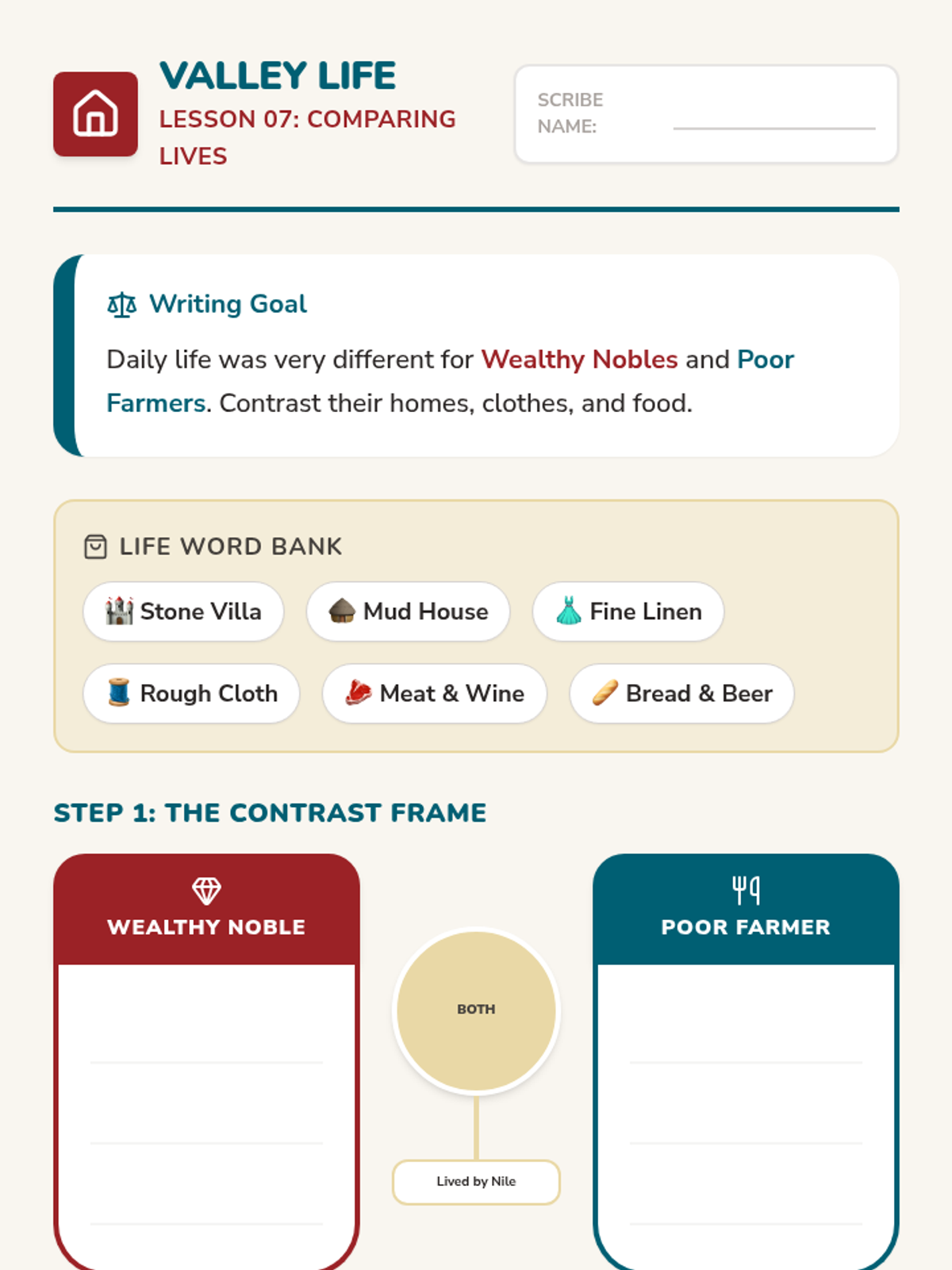
Student worksheet for Lesson 7 using a Comparing Frame to contrast the lifestyles of wealthy and poor Egyptians. Focuses on using advanced transition words for contrast. Adapted for 4th-grade dyslexia support.
Slides for Lesson 6, focusing on Egyptian inventions and how to use a Categorizing Frame to group related technological advancements. Adapted for 4th-grade dyslexia support.
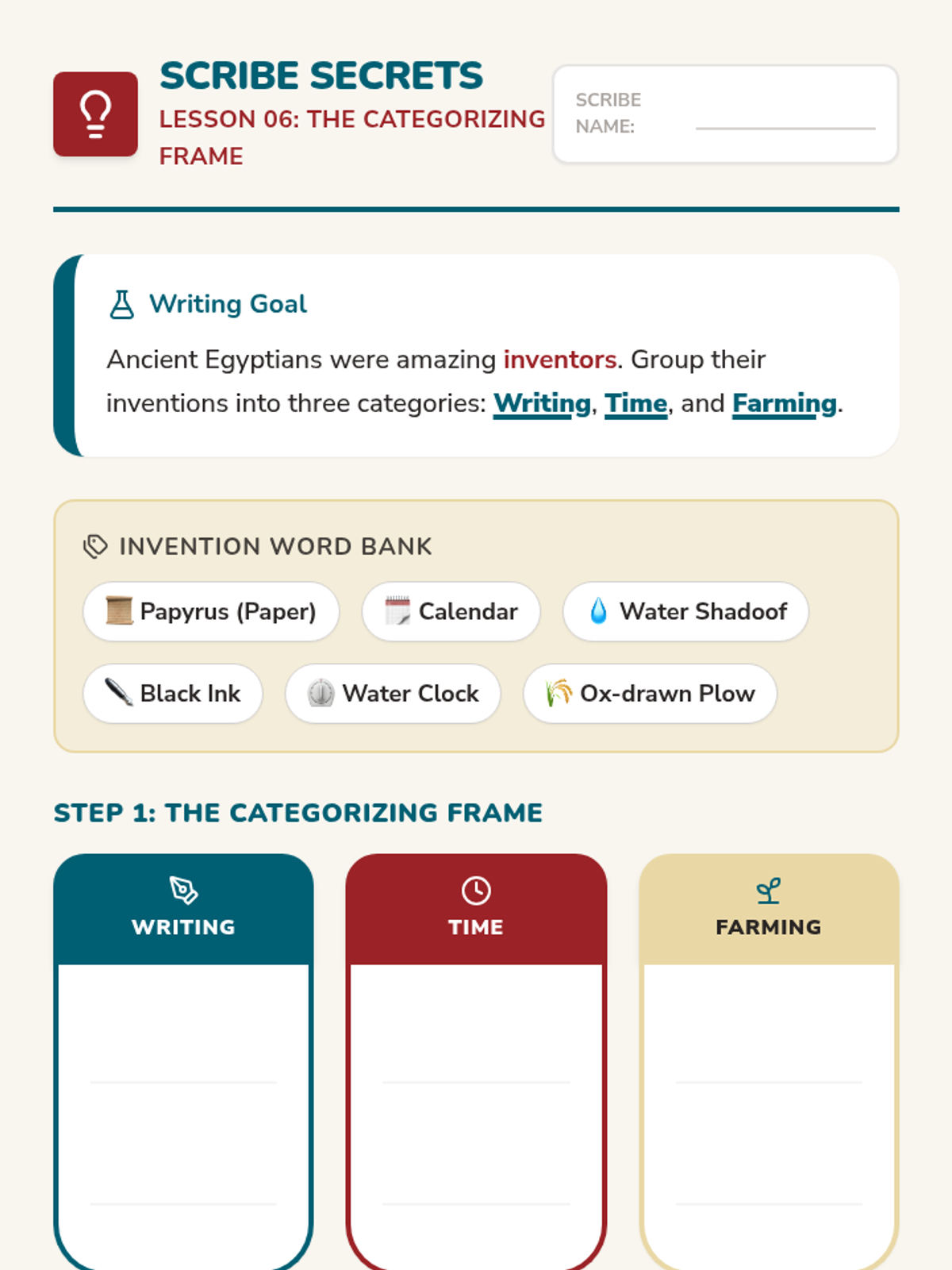
Student worksheet for Lesson 6, utilizing a Categorizing Frame to organize Egyptian inventions into meaningful groups for paragraph writing. Adapted for 4th-grade dyslexia support.
Slides for Lesson 5, exploring the Cause and Effect relationship between Egyptian afterlife beliefs and pyramid construction using the Relationship Frame. Adapted for 4th-grade dyslexia support.
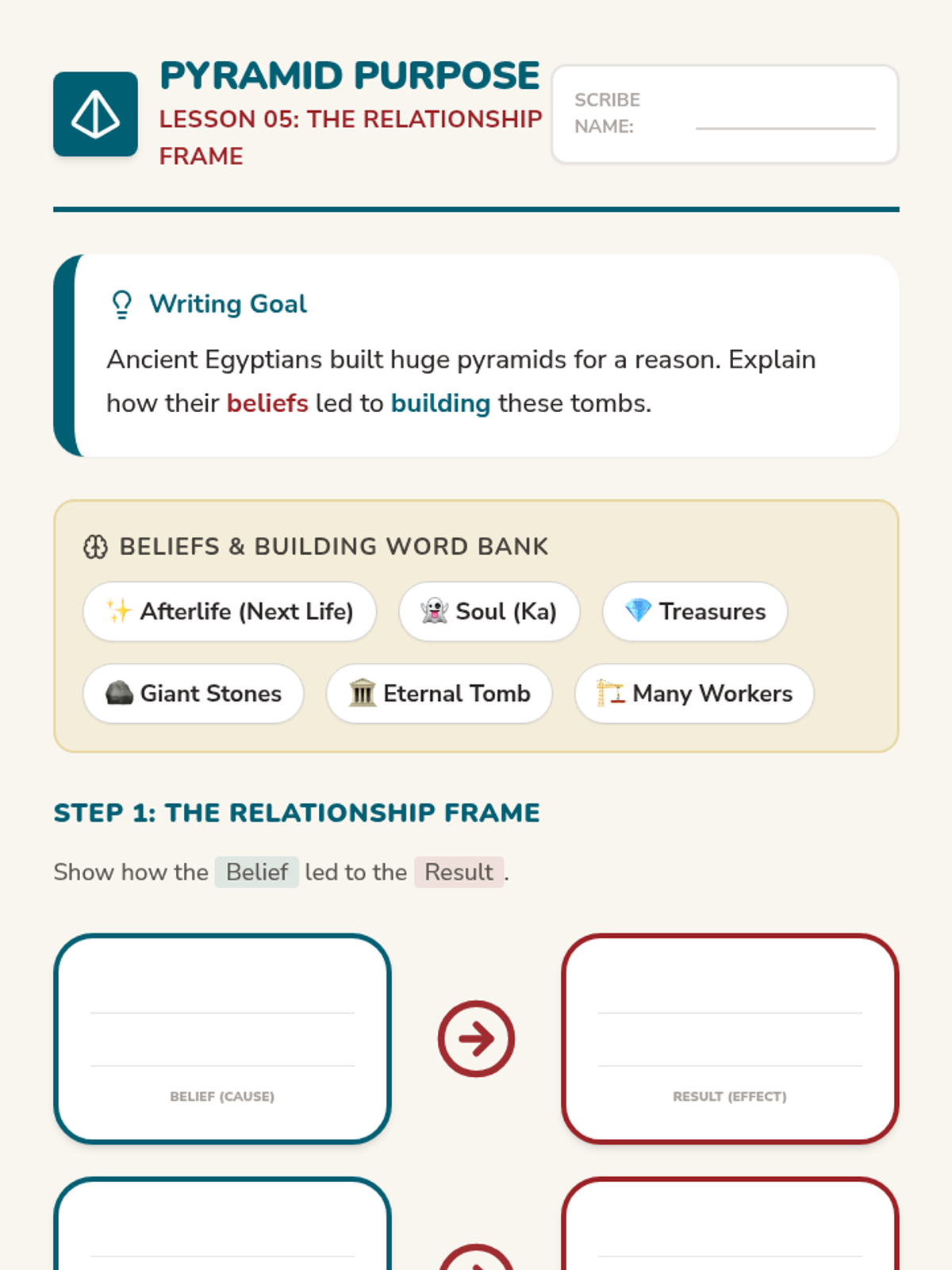
Student worksheet for Lesson 5, focusing on Cause and Effect relationships between religious beliefs and pyramid construction using the Relationship Frame. Adapted for 4th-grade dyslexia support.
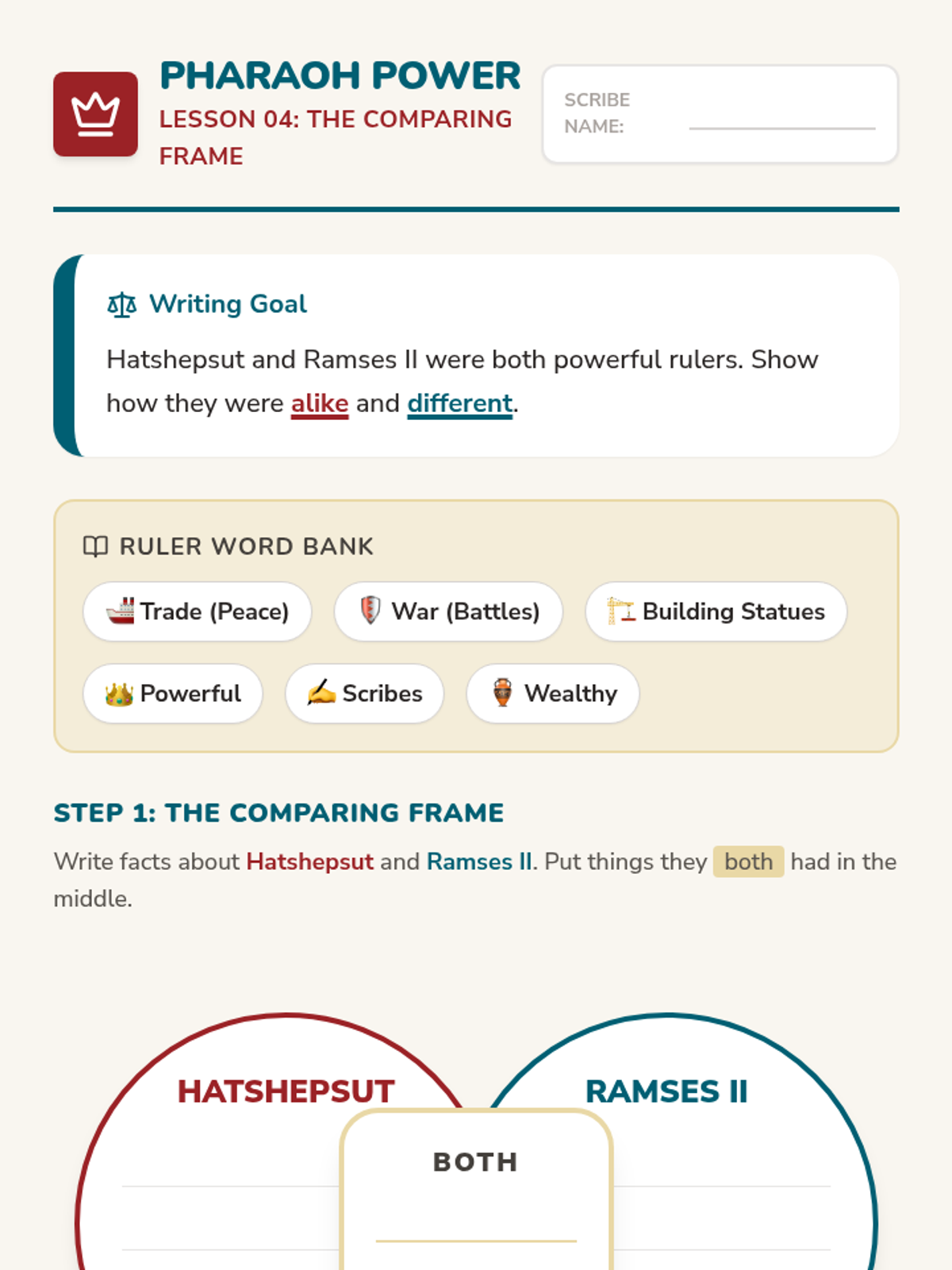
Slides for Lesson 4, comparing the leadership of Hatshepsut and Ramses II. Focuses on using the Comparing Frame to organize similarities and differences. Adapted for 4th-grade dyslexia support.
Student worksheet for Lesson 4 using a Comparing Frame to contrast Hatshepsut and Ramses II. Includes specific transition word supports for comparative writing. Adapted for 4th-grade dyslexia support.
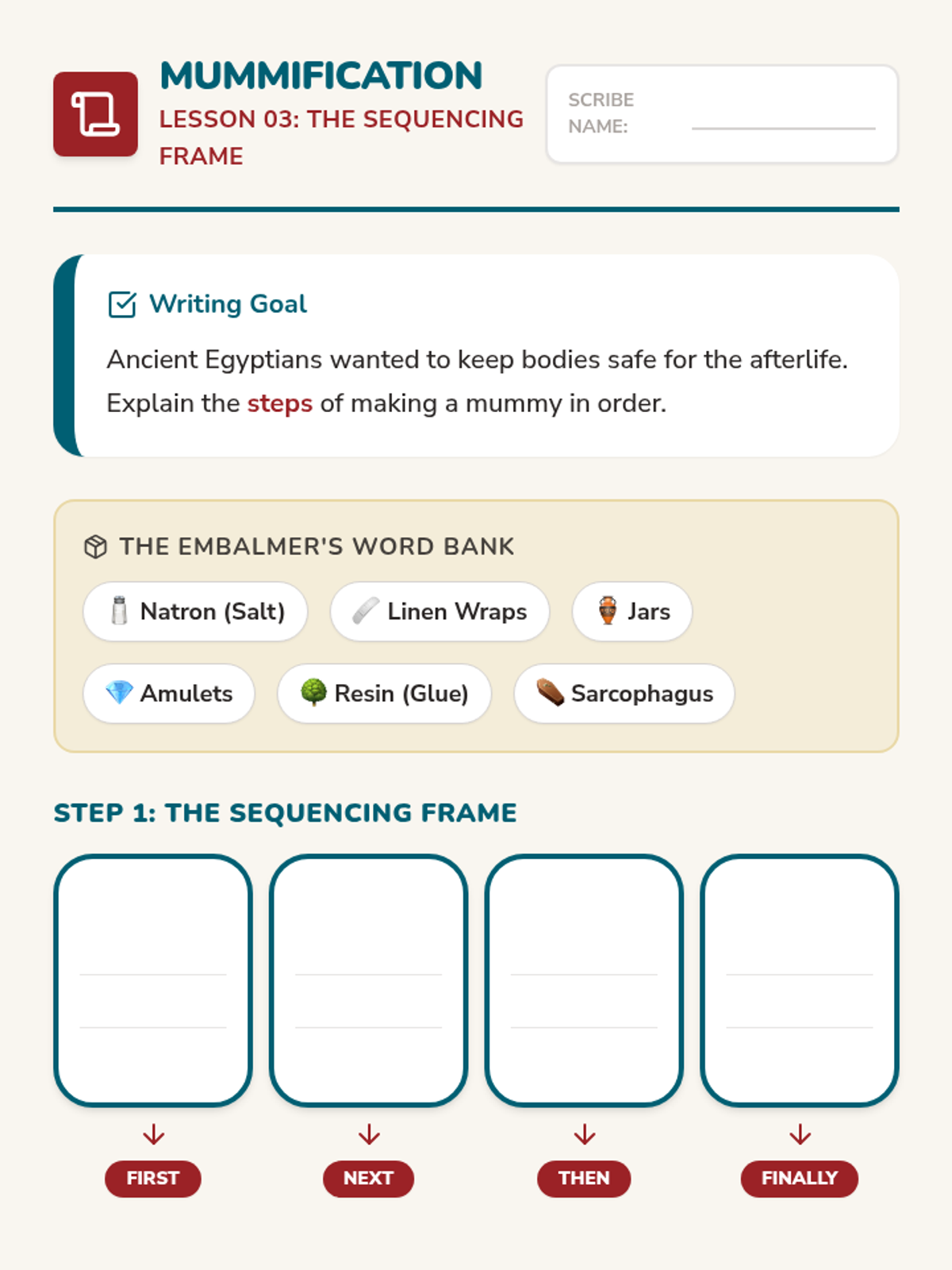
Slides for Lesson 3, introducing the Sequencing Frame and detailing the steps of the Egyptian mummification process. Focuses on chronological transitions. Adapted for 4th-grade dyslexia support.
Worksheet for Lesson 3 using a Sequencing Frame to map out the steps of mummification. Provides a structured word bank and writing area for chronological paragraph practice. Adapted for 4th-grade dyslexia support.
Slides for Lesson 2, explaining the hierarchical structure of Ancient Egyptian society from Pharaoh to Laborers. Includes visuals to support the Telling Frame organization. Adapted for 4th-grade dyslexia support.
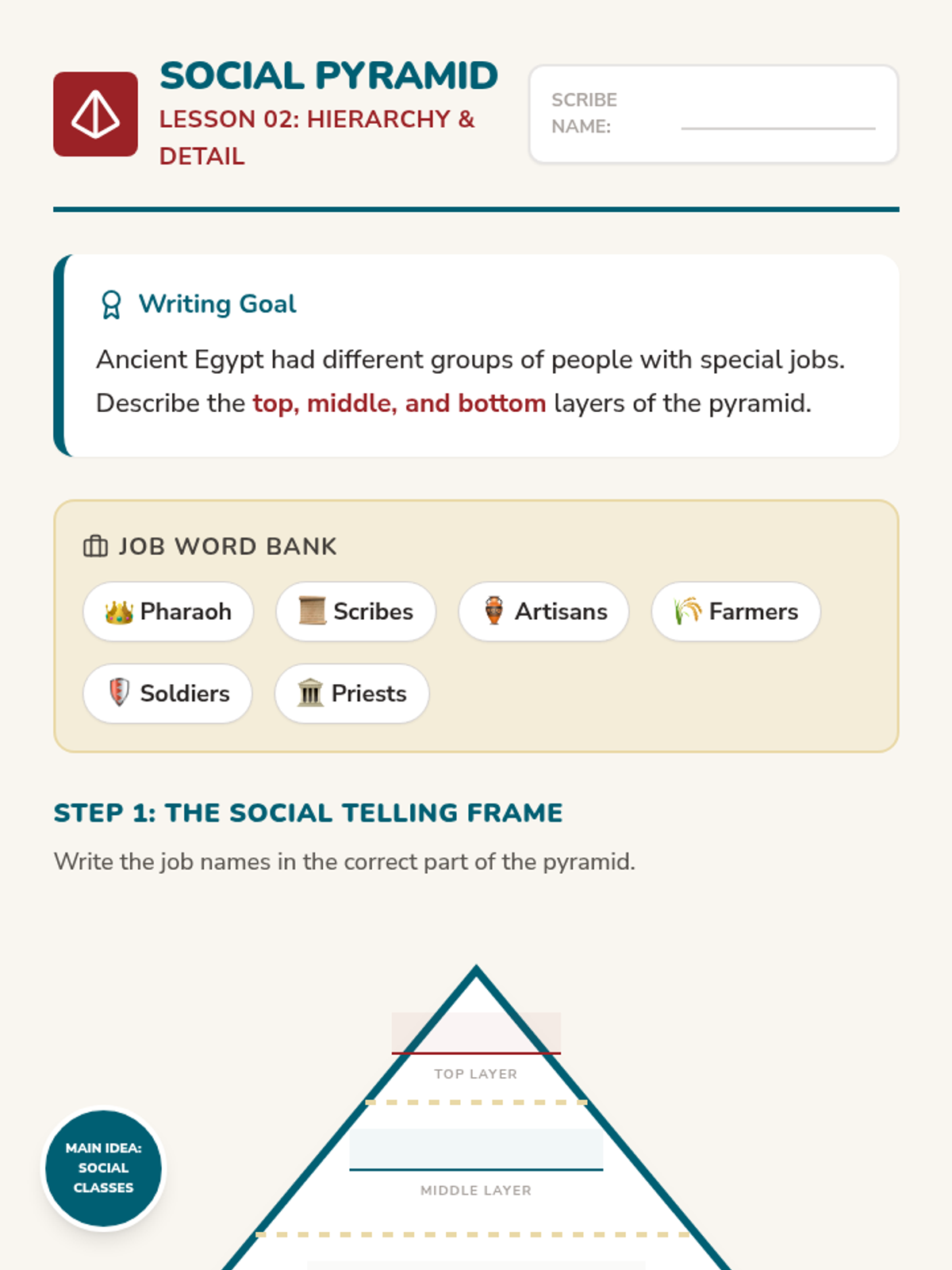
Student worksheet for Lesson 2, featuring a Telling Frame for organizing the Ancient Egyptian social hierarchy and a drafting area for a paragraph. Adapted for 4th-grade dyslexia support.
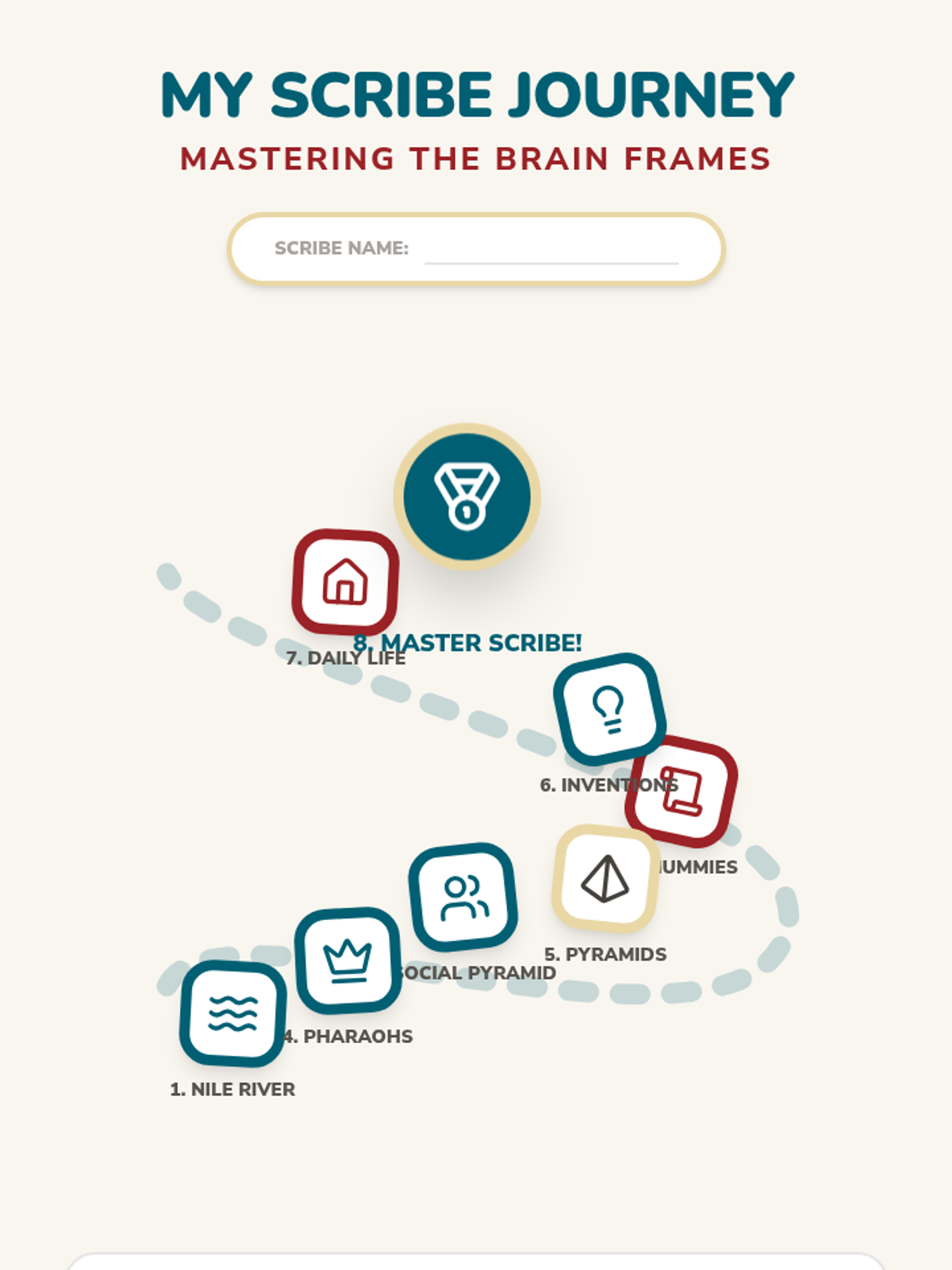
A student-facing progress log to help students visualize their journey through the 8 writing sessions, providing motivation and a sense of accomplishment as they master different Brain Frames.
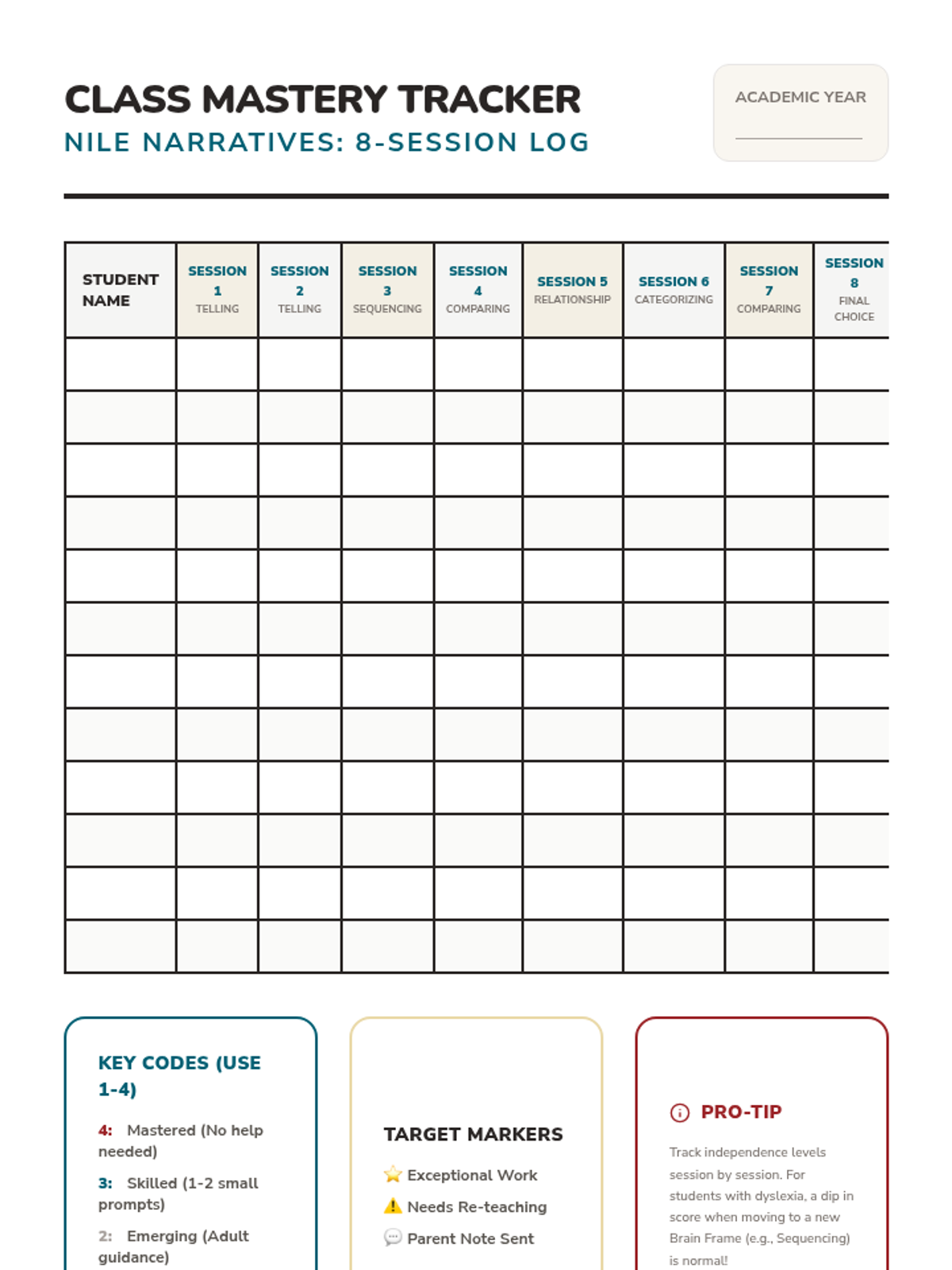
A teacher data collection form to monitor student progress across all 8 sessions of the Nile Narratives program, tracking independence levels and specific Brain Frame mastery. Updated for 4th-grade dyslexia support.
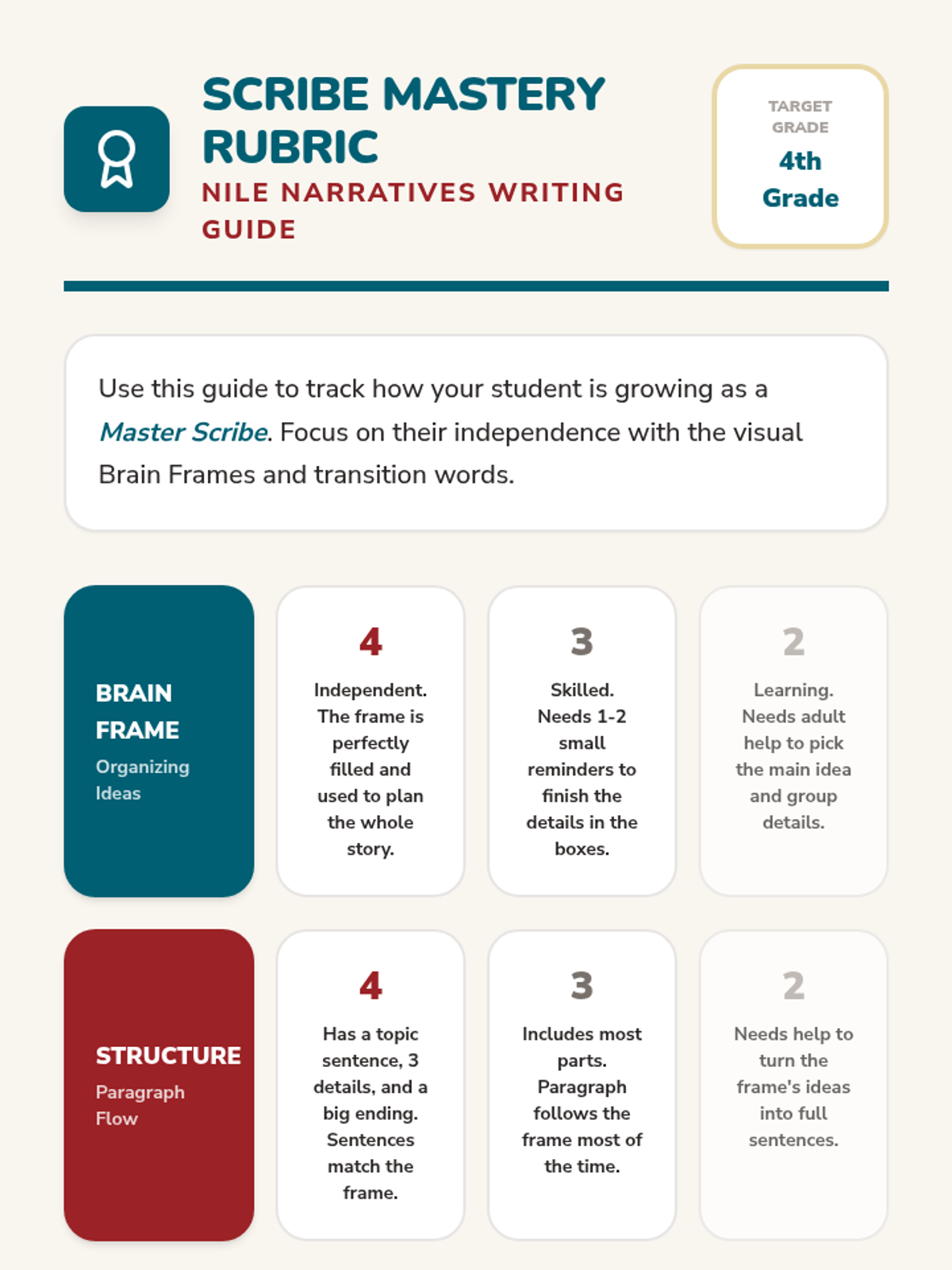
A universal paragraph writing and Brain Frame rubric for the Nile Narratives sequence, designed to track student growth in organization, transition use, and independence levels. Adapted for 4th grade dyslexia support.