Teacher guide for Lesson 3, providing instruction on trigger identification, hypothesis vs. opinion, and leading the 'Mystery Clues' activity.
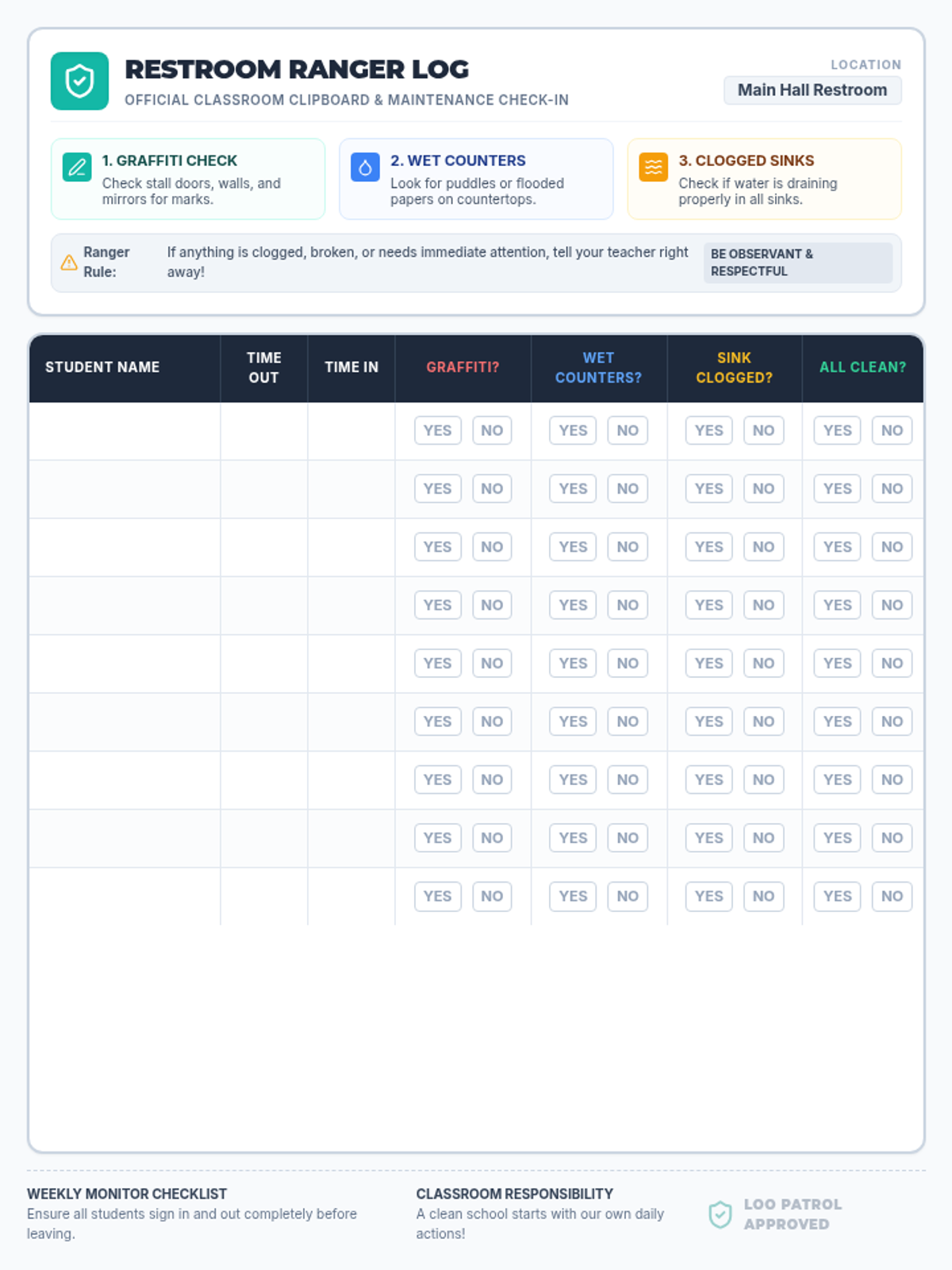
An updated full-page Restroom Ranger log sheet for clipboards. Adds a 4th column for 'Floor Towels?' and fits perfectly onto a single page.
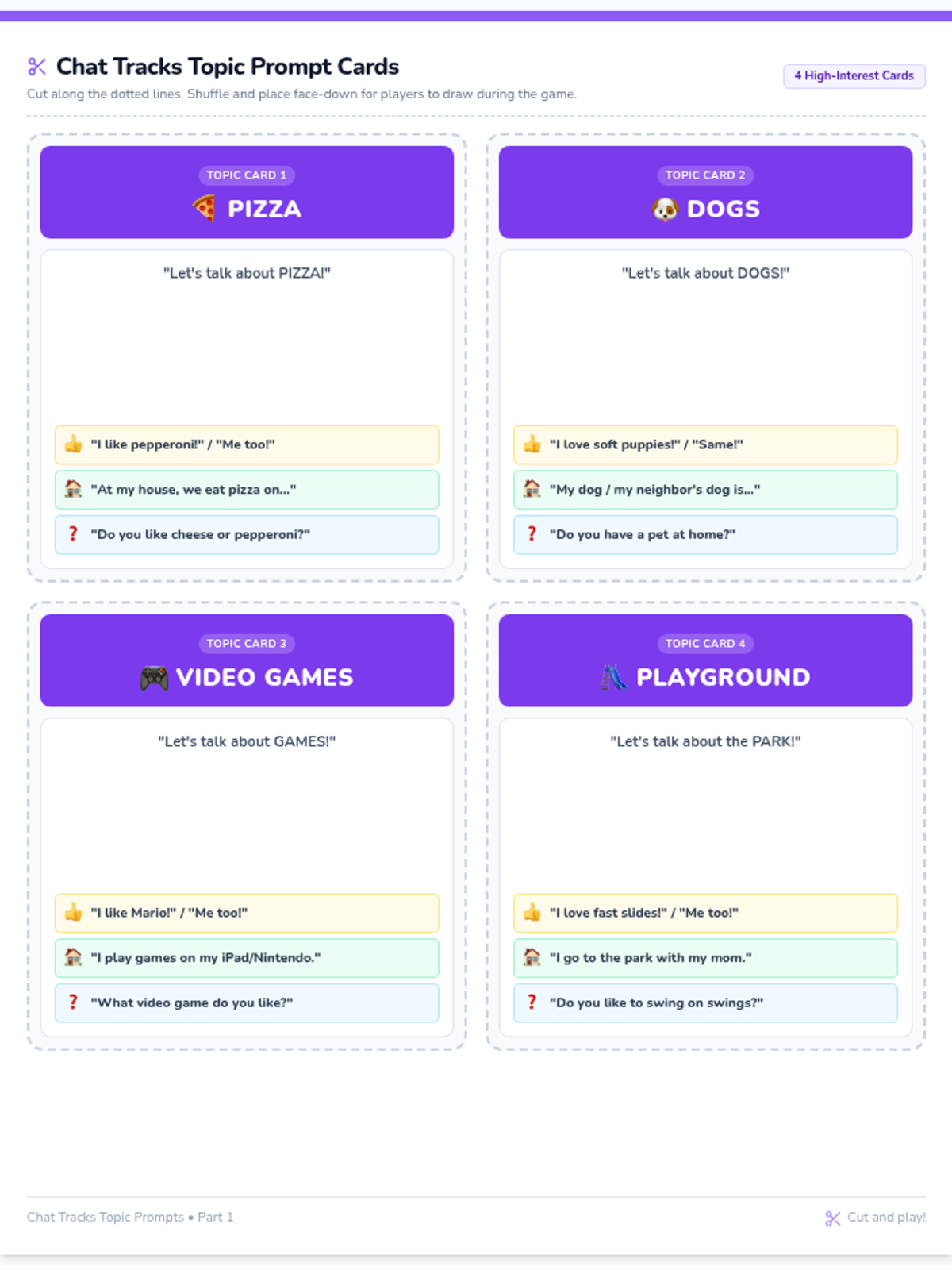
A collection of four beautifully structured, colorful topic cards (Pizza, Dogs, Video Games, and Playground) designed with visual icon support, highly structured speech frames, and station colors to help special education students participate directly.
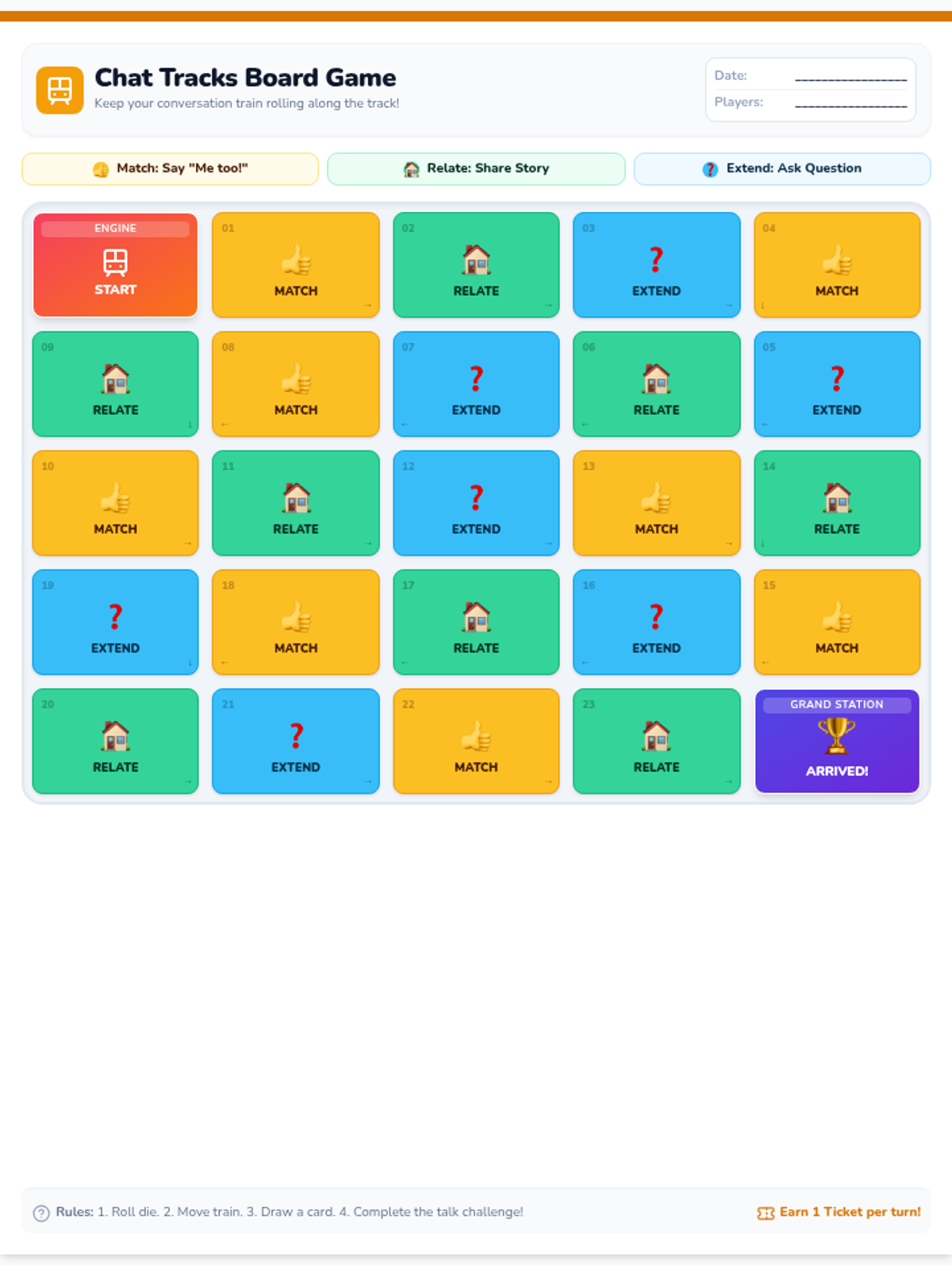
A beautifully structured, train-themed print-ready board game specifically colored for the Chat Tracks lesson. Features a winding 24-step visual layout with high-contrast Match, Relate, and Extend stations.
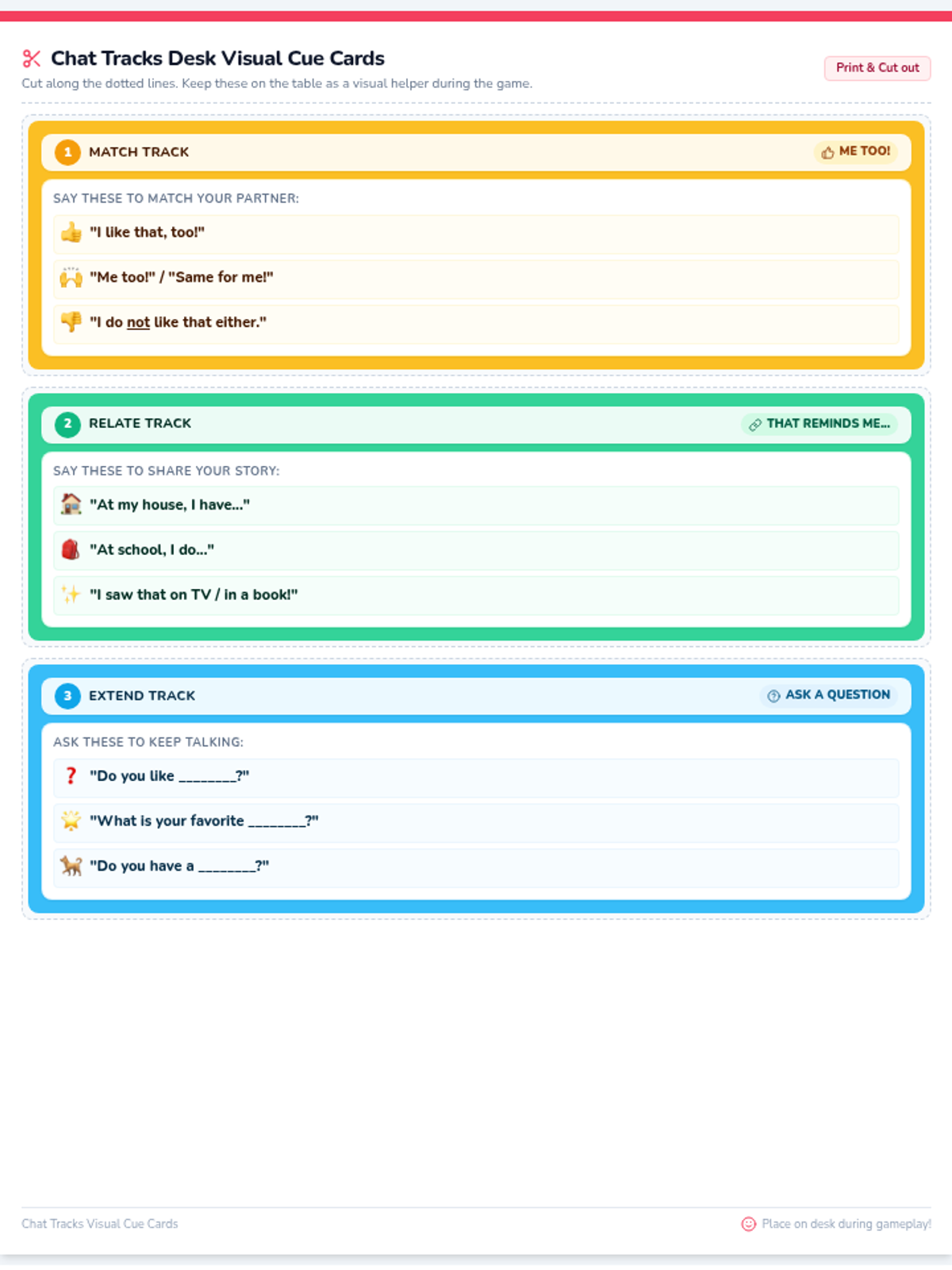
A set of three distinct visual cue cards (Match Track, Relate Track, and Extend Track) with specific sentence frames, tactile emojis, and bright high-contrast stations designed to sit on desks as social scripts for special education students during game sessions.
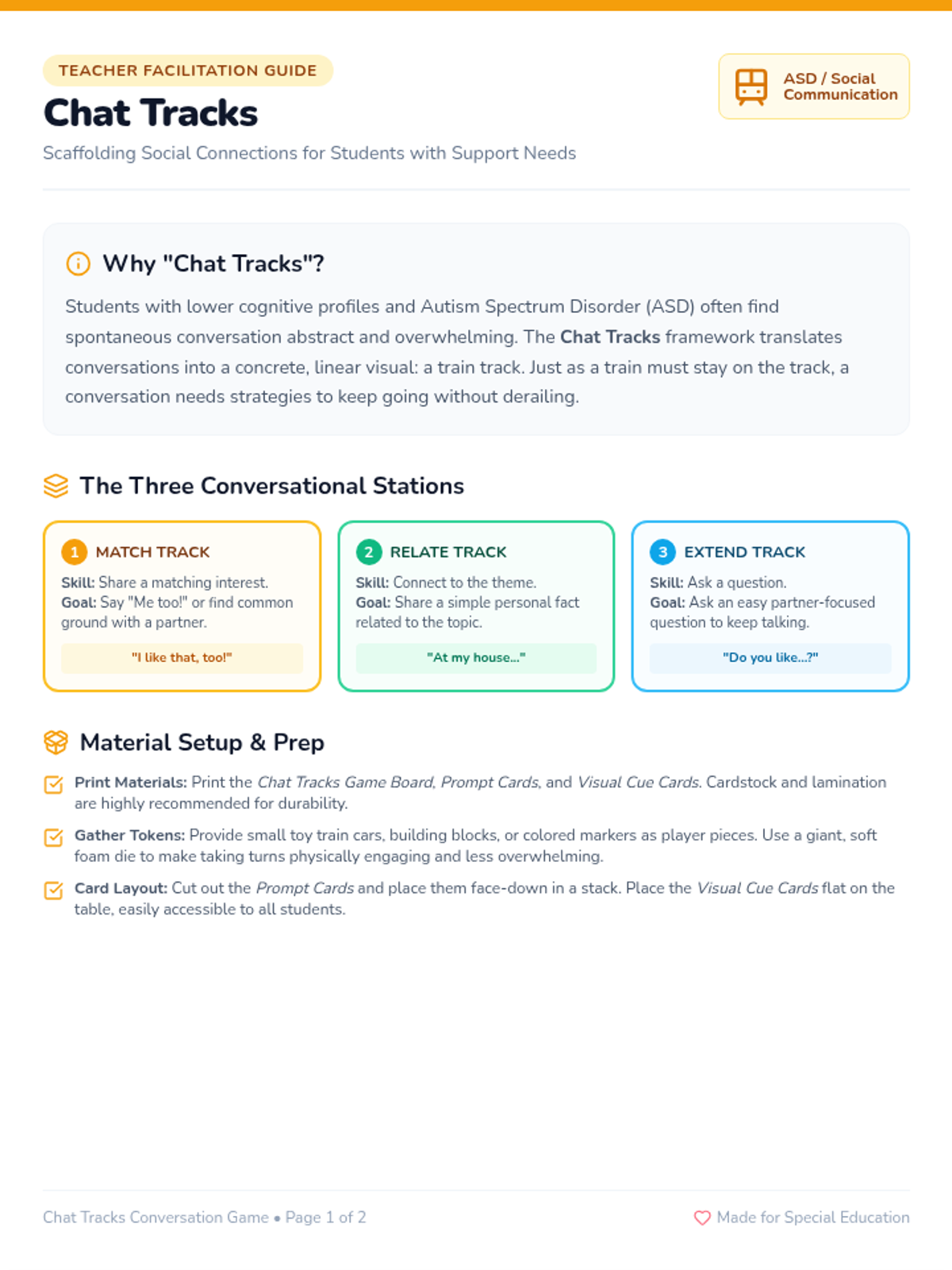
A teacher facilitation guide for Chat Tracks, detailing game setups, concrete student accommodations, physical board preparation, and structured prompting dialogue for low-cognitive students with ASD.
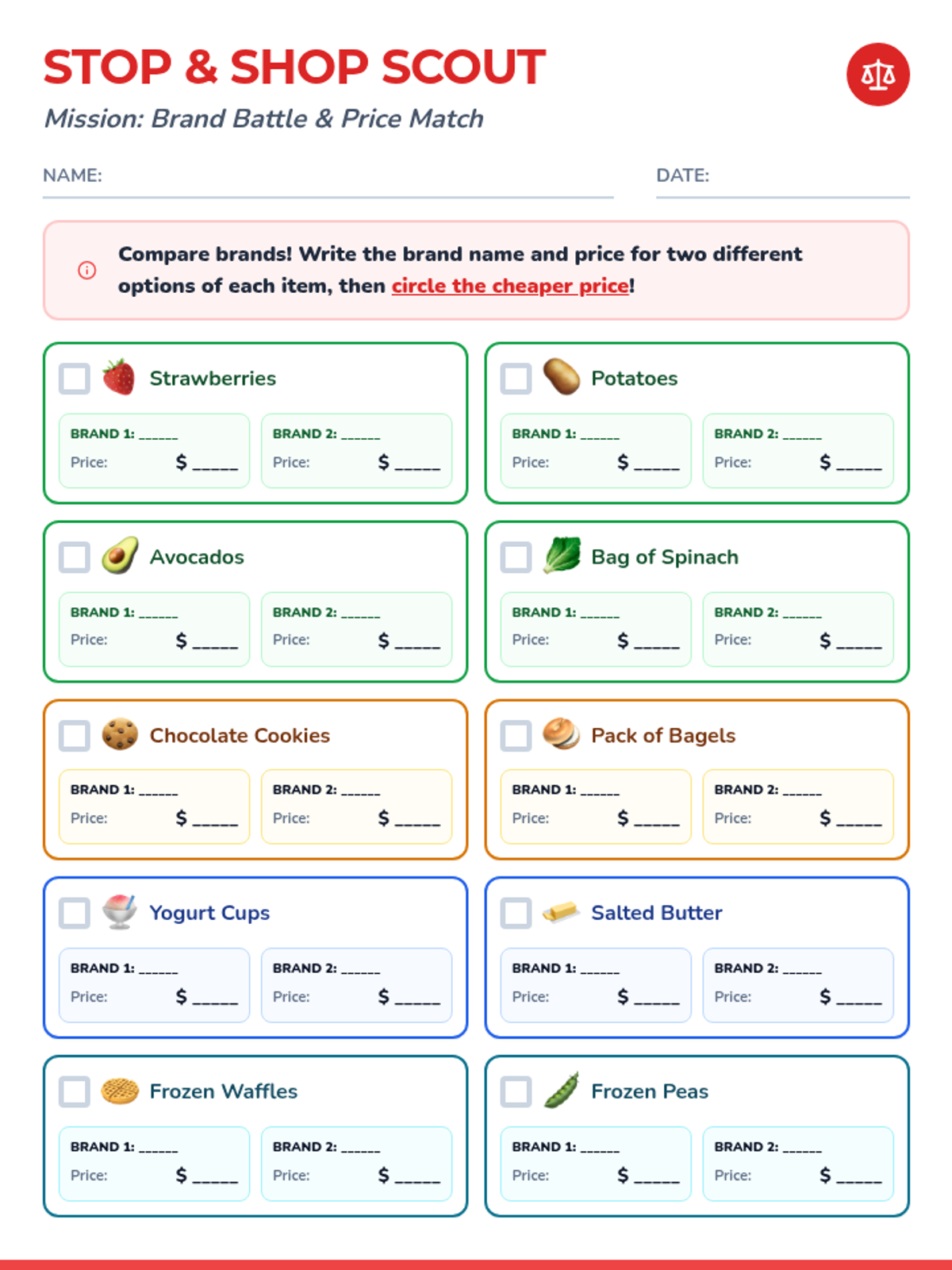
A companion 18-item brand comparison scavenger hunt for Stop & Shop. Students find two brands of each item, write down their brand names and prices, and circle the cheaper option.
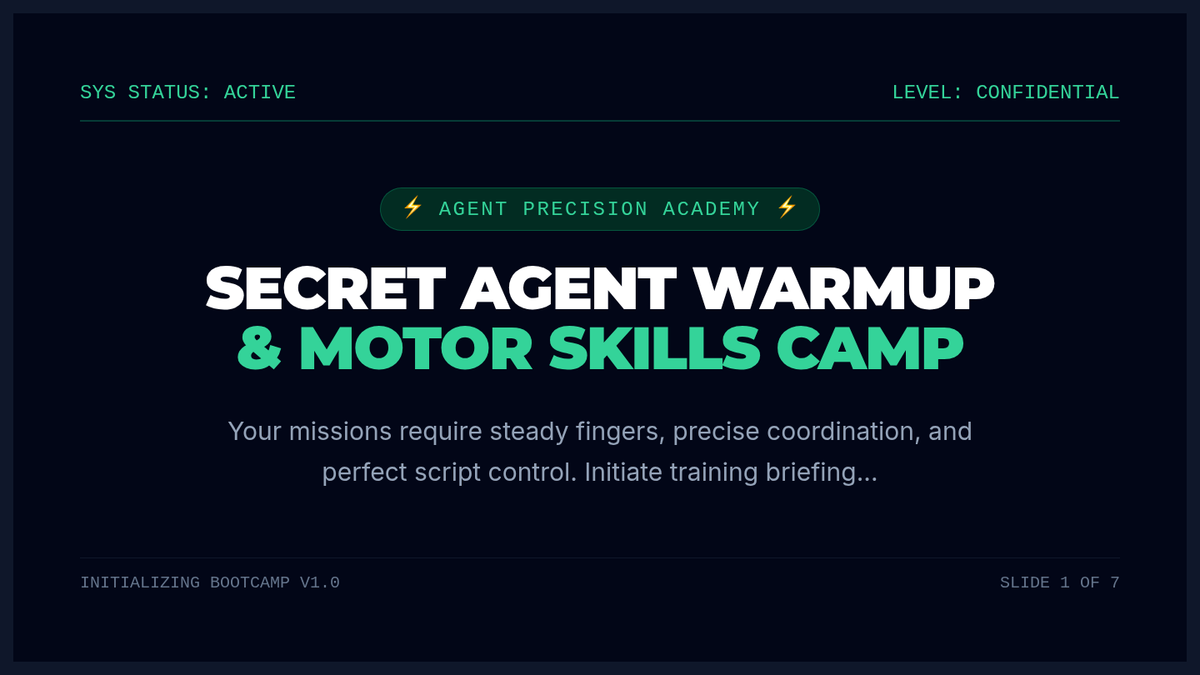
A beautiful 7-slide dark-themed covert briefing presentation that introduces the summer camp, daily dexterity exercises, and the tactical fine-motor details for each of the five missions.
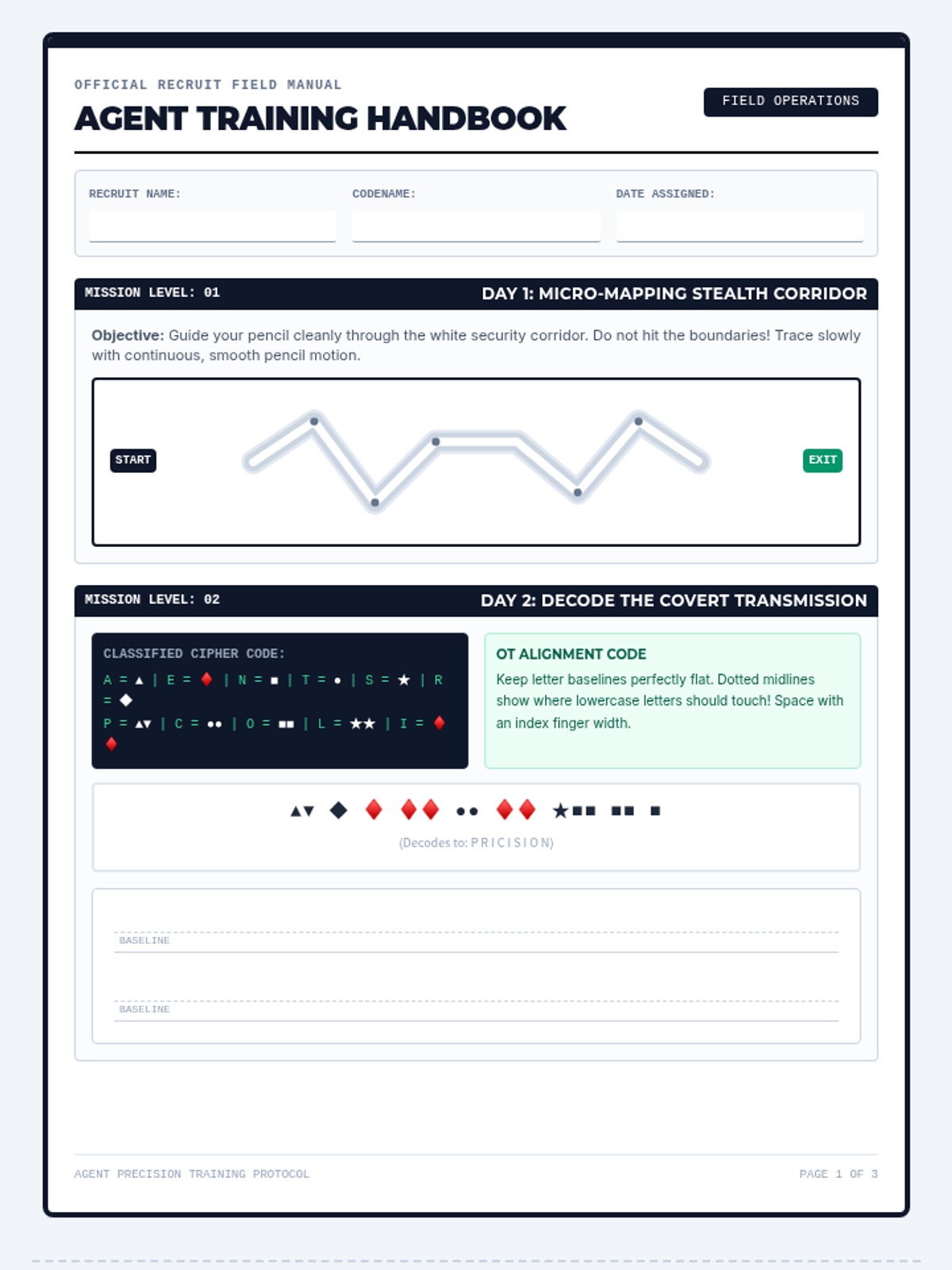
A gorgeous 3-page student-facing agent training workbook containing highly structured visual-motor tasks: tracing paths, baseline-aligned handwriting codebreaking, scissor coordination lines, dot-grid symmetry blueprints, and a graduation certificate.
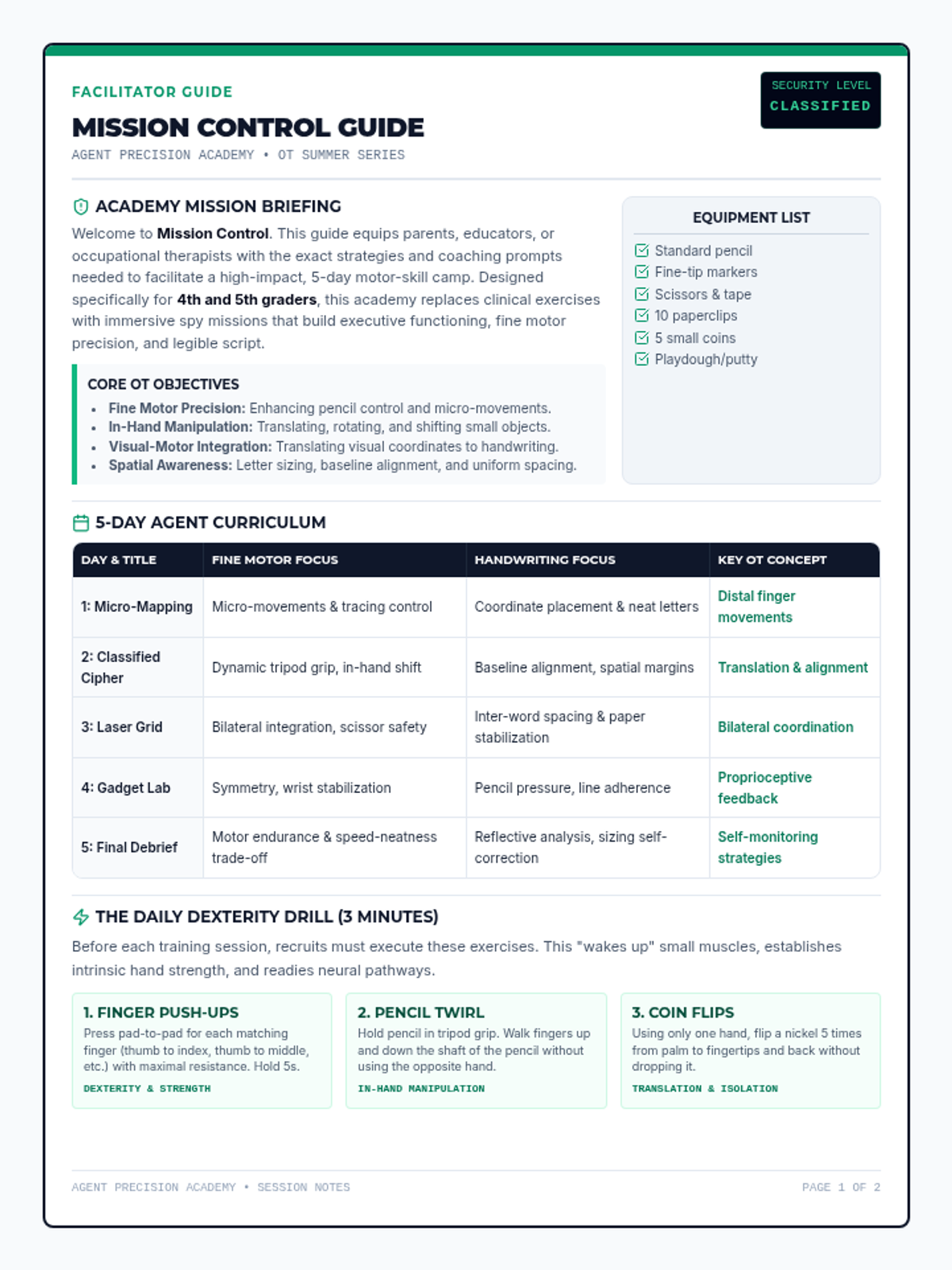
A 2-page detailed facilitation guide for educators, parents, and occupational therapists. Contains the weekly agent-themed OT structure, daily warm-up dexterity drills, instructional scripts, and progress tracking tools for 4th and 5th graders.
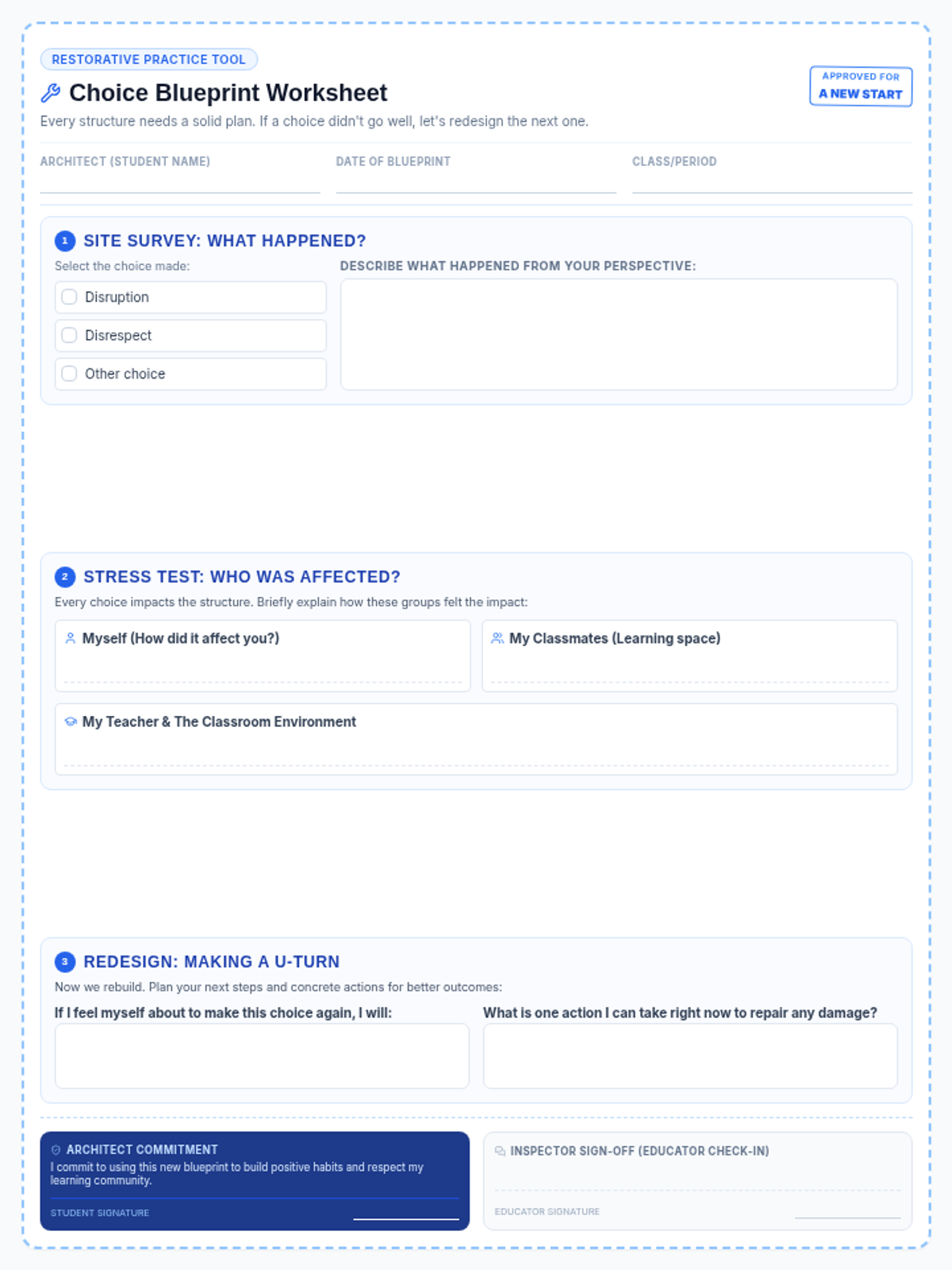
An architect-themed restorative reflection worksheet for students to process disruptive or disrespectful choices and design a blueprint for better decisions next time.
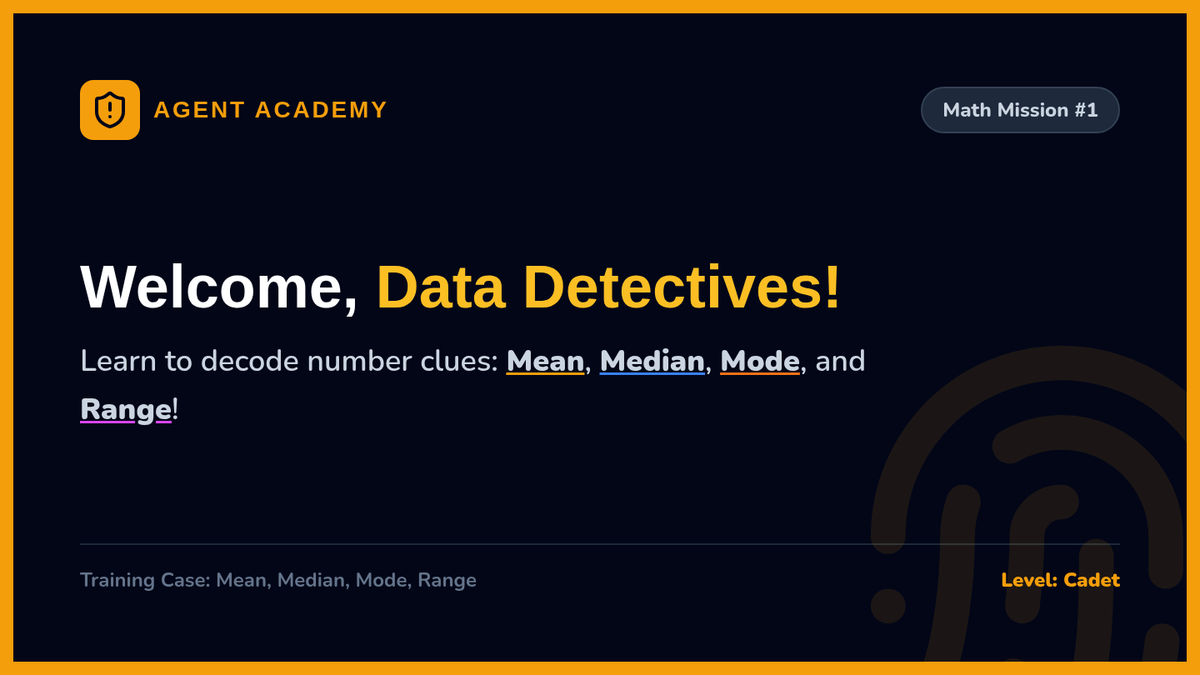
A highly visual and engaging 7-slide presentation designed for teaching Mean, Median, Mode, and Range. Features bold high-contrast detective colors, large readable text (minimum 24px), concrete puppy treat examples, and step-by-step visual models tailored for special education.
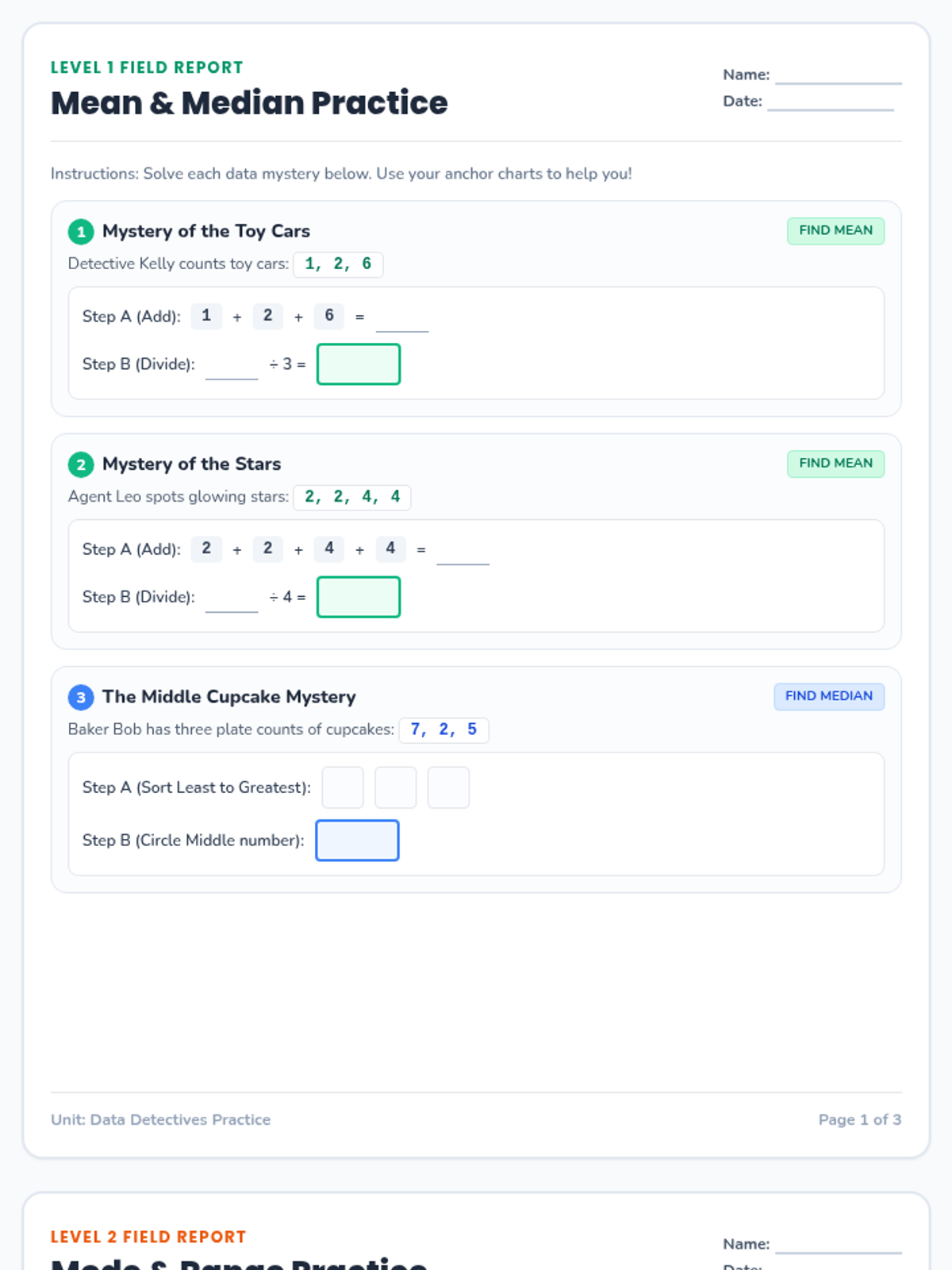
A 3-page printable math practice set containing progressive math sheets for solving Mean, Median, Mode, and Range using simple datasets, along with a detailed visual answer key for teachers.
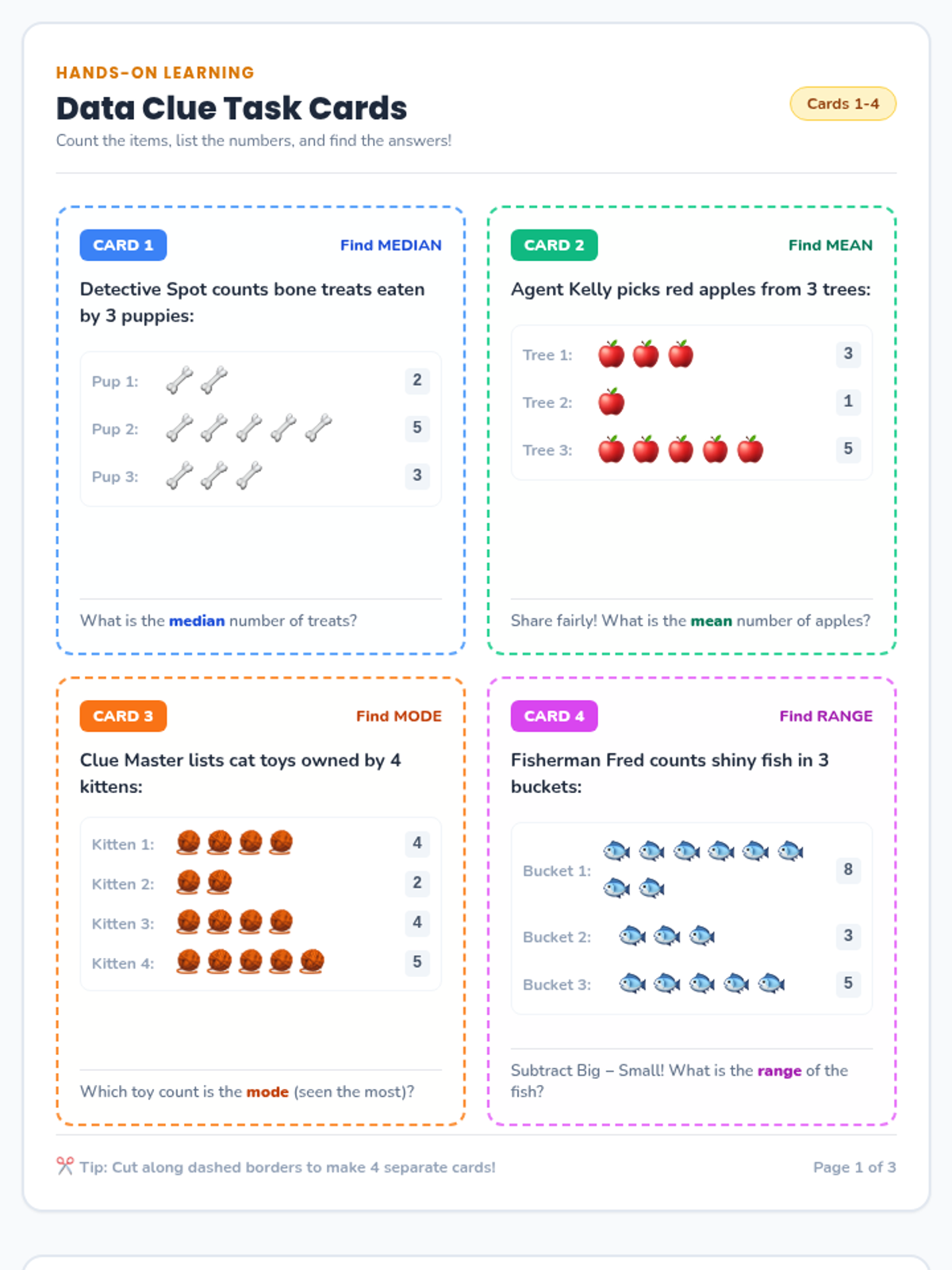
A packet of 8 print-ready math task cards with simplified counting tasks (using emojis as hands-on counters) and a 1-page student recording sheet. Structured for special education with high-contrast borders and clear, large fonts.
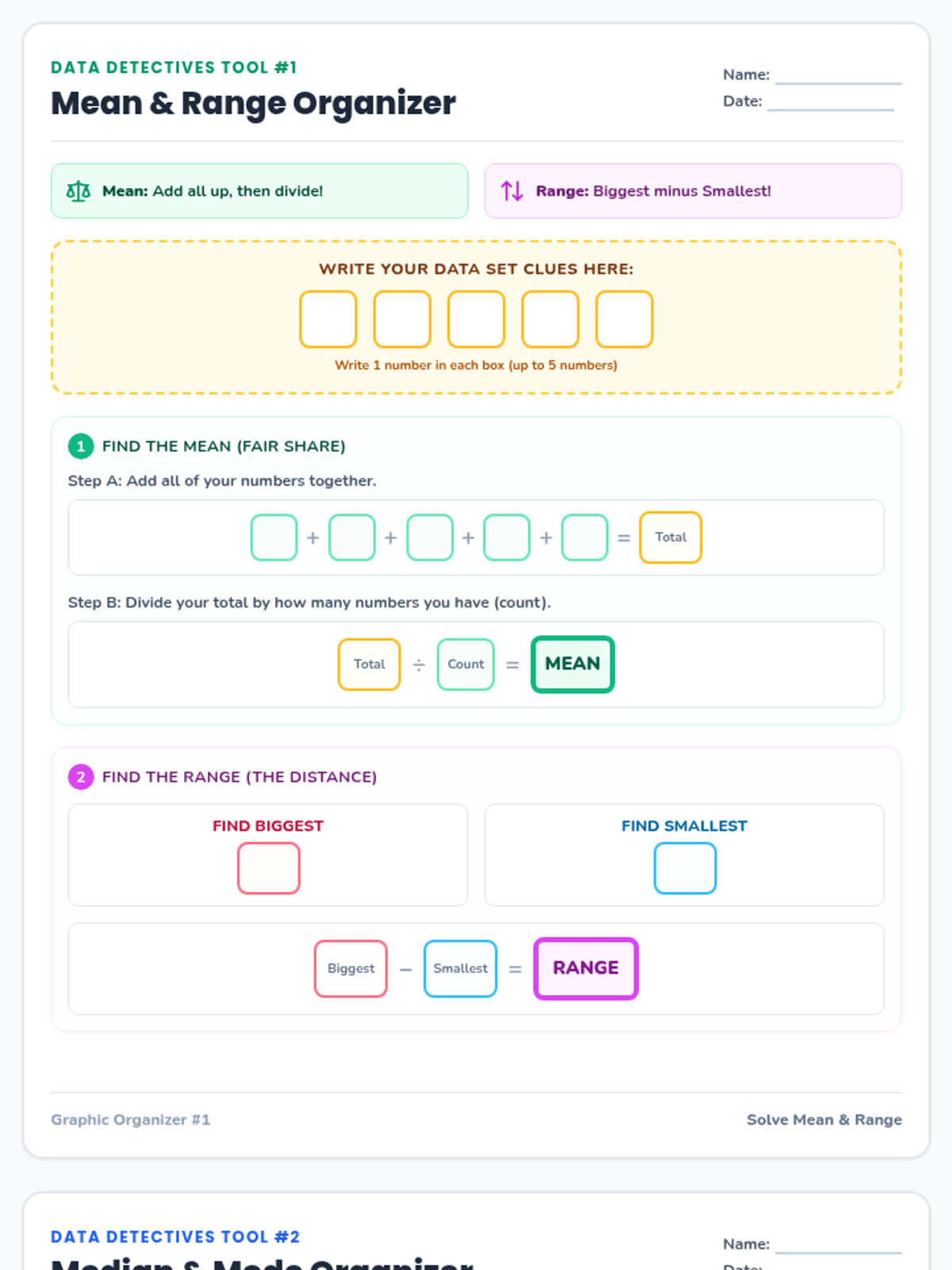
A printable 2-page graphic organizer designed specifically for special education. It guides students through the step-by-step process of calculating Mean, Median, Mode, and Range using color-coded inputs, clean layouts, and clear instructions.
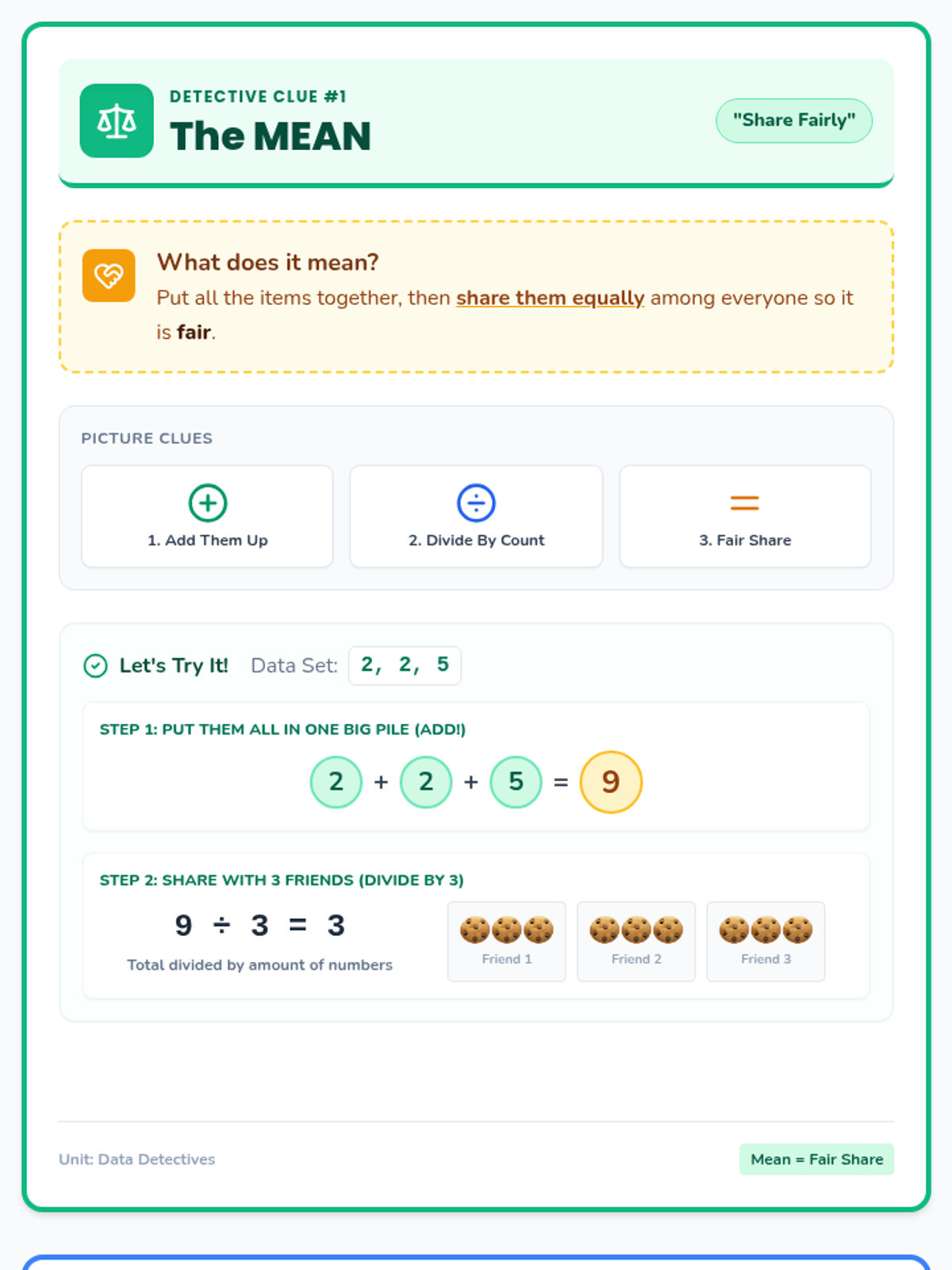
A set of four colorful and highly visual math posters representing Mean, Median, Mode, and Range, modified with picture symbols, simple definitions, and single-digit examples.
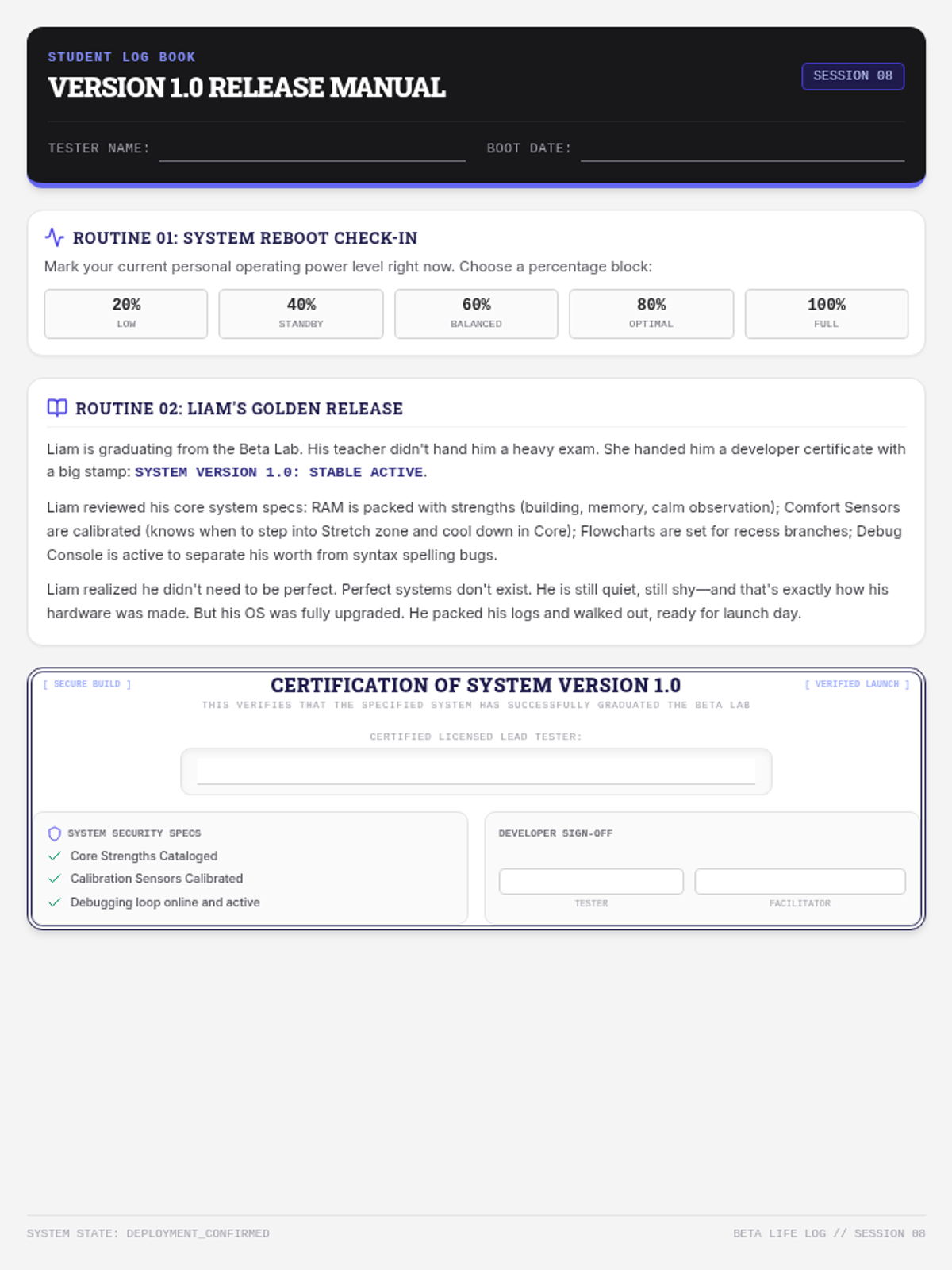
This student-facing spec sheet serves as the primary workspace for Session 8. It contains a predictable energy level check-in, Liam's story on graduating from the Beta Lab, and a beautiful certificate layout for the final signoff.
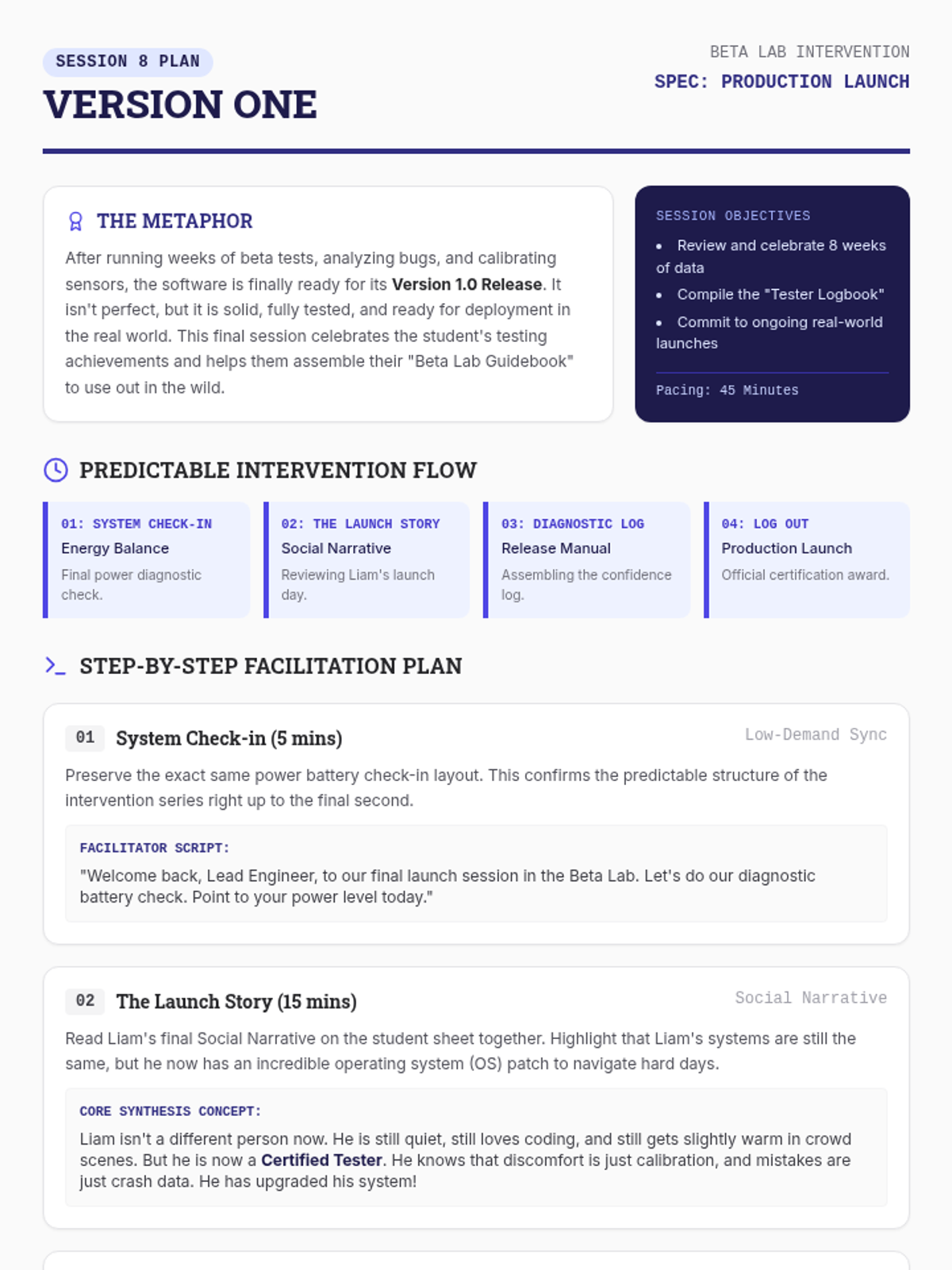
This facilitation guide provides the step-by-step lesson plan and engagement tips for Session 8, synthesizing the 8-week journey and guiding the teacher in organizing a quiet, professional celebration of the student's testing achievements.
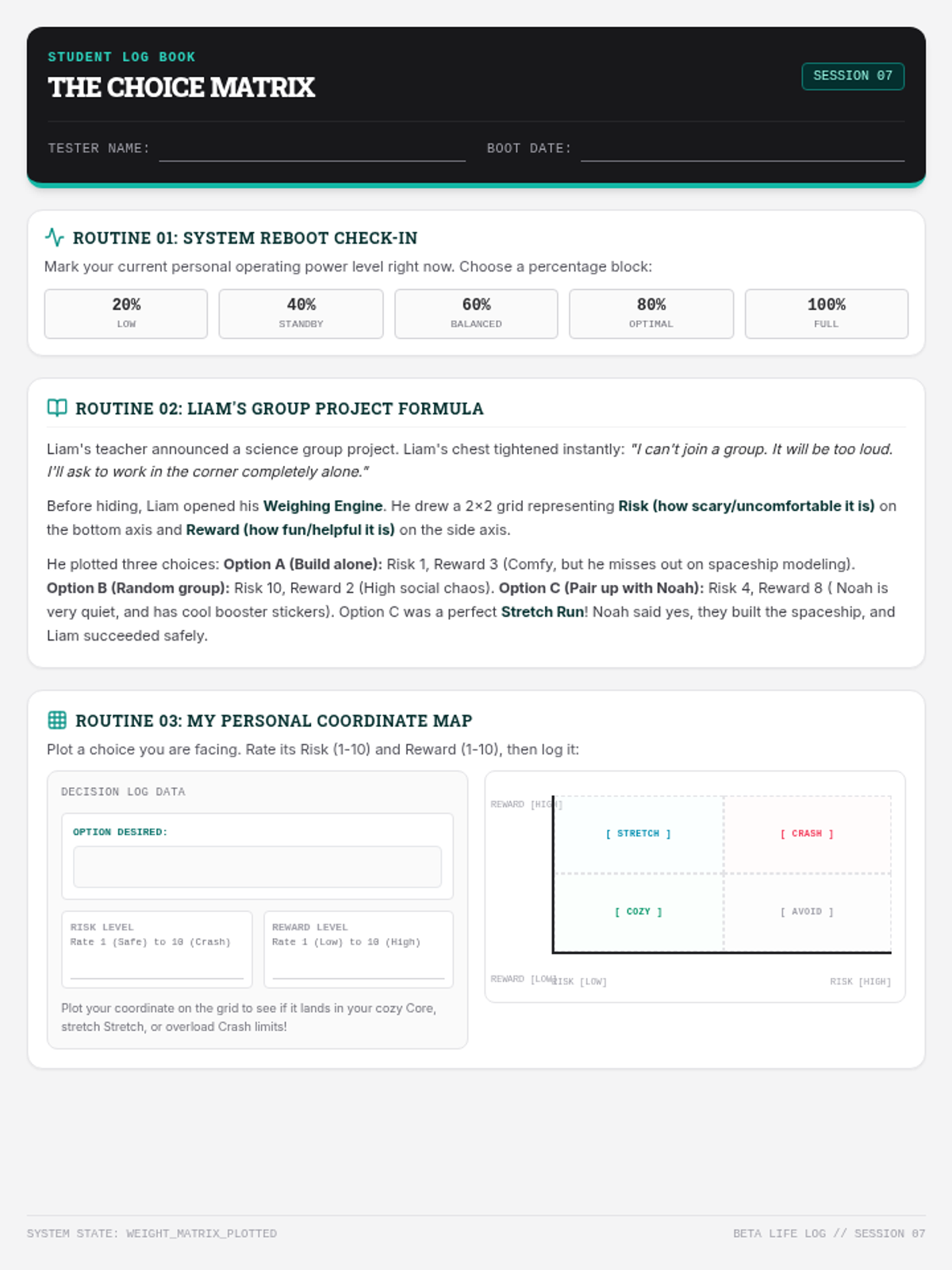
This student-facing spec sheet serves as the primary workspace for Session 7. It contains a predictable energy level check-in, Liam's story on using coordinates to analyze a scary science group assignment, and a structured 2x2 plotting grid.
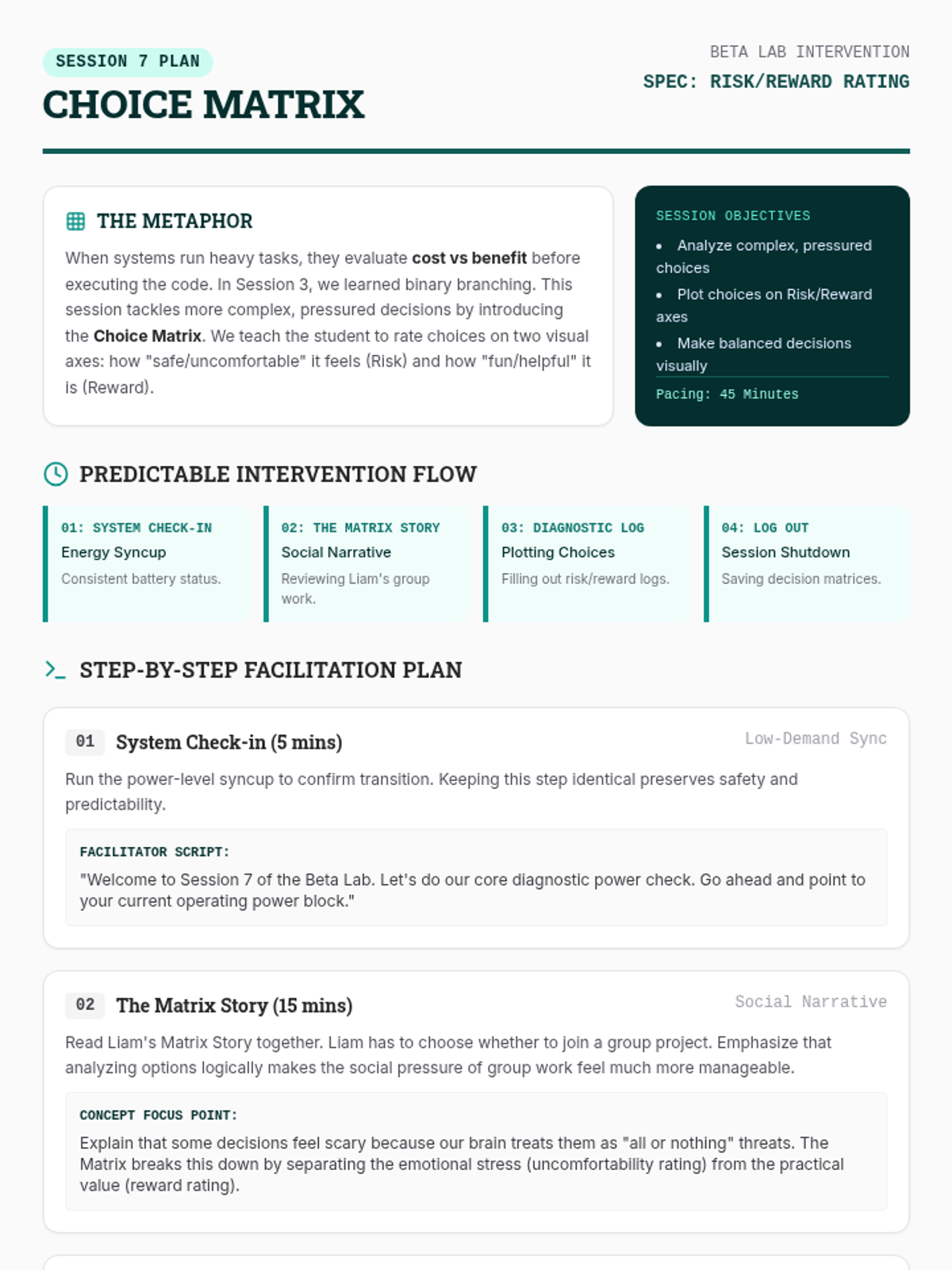
This facilitation guide provides the step-by-step lesson plan and engagement tips for Session 7, teaching the student how to use a visual Risk/Reward rating matrix to analyze complex choices.
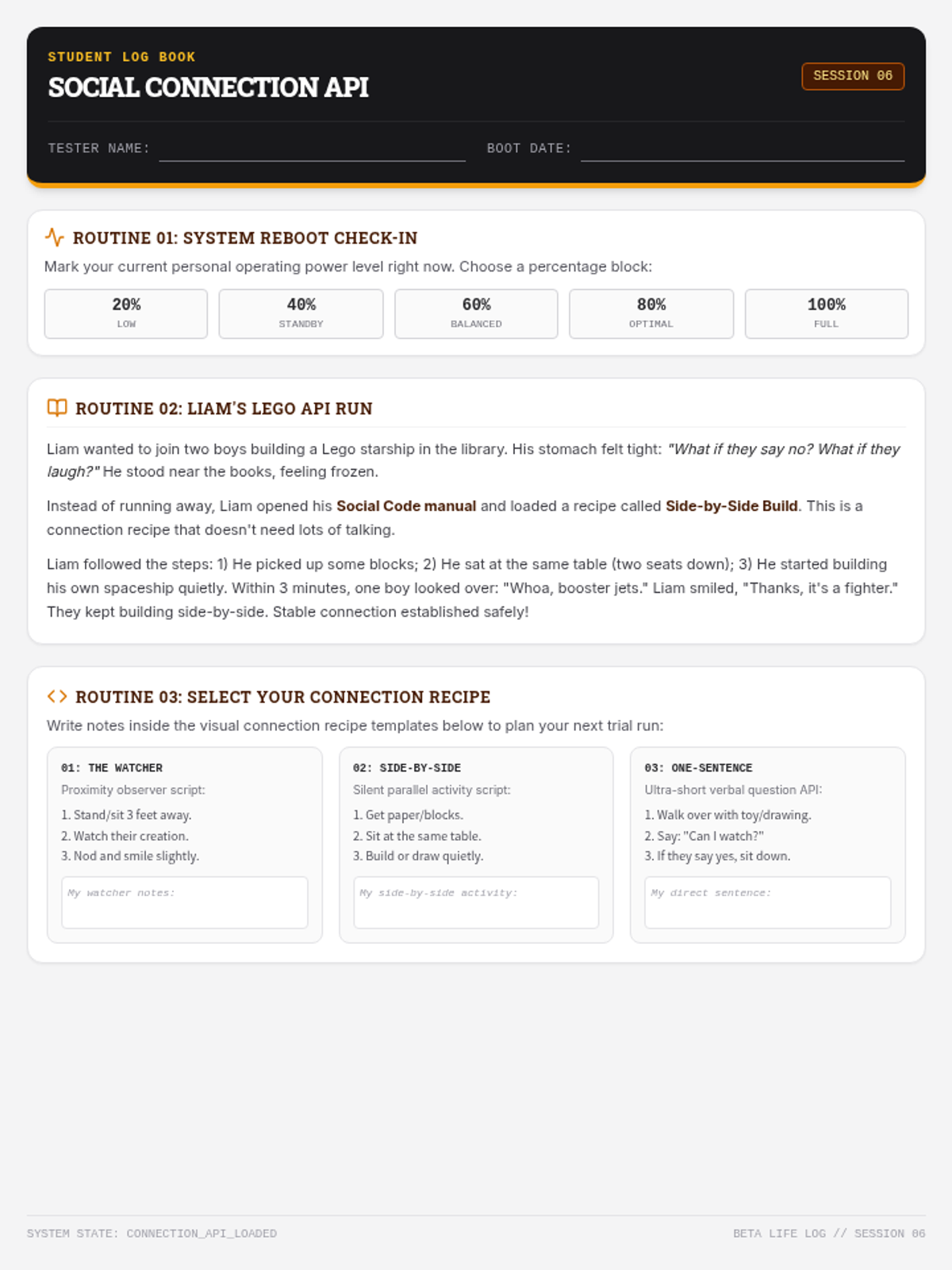
This student-facing spec sheet serves as the primary workspace for Session 6. It contains a predictable energy level check-in, Liam's story on parallel play lego connection, and three visual recipes for peer connection.