A visual presentation introducing students to the concept of IEP goals and the "Blueprint Formula" for self-advocacy. Features clear, bold text and a construction theme to make complex legal terms accessible.
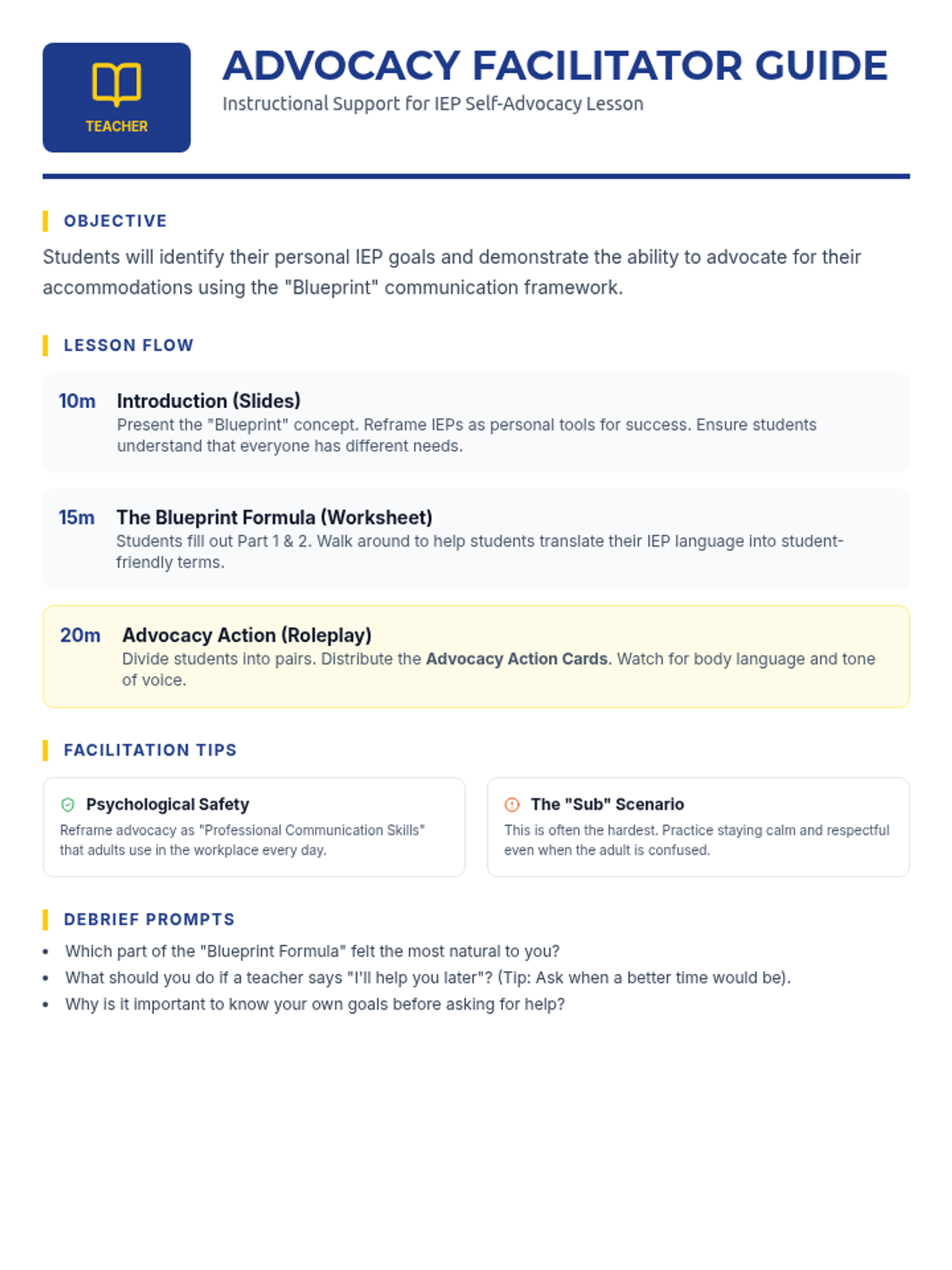
A facilitator guide for teachers to deliver the IEP self-advocacy lesson. Now optimized to fit on a single page with all headings and content together.
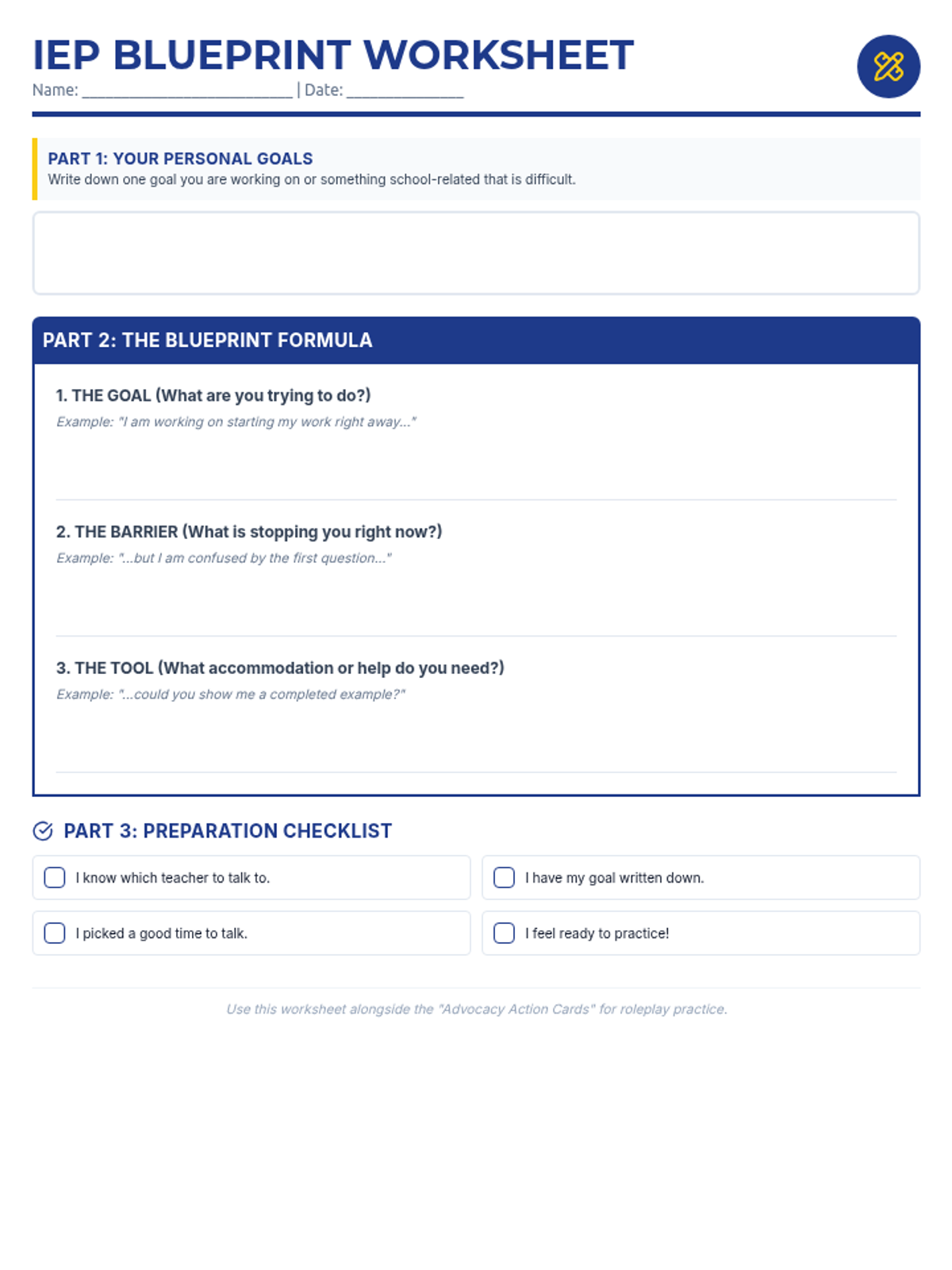
A student worksheet that helps individuals break down their own IEP goals using the "Blueprint Formula" (Goal, Barrier, Tool). Now optimized to fit on a single page with consistent work area styling and a clearer connection to the roleplay activity.
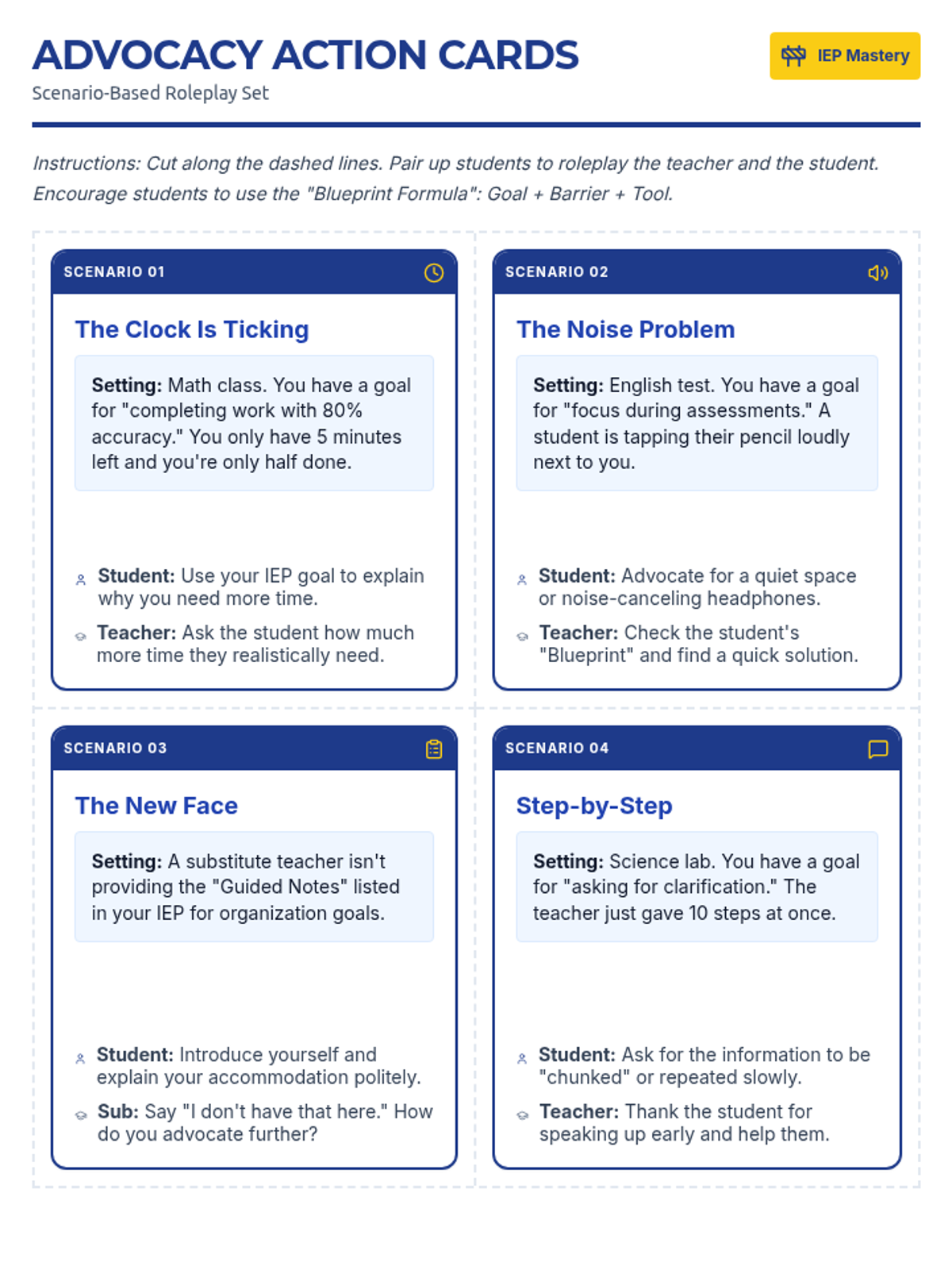
A set of four scenario cards for roleplaying self-advocacy in the classroom. Each card provides a specific IEP-related situation, a student prompt, and a teacher prompt to facilitate realistic practice. Now optimized to fit on a single printable page with cut lines.
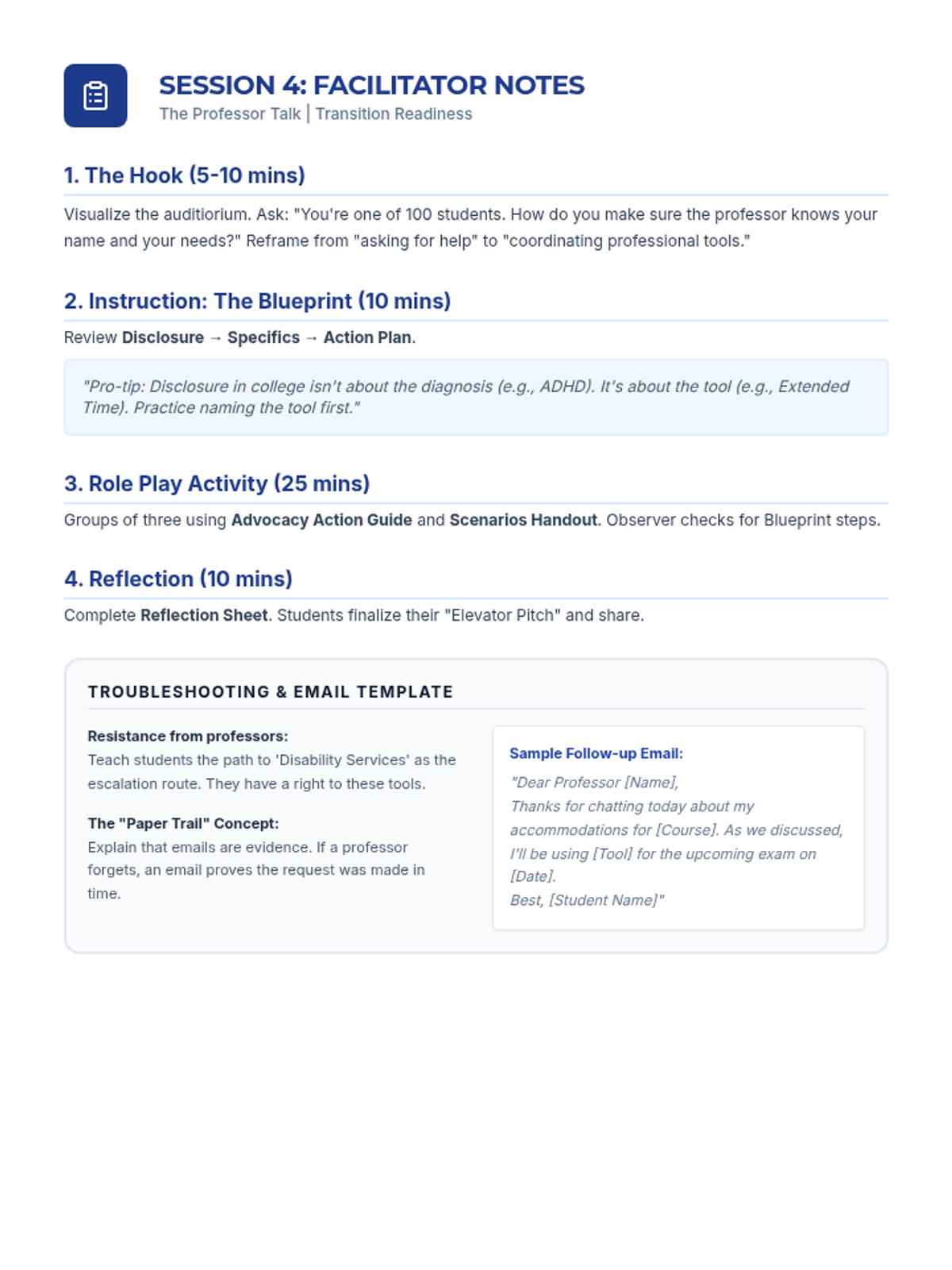
A comprehensive facilitator's guide for the session, providing step-by-step instructions and strategies using the new 'Connection-Strategy-Logistics' advocacy framework. Includes explicit timing and instructions for using the Scenarios Handout and Practice Notes.
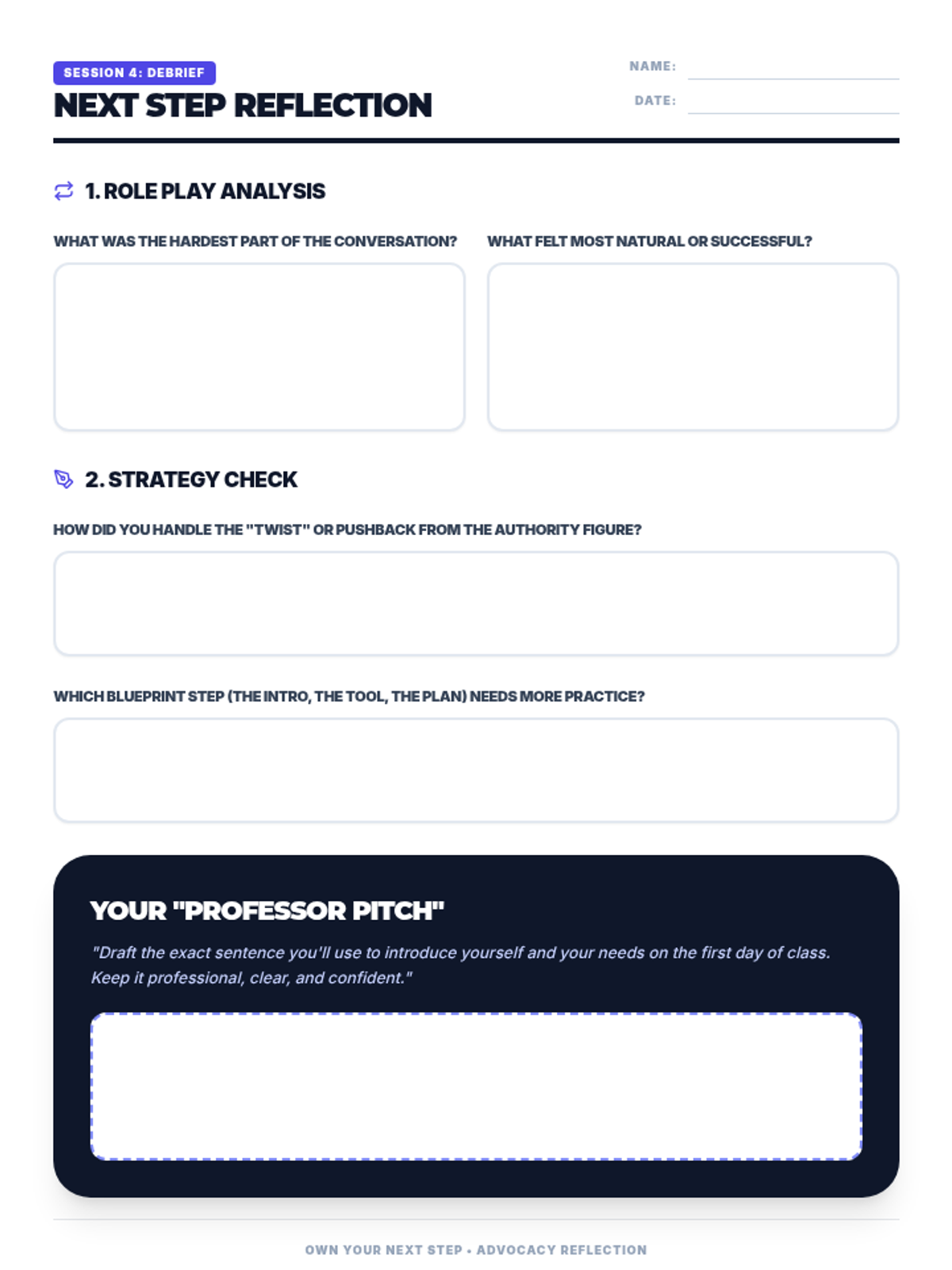
A post-activity reflection sheet designed for student self-assessment. It helps students identify their strengths and growth areas in self-advocacy and includes a section for drafting a personal 'Professor Pitch' using the new Connection-Strategy-Logistics framework.
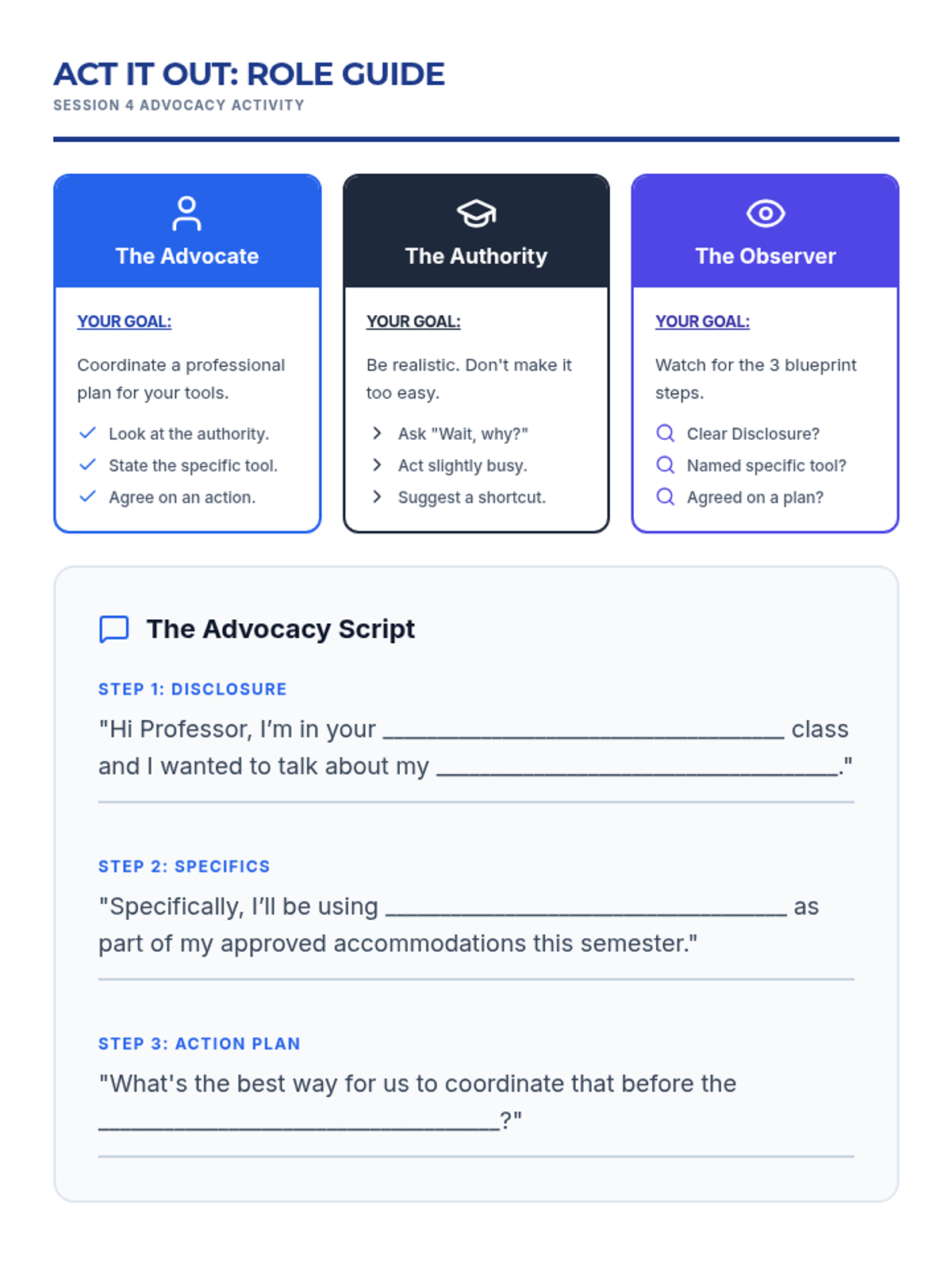
A clear, three-role guide for students to use during advocacy role-play. It includes specific goals for the Advocate, the Authority, and the Observer, along with a fill-in-the-blank script for extra support using the 'Connection, Strategy, Logistics' framework.
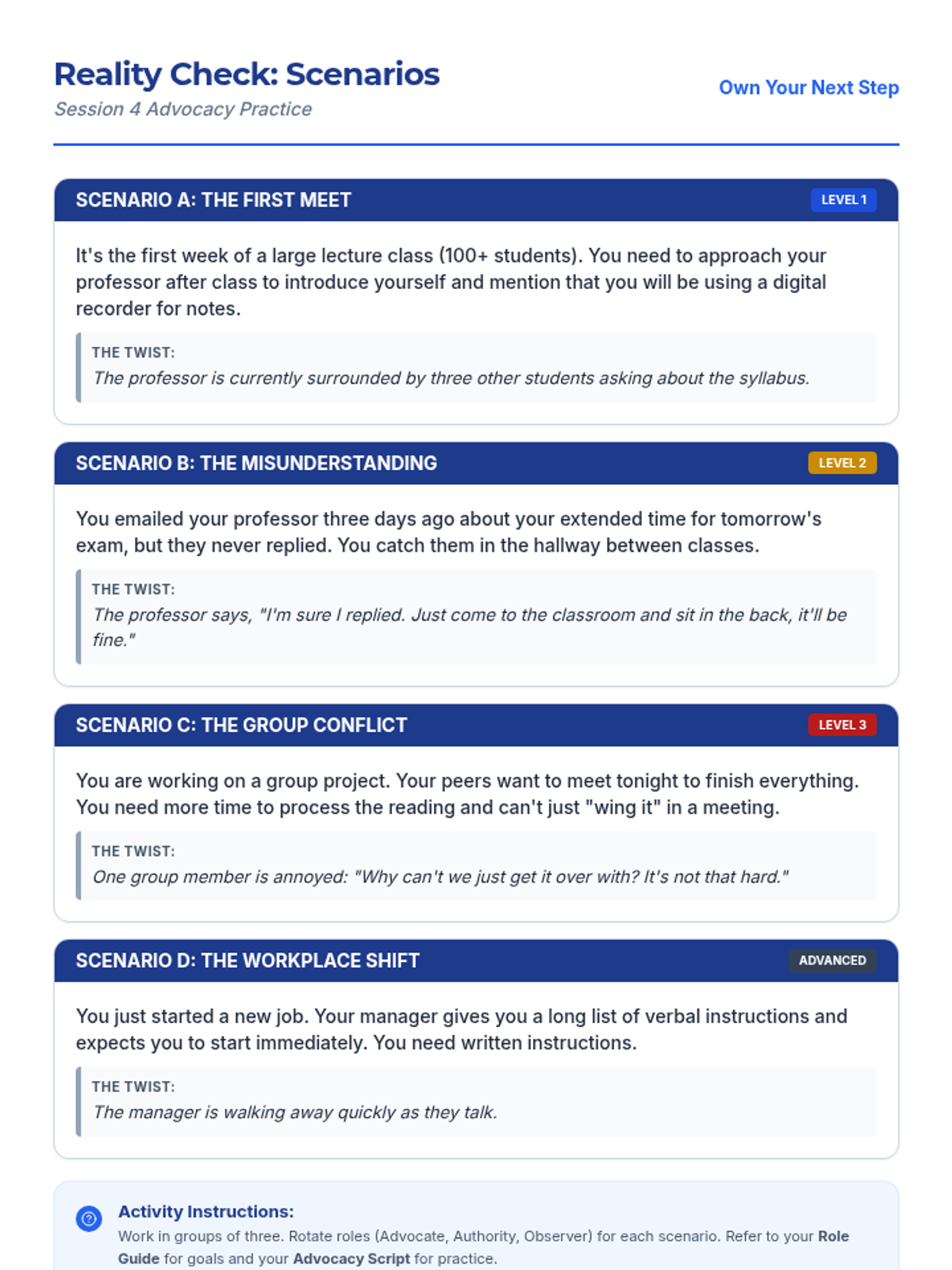
A collection of four realistic scenarios ranging from easy to difficult, focusing on college and workplace self-advocacy. Each scenario includes a "twist" to make the role-play more challenging and authentic. Includes a practice notes area for students.
A professional and engaging 9-slide presentation designed for high school seniors. It covers the transition to college advocacy, provides a three-step blueprint (The Connection, The Strategy, The Logistics) for communicating needs, and sets up real-world role-play scenarios.
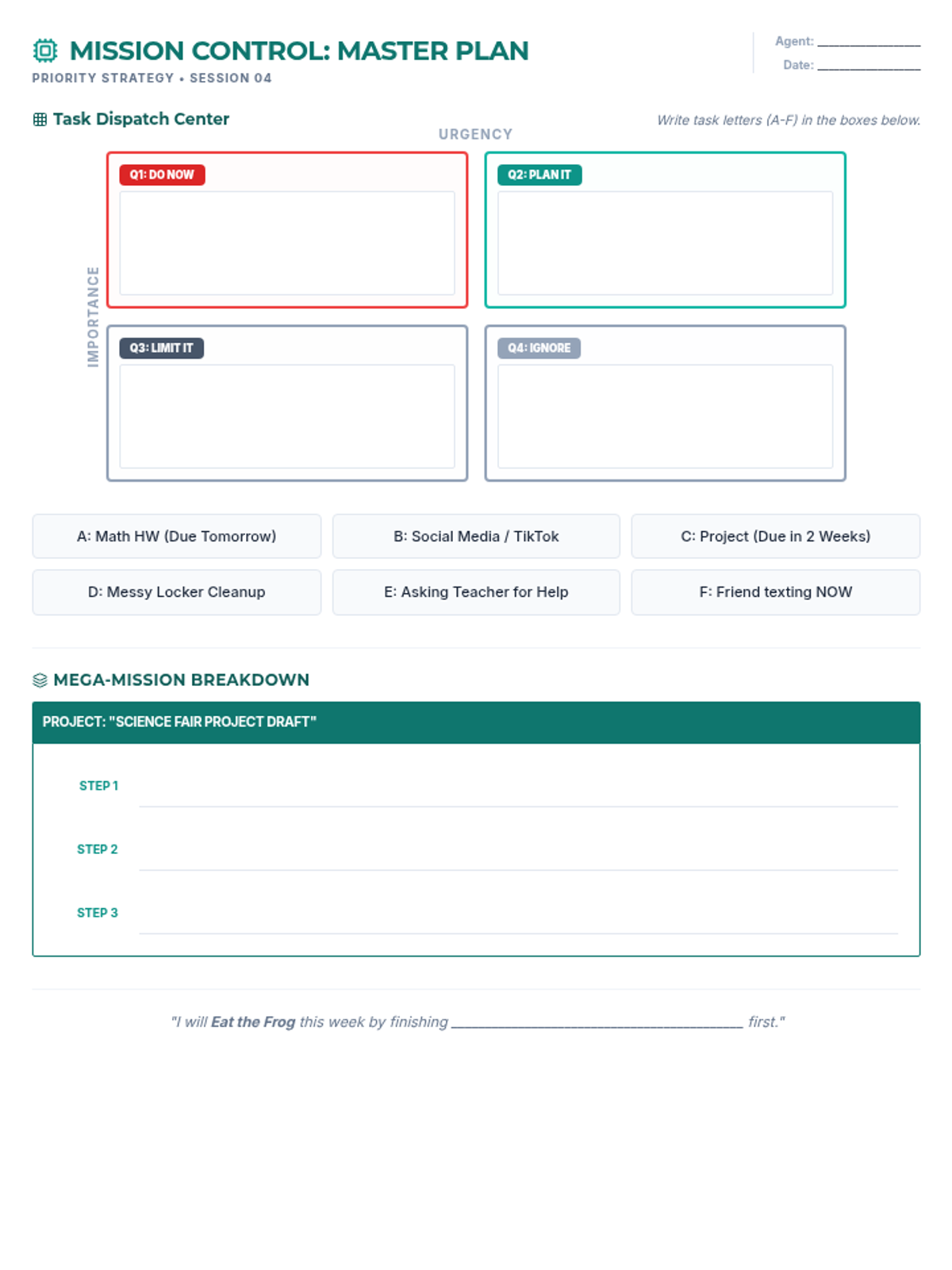
An interactive worksheet for 6th graders to practice prioritizing tasks using an urgency/importance matrix and breaking down a large science project into micro-steps.
A visual slide deck designed for a 30-minute group session to teach middle schoolers about the urgency/importance matrix and task chunking.
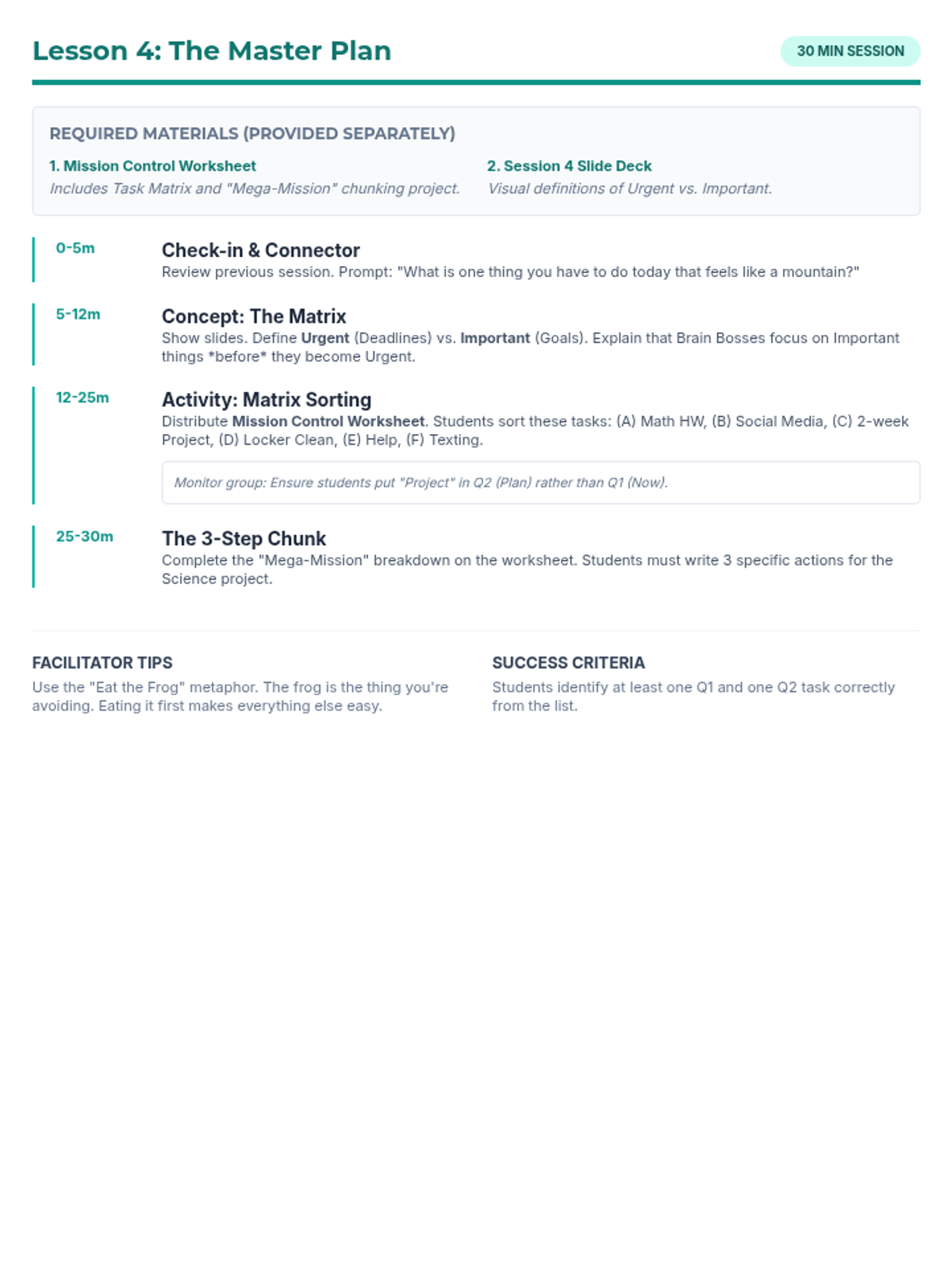
A detailed lesson plan for the 4th session of the executive functioning group, focusing on teaching 6th graders how to prioritize and plan effectively.
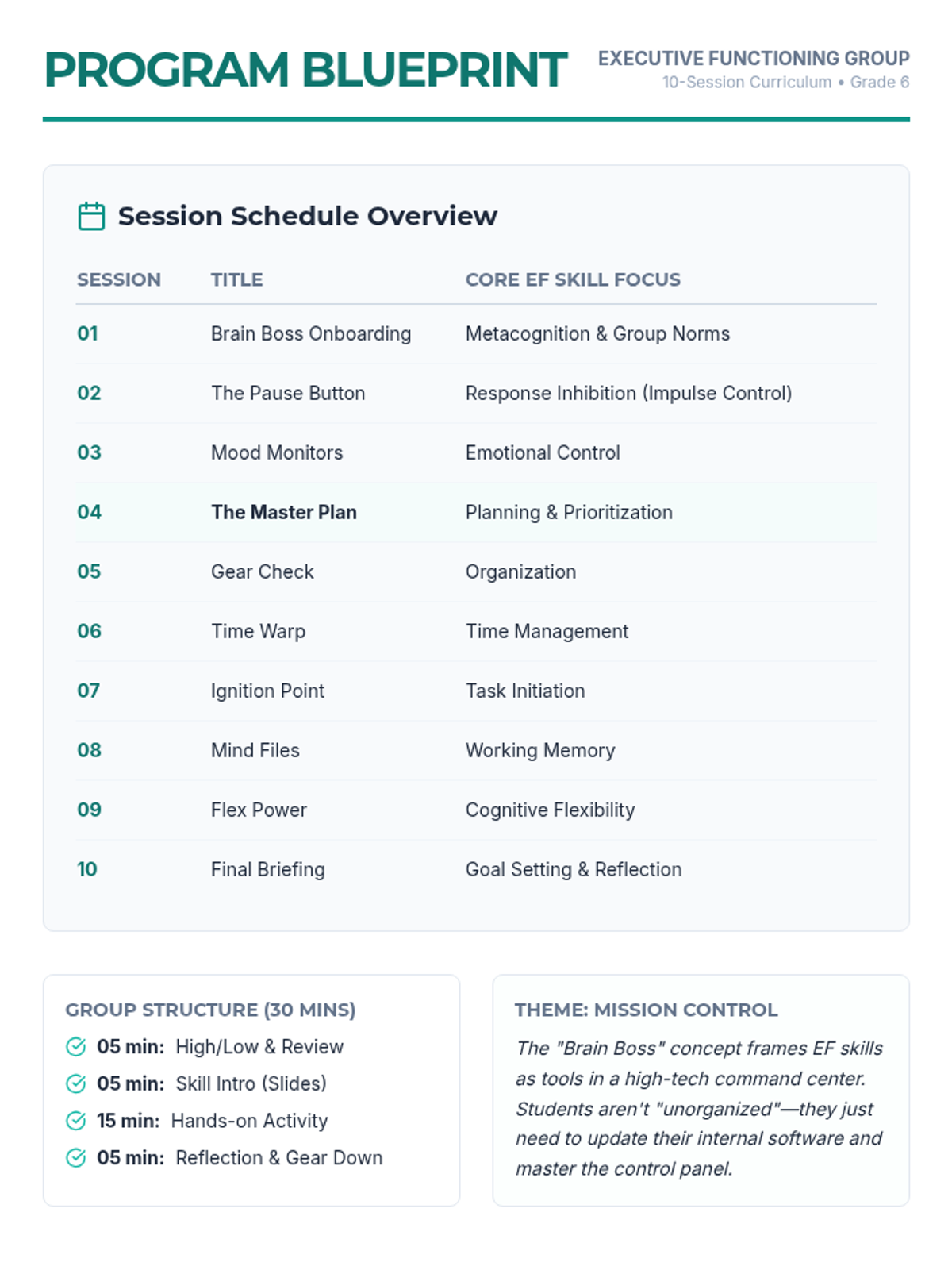
A high-level 10-session schedule and overview for the Brain Bosses executive functioning therapy group, designed for middle school facilitators.
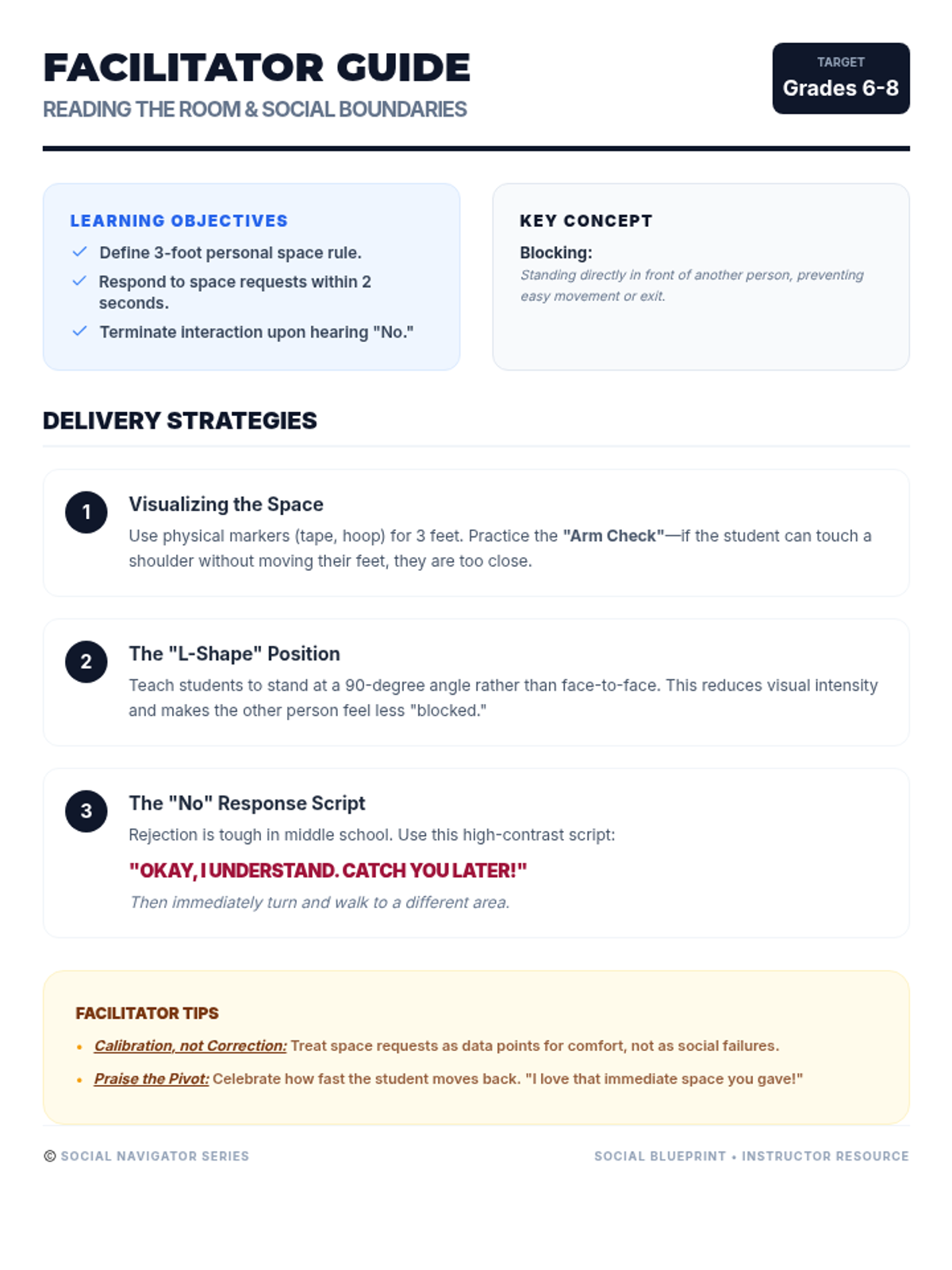
A teacher's guide for facilitating lessons on social boundaries, handling rejection, and physical positioning for middle schoolers with autism.
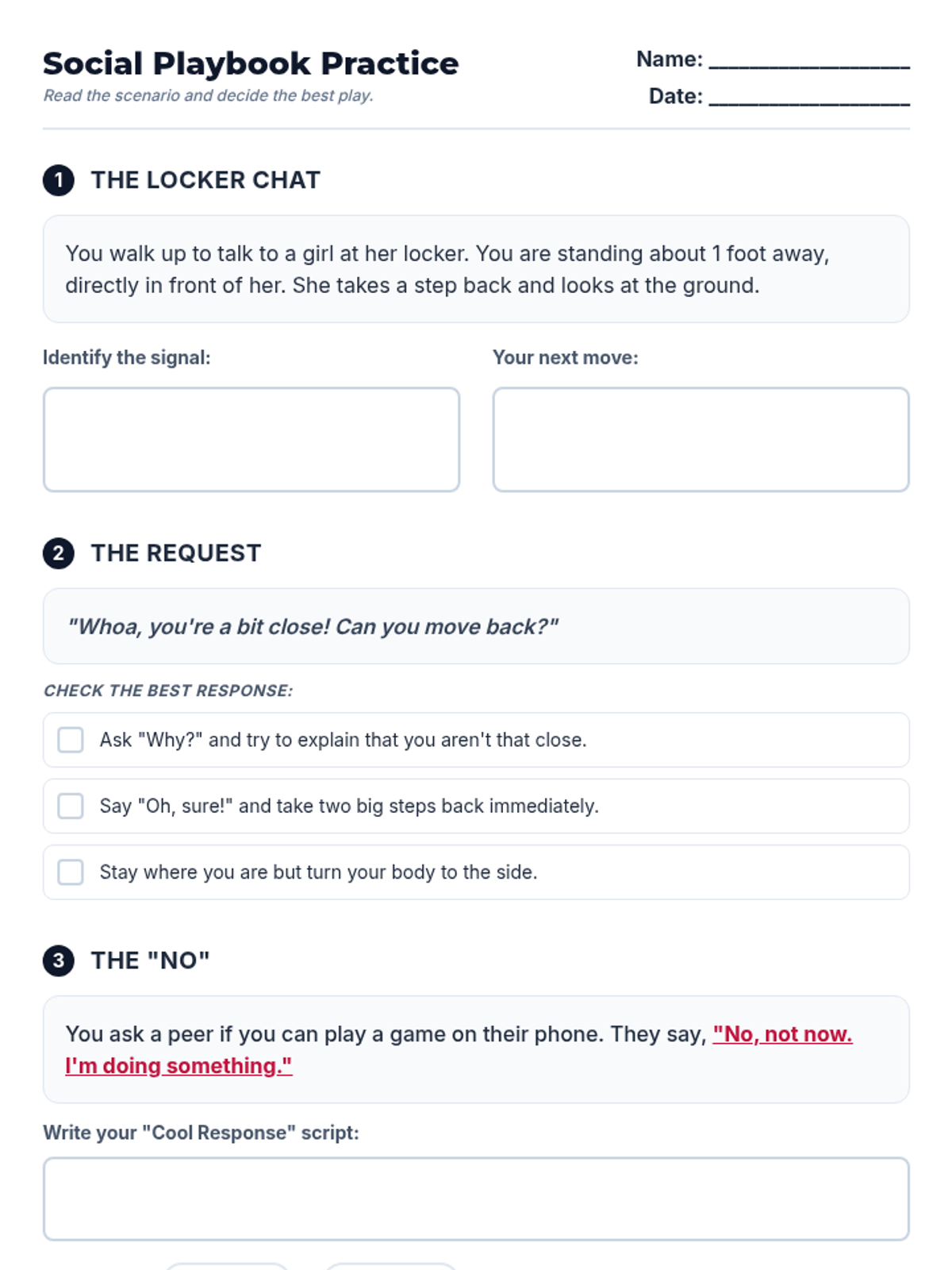
A practice worksheet with social scenarios and reflection questions to help the student process personal space rules and responses to rejection.
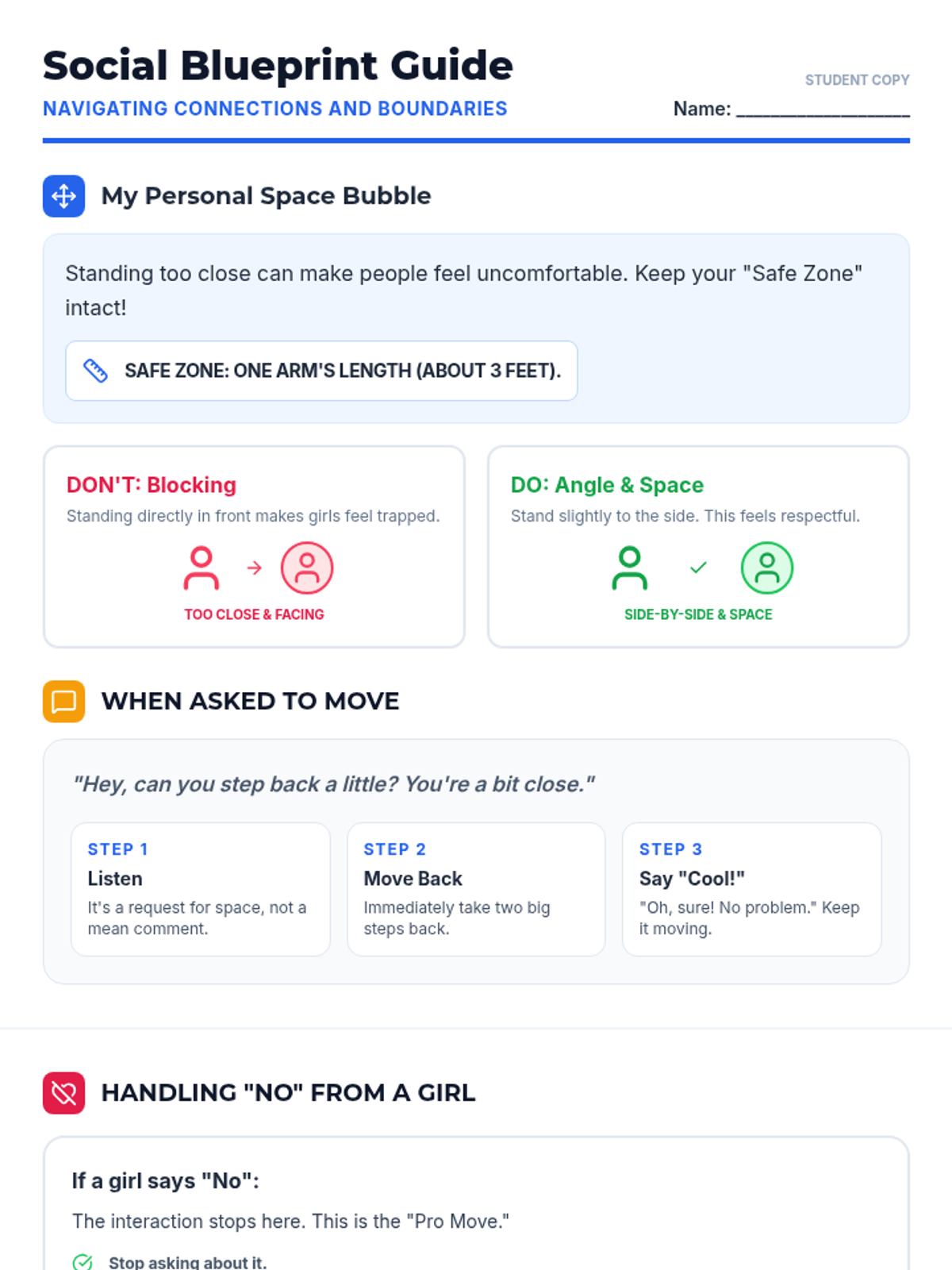
A two-page social story handout for a middle school boy with autism, detailing specific rules for personal space, responding to requests to move, and handling social rejection.