A 2-page guided self-reflection log template where students analyze a piece of real-world feedback they recently received. Features structured checklists for emotional responses, de-escalation tracking, action planning, and a 7-day habit tracker.
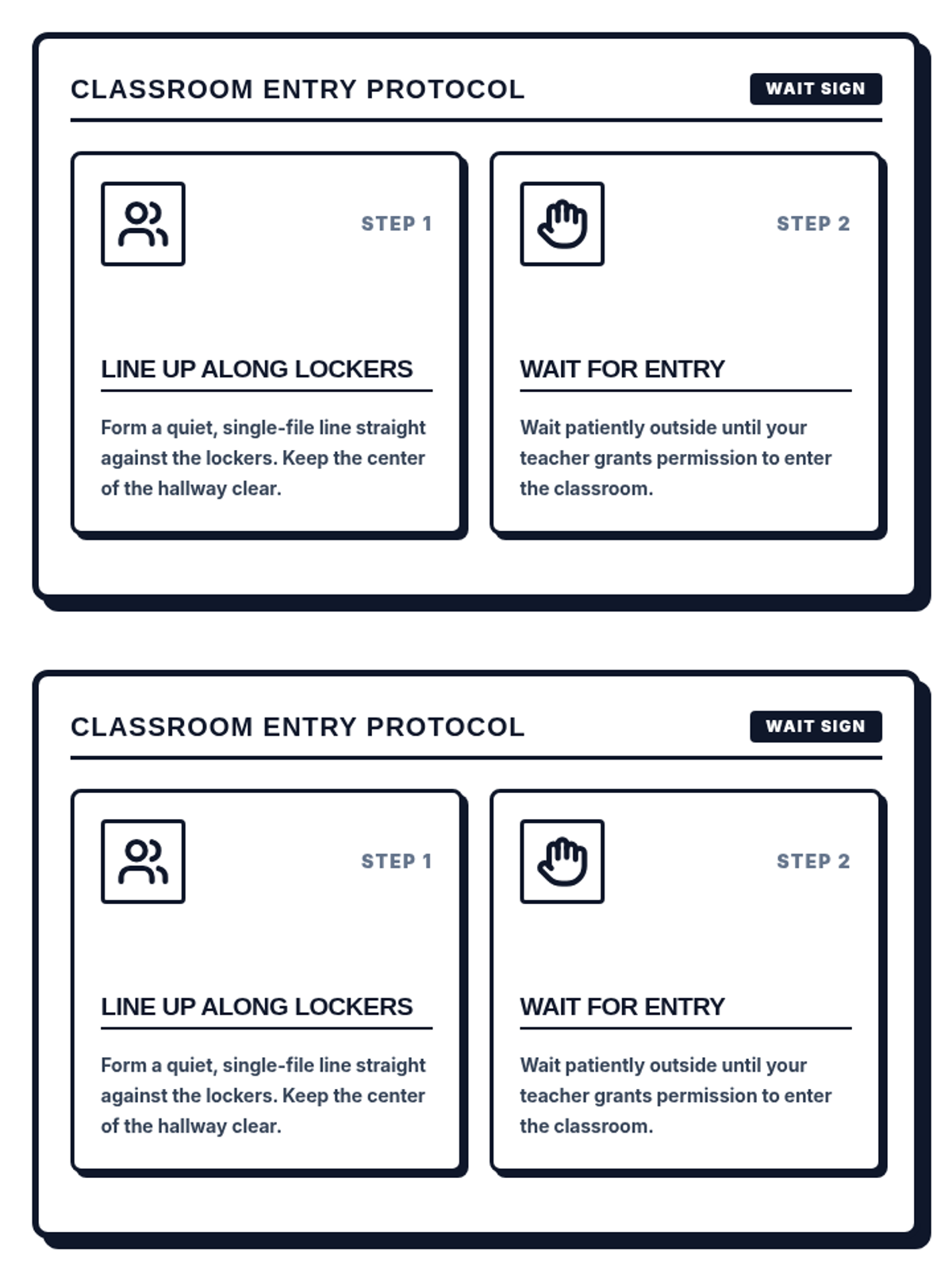
A cleaner, simplified pair of doubled half-sheet signs with footers removed, larger graphics, and bolder headings. The space between the step headings and text descriptors has been increased to create better vertical structure and clarity.
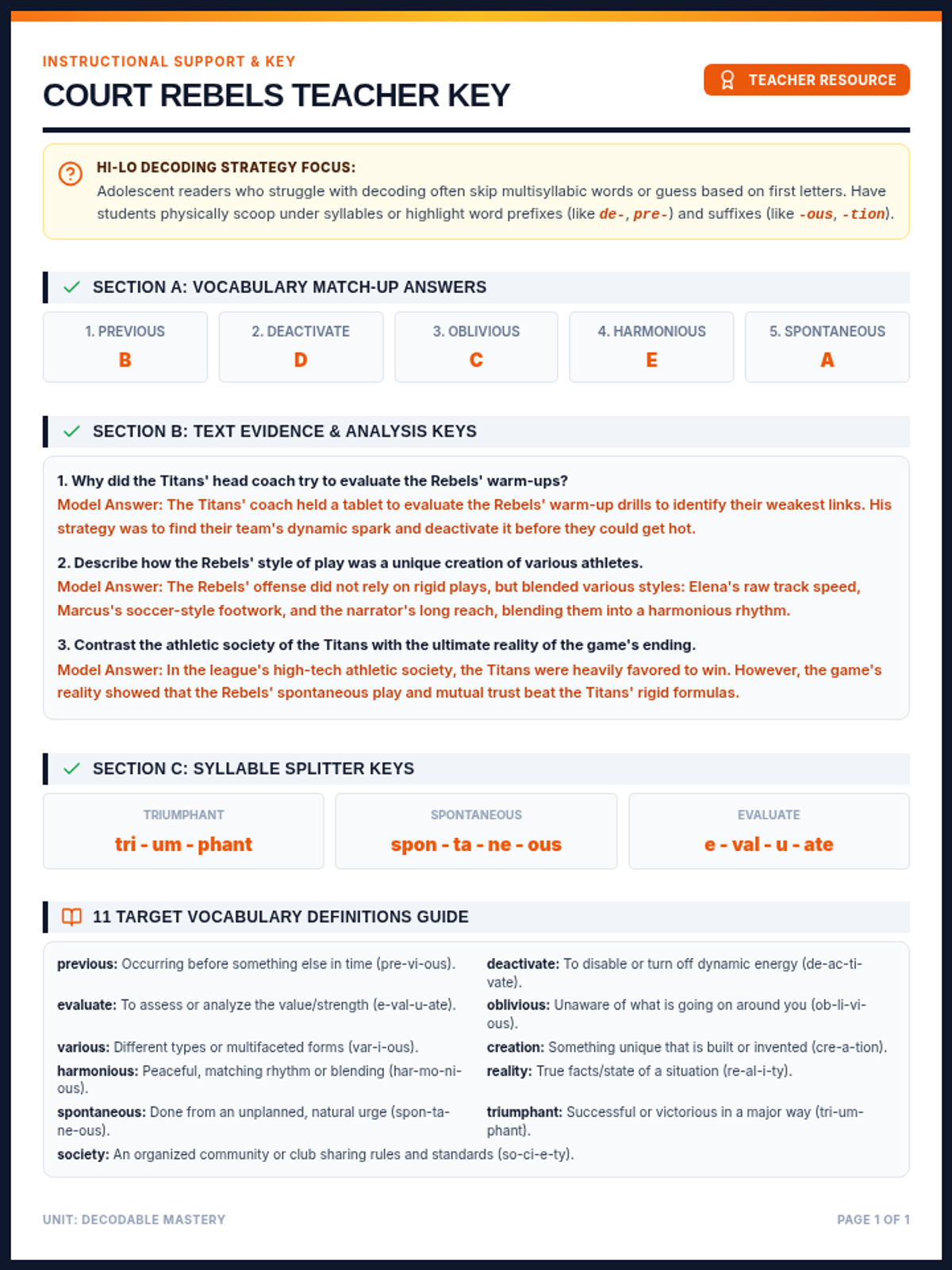
A teacher-facing reference guide and answer key for the Court Rebels lesson. It includes model answers, syllable division breakdowns, pronunciation support, and diagnostic teaching tips for struggling adolescent decoders.
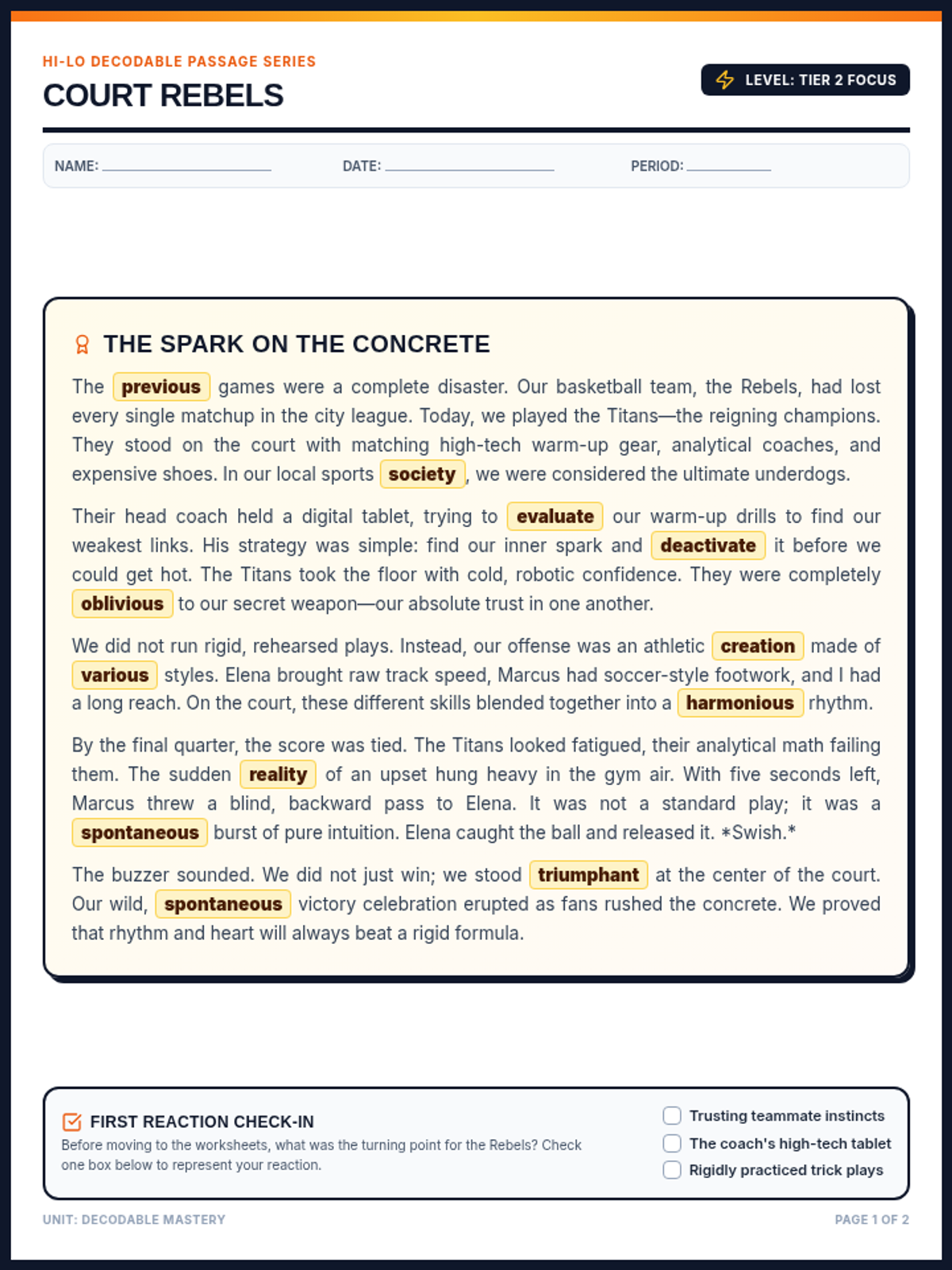
A print-ready, high-interest decodable passage and comprehension worksheet about an underdog basketball team's spontaneous victory. Designed with adolescent-friendly sports styling, it includes the story, vocabulary matching, and text evidence writing prompts.
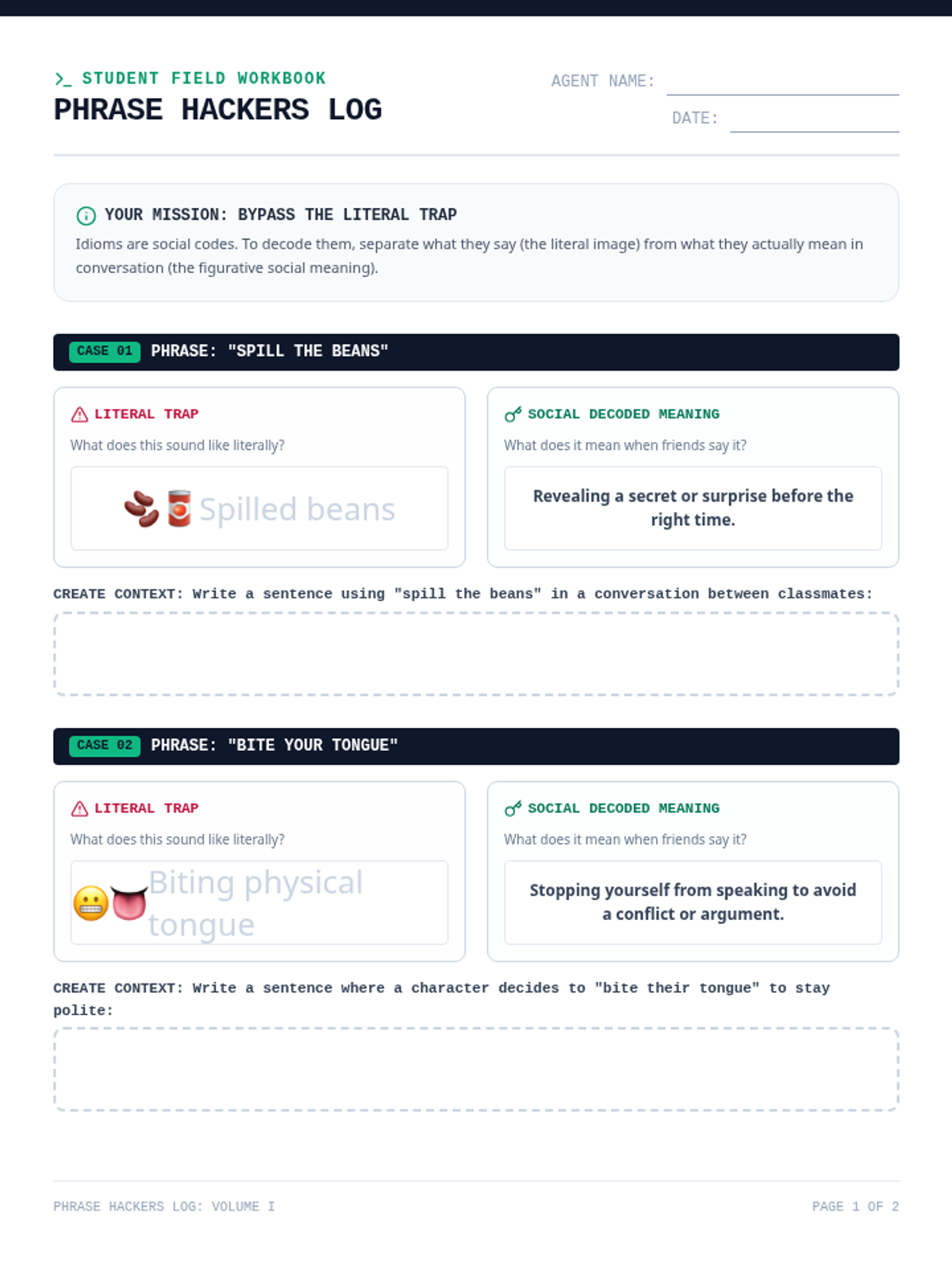
A 2-page print-ready graphic organizer and scaffolded practice worksheet for 9th-grade students to decode 'spill the beans', 'bite your tongue', and 'on the same page' in peer scenarios. Includes visual guidelines and handwriting spaces.
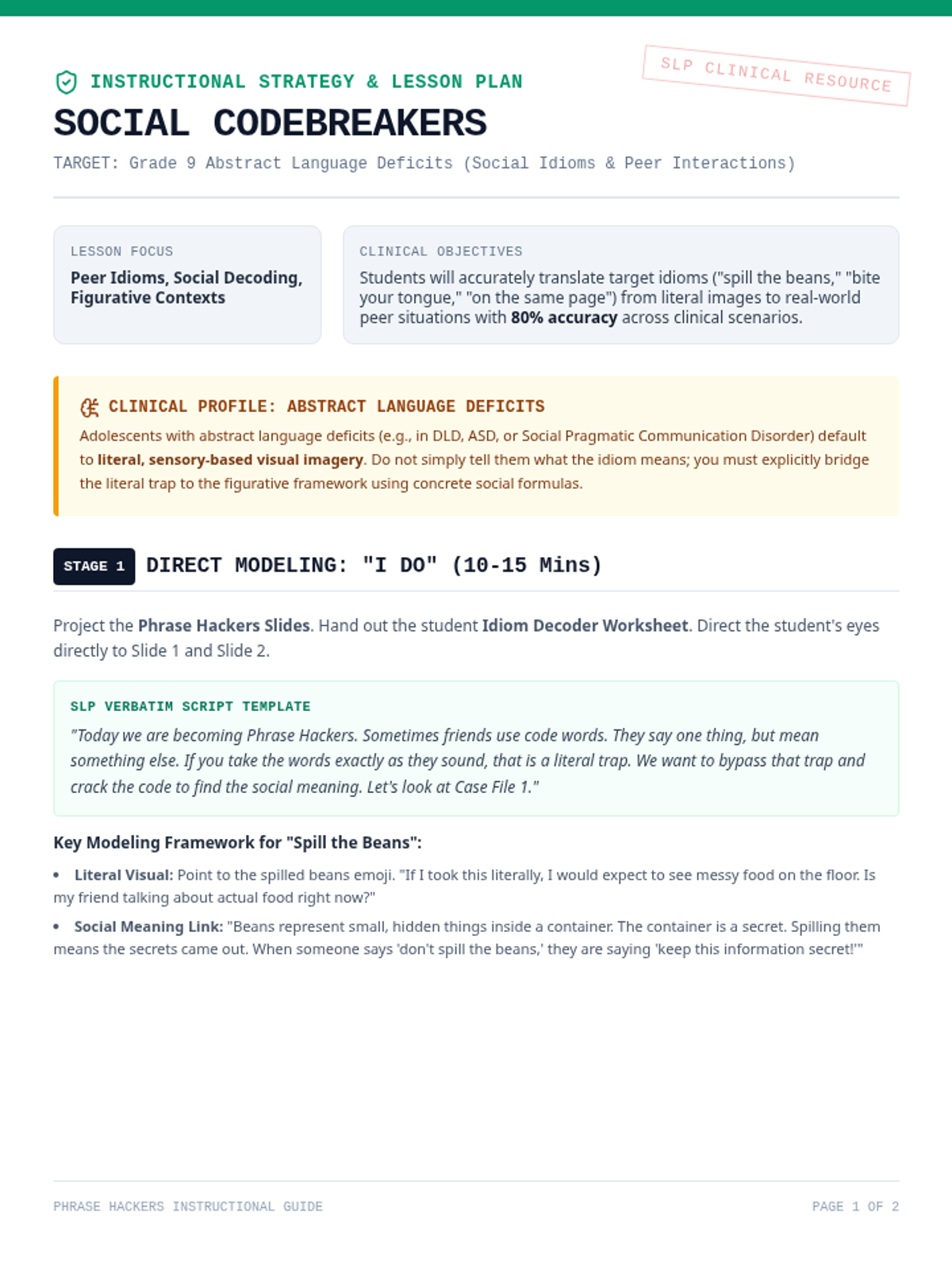
A 2-page print-ready clinical and instructional guide for educators and Speech-Language Pathologists. Outlines explicit instruction scripts, SLP accommodation models, and corrective feedback loops for teaching abstract language.
A sleek, high-contrast slide presentation for 9th-grade students with abstract language deficits, displaying literal vs. figurative breakdowns of social idioms. Uses a retro-tech 'Social Codebreaker' theme with clear visual frameworks.
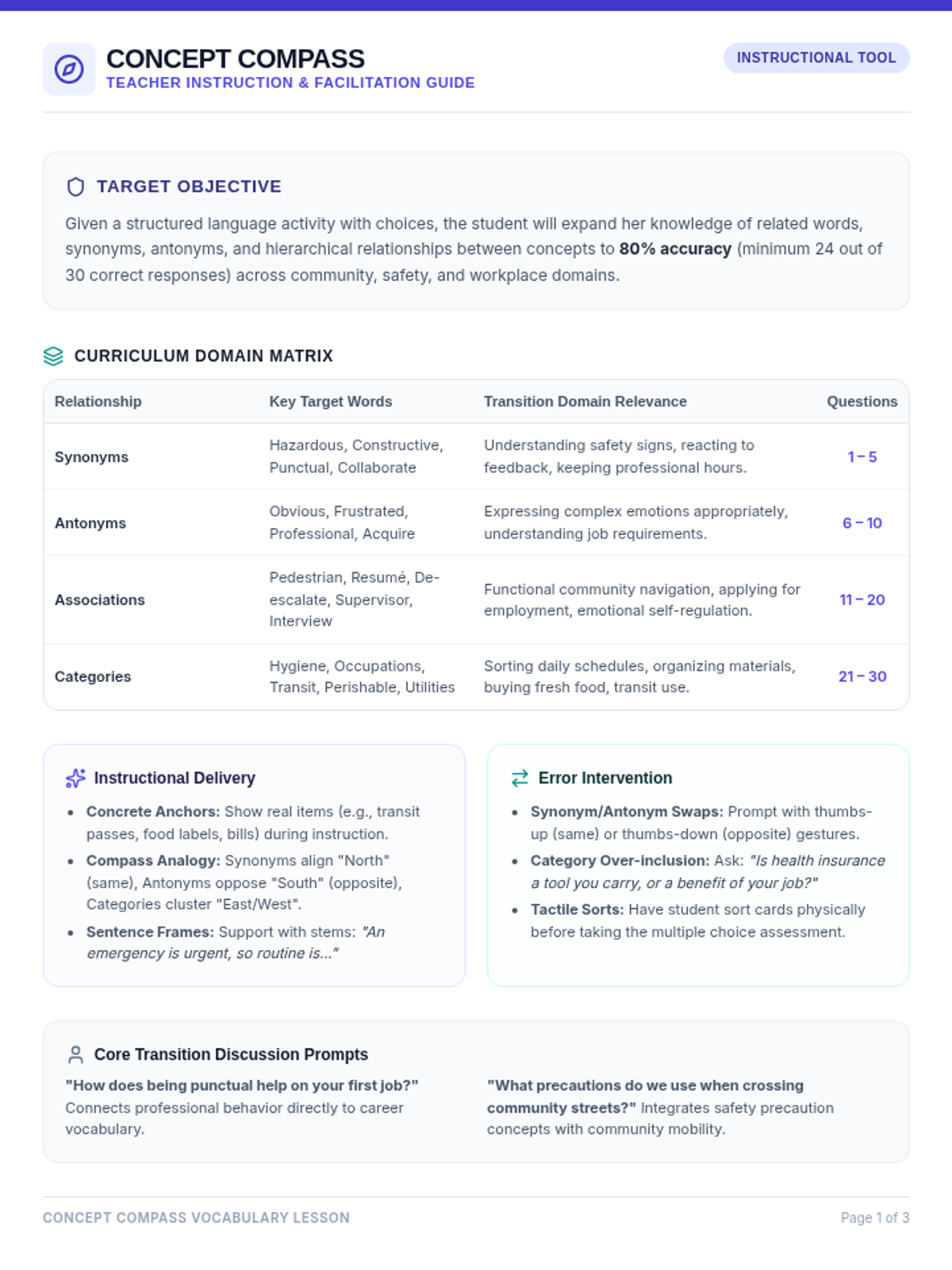
A 3-page print-ready teacher resource containing instructional strategies, a pedagogical matrix mapping word relationships to transition domains, SPED differentiation guides, and a highly detailed answer key for all 30 questions with clinical explanations and re-teach prompts.
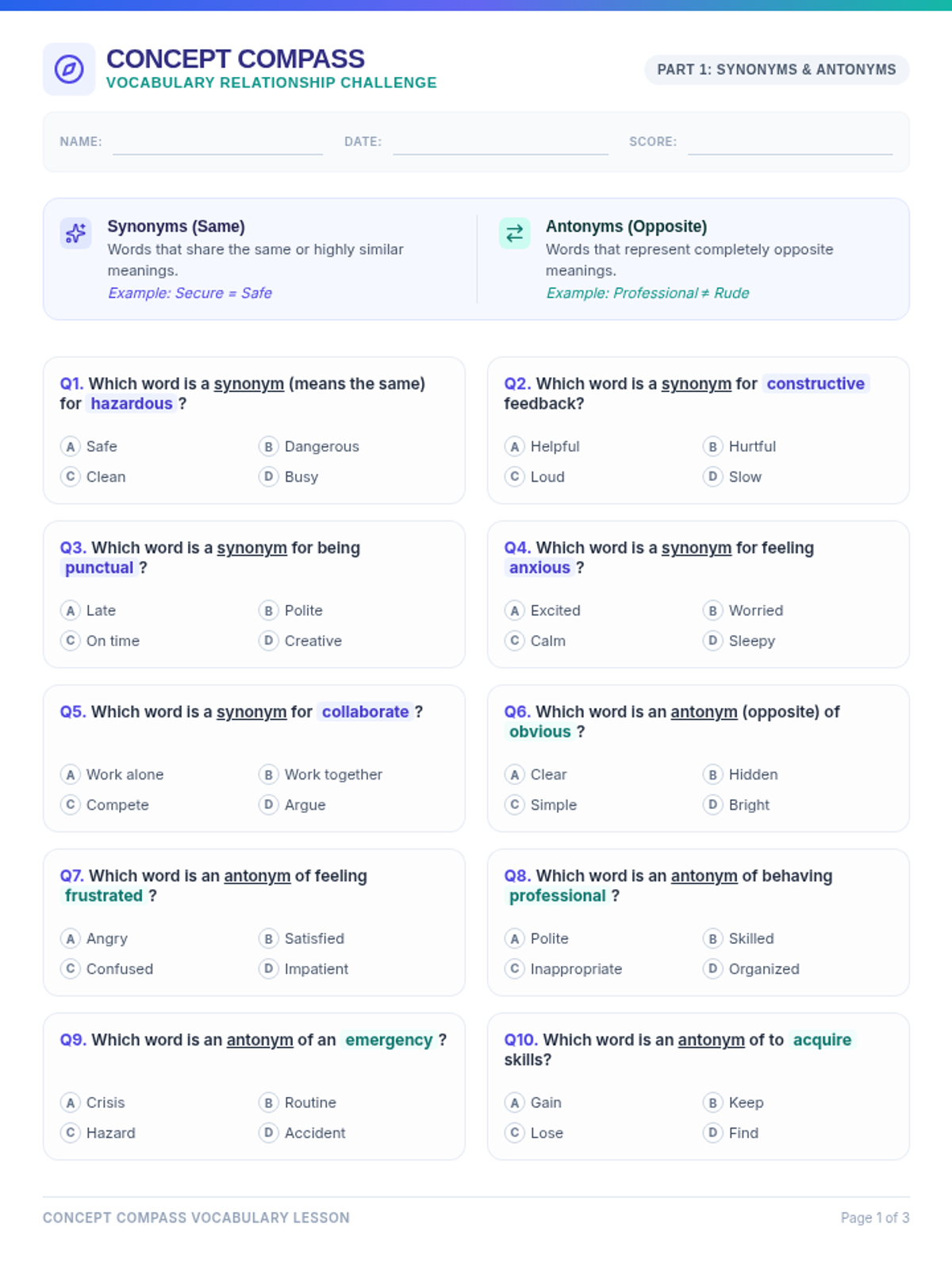
A 3-page print-ready multiple-choice vocabulary worksheet with 30 questions mapping to functional life skills, academic, and vocational domains for transition-age students. It contains clean question grids, a themed navigation-compass motif, and structured reference guides across three sections: Synonyms/Antonyms, Associations, and Hierarchical Categories.
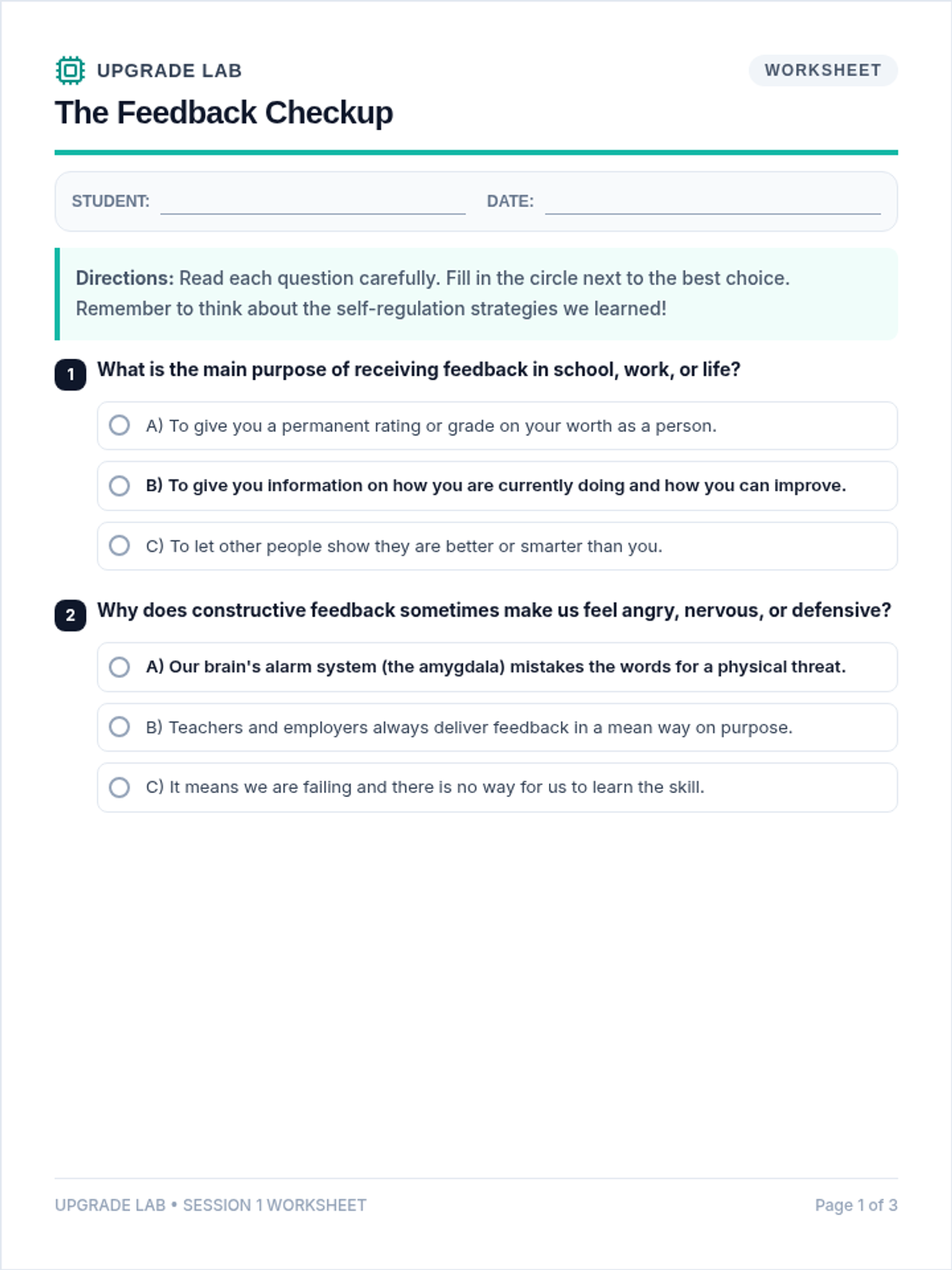
A 3-page student worksheet containing six scenario-based multiple choice questions and a short reflection prompt, aligned with the 'Upgrade Lab' slide deck. Designed with accessible layout, large print, and clear visual cues.
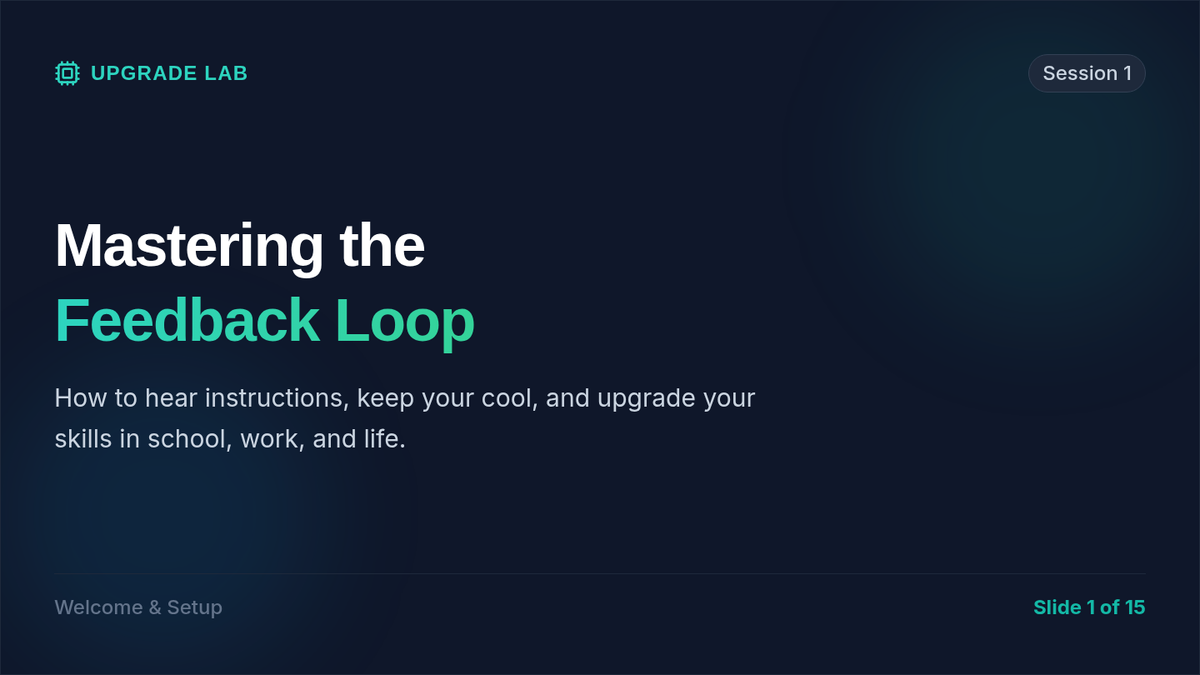
A 15-slide presentation for the 'Upgrade Lab' lesson, specifically designed for transition-age students with mild-to-moderate needs. Features large readable text, emotional regulation and de-escalation strategies, and concrete school, workplace, and life examples.
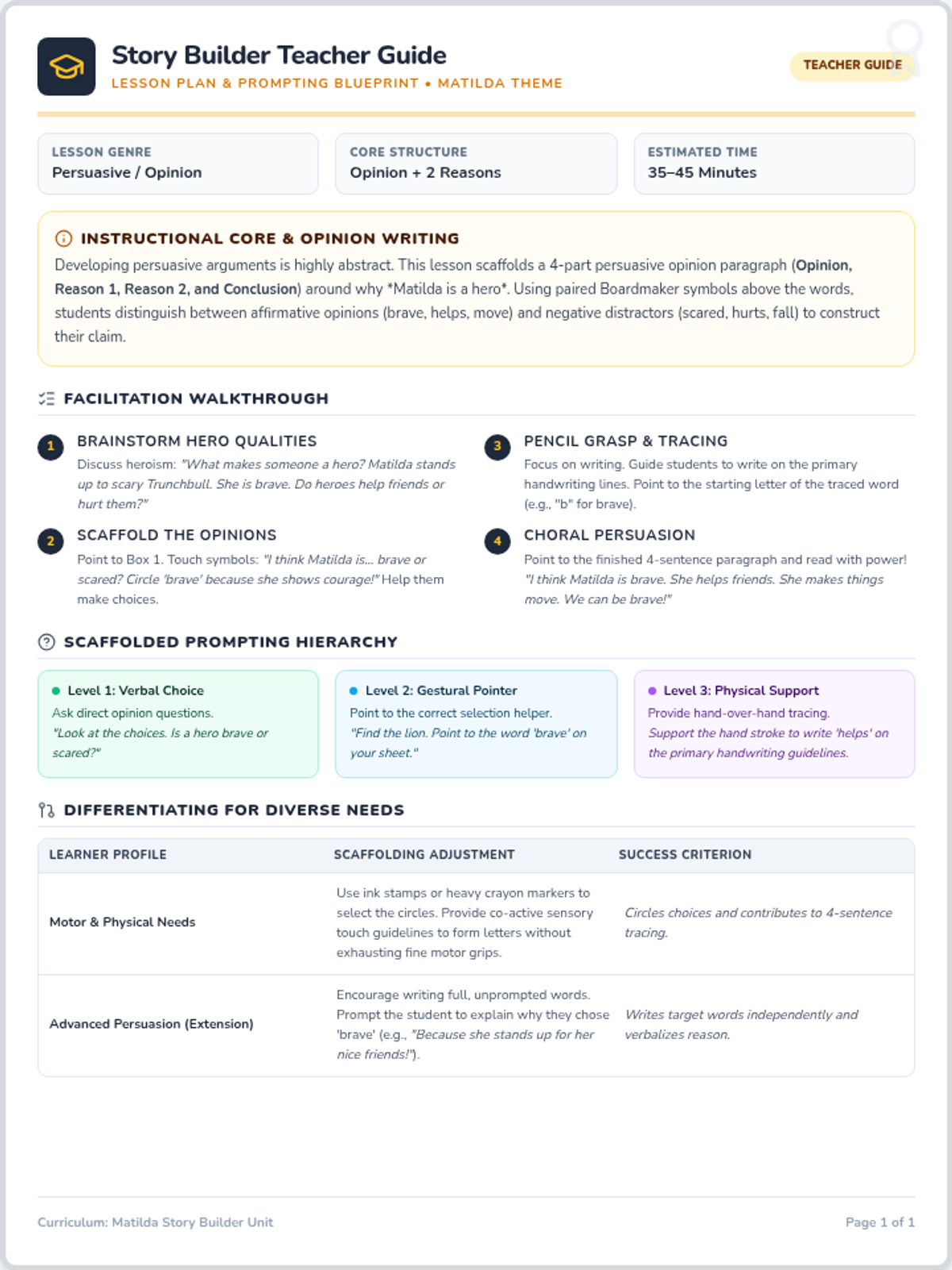
A teacher's facilitation and lesson plan guide designed to support educators delivering the symbol-supported Matilda writing activity, with differentiation strategies and prompting questions.
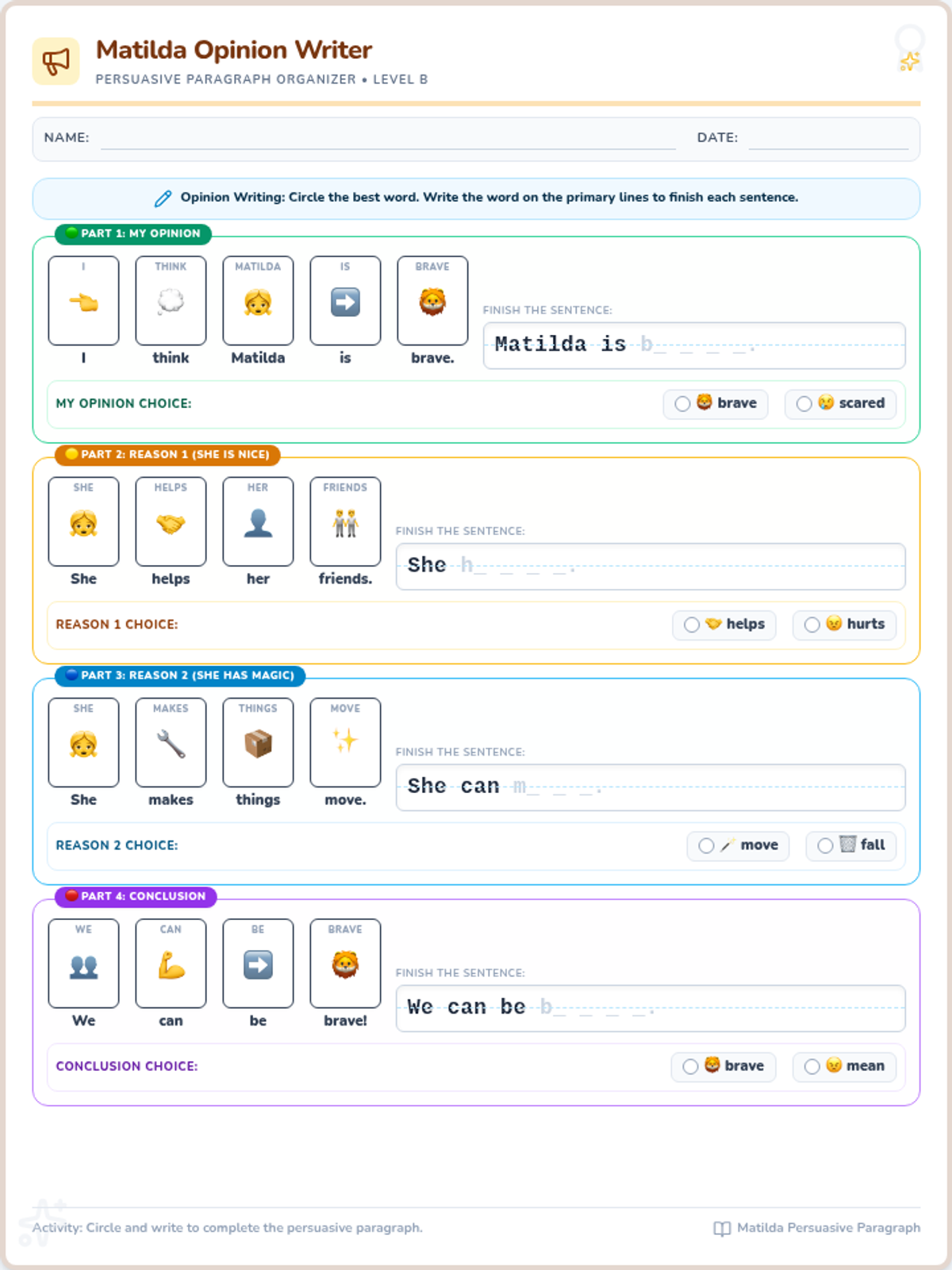
A 1-page persuasive opinion paragraph graphic organizer for Matilda the Musical. Features 4 scaffolded rows (Opinion, Reason 1, Reason 2, Conclusion) with primary handwriting lines, symbol-support, and dual-choice visual word banks.
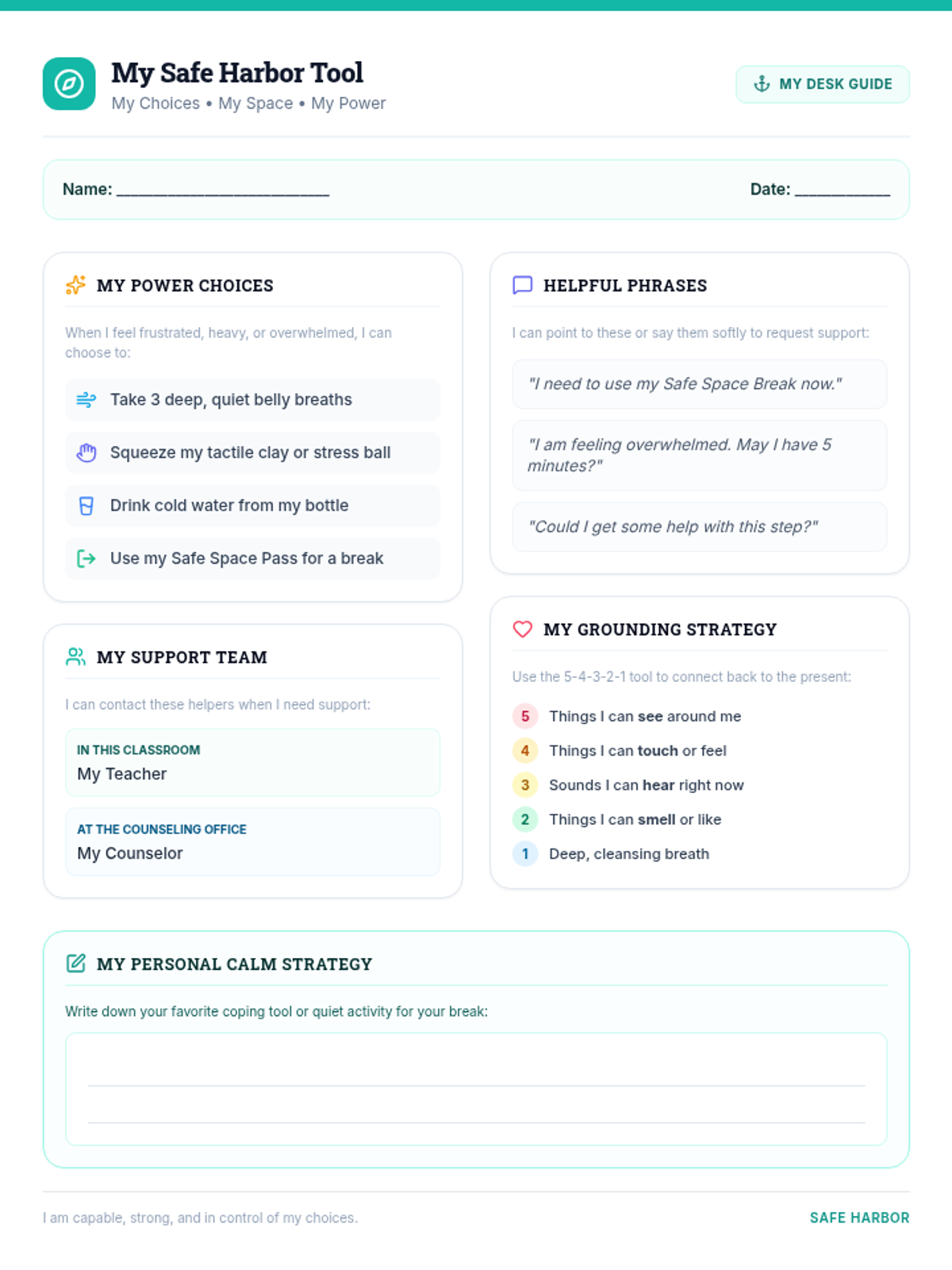
A supportive, student-facing desk tool that outlines personal coping choices, break options, and self-advocacy phrases to help manage big emotions in the classroom.
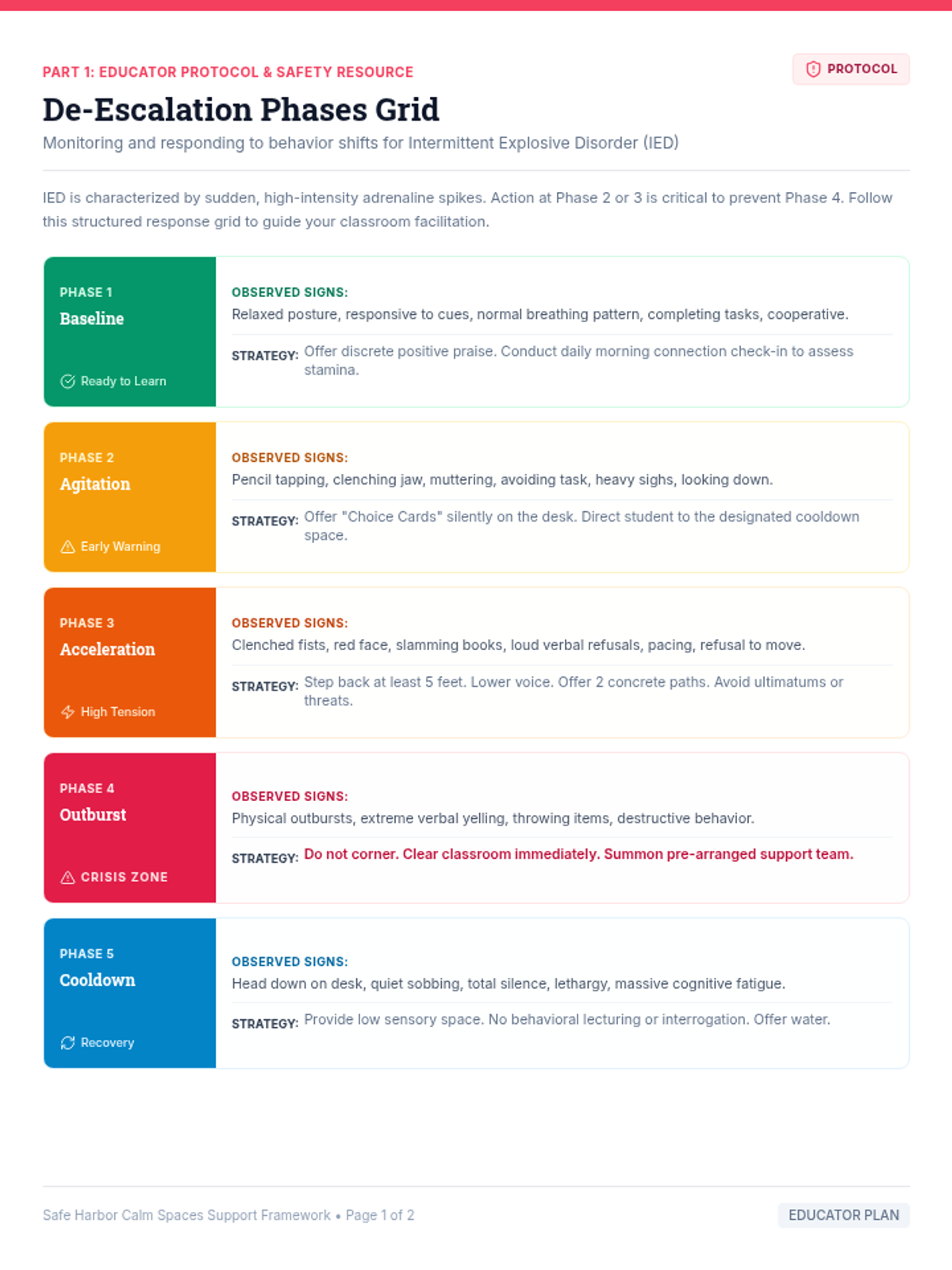
A step-by-step visual workflow and crisis prevention plan for educators to monitor, prevent, and safely de-escalate explosive outbursts using proactive and reactive strategies.
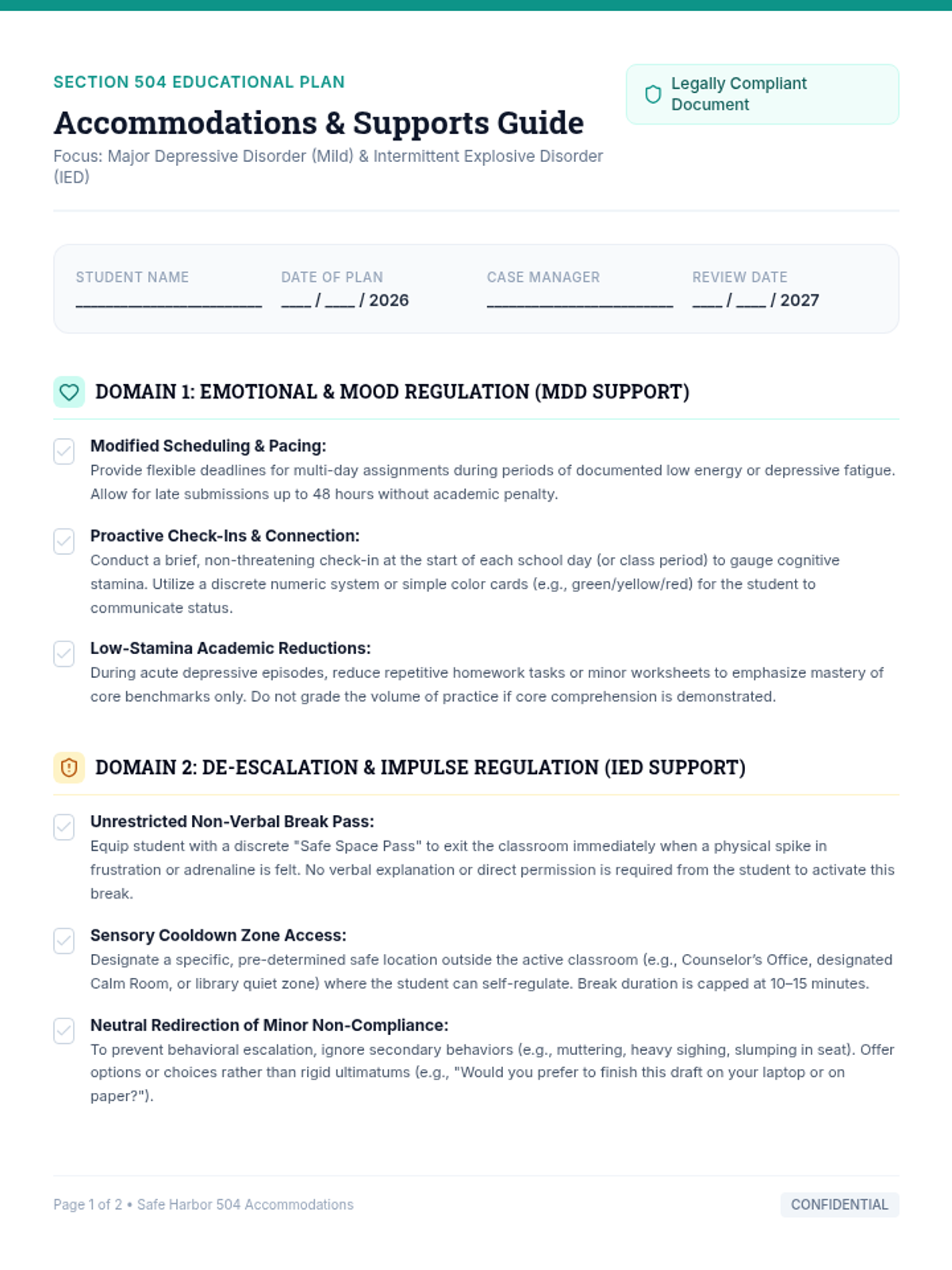
A formal, legally compliant list of 504 accommodations tailored for students with Major Depressive Disorder (MDD) and Intermittent Explosive Disorder (IED), organized by classroom domains.
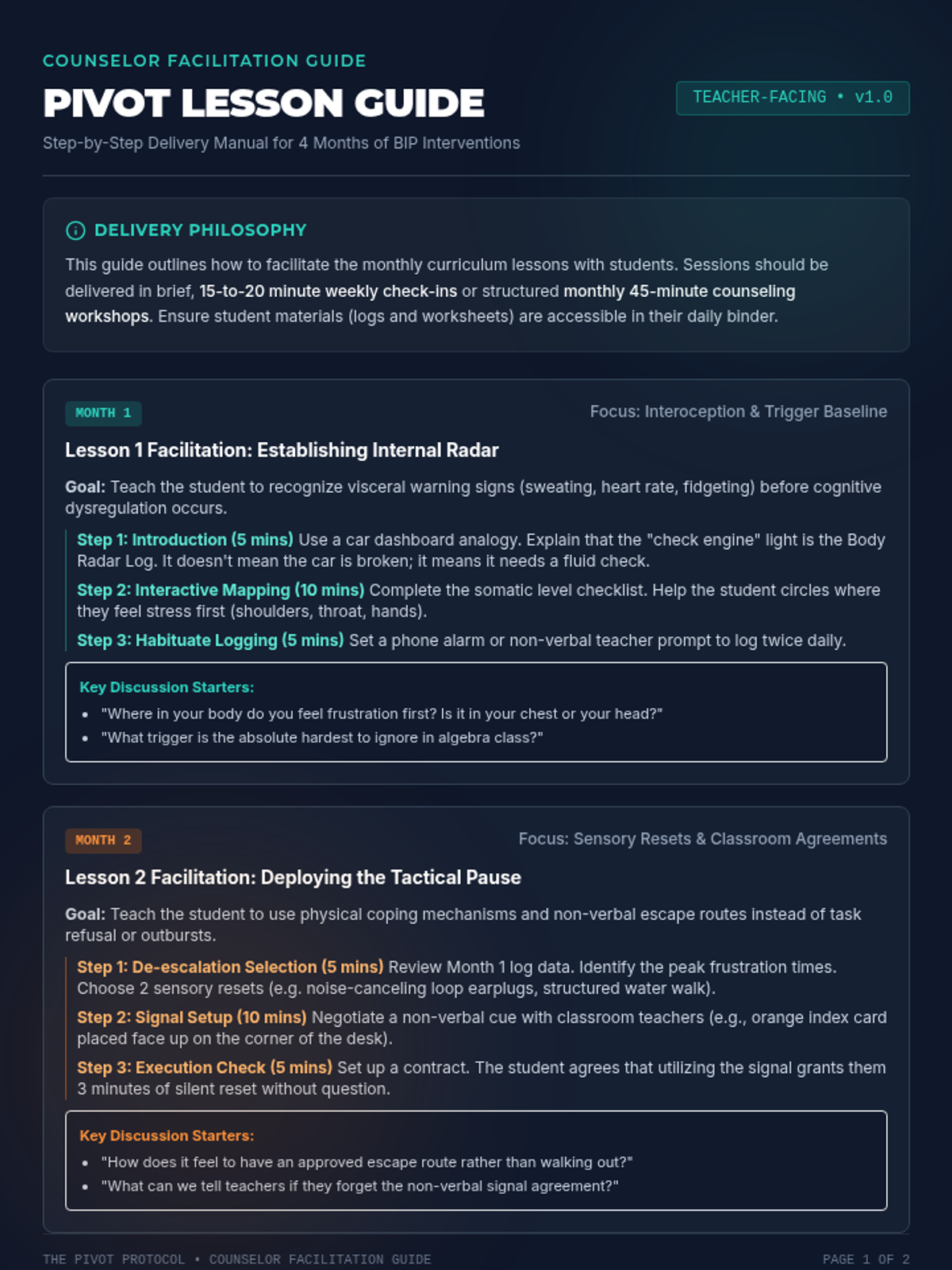
A comprehensive lesson facilitation guide for school counselors and special educators. Provides step-by-step instructions, discussion questions, role-play prompts, and BIP data tracking review methods for Months 1 through 4.
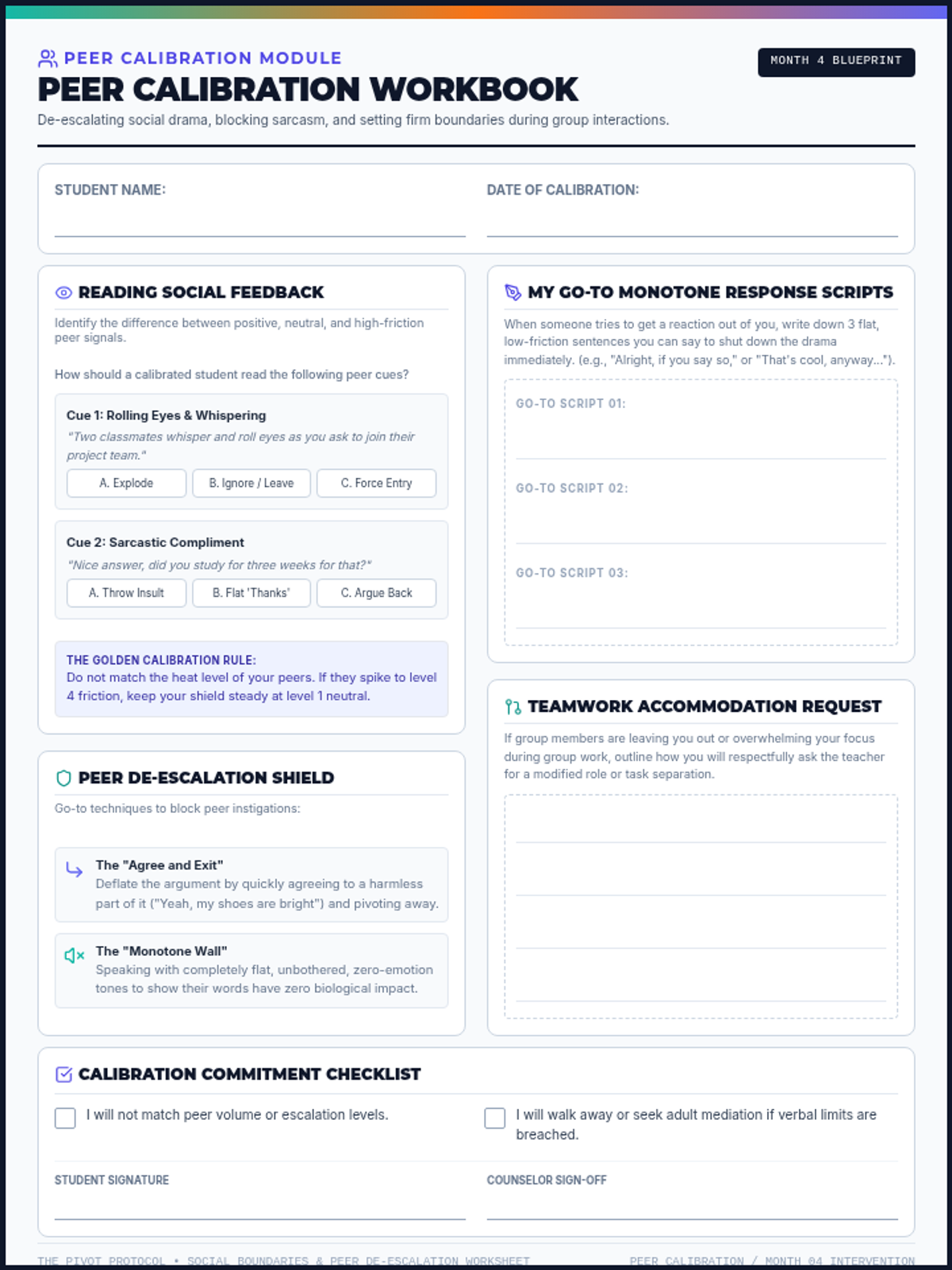
An interactive student workbook sheet for Month 4 (Peer Calibration). Guided exercises help high school students dissect social tension, map passive/reactive/calibrated feedback, and script their own peer de-escalation responses.