A neon-themed visual presentation for 8th-grade students on evaluating nested expressions using the order of operations, featuring the PEMDAS hierarchy and a video segment.
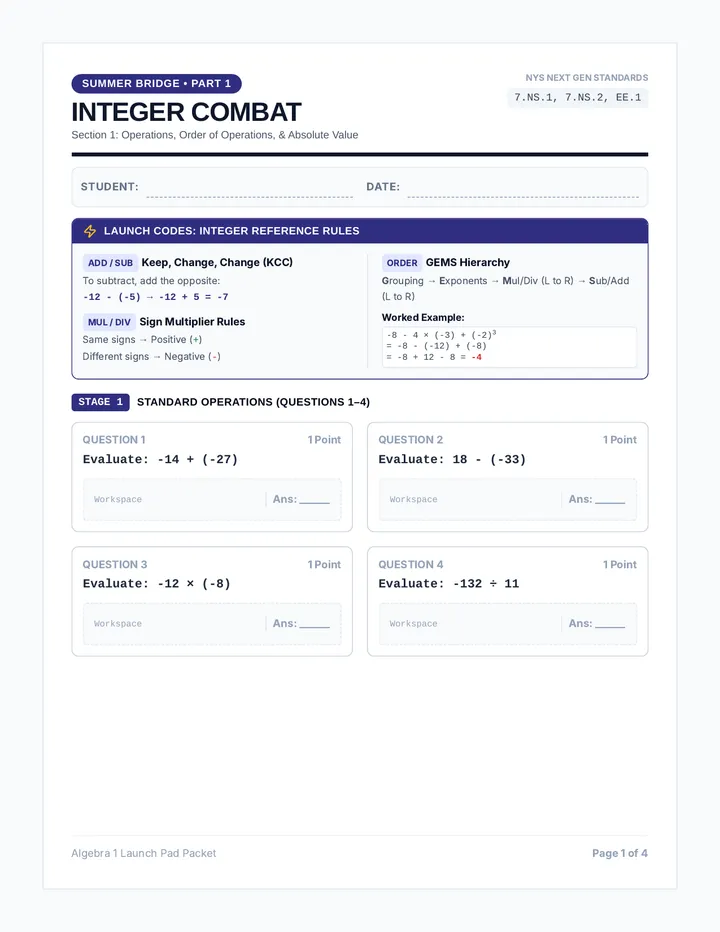
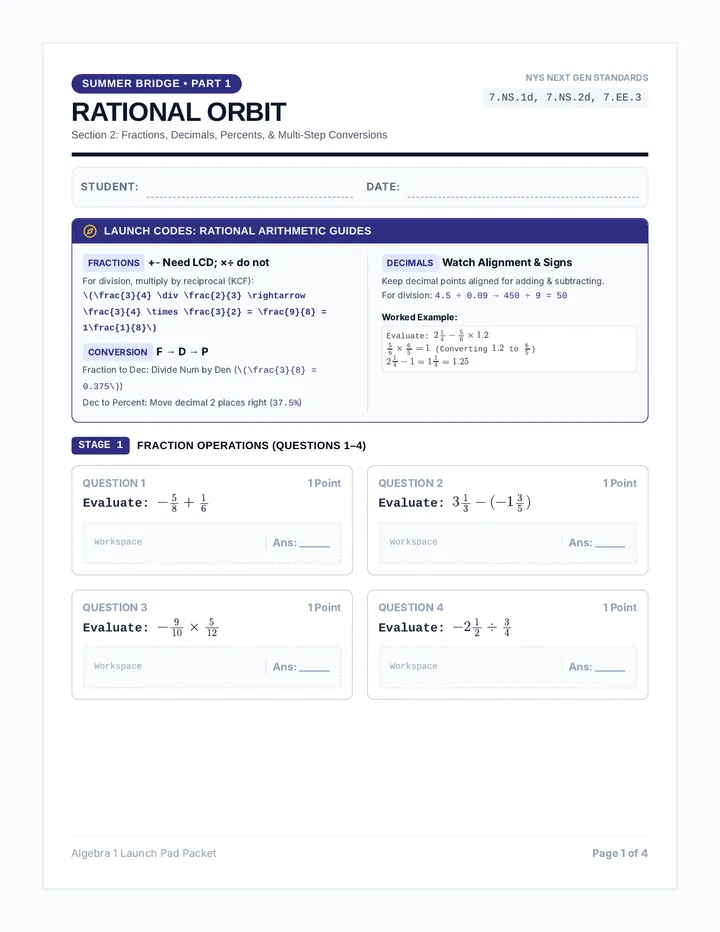
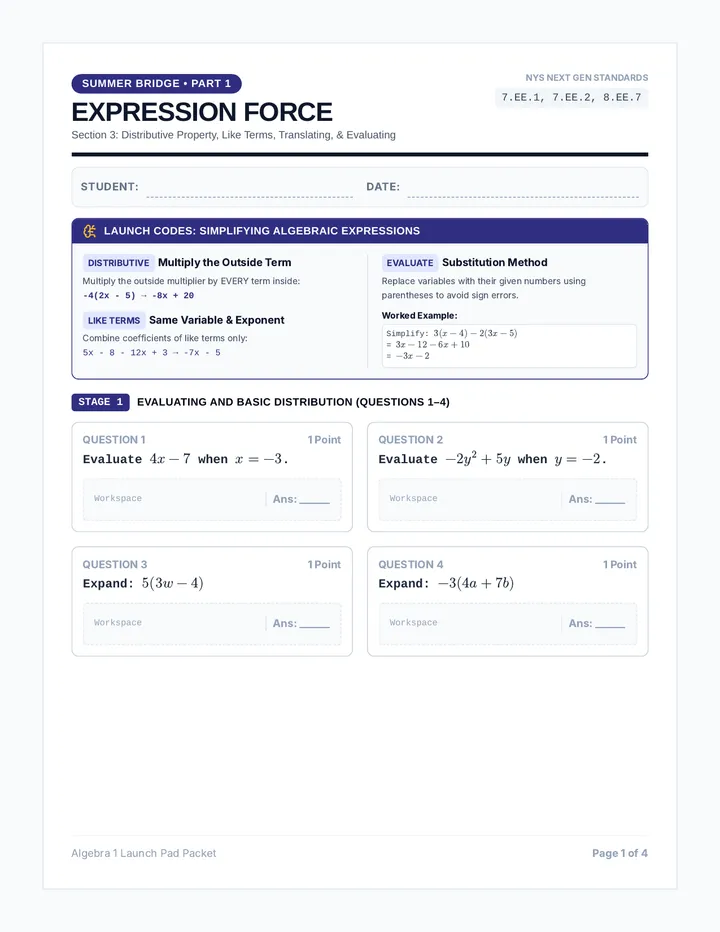
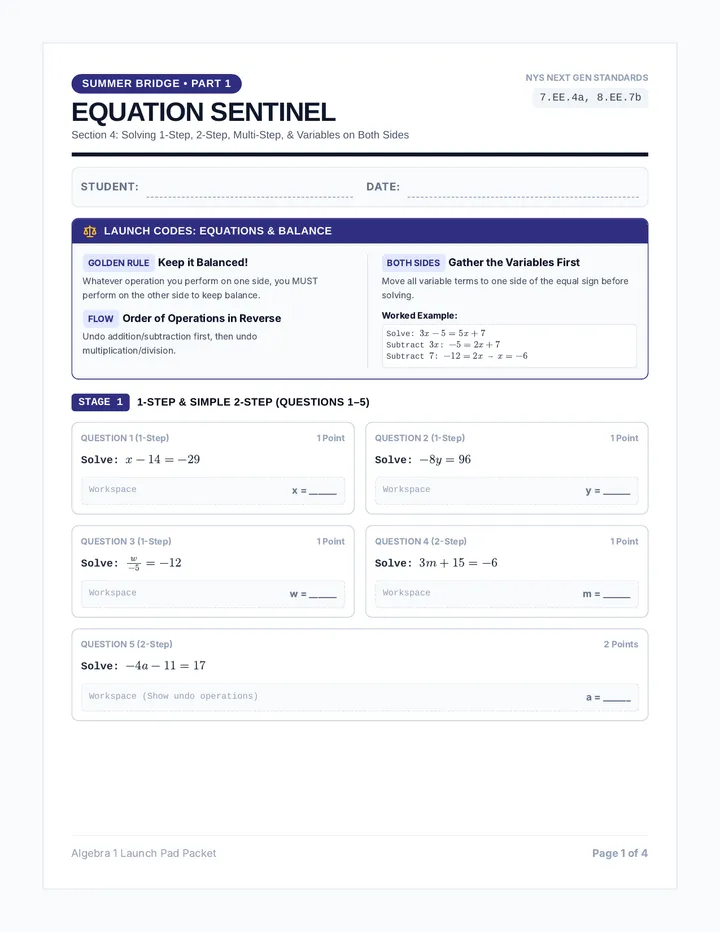
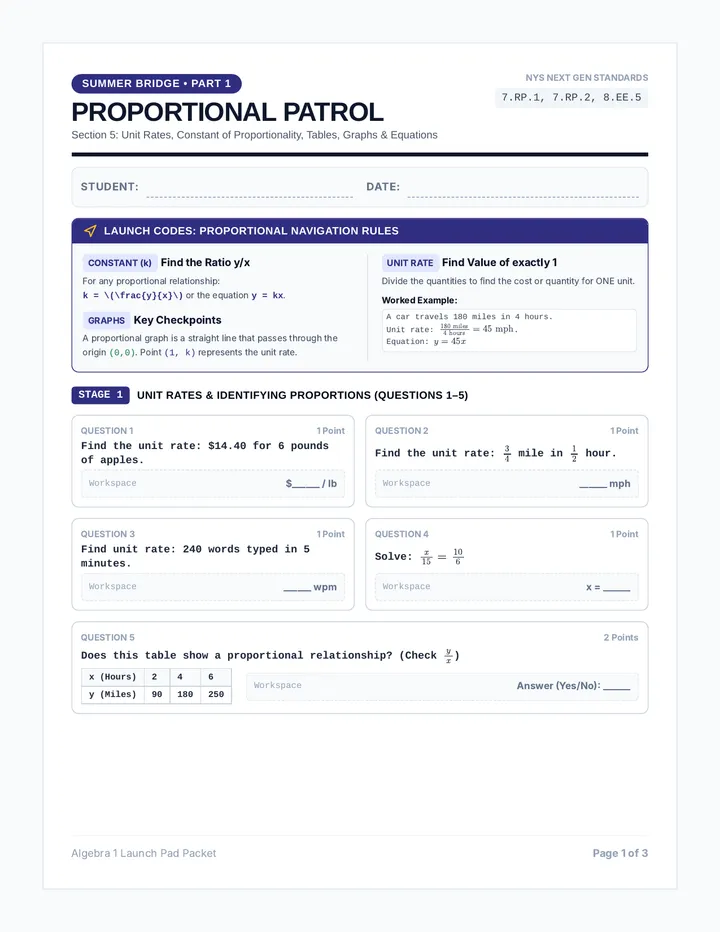
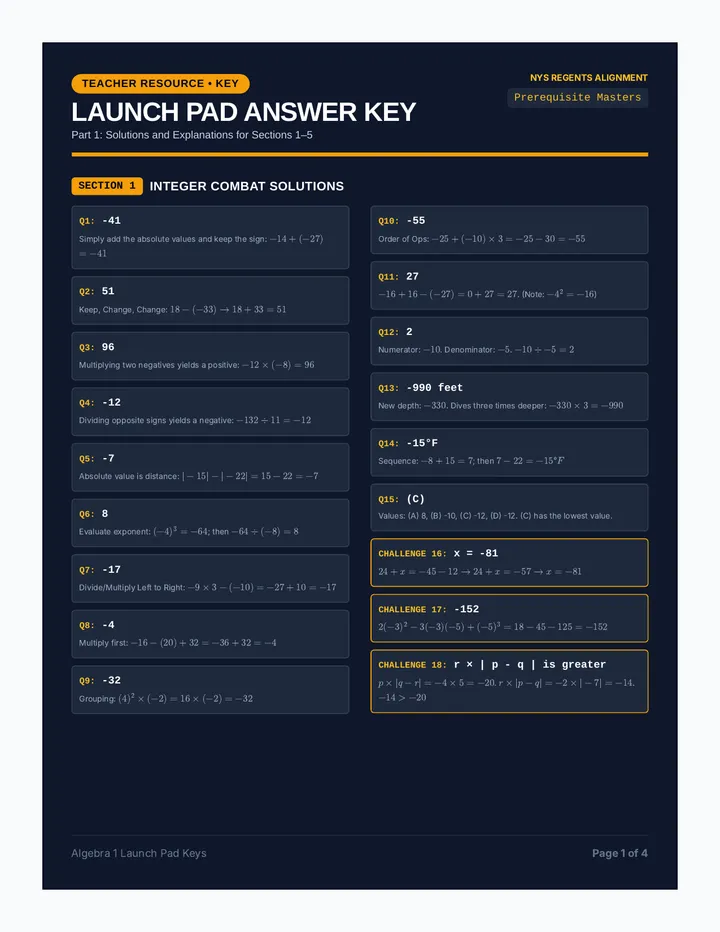
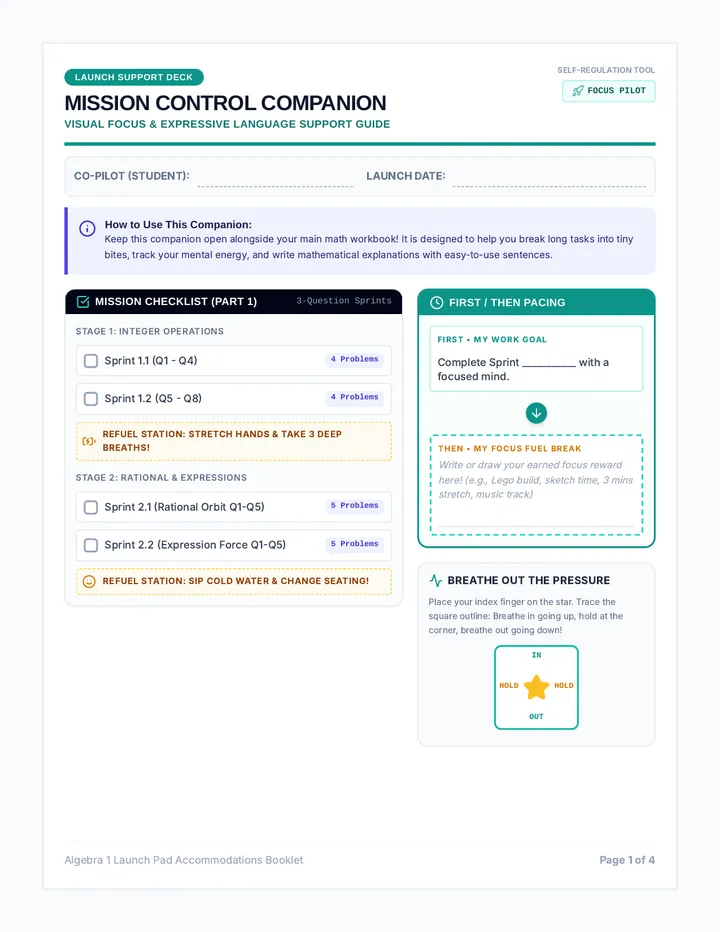
A comprehensive summer bridge workbook for rising 8th graders transitioning to Algebra 1. Contains review of prerequisite topics, advanced pre-algebra skills, real-world application, and an Algebra Escape Challenge.
Create a lesson for the clueless word fill-in crossword puzzle.
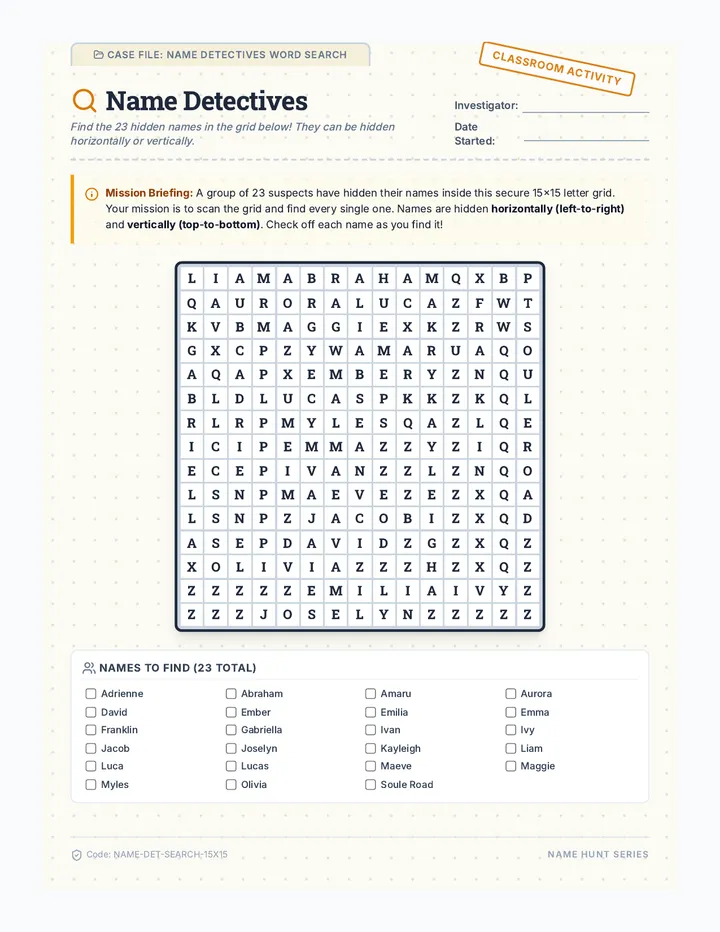
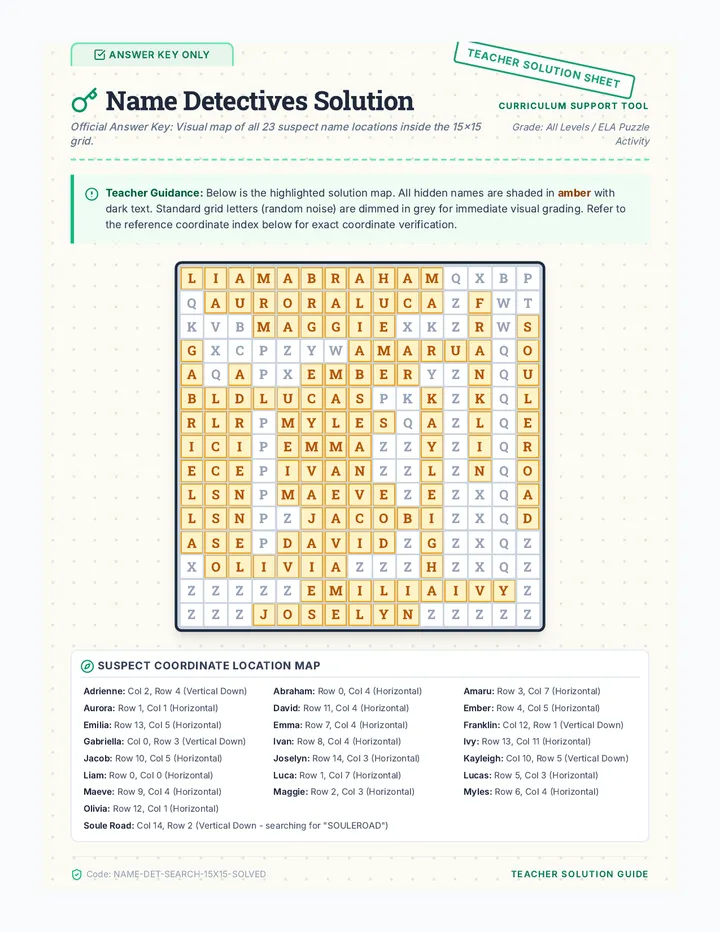
A detective-themed name word search puzzle where students find 23 names hidden in a 15x15 grid of letters. No clues are provided, offering an engaging brain-teaser challenge.
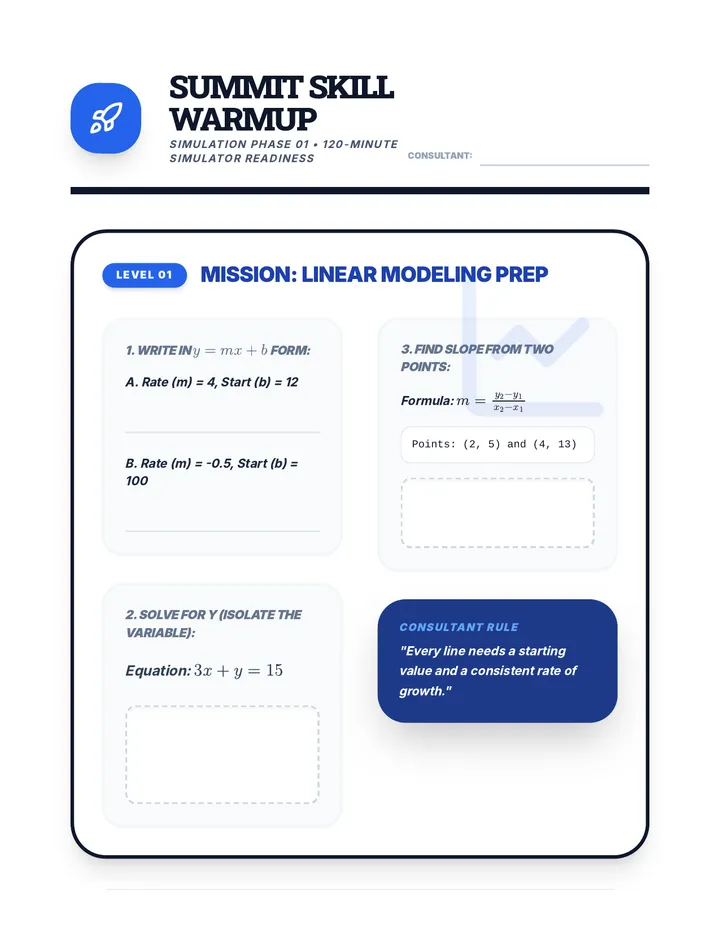
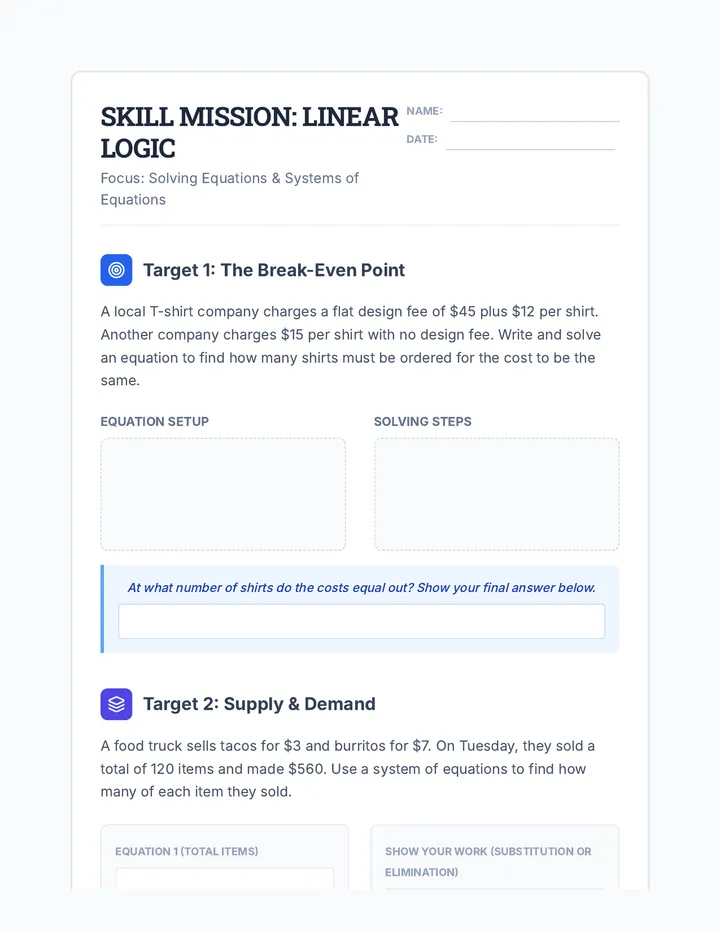
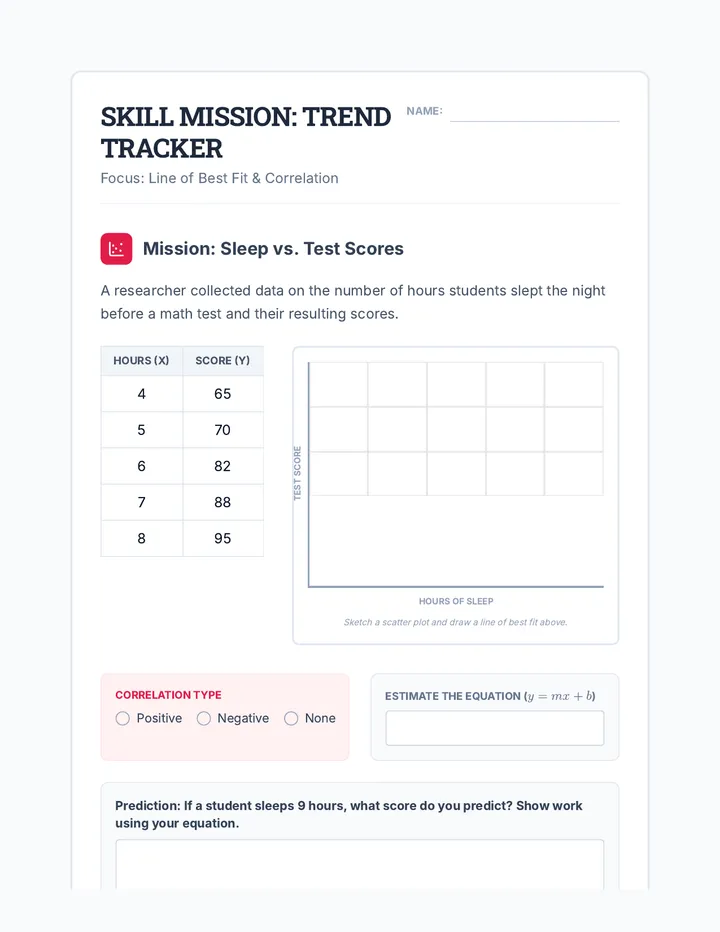
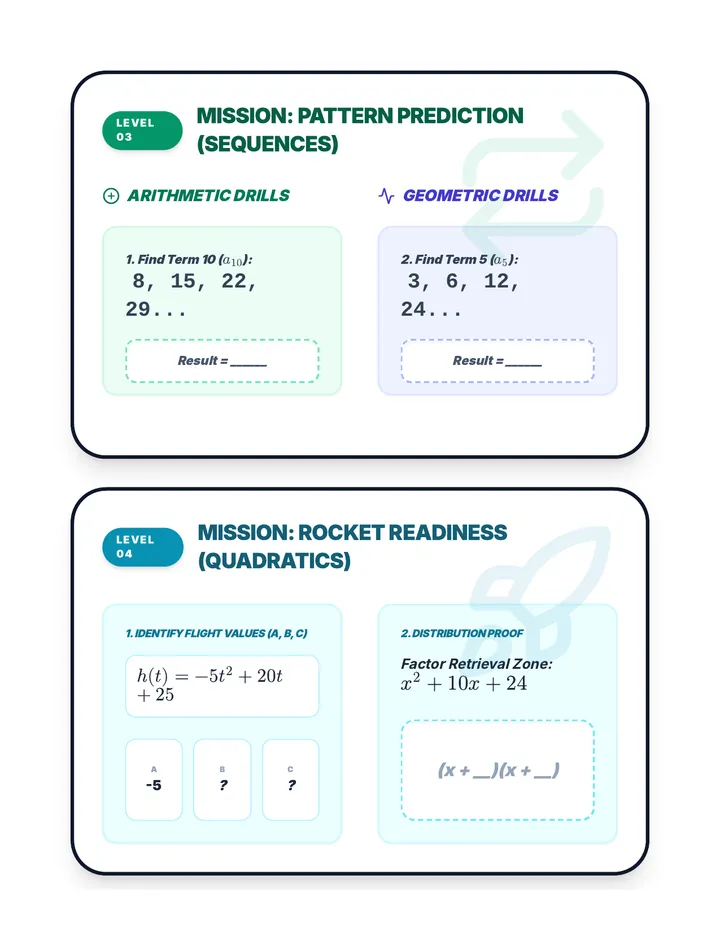
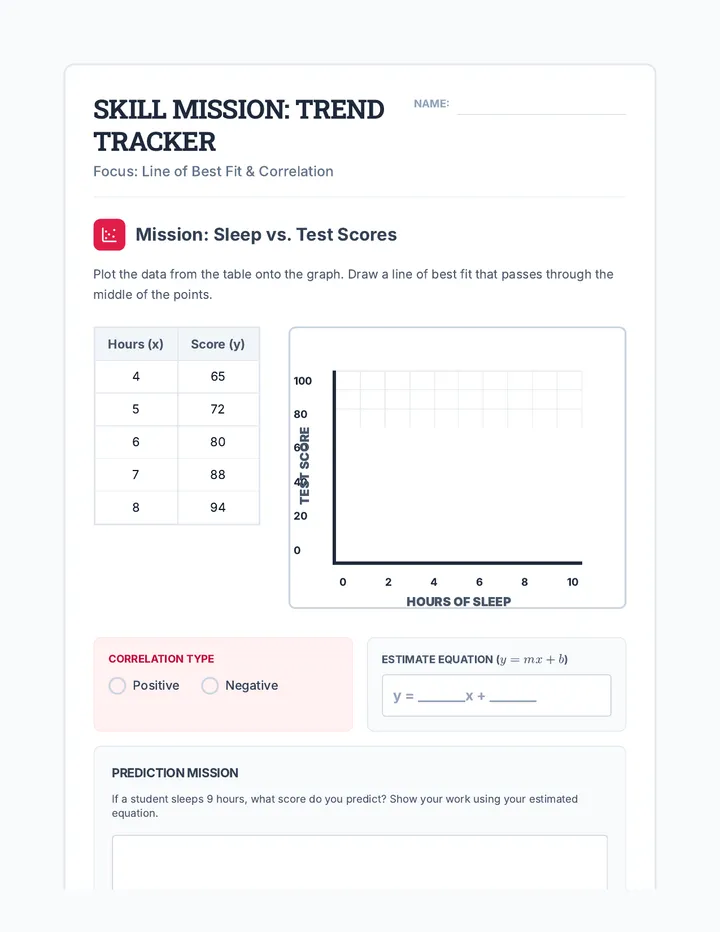
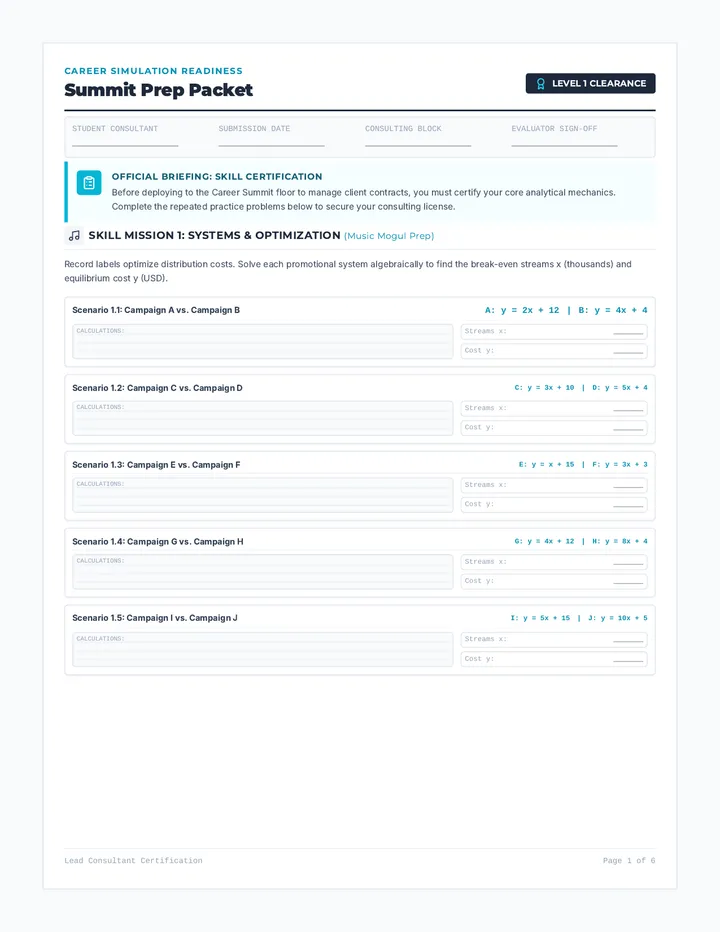
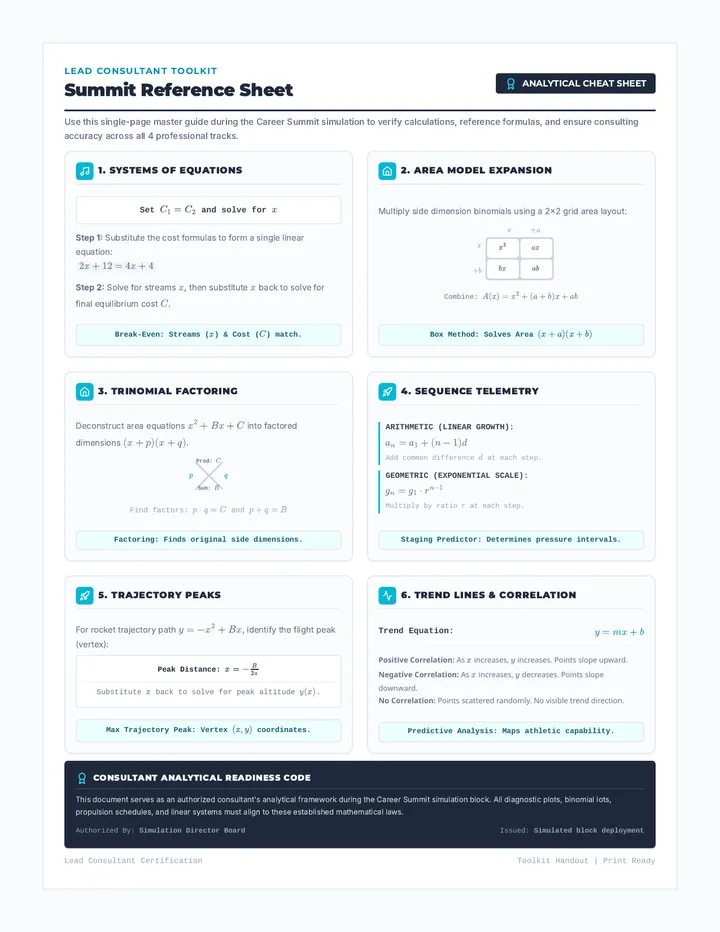
A high-intensity, 120-minute math simulation. Students act as lead consultants, completing a high-speed skill warmup before selecting a professional sector (Music, Urban Planning, Rocket Science, or Sports Analytics) to solve a series of complex work orders.
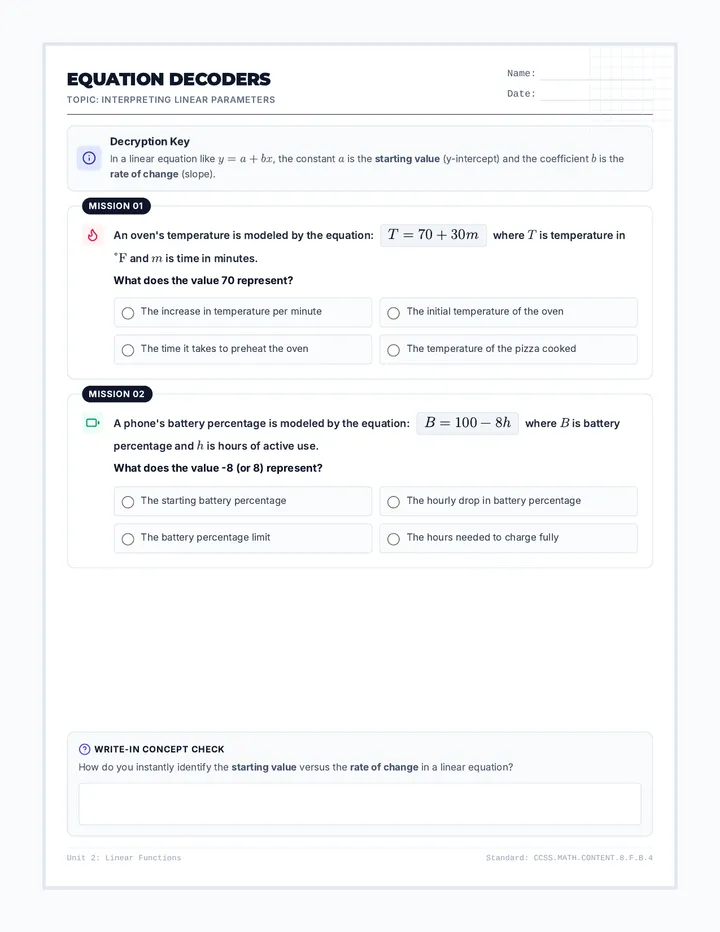
A lesson focused on breaking down linear equations to interpret rates of change and initial values in simplified, direct contexts.
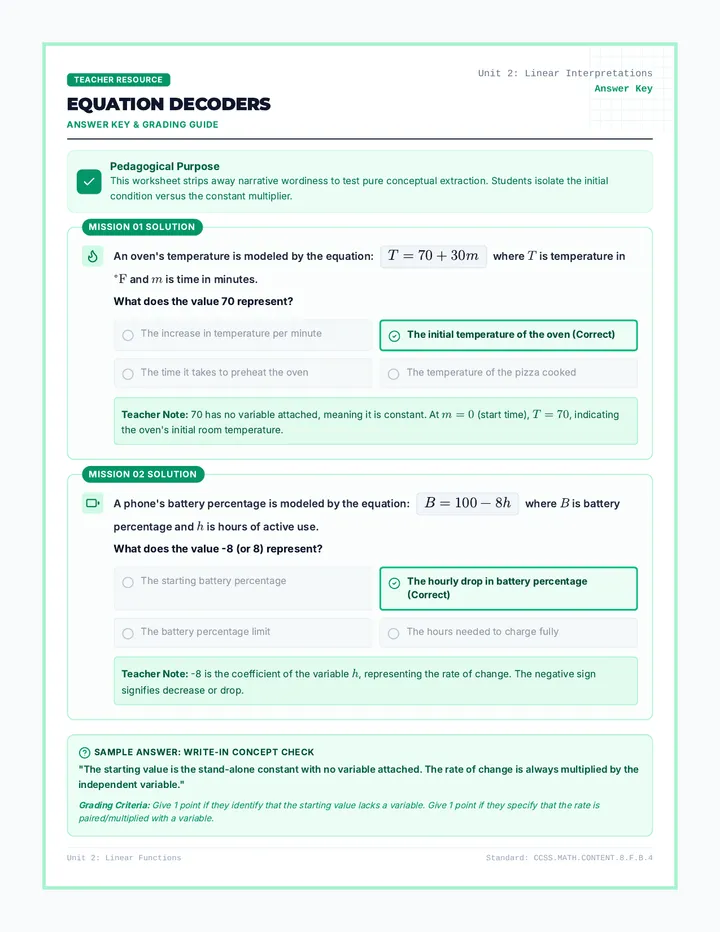
The official answer key for the Equation Decoders worksheet, containing solutions, pedagogical tips, and student explanation cues.
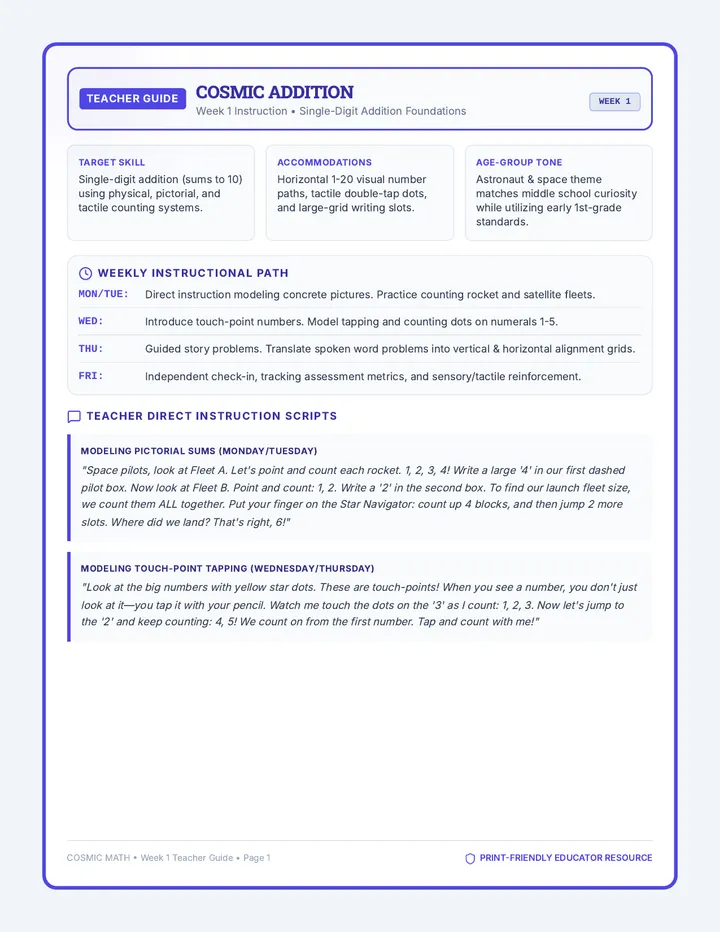
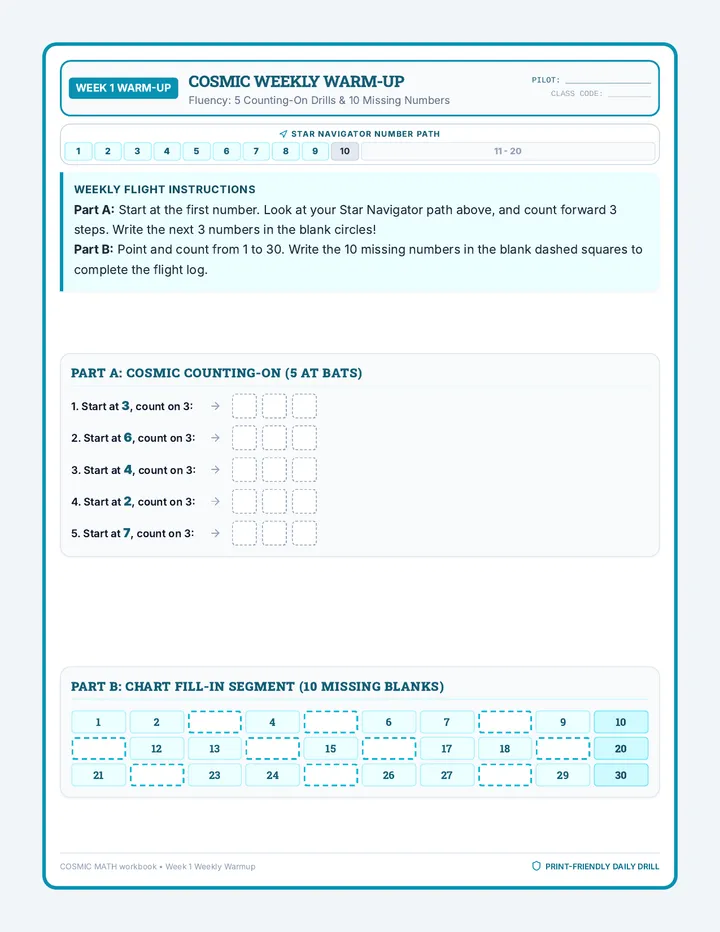
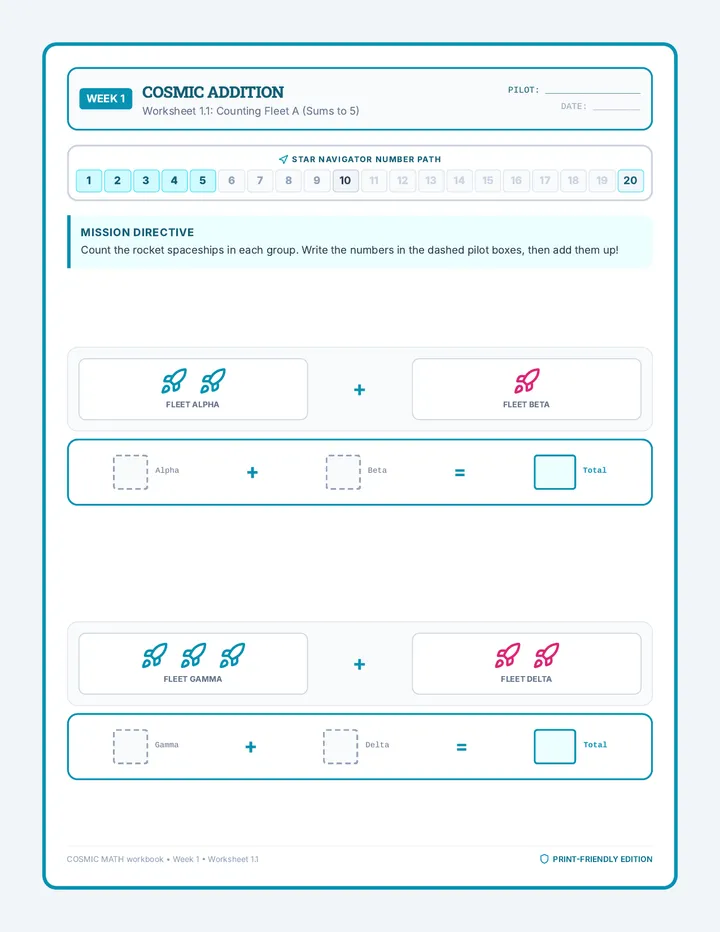
A 4-week math workbook and instructional sequence themed around outer space exploration, specifically designed for middle school students with disabilities (SWDs) working at an early 1st-grade level. Features embedded touch-points, base-ten icons, visual number paths, and age-appropriate space exploration visuals to teach single-digit operations, place value, and patterns.
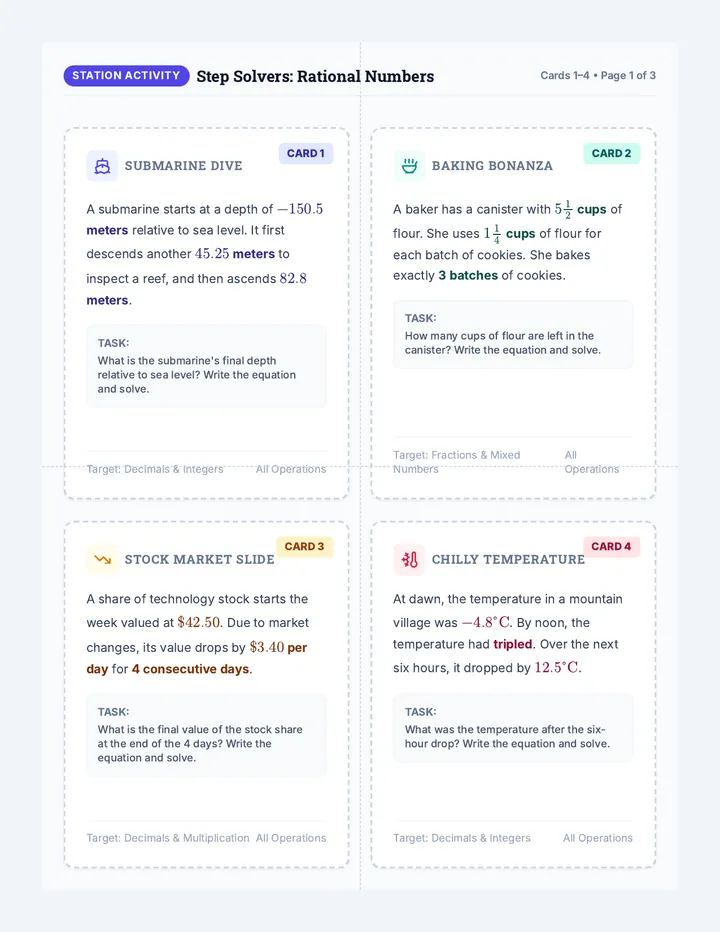
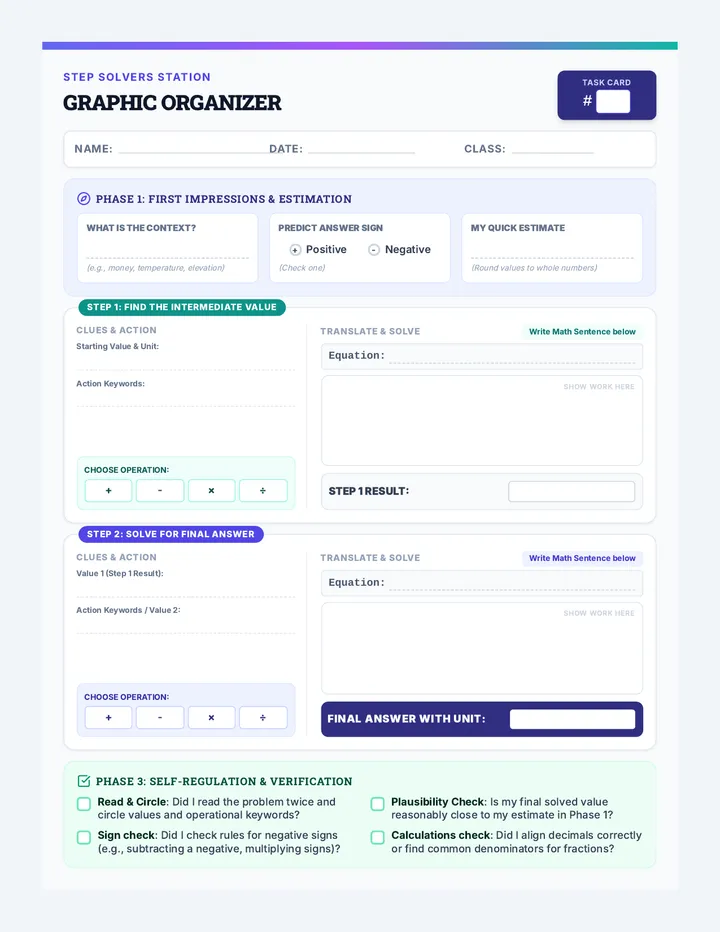
A targeted task card station activity focused on decomposing and solving two-step real-world problems with rational numbers. Students use a structured graphic organizer that scaffolds word-to-equation translation and incorporates self-regulation checklists.
A clean, streamlined student worksheet focused on interpreting components of linear equations with minimal word count and high visual structure.
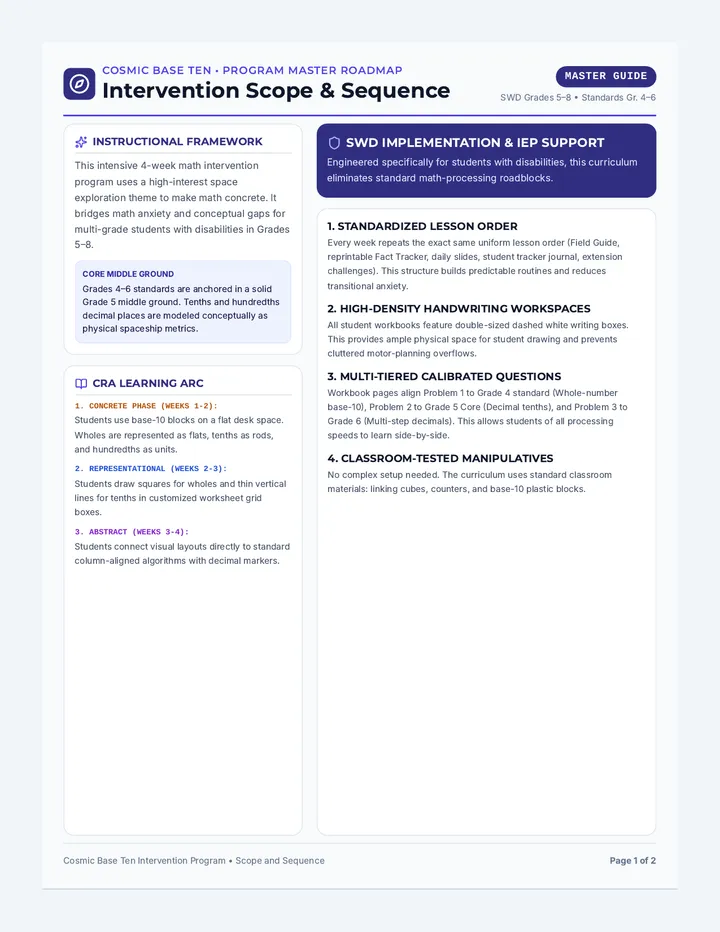
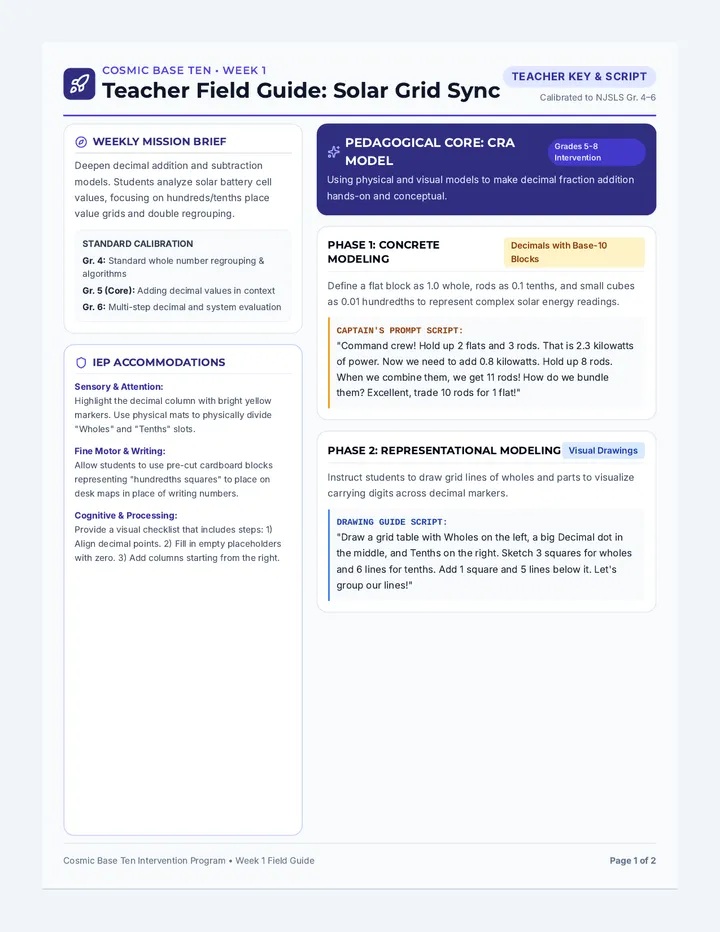
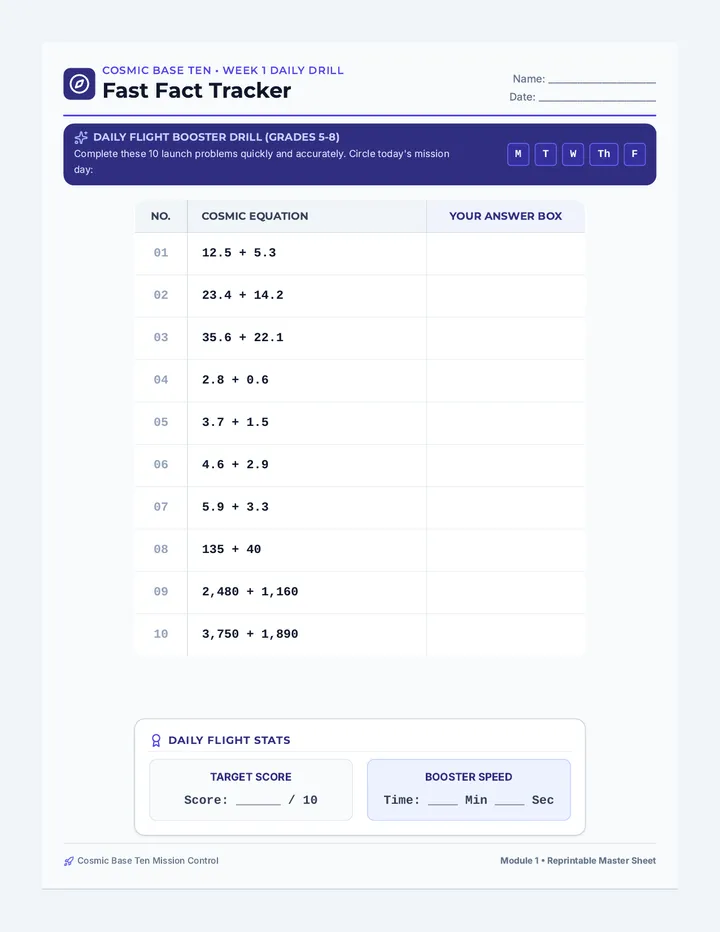
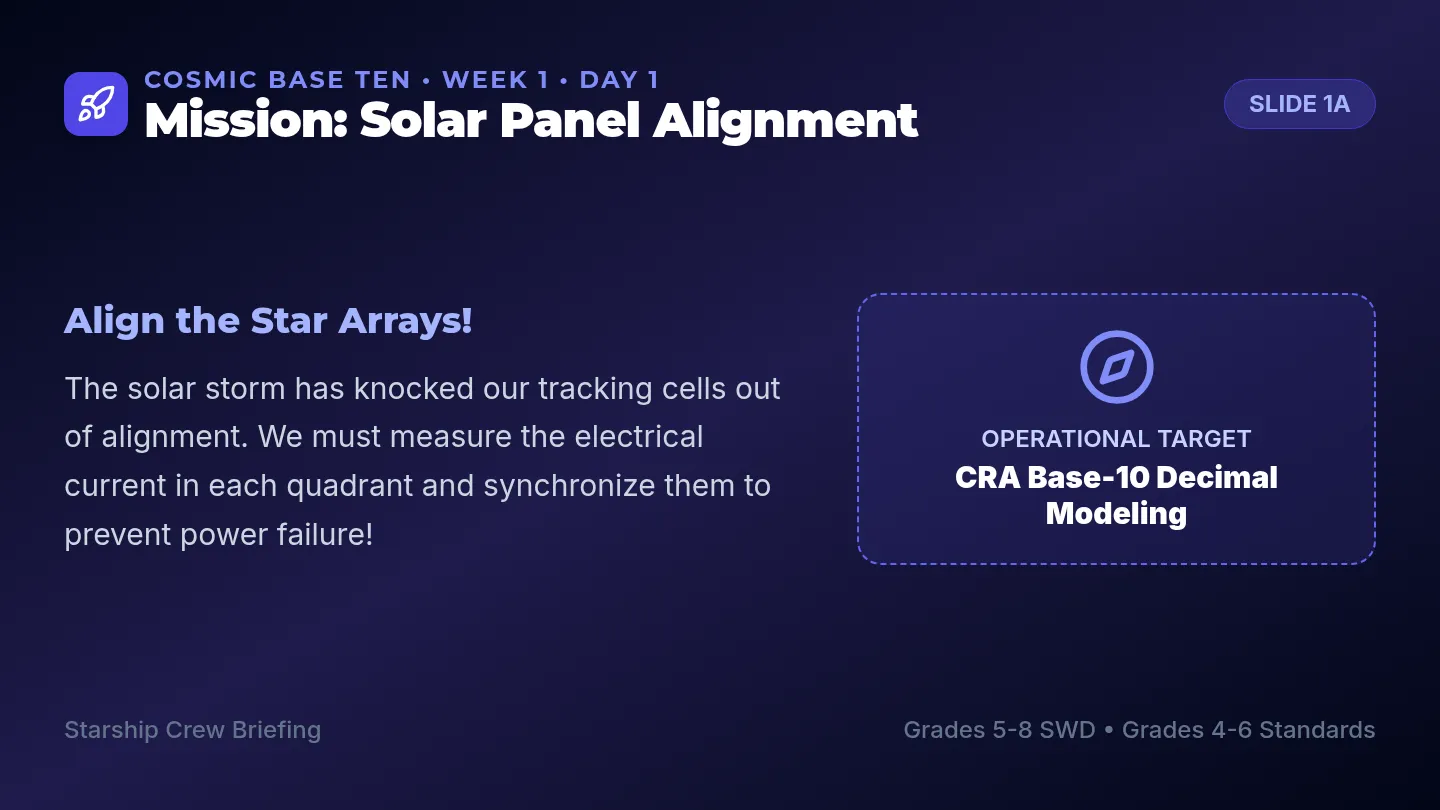
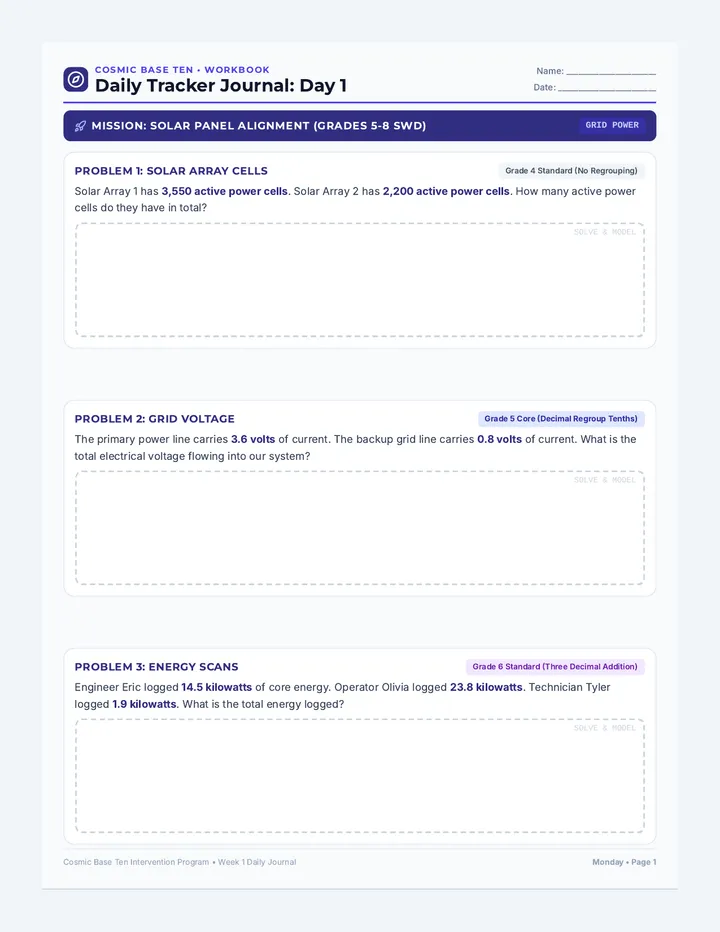
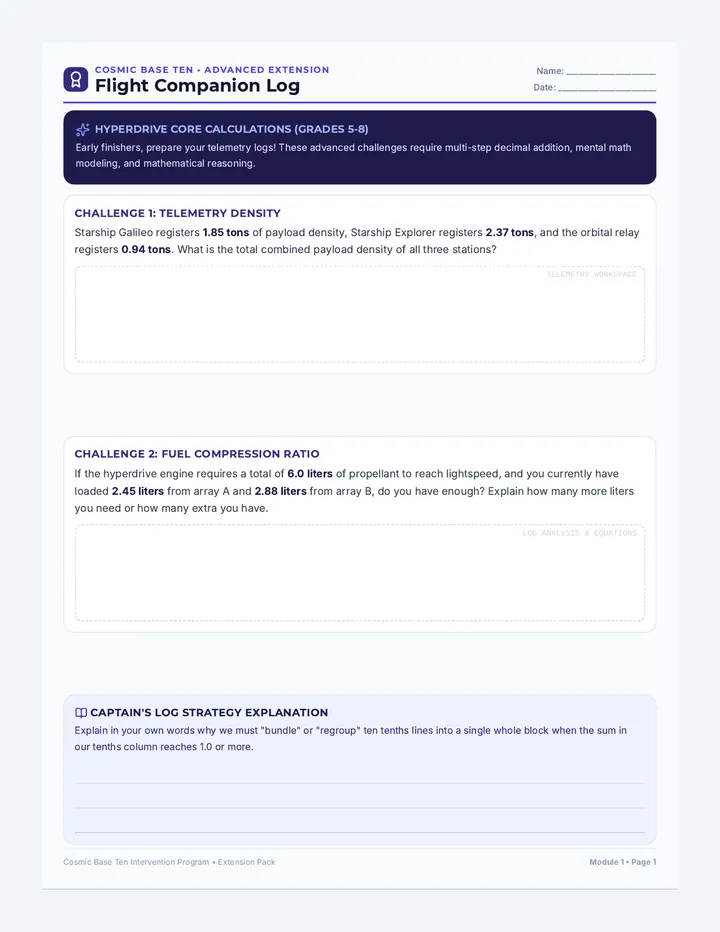
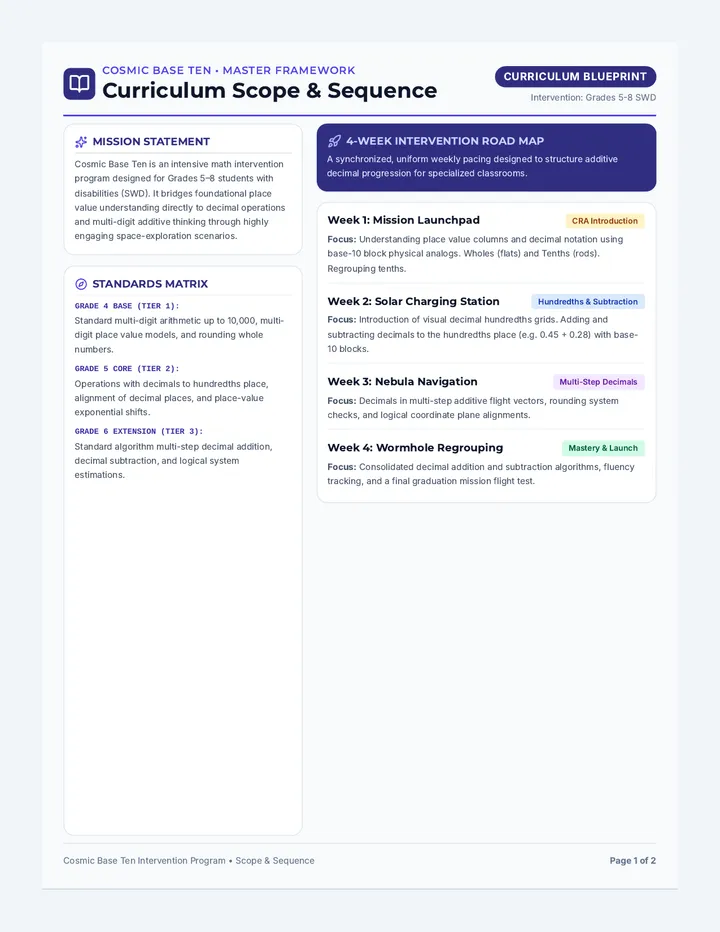
A 4-week intensive math intervention program set in a space exploration universe, designed for multi-grade students with disabilities in Grades 5–8. It covers additive thinking, place value, and decimal regrouping, anchored in Grades 4–6 standards with a Grade 5 core middle ground.
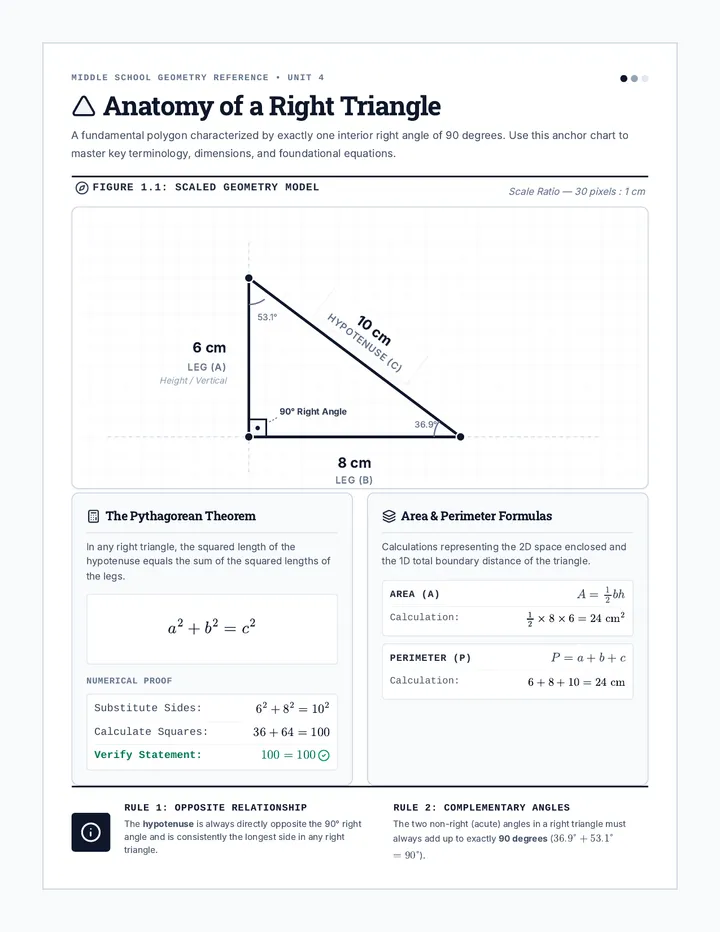
An introductory lesson exploring the properties, parts, and key formulas of right triangles for middle school students.
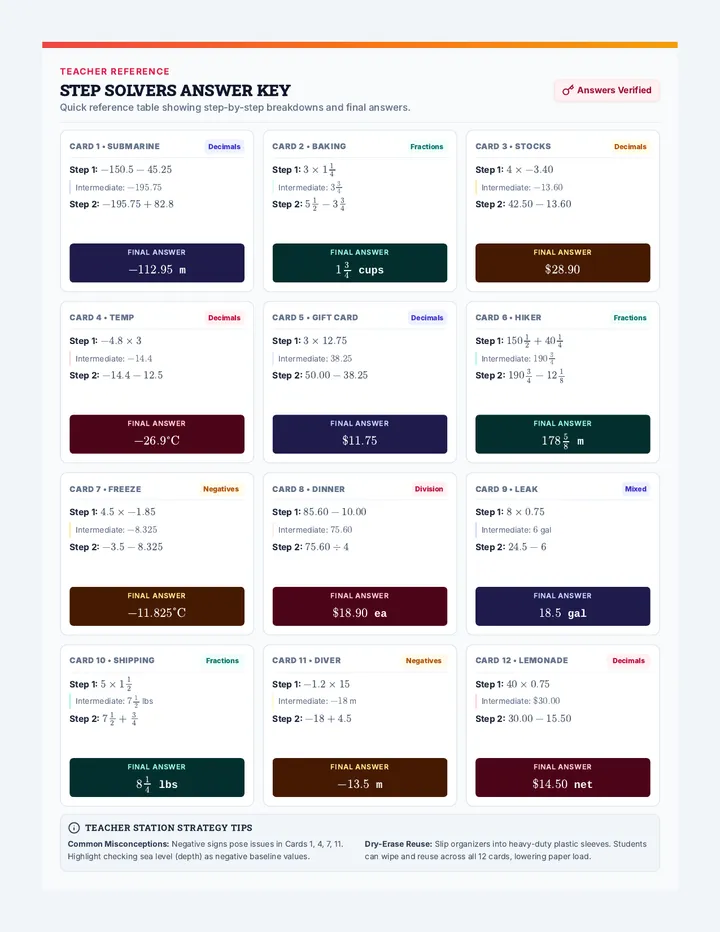
A quick-reference teacher answer key mapping out the step-by-step math setups, intermediate solutions, and final answers for all 12 task cards.