Page-by-page visual answer key matching the student handout structure, showing all answers in bold indigo, including spelling matrix tables, sorting categories, sentence highlighting, and exit questions.
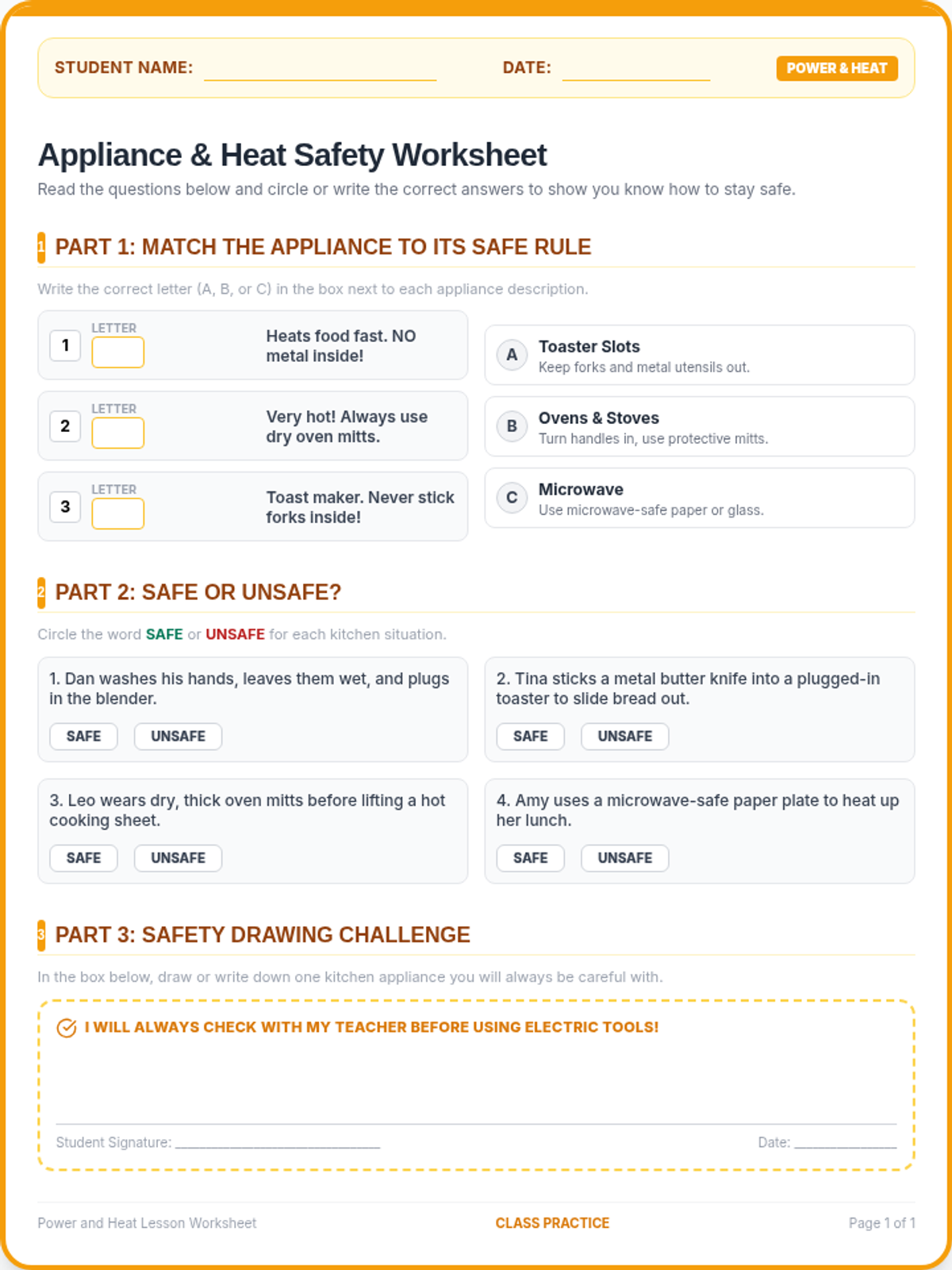
An identifying safety worksheet matching hot and electrical appliances to their definitions and safe rules. Features visual options, safe/unsafe scenarios, and a clean drawing or writing area for special education students.
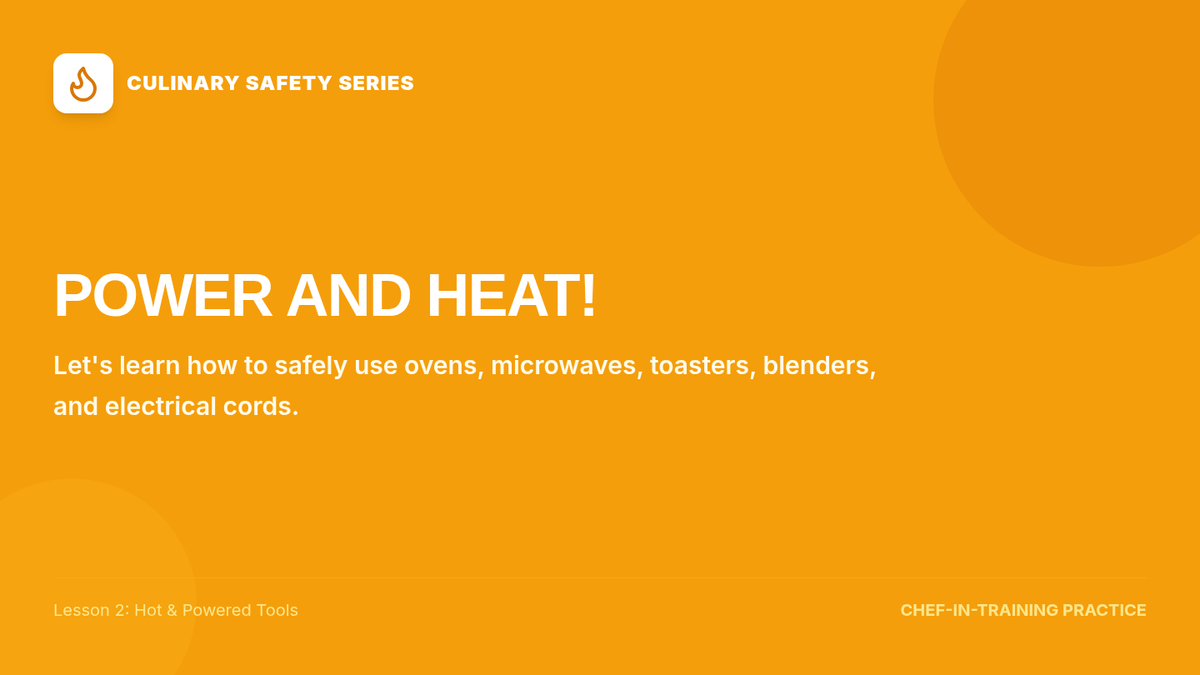
An engaging, high-contrast slide presentation focusing on heat and appliance safety. It covers safe handling of ovens, microwaves, blenders, and toasters, as well as crucial rules for electrical safety.
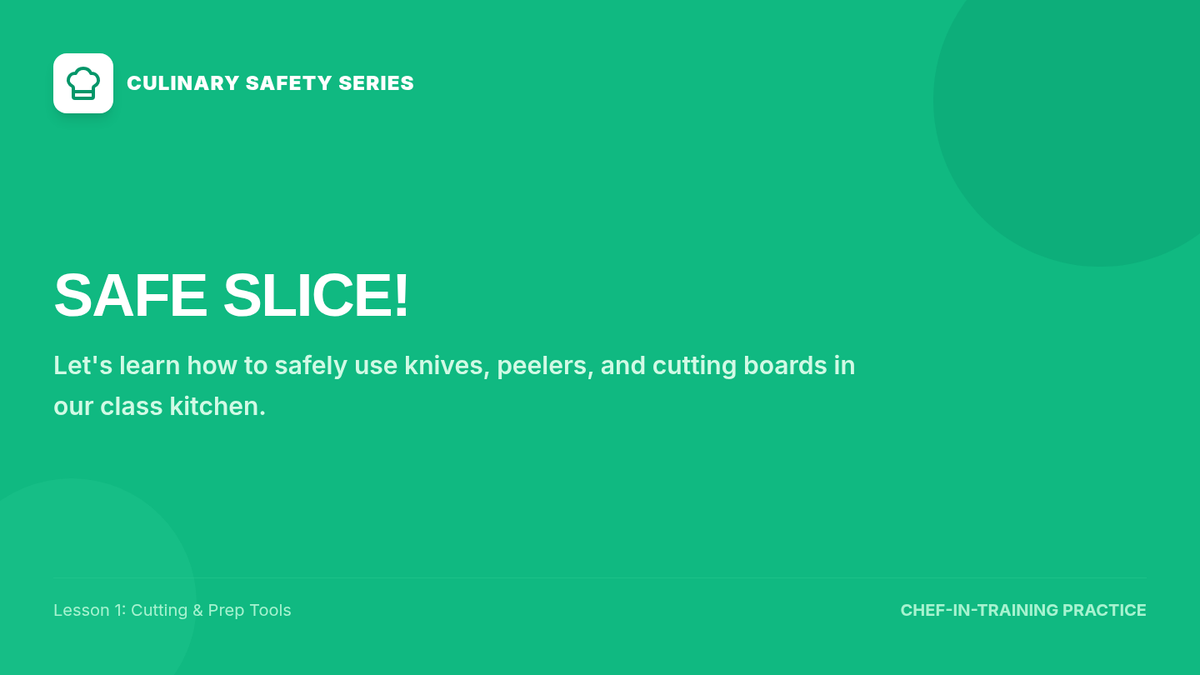
A vibrant, high-contrast slide presentation introducing kitchen prep and knife safety. Features minimal text, bold visual icons, and clear, structured safety rules designed for easy comprehension in high school special education classrooms.
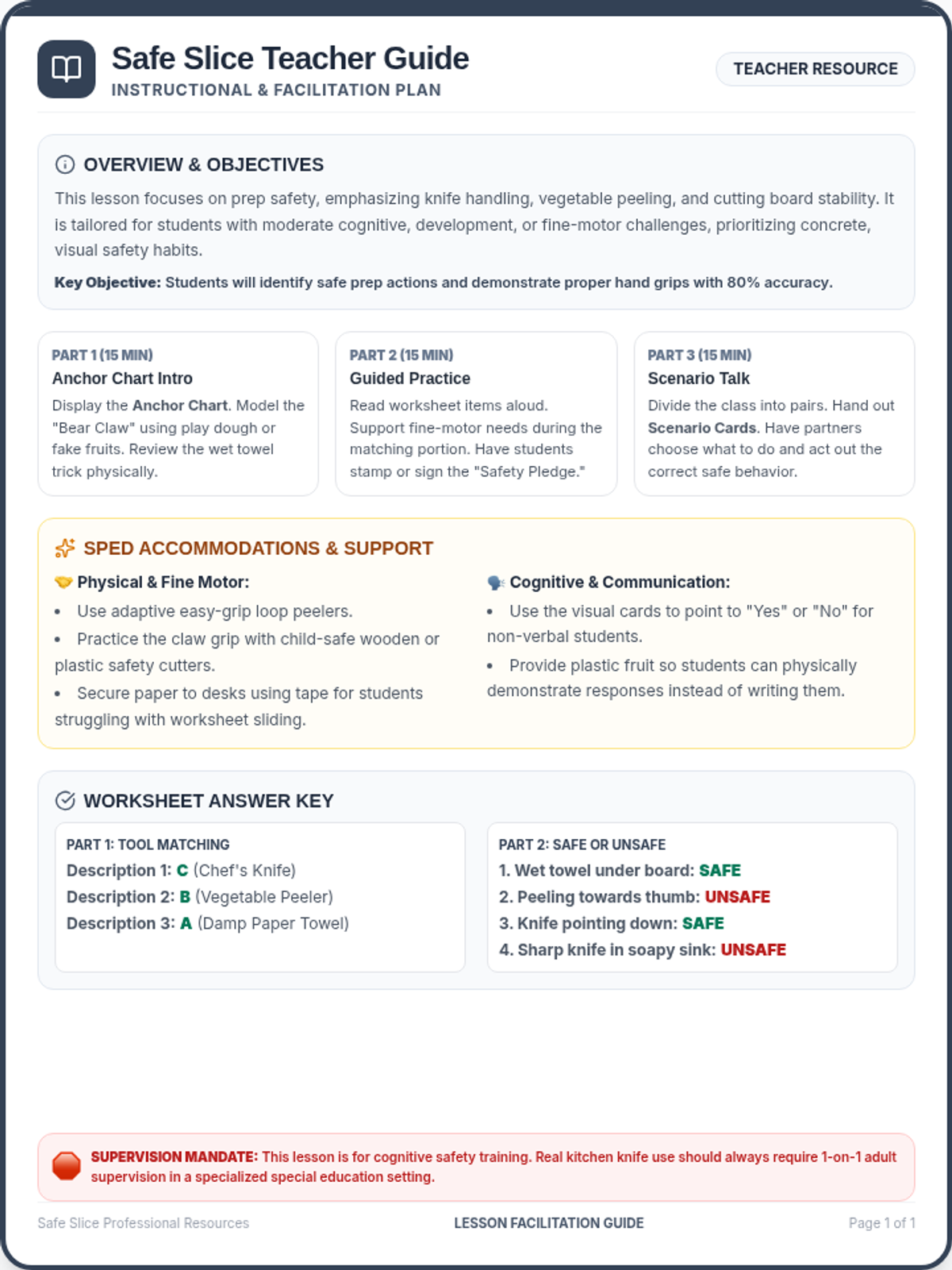
A comprehensive teacher-facing lesson plan and pacing guide for Safe Slice kitchen safety. Includes step-by-step facilitation scripts, special education accommodations, and the worksheet answer key.
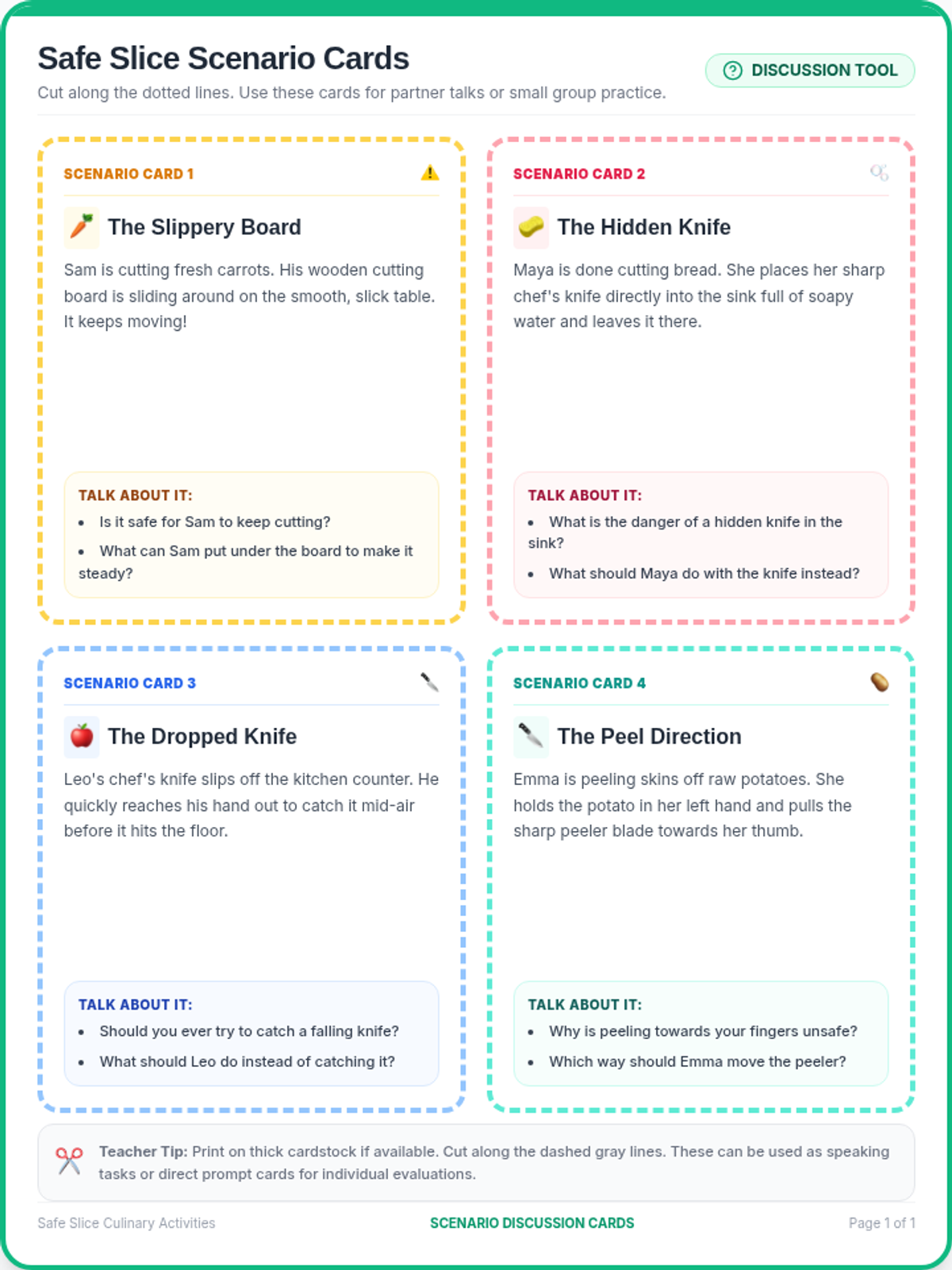
A printable collection of 4 kitchen scenario cards with dashed cutting guides. Designed for small-group discussion, roleplay, or individual writing prompts about safe knife handling, peeling, and cutting board stability.
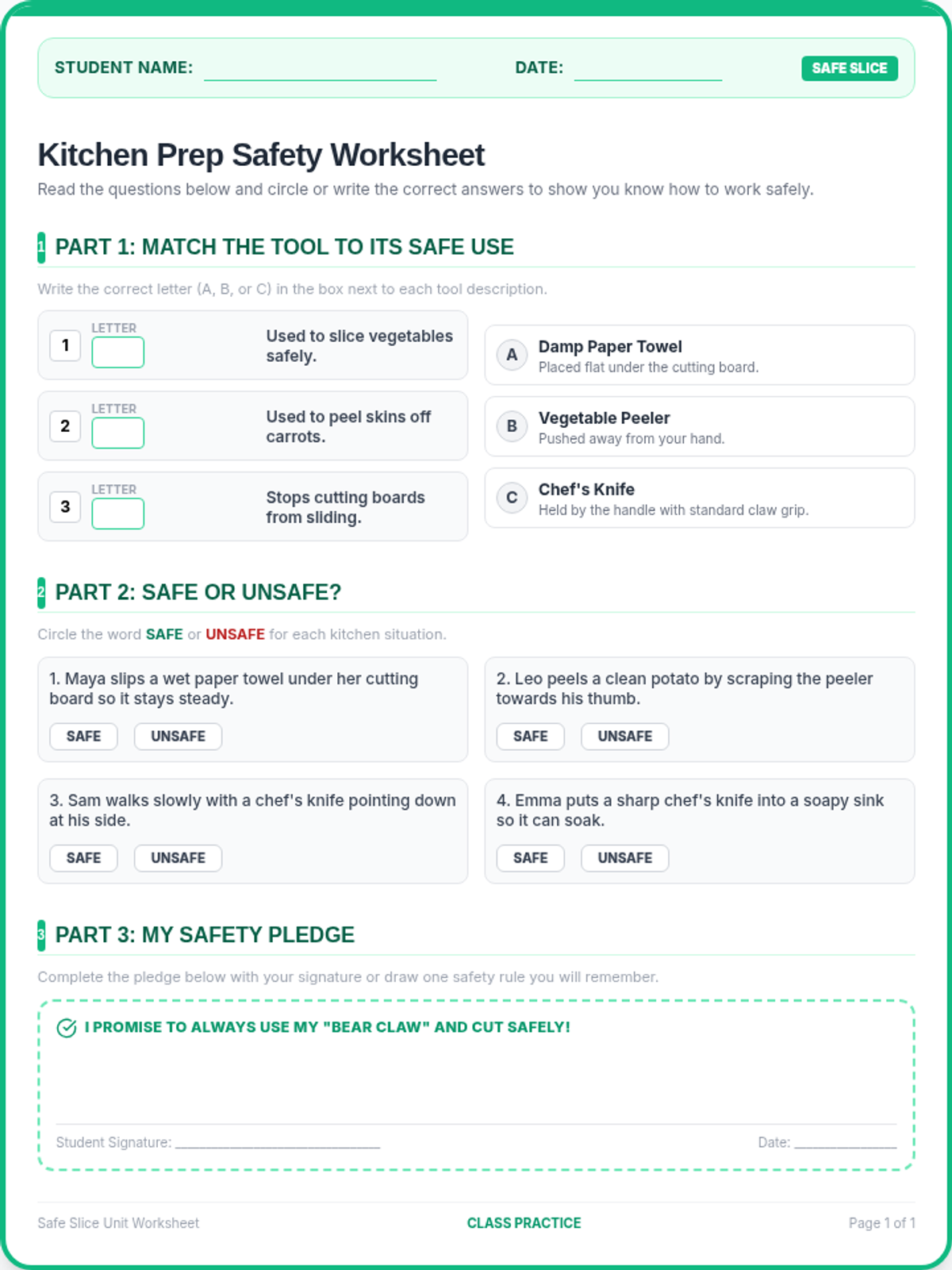
A guided student worksheet featuring visual tool matching, safe/unsafe scenario choices, and an open writing space for a student safety pledge. Designed with simplified language and high-contrast, uncluttered layout for high school special needs students.
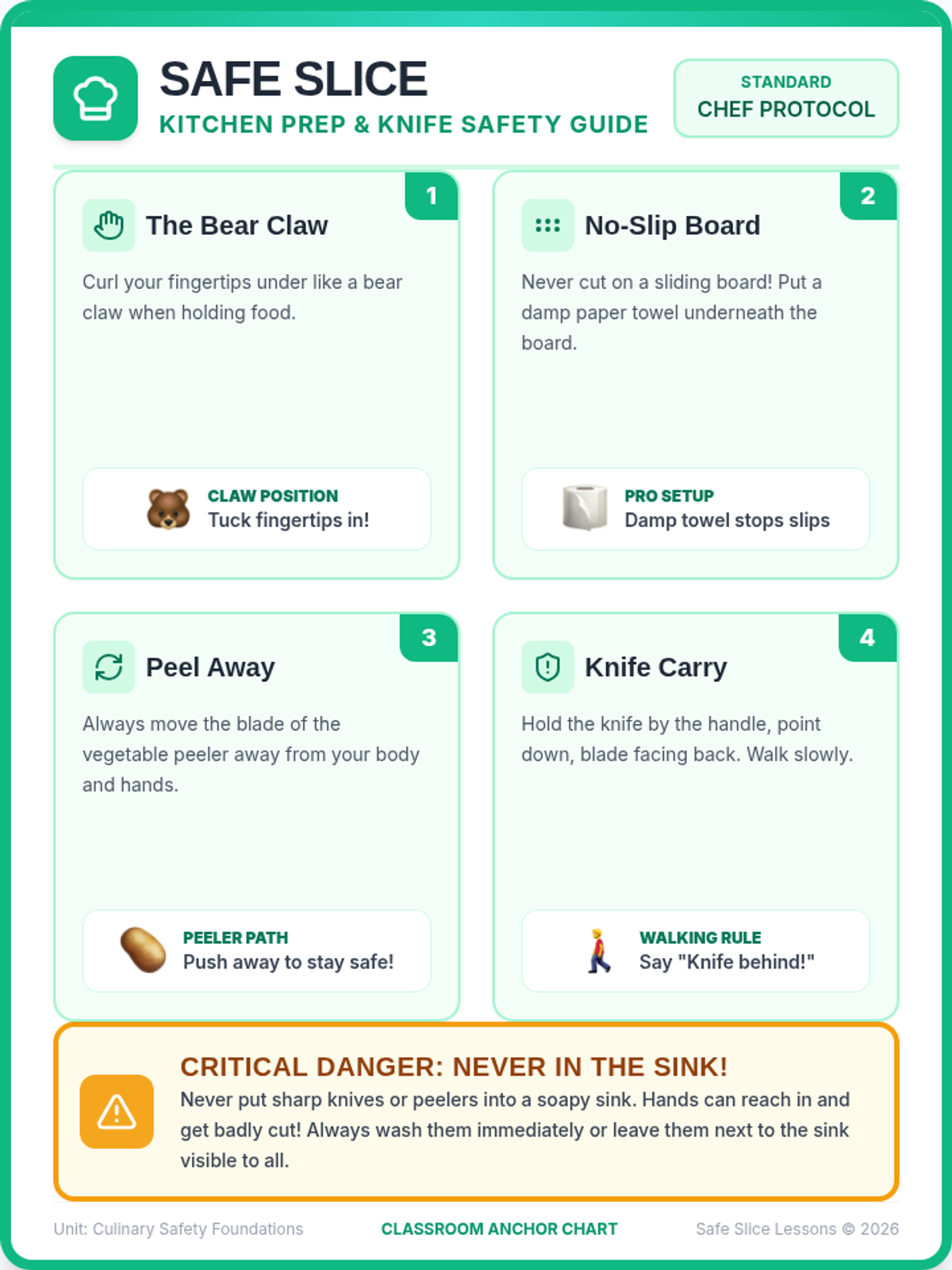
A visual safety anchor chart for classroom display or individual reference, showing key hand positions, board setup, and tool handling guidelines.
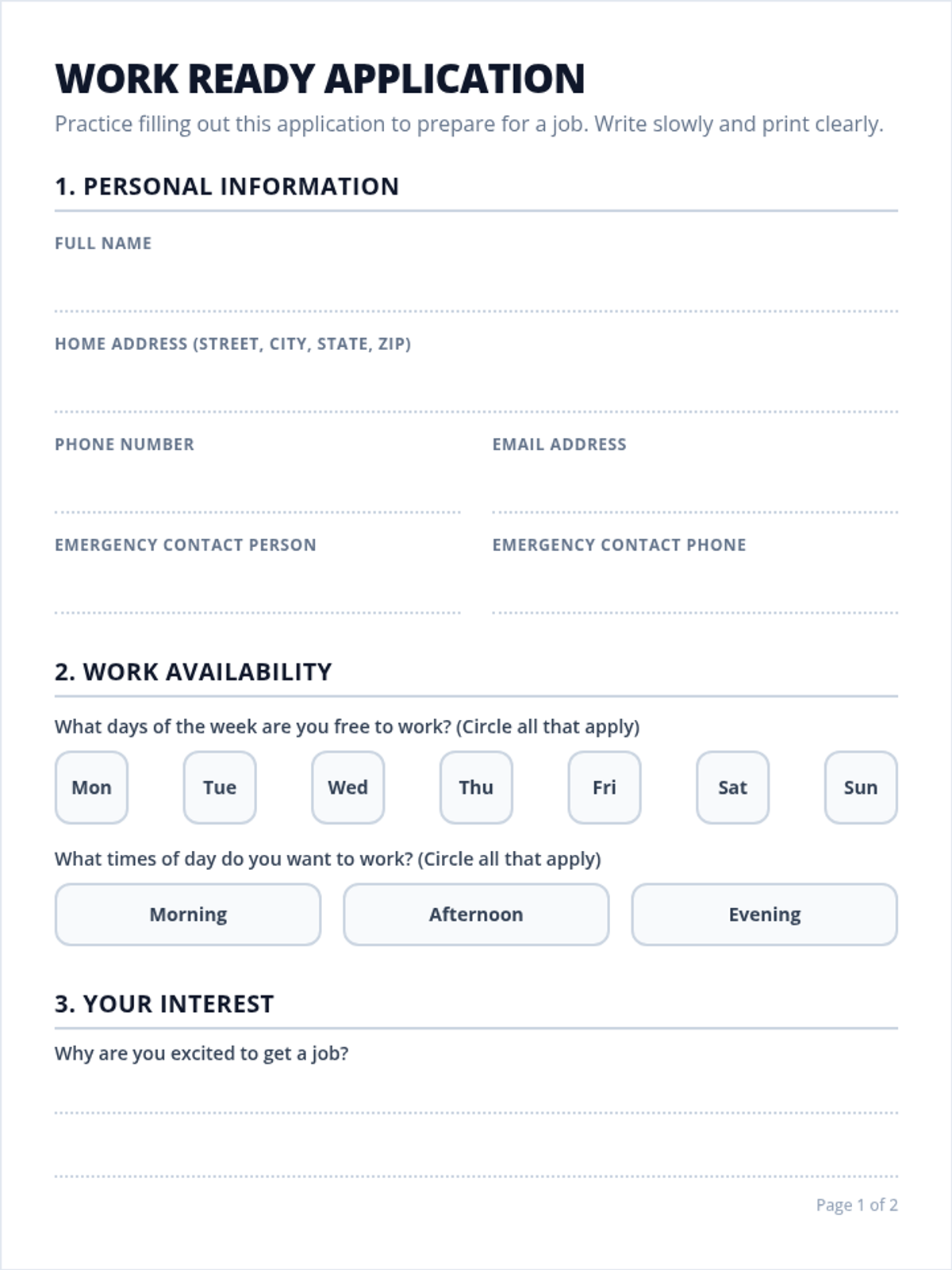
A clean, uncluttered two-page practice job application worksheet designed for high school special education students. It contains simplified language, extra-wide dotted handwriting lines for personal information, standard and scenario-based preference checklists, and accommodation needs, without distracting visual icons or interactive elements.
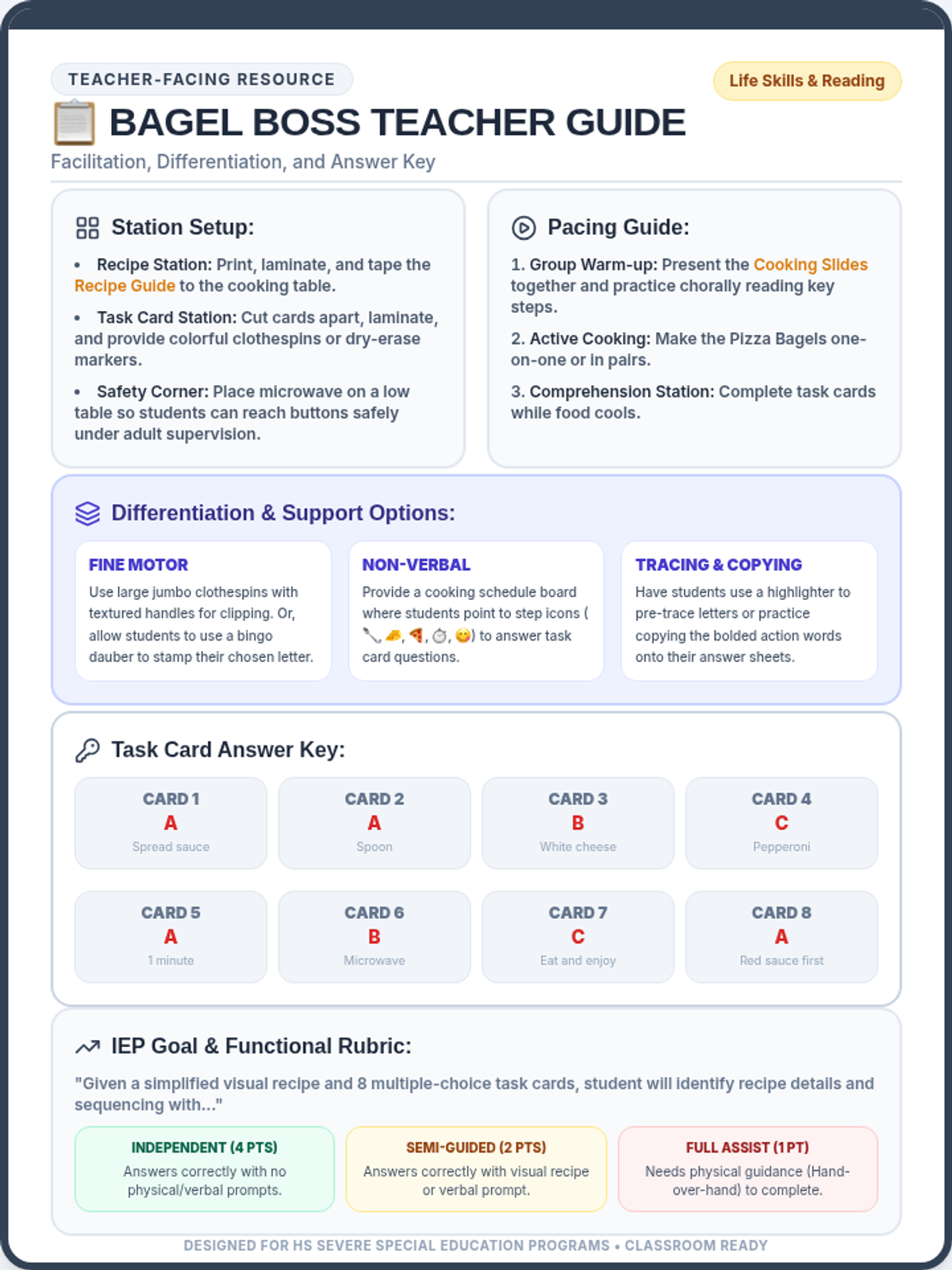
A comprehensive 1-page teacher facilitation guide, differentiation checklist, and answer key for implementing the Bagel Boss cooking lesson in a high school special education classroom.
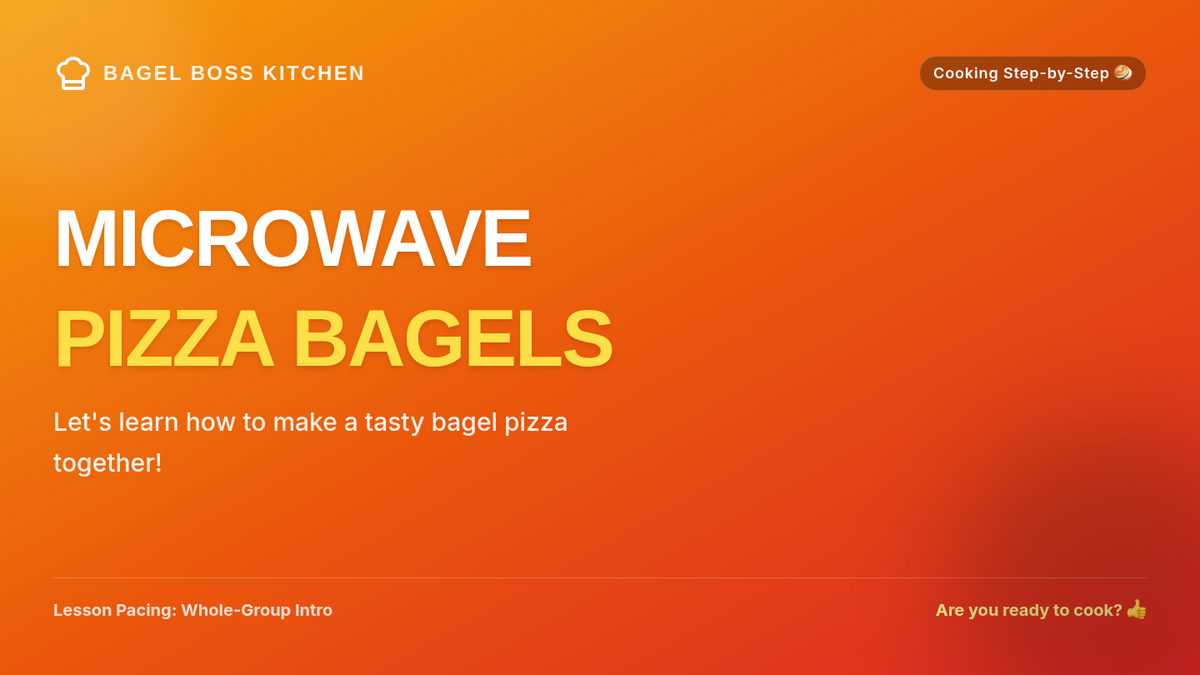
A high-contrast, visual step-by-step slideshow for whole-group instruction before independent cooking or station work. Highly structured for special education classrooms.
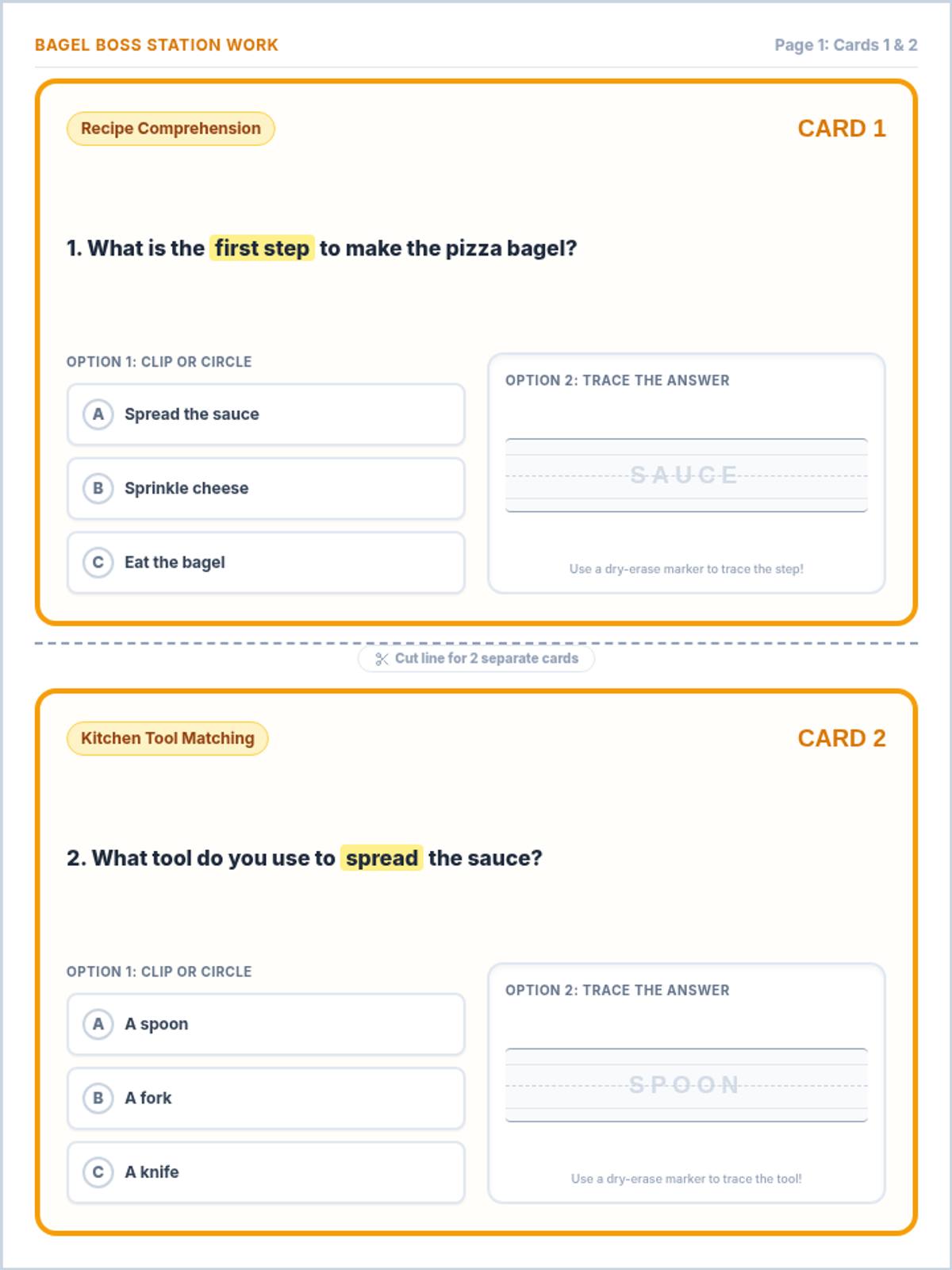
An 8-card Task Card Set designed for printing, laminating, and cutting. Includes a 5th page Student Recording Sheet with dual-response options (clip-card multiple choice or tracing/writing on dotted guidelines) tailored for high school special education students.
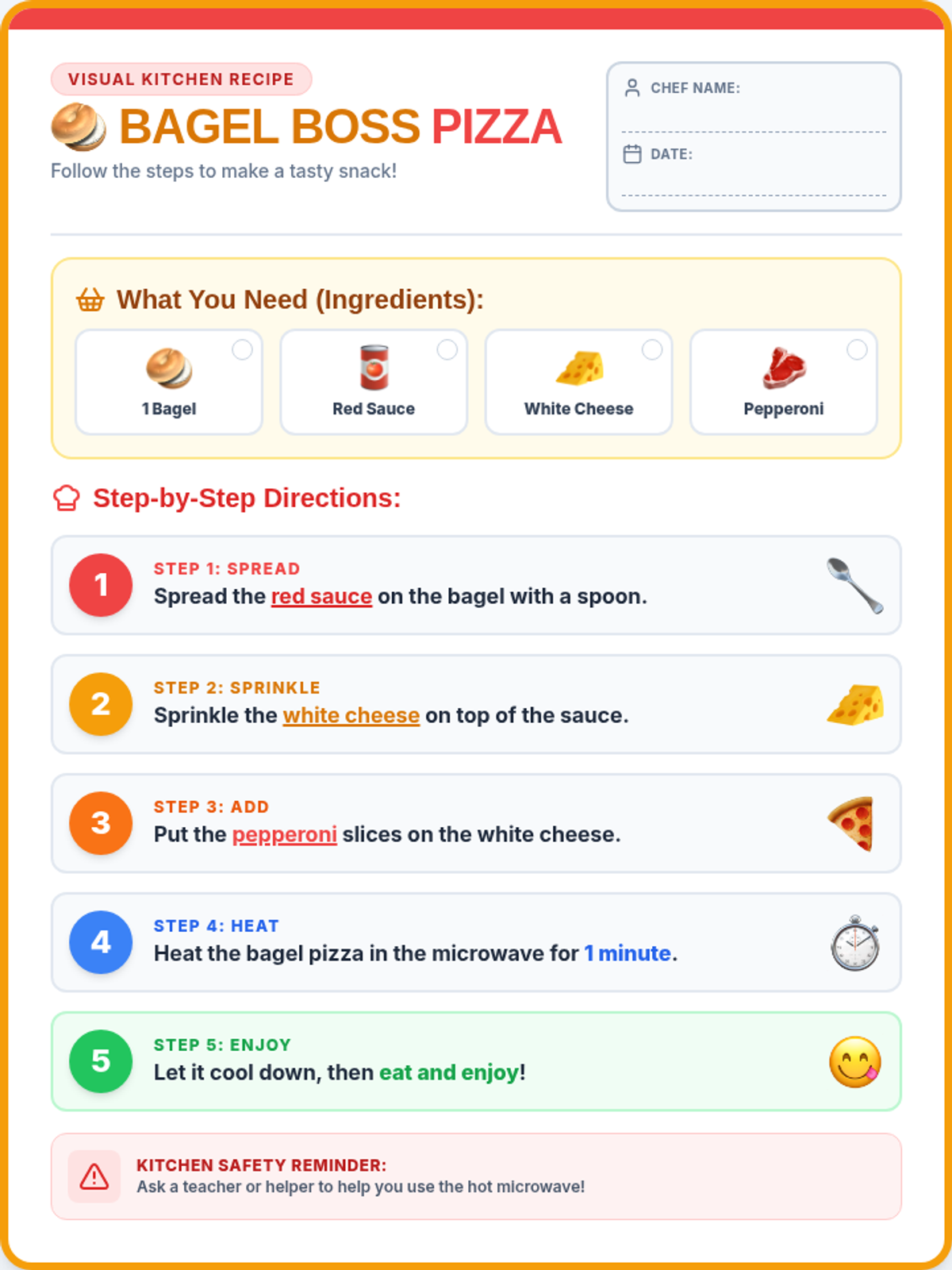
A single-page highly visual recipe guide for making Microwave Pizza Bagels. Designed with bold, high-contrast borders, large text, and clear steps specifically for students with severe special needs.
A highly organized, 1-page teacher facilitation guide featuring instructional scripts, a step-by-step lesson sequence, and a visual prompting hierarchy tailored for students with ASD and low cognitive profiles.
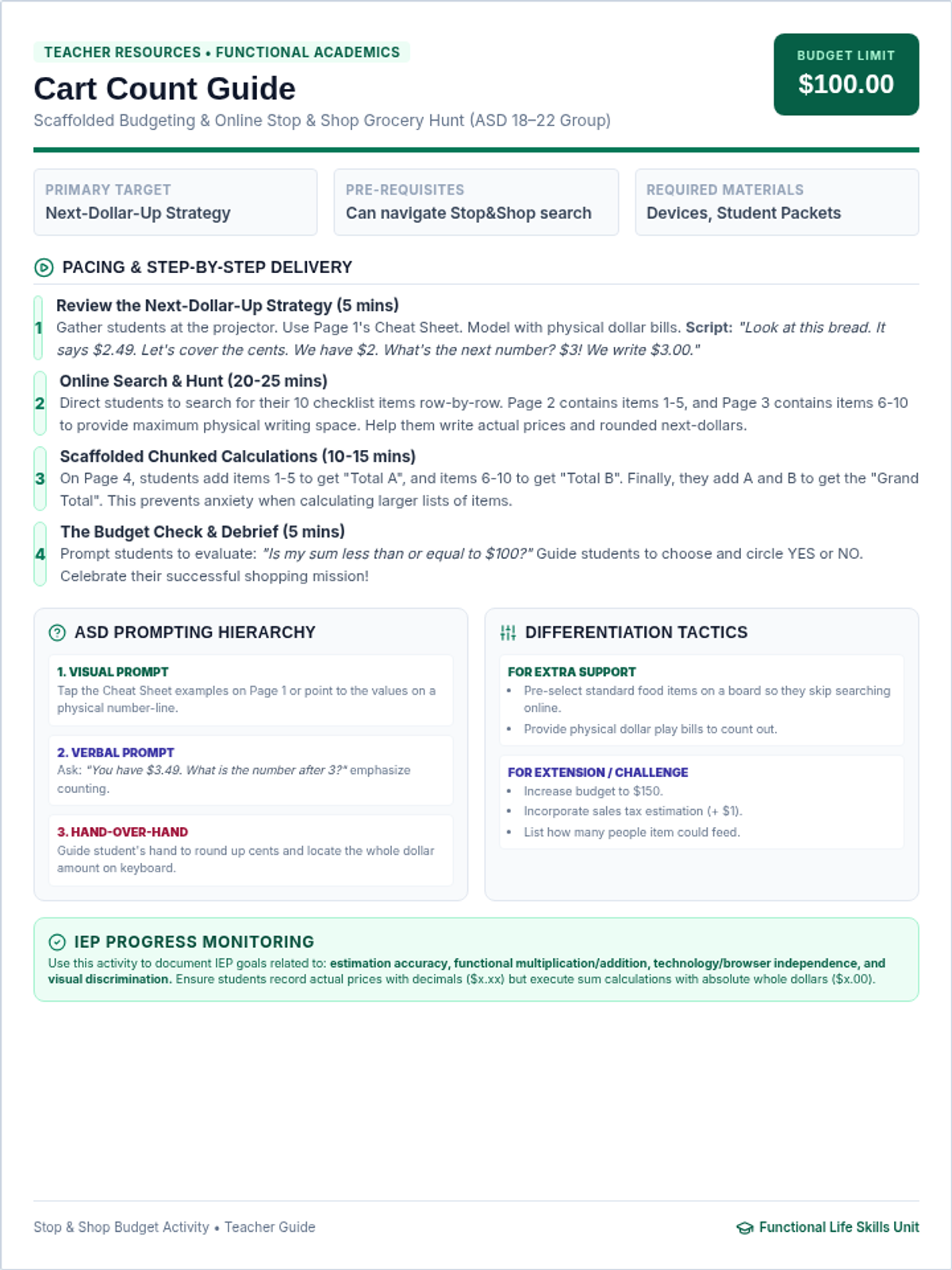
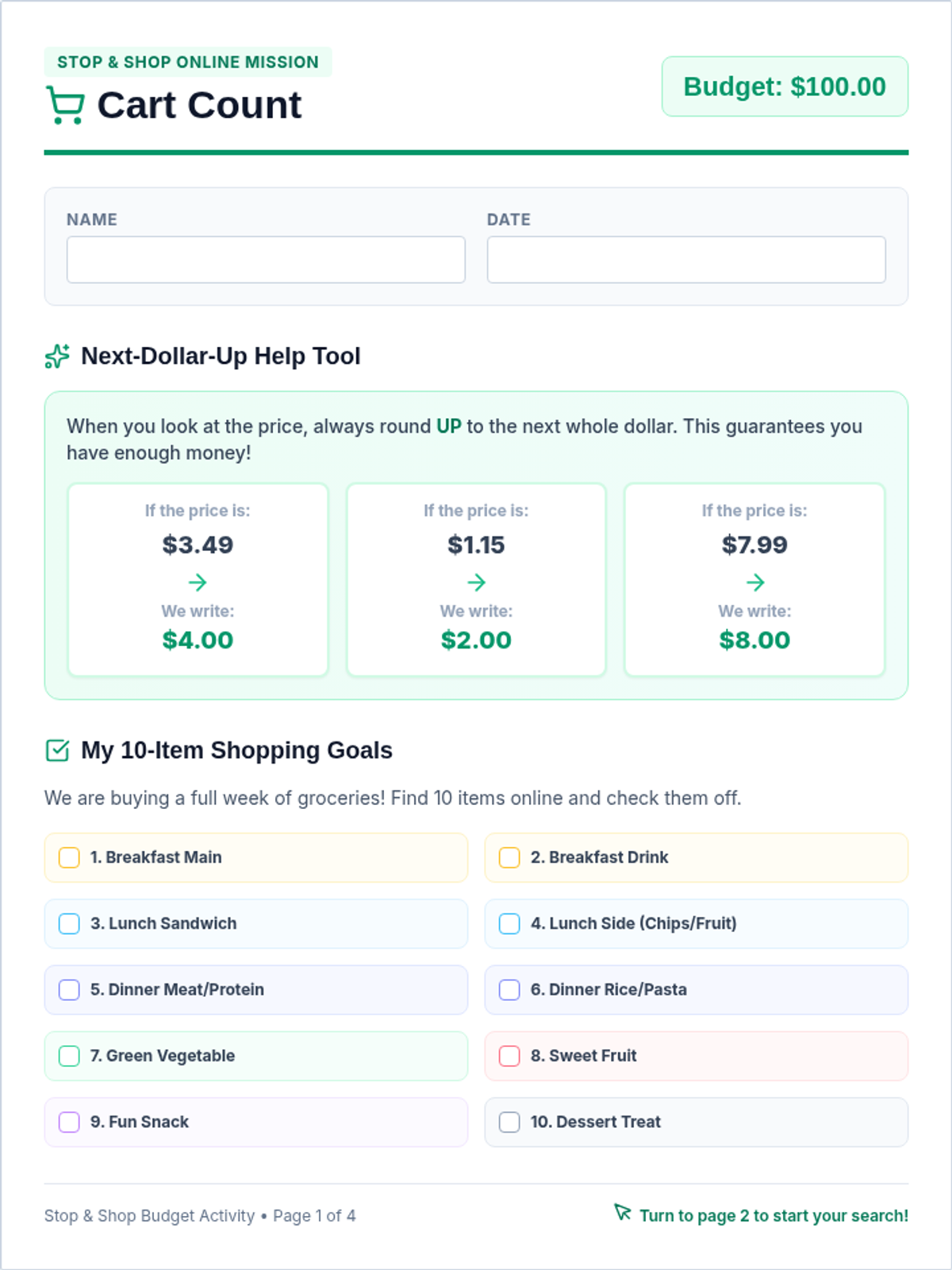
A highly scaffolded, 4-page printable shopping packet for students to practice meal planning and next-dollar-up estimation while browsing the Stop & Shop website under a strict $100 budget. Includes 10 items split into two pages for ample handwriting space and scaffolded chunked addition.
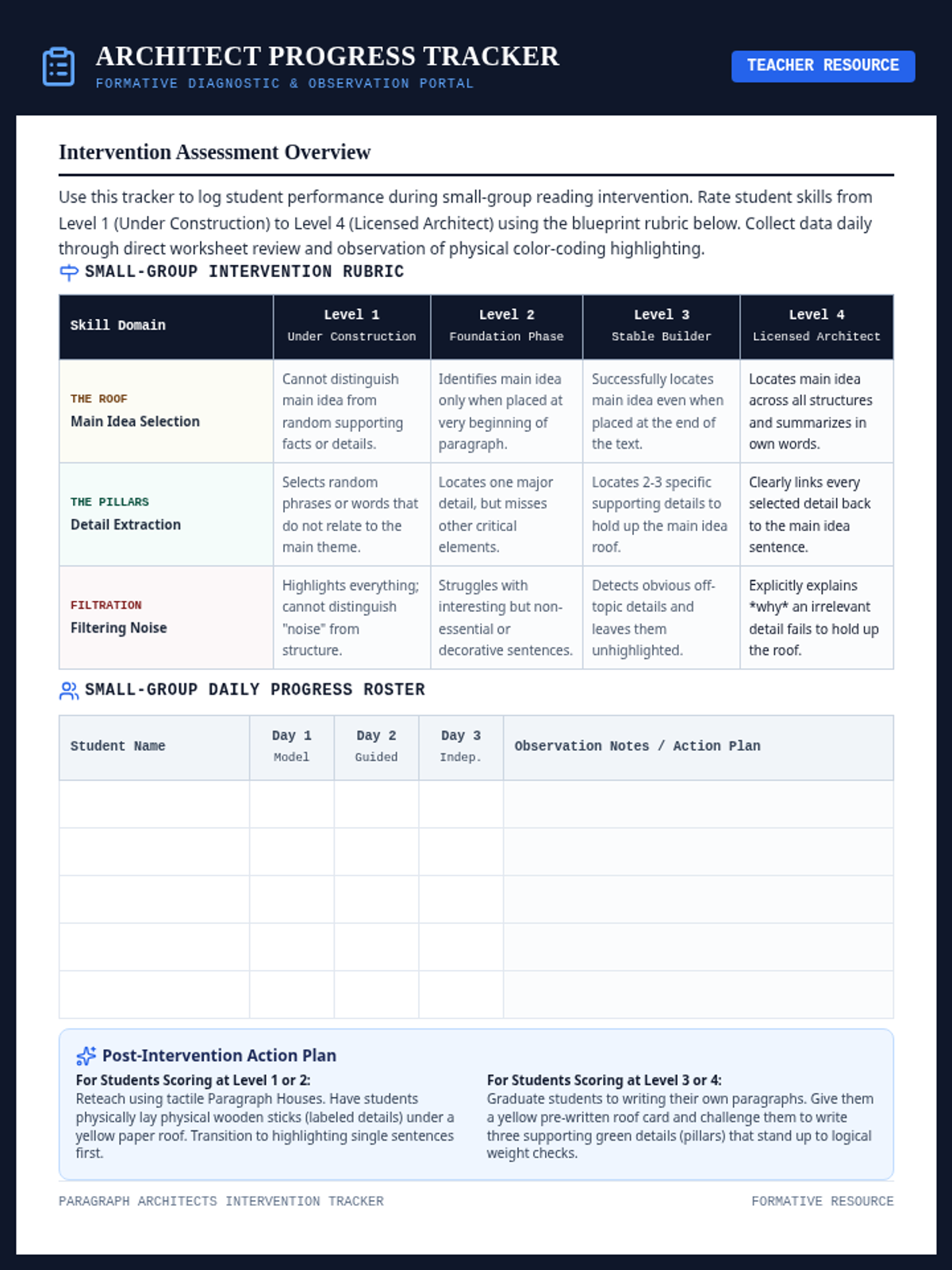
A teacher-facing diagnostic recording sheet, formative assessment rubric, and intervention tracker. Designed to monitor and score student progress in main idea and detail mastery over the 3-day program.
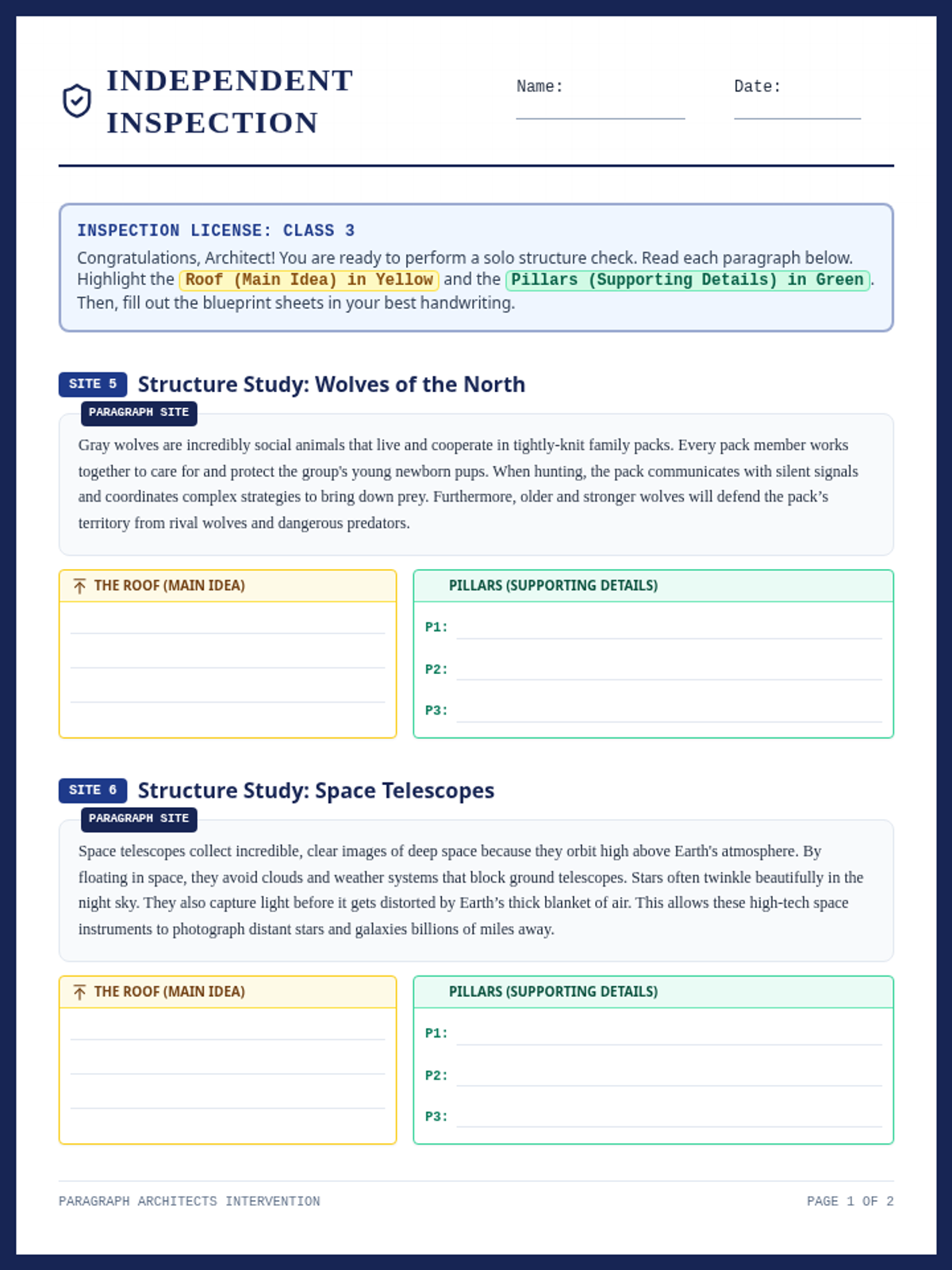
An independent assessment and practice document for Day 3. Includes independent reading passages, structural mapping boxes with white handwriting spaces, and uniform multiple-choice questions for formative assessment.
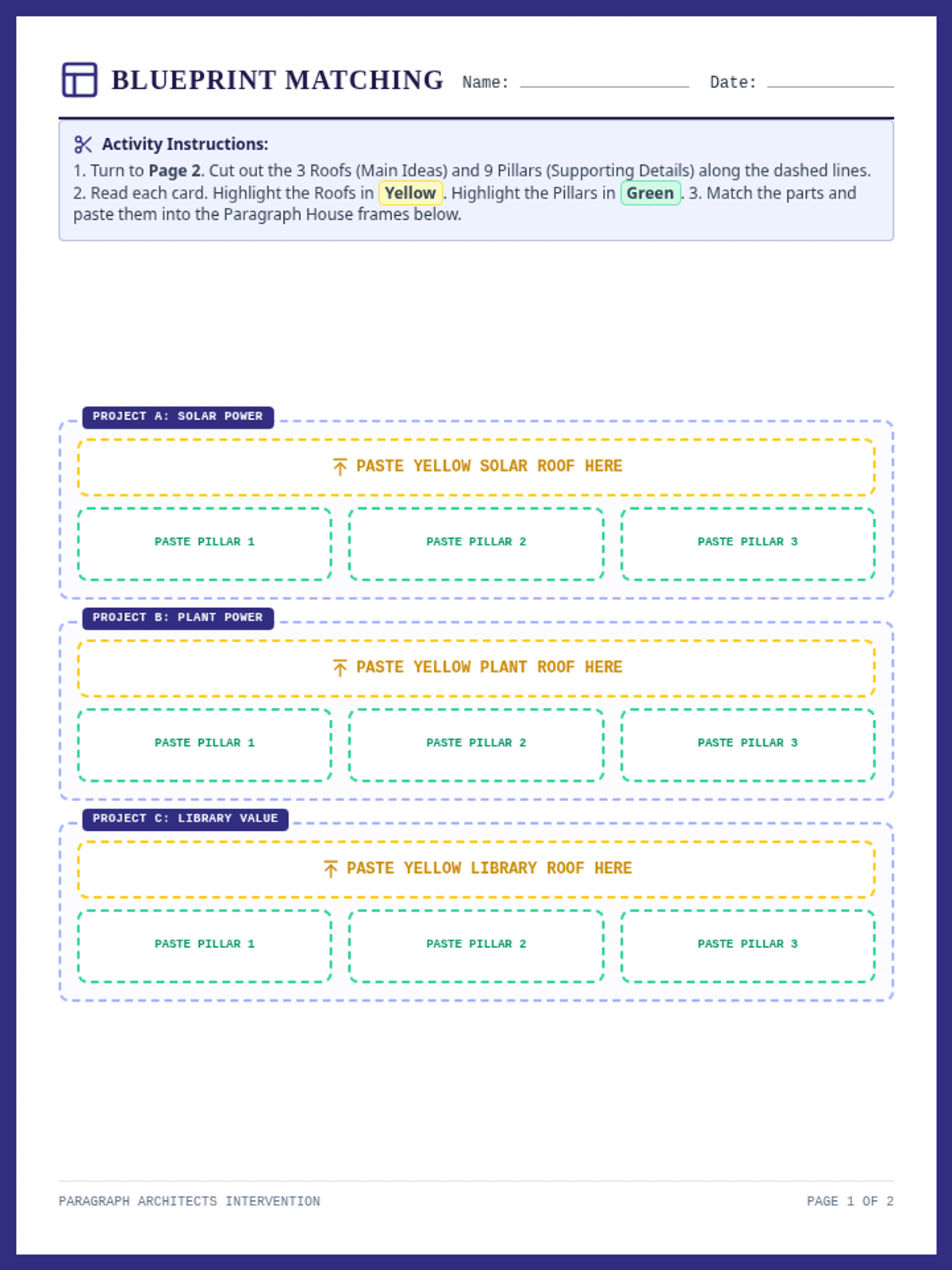
A hands-on, tactile matching activity for Lesson 2. Students cut out 'Roof' (Main Idea) and 'Pillar' (Supporting Detail) card strips, color-code highlight them with markers, and paste them into the correct 'Paragraph House' frames.
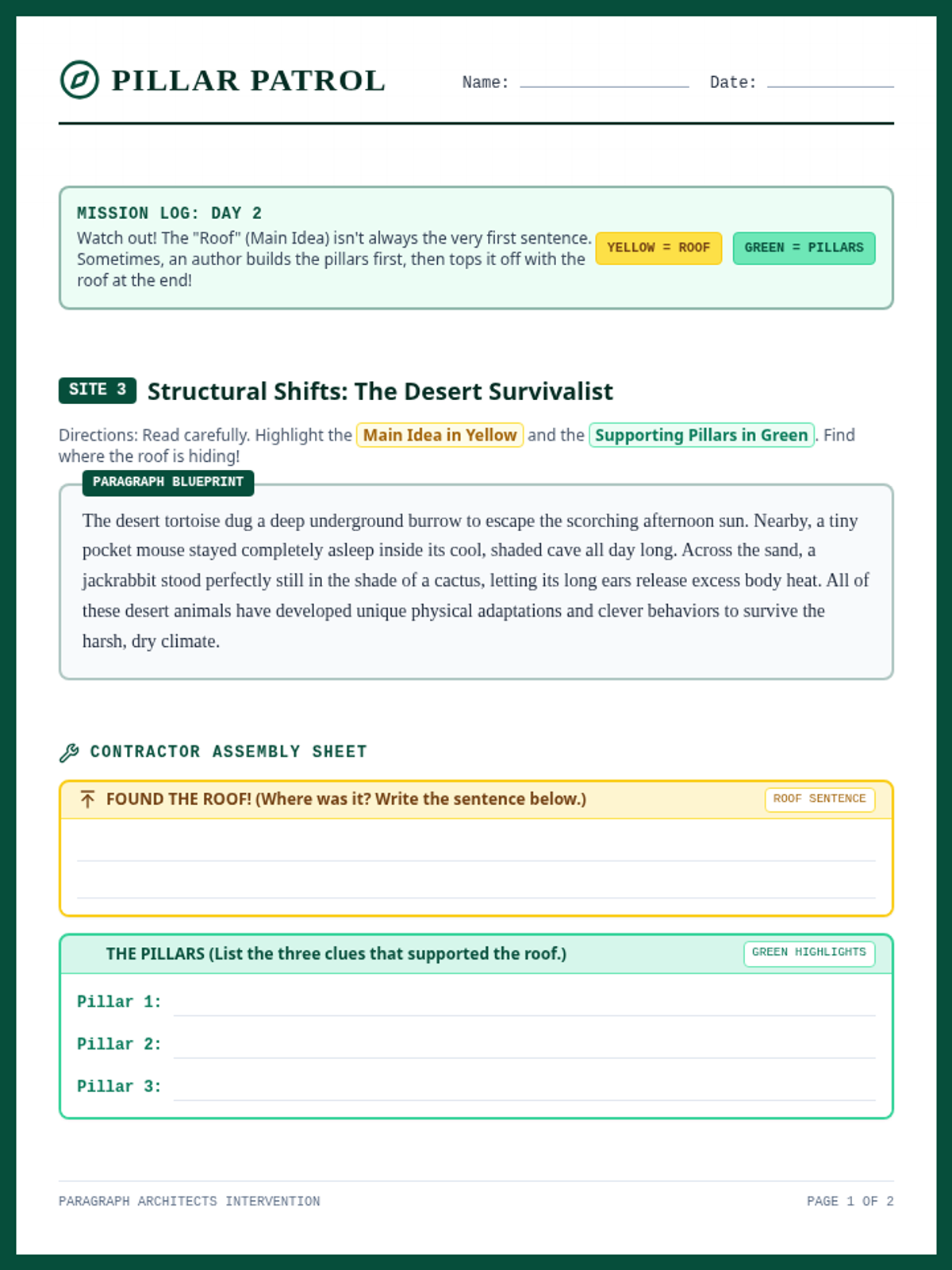
A hands-on, scaffolded guided practice student worksheet for Day 2. Features complex paragraph structures where the main idea is placed at the end or surrounded by highly distracting, non-essential details, complete with spacious, light-colored blueprint graphic organizer boxes.
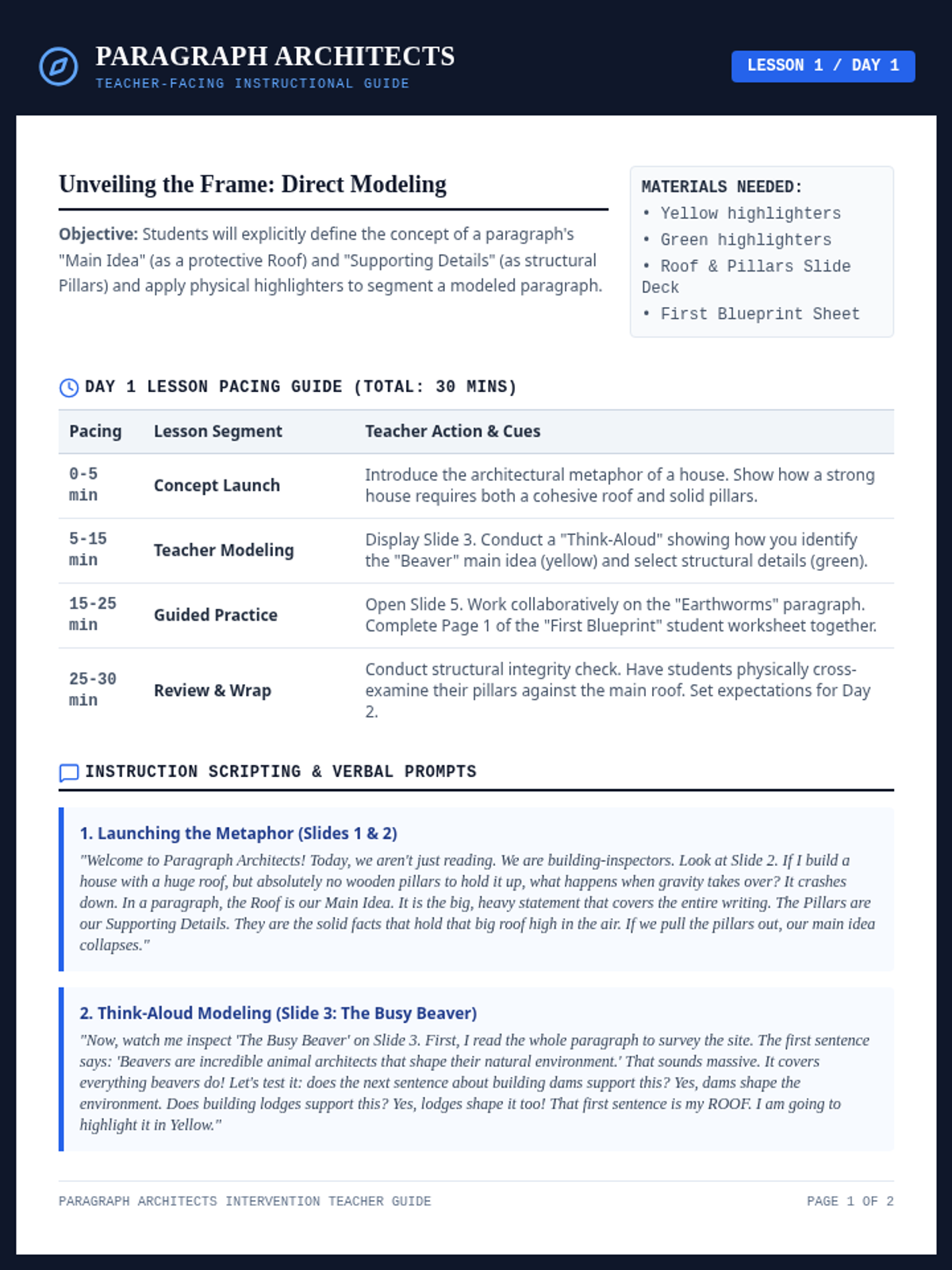
A detailed, professional teacher's guide for Day 1 of the intervention. Includes explicit instructional scripts, step-by-step modeling prompts for the 'Roof' and 'Pillars' slides, guidance on common student misconceptions, and a breakdown of the worksheet answers.
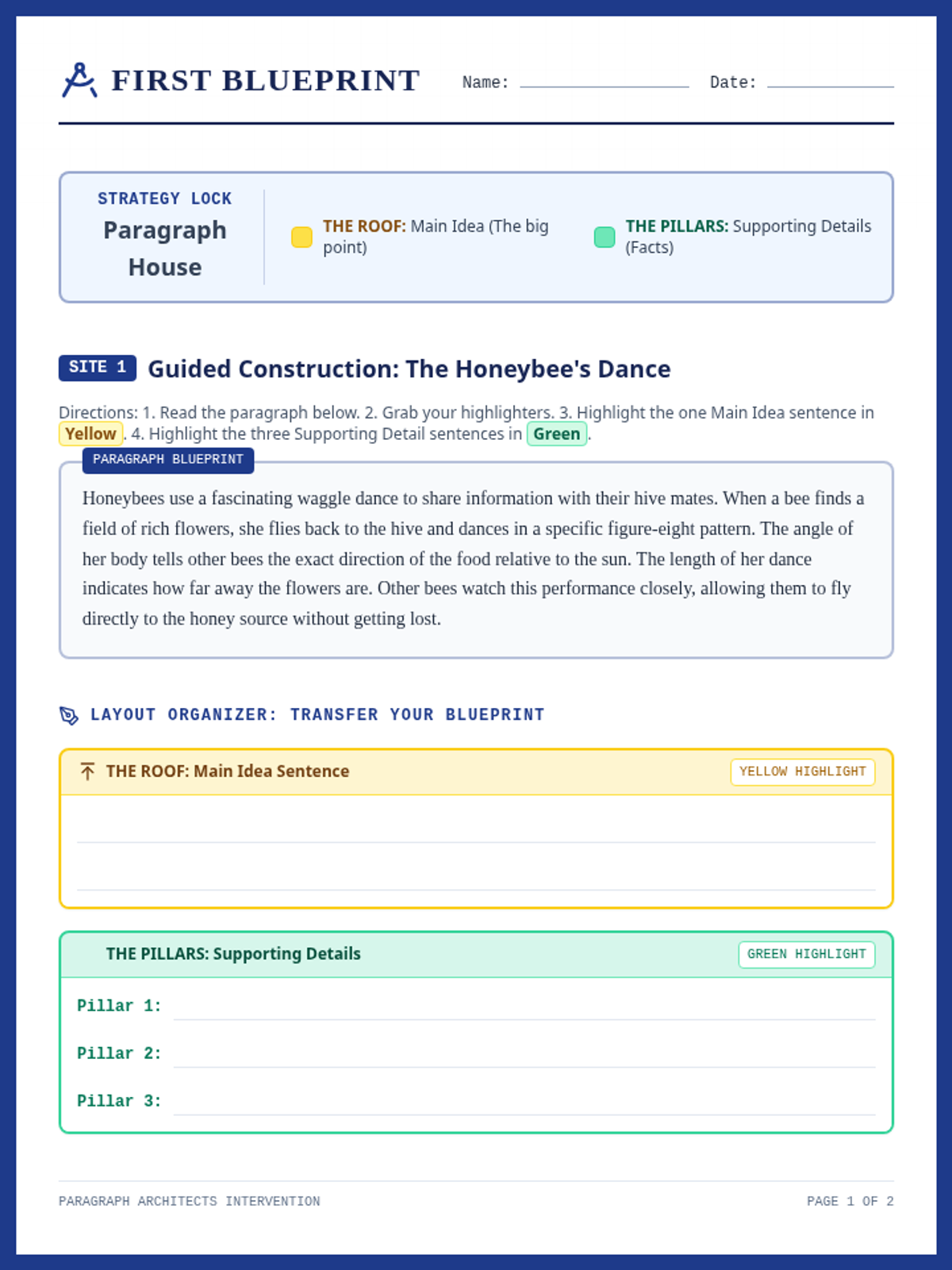
A hands-on, highly scaffolded student worksheet for Day 1. Contains a brief visual strategy reminder, two carefully leveled paragraphs for highlighting practice, and spacious graphic organizer blocks for writing down the identified Main Idea (Roof) and Supporting Details (Pillars).
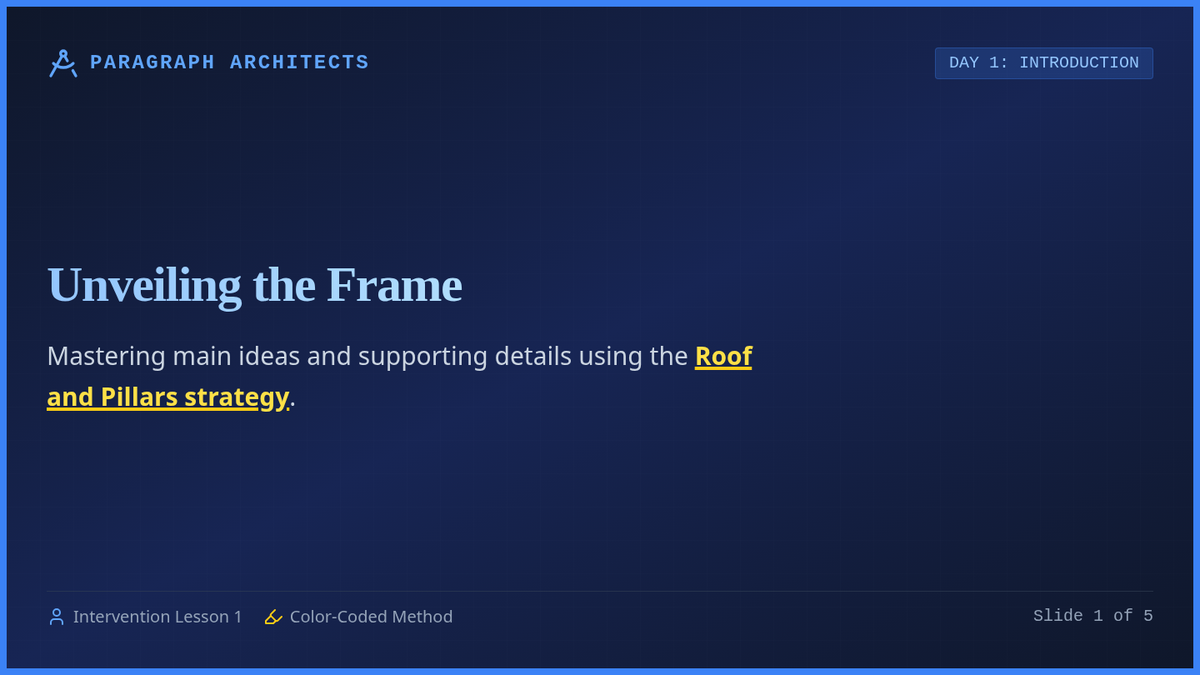
A high-impact 5-slide presentation designed to introduce the architectural metaphor of paragraphs. Features clear visual slides showing the 'Roof' as the Main Idea and 'Pillars' as Supporting Details, with color-coded highlighter modeling.
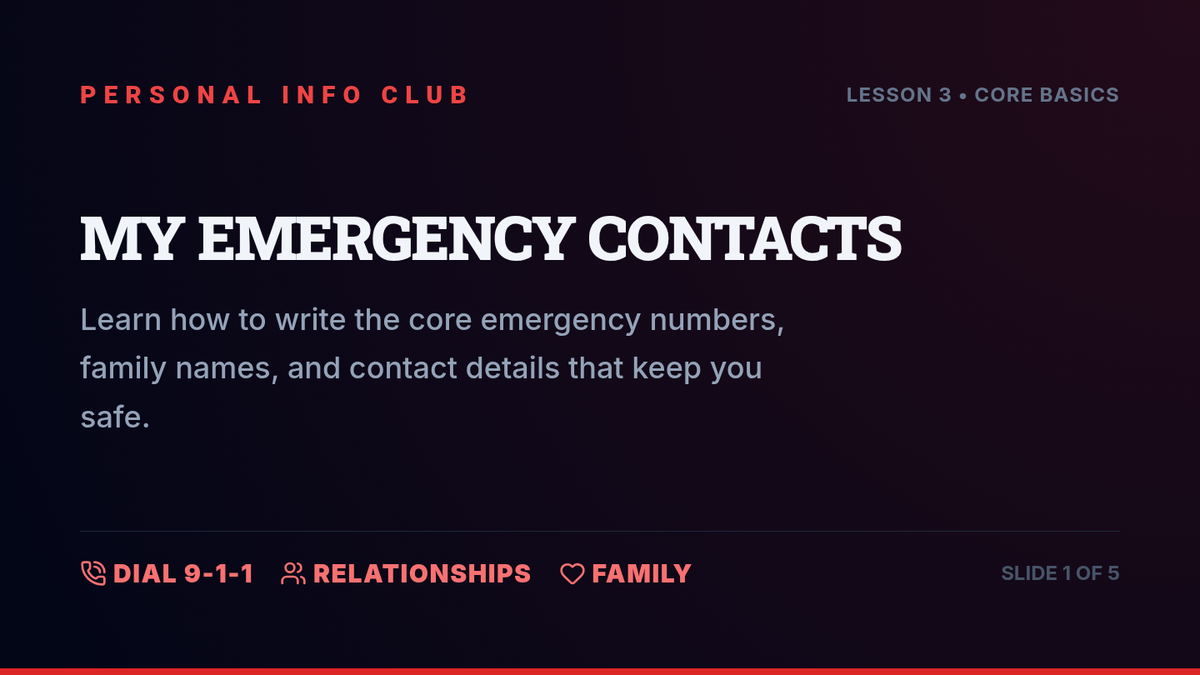
A visually bold, 5-slide instructional presentation to guide the 'Emergency Contacts' lesson. It features large-text templates for rhythmic warm-up chants, high-frequency emergency vocabulary reference cards, and phone-number configurations.
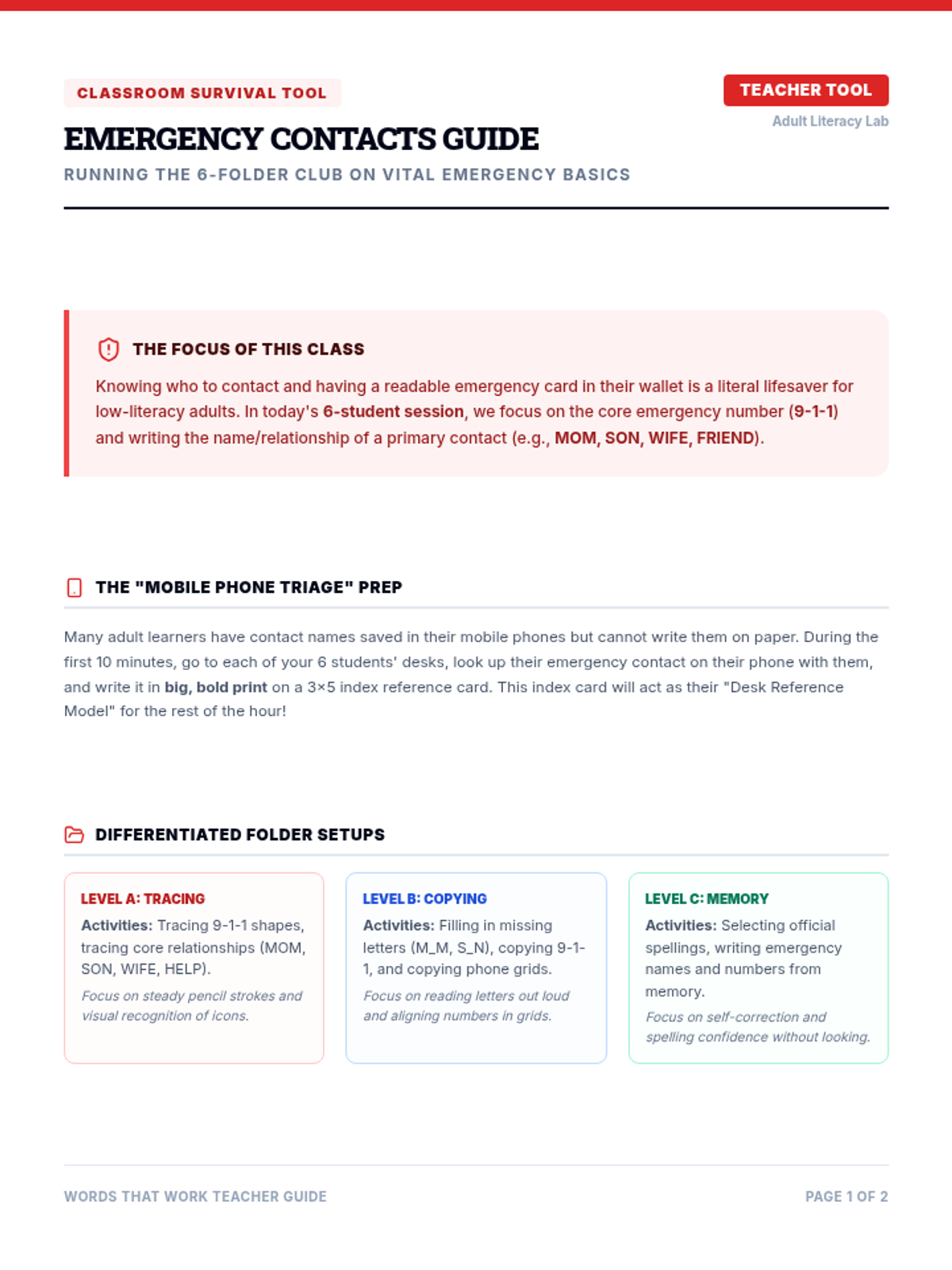
A highly practical 2-page teacher facilitation guide for running the 'Emergency Contacts' Folder Studio lesson. It details tactile support setups, mobile-phone reference checks, and minute-by-minute parallel tracking for all 3 levels.
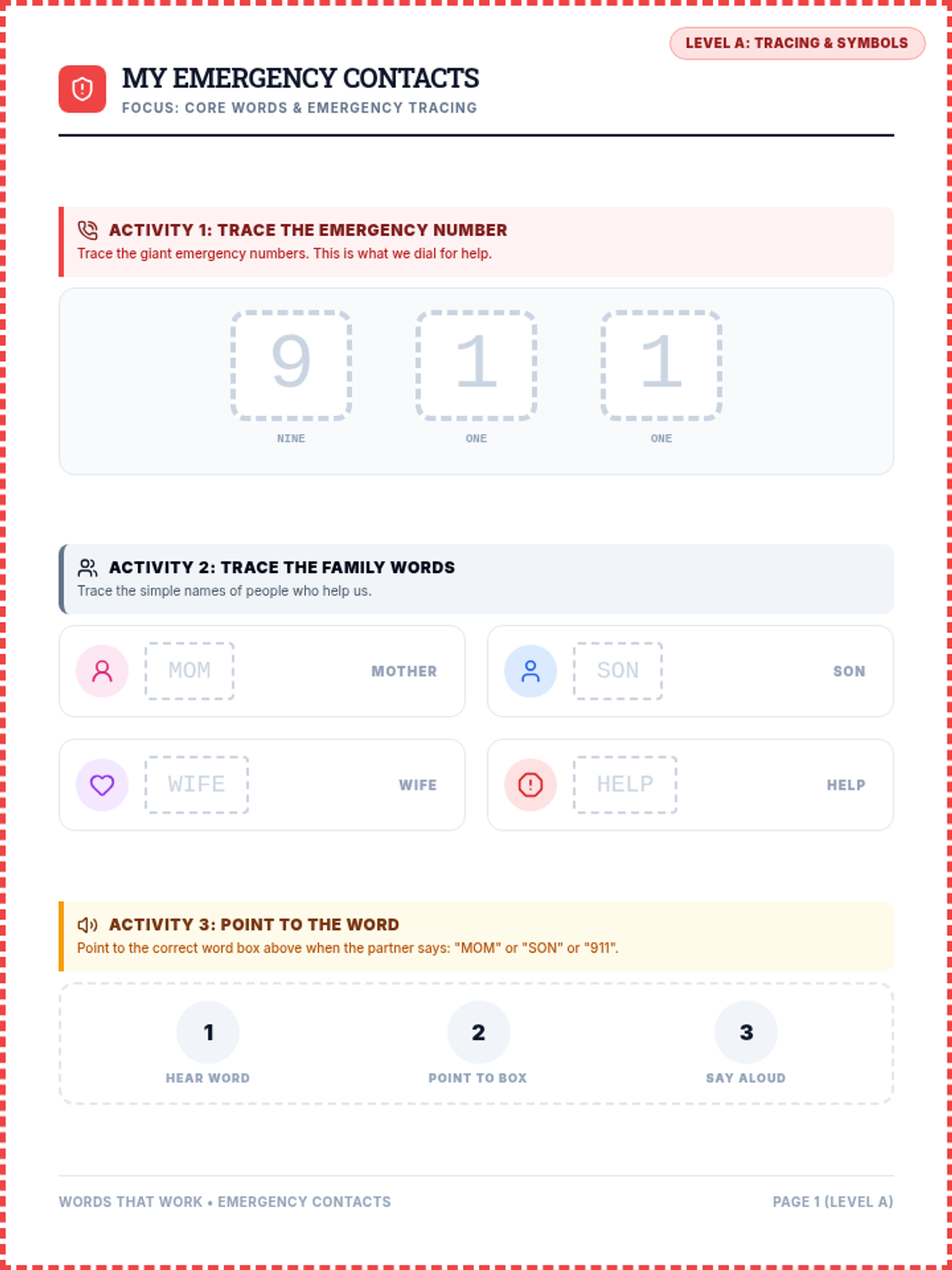
A highly simplified and respectful 3-page student worksheet pack focused on writing and reading emergency contacts (911, Mom, Son, Wife, Friend). Differentiated into Level A (motor tracing), Level B (spelling and copying), and Level C (independent pocket card filling).
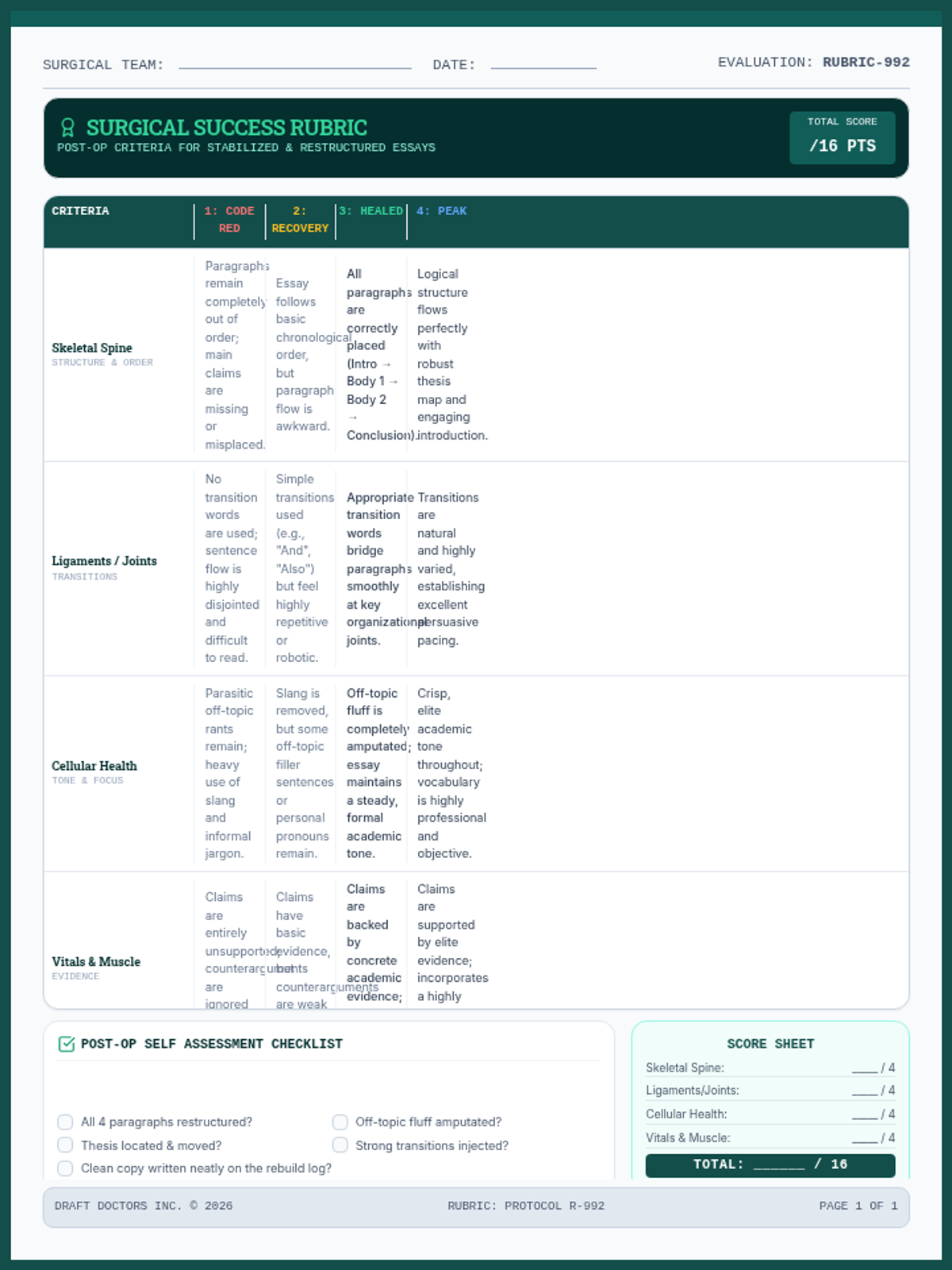
A 1-page analytical rubric structured as a 'Surgical Success Rubric' with an integrated student self-assessment checklist and score tally box.
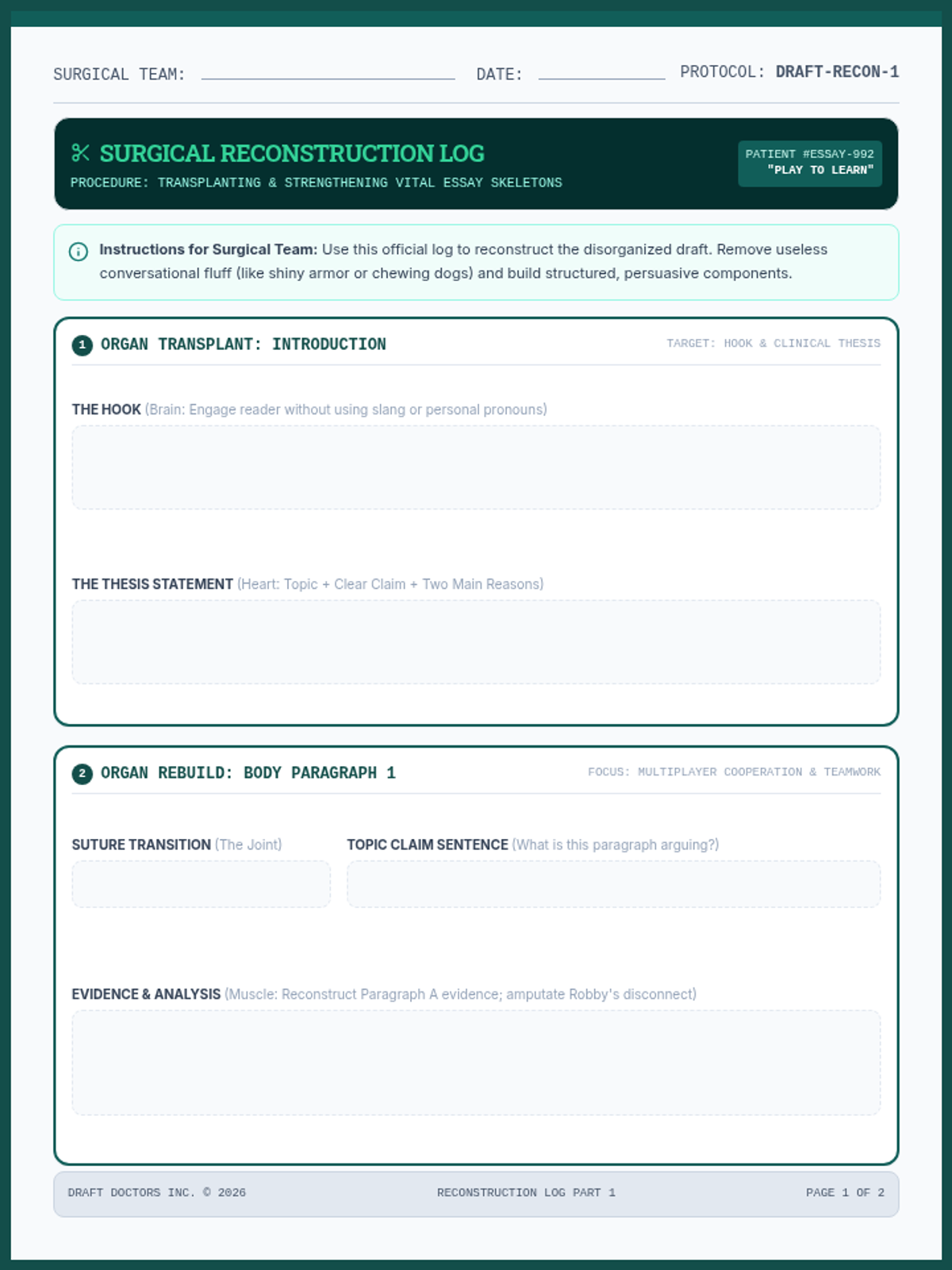
A highly structured 2-page graphic organizer designed as a 'Surgical Reconstruction Log' where student pairs transplant, suture, and rewrite the final essay.
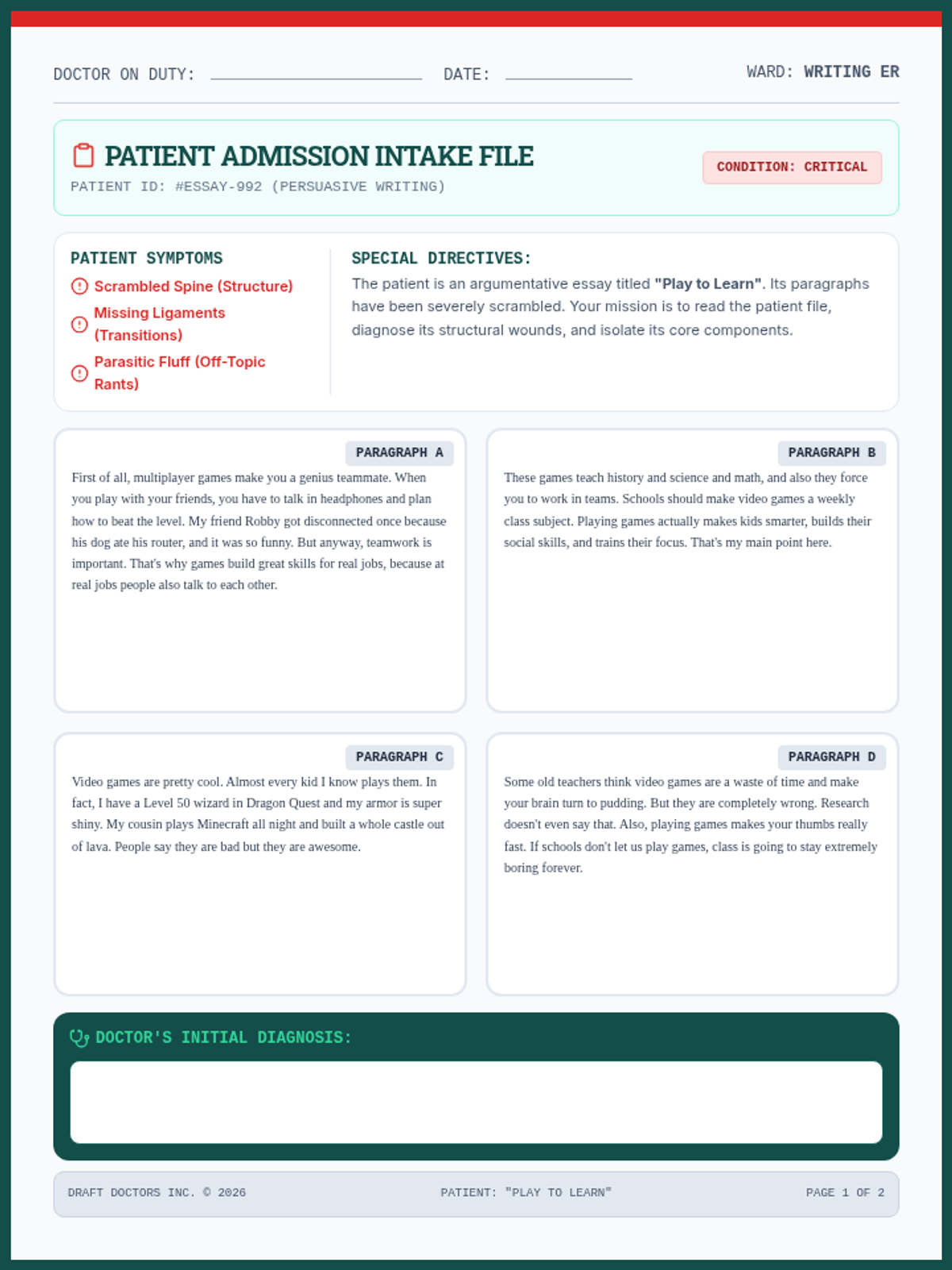
A student-facing 2-page 'Patient File' containing the scrambled 'Sick Draft' with name/date fields, and a diagnostic worksheet where students analyze structural errors and off-topic paragraphs.