Comprehensive teacher guide and script for the Claude McKay lesson. Includes clear pacing, co-teaching collaboration frameworks, step-by-step facilitation scripts, a detailed answer key with textual justifications, and a timeline key.
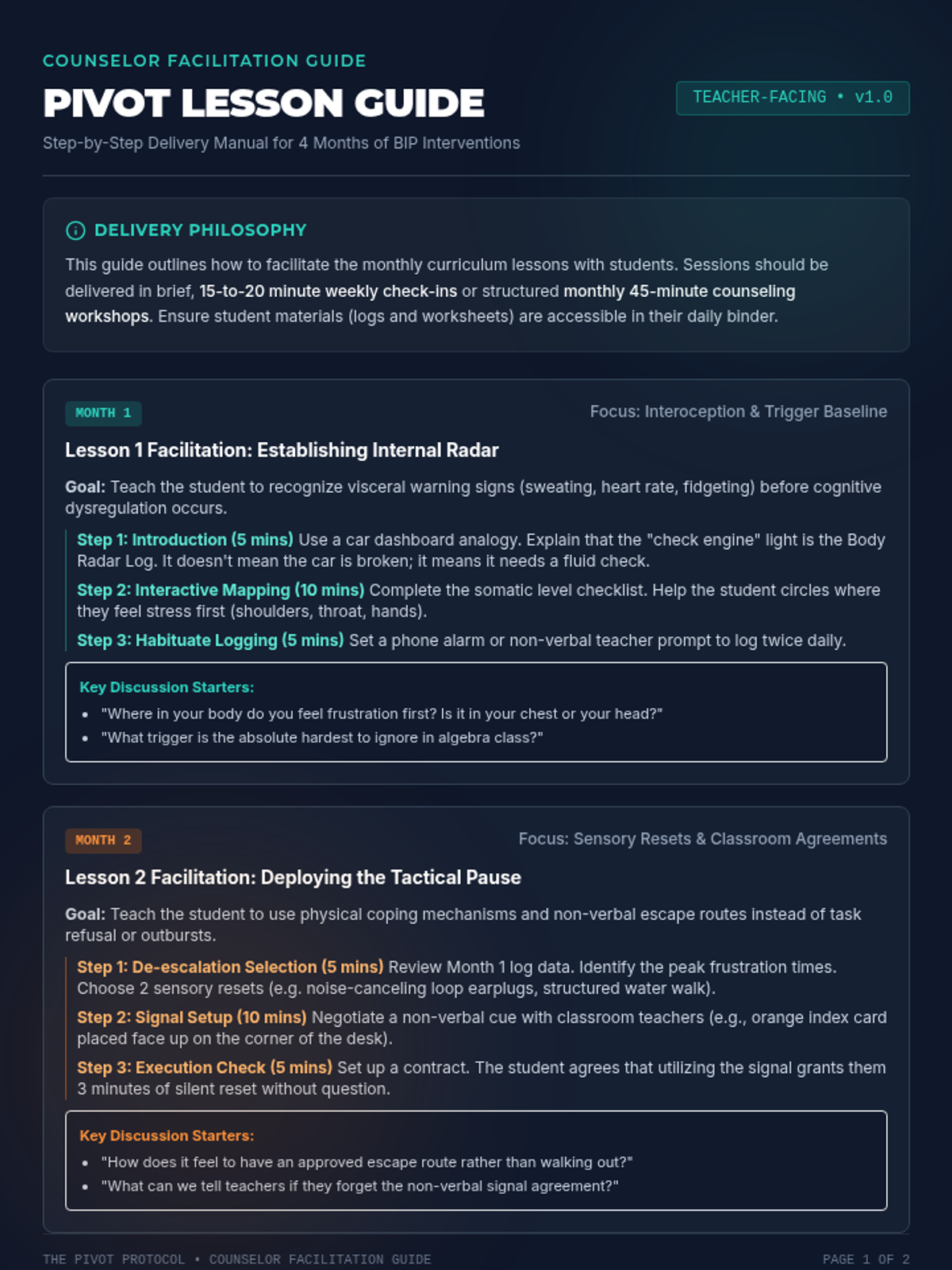
A comprehensive lesson facilitation guide for school counselors and special educators. Provides step-by-step instructions, discussion questions, role-play prompts, and BIP data tracking review methods for Months 1 through 4.
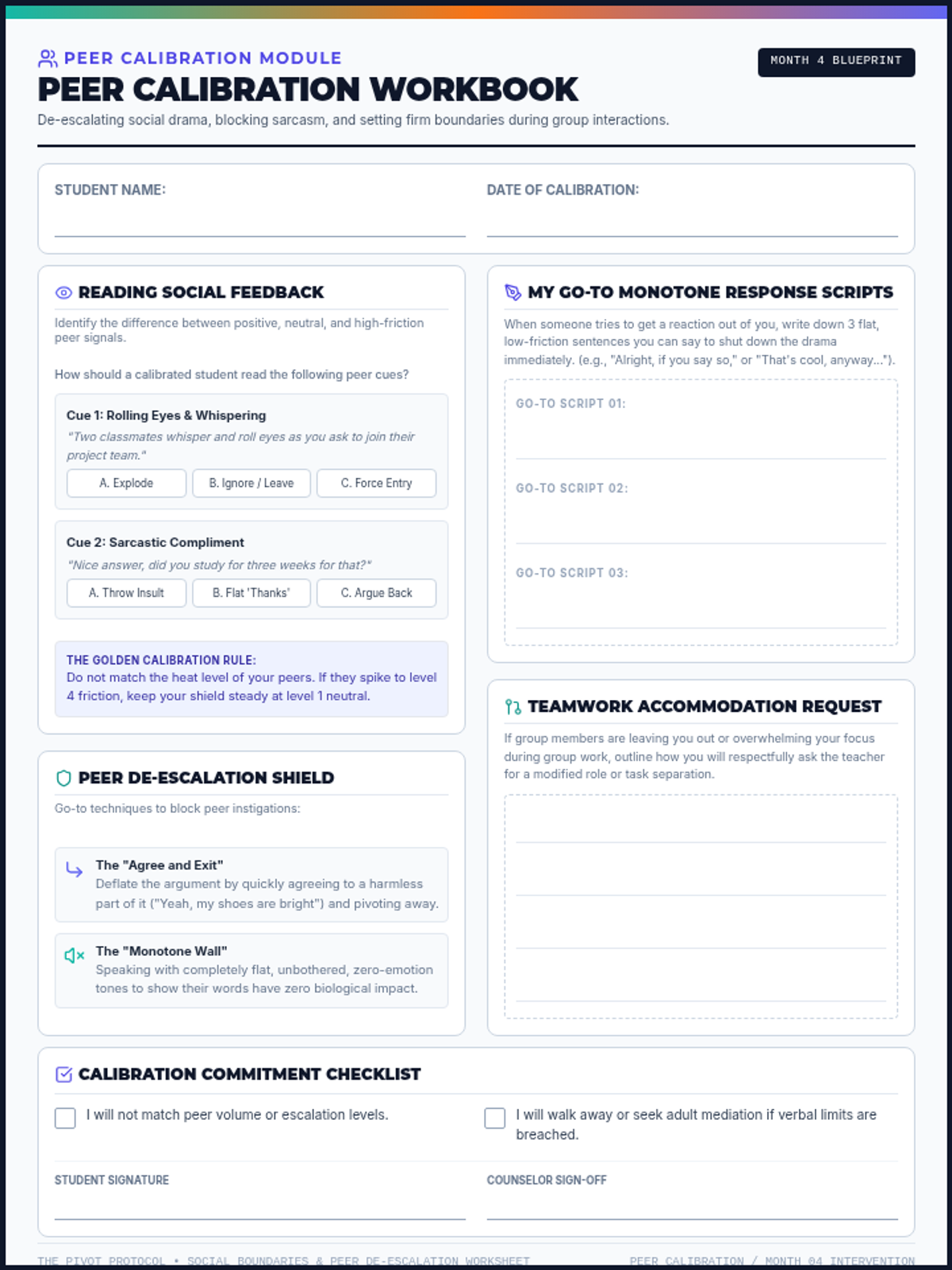
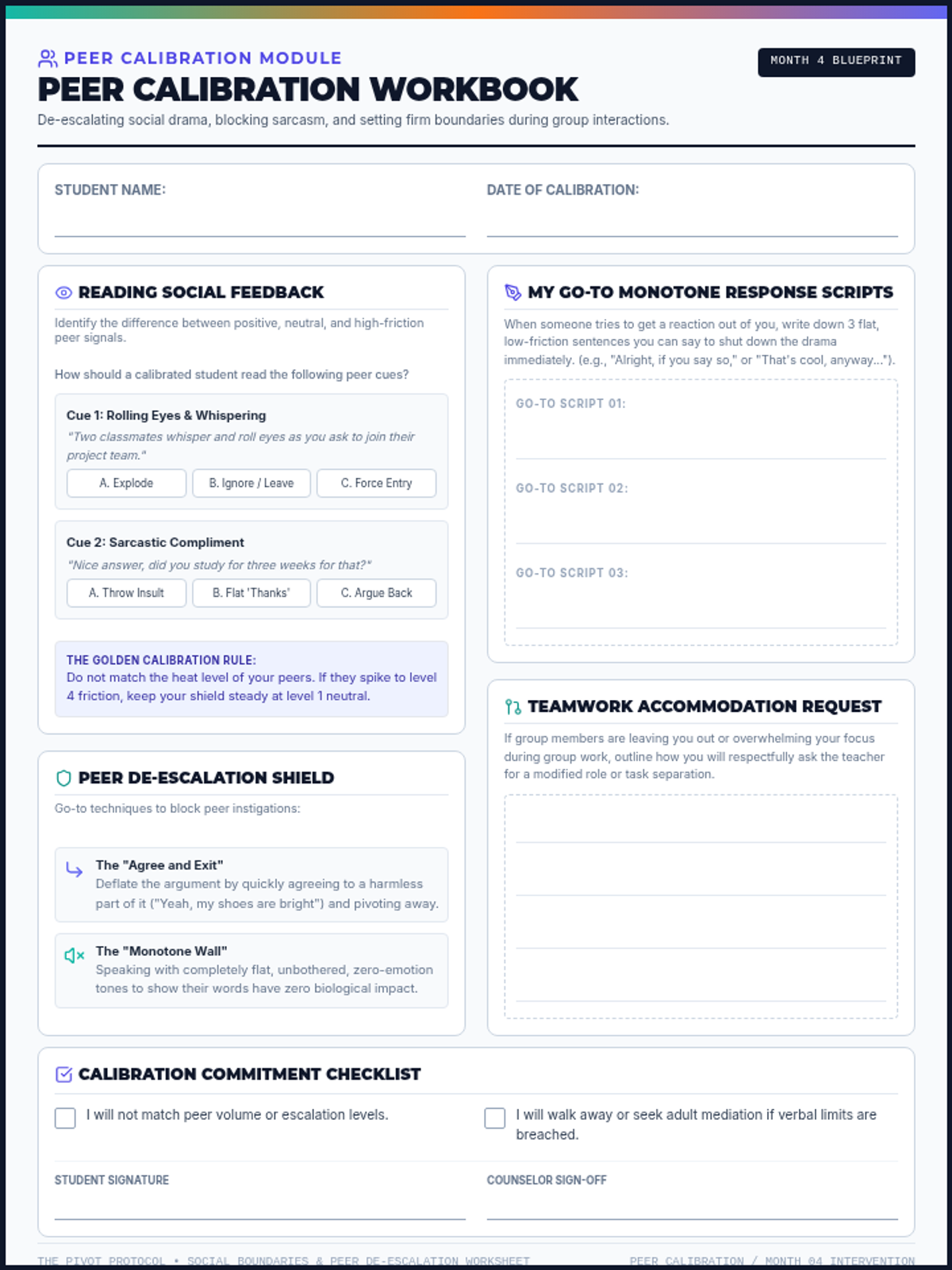
An interactive student workbook sheet for Month 4 (Peer Calibration). Guided exercises help high school students dissect social tension, map passive/reactive/calibrated feedback, and script their own peer de-escalation responses.
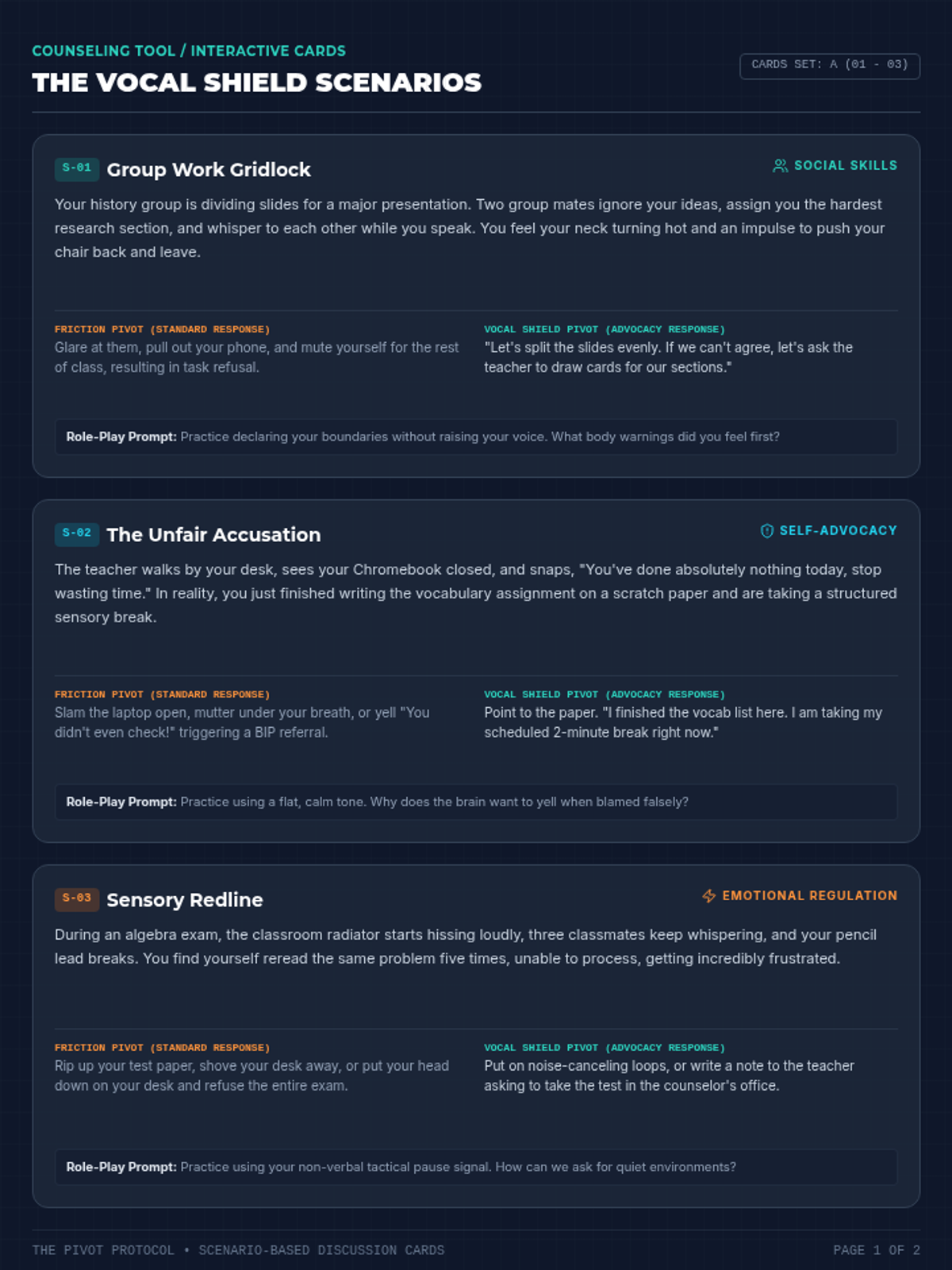
A set of printable, scenario-based discussion and role-play cards designed to build self-advocacy, conflict resolution skills, and frustration tolerance in high schoolers with ADHD.
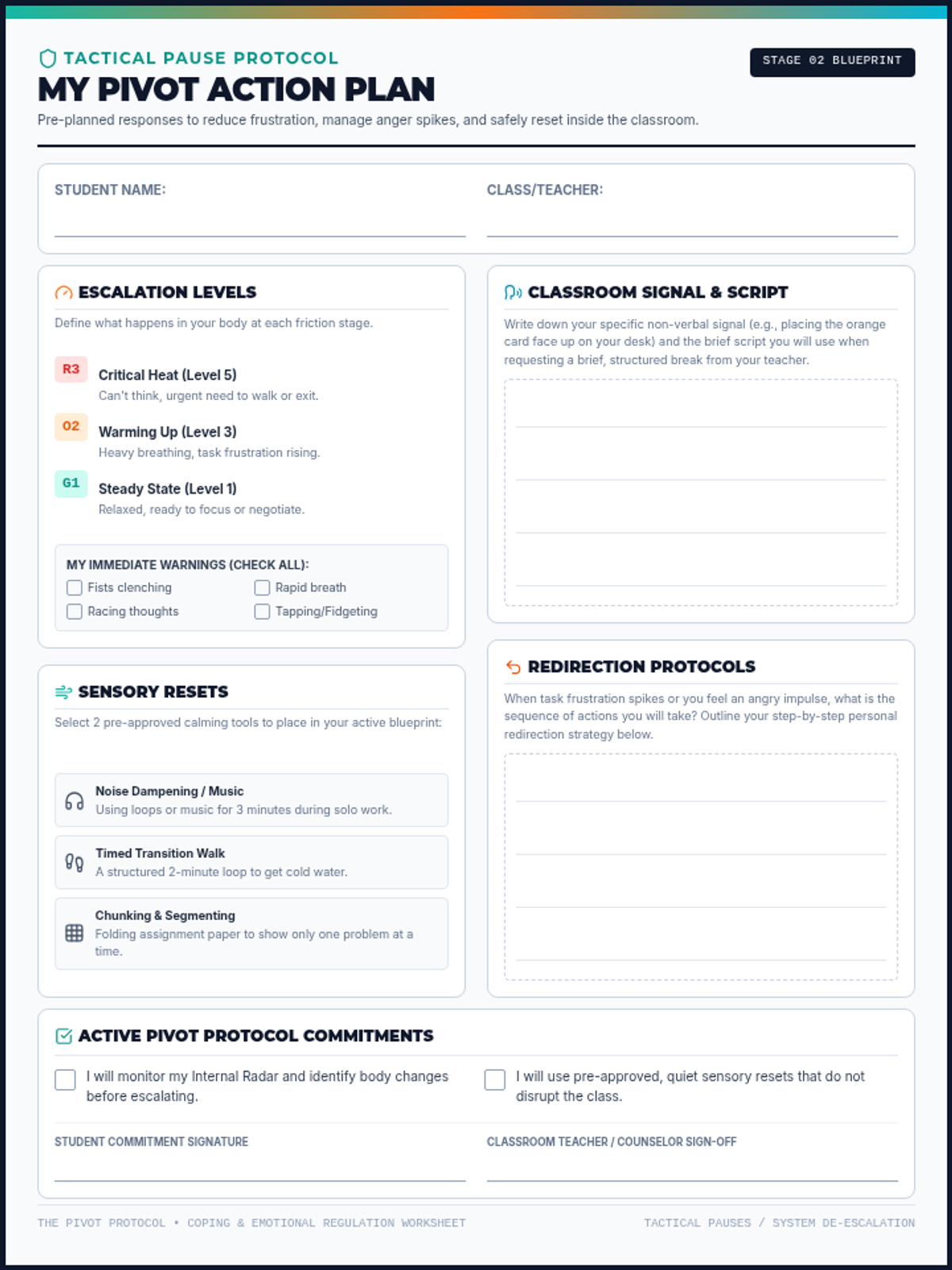
An interactive student worksheet to build a personalized 'Tactical Pause Action Plan.' Helps students identify personalized sensory coping strategies, sensory resets, and negotiate non-verbal classroom cues.
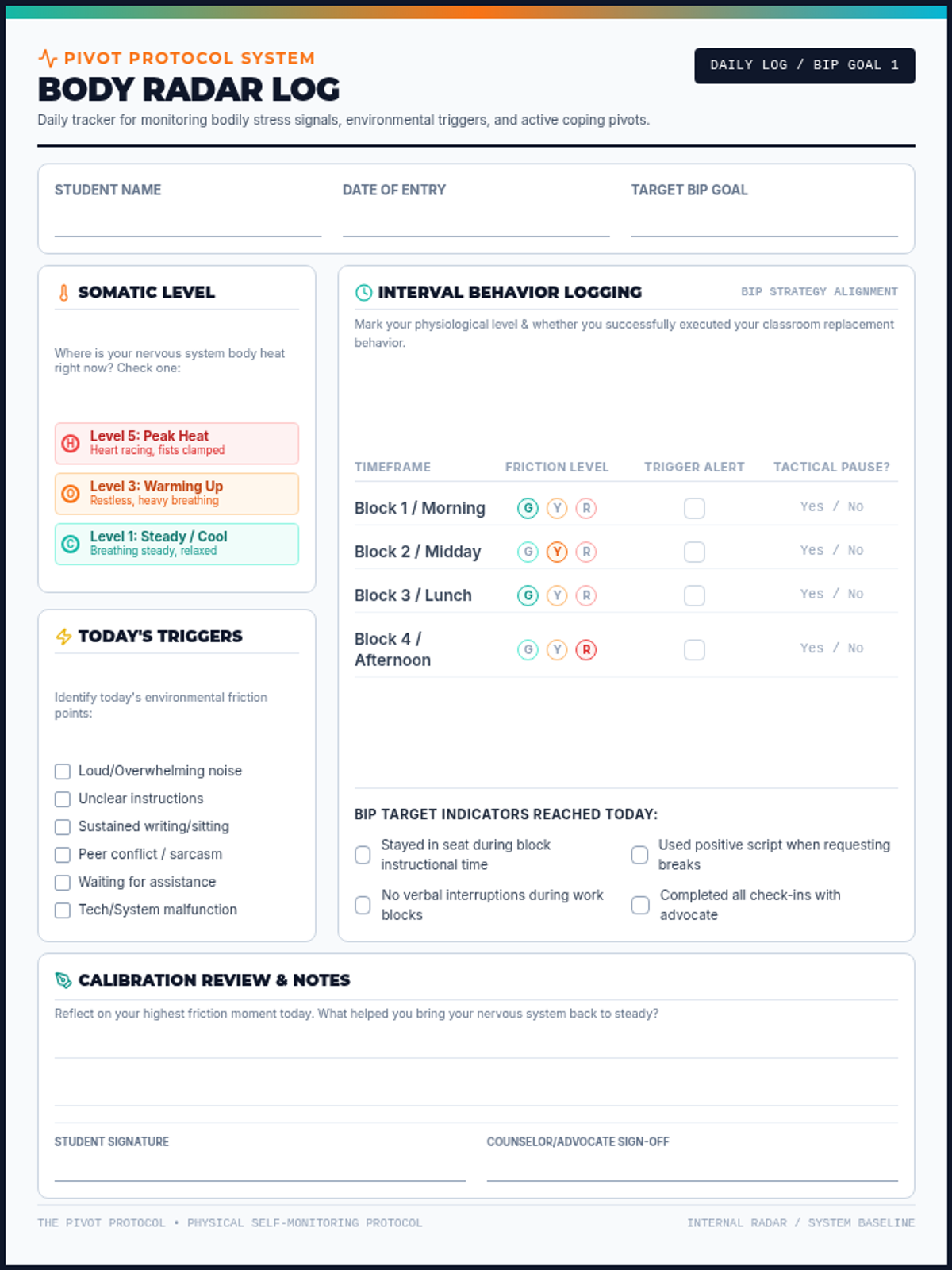
A physical student daily self-monitoring log to track bodily markers of stress, sensory triggers, and positive BIP behavior indicators. Features clean, handwriting-friendly tracking sections.
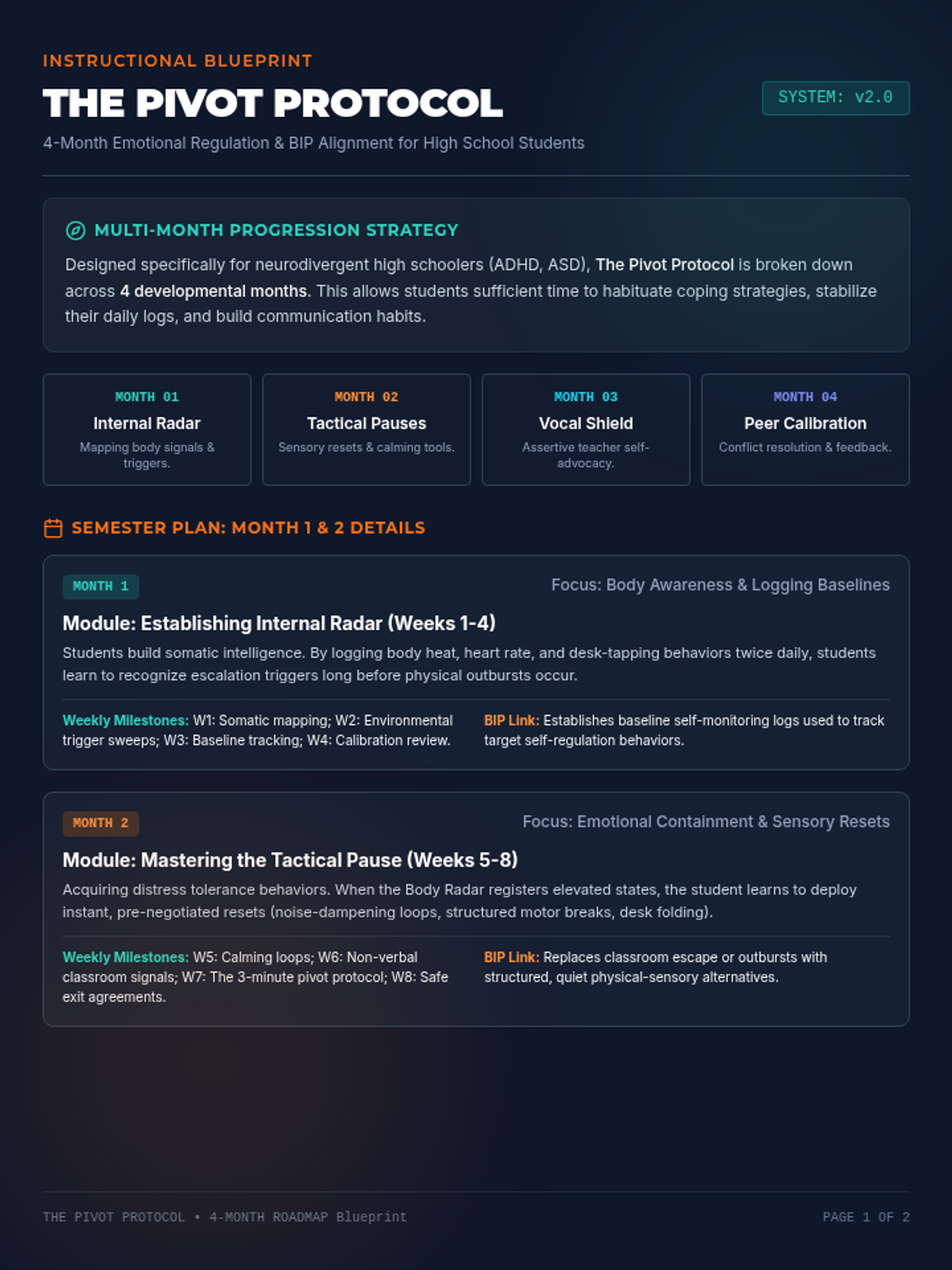
An expanded 4-month curriculum roadmap designed for high school counselors and educators. Outlines monthly themes, weekly goals, BIP target alignment strategies, and neurodivergent-affirming coping interventions.
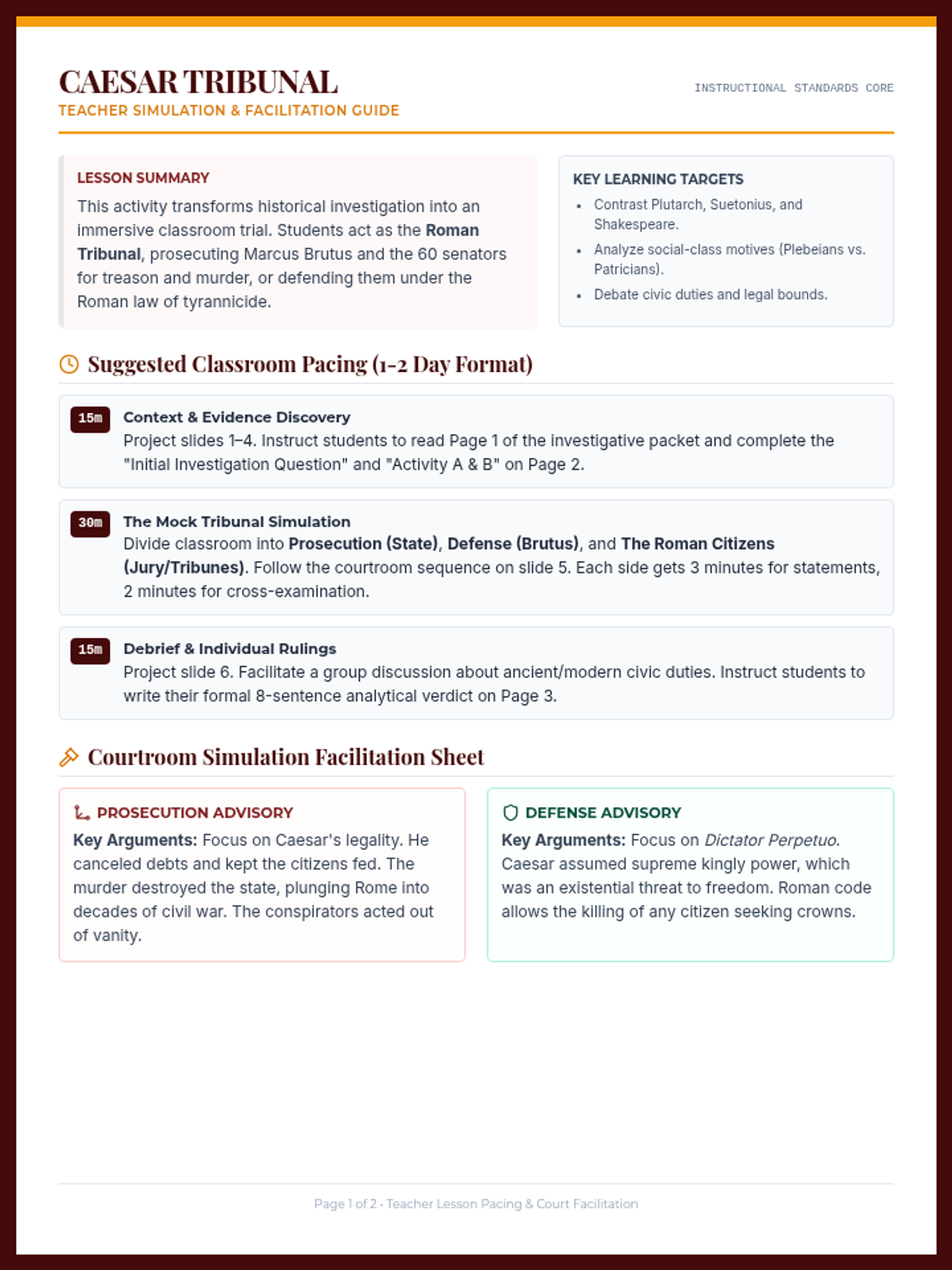
A two-page printable teacher guide and lesson key. Contains complete instructional scaffolding, pacing, step-by-step mock trial simulation guidelines, and a comprehensive answer key for the Caesar Conspiracy student workbook.
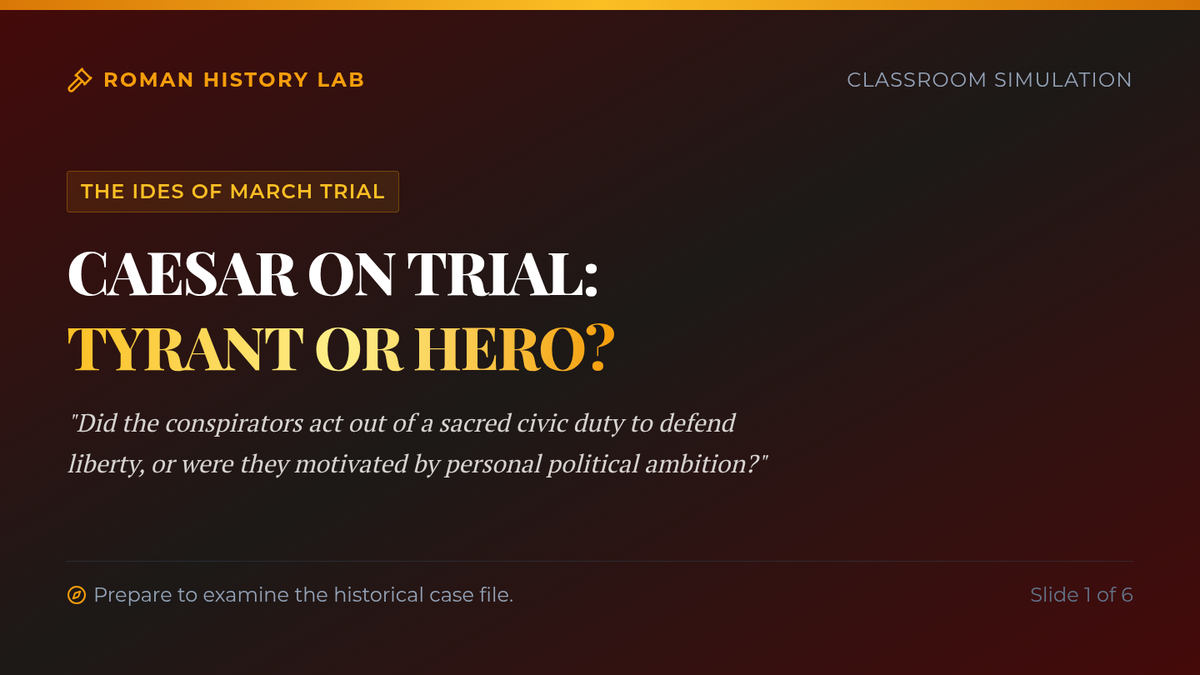
A six-slide instructional presentation for the Caesar Tribunal lesson. Featuring high-impact visuals, a deep Roman crimson theme, analysis of the historical sources (Plutarch, Suetonius, Shakespeare), and guidelines for the classroom mock trial.
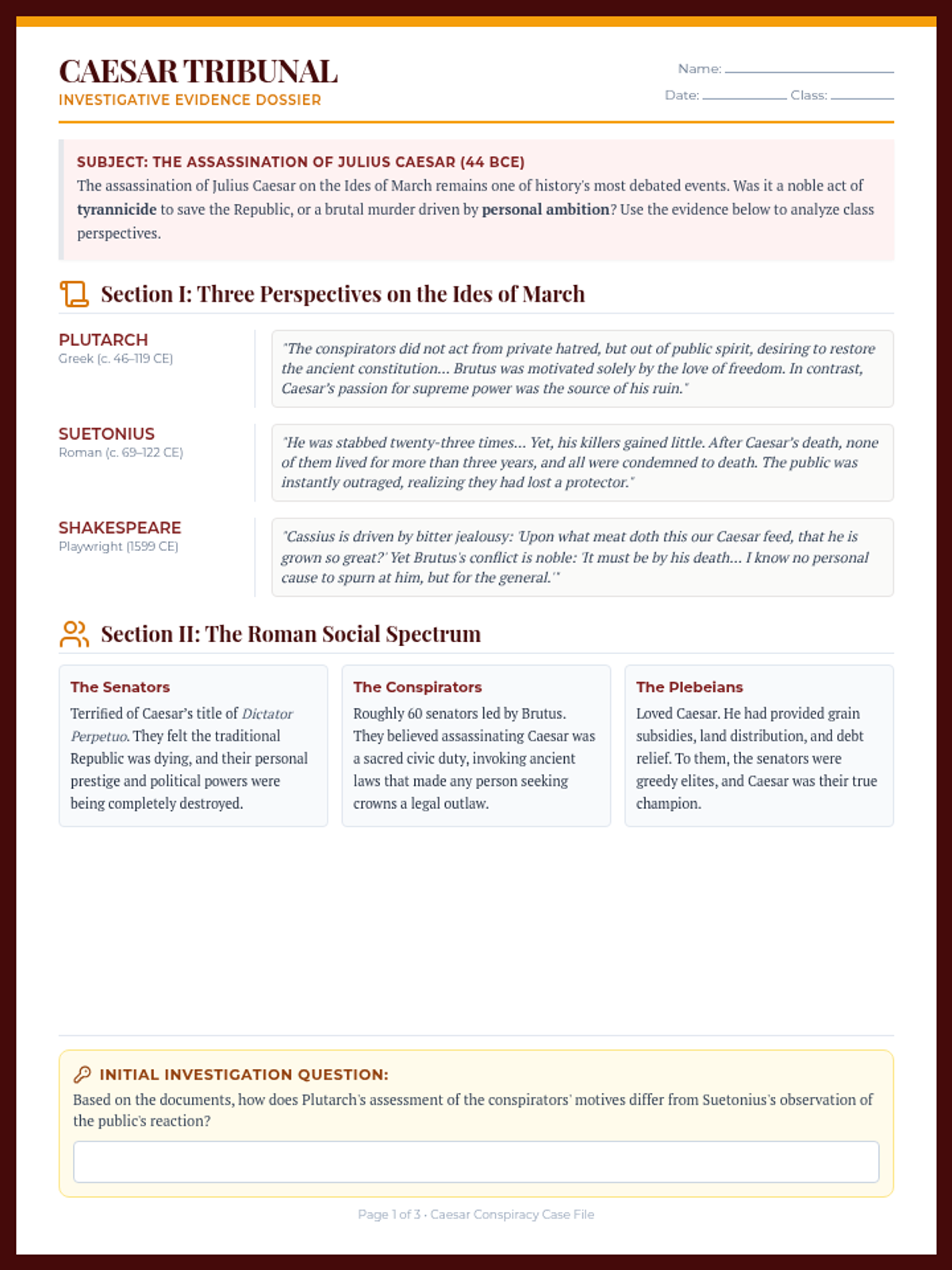
A three-page student investigative packet for the Caesar Tribunal lesson. It includes a primary source-based reading passage, a vocabulary matching activity, a custom Roman word search, short-answer questions, and a scaffolded 8-sentence analytical essay.
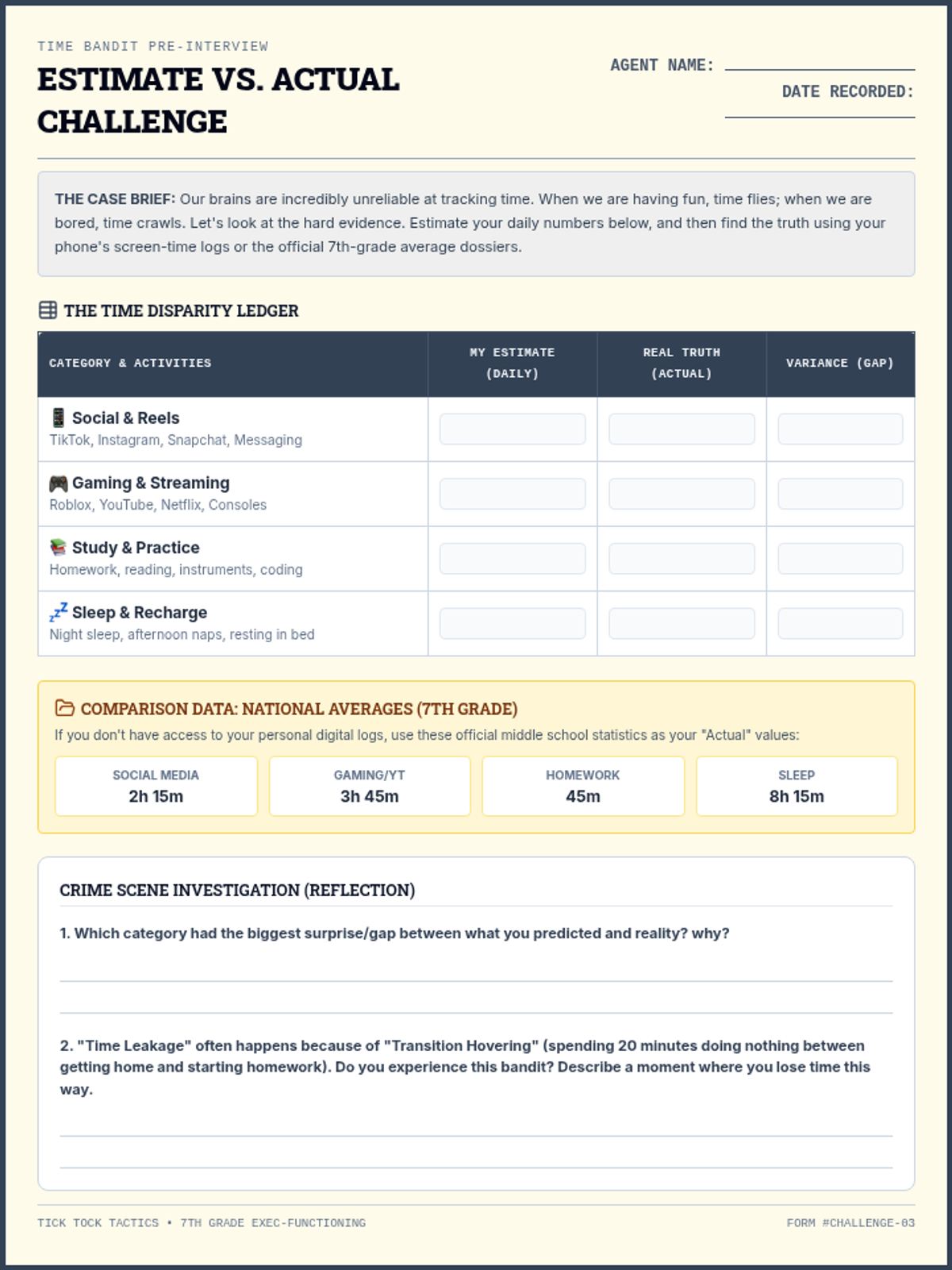
A single-page student activity sheet comparing predicted time allocations for screen use, sleep, and studying against actual tracking data and national middle school benchmarks.
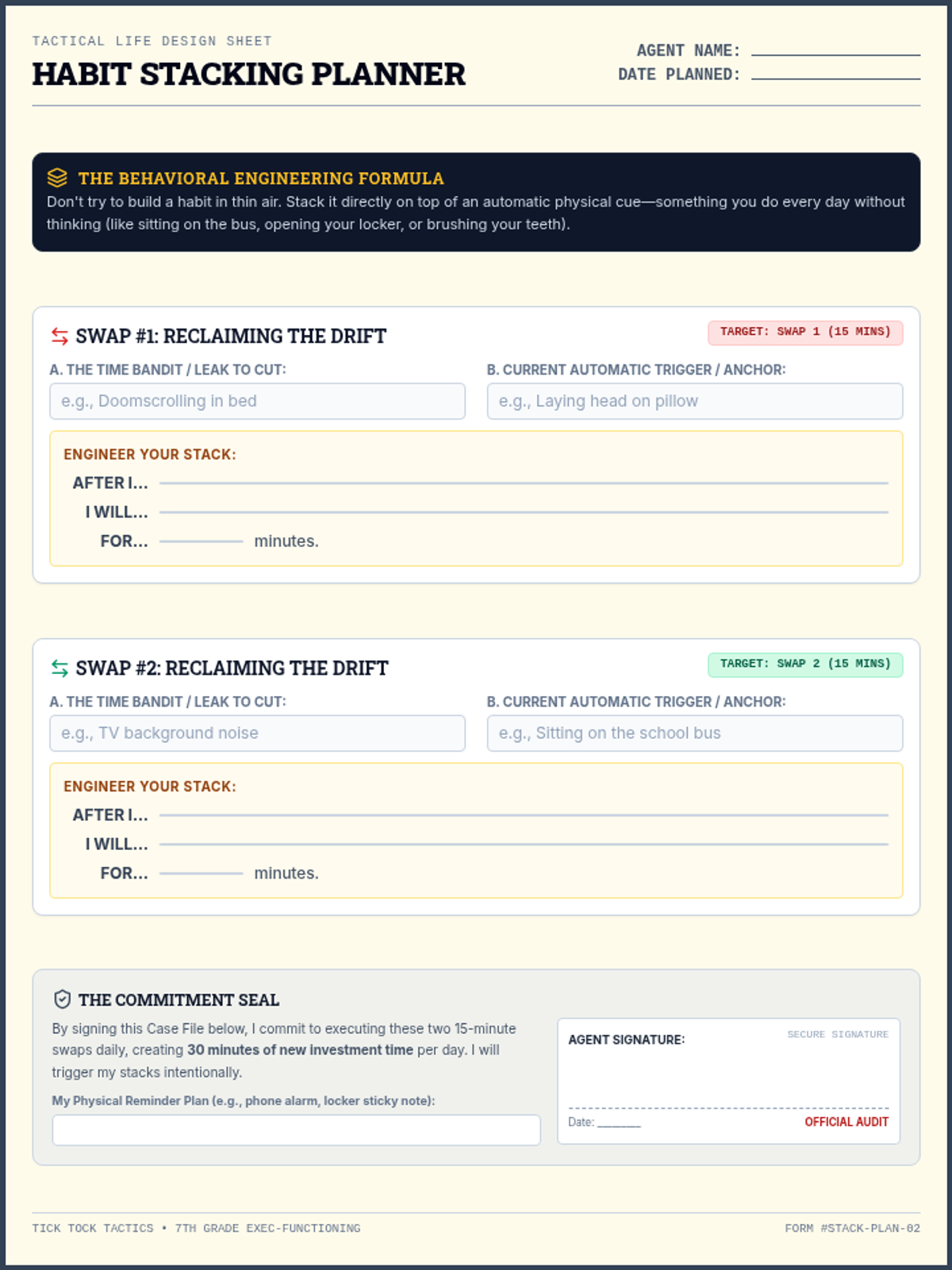
A creative, single-page student planning worksheet utilizing the atomic habit formula to design and commit to two 15-minute time-reclamation swaps.
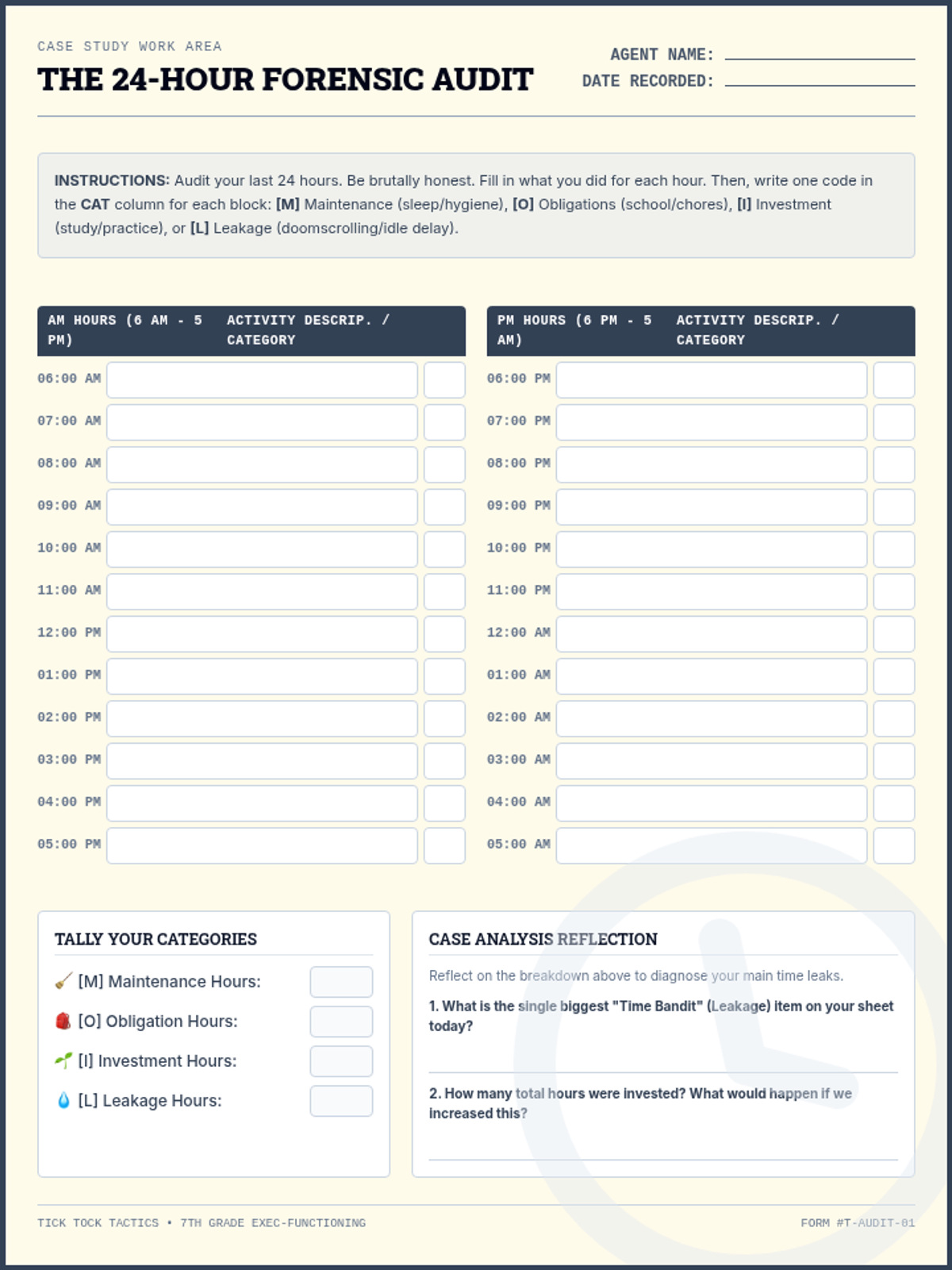
A highly structured, single-page student time-tracking worksheet featuring a dual-column 24-hour daily grid and an hourly category tally box.
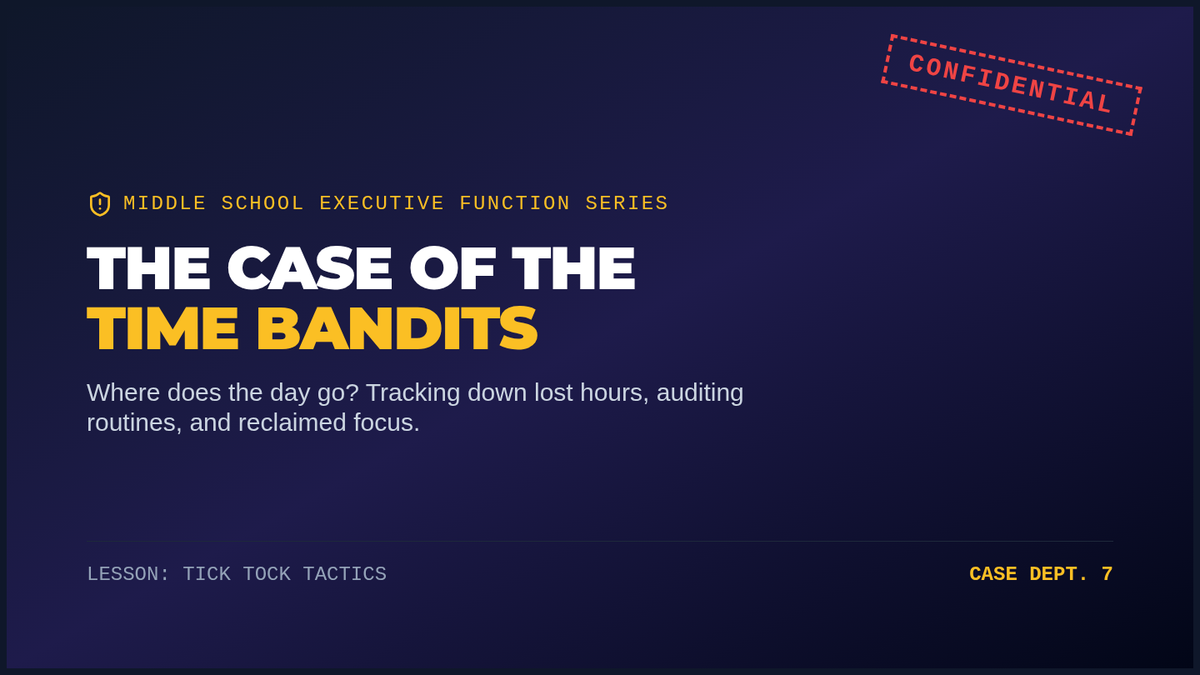
A sleek, high-visibility 6-slide presentation designed to introduce students to time categories, the screen time illusion, and the mechanics of habit stacking.
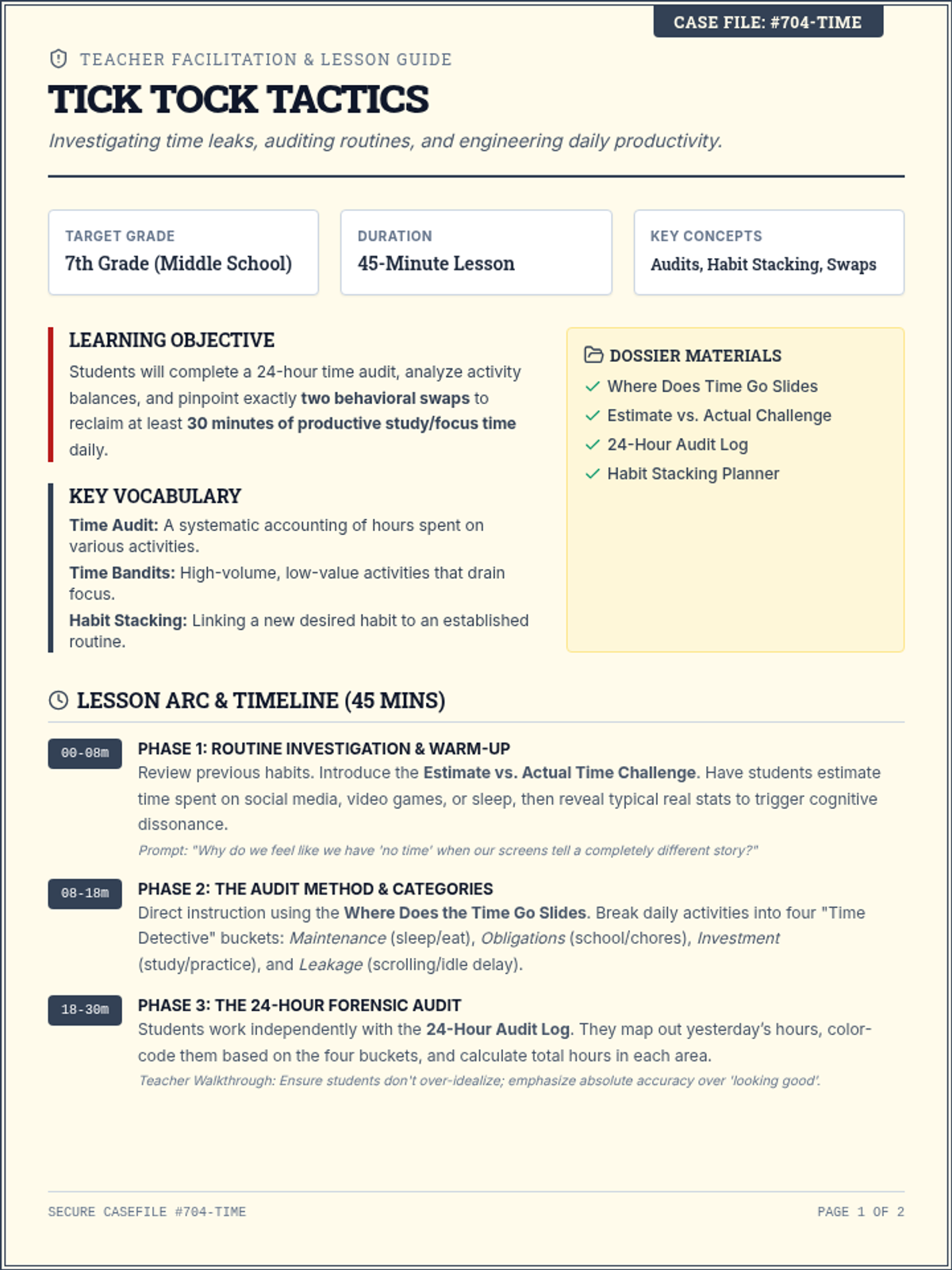
A comprehensive 2-page teacher-facing delivery guide featuring a lesson timeline, facilitation tips, discussion prompts, and differentiation strategies for teaching time audits and habit stacking.
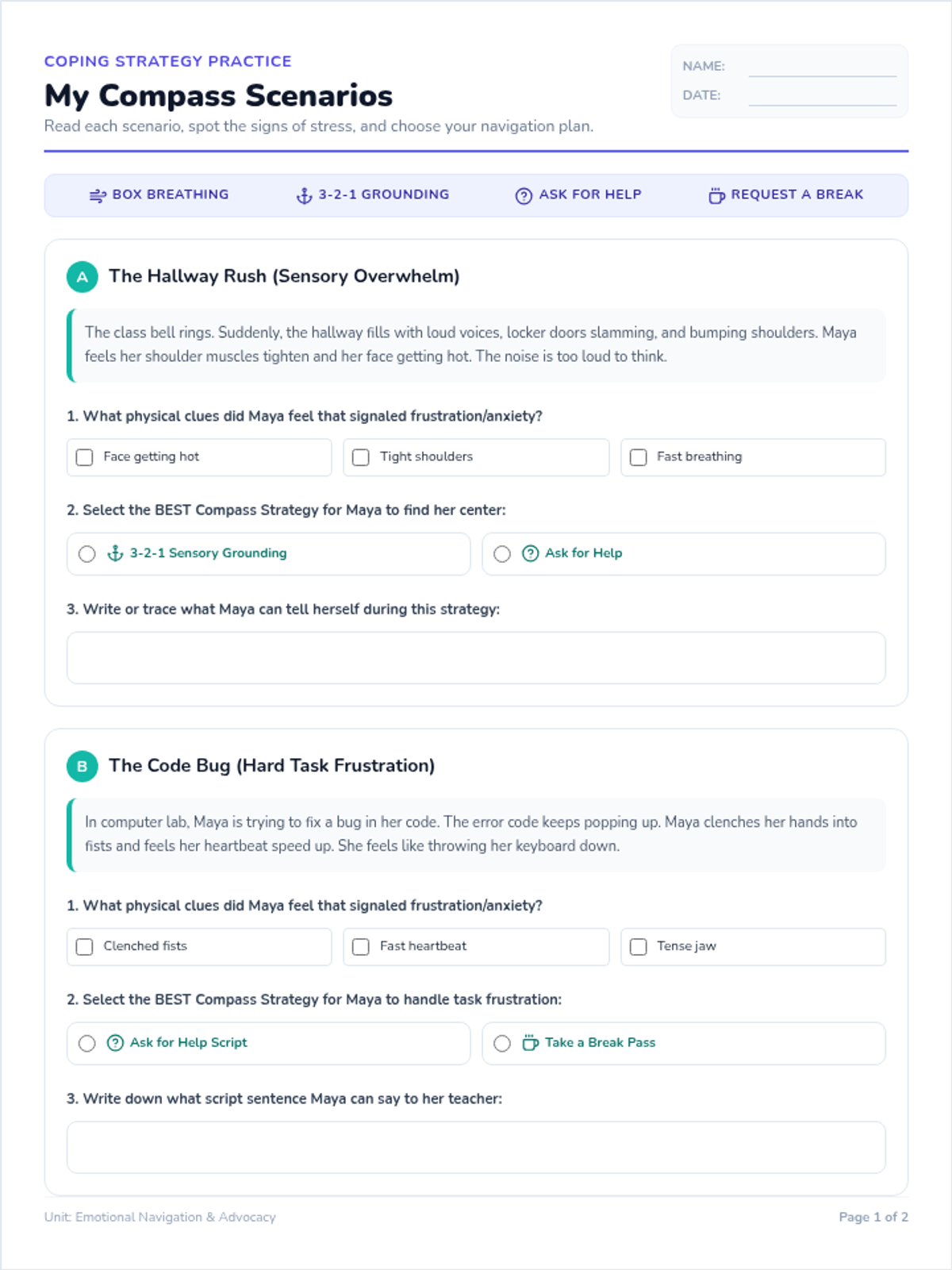
A 2-page student-facing scenario activity worksheet. It walks 9th-grade students through real-world high school scenarios of anxiety and frustration, helping them identify physiological triggers and choose from their Cool Down Compass strategies.
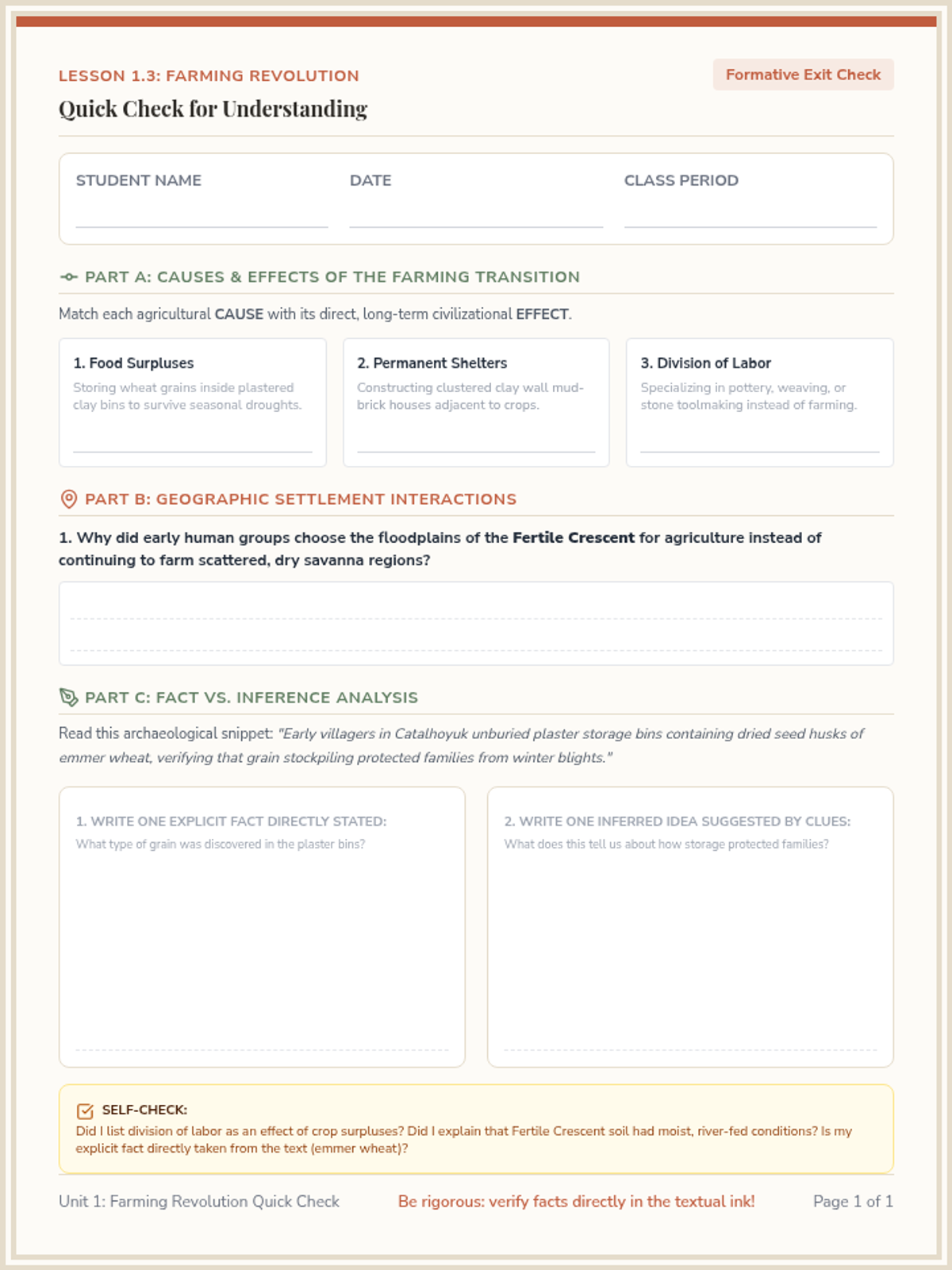
A one-page print-ready student formative assessment / check for understanding for Lesson 1.3. Features agricultural causes-vs-effects, geographic short answer, and a short fact-vs-inference analysis.
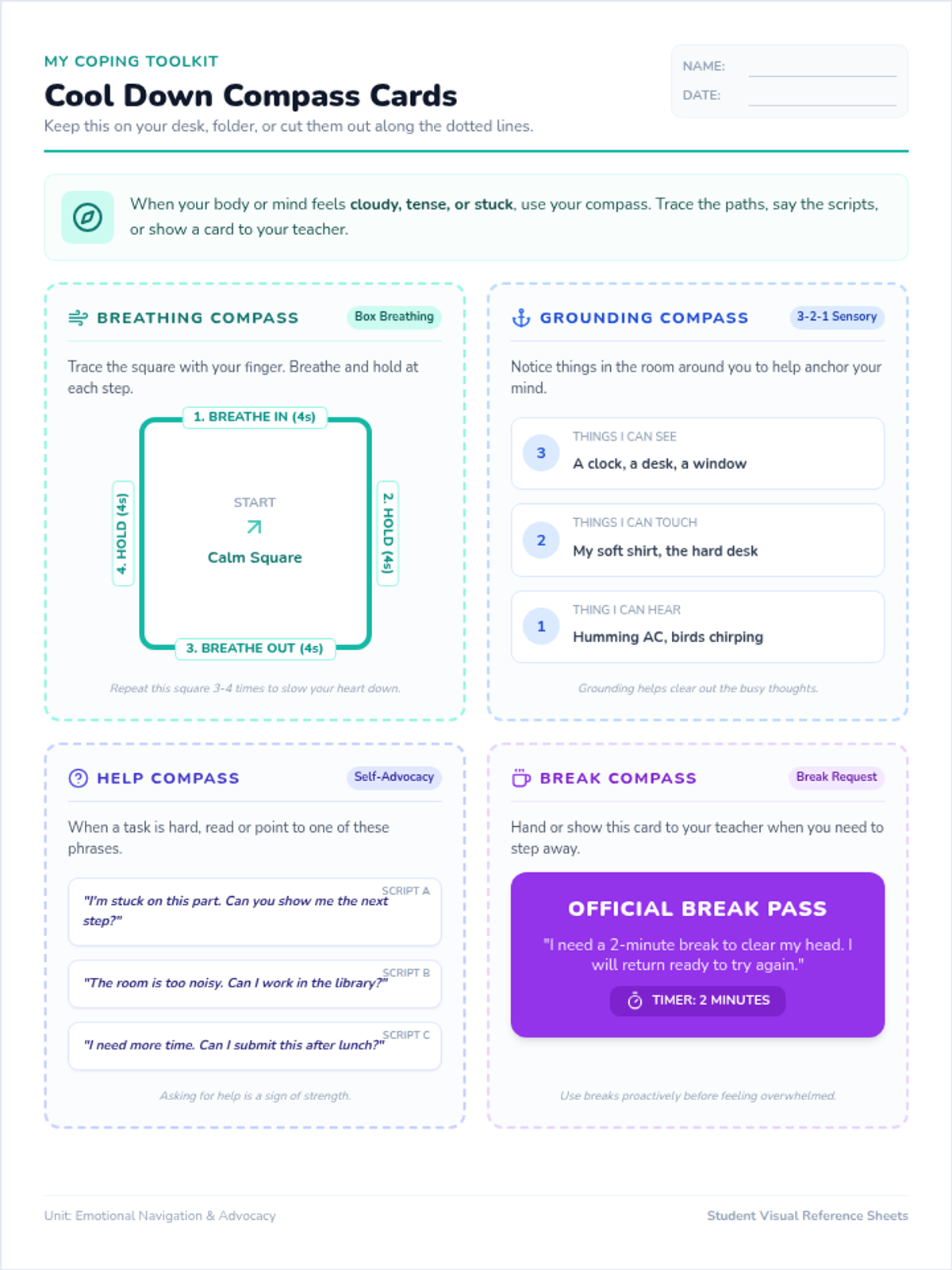
A highly visual, soothing, and structured student-facing reference card sheet. It features four distinct visual coping strategy cards (box breathing, sensory grounding, help scripts, and break passes) designed with clear paths, simple steps, and calming graphics for 9th-grade autistic students.
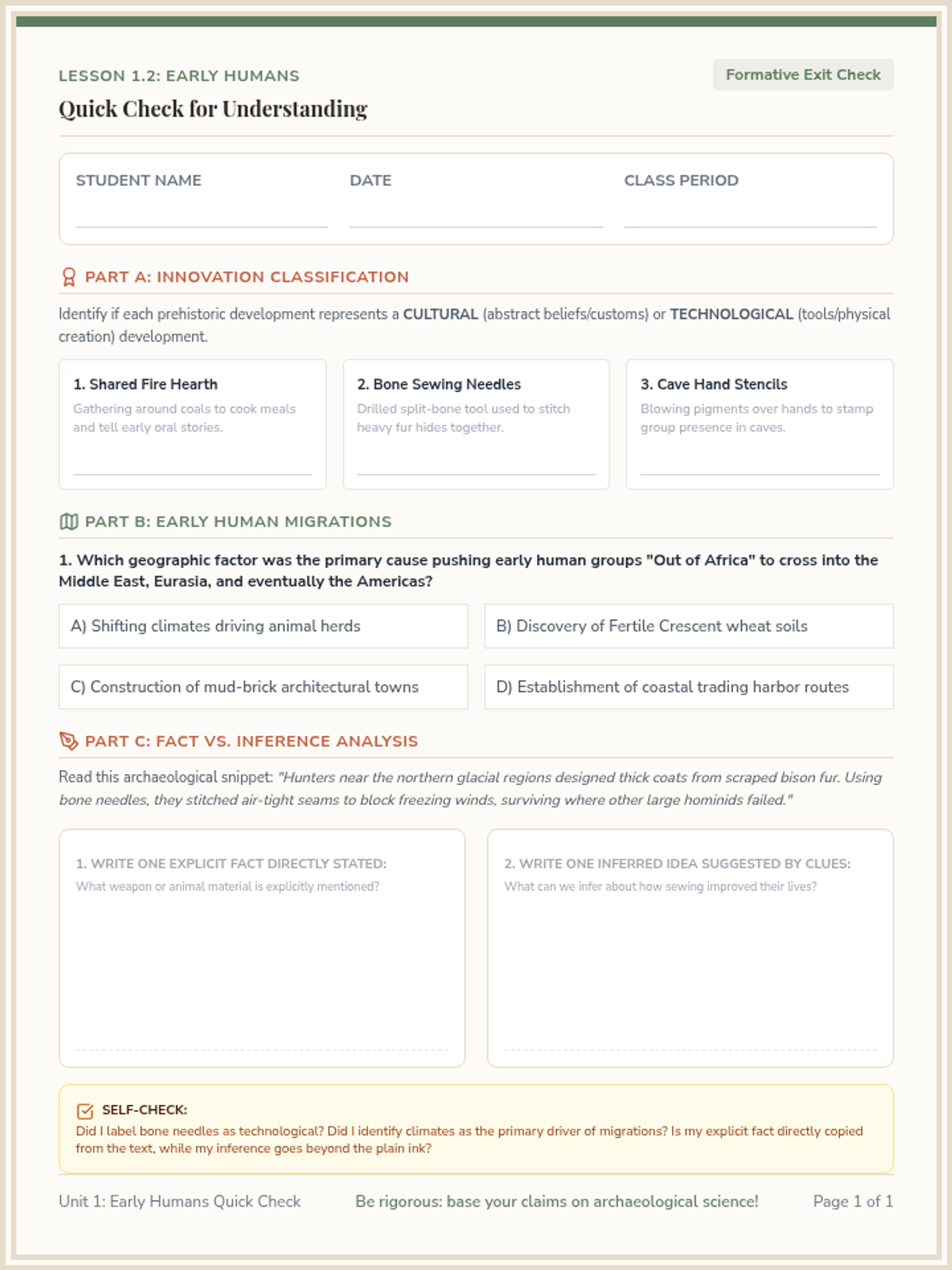
A one-page print-ready student formative assessment / check for understanding for Lesson 1.2. Features cultural-vs-technological classification, migration multiple-choice, and a short fact-vs-inference analysis.
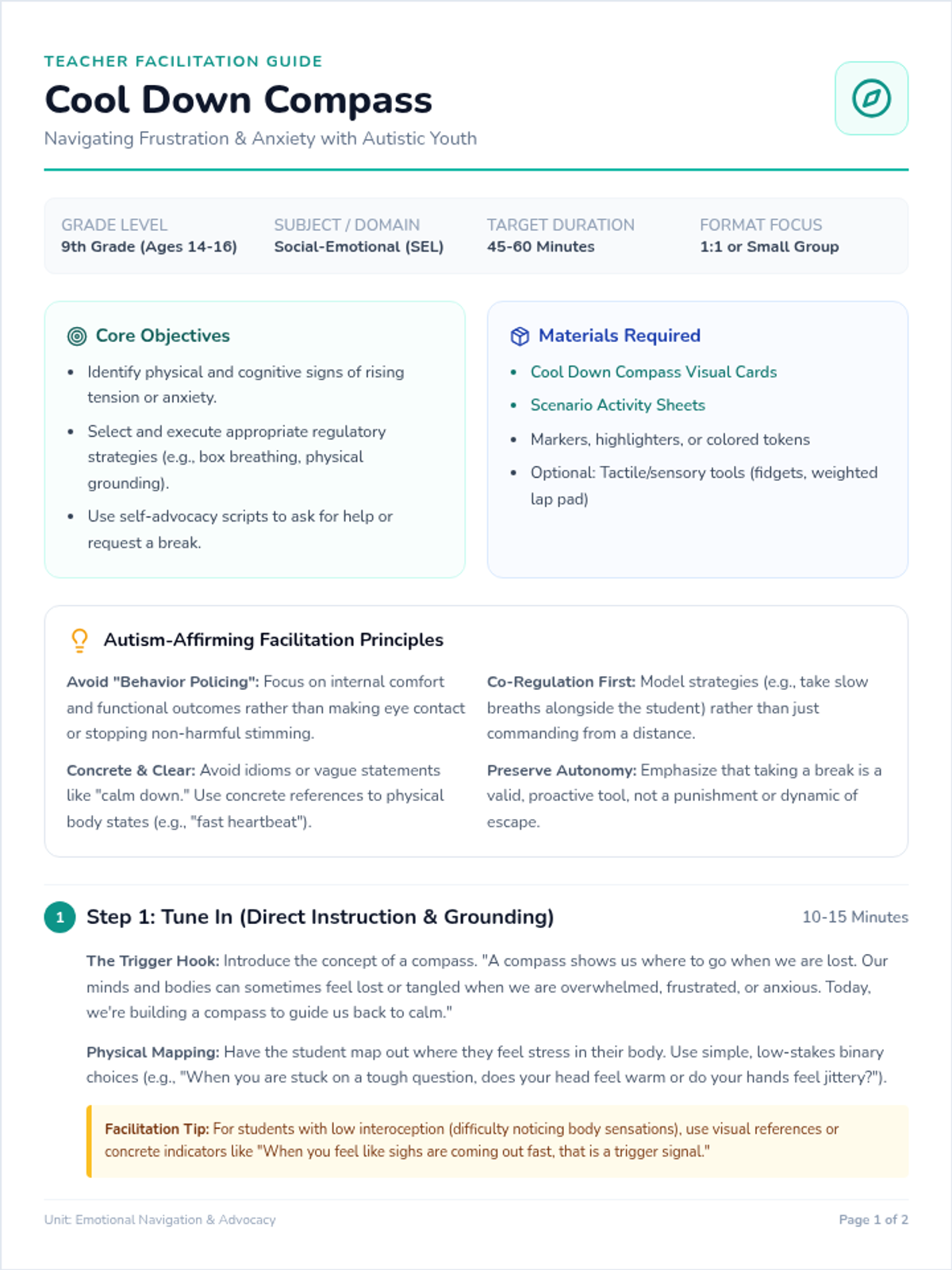
A structured, teacher-facing facilitation guide and lesson plan designed for educators supporting 9th-grade autistic students. It details specific instructional steps, neurodivergent-affirming strategies, and pacing instructions for teaching self-regulation and self-advocacy.
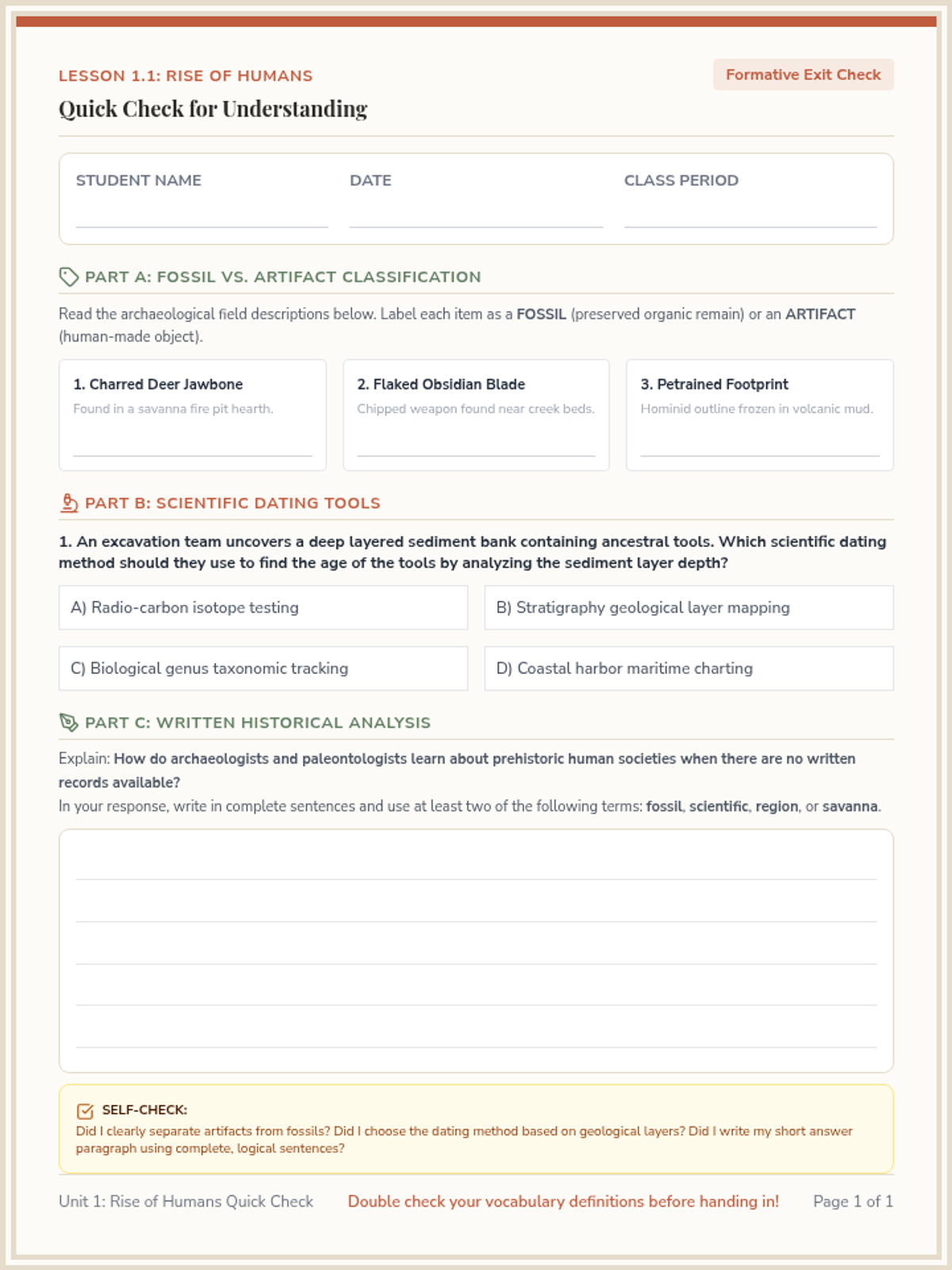
A one-page print-ready student formative assessment / check for understanding for Lesson 1.1. Features fossil-vs-artifact classification, scientific dating multiple-choice, and a short-answer inquiry prompt.
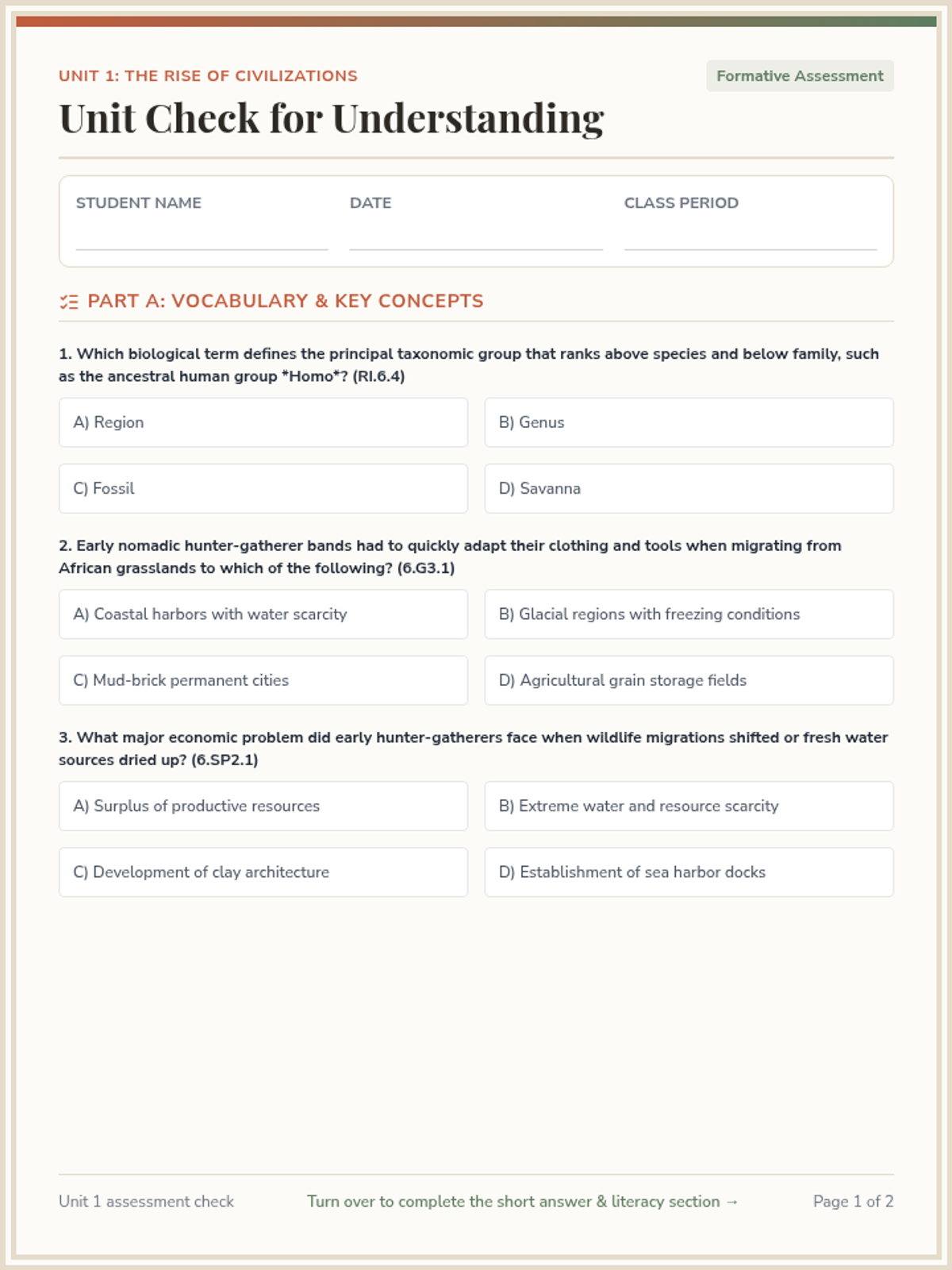
A two-page print-ready student unit quiz / check for understanding. Features multiple-choice questions with identical styling, short-answer analysis, and ELA fact vs. inference prompts.