A transition worksheet that guides students through the process of numbering their mind map branches and transferring those points into a linear skeleton for an essay or report.
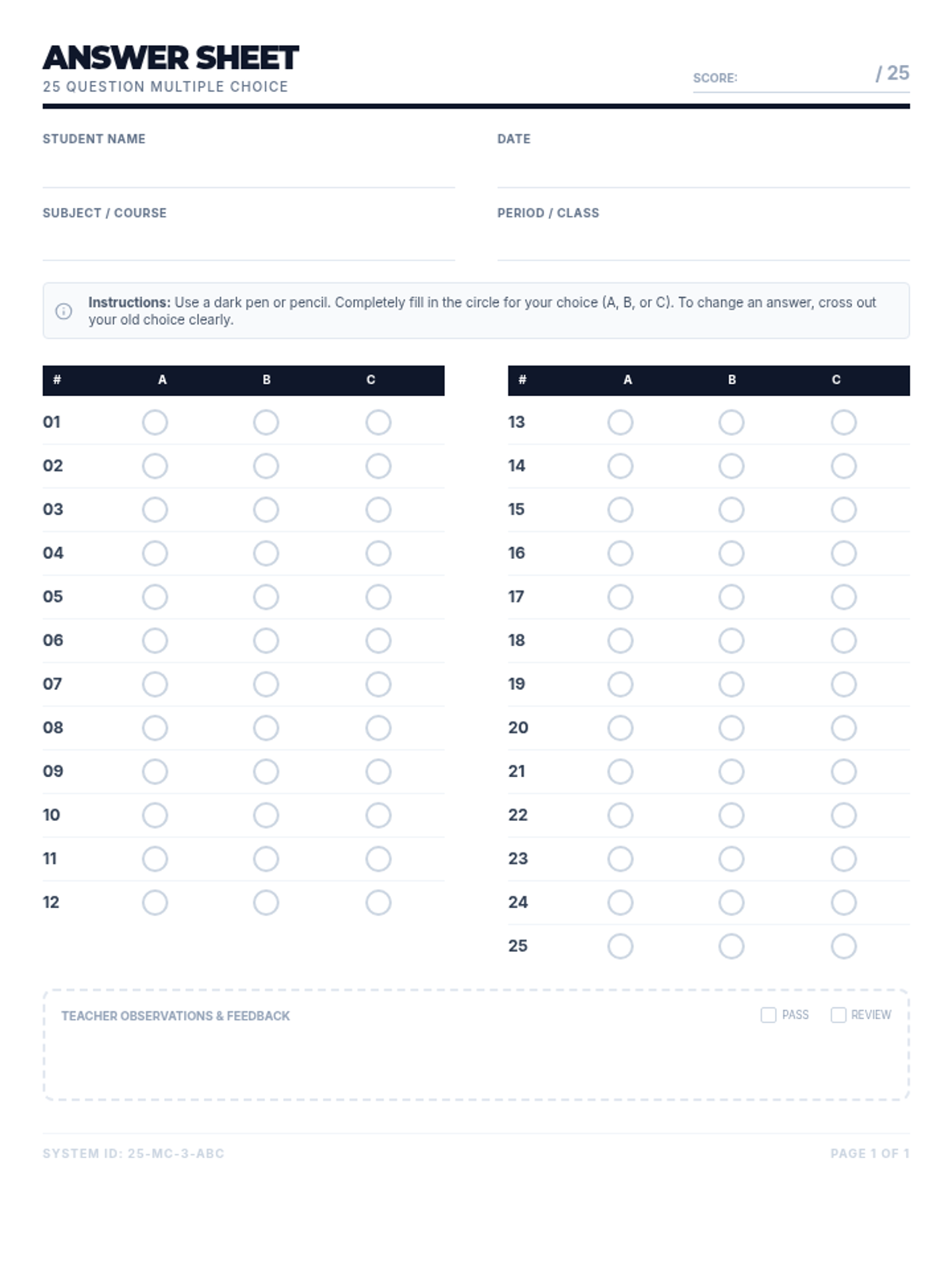
A revised blank answer sheet for a 25-question multiple choice exam. Features a two-column layout optimized for a single page, with labeled columns and individual question rows for clear student tracking. Includes a student info header and a feedback section.
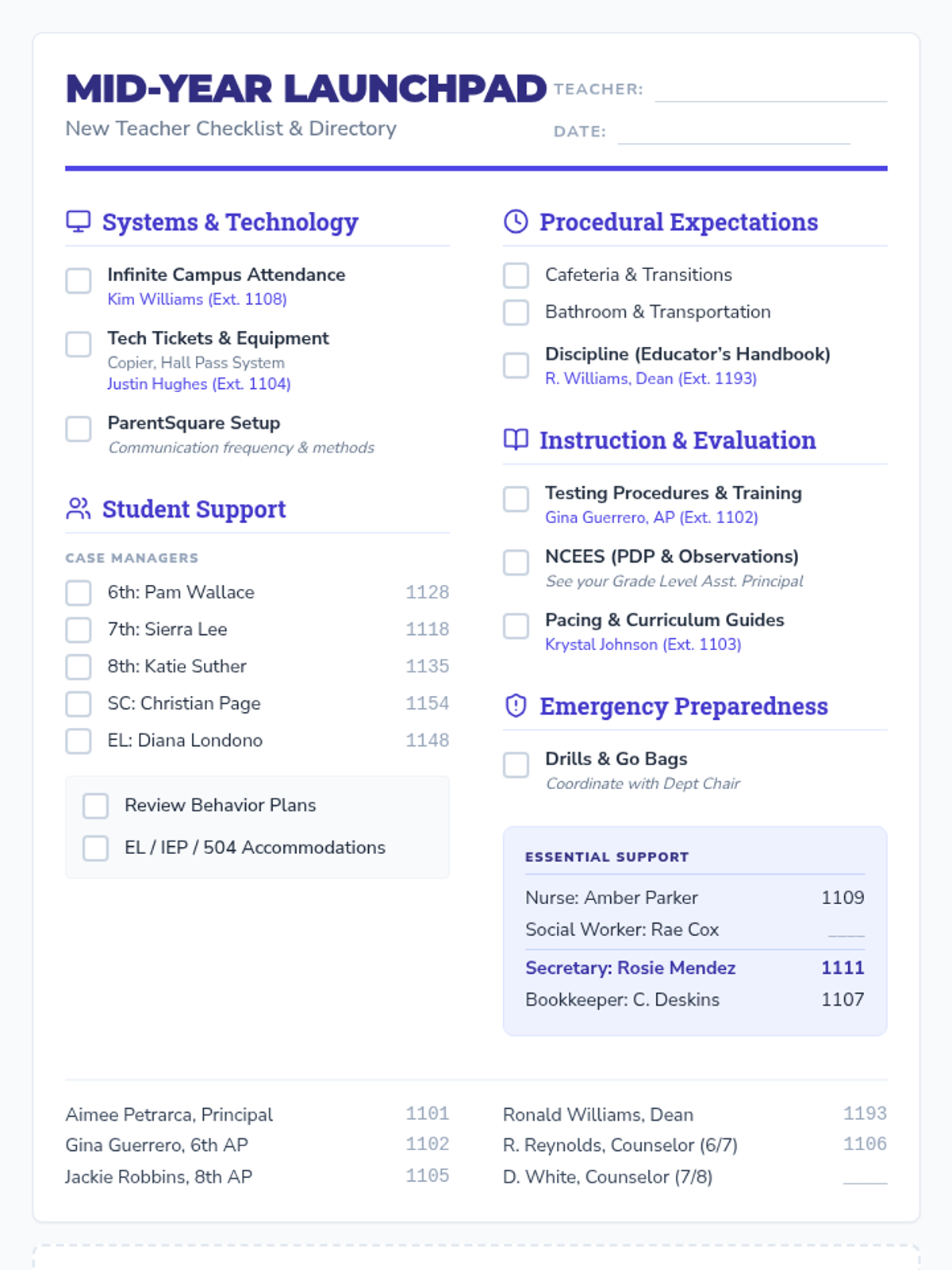
A professional, single-page printable checklist for new teachers starting mid-year, organized by category with integrated contact information and a dedicated status column.
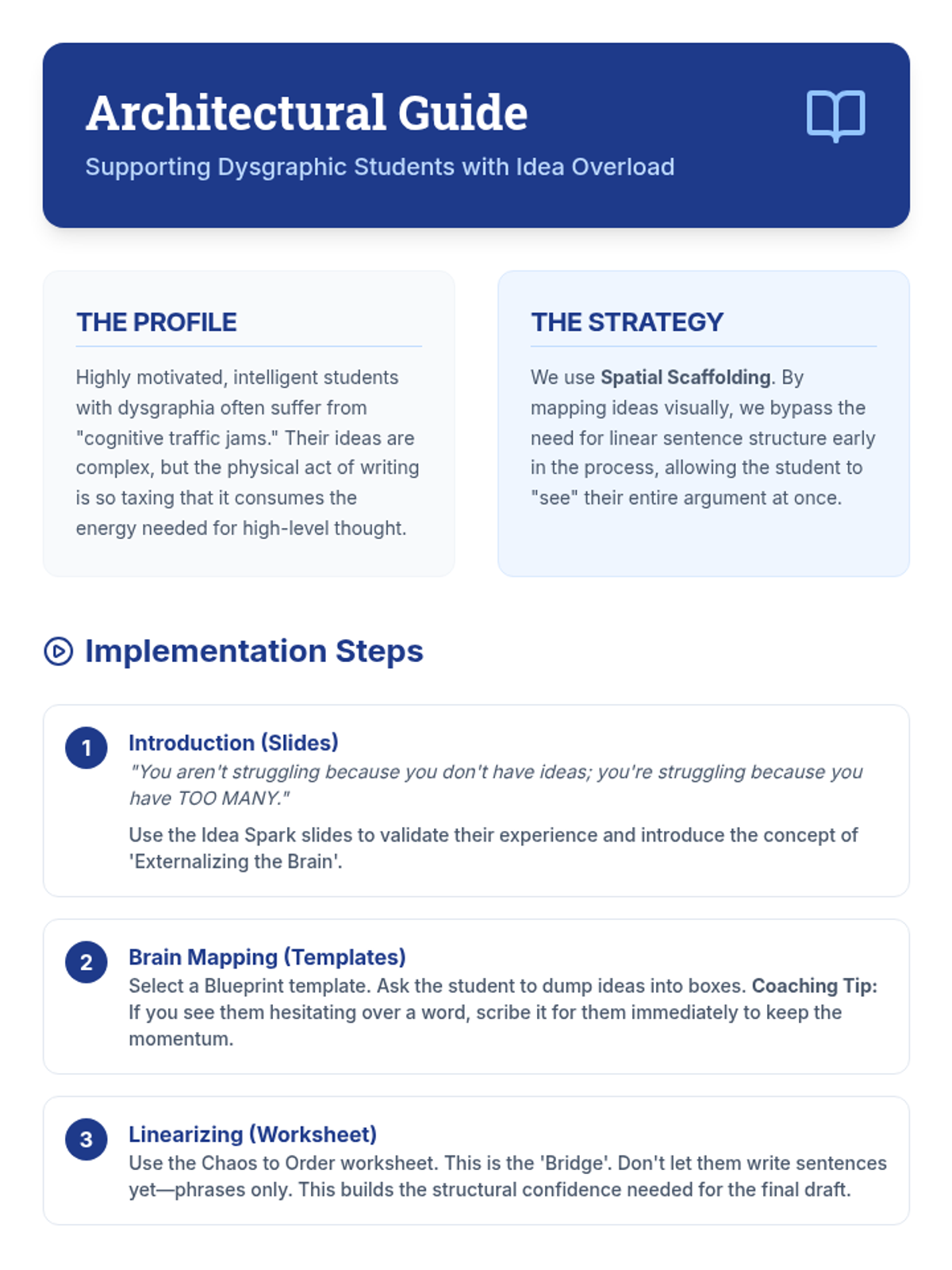
A teacher's guide providing instructional strategies for helping students with dysgraphia manage idea overload, focusing on visual mapping and reducing motor barriers.
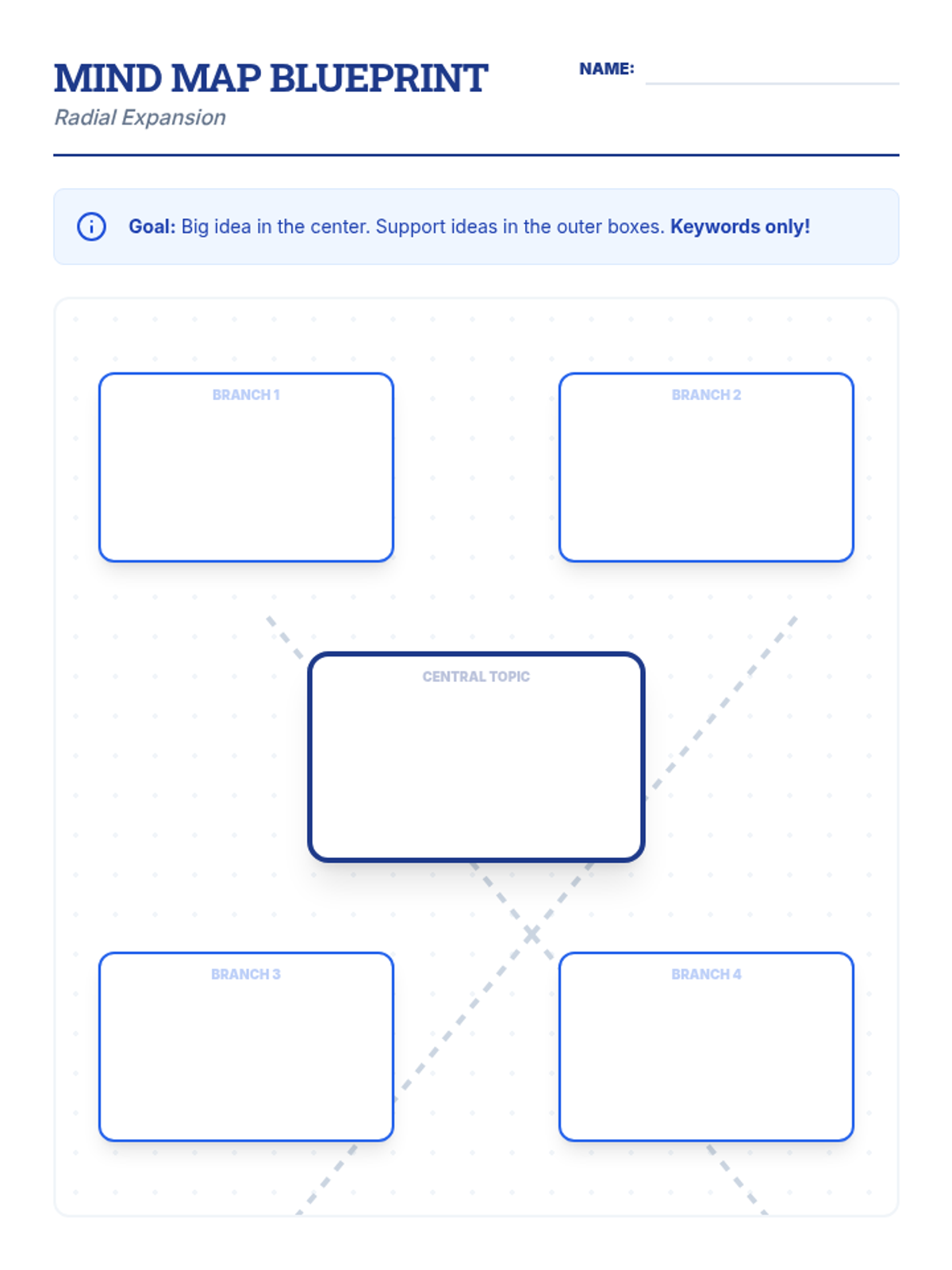
A set of two high-contrast, structured mind-mapping templates (Radial and Hierarchical) designed to help students with dysgraphia organize 'idea overload' into manageable blueprints.
A visual presentation for 8th-grade students that introduces the concept of 'Thought Architecture' and explains why mind mapping is a powerful tool for overcoming dysgraphia and idea overload.
A set of four simple coloring pages with thick outlines that reinforce the core themes and coping strategies from the "Going Home" social story. Reformatted into a half-page booklet for consistency.
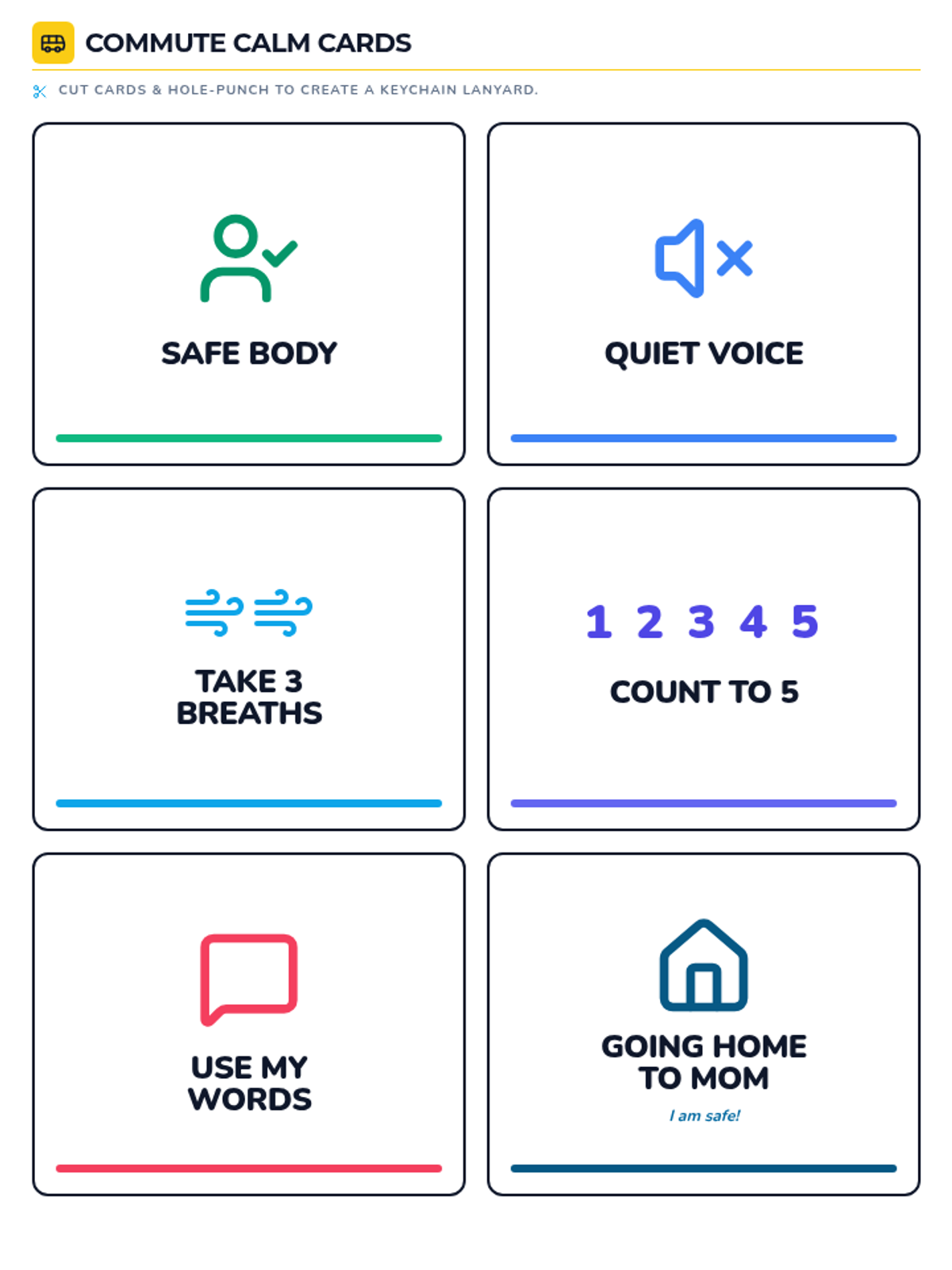
A set of six portable visual cue cards reinforcing the coping strategies from the social story. Designed to fit on a single page for efficient printing and to be placed on a keyring. Backgrounds made uniform for visual consistency.
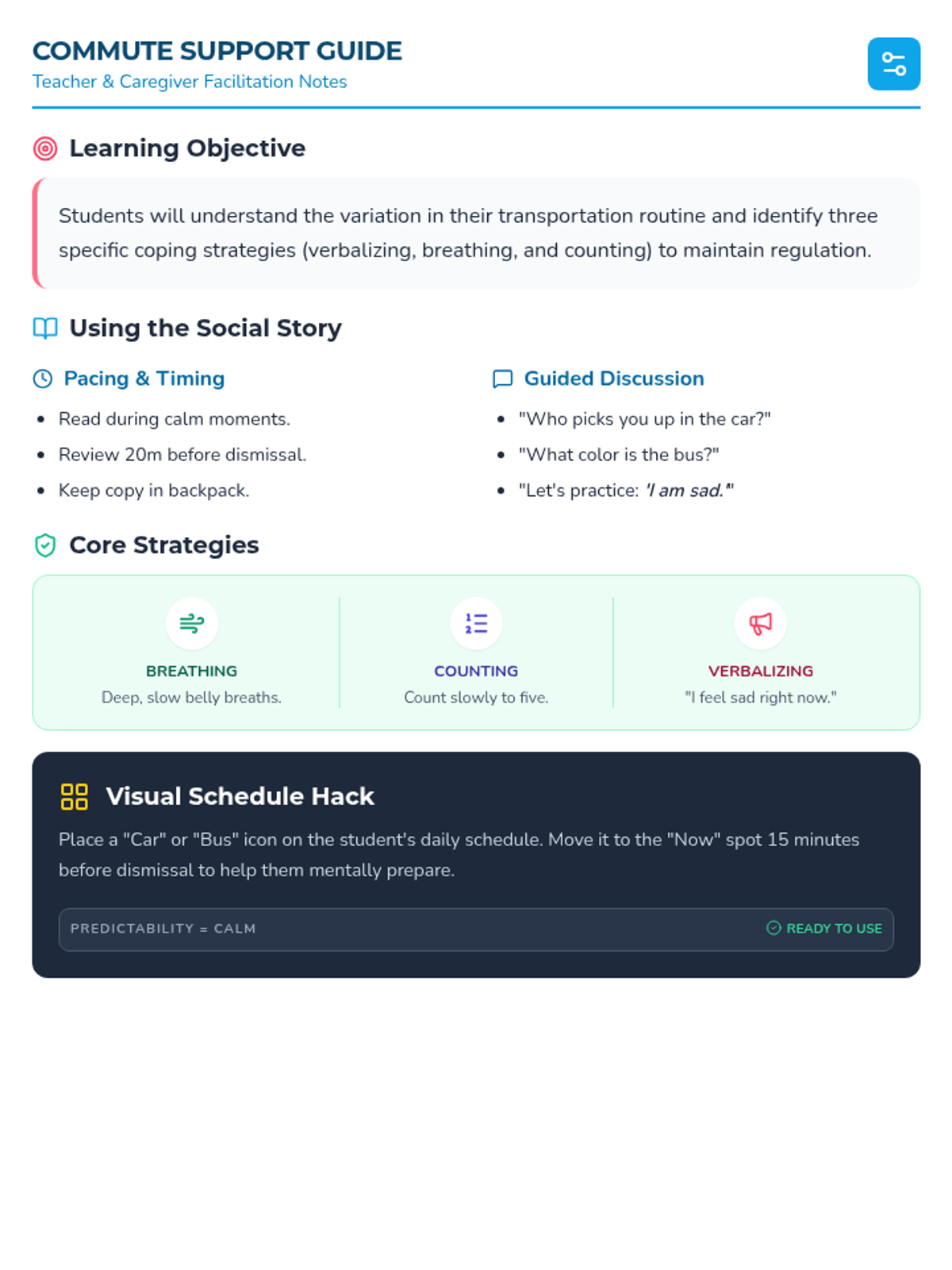
A teacher guide for implementing the social story about transportation routines. Includes pacing suggestions, discussion prompts, and strategy breakdowns for emotional regulation. Revised to improve layout and page flow.
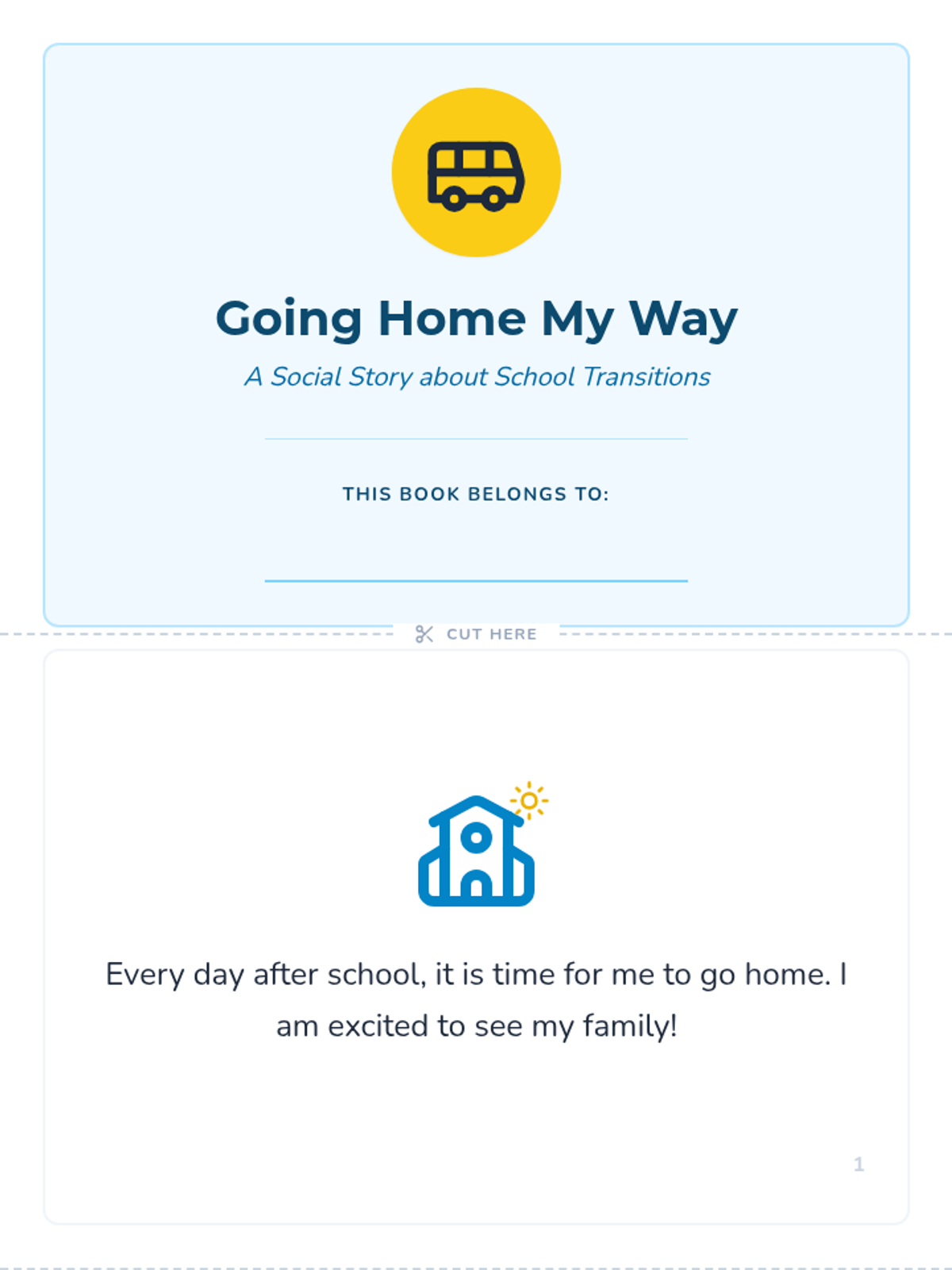
A 7-page social story booklet designed to be printed, cut, and assembled. It explains the transition between parent pickup and bus rides, providing coping strategies like breathing and counting.
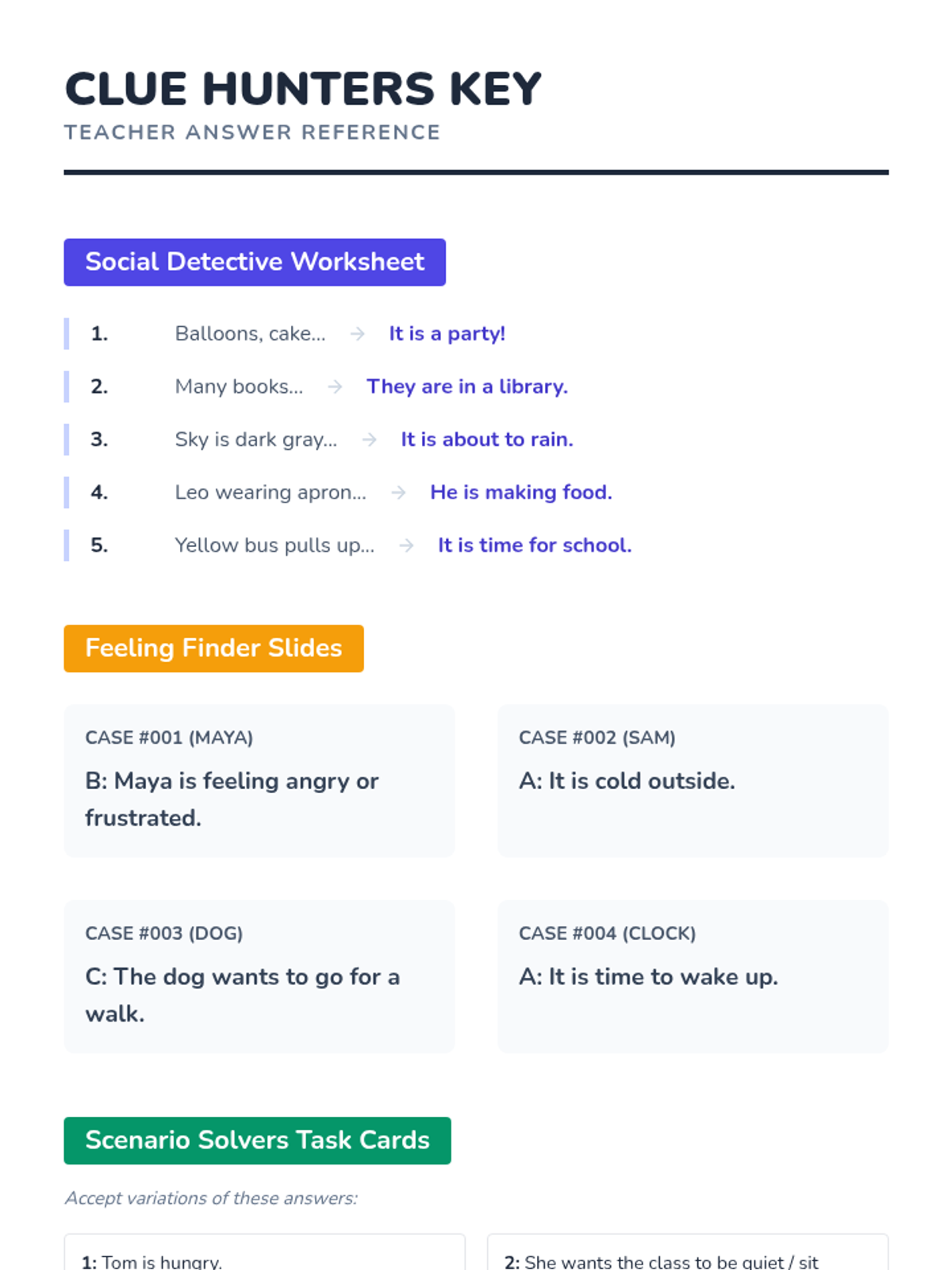
A detailed answer key and teacher reference for all Clue Hunters materials, including correct matching pairs, multiple-choice answers, and suggested task card completions.
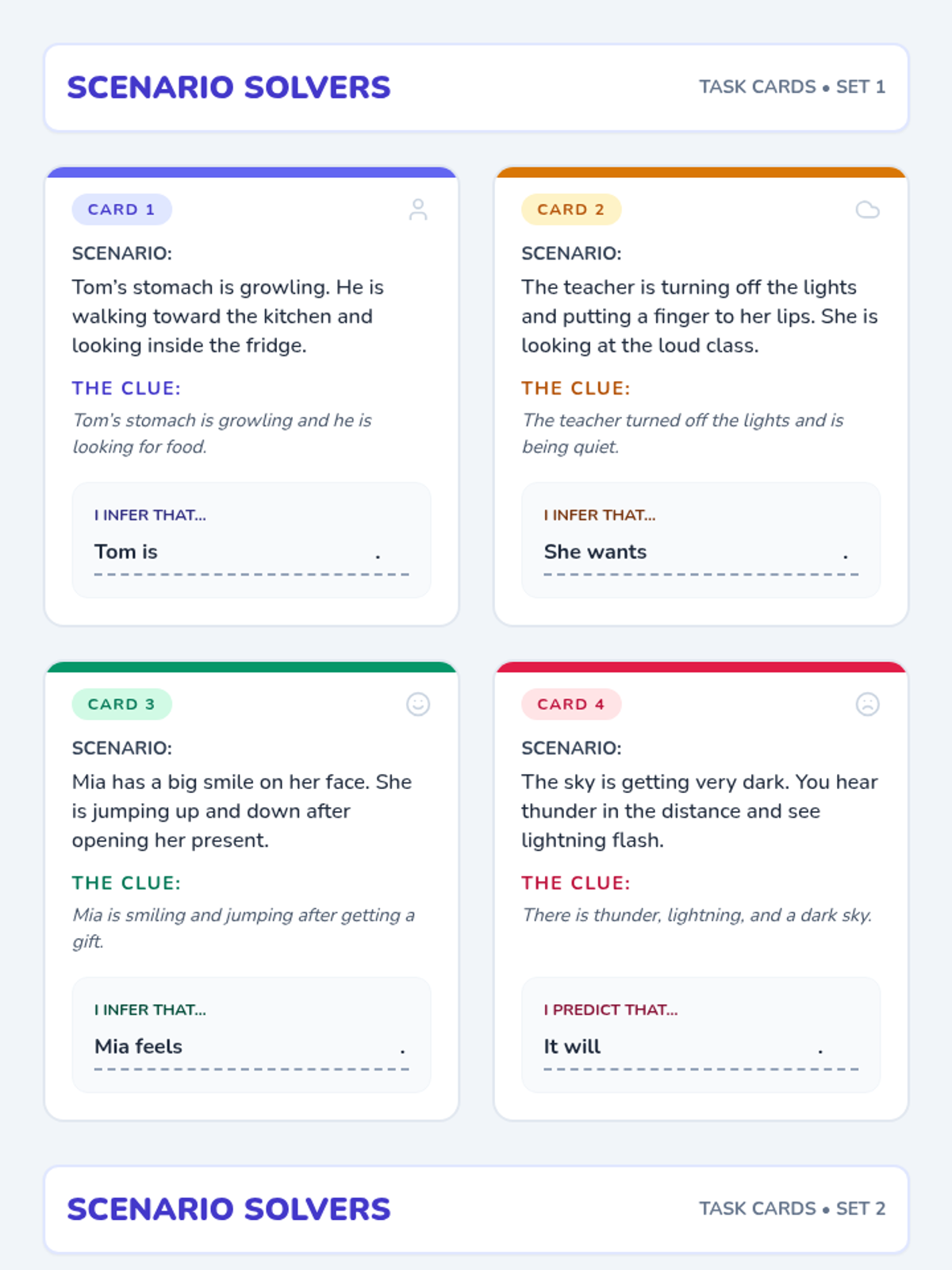
A set of 8 scaffolded task cards for IEP students featuring short scenarios and sentence frames to practice making inferences and predictions.
A set of large-text presentation slides for IEP students to practice making inferences about feelings and social scenarios with multiple-choice options and visual supports.
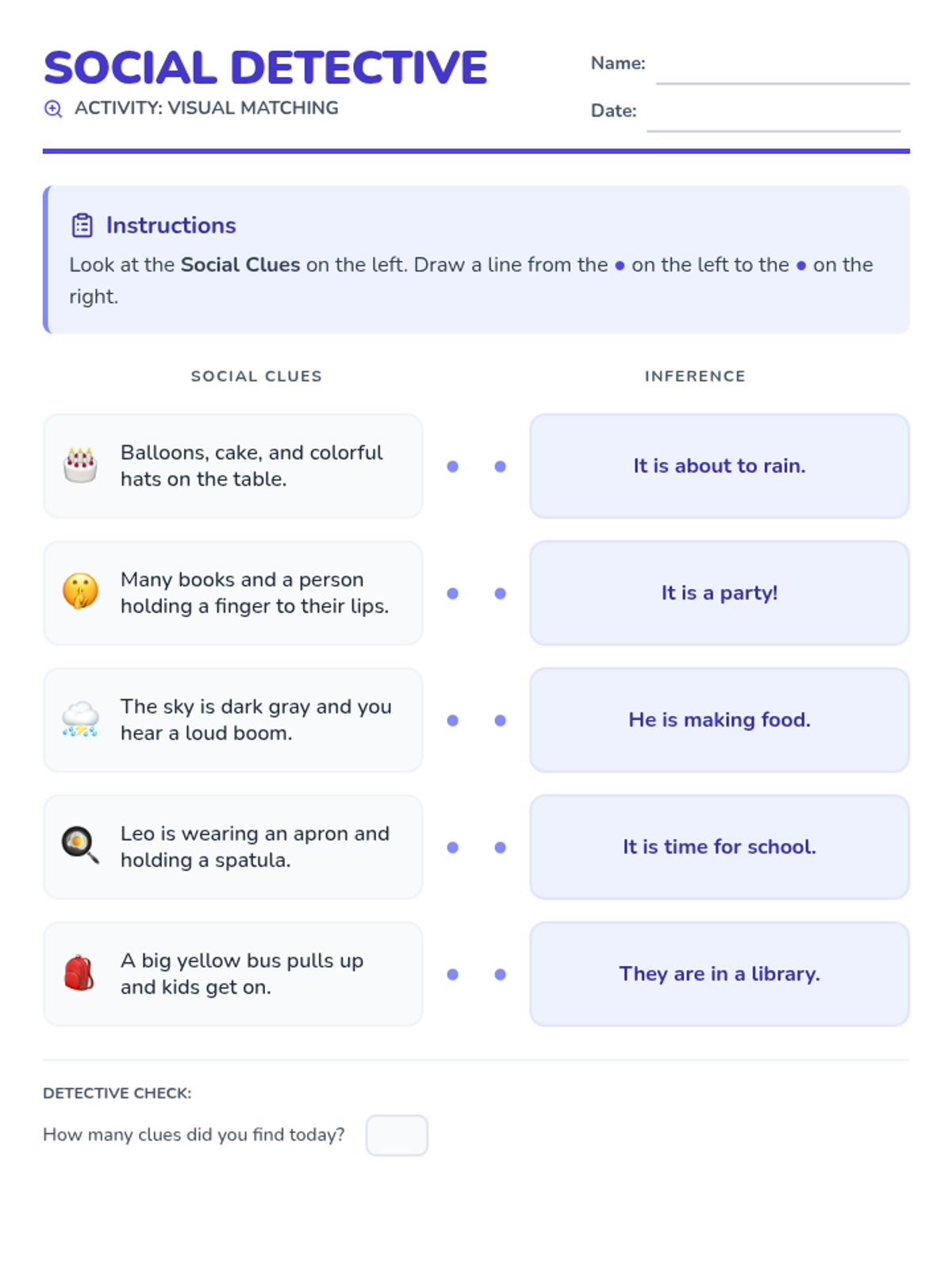
A visual matching worksheet for IEP students to practice making social inferences by connecting clues with their logical conclusions.
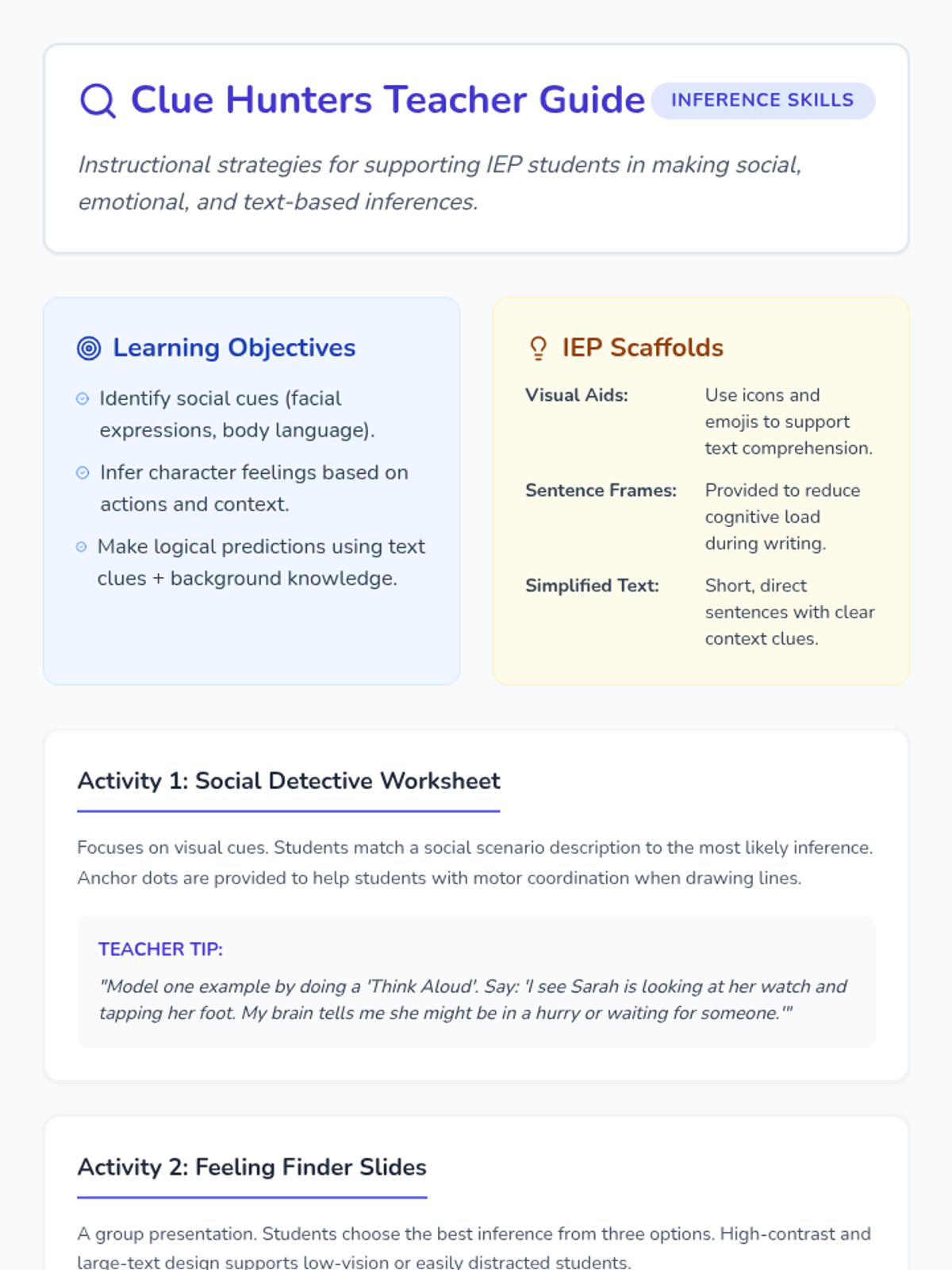
A comprehensive teacher guide for the Clue Hunters lesson, featuring instructional strategies, IEP-specific scaffolds, and activity breakdowns for teaching inference skills.
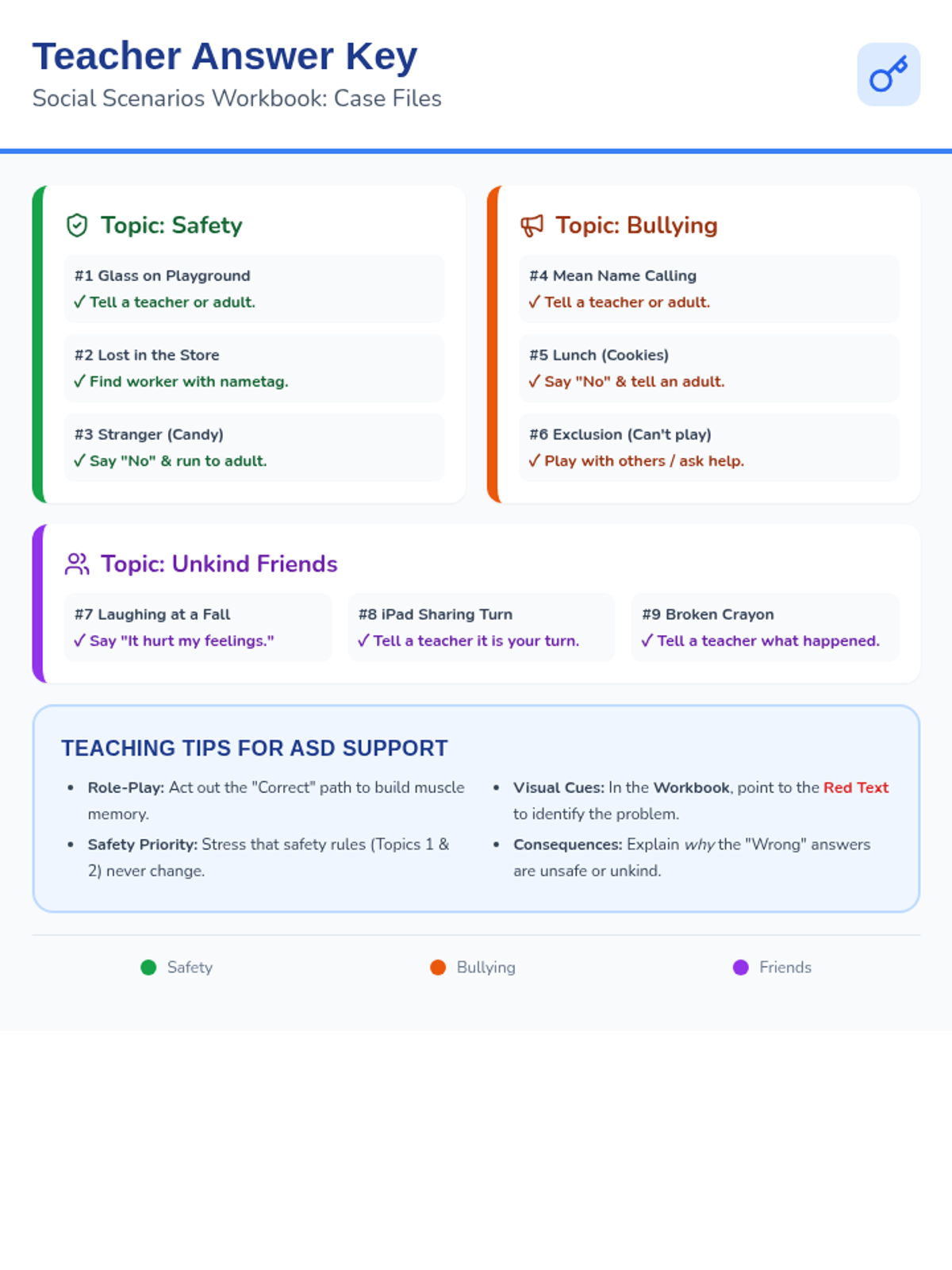
A condensed, single-page teacher answer key reflecting the simplified scenarios in the student workbook. It features case summaries, clear answers, and targeted teaching tips for ASD support.
A 11-page social skills workbook designed for students with ASD. It features 9 simplified scenarios across Safety, Bullying, and Unkind Friends, using clearer distractors, shorter sentences, and direct language. Cover layout and name/date spacing have been optimized.
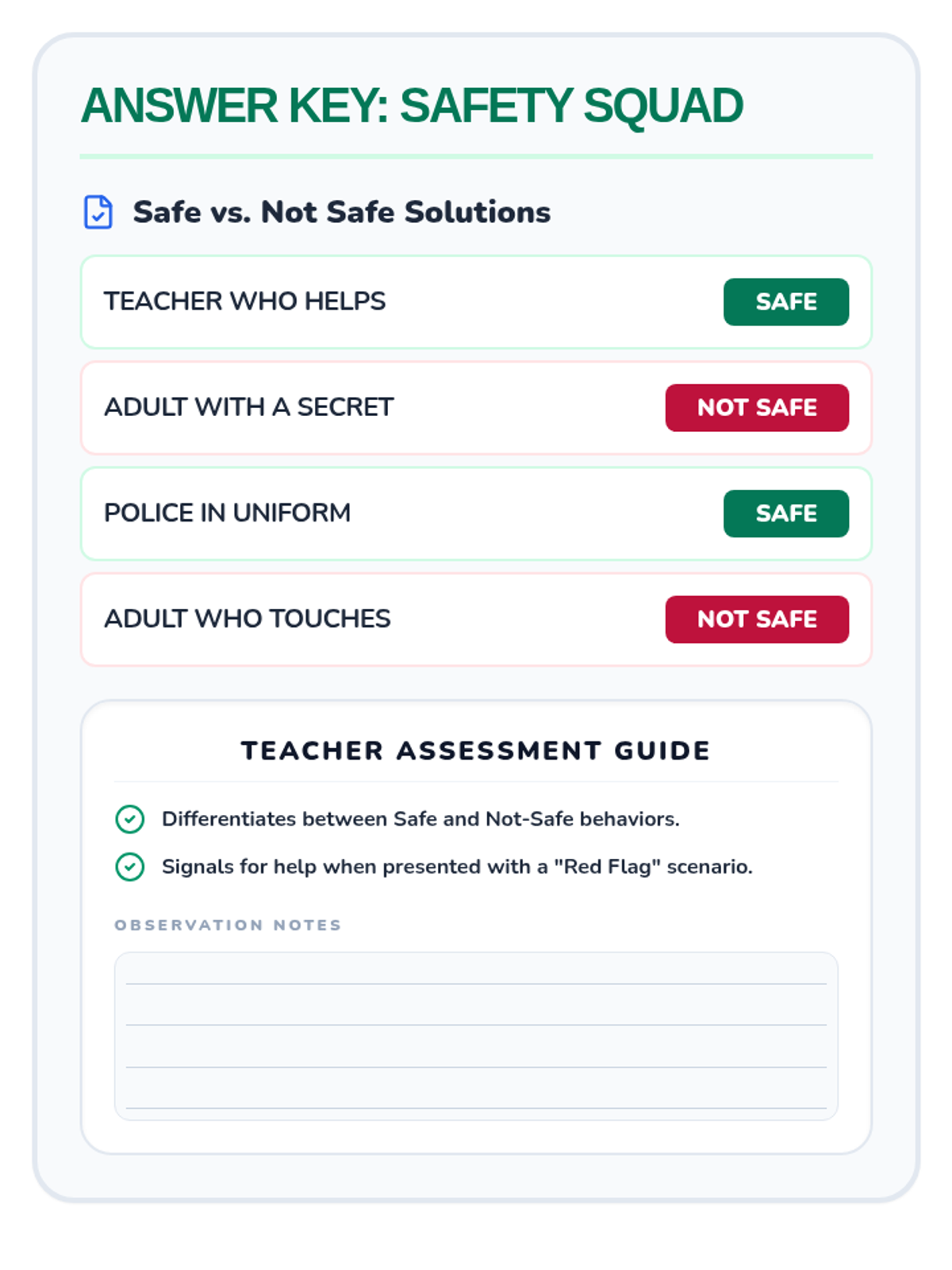
Assessment guide and answer key for the Safety Squad lesson. Updated to include criteria for identifying safety red flags like secrets and boundary violations. Consolidated to a single page.
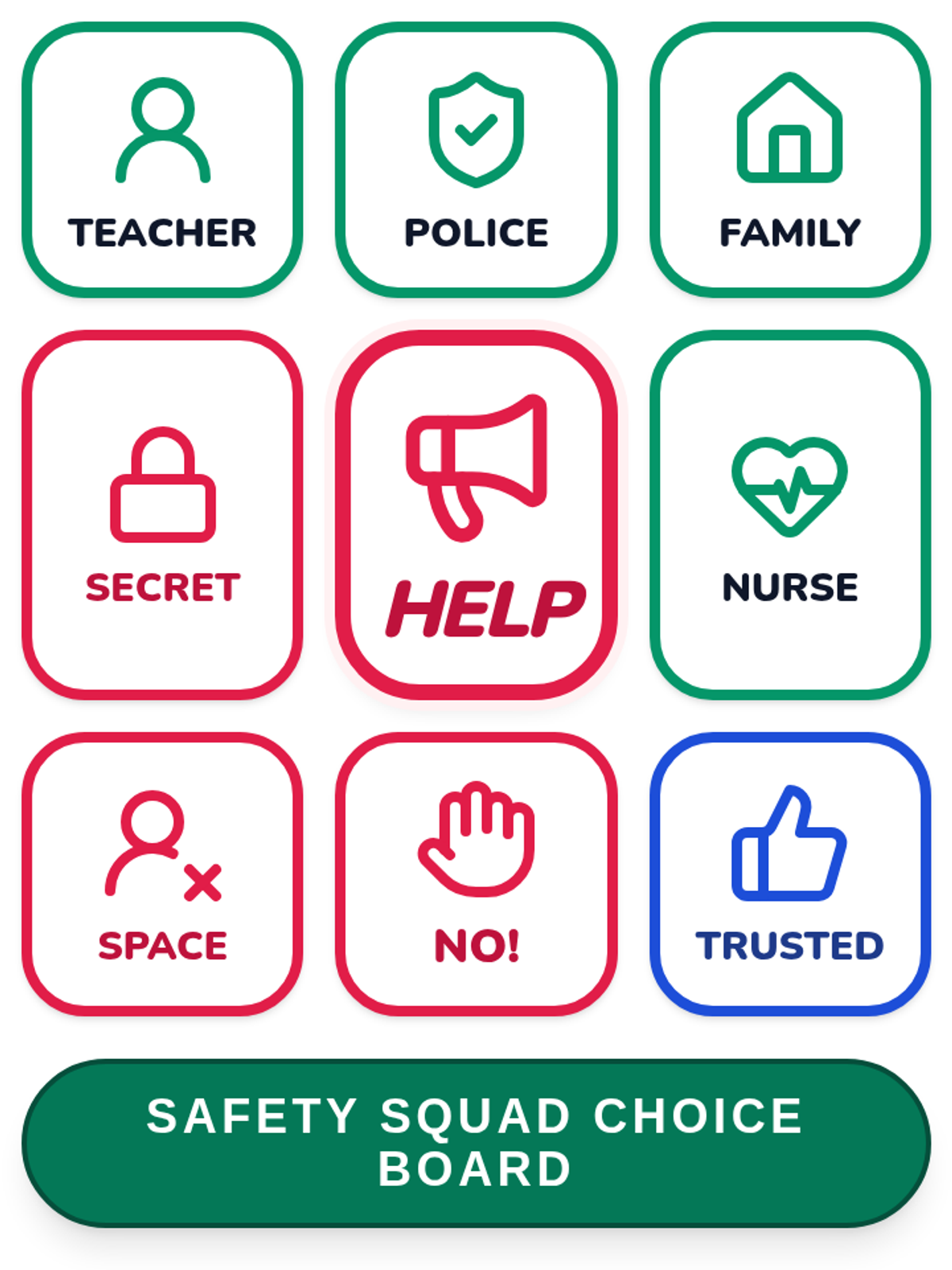
High-contrast communication board for safety identification. Includes specific icons for reporting secrets and boundary violations (Space/NO). Optimized for students with severe disabilities.
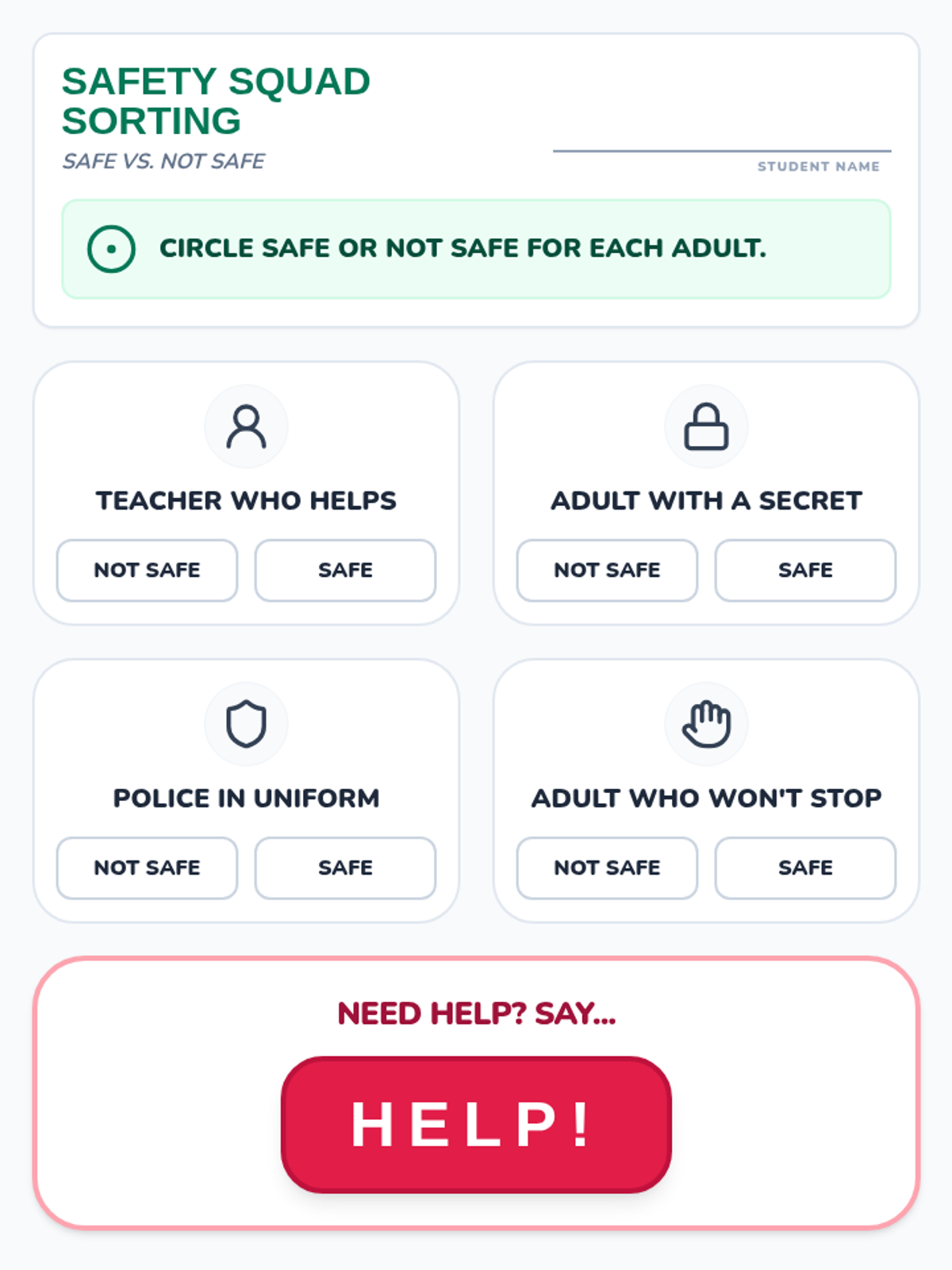
A visual-choice sorting worksheet for identifying safe vs. not-safe behaviors in adults. Neutral styling for icons and buttons to ensure conceptual identification. Consolidated to a single page. High contrast labels for easy reading.
High-contrast presentation slides for identifying trusted adults. Includes new content on safety 'red flags' such as secrets, lack of personal space, and not respecting boundaries. Revised for uniform answer choices and high visibility. Space added in header of Slide 3.
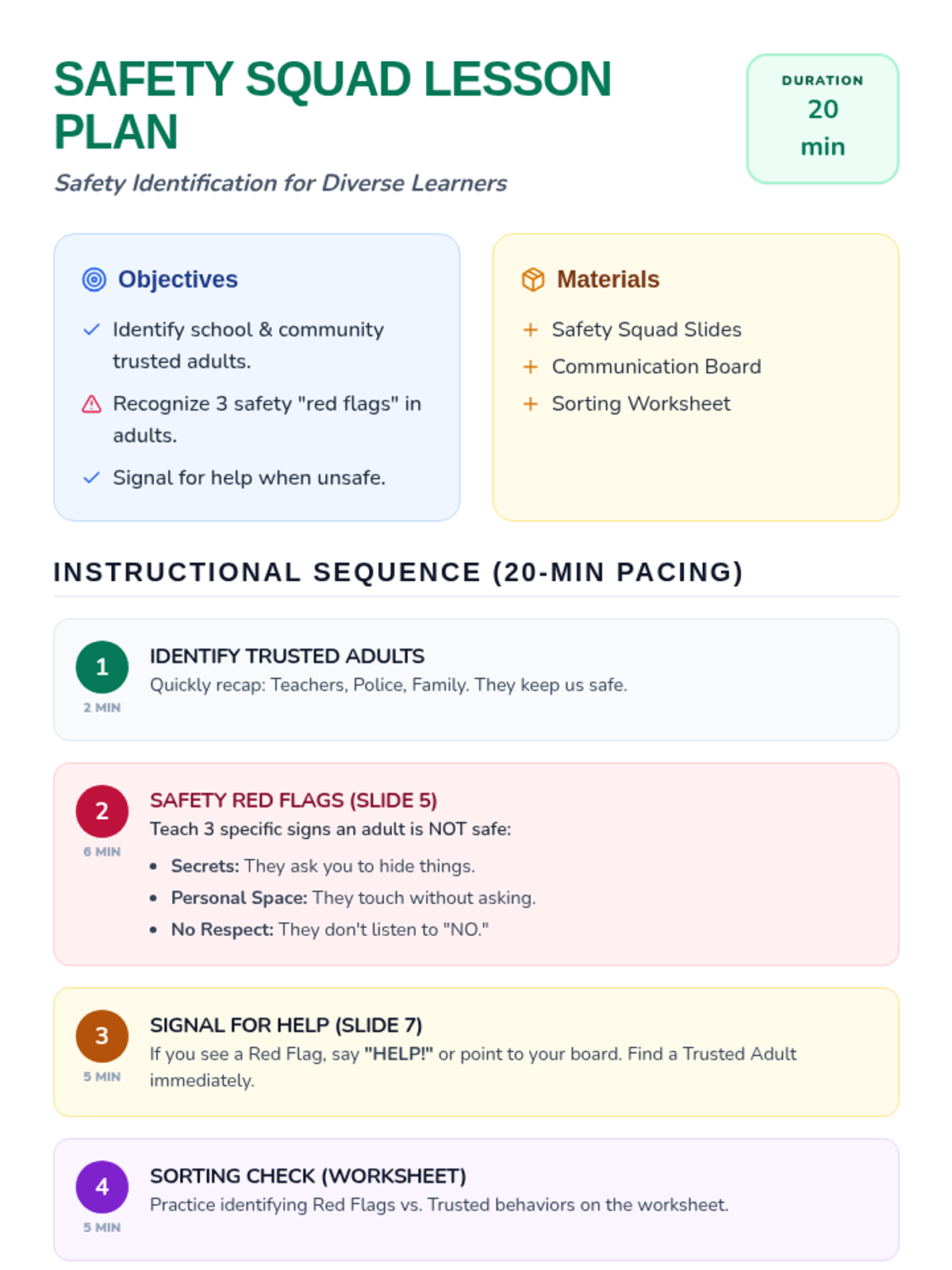
A streamlined 20-minute lesson plan for teaching safety skills to students with disabilities, featuring clear timestamps and a specific segment on recognizing safety red flags such as secrets and boundary violations.
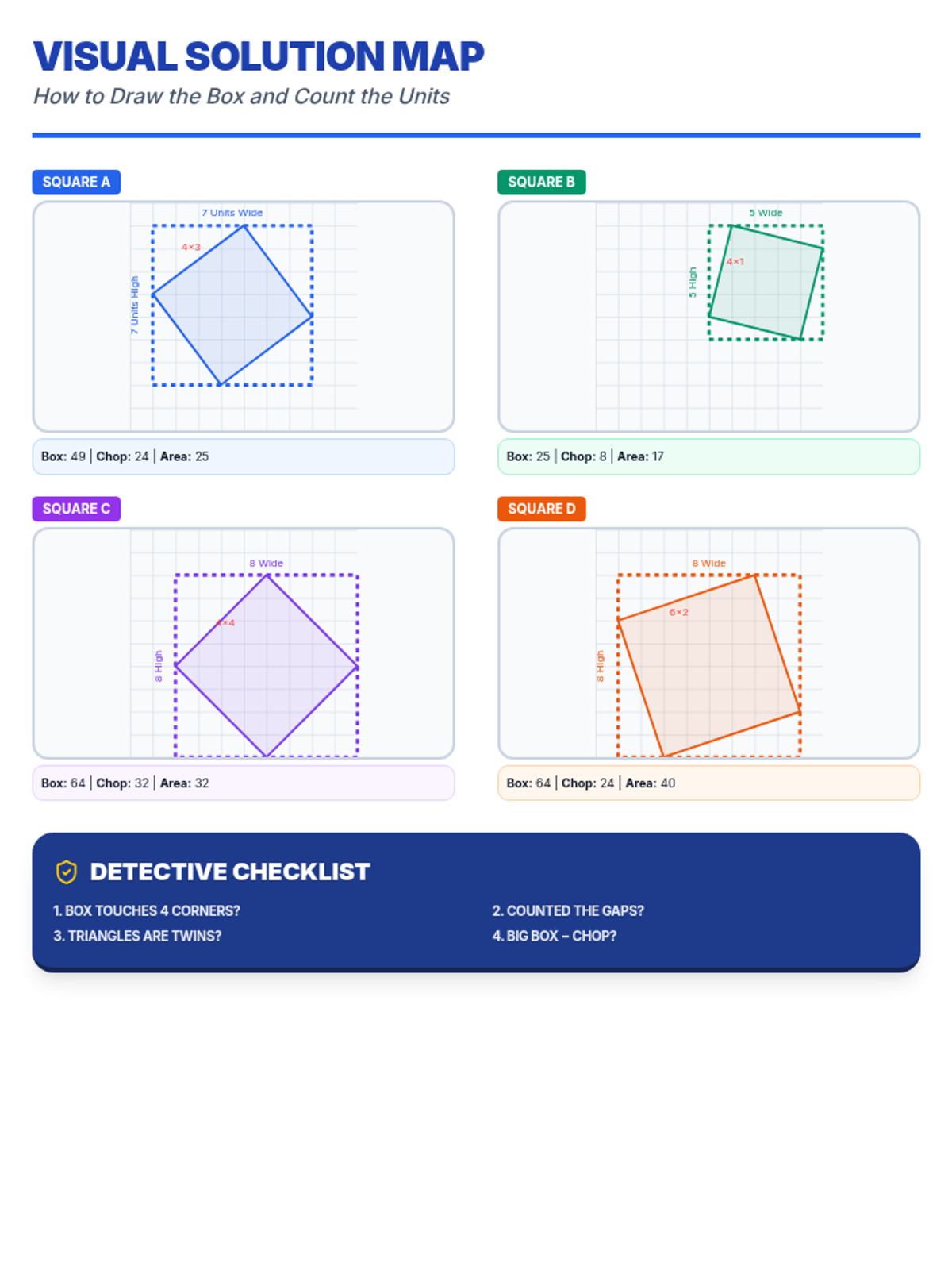
A visual solution map for the "Box and Chop" method, showing exactly where to draw the bounding boxes and how to count the grid units for squares A, B, C, and D. Ideal for teachers to project or share with students needing visual support.