A comprehensive, teacher-facing 2-page answer key detailing correct answers and mathematical explanations for all main worksheets in the Chance Champions probability unit.
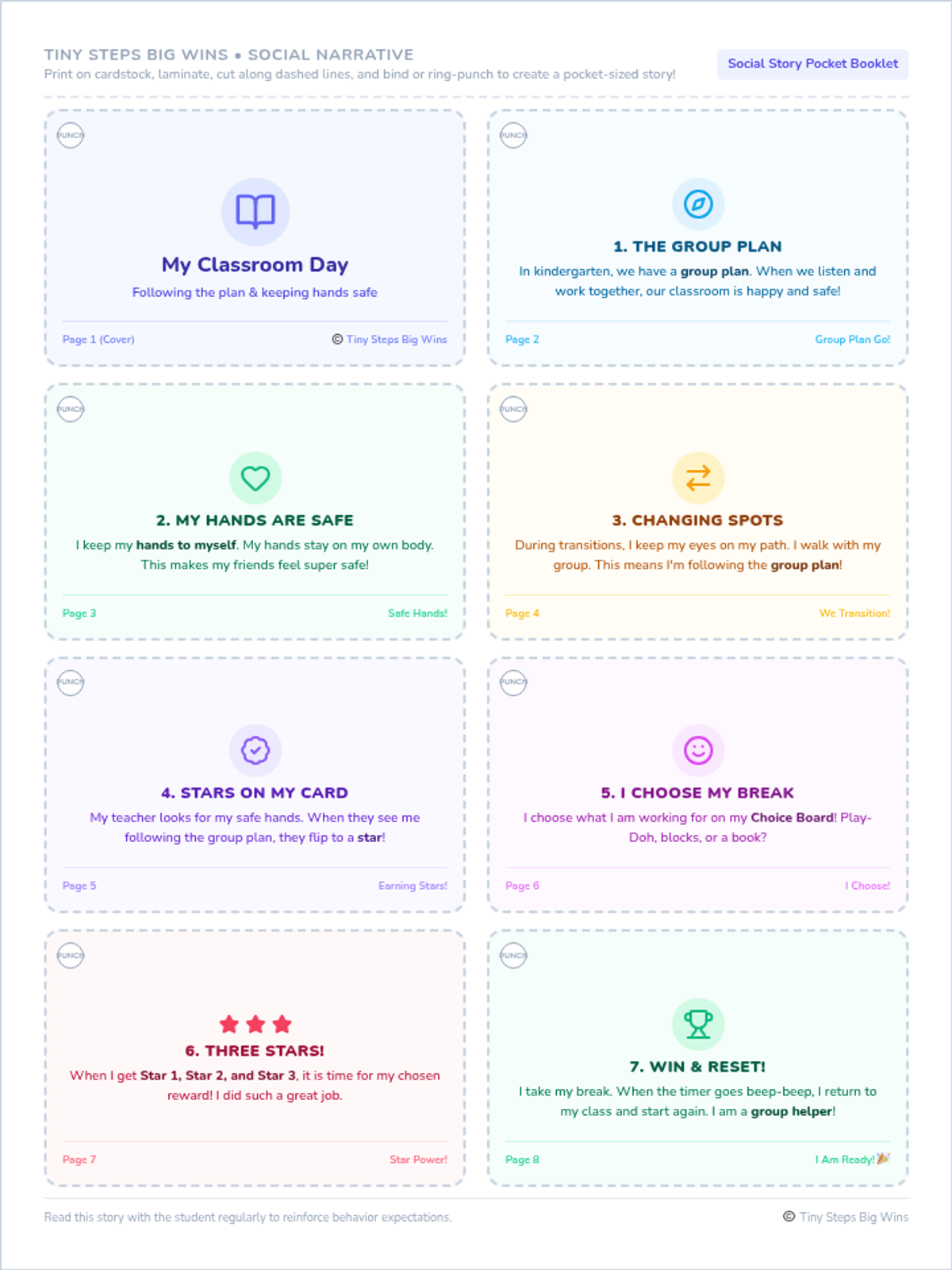
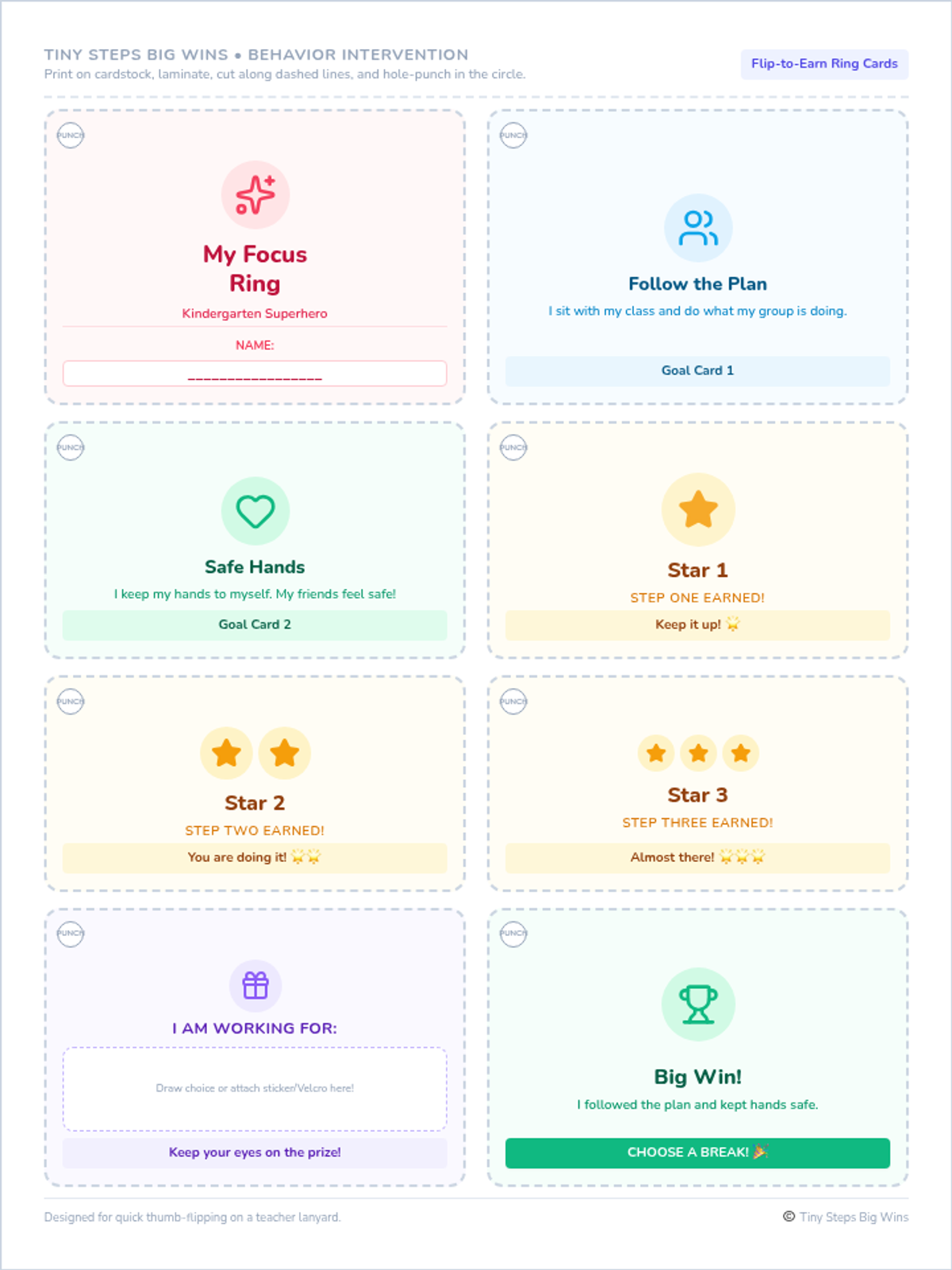
An 8-card printable social story grid designed to be cut out and kept in a pocket or on a ring, helping students understand the 'group plan' and safe hands.
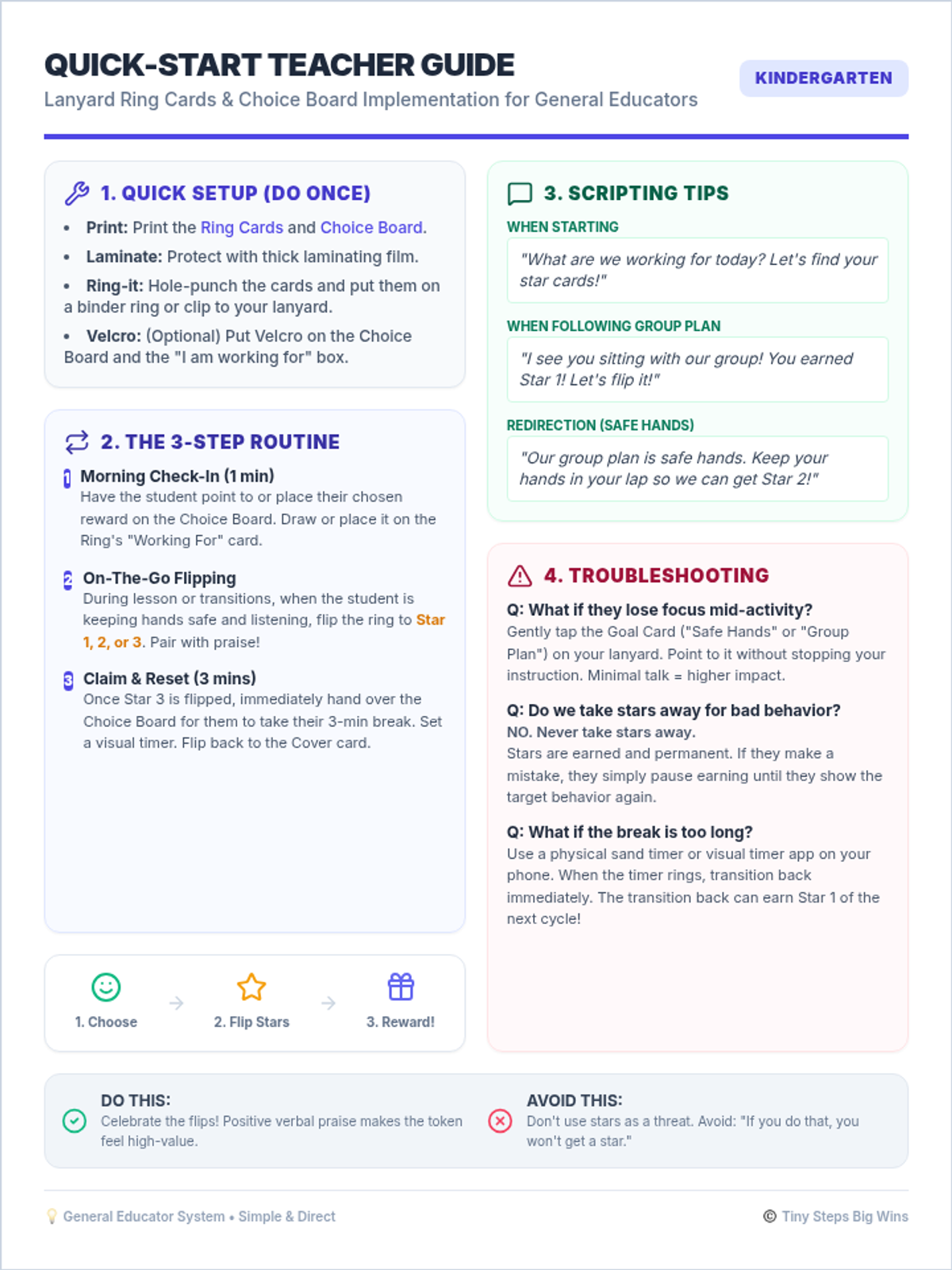
A single-page cheat sheet with scripting, routine guidelines, and troubleshooting tips for the general educator running the lanyard system.
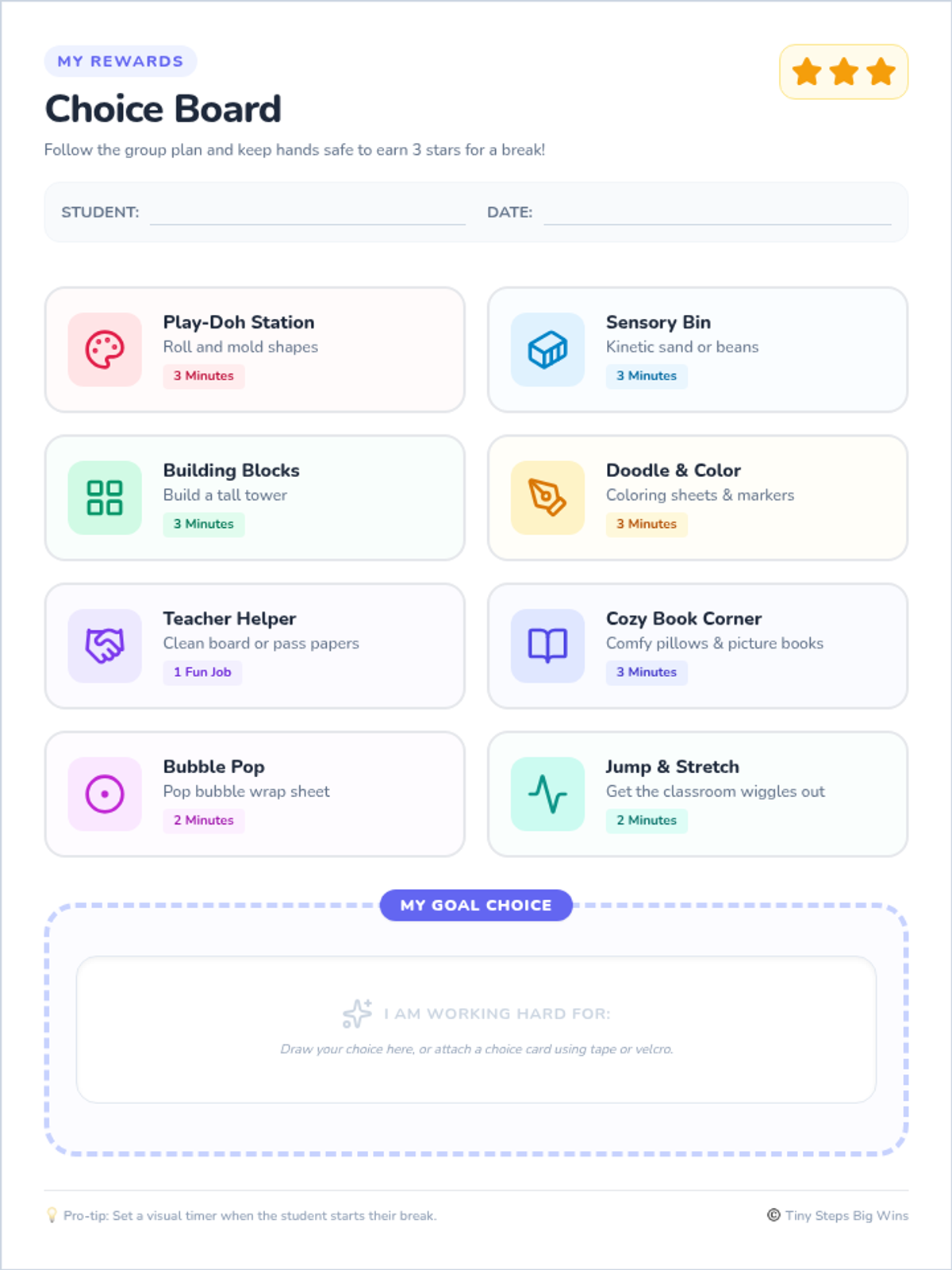
A visual reward menu featuring 8 sensory and play-based breaks for kindergarten students, complete with time limits to structure behavioral rewards.
A portable set of 8 printable ring cards for teachers to clip to their lanyards, helping them reinforce group-plan adherence and safe hands in real time.
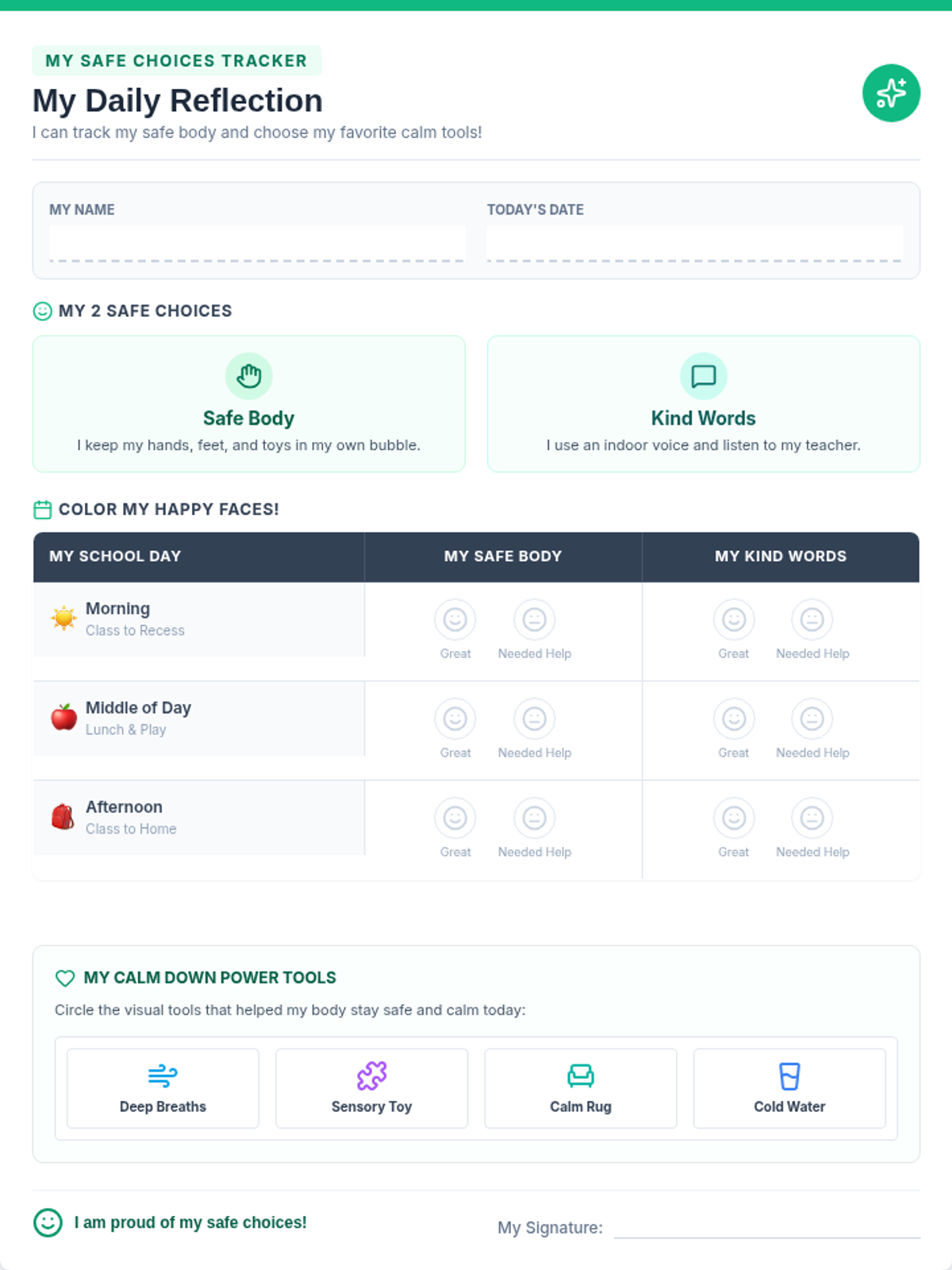
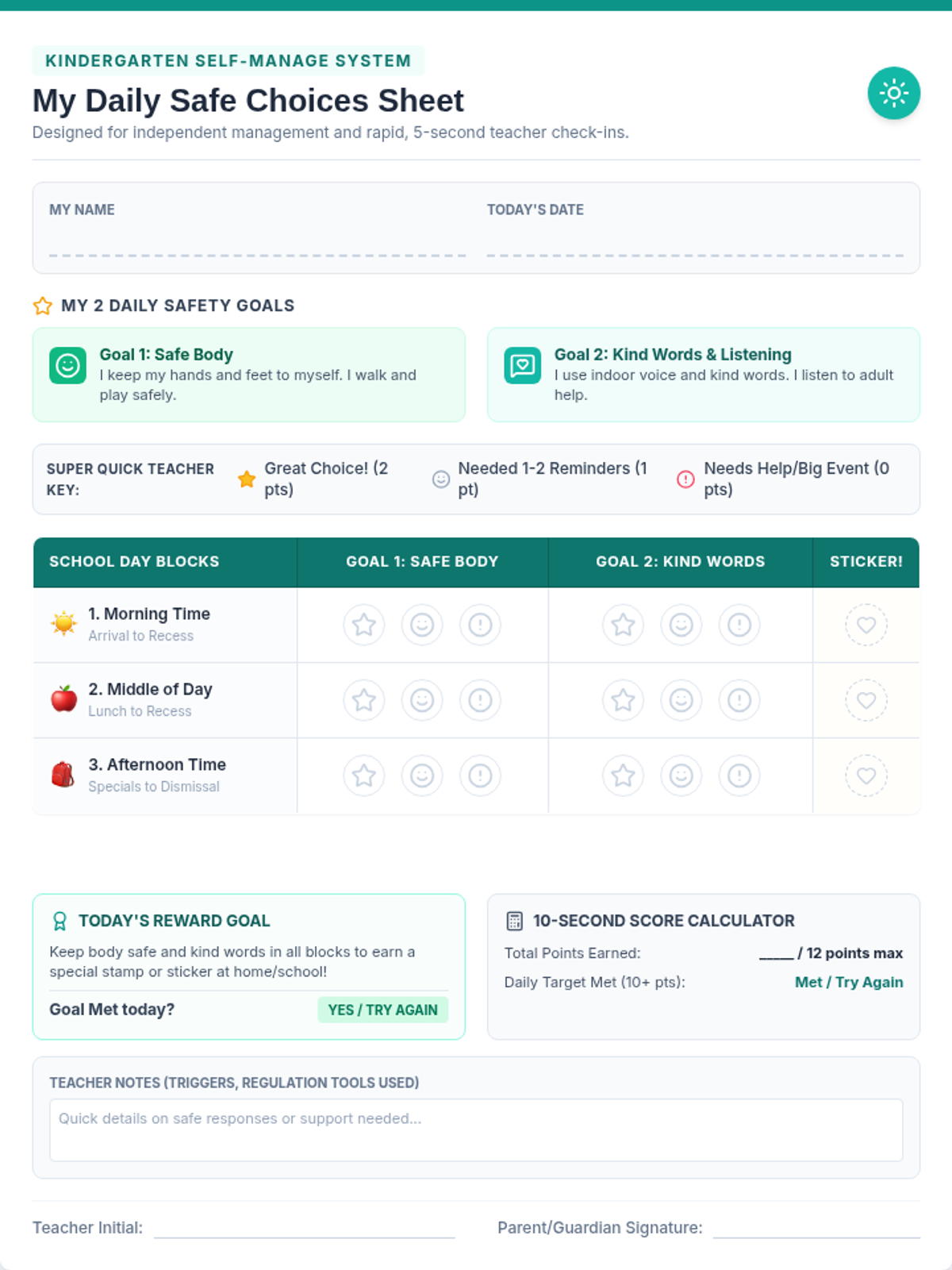
A student-facing self-monitoring sheet that uses visual scales and 'I-statements' to help students track their own physical safety, verbal choices, and coping strategies.
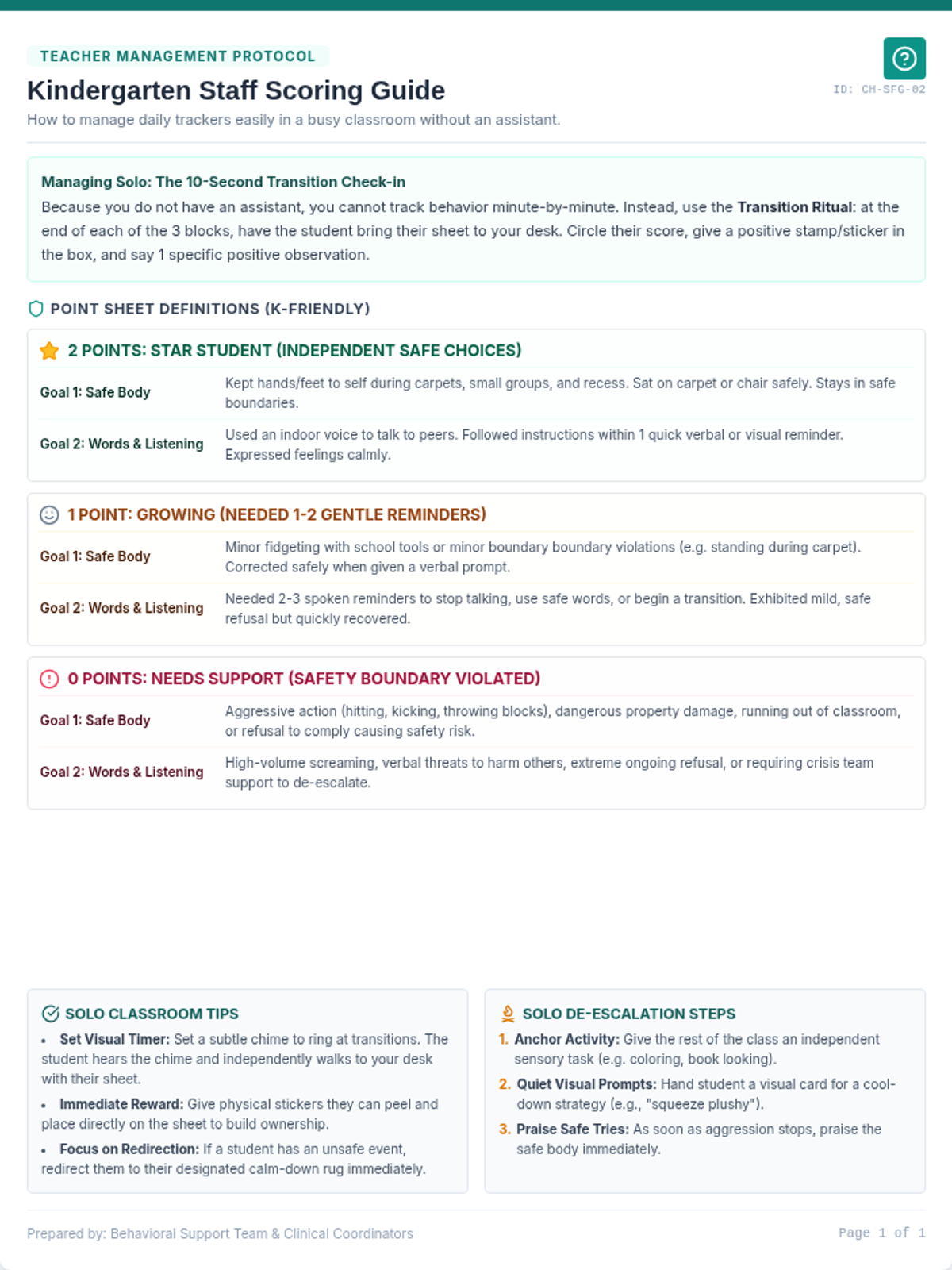
A quick-reference behavior definition sheet for school staff to ensure inter-rater reliability, containing explicit operational definitions for point sheet scores and de-escalation protocols.
A super-simplified, 3-interval daily point sheet tailored for a kindergarten student without an assistant, featuring visual icons and rapid scoring columns for a busy classroom teacher.
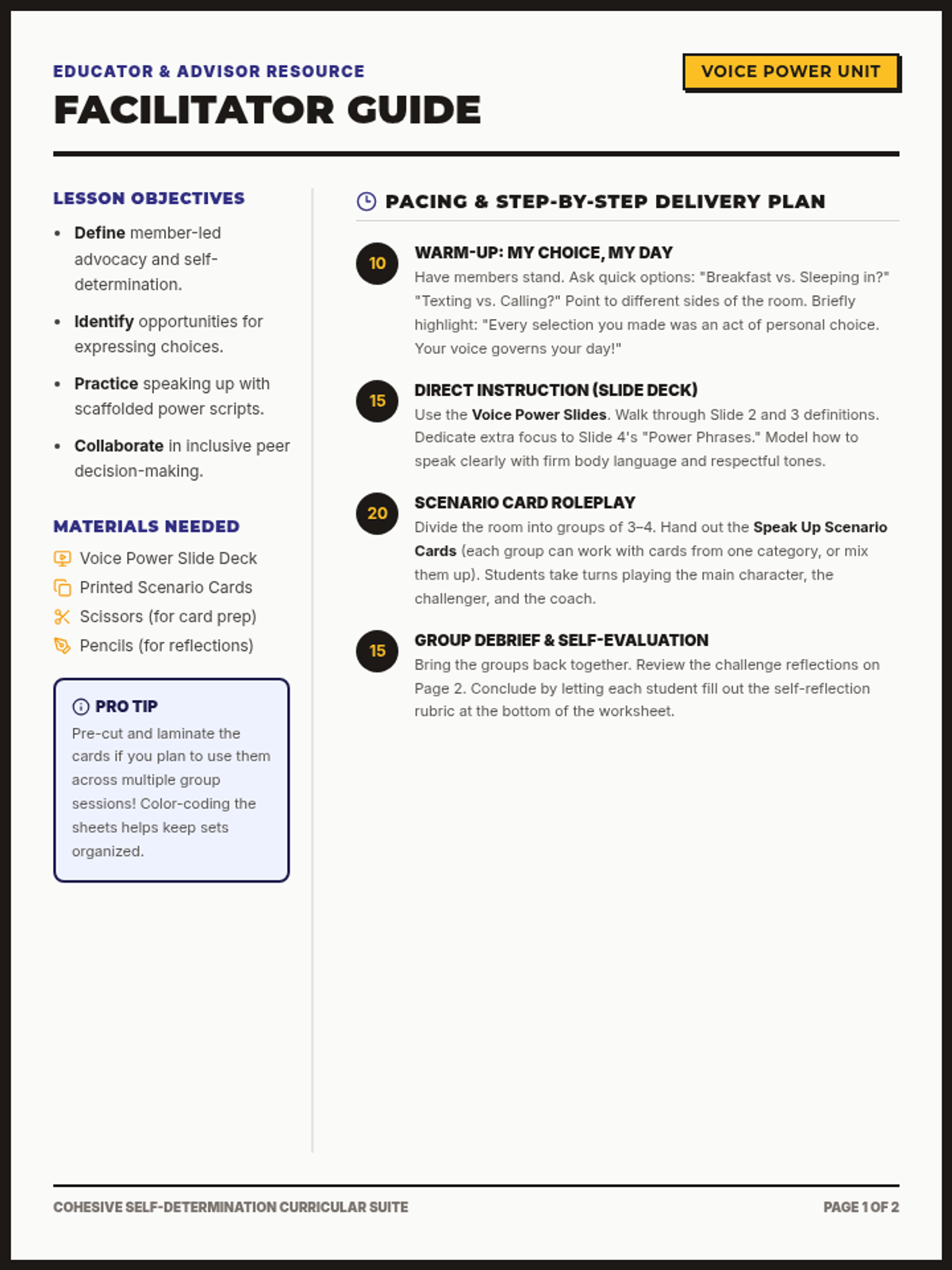
A comprehensive facilitator guide for educators, self-advocacy advisors, or transition specialists. Includes lesson pacing, student scaffolding tips, debriefing discussion prompts, and a student self-reflection rubric.
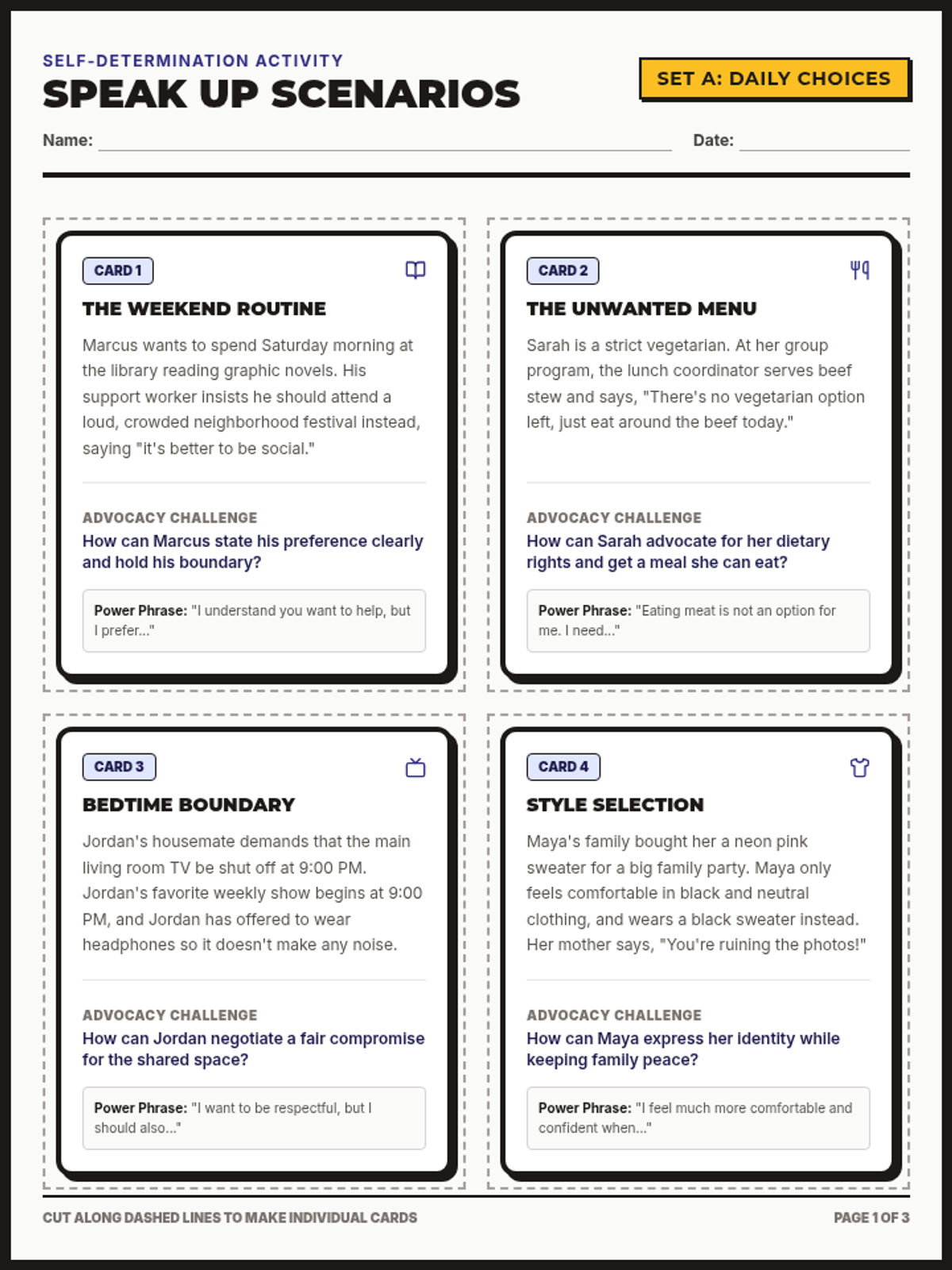
A set of 12 beautifully illustrated, double-bordered scenario discussion cards covering Expressing Daily Choices, Social & Peer-Led Advocacy, and Community & Workplace Rights. Print-ready with dashed cutting lines.
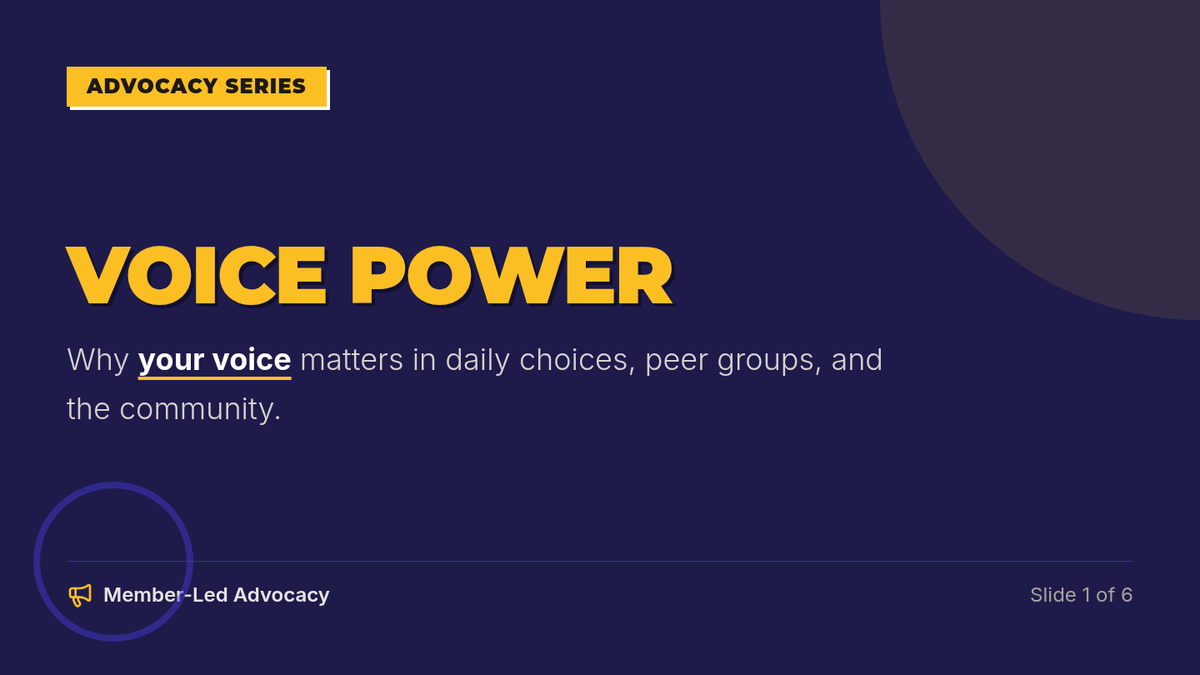
A highly interactive slide deck that introduces member-led advocacy, self-determination, and clear speaking-up scripts. Promotes active listening, group decision-making, and explains how to run the Scenario Cards activity.
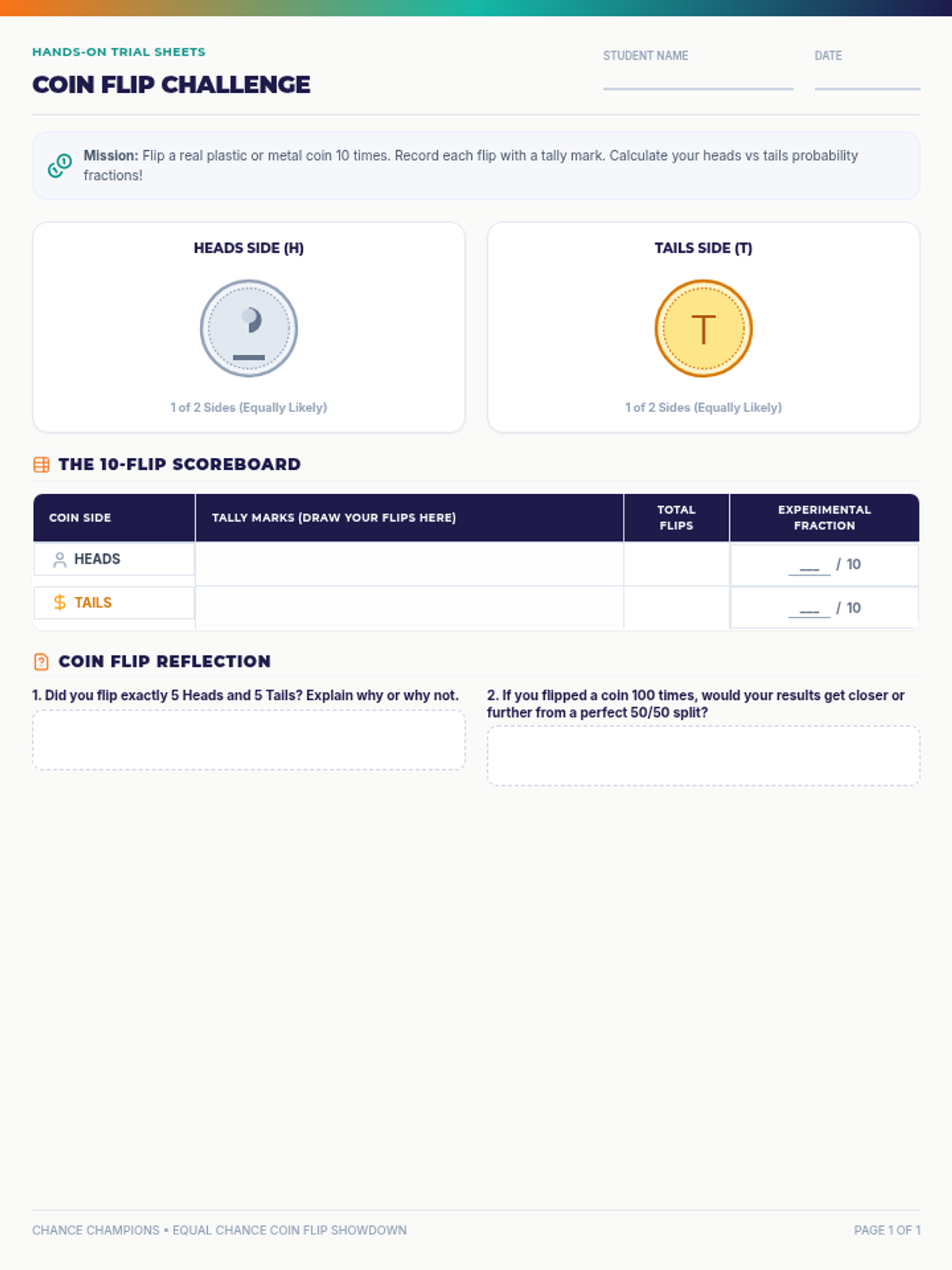
A hands-on, 10-trial coin flipping activity customized for Special Education. Students make predictions, flip a real coin, tally Heads vs Tails, and calculate experimental probabilities with highly guided visual helpers.
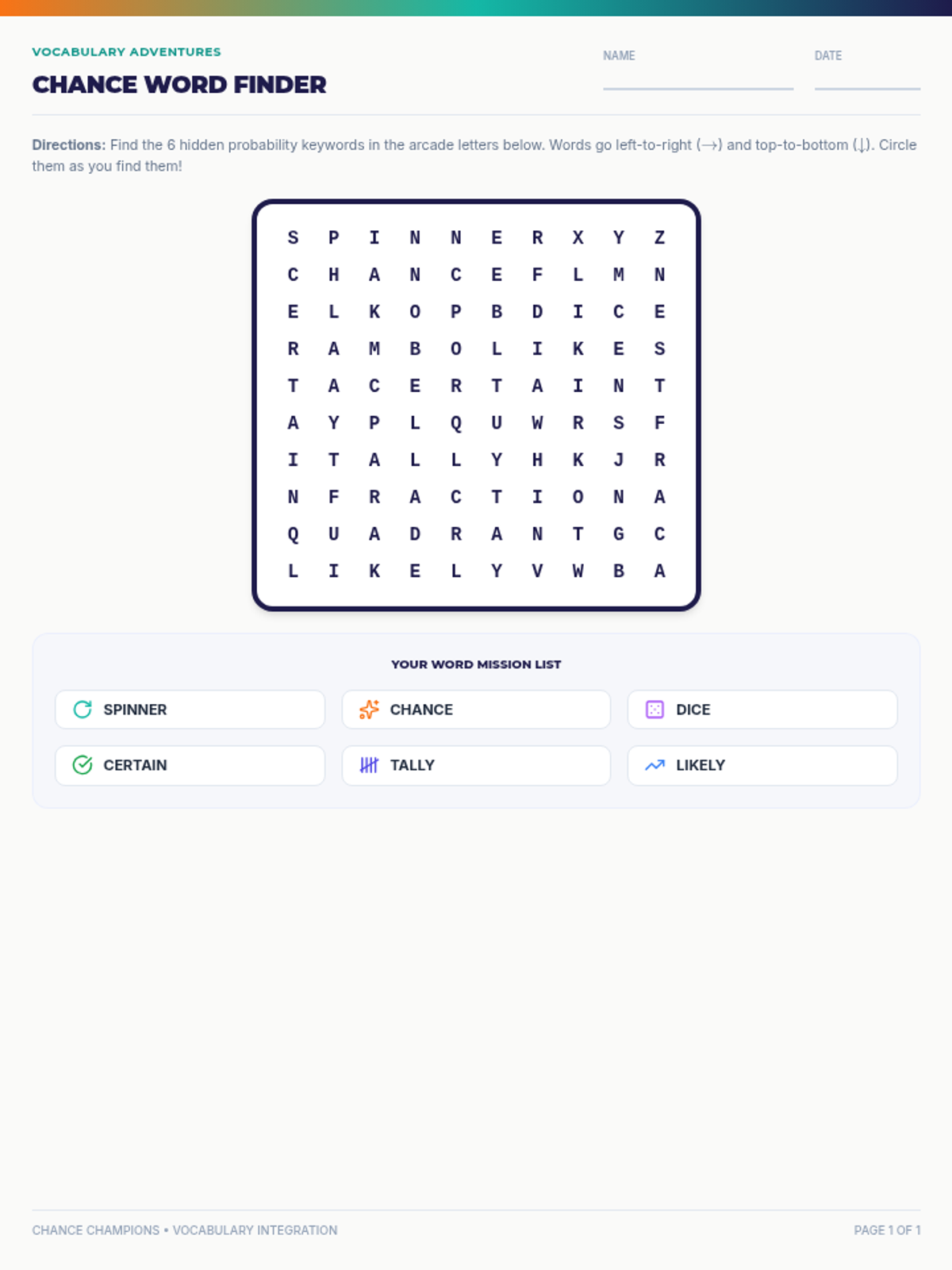
A fun, arcade-themed probability vocabulary word search worksheet customized for Special Education. Features a clear 10x10 word grid and a visual word bank to support terminology retention.
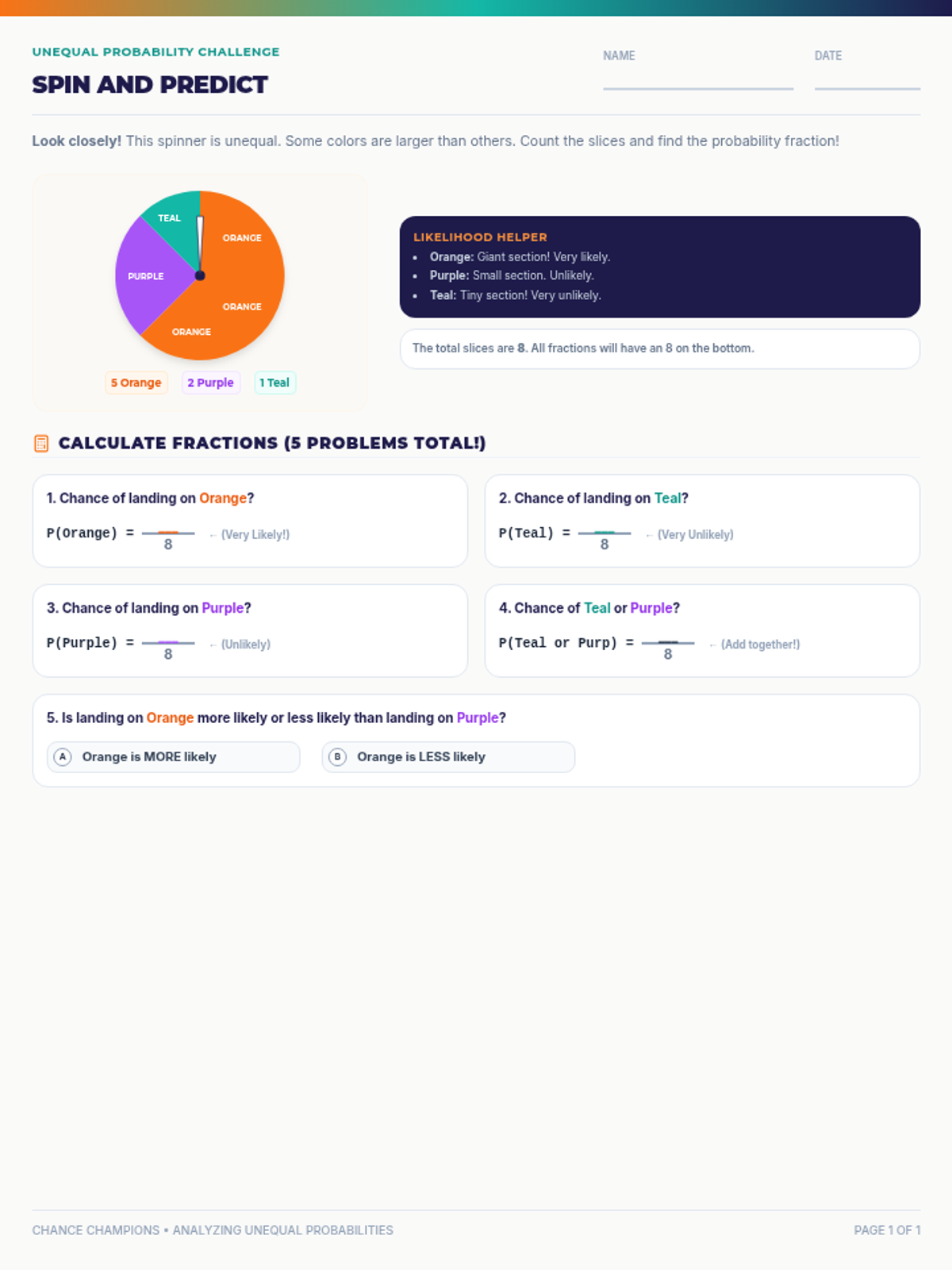
An intermediate spinner worksheet with unequal slices. Students calculate fractional chances and practice comparing likelihood terms (likely, unlikely) with highly supportive color-coding.
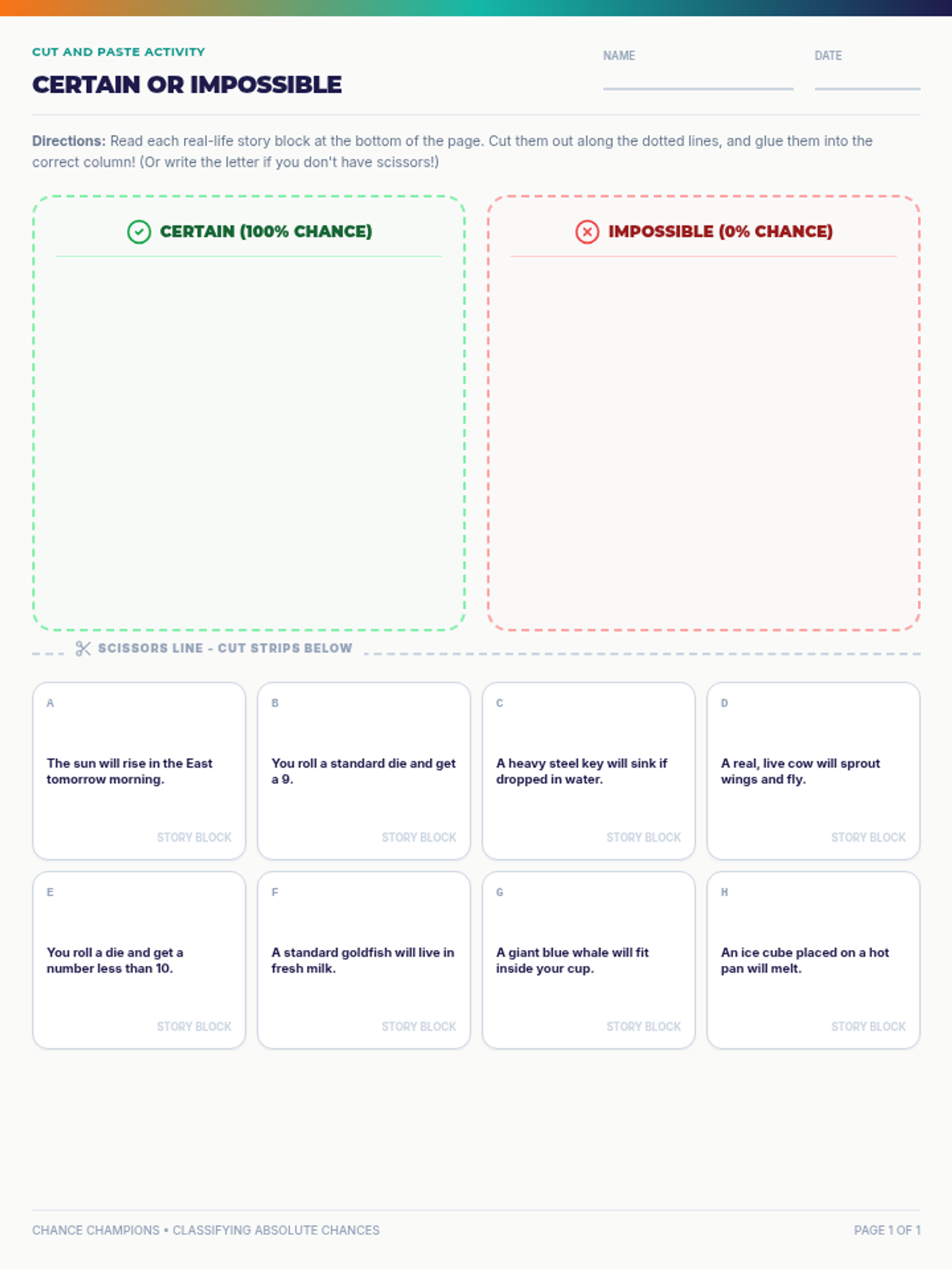
A cut-and-paste sorting worksheet where students classify 6 real-world events into 'Certain' or 'Impossible' columns, supporting conceptual development in probability.
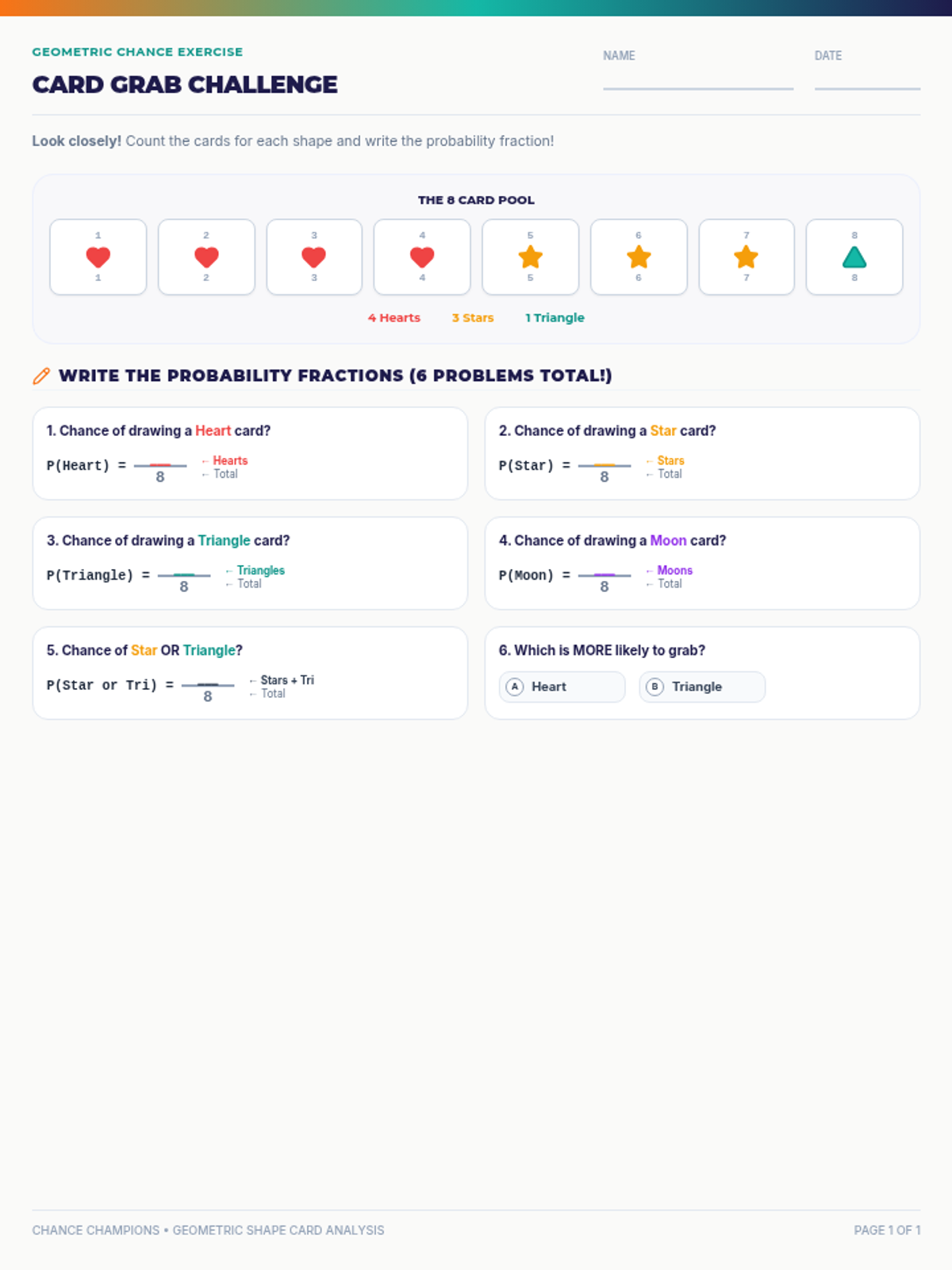
A visual math worksheet showing a set of 8 geometric shape cards. Students calculate simple fractional probabilities of picking different cards with the help of pre-filled denominator guides.
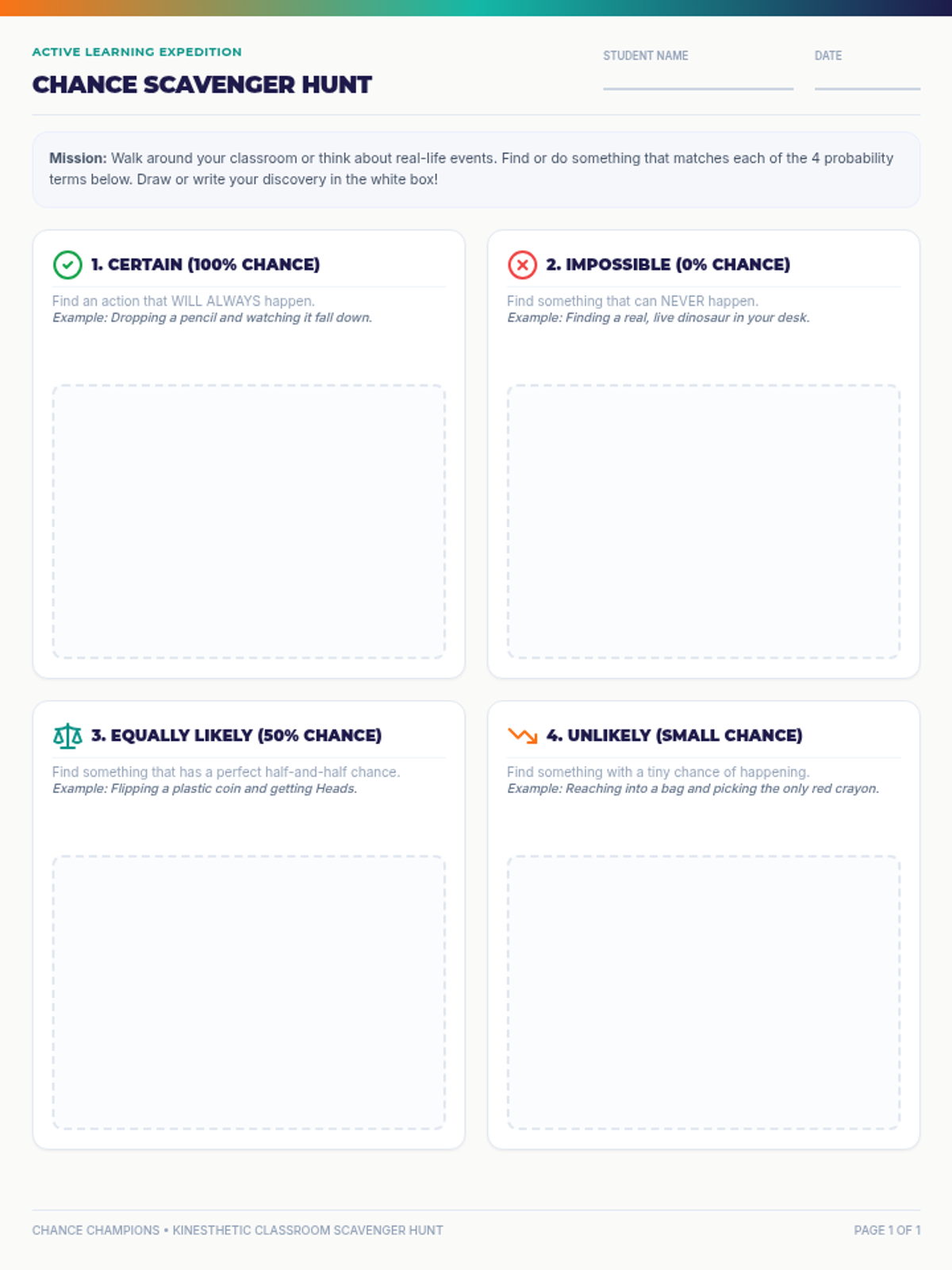
An active, movement-based classroom scavenger hunt worksheet customized for Special Education. Students find or perform physical activities that represent basic probability likelihoods and record them.
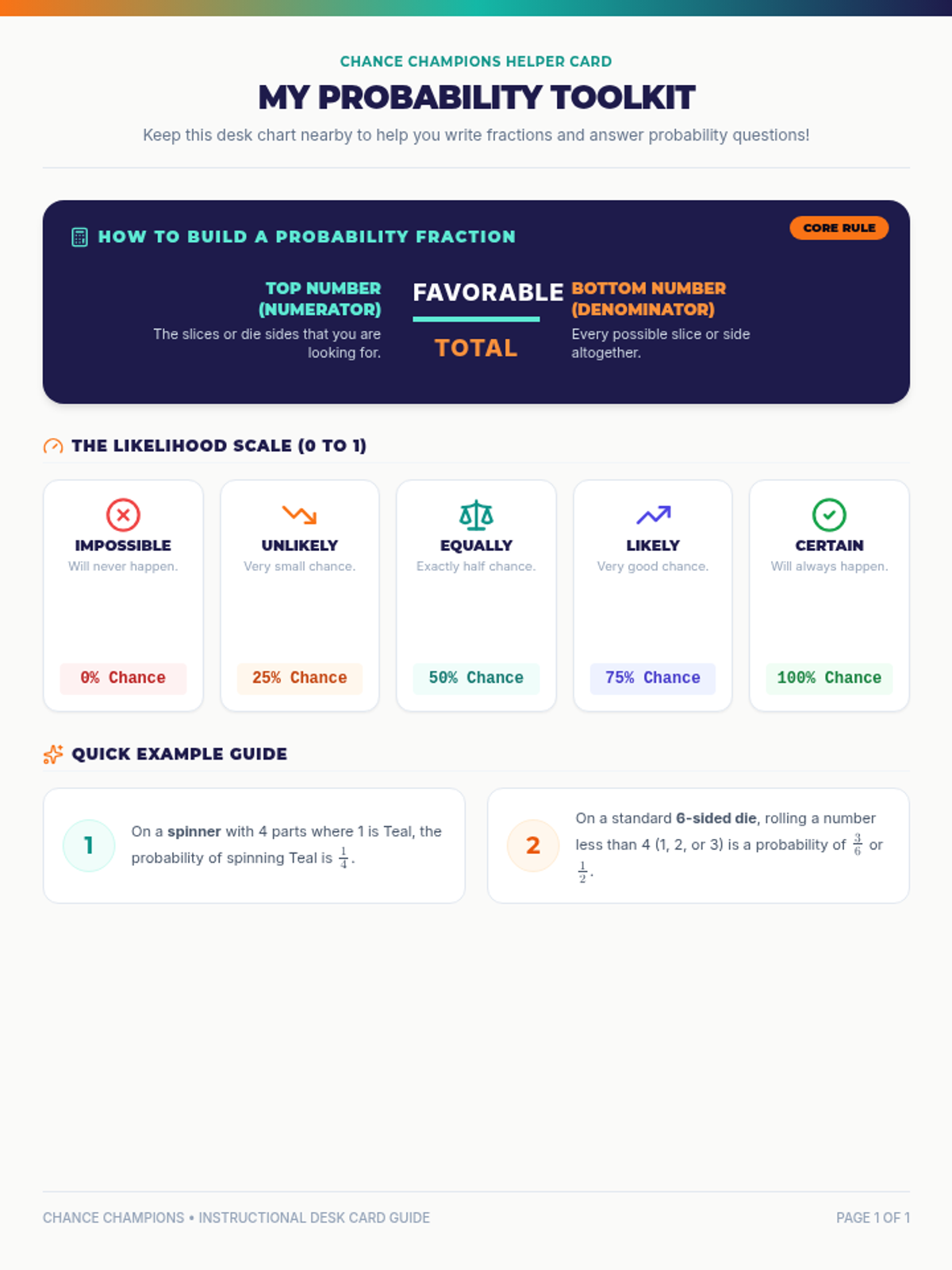
A highly visual probability anchor chart and guide for students. Uses large graphics, visual fraction breakdowns, and color-coded definitions for simple probability, outcomes, and likelihood words.
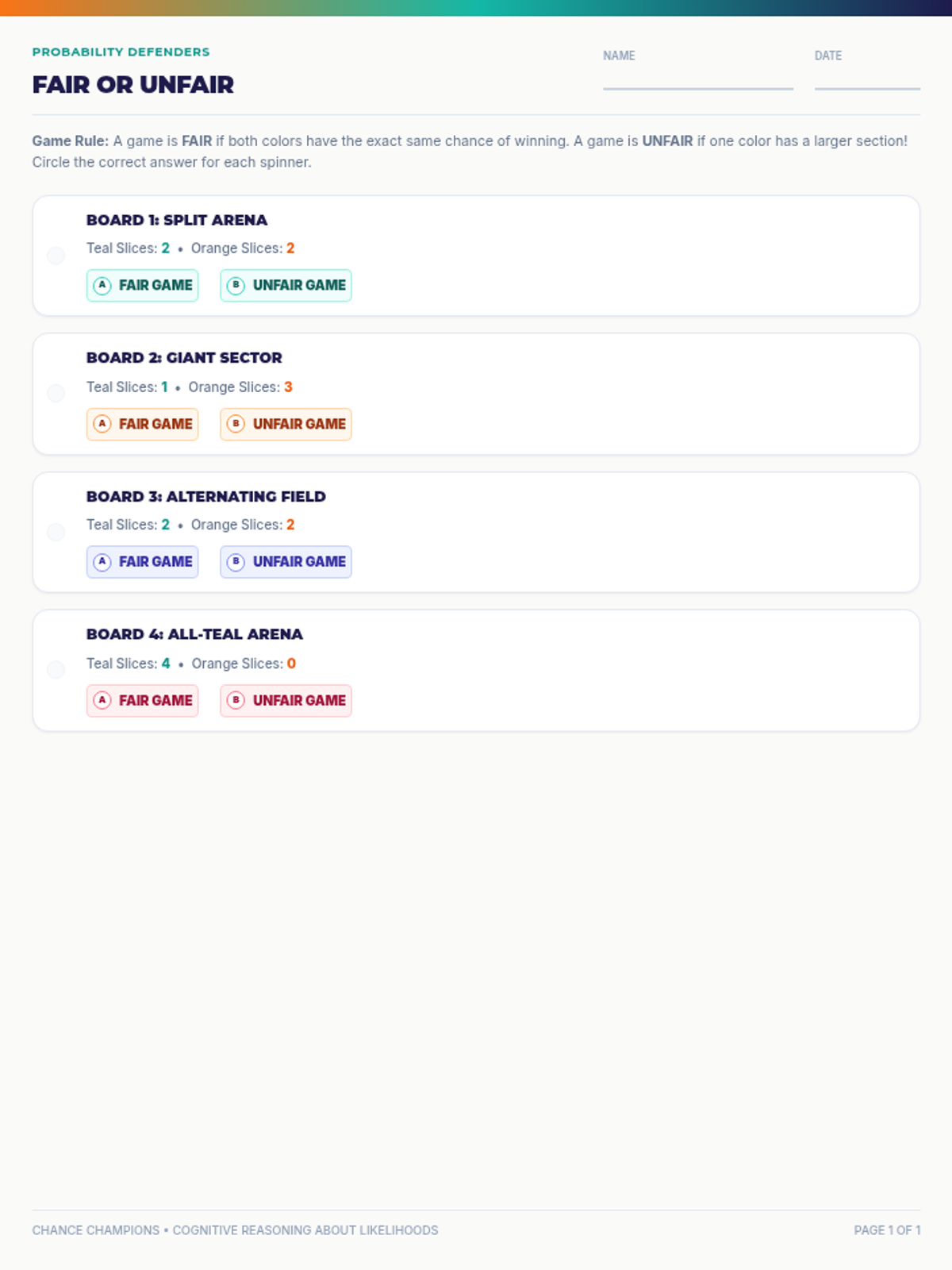
A visual sorting and decision-making worksheet customized for Special Education. Students examine game boards and spinners to decide if they are fair or unfair, supporting critical reasoning about likelihoods.
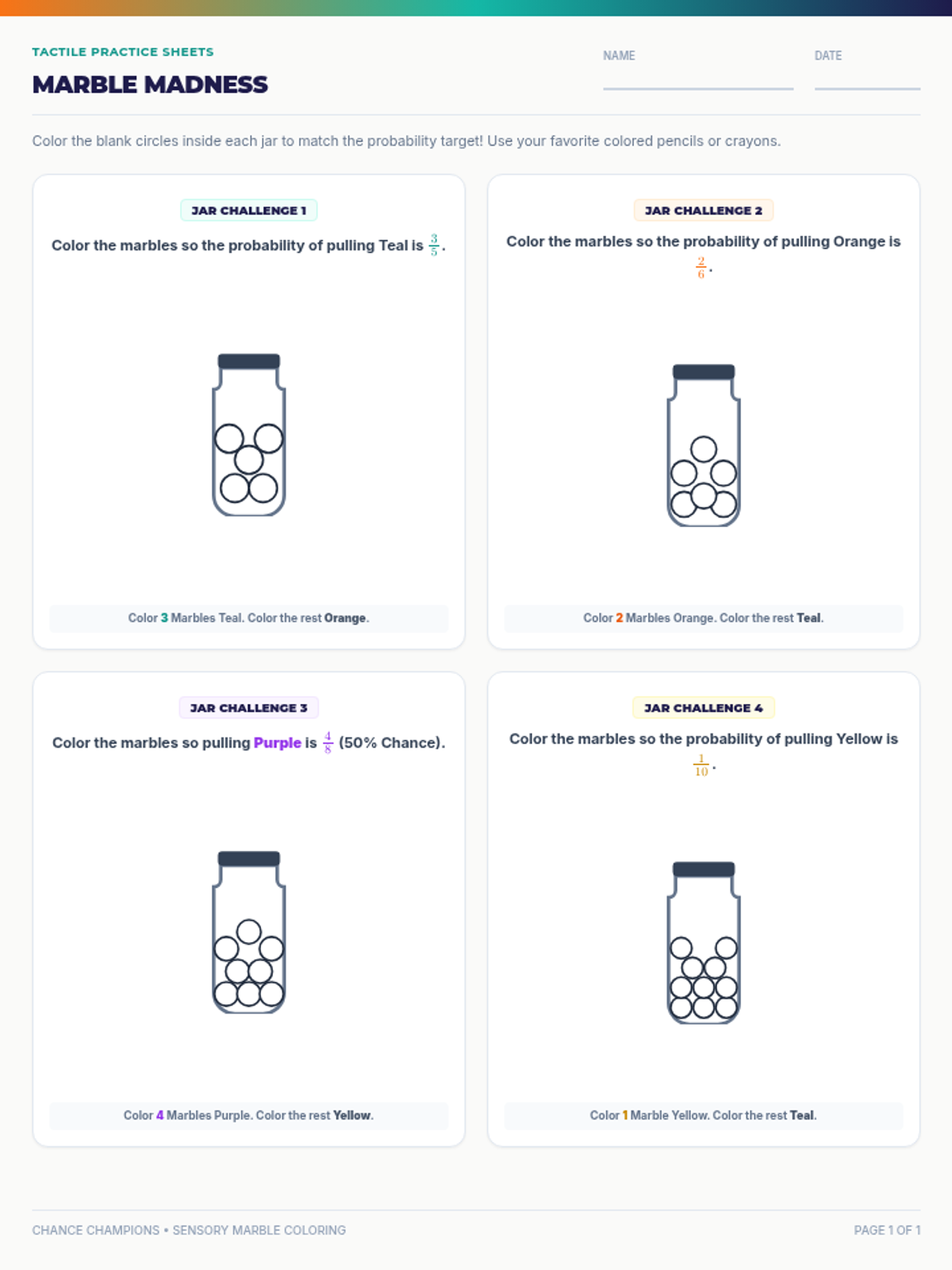
A hands-on coloring worksheet where students color blank marbles inside visual jars to represent specific probability fractions. Perfect for tactile, sensory-friendly mathematical instruction.
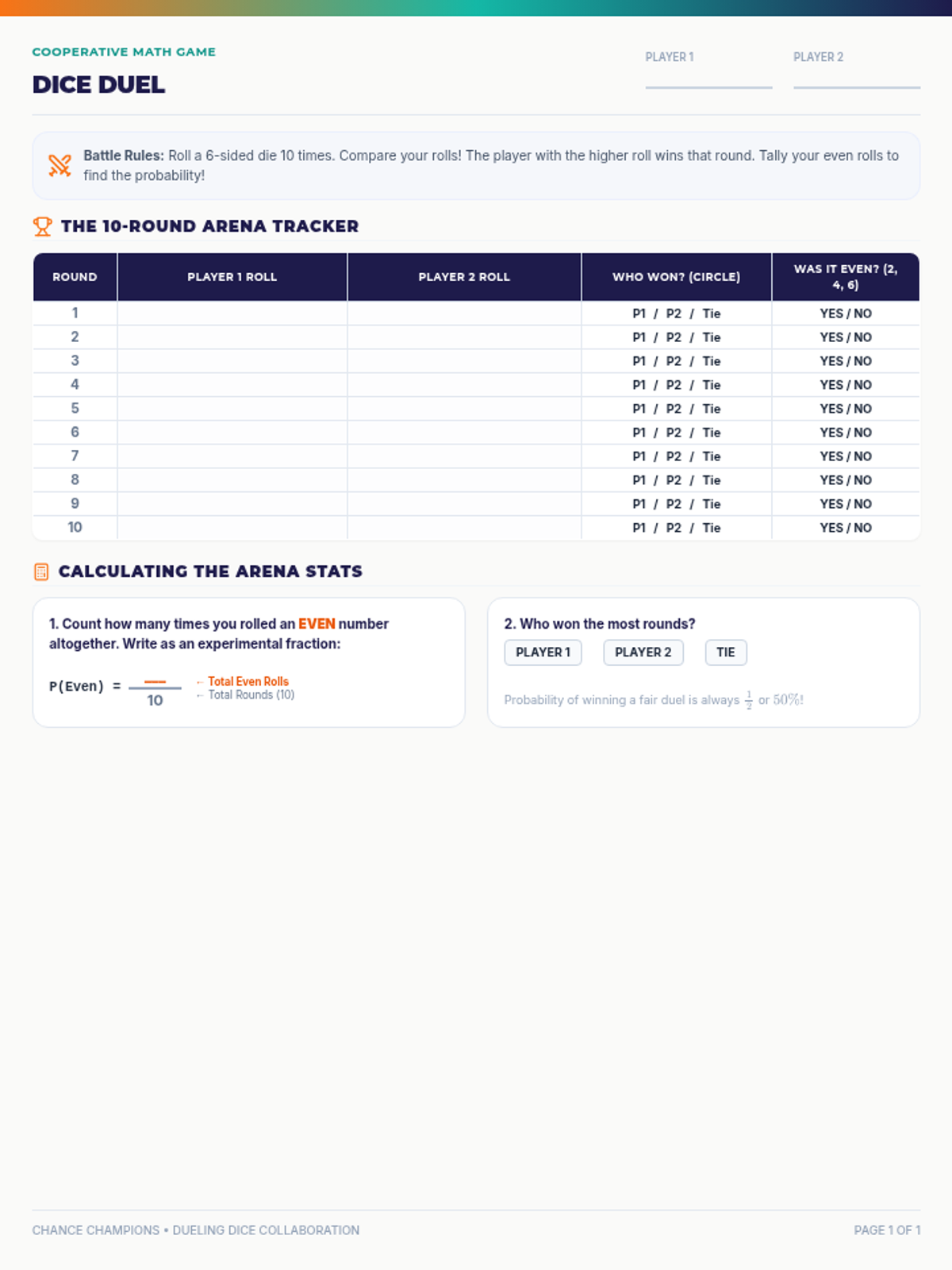
A cooperative 2-player dice game worksheet customized for Special Education. Students take turns rolling a standard die, recording higher/lower wins, and finding the experimental probability of rolling even numbers over 10 trials.
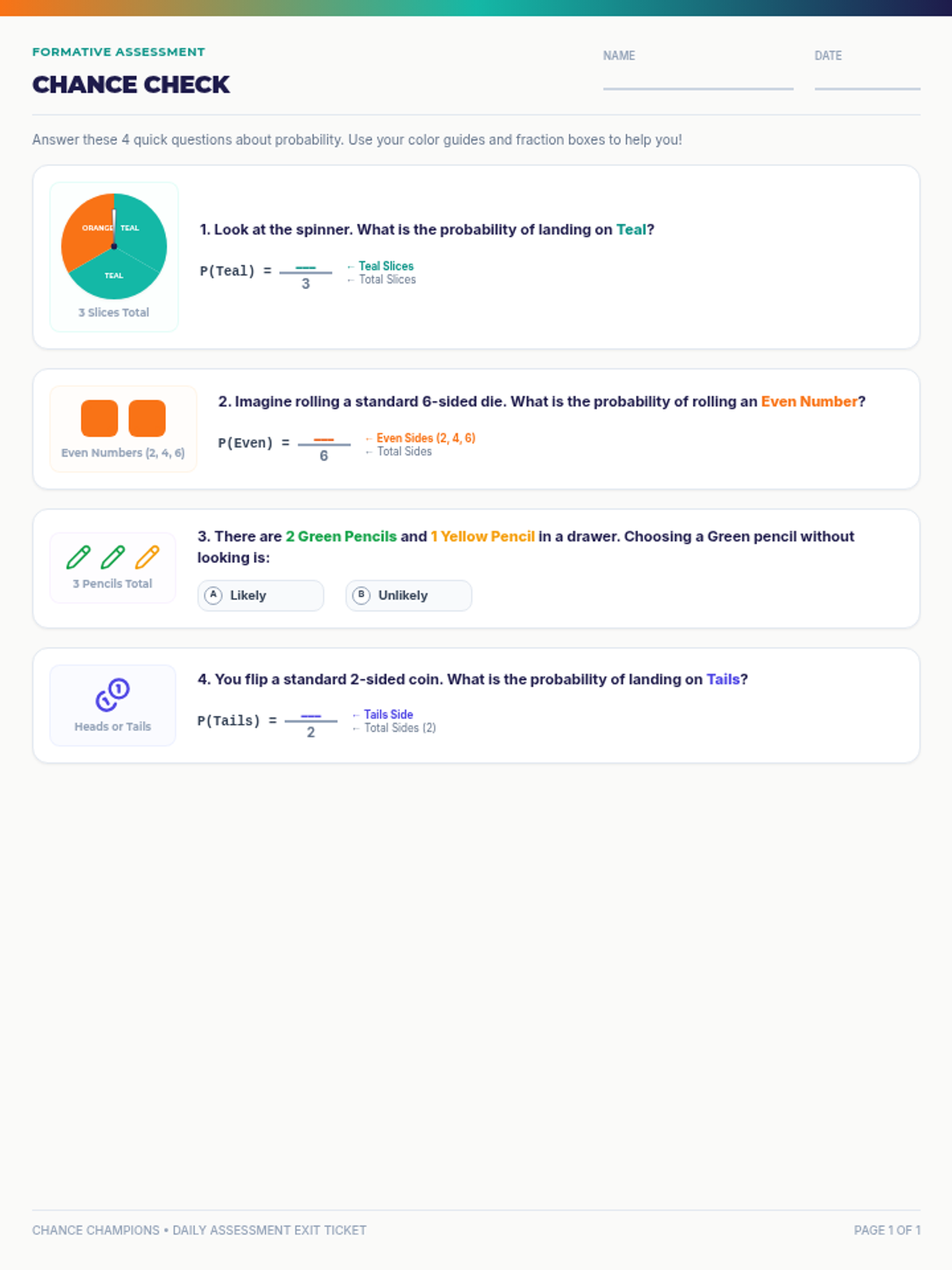
A 1-page quick assessment or daily exit ticket to measure student mastery of fractions and likelihoods. Features high-contrast visuals, pre-filled denominators, and structured choices.
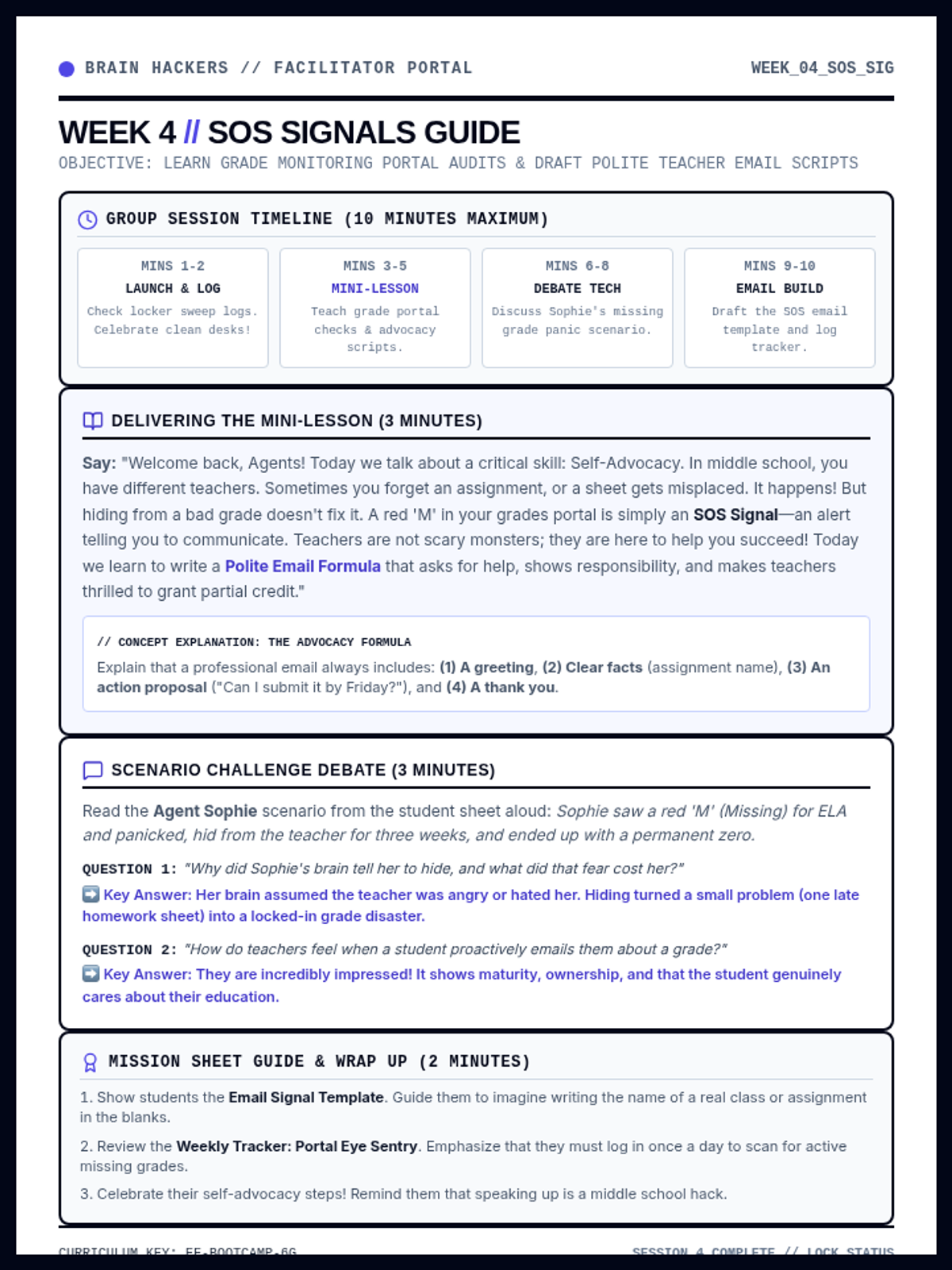
Week 4 Facilitator Guide for the 10-minute session. Features a session timeline, an interactive script on portal checks and polite email scripts, and discussion questions for the Sophie scenario.
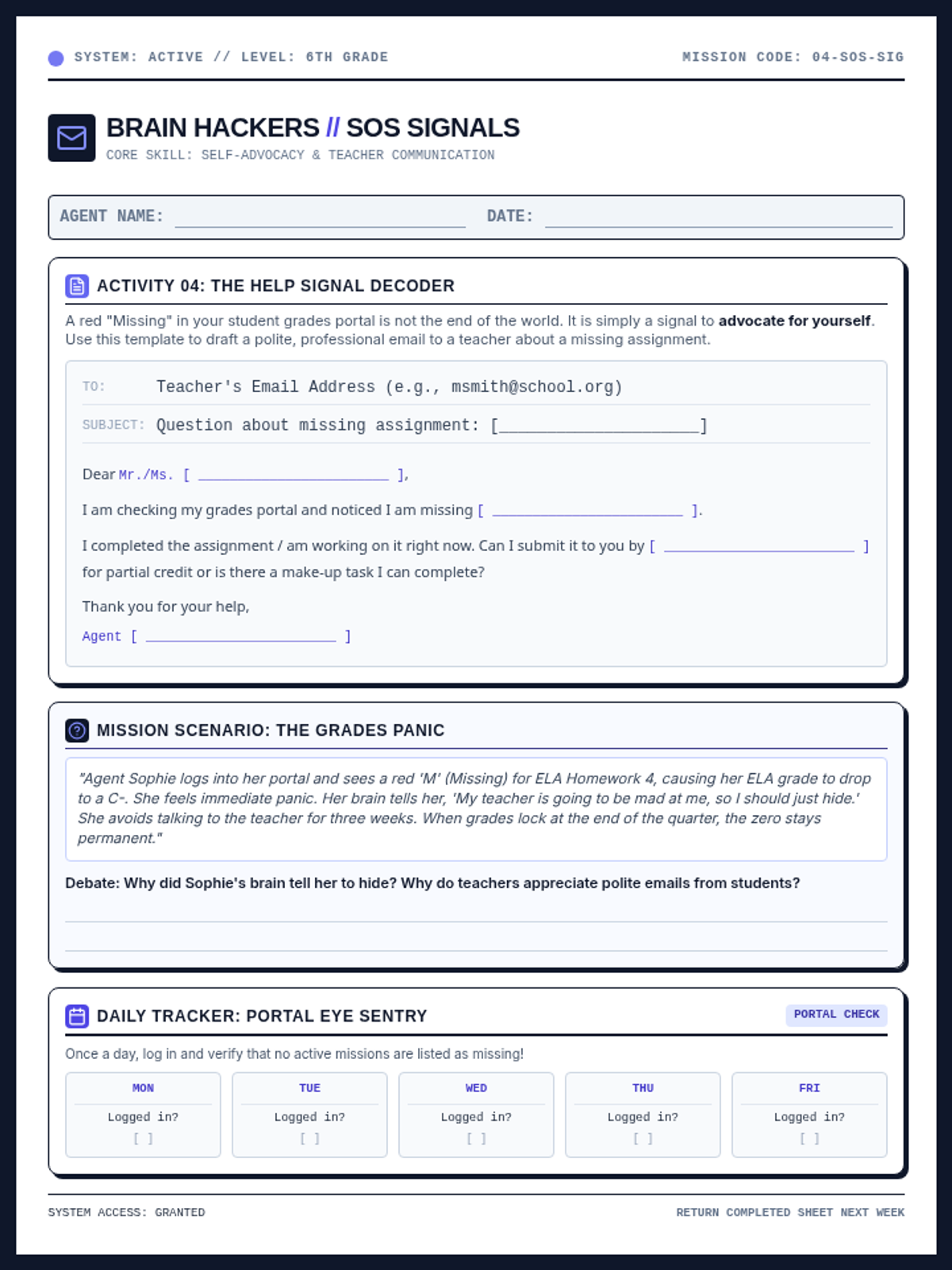
Week 4 student-facing printable mission sheet focusing on self-advocacy and missing assignments. Features a professional email draft organizer, a scenario about grade book anxiety, and a weekly grade audit tracker.
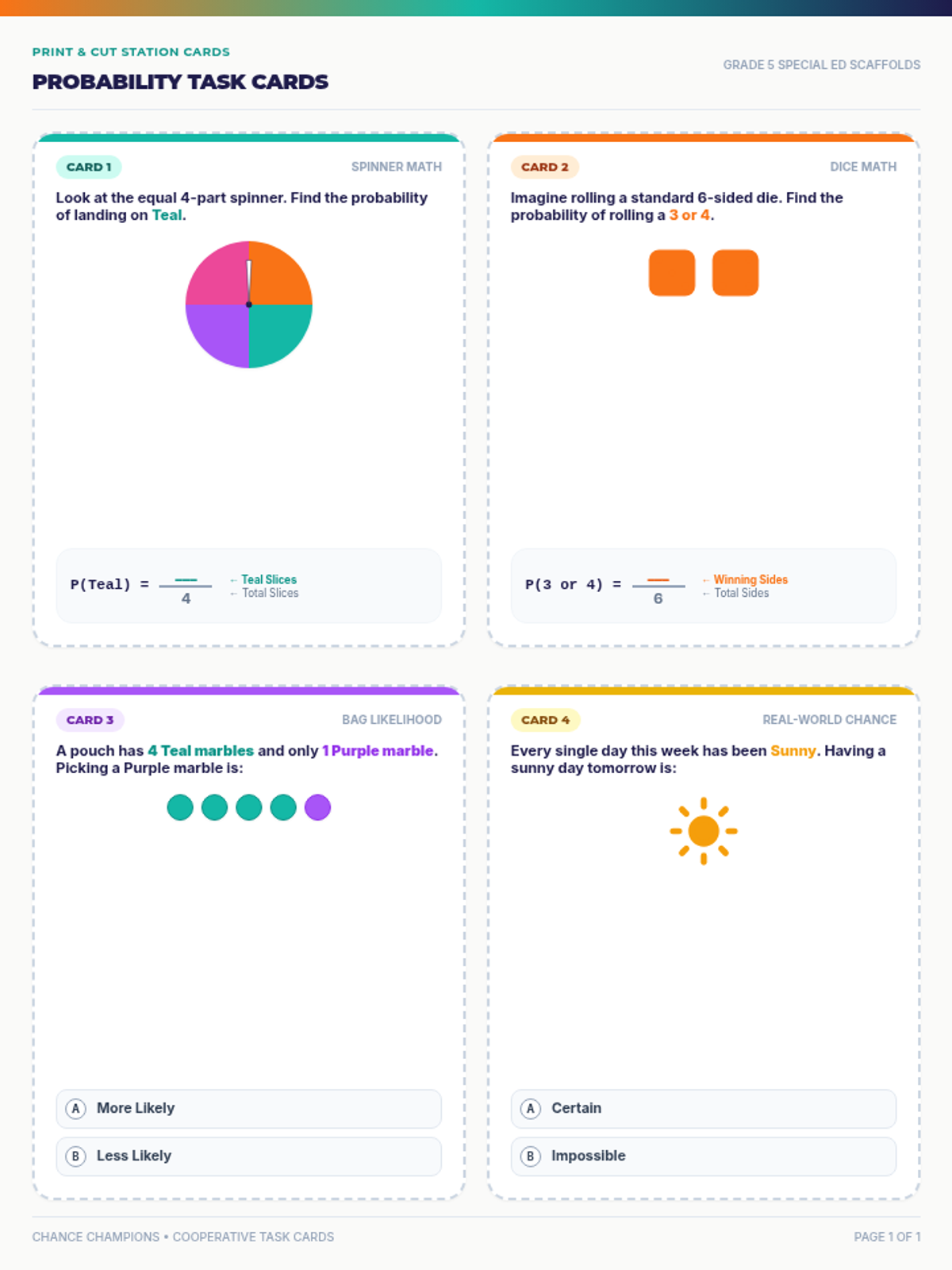
A set of 4 highly visual, printable math task cards designed for small group instruction, independent stations, or teacher-led IEP goal tracking. Includes fraction guides and pre-filled scaffolding.
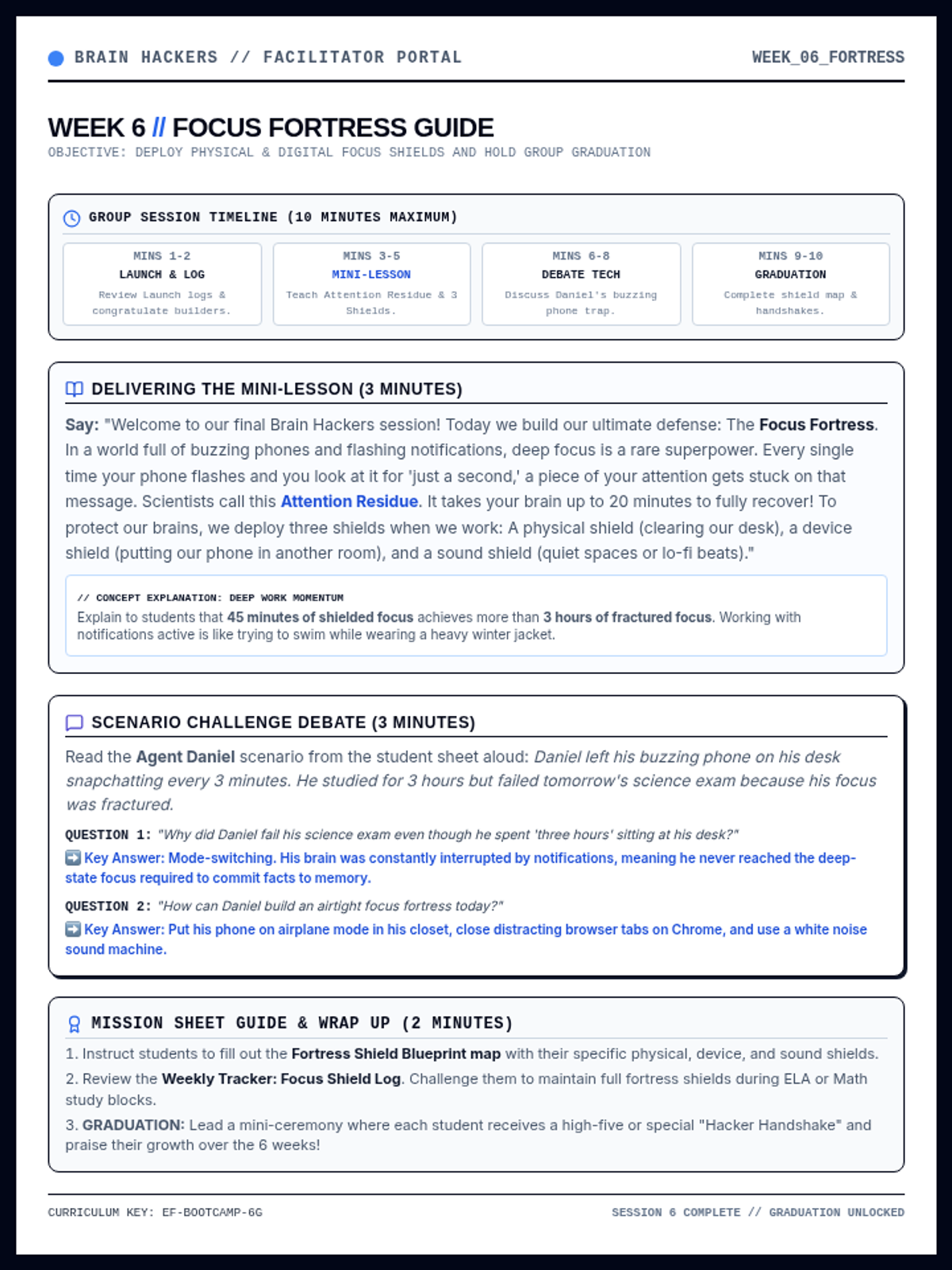
Week 6 Facilitator Guide for the 10-minute session. Features a session timeline, an interactive script on focus shields and attention residue, and discussion questions for the Daniel scenario.
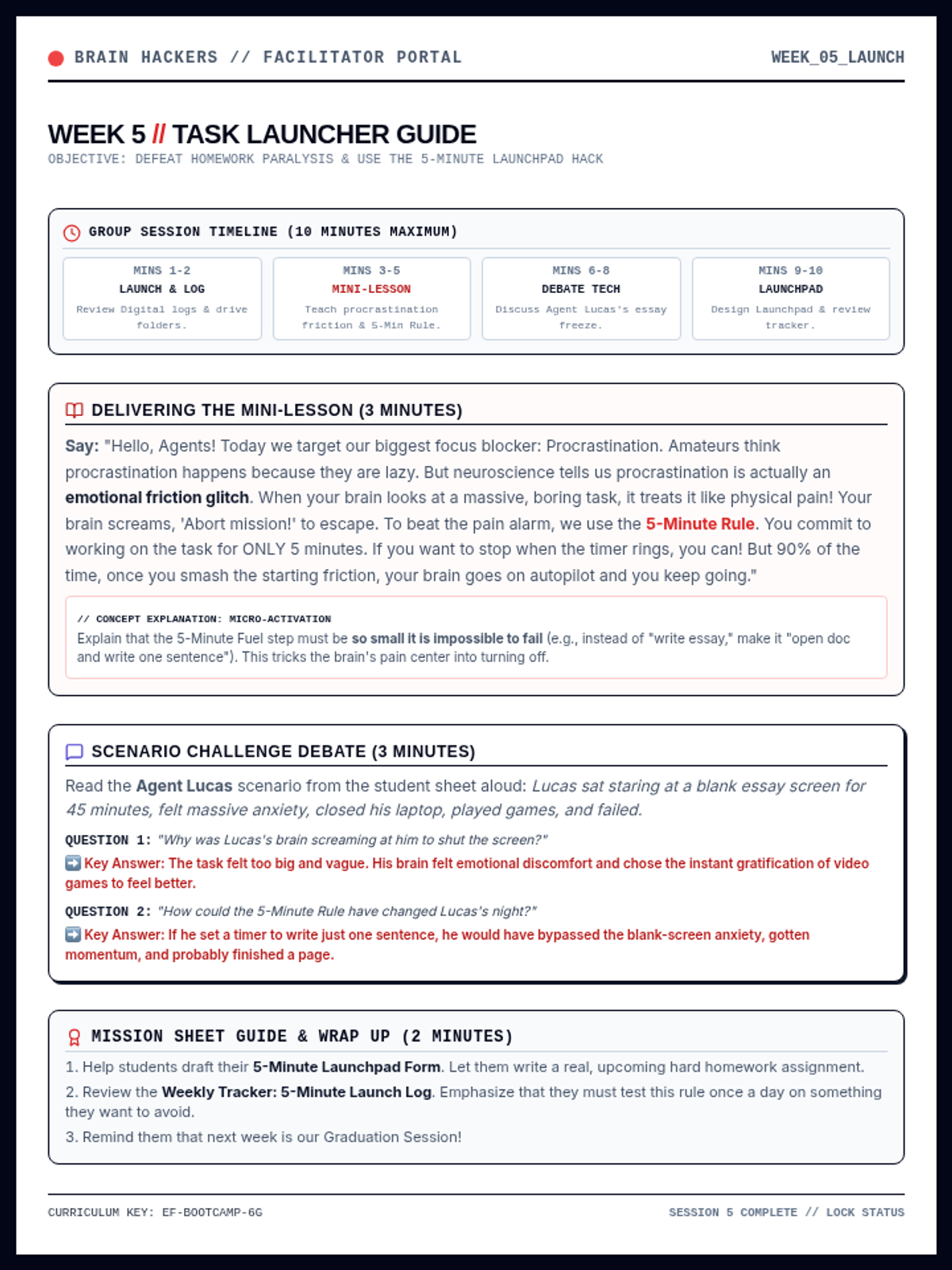
Week 5 Facilitator Guide for the 10-minute session. Features a session timeline, an interactive script on task initiation and the 5-Minute Rule, and discussion questions for the Lucas scenario.
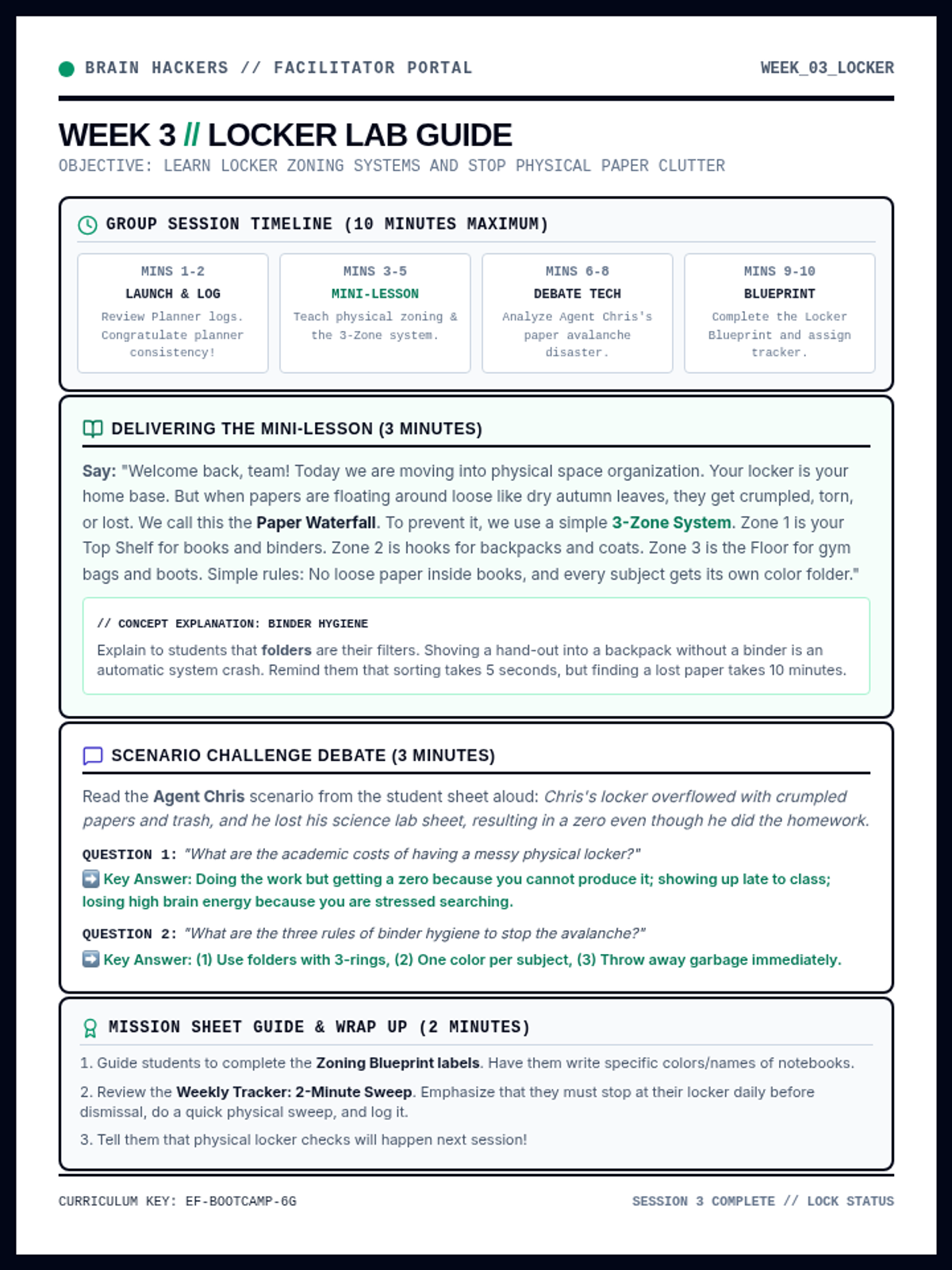
Week 3 Facilitator Guide for the 10-minute session. Features a session timeline, an interactive script on locker zones, and discussion questions for the Chris scenario.
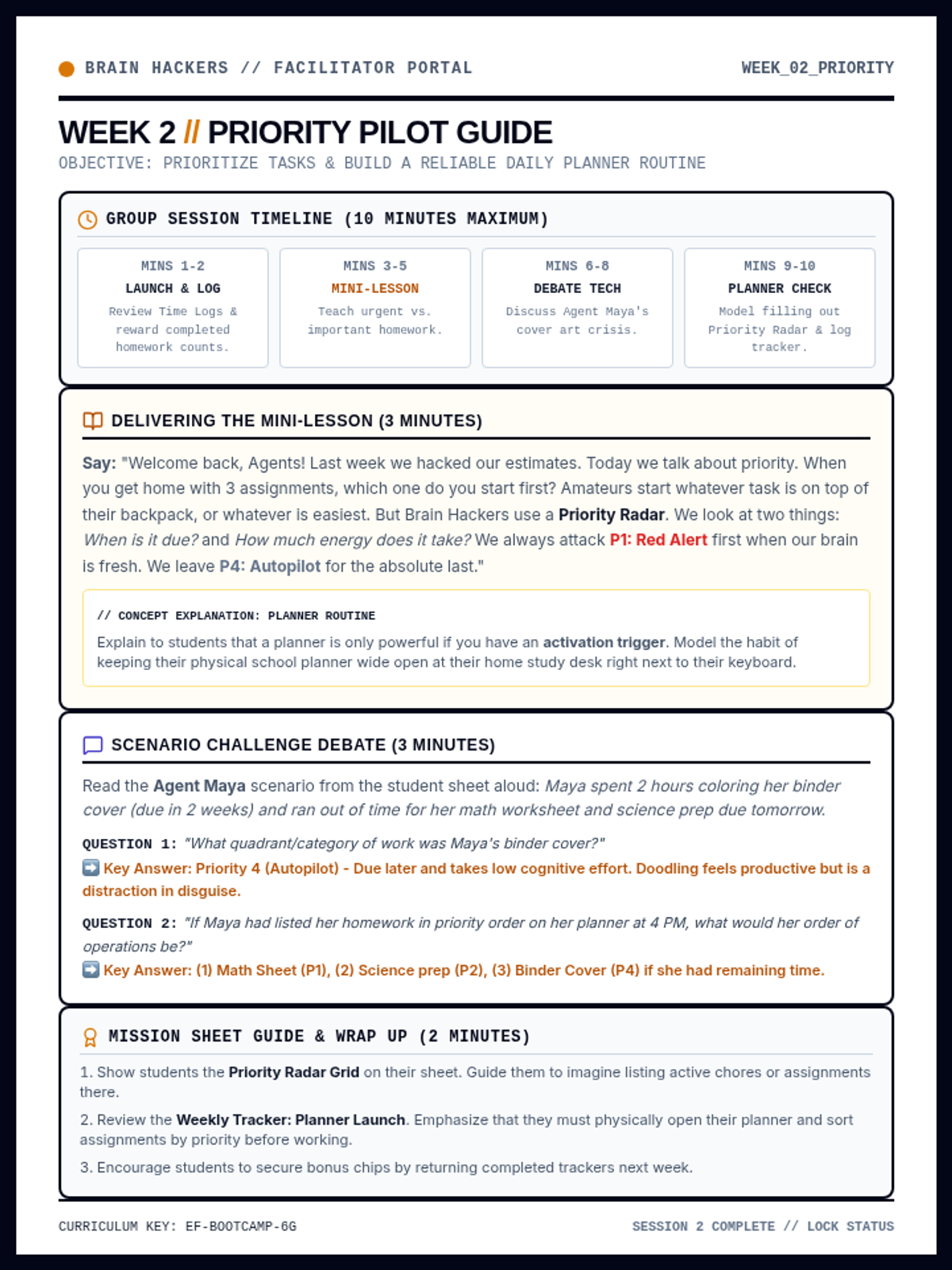
Week 2 Facilitator Guide for the 10-minute session. Features a session timeline, an interactive script explaining Urgent vs. Important, and discussion questions for the Maya scenario.
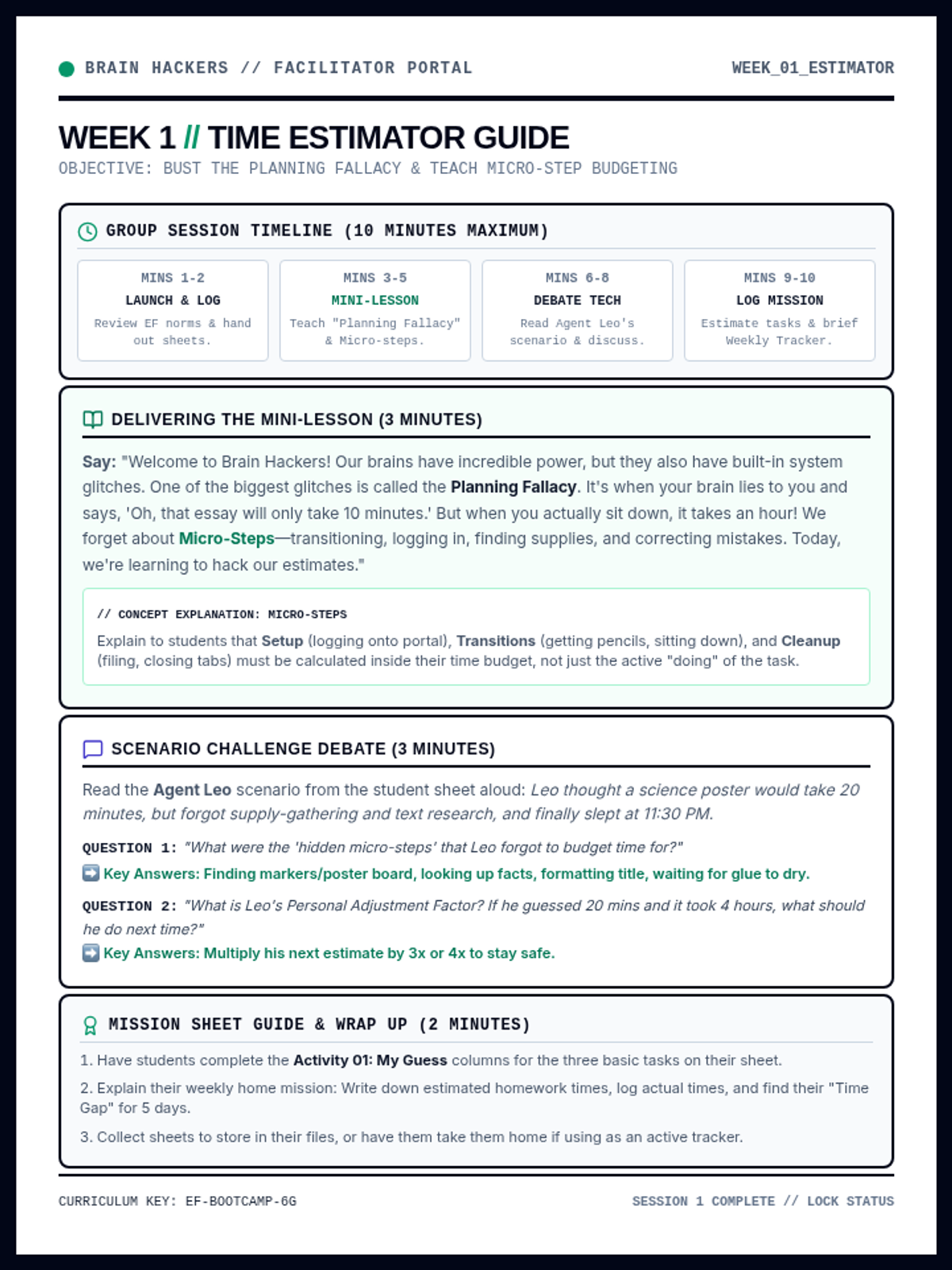
Week 1 Facilitator Guide for the 10-minute session. Features a strict timeline breakdown, a mini-lesson script on the Planning Fallacy and micro-steps, and guided debate questions for the Leo scenario.
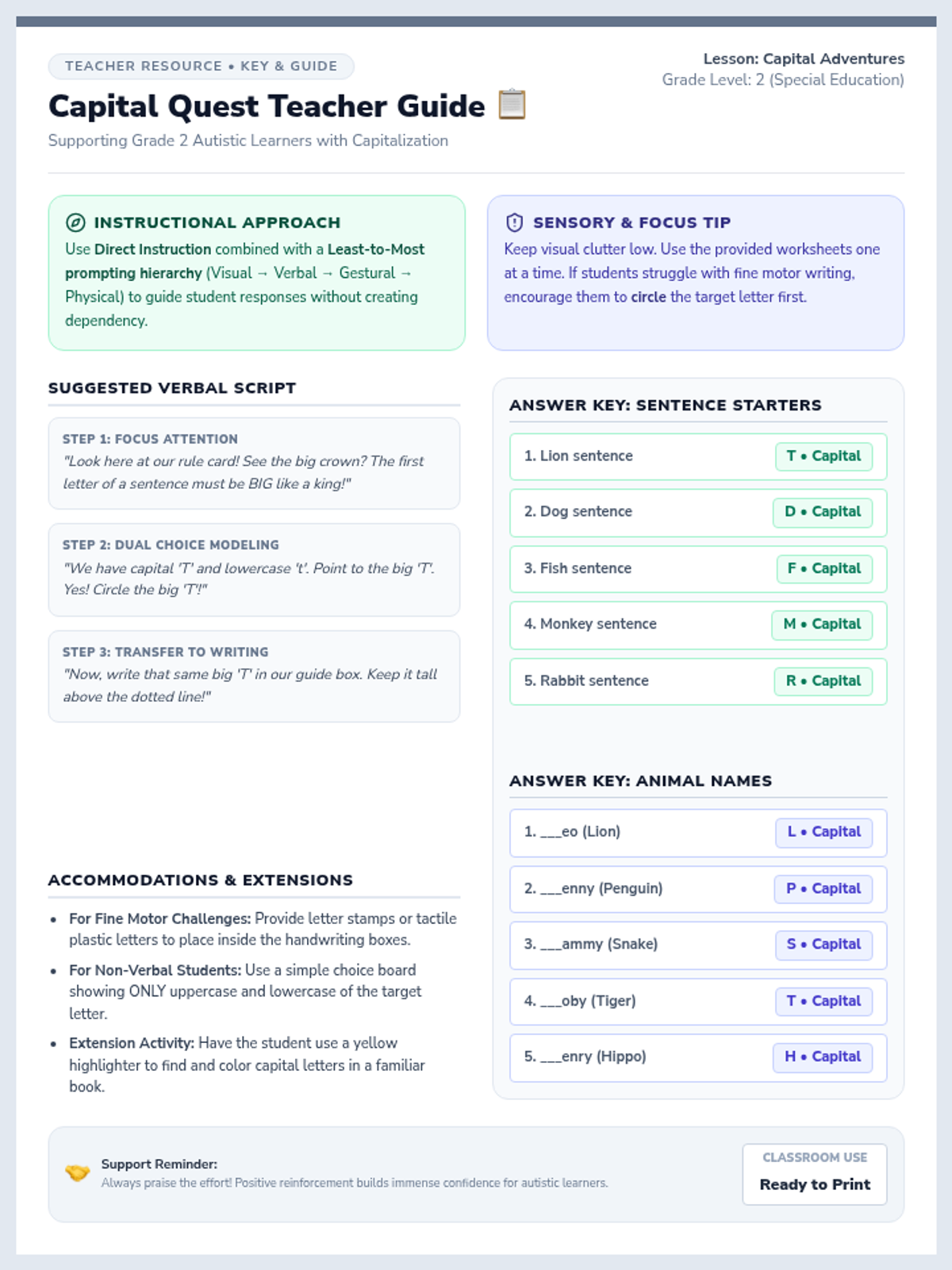
An instructional guide and answer key for teachers, offering modifications and visual prompts for teaching capitalization to Grade 2 autistic students.
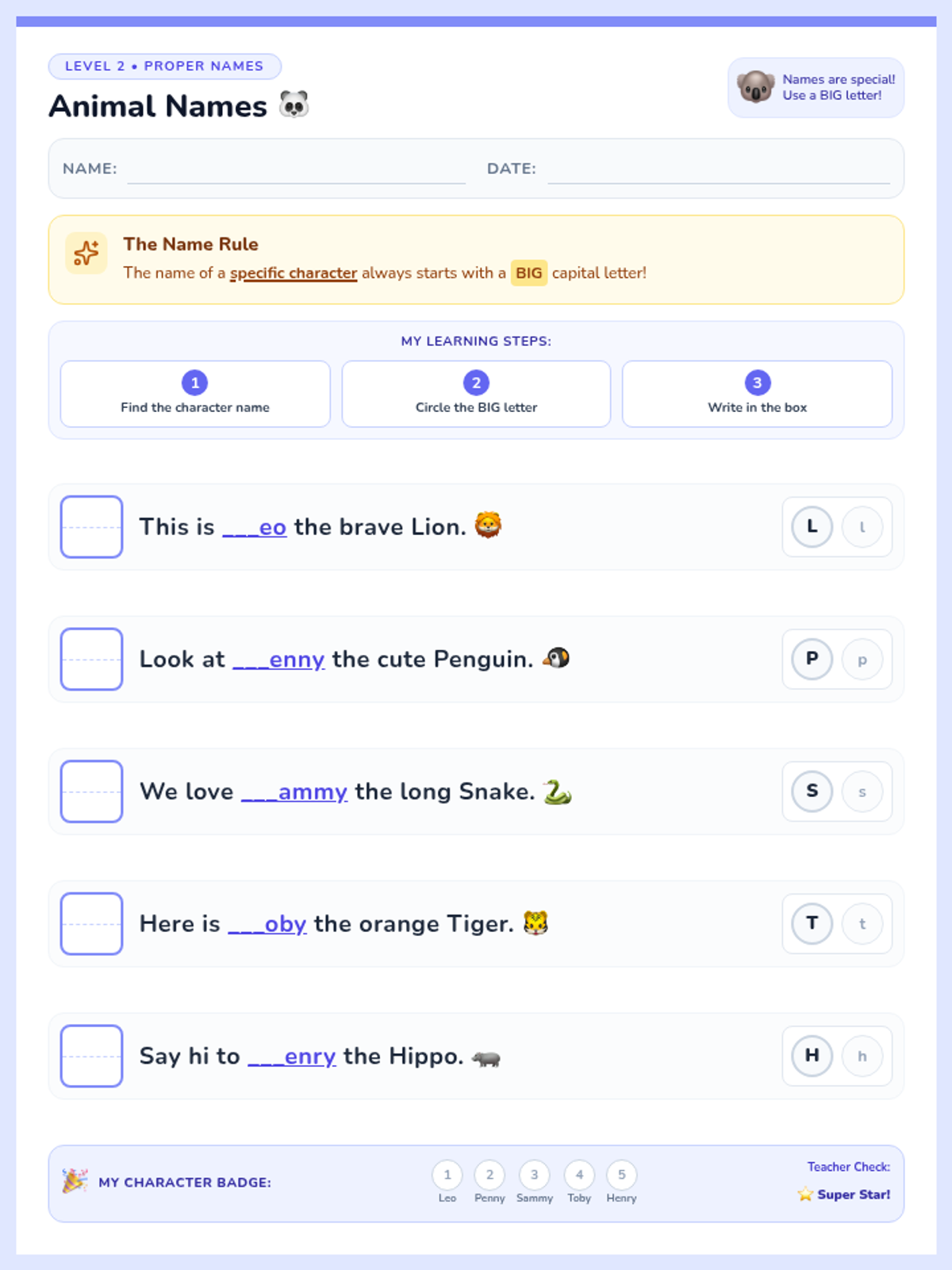
A highly structured capitalization worksheet focusing on capitalizing proper names of friendly animal characters, designed for Grade 2 autistic students with visual steps and matching letter choices.