Bread Slice Intervals Handout
Bread Slice Intervals
Understanding Spans, Endpoints & Slices
Name:
Date:
What Is an Interval?
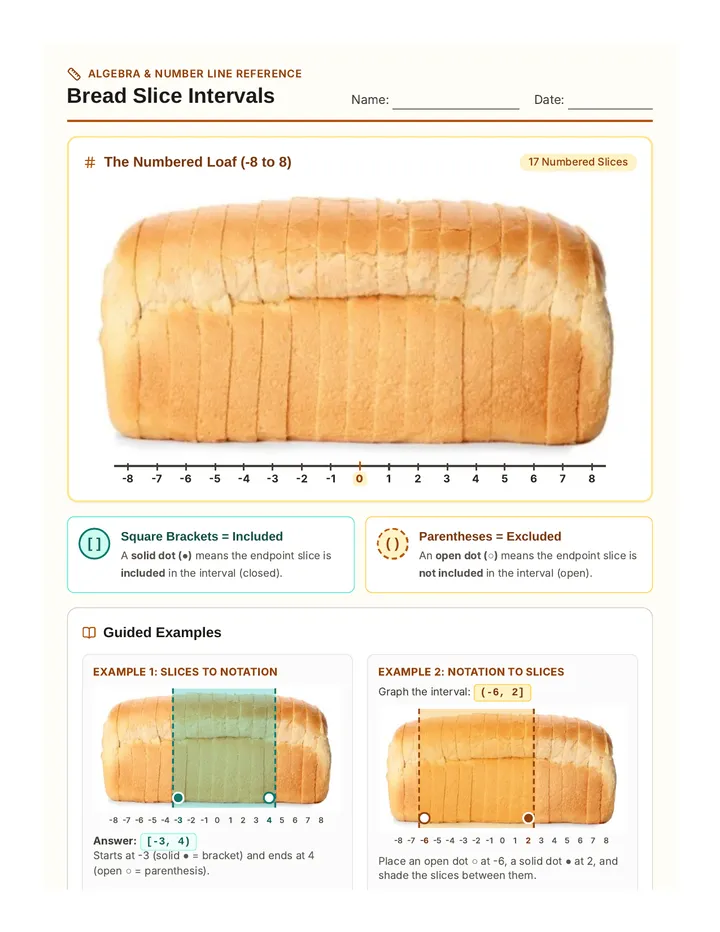
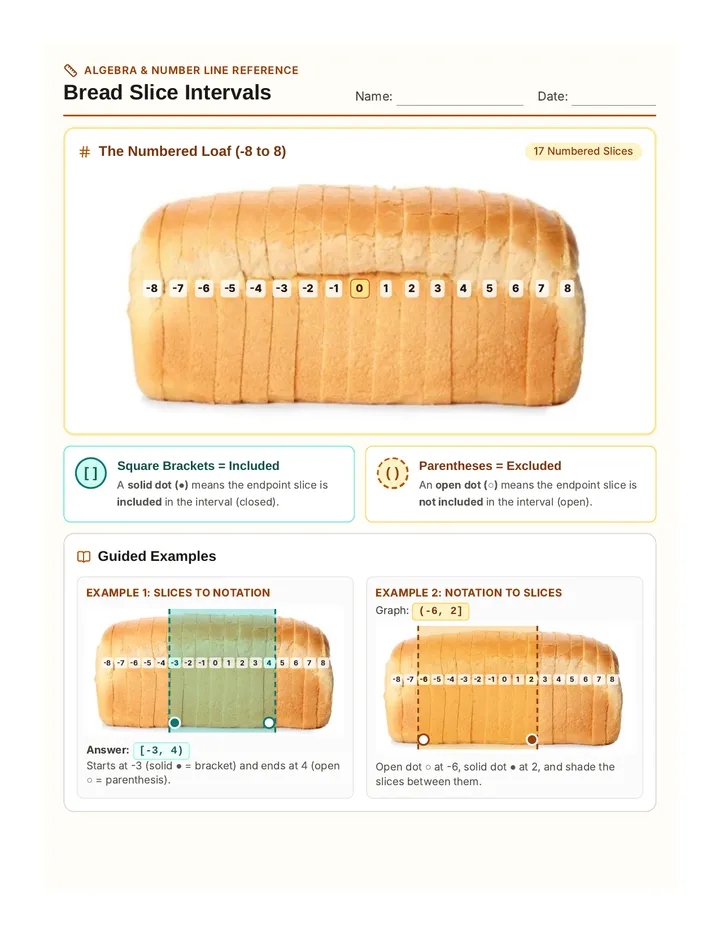
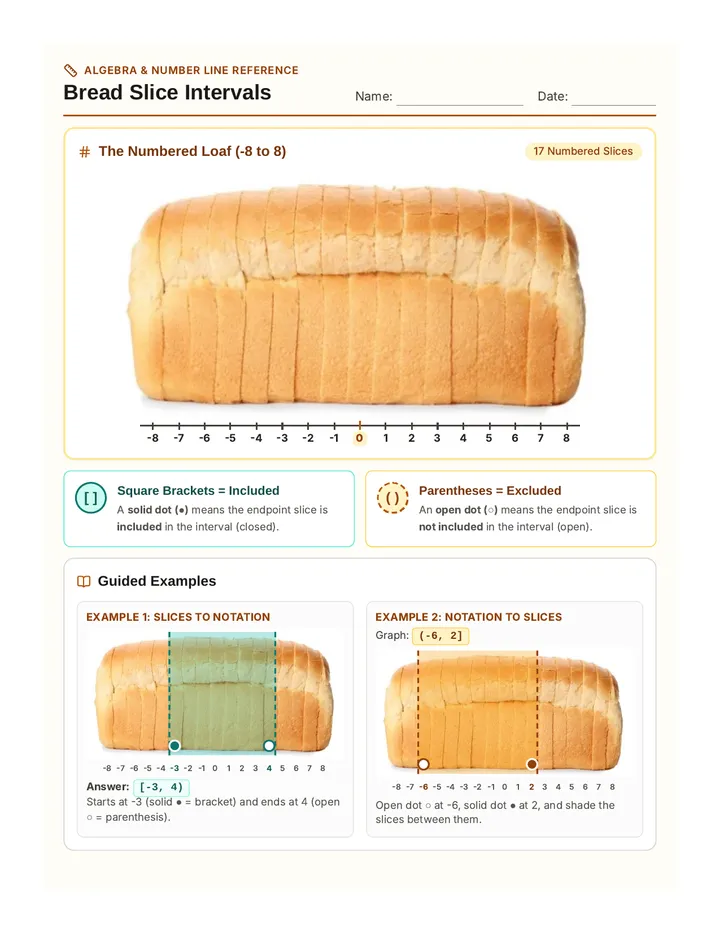
An interval in everyday language is like a slice of bread. Looking at this loaf of bread, we could say that there are 18 intervals or 18 slices. When you choose an interval—say, from −6 to 7—you keep only those slices and get rid of all the other slices!
1. Start with the Original Loaf (−8 to 8)
0 = Center Slice

−8
−7
−6
−5
−4
−3
−2
−1
0
1
2
3
4
5
6
7
8
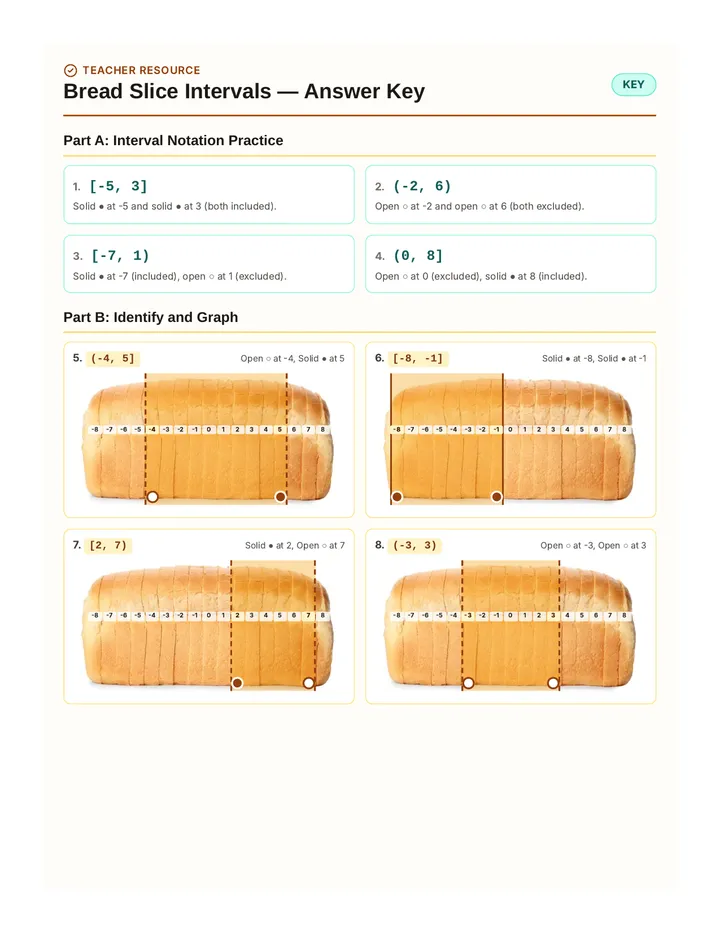
Choose [−6, 7] & remove the other slices
2. Only the Slices from −6 to 7 Remain
Length = 13
−6
−5
−4
−3
−2
−1
0
1
2
3
4
5
6
7
Everything below −6 and above 7 is gone—only this section is your interval!
Three Key Ideas About Intervals
1
Endpoints
Where your interval starts and ends—like the cuts at −6 and 7.
2
Length (Width)
How wide the kept section is: 7 − (−6) = 13 units across.
3
Ignore the Rest
Once you pick an interval, you keep only what's inside and toss the rest!
3. Functions on the Loaf: Intervals on a Graph
Page 2 • Practice
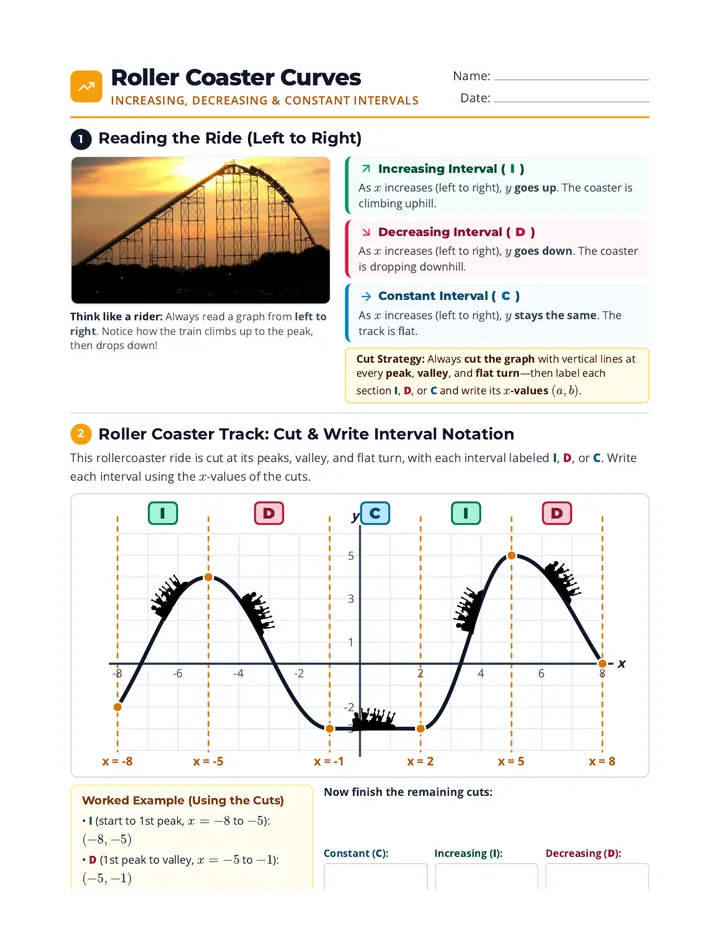
In math, a function's x-axis works just like a numbered loaf! Here the function spans from the start of the loaf to the end. Looking at an interval like [−6, 7] means focusing only on those horizontal slices of the curve.

Interval [−6, 7] on the function
Time Interval
2:00 to 4:00 PM → 2 hours
Temperature
65°F to 75°F → 10 degrees
Distance
Mile 3 to Mile 7 → 4 miles
Try It: Slice & Measure!
1. Look at the function on the loaf above. What slices represent an increasing interval?
2. Start at −6 on the bread and move 4 slices to the right. Where do you end, and what is the interval?
3. Compare the interval −5 to −1 with 1 to 5. Are they the same length? Explain your thinking.
Quick Check: To find the length of any interval on a number line, subtract: End − Start = Length.