A teacher guide for the Boston Beacons geography unit, including pacing suggestions, differentiation strategies, and learning objectives tailored for low-literacy 5th-grade students.
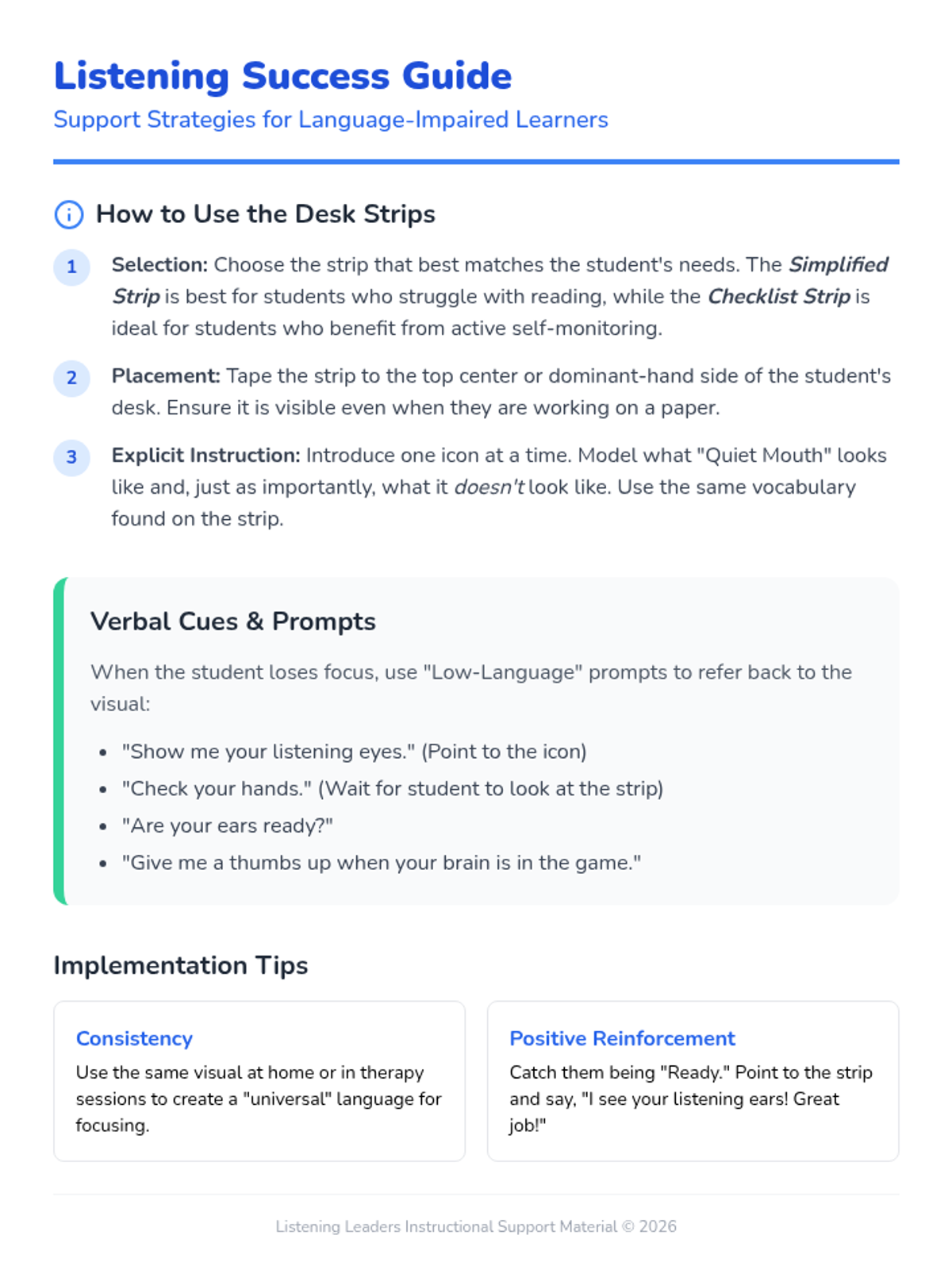
A teacher's implementation guide for using the Focus Power Desk Strips. Includes strategies for explicit instruction, verbal prompting techniques for language-impaired students, and tips for consistency and reinforcement.
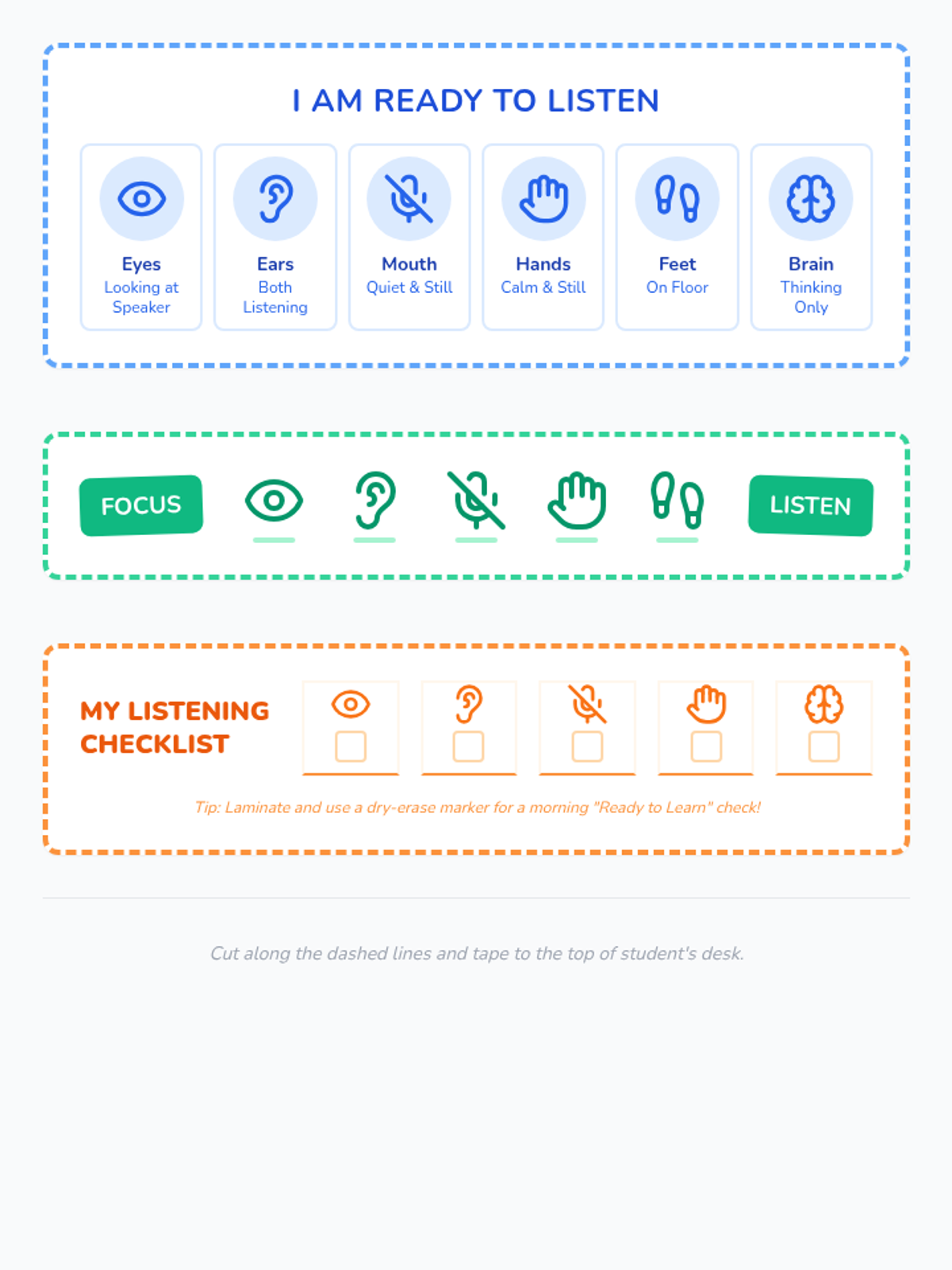
A printable sheet featuring three different styles of desk strips designed for a second-grade student with language impairments. Each strip uses clear Lucide icons and minimal text to support whole-body listening behaviors, including eyes, ears, mouth, hands, feet, and brain.
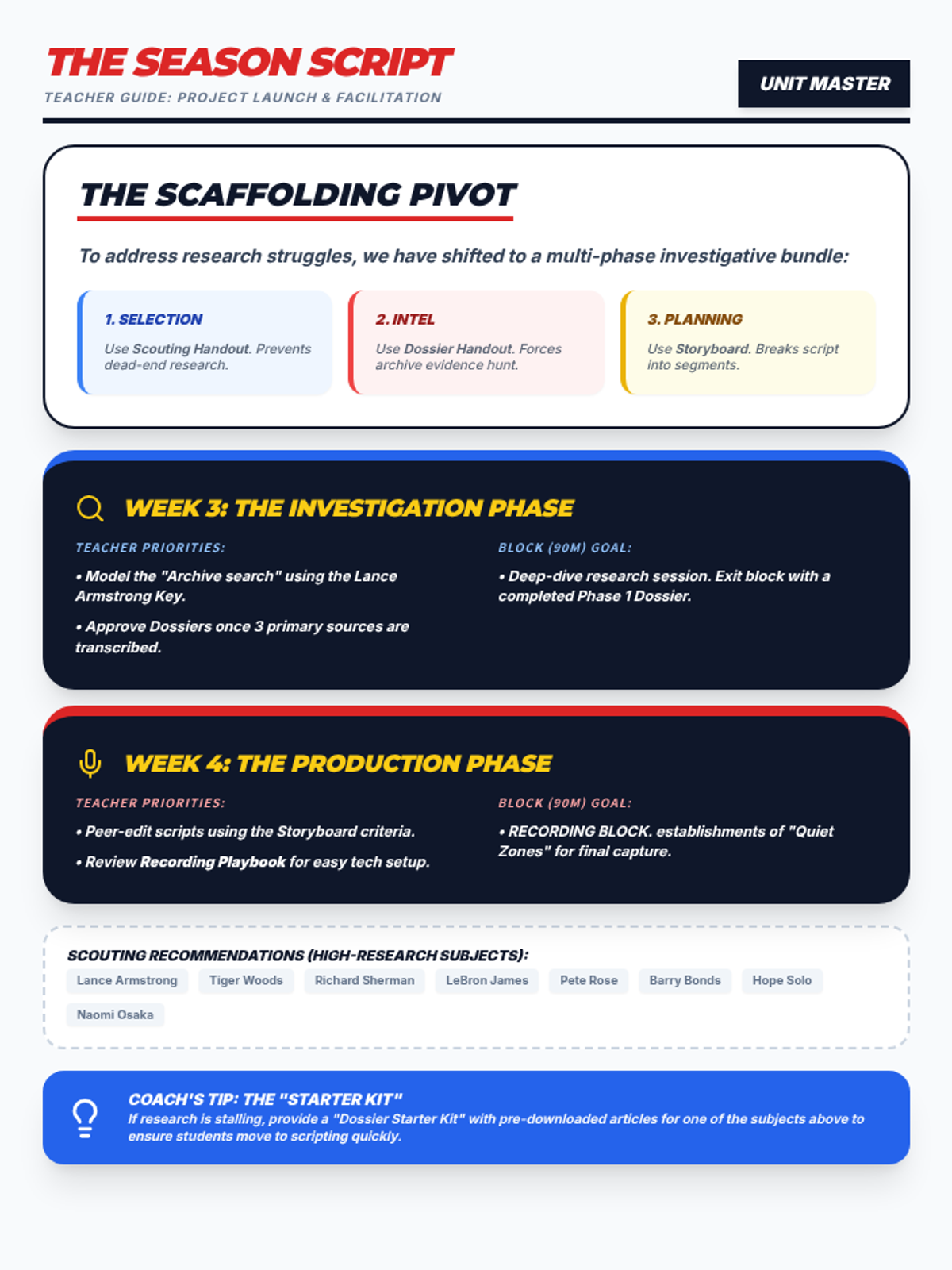
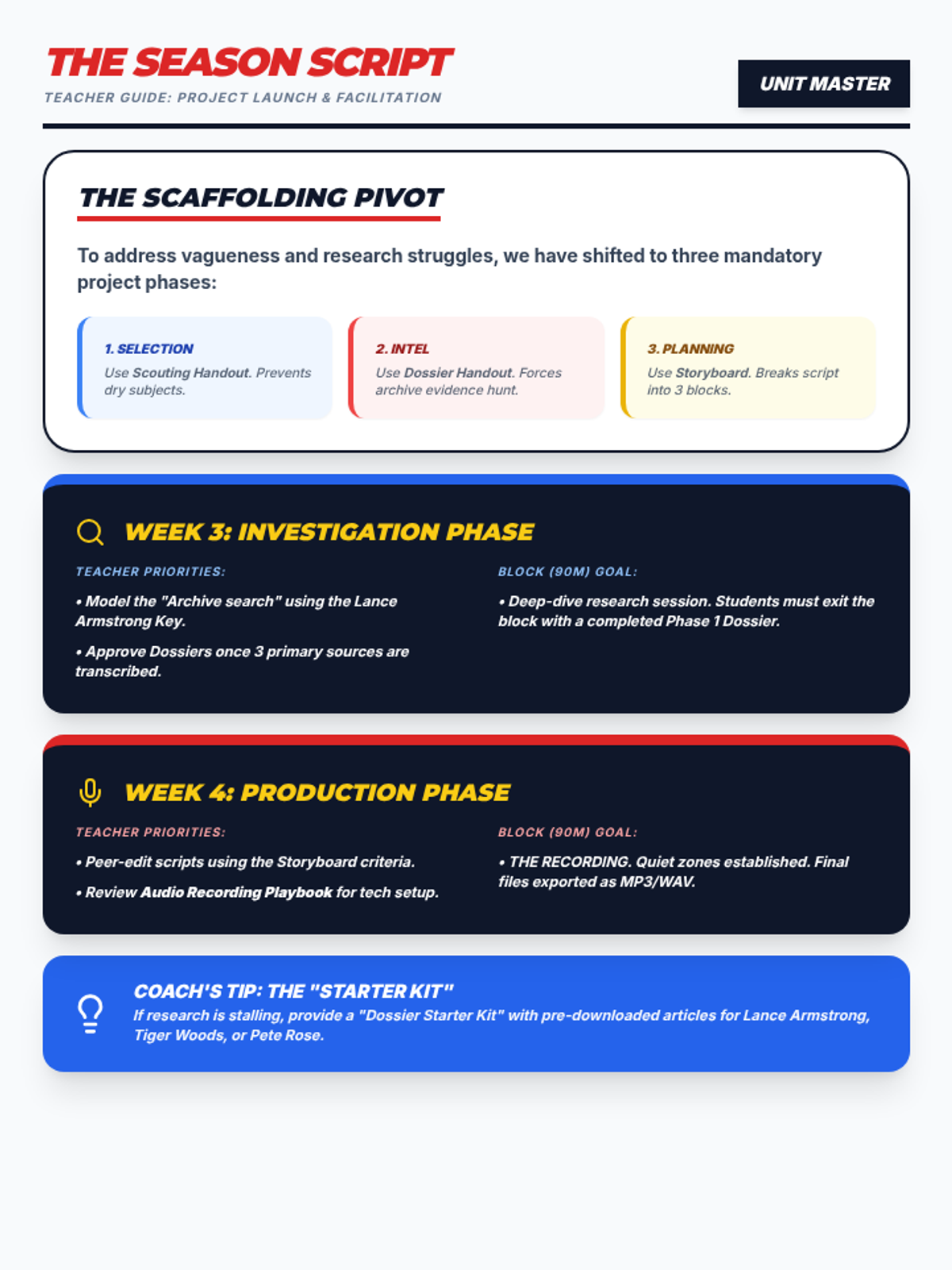
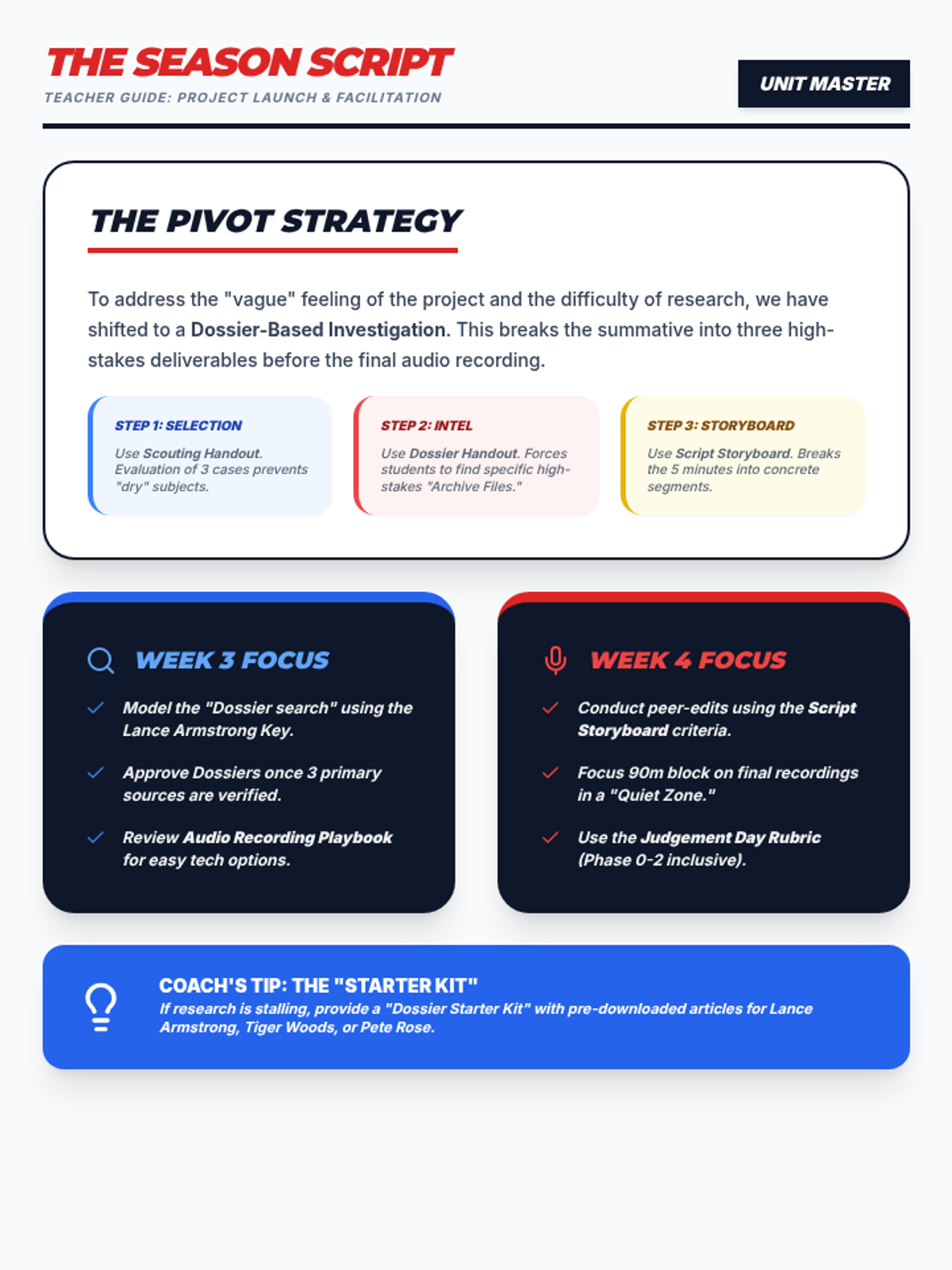
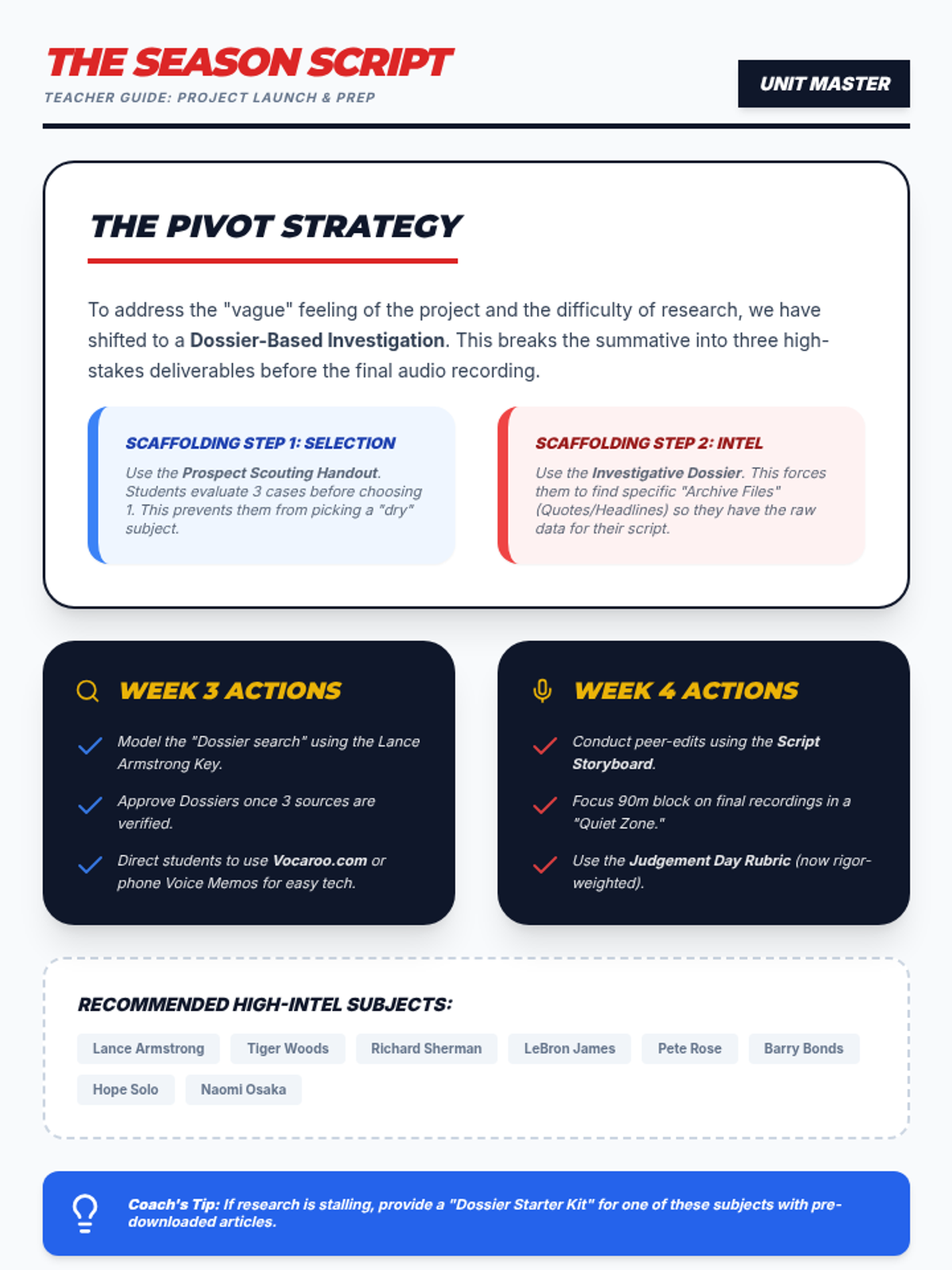
A teacher facilitation guide designed to help educators launch and manage the revised summative podcast project. It includes a weekly action plan, a 'Pivot Strategy' explanation, and a list of high-research subject recommendations. Fixed formatting and page break issues.
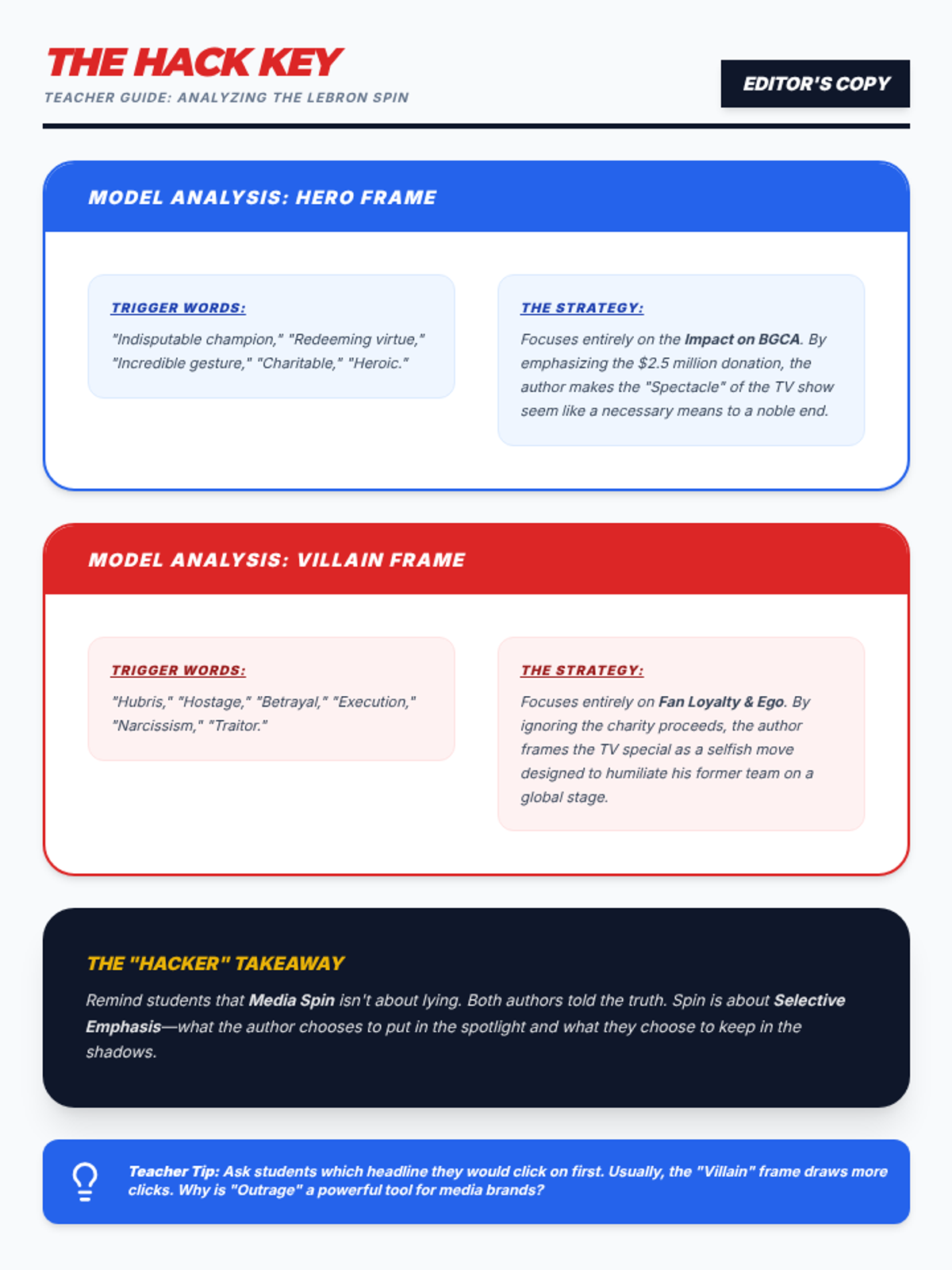
An answer key for the Headline Hackers worksheet, providing model analysis for both the positive 'charity' frame and the negative 'hubris' frame. Explains the persuasive strategies and connotative language used in each.
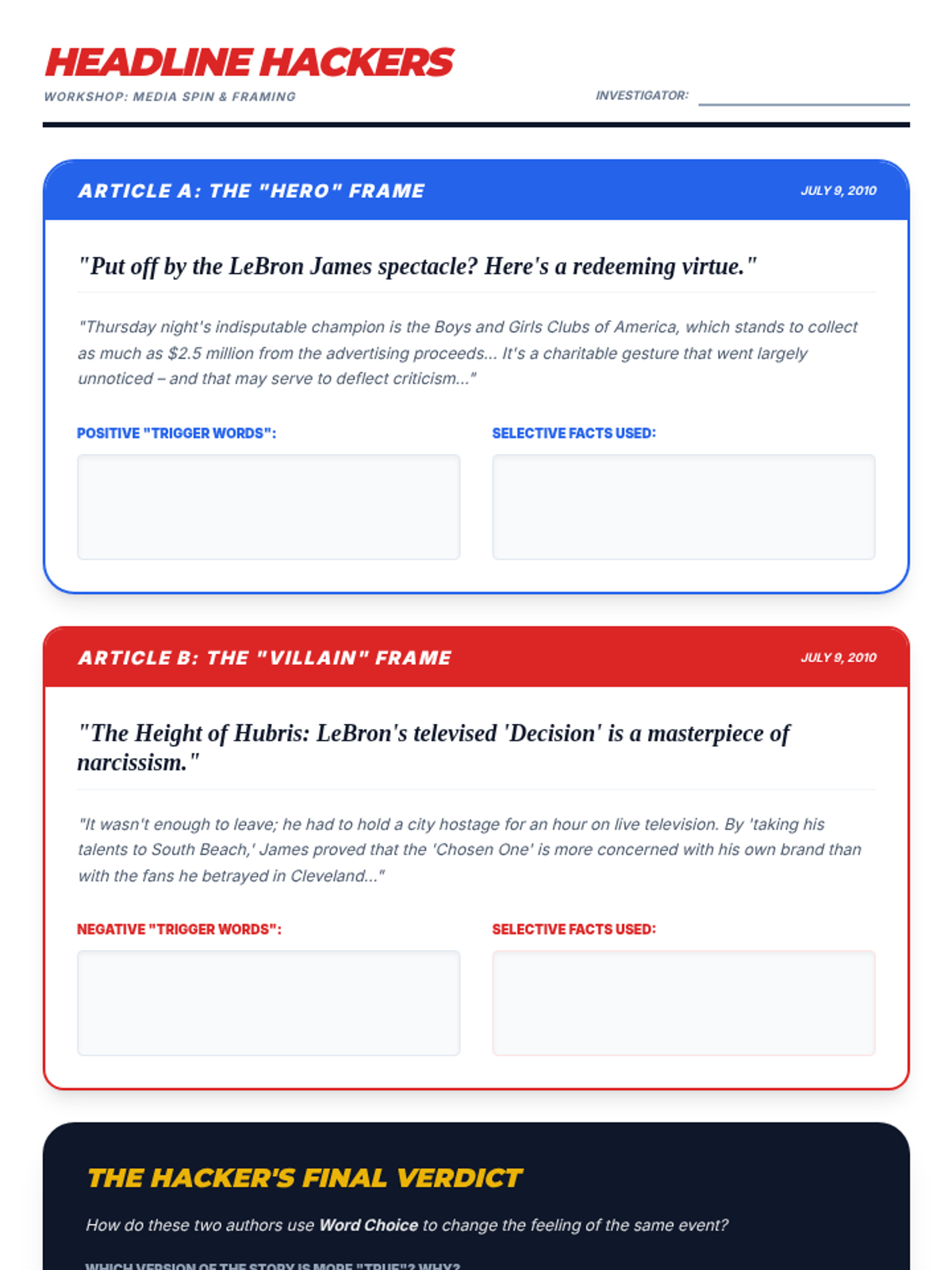
A persuasive writing and media literacy worksheet that uses the provided LeBron James 'charity' article and a counter-perspective op-ed to help students analyze how connotative language and selective facts create 'spin'. Fixed handwriting legibility and box sizing issues.
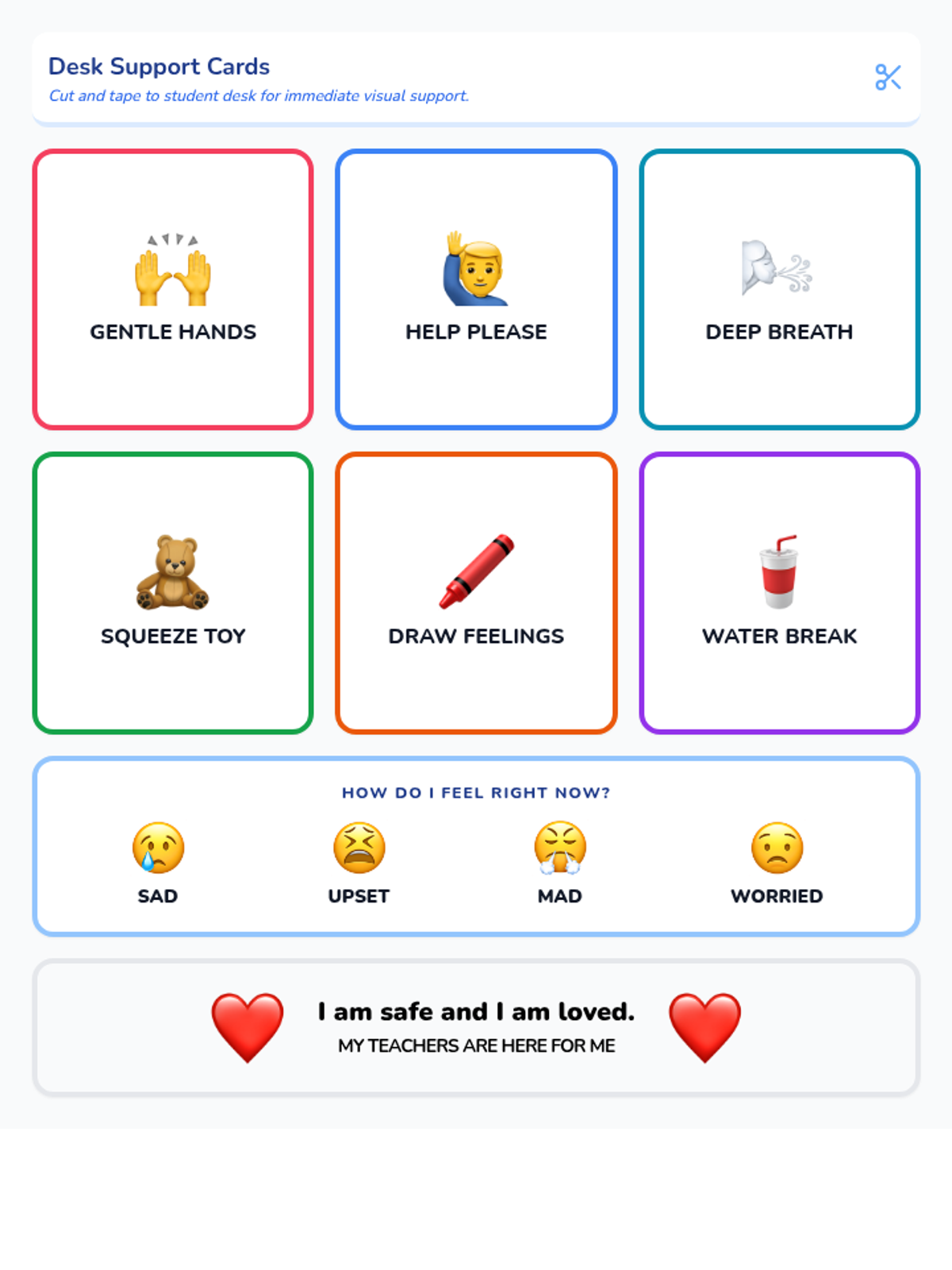
A set of printable visual cards designed to be taped to a student's desk, providing immediate access to calming strategies, a feeling check-in, and safety reminders. Revised to ensure single-page fit, high contrast, and larger text for Kindergarten students.
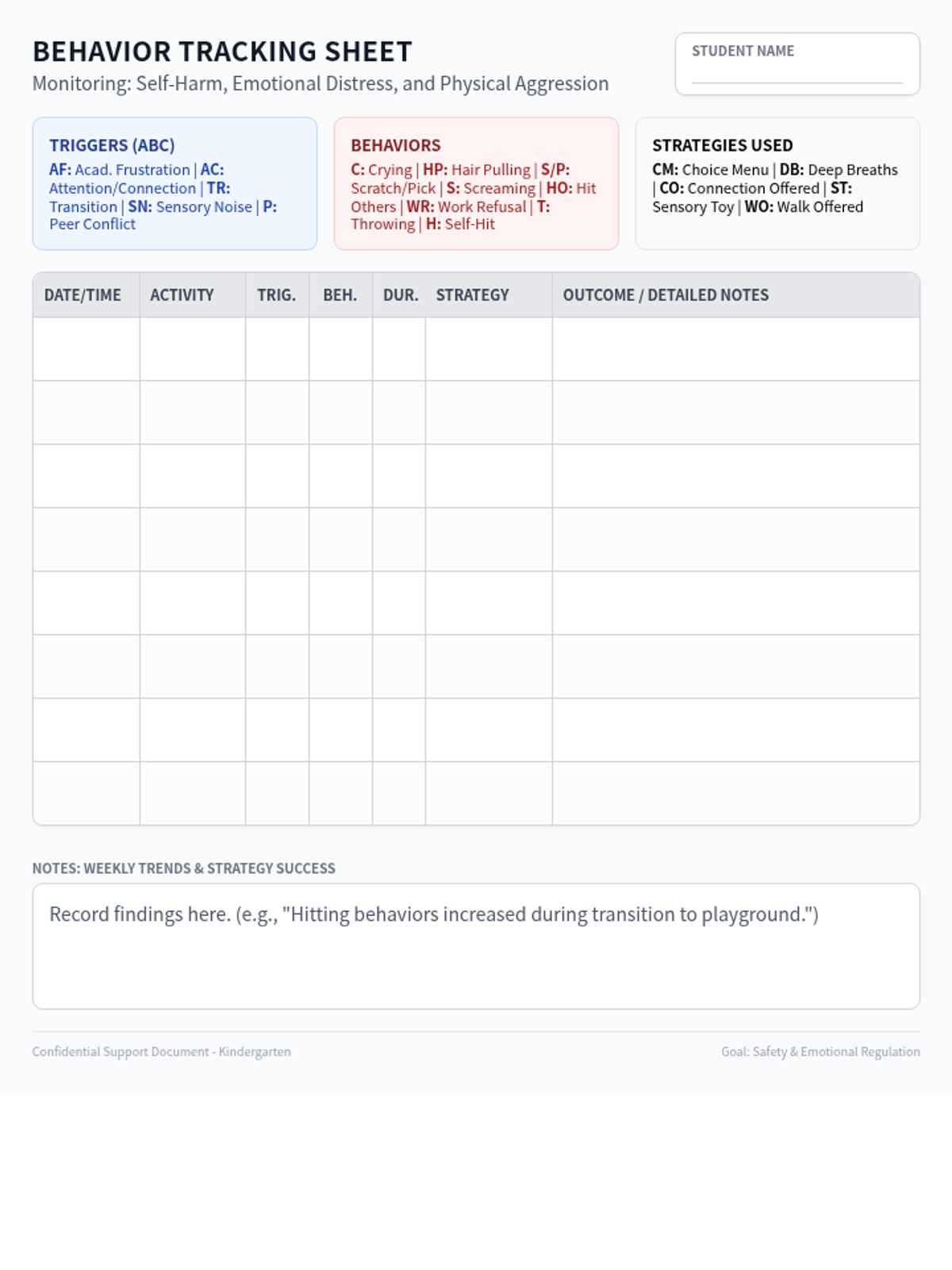
A teacher-facing data sheet to track triggers, behaviors, and strategy effectiveness for a student exhibiting emotional distress and self-harm. Revised to explicitly include screaming, hitting others, and work refusal behaviors with improved legibility and printing reliability.
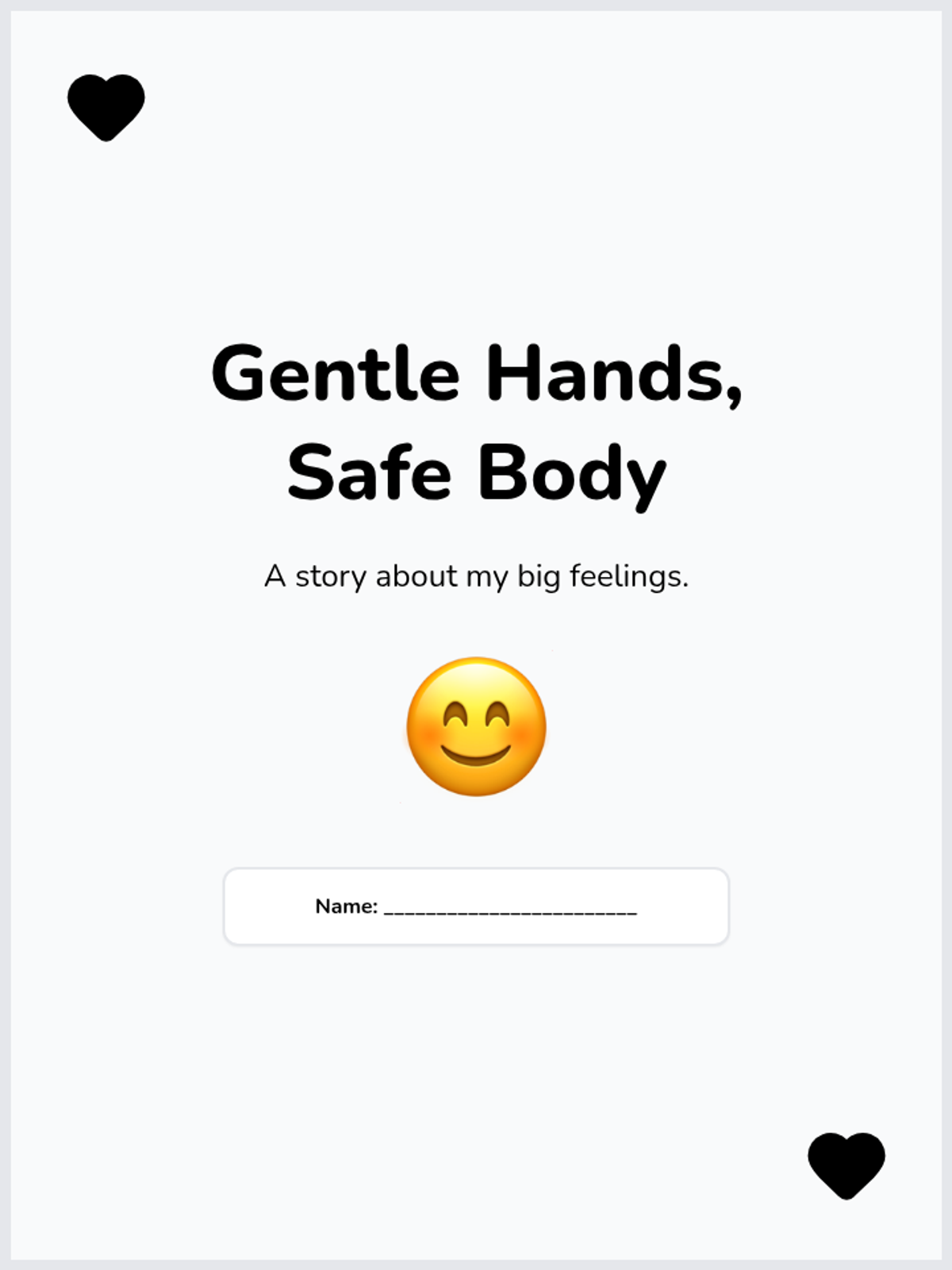
A social story for a Kindergarten student that validates big emotions while teaching the importance of body safety and providing alternatives to hair pulling or scratching. Revised for layout consistency, contrast, and visual standardization using emojis. Final version fixes spacing issues.
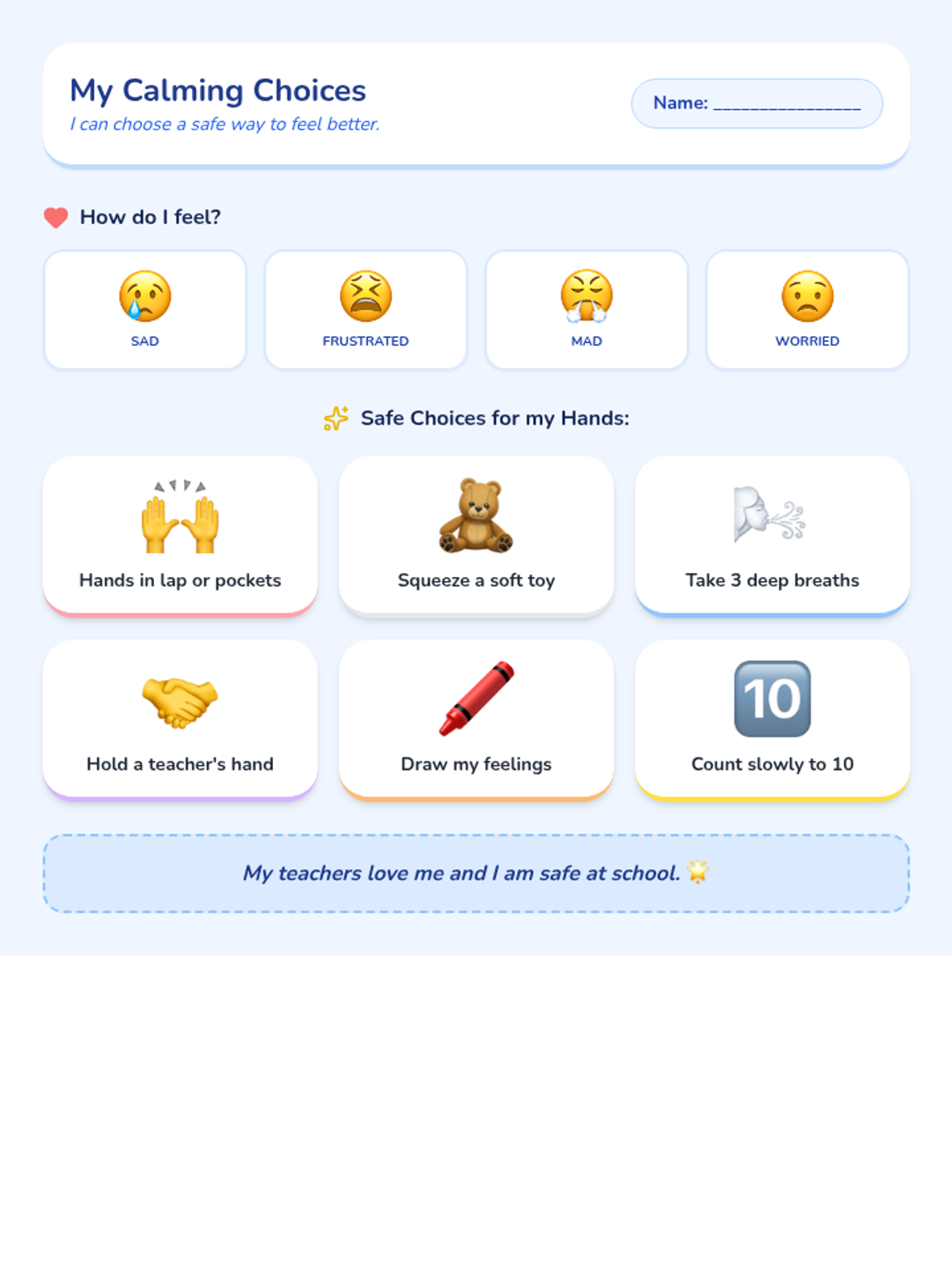
A student-facing visual menu with icons to help a Kindergarten student select safe calming strategies during moments of emotional distress or academic frustration. Revised for better layout, content specificity, and consistent visual style. Final version ensures single-page fit.
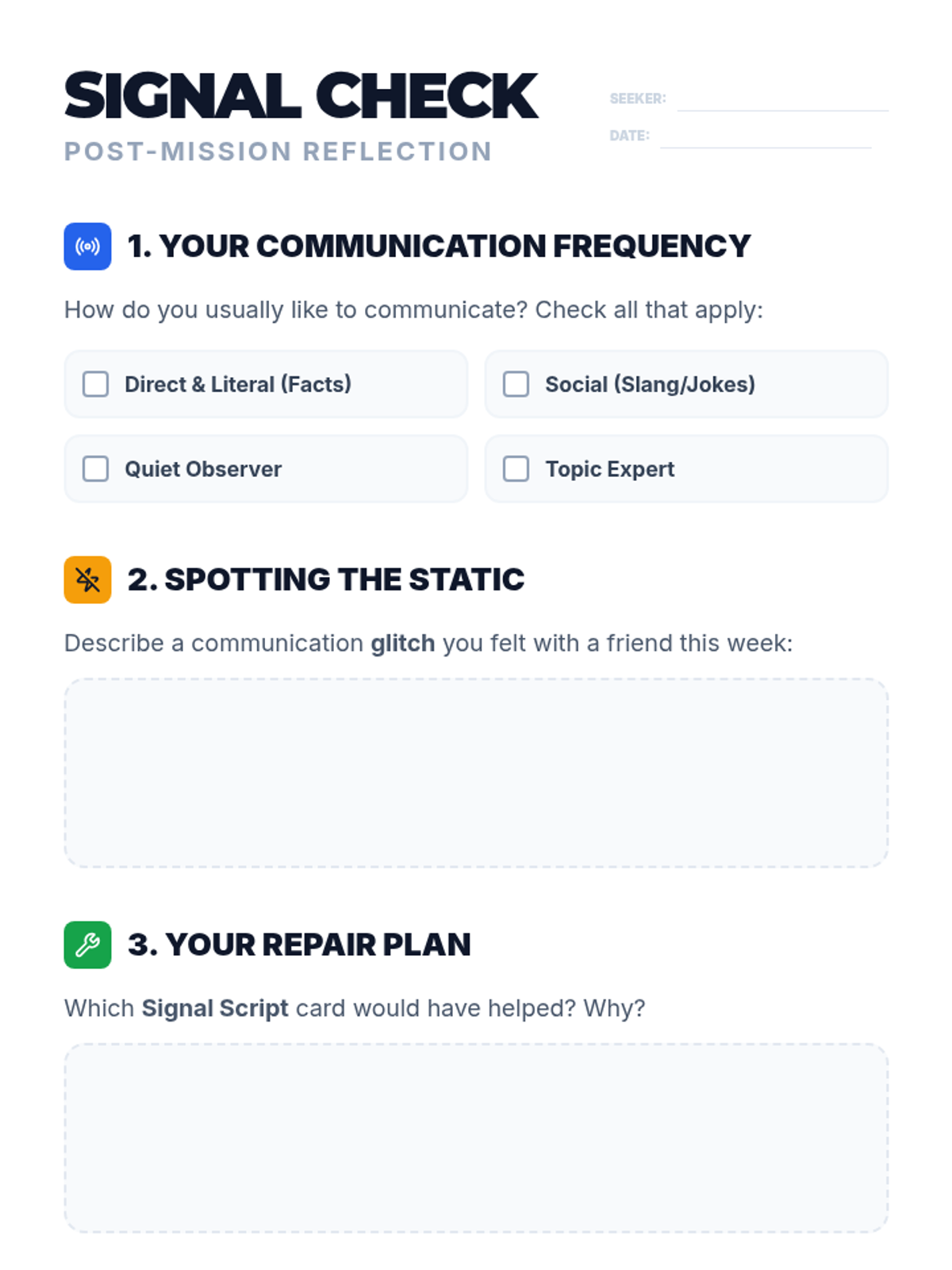
Updated reflection worksheet focusing on internal vs. external emotional signals, identifying empathy barriers, and planning for the "Empathy Bridge" script with scaffolded prompts.
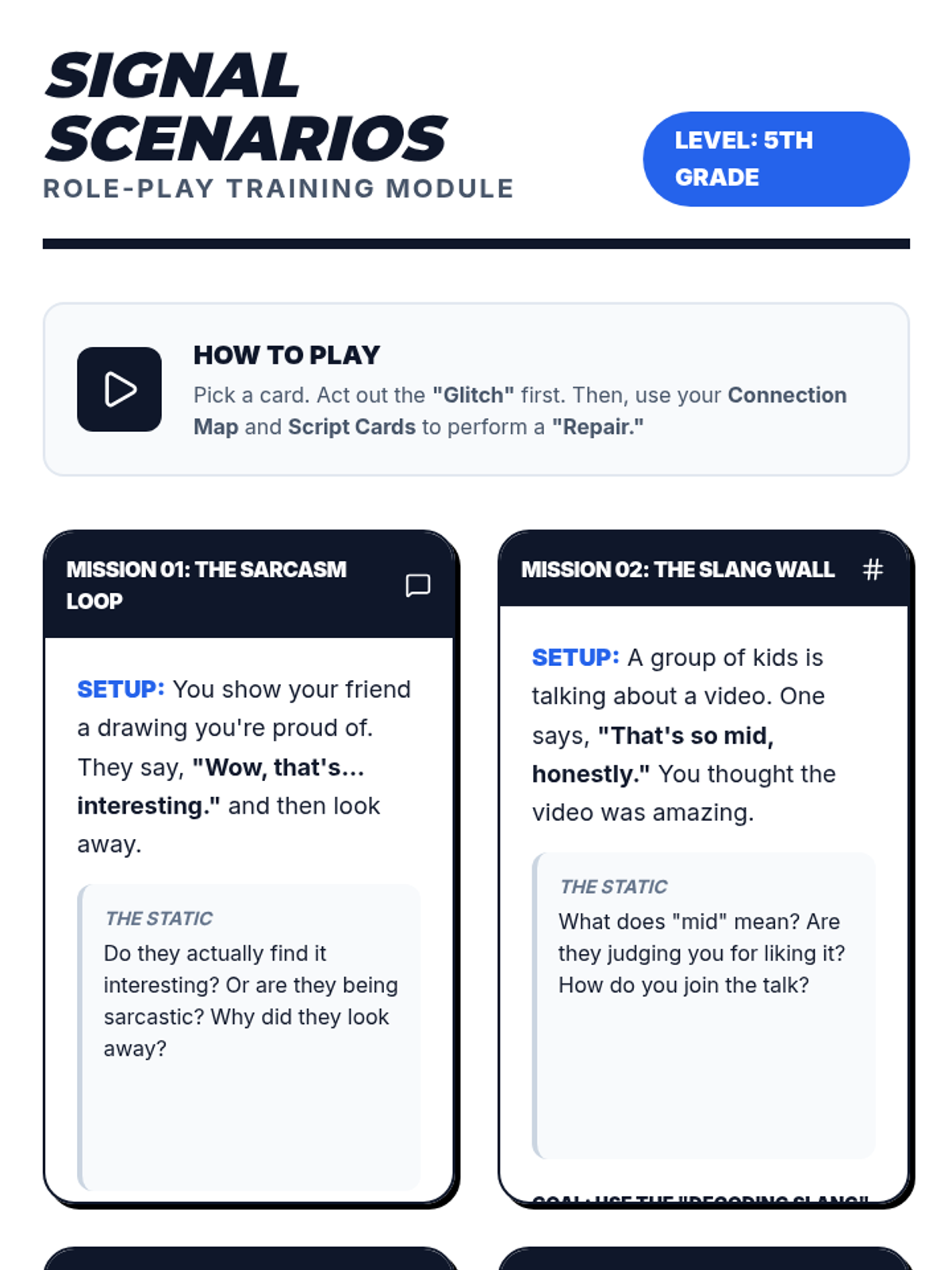
Adaptive scenario challenge cards offering multiple ways for students to engage with communication practice beyond role-playing, including sketching and writing.
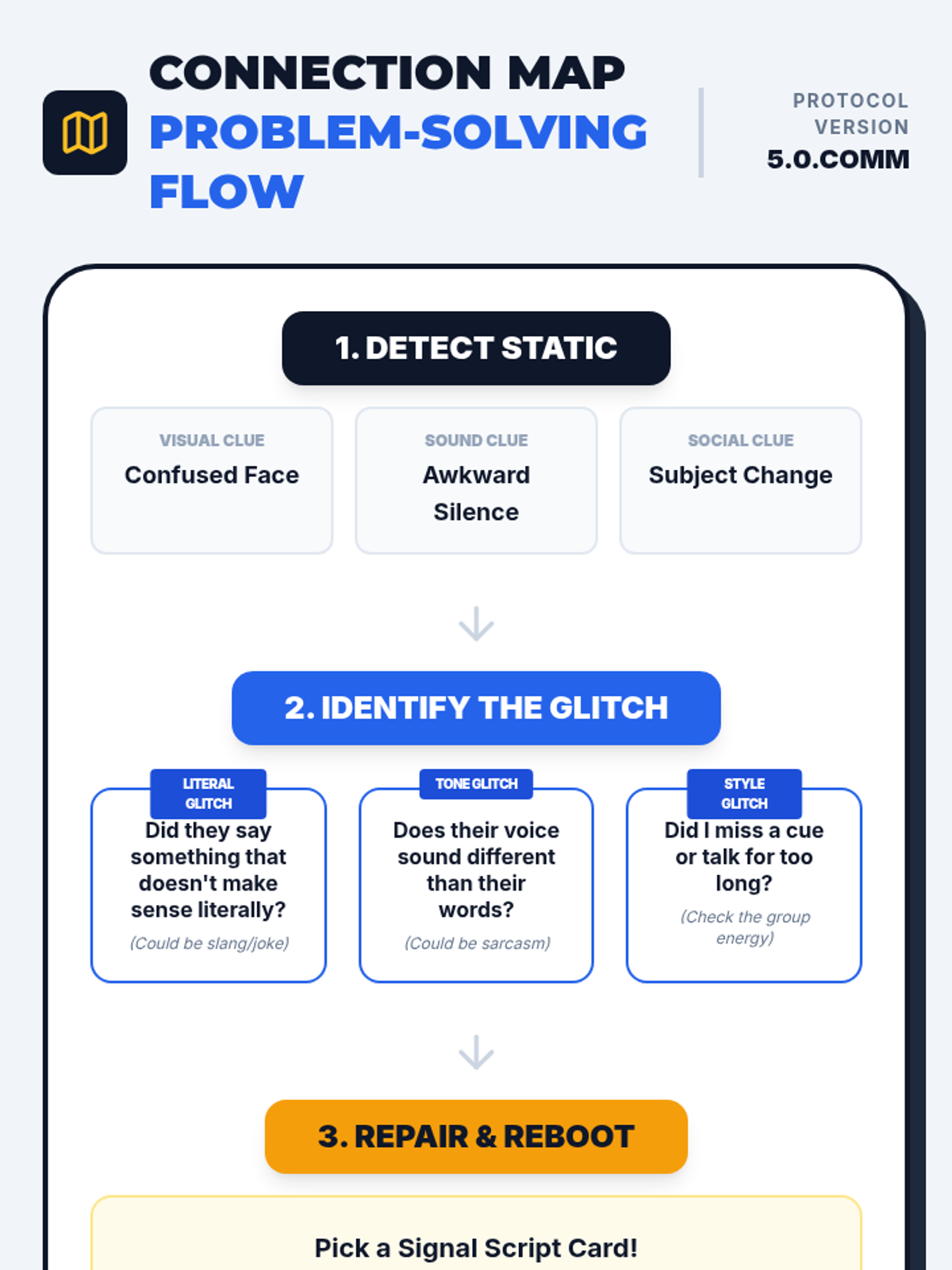
A visual flowchart designed to help students navigate emotional disconnects, empathy gaps, and the "Interrogation Trap" when feeling upset.
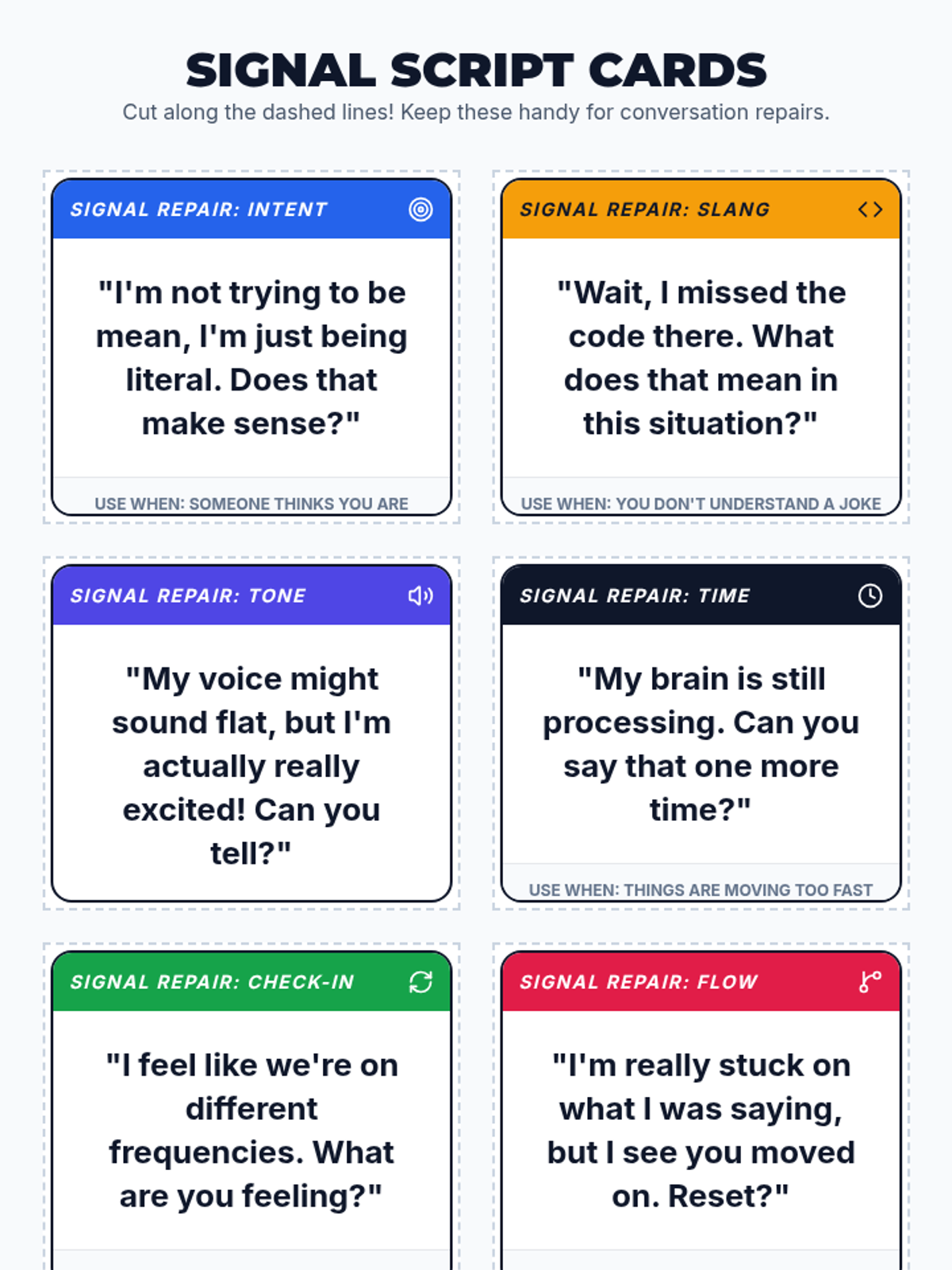
Updated script cards focusing on perspective-taking, emotional validation, and communicating needs without interrogation.
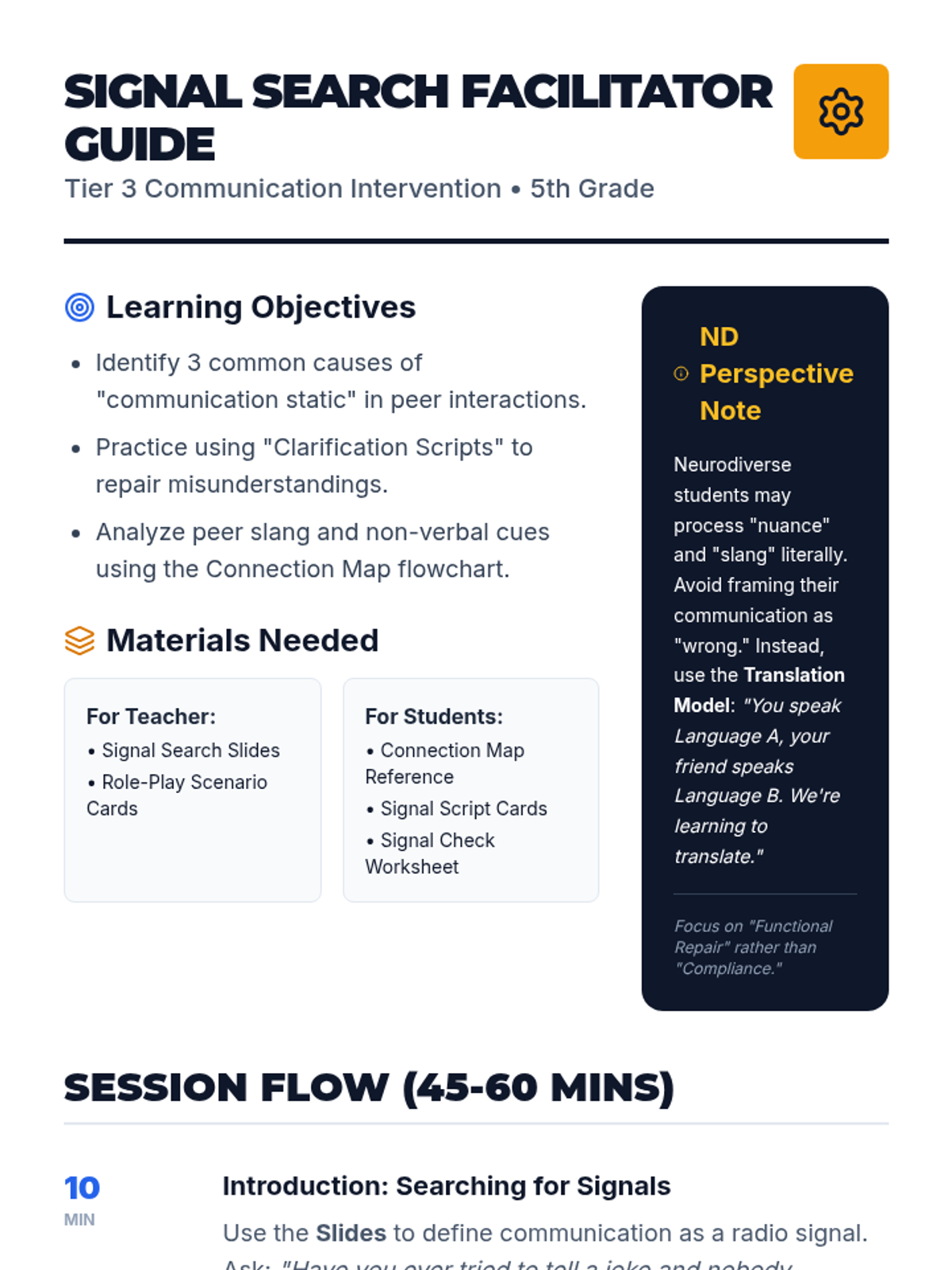
An updated facilitator guide pivoting the lesson focus from slang/nuance to emotional empathy gaps and communicating needs during social disconnects with inclusive practice strategies.
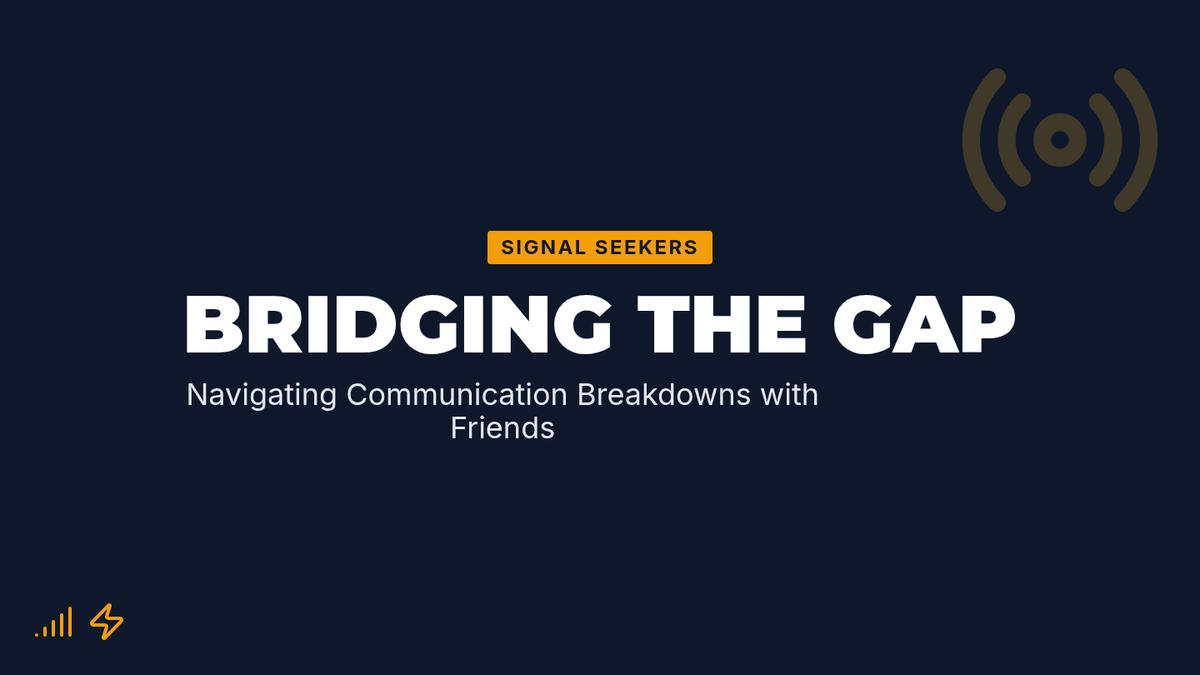
A revised slide deck focusing on emotional perspective-taking, internal vs. external signals, and how to communicate needs with options for non-role-play engagement.
A teacher facilitation guide designed to help educators launch and manage the revised summative podcast project. It includes a weekly action plan, a 'Pivot Strategy' explanation, and a list of high-research subject recommendations.
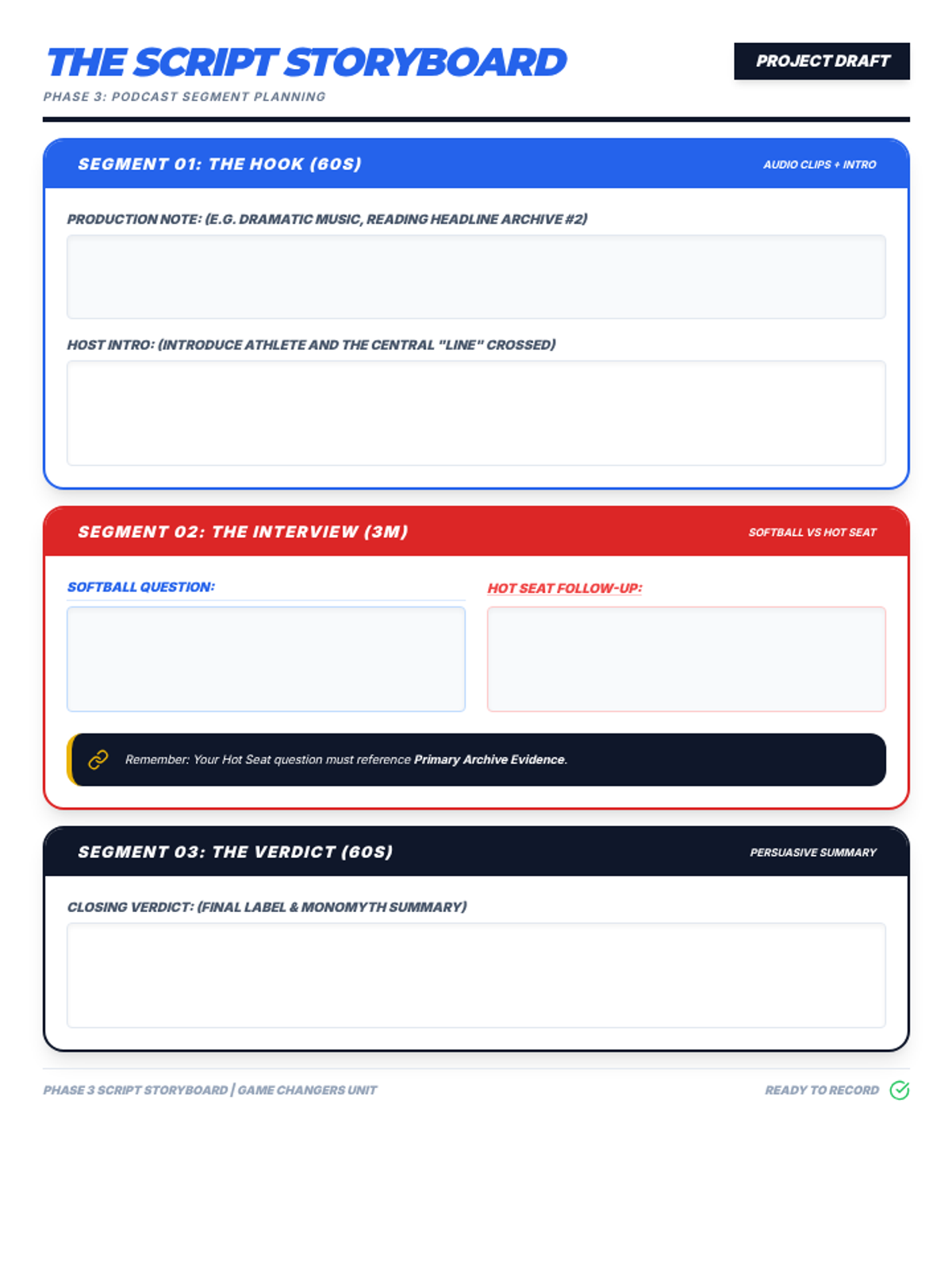
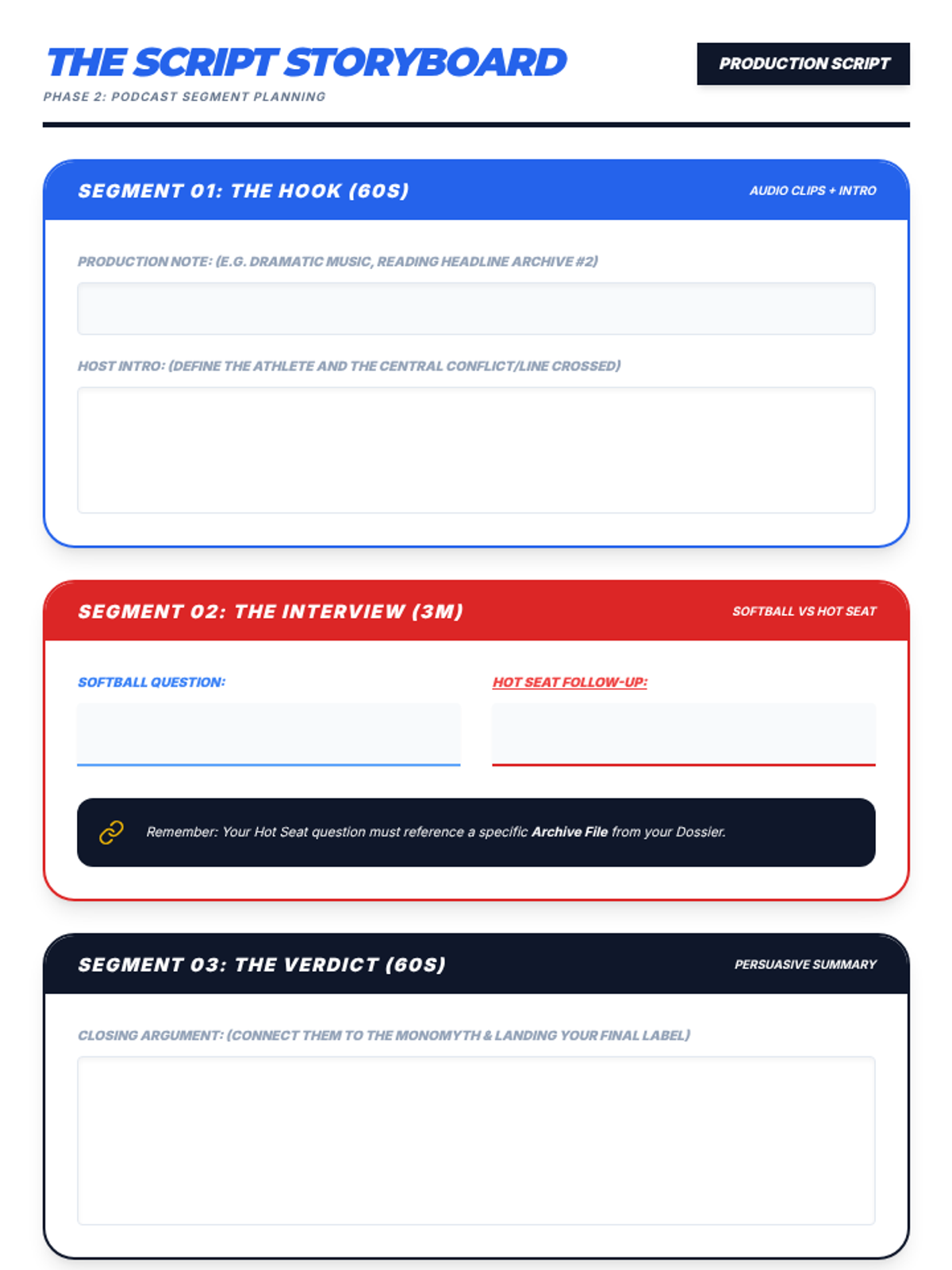
A segment-by-segment script storyboard that breaks the podcast into three distinct parts. It provides specific production notes and guided segments for the Hook, the Hot Seat, and the Verdict, ensuring students have a concrete framework for writing.
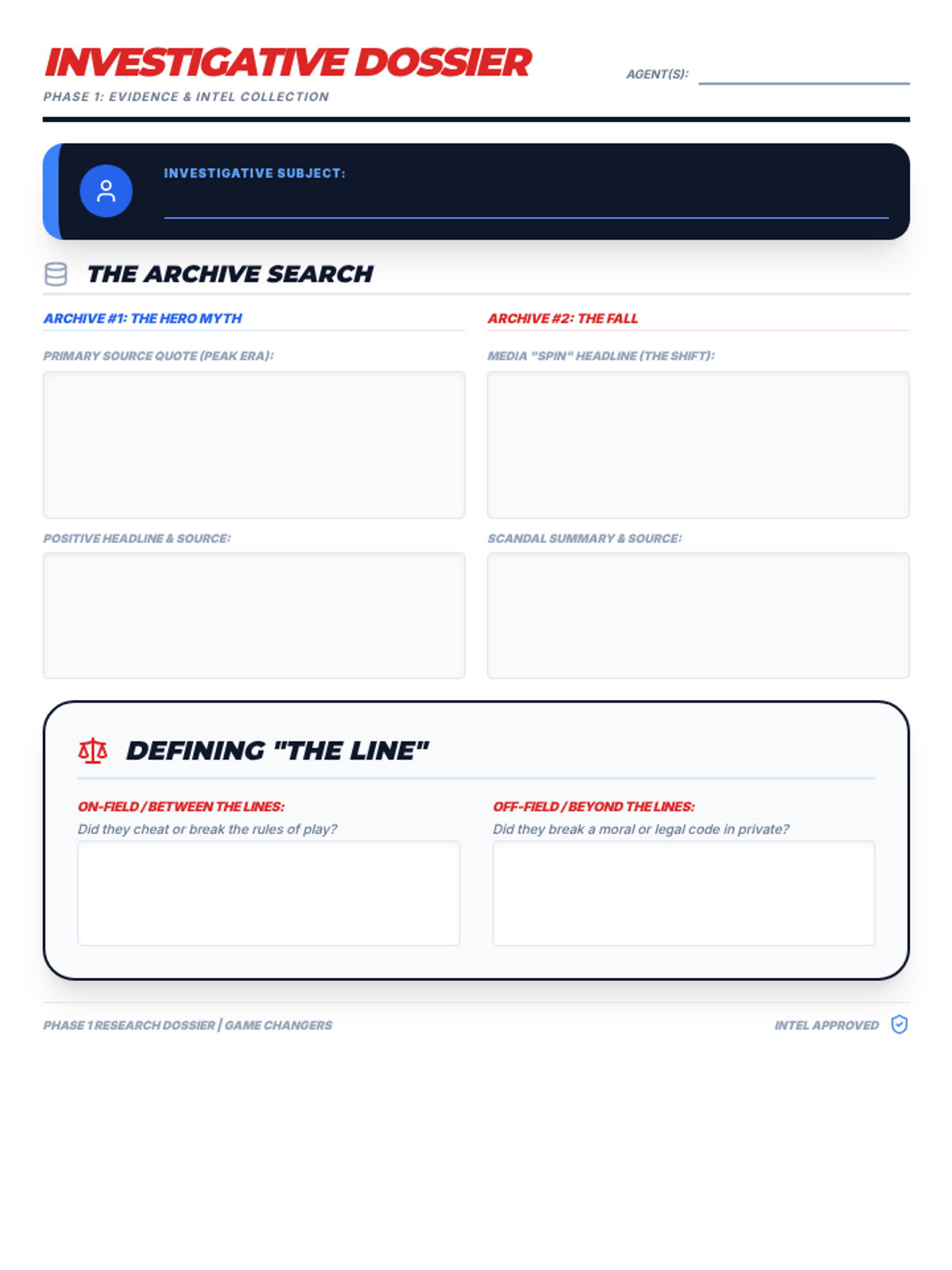
A highly structured research dossier that provides concrete prompts and 'slots' for students to collect evidence, quotes, and media spin. This removes the vagueness of the research process and prepares them for the scripting phase.