An engaging 5-slide presentation using a space-launch theme to teach students the '3-2-1' task initiation strategy, including examples of 'tiny steps' and an introduction to progress tracking.
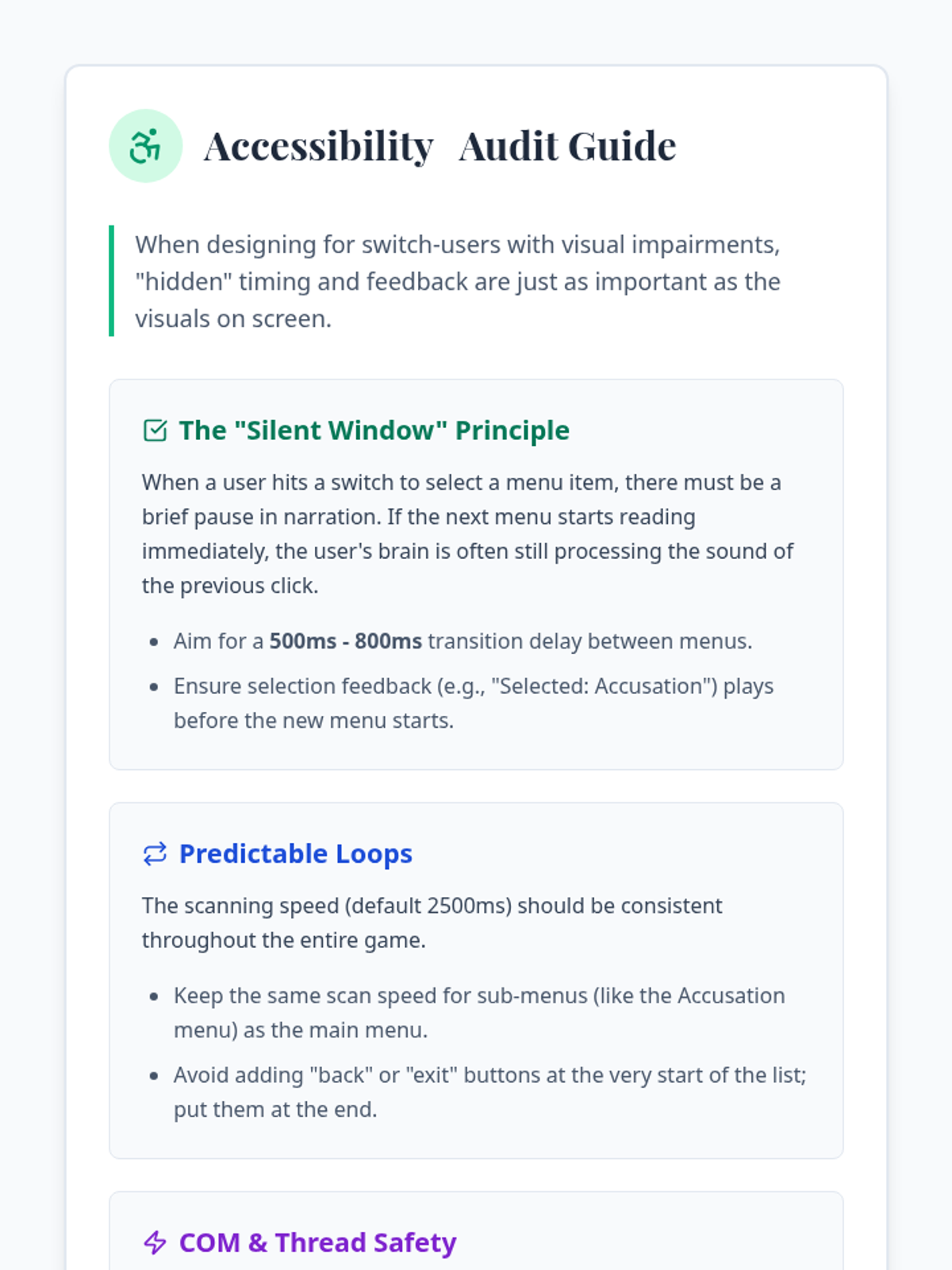
A teacher-facing resource outlining the best practices for timing, feedback, and thread safety when developing switch-accessible games for visually impaired students.
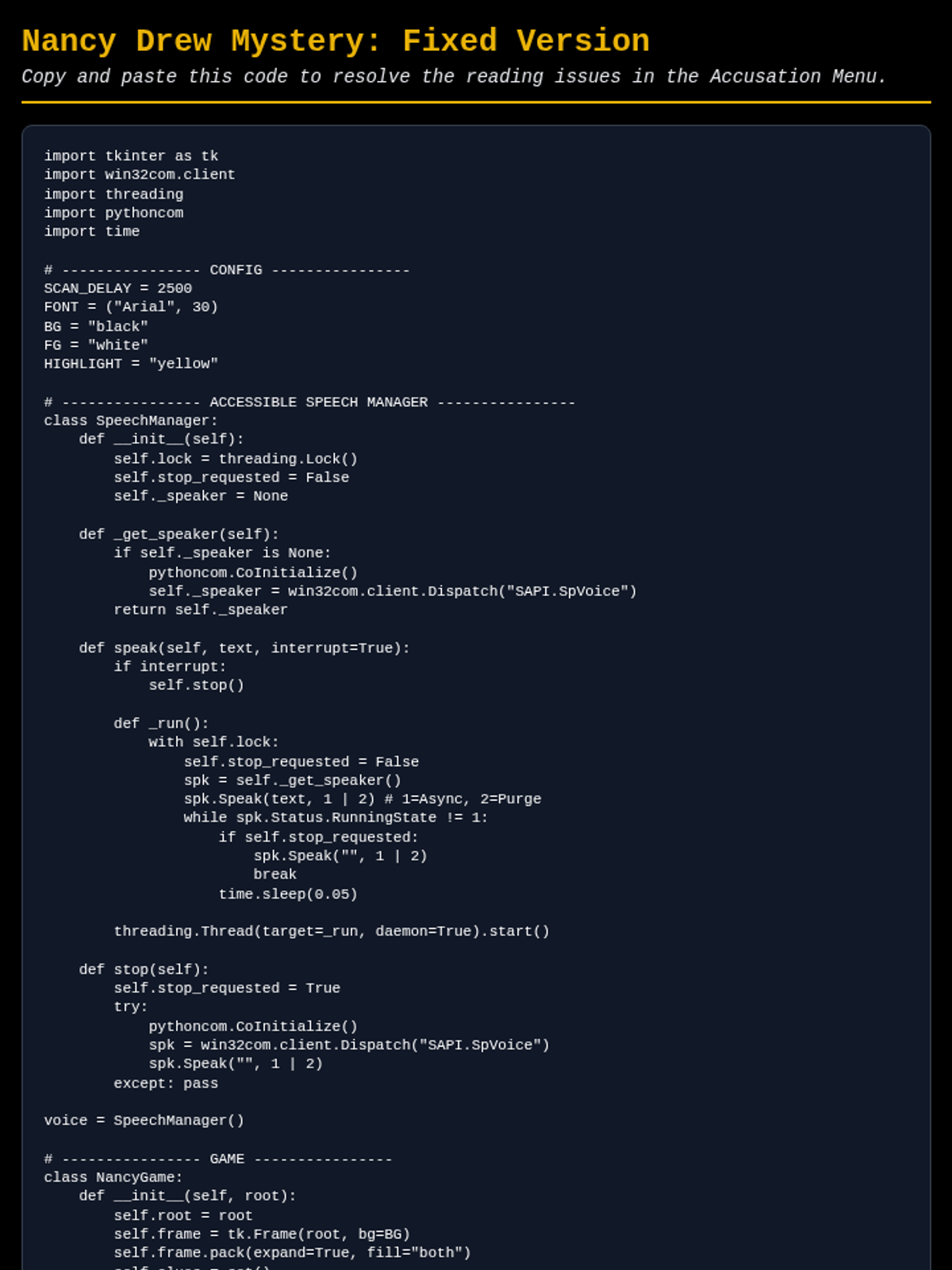
The fully corrected Python source code for the Nancy Drew Mystery Game, featuring a robust SpeechManager class and improved transition timing for switch accessibility.
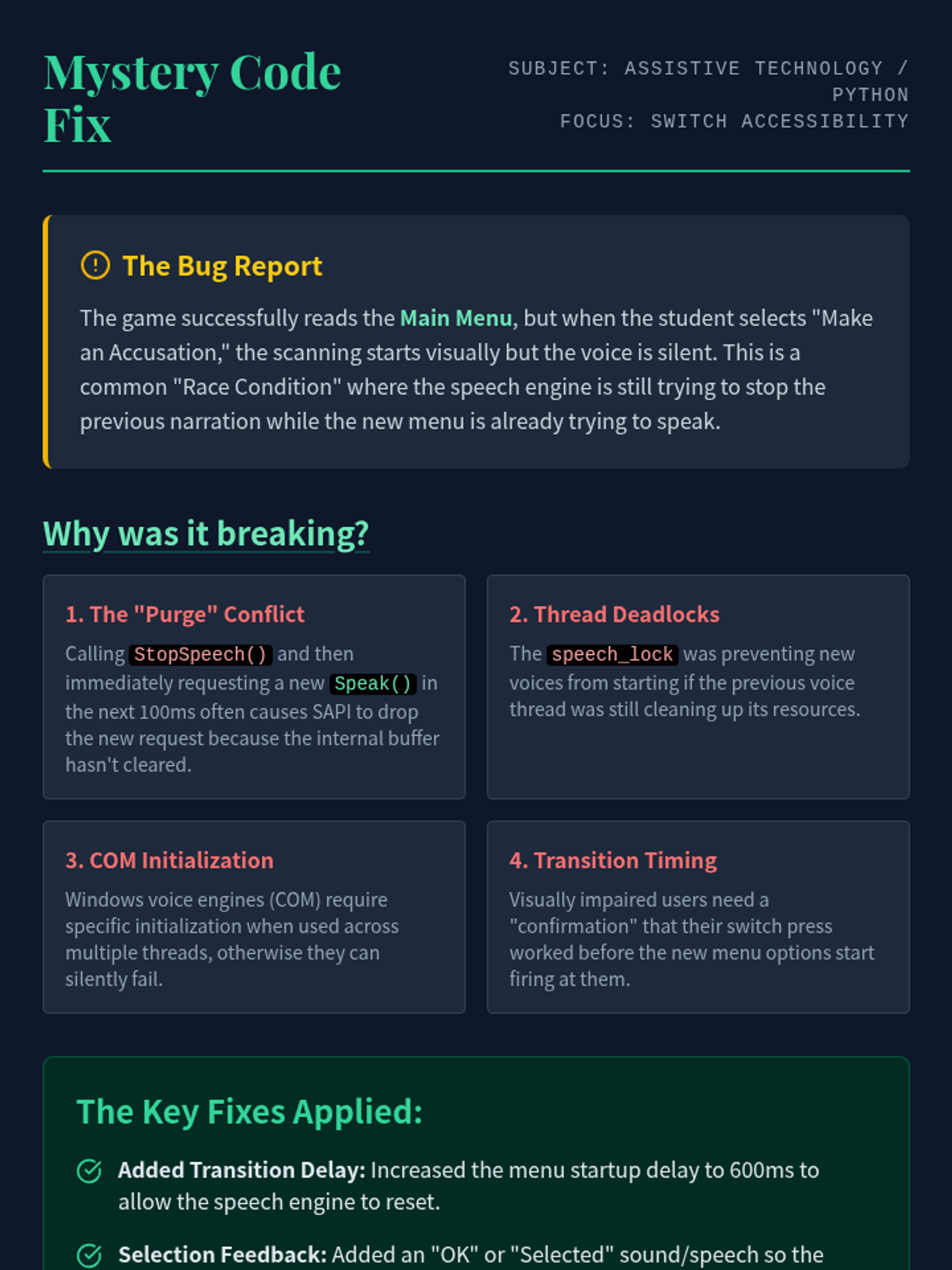
An explanation of why the original Nancy Drew mystery game code was failing to read menu options and a summary of the technical fixes required for reliable switch accessibility.
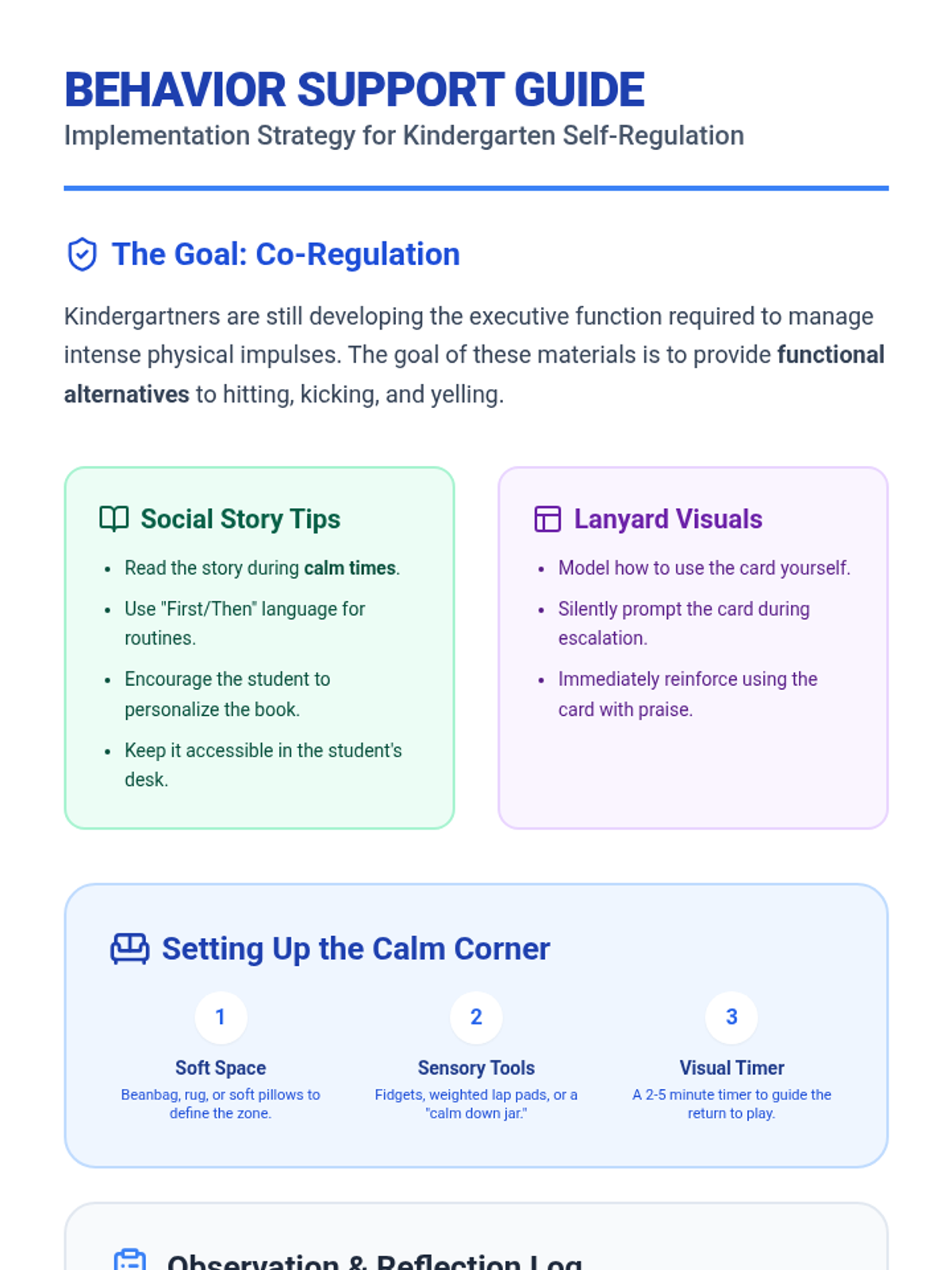
A guide for teachers providing pedagogical strategies, implementation tips, and environmental setup advice for managing student behavior. Includes an expanded observation log for tracking student progress.
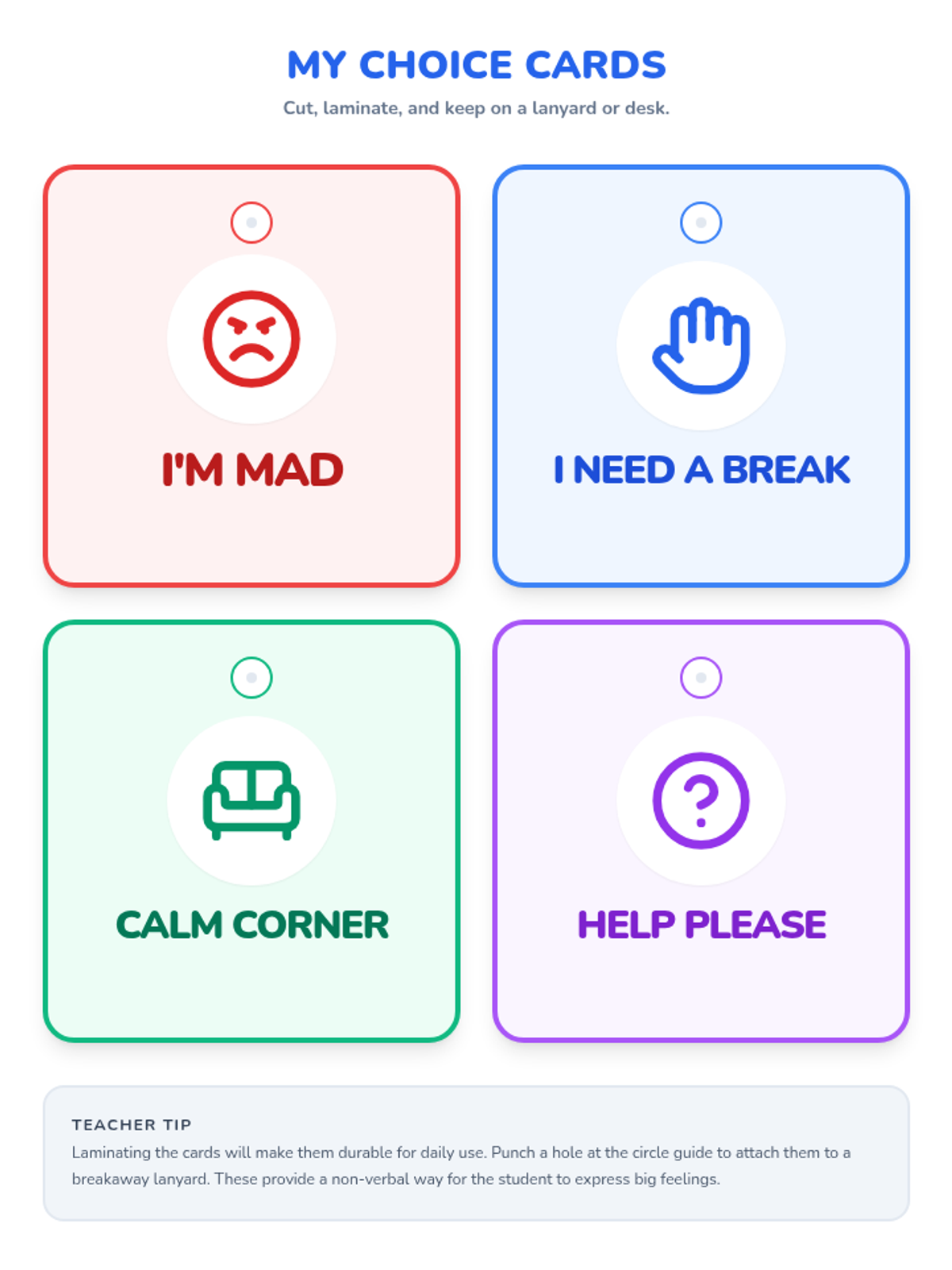
Communication cards for a lanyard or desk, providing non-verbal cues for a student to express anger, request a break, or ask for help. Updated layout to fit on a single page.
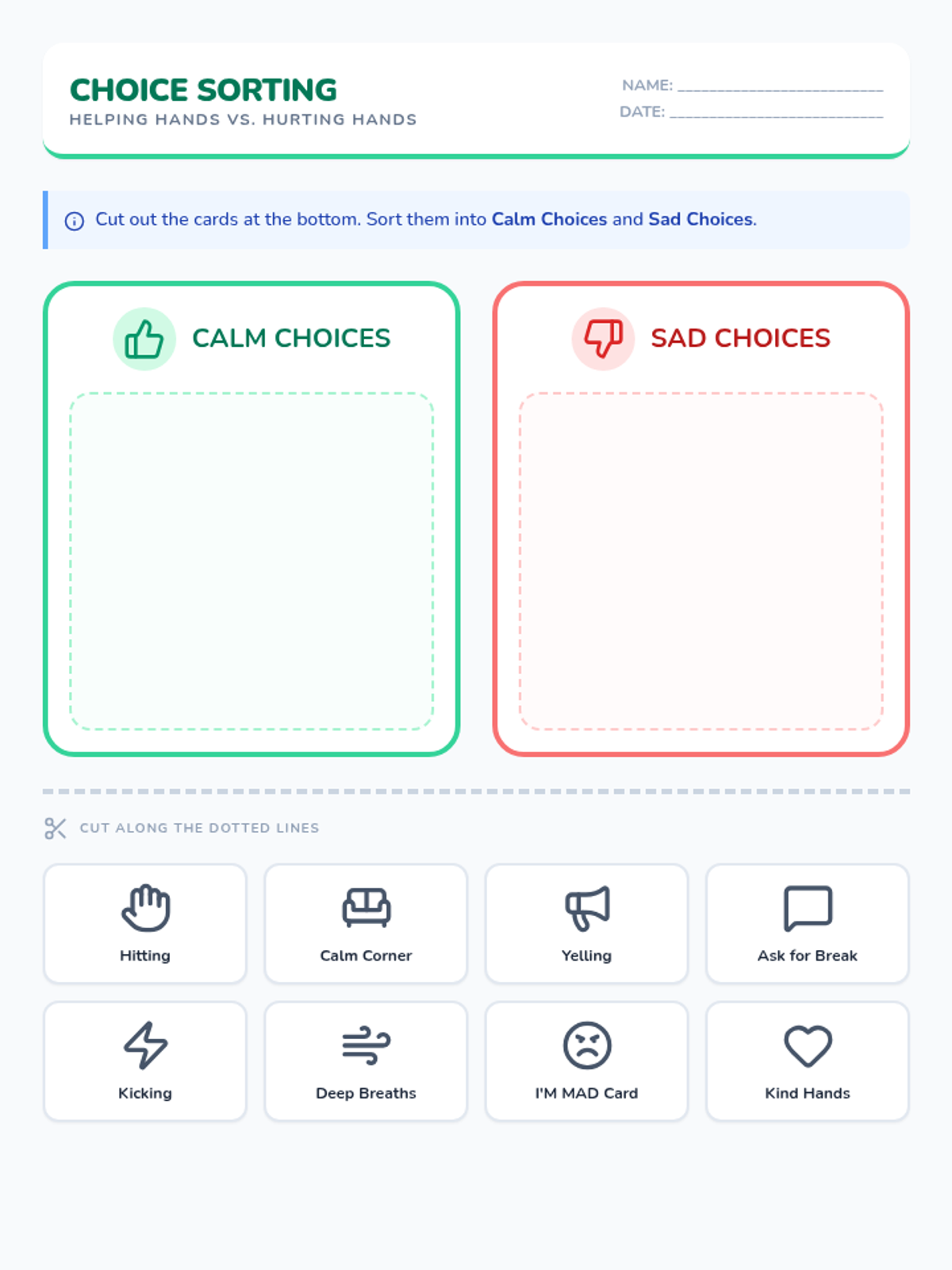
An interactive sorting worksheet where students distinguish between 'Calm Choices' and 'Sad Choices' to reinforce positive behavior and self-regulation skills. All cards are neutral-colored to ensure active cognitive processing.
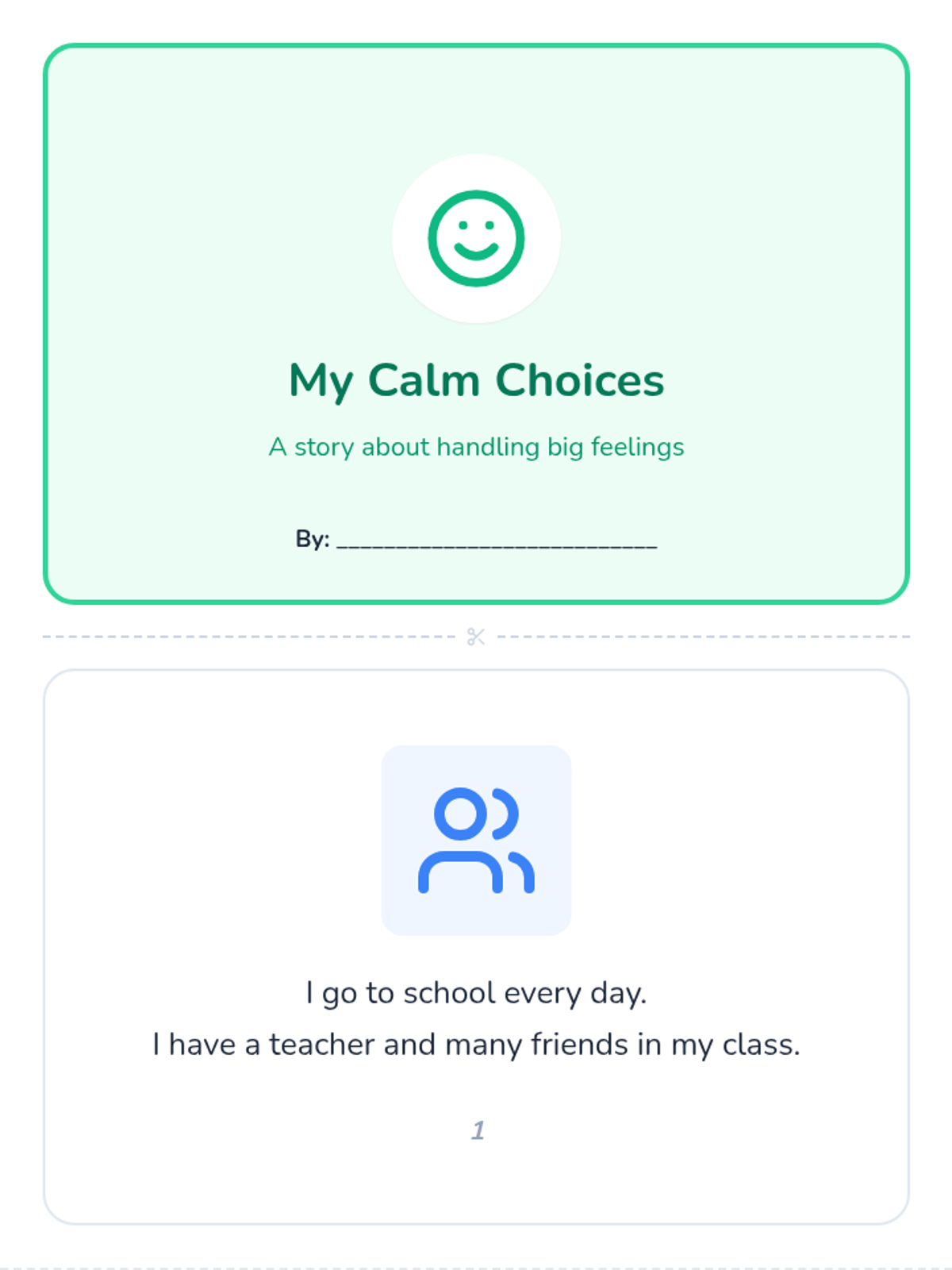
A printable social story book designed to help young students understand their emotions and learn alternative behaviors to aggression, such as using a calm-down corner or requesting a break.
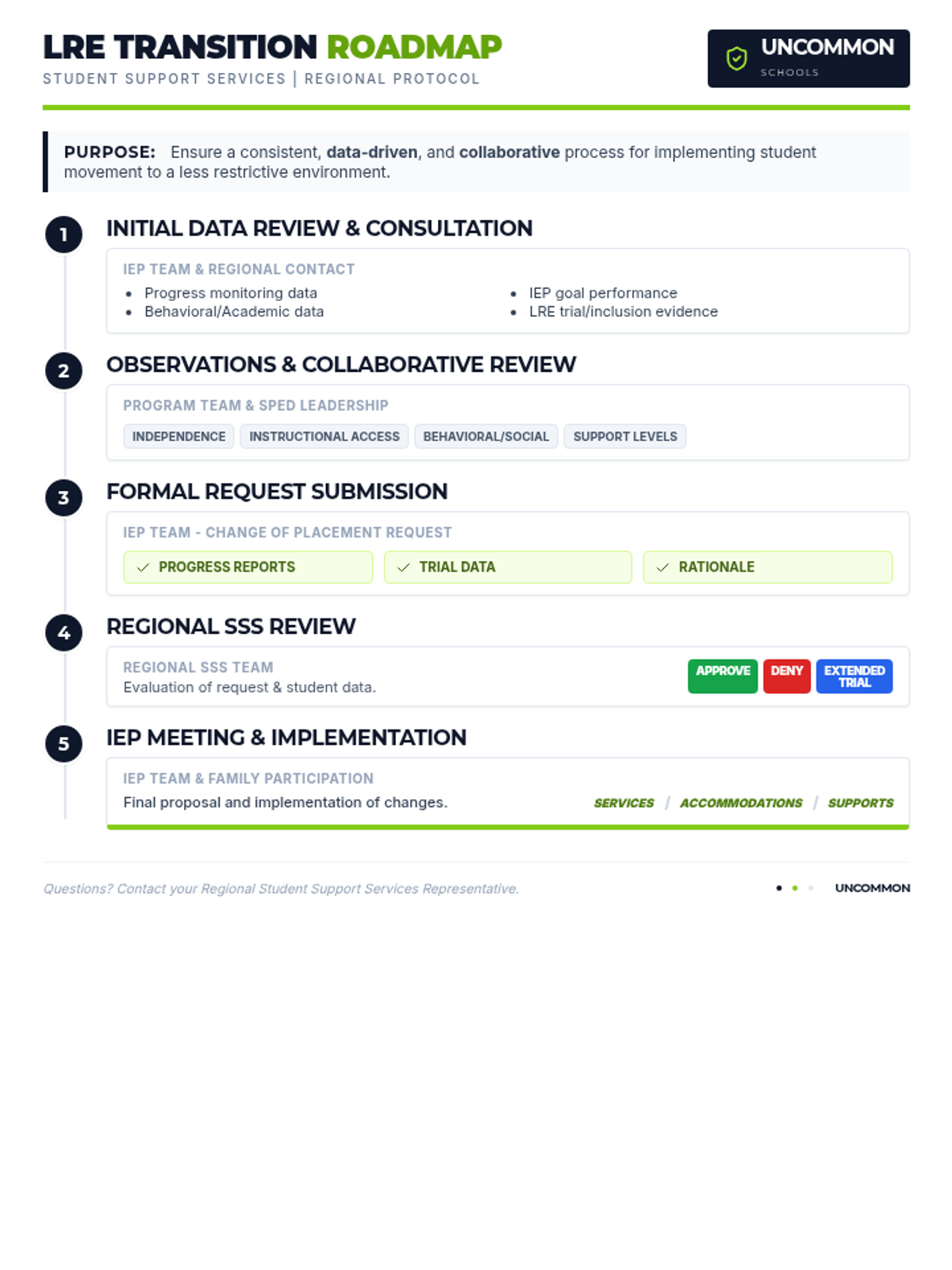
A condensed one-page professional guide for school IEP and CST teams outlining the 5-step process for transitioning students to a less restrictive environment, optimized for single-page printing with Uncommon Schools branding.
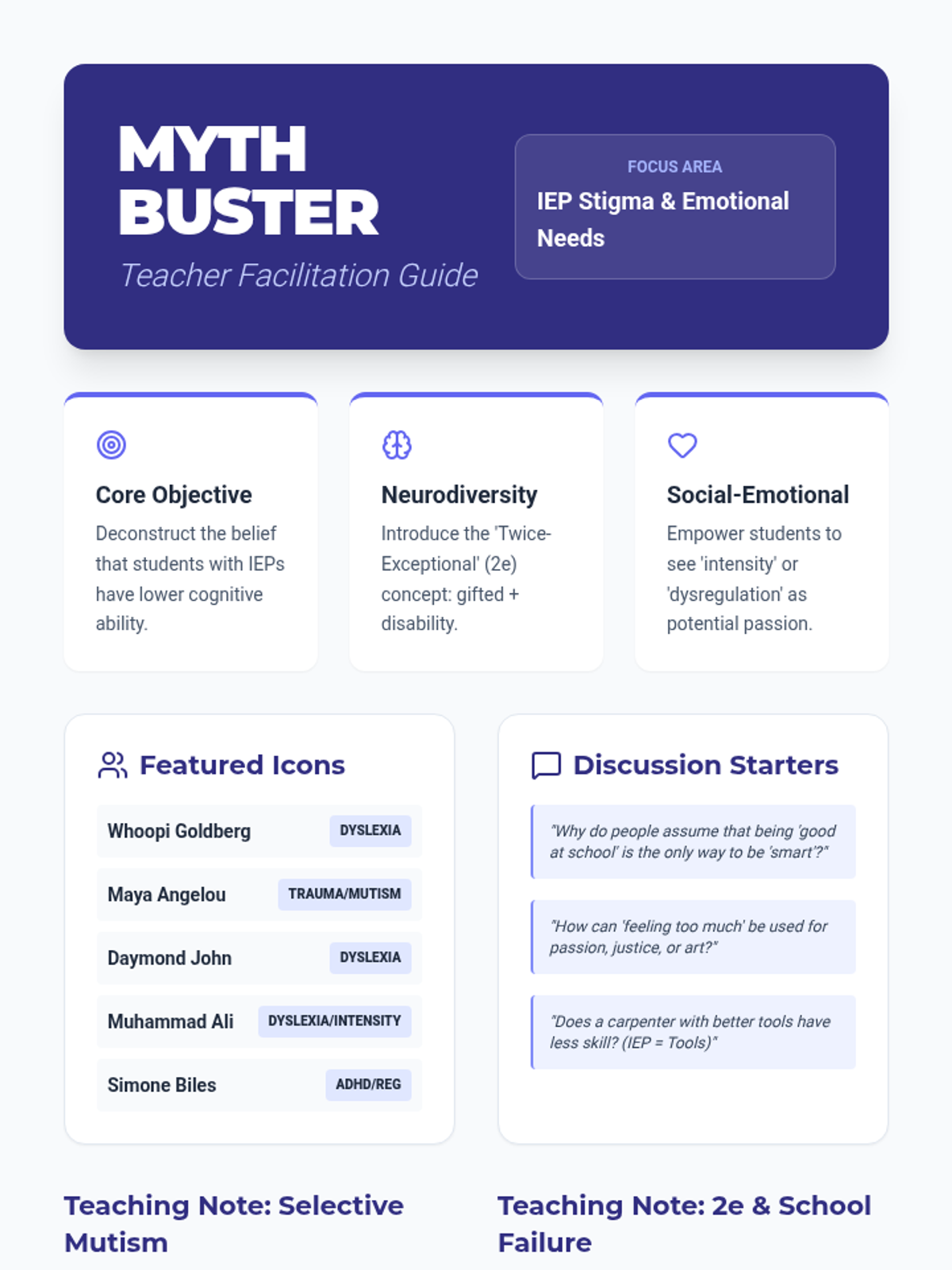
A comprehensive facilitation guide for teachers to lead discussions on the IEP stigma. It includes critical discussion prompts, teaching notes on the specific figures (like Maya Angelou and Daymond John), and a 'stigma-busting' vocabulary guide to reframe behavioral challenges as strengths.
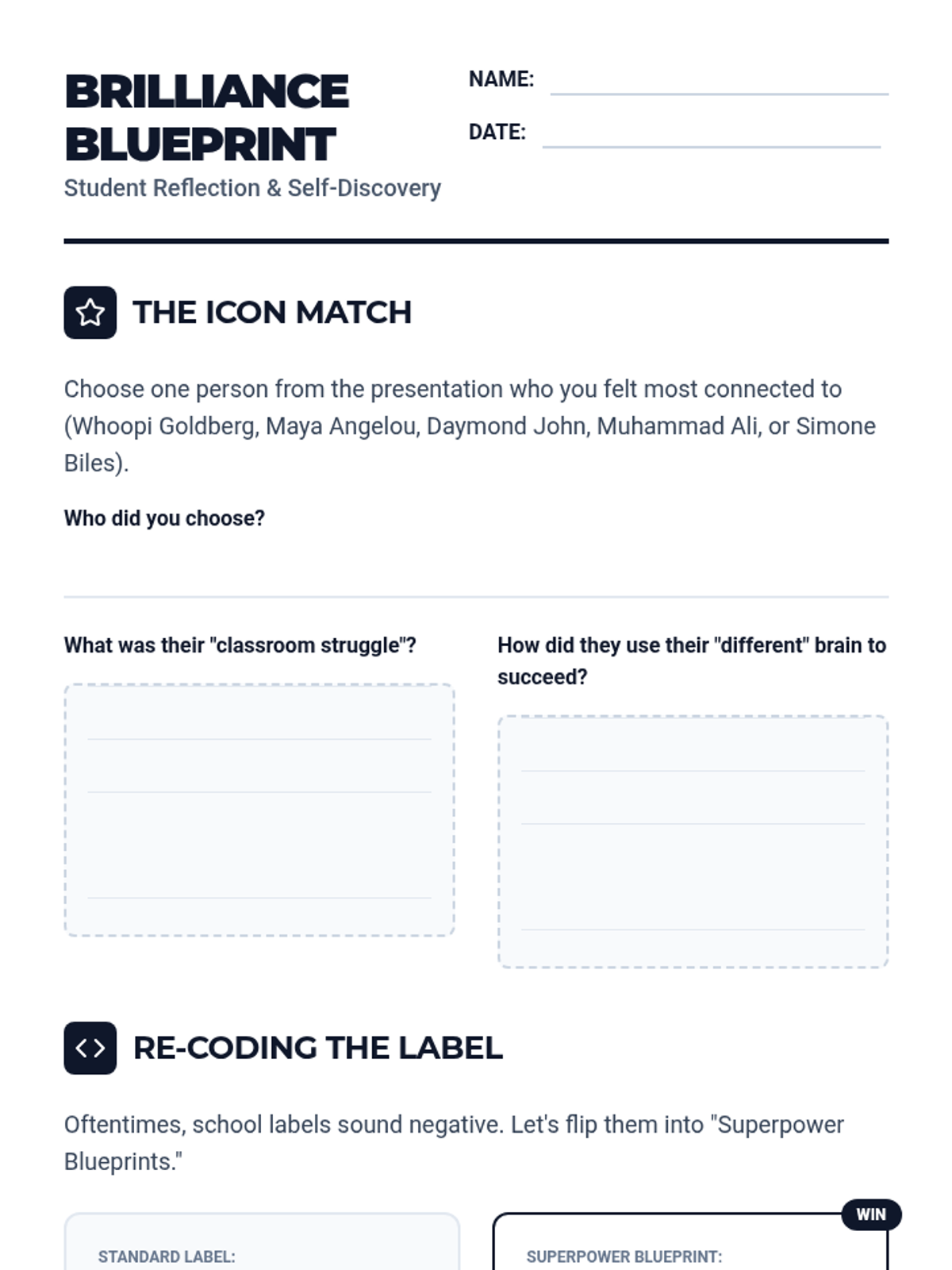
A reflective worksheet for students to process the 'Mind over Myths' presentation. It includes space to connect with famous figures, reframe behavioral labels into positive superpowers, and identify their own unique strengths.
A bold, modern slide deck dismantling the 'IEP = not smart' stigma by showcasing successful African Americans like Whoopi Goldberg, Maya Angelou, and Daymond John. It reframes emotional dysregulation and learning differences as unique ways of processing rather than deficits in intelligence.
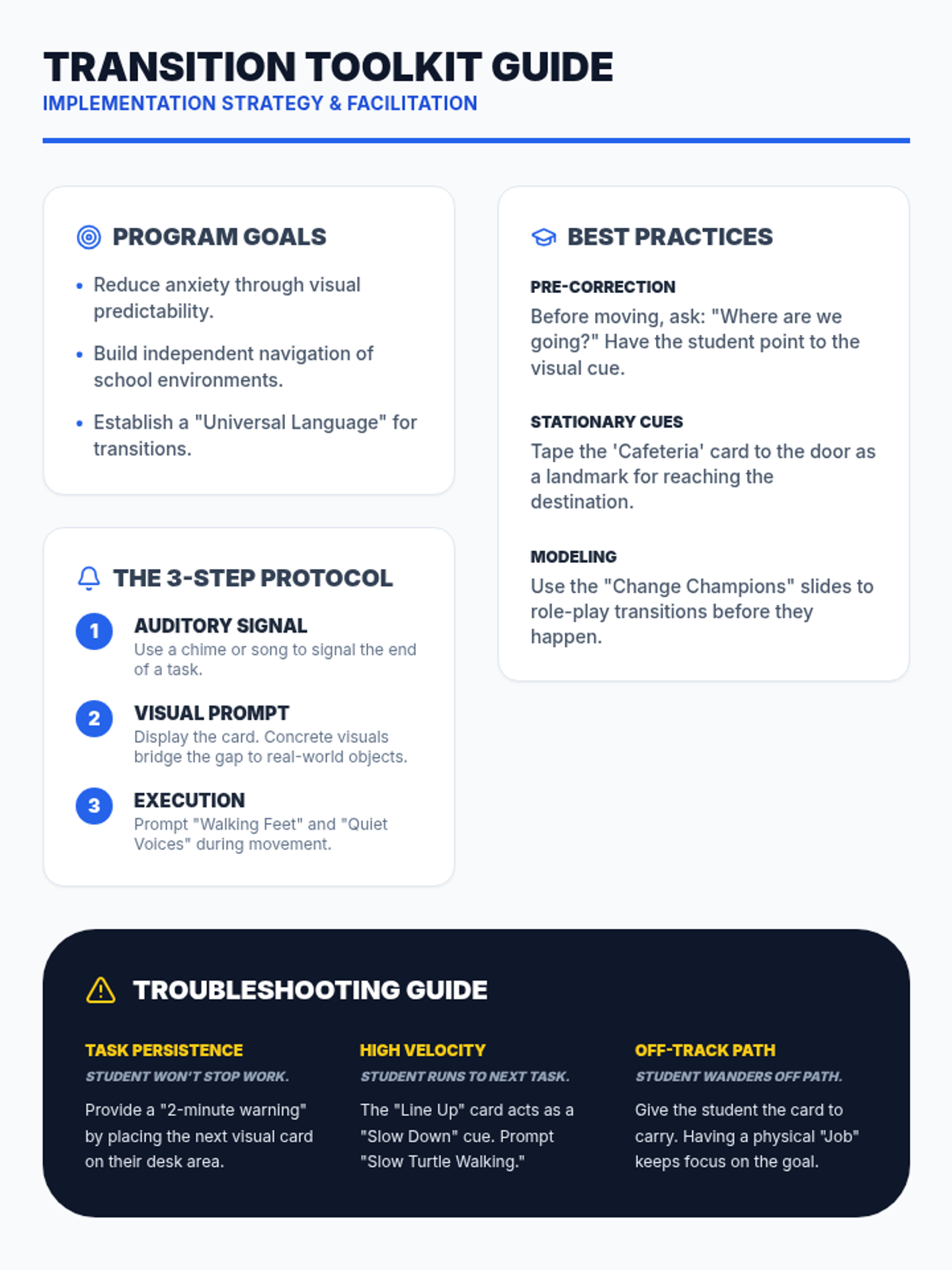
A comprehensive teacher resource for implementing visual transition supports. Includes best practices, a 3-step signaling method, and troubleshooting tips for diverse classroom needs, with a focus on concrete visual strategies.
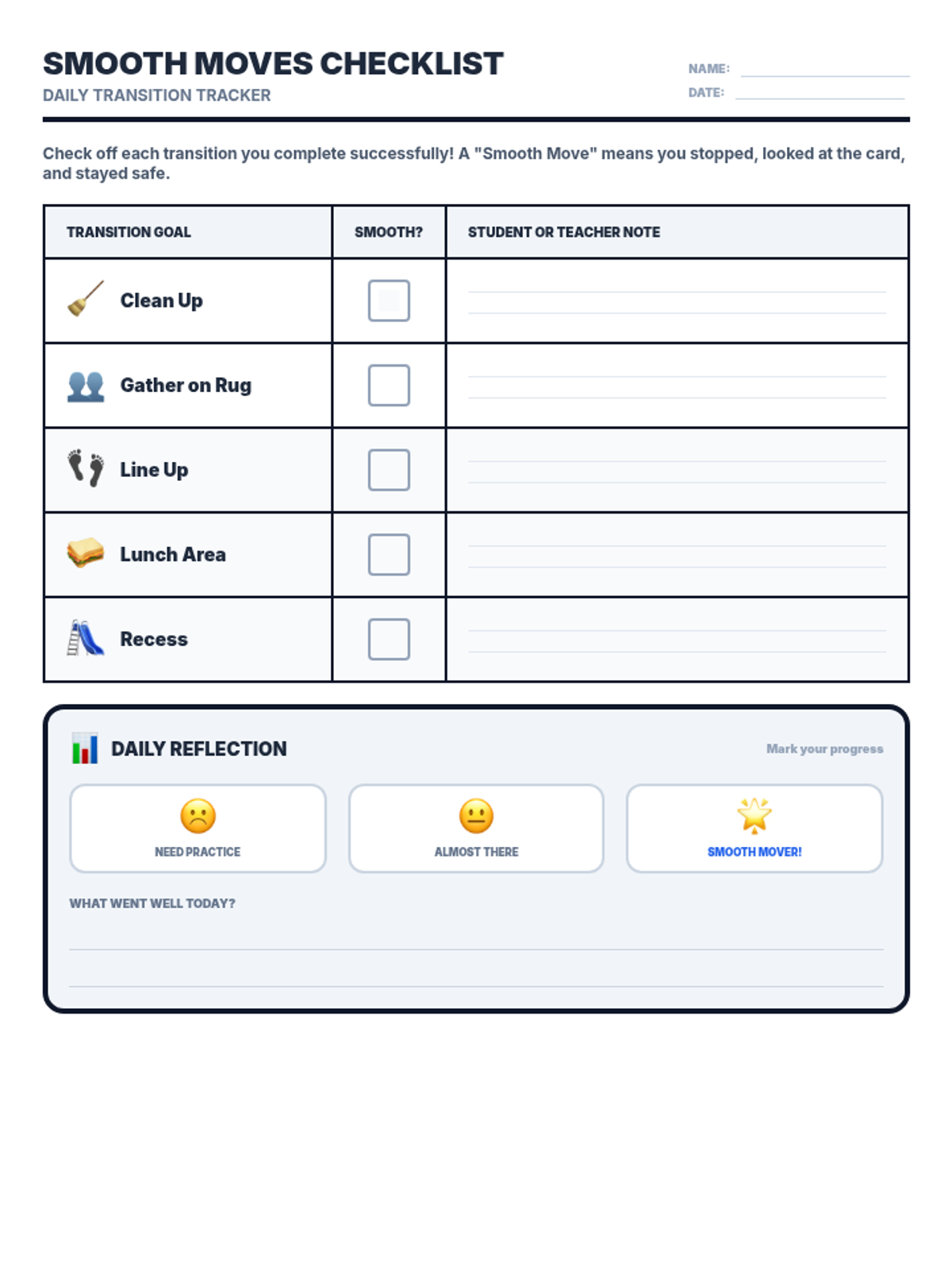
A student-facing tracking tool featuring concrete emoji visuals to support self-monitoring during daily transitions. Includes reflection space for students to evaluate their own performance and "Smooth Move" success.
An instructional presentation to introduce the concept of transitions and the use of visual support cards. It features clear emoji-based representations to mimic real-life scenarios and high-impact text for student orientation.
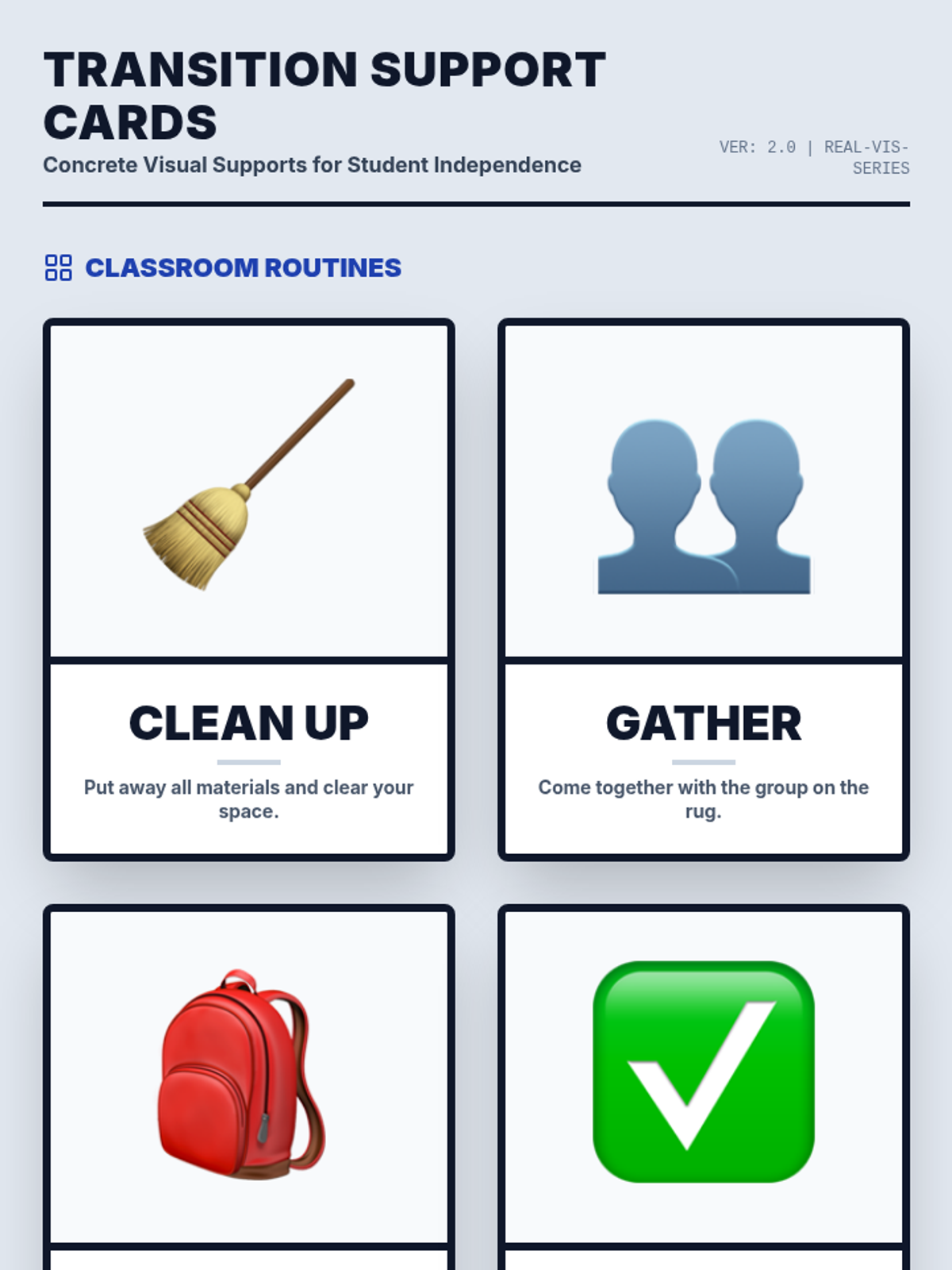
A set of high-contrast visual support cards featuring realistic emoji representations to support concrete learners. Each card includes a clear, multi-color visual and concise instructional text to promote student independence during classroom and location changes.
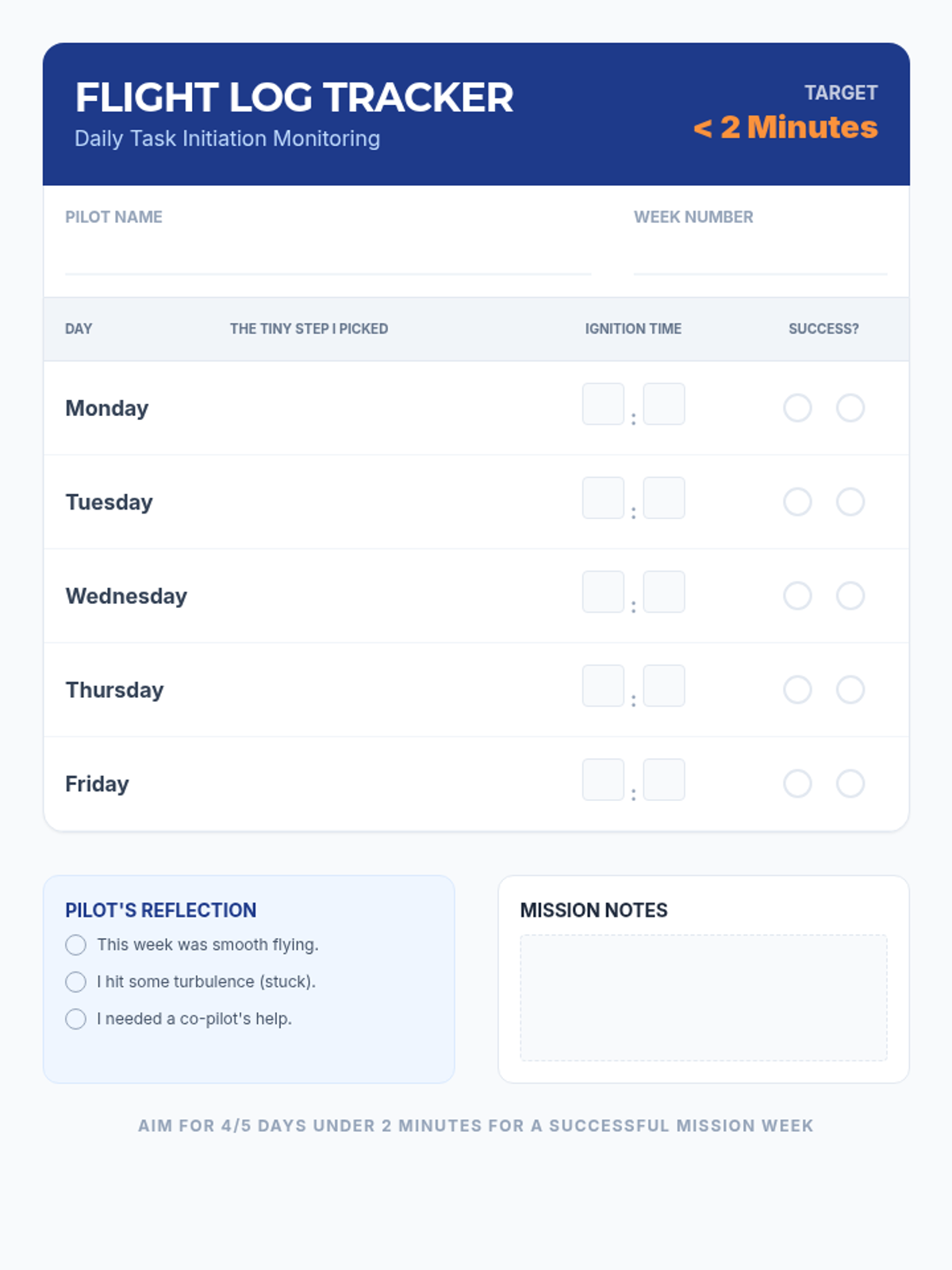
A structured weekly progress tracker for students to record their 'tiny steps' and 'ignition times', encouraging self-monitoring and goal achievement.
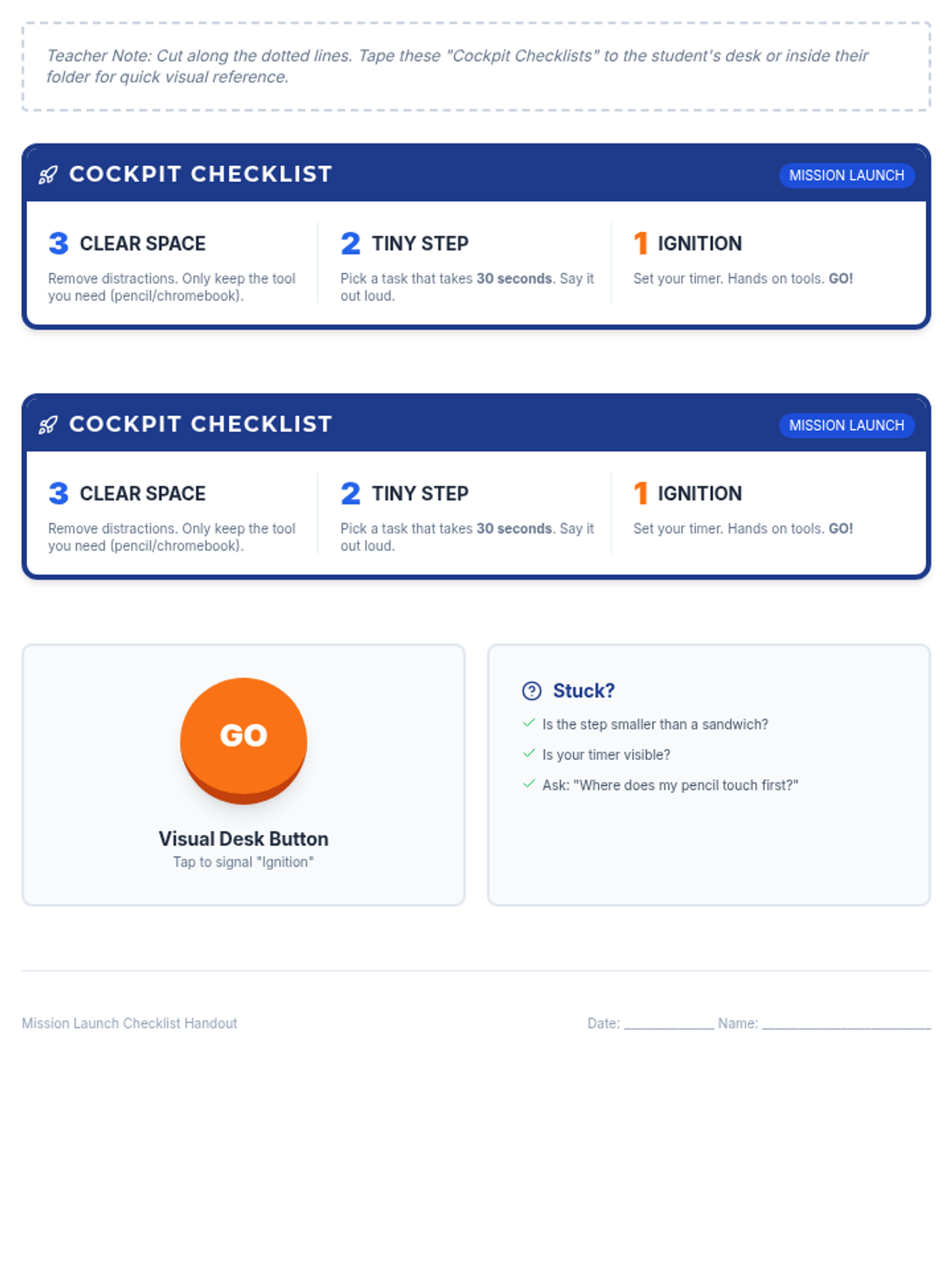
A set of printable visual aids for student desks, including step-by-step 'Cockpit Checklists' and a visual 'Ignition Button' to support task initiation.
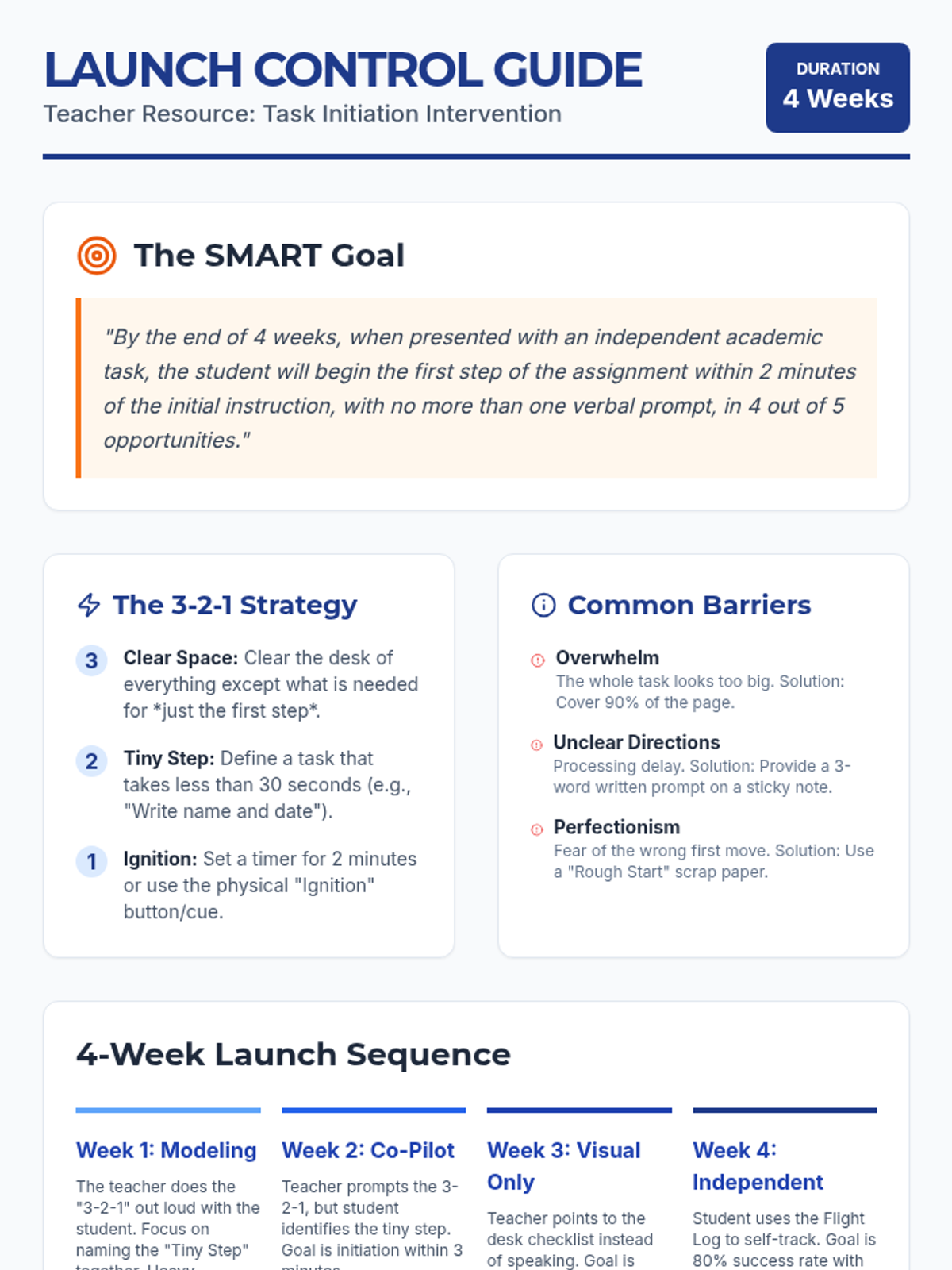
A comprehensive teacher-facing guide outlining a 4-week intervention plan for improving student task initiation, featuring a SMART goal, strategy breakdowns, and implementation phases.