A 2-page highly visual print-ready scavenger hunt worksheet. Page 1 focuses on environmental navigation and sensory features, while Page 2 targets price checks, budgeting within $10, and change calculations.
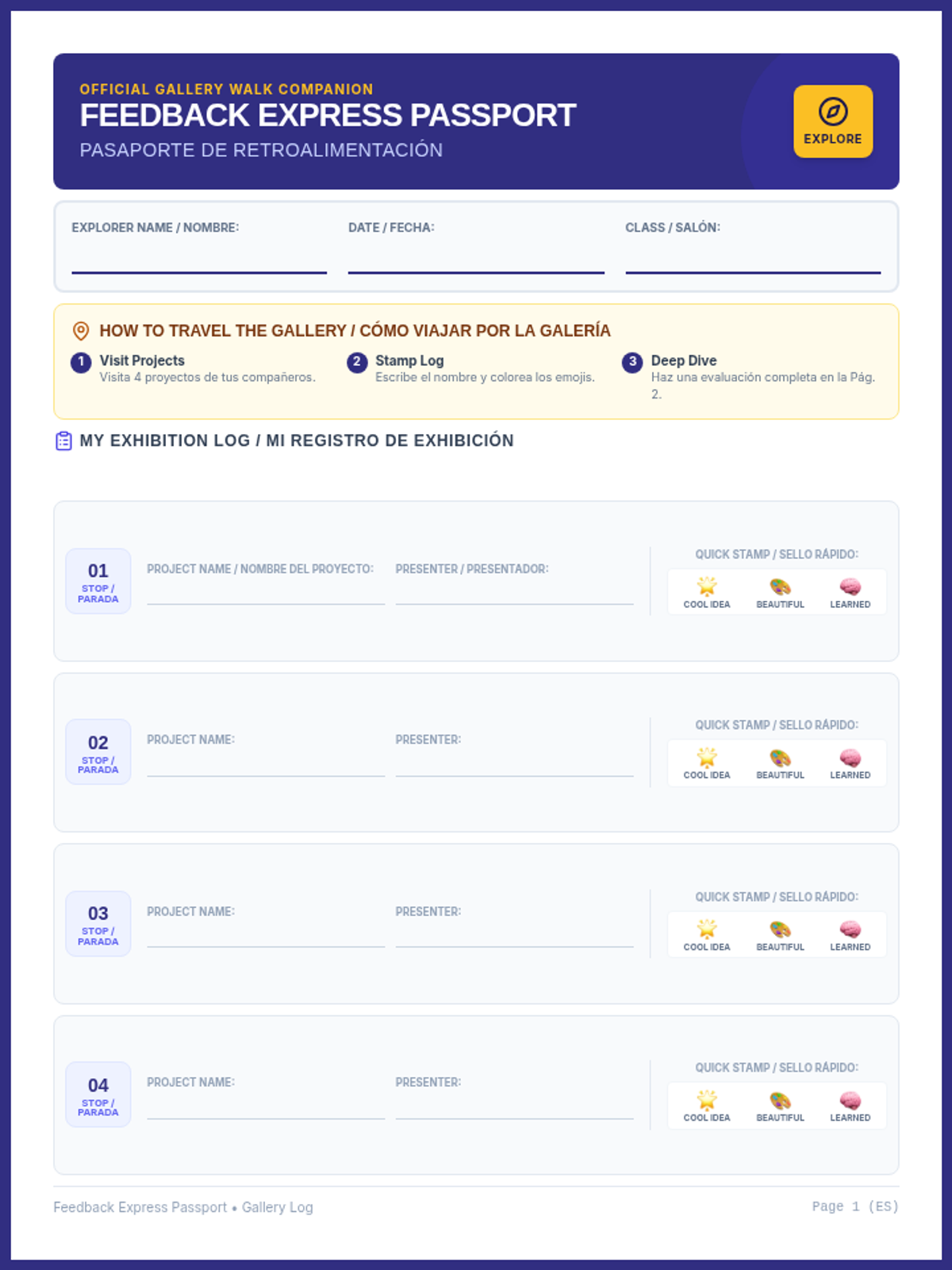
A 6-page comprehensive multilingual gallery walk passport with dedicated dual-language versions in English-Spanish, English-Portuguese, and English-Haitian Creole to scaffold peer and guest exhibition feedback.
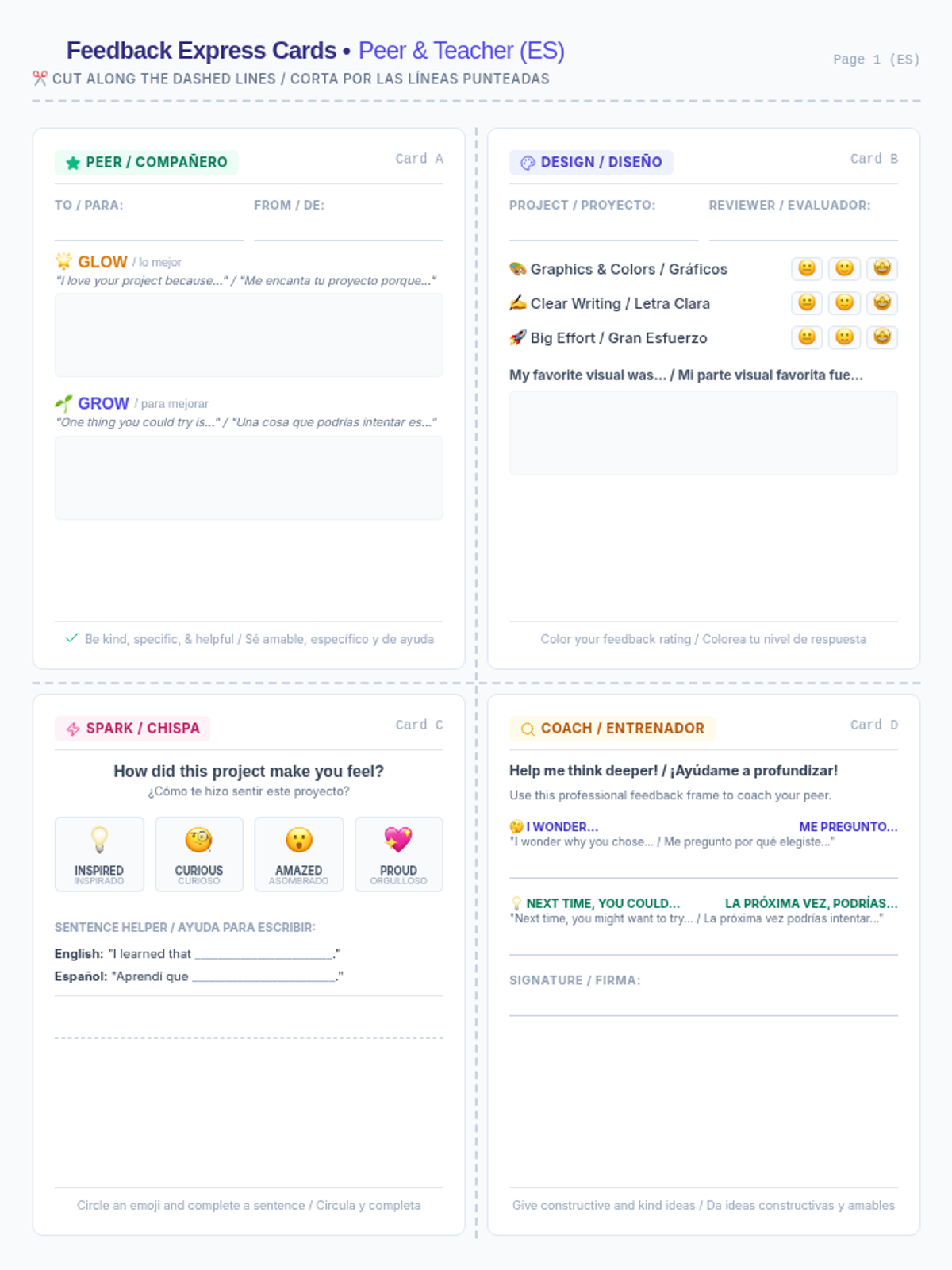
A comprehensive set of 24 printable quarter-page bilingual feedback cards spanning English-Spanish, English-Portuguese, and English-Haitian Creole translations, with emoji scales, visual icons, and specific sentence starters.
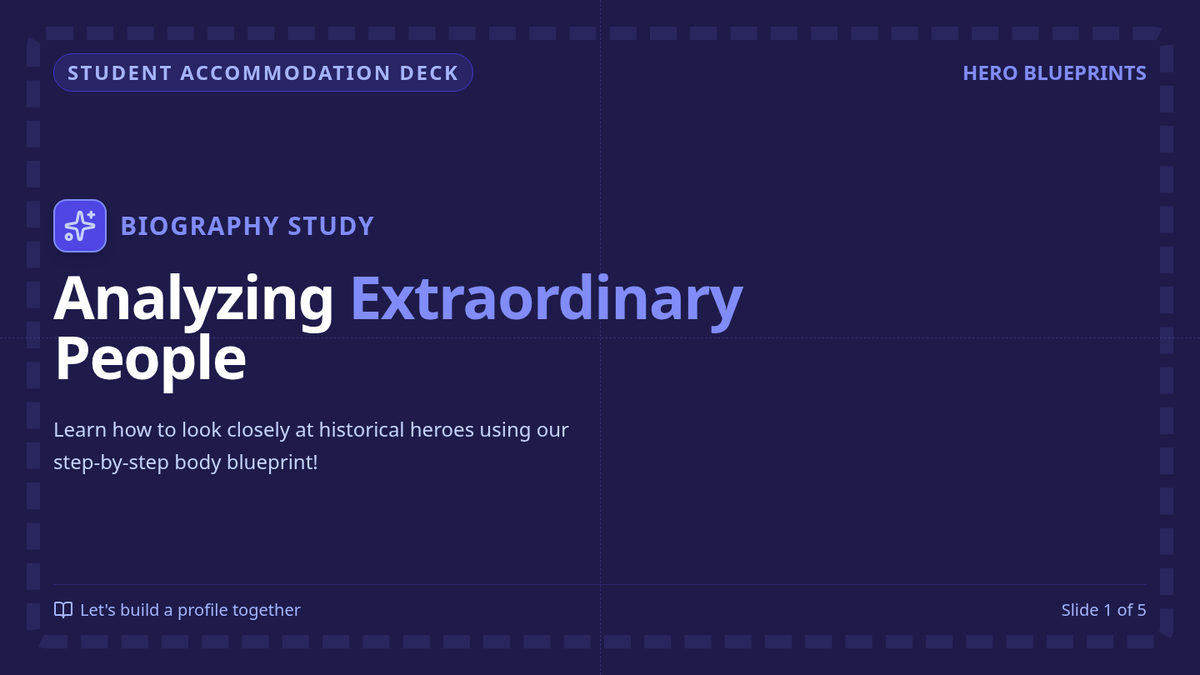
A step-by-step digital presentation with visual anchors, modeling examples, and lesson checklists to guide students through completing the body graphic organizer.
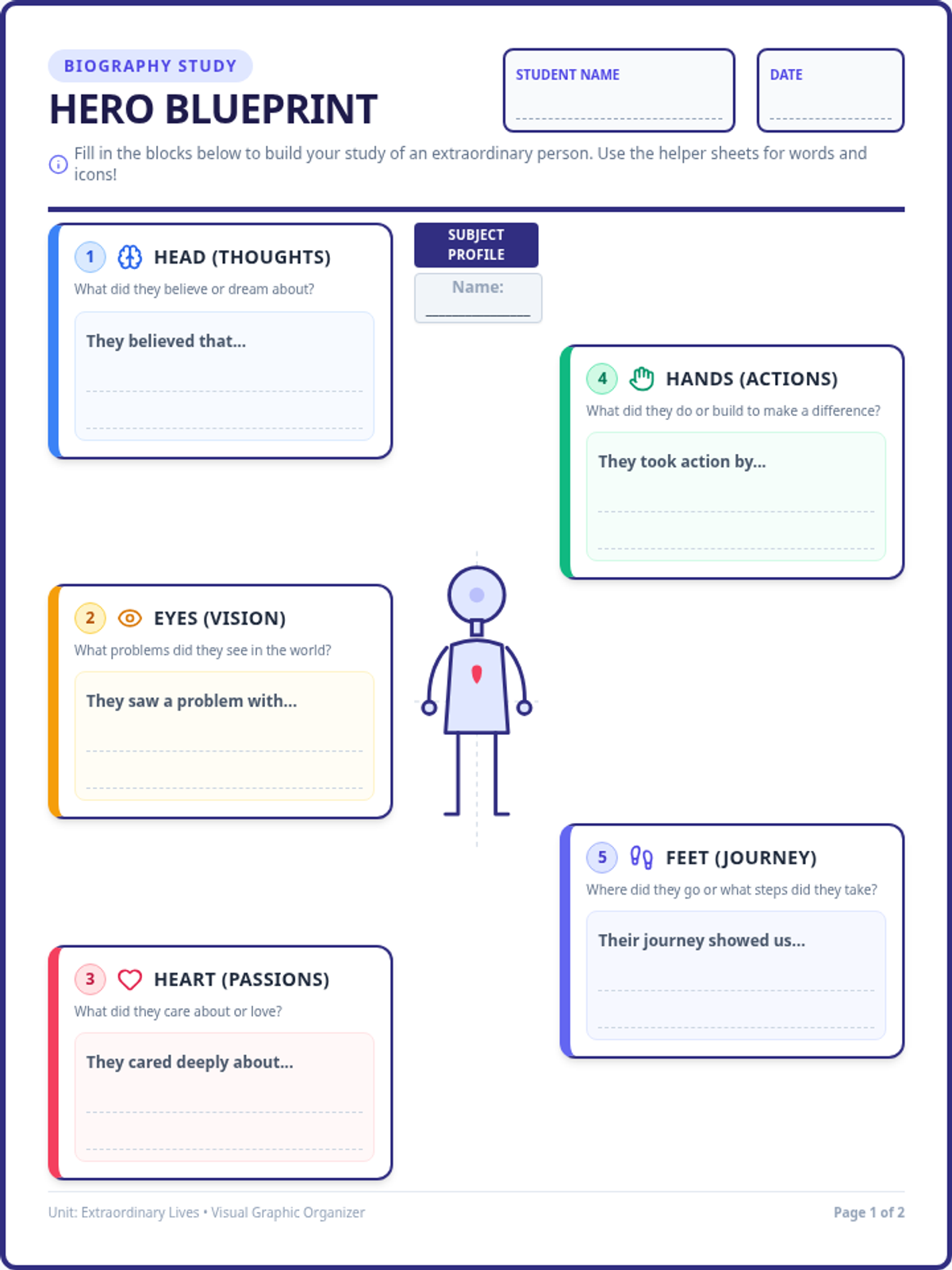
A highly structured, 2-page printable body graphic organizer featuring large visual icon anchors, clear numbered steps, and pre-written sentence starters to support writing and expression.
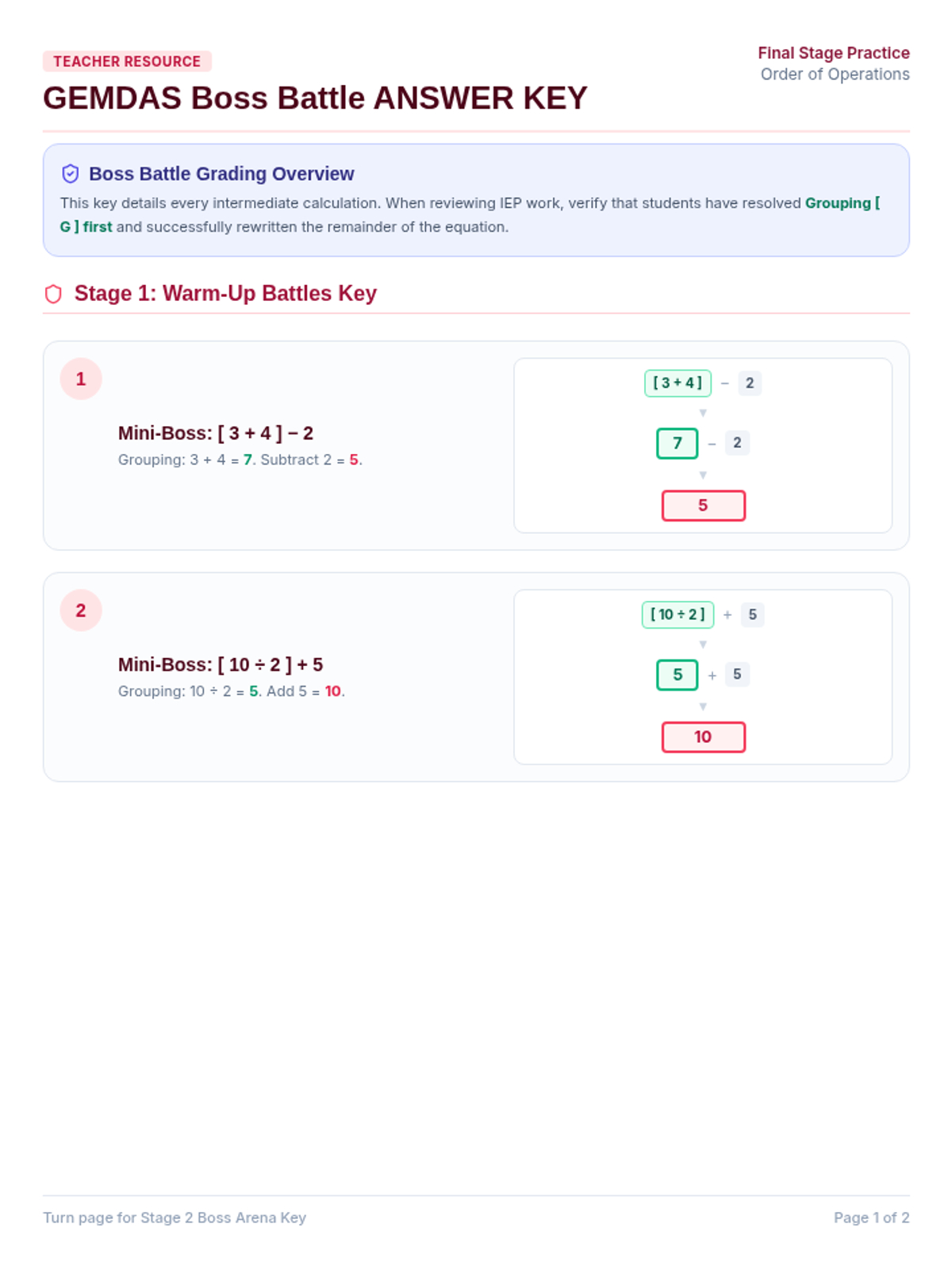
A complete step-by-step teacher answer key matching the GEMDAS Boss Battle Worksheet, with pre-filled solutions and grading tips to evaluate IEP students.
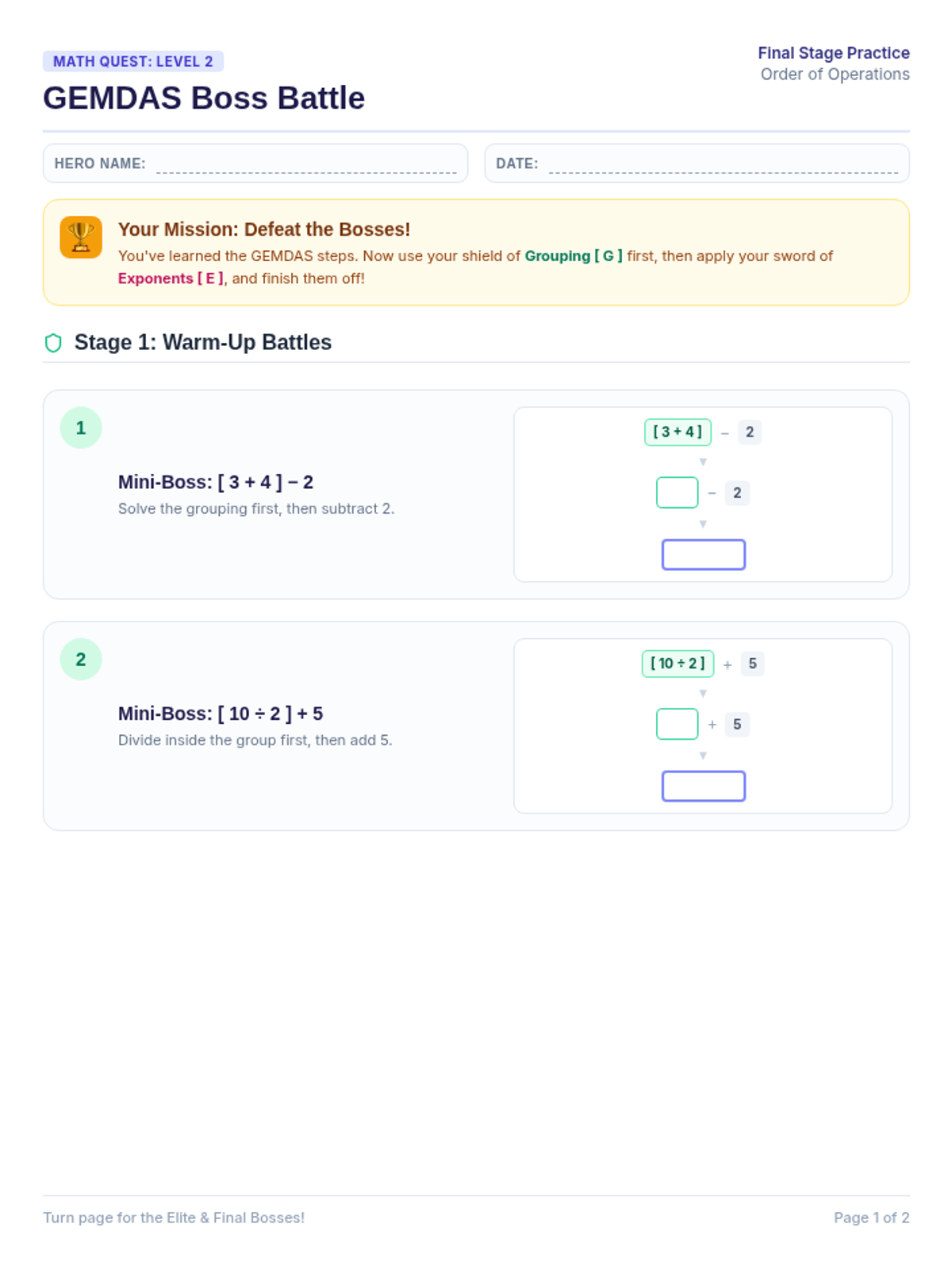
A highly engaging 'Boss Battle' themed printable practice worksheet that reviews GEMDAS step-by-step with progressive difficulty, built for IEP students with visual scaffolding.
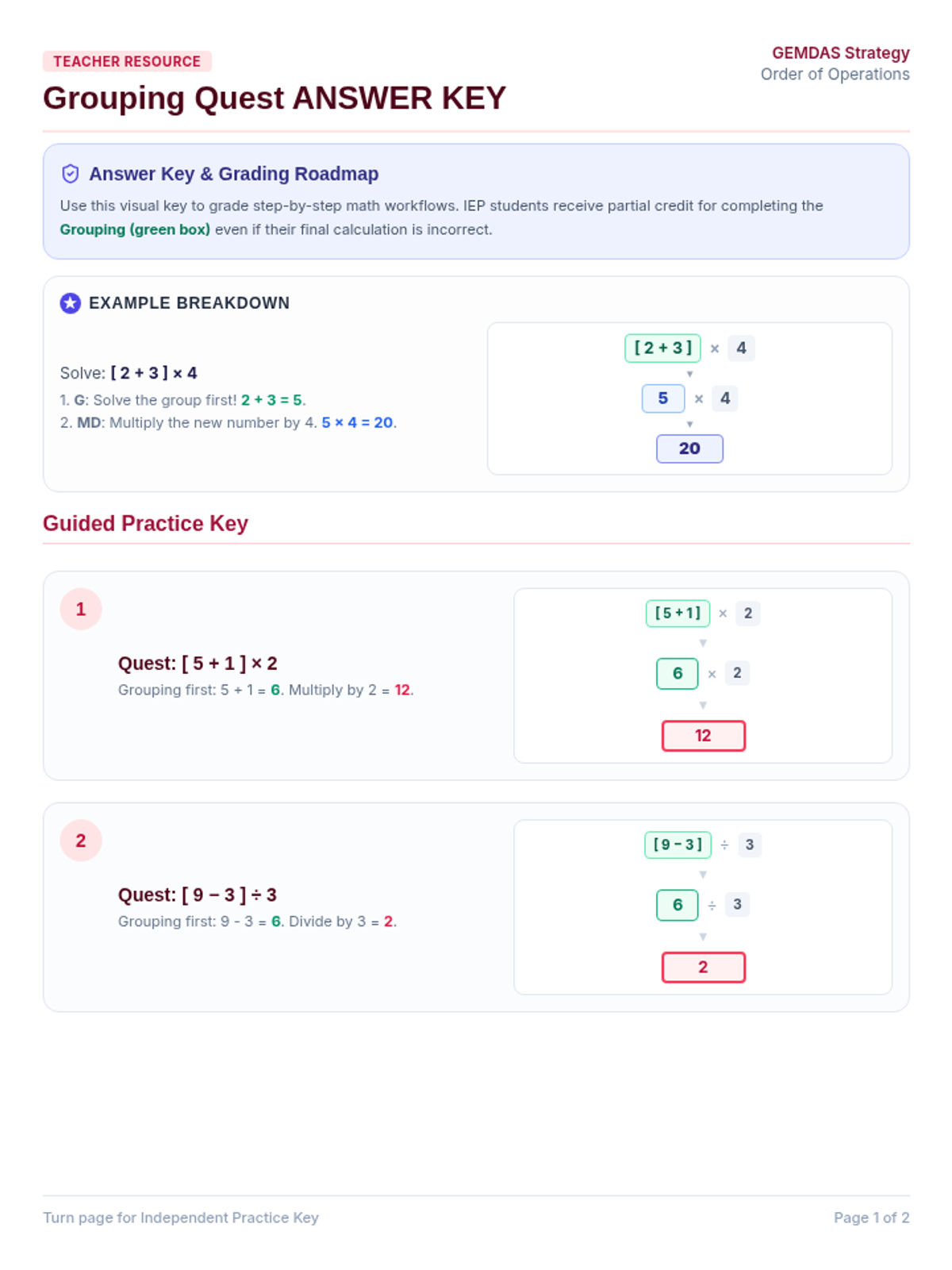
A complete, step-by-step teacher answer key matching the Grouping Quest Worksheet, with pre-filled answers and instruction notes to help evaluate student understanding.
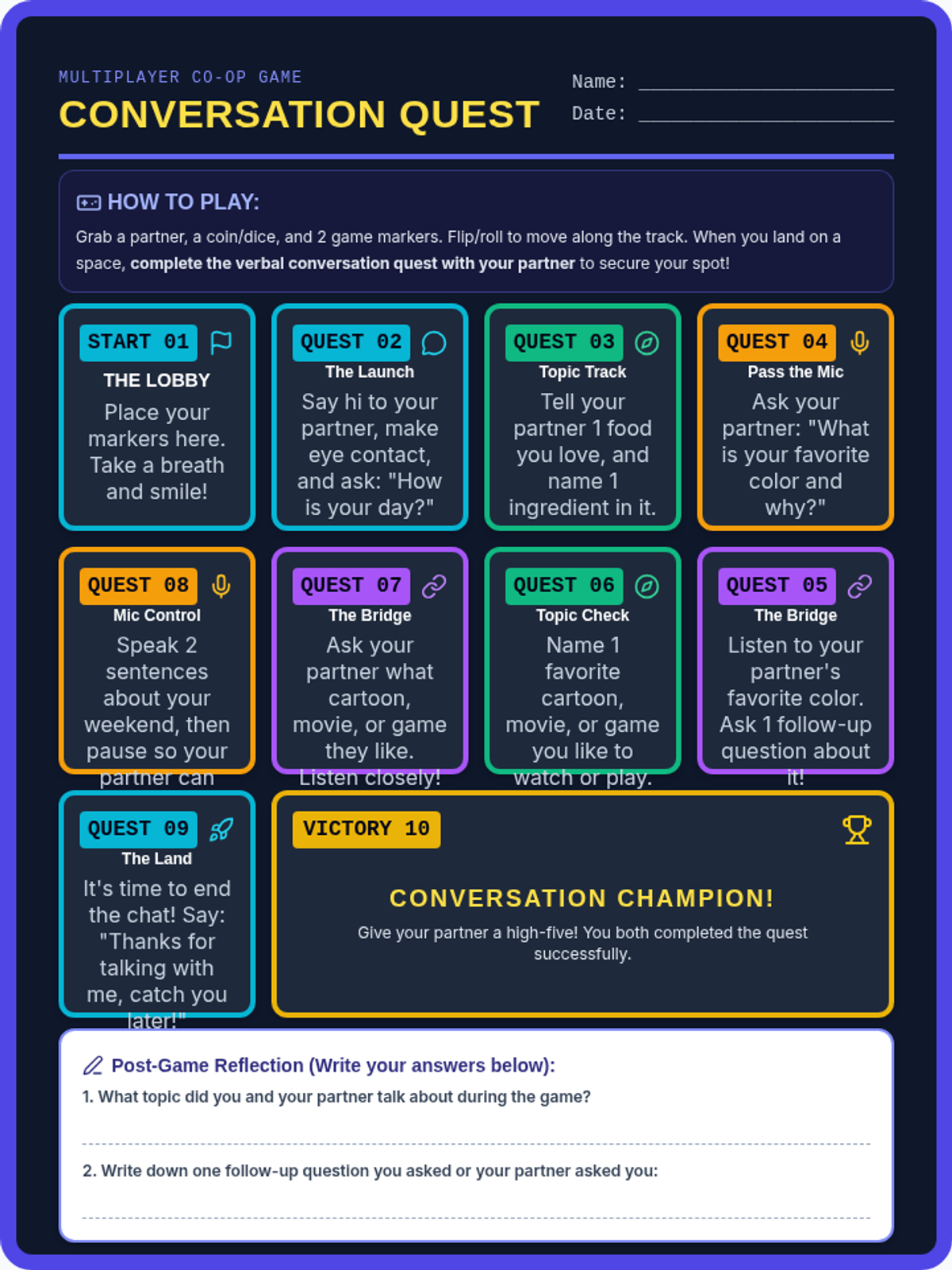
A print-ready, cooperative board game sheet where students with ASD practice real-time conversations, taking turns, staying on-topic, and building bridges to move their game pieces to the finish.
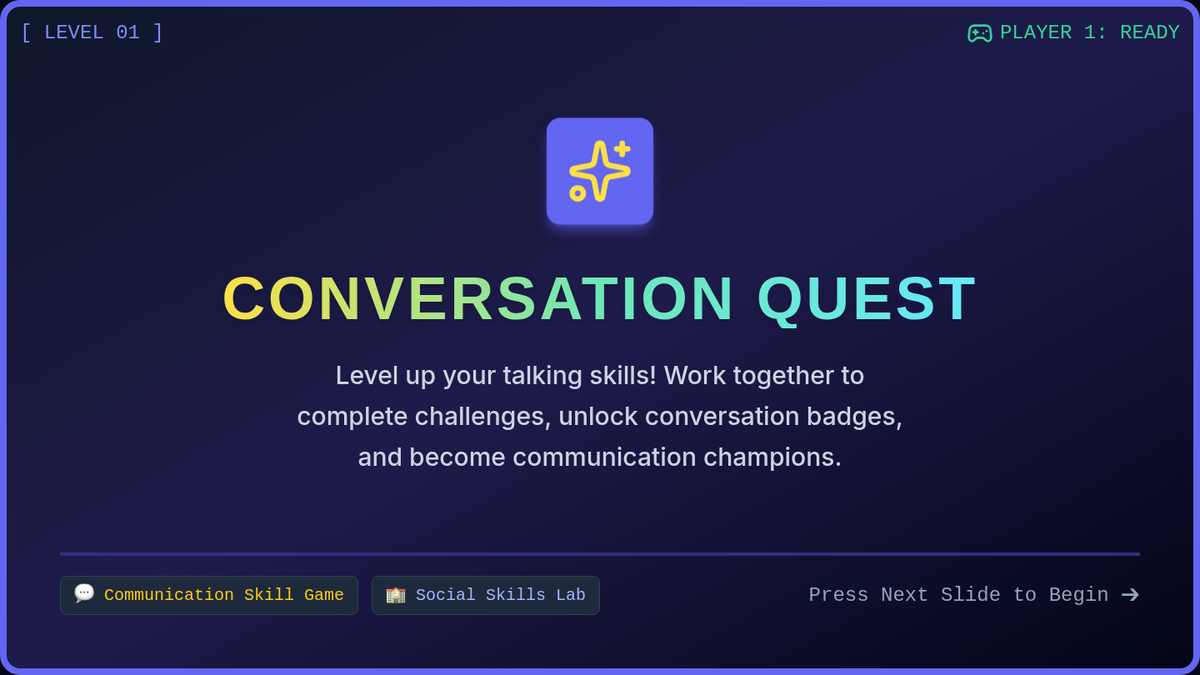
An interactive, gamified slide deck that teaches staying on-topic, taking turns, starting/ending conversations, and follow-up questions using visual RPG-style quests.
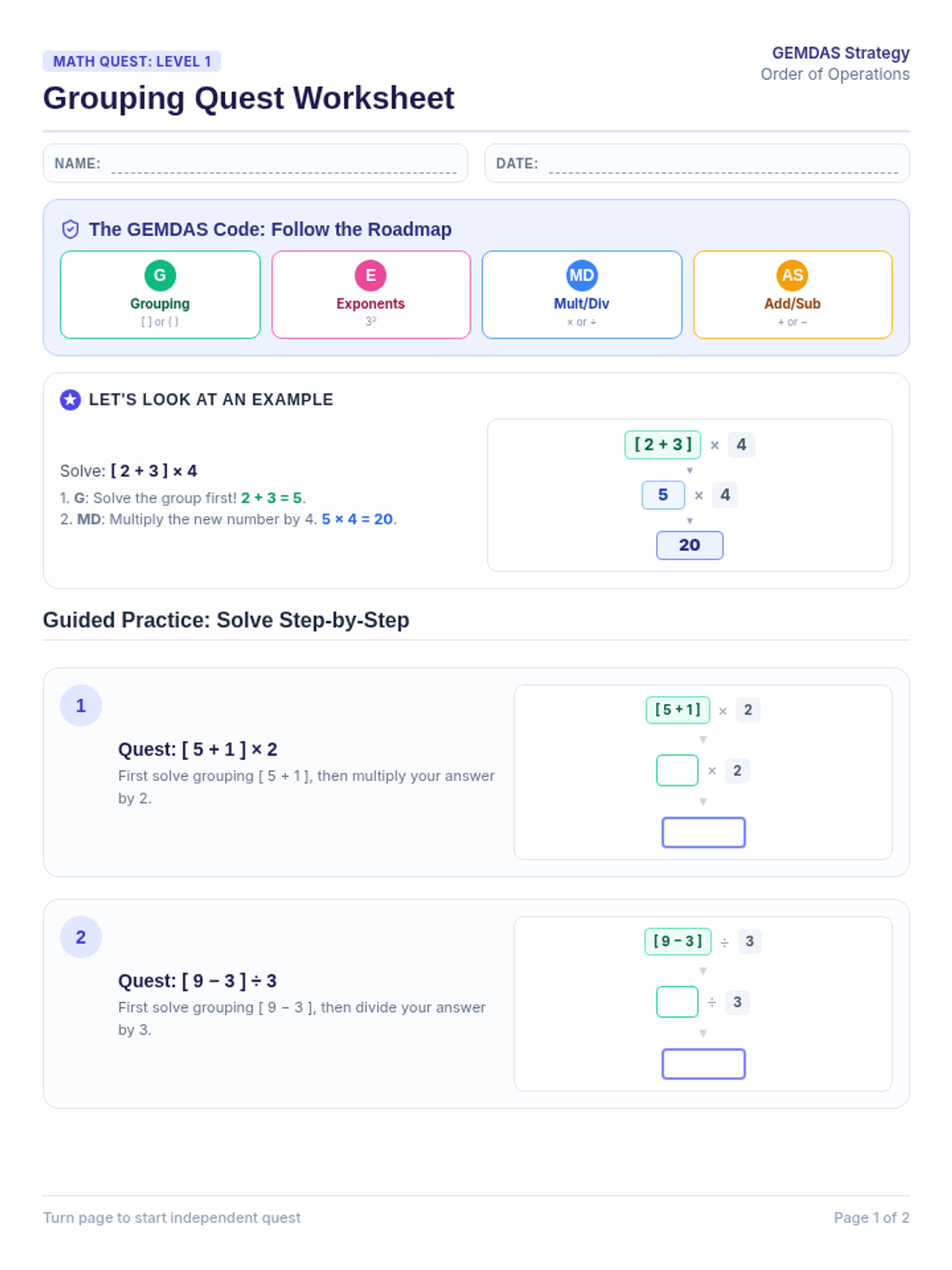
A highly structured, shape-coded printable worksheet featuring step-by-step graphic organizers and simplified numbers, specifically designed for IEP students to master GEMDAS.
An interactive slide deck introducing order of operations using the GEMDAS strategy, custom-designed for IEP support with visual grouping cues (G) and clear step-by-step math animations.
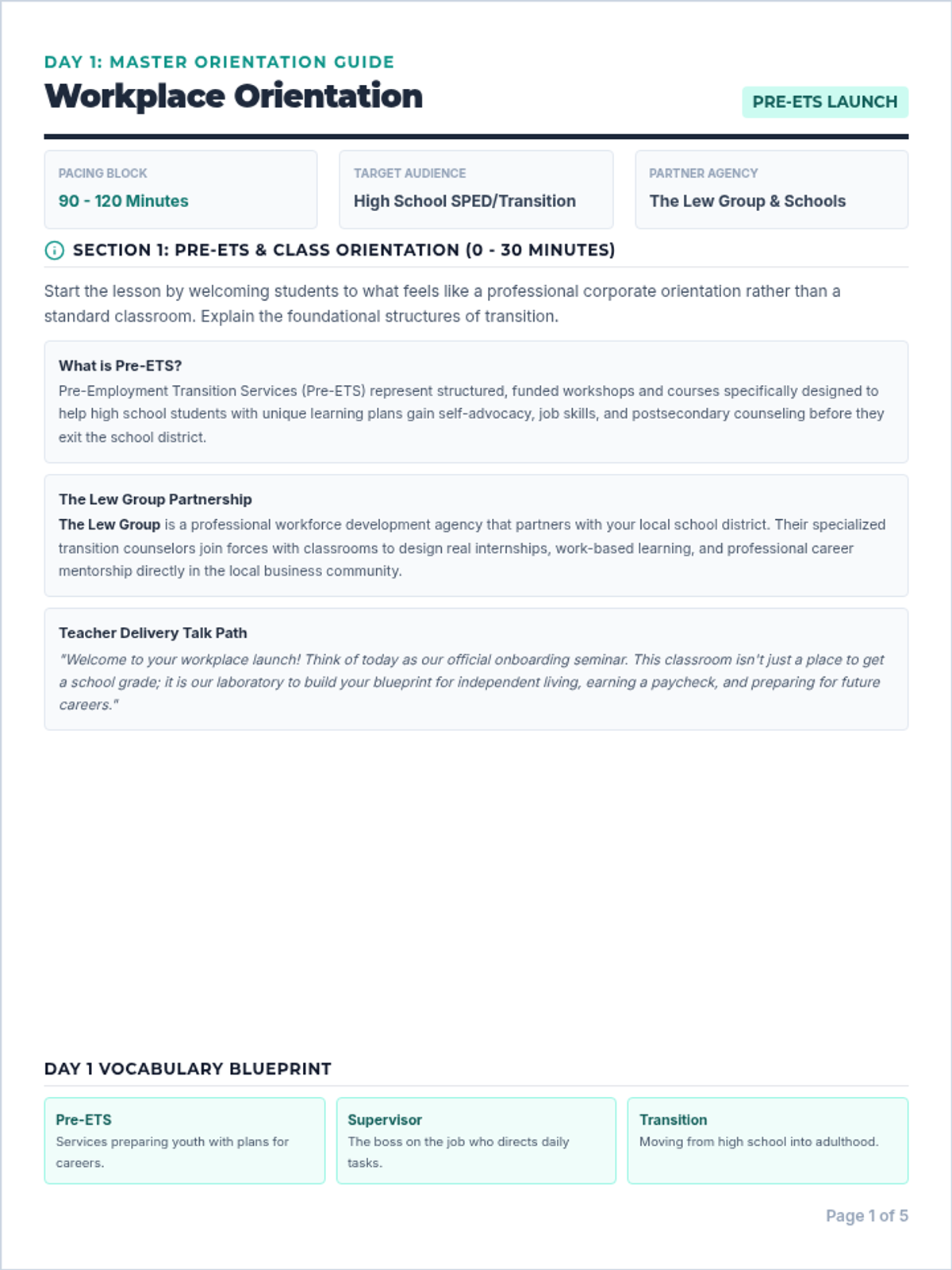
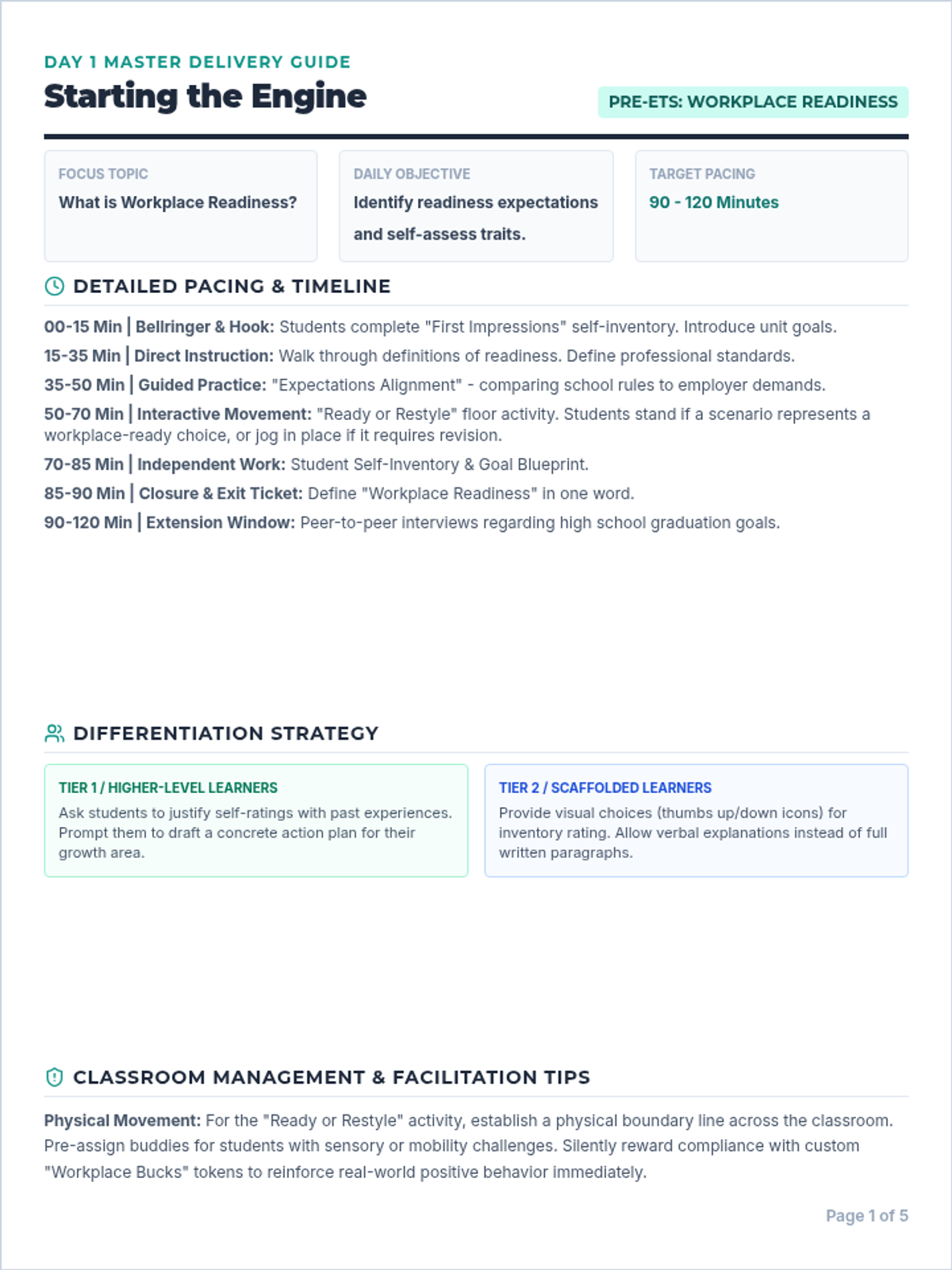
A highly detailed 5-page master teacher orientation and lesson plan guide for Day 1 of the Workplace Readiness unit. It outlines a 90-120 minute transition-oriented lesson structure, featuring slide outlines, a workplace simulation launch, 24 printable rule cards, and detailed differentiation frameworks.
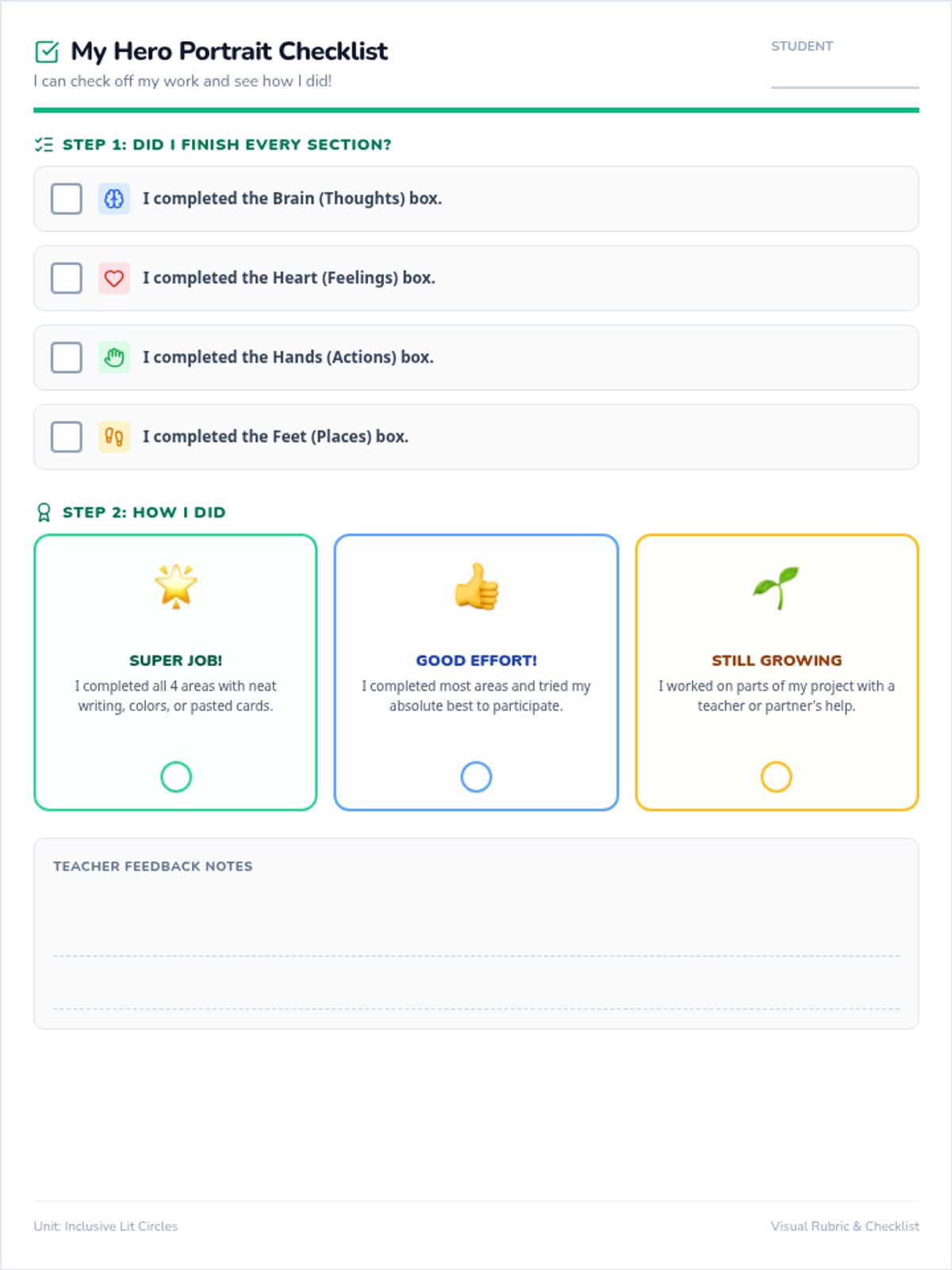
A highly simplified visual grading rubric featuring clear checkboxes and smiley-face levels for accessible self-assessment or guided feedback.
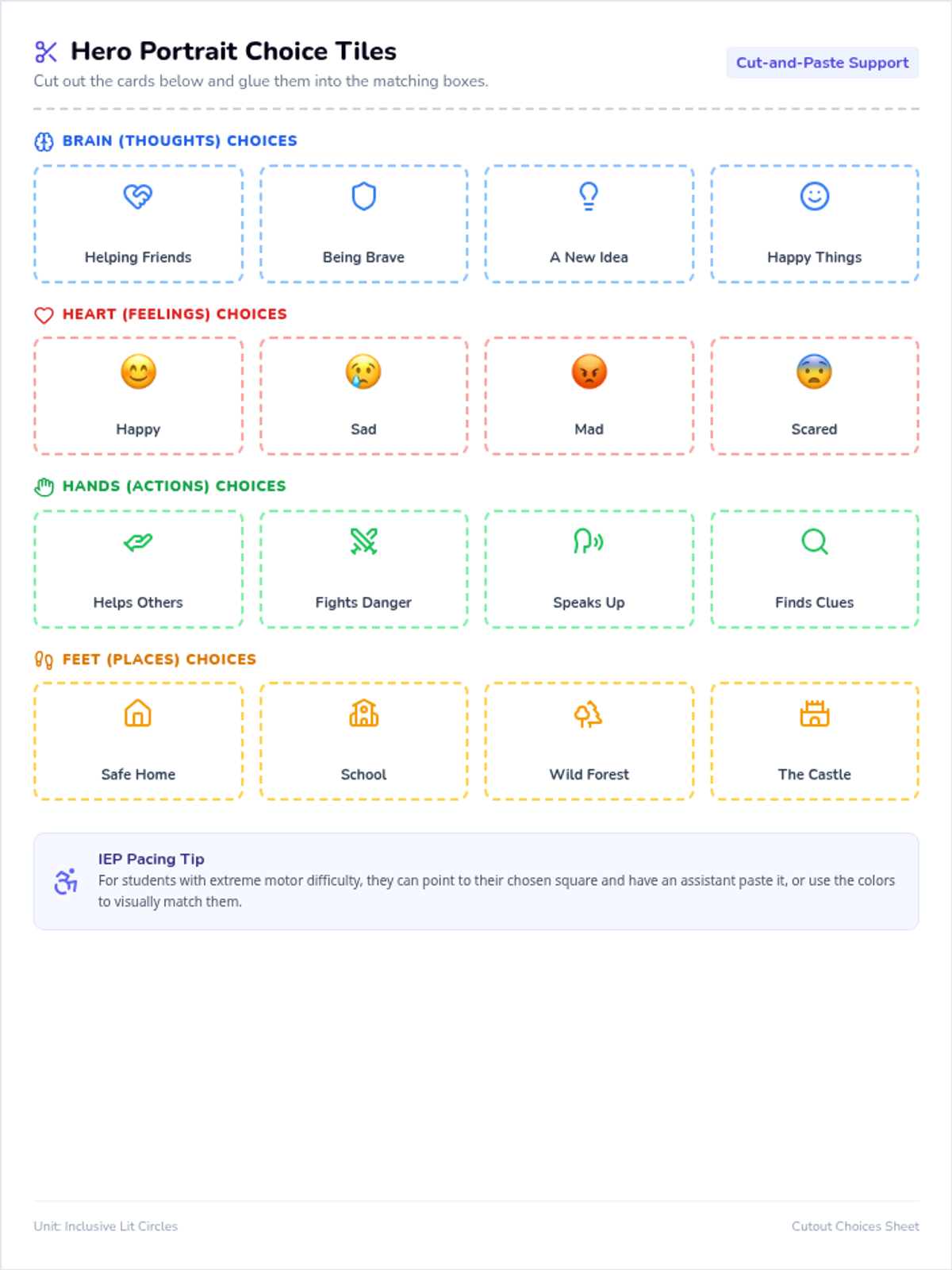
A cut-and-paste choice sheet containing structured cards with simple text and icons that students can select, cut out, and paste onto their Hero Portrait template.
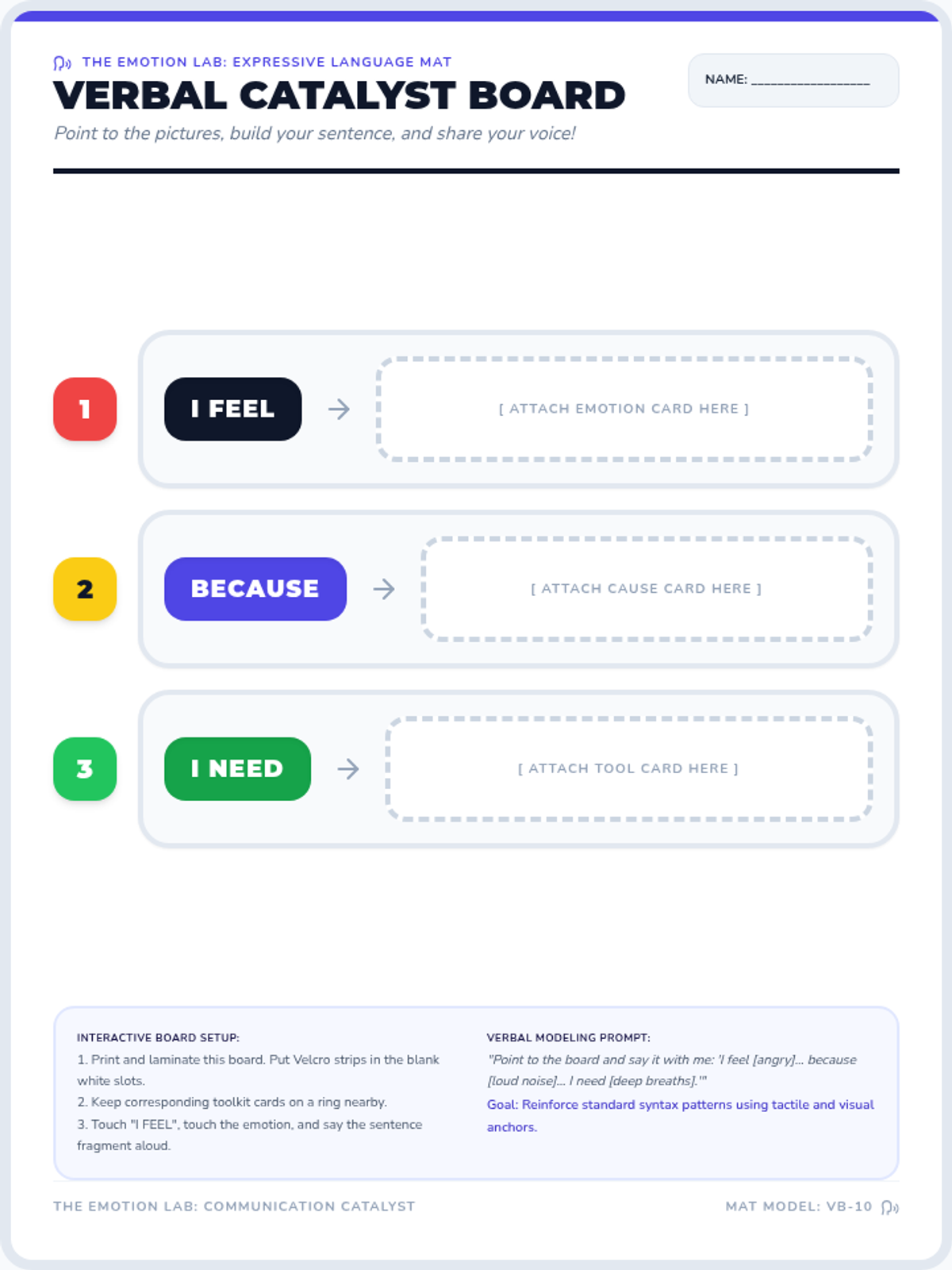
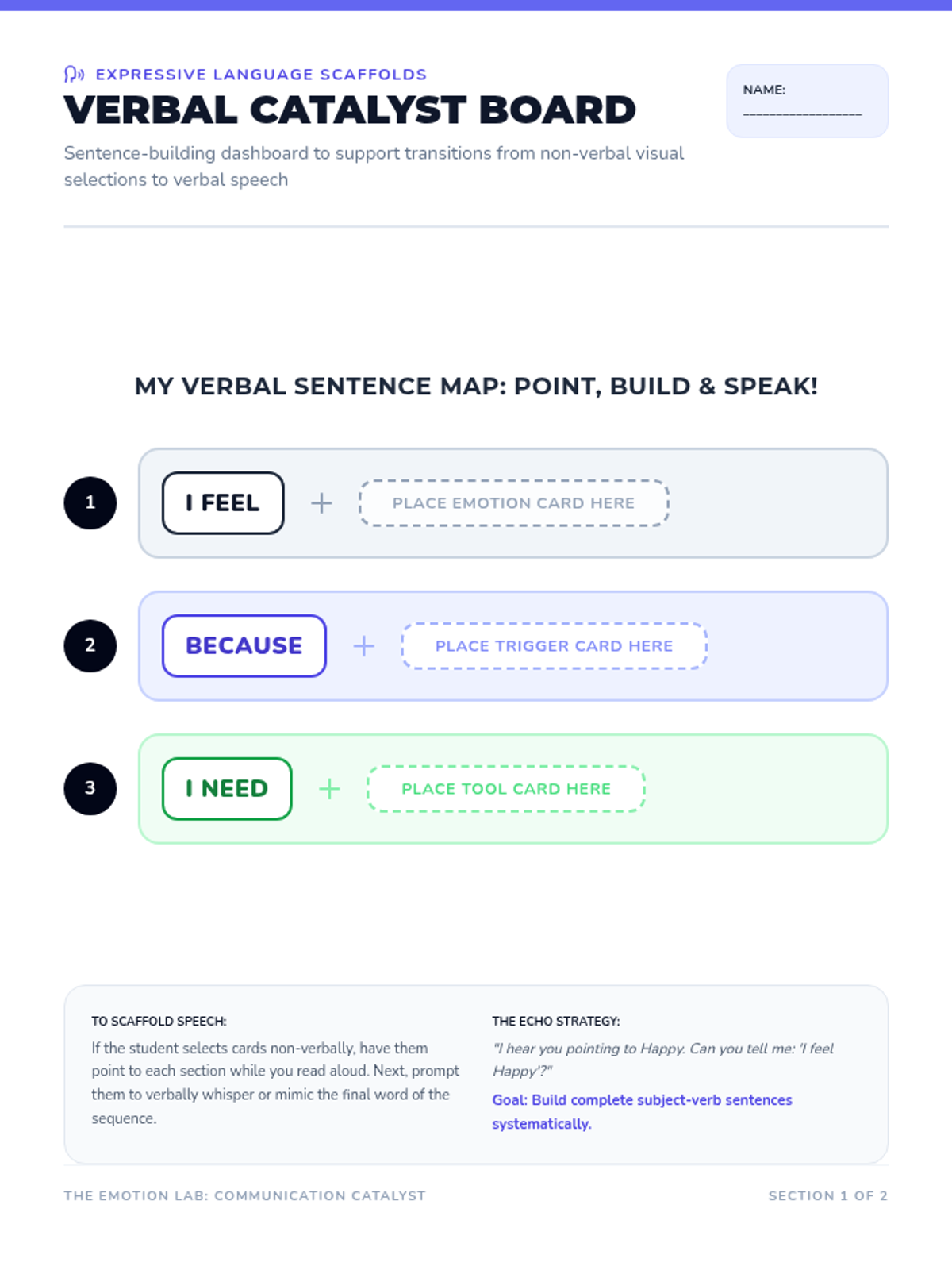
A dedicated desktop communication board designed to scaffold verbal speech for limited-verbal students, guiding them systematically through 'I Feel', 'Because', and 'I Need' verbal expansions.
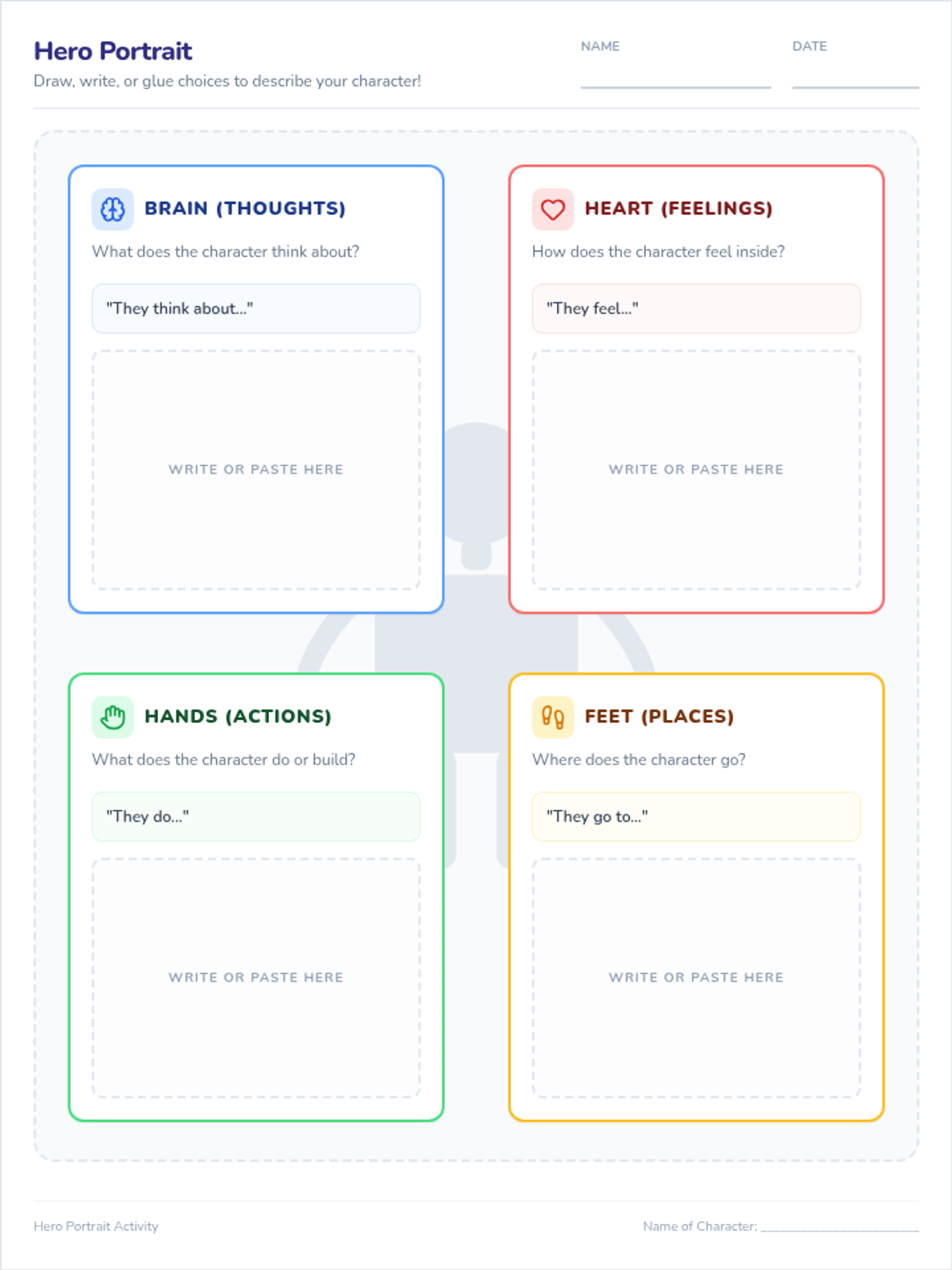
A scaffolded student worksheet featuring a character body map outline with visual callout boxes and concrete sentence starters for character traits.
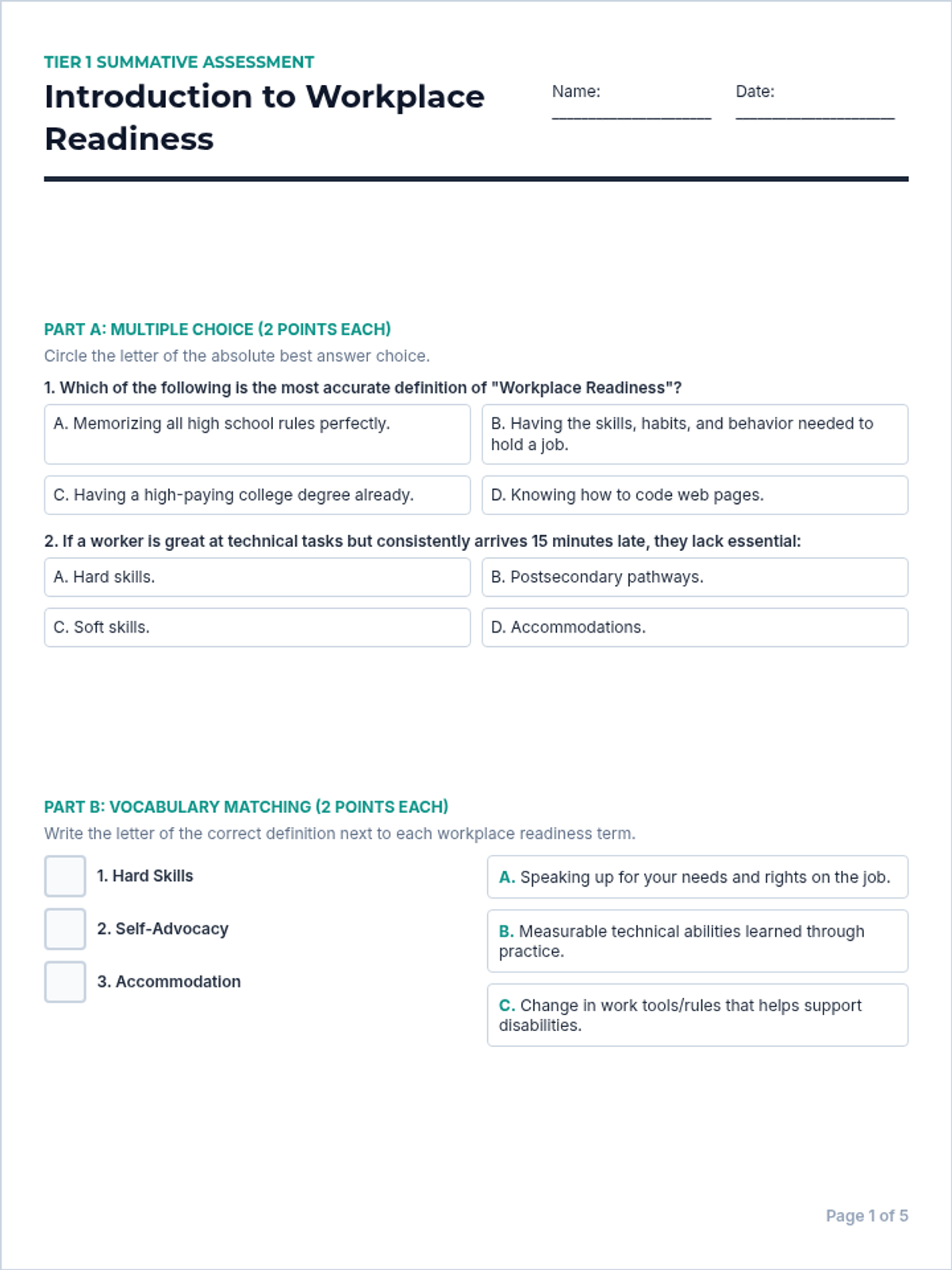
A 5-page end-of-unit master assessment booklet featuring differentiated Tier 1 (higher level) and Tier 2 (lower level) tests, complete with scenario questions, scoring rubrics, and answer keys.
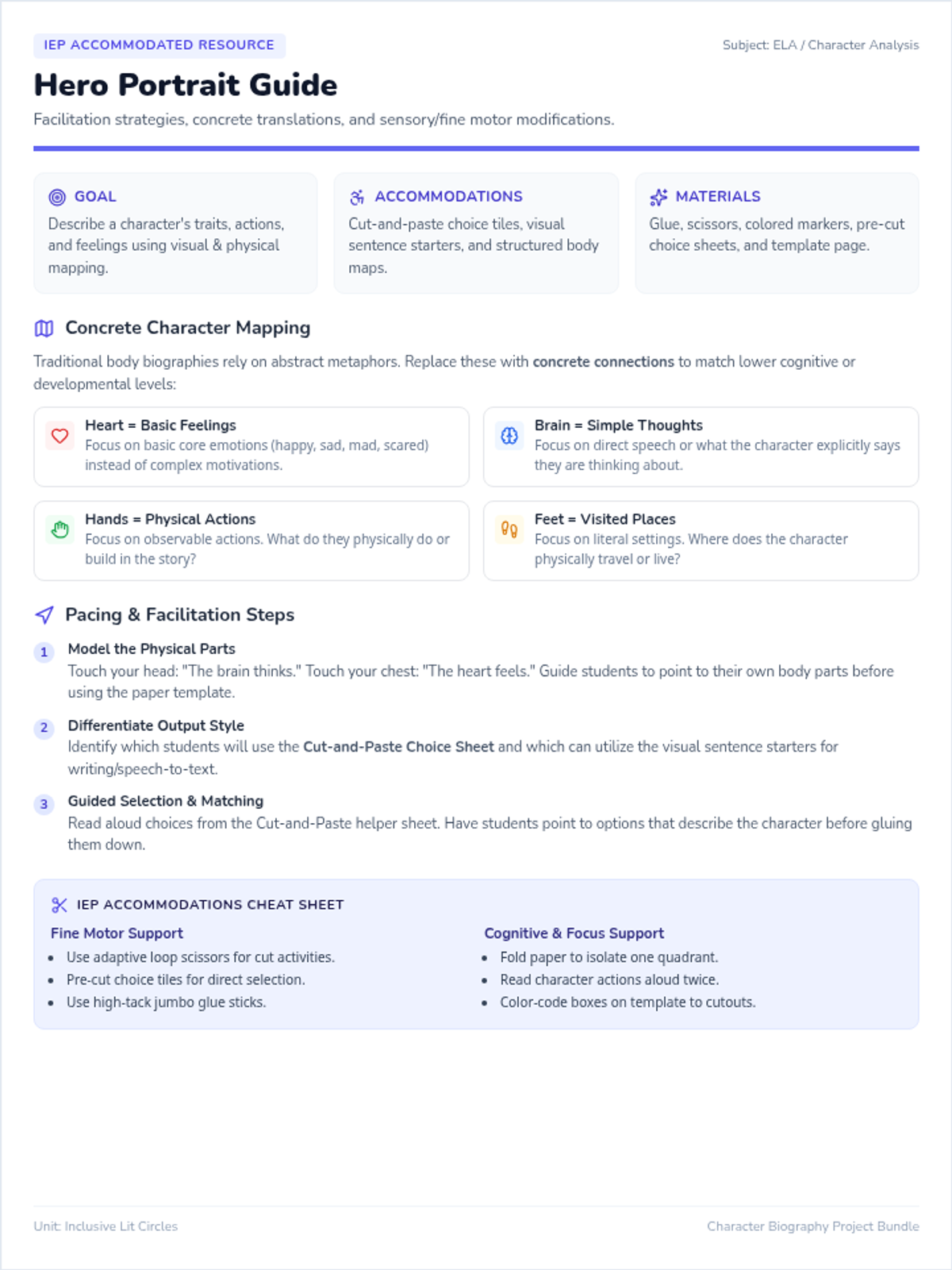
A comprehensive 1-page step-by-step guide for teachers detailing how to introduce, support, and assess the scaffolded Hero Portrait project for IEP students.
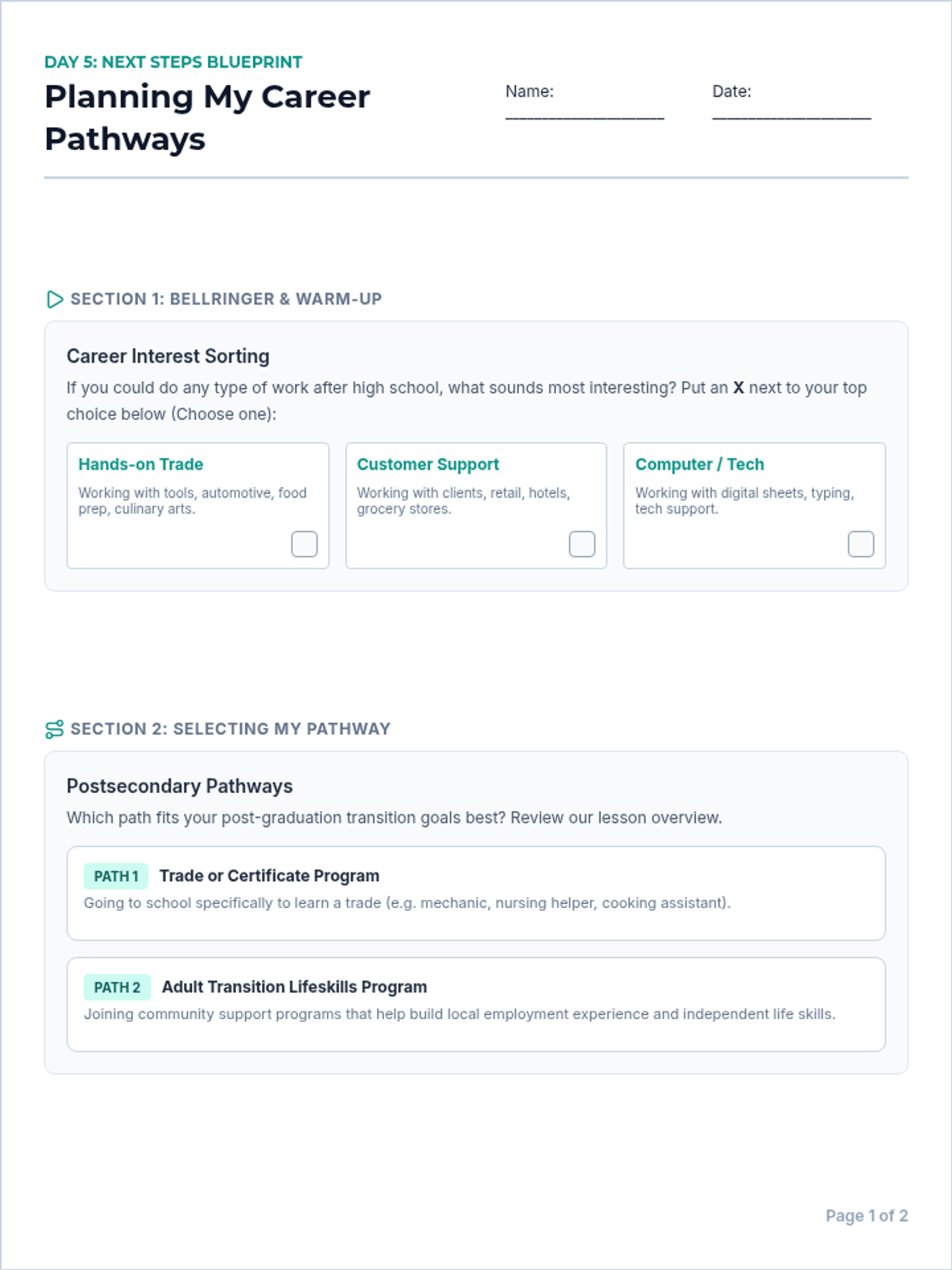
A 2-page print-ready student workbook and activity guide for Day 5 covering career interest mapping and postsecondary action lists.
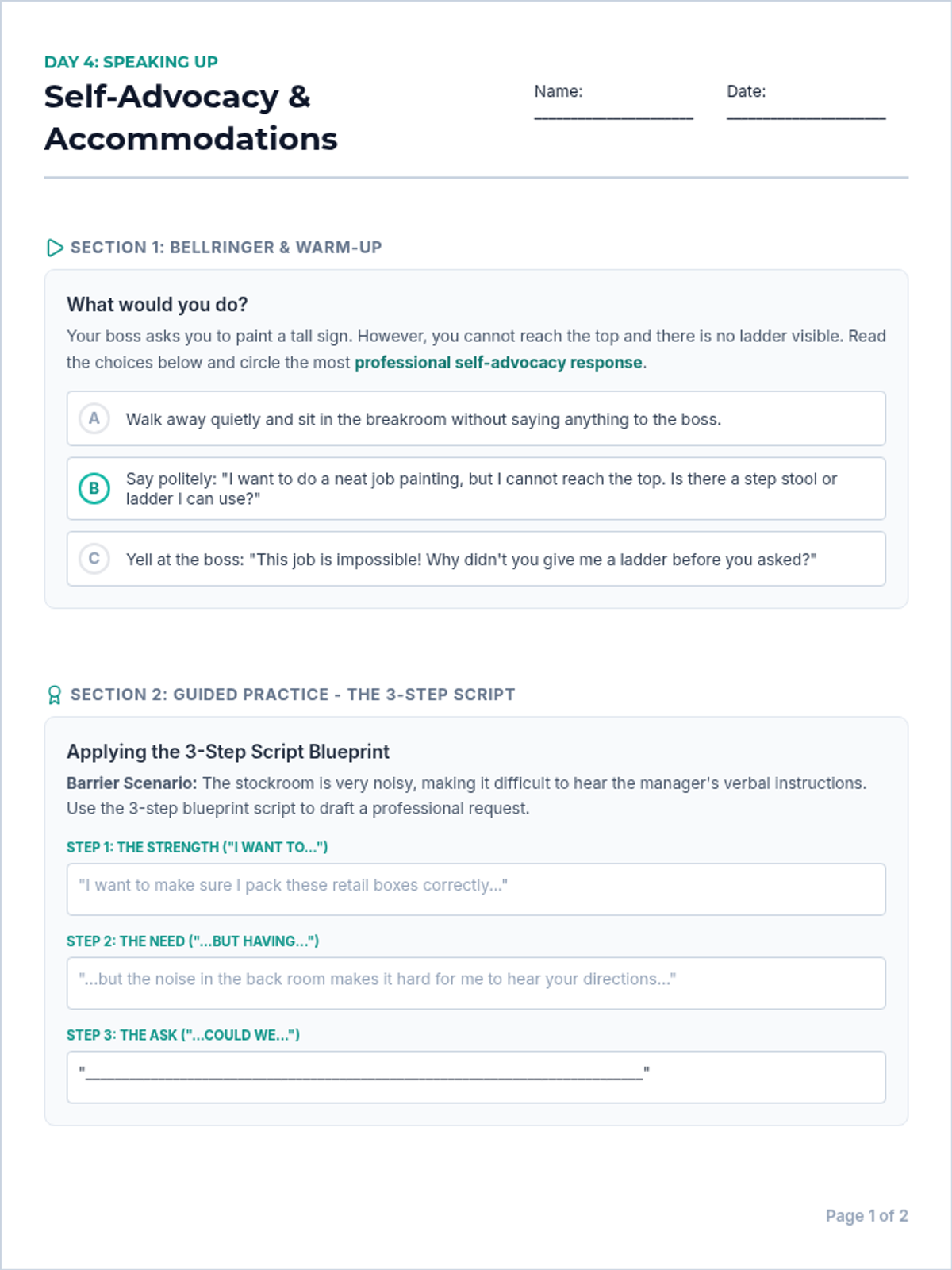
A 2-page print-ready student workbook and activity guide for Day 4 covering self-advocacy scripts and requesting accommodations under the ADA.
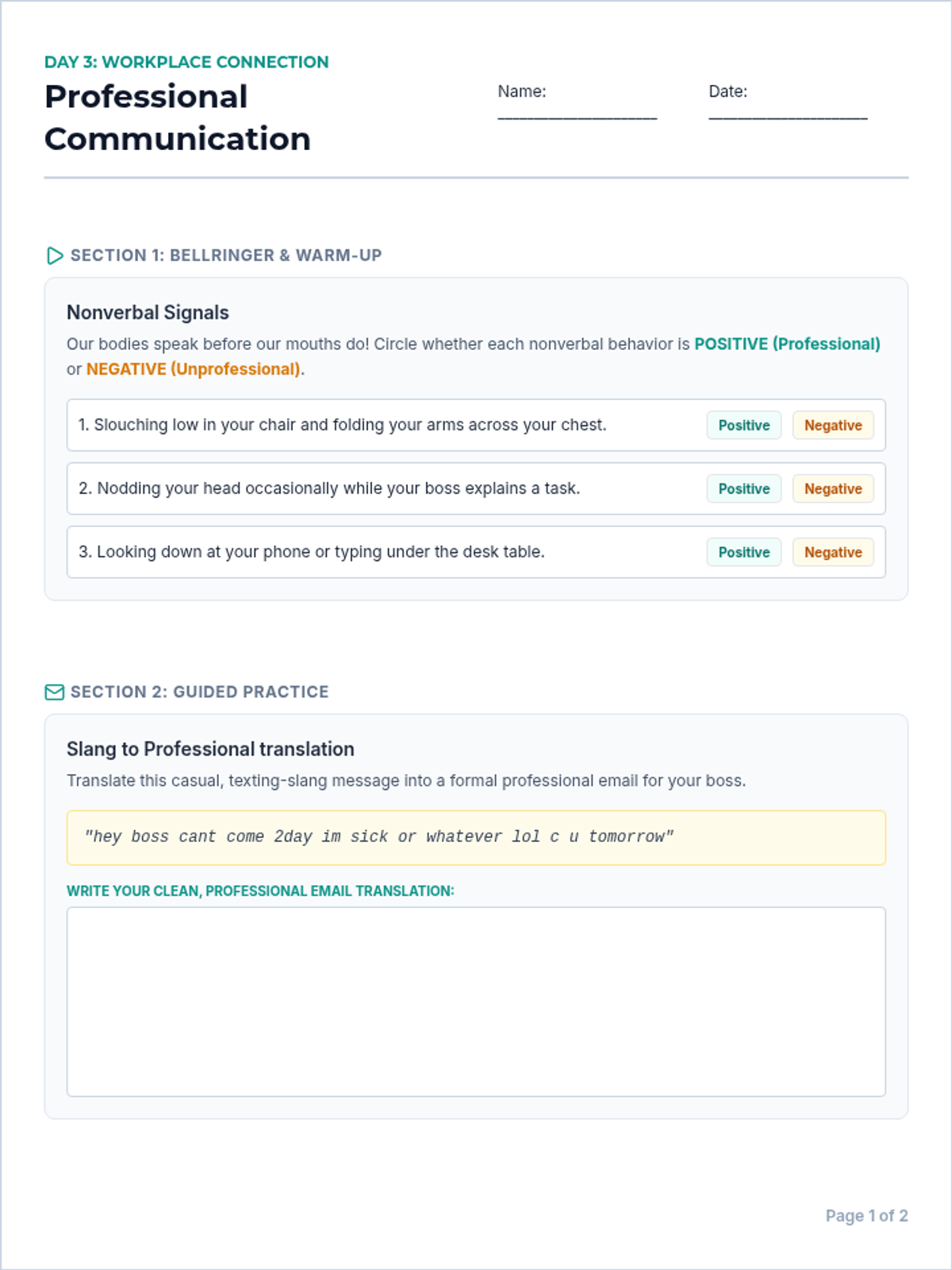
A 2-page print-ready student workbook and activity guide for Day 3 covering professional verbal and non-verbal communication, email etiquette, and active teamwork.
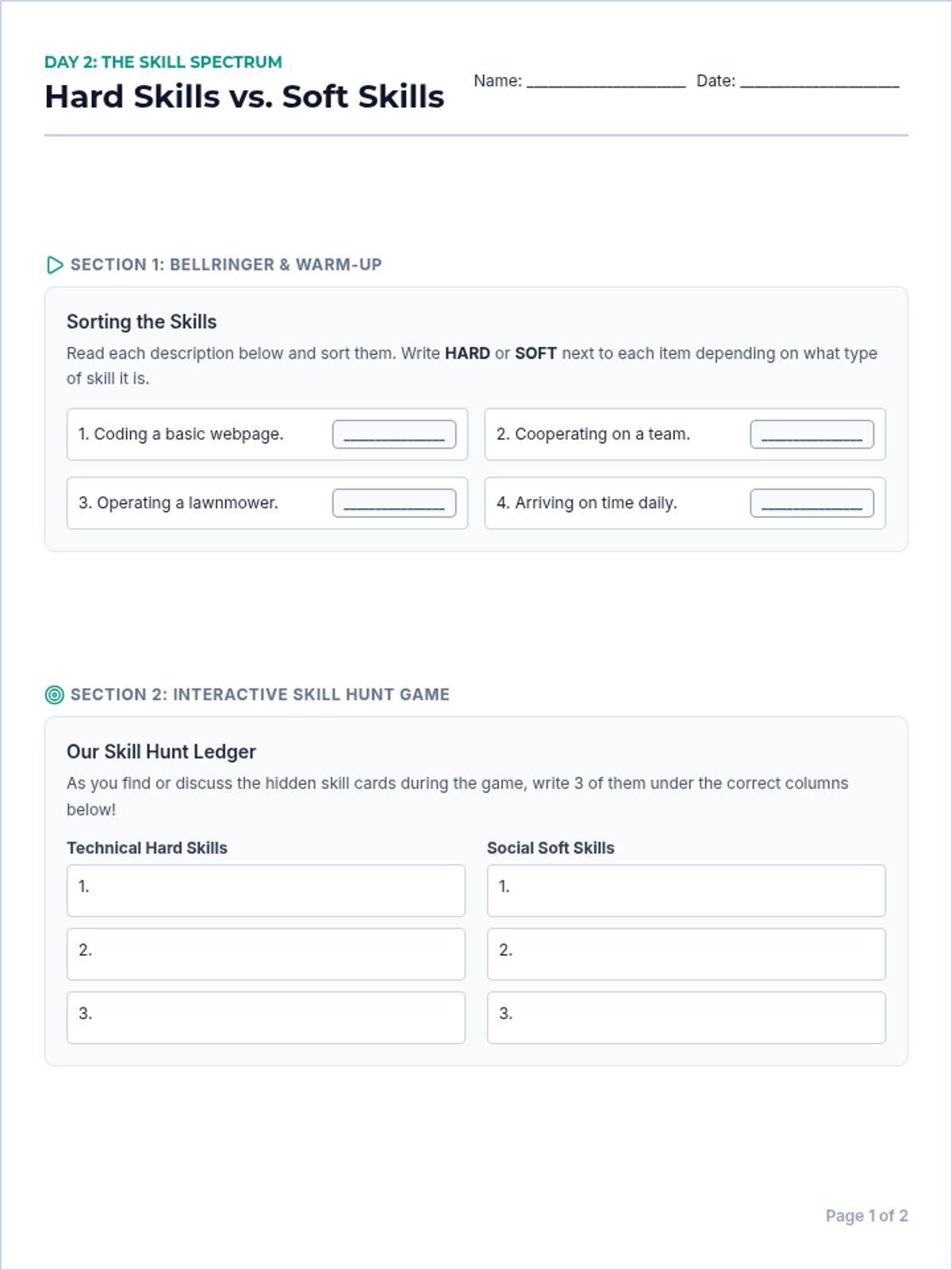
A 2-page print-ready student workbook and activity guide for Day 2 covering technical hard skills versus interpersonal soft skills.
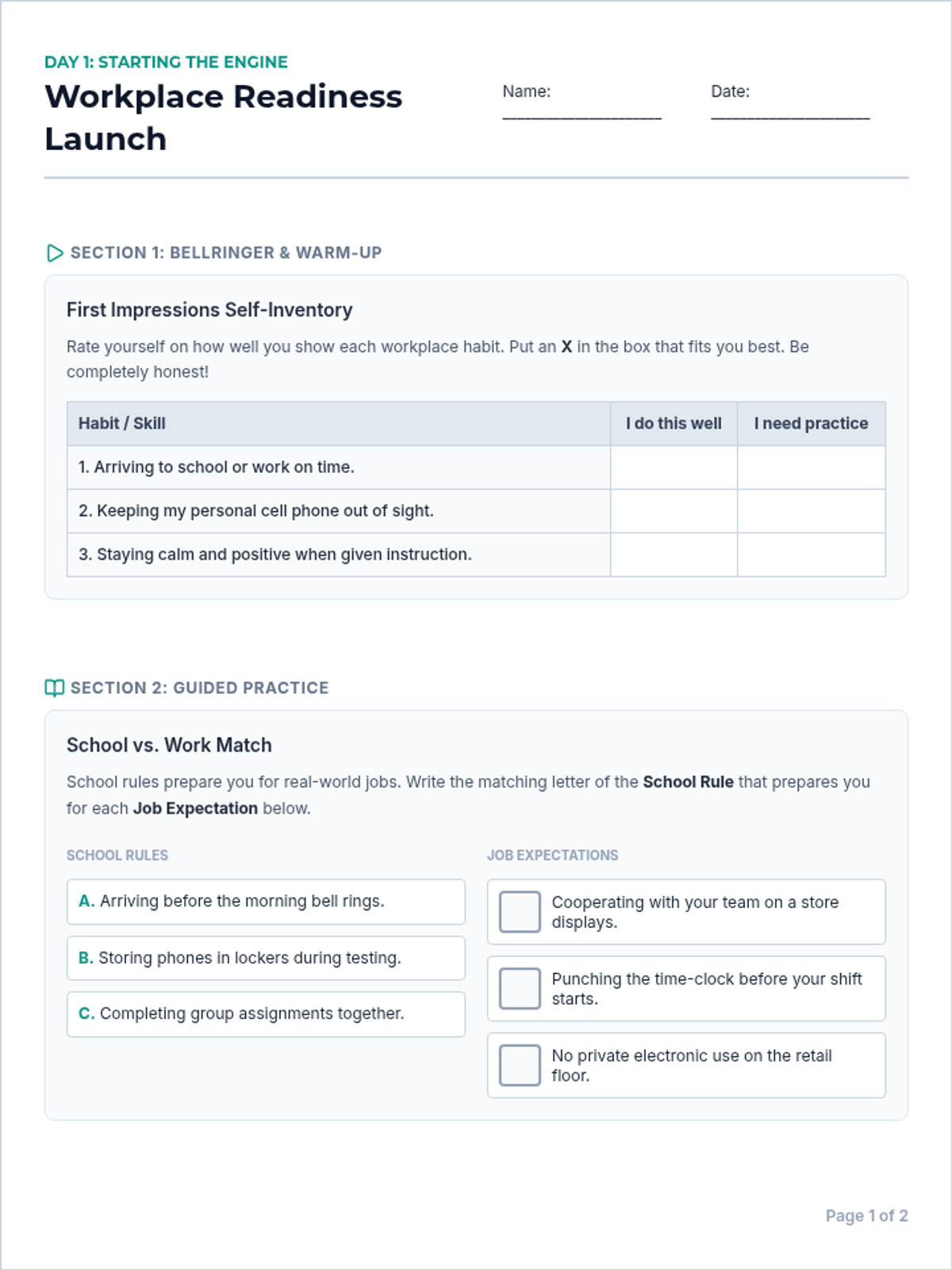
A 2-page print-ready open-ended student workbook and activity tracker for Day 1. It includes the Clock-In Challenge warm-up, a dedicated open-ended tracker for the Classroom Rule Decider Game, transition reflection prompts, a self-advocacy goal-setting guide with sentence starters, and the official Day 1 Clock-Out Exit Ticket.
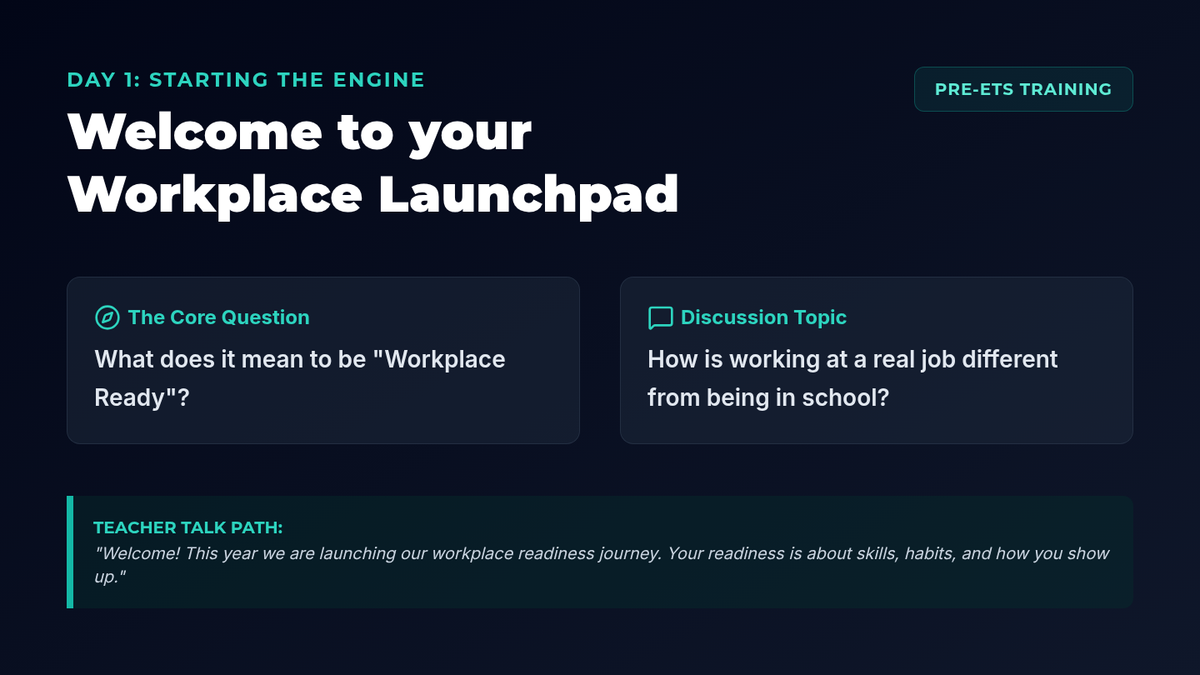
A complete 10-slide 16:9 interactive presentation deck covering all 5 days of instruction with high-contrast layouts, teacher talking points, and classroom discussion questions.
An interactive communication-scaffolding board and cut-out prompt cards designed to systematically increase verbal speech and expressive language skills for early or limited-verbal communicators.
A 5-page complete teacher pacing and delivery guide detailing lesson-by-lesson pacing, direct instruction talk paths, and Tier 1 and 2 differentiation plans.
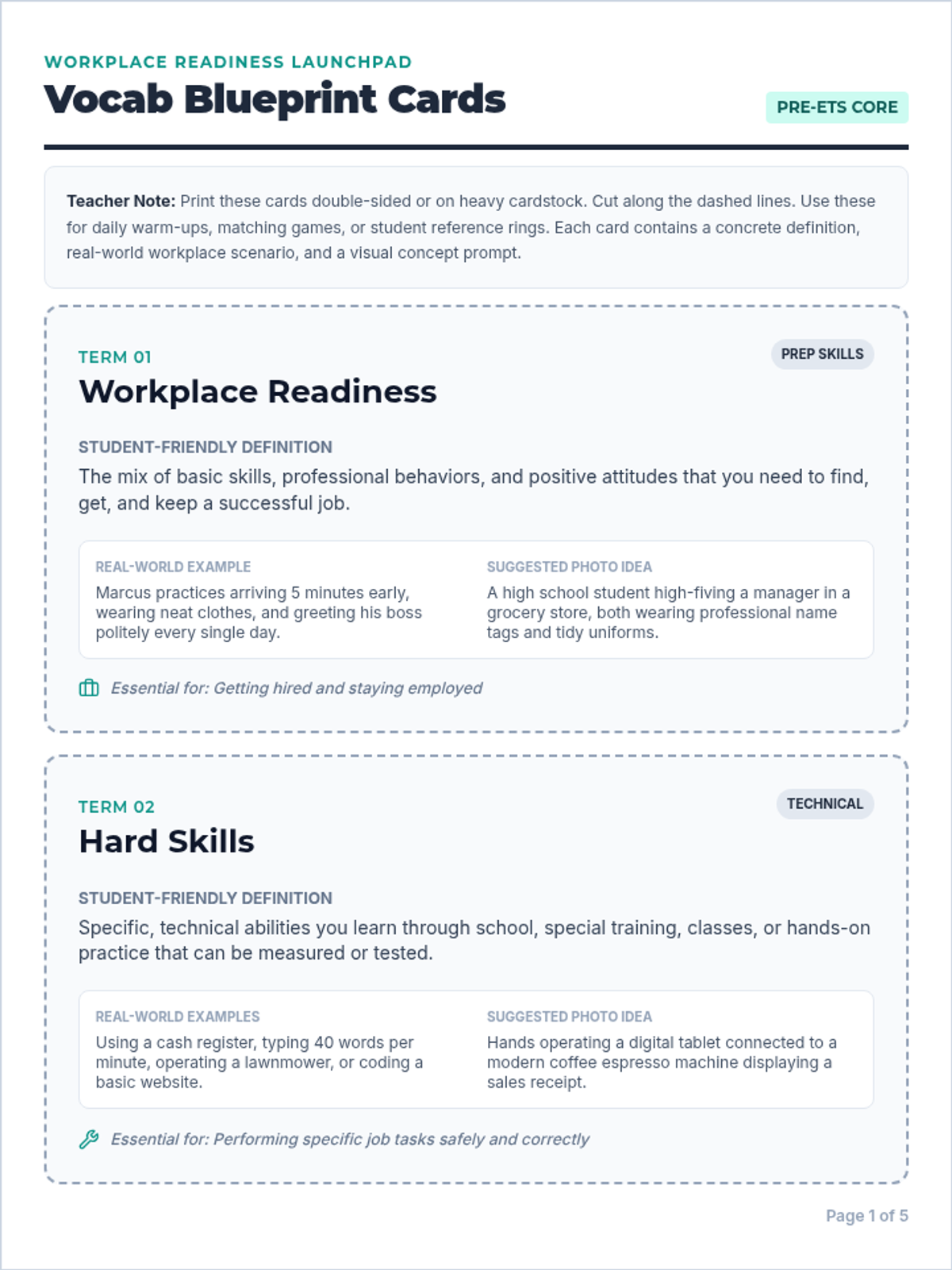
A 5-page print-ready vocabulary card deck covering 10 essential workplace readiness terms with student-friendly definitions, real-world examples, and visual photo prompts.
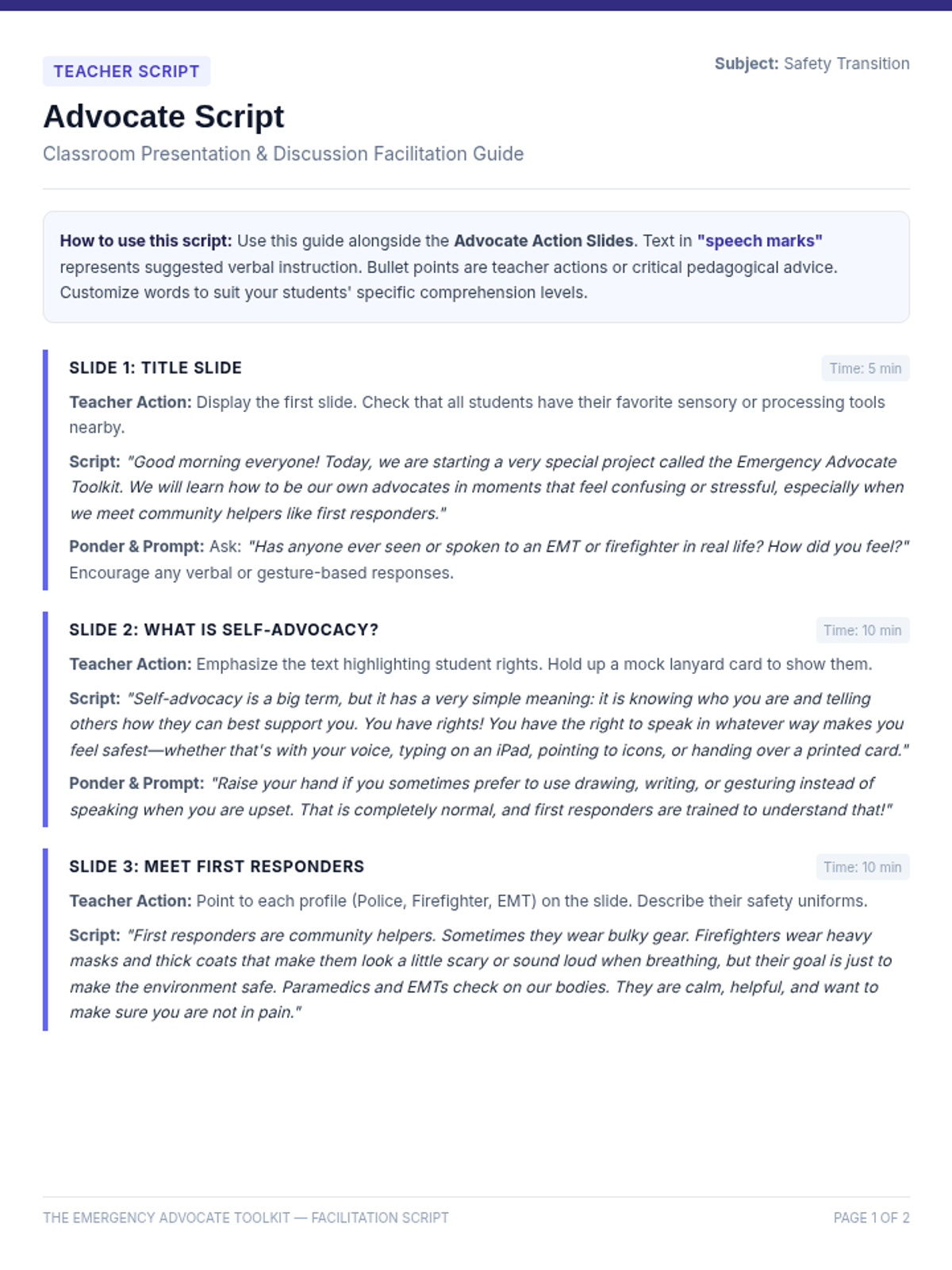
A comprehensive 2-page teacher-facing presentation script and facilitation guide detailing slide-by-slide scripts, discussion prompts, and structured roleplay guidance.
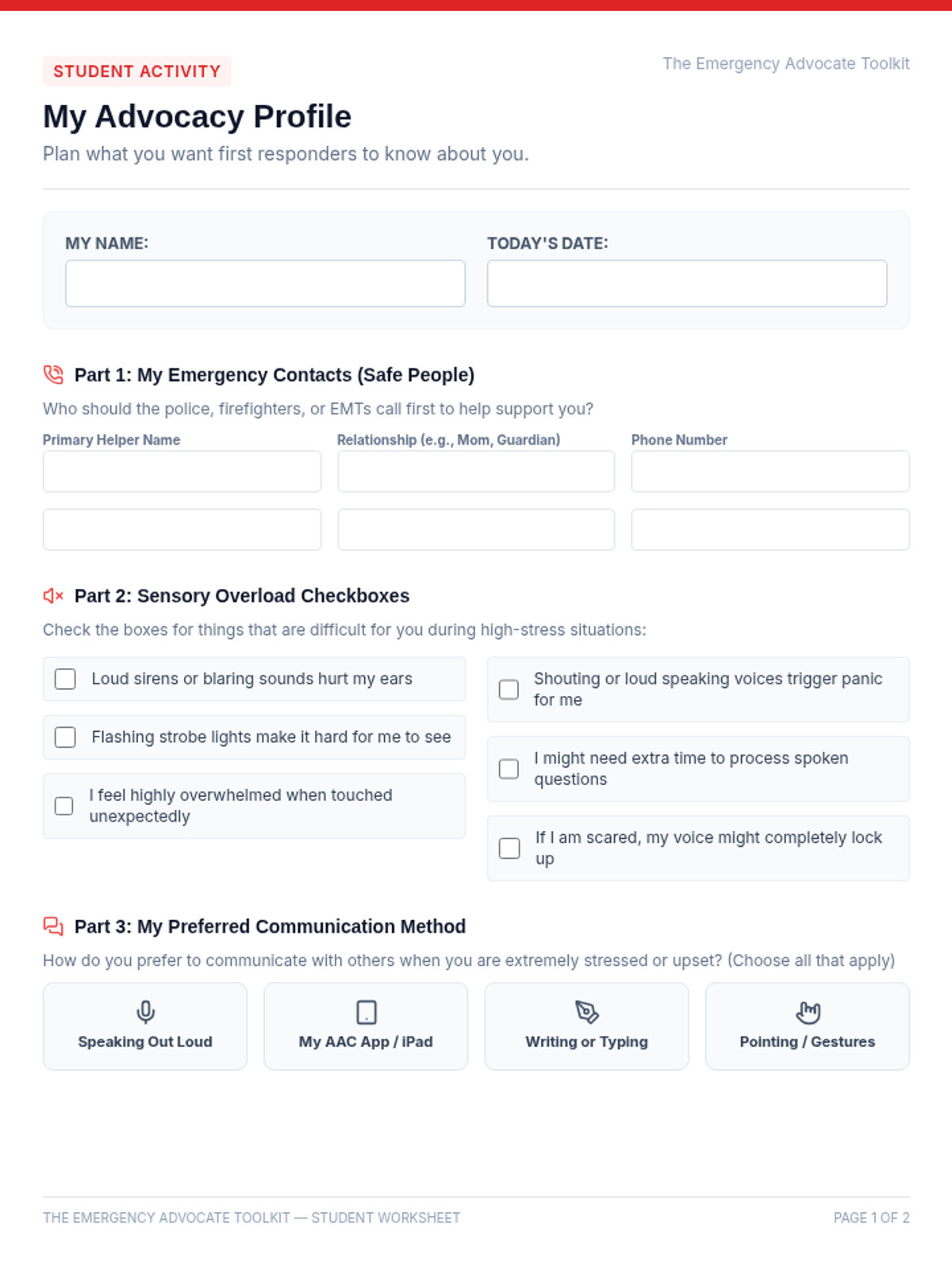
A 2-page student activity sheet and printable template for creating a physical, fold-and-cut emergency communication wallet card with custom profile fields.
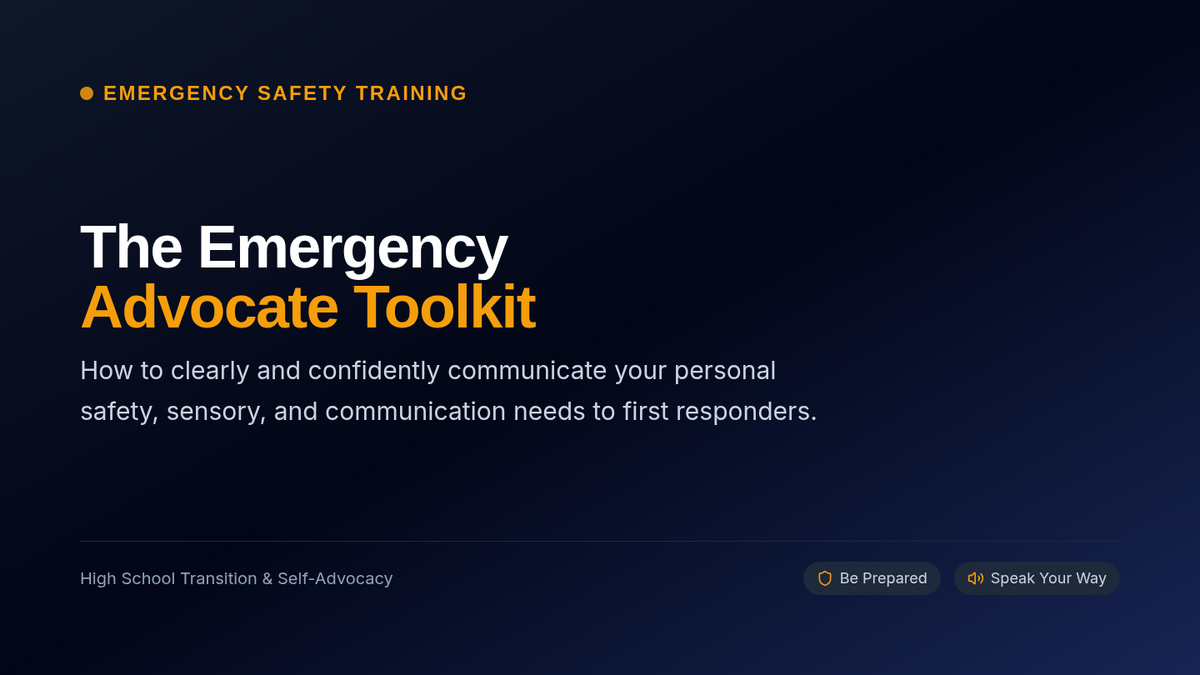
An engaging 6-slide visual presentation for high school students, featuring clear layouts, high-contrast text, and key self-advocacy concepts for emergency situations.
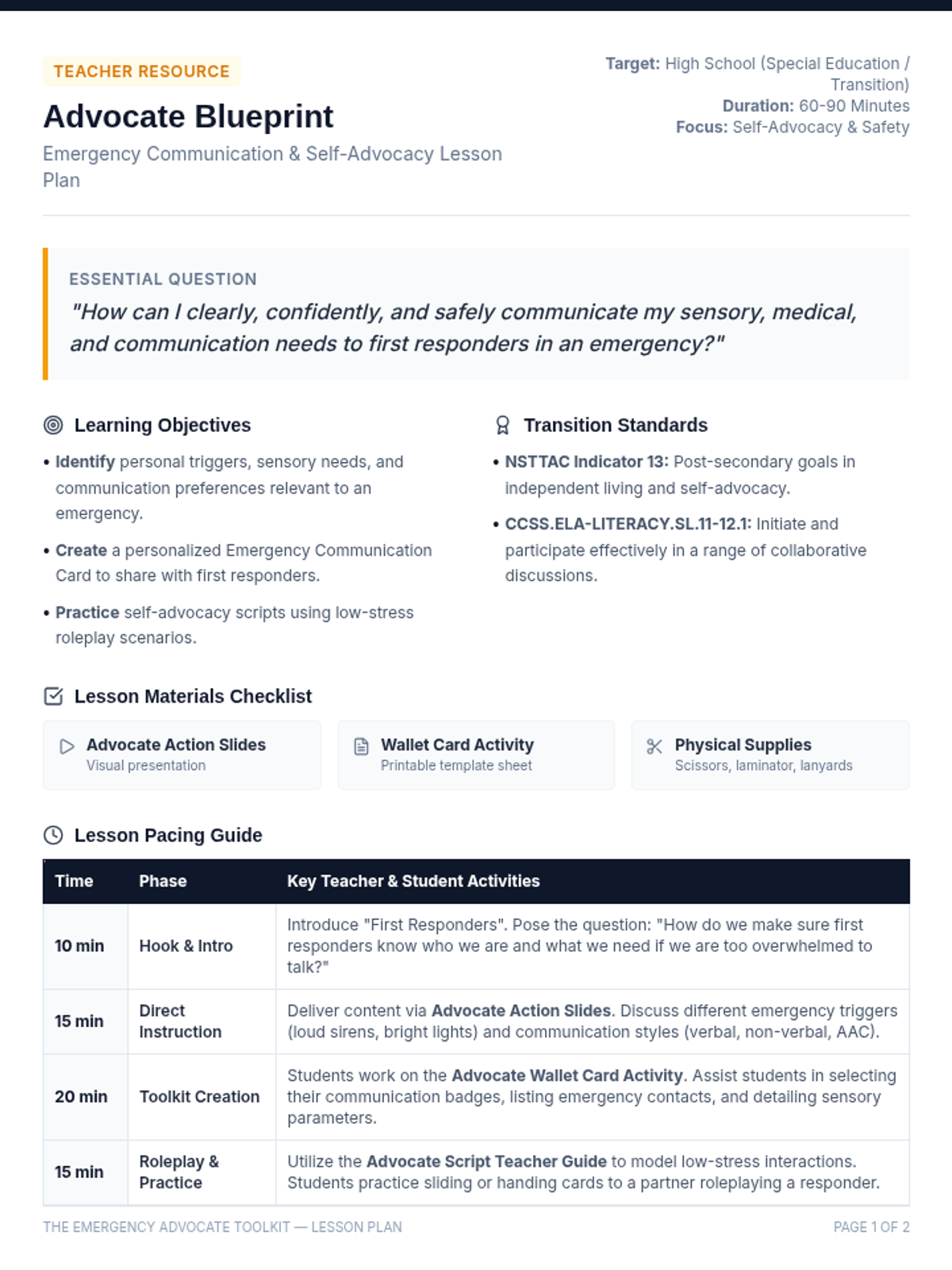
A comprehensive 2-page teacher lesson plan featuring standard alignment, learning objectives, materials checklist, a step-by-step pacing guide, and detailed neurodivergent-affirming accommodations.
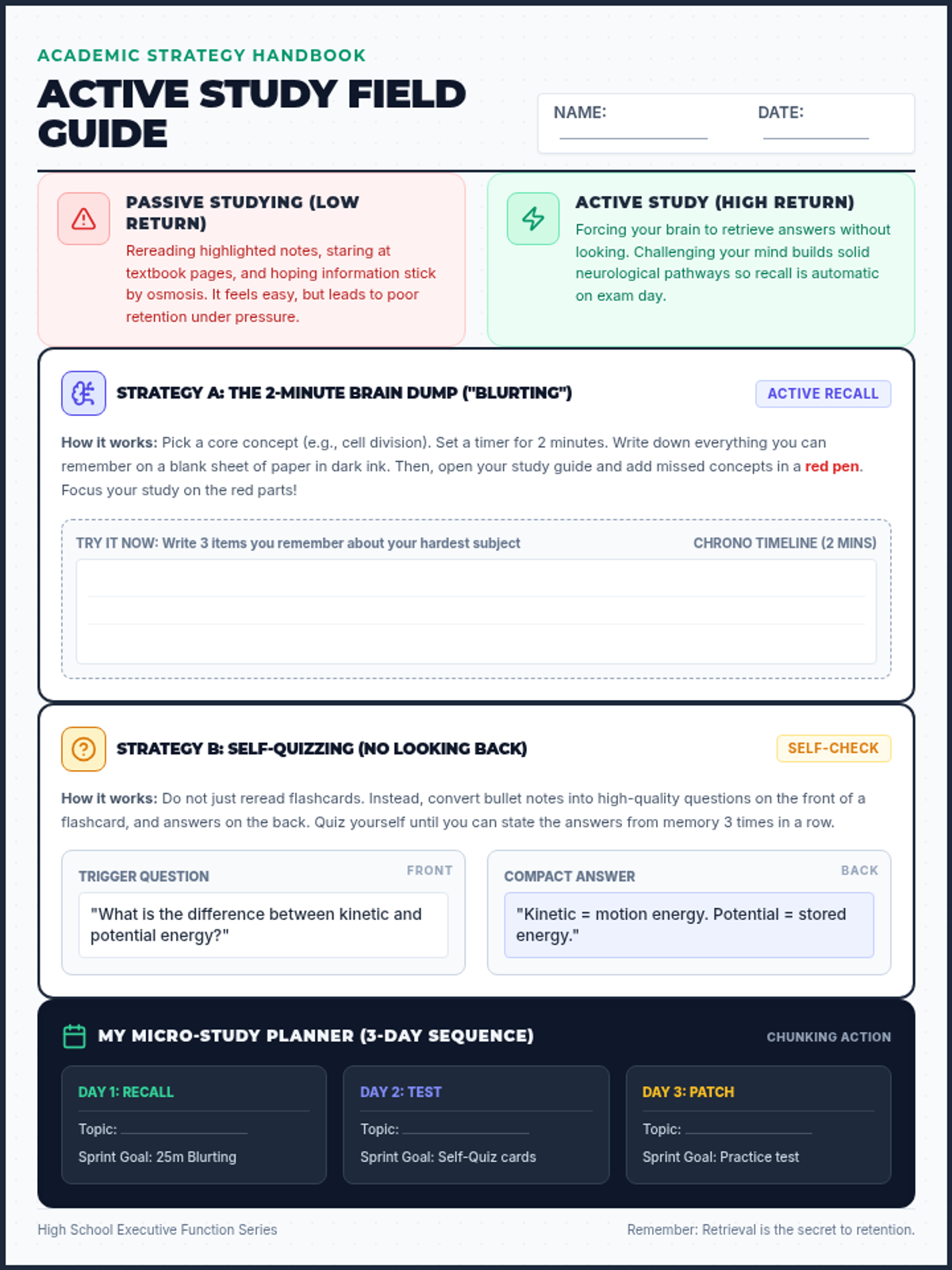
A 1-page student guide and interactive training card introducing concrete, active cognitive study strategies like Blurting, flashcards, and self-testing.
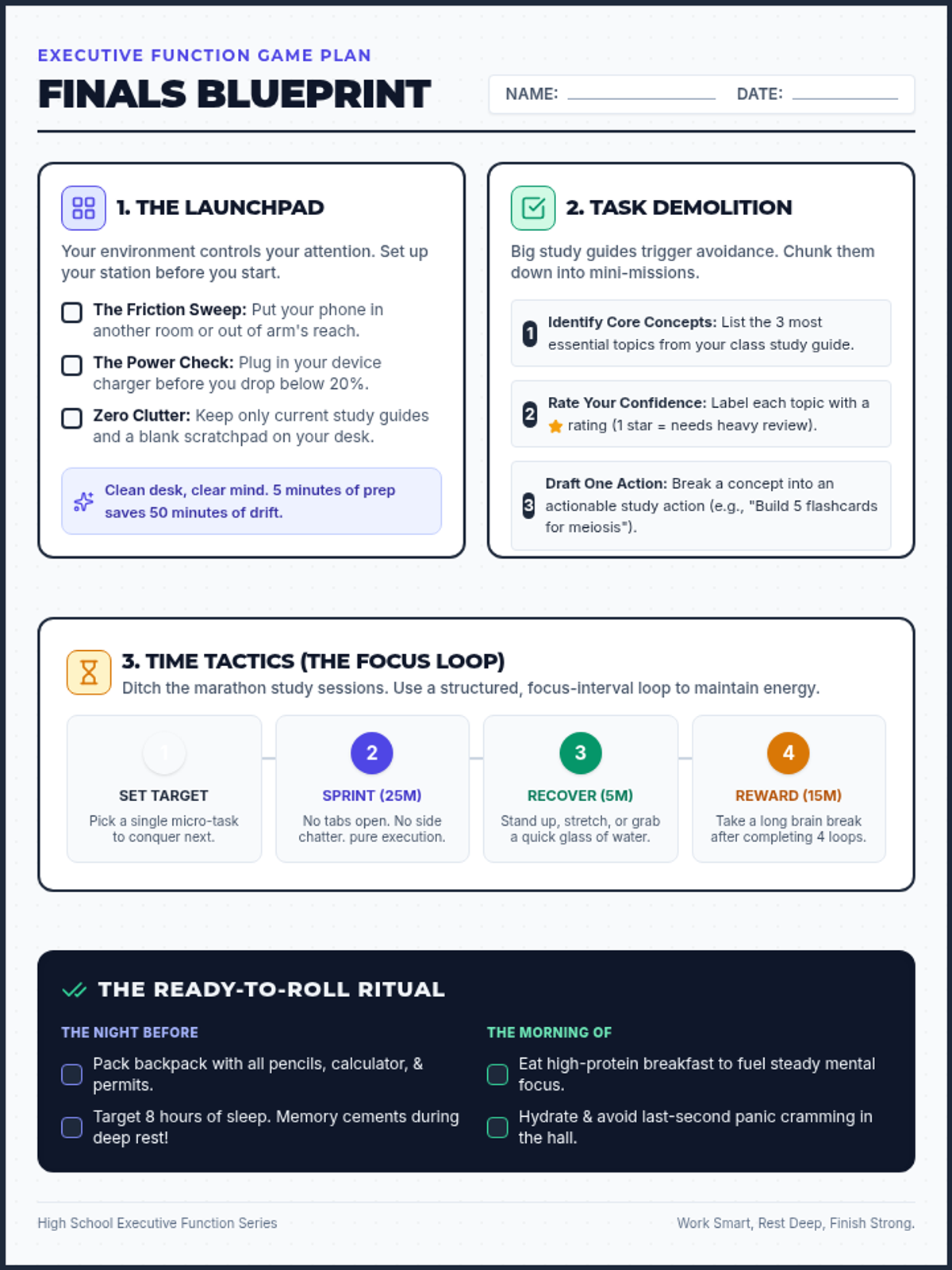
A 1-page visual executive function infographic for high schoolers, detailing study space preparation, visual task chunking, and concrete time management structures.
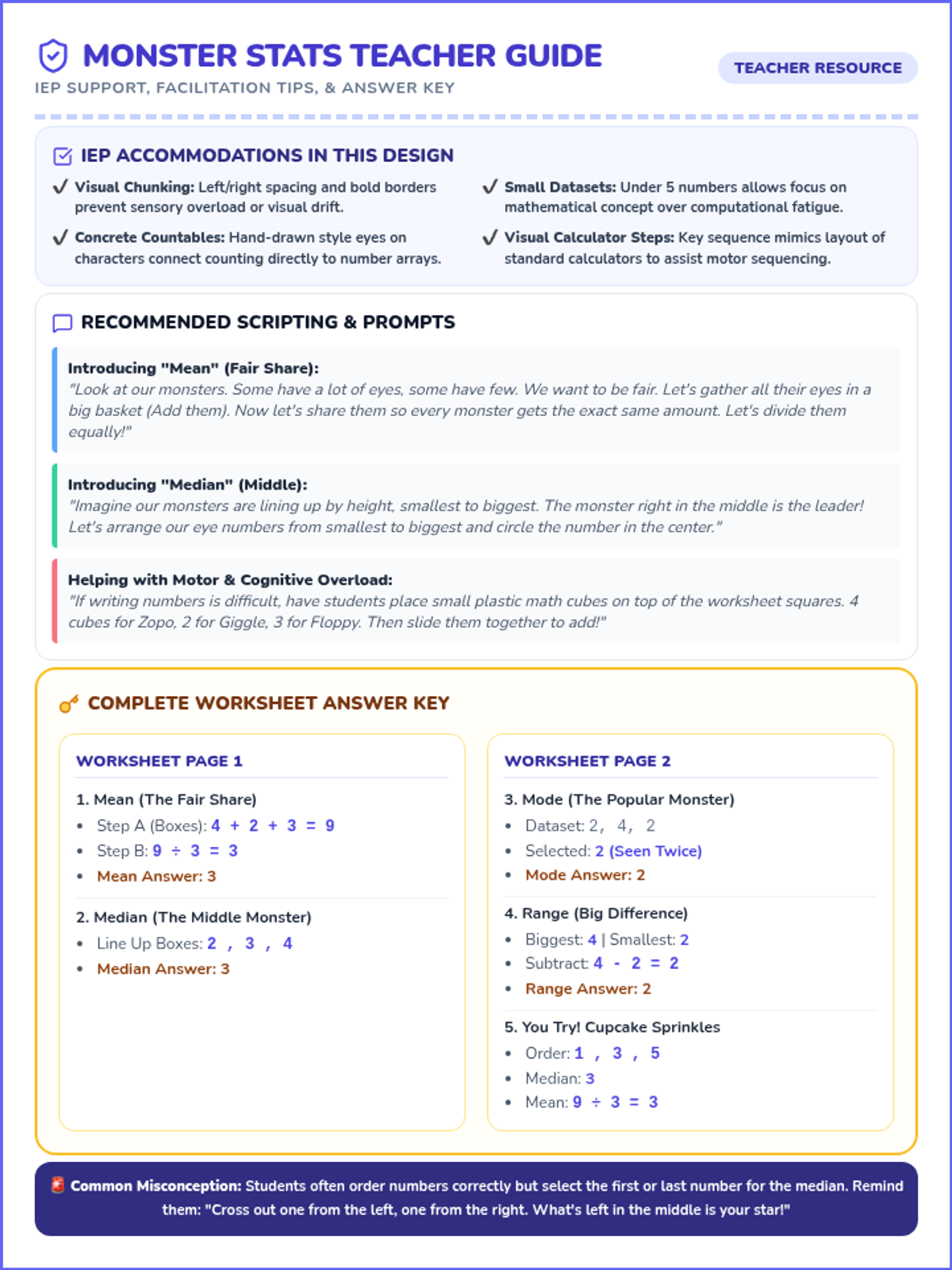
A companion guide for the Monster Stats lesson, providing teaching scripts, IEP accommodation tips, step-by-step modeling cues, and an answer key for the worksheet.
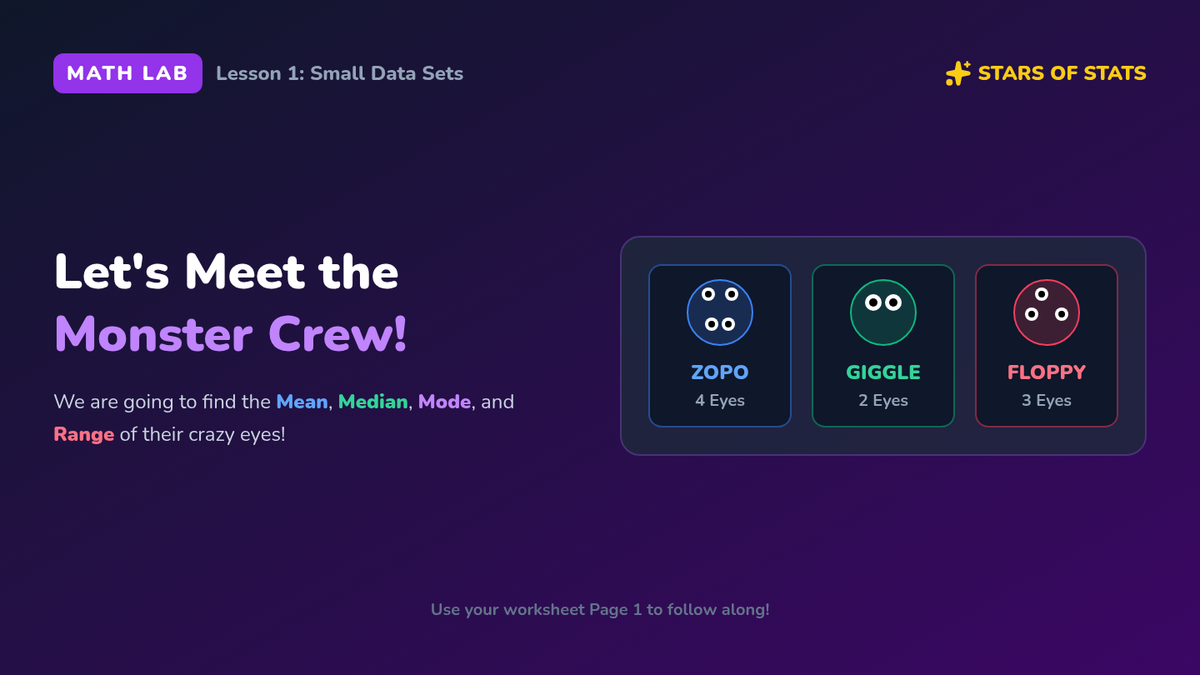
An interactive, visually rich presentation companion designed to guide students with IEP accommodations through mean, median, mode, and range with step-by-step math animations and calculator guides.
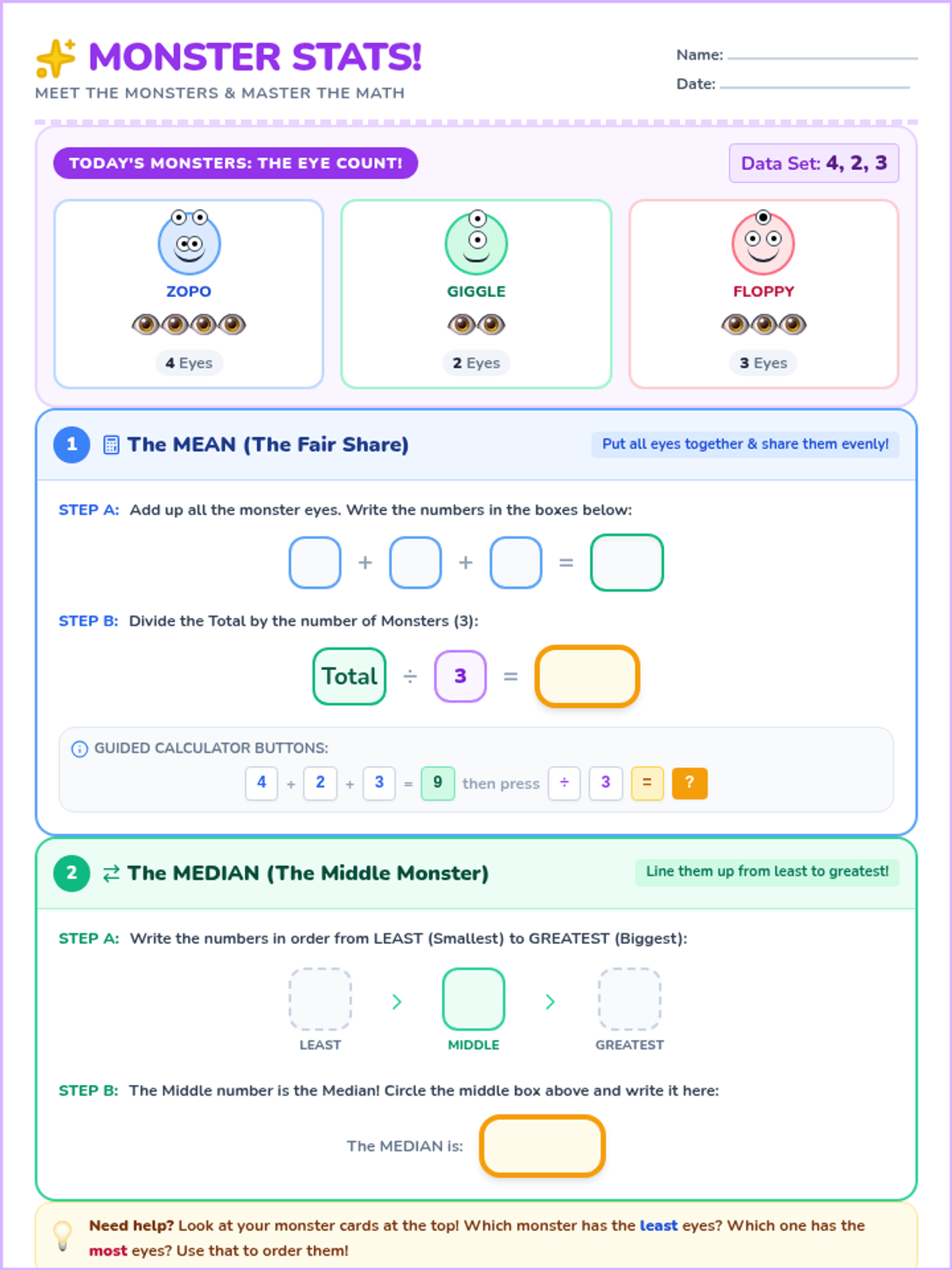
A highly scaffolded practice workbook introducing mean, median, mode, and range with datasets under 3-4 numbers. Includes countable monster assets, color-coded graphic organizers, and step-by-step visual calculator guides.
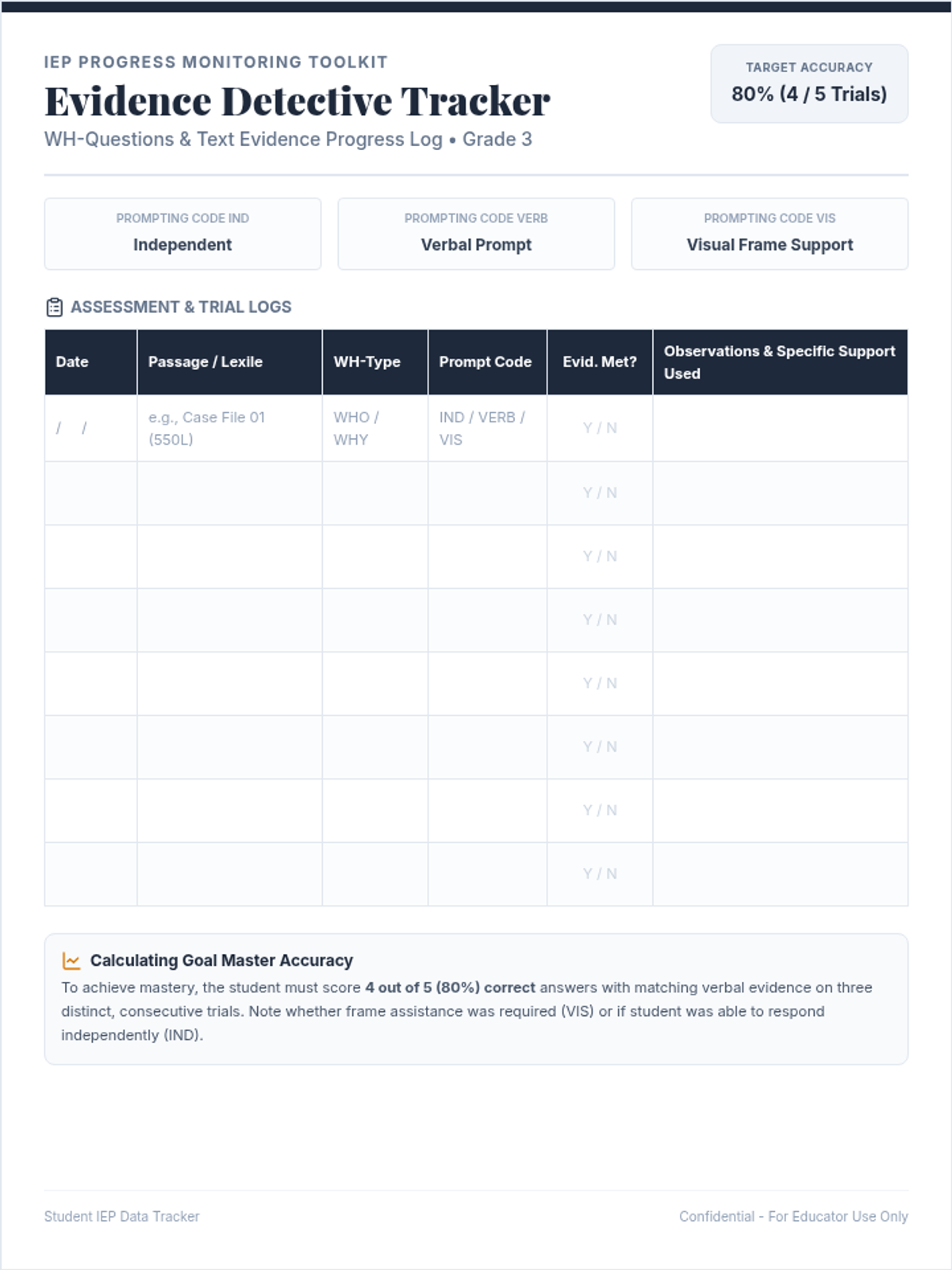
A progress monitoring data tracker for educators to log dates, passage levels, question types, prompt levels, and student text evidence accuracy during assessments.
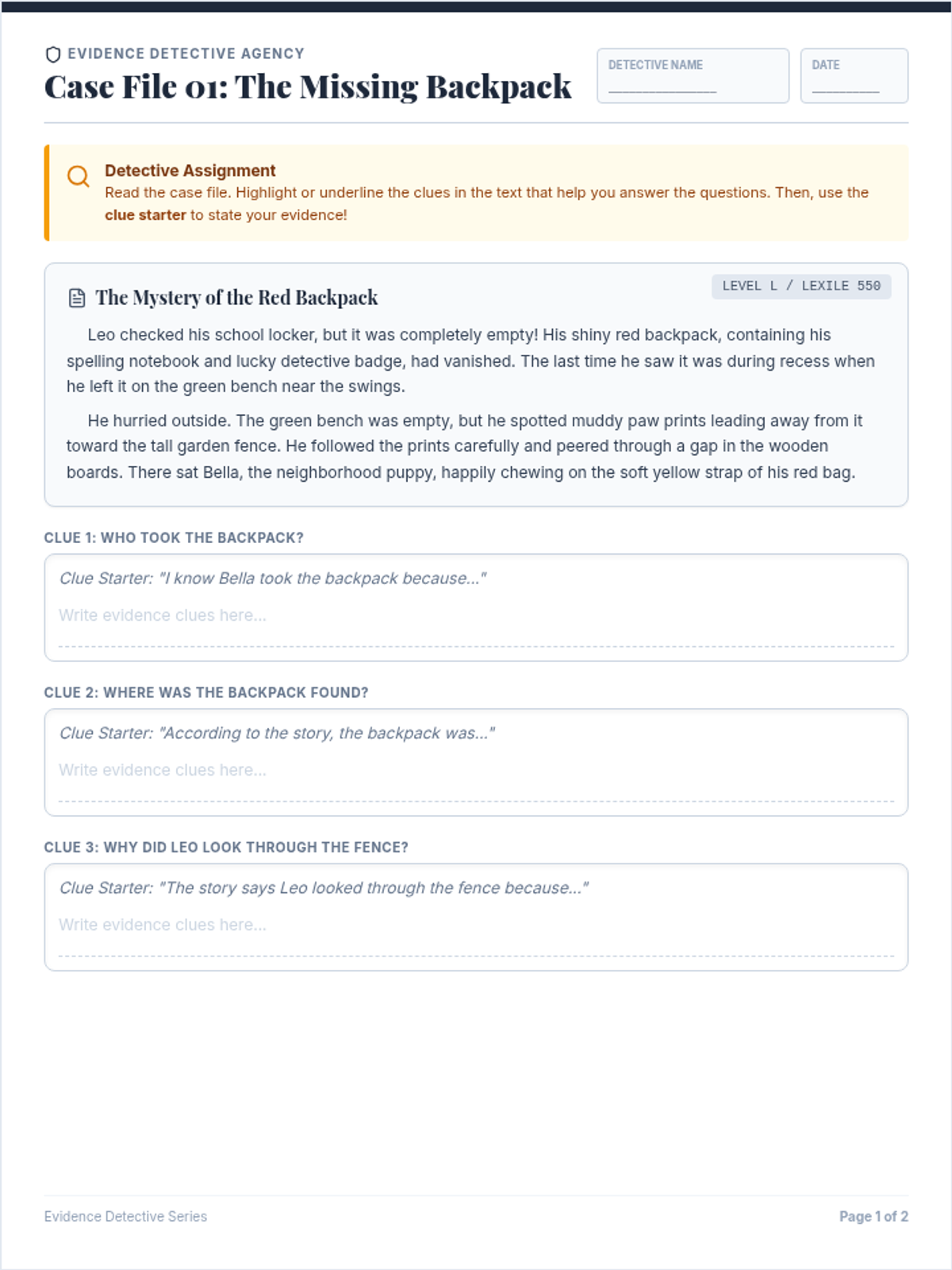
An engaging, student-facing workbook containing two 3rd-grade level mystery stories and structured WH-questions accompanied by explicit text evidence sentence frames.
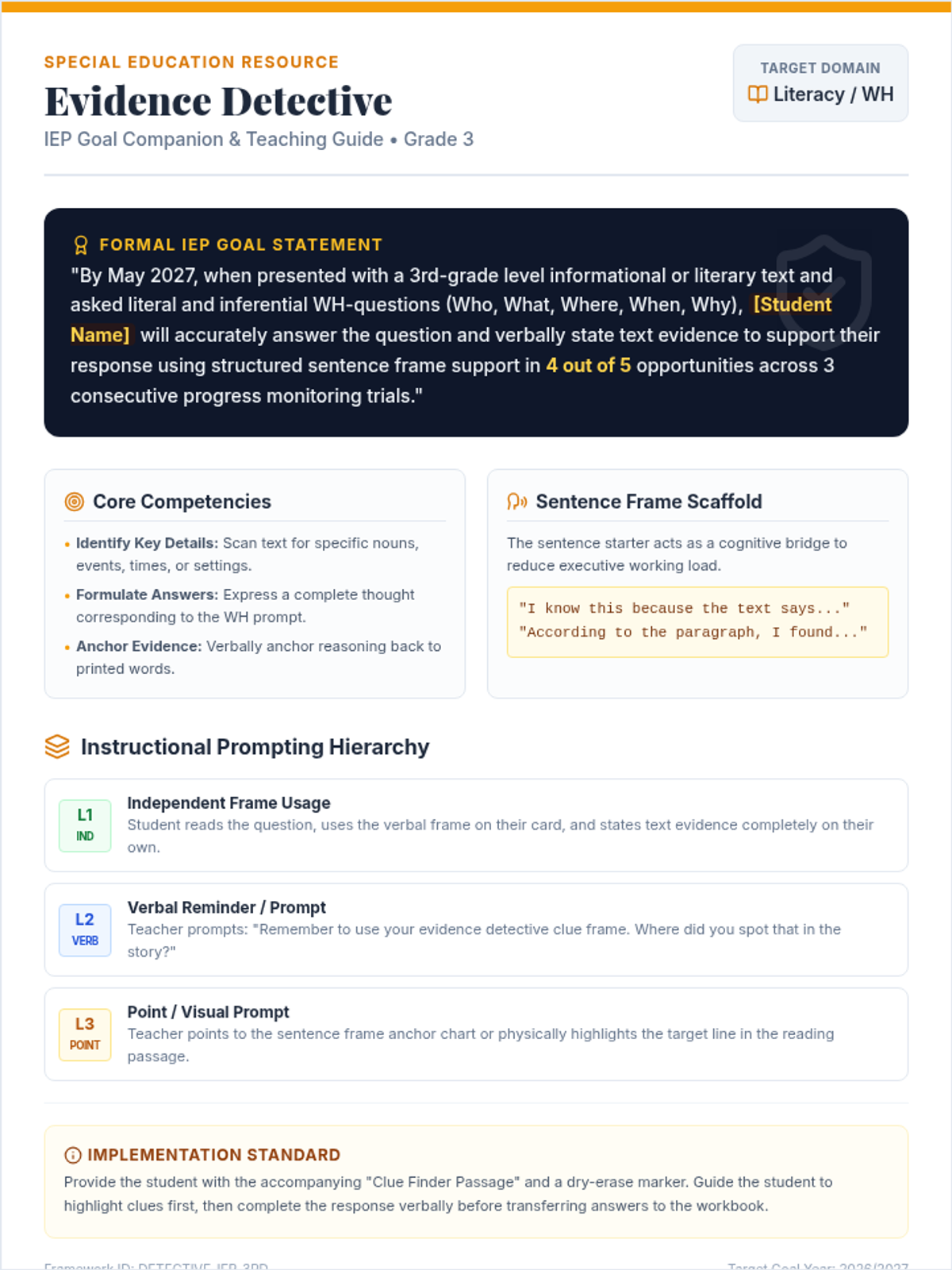
A comprehensive IEP goal guide for teachers featuring formal 3rd-grade reading comprehension goals, a structured prompting hierarchy, scoring rubrics, and implementation instructions for sentence frame support.
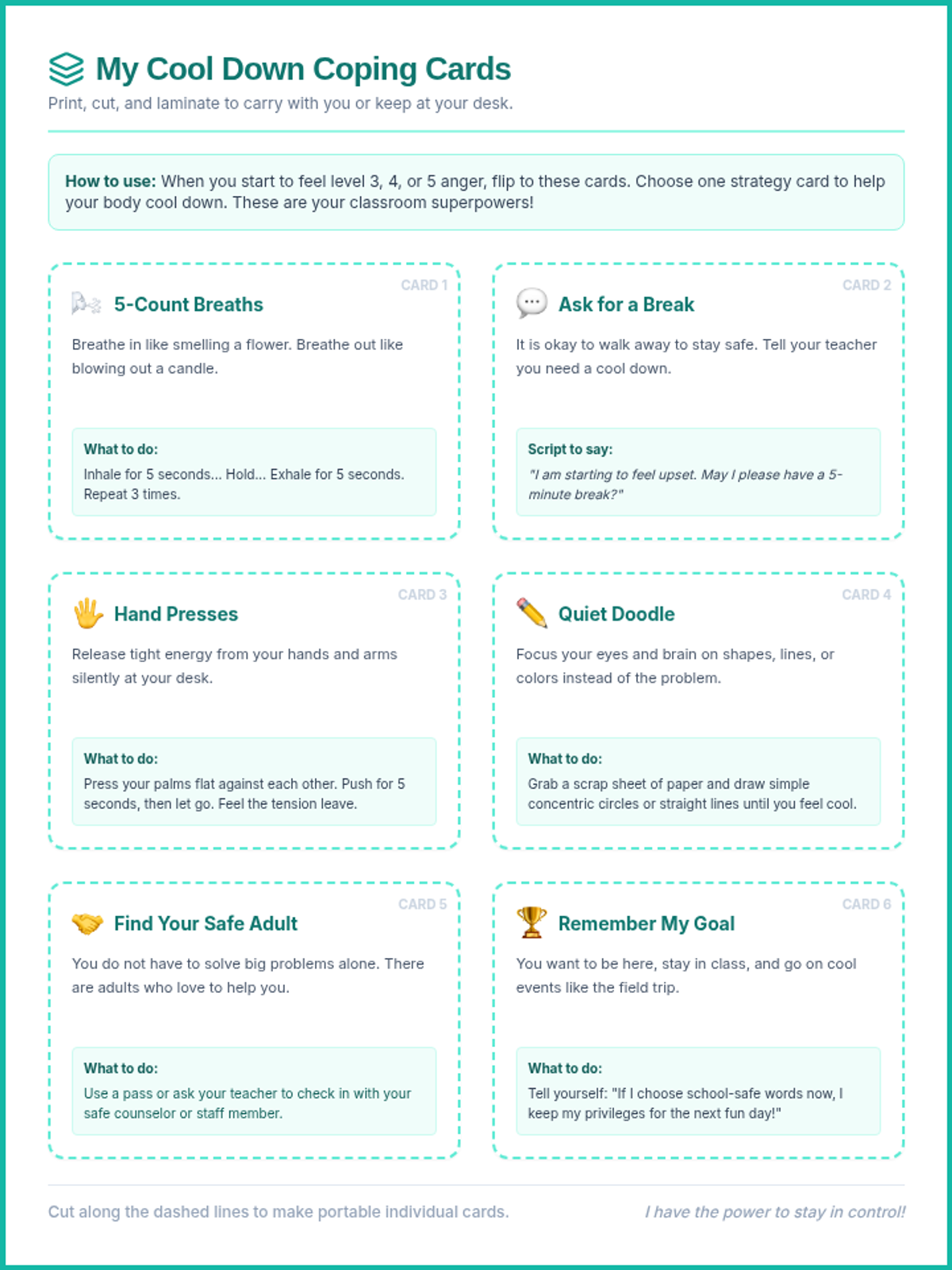
A set of 6 printable, visually supported coping strategy cards for a 5th-grade student on the autism spectrum. Perfect for printing, laminating, and placing on a desk ring or in a pocket.
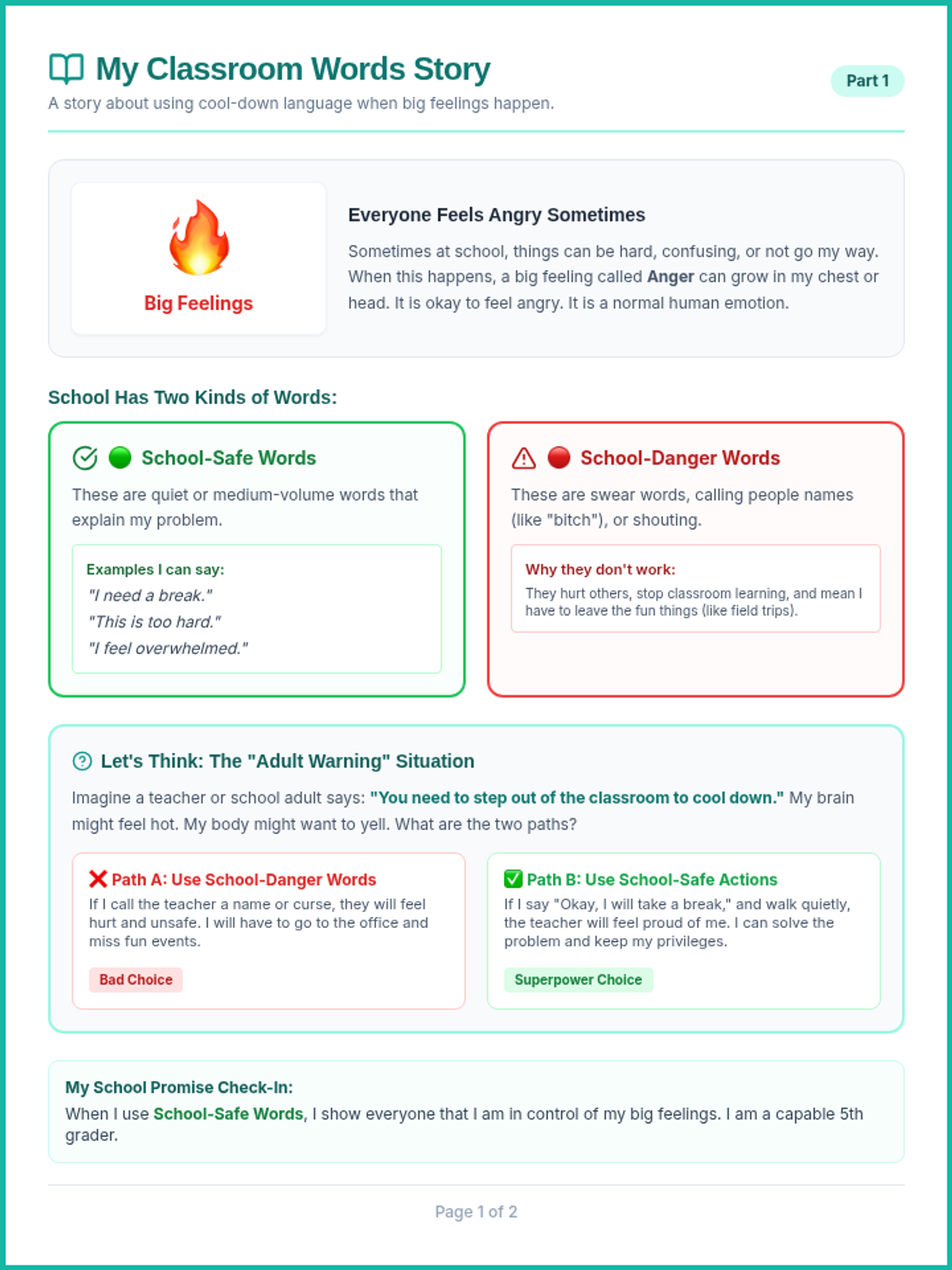
A 2-page highly visual, literal social narrative designed for autistic students. Explains what anger is, why swearing or name-calling hurts the classroom community, and how to use specific, concrete alternative phrases when overwhelmed.
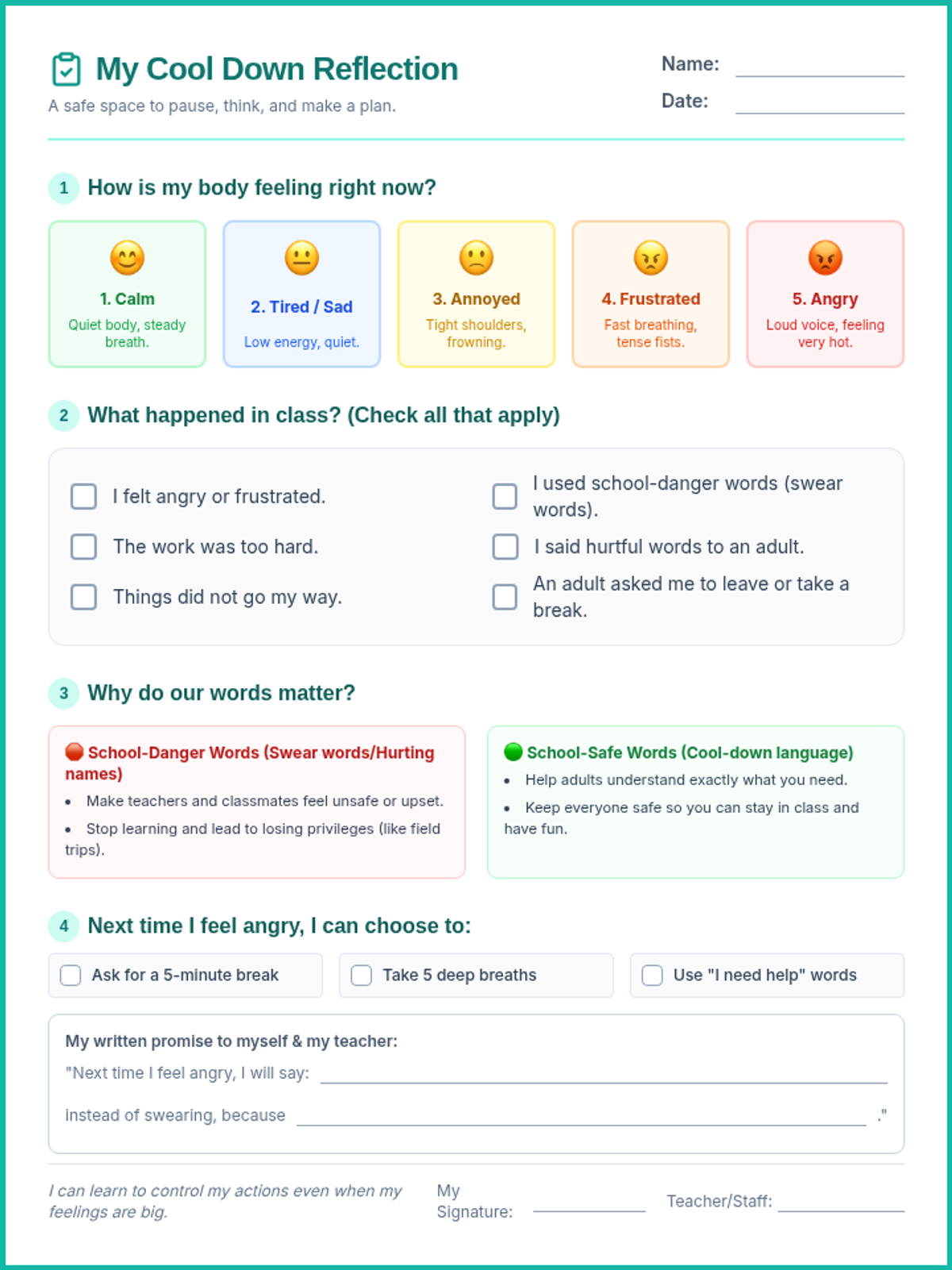
A structured, highly visual 1-page behavioral reflection sheet designed for a 5th-grade student on the autism spectrum. Features a color-coded anger thermometer, clear checklist options for what happened, and a concrete action plan for next time.
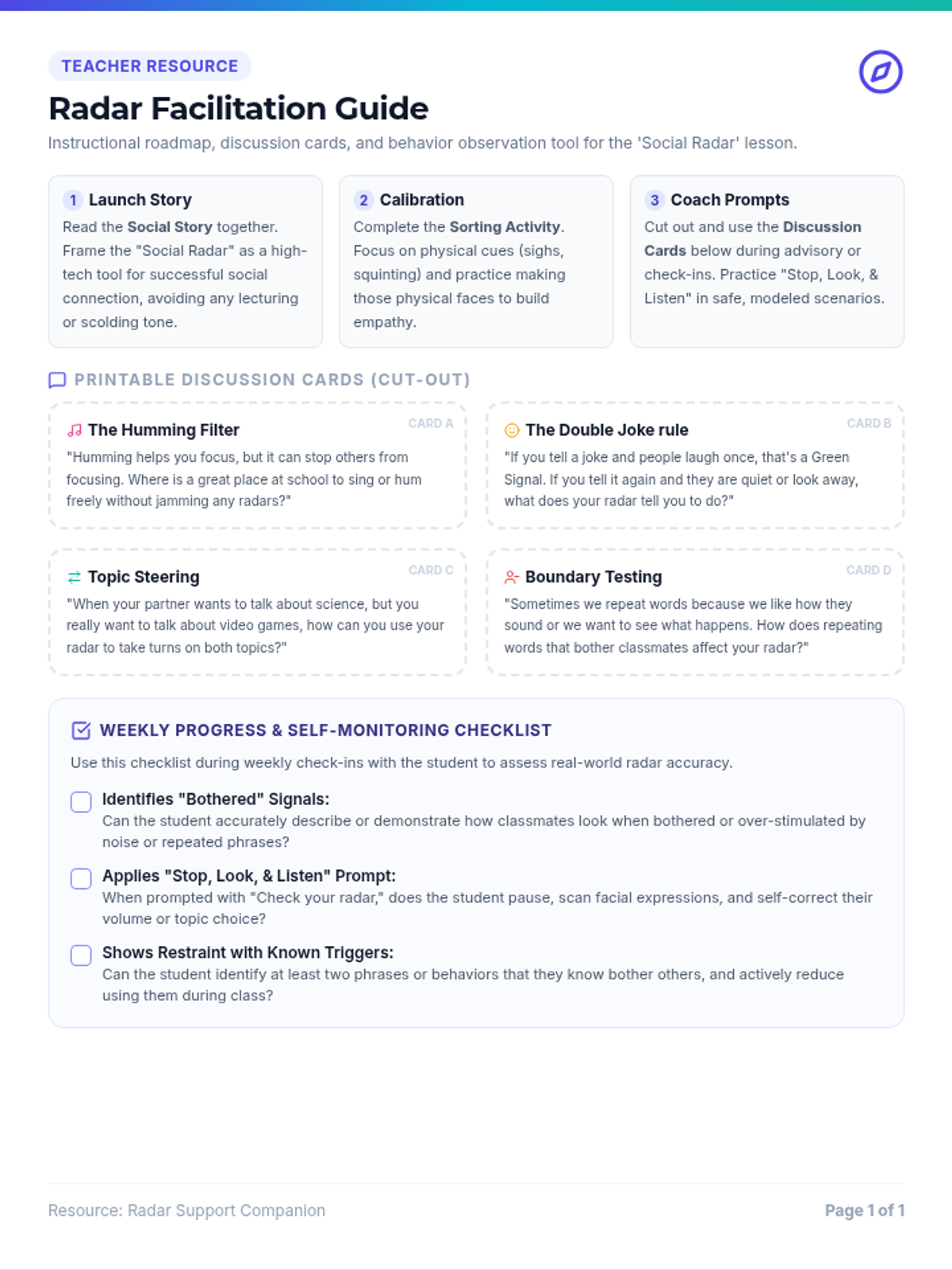
A 1-page teacher facilitation guide containing delivery instructions for the Social Radar lesson, four interactive discussion cards, and a quick self-monitoring behavior checklist.
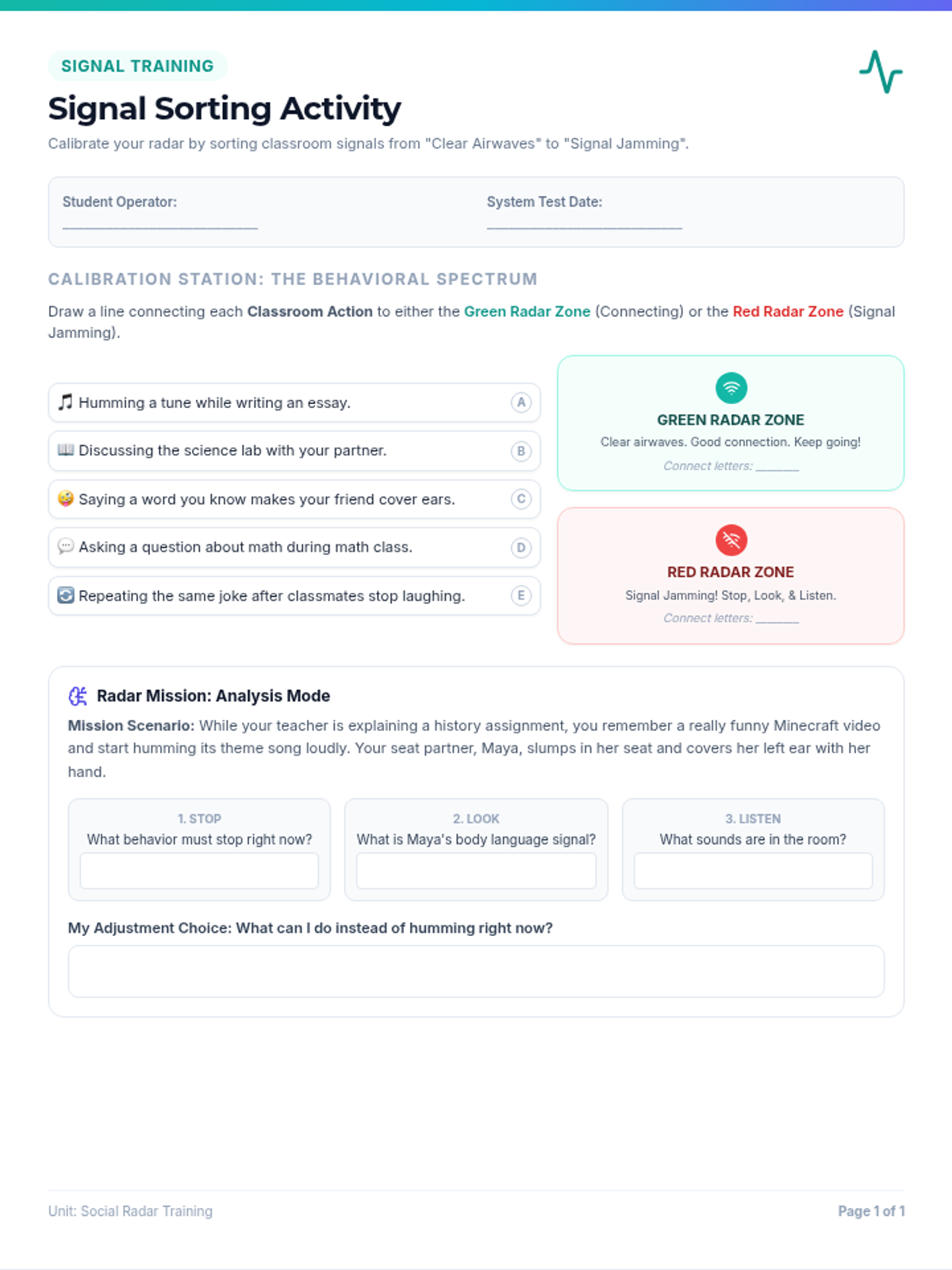
A 1-page classroom worksheet for a 6th-grade student with autism to sort positive/neutral classroom behaviors from distracting/bothering behaviors, using the 'Social Radar' concept. Includes a real-world scenario analysis.
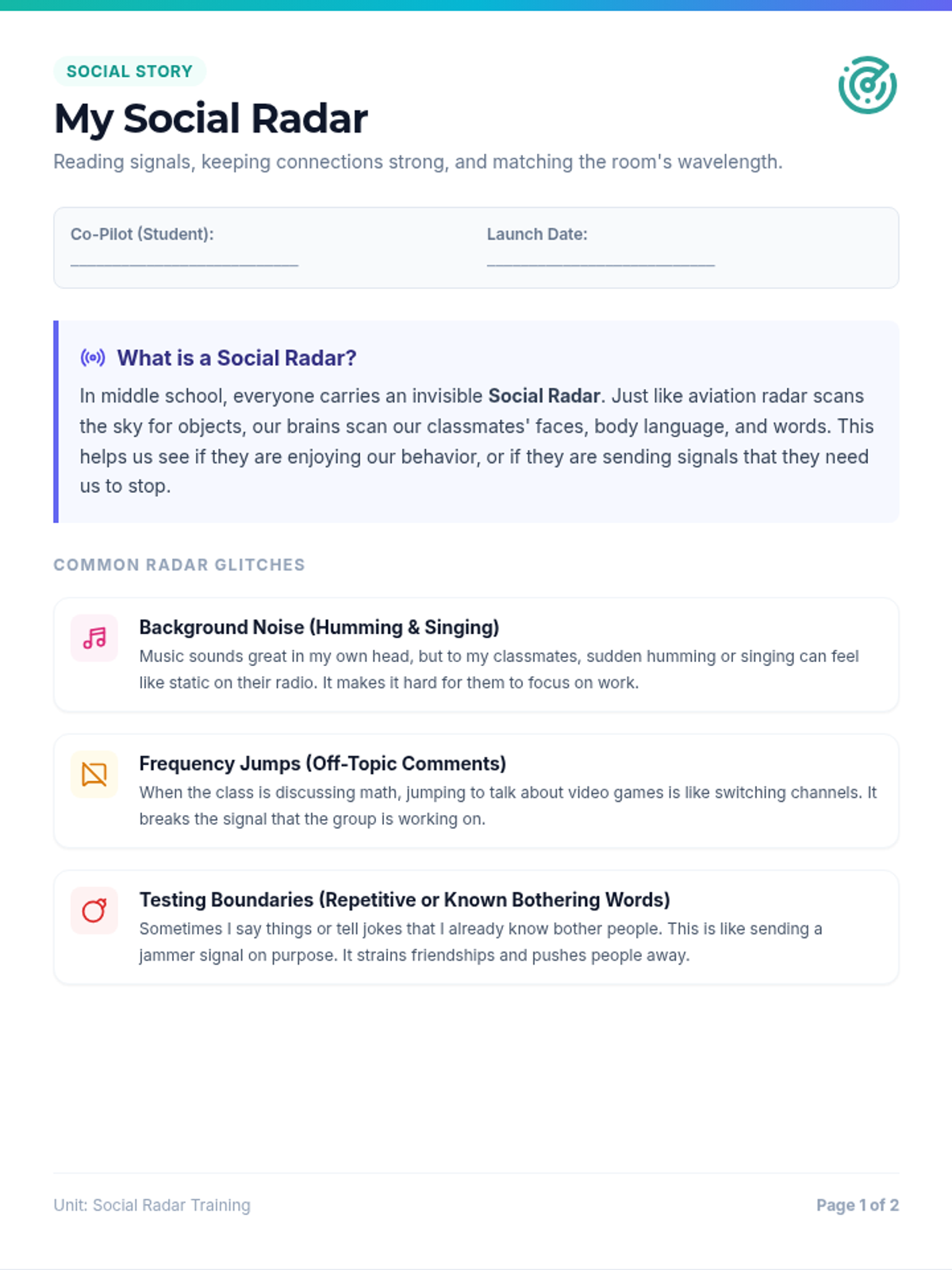
A 2-page social story booklet for a 6th-grade student that explains the 'Social Radar' concept and teaches the 'Stop, Look, & Listen' rule to detect when classmates are bothered. It includes clear scenarios, visual signals, and reflection spaces.