A comprehensive teacher-facing grading rubric for the entire design project. Evaluates students on classification accuracy, mathematical justification, drafting precision, and oral defense.
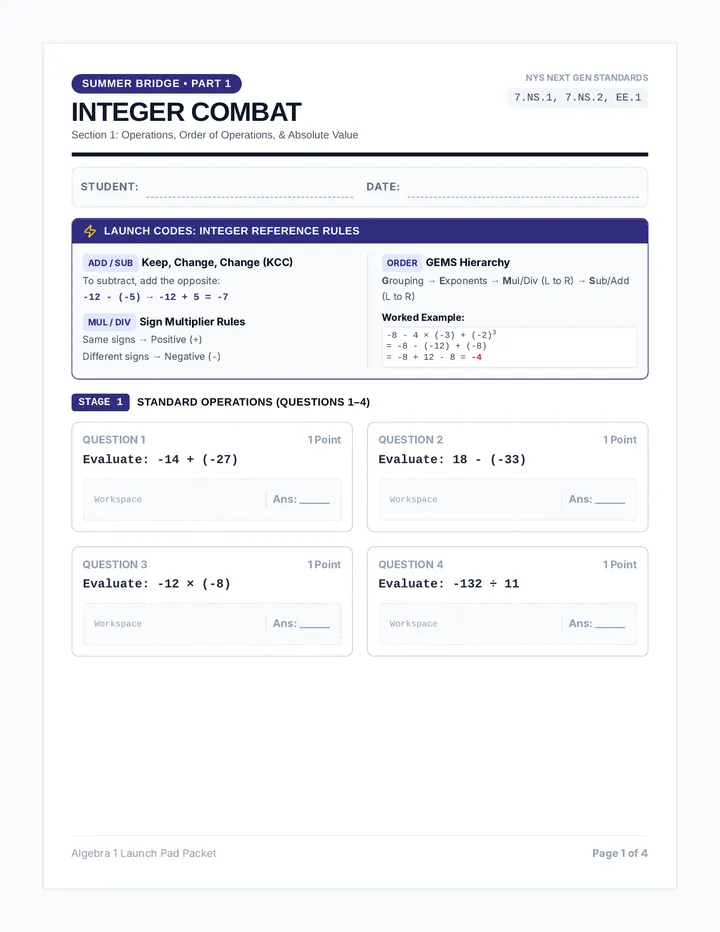
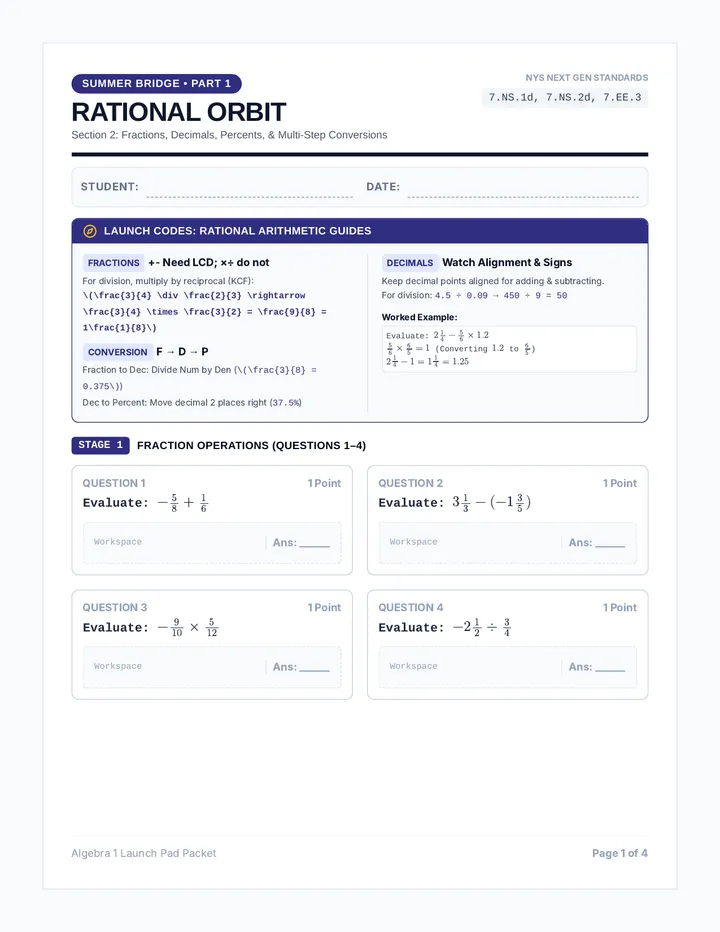
A comprehensive summer bridge workbook for rising 8th graders transitioning to Algebra 1. Contains review of prerequisite topics, advanced pre-algebra skills, real-world application, and an Algebra Escape Challenge.
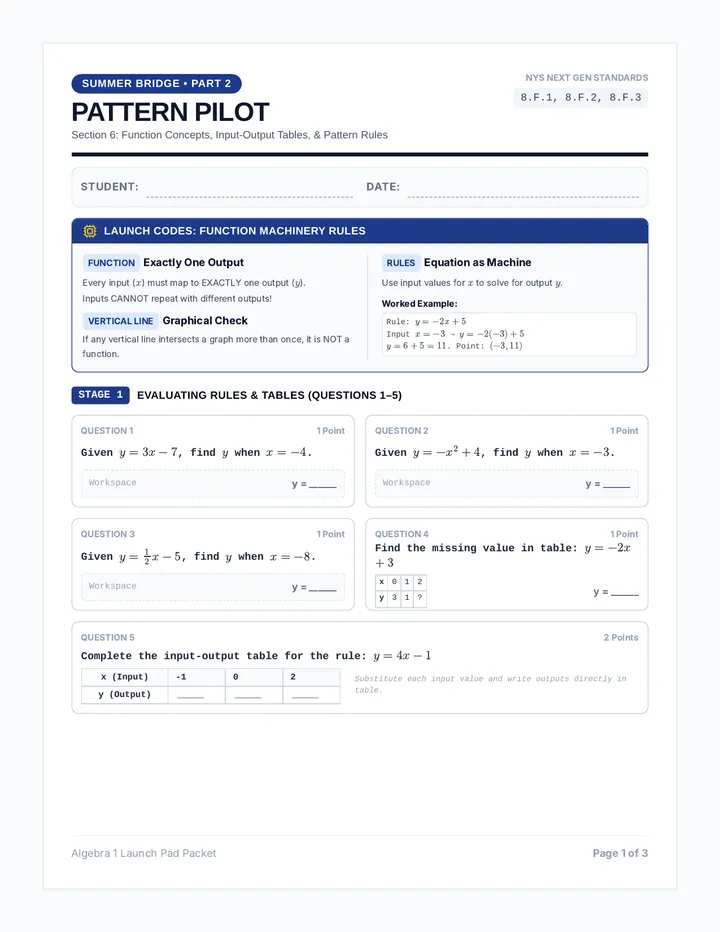
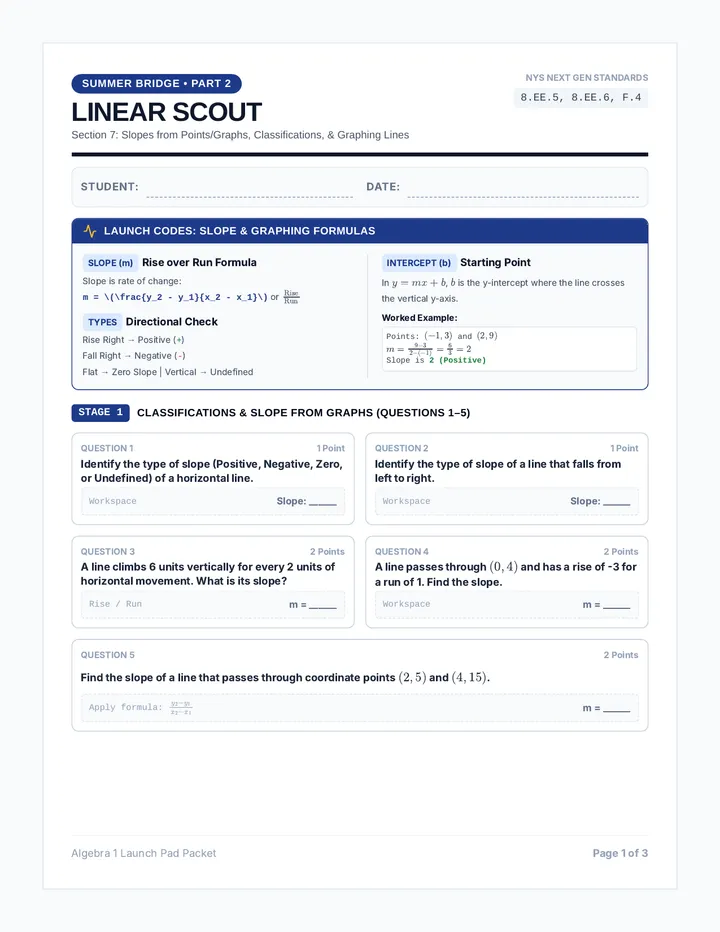
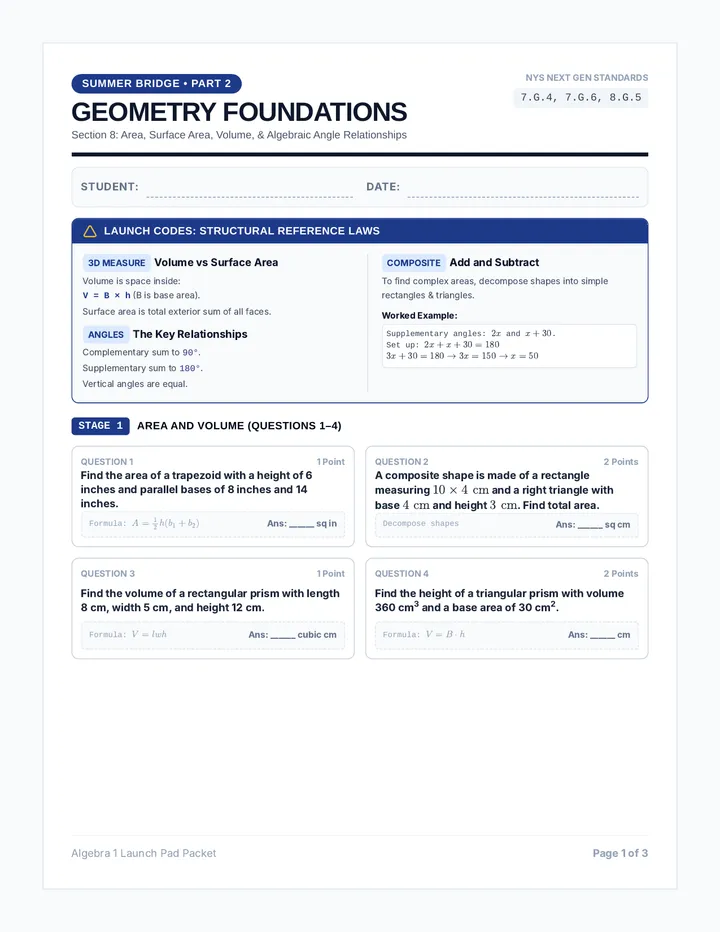
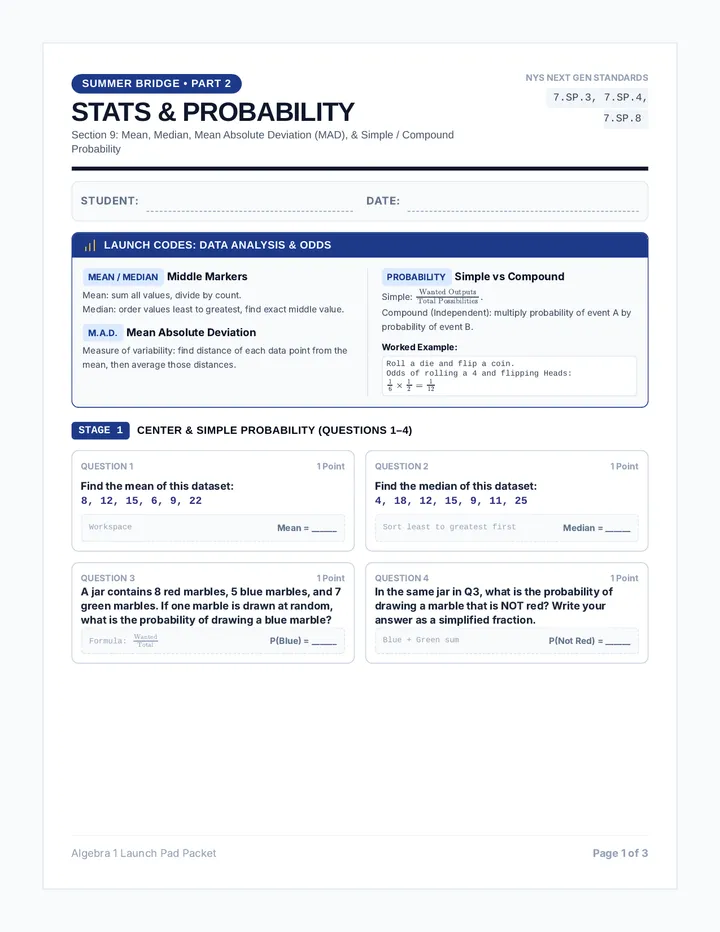
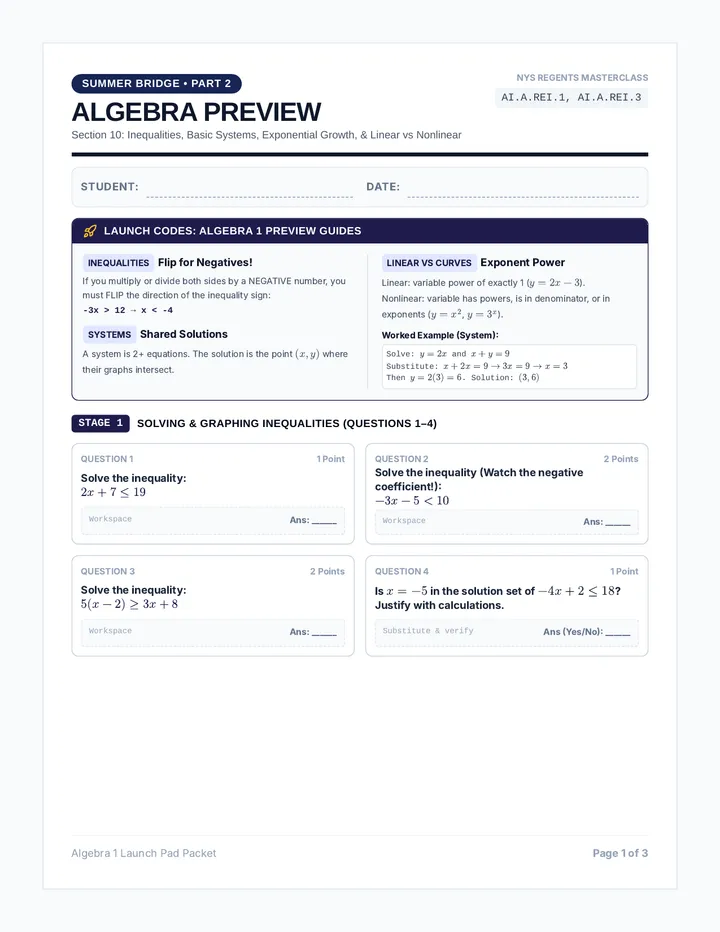
The second part of the Algebra 1 Summer Bridge Packet. It covers functions & patterns, linear relationships, geometric foundations, statistics & probability, and an advanced Algebra 1 preview.
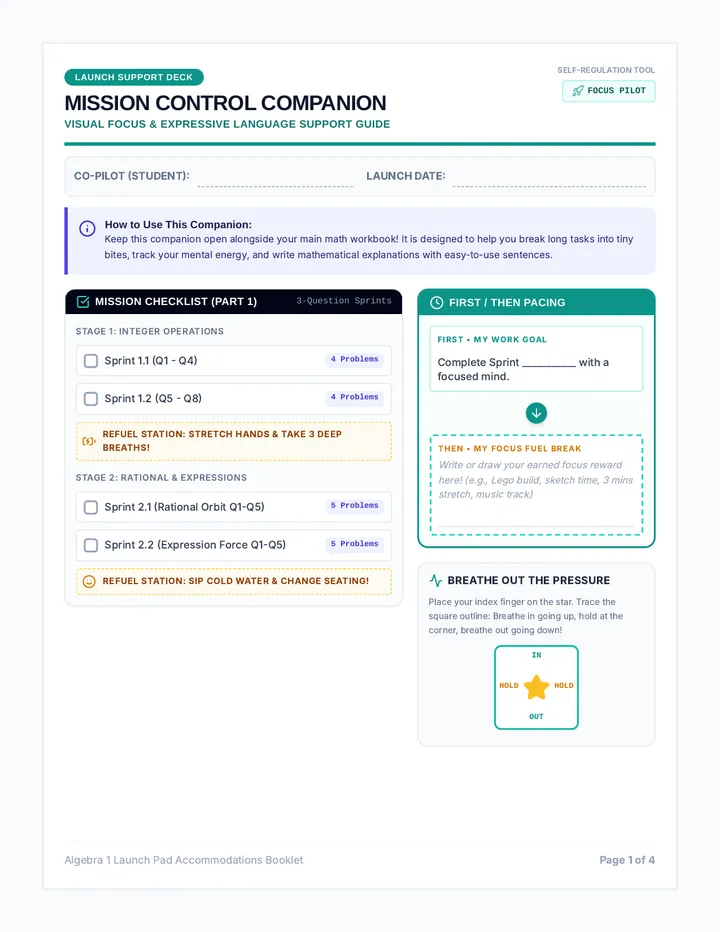
A specialized 4-page student-facing support and accommodation packet designed specifically for students with expressive language challenges and focus difficulties. Includes visual schedules, 'First-Then' pacing boards, structured sentence frames, and simplified graphic organizers with rocket-themed visuals.
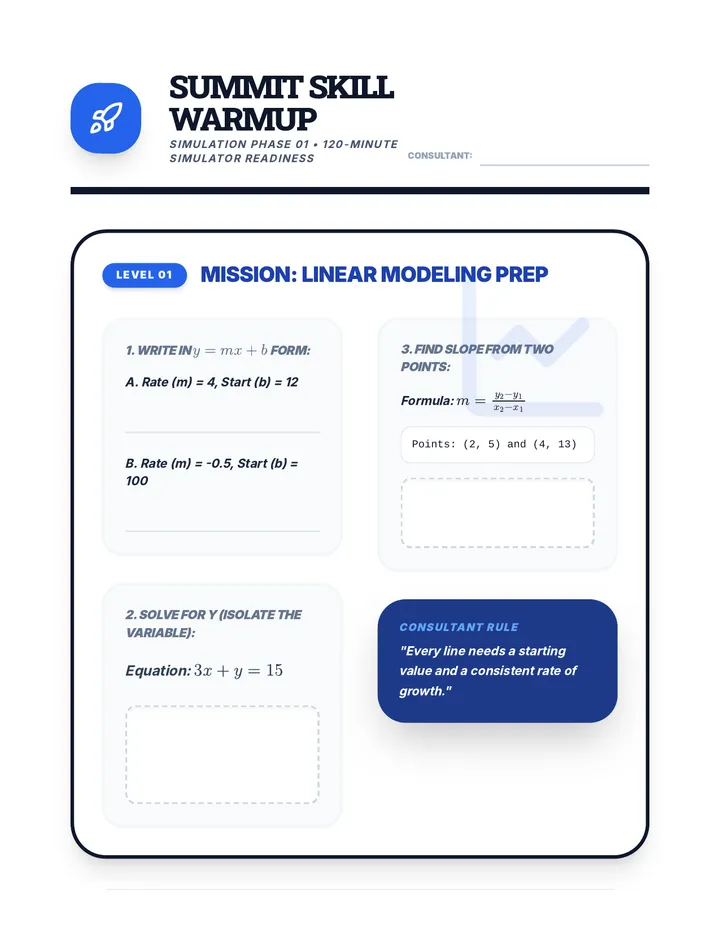
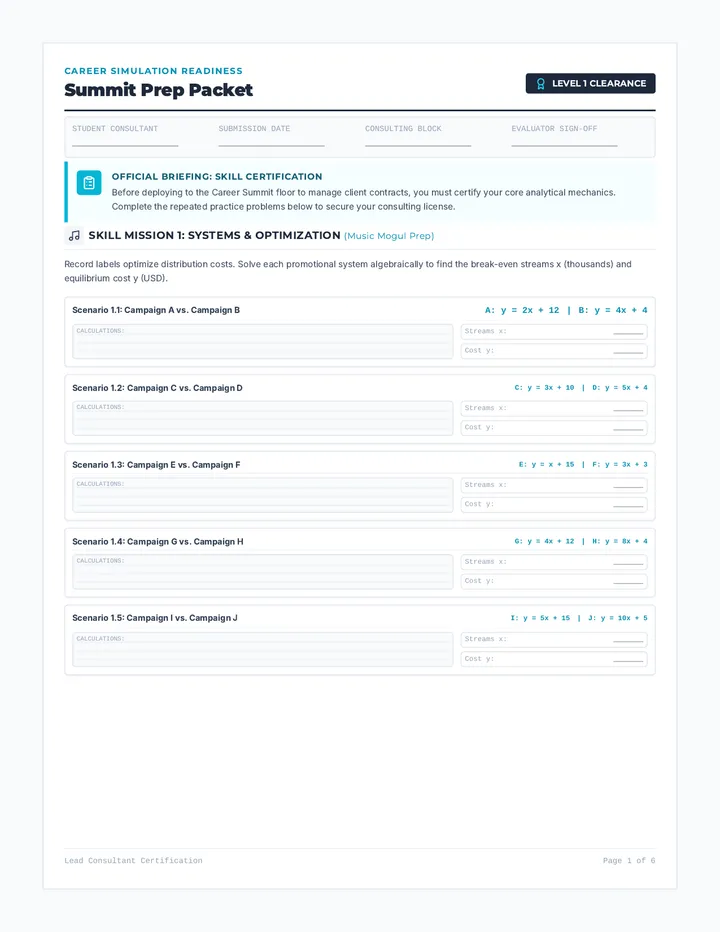
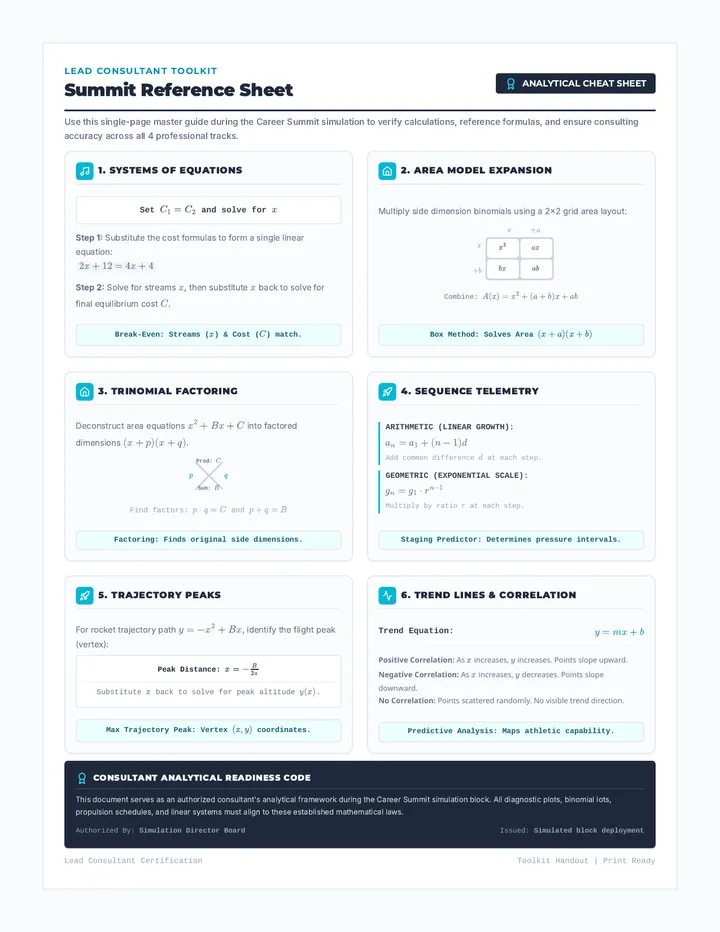
A high-intensity, 120-minute math simulation. Students act as lead consultants, completing a high-speed skill warmup before selecting a professional sector (Music, Urban Planning, Rocket Science, or Sports Analytics) to solve a series of complex work orders.
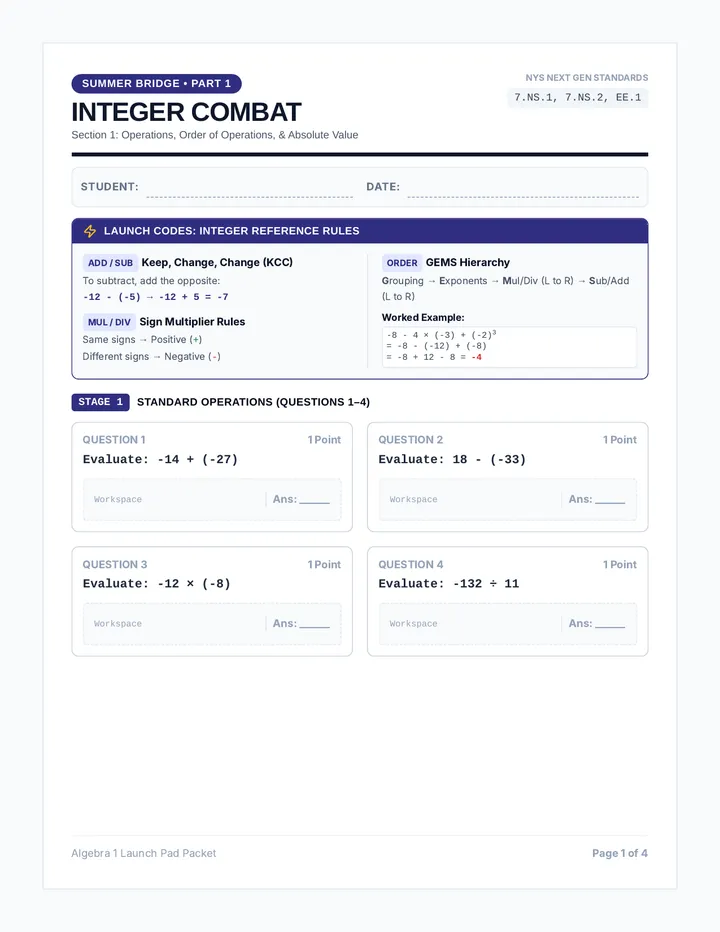
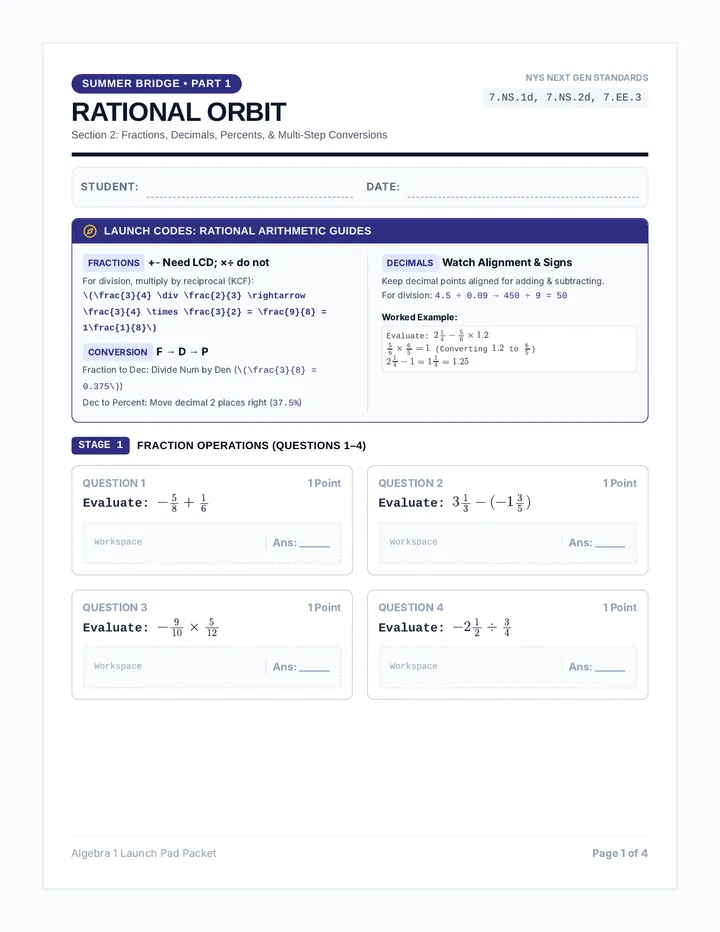
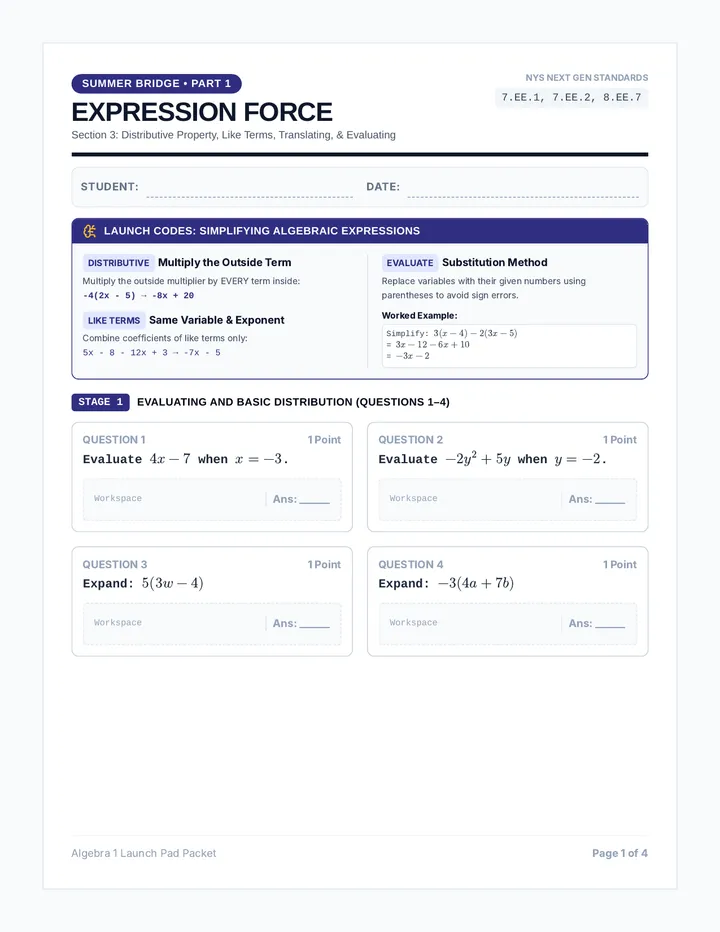
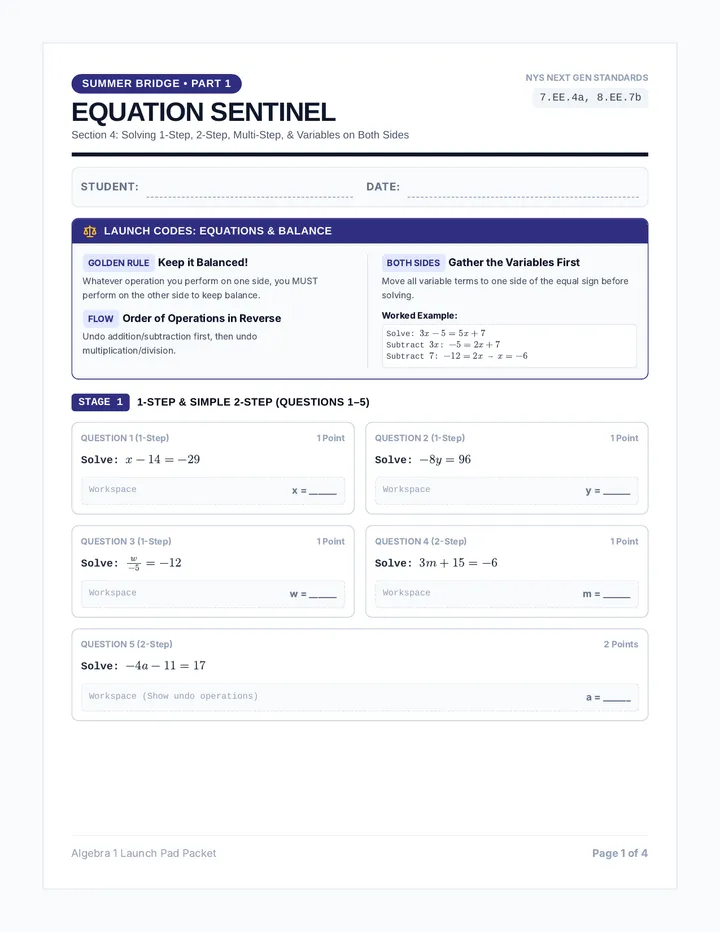
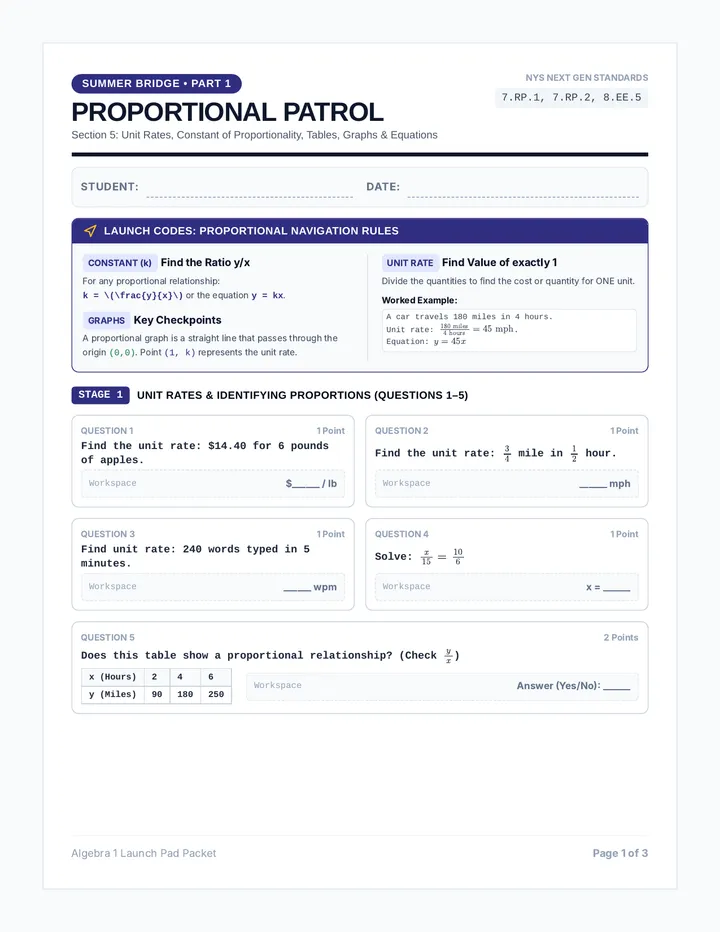
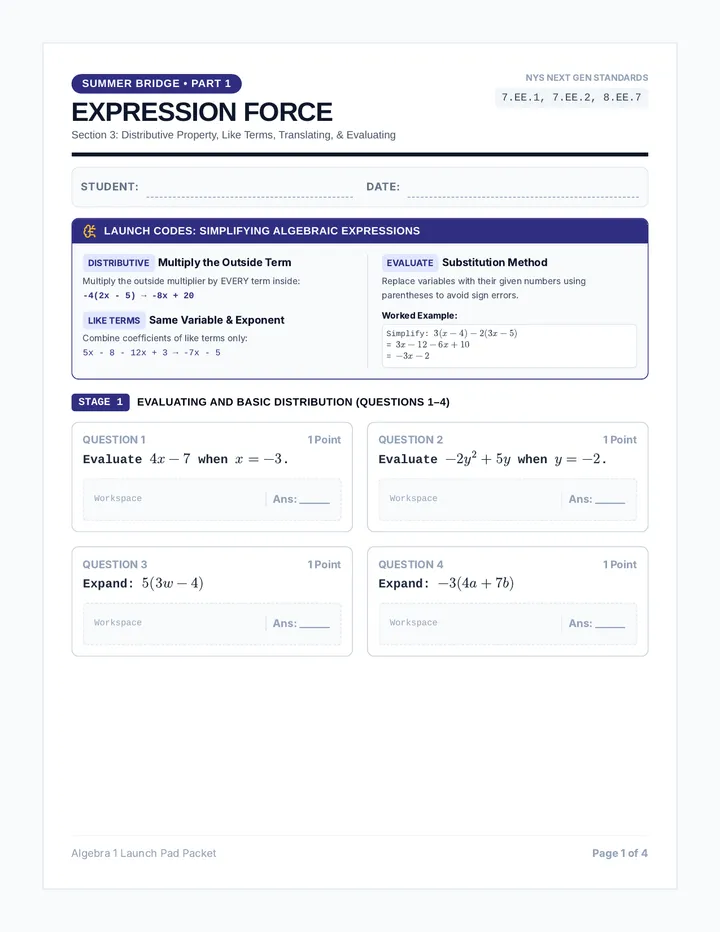
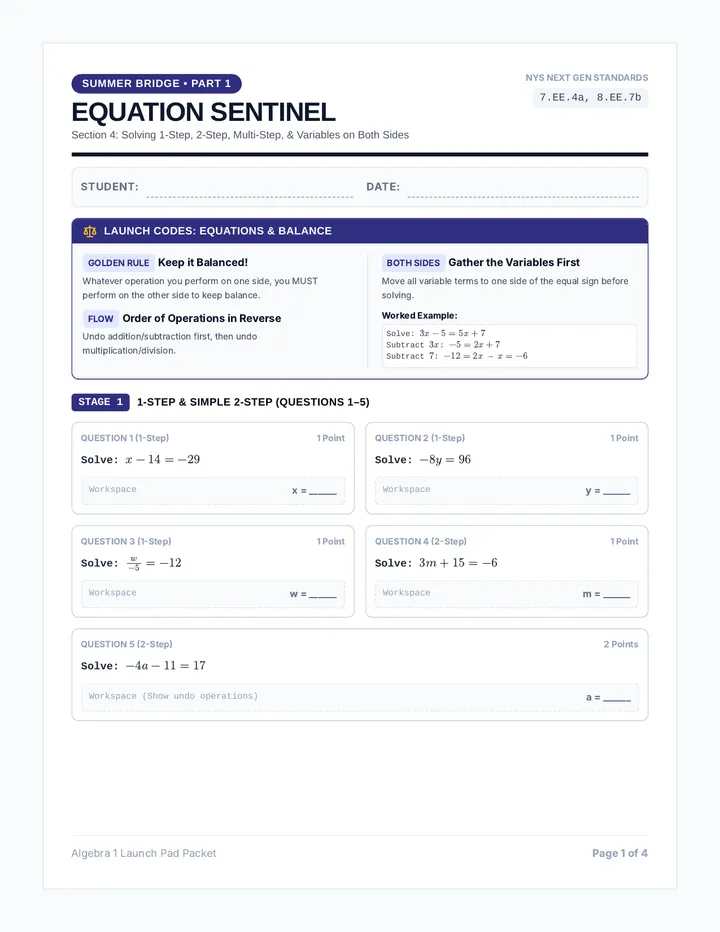
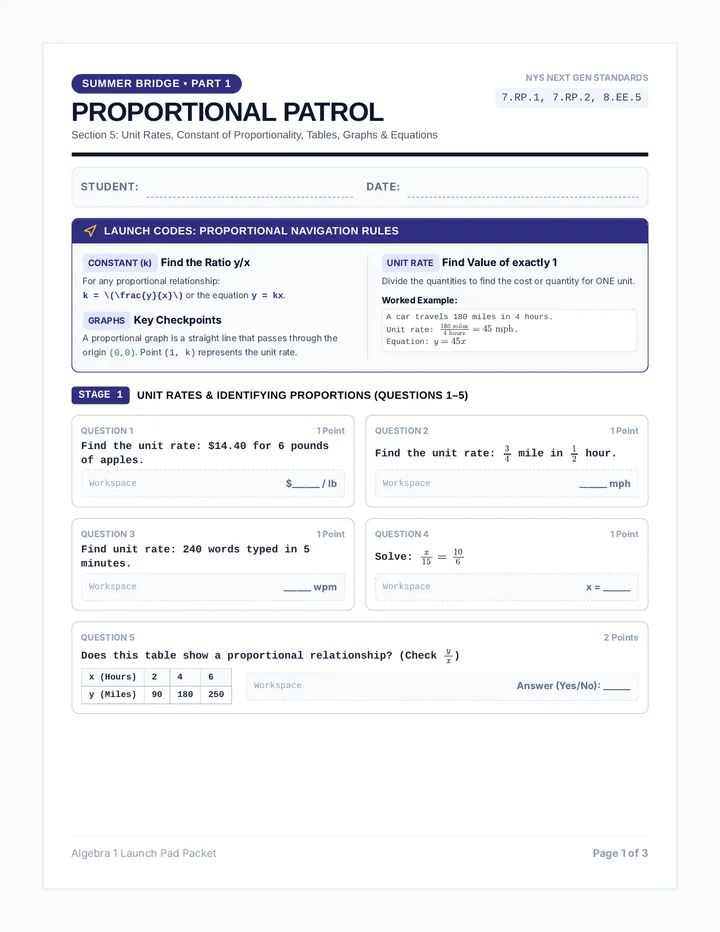
The first part of the Algebra 1 Summer Bridge Packet for rising 8th graders. It covers integer operations, rational numbers, expressions, solving equations, and proportional relationships with worked examples and workspaces.
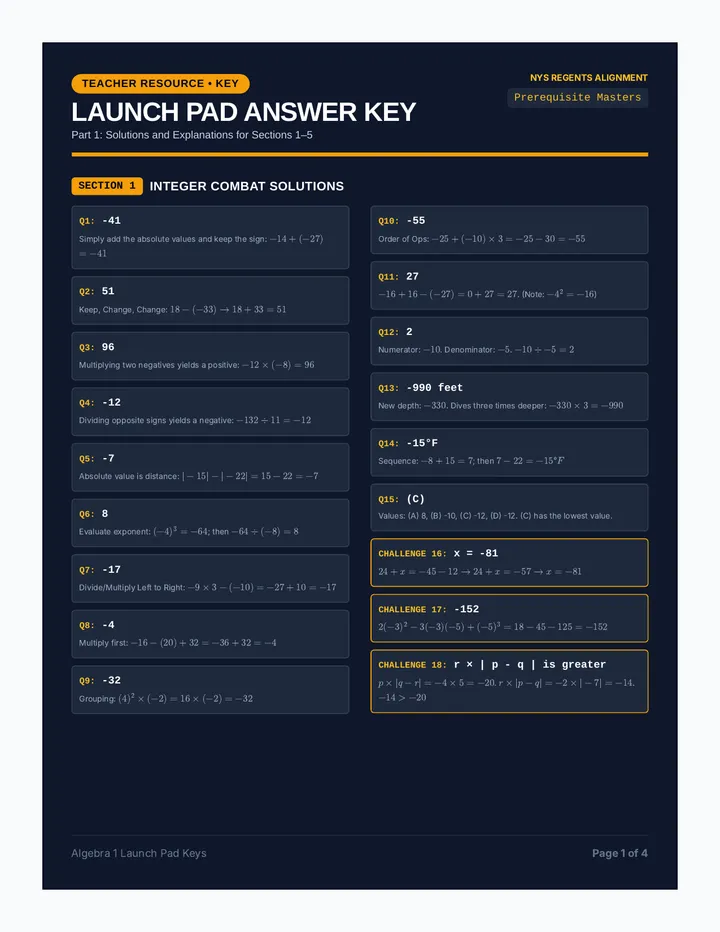
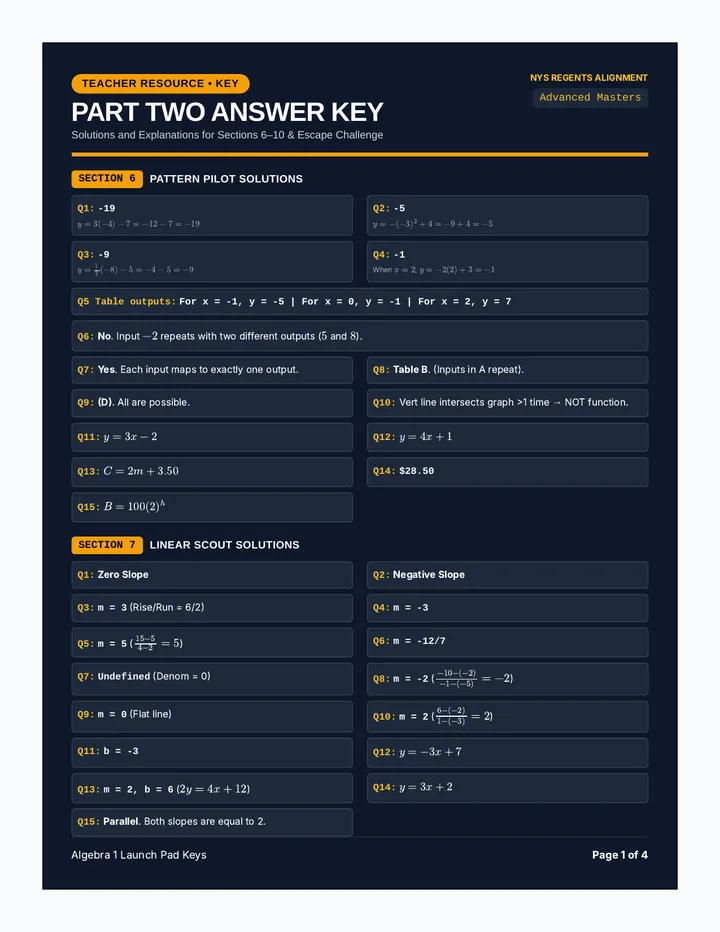
Comprehensive Teacher Answer Key for sections 6-10 and the Final Escape Challenge of the Summer Bridge Packet. Features step-by-step solutions, final values, and scoring rubrics.
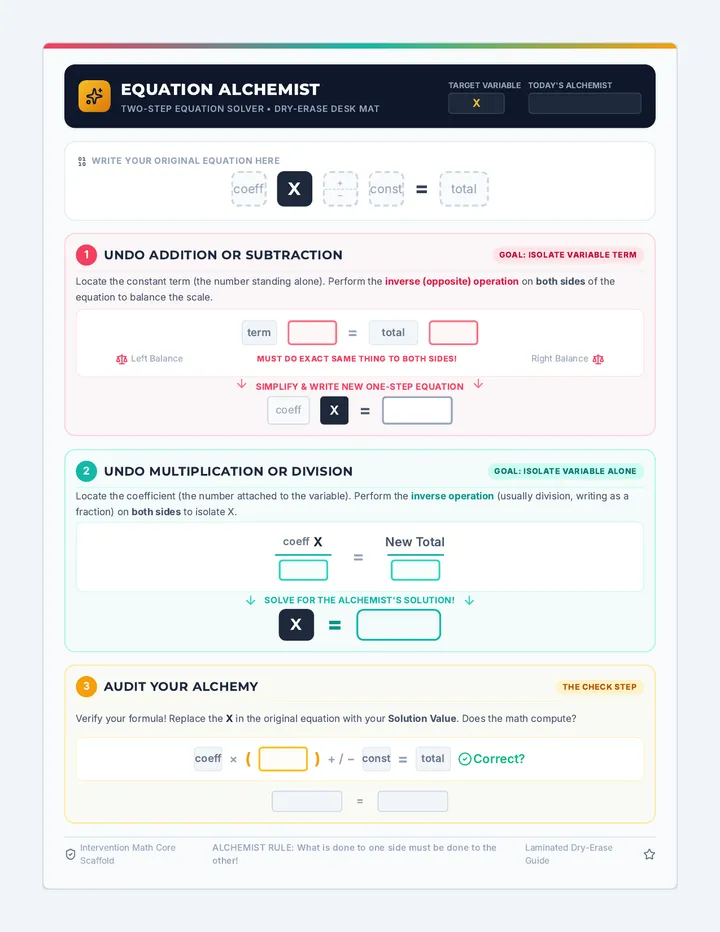
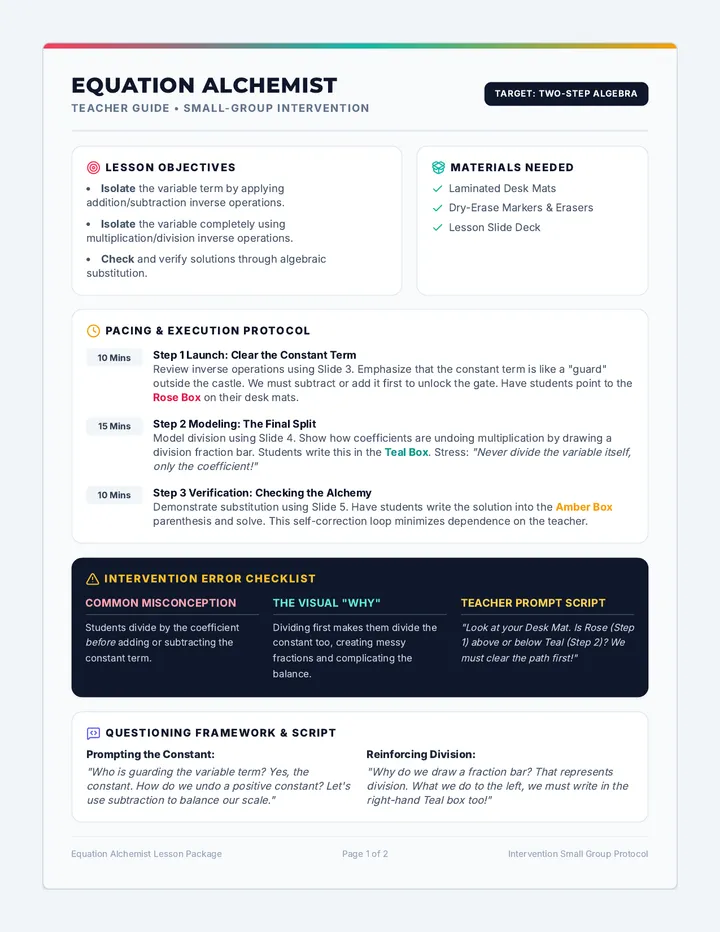
A comprehensive math intervention lesson targeting two-step algebraic equations. Features a color-coded step-by-step visual organizer that guides students through undoing addition/subtraction first, followed by multiplication/division to isolate the variable.
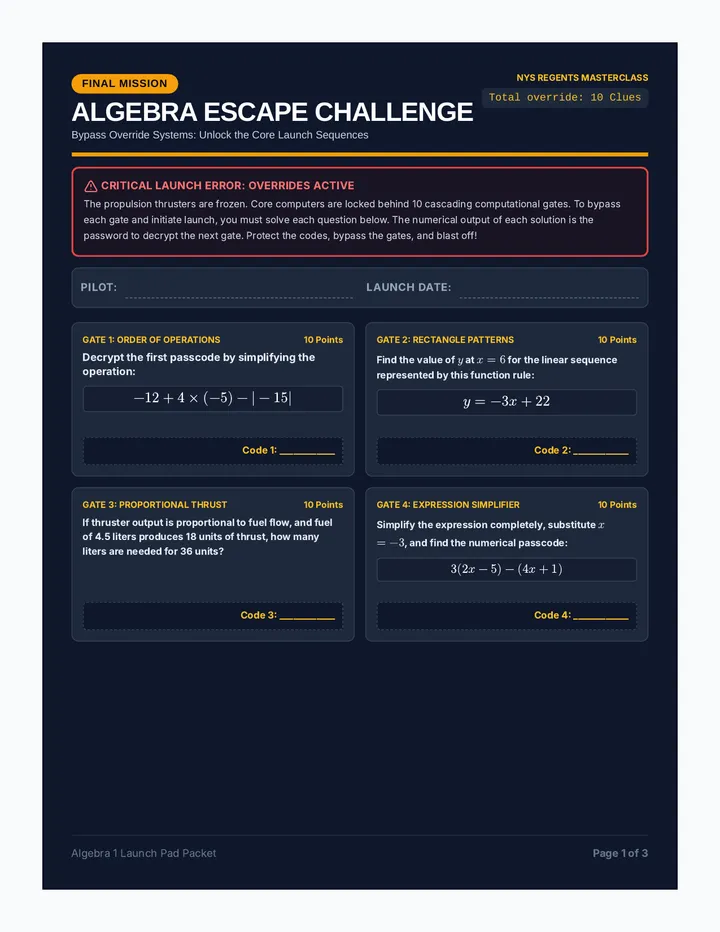
Student workbook for the final Algebra Escape Challenge. Features a space launch themed mission, 10 mixed pre-algebra and algebra preview problems, an input override console, and the official mastery scoring rubric.
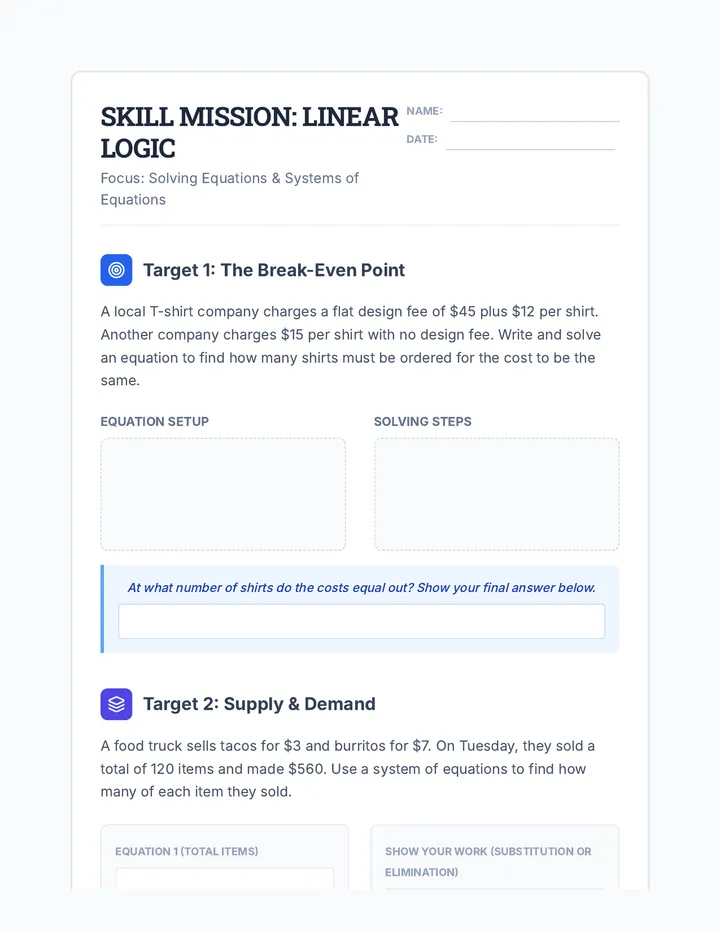
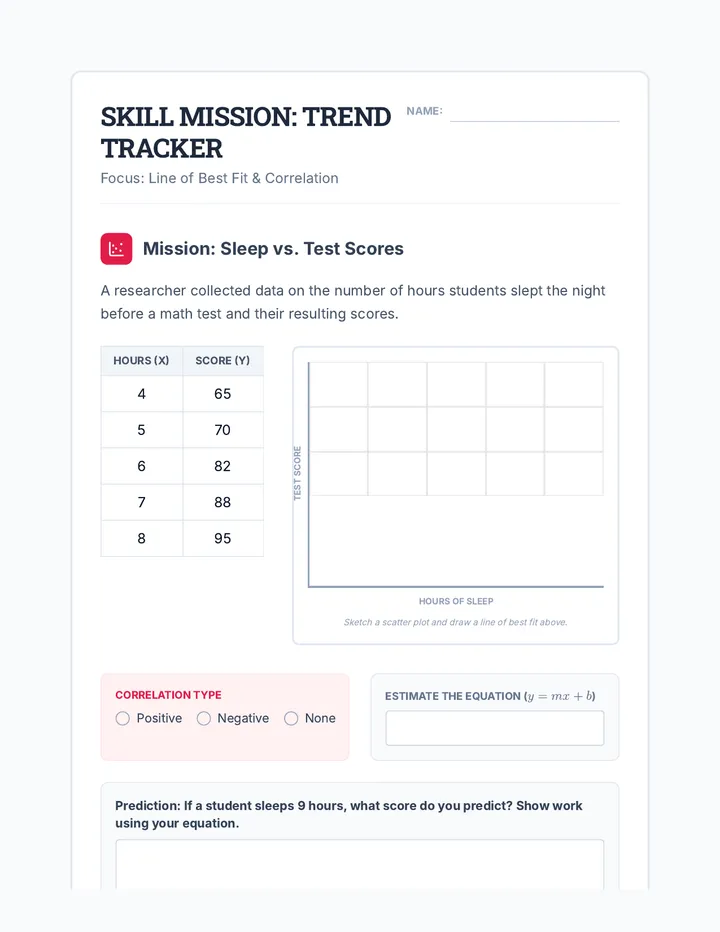
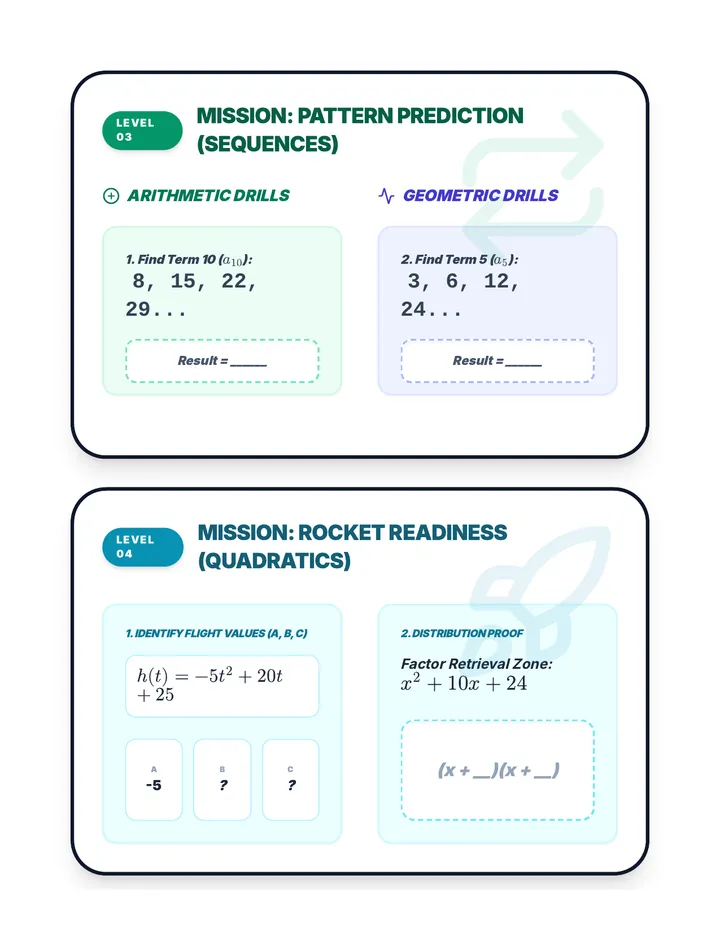
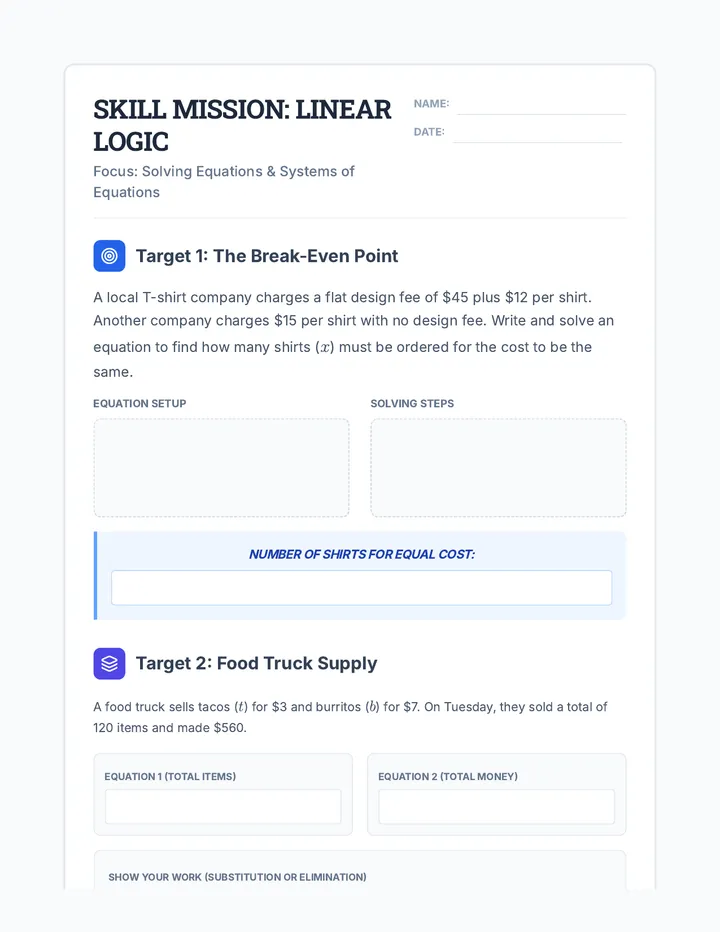
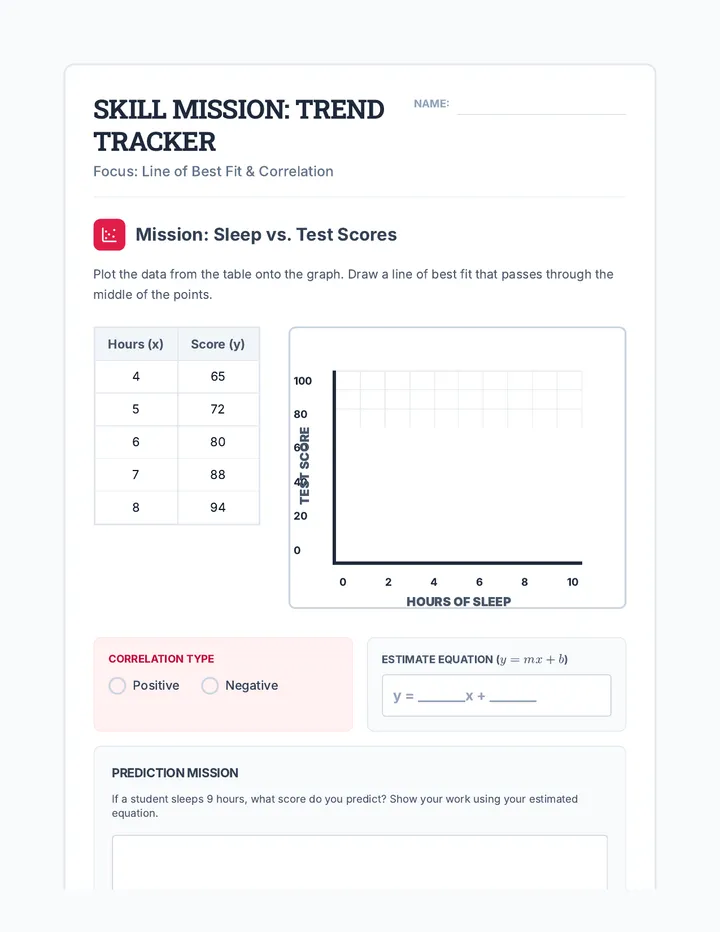
Scaffolded practice activities ('Skill Missions') that review key concepts: linear equations, systems, sequences, lines of best fit, and factoring. These activities ensure students have the foundational skills needed for their final project.