Printable number cards for the Abacus Architects lesson. Includes 3-digit and 4-digit numbers with varying difficulty levels, including numbers with zero placeholders and high-value challenge numbers.
A math place value unit focusing on identifying digit values through the thousands place with interactive detective-themed worksheets and puzzles.
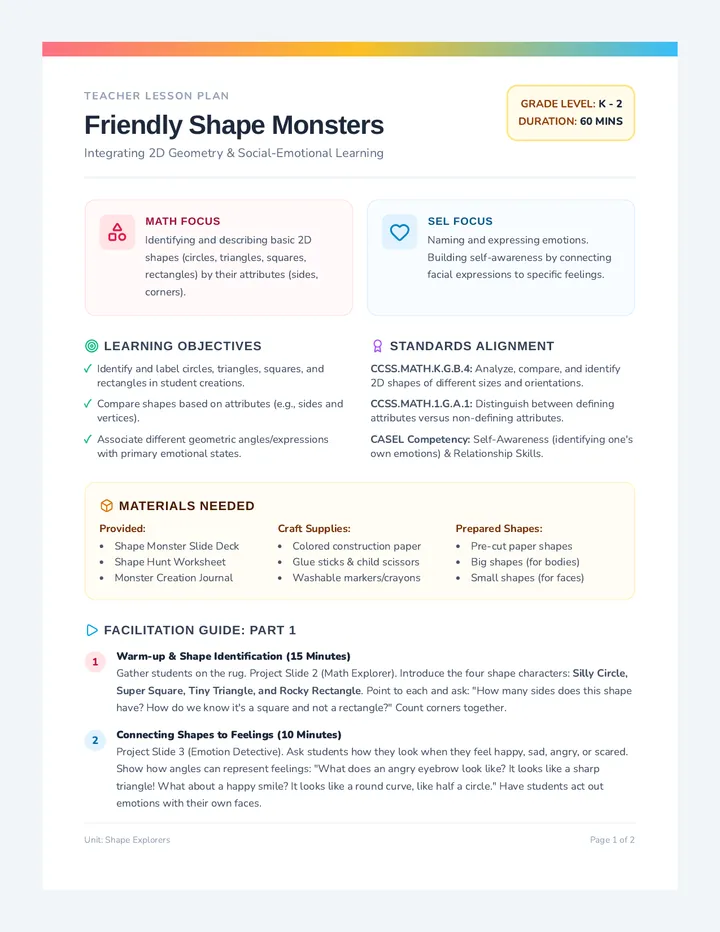
An integrative early elementary lesson combining basic 2D geometry with social-emotional learning, where students identify shapes and use them to construct expressive feeling monsters.
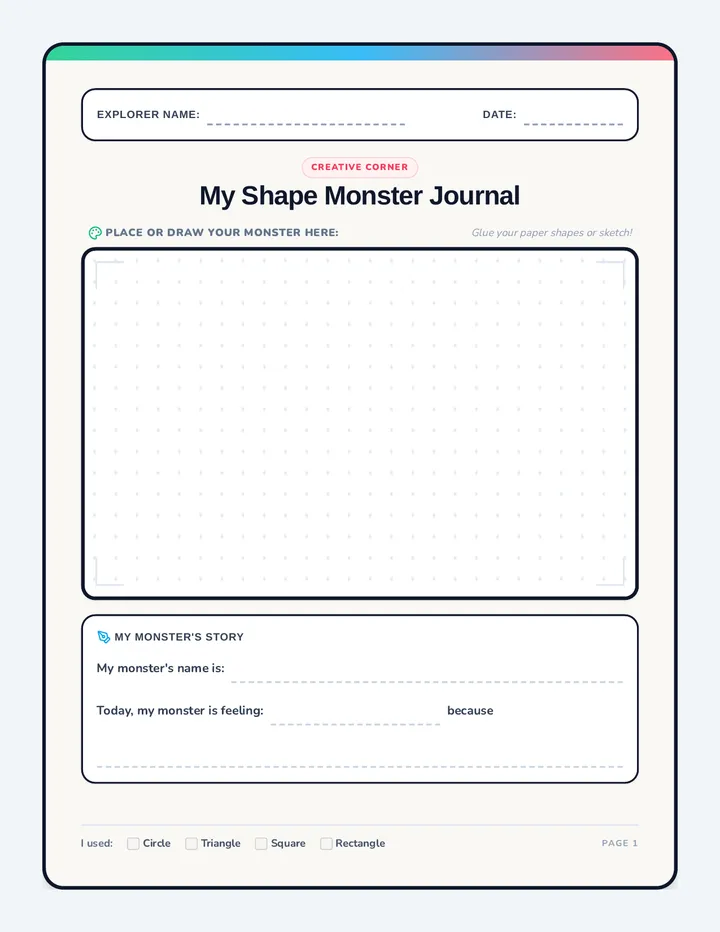
A student-facing journal page for constructing, sketching, or gluing their feeling monster, featuring a simple reflection sentence frame for writing practice.
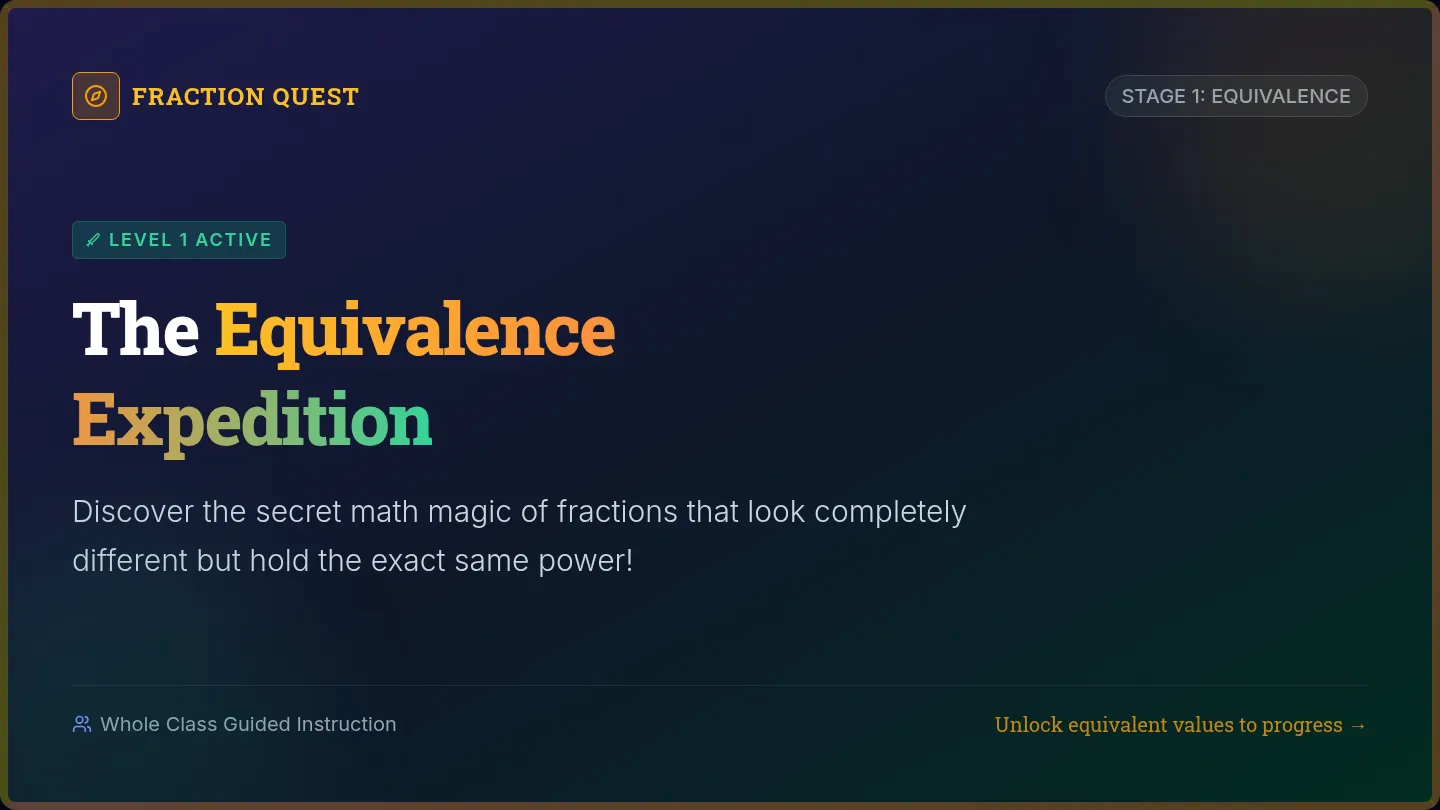
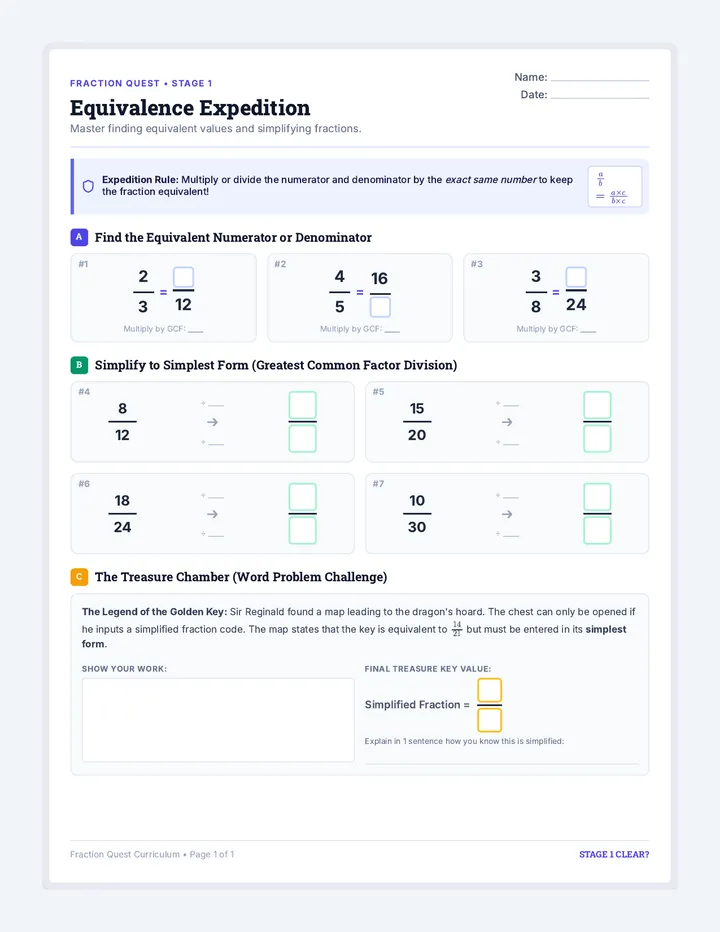
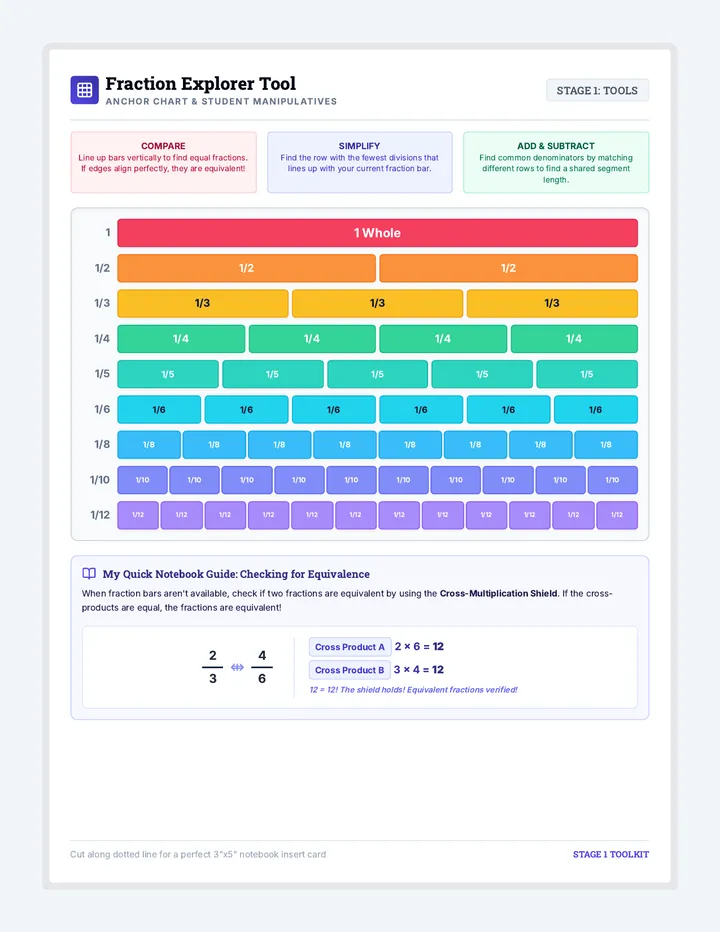
A comprehensive visual math curriculum sequence focusing on fraction equivalence, addition, subtraction, multiplication, division, and comprehensive multi-operation mastery. Includes visual lesson slides, independent practice worksheets, small-group centers, visual tools, and robust assessments.
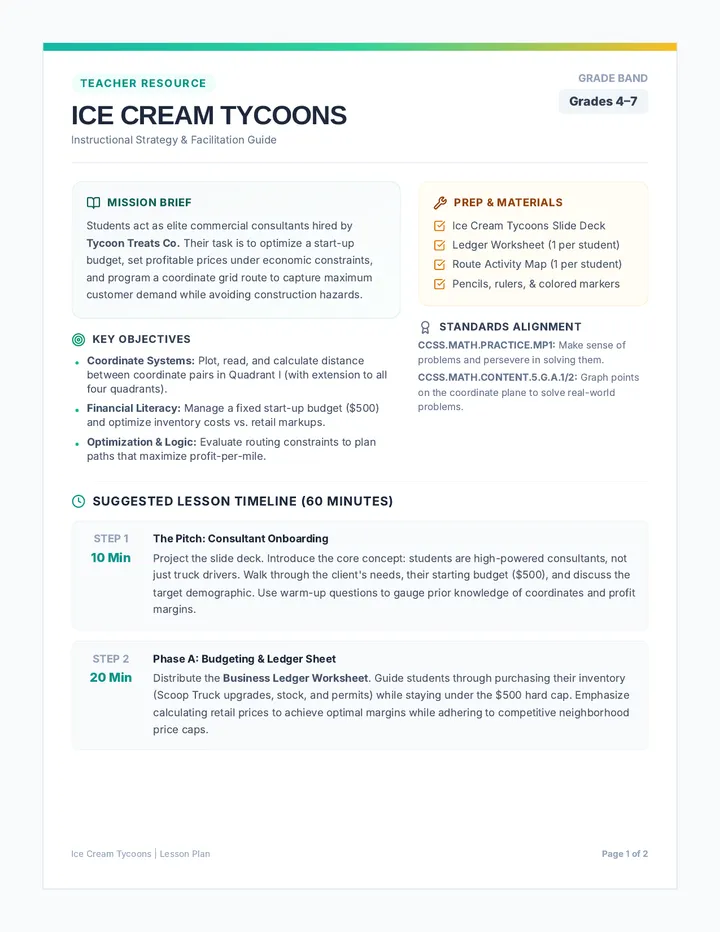
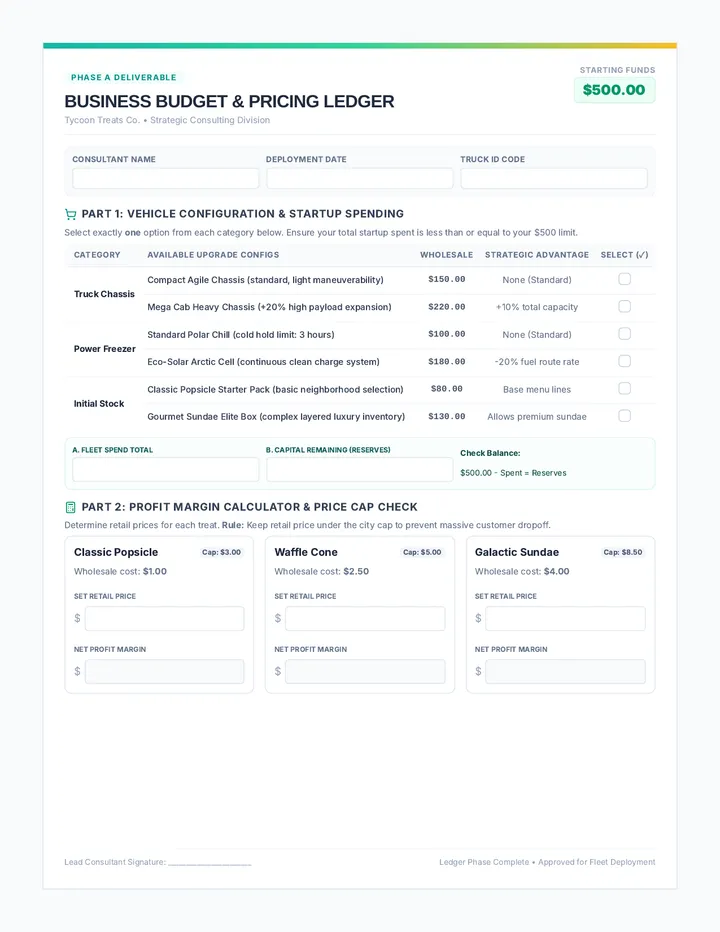
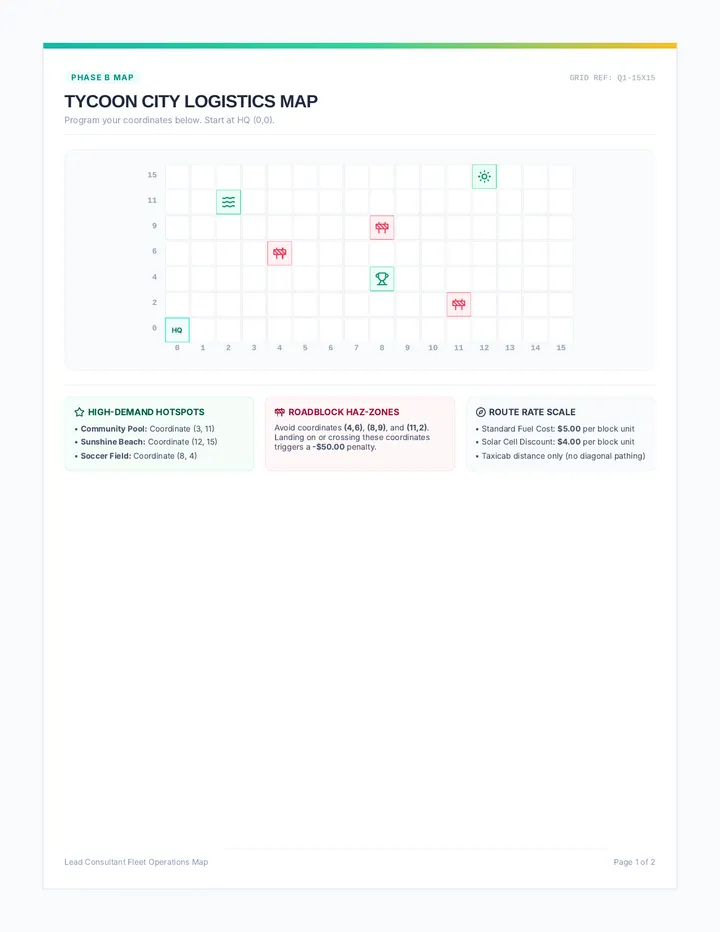
An immersive math and spatial reasoning challenge where students step into the shoes of ice cream truck consultants. They will manage a start-up budget, calculate profit margins, and program routes on a coordinate grid to maximize profits and beat the summer heat.
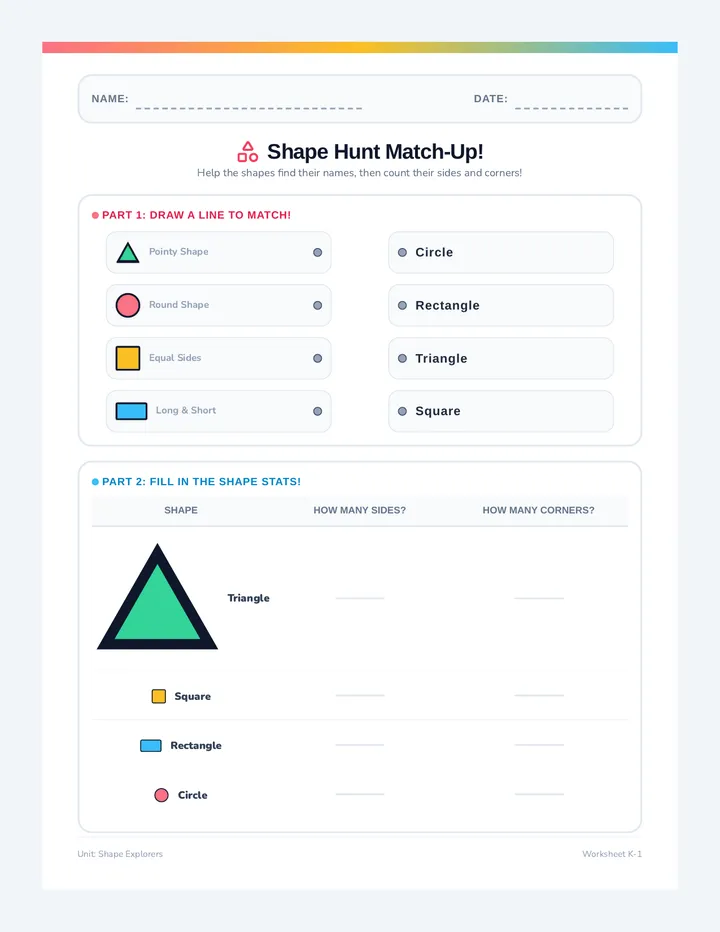
A student-facing activity worksheet where students identify, color, and count the sides and corners of basic geometric shapes.
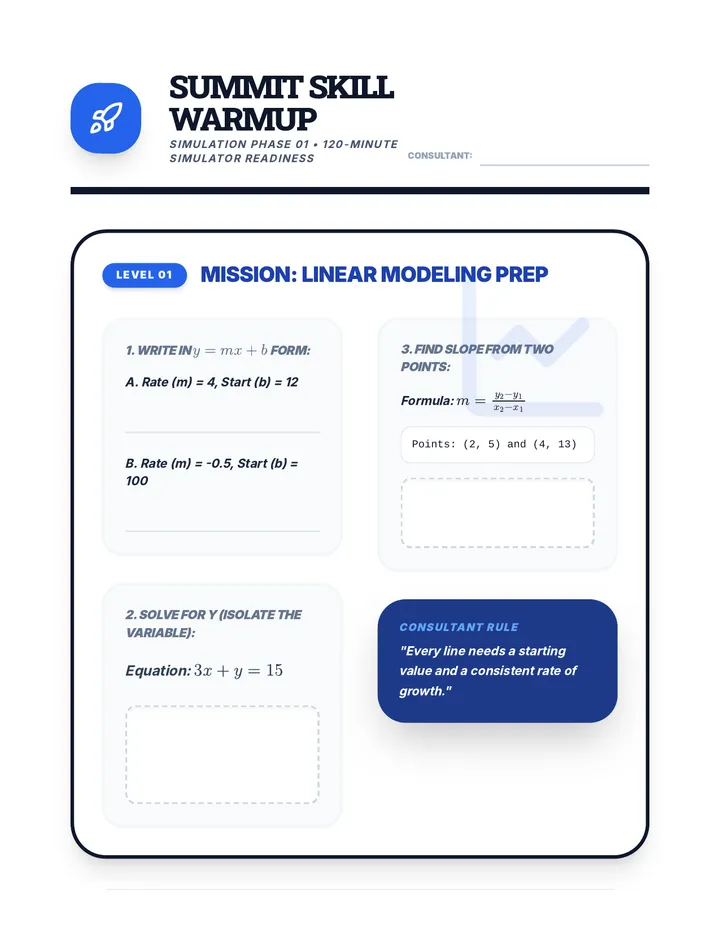
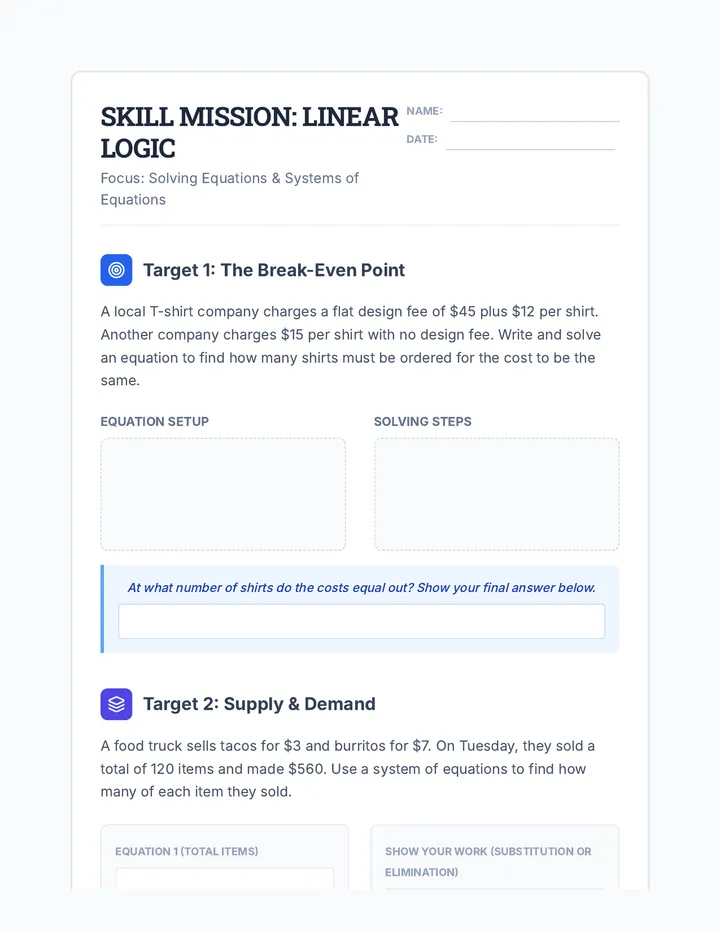
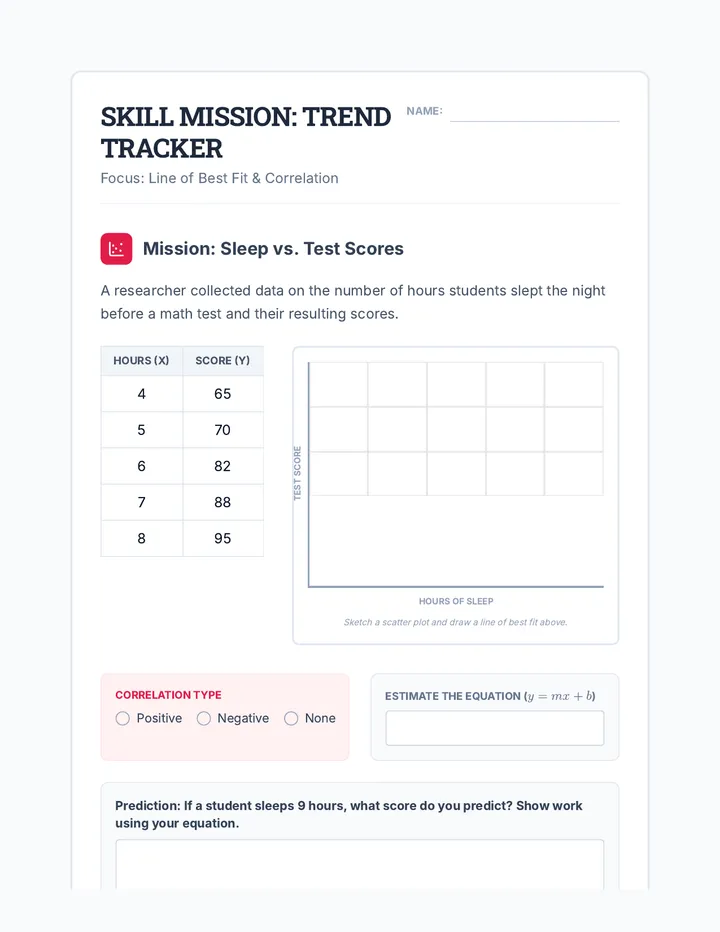
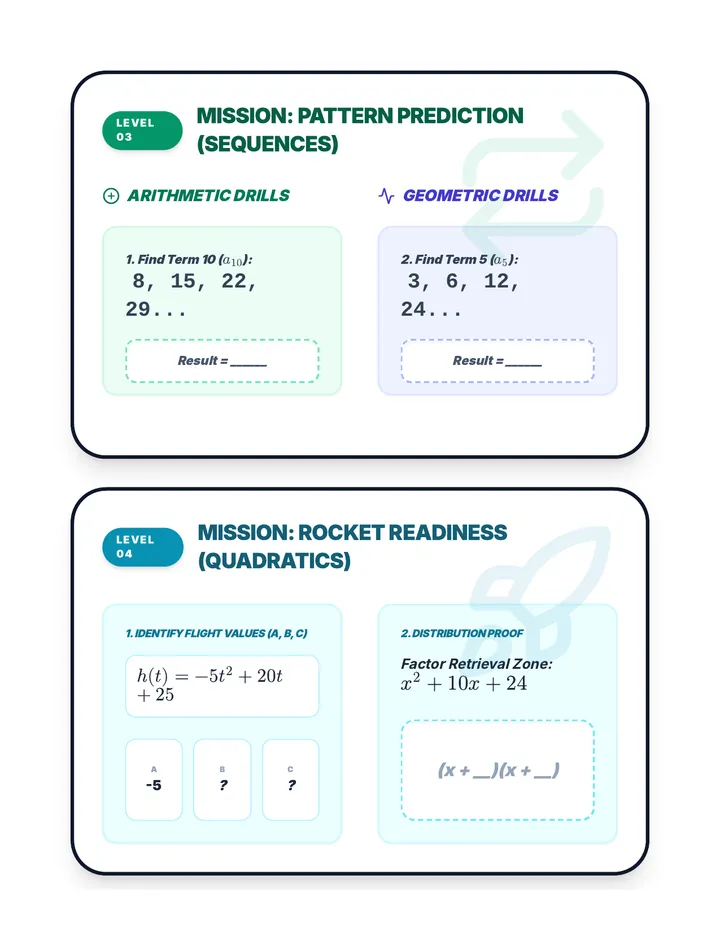
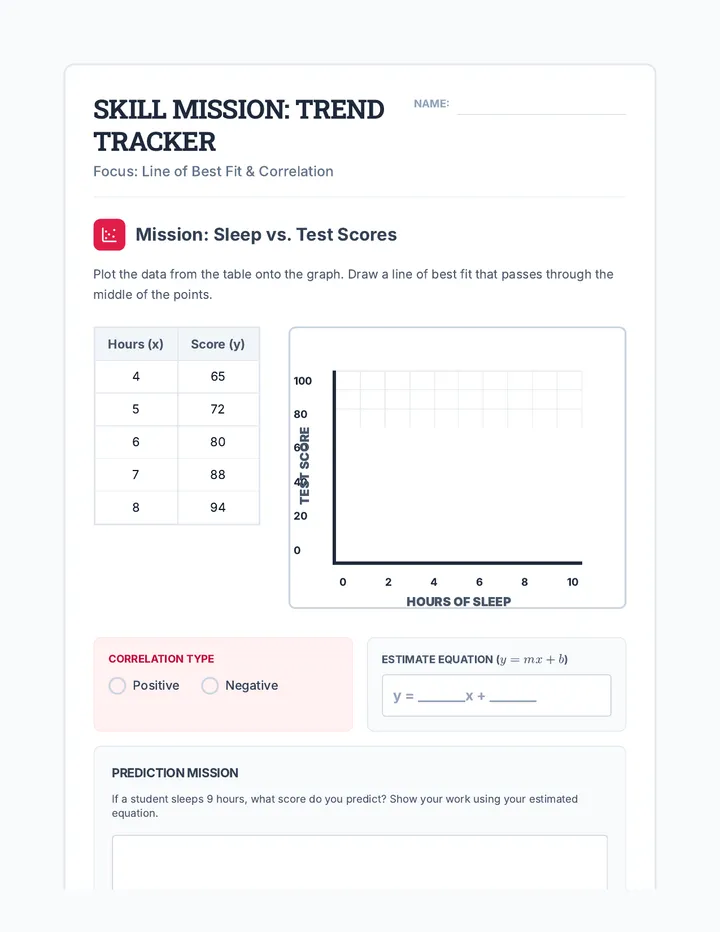
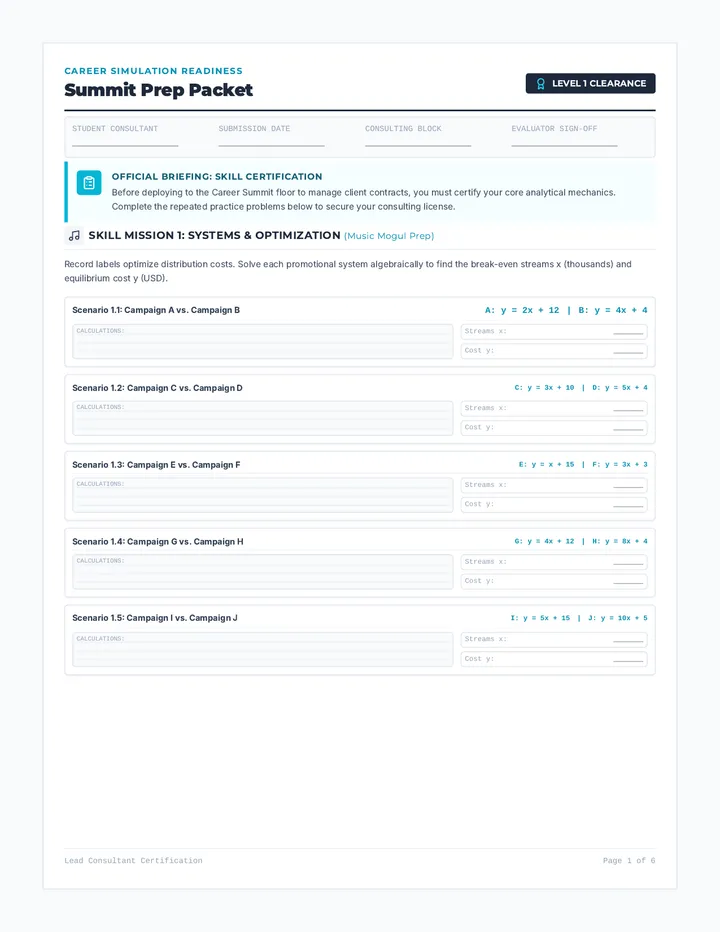
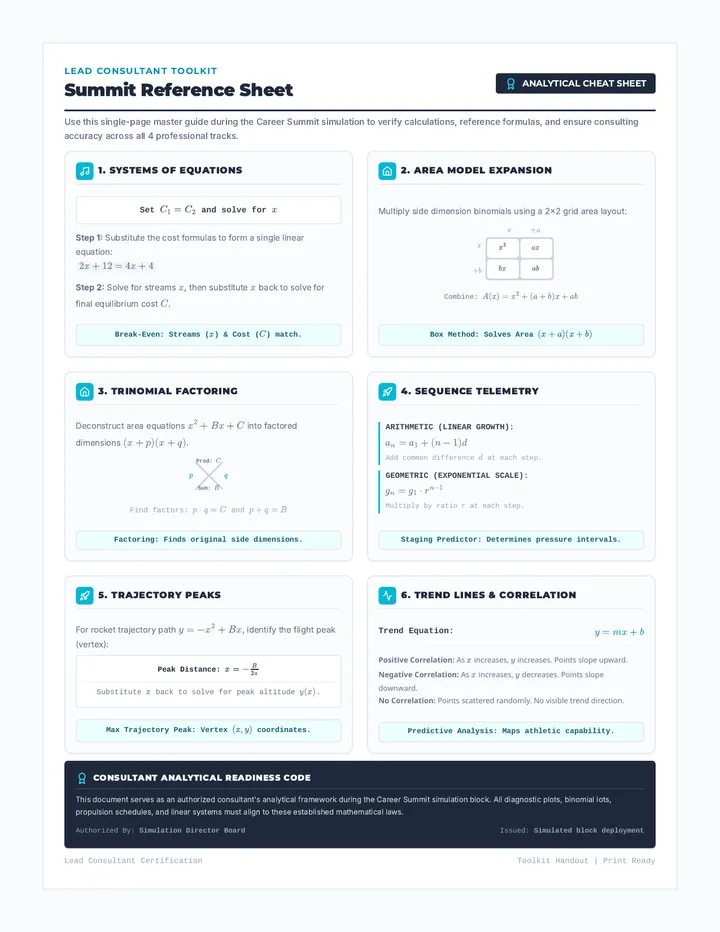
A high-intensity, 120-minute math simulation. Students act as lead consultants, completing a high-speed skill warmup before selecting a professional sector (Music, Urban Planning, Rocket Science, or Sports Analytics) to solve a series of complex work orders.
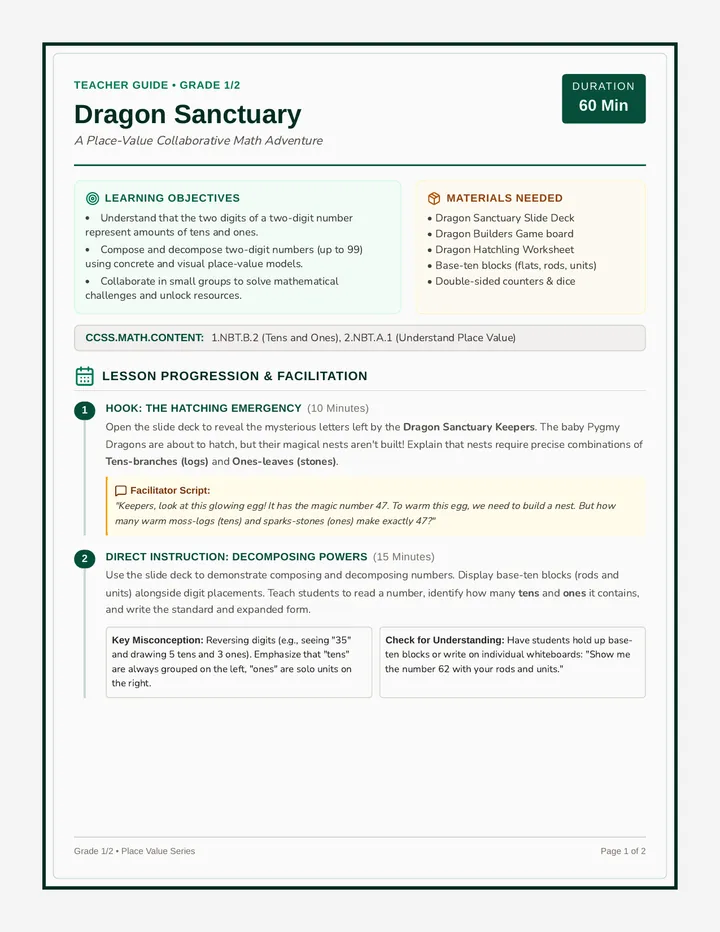
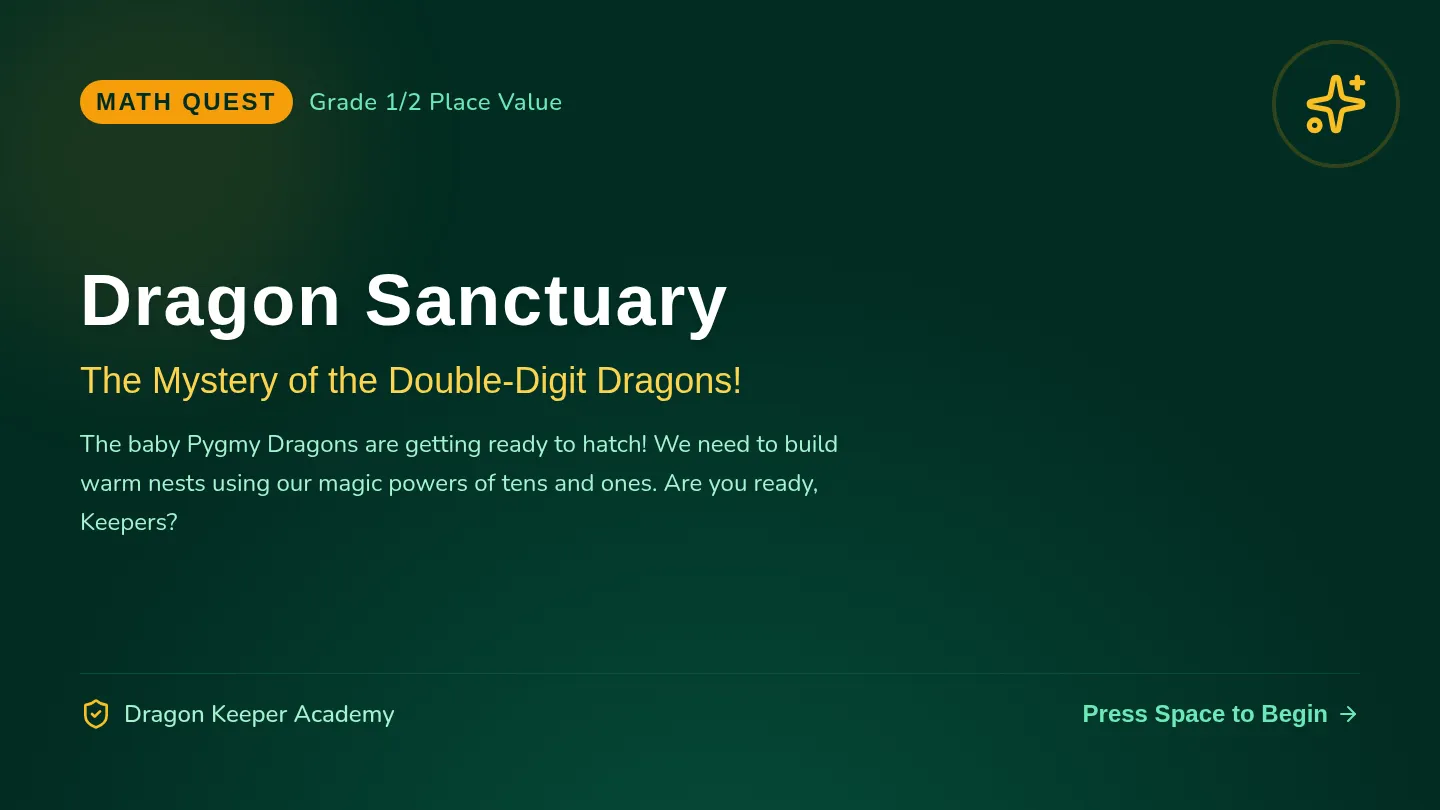
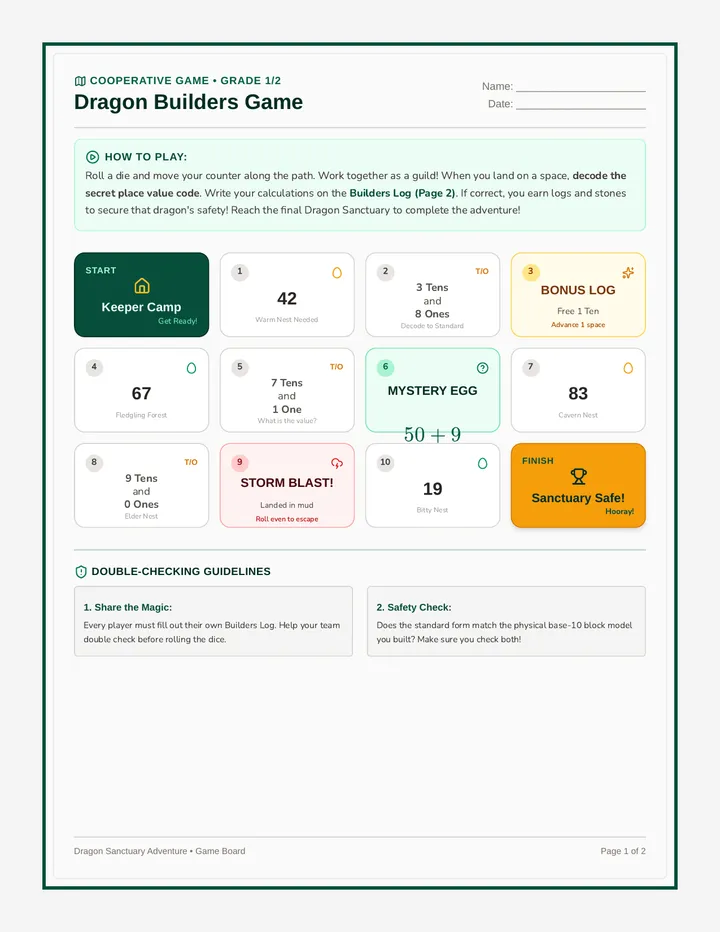
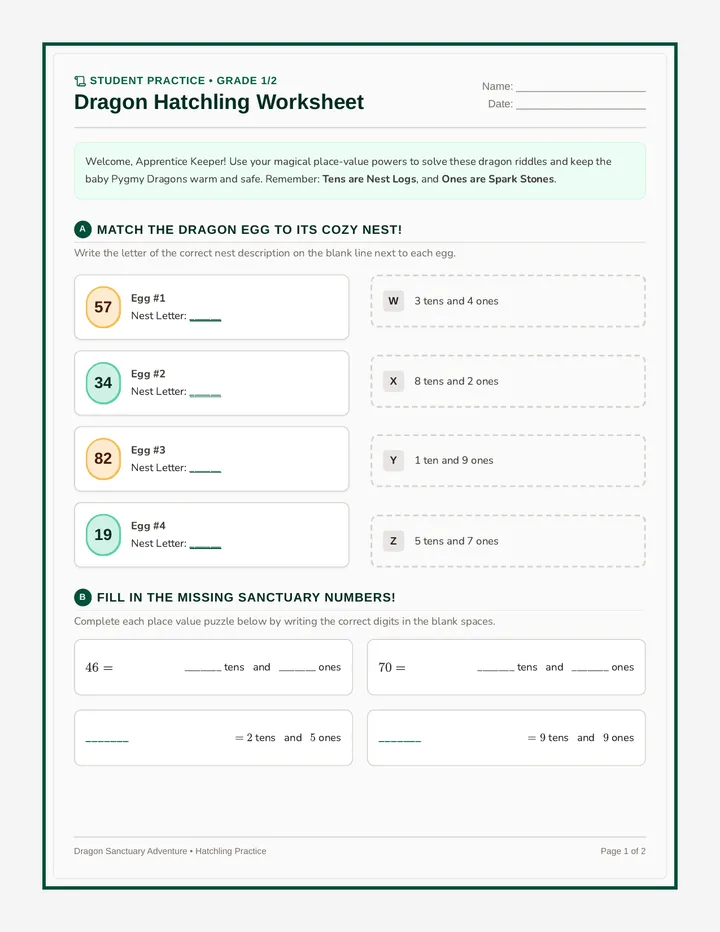
A collaborative place-value adventure where students help friendly dragons build their sanctuary by composing and decomposing double-digit numbers using tens and ones.
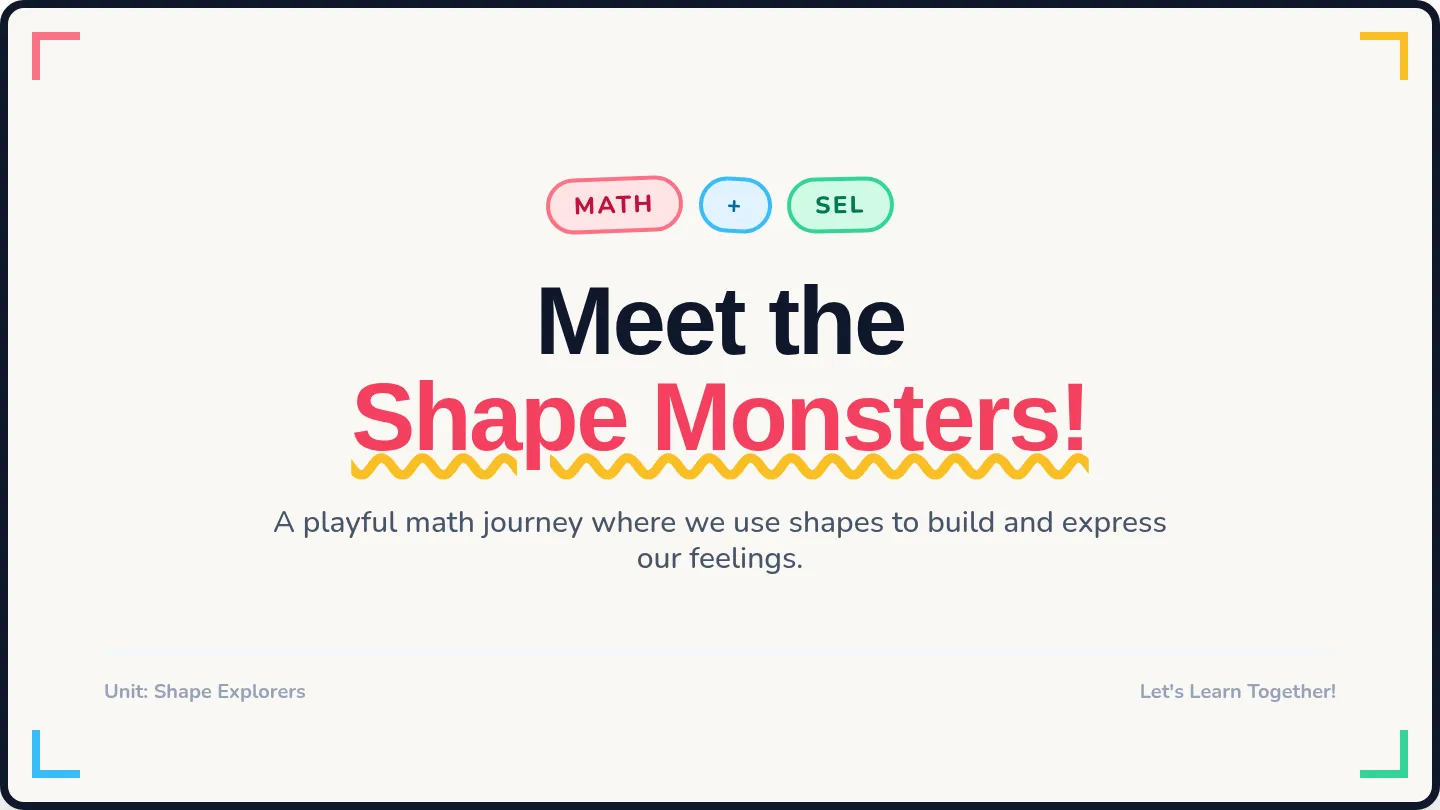
An interactive, visual slide deck that introduces students to 2D geometric shapes and explores how facial expressions and emotions can be constructed using these shapes.
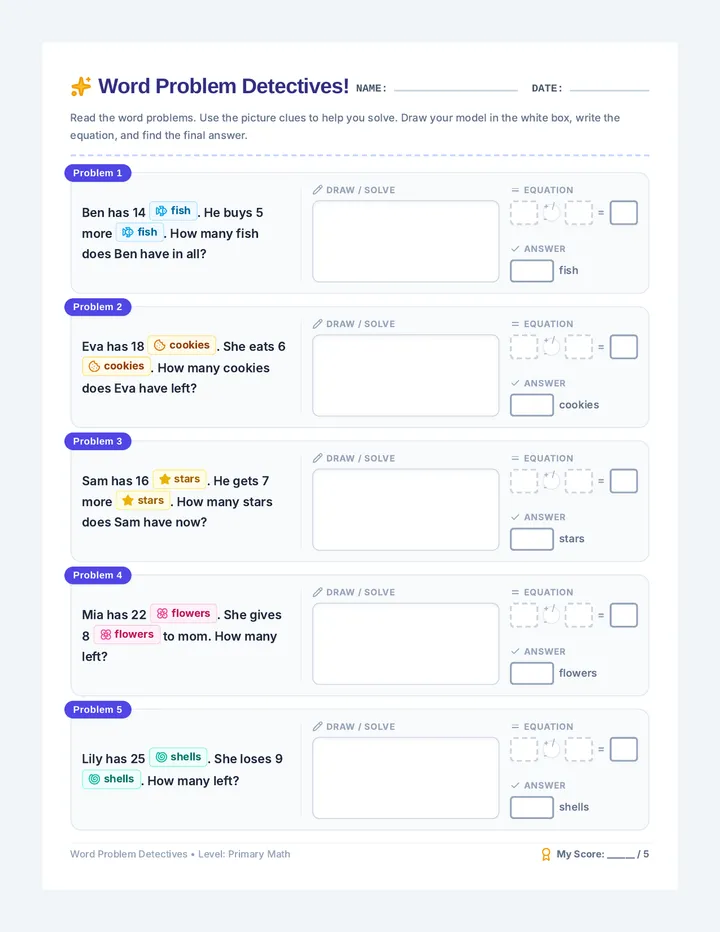
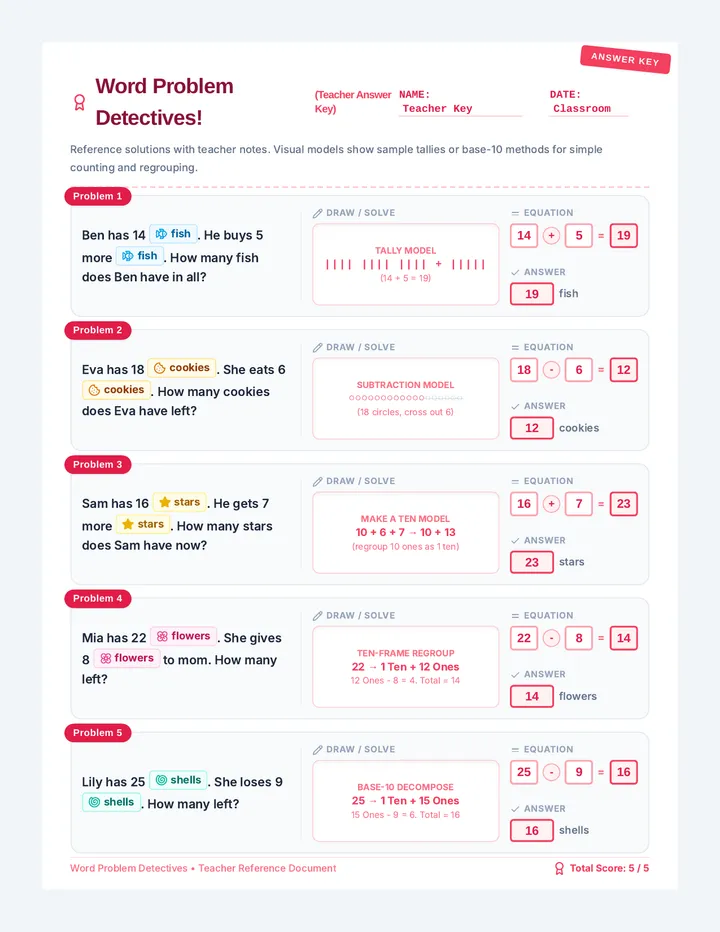
A primary math unit designed to build confidence in solving one-step addition and subtraction word problems. The sequence combines engaging visual cues, scaffolded modeling spaces, and explicit transition strategies between concrete and abstract math representation.
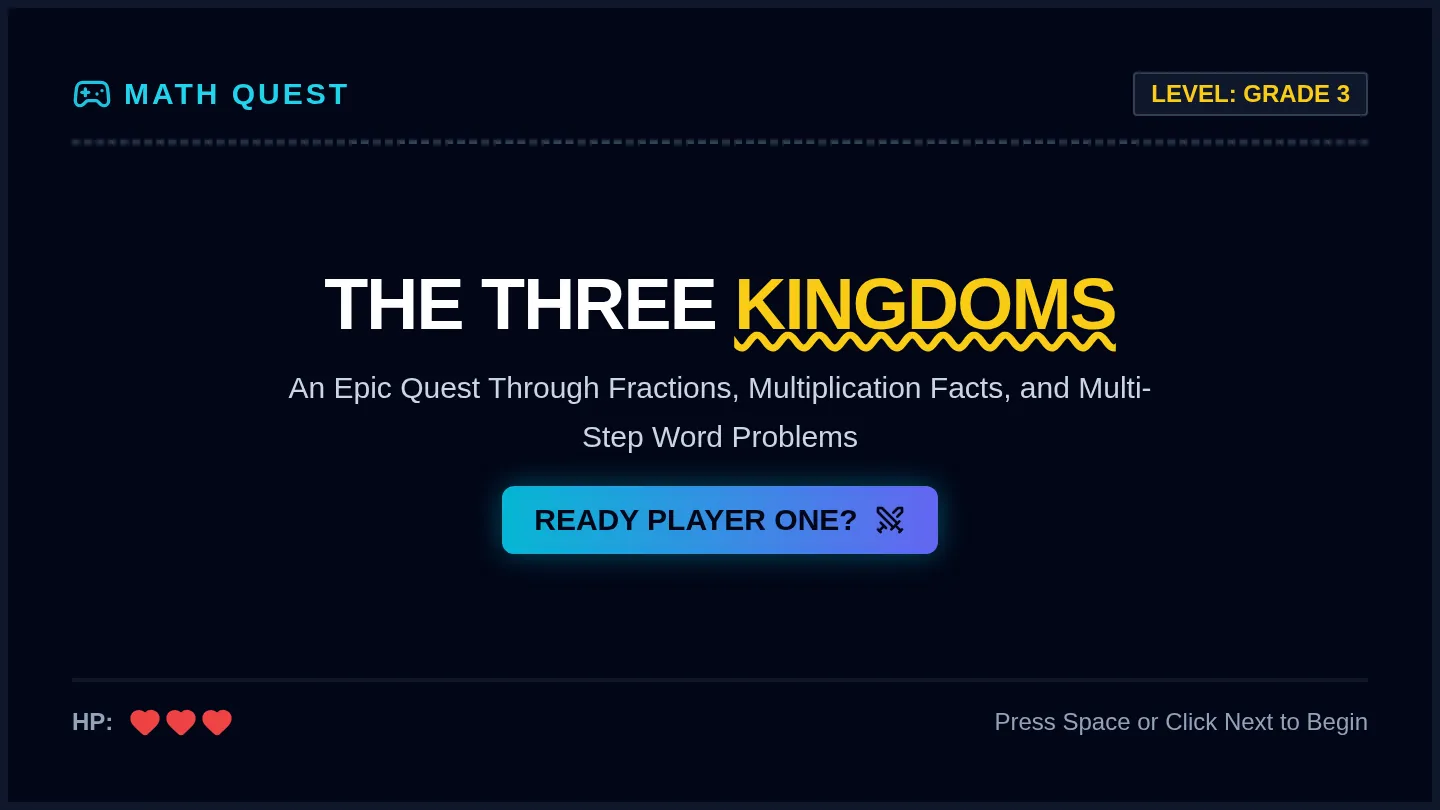
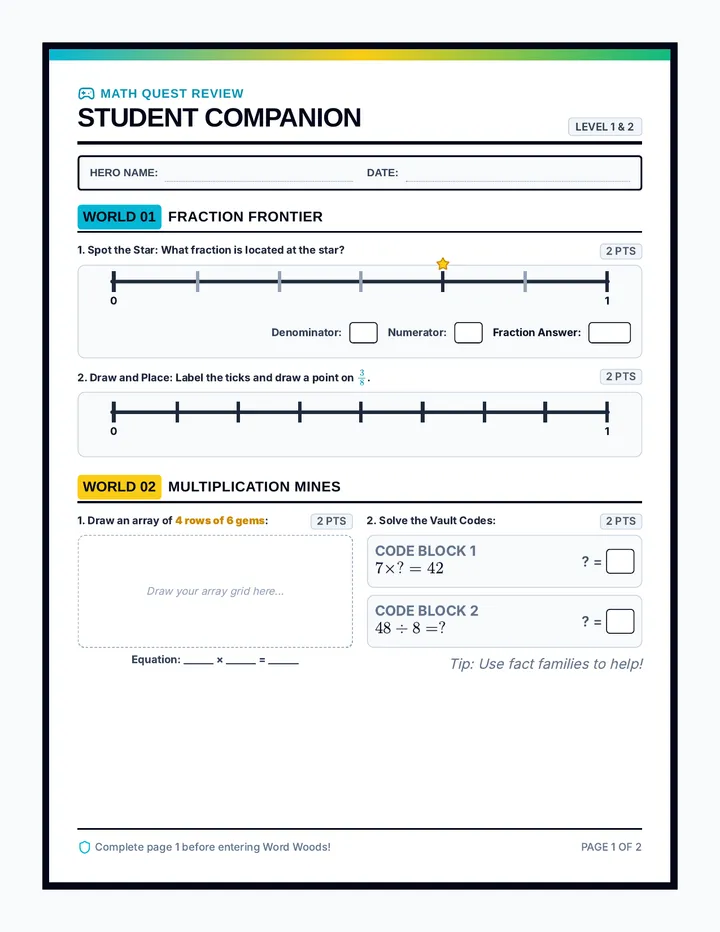
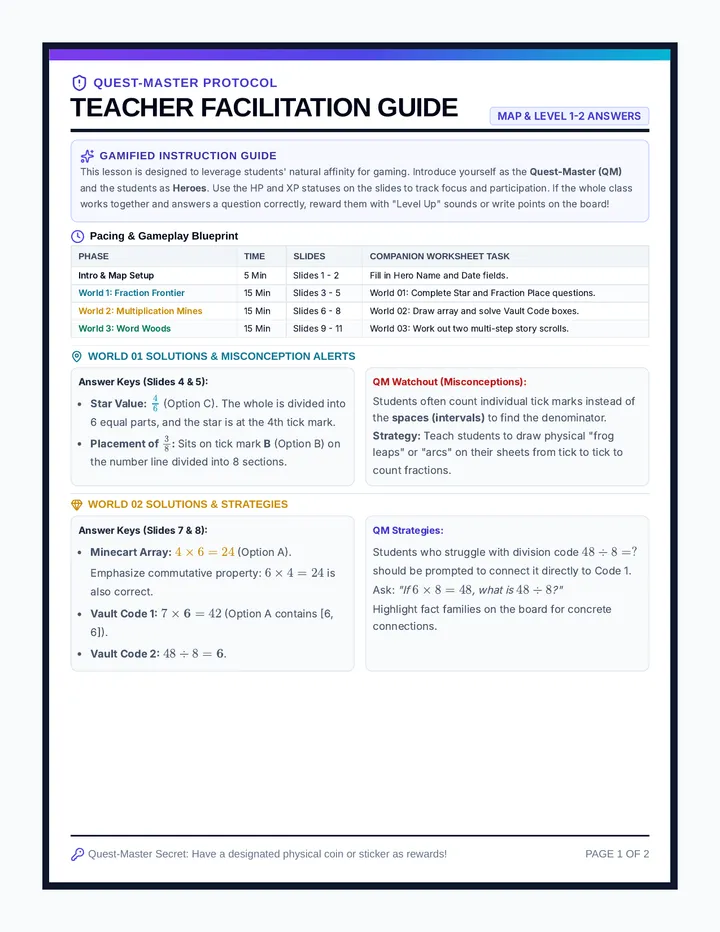
An engaging third-grade math review lesson structured as a retro video game quest. Students journey through Fraction Frontier (number lines), Multiplication Mines (fact strategies), and Word Woods (multi-step word problems) to master essential skills.
A comprehensive lesson plan for teachers, detailing math and SEL objectives, common standards, a complete step-by-step facilitation guide, discussion questions, and differentiation strategies.